25 Small Home Office Ideas That Work Hard + Look Good
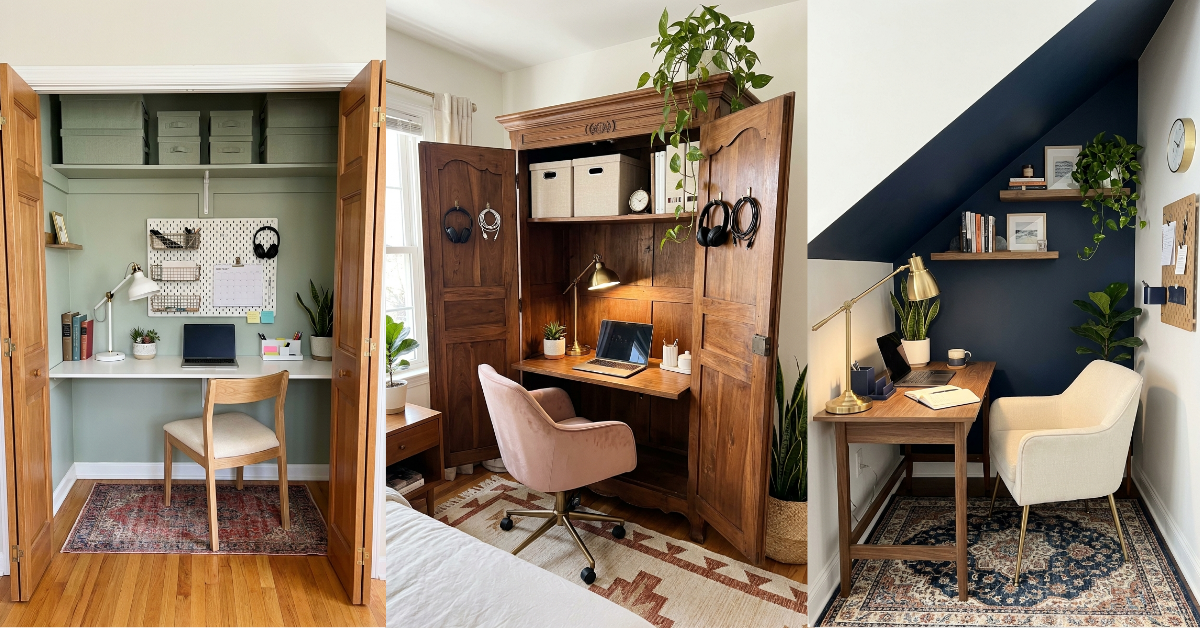
You’ve been eyeing that awkward corner in your bedroom for weeks now. Or maybe it’s the closet you keep opening and closing, wondering if you could possibly fit a desk in there. Working from home in a small space feels like trying to solve a puzzle where the pieces don’t quite match — you need function, but you also refuse to sacrifice the pretty factor. Because let’s be real, if your workspace doesn’t spark a little joy, you’re not going to want to sit there and tackle your to-do list. The good news? Small home offices can absolutely be both productive and gorgeous. I’ve rounded up 25 ideas that prove you don’t need a sprawling spare room to create a workspace that actually works. These are real solutions for real homes — the kind you’ll actually want to recreate. From wall-mounted desks that float like magic to converted closets that hide away when you’re done, these ideas maximize every single inch without looking cramped or chaotic. Let’s get into it.
1. The Floating Corner Desk That Disappears
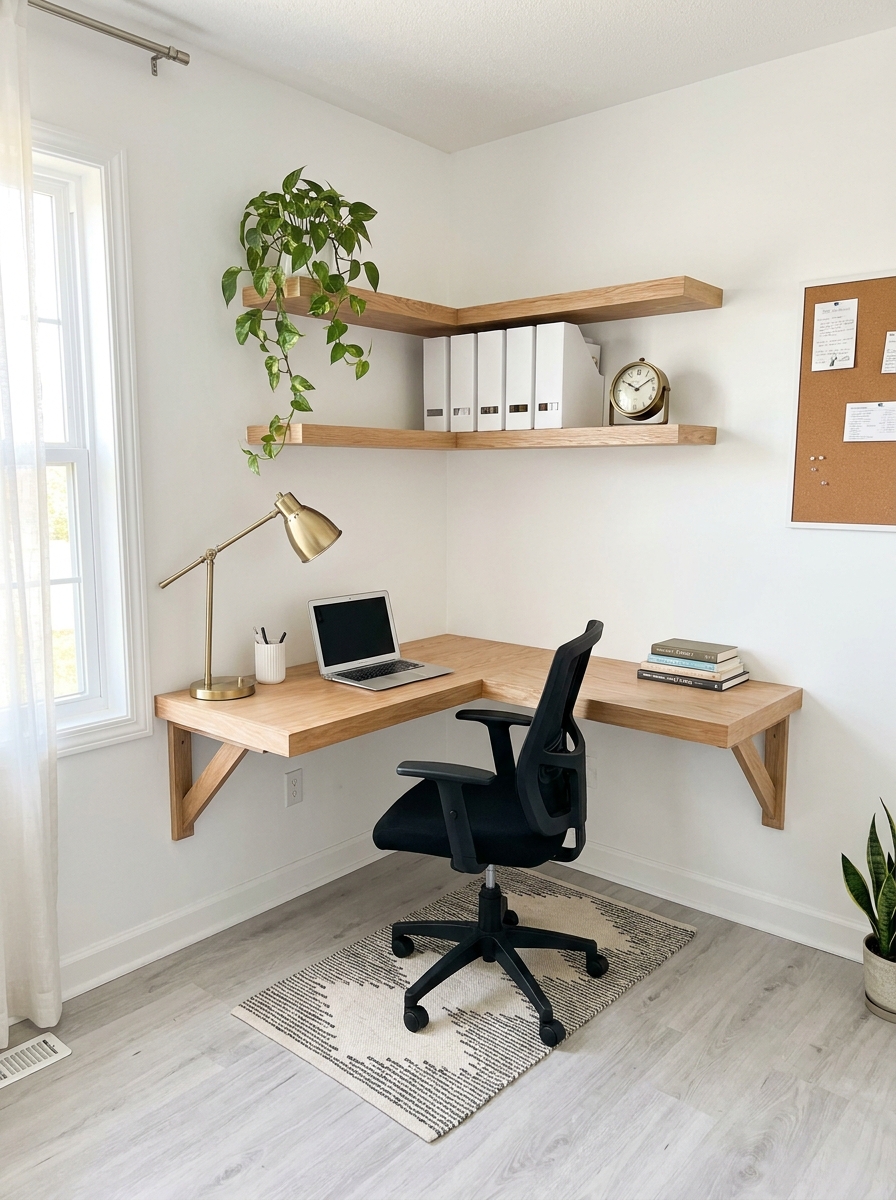
Wall-mounted corner desks are absolute game-changers when you’re working with limited square footage. They take up zero floor space, which makes your room feel bigger instantly. The key is choosing a simple floating shelf-style desk that wraps around the corner — it gives you surprising work surface without the visual weight of traditional desk legs.
I love how these create a defined workspace without boxing you in. You can tuck your chair underneath when you’re not working, and suddenly that corner goes back to being part of your bedroom or living room. Paint the desk the same color as your walls for an even more seamless look, or go bold with a contrasting stain to make it a statement piece.
Pair your floating desk with a slim ergonomic chair and some wall-mounted shelving above. Keep everything you need within arm’s reach but off the desk surface itself. This setup works beautifully in bedrooms, living rooms, or even wide hallways. The secret is keeping it minimal — this isn’t the space for piles of papers or bulky equipment.
2. The Closet Office with Doors That Close
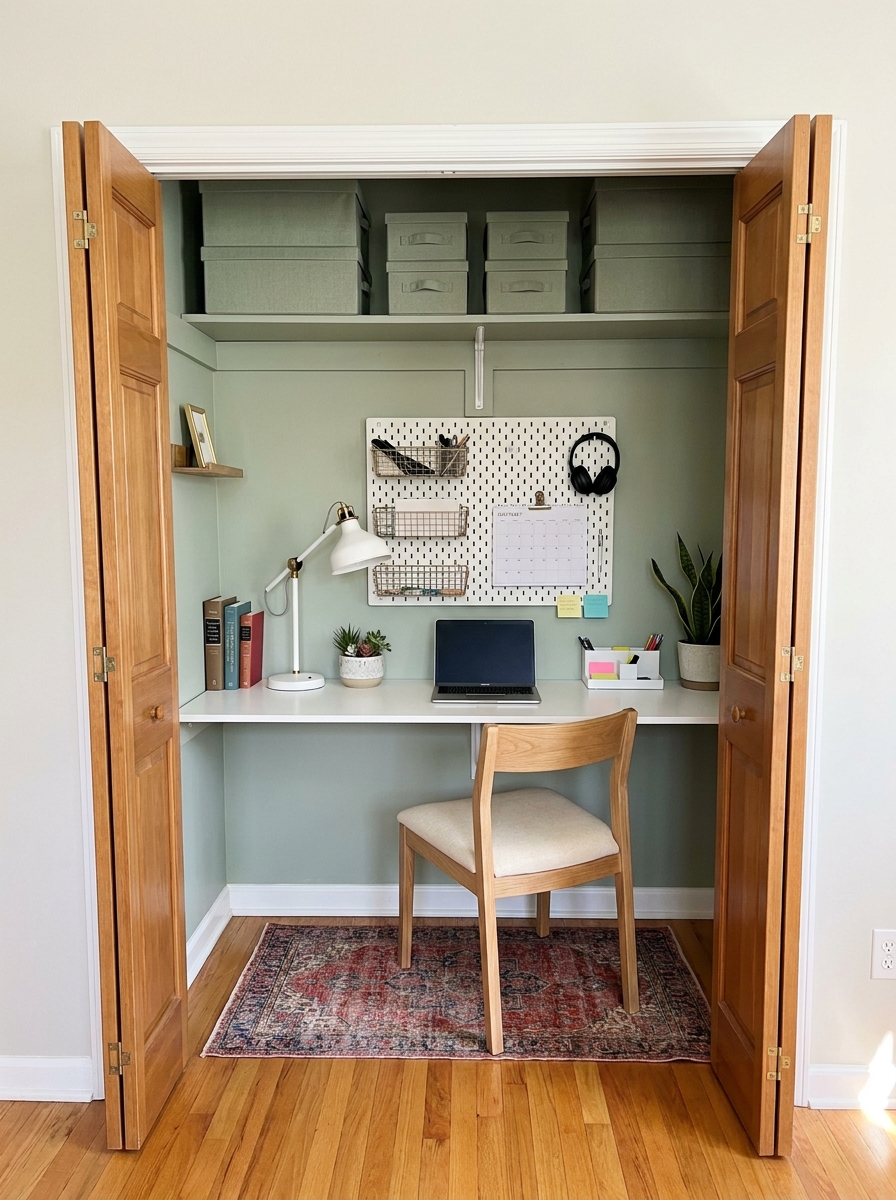
Here’s the ultimate small-space secret: turn a closet into a tiny office that completely disappears when you shut the doors. Remove the hanging rod and shelves, paint the interior a fresh color, and install a narrow desk that fits wall to wall. When you’re done working, close the doors and your office vanishes.
The beauty of a closet office is the psychological separation it creates. Work stays contained in that space, which helps when you’re trying to establish boundaries between job time and home time. Plus, you get built-in walls for shelving, pegboards, or even a small gallery wall of inspiration.
Light is crucial here since closets aren’t exactly known for windows. Install a bright LED strip light across the top or add a swing-arm lamp clamped to your desk. Keep the color scheme light and reflective to bounce whatever light you have around. And here’s my favorite part — you can be as messy as you want inside because those doors are your reset button.
3. The Window-Facing Desk for Natural Light Lovers
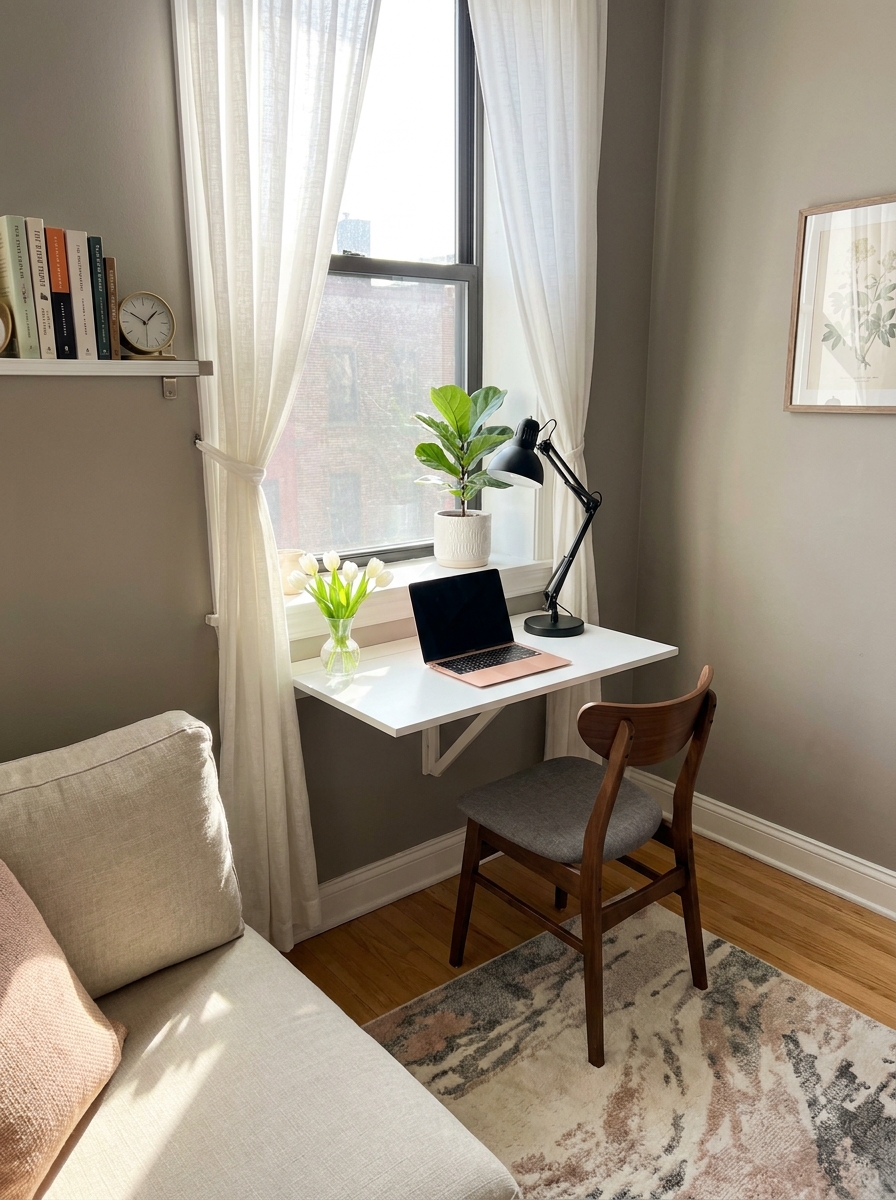
If you’re lucky enough to have wall space under a window, claim it immediately for your desk. Working with natural light streaming in isn’t just prettier — it genuinely affects your mood and productivity. A simple table or floating shelf positioned directly under a window creates an instant focal point that makes even the smallest office feel intentional.
The trick is keeping the windowsill clear so you don’t block your light source. Let the window be the star. Add sheer curtains if you get harsh afternoon sun, but otherwise, keep it simple. This setup works especially well in bedrooms where you can position your desk under a window that would otherwise just have a plant sitting on the sill.
Style this space with minimal desk accessories since the window provides all the visual interest you need. A small vase with fresh stems, your laptop, and maybe one beautiful desk lamp for evening hours. That’s it. The view does the heavy lifting here, and your workspace feels connected to the outside world instead of trapped in a corner.
4. The Built-In Desk Nook Between Shelves
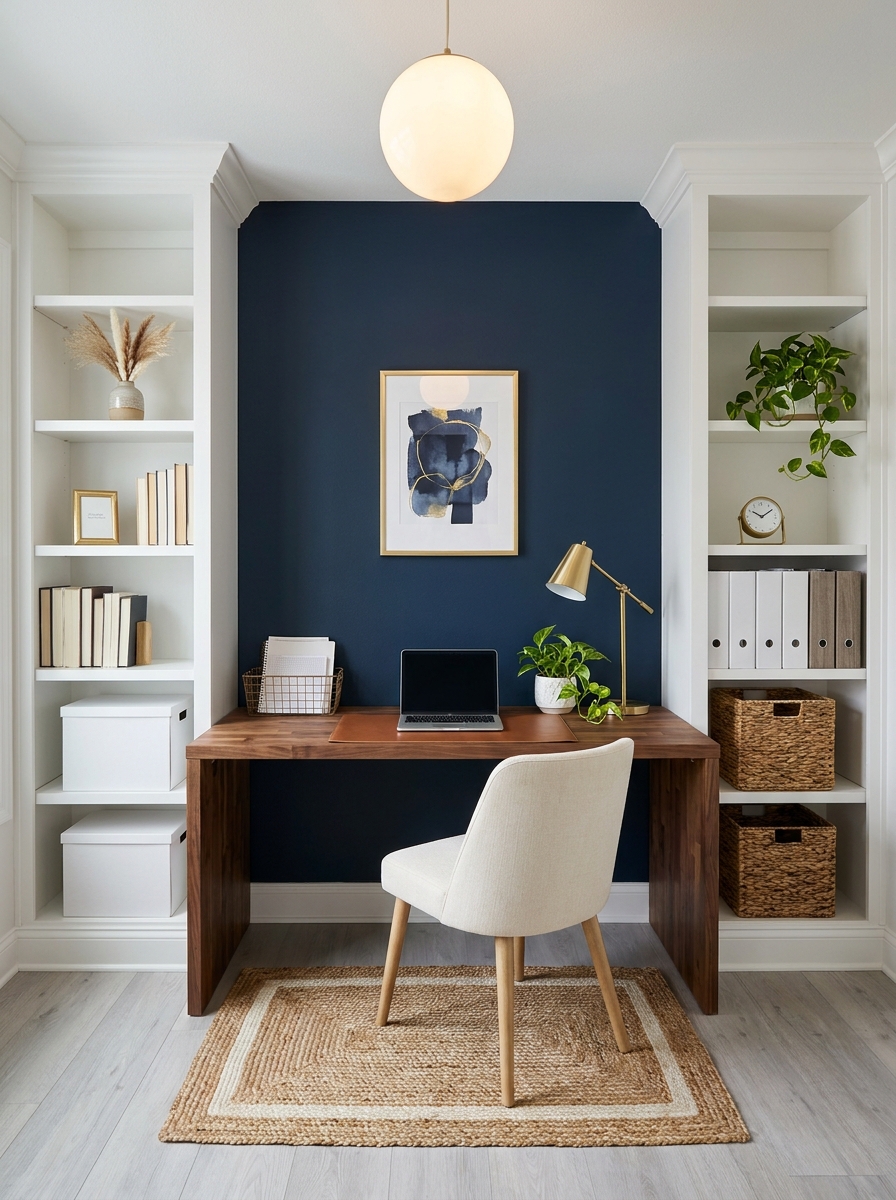
Creating a desk nook flanked by floor-to-ceiling shelving transforms an ordinary wall into a hardworking office that looks custom and expensive. The shelves act like bookends, defining your workspace while providing storage that reaches all the way up. This setup feels substantial without eating up floor space since everything lives on one wall.
You can DIY this with ready-made shelving units on either side and a simple butcher block or floating shelf spanning between them, or go full custom with built-ins if you’re ready to commit. Either way, the vertical storage is what makes this work for small spaces — you’re using the wall height instead of spreading out across the floor.
Style the shelves with a mix of pretty and practical. Baskets for hiding messy supplies, a few favorite books, small plants, and maybe a framed photo or two. The desk surface itself should stay relatively clear since you’ve got all that vertical real estate to work with. This is the kind of setup that makes people ask if your office was professionally designed.
5. The Wall-Mounted Fold-Down Desk That Tucks Away
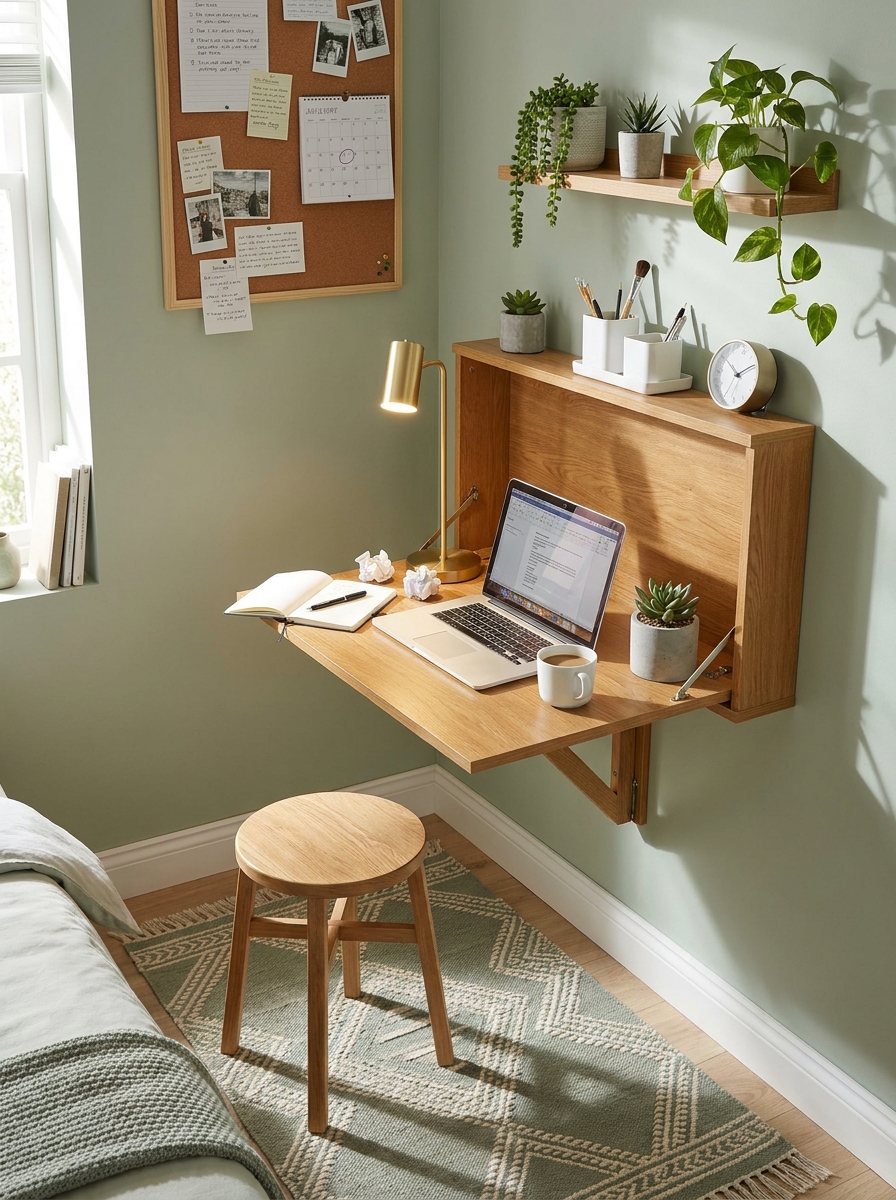
Okay, this one is pure genius for tiny spaces. A fold-down desk mounts flat against your wall and literally disappears when you’re done working. You flip it down when you need it, flip it up when you don’t. It’s like magic for small apartments!
I love how this gives you a legitimate workspace without sacrificing floor space. You can install one in a hallway, bedroom corner, even a kitchen nook. When it’s up, you’d never know there’s a desk there at all. The key is choosing one with built-in storage or a small shelf above so your essentials stay organized and ready to go.
The best part? You get that psychological separation between work and home life. When the desk folds up, work is officially over. It’s a tiny ritual that actually helps you mentally clock out, which is something we all need when working from home.
6. The Under-Stairs Office with Slanted Ceiling Charm
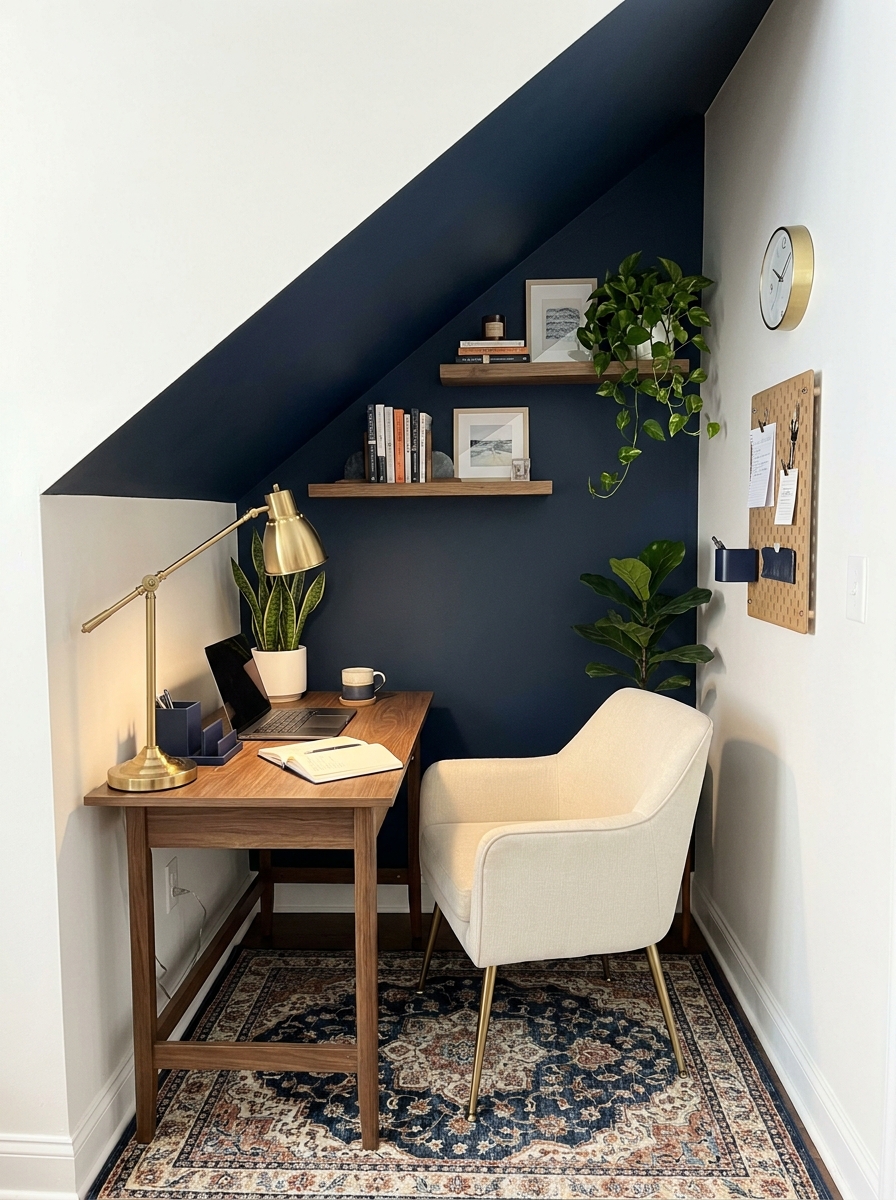
That weird space under your stairs? It’s basically begging to become the coziest little office ever. I’m obsessed with these tucked-away nooks because they feel so intentional and special, like your own private work cave.
The slanted ceiling actually works in your favor here. It creates this intimate, focused vibe that’s perfect for concentration. You’ll want a custom or small-scale desk that fits the unique dimensions, but once it’s in there, it feels like the space was always meant to be an office. Add task lighting since these spots tend to be darker, and suddenly you’ve got a surprisingly functional workspace.
What I really love is how this turns dead space into something productive and pretty. It’s that satisfying feeling of using every inch of your home wisely. Plus, there’s something kind of magical about working in a spot that feels hidden away from the rest of the house.
7. The Dual-Purpose Guest Room Desk Along the Wall
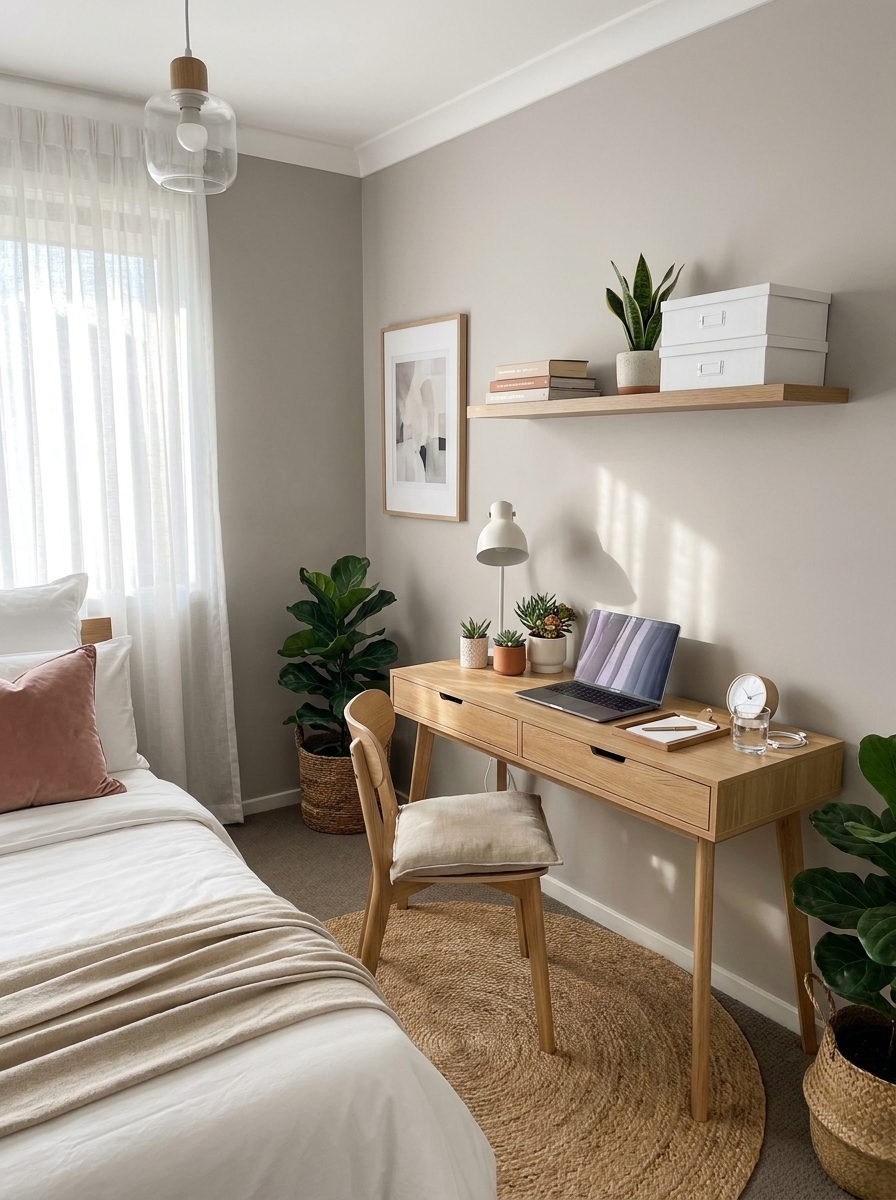
Here’s the thing about guest rooms—they sit empty most of the time, right? So why not make them work harder? A slim desk along one wall turns your guest room into a functional office without making it feel like guests are sleeping in your workspace.
The trick is choosing furniture that serves both purposes beautifully. A streamlined desk doesn’t scream “office” the way a giant executive desk would. Keep your setup minimal and organized so it feels more like a pretty console table when guests visit. Use drawer organizers to hide office clutter quickly, and style the desktop with decorative objects that look intentional.
I love this solution because you’re not sacrificing anything. Guests get a lovely room, you get a daily workspace, and everyone’s happy. It’s all about that dual-purpose lifestyle when you’re working with limited square footage.
8. The Kitchen Command Center Desk with Family Calendar
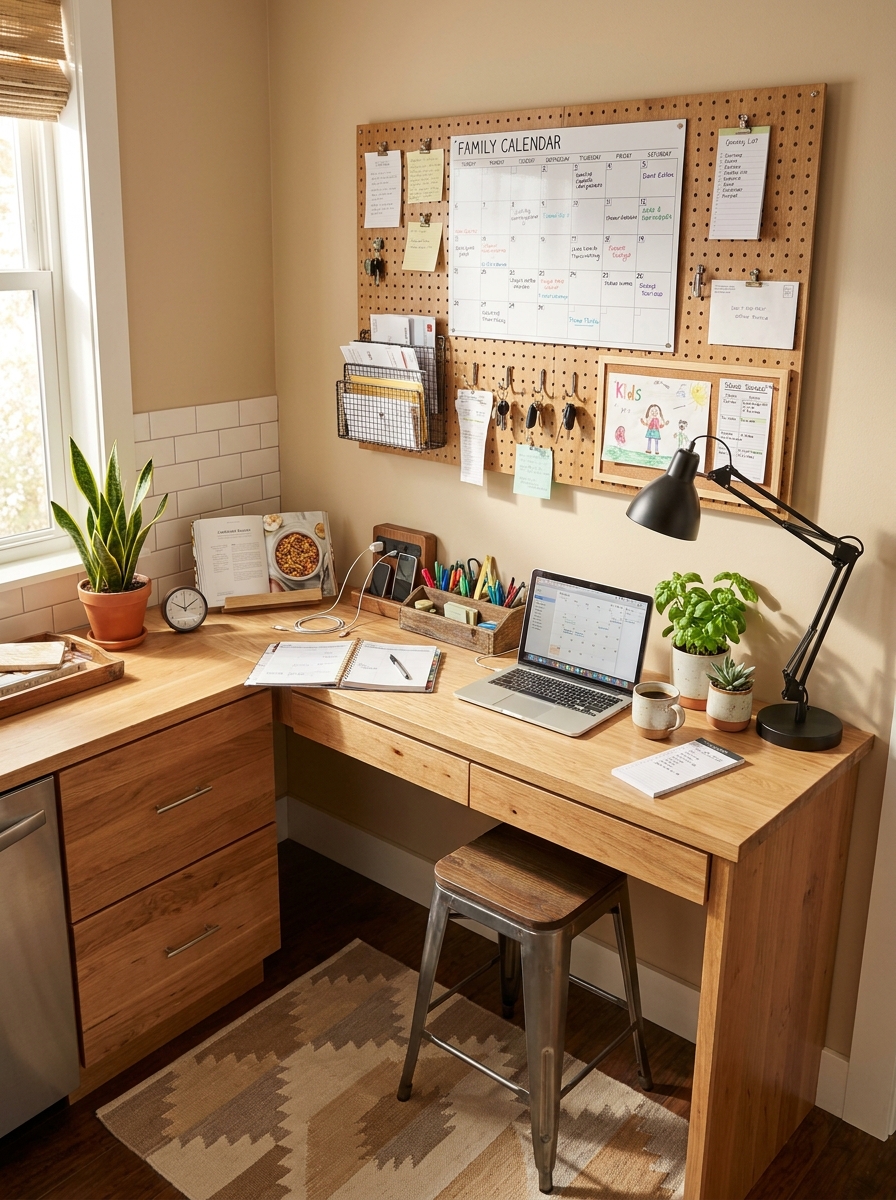
Who says your home office has to be in a bedroom or spare room? If you’re juggling family schedules and need to be in the action, a small desk in the kitchen becomes your command center. I’ve seen this work beautifully in so many homes!
This isn’t about creating a full work-from-home setup—it’s about having a dedicated spot for meal planning, homework help, paying bills, and keeping the family organized. A small desk or even a counter-height workspace with a stool tucked into a kitchen corner or along a blank wall does the trick. Add a big wall calendar, some charging stations, and drawer space for all those random papers that accumulate.
The beauty here is accessibility. You’re not hidden away—you’re part of the household flow while still having your organized zone. It’s especially perfect for parents who need to multitask or anyone who wants their workspace to feel less isolated.
9. The Bedroom Corner Desk That Doesn’t Scream ‘Office’
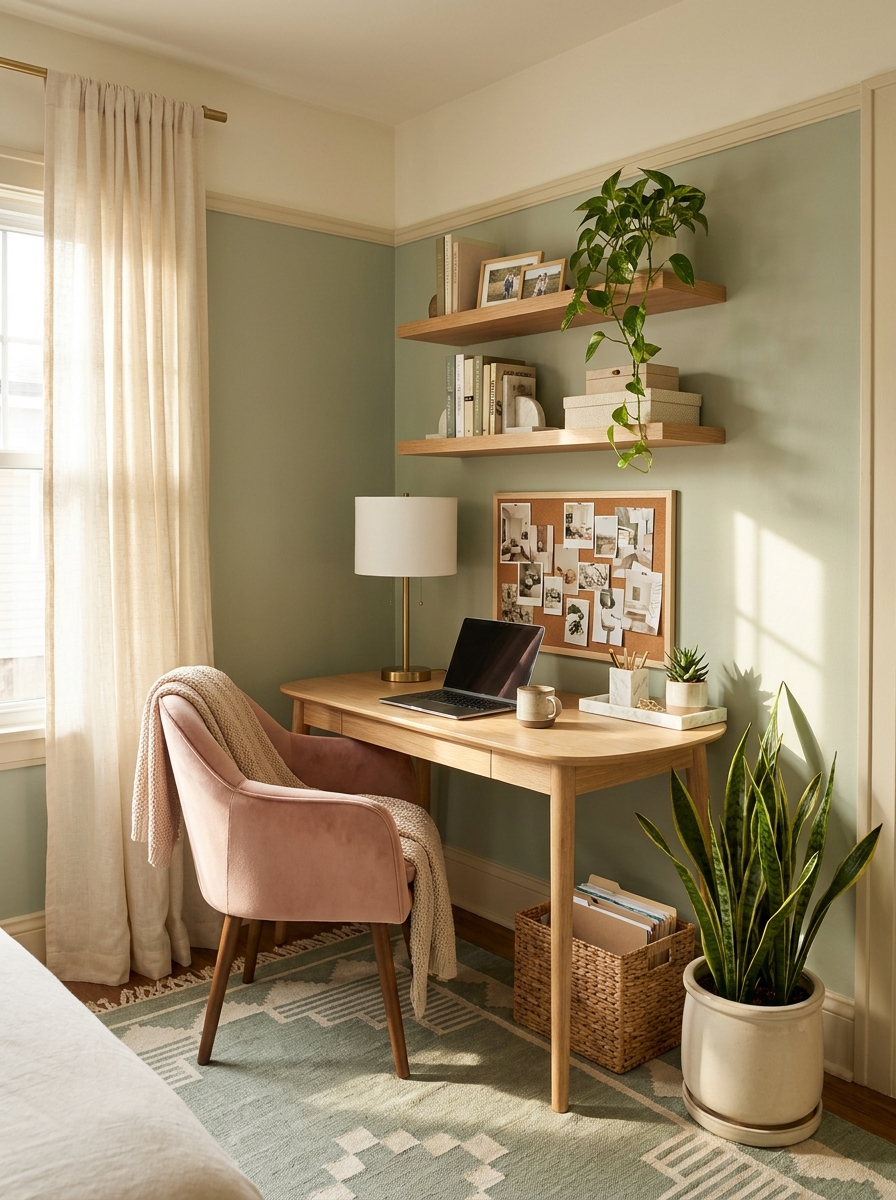
This is the one that sneaks into your bedroom so quietly, you barely notice it’s there. A compact desk tucked into the corner by the window, styled more like a pretty vanity than a workstation. The secret? Keep it soft and bedroom-friendly with colors that match your bedding, not harsh office vibes.
I love this setup for people who work from home but don’t want their bedroom to feel like a corporate cubicle. Choose a petite desk in warm wood or a soft painted finish. Add a comfortable upholstered chair instead of a plastic office roller. Keep your supplies hidden in pretty containers that could double as nightstand decor.
The trick is keeping work contained to that corner. When you’re done for the day, close the laptop, light a candle, and mentally shift back to bedroom mode. It’s all about boundaries, even when they’re just visual ones.
10. The Hallway Alcove Desk with Vertical Storage
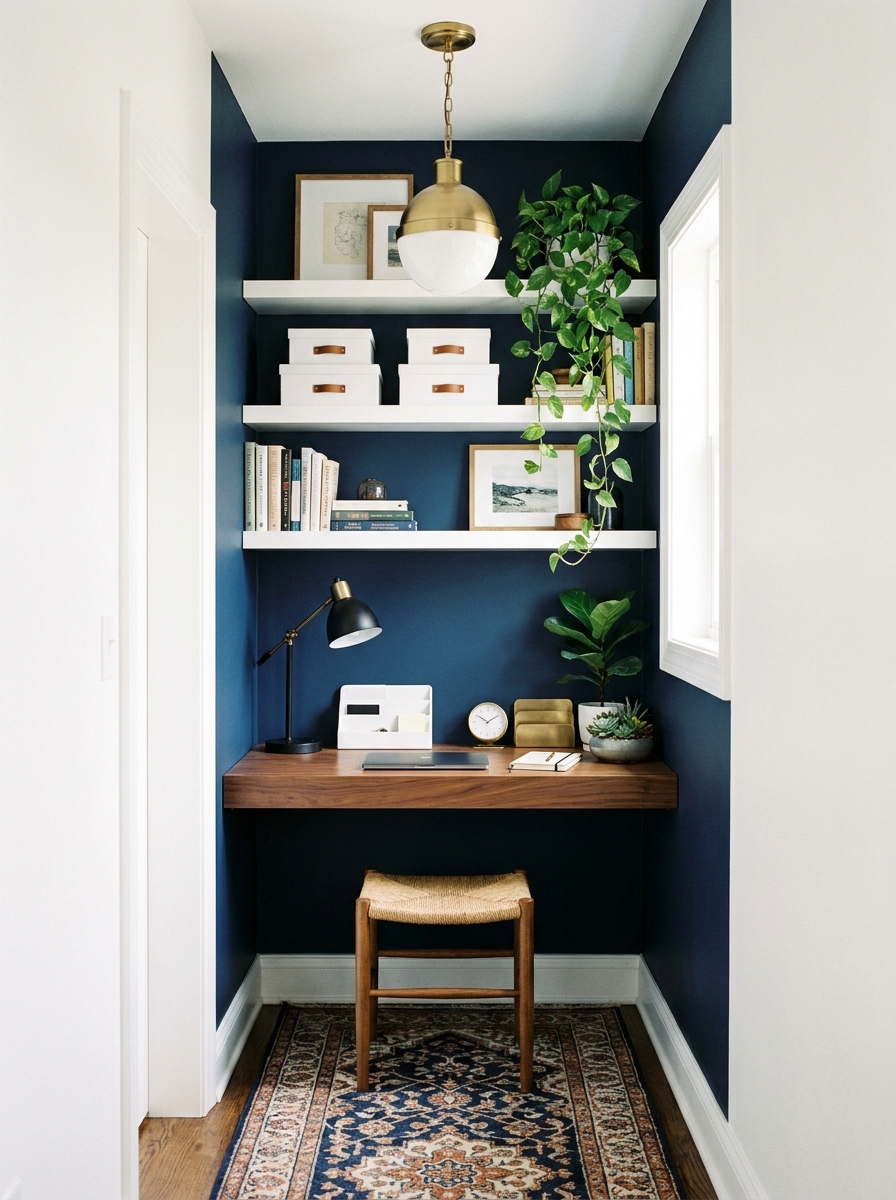
That weird little alcove in your hallway that’s too shallow for furniture? Yeah, that’s your new office. I’m obsessed with these spaces because nobody thinks to use them, but they’re absolutely perfect for a slim desk setup.
Go vertical here since you don’t have much floor space to play with. Install floating shelves all the way up the wall for books, binders, and those pretty storage boxes that hide all your random papers. The desk itself can be a simple wall-mounted shelf or a super narrow console that doesn’t stick out into the walkway.
What I love most is that hallway offices feel intentional and separate from living spaces. You walk past it with purpose. You sit down, you work, you leave. There’s something psychologically helpful about that physical separation, even when your ‘commute’ is just ten steps from the kitchen.
Add a slim stool or backless chair that slides completely under the desk when not in use.
11. The Living Room Secretary Desk That Looks Like Furniture
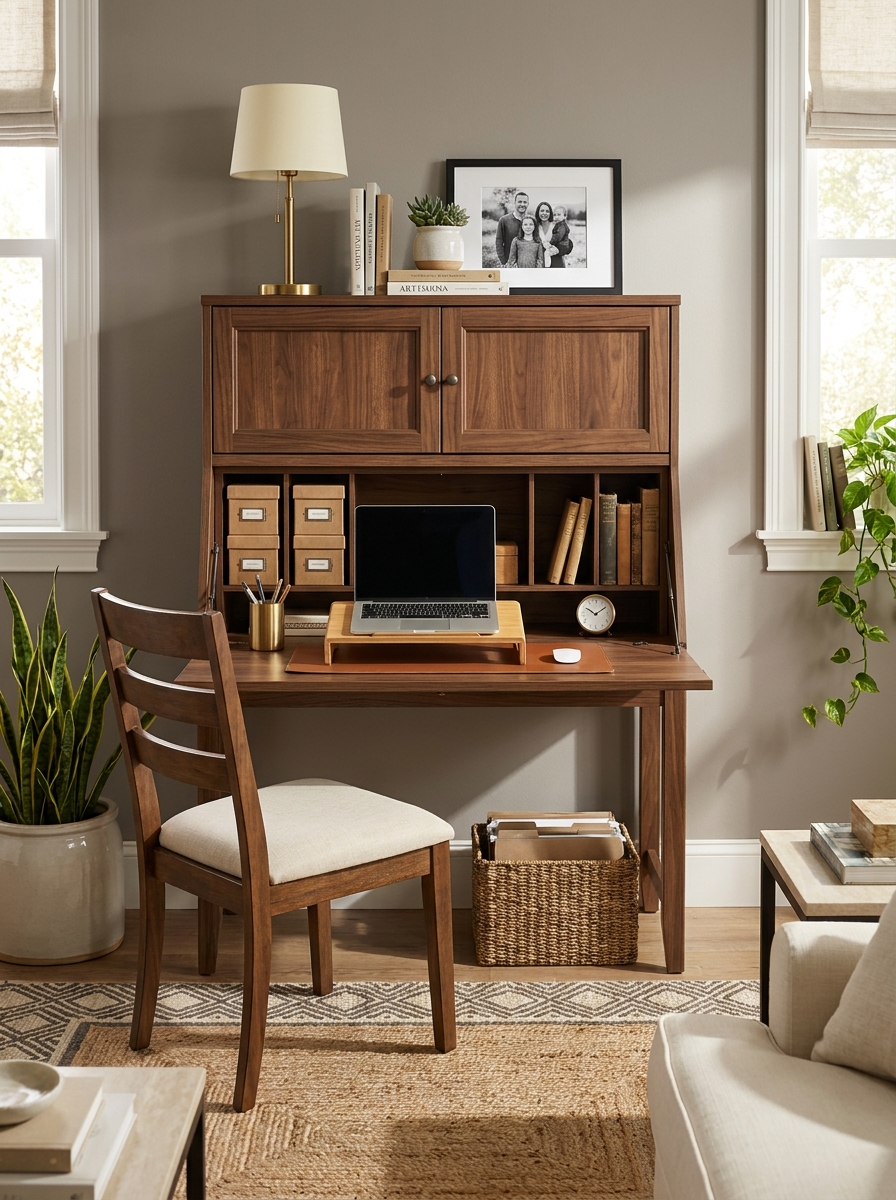
Can we talk about how secretary desks are the most underrated piece of small-space furniture? These beauties look like elegant cabinets when closed, then fold down to reveal a full workspace. Your living room guests will never know you’ve been answering emails there all day.
I especially love vintage or antique secretary desks because they add so much character. But modern versions work too if that’s your style. The key is choosing one that genuinely matches your living room decor, not one that screams ‘I stuck an office in here.’
Inside, you can organize everything perfectly with small drawer dividers, mini bins, and even a charging station hidden in the back. When friends come over, you just fold it up and suddenly you have a beautiful piece of furniture again. It’s like a magic trick for small homes.
Bonus: the built-in organization keeps you from spreading work stuff all over the coffee table.
12. The Multi-Level Desk with Shelving Tower Combo
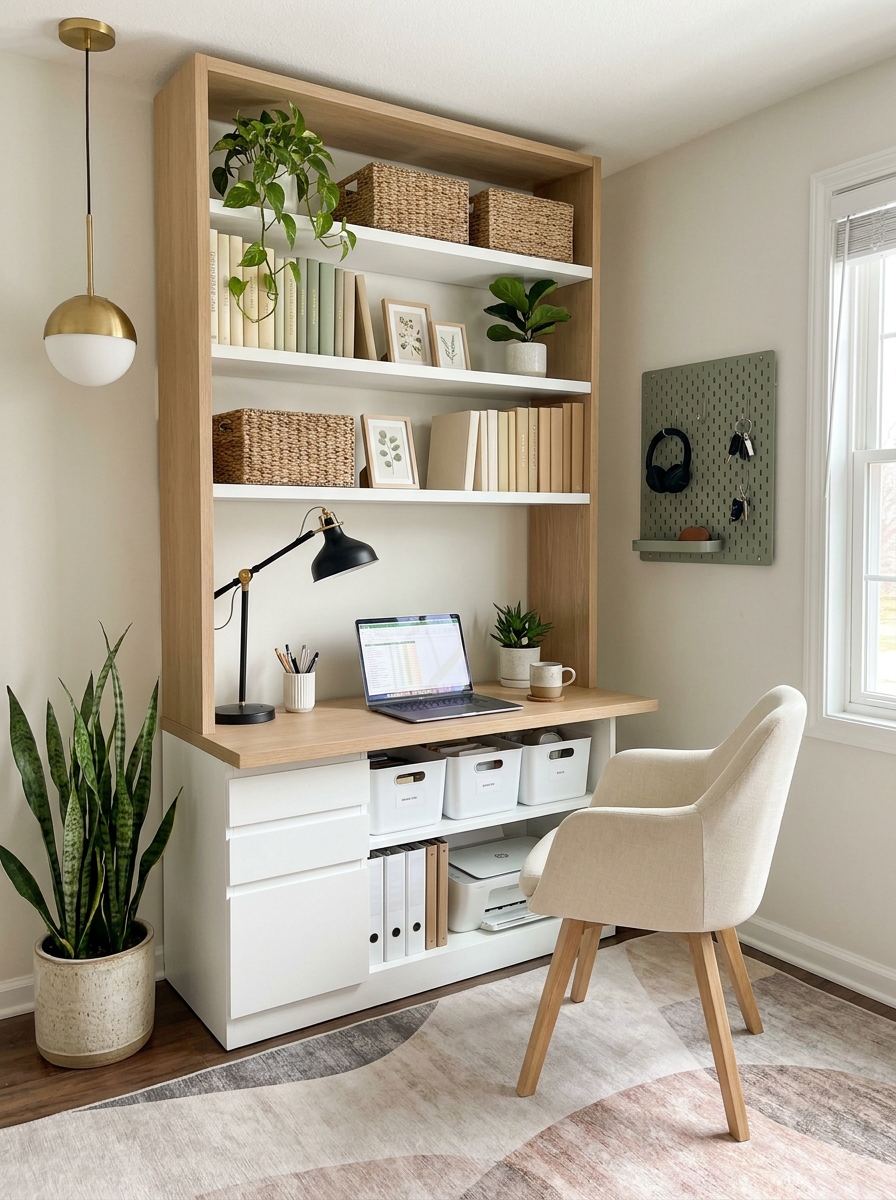
This is for my friends who need actual storage but only have one wall to work with. A desk combined with a floor-to-ceiling shelving tower creates a compact workstation that holds everything without sprawling across the room.
Think of it like a workspace sandwich: desk surface in the middle, shelves stacked above and beside it, maybe even drawers below. Everything you need lives within arm’s reach in one vertical column. I’ve seen these work beautifully in studio apartments, small bedrooms, even carved out of a dining room corner.
The styling here matters so much. Mix functional storage with pretty things so it looks curated, not cluttered. Books arranged by color, matching bins and baskets, a few plants scattered throughout, framed art leaning casually on shelves. You want it to feel like intentional decor that happens to also be wildly functional.
This setup especially works well when you choose modular pieces you can rearrange as needs change.
13. The Pegboard Wall Organizer with Desk Below
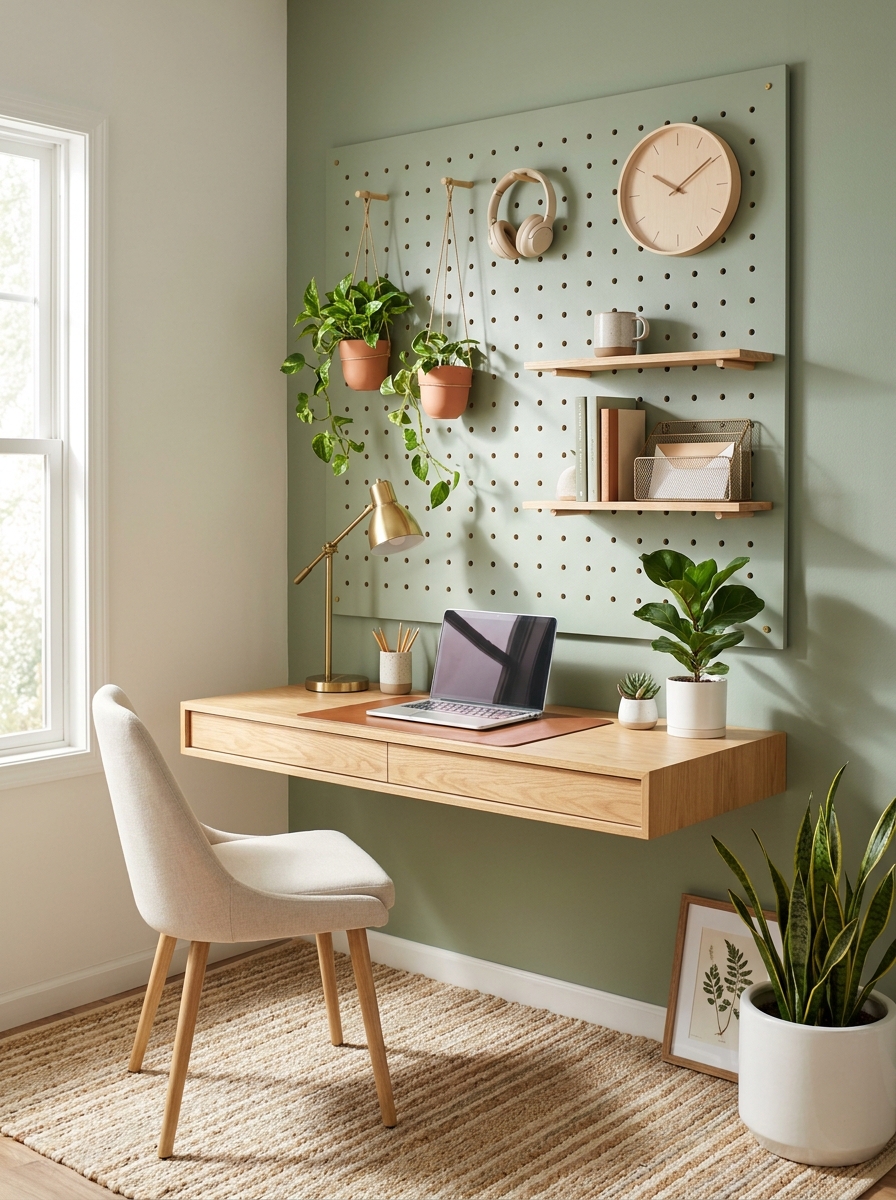
I’m obsessed with pegboard walls right now. They’re like adult Legos for your office! Mount a painted pegboard above a simple floating desk, and suddenly you have endless vertical storage that looks intentional and cool.
The beauty here is customization. Hooks for headphones. Little shelves for your favorite mug. Baskets for mail and paperwork. Everything has a spot, and you can rearrange it whenever the mood strikes. No drilling new holes every time you change your mind.
I painted mine sage green to match my office vibe, but I’ve seen black pegboards that look super sophisticated and white ones that disappear into the wall. The desk underneath stays clean because everything floats above it. It’s visual organization that actually works, and it photographs beautifully for those days when you want to share your setup. Your coworkers on Zoom will definitely ask about it.
14. The Narrow Console Table Desk in the Entryway
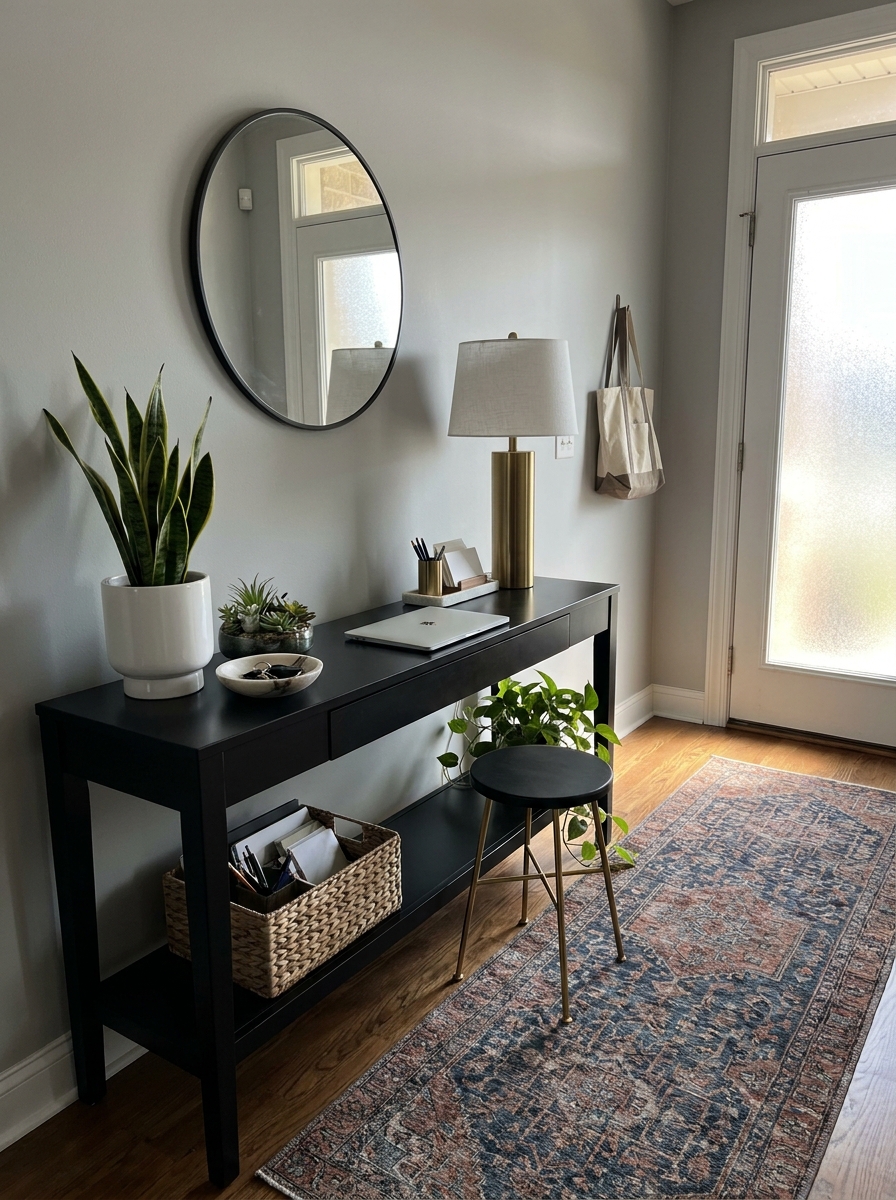
Who says your office needs to be in a bedroom or spare room? A slim console table in your entryway can pull double duty as a workspace, and honestly, it might be the smartest use of that wall you’ve been ignoring.
The key is choosing a console that’s narrow enough to walk past comfortably but deep enough for a laptop and a coffee cup. I’m talking 12-14 inches deep max. Add a sleek stool that tucks completely underneath, and you’ve got a workspace that doesn’t block the flow of your home.
This setup works beautifully if you don’t work from home full-time or if you just need a spot for paying bills and answering emails. When you’re done, tuck the stool away and it looks like regular entryway furniture. Guests will never know you run your side hustle from that pretty console by the door.
15. The Armoire Office That Hides Everything Behind Doors
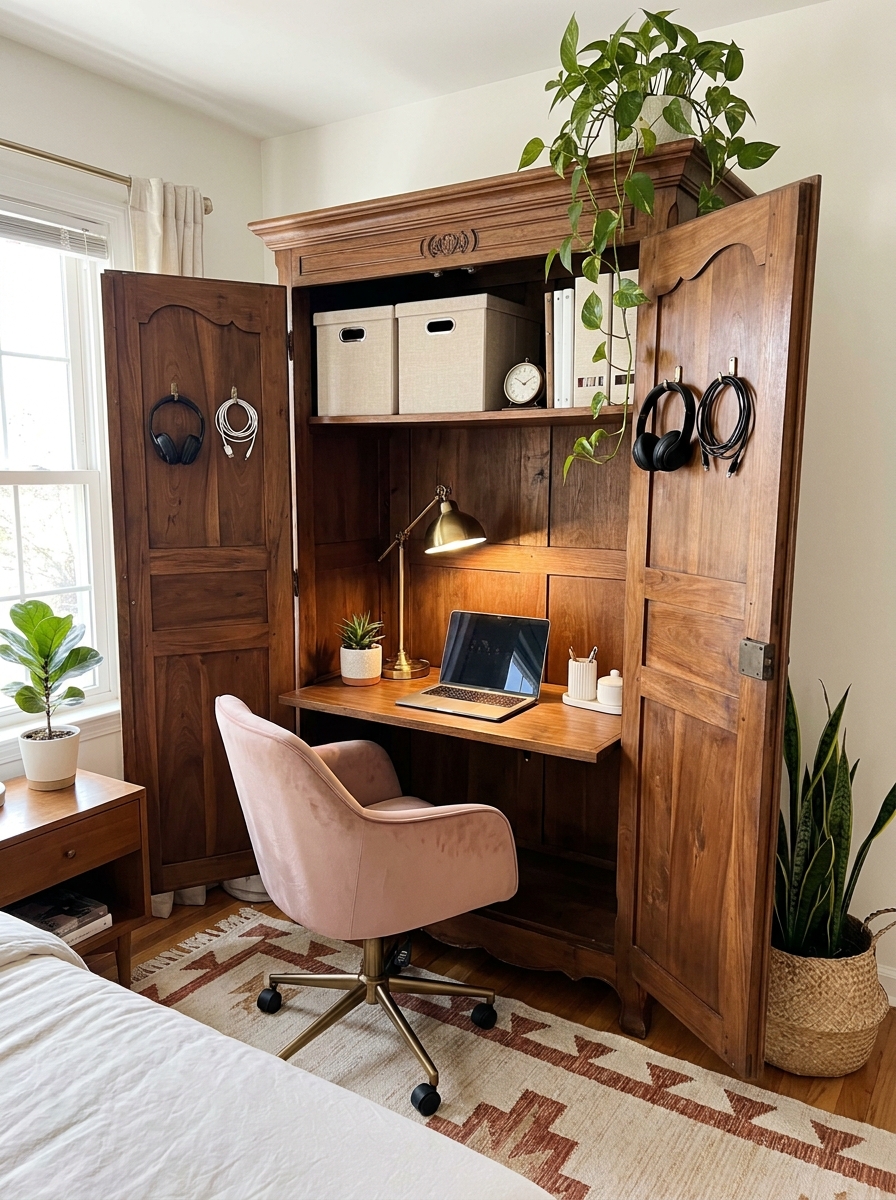
An old armoire can become the most genius home office you never knew you needed. Picture this: beautiful closed doors that hide your entire workspace from view. No more staring at work stuff during dinner or feeling guilty about the messy desk at bedtime.
Remove the hanging rod and add a pull-out keyboard tray or a simple mounted shelf at desk height. Install a power strip inside for your laptop and desk lamp. Use the upper shelves for binders and supplies, add some stick-on hooks inside the doors for headphones or chargers, and you’ve got a completely self-contained office.
When work’s done, you literally close the doors and walk away. It’s the best boundary between work and life I’ve found. Plus, if you choose a pretty vintage armoire, it becomes a statement piece in your bedroom or living room that nobody suspects is your secret productivity zone.
16. The Rolling Cart Desk for the Ultimate Flexible Office
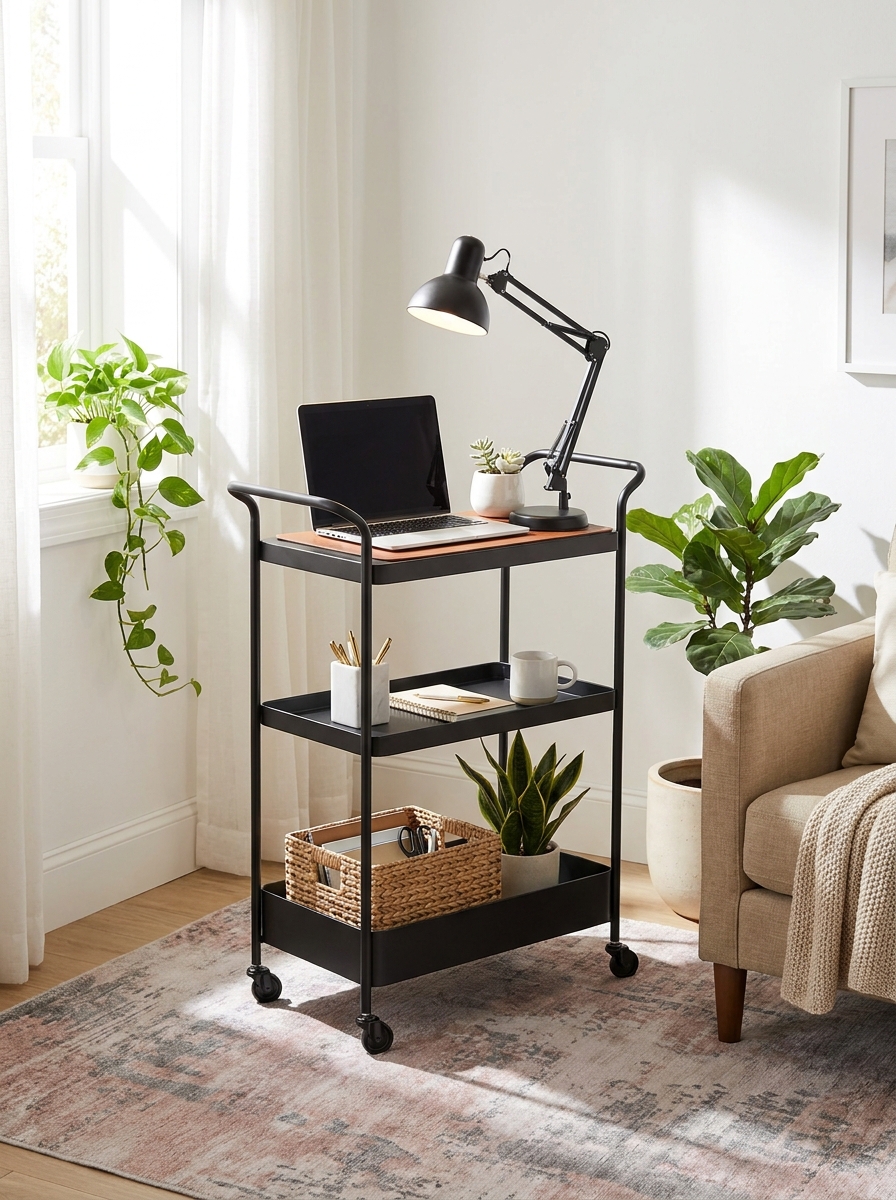
Sometimes you need an office that moves with you, and a sturdy rolling cart is the answer. I’m not talking about a flimsy kitchen cart—I mean a solid bar cart or metal utility cart that’s the right height to work from while sitting on your couch or a chair.
Set up the top tier as your actual desk surface with your laptop and a small lamp. The lower shelves hold notebooks, your planner, pens in a cute cup, and maybe your water bottle. When you need to work, roll it to wherever feels good that day. Couch? Kitchen table? Sunny spot by the window? Your office goes with you.
This is perfect for tiny apartments where dedicating a corner to a permanent desk feels impossible. At the end of the day, roll it against a wall or into a closet. It’s like having an office that appears and disappears on command, which honestly feels like magic when you’re living in 600 square feet.
17. The Ladder Shelf Desk with Leaning Storage
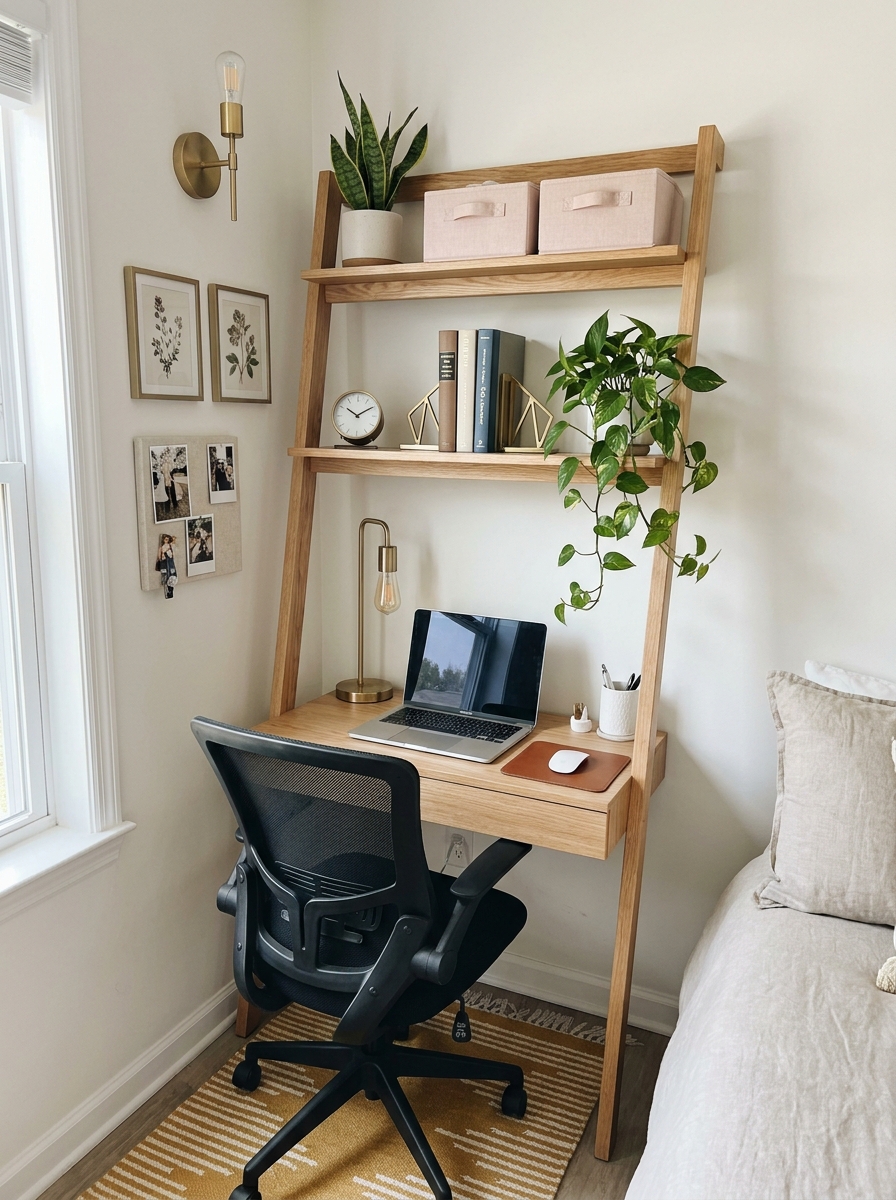
Here’s a genius trick for tiny spaces: ladder desks lean against the wall instead of taking up precious floor real estate. The angled design gives you a slim desktop plus graduated shelves above for all your office stuff. It’s like vertical storage and a workspace had a beautiful baby.
I’m obsessed with how these don’t feel heavy in a room. Because they’re open and angled, they seem to float rather than dominate. You can tuck one into a bedroom corner, squeeze it beside a sofa, or plant it in that awkward narrow wall everyone ignores. The shelves keep everything within arm’s reach without needing a bulky hutch.
Style the upper shelves with pretty storage boxes, a few favorite books, and small plants. Keep the desktop clear for actual work. The whole thing feels intentional and designed, not like you crammed an office into your living space. Which, let’s be honest, you totally did—but nobody needs to know that.
18. The Bay Window Seat Desk with Built-In Storage
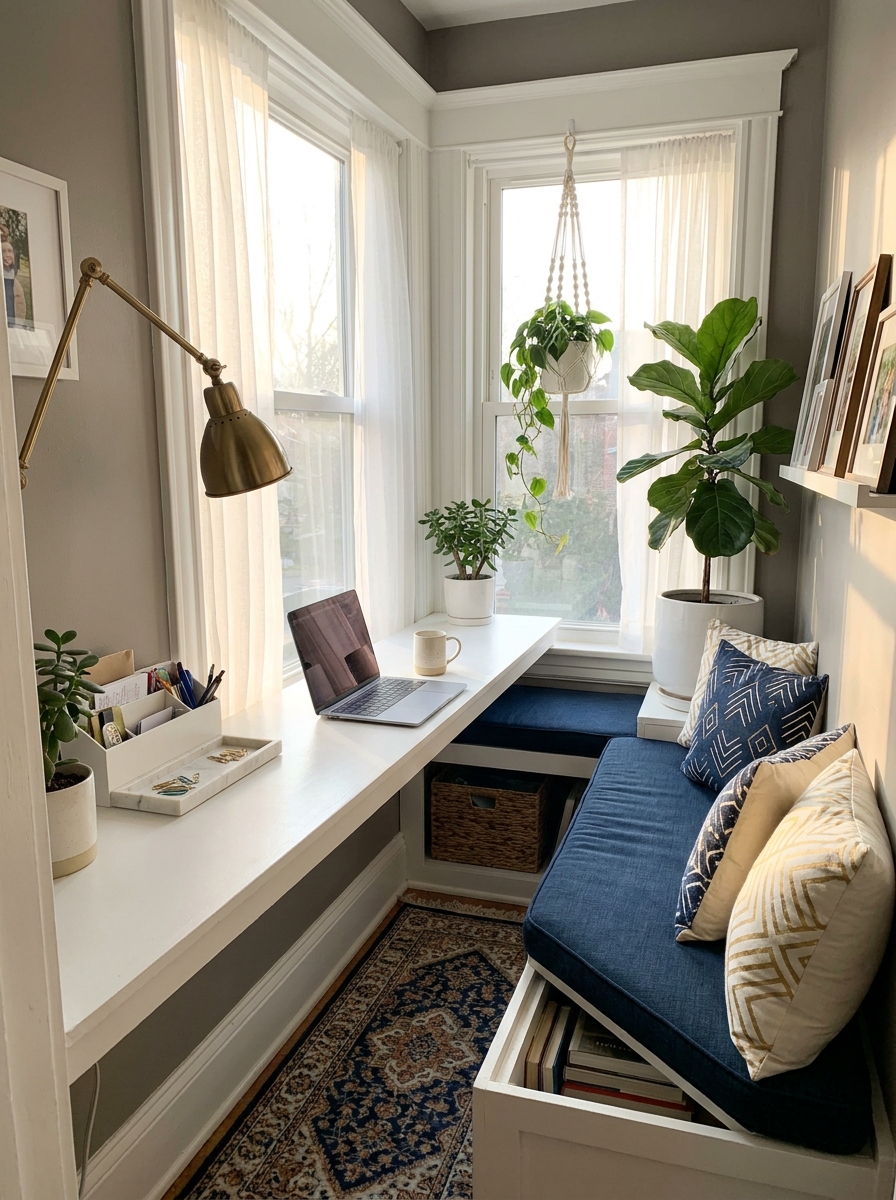
If you’ve got a bay window, you’re sitting on office gold. Build a slim desk surface right into that window nook with storage underneath, and suddenly you have the dreamiest workspace imaginable. Natural light all day, a view while you work, and zero wasted space.
The trick is keeping the desk depth shallow—12 to 15 inches max—so it doesn’t block the window’s charm. Add lift-up seat storage or pull-out drawers beneath for all your office supplies. Throw on a comfy cushion, and you’ve got bonus seating when you’re not working. It’s like getting two pieces of furniture for the footprint of none.
I love how this setup doesn’t feel like an office at all. It reads as a cozy reading nook that just happens to be work-friendly. Style it with soft textures, keep cords hidden in the built-in storage, and you’ll actually look forward to Monday mornings. Well, almost.
19. The Murphy Desk That Folds Flat Against the Wall
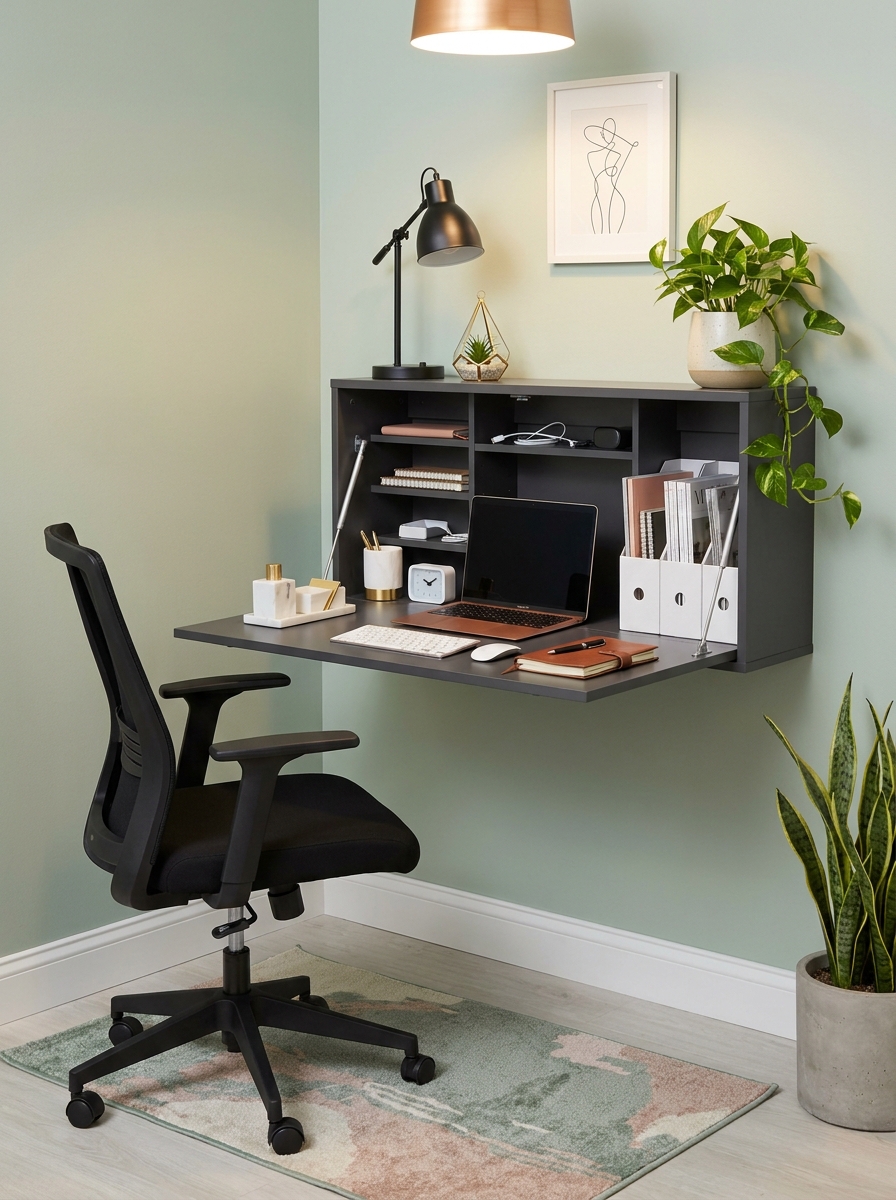
Murphy beds aren’t the only fold-down miracle workers. Murphy desks give you a full workspace when you need it and completely disappear when you don’t. One minute you’re crushing deadlines, the next minute you’ve got a clean wall—it’s basically office magic.
These come in tons of styles, from sleek modern wall panels to charming fold-out secretary desks with chalkboard fronts. When folded up, built-in organizers keep pens, chargers, and notebooks tucked away but ready to go. When folded down, you get a proper desktop with enough room for a laptop and your coffee. No compromises, just clever design.
This is THE solution if you’re in a studio or share your space with roommates who don’t need to see your work mess 24/7. Fold it up after work hours and reclaim your room. Out of sight, out of mind, totally in control. That’s the kind of boundary I can get behind.
20. The Dining Table Dual-Purpose Desk with Pretty Storage Nearby
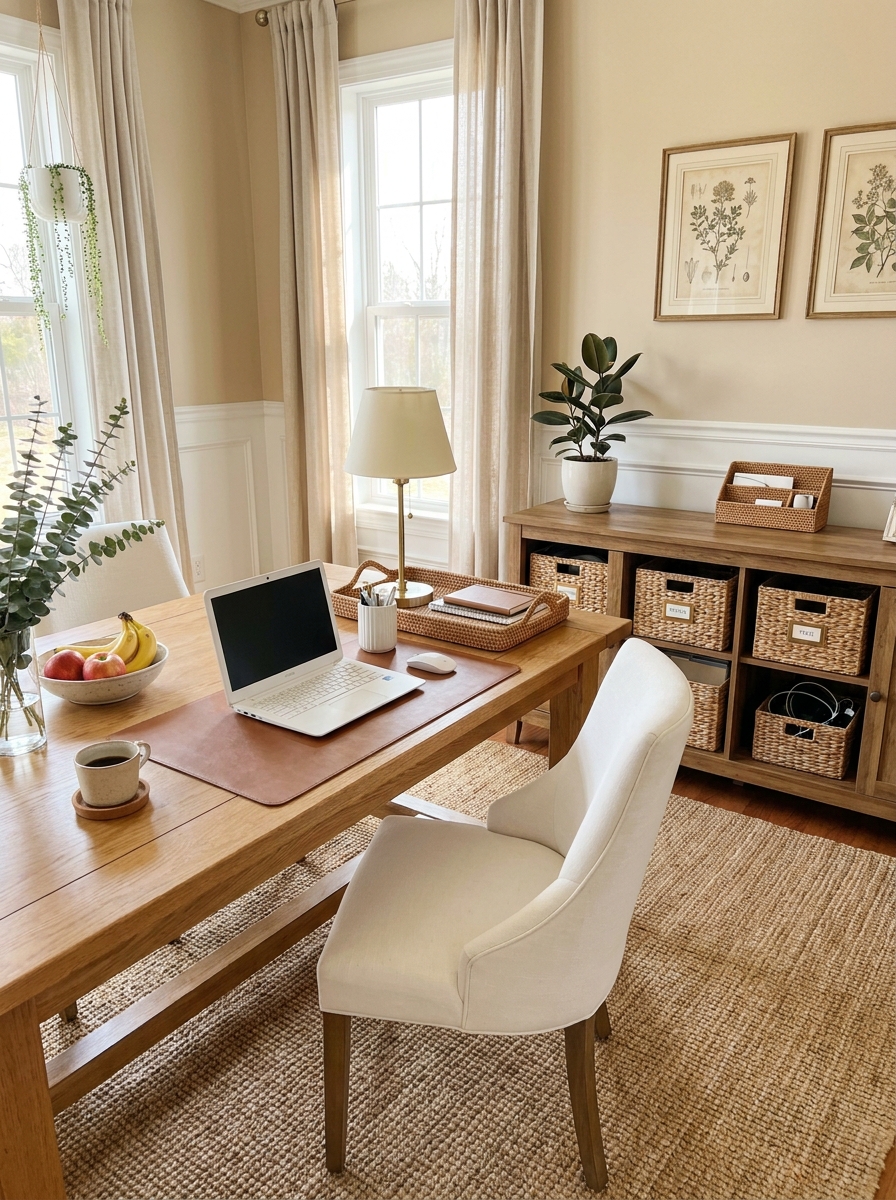
Not everyone needs a dedicated desk—sometimes your dining table pulls double duty just fine. The key is setting up a portable office system that looks good sitting out but packs away easily when dinner guests arrive. It’s about working smarter with what you already have.
Invest in a beautiful storage piece nearby: a sideboard, a bar cart, or a credenza that holds all your work stuff in pretty bins and baskets. Every morning, you pull out what you need. Every evening, it all goes back. Your dining table stays a dining table, but you get a spacious workspace whenever you need it. No permanent office required.
I love this approach for people who actually use their dining room. Why dedicate space to a desk you’ll resent when you could use furniture you already own? Just keep your setup streamlined and use gorgeous organizers. Make it feel intentional, not like you forgot to clean up after yourself.
21. The Corner L-Shaped Desk That Maximizes Every Inch
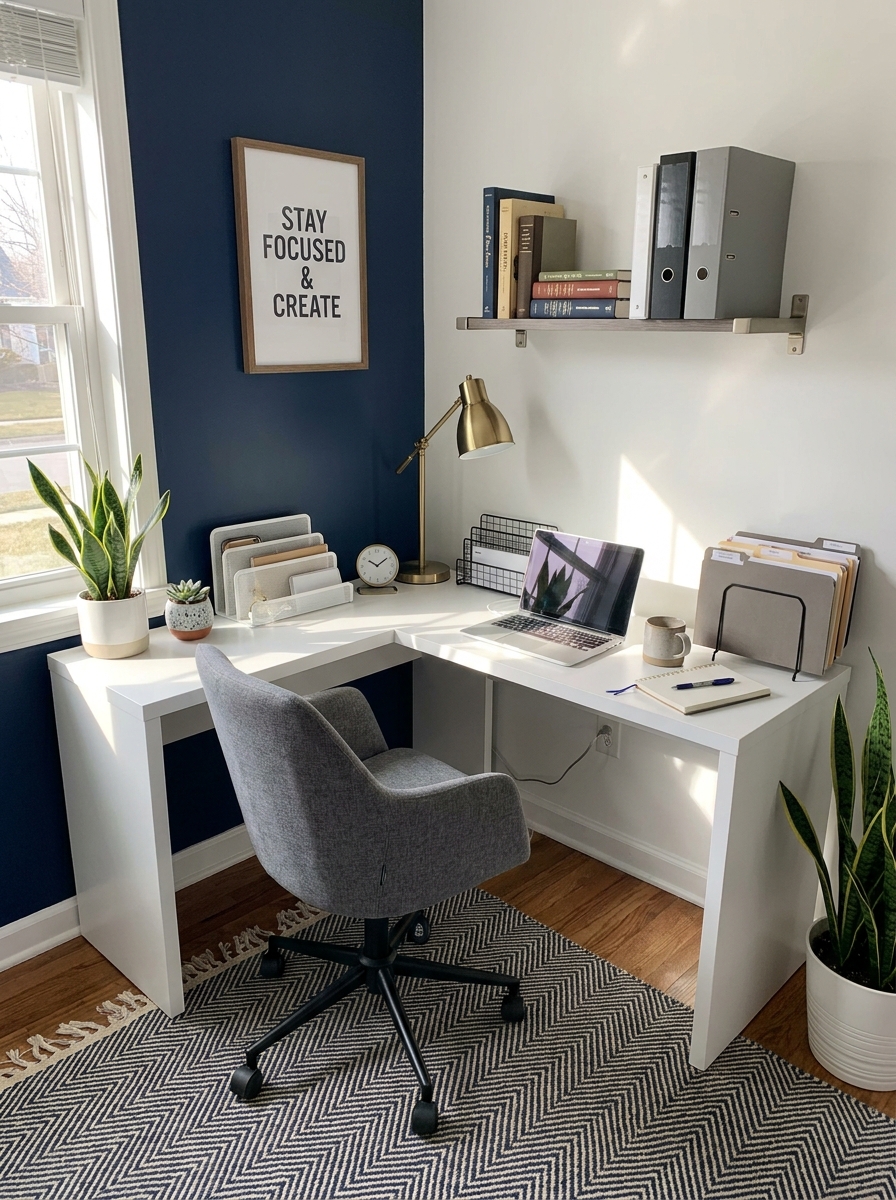
An L-shaped desk is basically magic for small spaces. It wraps around a corner and gives you twice the workspace without taking up more floor space. One side can be your computer zone, the other your paperwork spread-out area.
I love how this setup creates a little office cocoon. You’re tucked into the corner with everything within arm’s reach. No swiveling across the room for your stapler. Just turn your chair slightly and boom, you’re at the other work surface.
The trick is finding the right size L-desk for your actual corner. Measure carefully because too big and it’ll dominate the room, too small and you’re wasting that precious corner real estate. Look for ones with built-in cable management because corner setups can turn into cord nightmares real fast. And don’t forget to position your monitor on the side that gets the best light without glare.
22. The Wall-Mounted Shelf Desk with No Legs
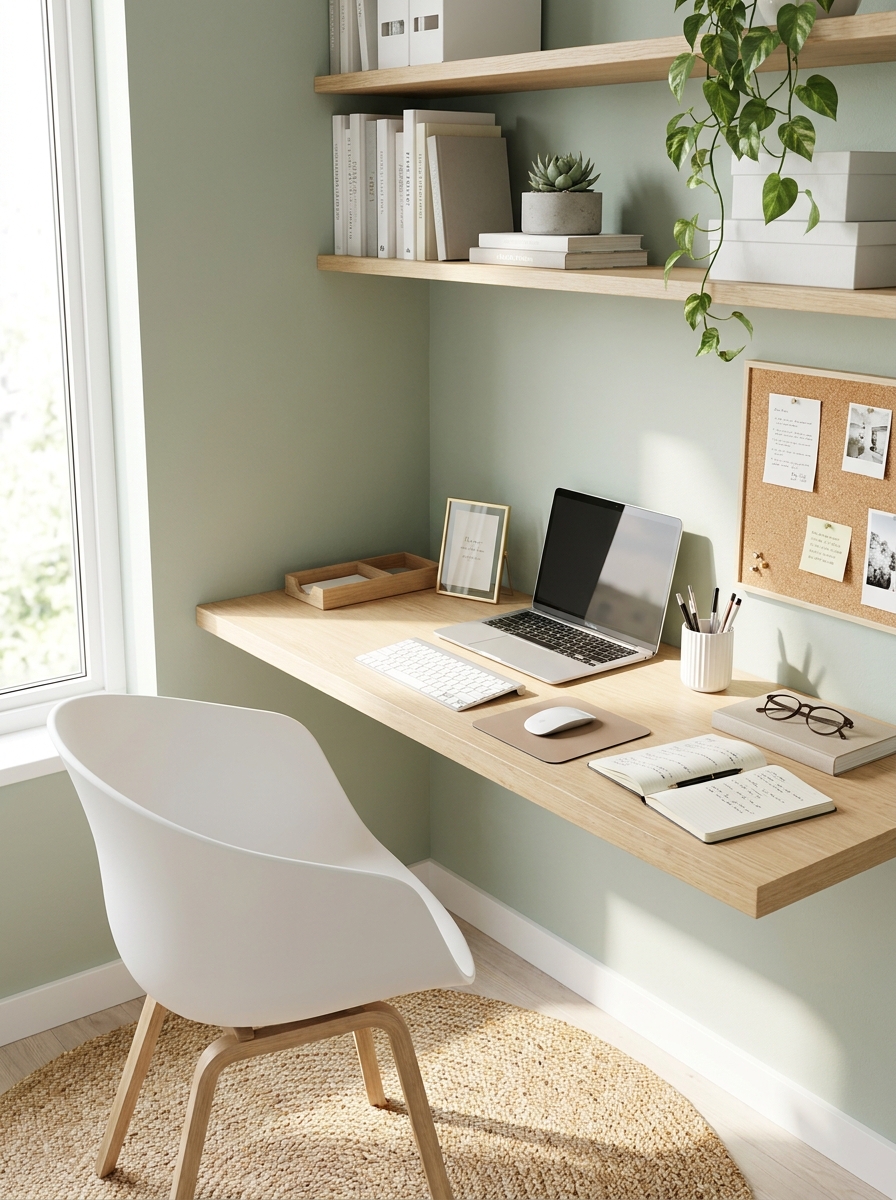
This is the slimmest office solution you’ll ever see. It’s literally just a floating shelf mounted at desk height with a chair pushed under it. No bulky desk legs stealing your floor space or making the room feel crowded.
What I love most? You can mount it at the exact height that works for your body. No more too-high or too-low standard desk problems. And because there’s nothing underneath, you can slide a filing cabinet or storage ottoman right under when you’re not working.
The key is making sure it’s mounted into studs or using really heavy-duty anchors. This isn’t the time to wing it with whatever screws you found in the junk drawer. You need this baby to hold your laptop, monitor, and that “I’ll organize it later” pile of papers without ripping out of the wall. Add a couple of floating shelves above and you’ve got a complete office that barely exists.
23. The Behind-the-Sofa Desk That Uses Dead Space
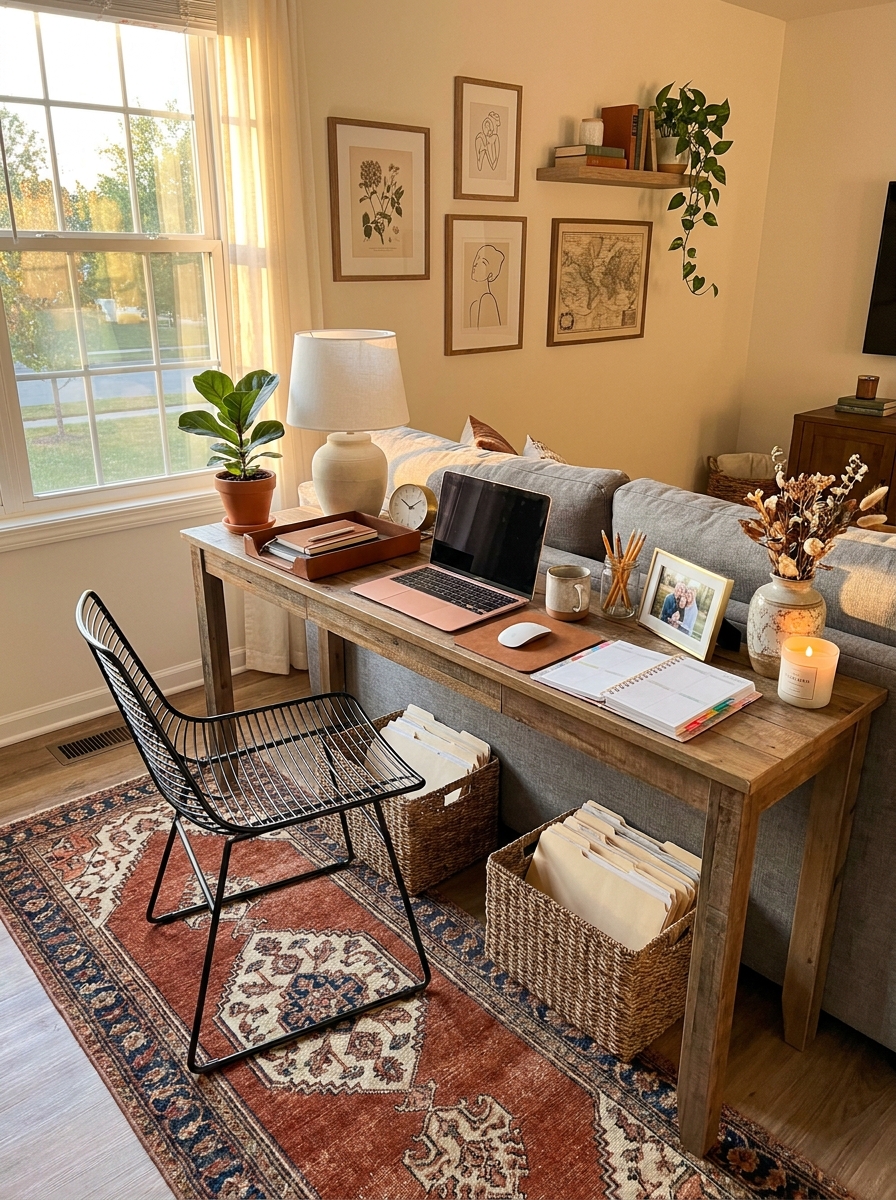
There’s usually this weird no-man’s-land behind a sofa that’s pushed away from the wall. Dead space just sitting there doing nothing. Enter: the sofa table desk. It’s skinny enough to fit behind your couch but deep enough to actually work at.
This is perfect for studio apartments or open-plan spaces where you need an office but don’t have a spare room. You’re technically in the living room, but you’re also kind of hidden behind the sofa, which gives you a surprising amount of focus. Plus, when you have guests, it just looks like a normal console table.
The height is important here. You want it to be roughly the same height as your sofa back so it feels intentional, not awkward. And keep it styled pretty on the side facing the room because that’s what people will see when they walk in.
24. The Vertical Stacked Shelf Desk for Tiny Footprints
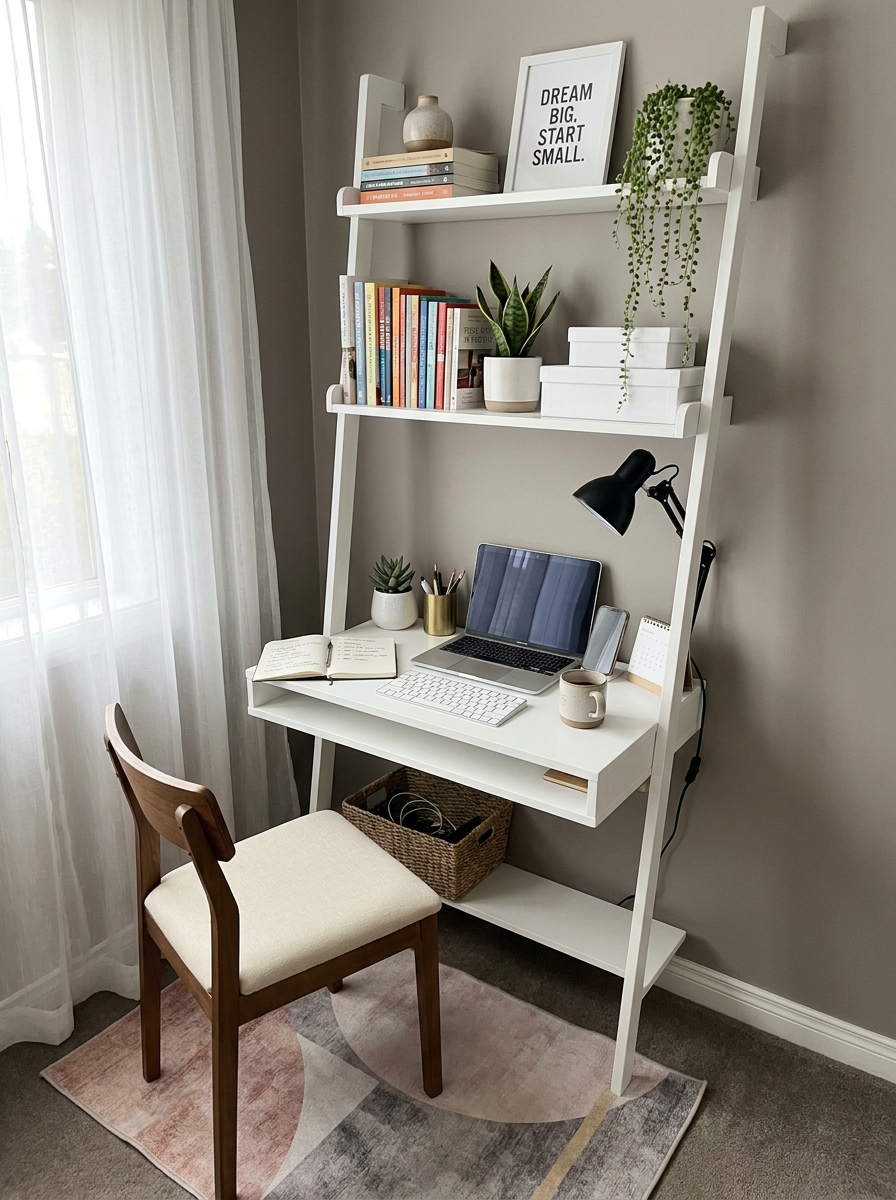
This is basically a ladder shelf where one of the shelves becomes your desk surface. The footprint is ridiculously small because it leans against the wall, but you get multiple levels of storage climbing upward. Perfect for truly tiny spaces.
I’m obsessed with how much storage you get in such a slim profile. The bottom shelf holds your desk essentials, middle shelves are for books and supplies, top shelf is for pretty things that make you happy. Everything’s visible and within reach, but it doesn’t feel cluttered because of the open design.
The angle matters more than you’d think. Too steep and things slide off, too shallow and it takes up too much floor space. Most good ones lean at about 75 degrees. Make sure whatever you’re using as the desk shelf is deep enough for your laptop with a few inches to spare, or you’ll be constantly worried about it sliding off the edge.
25. The Room Divider Desk That Creates an Office Zone
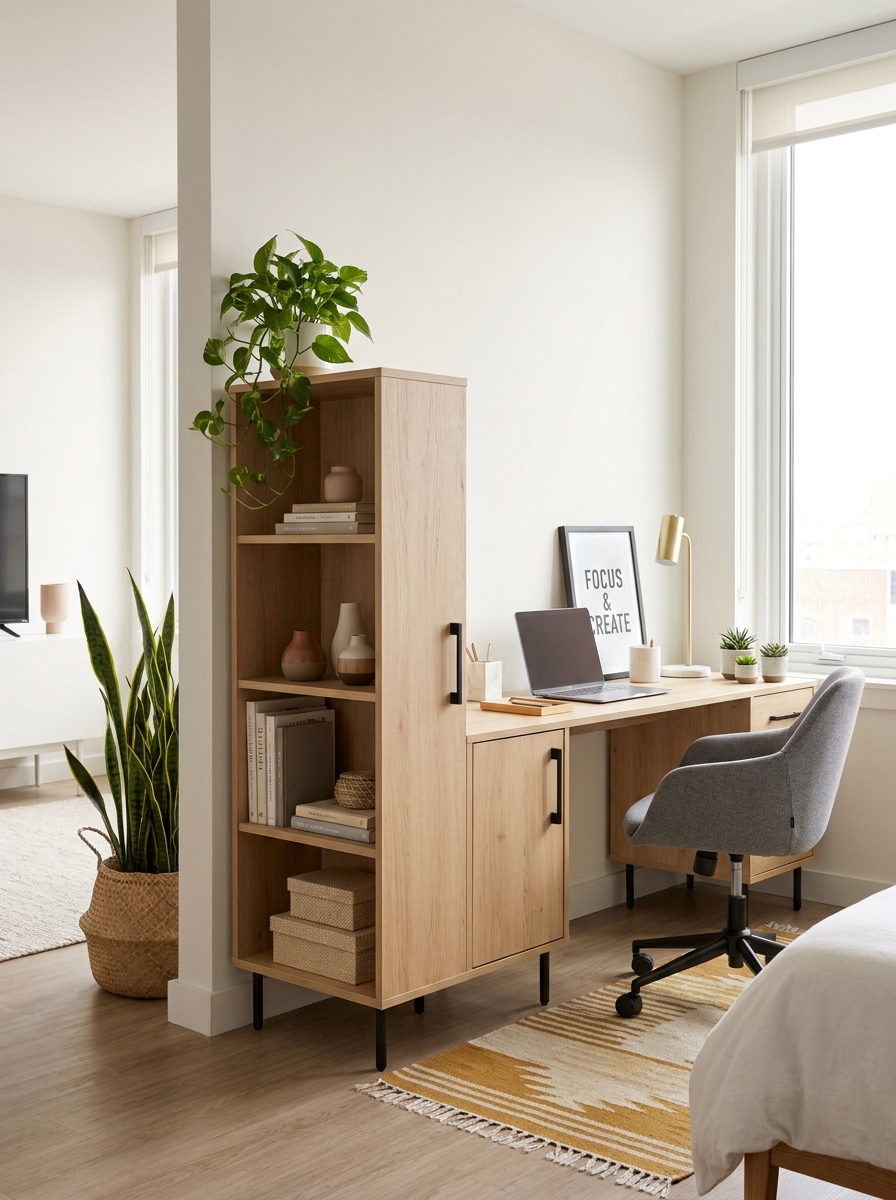
Here’s a genius move for studio apartments or open-concept spaces: use your desk as a room divider. Position a console-style desk perpendicular to the wall so it defines your work zone while keeping sight lines open. The back of the desk faces your living space, so keep it pretty with organized shelves or a fabric panel.
This setup gives you actual separation without closing off the room. You get a psychological boundary between work and life, which is huge when everything lives in one space. Plus, you can access your desk from both sides if you choose a design with open shelving.
I love this idea because it creates two distinct zones in one smart move. Your office feels like its own little area, but you’re not staring at a blank wall all day. Add a tall plant beside the desk to enhance that room-divider effect, and suddenly your studio feels like it has a real office corner.
Quick Guide
## Small Office Budget Breakdown
Wondering what you’ll actually spend? Here’s what real small office setups cost:
Ultra Budget ($100-300): IKEA floating shelf desk + secondhand chair + DIY pegboard organization + thrifted lamp. Perfect for renters or temporary setups.
Mid-Range ($300-800): Quality wall-mounted desk or small writing desk + ergonomic chair + coordinating shelving + proper task lighting + matching accessories. This is the sweet spot for most people.
Investment ($800-1500+): Custom built-ins or high-end furniture + designer task chair + professional lighting + premium organizational systems. Worth it if this is your daily workspace.
The biggest cost is usually the chair — and that’s where you should spend. Your back will thank you. You can DIY or budget-shop almost everything else, but a good chair is non-negotiable if you’re working 40 hours a week.
Your Small Office Can Absolutely Have It All
The most beautiful thing about designing a small home office is that limitations actually make you more creative. When you can’t spread out across a huge room, you get intentional about every single choice. That floating desk isn’t just functional — it’s a design moment. That closet conversion isn’t just clever — it’s your own private workspace that shuts away at the end of the day.
You don’t need square footage to create a workspace that makes you excited to tackle your to-do list. You need a spot that feels like yours, with good light, smart storage, and enough beauty to make you smile when you sit down with your coffee. Whether you’re claiming a corner, converting a closet, or building shelves around a tiny desk, the goal is the same: productive and pretty in equal measure.
Start with the space you have, not the space you wish you had. Measure that corner. Open that closet door. Look at your room with fresh eyes and imagine what’s possible. Your perfect small office is already there — it’s just waiting for you to create it.
Frequently Asked Questions
How do you make a small home office look bigger?
Use light colors on walls and furniture to reflect light and create airiness. Wall-mounted or floating desks eliminate bulky legs and free up visual floor space. Vertical storage pulls the eye up instead of out. A small mirror can also make the space feel more open by reflecting light and views.
What is the smallest space you can fit a home office?
You can create a functional office in as little as 2 feet by 4 feet — about the size of a standard closet. A wall-mounted desk that’s 18 inches deep gives you enough workspace for a laptop and notebook. The key is using vertical wall space for storage instead of spreading out horizontally.
How can I separate my small home office from my bedroom?
Use a folding screen or curtain to create visual separation when you’re working. A closet office with doors is ideal because you can literally shut work away. If your desk is in the open, face it toward a wall instead of your bed so you’re not staring at work when you’re trying to relax.
What furniture do you actually need for a small home office?
At minimum, you need a desk surface (even a floating shelf works), a comfortable chair, and task lighting. Everything else is bonus. Add shelving or a small filing system if you have paperwork, but many people work entirely digitally now and just need those three core pieces.
How do you organize a small home office with no storage?
Go vertical with wall-mounted shelves, pegboards, or hanging organizers. Use the space under your desk for a small filing cabinet or rolling cart. Desktop organizers keep supplies contained without spreading across your work surface. Digital storage reduces the need for physical filing systems.