19 Playful Kids Room Decor Ideas That Actually Stay Organized
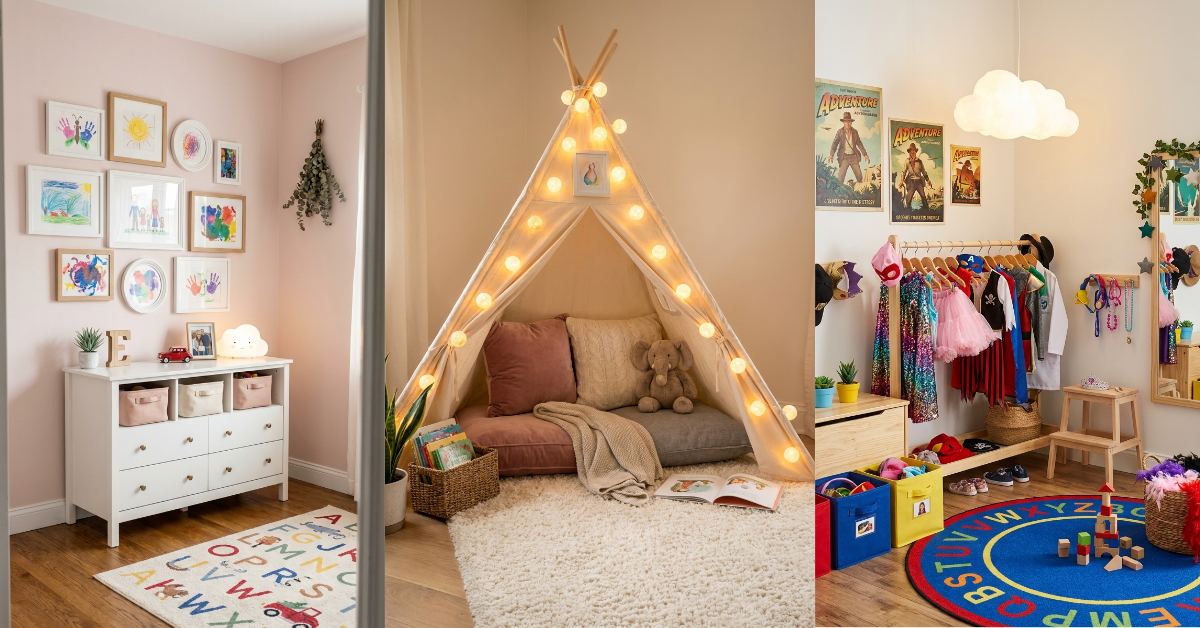
You walk into your kid’s room and it’s chaos. Again. Toys everywhere, books scattered, stuffed animals staging what looks like a hostile takeover. You’ve seen those gorgeous kids’ rooms on Pinterest and wondered how they actually function in real life. Here’s the thing: a beautiful kids’ room doesn’t have to be a showroom that nobody touches. It can be colorful, creative, and yes, even stay relatively tidy. The secret? Designing spaces that make it easy for kids to play AND put things away. Think smart storage that doesn’t look like plastic bins from 2003, play zones that spark imagination without creating clutter traps, and decor that grows with them so you’re not redecorating every eighteen months. I’ve spent years figuring out what actually works in real homes with real kids. These 19 ideas blend fun with serious functionality. Let’s get into it.
1. Low-Level Book Ledges That Invite Reading
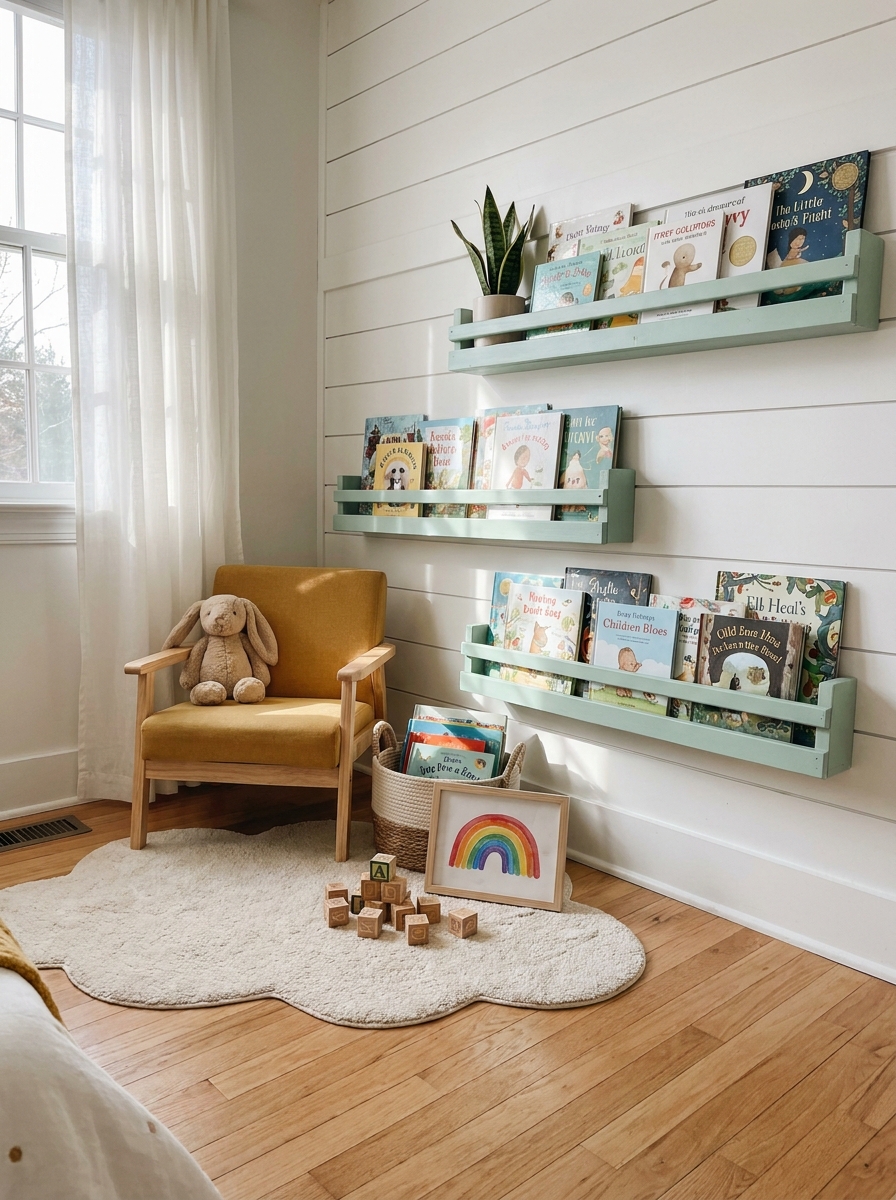
Forget tall bookcases that kids can’t reach. Wall-mounted book ledges installed at their eye level make books feel like decor and actually get used. When kids can see the covers instead of just spines, they’re way more likely to grab something and flip through it. Plus, you can rotate books seasonally or by theme, which keeps things fresh without buying new stuff.
These ledges work beautifully in reading nooks, beside beds, or even in that awkward narrow wall space you haven’t figured out what to do with. Paint them a fun color or keep them natural wood depending on your vibe. The key is mounting them low enough that even your shortest reader can reach.
I love styling these with a mix of board books and picture books facing out, maybe three to five per ledge. Tuck in a small plant or fun bookend to break things up. It looks intentional and keeps the book pile from toppling over every time someone pulls one out.
2. Toy Rotation System with Labeled Bins
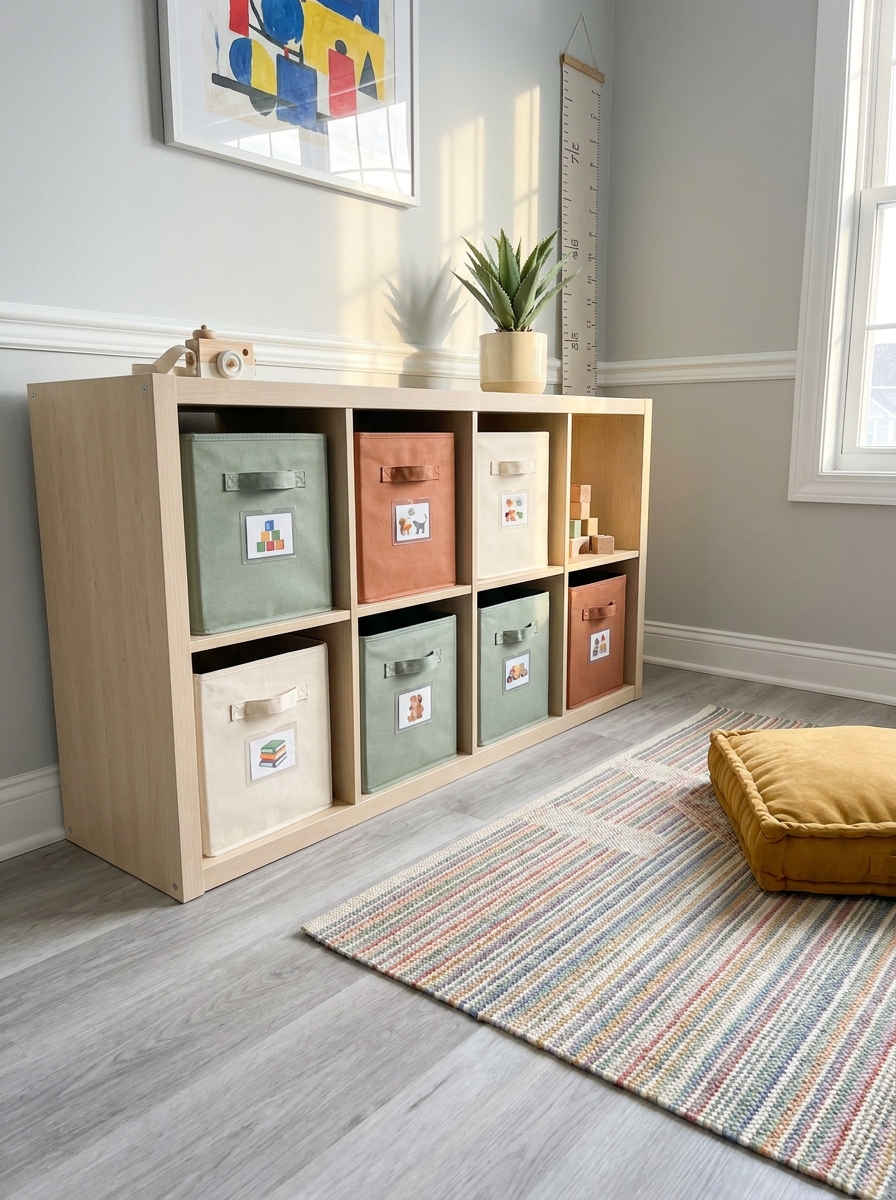
Here’s what changed everything for me: not having every single toy accessible all the time. A rotation system means you store half the toys away and swap them out every few weeks. Suddenly old toys feel new again, and the room doesn’t look like a toy store exploded.
Get matching fabric bins or baskets and actually label them. Use pictures for non-readers, words for older kids. When everything has a home, cleanup becomes a game of matching instead of a meltdown-inducing chore. Store current rotation bins on low shelves where kids can reach them independently.
The off-duty toys? Tuck them in a closet, under the bed in rolling drawers, or on higher shelves. I rotate based on interest or season. Winter means more puzzles and crafts, summer means outdoor toys get priority. You’ll be shocked how much calmer the space feels with fewer options visible at once.
3. Gallery Wall Featuring Their Actual Artwork
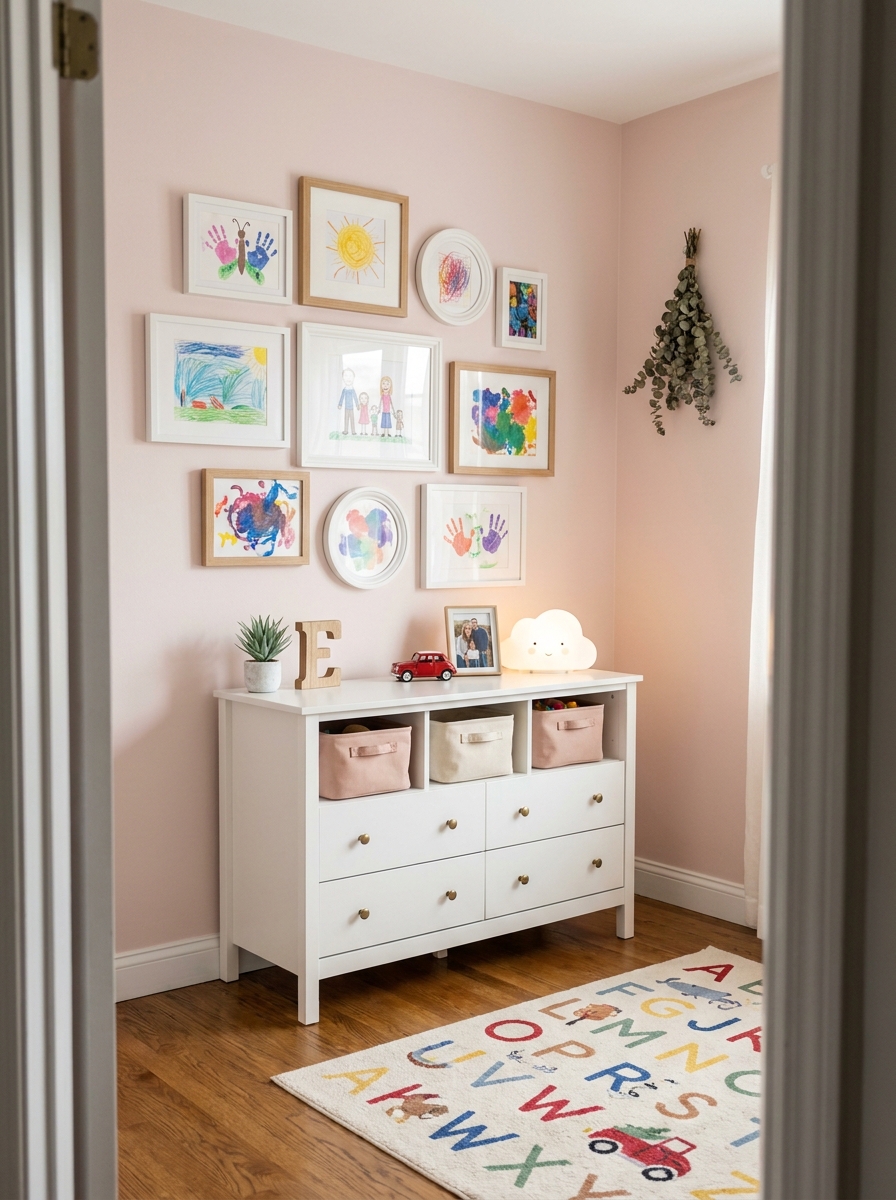
Stop hiding your kid’s drawings in a drawer and put that creativity on display. A dedicated gallery wall makes them feel like the artists they are and adds genuine personality to the space. It’s way more meaningful than generic prints, and honestly? Some of their work is legitimately beautiful.
Use matching frames in different sizes for a cohesive look, or go with a more eclectic mix if that’s your style. The trick is making it easy to swap artwork in and out as they create new pieces. Frames that open from the front or use clips instead of glass backs will save your sanity. Arrange them in a grid for modern vibes or a salon-style cluster for something more playful.
I like mixing their art with a few simple prints or their name in fun letters to anchor the whole thing. It shouldn’t feel too precious. Let them help choose what goes up, and rotate pieces every month or two so the wall evolves with them.
4. Reading Nook with Floor Cushions and String Lights
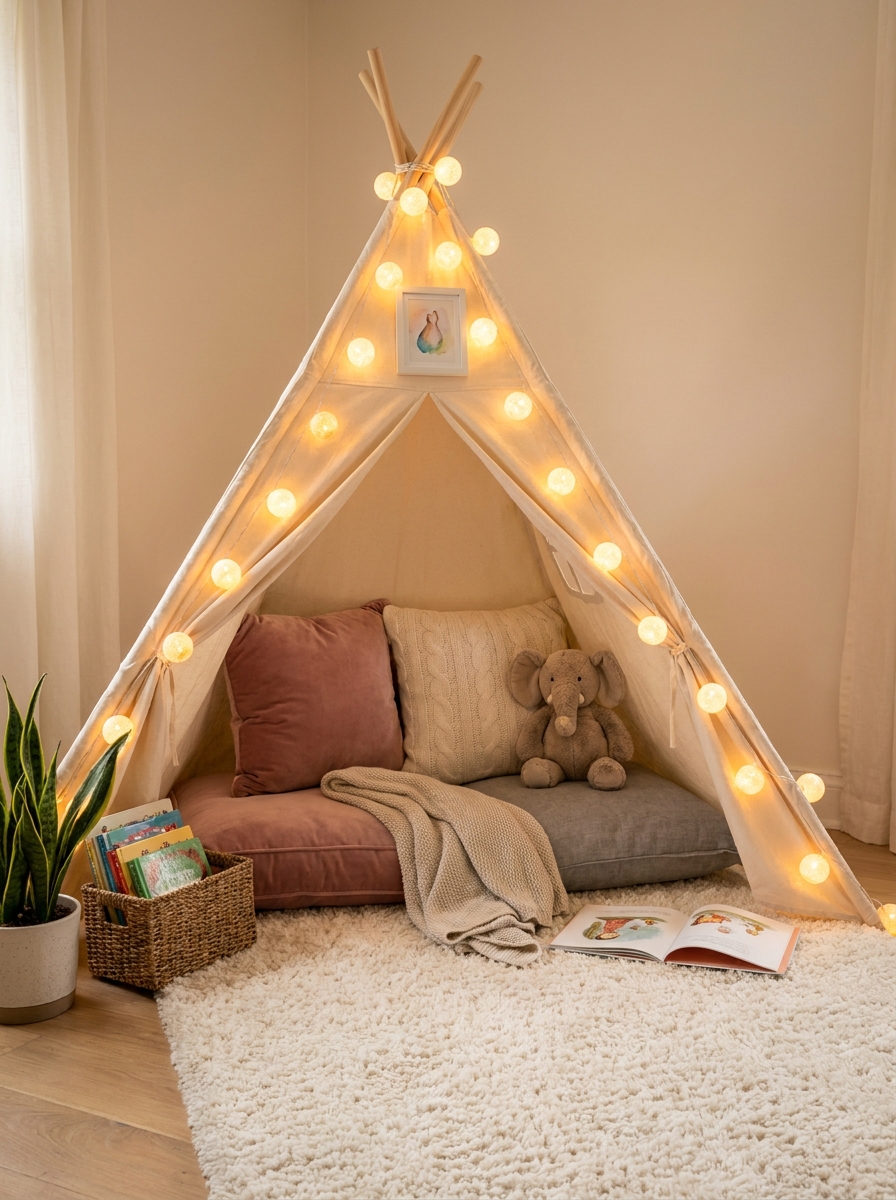
Every kid needs a cozy spot that’s just theirs. A reading nook doesn’t require a ton of space—even a corner or closet works. The magic is in making it feel special and separate from the rest of the room. Floor cushions, a canopy or tent, some soft lighting, and boom, you’ve created their favorite hangout.
String lights or a small clip-on reading lamp make it functional for actual reading while keeping the vibe dreamy. Add a basket of their current favorite books within arm’s reach. A small rug or sheepskin defines the space and makes it extra comfy for long reading sessions or quiet time when they need to decompress.
This spot becomes their retreat when siblings are annoying them or when they just want to escape into a story. It doesn’t need to be Instagrammable, it needs to be inviting. Let them help choose pillows or pick the lighting style so they feel ownership over the space.
5. Magnetic Chalkboard Wall for Endless Creativity
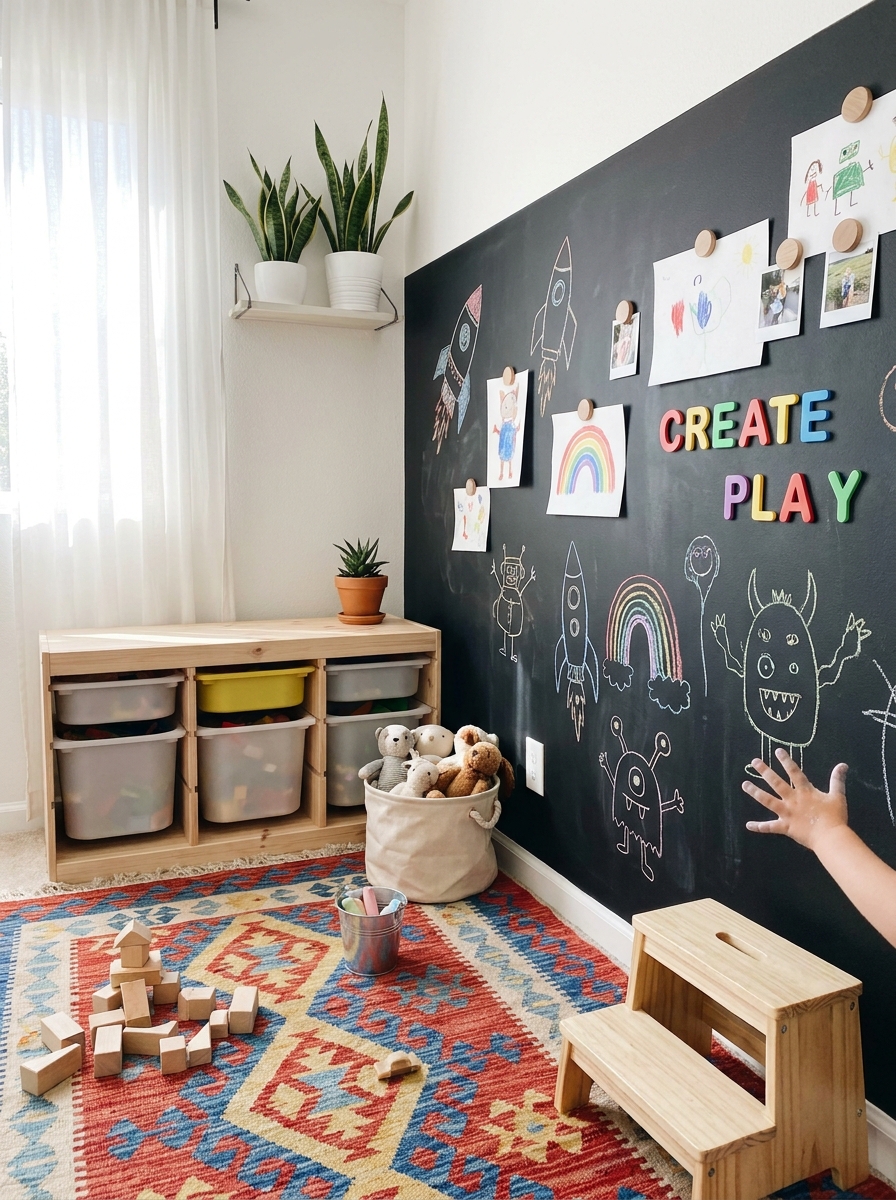
Okay, so paint one wall with magnetic chalkboard paint and watch the magic happen. It’s a game-changer. Kids can draw, write, hang their magnetic letters, display artwork with magnets, and basically turn the whole wall into an ever-changing masterpiece. No more fighting about what goes where because they’re in charge of the design.
I love this idea because it grows with them. Toddlers scribble and stick magnets. School-age kids write spelling words or draw elaborate scenes. Tweens leave themselves notes and inspirational quotes. It’s functional and fun at every stage. Plus, it keeps all that creative energy contained to one designated spot instead of your freshly painted hallway.
The best part? It’s super easy to update. Bored with today’s drawing? Erase it. Want a fresh look? Just wipe it clean. It’s like having a brand new wall whenever you want one. And honestly, watching them create right on the wall feels kind of freeing as a parent.
6. Growth Chart Ruler That Doubles as Wall Art
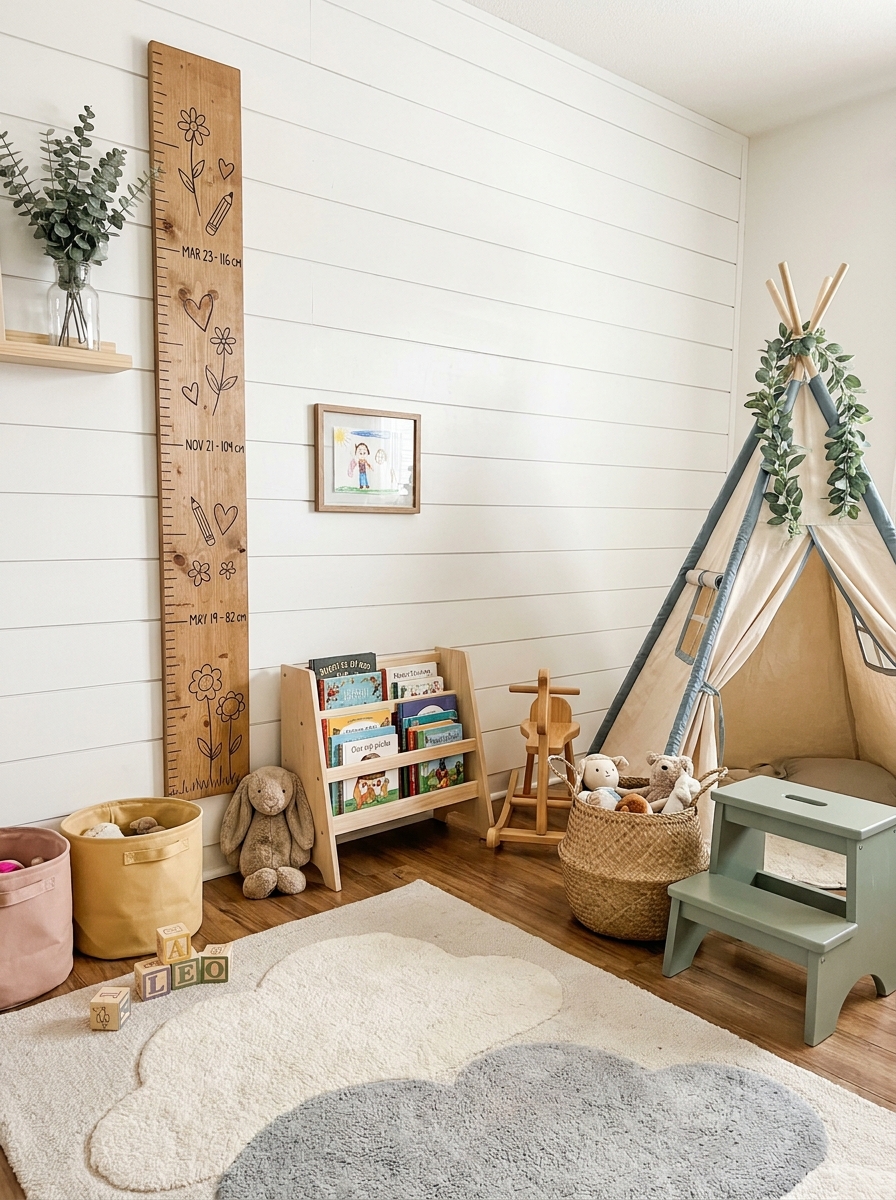
Forget those flimsy paper growth charts that rip and fade. A permanent wooden ruler-style growth chart mounted on the wall is where it’s at. It looks like actual decor, it’s incredibly sturdy, and it becomes this beautiful record of how much they’ve grown over the years. Every little pencil mark tells a story.
I get emotional just thinking about it. You can mark birthdays, first days of school, or random Tuesday afternoons when they insist they’ve grown an inch overnight. And because it’s mounted to the wall, it stays put even when you rearrange furniture or redecorate. No losing those precious measurements during a room refresh.
The visual impact is surprisingly big too. A tall wooden ruler adds vertical interest to the room and draws the eye upward. It works in any style—farmhouse, modern, Scandinavian, you name it. And kids absolutely love seeing their progress. They’ll drag you over to measure them constantly, which honestly? Pretty adorable.
7. Dress-Up Station with Open Clothing Rack
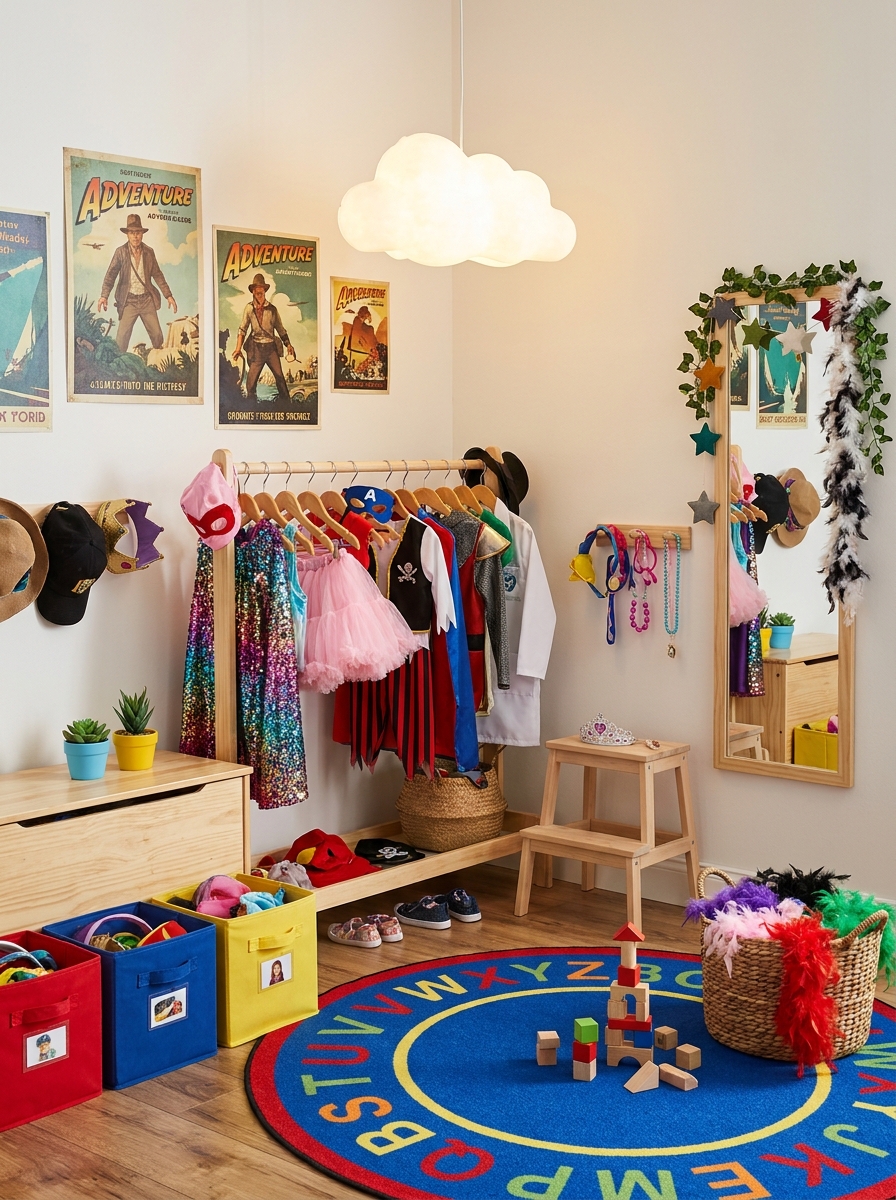
A low, kid-height clothing rack specifically for dress-up clothes is pure genius. It encourages independent play, keeps costumes organized and visible, and honestly just looks charming. No more digging through overstuffed bins to find that one specific princess dress or superhero cape. Everything’s right there, ready to grab.
I’m obsessed with how this setup invites imaginative play. When kids can see all their options hanging neatly, they’re way more likely to actually use them. The rack becomes part of the play itself—they can browse, choose, and even put things back (maybe, if we’re lucky). Adding some hooks underneath for accessories like hats, bags, or jewelry takes it to the next level.
The visual appeal is real too. A wooden or metal clothing rack with colorful costumes hanging from it adds so much personality to the room. It’s functional storage that doubles as decor. And as they outgrow dress-up, you can repurpose the rack for actual clothes or even book display. Maximum versatility.
8. Multi-Functional Desk That Grows with Them
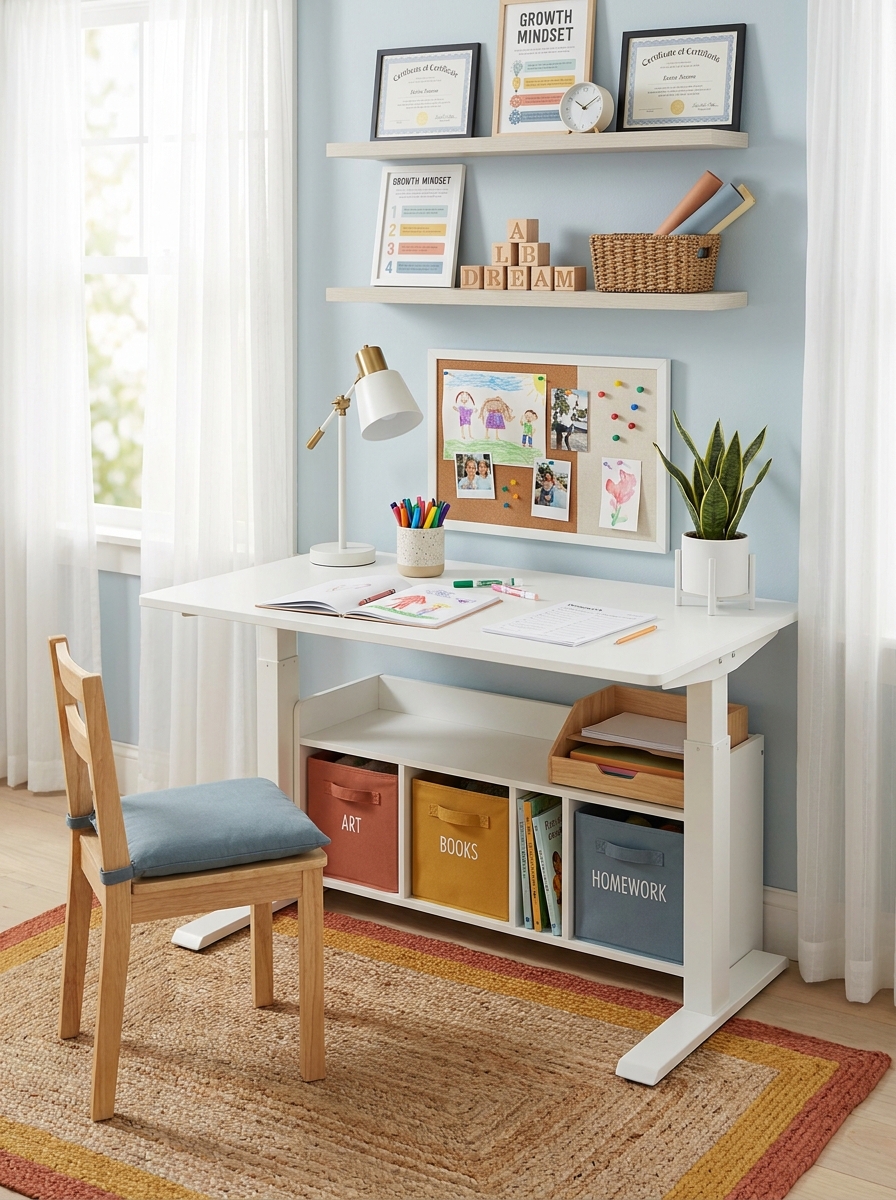
An adjustable-height desk is one of those investments that just makes sense. Start with it low for toddler art projects and puzzles, then raise it up as they grow into homework and crafts. One piece of furniture that adapts instead of needing to be replaced every few years? Yes, please. That’s smart decorating and smart budgeting.
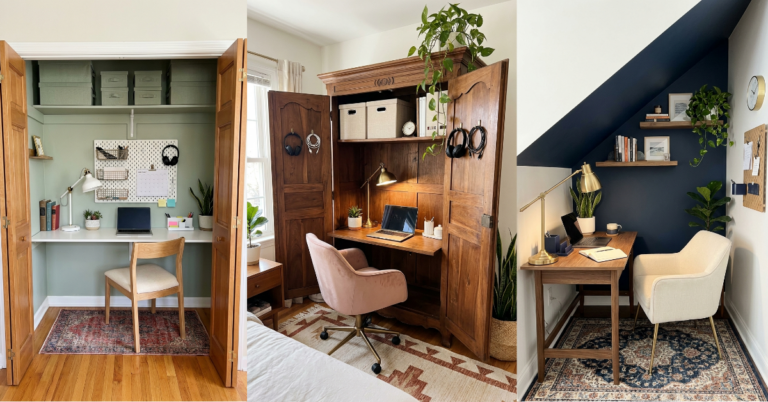
I especially love desks with built-in storage—cubbies, drawers, or even just a shelf underneath. It keeps art supplies, books, and school stuff organized and within reach. Everything has a home, which means less clutter on the desktop and more actual workspace. Pair it with a comfy chair and good lighting, and you’ve created a legit functional zone.
The key is keeping it simple and uncluttered. A desk that’s overflowing with stuff won’t get used. But a clean, organized workspace with just what they need? They’ll actually want to sit there. Add a small plant, a pencil holder, and maybe a bulletin board above, and you’ve got a space that inspires focus and creativity.
9. Color-Coded Closet with Low Hanging Rods
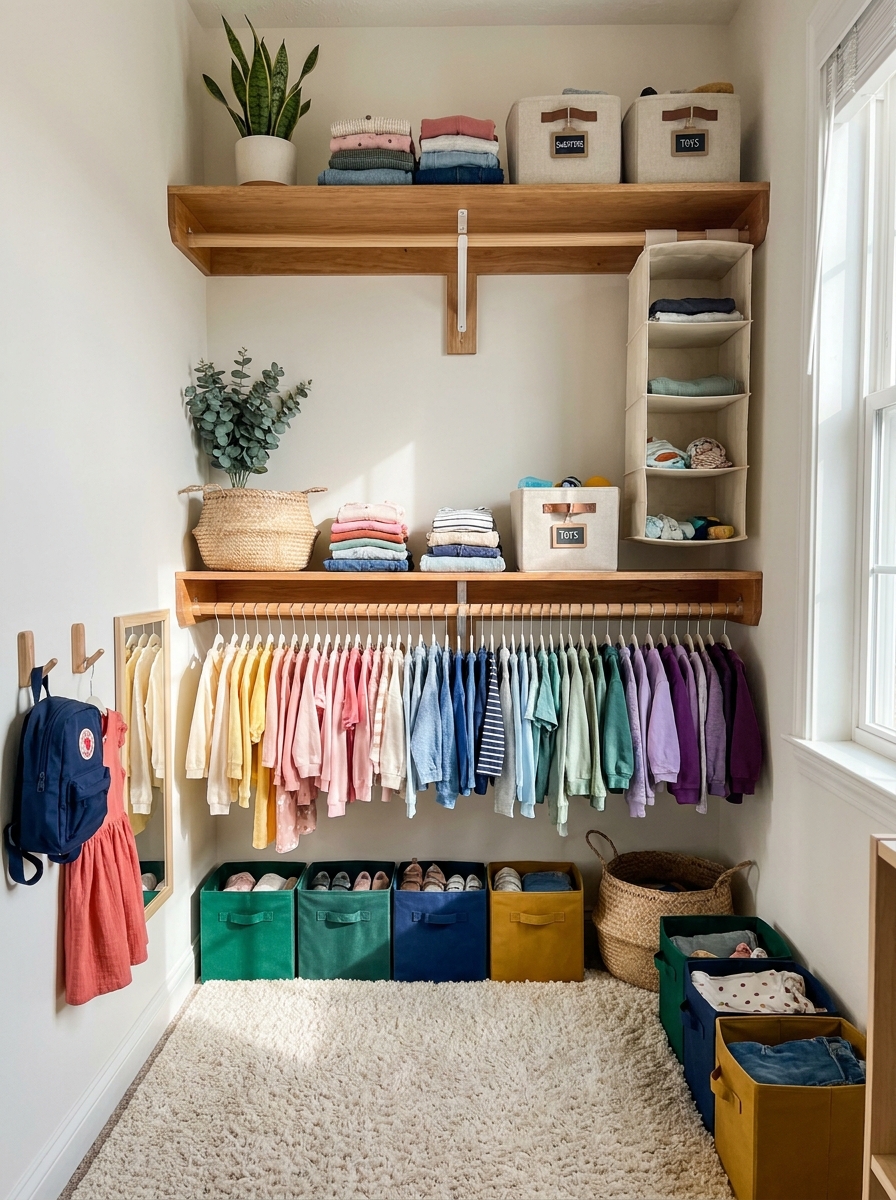
You know what changed everything in my niece’s room? Dropping that closet rod down to her level. Suddenly she could pick her own outfits and actually hang things back up. Game changer!
Install a lower rod that your kiddo can actually reach without a step stool. Then organize clothes by color or type using matching hangers. Add fabric bins on the floor below for shoes, and use the upper rod (yes, install two!) for out-of-season stuff or things you don’t want them accessing daily.
The color-coding thing isn’t just pretty. It actually helps younger kids find what they’re looking for and develop organizational skills. Plus, when everything has a place, clean-up becomes so much easier. Add some cute labels with pictures for pre-readers, and you’ve basically created a mini boutique they can manage themselves.
10. Cozy Floor Bed with Bumper Pillows
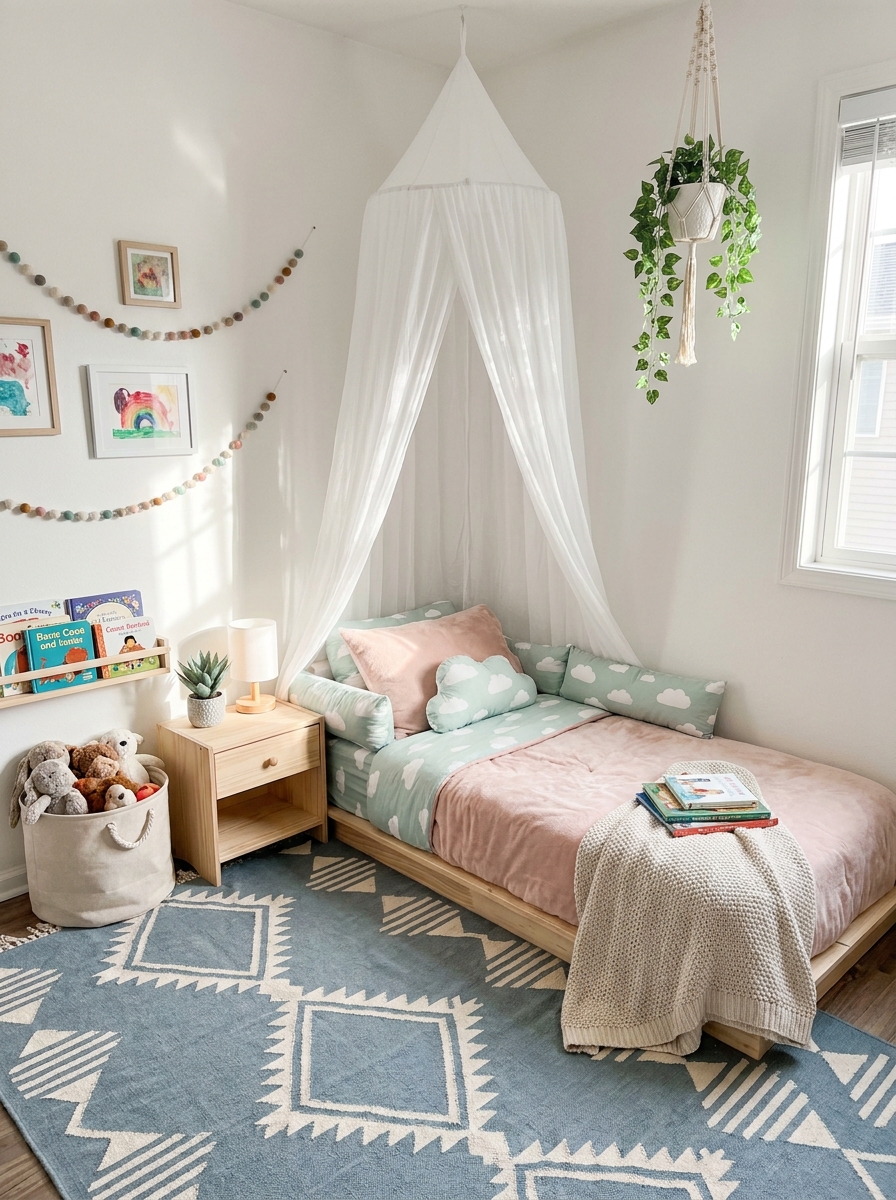
Floor beds are having such a moment, and honestly? I get it. They’re Montessori-approved, totally safe for little rollers, and they make the whole room feel more open and playful.
A simple twin mattress on a low platform or even directly on the floor gives kids independence to get in and out of bed themselves. Surround it with long bumper pillows or a low bed rail if you’re worried about rolling. Add a canopy or fabric tent overhead to create that cozy cave feeling kids absolutely love.
The best part? This setup grows with them. Start it in the toddler years when they’re transitioning from a crib, and it works all the way through elementary school. Just swap out the bedding as they get older. Plus, that low-to-the-ground vibe makes the room feel less furniture-heavy and more like an actual play space.
11. Activity Table with Built-In Storage Cubbies
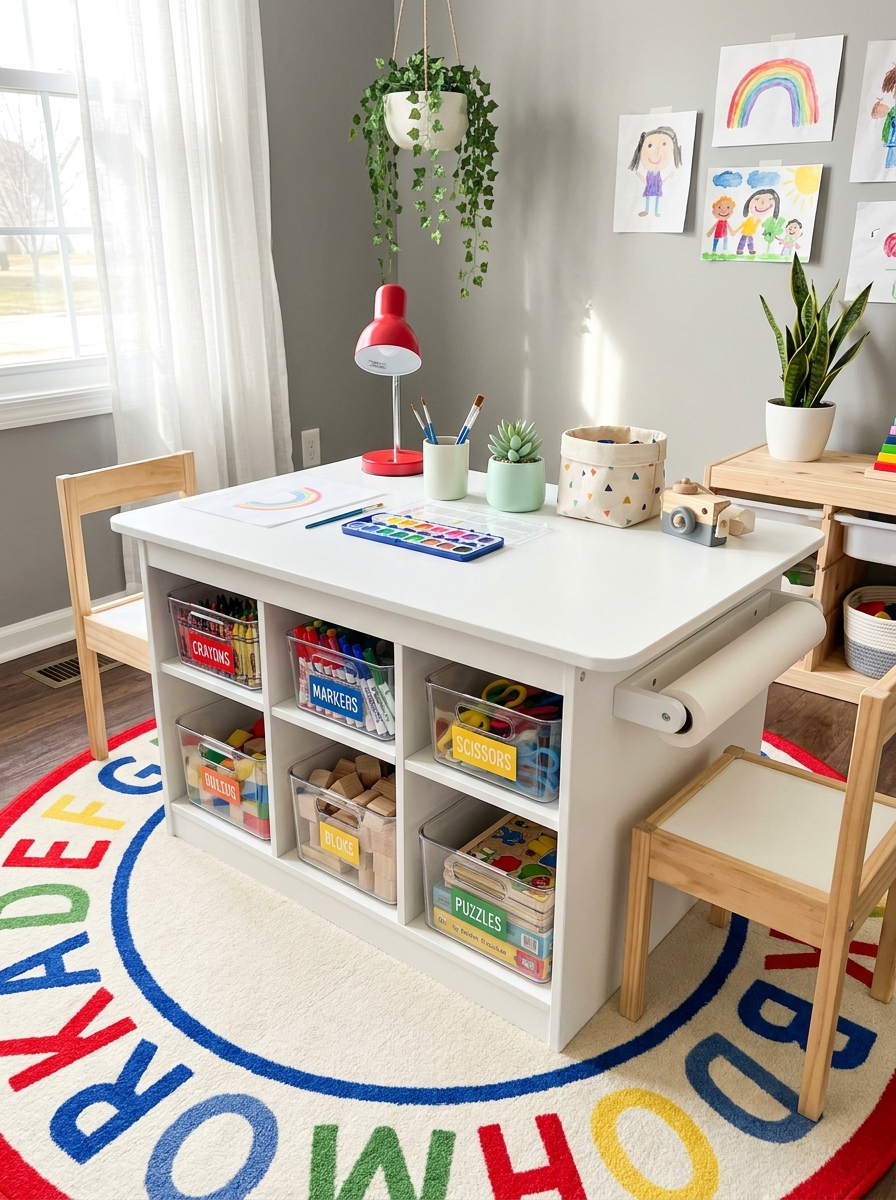
Every playroom needs a good activity table. But the smart ones? They hide all the art supplies, puzzles, and craft chaos right underneath where you need them.
Look for tables with built-in cubbies, drawers, or shelf space below the surface. Even better if the tabletop is double-sided with one smooth side for art and one side with raised edges for containing beads or small toys. Keep frequently-used supplies in clear bins in those cubbies so kids can grab what they need without dumping everything out.
This becomes command central for homework, art projects, puzzle building, and snack time. Choose a kid-height table with chairs they can move themselves. And here’s the thing nobody tells you: get one that’s easy to wipe clean. Paint, markers, glue, play-dough… it’s all happening on this surface. A laminate or sealed wood top will save your sanity.
12. Themed Corner with Swappable Decor Elements
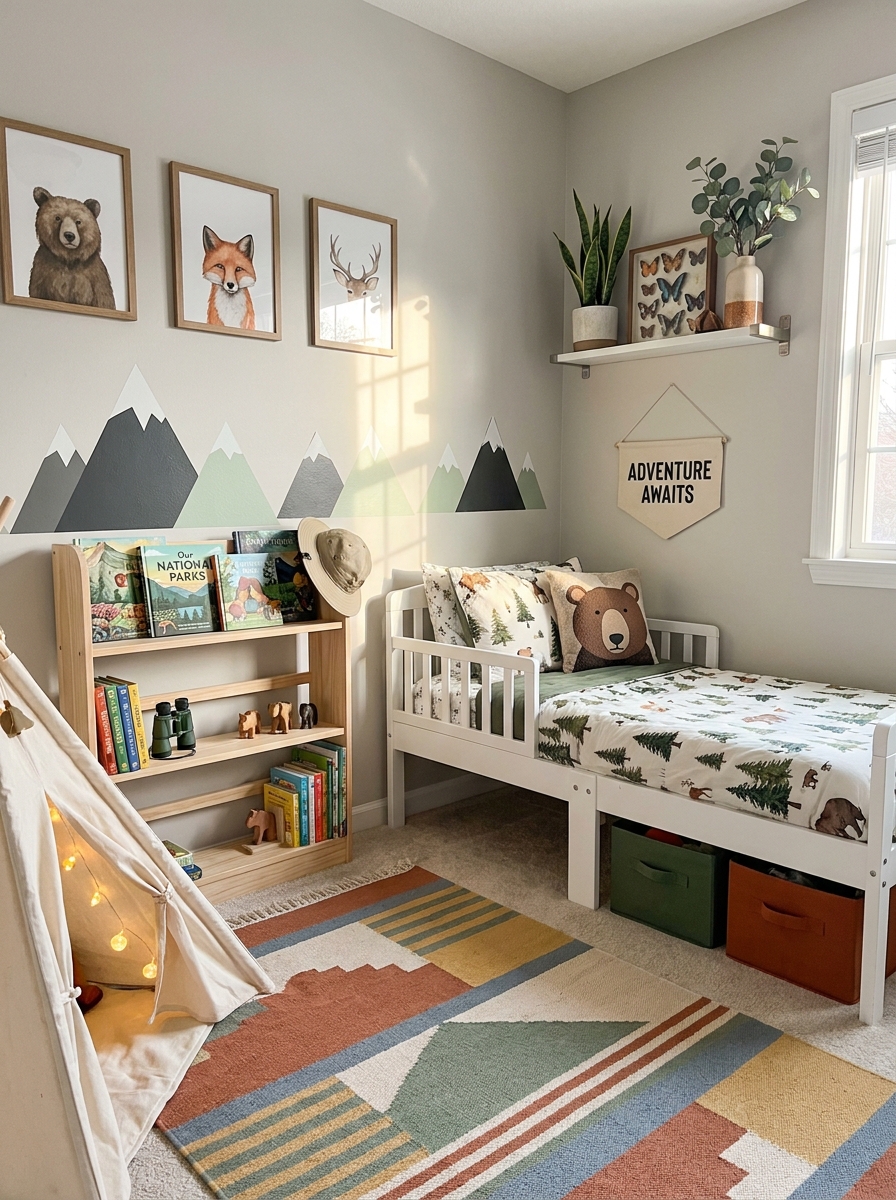
Kids’ interests change faster than you can say “dinosaurs are my whole personality now.” Instead of redecorating every six months, create a themed corner where you can easily swap things out.
Start with neutral walls and furniture, then layer in the theme through removable elements: wall decals, bedding, throw pillows, and framed prints. Use floating shelves to display themed toys and books that can rotate when their obsession shifts from space to unicorns to superheroes. A fabric storage bin in the current theme color keeps it feeling coordinated without commitment.
This approach saves you so much money and effort. The bones of the room stay the same, but swapping out five or six elements completely transforms the vibe. Plus, involving your kid in choosing and switching the theme makes them feel ownership over their space. Win-win!
13. Window Seat with Hidden Storage Compartments
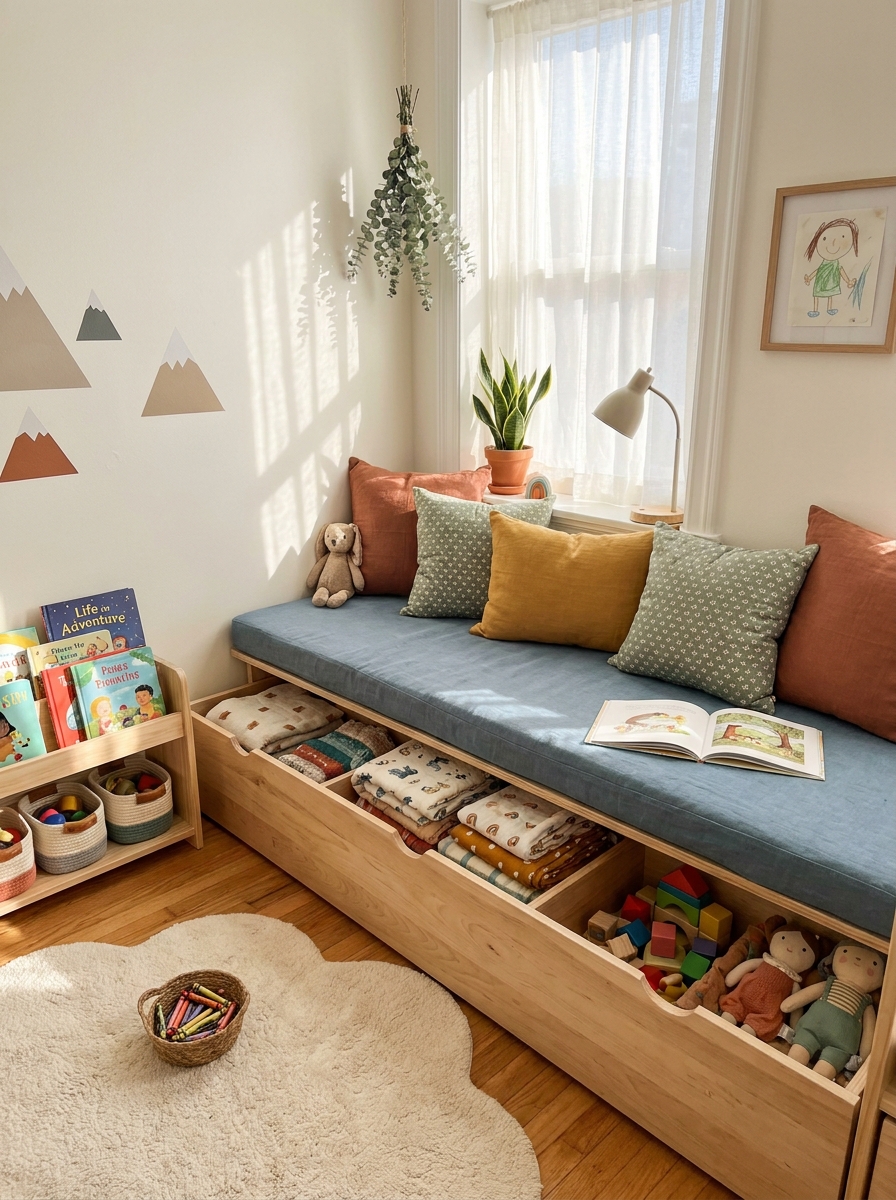
If you’ve got a window in the room, turn that dead space into the most coveted spot in the house. A built-in window seat with lift-up storage is like finding extra square footage you didn’t know you had.
I’m obsessed with how this setup doubles as a reading spot, toy hideaway, and extra seating when friends come over. Fill those compartments with off-season clothes, board games, or all those stuffed animals that seem to multiply overnight. Add a bench cushion in a wipeable fabric and pile on throw pillows that tie into your color scheme.
The best part? Kids naturally gravitate toward window seats. There’s something magical about perching up high with a view outside. It becomes their thinking spot, their reading corner, their secret fort. And knowing all that storage is hidden underneath keeps the room looking clean even when it’s absolutely packed with stuff.
14. Peg Rail System for Ever-Changing Display
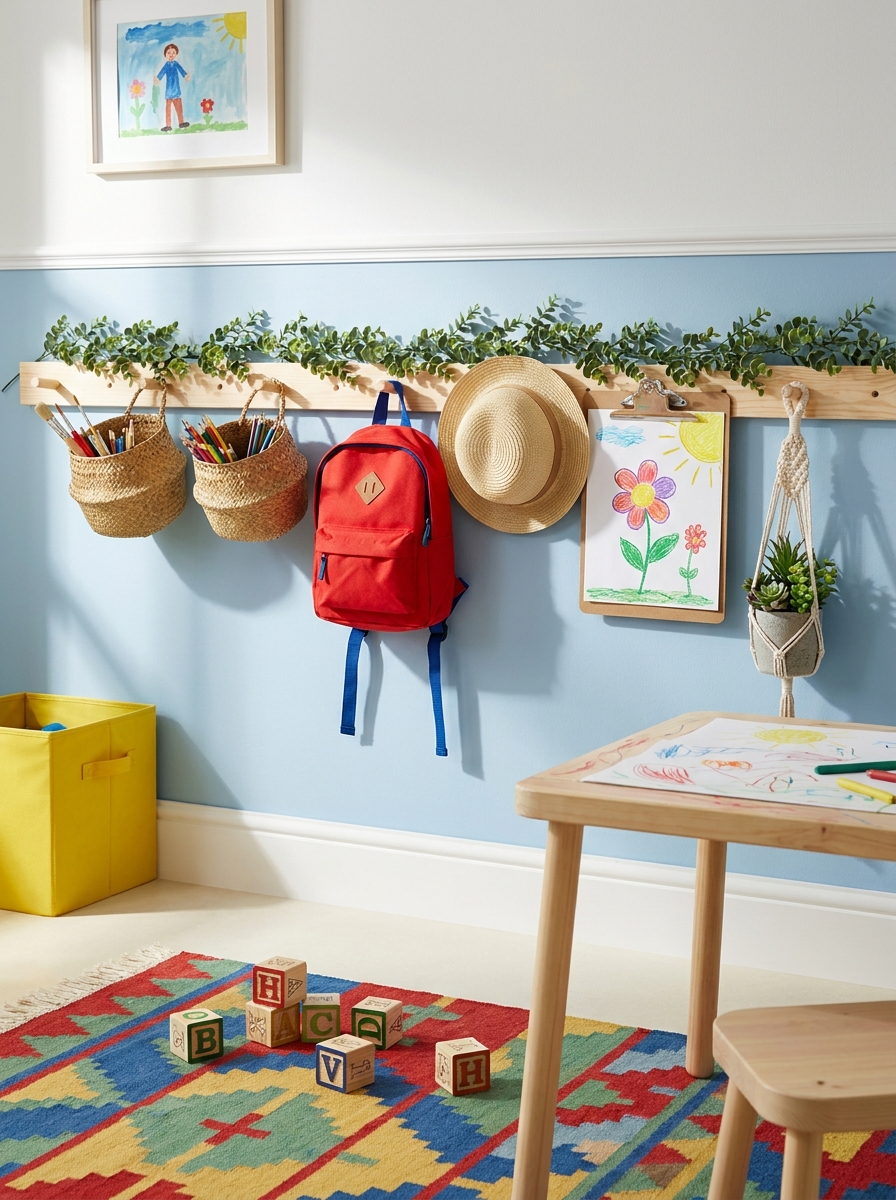
Forget trying to nail a million holes in the wall every time your kid’s interests change. A peg rail system is the flexible solution you didn’t know you desperately needed.
These simple wooden rails with moveable pegs let you hang everything from backpacks and hats to small artwork, baskets, and even string lights. When your daughter moves on from her unicorn phase to her dinosaur phase, you just rearrange the pegs. No new holes, no touch-up paint, no drama.
I love running them at kid height so they can actually reach their stuff and learn to hang things up themselves. Install one above a dress-up area for costumes, beside the door for school bags, or over a craft zone for supplies in hanging baskets. You can even hang clipboard frames from the pegs to rotate artwork without any fuss. It’s basically the most adaptable wall organizer ever invented.
15. Homework Station with Cork Board Command Center
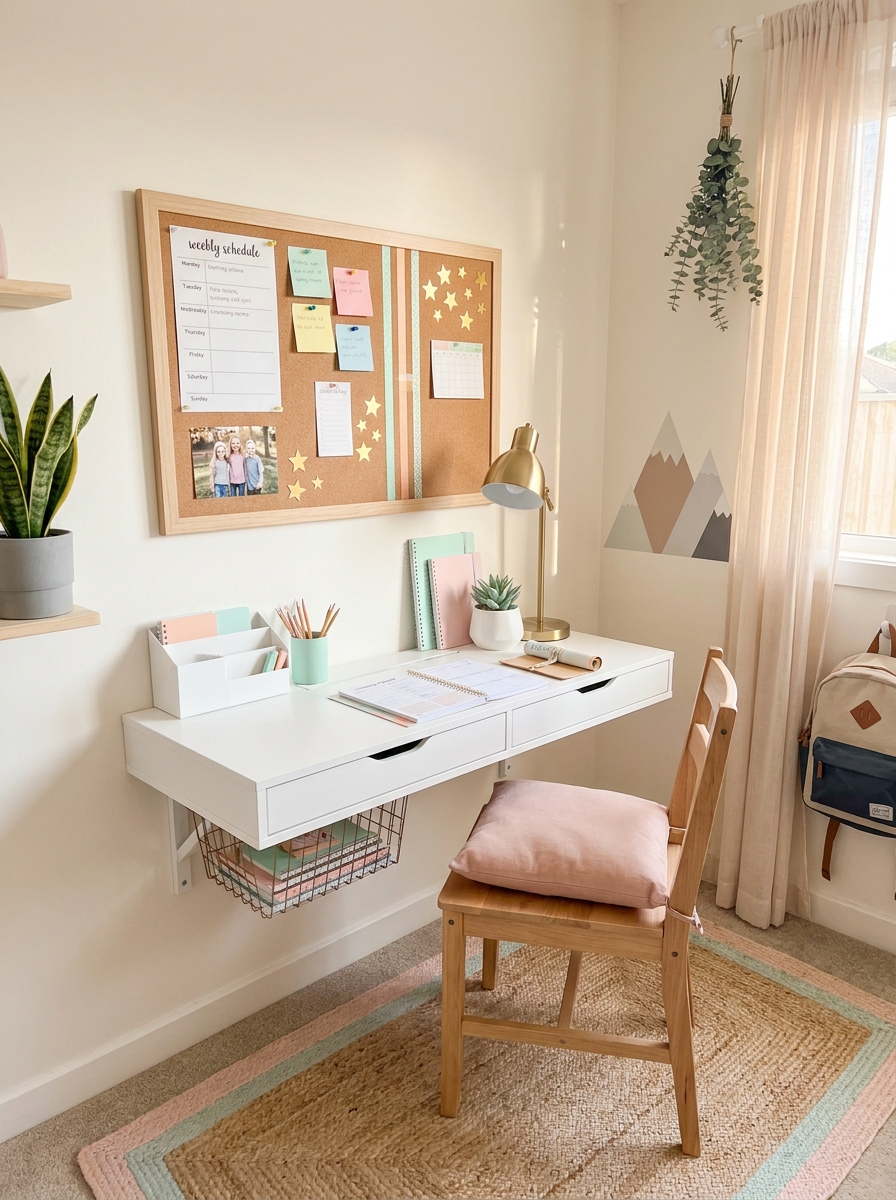
Once school starts, papers multiply like rabbits. A dedicated homework station with a cork board command center keeps everything from permission slips to star charts in one visible spot.
Set up a small desk or wall-mounted floating shelf with good task lighting and all the supplies within arm’s reach. The cork board above becomes mission control—pin up the weekly schedule, library book reminders, photos of friends, whatever keeps them motivated and organized. I like using colorful push pins and washi tape to section off different zones: one for school stuff, one for fun reminders, one for achievements.
This setup teaches kids to manage their own schedules and responsibilities without you nagging. They can see what’s coming up, what needs to get done, and feel ownership over their space. Plus, it keeps your kitchen counter from becoming a paper tornado disaster zone.
16. Climbing Wall or Indoor Swing for Active Play
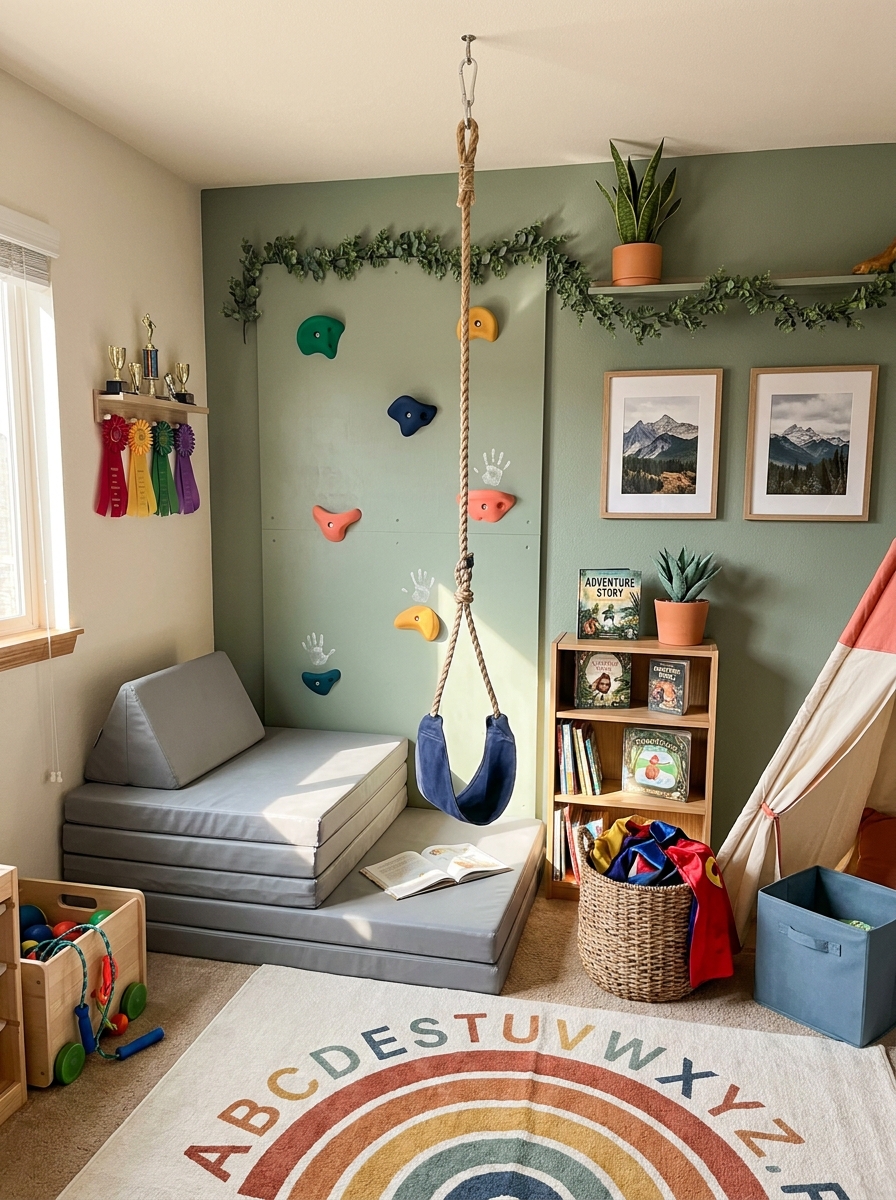
Some kids need to move, and if you don’t give them an outlet, they’ll climb your furniture anyway. Why not make it intentional with a small climbing wall or indoor swing?
You don’t need a massive setup—even a few climbing holds on one wall section or a simple swing hanging from a ceiling beam can be total game-changers. I’ve seen parents install these in playrooms, bedrooms, even wide hallways. It gives kids a physical outlet right at home, which is clutch on rainy days or when you need them to burn energy before bedtime.
Make sure it’s properly anchored into studs and add crash mats or thick floor cushions underneath for safety. This isn’t just fun—it builds coordination, confidence, and gives them something way cooler to do than stare at screens. Plus, it makes your house the favorite hangout spot for neighborhood kids.
17. Bedside Caddy for Bedtime Essentials
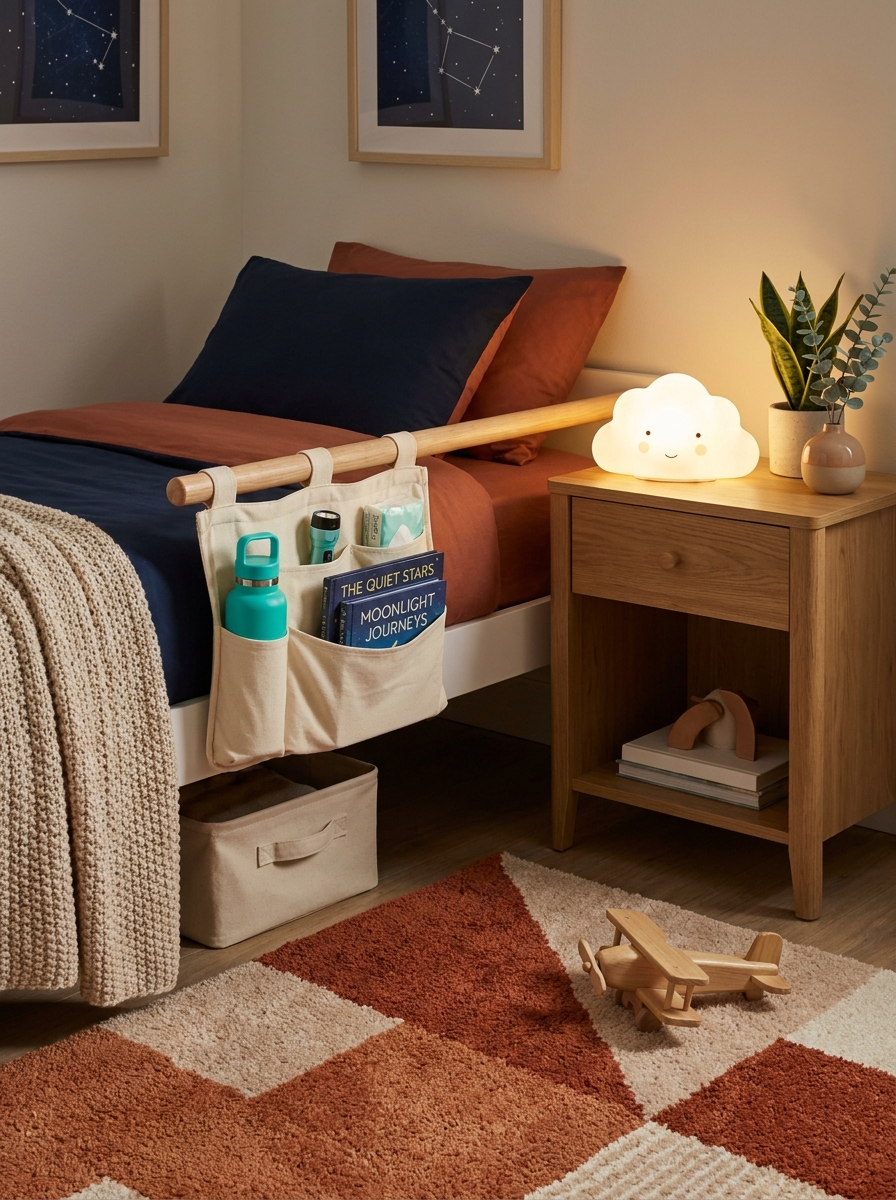
Here’s a game-changer I wish I’d discovered sooner: a little bedside organizer that holds everything they need for nighttime independence. Think of it as their personal command center for those “one more thing!” requests that always happen after lights-out.
I’m talking about a fabric caddy, wall pocket, or even a small rolling cart positioned right next to the bed. Stock it with a water bottle, tissues, a flashlight, their current favorite book, maybe a stuffed animal or two. Suddenly those five trips back to their room after bedtime? They drop to zero because everything they actually need is within arm’s reach.
The magic is in giving them ownership over their nighttime routine. They can grab their own water, pick tomorrow’s bedtime story, turn on their reading light without calling for help. It builds confidence and honestly? It buys you back your evening. Choose something that matches their room’s vibe and let them help organize it their way.
18. Sound-Absorbing Panels in Fun Shapes
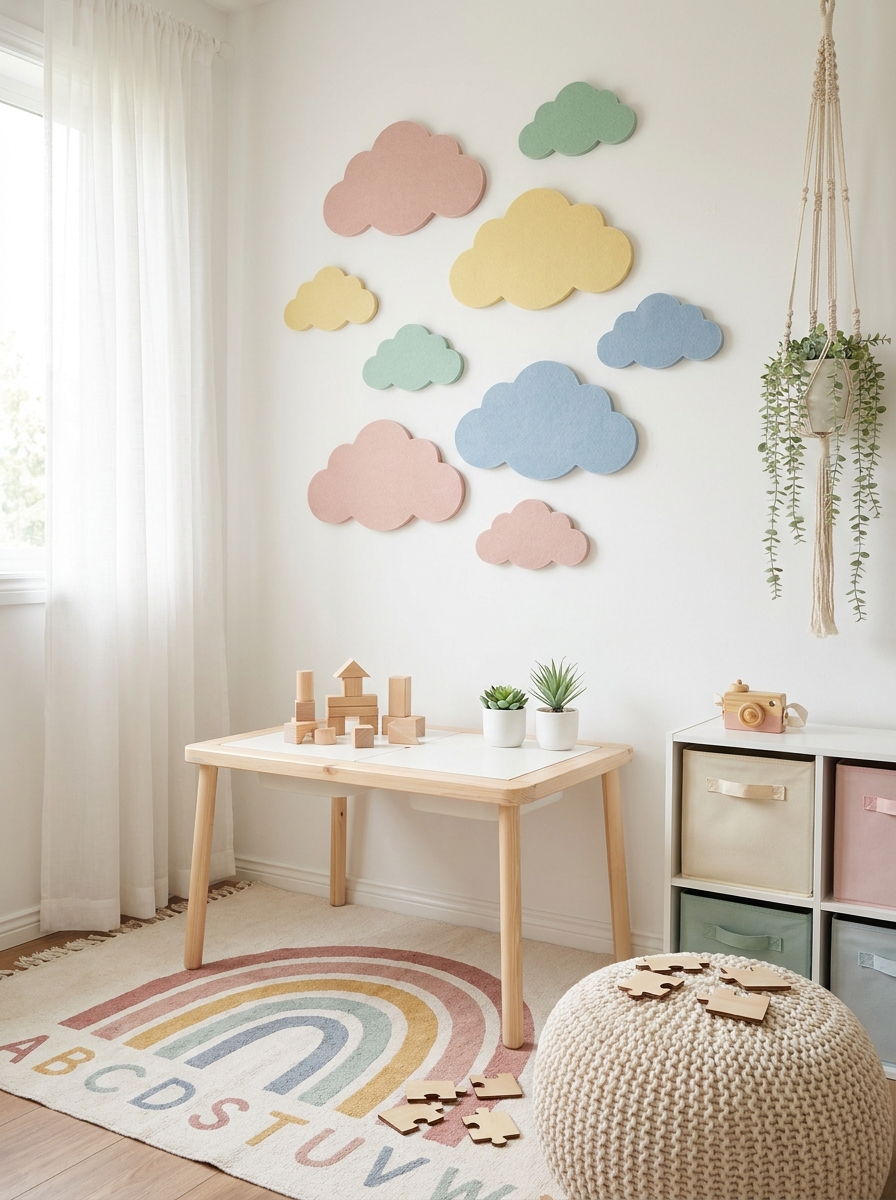
Let’s talk about something nobody warns you about: kids’ rooms are LOUD. Between the playing, the singing, the jumping, and whatever that banging sound is… acoustics matter. But boring foam panels? Absolutely not in our cute rooms.
Enter decorative sound-absorbing panels shaped like clouds, hexagons, mountains, or even animals. They do the actual work of dampening noise and echo while looking like intentional wall art. I’ve seen them in soft pastels, bold primary colors, even natural felt tones that blend beautifully with any decor style.
Hang them in a cluster above the play area or scattered across one wall like a fun installation. They’re especially brilliant in playrooms, shared bedrooms, or anywhere that connects to main living spaces. Your ears will thank you, the kids think they’re just cool wall decorations, and honestly? The room looks more finished and designed. It’s function hiding as form, which is basically my entire design philosophy.
19. Adjustable Shelving That Changes with Age
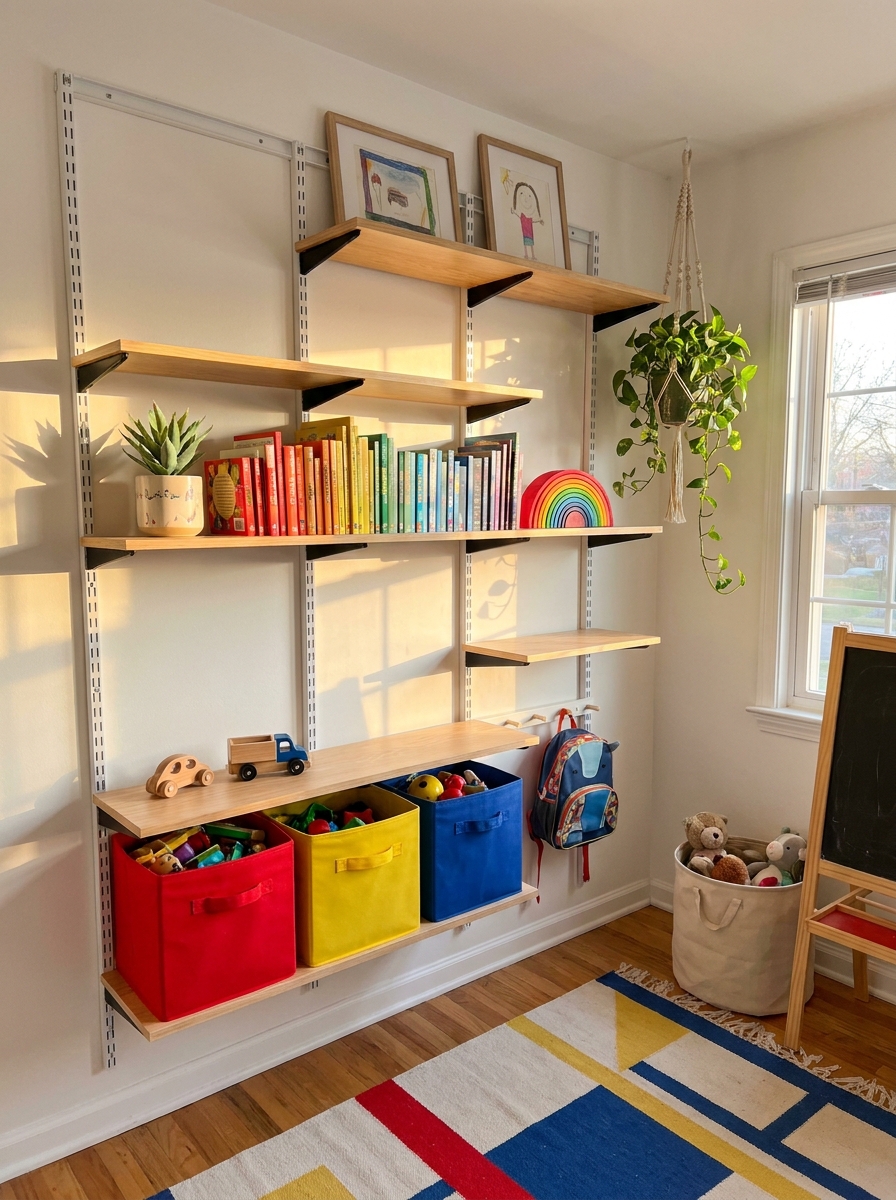
The smartest money I ever spent in my kids’ rooms? Shelving systems with adjustable heights. Because what works for a toddler’s chunky board books absolutely doesn’t work three years later when they’re into chapter books and rock collections.
I’m obsessed with track shelving or modular cube systems where you can move shelves up and down without tools or drama. Right now the bottom shelves hold toys they can reach themselves. In two years? Those same shelves move up and suddenly there’s room for a desk underneath or a cozy reading spot on the floor.
This is the ultimate kid room hack because their needs change SO fast. One season it’s all stuffed animals, next it’s art supplies, then suddenly sports equipment or gaming stuff. Adjustable shelving grows with every phase without requiring a complete room overhaul. You’re basically future-proofing their space while keeping your sanity and your budget intact.
Quick Guide
Quick Age-Appropriate Storage Guide
Ages 1-3: Open bins at floor level, nothing with lids they can’t open, large containers for chunky toys, picture labels only
Ages 4-6: Low shelves they can reach, clear bins so they see contents, simple word labels, step stool for higher storage
Ages 7-9: Drawer organizers, categorized storage, they help choose the system, some display shelves for collections
Ages 10+: Their input drives the design, desk organization matters now, display what they love, privacy zones become important
Universal Rules: Whatever the age, keep daily-use items most accessible, rotate seasonal items to higher storage, and involve them in the cleanup system design. When kids help create the organization, they’re way more likely to maintain it.
Your Turn to Create Magic
Here’s the beautiful truth about decorating kids’ rooms: it doesn’t have to be perfect to be wonderful. These 19 ideas aren’t about creating a showroom nobody can touch. They’re about building spaces where your kids actually want to hang out, where cleanup doesn’t require twelve reminders, and where their personality shines through every corner. Start with just one idea that speaks to you. Maybe it’s those book ledges, or finally creating that cozy reading spot you’ve been picturing. Small changes add up fast in kids’ spaces because they notice and appreciate things we adults take for granted. The room will evolve as they do, and that’s exactly how it should be. Let them weigh in on colors, help arrange their gallery wall, choose which toys stay in rotation. When they feel ownership, they treat the space differently. You’ve got this, and your kids are lucky to have someone who cares this much about creating a space where they can grow, play, and just be kids.
Frequently Asked Questions
How do I make a kids’ room look organized without spending a fortune on storage?
Start with what you have: repurpose baskets from other rooms, use cardboard boxes covered in contact paper, or hit thrift stores for bins and cubbies you can paint. The key is consistency in container style and labeling everything clearly. Open shelving from budget stores works just as well as expensive systems when it’s styled intentionally and everything has an assigned spot.
What’s the best way to transition a nursery into a toddler room?
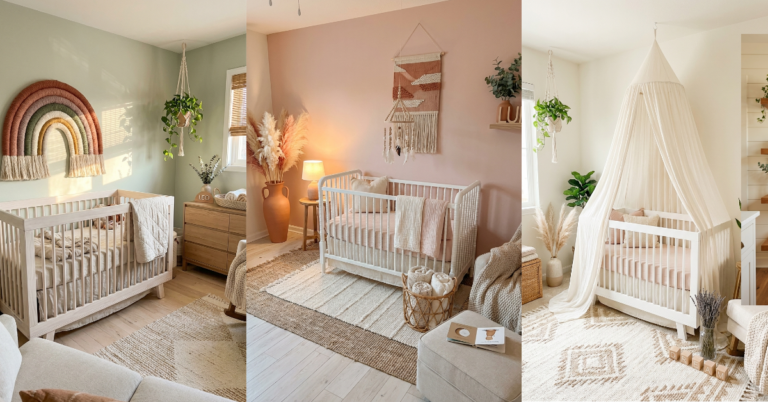
Swap the crib for a floor bed or toddler bed, lower artwork and shelves to their eye level, and add accessible storage they can use independently. Keep some nursery elements like the rug or curtains if they still work, but add more interactive elements like book ledges and toy organization. You don’t need to redo everything at once—transition pieces as your child’s needs change.
How can I create separate zones in a shared kids’ bedroom?
Use rugs to define individual spaces, give each child their own designated wall for personalization, and create matching-but-different storage so everyone has their own system. Bunk beds or loft beds save floor space for play zones. Color-coding helps too—even if the room has one overall palette, each kid can have their own accent color for their stuff.
What are the safest ways to decorate a toddler’s room?
Anchor all furniture to walls, keep plants and small decor out of reach, use cordless window treatments, and choose soft rugs over hard surfaces. Avoid anything with small removable parts at their level, secure picture frames well, and skip floor lamps that can tip. Battery-operated lights are safer than anything plugged in within reach.
How often should I rotate toys in a kids’ room?
Every 2-4 weeks works well for most families, or whenever you notice interest waning in current options. Watch your kid’s play patterns—if they’re ignoring everything, it’s rotation time. Some parents rotate seasonally, others do it monthly. There’s no perfect schedule, just what keeps things fresh and the clutter manageable for your family.