15 Gorgeous Coffee Table Styling Tricks for That Designer Look
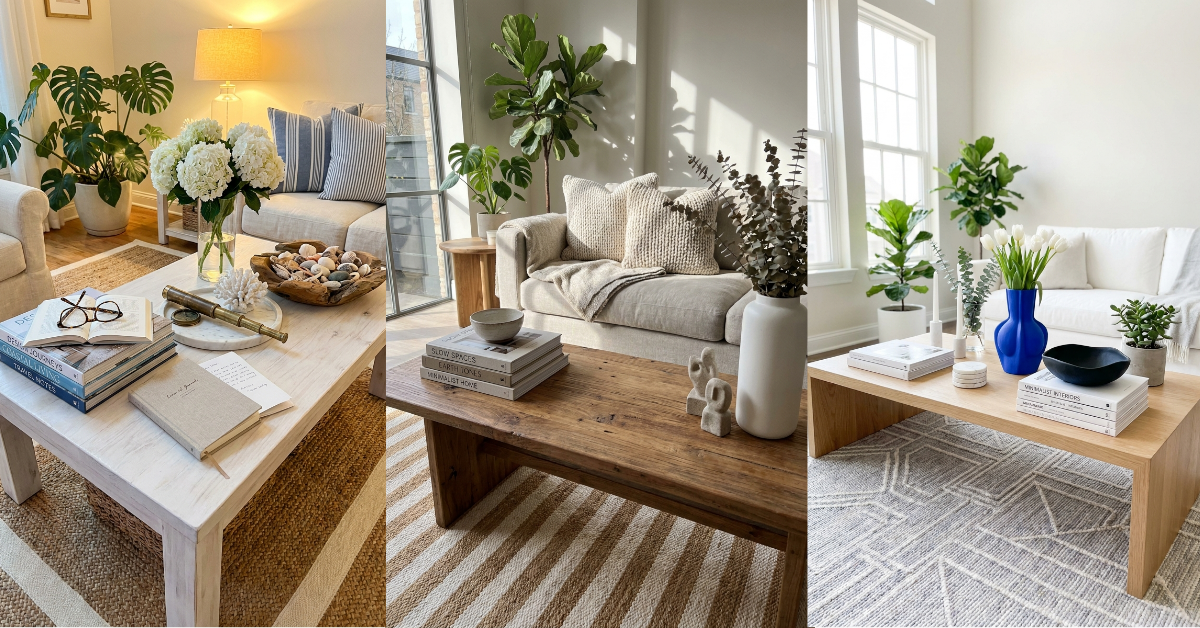
You know that feeling when you arrange everything on your coffee table and it just looks… off? Like you tried too hard, or didn’t try enough, or maybe it’s just a pile of remotes and last week’s magazines? I’ve been there so many times. The thing is, designers have a few tricks up their sleeves that make their coffee tables look effortlessly pulled together. And I’m talking about real, doable styling moves—not some impossible setup that requires a degree in interior architecture.
Styling a coffee table isn’t about perfection. It’s about balance, a little bit of height variation, and honestly, knowing when to stop adding stuff. Whether your table is a giant ottoman or a sleek glass rectangle, these 15 styling secrets will help you create a surface that feels curated instead of cluttered. Here’s what actually works.
1. Start with a Beautiful Tray as Your Foundation
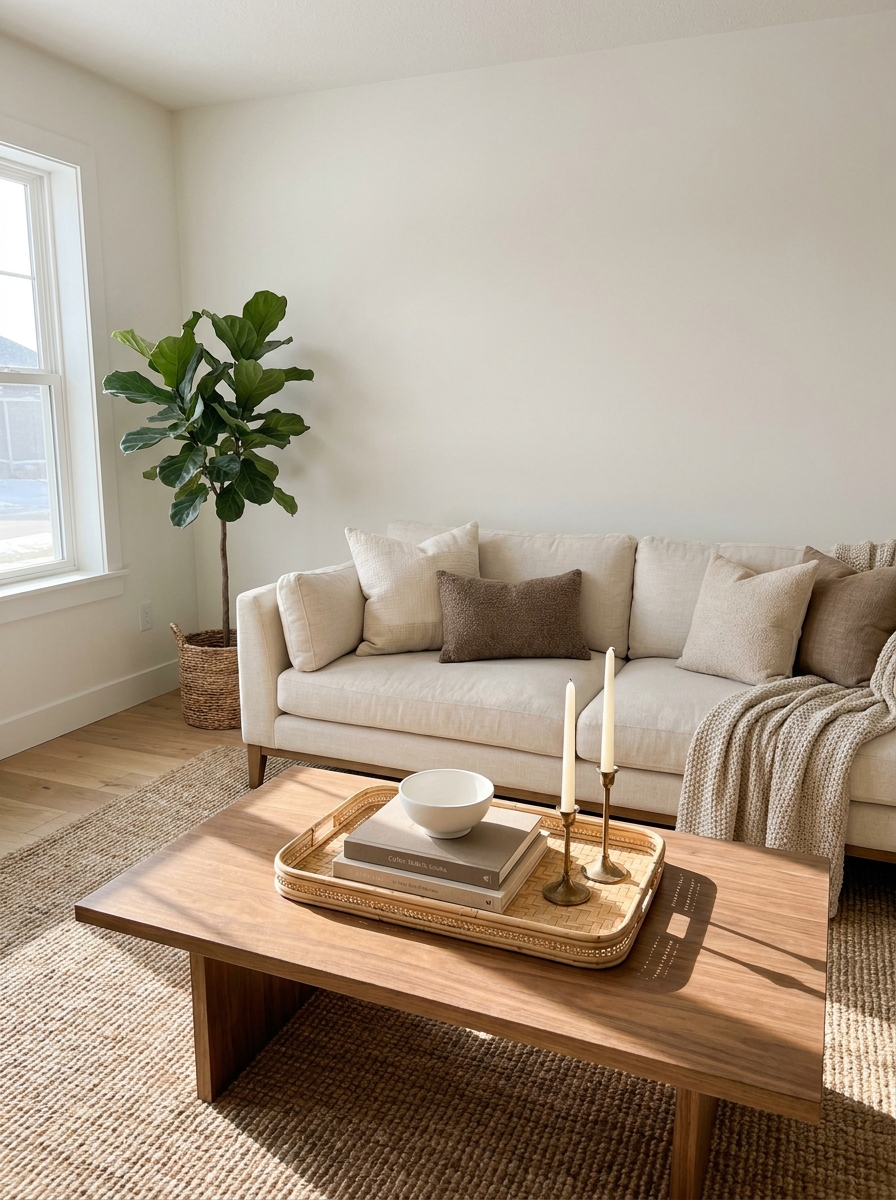
Trays are the secret weapon designers use to make everything look intentional. They create boundaries and give your styling a defined space to work within. Without a tray, objects can feel scattered. With one, suddenly everything has purpose.
Pick a tray that complements your table’s material. A wooden tray warms up a glass table. A lacquered white tray adds crispness to a rustic wood surface. Metal trays with handles bring an elegant, vintage vibe. The tray doesn’t need to be huge—it just needs to anchor your main grouping.
I love using trays because they also make cleaning so much easier. When guests come over, you can lift the whole styled moment and wipe down your table in seconds. Then just set it back down. It’s like having a little portable vignette that travels. And if you ever want to switch up your look, swapping out the tray completely changes the mood without touching anything else.
2. Layer Coffee Table Books in Odd Numbers
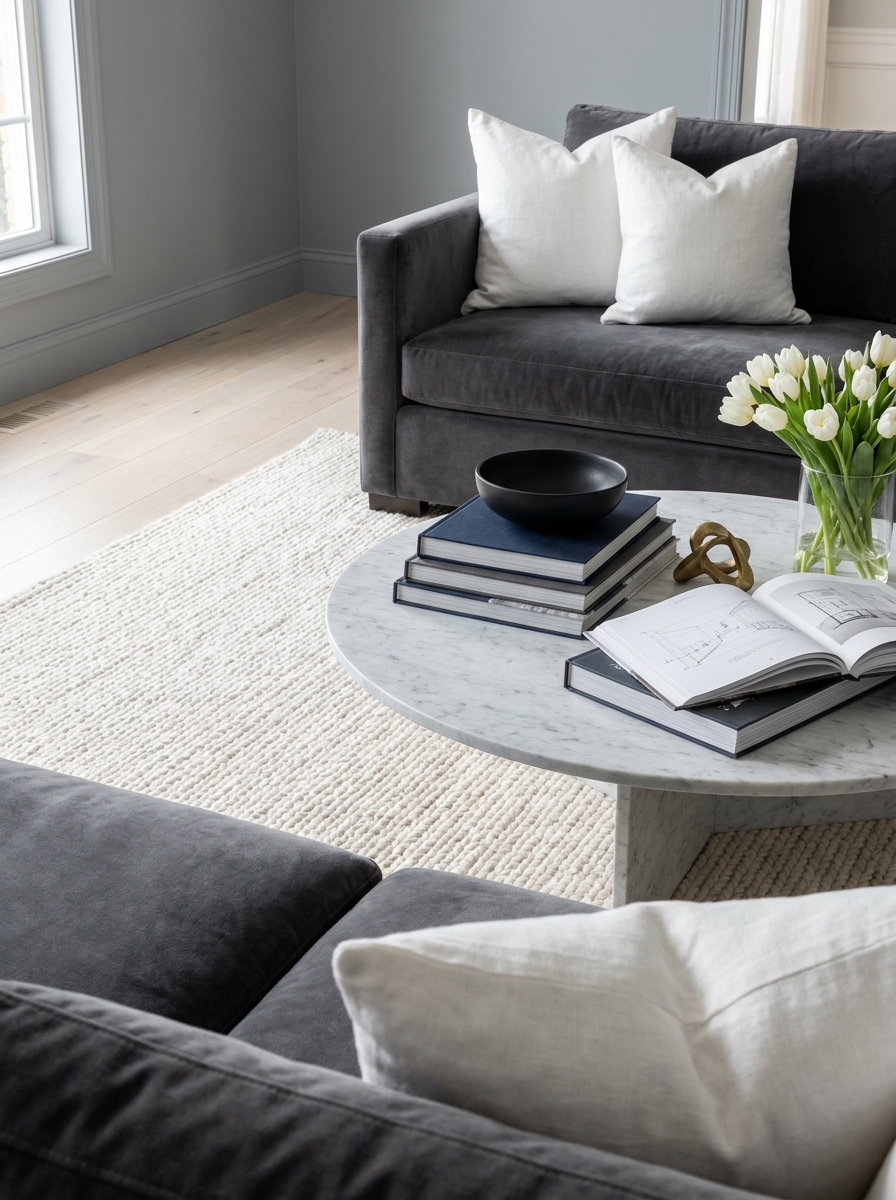
Books aren’t just for reading—they’re styling gold. Designers stack them to add height, color, and personality to a coffee table. But here’s the thing: you want to use odd numbers. Three books or five books look more visually interesting than two or four.
Choose books with covers that match your room’s vibe. Art books, travel photography, fashion, architecture—pick topics you actually care about. Guests will flip through them, so make sure they’re books you’re proud to display. Stack them with the largest on the bottom and work your way up, or create two separate stacks at different heights for more visual rhythm.
The spines can face in or out depending on the look you want. Facing out shows the titles and adds text to your vignette. Facing in creates clean lines and draws attention to what’s placed on top of the stack. I like mixing both—some spines out, some spines in. It feels less matchy and more collected over time.
3. Add Height Variation with Candles or Vases
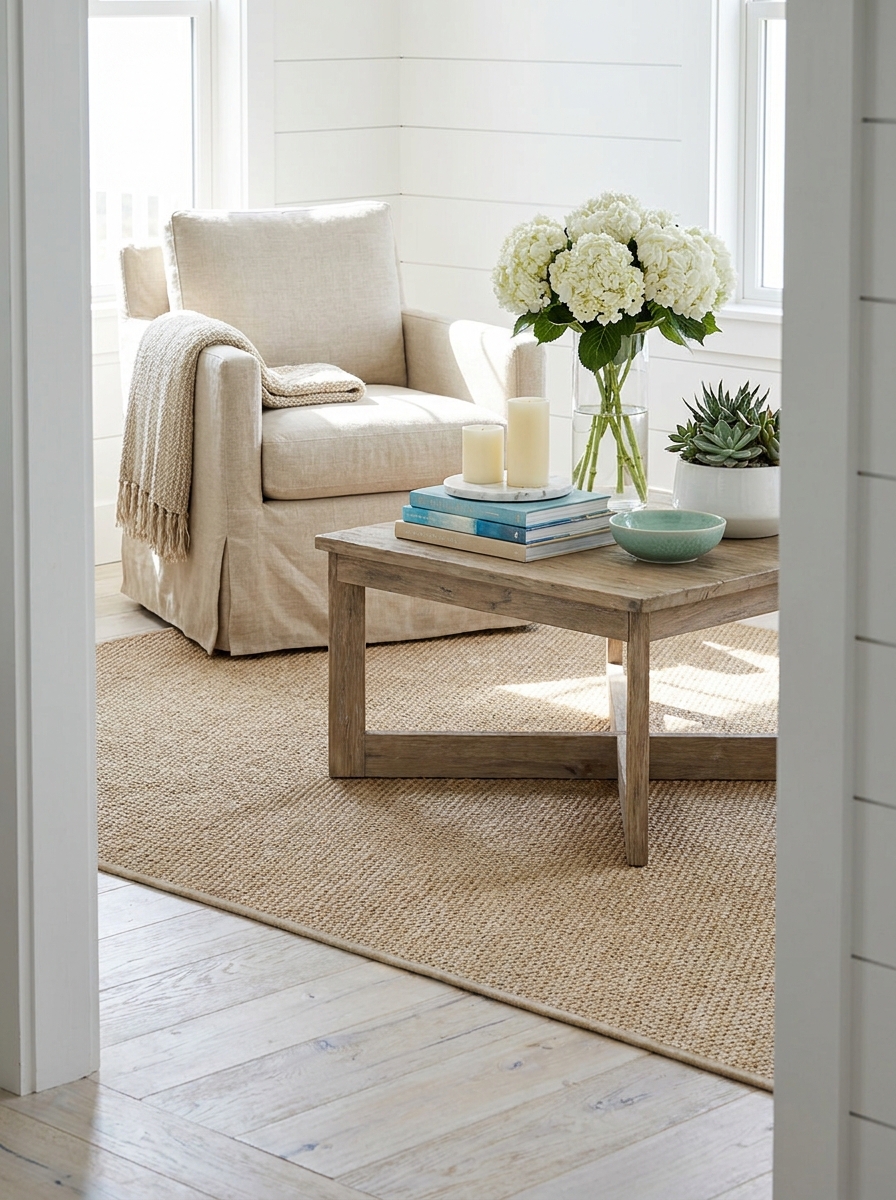
Flat surfaces need vertical interest. This is where candles, vases, and tall objects come into play. When everything on your coffee table is the same height, your eye doesn’t know where to land. But when you introduce different levels, the whole arrangement comes alive.
Taper candles in elegant holders are a designer favorite because they’re slim and don’t take up much surface space while adding serious height. Pillar candles work too, especially chunky sculptural ones that feel more like art pieces. And don’t sleep on bud vases with single stems—they add life and verticality without overwhelming a small table.
The trick is balancing your heights. If you have a tall vase on one side, balance it with stacked books on the other. Create a visual triangle where your eye travels from high to medium to low across the table. It’s not about symmetry—it’s about equilibrium. Your table should feel grounded but dynamic at the same time.
4. Incorporate Natural Elements and Greenery
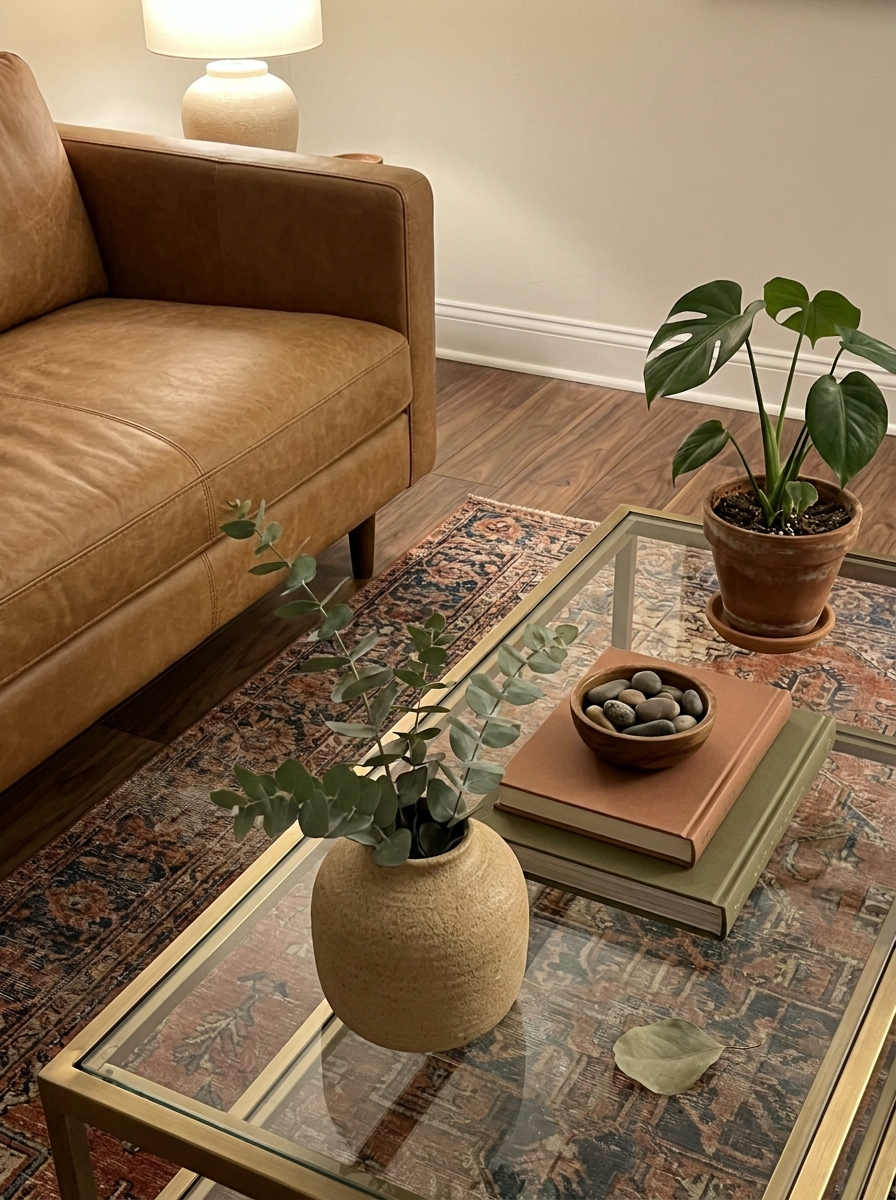
Nothing makes a coffee table feel alive like something that’s actually alive. Fresh flowers, potted plants, branches, or even a bowl of lemons—natural elements ground your styling and add an organic softness that manufactured decor just can’t match.
You don’t need elaborate floral arrangements. A simple bunch of eucalyptus in a glass vase works beautifully. So does a single stem in a bud vase. I’ve styled tables with just three white tulips and gotten more compliments than when I’ve gone overboard with complicated setups. The key is keeping it simple and letting the natural beauty speak for itself.
If you’re not great with fresh flowers (no judgment—they’re work), consider low-maintenance greenery like a small potted succulent or a snake plant in a pretty ceramic planter. Even decorative bowls filled with natural objects like wooden beads, smooth river stones, or dried botanicals bring that earthy, grounded feeling. It’s about connecting your indoor space to the outside world, even in a small way.
5. Create Balance with the Rule of Thirds
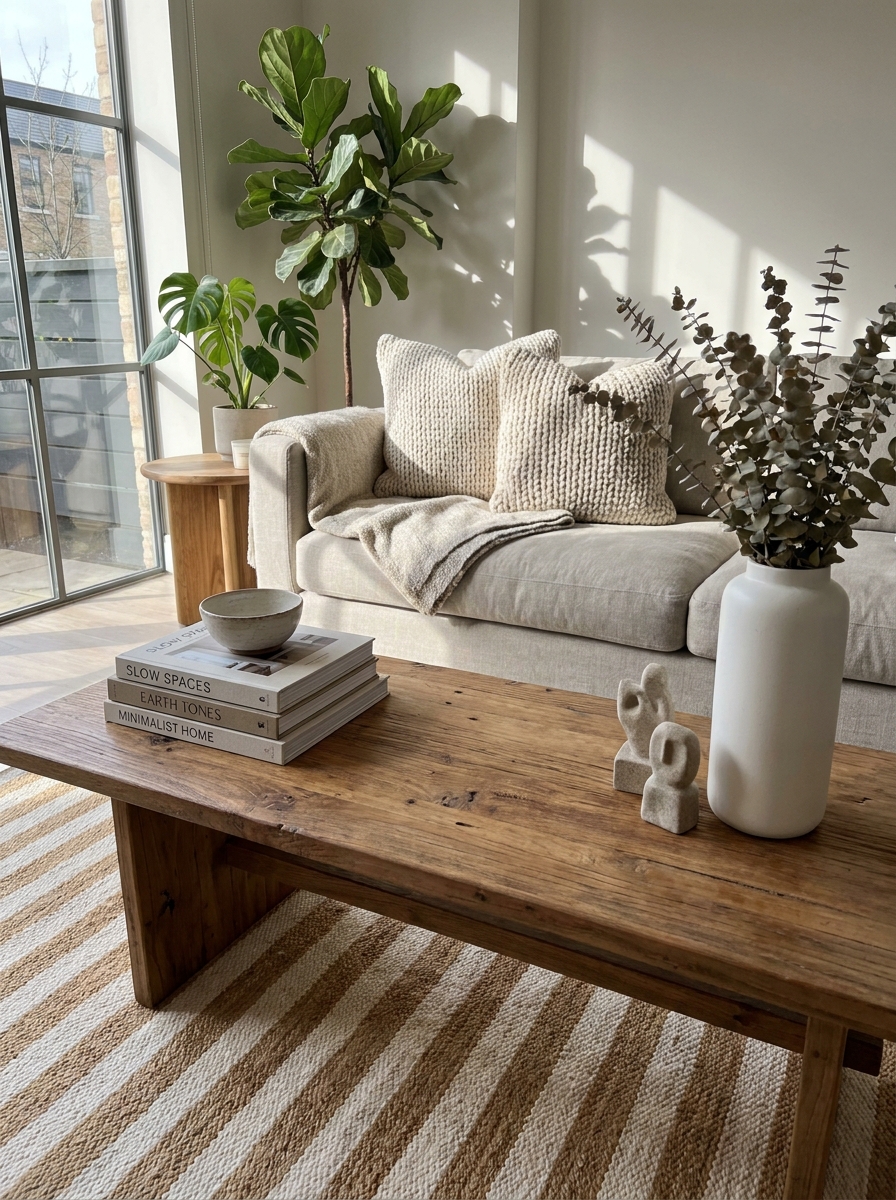
Here’s a designer secret that’ll change everything: divide your coffee table into thirds, either visually or actually. Place your main groupings in two of those sections and leave one completely empty. This negative space is what makes styled tables look intentional instead of cluttered.
I used to fill every inch of my coffee table and wonder why it looked messy. Then I learned this trick and suddenly everything clicked. Put your stacked books and a small object on one side, a tray with candles in the middle third, and leave the last section totally clear. Or do books on one end, nothing in the middle, and a vase on the other end.
The empty space gives your eye somewhere to rest and makes each styled section feel more important. Plus, it’s just practical! You need somewhere to actually set down your coffee mug or the remote. That breathing room is what separates a designer look from a maximalist mess.
6. Mix Textures for a Collected, Layered Look
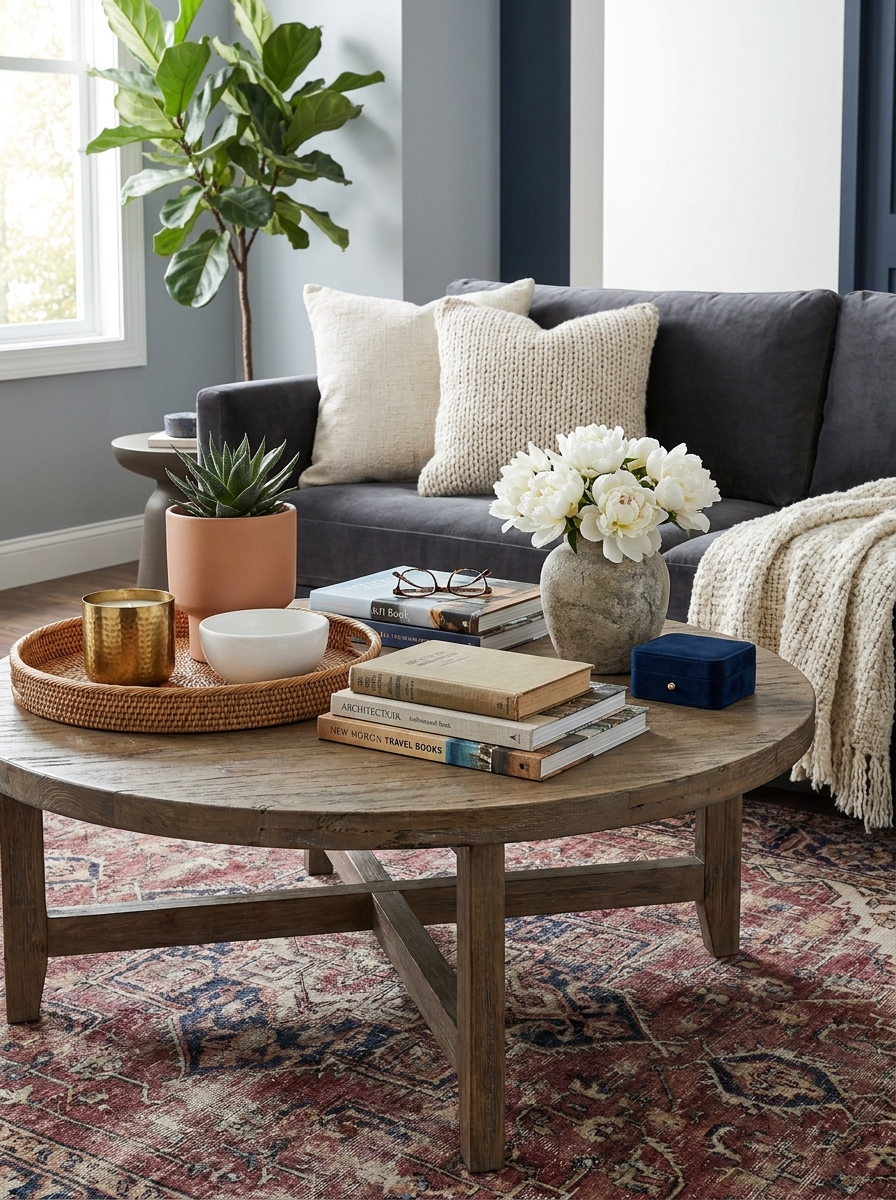
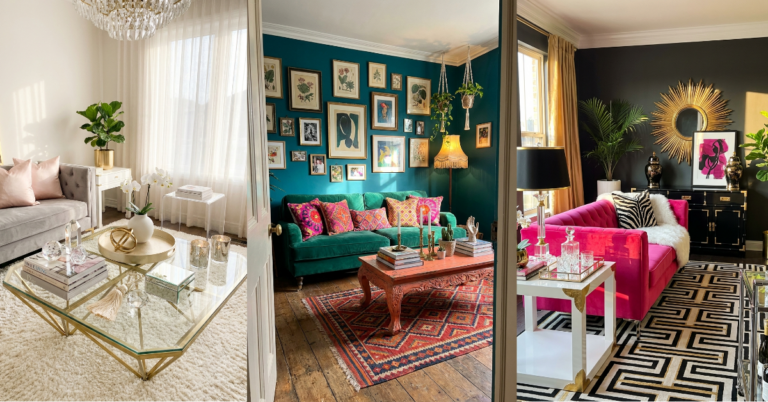
The secret to making your coffee table feel expensive? Texture, texture, texture. I’m talking smooth ceramic next to rough linen, glossy books against a matte wooden bowl, shiny brass beside natural stone. When you mix different textures, everything suddenly looks more curated and interesting.
Think about what you can touch and feel. A woven basket tray, a marble coaster, a velvet-bound book, a hammered metal candle holder. Each surface catches light differently and adds visual depth. This is how designers make simple arrangements look like they cost a fortune without actually spending one.
Don’t overthink it! Just make sure you’re not using all smooth things or all rough things. Grab items from different rooms if you need to. That stone bowl from your bedroom? It might be perfect next to your coffee table books. The contrast is what makes each piece stand out and keeps people’s eyes moving around your whole arrangement.
7. Add a Personal Touch That Tells Your Story
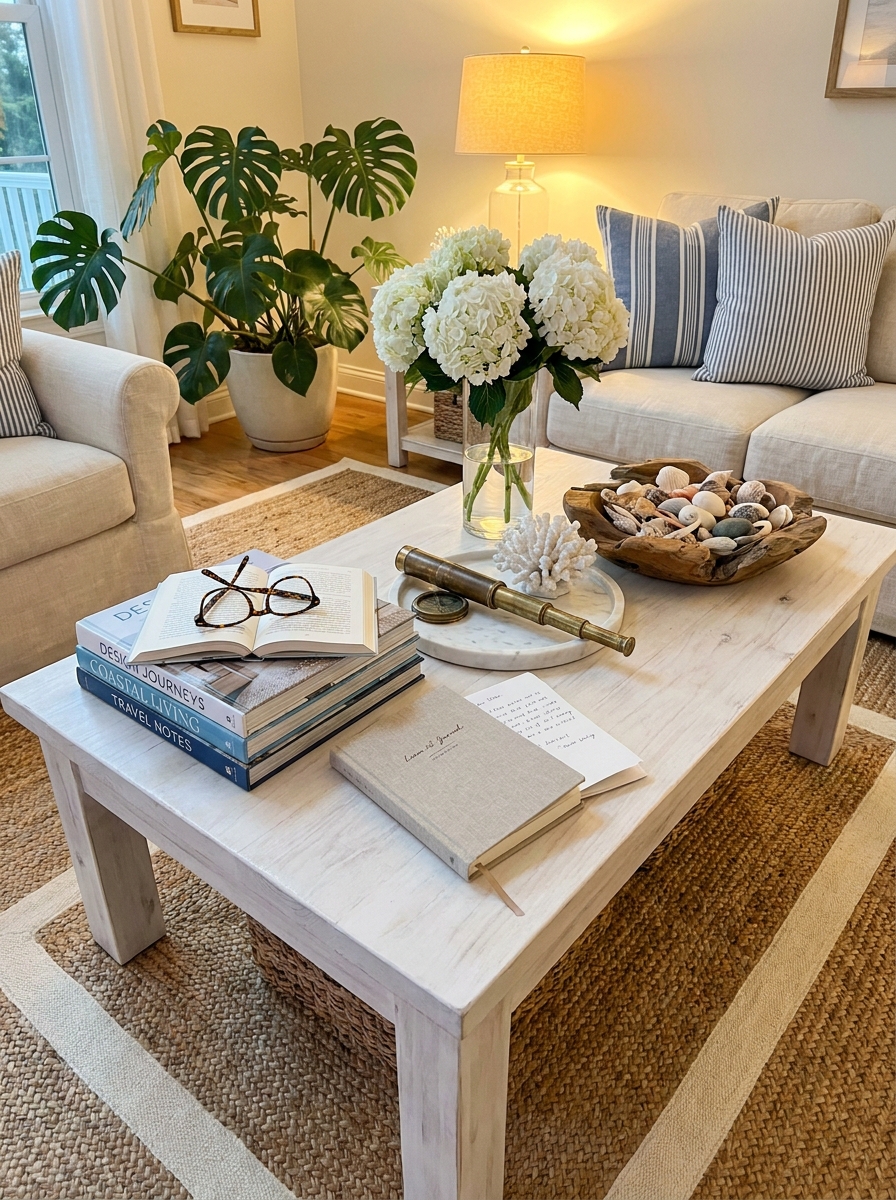
Okay, this is where you get to break away from the perfectly styled Instagram photos. The most beautiful coffee tables have something personal mixed in with all the pretty stuff. Maybe it’s a vintage find from your honeymoon, a handmade ceramic piece from a local artist, or even a beautiful coaster collection you’ve been gathering.
I keep a small brass compass on my coffee table because my husband and I love to travel. It’s not “designer” but it makes me smile every time I see it. These personal pieces are conversation starters and they’re what make your home actually yours, not just a replica of a magazine spread.
The trick is keeping it to one or two meaningful items max. You want that personal piece to feel special and intentional, not like you dumped out your junk drawer. Treat it like the treasure it is by surrounding it with your other styled elements. Let it be part of the composition, not competing with it.
8. Keep It Practical with Strategic Placement
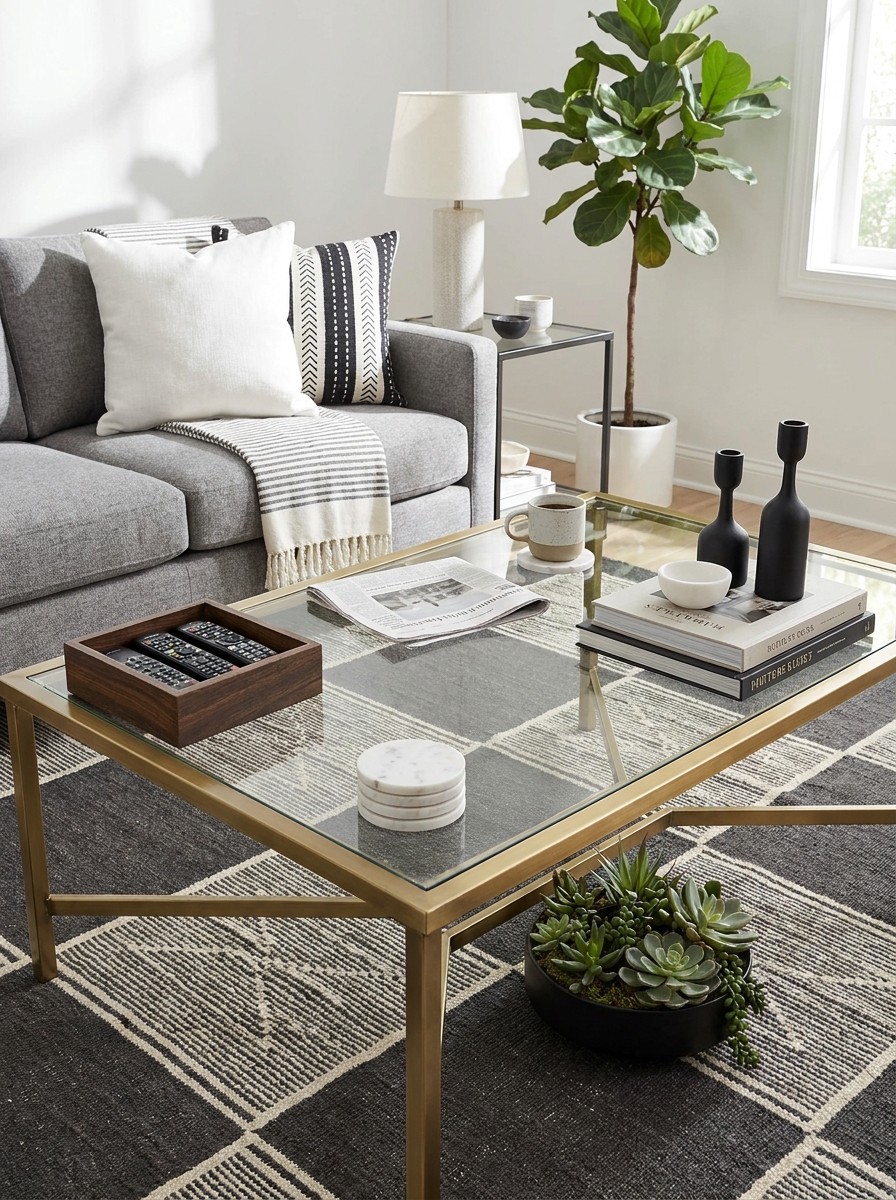
Let’s be real for a second. Your coffee table needs to actually function, right? I learned this the hard way when I styled mine so perfectly that I couldn’t use it for anything. Now I think about how we actually live before I arrange anything.
If you always need a spot for remotes, create a designated zone for them. Maybe that’s a pretty decorative box that’s part of your styling, or one section of your tray. Got kids? Keep the breakable stuff toward the back and sturdier items within reach. Like to put your feet up? Leave the center completely clear or style just the ends.
The best styled coffee tables work with your life, not against it. Position your books where they won’t get knocked over. Put coasters where people naturally set drinks. Make sure your most-used items are accessible. When your styling serves your actual needs, you’ll keep it looking good because it’s not fighting you every single day.
9. Play with Scale for Visual Interest
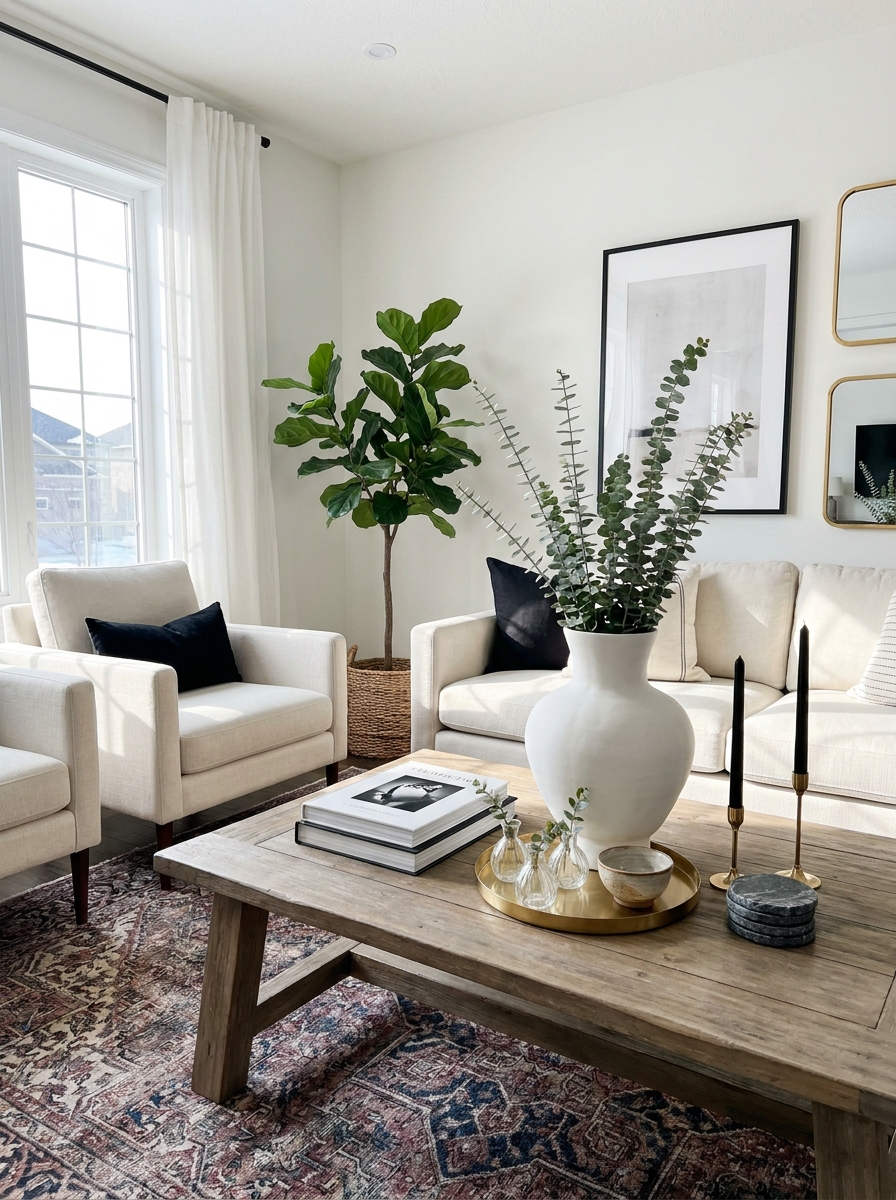
Size matters more than you think! One of my favorite designer tricks is playing with scale to create drama and visual punch. I love mixing one large statement piece with smaller objects clustered together. It creates this beautiful tension that makes your eye dance around the table.
Think oversized ceramic bowl next to dainty bud vases. Or a chunky sculptural object beside delicate stacked coasters. This contrast is what makes designer spaces feel so intentional and collected. The key is making sure your largest piece doesn’t overwhelm everything else.
I usually pick one hero piece that’s about twice the size of my next largest item. Then I balance it with a grouping of smaller things on the opposite side. It sounds simple, but this scale play is what separates amateur styling from designer-level looks. Your coffee table should have this satisfying mix of big and small that feels purposeful, not random.
10. Edit Ruthlessly for That Curated Feel
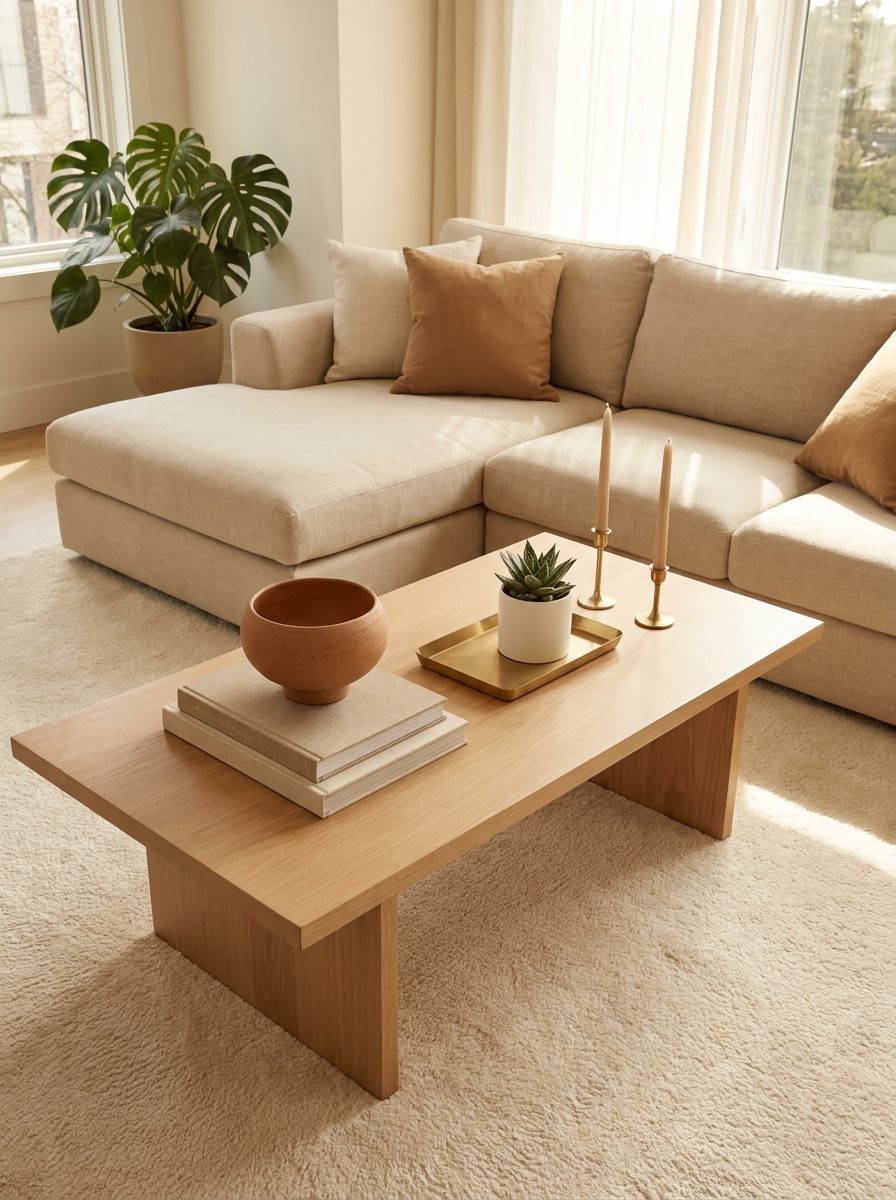
Here’s the truth nobody talks about: most coffee tables are over-styled. I’ve been there, trust me. You get excited and keep adding things until it looks like a home goods store exploded. The secret to that designer look? Knowing when to stop and even remove things.
I style my coffee table, step back, then take away at least one item. Sometimes two. This editing process is where the magic happens. You want enough visual interest to be engaging but enough negative space to feel calm and intentional. Your table should breathe.
Designers call this “white space” and it’s just as important as the stuff you put down. I aim to keep about 30-40% of my coffee table surface clear. It makes everything you do display look more important and gives you actual usable space for that wine glass or morning coffee. Less really is more when it comes to that polished, expensive look.
11. Rotate Accessories Seasonally for Fresh Looks
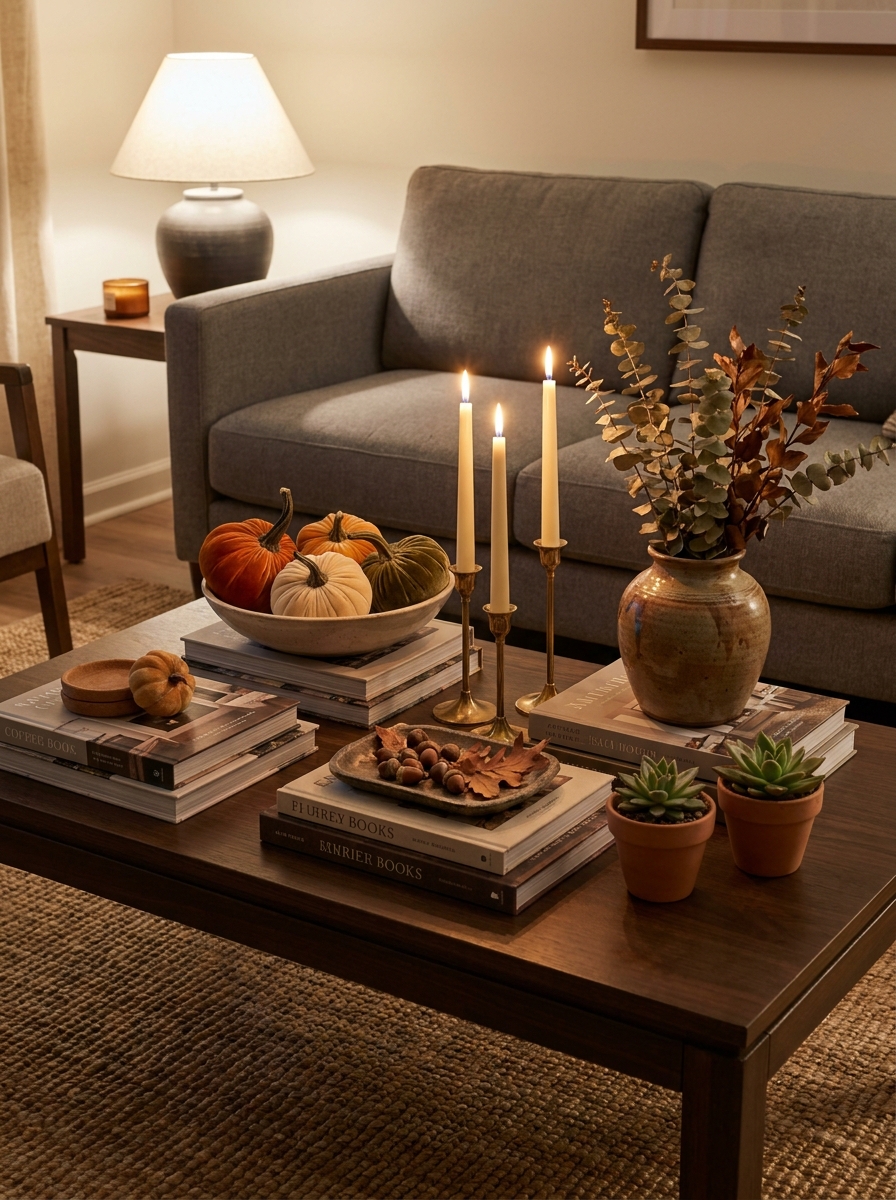
Want to know my favorite lazy designer trick? I don’t keep the same coffee table styling year-round. Swapping out just a few pieces seasonally keeps your space feeling fresh without any major effort or expense. It’s like giving your living room a mini makeover every few months.
I keep a small bin of seasonal accessories that I rotate through. Spring might mean fresh tulips and lighter colors. Fall brings warmer tones, mini pumpkins, or richer textures. But here’s the thing — I keep my foundation pieces the same. The tray stays, the books stay, maybe one signature object stays.
This way I’m only swapping 2-3 items but it completely transforms the vibe. It keeps me from getting bored and makes my home feel current and cared for. Plus it’s fun! I actually look forward to these little seasonal refreshes. They’re like permission to shop your own house and play decorator without commitment.
12. Style in Triangles for Professional Composition
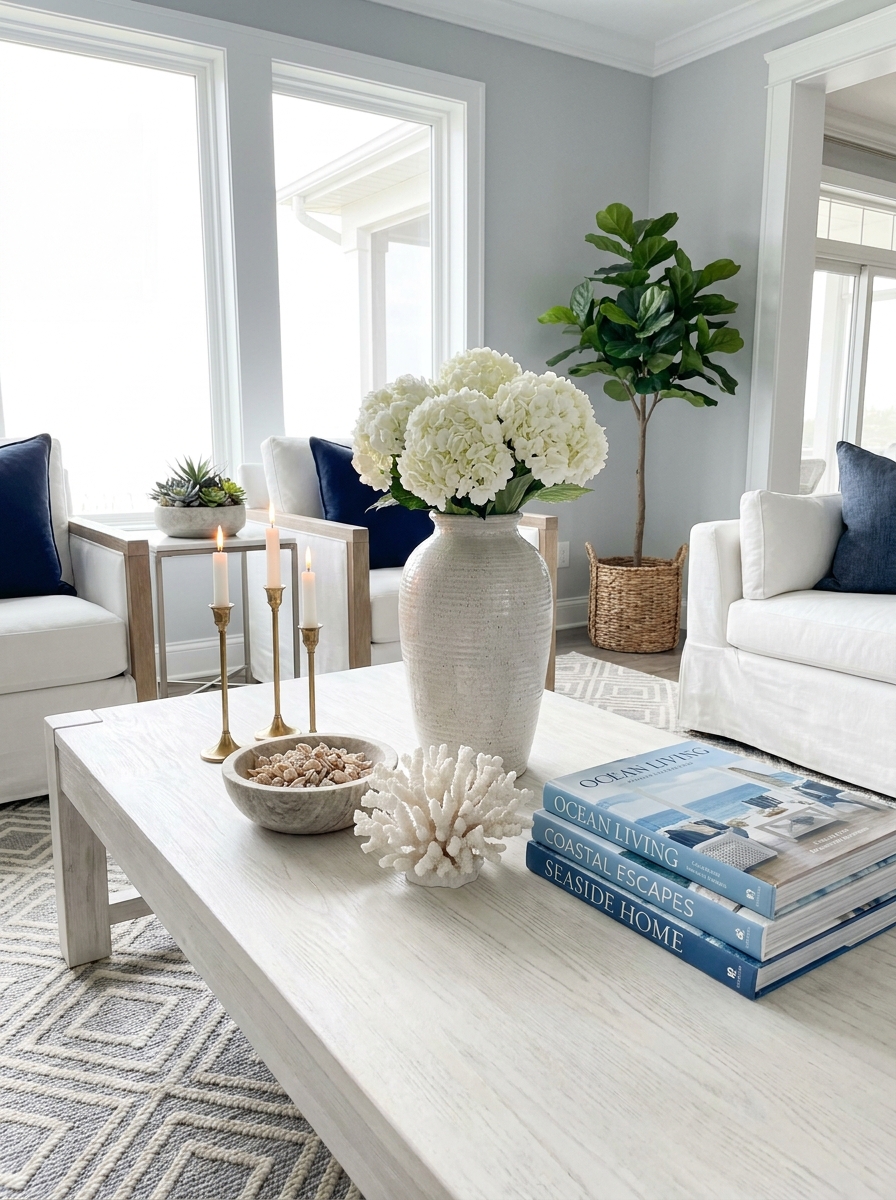
This is the styling trick I learned from a professional designer that changed everything for me. When you arrange objects in triangular formations — either actual triangles or implied ones through height variation — your coffee table instantly looks more intentional and composed. It’s geometry, but make it pretty.
Here’s how it works: imagine invisible triangle shapes connecting your tallest items. Maybe you have a tall vase at one corner, medium-height candles in the middle, and stacked books creating height on the opposite side. Your eye naturally follows this triangle pattern and it feels satisfying and complete.
You can create multiple triangles on one table or one big triangle composition. I usually do one main triangle with my three tallest elements, then smaller triangular groupings within that. It sounds complicated but once you see it, you can’t unsee it. Every beautifully styled coffee table you’ve ever pinned probably uses this exact technique. Now you know the secret!
13. Use Negative Space as an Intentional Design Element
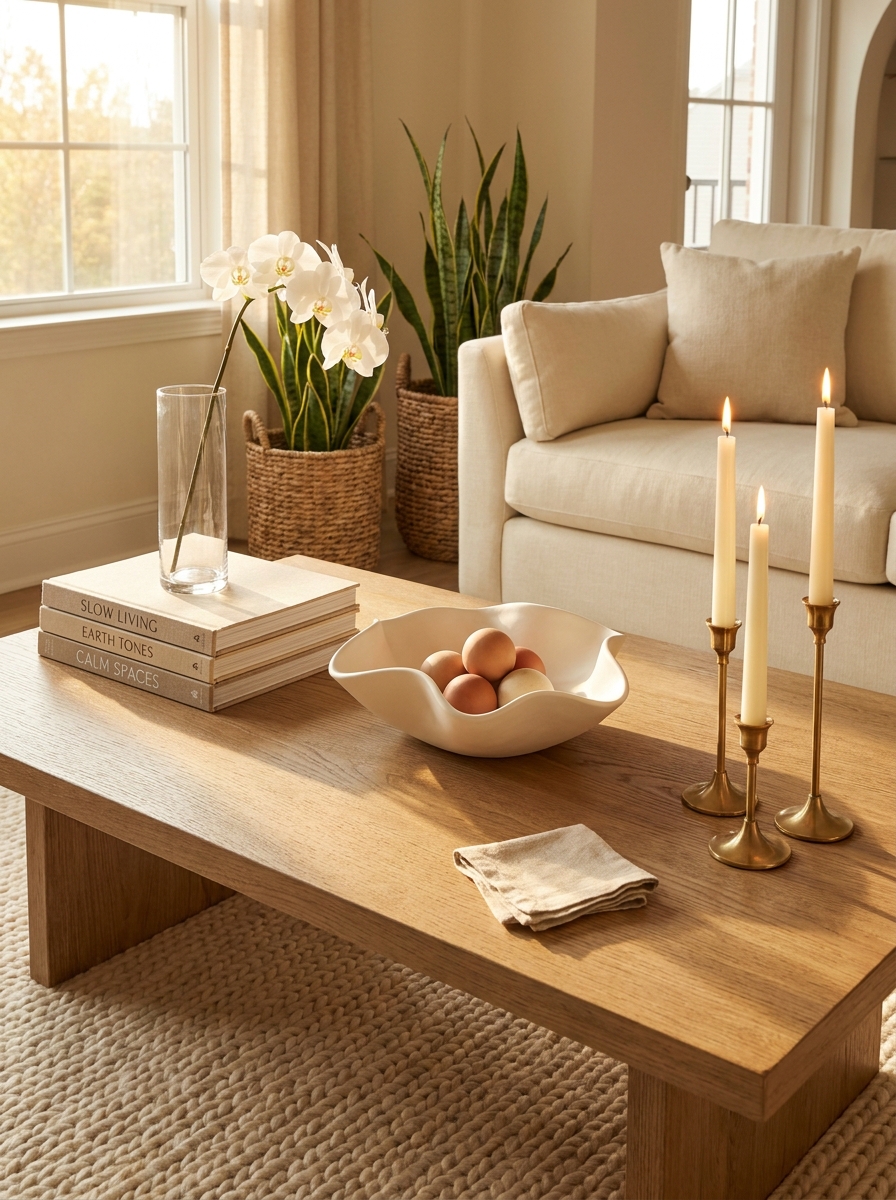
Here’s something designers know that most people forget: empty space is just as important as the stuff you put down. I see so many coffee tables crammed edge to edge with things, and it just looks stressed. Your table needs room to breathe!
Think of negative space as the pause in a great conversation. It gives your eye somewhere to rest and makes each piece you’ve chosen feel more important. I usually aim to keep about 30-40% of my coffee table surface completely clear. That might sound like a lot, but trust me, it’s what makes the whole setup look intentional instead of cluttered.
This empty space also serves a practical purpose. You need somewhere to set down your coffee mug or the TV remote without playing Jenga with your decor. Plus, when you have that breathing room, each accessory becomes a statement instead of just noise. It’s the difference between a curated collection and a yard sale. Less really is more here!
14. Anchor Your Styling with One Statement Piece
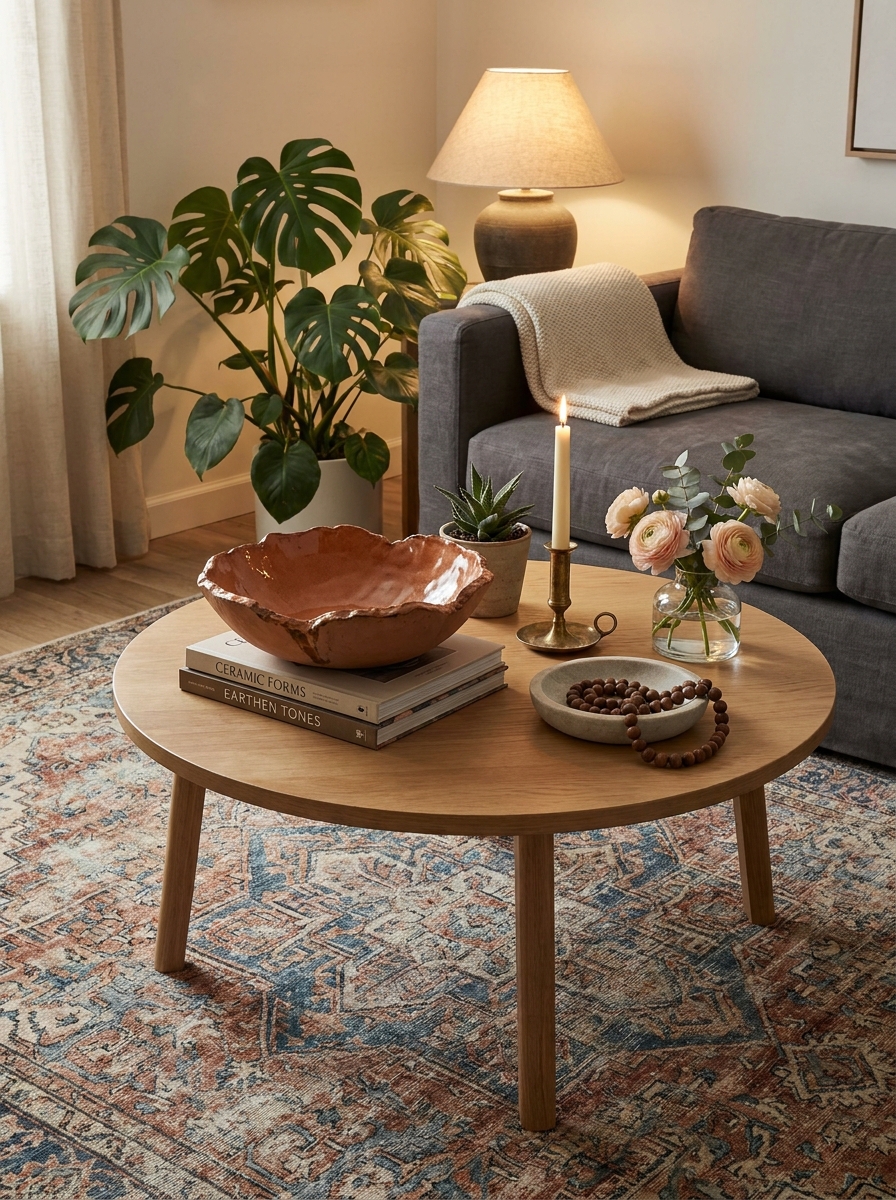
Every great coffee table needs a star of the show. I’m talking about that one piece that makes people say “where did you get that?” It could be an oversized sculptural bowl, a stunning art book, a unique vintage find, or a dramatic vase. This anchor piece sets the tone for everything else.
Once you have your statement piece, everything else becomes supporting cast. I usually put my anchor in the most prominent position, often using the rule of thirds, then build around it with smaller, simpler items. The key is letting that special piece shine without competition. If everything is screaming for attention, nothing gets heard.
This approach makes styling so much easier because you’re not guessing. Your statement piece tells you what mood you’re going for. A rough wooden bowl says organic and earthy. A sleek marble tray says modern and sophisticated. Let that hero piece guide your other choices, and suddenly everything clicks into place without overthinking it!
15. Break the Rules with Unexpected Color Pops
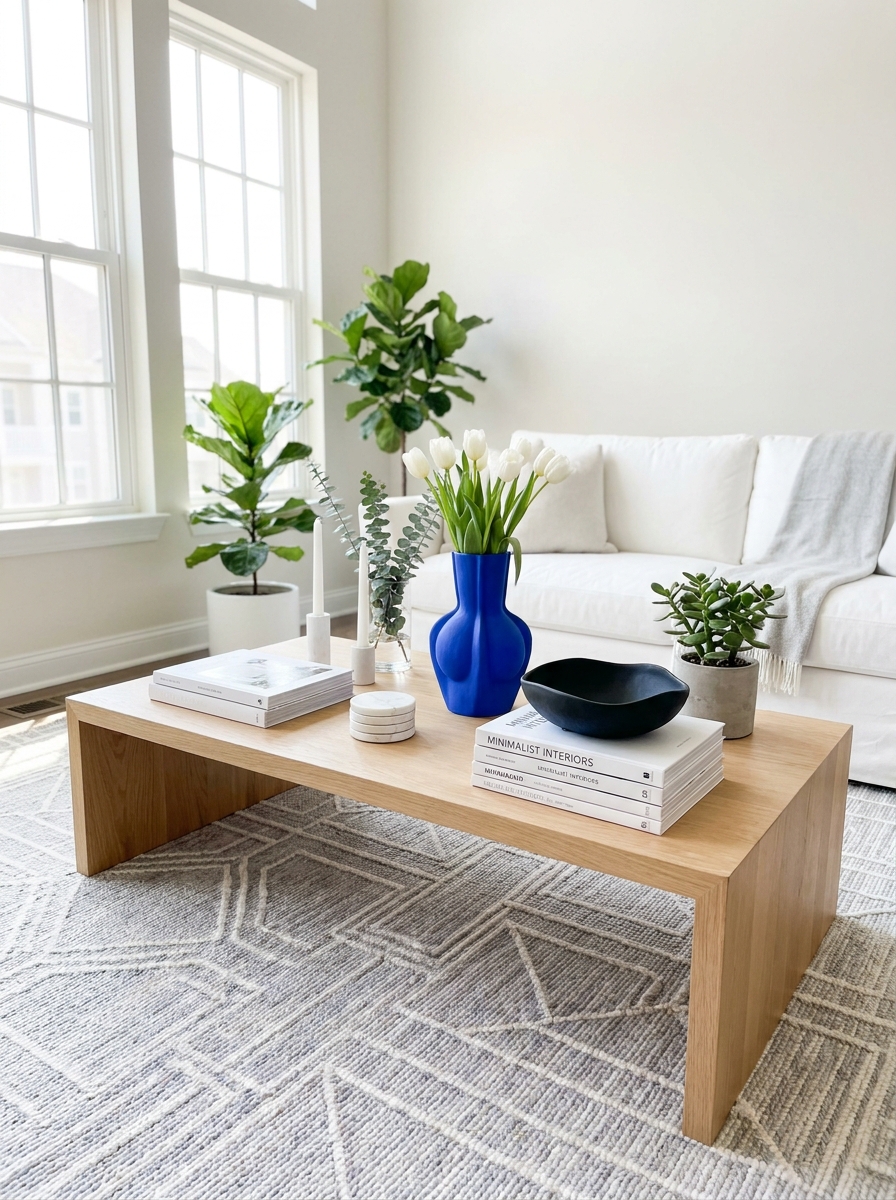
Okay, after all this talk about neutral palettes and calm styling, let me tell you a secret: sometimes you need to throw in something totally unexpected. A bright colored book spine, a bold ceramic piece, or fresh flowers in a punchy hue can make your whole coffee table come alive.
I’m not saying go crazy with a rainbow explosion. But one intentional pop of color, maybe in a shade that pulls from your throw pillows or artwork, creates this amazing moment of surprise. It’s like that person at a party who’s perfectly put together but wearing the most fabulous bold lipstick. Suddenly everything feels more interesting and personal.
The trick is using color strategically, not randomly. I love a coral book cover against all neutrals, or a cobalt blue vase that echoes the rug pattern. That single color moment draws the eye and makes people look twice. It says you know the rules well enough to break them confidently. And honestly? That’s what great styling is really all about!
Quick Guide
## Coffee Table Styling Cheat Sheet
The Rule of Three: Group objects in threes for the most visually pleasing arrangements. Three books, three candles, or three decorative objects create natural balance.
Height Hierarchy: Aim for three different height levels—tall (vases, candles), medium (stacked books, small plants), and low (bowls, trays, coasters).
Color Coordination: Stick to 3-4 colors max that complement your room’s palette. Too many colors create visual chaos.
Negative Space: Leave at least 30-40% of your table surface empty. You need room for drinks, snacks, and actual living.
The Triangle Method: Arrange objects in a triangle pattern—your eye naturally follows this shape and it feels balanced without being symmetrical.
Texture Mixing: Combine at least three different textures—smooth ceramic, rough wood, soft fabric, shiny metal—to add depth and interest.
Your Coffee Table, Your Signature
Here’s the beautiful truth about coffee table styling: there’s no single right way to do it. What works in a designer’s staged living room might feel too fussy for your real life. And that’s completely okay. The best-styled coffee tables reflect the people who actually use them.
Maybe you need space for your laptop and morning coffee. Maybe you’ve got kids who do homework there. Maybe it’s where you prop your feet up every single night. Your coffee table should work for your life first, and look pretty second. But with these 15 tricks, you can have both—a surface that’s functional and gorgeous.
Start with one or two ideas that resonate with you. Add that tray you’ve been eyeing. Stack those books you love. Bring in fresh flowers this weekend. Small changes create big impact, and before you know it, you’ll have a coffee table that feels intentionally styled instead of accidentally cluttered. And when someone compliments it? You’ll smile and say thanks, knowing you styled it like a designer—but made it work for real life.
Frequently Asked Questions
How many items should I put on my coffee table?
Aim for 3-7 items total, grouped in odd numbers. This keeps your table from looking cluttered while still feeling curated and intentional. Remember to include items of varying heights and leave plenty of negative space for functionality.
What’s the best way to style a small coffee table without overcrowding it?
Stick to one small tray with 2-3 carefully chosen items—maybe a single stack of books, a small vase with flowers, and one decorative object. On small tables, less is definitely more. Focus on quality over quantity.
How do I style a coffee table with kids or pets in the house?
Choose sturdy, unbreakable items and keep the arrangement simple. Use a tray to corral items so they’re easy to move when needed. Skip fragile vases and opt for weighted objects that won’t tip easily. And embrace that your table will be functional first—perfectly styled second.
Should coffee table decor match the rest of my living room exactly?
No, it should complement your room without being matchy-matchy. Pull 2-3 colors from your existing palette and add textures that echo what’s already in the space. Your coffee table is a chance to add personality, not duplicate what’s on your walls or sofa.
How often should I change my coffee table styling?
Refresh seasonally or whenever you’re craving a new look—every 3-4 months feels natural. Swap out flowers, switch your books, or change your tray. Small updates keep your space feeling current without requiring a complete overhaul every time.