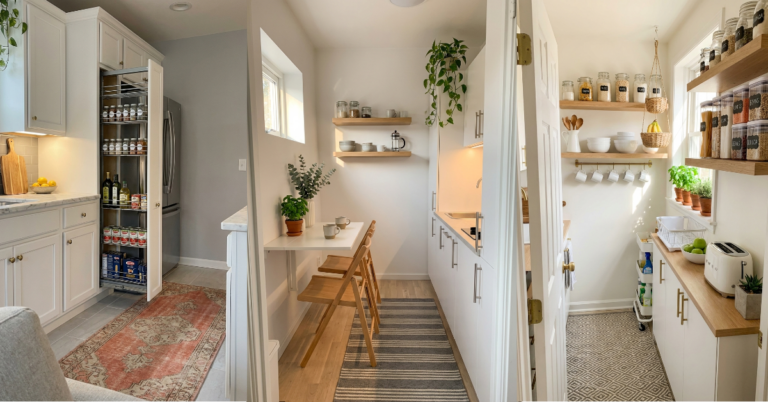
21 Gorgeous Mudroom Ideas That Transform Chaos
You walk in the door with grocery bags, a kid’s backpack, two jackets, and your shoes are somehow already kicked off in three different directions. Sound familiar? The mudroom is where life actually happens — it’s the catch-all zone between outside chaos and inside calm. But it doesn’t have to look like a tornado hit it every single day. A well-organized mudroom can be both beautiful and functional, giving everything a home so you’re not tripping over sneakers or hunting for lost mittens. And here’s the best part: you don’t need a huge space or a massive budget to make it work. Whether you’ve got a dedicated mudroom or just a tiny corner by the back door, smart storage and a little intentional styling can completely change how your home feels the moment you step inside. Here’s what actually works.
1. Built-In Cubbies with Personalized Labels
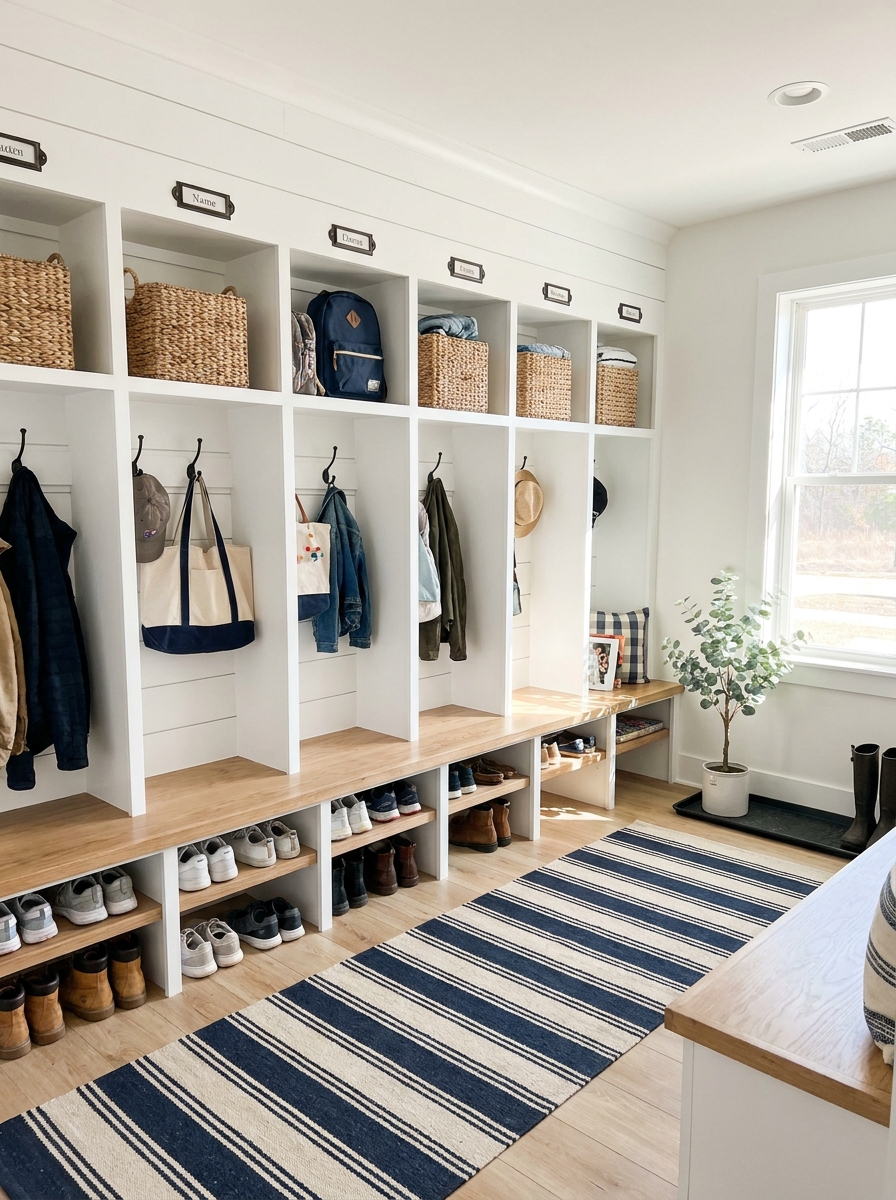
There’s something so satisfying about a row of cubbies where everyone in the family has their own designated spot. It takes the guesswork out of where things go, and honestly, it makes kids way more likely to actually put their stuff away. Each cubby becomes a mini locker — backpacks, lunchboxes, sports gear, all tucked neatly inside instead of piled on the floor.
You can customize these with labels, nameplates, or even chalkboard tags so everyone knows exactly which space is theirs. And if you’ve got younger kids, add picture labels so they can identify their cubby before they can read. It’s a game-changer for morning routines when everyone can grab their own things without asking you where everything is.
The key is making sure each cubby is deep enough to actually hold what your family uses daily. Shallow cubbies look cute but don’t hold much. Go for at least 12 inches deep so backpacks and bags fit comfortably without spilling out into the walkway.
2. Floor-to-Ceiling Locker-Style Storage
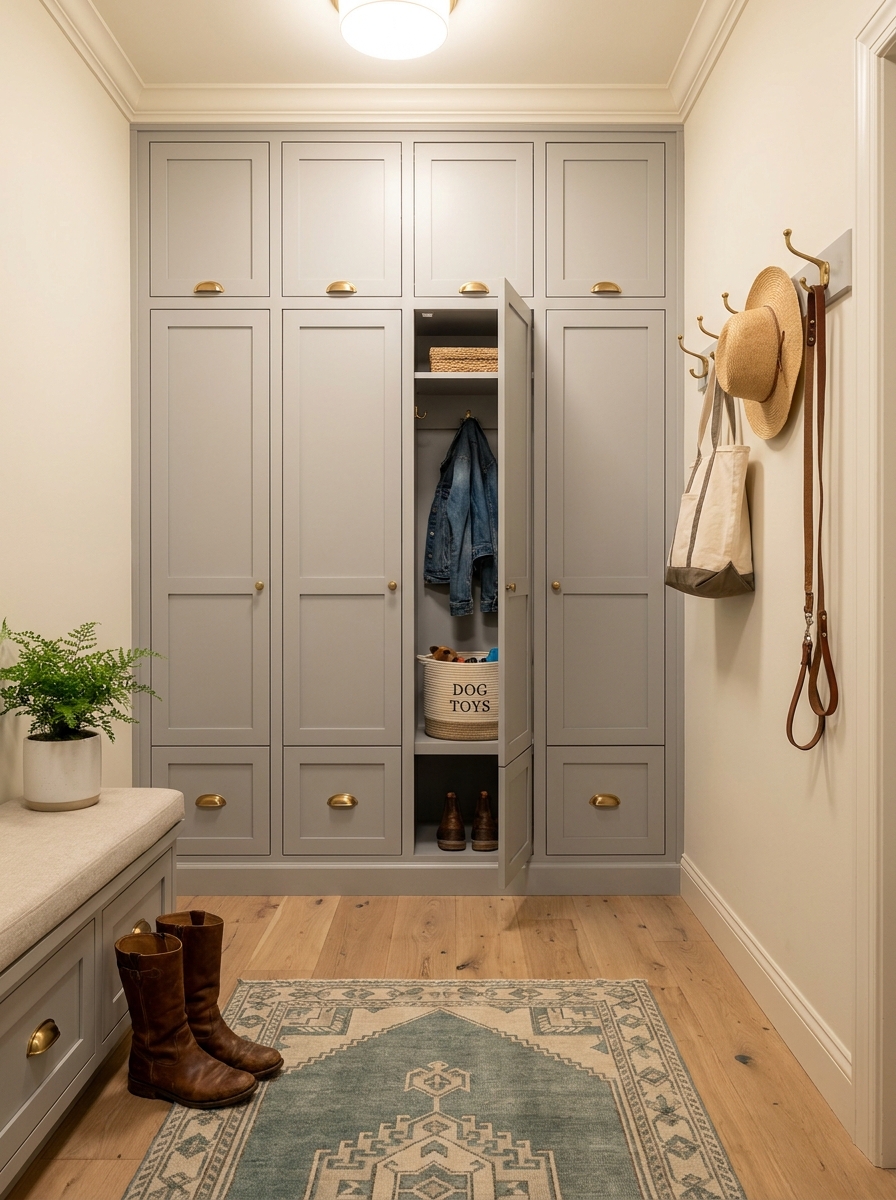
If you want that clean, streamlined look where everything disappears behind closed doors, locker-style storage is your best friend. These tall, narrow cabinets give each person their own vertical space from floor to ceiling, and the doors keep the visual clutter completely hidden. It’s perfect for families who accumulate a lot of gear but still want the mudroom to look tidy and composed.
Inside, you can customize each locker with hooks at the top for coats, a middle shelf for bags or helmets, and a bottom section for shoes or bins. Some people even add a small drawer or basket for keys, sunglasses, and other tiny essentials that always seem to go missing. The beauty of lockers is that they adapt to everyone’s needs without looking chaotic from the outside.
Go for a finish that complements your home’s style. Navy blue lockers with brass pulls feel classic and sophisticated. Soft gray with matte black hardware reads modern farmhouse. Or keep it simple with all-white lockers and let your hardware do the talking.
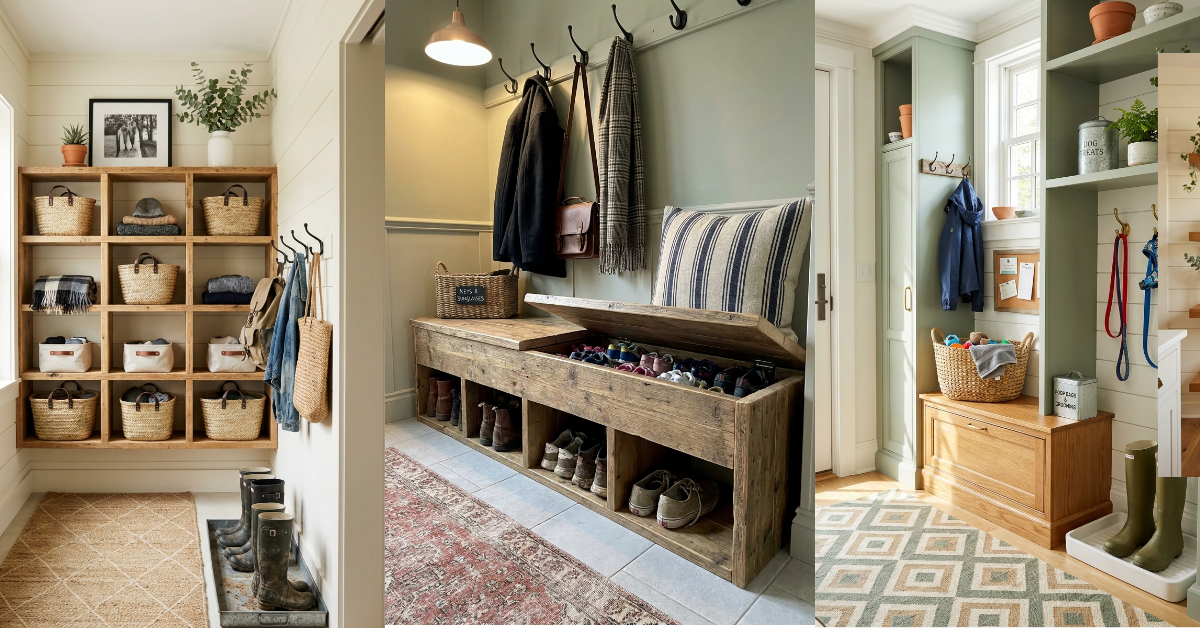
3. Open Shelving with Woven Basket Storage
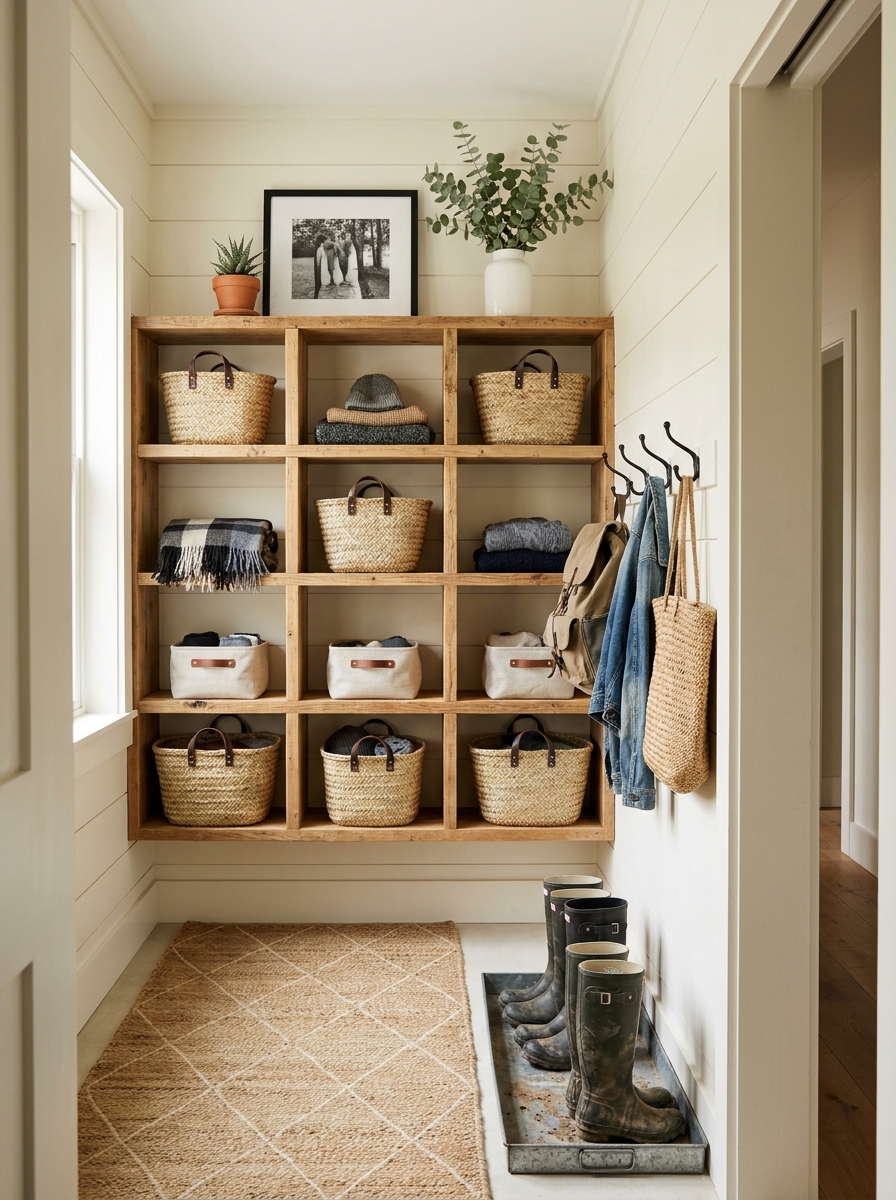
Sometimes the simplest solution is the most beautiful one. Open shelving paired with coordinating woven baskets gives you all the storage you need while keeping the space feeling light and airy. You can see everything at a glance, but the baskets hide the messy bits — think mittens, dog toys, sunscreen, or whatever random stuff tends to land in your entryway.
This setup works especially well in smaller mudrooms or entryways where closed cabinets might feel too heavy or cramped. The open shelves create breathing room, and you can style the top shelf with a few pretty things like a plant, a candle, or a framed print to make the space feel intentional and welcoming. Plus, it’s budget-friendly. You can DIY simple wood shelves or grab affordable options and just add your own baskets.
Choose baskets that are sturdy and have handles so they’re easy to pull down. Natural seagrass, rattan, or even wire baskets with fabric liners all work beautifully depending on your style. Label them if you want to stay extra organized, or leave them label-free for a more relaxed vibe.
4. Bench Seating with Hidden Shoe Storage
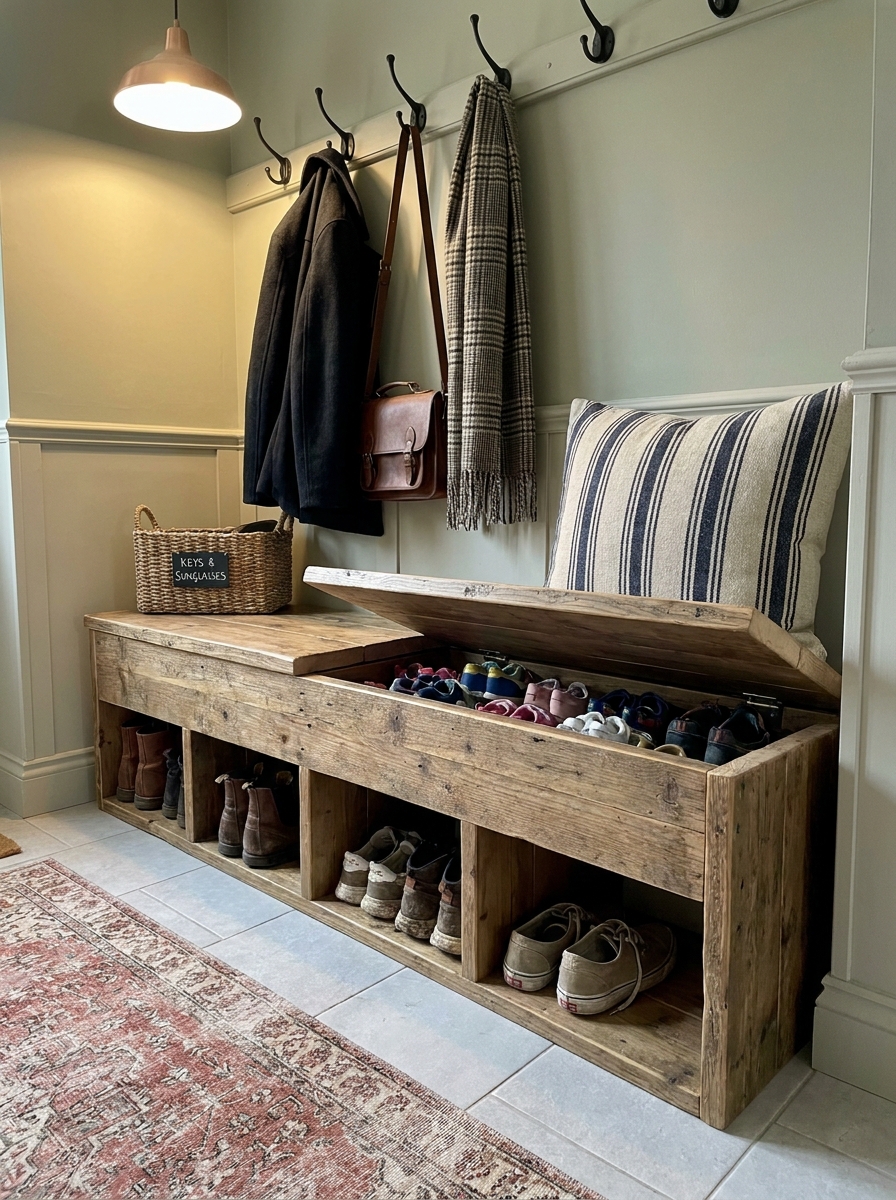
A mudroom bench is one of those things you don’t realize you need until you have it. It gives you a place to sit while pulling on boots, and when it doubles as shoe storage, it’s an absolute lifesaver. No more piles of shoes by the door or hunting through a jumbled heap for a matching pair. Everything has a spot, tucked neatly underneath or behind lift-up seats.
The hidden storage keeps shoes out of sight, which makes the whole space look cleaner and more intentional. You can organize by person, by season, or by type — whatever makes sense for your household. And the bench itself becomes a landing zone for bags, a basket of dog-walking essentials, or even a cozy throw pillow to soften the look.
For smaller spaces, a narrow bench works just as well as a deep one. Even 12 to 14 inches of depth gives you enough room to sit comfortably and store a surprising number of shoes underneath. Add a cushion on top for comfort and style, and you’ve got a hardworking piece of furniture that looks genuinely inviting.
5. Mudroom Command Center with Calendar & Mail Sorting
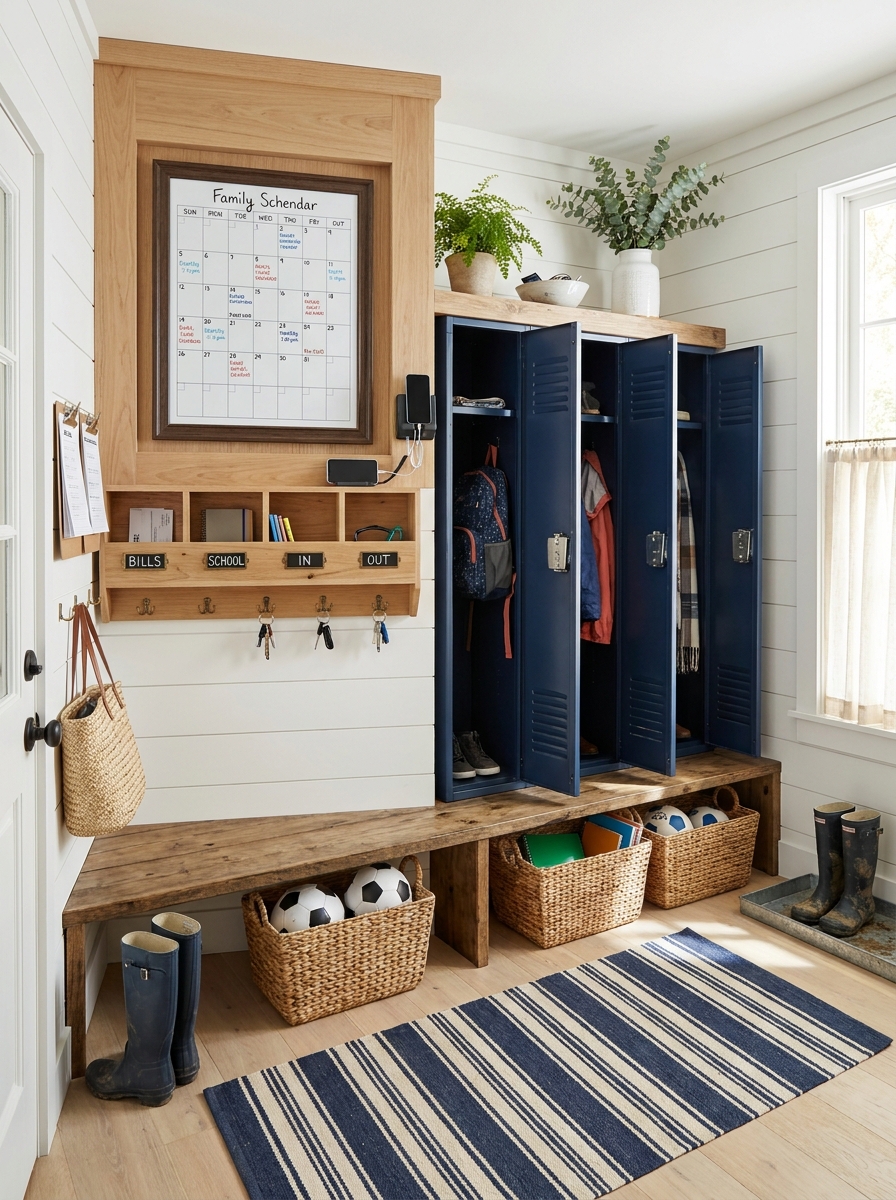
You know what makes mornings less chaotic? A designated spot where everything important lives. A command center in your mudroom keeps permission slips, bills, and everyone’s schedules in one visible place.
I’m talking about a small wall-mounted board or cabinet section dedicated to family organization. Add a calendar, mail sorter, key hooks, and maybe a charging station. Suddenly you’re not searching for lost field trip forms or wondering where you left your keys.
The beauty of building this into your mudroom storage is that it catches everything right when you walk in the door. Mail gets sorted immediately instead of piling up on the kitchen counter. Keys go on their hooks. Phone gets plugged in. It’s like a landing pad for all the stuff that usually ends up scattered around your house. Keep a small basket for outgoing mail and library books too.
6. Pegboard Wall with Adjustable Hook System
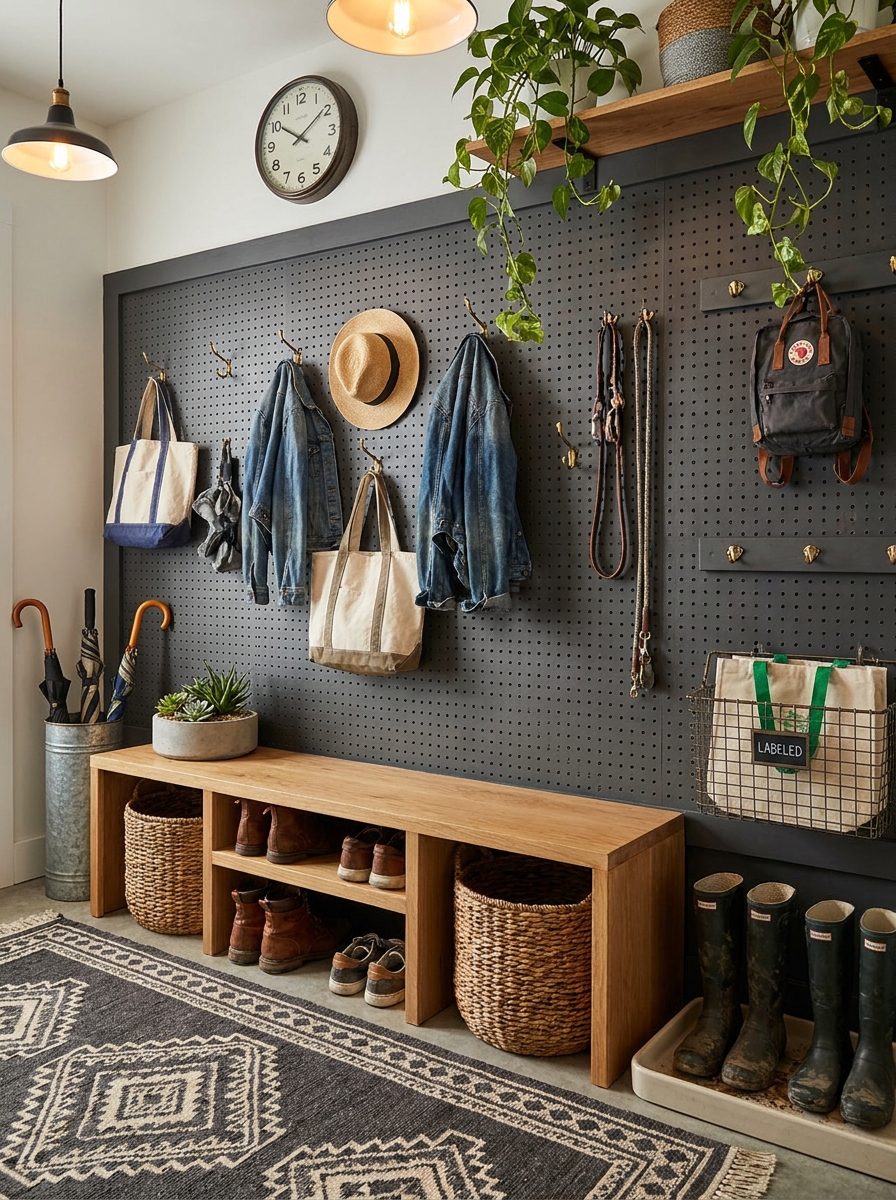
Here’s the thing about pegboard that makes me giddy: it’s completely customizable. You can move hooks around whenever your storage needs change, which is perfect because mudroom needs definitely shift with the seasons.
A floor-to-ceiling pegboard wall turns vertical space into serious storage. Hang coats, bags, umbrellas, sports equipment, pet leashes, you name it. Paint it a fun color or keep it natural wood. Add different hook styles and small shelves that slot right into the board.
What I love most is how visible everything is. No more digging through a closet wondering where you put the dog leash. It’s all right there, easy to grab on your way out. Kids can actually put their own stuff away because they can see exactly where it goes. Plus, it looks surprisingly stylish when you style it intentionally instead of letting it become a free-for-all.
7. Compact Corner Mudroom for Small Entryways
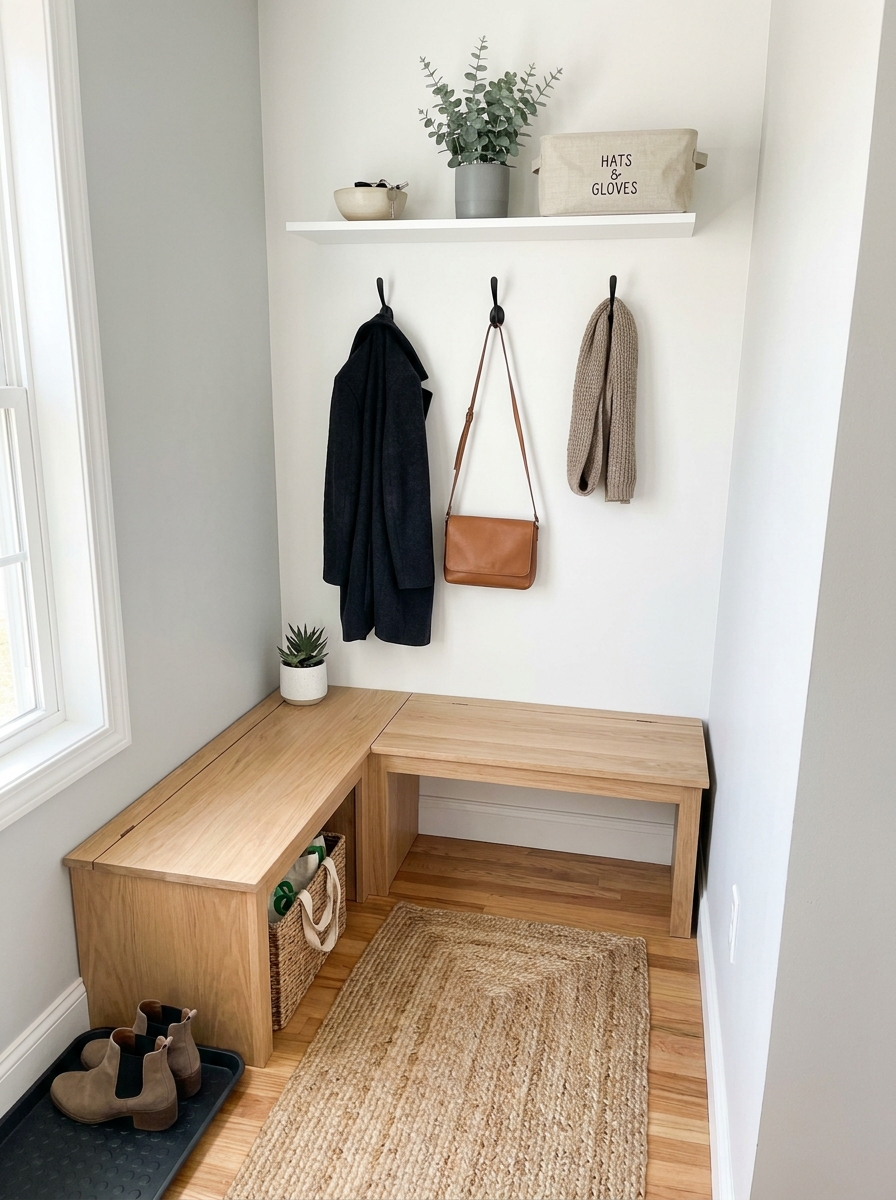
Don’t have a big mudroom? Join the club! Most of us are working with a tiny corner or narrow hallway, and that’s totally fine. You can create a hardworking mini mudroom in the smallest spaces.
The secret is going vertical and using every inch smartly. A corner bench with storage underneath, a few wall hooks above it, and one floating shelf for a catch-all basket. That’s honestly all you need. Corner spaces are actually perfect because they feel tucked away but still function as a designated drop zone.
I’ve seen amazing compact mudrooms created in spaces barely three feet wide. The key is keeping it simple and intentional. Choose pieces that do double duty, like a bench that stores shoes and provides seating. Skip anything bulky. Use the wall space above for hooks and a small shelf, and suddenly you’ve got a functional mudroom that doesn’t feel cramped.
8. Pet-Friendly Mudroom Station with Leash Hooks & Treat Storage
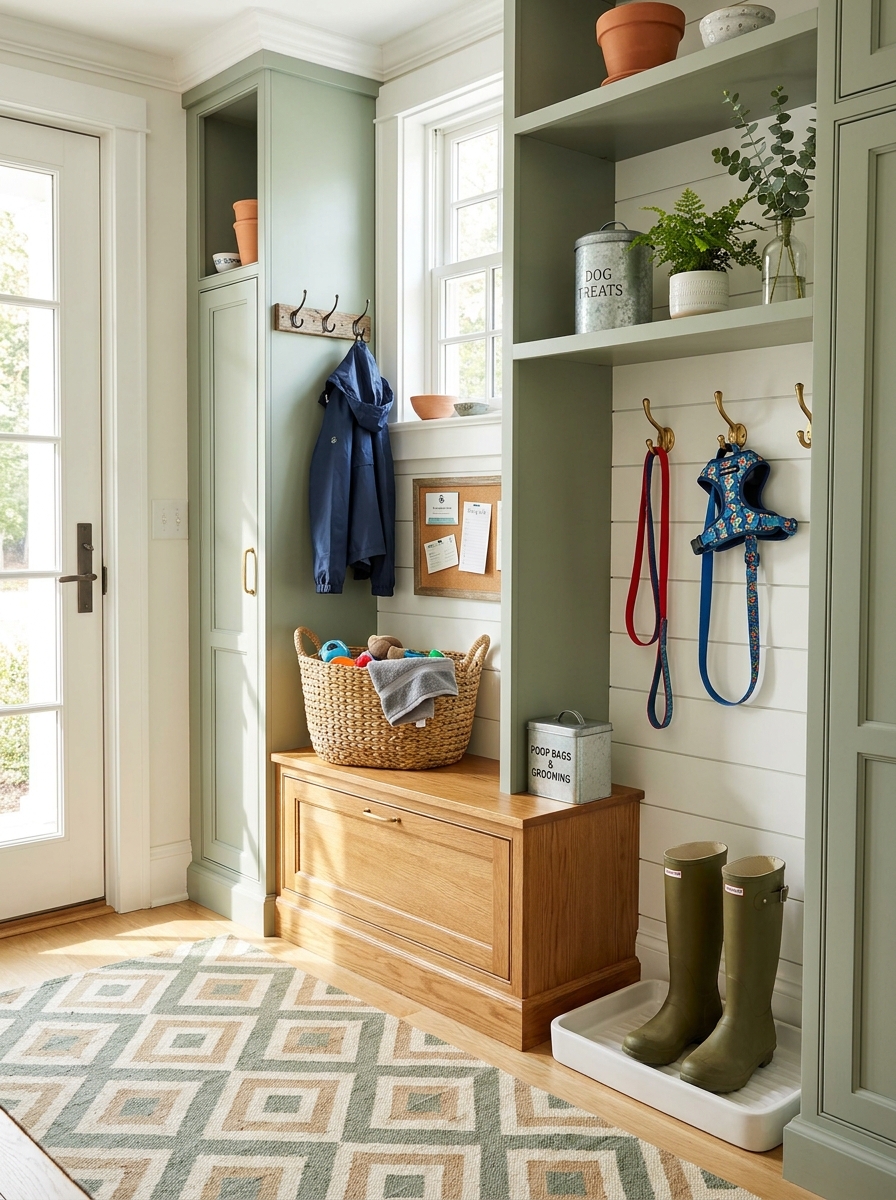
If you’ve got dogs, you know the struggle. Leashes tangled everywhere, treats spilling out of bags, muddy paw prints all over. A dedicated pet station in your mudroom changes everything.
Create a little zone just for pet gear. Mounted hooks at a convenient height for leashes and harnesses, a small basket or bin for toys and poop bags, and a drawer or container for treats. Add a towel hook for wiping muddy paws before they track through the house. Some people even include a pet feeding station here if their mudroom connects to the garage or backyard.
What makes this so much better than scattering pet stuff around the house is that everything you need is right by the door. Grab the leash, clip it on, and go. When you come back in, wipe paws, hang the leash, and you’re done. No more hunting for the leash five minutes before your walk.
9. Drop Zone Mudroom with Individual Family Hooks
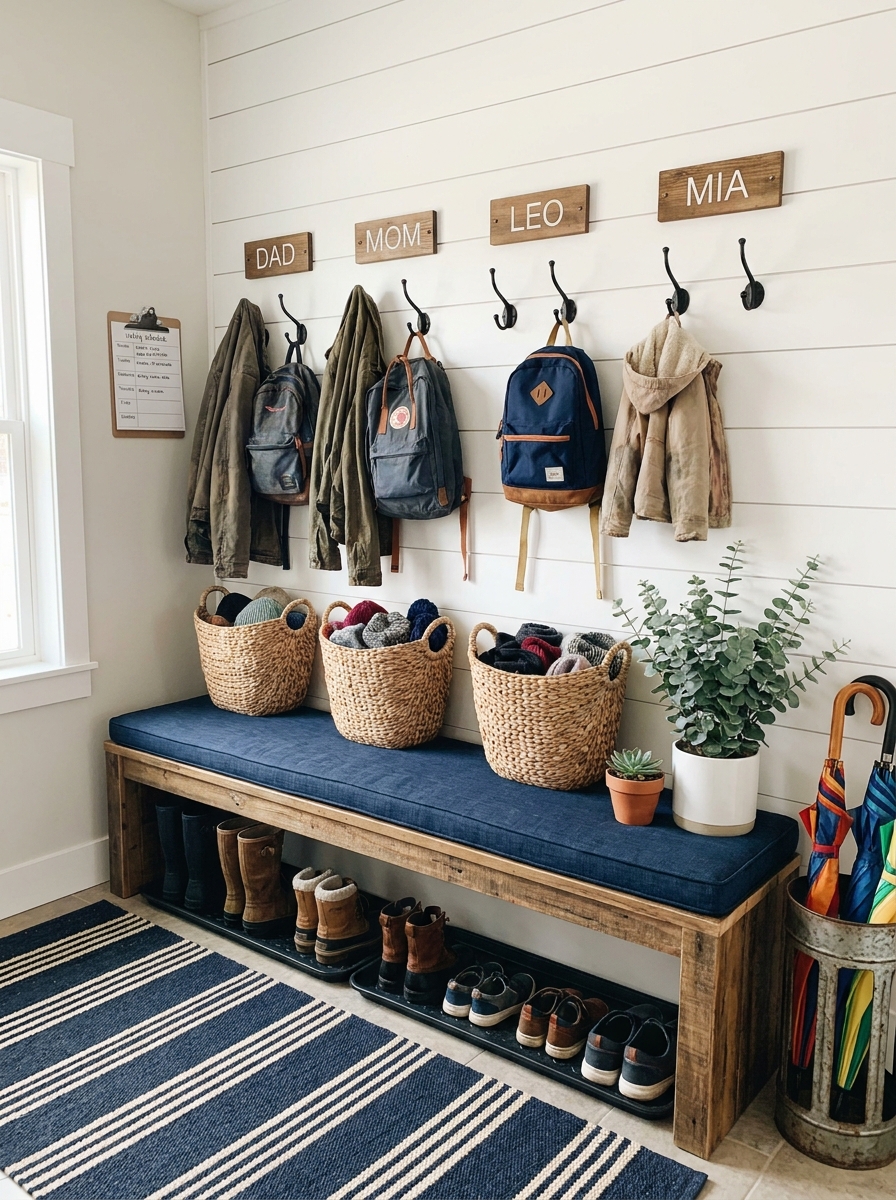
I’m obsessed with the idea of giving everyone their own designated spot. No more “whose jacket is this?” chaos. A drop zone mudroom gives each family member their own hook station with a basket or cubby underneath. It’s like assigned seating, but for your stuff.
The magic is in the personalization. Label each zone with names or fun little signs. Kids actually remember to hang up their backpacks when they know exactly where they go. Add a small basket under each hook for hats, gloves, or whatever random treasures end up in pockets.
This setup works brilliantly for families who need to get out the door fast. Everyone grabs their stuff from their own zone. No digging through piles. I also love adding a small shelf above each hook for things like sports equipment or dance bags. It keeps floor clutter at bay and makes your mudroom feel intentional instead of chaotic.
10. Sliding Barn Door Mudroom for Hidden Storage
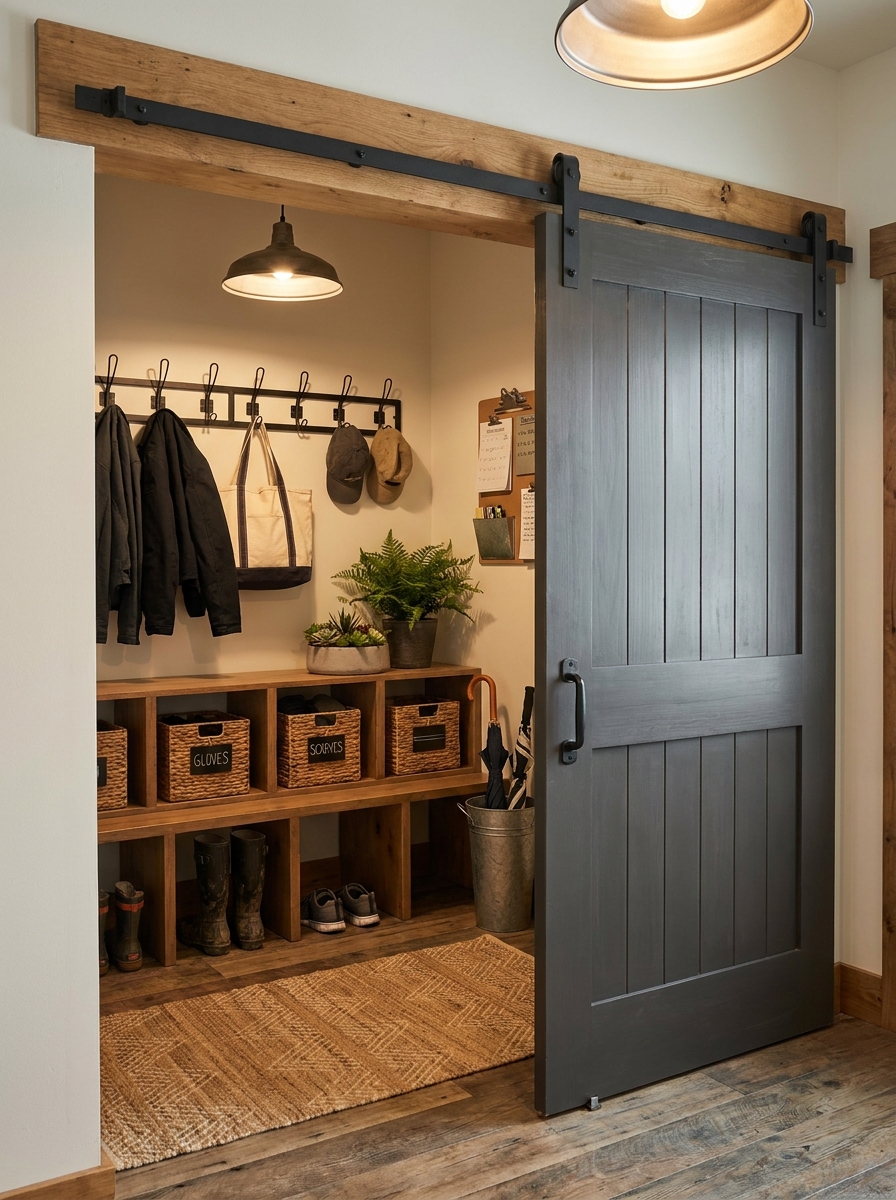
Sometimes you want all your mudroom storage to just disappear. Enter the sliding barn door solution. Hide the organized chaos behind beautiful rustic doors and boom — instant clean entryway when guests arrive.
I love this idea for open-concept homes where the mudroom is visible from the main living space. Behind those doors, you can go wild with hooks, shelves, and baskets without worrying about it looking cluttered. Close the doors and everything looks calm and collected. It’s like a secret organization system.
The barn door hardware itself becomes a design feature. Choose matte black for modern farmhouse vibes or oil-rubbed bronze for something warmer. You can even paint the doors a fun accent color. I’ve seen gorgeous navy blue barn doors that make the whole entryway feel special. Plus, the doors slide instead of swing, so they work perfectly in tight spaces where a regular door would be awkward.
11. Mudroom Charging Station with Device Docking Drawer
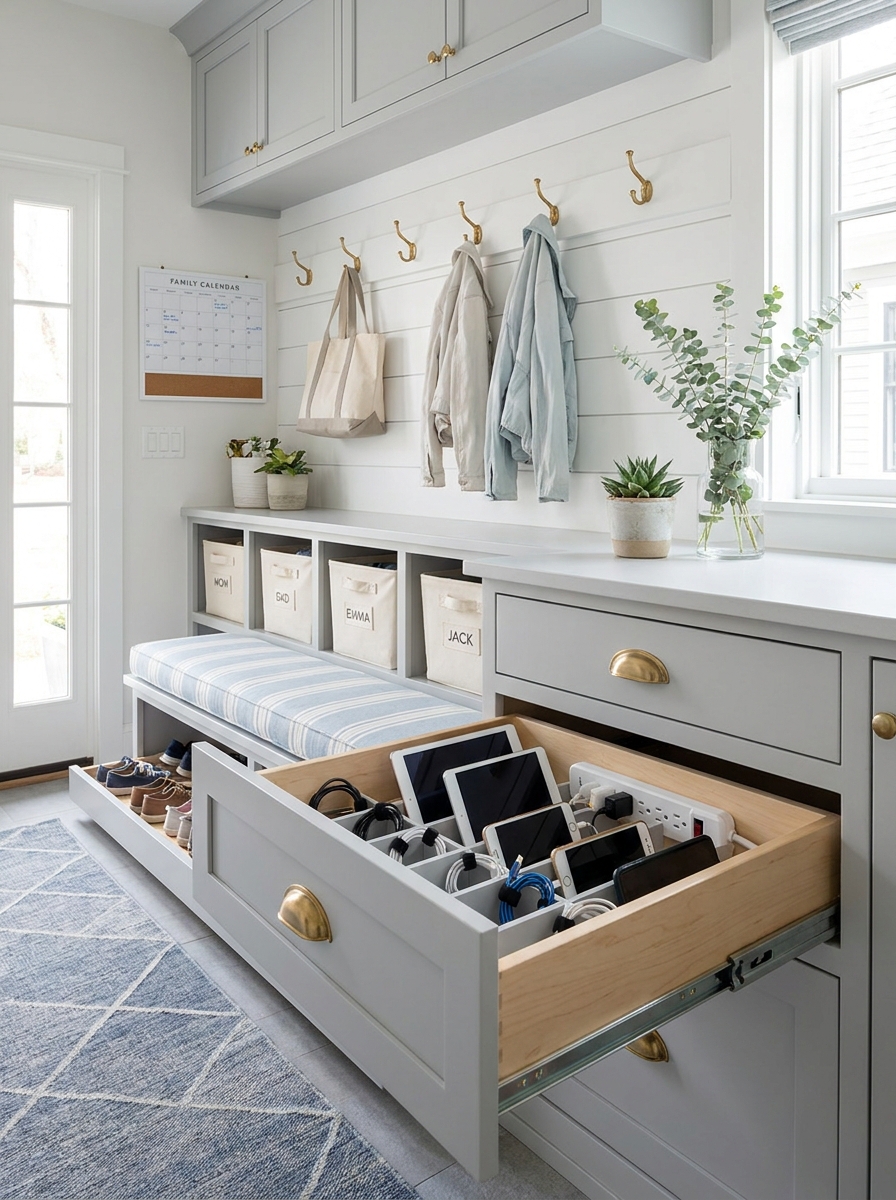
Let’s talk about the modern mudroom essential nobody mentioned ten years ago. A charging station keeps phones, tablets, and smartwatches organized and powered up right where you need them. No more hunting for charging cables or phones left in random rooms.
I’m a huge fan of the hidden charging drawer. It looks like a regular drawer, but inside there’s a power strip and cable organization. You drop your phone in, close the drawer, and everything charges out of sight. No messy cords on the counter. Some families add a small shelf version instead, but I love the drawer because it keeps devices away during family dinner time.
The best part? You can designate one spot for everyone’s devices. Kids come home, plug in, and you know exactly where to find their tablets for homework. Add small dividers inside the drawer so each device has its own space. It’s life-changing for busy families who live on their phones.
12. Two-Tier Mudroom Hooks for Maximum Vertical Storage
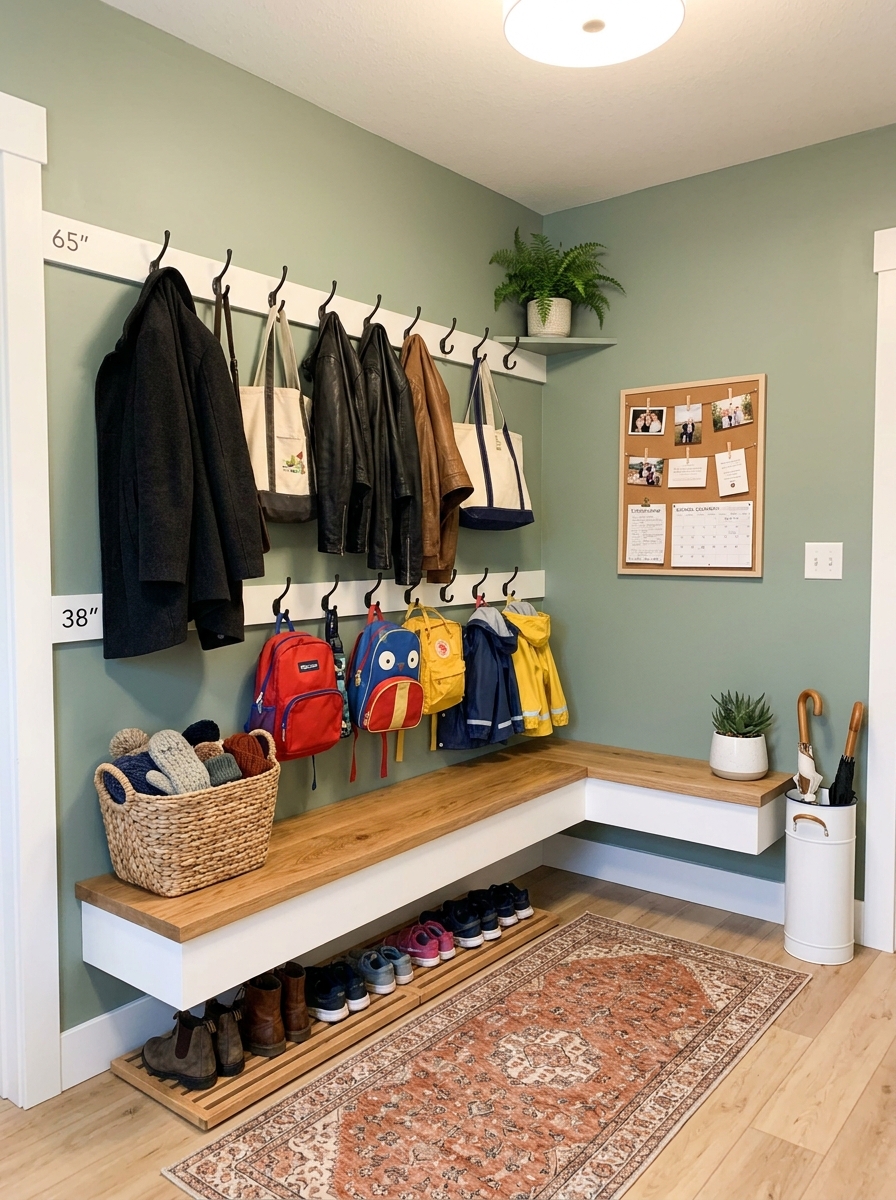
When floor space is tight, think vertical. Two-tier hooks are absolute game-changers for small mudrooms. Mount one row of hooks at adult height and another lower row for kids. Suddenly you’ve doubled your hanging capacity without taking up an inch of extra wall space.
This setup is genius for families with little ones. Kids can actually reach their own hooks without climbing on the bench or asking for help. They become more independent with their morning routines, and you get fewer jackets on the floor. Win-win. The upper hooks handle adult coats and bags while the lower tier takes care of backpacks and kids’ jackets.
I also love using the two-tier approach for seasonal rotation. Keep everyday jackets on the lower, easy-access hooks. Put occasional-use items like fancy coats or sports bags on the upper tier. You’re using every inch of wall space smartly, and everything still looks organized instead of overcrowded.
13. Mudroom with Under-Bench Pullout Drawer Storage
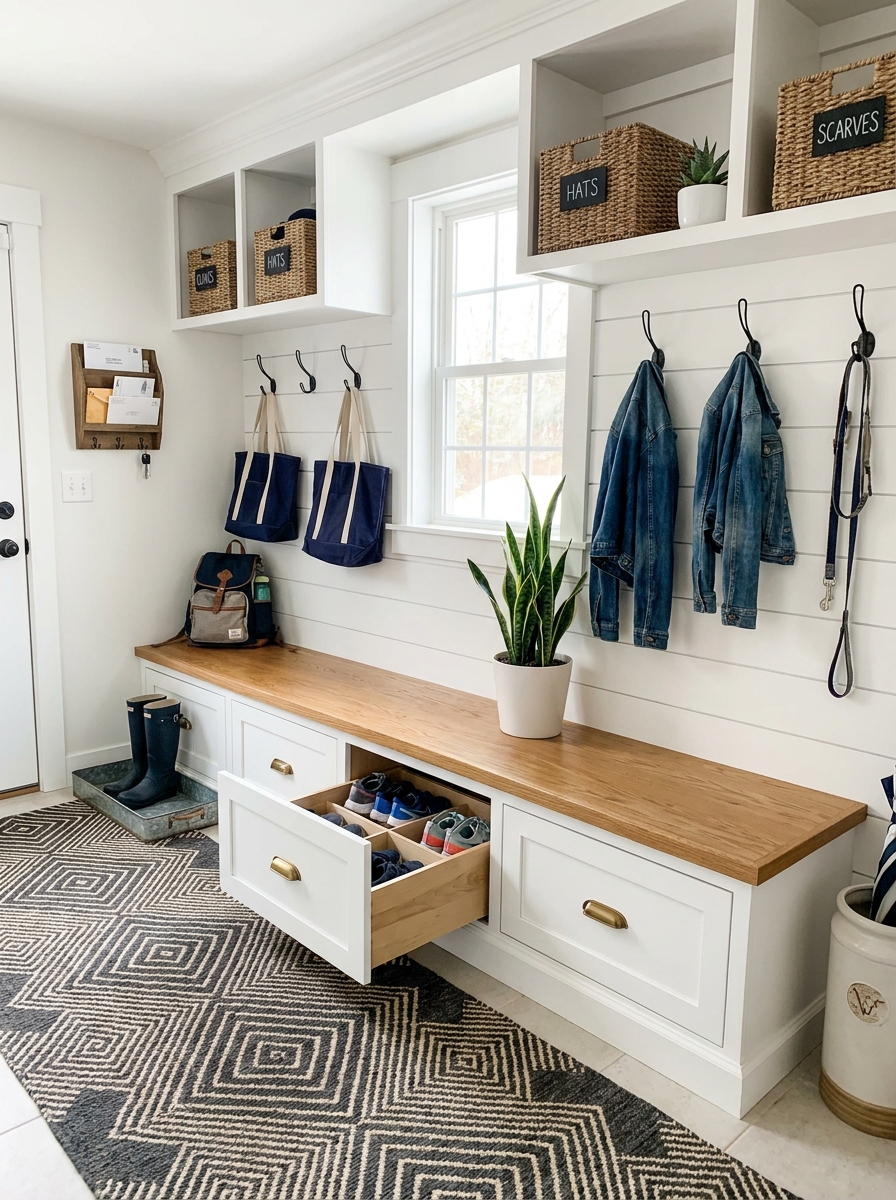
Here’s a game-changer I wish I’d done sooner: pullout drawers under your mudroom bench instead of just open shoe storage. You get all the hidden storage without the visual clutter of shoes piled up where everyone can see them.
I love this setup because those deep drawers can hold so much more than just shoes. Think hats and gloves in one drawer, dog walking gear in another, sports equipment in a third. Everything slides out smoothly when you need it and disappears when you don’t. No more digging through baskets or losing mittens in the back corner.
The bench top still gives you that perfect perching spot for putting shoes on, but underneath you’ve got this seriously organized system. Add soft-close drawer slides and you won’t hear constant slamming every time the kids grab their cleats. It’s one of those upgrades that makes your mudroom feel custom and expensive without actually being that complicated to install.
14. Mudroom Wet-Dry Zone with Tile Transition
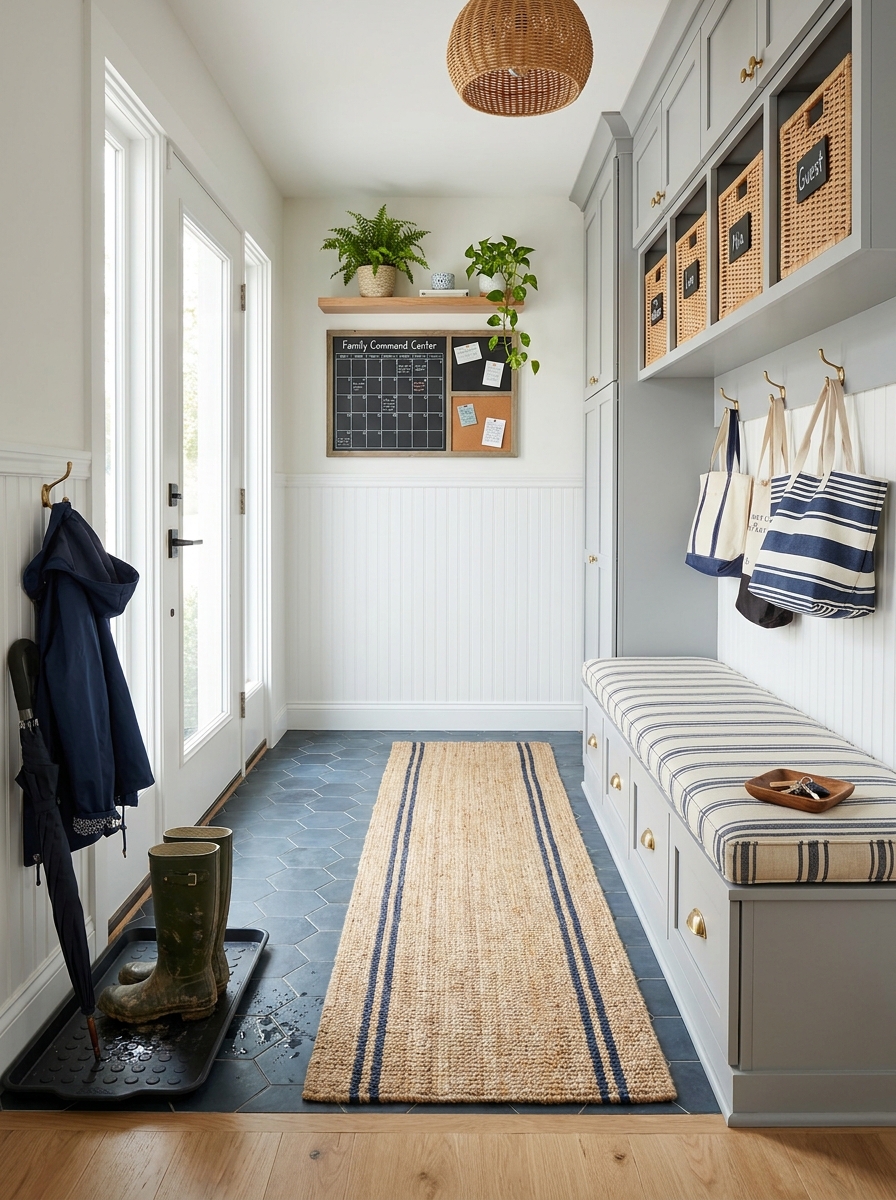
Smart mudrooms have two zones, and once you see it, you can’t unsee it. The wet zone is right by the door where dirty shoes, wet umbrellas, and snowy boots live. The dry zone is a step up or back where clean coats, bags, and everyday items hang. It’s brilliant.
I created this in my own mudroom with a simple tile transition. The first three feet from the door are durable porcelain tile that can handle whatever weather throws at it. Then it transitions to the same flooring as the rest of the house. This isn’t just practical, it actually trains everyone where the messy stuff should stay.
You can make this even clearer with a boot tray, a bench that marks the boundary, or a change in wall color. The wet zone gets the heavy-duty hooks and a waterproof mat. The dry zone gets the prettier baskets and family command center. Everything has its place based on how dirty it typically gets.
15. Mudroom with Fold-Down Drying Rack for Wet Gear
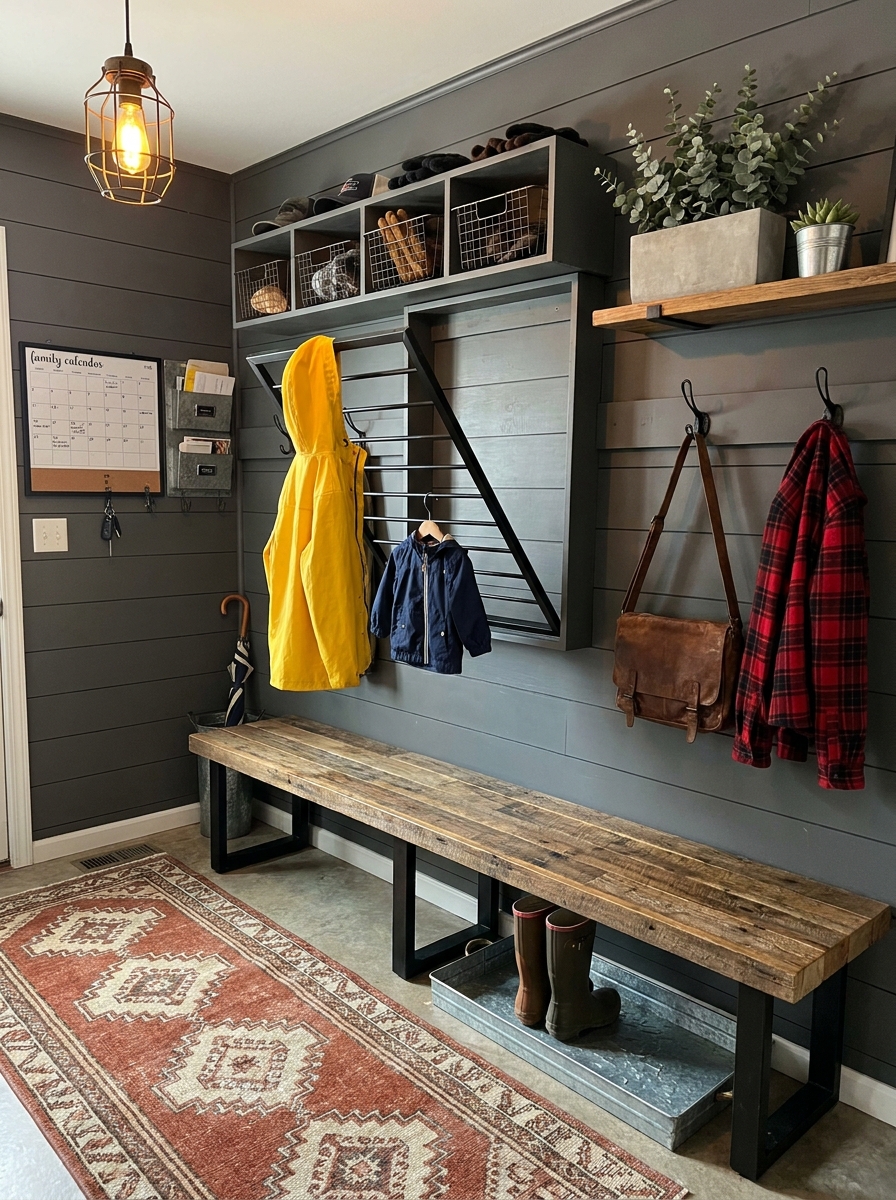
This idea saved my sanity during rainy season. A wall-mounted fold-down drying rack in your mudroom means wet coats, umbrellas, and rain gear actually have somewhere proper to dry instead of dripping all over your bench or floor.
When you need it, you pull it down and hang up all the soaked stuff. When it’s dry and you’re done, the whole rack folds flat against the wall and practically disappears. I mounted mine right above a waterproof boot tray so all the drips land in one contained spot. No more puddles spreading across the floor or mildew smell building up in closed cubbies.
You can find these racks in different finishes to match your mudroom vibe. I went with matte black to match my hooks, but there are wood ones and white ones too. Position it near a window or vent if possible so things dry faster.
16. Mudroom Backpack Nook with Homework Station
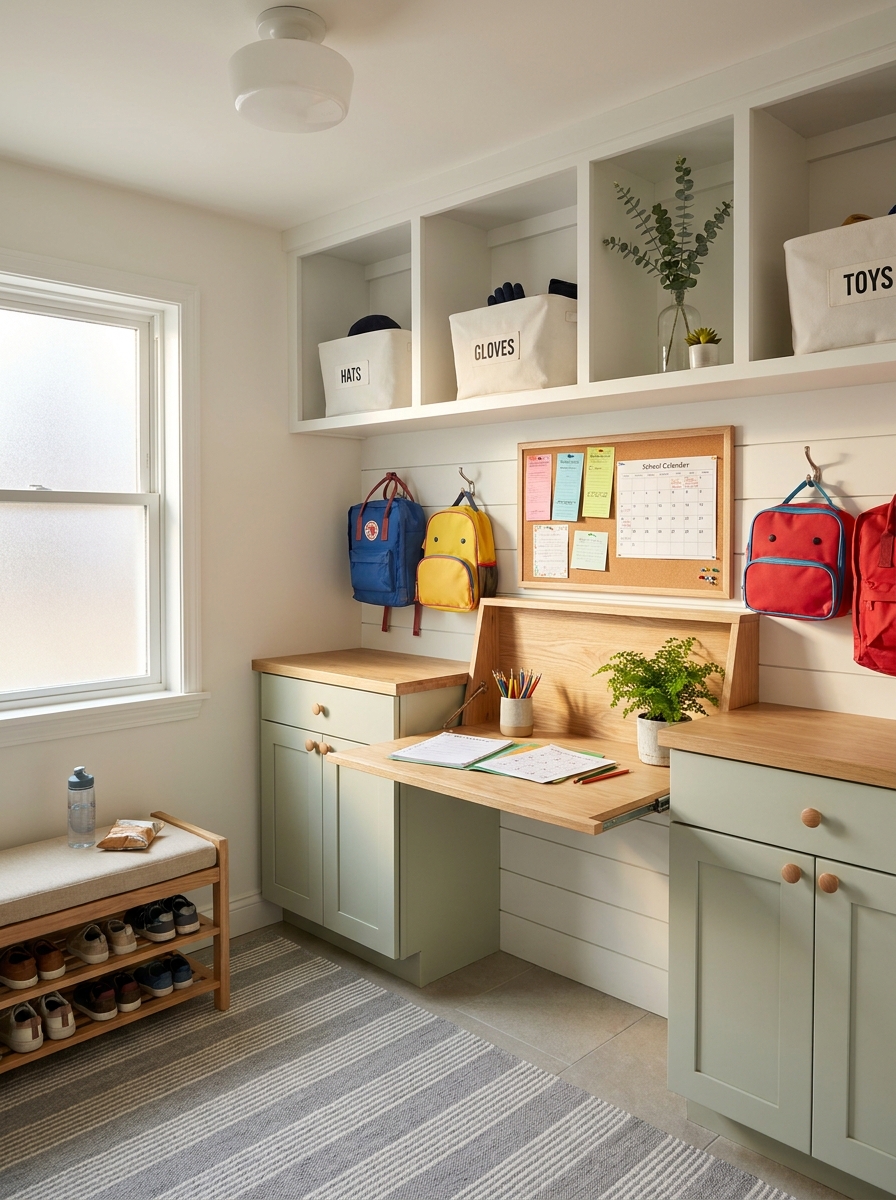
If you’ve got school-age kids, this mudroom setup will change your mornings. Create a dedicated backpack nook with low hooks they can actually reach, plus a small pull-out desk or shelf that works as a quick homework station. Everything they need is right there when they walk in the door.
I added a narrow fold-down desktop below our cubbies with a small cork board above it. The kids drop their backpacks on their hooks, pull down the desk, and can immediately deal with permission slips or that assignment they forgot about. Keeps the school chaos contained to one spot instead of spreading papers all over the kitchen table.
The key is keeping it simple and at their height. Lower hooks for backpacks and lunch boxes, a small bin for library books that need to go back, maybe a cup for pens. You’re not building a full office, just a landing zone that actually works with how kids move through the space.
17. Mudroom Bench with Boot Tray & Drip Drawer
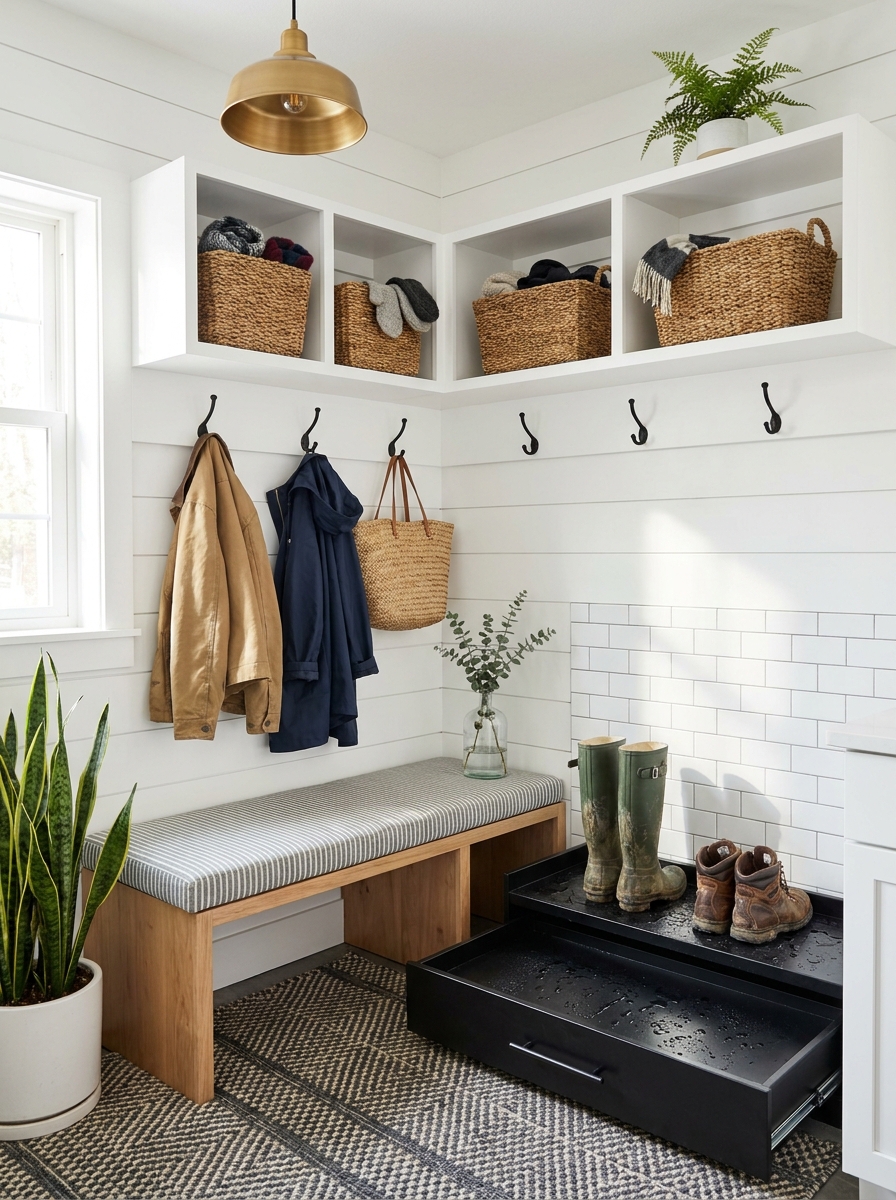
Wet boots are mudroom enemy number one. I learned this the hard way when my hardwood floors started looking sketchy near the door. A built-in bench with a pull-out boot tray changed everything.
The genius is in the drainage system. Instead of boots sitting in puddles, a removable tray catches all the drips and snow melt. Some designs even include a shallow drawer underneath that collects water, so you can just slide it out and dump it. No more soggy messes spreading across your floor.
I love benches with a waterproof tile or metal insert right where wet boots go. Pair it with a wire boot rack that lets air circulate, and everything dries faster. Add hooks above for wet coats, and you’ve got a complete wet-gear station. The best part? It looks intentional and pretty, not like a pile of soggy chaos. Choose materials that can handle moisture without warping or staining.
18. Mudroom Mirror with Shelf & Last-Minute Touch-Up Station
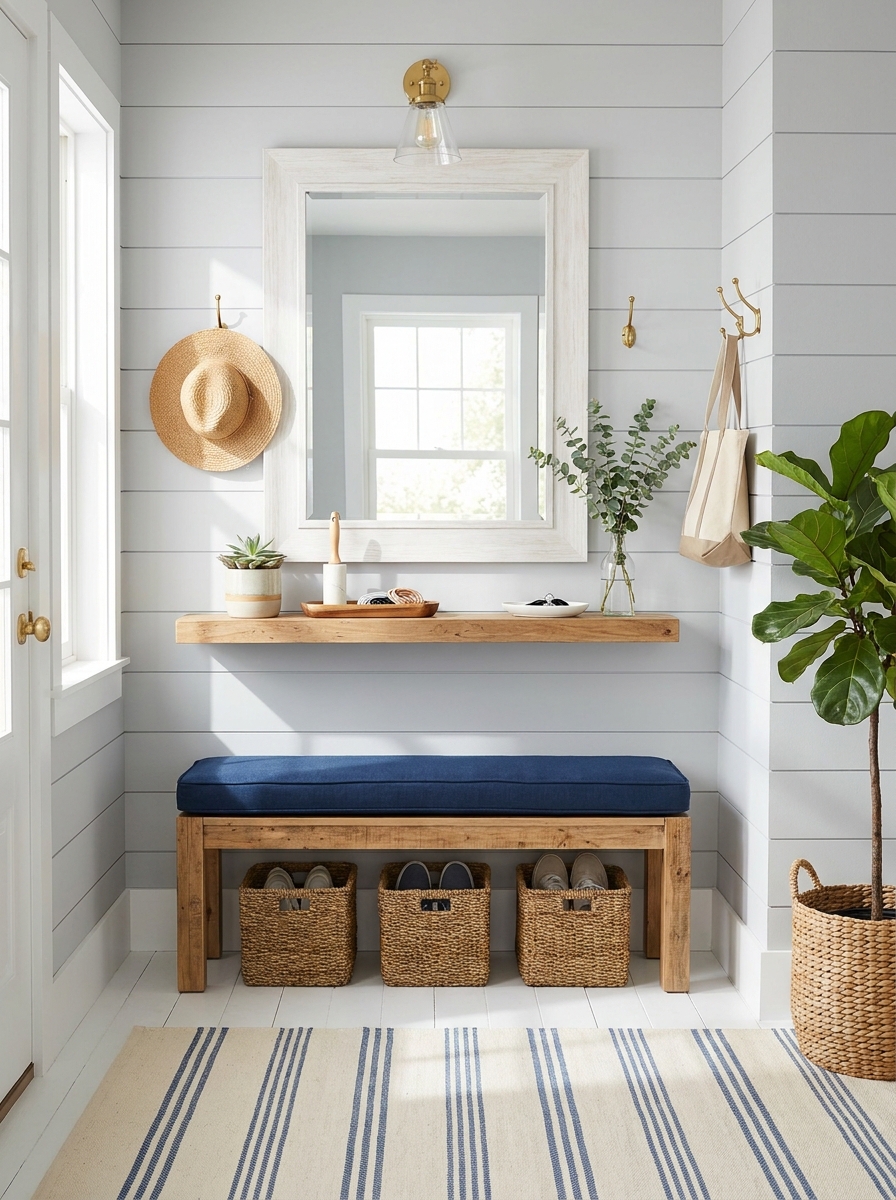
How many times have you walked out the door and realized your hair was a disaster? A mudroom mirror isn’t just practical, it’s a sanity saver.
I added a large mirror with a narrow shelf underneath, and now everyone does a quick check before heading out. The shelf holds little essentials like a lint roller, hair ties, chapstick, and hand lotion. It’s become our last-minute fix-it station, and honestly, it’s prevented some questionable outfit choices from making it into the world.
The mirror also makes a small mudroom feel way bigger and brighter. Go for something with a frame that matches your style, whether that’s a rustic wood frame or a sleek black metal one. Hang it at a height where everyone can see themselves, not just the tallest person in the house. Add a small hook on the side for a hand mirror or reusable shopping bags. It’s such a simple addition that makes your mudroom feel complete and thoughtful.
19. Mudroom with Color-Coded Family Organization System
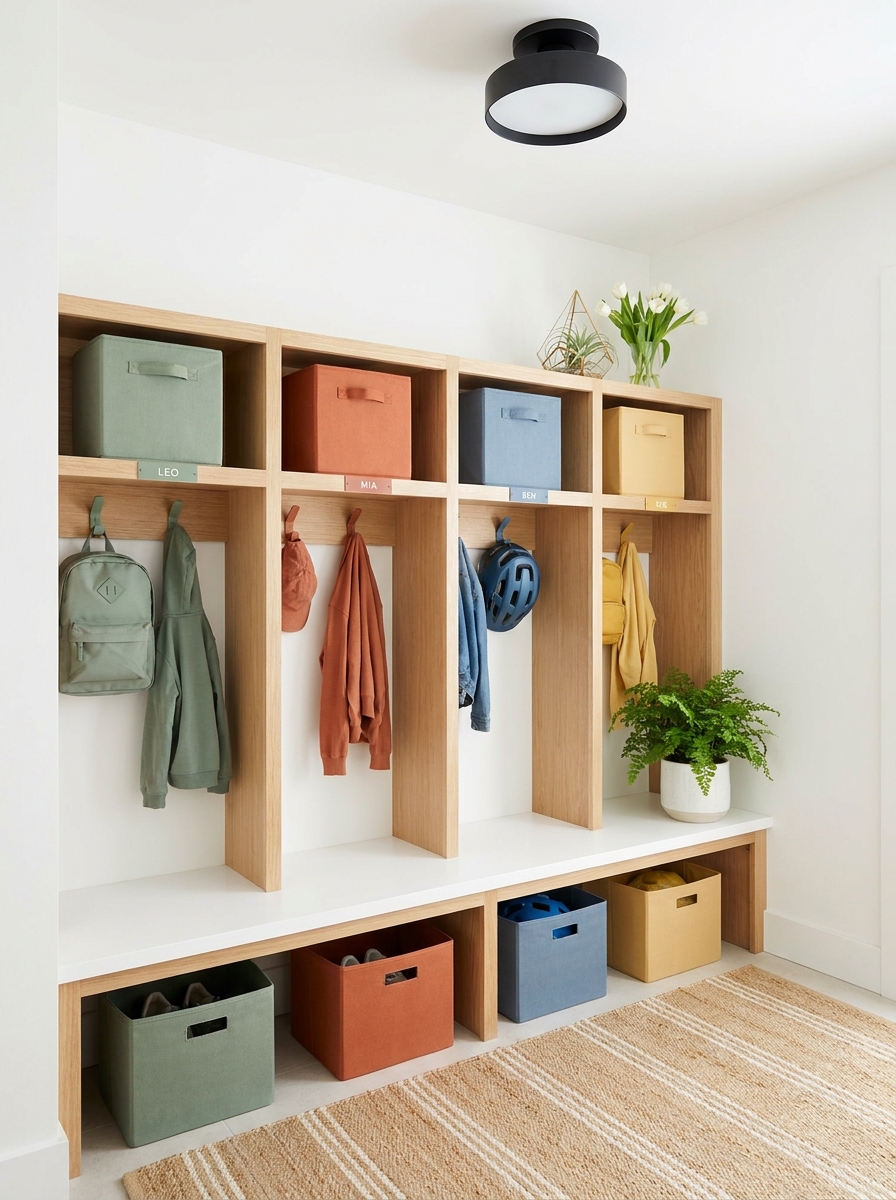
When you’ve got multiple people coming and going, color-coding is a total game-changer. Each family member gets their own color, and suddenly everyone knows exactly where their stuff goes.
I’ve seen this done with colored bins, different hook colors, or even painted cubby interiors. One friend used colorful fabric bins: blue for dad, pink for mom, green and yellow for the kids. Her mudroom went from chaotic to calm practically overnight because nobody had an excuse anymore. Everyone could spot their zone immediately.
The key is consistency. Use the same color for hooks, bins, labels, and even towels if you’re including a hand-washing station. Kids especially love having their own color, and it actually makes them more likely to put things away. You can keep the overall mudroom neutral and just add pops of color through accessories, or go bold with painted locker-style cubbies. Either way, it’s organization that actually works for real families.
20. Mudroom Shoe Cubby with Ventilated Shelving
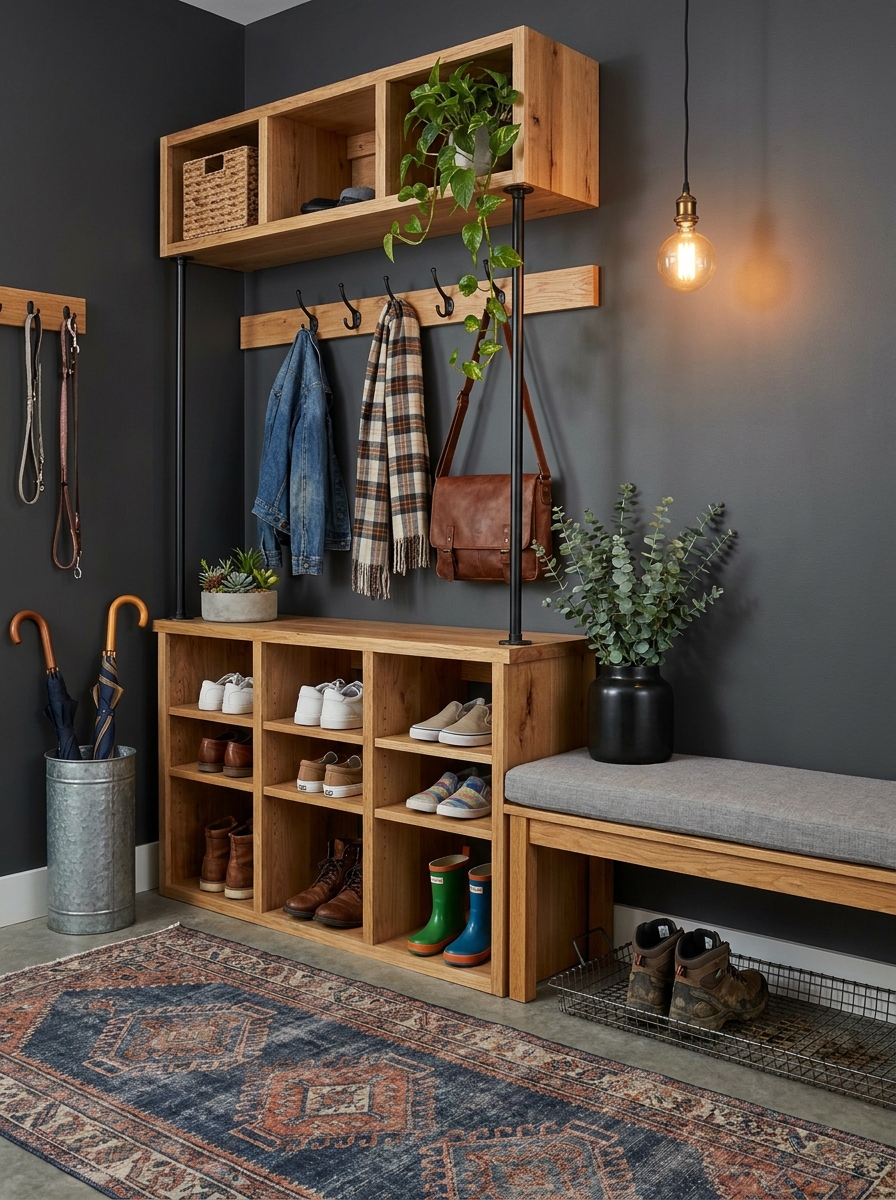
Shoe storage can get gross fast if air doesn’t circulate. I used to have a closed shoe cabinet, and let’s just say it developed a smell situation. Switching to open, ventilated cubbies was the best decision.
Ventilated shelving lets shoes dry out naturally instead of trapping moisture and odors inside. Wire shelving, slatted wood, or open cubbies all work great. I love individual cubbies sized for one or two pairs because shoes stay organized instead of becoming a jumbled pile. You can see everything at a glance, which also means you actually wear more of your shoes instead of forgetting what you own.
Slanted shelving is another smart option because it displays shoes like a store, making them easy to grab. Whatever style you choose, make sure it’s easy to clean underneath. Mudroom floors get dirty, and being able to sweep or vacuum under your shoe storage without moving furniture is a total luxury. Add a boot tray nearby for wet or muddy footwear to keep your cubbies cleaner longer.
21. Mudroom Wall Grid with Clip-On Accessories
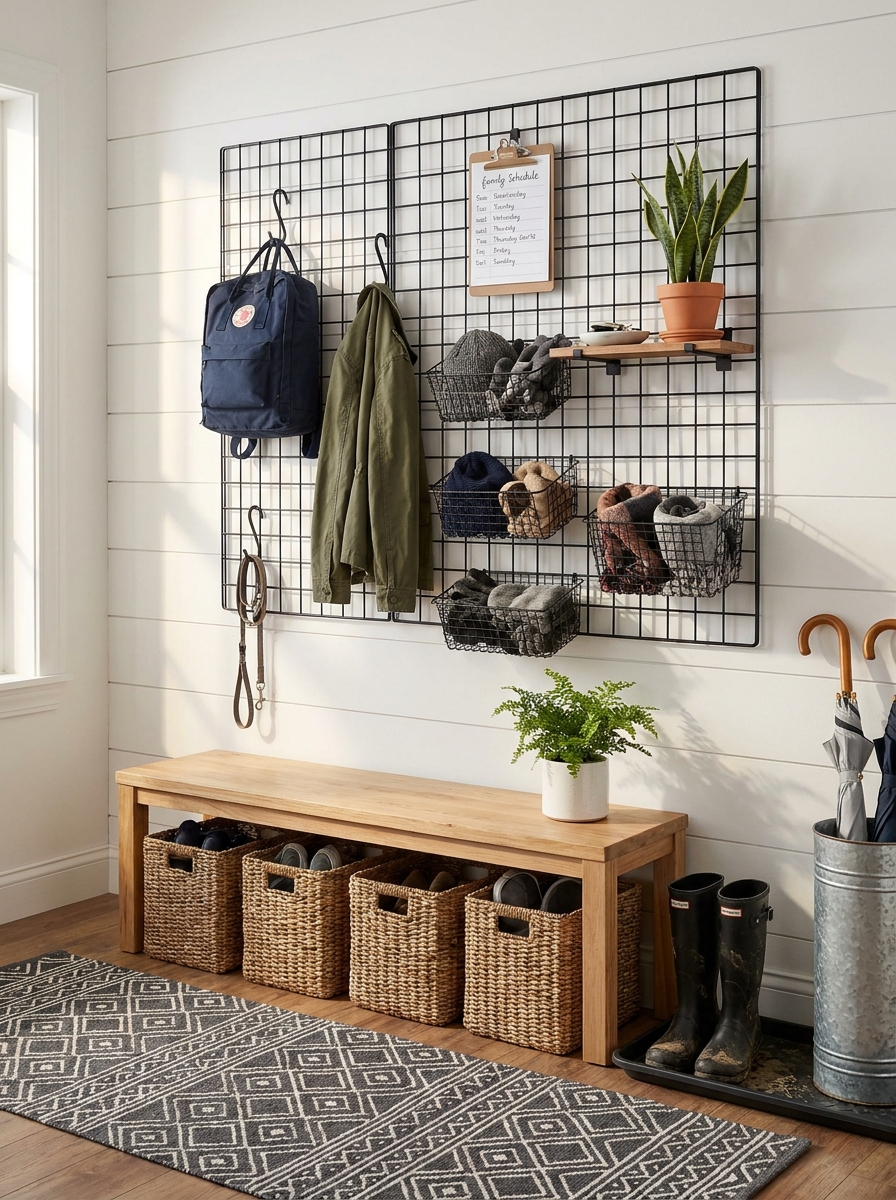
Okay, this one’s genius for people who love to switch things up. Instead of permanent hooks and shelves, install a metal grid system on your mudroom wall. Think those industrial wire grids you see in trendy offices, but make it mudroom-functional. You clip on baskets, hooks, shelves, and little trays wherever you need them, and move them around as your life changes.
What I love about this setup is the flexibility. When soccer season ends and swimming starts, just rearrange your clips. Need more basket space and fewer hooks? Done in two minutes. It’s like playing Tetris with your storage, except you actually win every time. The grid keeps everything visible and accessible, so nobody can claim they “didn’t see” their permission slip.
Plus, it looks incredibly chic in that modern industrial way. Pair it with a simple wooden bench below and you’ve got a mudroom that feels custom but adapts to real life. Because let’s be honest, family needs change faster than we can renovate.
Quick Guide
Quick Guide: Mudroom Storage by Family Size
| Family Size | Cubbies Needed | Hooks Per Person | Shoe Storage |
|————-|—————-|——————|—————|
| 1-2 people | 2-3 cubbies | 2-3 hooks | Small bench or 1 basket |
| 3-4 people | 4-5 cubbies | 3-4 hooks | Medium bench or 2-3 baskets |
| 5+ people | 6+ cubbies | 4-5 hooks | Large bench or built-in cubbies |
Budget Breakdown:
– DIY open shelving + baskets: $100–$250
– Ready-made storage bench: $150–$400
– Custom built-in cubbies: $800–$2,500+
Pro tip: Start with hooks and baskets before committing to built-ins. You can always upgrade later once you know exactly how your family uses the space.
Your Entryway, But Make It Work for You
Here’s the truth: a mudroom doesn’t have to be perfect to be functional. It just needs to work for your life — the real, messy, beautiful chaos of coming and going every single day. Maybe that means a simple row of hooks and a basket for shoes. Or maybe it’s a full wall of custom cubbies because you’ve got four kids and a dog and you need all the help you can get. Either way, the goal is the same: create a space that makes your life easier and feels good to walk into.
You don’t need a massive budget or a ton of square footage to make it happen. Start with one thing — a bench, a basket, a set of hooks — and build from there. The magic is in giving everything a home so you’re not constantly battling the clutter. And when it looks good too? That’s just the bonus. So take a look at your entryway with fresh eyes and imagine what it could be. You’ve got this.
Frequently Asked Questions
How do I organize a small mudroom with limited space?
Focus on vertical storage with wall-mounted hooks, narrow shelving, and a slim bench with hidden storage underneath. Use the back of the door for hanging organizers or hooks. Keep only daily essentials in the space and store seasonal items elsewhere to avoid overcrowding.
What’s the best flooring for a mudroom that gets a lot of traffic?
Tile, luxury vinyl plank, or sealed concrete are your best bets. They’re durable, water-resistant, and easy to clean. Add a washable indoor-outdoor rug for comfort and to catch dirt before it spreads. Avoid carpet or unsealed hardwood, which can stain and wear quickly in high-traffic entryways.
How many hooks do I need per person in a mudroom?
Plan for at least two to three hooks per person — one for a coat or jacket, one for bags or backpacks, and an extra for hats, scarves, or dog leashes. Double hooks can maximize space without adding more hardware. Space hooks about 4 to 6 inches apart for comfortable hanging.
Should I choose open cubbies or closed lockers for mudroom storage?
It depends on your style and how much visual clutter you can handle. Open cubbies with baskets are easier to access and feel more casual, while closed lockers hide everything for a cleaner look. If you’ve got kids, open storage is often easier for them to use independently without forgetting to close doors.
How can I make my mudroom look stylish and not just functional?
Add a few intentional touches like a pretty rug, a plant, coordinating baskets, or stylish hooks. Paint the walls a soft color or add shiplap for texture. Display one or two decorative items on a shelf — a framed print, a candle, or a vase with greenery. The key is balancing function with a few beautiful details that make the space feel welcoming, not sterile.