35 Clever Small Bedroom Ideas That Feel Twice the Size
You open your bedroom door and immediately feel that familiar squeeze. The bed takes up most of the floor. Your clothes are piled on that chair again. There’s barely room to walk, let alone breathe. Small bedrooms have this sneaky way of making us feel like we’re living in a closet, right?
But here’s the thing. Size isn’t actually the problem. It’s how we use the space we’ve got. I’ve seen 10×10 bedrooms that feel airy and calm, and I’ve seen bigger rooms that somehow feel cramped. The difference? A few smart moves that trick the eye and double your storage without adding square footage.
These 35 ideas aren’t about ripping out walls or buying all new furniture. They’re about working with your small bedroom’s quirks, not against them. Let’s get into it.
1. Raise Your Bed and Reclaim the Floor
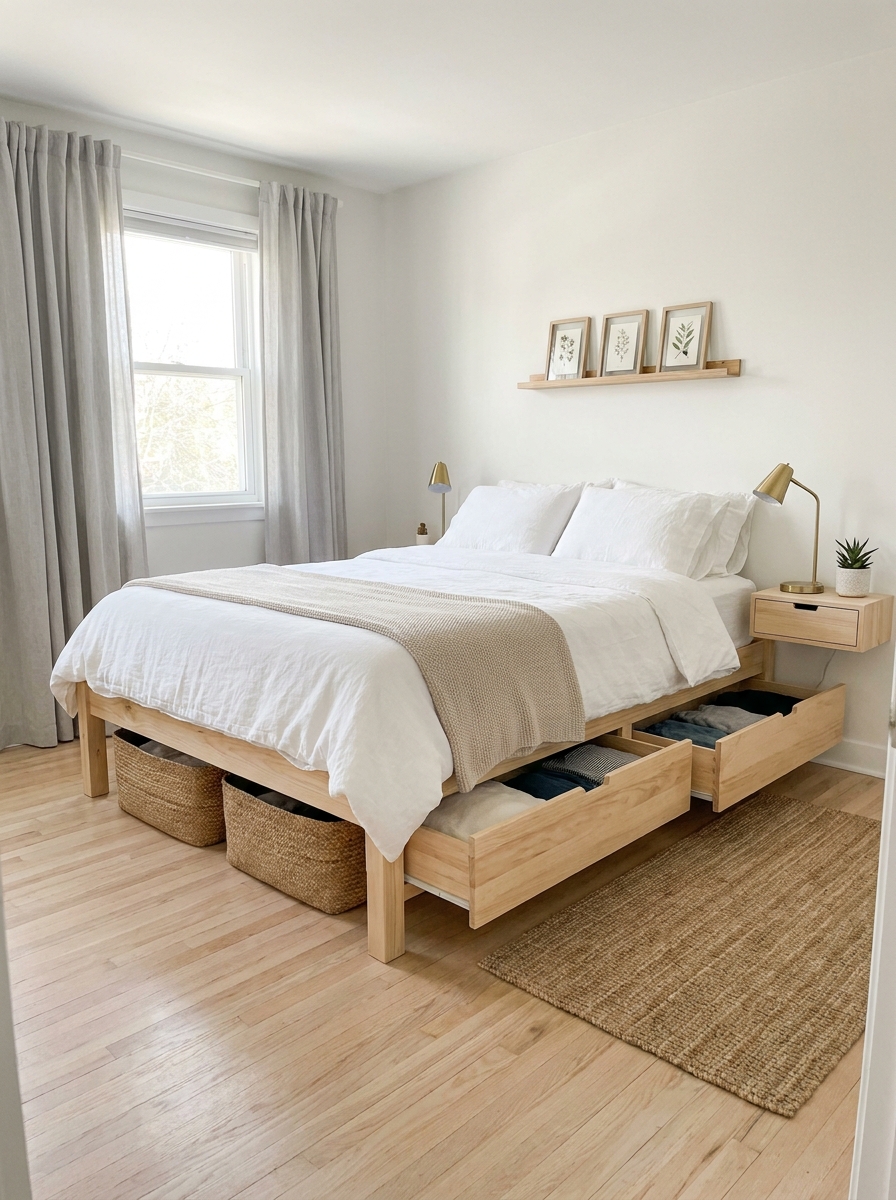
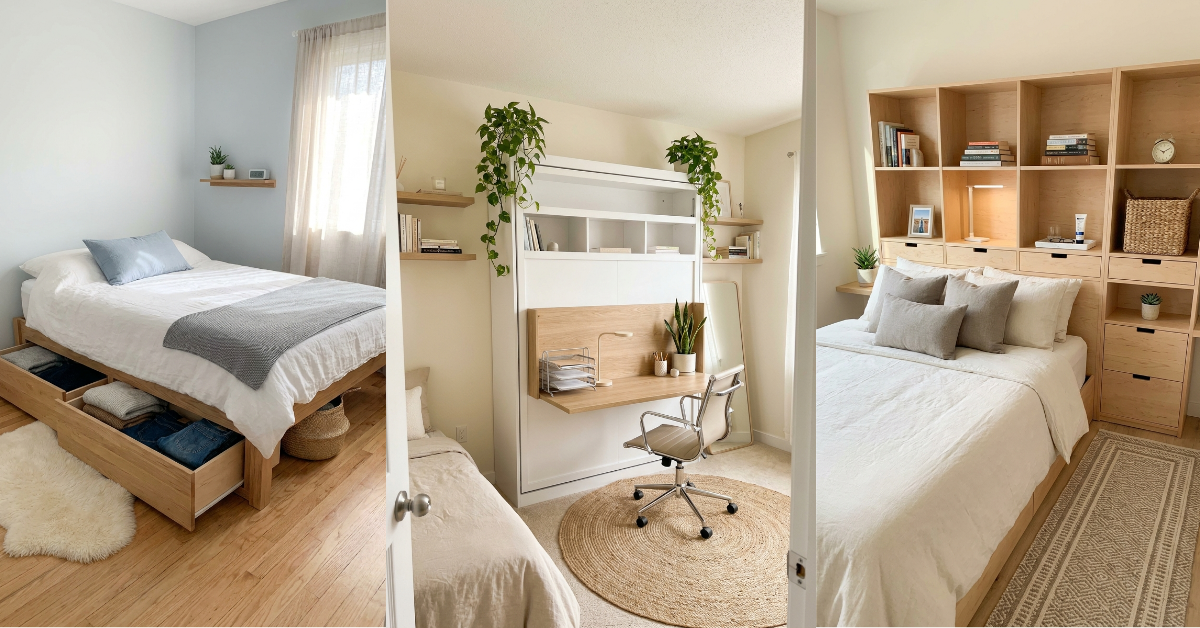
Lifting your bed off the ground creates an entire storage zone you didn’t know you had. Bed risers are cheap and easy, but platform beds with built-in drawers are even better if you’re ready to invest. You can tuck away seasonal clothes, extra bedding, or all those shoes that currently live in piles.
The visual trick here is smart too. When your bed sits higher, your eye travels upward instead of scanning the cramped floor. It changes the whole proportion of the room. Plus, you’re not wasting that dead space where dust bunnies usually live.
I love beds with hydraulic lift mechanisms that reveal massive storage underneath. You lift the mattress, and boom—there’s enough room for suitcases, winter coats, or that collection of throw pillows you rotate seasonally. It’s like having a secret compartment in your bedroom. No one sees the storage, but you know it’s doing all the heavy lifting.
And if you’re renting and can’t swap your bed frame? Grab some sturdy risers and slide rolling bins underneath. Same concept, way less commitment.
2. Mount Your Nightstand to Free Up Visual Space
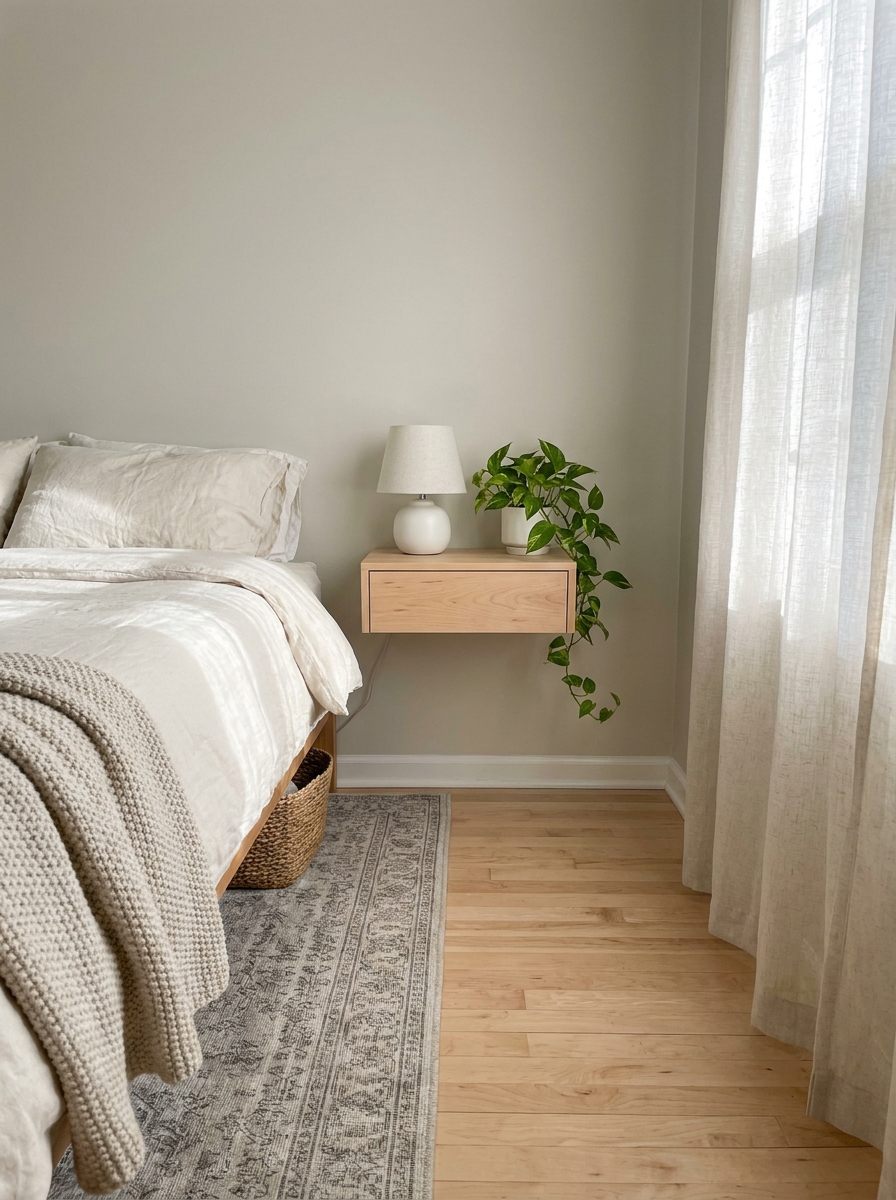
Traditional nightstands eat up precious floor space in a small bedroom. Floating nightstands change the game completely. When you mount them to the wall, the floor underneath stays open, and suddenly the room feels less cluttered even though you haven’t removed a single item.
This isn’t just about the physical space you gain. It’s about the psychological breathing room. Your eye can sweep across the floor uninterrupted, and that continuity makes the whole room feel more expansive. You can slide storage bins underneath or leave it bare—either way, you win.
I’m a fan of shallow floating shelves with a single drawer. They give you just enough surface for a lamp and your phone, plus one hidden spot for the random stuff that accumulates on nightstands. Some of them come with built-in charging ports, which is genius if you hate visible cords.
Or go even simpler with a wall-mounted ledge. No drawer, just a clean surface that barely protrudes from the wall. It works especially well in really tight spaces where even a small nightstand feels like too much furniture.
3. Go Vertical with Floor-to-Ceiling Shelving
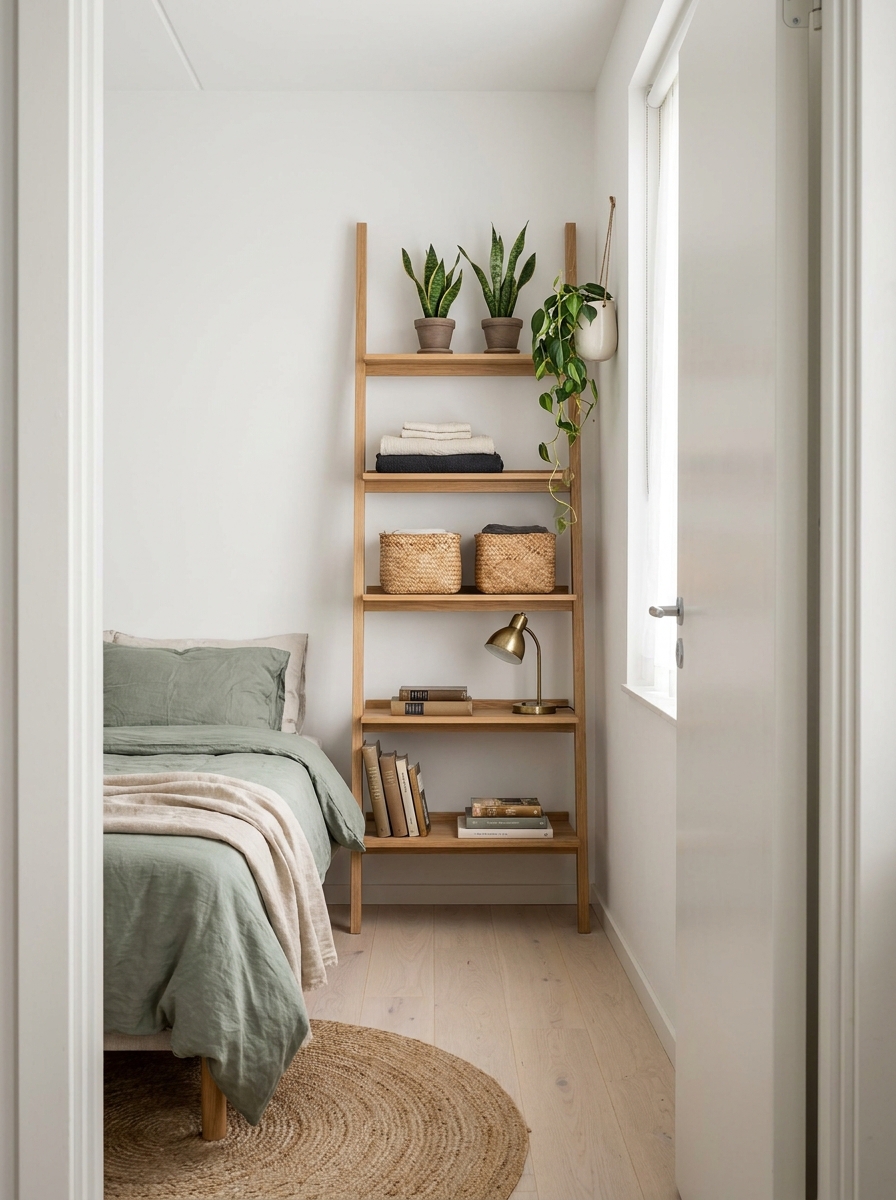
Small bedrooms need to think up, not out. Floor-to-ceiling shelving draws your eye toward the height of the room and makes the ceiling feel taller than it actually is. You’re using wall space that would otherwise just sit there looking blank.
These tall shelving units give you serious storage without hogging floor space. You can store books, display plants, tuck baskets full of accessories, or style it with decor that makes you happy. The key is keeping the lower shelves practical and the upper ones pretty.
I like narrow ladder-style shelves in small bedrooms because they lean against the wall and feel lighter than chunky bookcases. Or install simple floating shelves at varying heights for a custom look. Either way, you’re pulling storage off your dresser and nightstand and giving those surfaces room to breathe.
Don’t forget about the space above your door. A shallow shelf running along that wall is perfect for books you don’t read often or seasonal decor. It’s one of those spots we forget exists, but it’s incredibly useful in a tight bedroom.
4. Choose a Bed with Built-In Storage Drawers
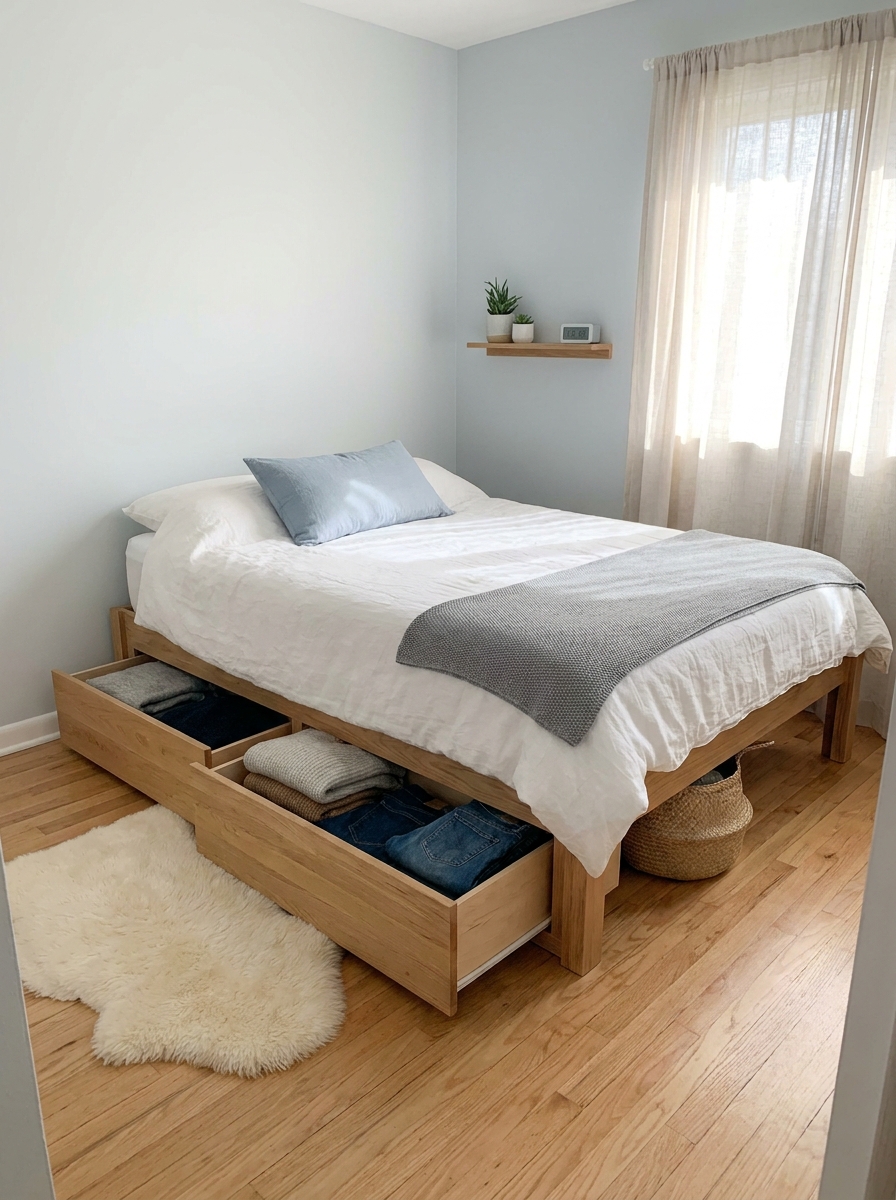
If you’re shopping for a new bed frame, go for one with built-in drawers. Seriously, this one piece of furniture can replace an entire dresser in a small bedroom. You get a place to sleep and a place to store clothes, all in the same footprint.
These storage beds come in all styles now. You’ll find sleek modern frames with hidden drawers, rustic wood platforms with open cubbies, and upholstered beds with deep compartments. Pick one that matches your vibe, but make sure the drawers actually glide smoothly. You’ll use them every single day.
Some beds have drawers on one side, others on both. If your room layout allows access from both sides, double drawers are a no-brainer. If one side is against a wall, make sure the drawers are on the accessible side. Sounds obvious, but I’ve seen people make that mistake.
The beauty of this setup is how much floor space you free up. No bulky dresser crowding the room. No extra furniture to navigate around. Just clean lines and hidden storage that keeps your bedroom feeling calm instead of chaotic.
5. Install a Murphy Bed That Disappears During the Day
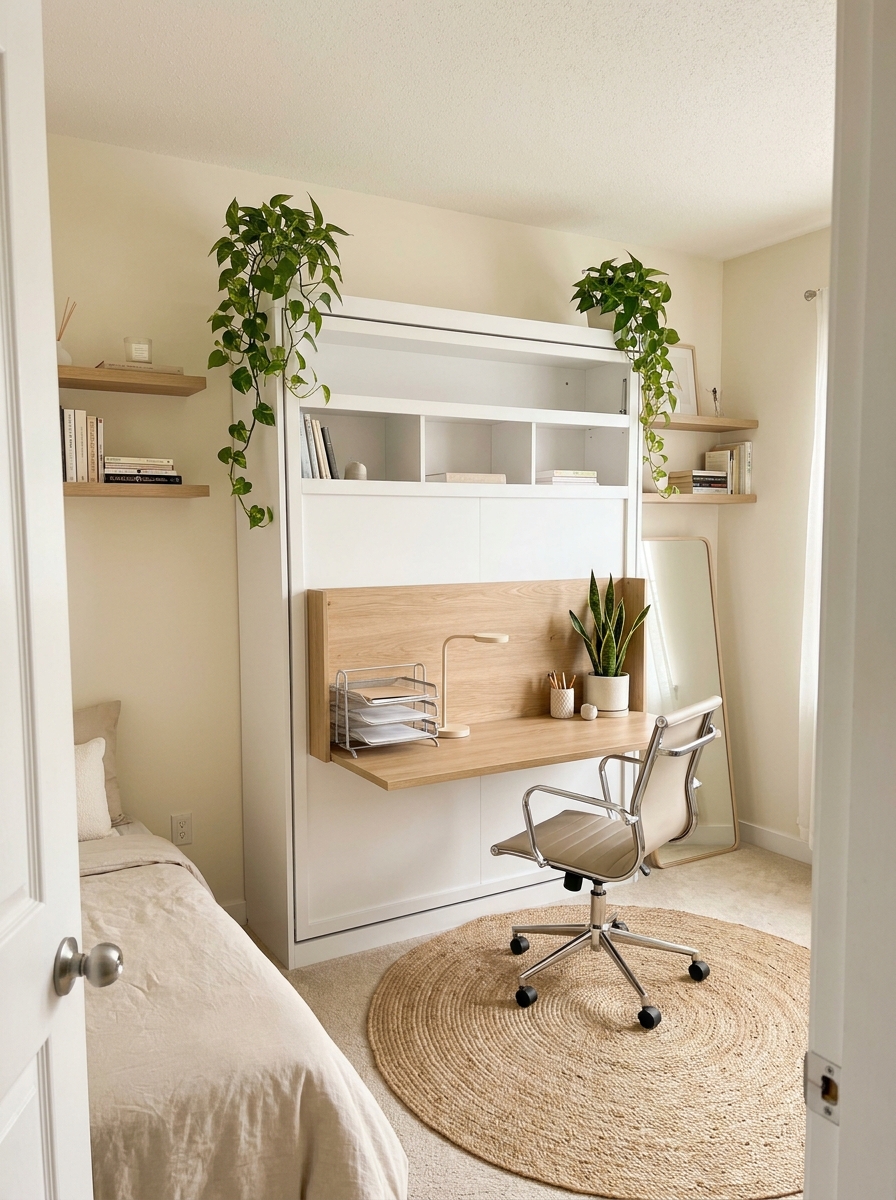
Okay, this one’s a total game-changer if you’re working with a *really* tight space. A Murphy bed folds right up into the wall when you’re not sleeping, which means you suddenly have an entire room back during the day. No more squeezing around your bed to get to your closet!
I love how modern Murphy beds have come. They’re not clunky anymore. Some come with built-in desks that flip down, or shelving that stays accessible even when the bed’s tucked away. You can literally transform your bedroom into a home office, yoga studio, or just a place where you can actually walk around without doing furniture gymnastics.
The best part? Your room doesn’t scream “I sleep here!” when you have guests over. It just looks like a regular wall with some nice shelving. And let’s be honest, there’s something deeply satisfying about folding your bed away each morning. It’s like you’re telling your space, “We’re doing double duty today, and we’re doing it with style.”
6. Use Mirrors Strategically to Fake More Square Footage
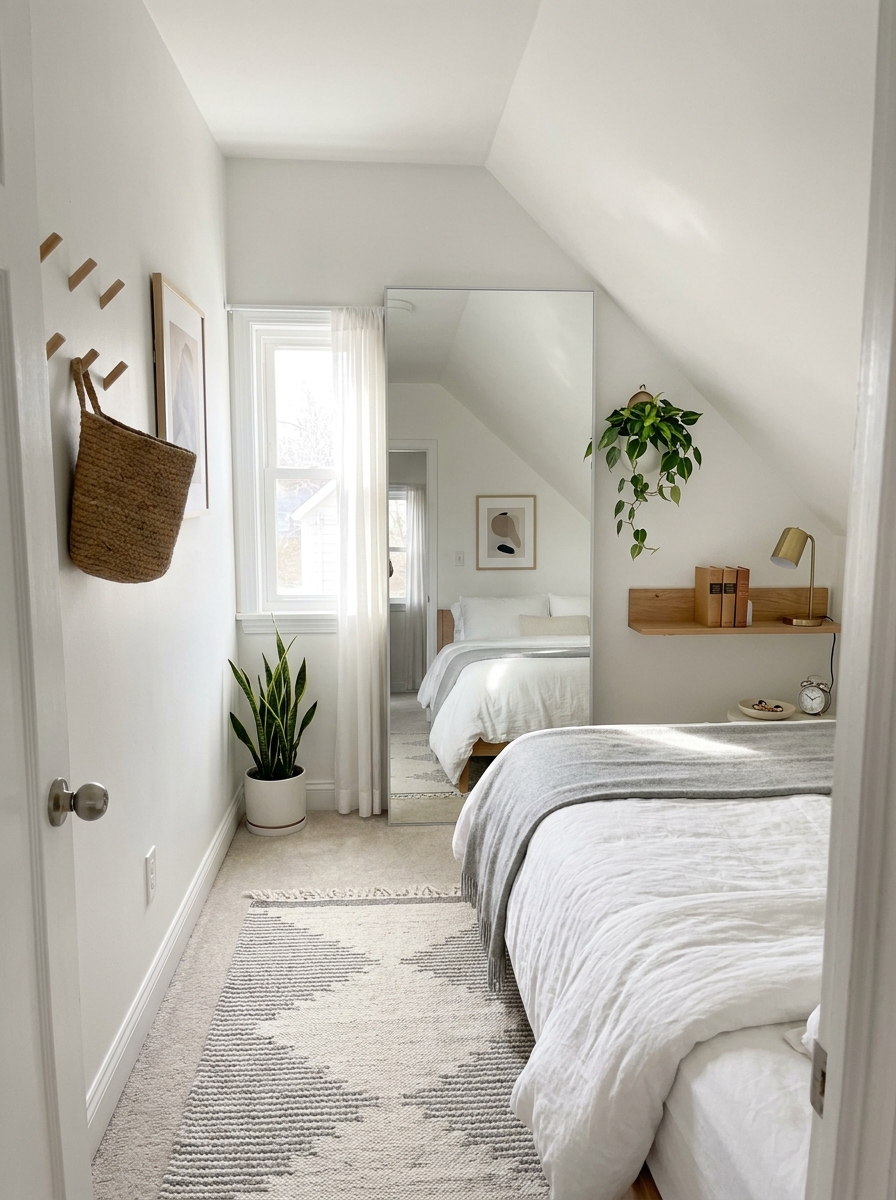
Here’s a decorating trick that feels like magic: mirrors literally make your room look bigger. I’m not exaggerating. A well-placed mirror can double the visual space in your bedroom, especially if you position it across from a window. Suddenly you’ve got twice the light and what looks like twice the room.
I’m obsessed with leaning a tall floor mirror against the wall instead of hanging it. It feels more casual and modern, plus you don’t have to worry about finding studs or making holes. Bonus: you can angle it to catch the best light and reflect the prettiest part of your room. Skip the dinky mirrors and go as big as your budget allows.
The psychology of it is real too. When you walk into a room and see that expanded reflection, your brain registers it as more space. You’ll actually *feel* less cramped. Just avoid putting mirrors directly across from your bed if that weirds you out—some people find it distracting when they’re trying to sleep.
7. Swap Your Bulky Dresser for a Capsule Closet System
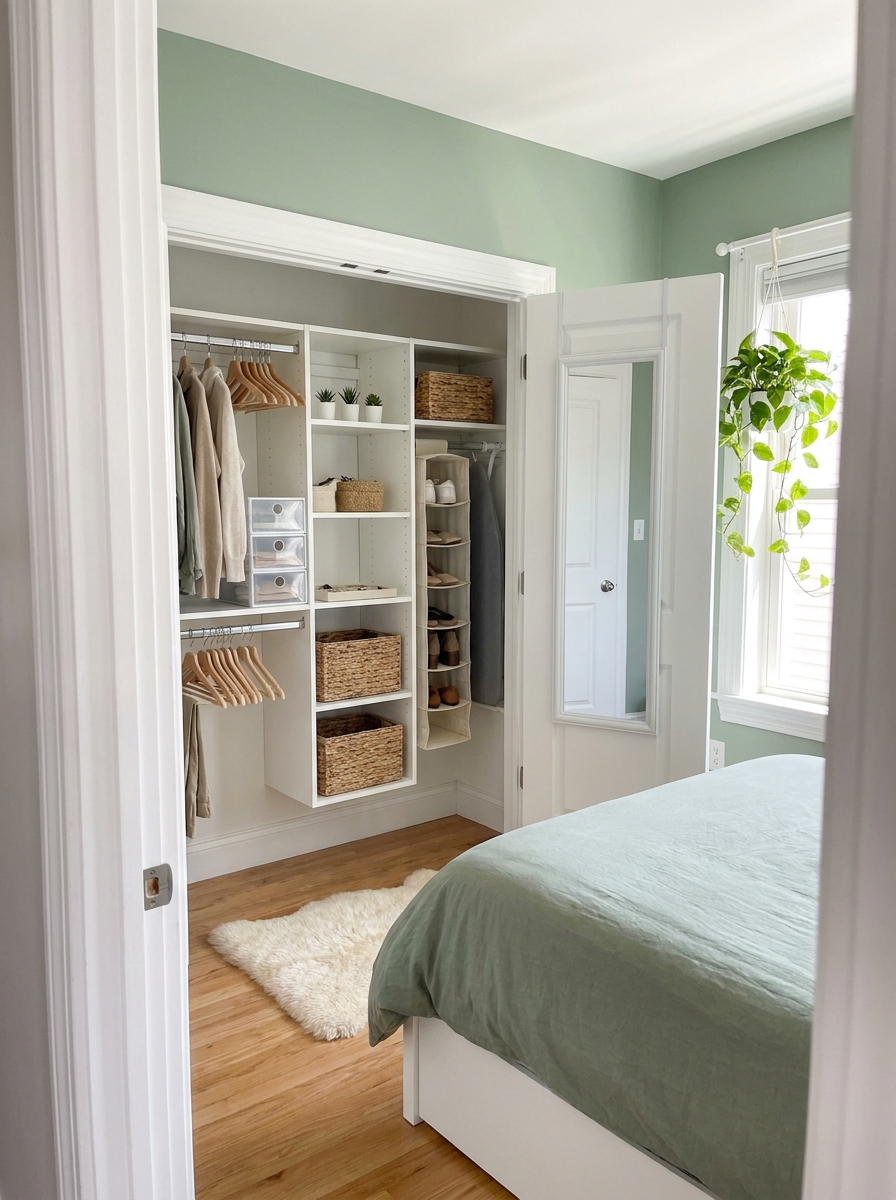
Real talk: that chunky dresser is eating up precious floor space you don’t have. I know it’s a bedroom staple, but in a small room, a big dresser can make everything feel claustrophobic. Here’s what I did instead: I installed a streamlined closet system with slim shelves, hanging rods, and fabric bins—and suddenly I had so much more breathing room.
You can find affordable closet systems that maximize every inch of vertical space in your closet, which means you can ditch the dresser completely. Think slim pull-out drawers, double hanging rods, and shelf dividers that keep everything tidy. Your clothes are still totally accessible, but now your bedroom doesn’t feel like a furniture showroom.
The bonus? You’ll probably end up with a mini capsule wardrobe situation because you’ll be more intentional about what you keep. When you can actually see everything you own (instead of shoving stuff into dresser drawers you forget about), you naturally pare down. Less stuff, more space, and a bedroom that finally feels like you can move around in it.
8. Create a Headboard with Hidden Storage Compartments
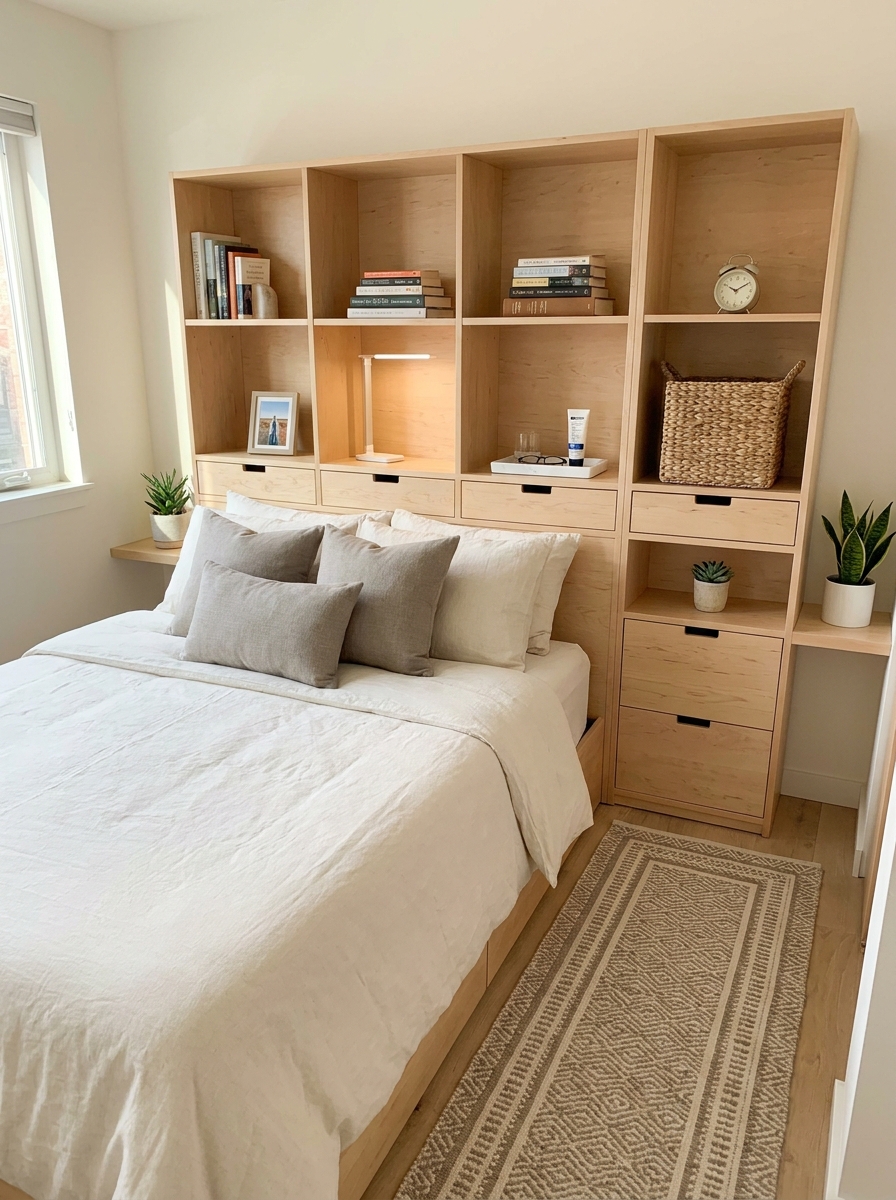
Who says your headboard has to just sit there looking pretty? I’m all about furniture that works overtime, and a storage headboard is basically like having a nightstand, bookshelf, and headboard all in one. You can tuck away books, your phone charger, reading glasses, and all those little bedtime necessities without taking up any extra floor space.
Some storage headboards have open cubbies, others have lift-up compartments or pull-out drawers. I’ve even seen DIY versions where people mounted shallow shelves or floating boxes directly to the wall behind their bed. The key is keeping it shallow enough that you’re not bumping your head, but deep enough to actually be useful. It’s such a smart solution for tiny bedrooms where every surface counts.
What I love most is how it keeps your bedside essentials within arm’s reach without cluttering up your room. No more nightstands jutting out and making your already-tight space feel even tighter. Everything you need is right there behind your pillow, hidden but accessible. It’s the kind of clever storage that makes small space living feel less like a compromise and more like smart design.
9. Hang a Fold-Down Desk That Vanishes When You’re Done
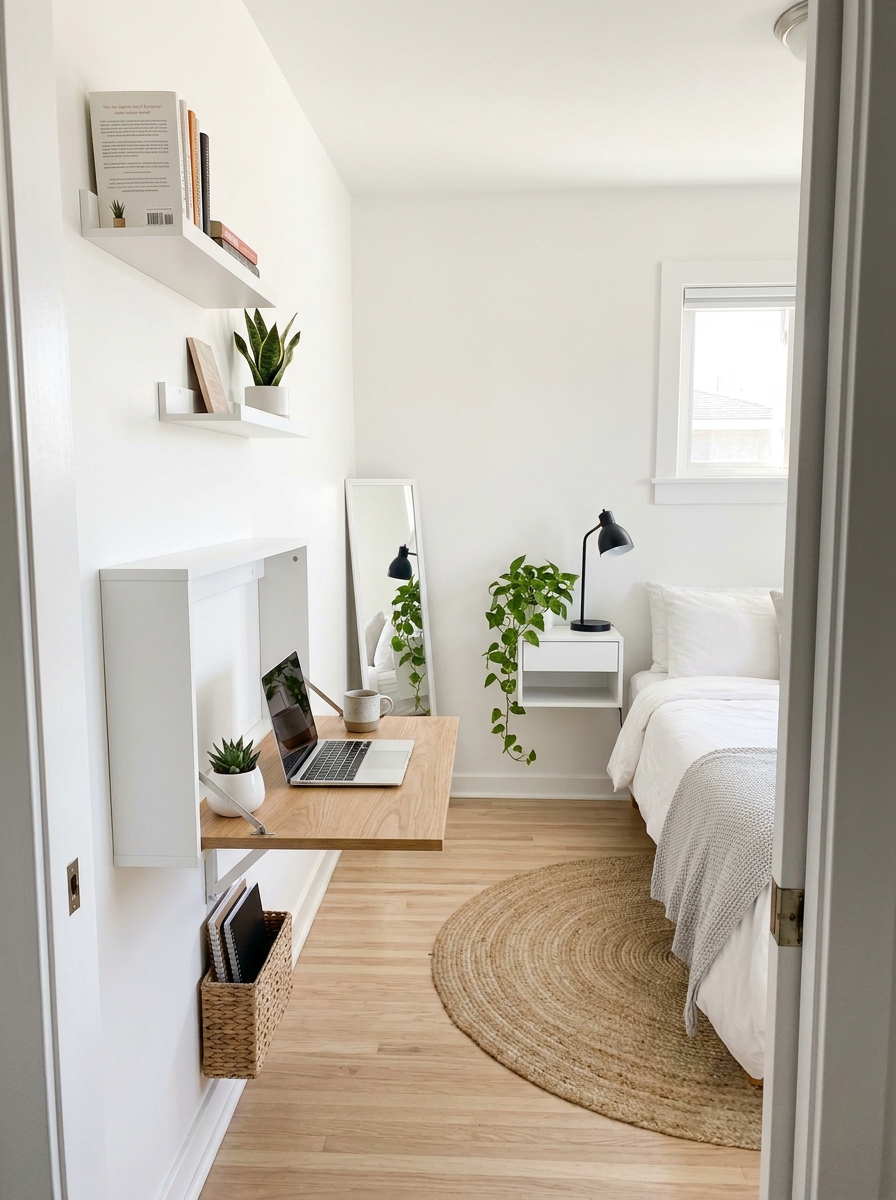
Okay, this one’s a total game-changer if you work from home but don’t have room for an actual office. A wall-mounted fold-down desk gives you a proper workspace when you need it, then disappears completely when you don’t. No bulky desk eating up precious floor space all day and night.
I love how clean this solution is. You literally fold it up against the wall, and suddenly you’ve got your bedroom back. No more laptop on your bed, no more makeshift setup on your nightstand. Just a real desk surface that appears and vanishes like magic.
Look for models with built-in storage cubbies or a corkboard backing so you can keep supplies organized without adding more furniture. Some even have fold-out shelves for your coffee cup or phone. Mount it at the right height so you’re not hunching over, and make sure it’s anchored properly—you don’t want it collapsing mid-email.
10. Install Floating Corner Shelves to Use Forgotten Space
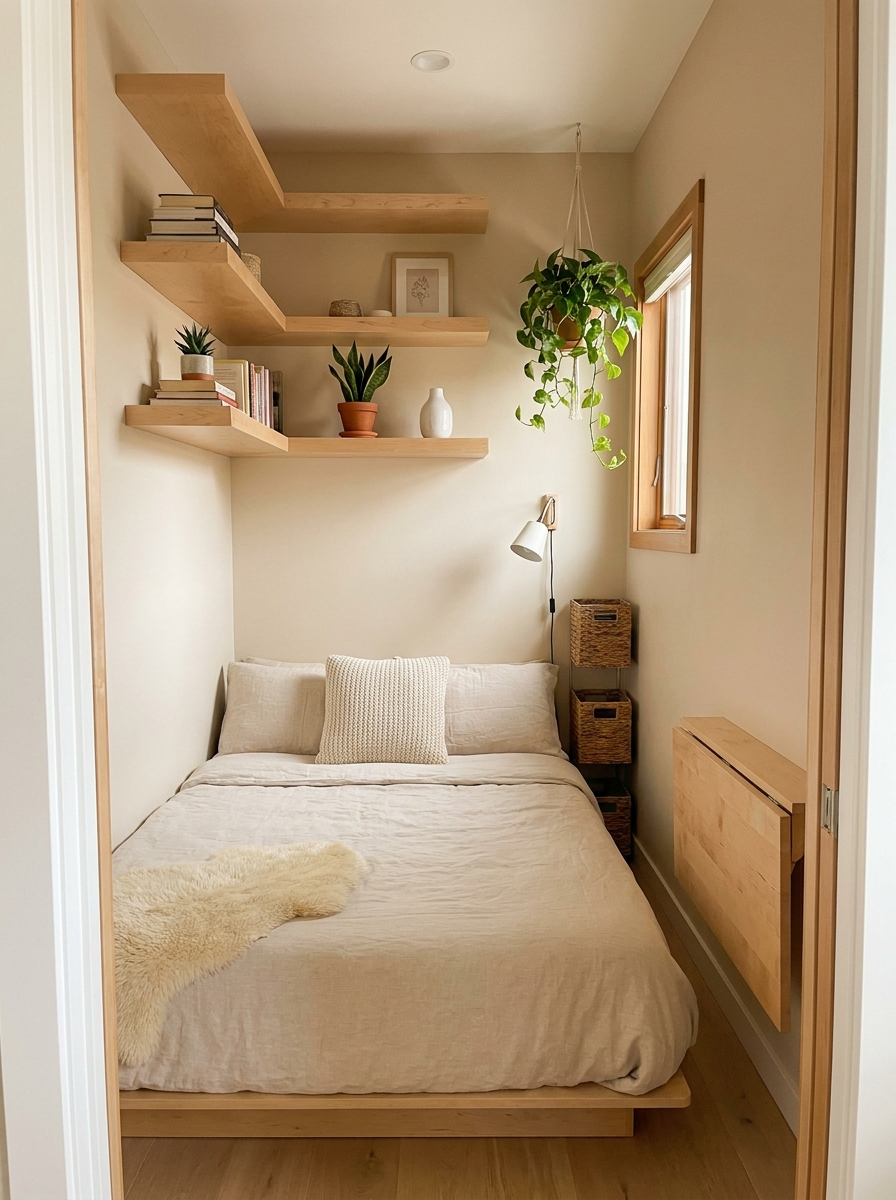
Corners are the most underused real estate in small bedrooms, and I’ll die on that hill. We walk past them every single day without realizing they’re perfect for storage. Floating corner shelves let you stack vertically without taking up any floor space, and they look so much more intentional than random stuff piled on your dresser.
I’m talking about those awkward corners near your door, beside your bed, anywhere that’s just… there. Stack two or three floating shelves and suddenly you’ve got homes for books, your jewelry box, that pretty candle you never light, framed photos. It keeps surfaces clear and gives everything a proper spot.
The trick is keeping them styled but not cluttered. Mix books with small plants and decorative objects so it feels curated, not crammed. And please, please use a level when installing—nothing screams “I rushed this” like wonky corner shelves.
11. Swap Heavy Curtains for Sheer Panels That Let Light Flood In
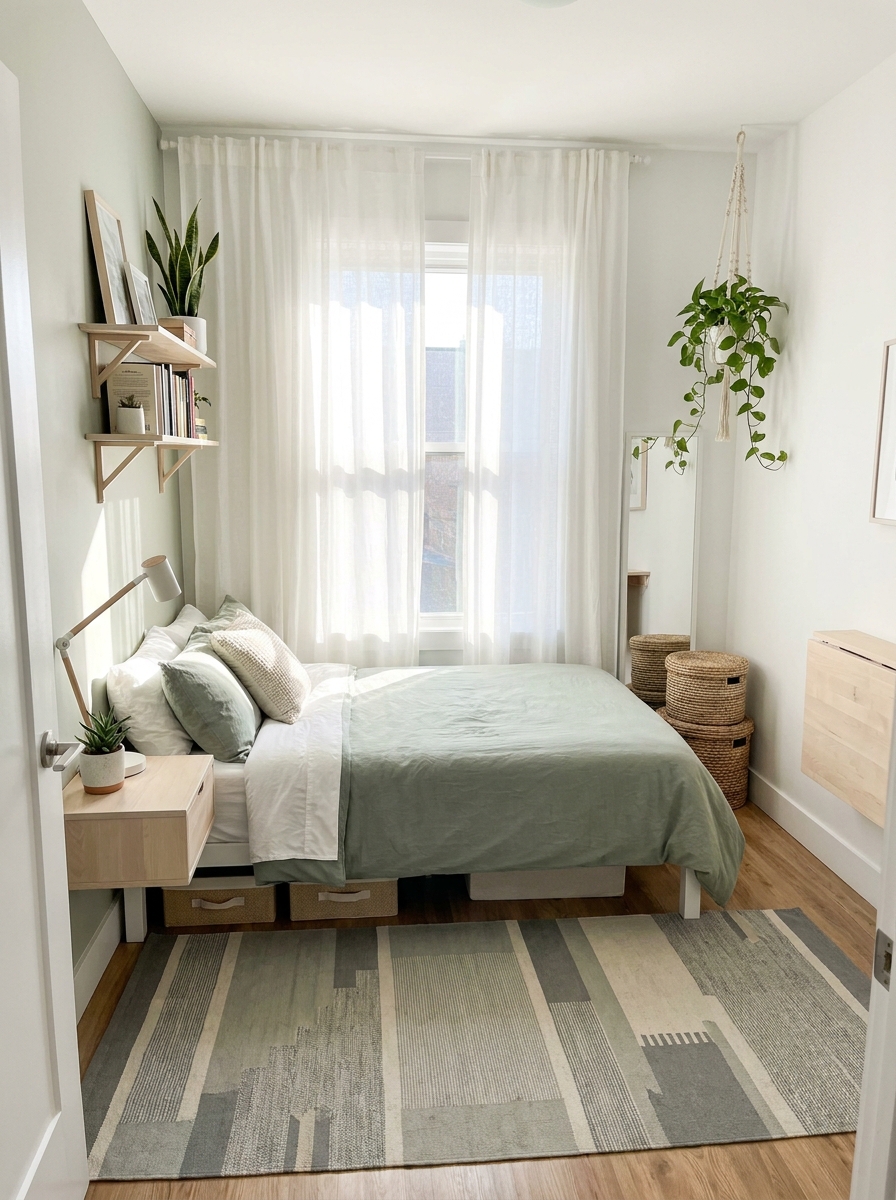
This sounds too simple to matter, but hear me out—dark, heavy curtains make small rooms feel like caves. I get that you need privacy and light control, but there are smarter ways. Sheer white or cream panels let natural light bounce around your room all day while still giving you coverage. The difference is honestly dramatic.
When light floods a small bedroom, it instantly feels bigger and more breathable. Those thick blackout curtains might block the sun, but they’re also blocking the one free thing that makes spaces feel larger—daylight. If you absolutely need darkness for sleep, layer sheers with a lightweight roller shade you can pull down at night.
Mount your curtain rod as close to the ceiling as possible and let the panels just skim the floor. This vertical line tricks your eye into seeing taller walls. And keep the fabric simple—no busy patterns that chop up your sightline.
12. Use a Bench with Hidden Storage Instead of a Footboard
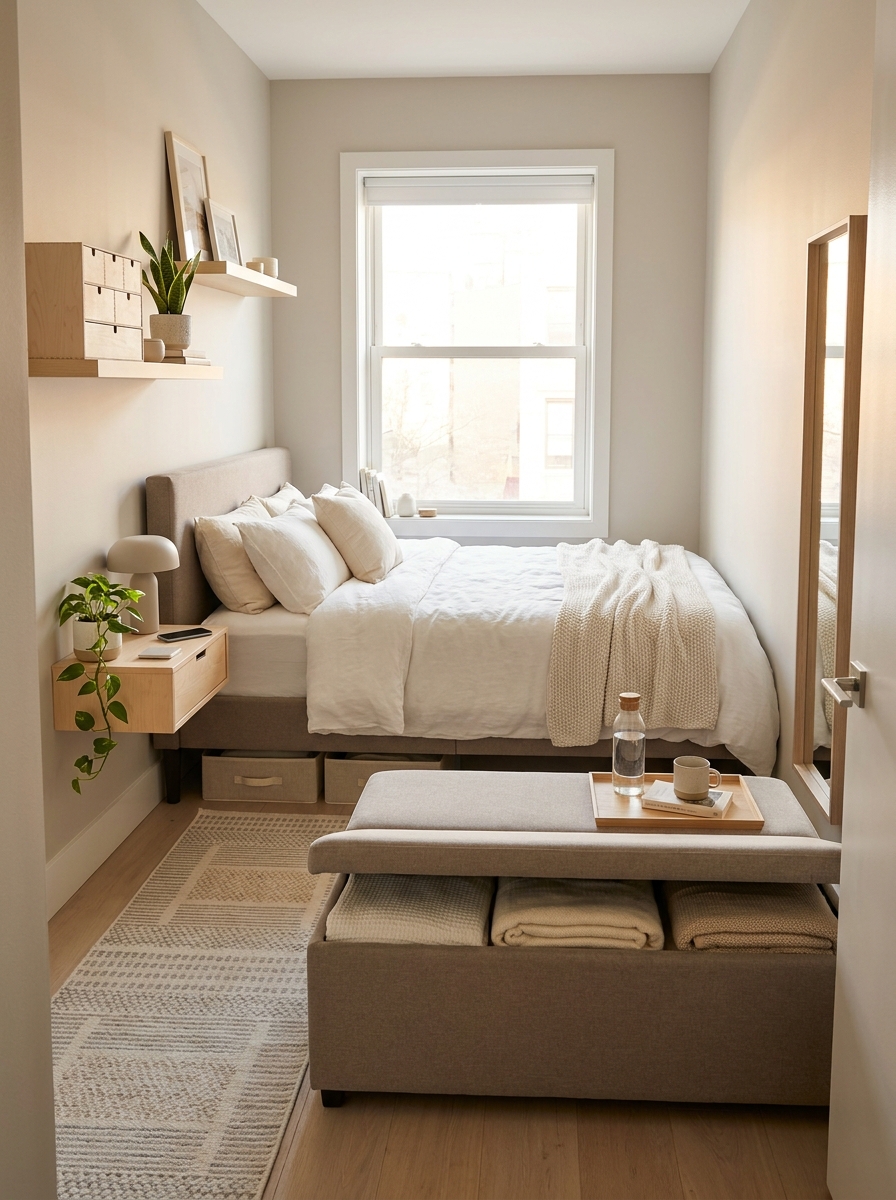
If you’ve got a few inches at the foot of your bed, skip the decorative footboard that does absolutely nothing and add a storage bench instead. It’s one of those sneaky dual-purpose pieces that works overtime—extra seating when you’re getting dressed, a landing spot for tomorrow’s outfit, and hidden storage for off-season clothes or extra blankets.
I especially love this trick in really tight bedrooms where you can’t fit a proper dresser. Lift the lid and boom, you’ve got cubic feet of storage that would otherwise be dead space. Plus it gives your bed a more finished, hotel-like look without adding visual clutter.
Look for benches with a cushioned top so they’re actually comfortable to sit on. The lift-top style is way more practical than drawers because you can stuff bulkier items inside. And measure twice before buying—you want it to fit snugly at the foot of your bed without blocking your walking path.
13. Paint Your Ceiling the Same Color as Your Walls
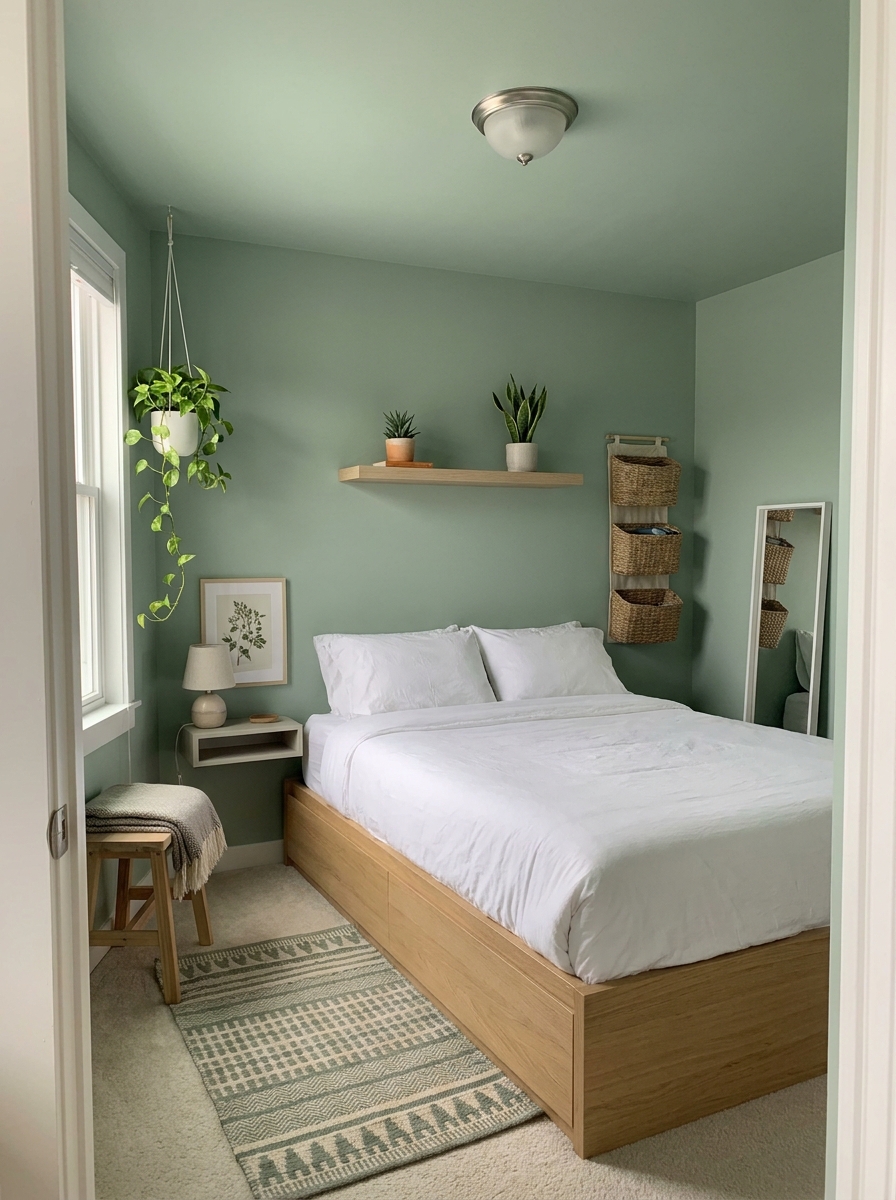
I know this sounds weird, but hear me out! When your ceiling is the same color as your walls, your eye can’t tell where the wall ends and the ceiling begins. The result? Your tiny bedroom suddenly feels taller and more open.
This trick works especially well with soft, light colors. Think warm greige, pale sage, or creamy white. The continuous color creates this dreamy, cocoon-like effect that makes the room feel bigger instead of boxed in. I tried this in my guest room last year, and people literally ask if we raised the ceiling. We didn’t. We just painted it the same soft neutral as the walls.
Skip stark white if your walls are colored, because the contrast will actually make your ceiling feel lower. You want everything to blend together seamlessly, creating visual flow that tricks your brain into seeing more space than actually exists.
14. Replace Your Box Spring with a Platform Base
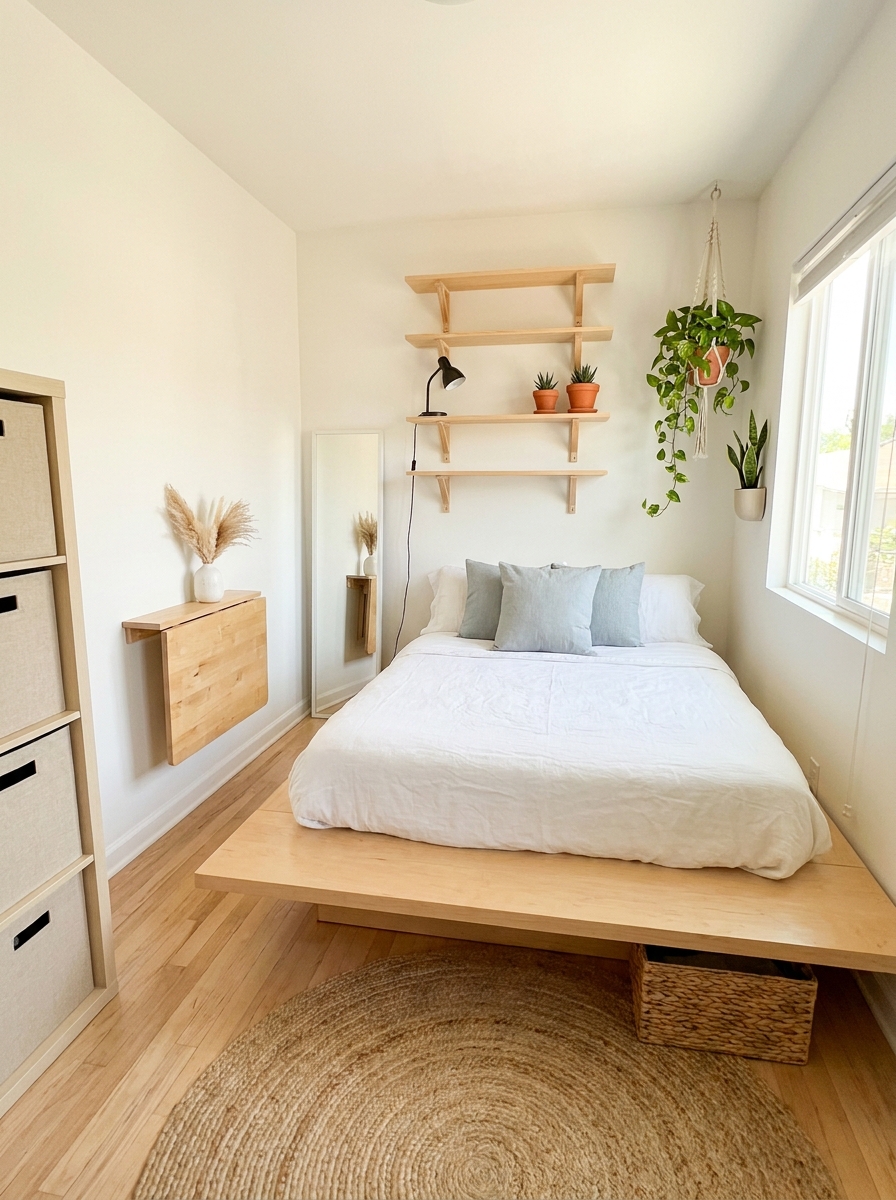
Box springs are space thieves in small bedrooms. They add bulky height without giving you anything useful in return. A low platform bed, on the other hand, keeps your mattress close to the ground and makes your ceiling feel miles higher.
I switched to a platform bed in my last apartment, and it completely changed how the room felt. Suddenly I had visual breathing room above the bed. Plus, platform beds often come with slat systems that give your mattress better airflow than a box spring ever could. Win-win!
The lower profile also makes the room feel more intentional and designed, not just stuffed with furniture. You can find platform frames with built-in storage drawers underneath, or keep it super minimal with a simple wooden base. Either way, you’re reclaiming vertical space that makes your whole room feel less cramped.
15. Install Sliding Barn Doors Instead of Swing-Out Doors
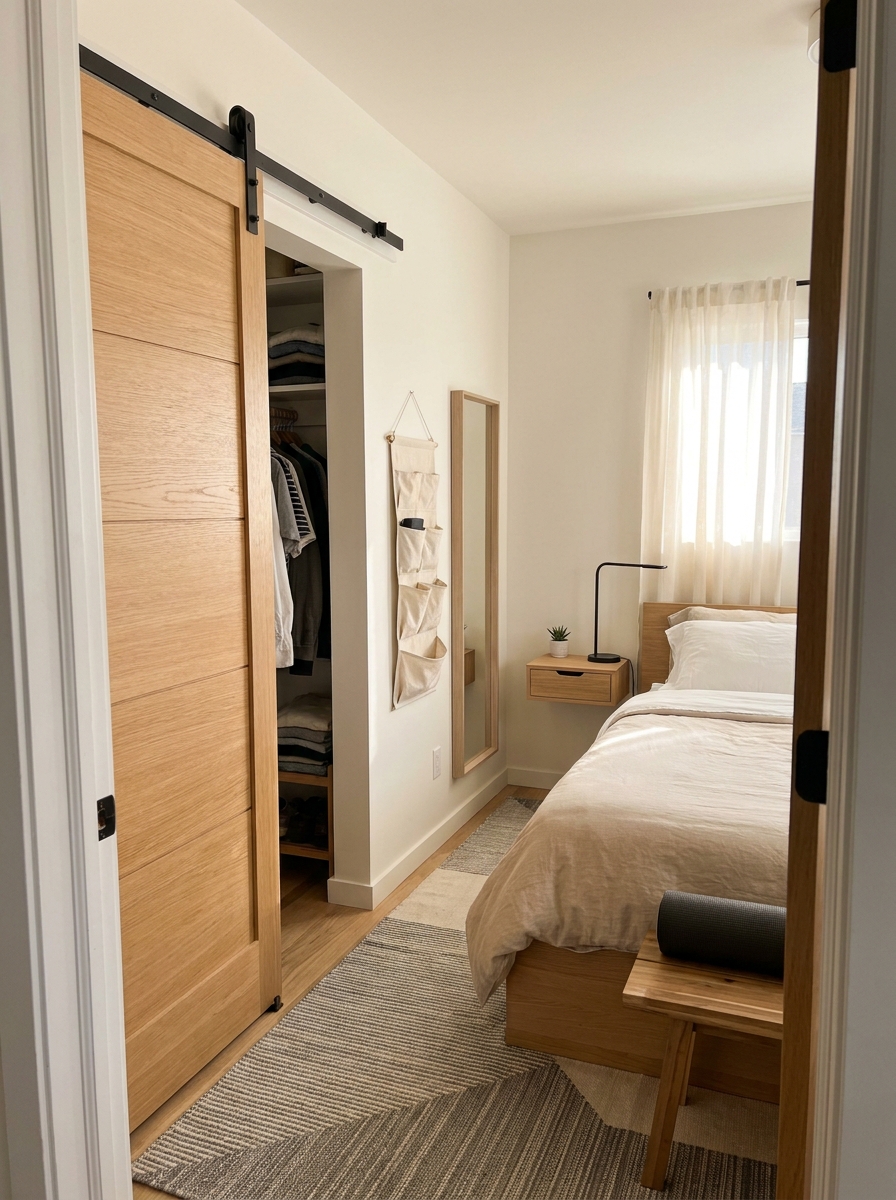
Regular doors are space hogs. Every time you open one, it claims a big chunk of floor space that you can’t use for anything else. Sliding barn doors solve this problem beautifully because they glide along the wall instead of swinging into your room.
I installed a sliding door on my bedroom closet, and suddenly I could put a small dresser in that corner where the door used to swing open. That’s real estate I got back! Plus, barn doors look incredibly stylish. You can find them in every finish imaginable, from rustic wood to sleek modern metal.
This works for closets, bathrooms, and even your main bedroom door if you’re really tight on space. The track mounts right to your wall, and the door slides smoothly back and forth. No more awkward furniture placement to accommodate door swing. Just smooth, space-saving style.
16. Layer Your Lighting to Make Walls Feel Further Away
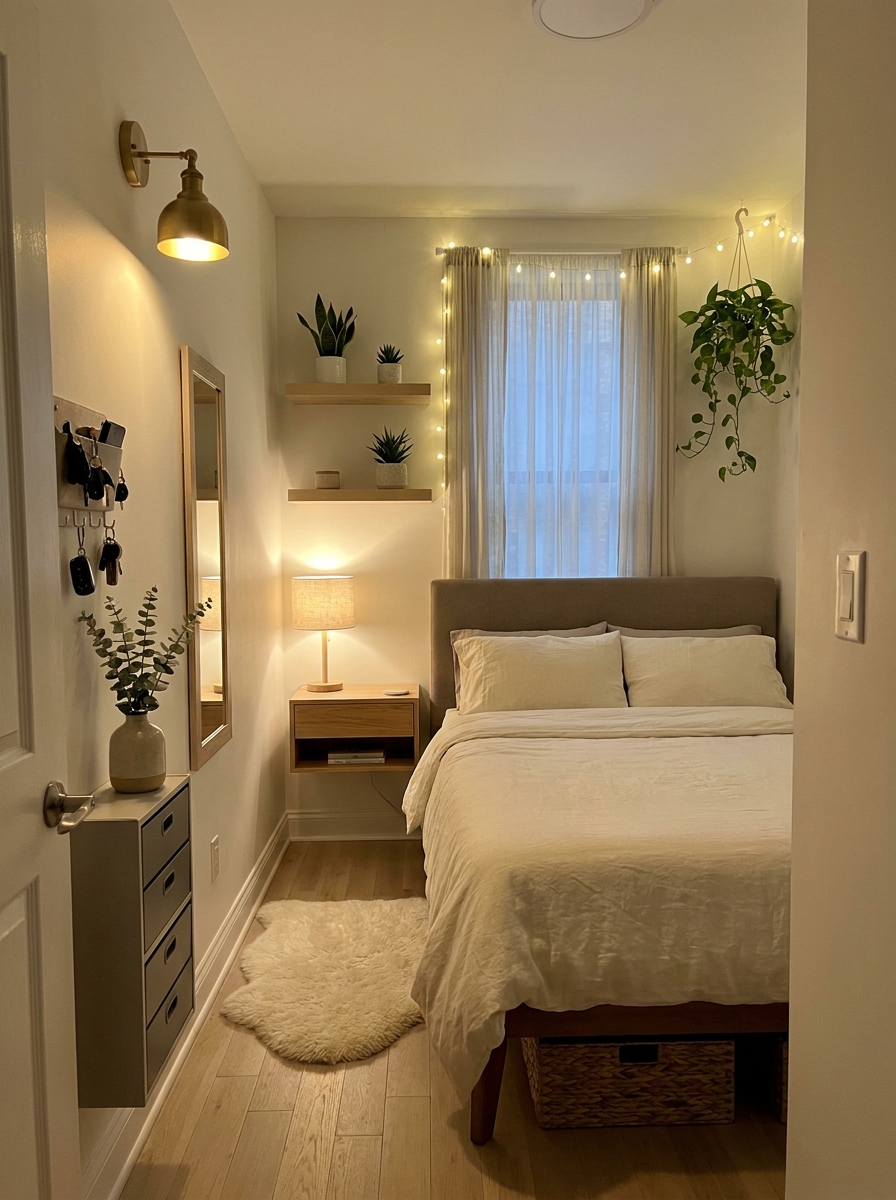
One overhead light makes small rooms feel flat and even smaller. But when you layer different light sources at different heights, you create depth that tricks your eye into thinking the room is bigger than it actually is.
Start with your main light, then add a bedside lamp, maybe a wall sconce, and even some subtle string lights or a small floor lamp in the corner. Each light source creates its own little pool of brightness, and your brain reads those layers as more space. It’s like magic, honestly.
I’m obsessed with dimmable lights for this reason. You can adjust the mood and the perceived size of your room just by playing with brightness levels. Bright during the day makes it feel crisp and open. Dimmed at night makes it feel cozy without feeling cramped. It’s all about creating visual interest at multiple levels instead of flooding everything from above.
17. Tuck Your Bed Into an Alcove Nook
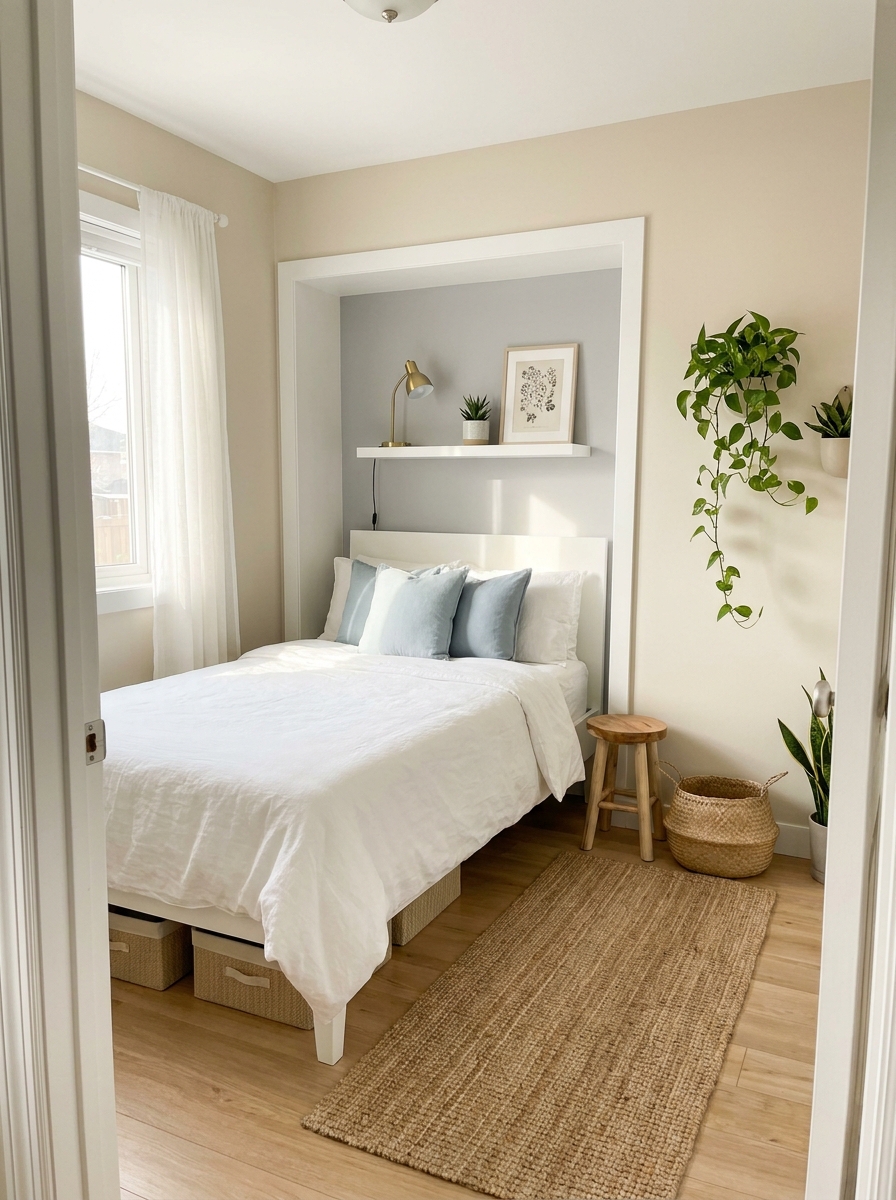
If your small bedroom has any kind of alcove or nook, you’ve basically hit the space-planning jackpot. Tucking your bed into that cozy little corner instantly creates a defined sleeping zone without needing bulky furniture or room dividers.
I love how this trick makes even the tiniest bedroom feel intentional instead of cramped. The alcove naturally frames your bed, so you don’t need a massive headboard or nightstands on both sides. You can add a single floating shelf above the bed for your phone and a reading light, and you’re done. The rest of your room suddenly feels wide open for a small desk, a chair, or just blessed breathing space.
Bonus? Alcove beds feel incredibly cozy. There’s something about having walls on two or three sides that makes you want to curl up with a book and never leave. It’s like a built-in hug for your mattress.
18. Skip the Rug Entirely for a Cleaner Visual Flow
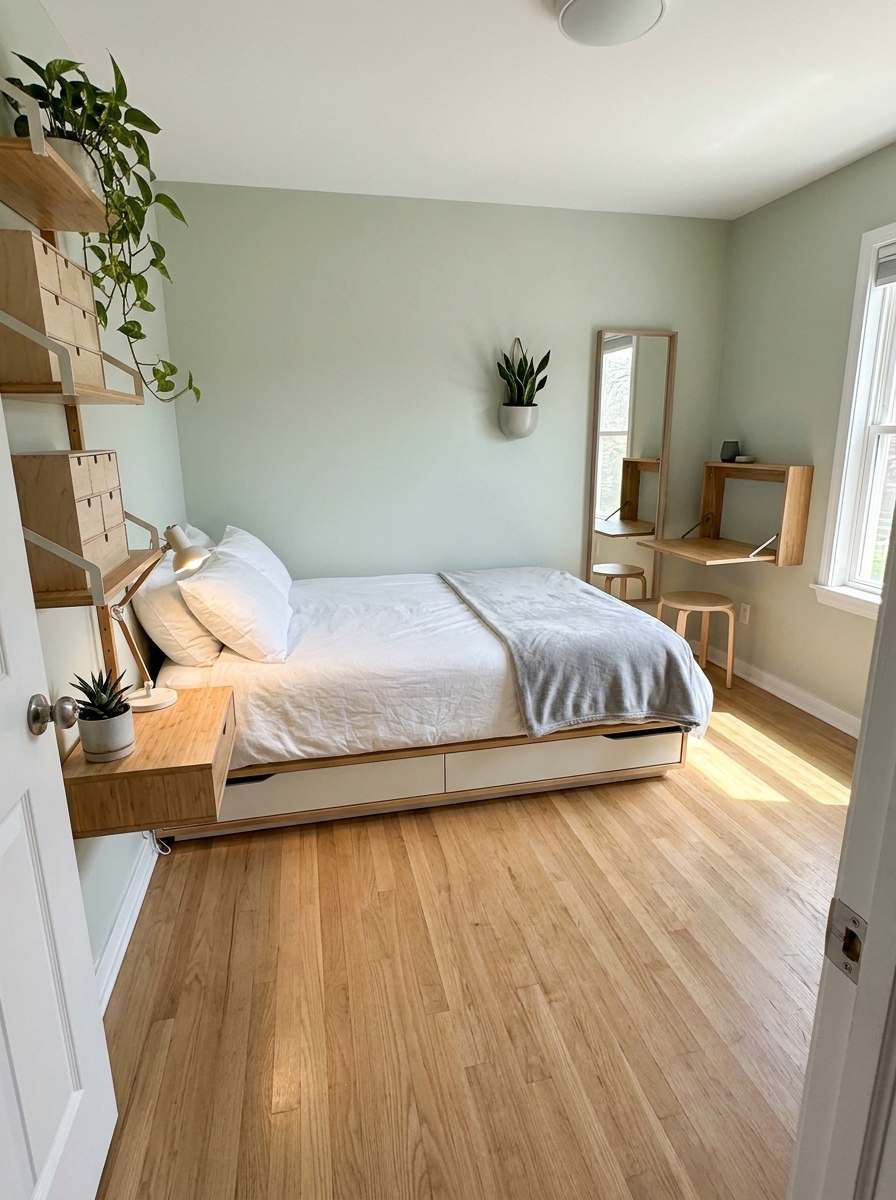
Okay, hear me out on this one. Sometimes the best thing you can do for a truly tiny bedroom is to ditch the area rug completely. I know, I know, rugs add warmth and texture, but in a really small space, they can also chop up your floor into even smaller visual chunks.
When you skip the rug, your eye travels uninterrupted across the entire floor. That continuous surface makes your room look bigger instantly. It’s the same trick designers use with wall color—fewer breaks means more perceived space. If your flooring is light wood or pale tile, even better. That seamless flow of color creates the illusion of way more square footage than you actually have.
Now, if you love the cozy factor of a rug, try a tiny accent piece just beside the bed where your feet land in the morning. A small sheepskin or narrow runner gives you that soft landing without breaking up the whole floor.
19. Install Sconces Instead of Table Lamps to Save Surface Space
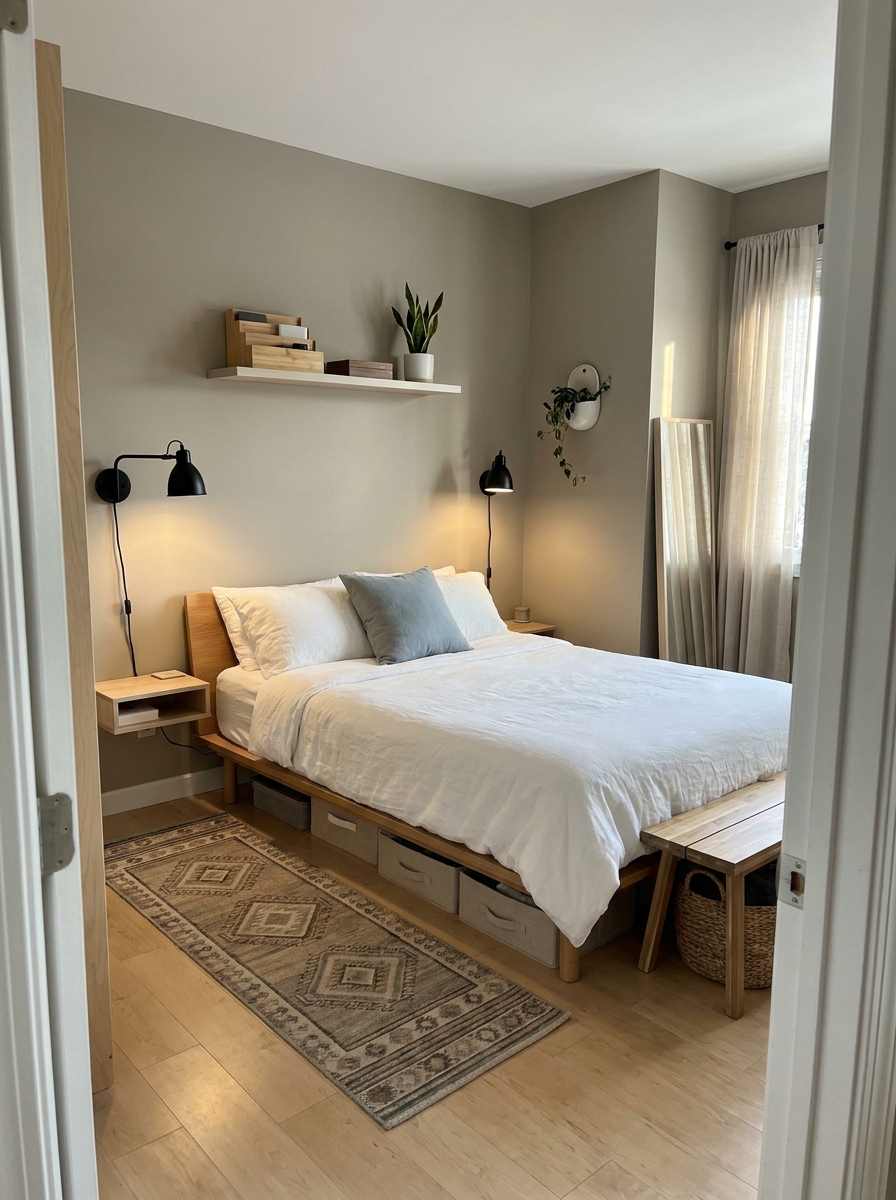
Table lamps are great until you realize they’re hogging half your nightstand in a bedroom where every inch counts. Wall-mounted sconces free up that precious surface space while still giving you the task lighting you need for reading or scrolling before bed.
I’m obsessed with swing-arm sconces especially. You can position them exactly where you need light, then tuck them back against the wall when you don’t. No lamp cords snaking down to outlets, no wobbly bases getting knocked over when you reach for your water glass at 2 a.m. Just clean, functional light that doesn’t take up real estate.
Sconces also draw the eye upward, which is always a smart move in small spaces. They add visual interest to your walls without requiring floor space, and they make your room feel more designed and intentional. Plus, hardwired sconces mean one less thing to plug in, which is clutch when you’re already fighting over outlets for your phone charger and white noise machine.
20. Choose Furniture on Legs Instead of Pieces That Hit the Floor
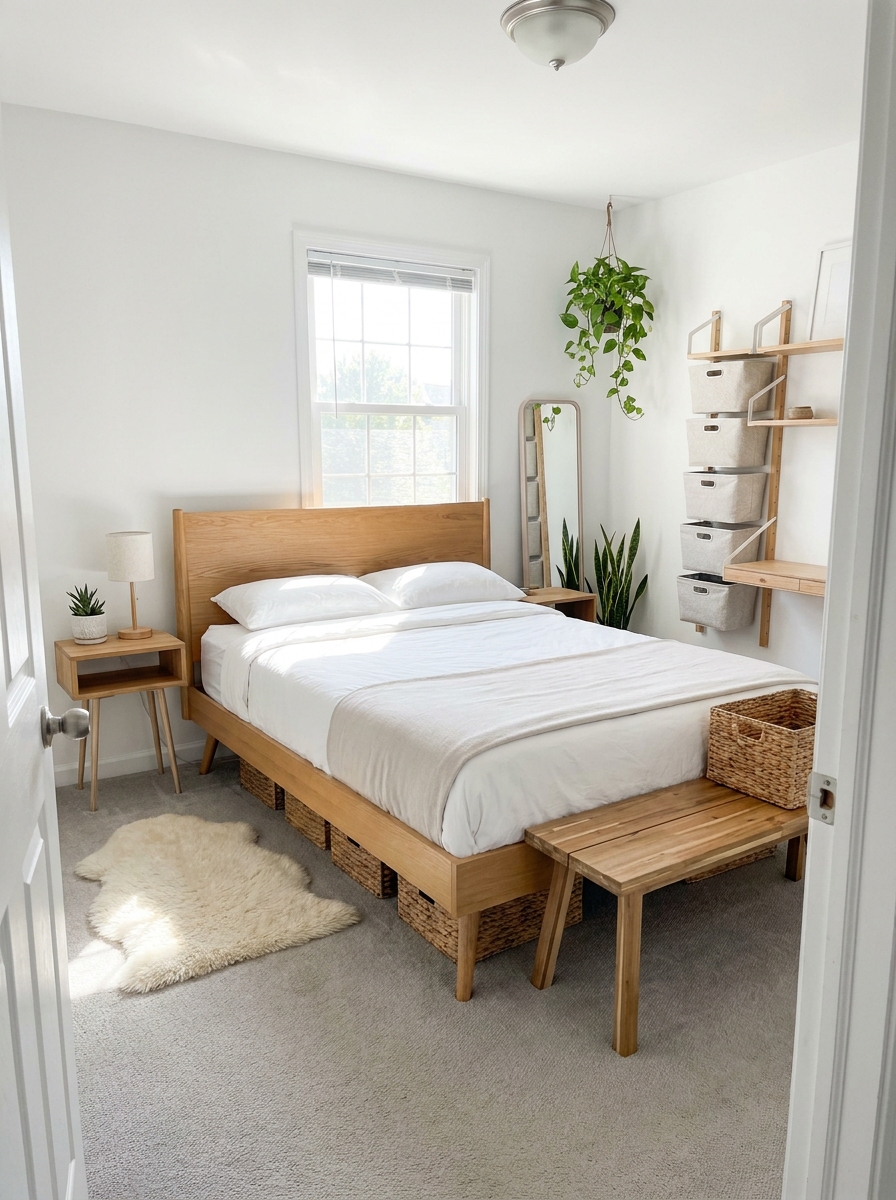
This might sound like a tiny detail, but furniture with visible legs instead of solid bases makes a shockingly big difference in small bedrooms. When you can see floor space underneath your bed, dresser, or chair, your room instantly feels lighter and more spacious.
It’s all about visual weight. Furniture that sits directly on the floor creates heavy visual blocks that make your space feel crowded. But when your bed frame has six-inch legs? Suddenly there’s air and light flowing underneath. Your eye registers all that visible floor as usable space, even if you’re not actually using it. The same goes for nightstands, benches, and storage units. Those few inches of elevation create breathing room.
I always look for mid-century inspired pieces or Scandinavian designs because they naturally feature those slim tapered legs. They’re stylish AND they make your small bedroom feel about 30% bigger without changing your actual square footage. It’s basically magic.
21. Use a Rolling Cart Instead of a Nightstand
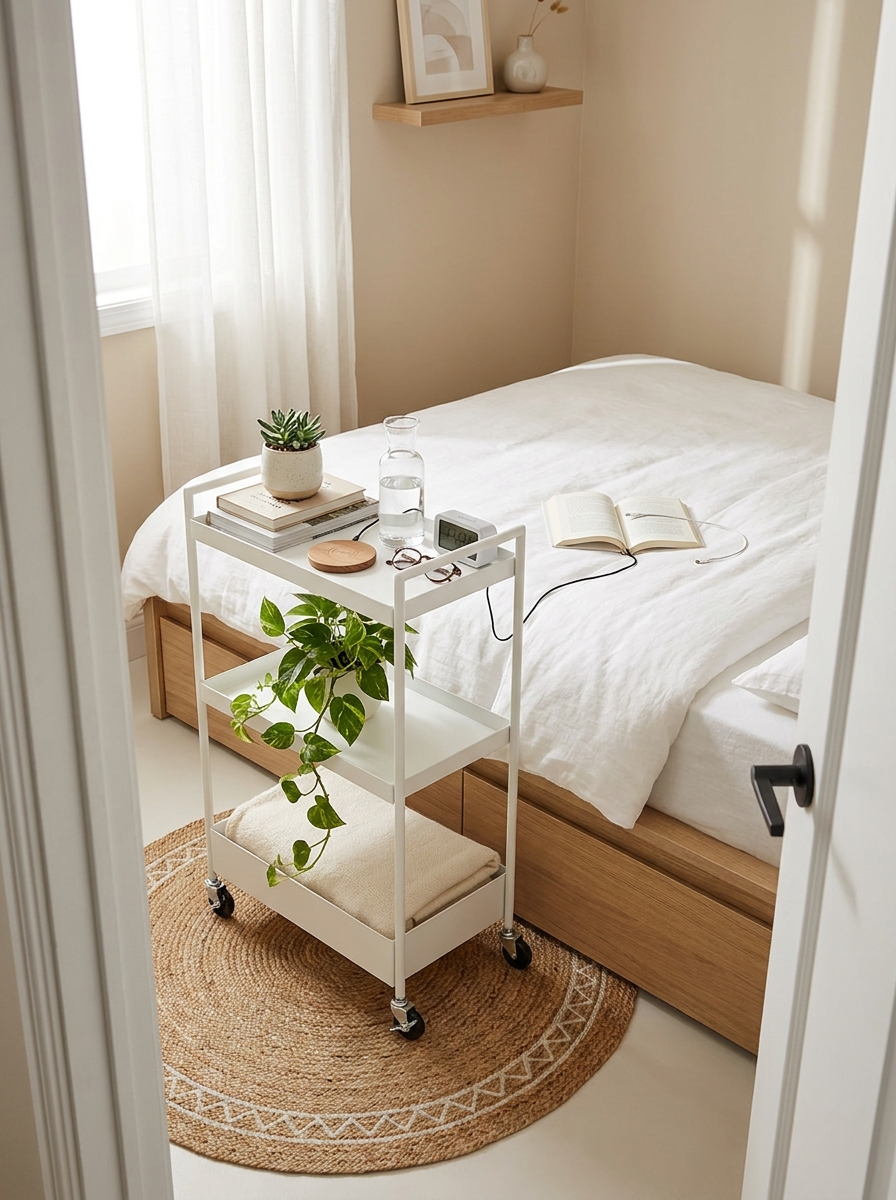
Here’s a game-changer I stumbled on by accident: those little rolling carts everyone uses in kitchens? They’re absolutely perfect for tiny bedrooms.
I’m talking about the slim three-tier ones that tuck right next to your bed. They hold everything a nightstand would—books, your phone charger, that water bottle you definitely need at 3am—but here’s the magic part: you can wheel them out of the way whenever you need floor space. Getting dressed? Roll it toward the wall. Making the bed? Slide it into the corner. Having friends over and need every inch of floor? Tuck it in the closet.
Plus, the vertical tiers give you way more storage than a typical nightstand without eating up precious square footage. I keep mine loaded with my current reads on top, skincare stuff in the middle, and extra chargers on the bottom. It’s like having a nightstand that breathes with your space instead of hogging it 24/7.
22. Create Zones with Low Furniture to Keep Sightlines Open
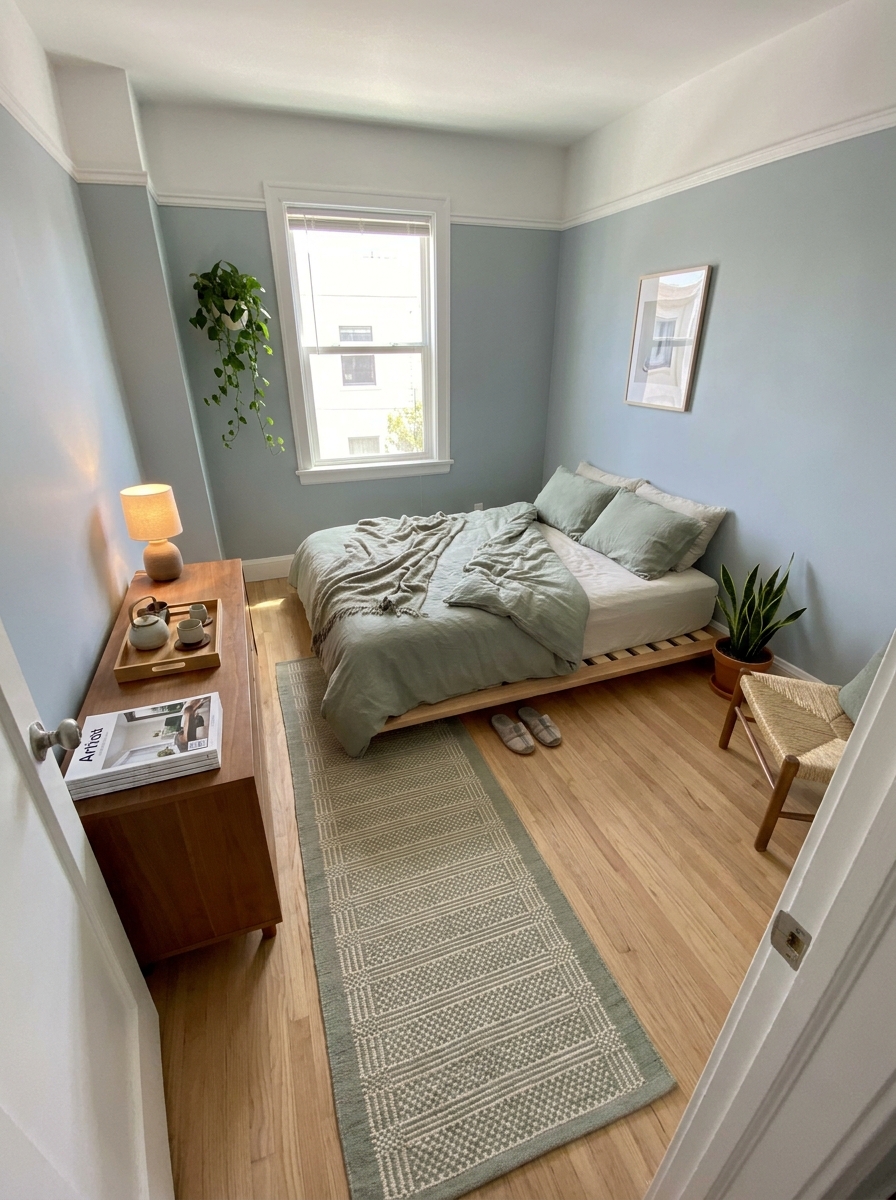
This one’s a total perception trick, but it works like crazy. When you keep all your furniture low to the ground—we’re talking beds, dressers, seating under 30 inches—your eye travels across the room without hitting obstacles. And somehow, magically, your tiny bedroom feels twice as big.
I learned this from my friend who lives in a shoebox studio in Brooklyn. Everything she owns sits low, and when you walk in, you see clear across the whole space. No tall armoires blocking your view, no chunky headboards cutting the room in half. Just clean, uninterrupted sightlines that trick your brain into thinking there’s way more square footage than there actually is.
The best part? Low furniture creates functional zones without needing walls or dividers. Your sleeping area feels separate from your getting-ready spot just because the furniture heights create natural boundaries. It’s like invisible room dividers that don’t actually eat up any space.
23. Hang Curtains at Ceiling Height to Add Vertical Drama
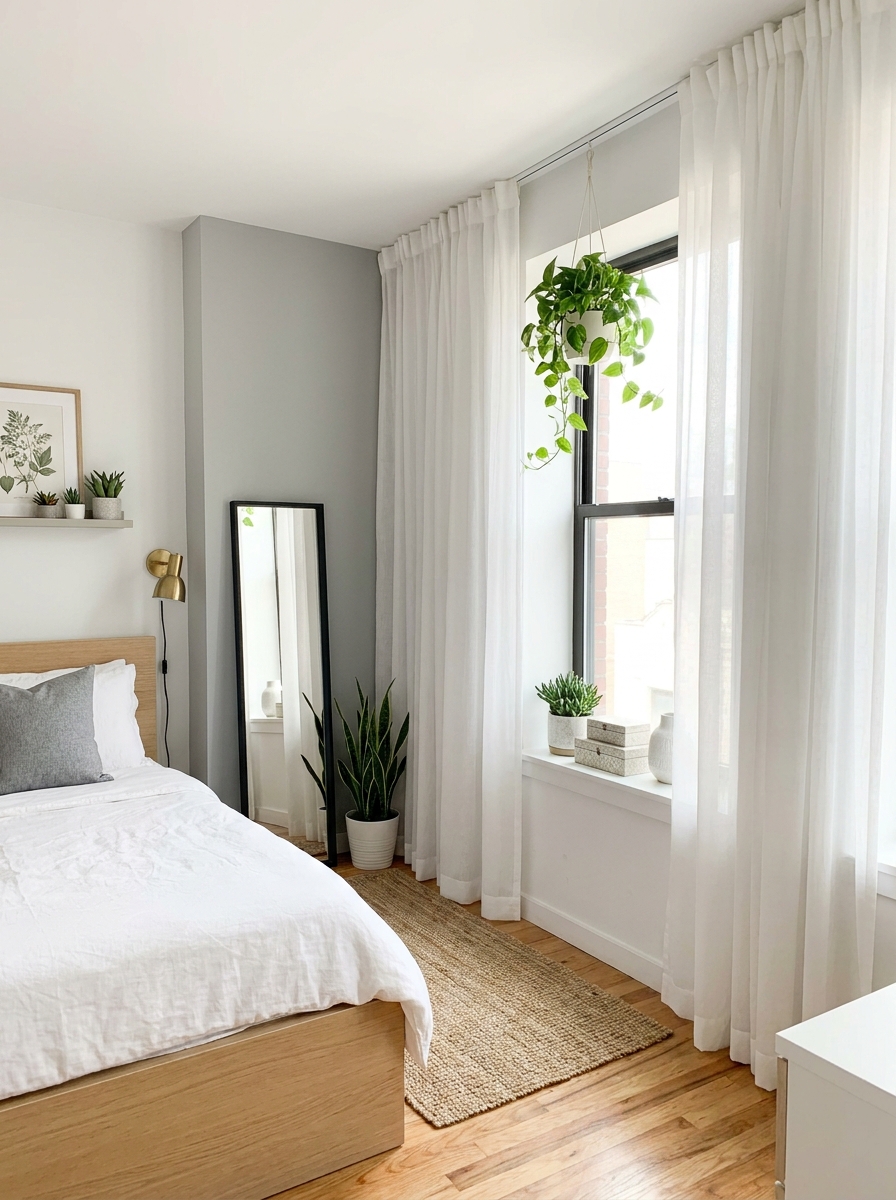
Want to know the easiest trick that makes your ceiling look a foot higher? Mount your curtain rod right at the ceiling line—not at the window frame like everyone does.
I know it sounds too simple to work, but I promise your room will look completely different. Those extra inches of fabric create these beautiful vertical lines that pull your eye up, up, up. Suddenly your standard eight-foot ceiling feels like it’s floating somewhere around nine feet. It’s pure optical illusion, but who cares when it works this well?
The key is making sure your curtains just barely kiss the floor. Not puddling, not hovering—just a soft touch. This unbroken line from ceiling to floor is what does the heavy lifting. I did this in my guest room and my mom literally asked if we’d raised the ceiling. We hadn’t changed a single structural thing, just moved the curtain rod up twelve inches.
24. Install Pegboard Walls for Flexible Vertical Storage
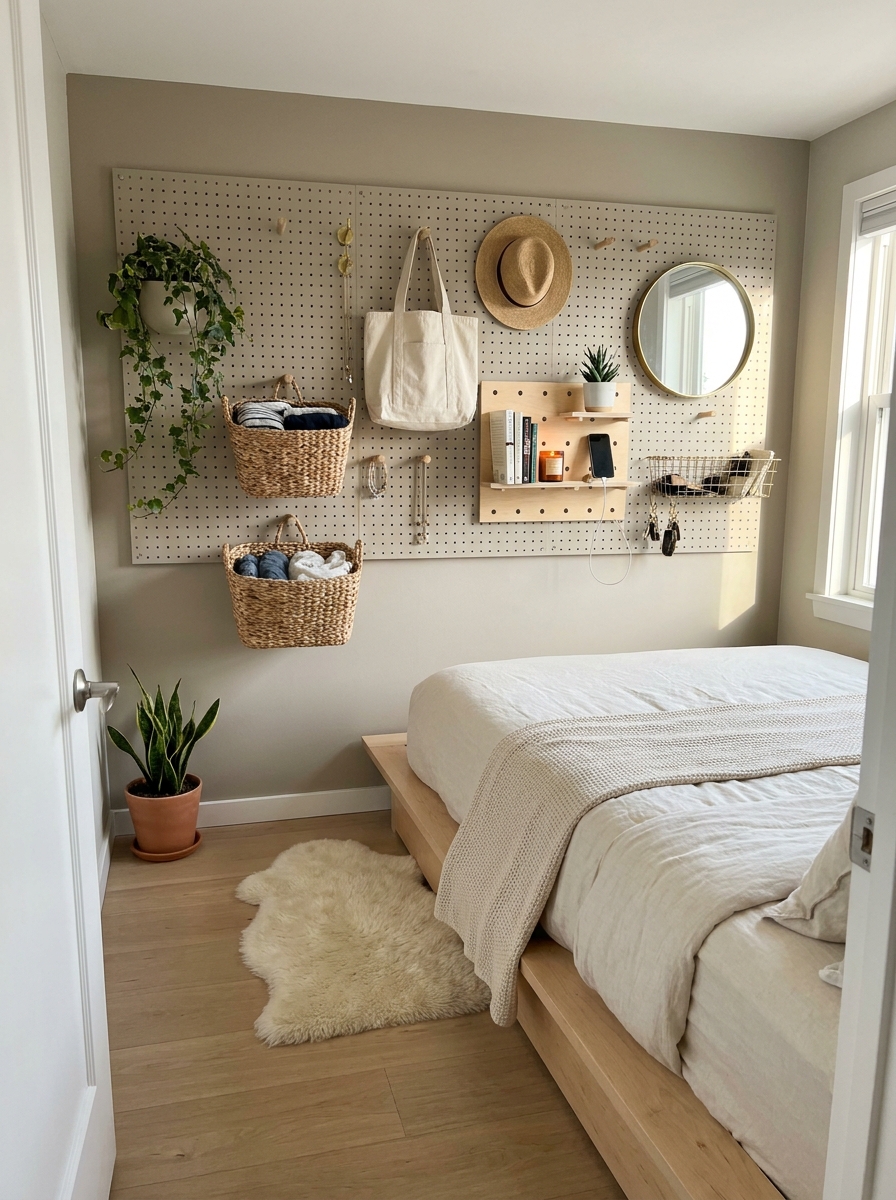
Okay, pegboard might sound like something from your dad’s garage, but hear me out. Modern pegboard walls are having a serious moment, and for small bedrooms? They’re absolutely genius.
Think about it: you can hang literally anything on those little pegs. Baskets for accessories, hooks for bags, tiny shelves for books, clips for jewelry. And the best part? You can rearrange everything whenever you want without putting new holes in your wall. Your storage setup grows and changes with you instead of being locked in place forever.
I installed a painted pegboard behind my bed in my first apartment, and it saved me from needing a dresser, a nightstand, and about seventeen different organizers. Everything I needed daily went up on that wall—hooks held my next-day outfit, baskets caught hair stuff and makeup, a little shelf held my alarm clock. It was like having a customizable command center that took up exactly zero floor space.
25. Install a Headboard Shelf Instead of a Nightstand
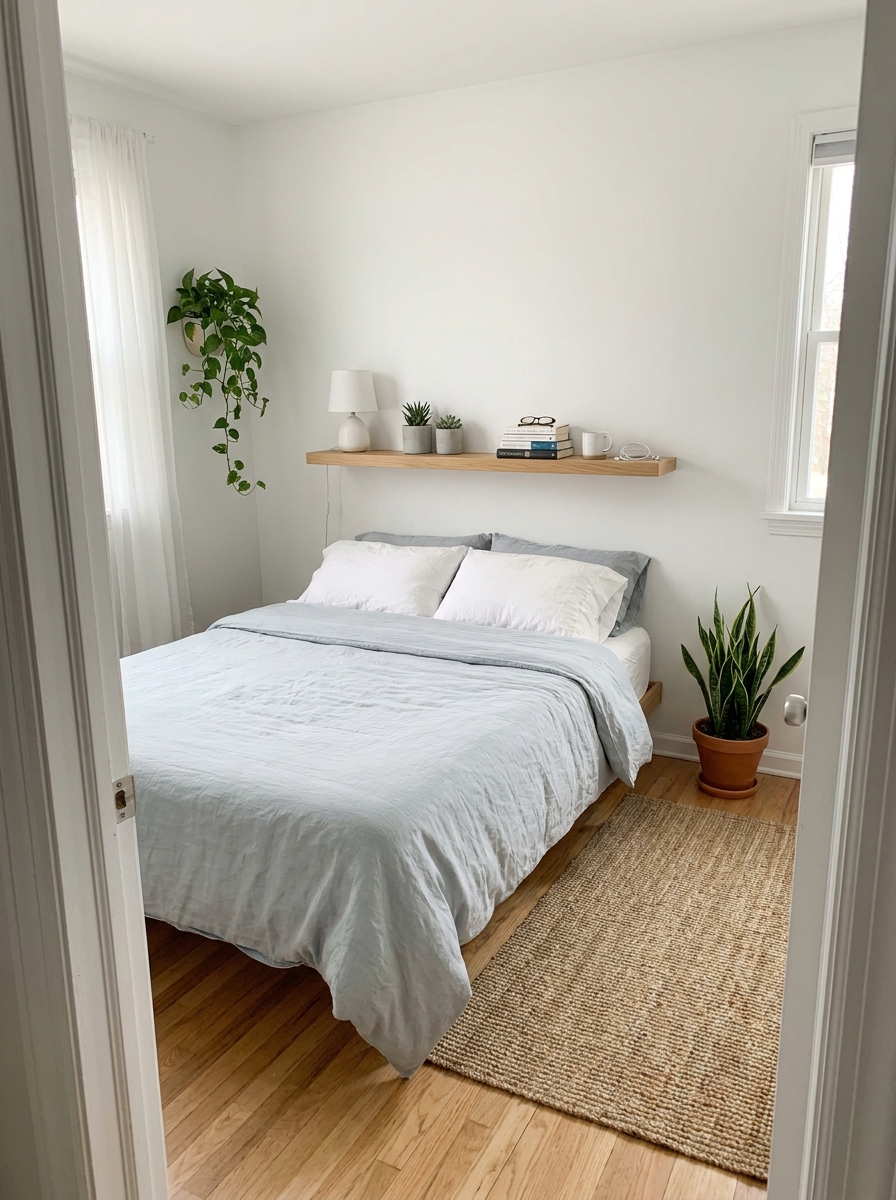
Here’s a game-changer: ditch the nightstand completely and put your storage where you actually need it—right behind your head.
A headboard shelf gives you all the surface space for your phone, reading glasses, and water bottle without eating up precious floor space. You can find slim floating shelves that mount directly to the wall, or go with a bookcase-style headboard that doubles as book storage. Either way, you’re freeing up both sides of your bed.
I love this trick because it makes the room feel so much more open. No more bumping into nightstands when you’re making the bed or trying to squeeze past. Plus, you can style the shelf with little plants, a cute lamp, and your current read without creating clutter.
The best part? You can actually walk around your bed again. In a tiny bedroom, that kind of clearance feels like winning the lottery. And honestly, reaching behind you for your phone charger isn’t any harder than reaching to the side.
26. Choose a Slim Profile Bed Frame with No Footboard
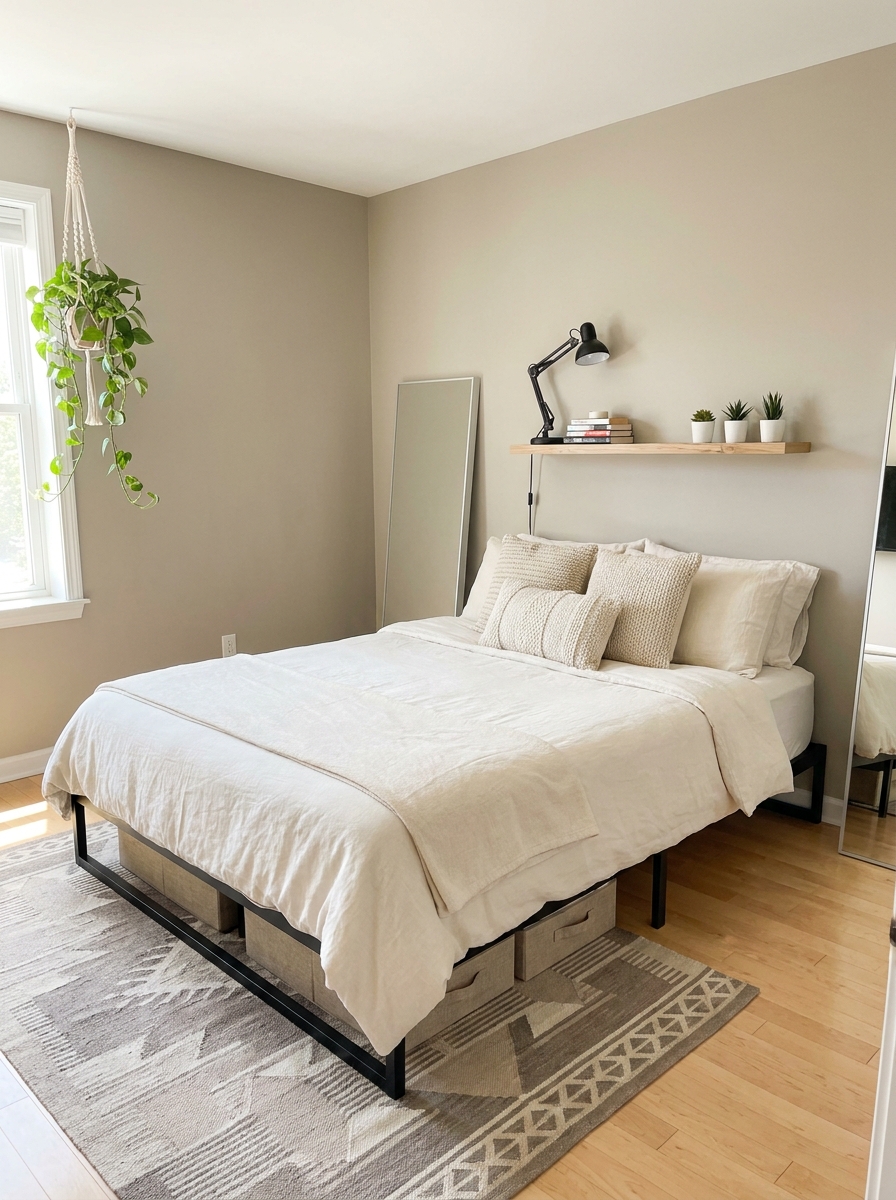
That chunky footboard might look fancy, but in a small bedroom, it’s basically a space thief.
A bed frame without a footboard instantly makes your room feel longer and less cramped. Your eye travels all the way from the headboard to the foot of the bed without hitting a visual wall. It sounds like a tiny change, but the difference is wild. The room suddenly breathes.
Go for a simple platform frame with clean lines and a low profile. You want something that hugs the floor rather than standing tall and bulky. The slimmer your frame, the more your actual mattress becomes the star—and the more your room feels open rather than furniture-packed.
Bonus: beds without footboards are way easier to make. You can toss that duvet from the end instead of fighting with a big wooden barrier. And if you ever need to perch on the edge to put on shoes? So much easier without that footboard in the way.
27. Add a Slim Ladder Shelf That Leans and Doesn’t Loom
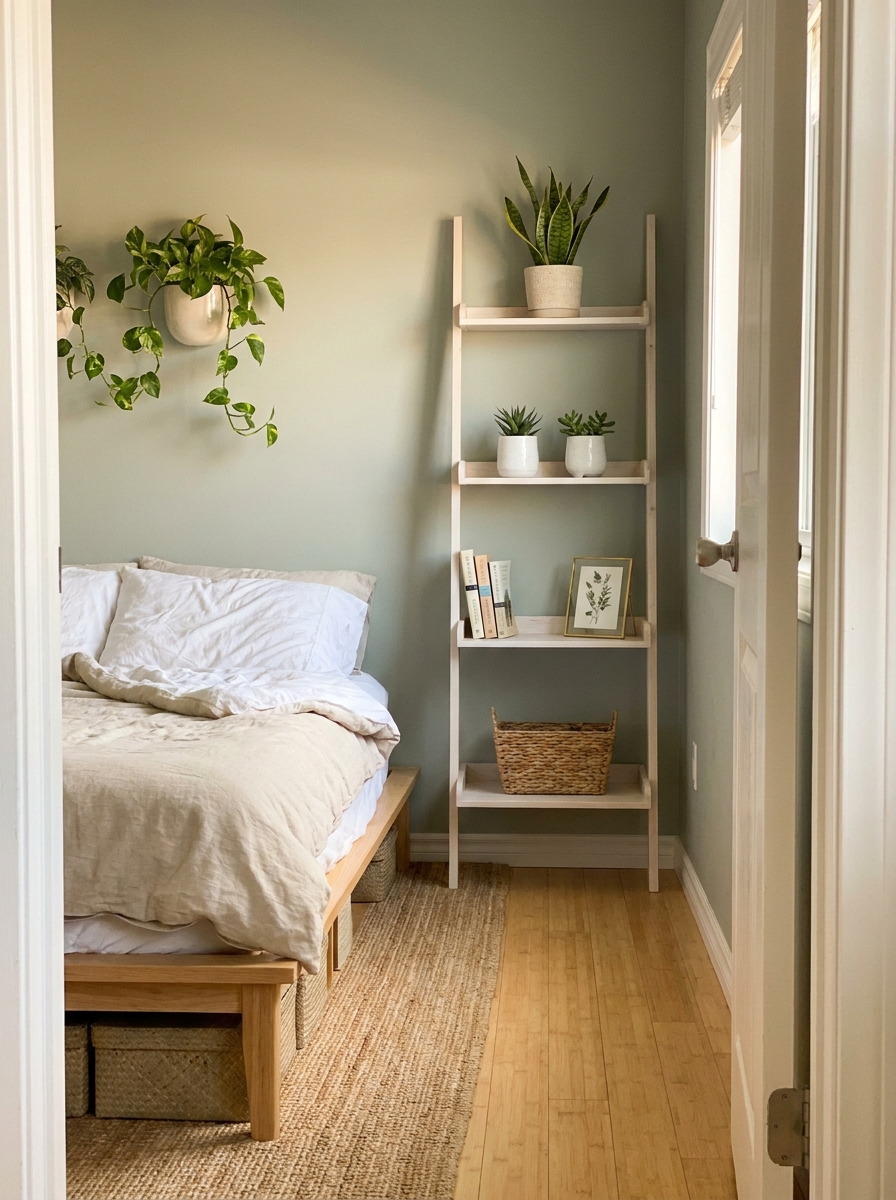
Traditional bookcases take up so much visual weight. They sit there looking heavy and permanent. But a leaning ladder shelf? It’s like storage that floats.
These shelves lean against the wall at an angle, and because they get narrower as they go up, they don’t feel like big chunky furniture. They’re perfect for small bedrooms because they give you multiple shelves without the bulk. You can stack books, plants, baskets with rolled-up scarves, whatever you need.
I especially love them in corners where a regular bookcase would feel way too imposing. The ladder design keeps everything light and airy. Plus, they’re usually pretty shallow—maybe 12 to 16 inches deep—so they don’t jut out into your walking space.
And here’s the thing: because they lean, they actually draw your eye upward, which makes your ceiling feel taller. It’s the same trick as vertical stripes. Your brain follows that diagonal line and suddenly your room feels bigger than it actually is.
28. Use Matching Storage Boxes to Fake Built-In Cabinetry
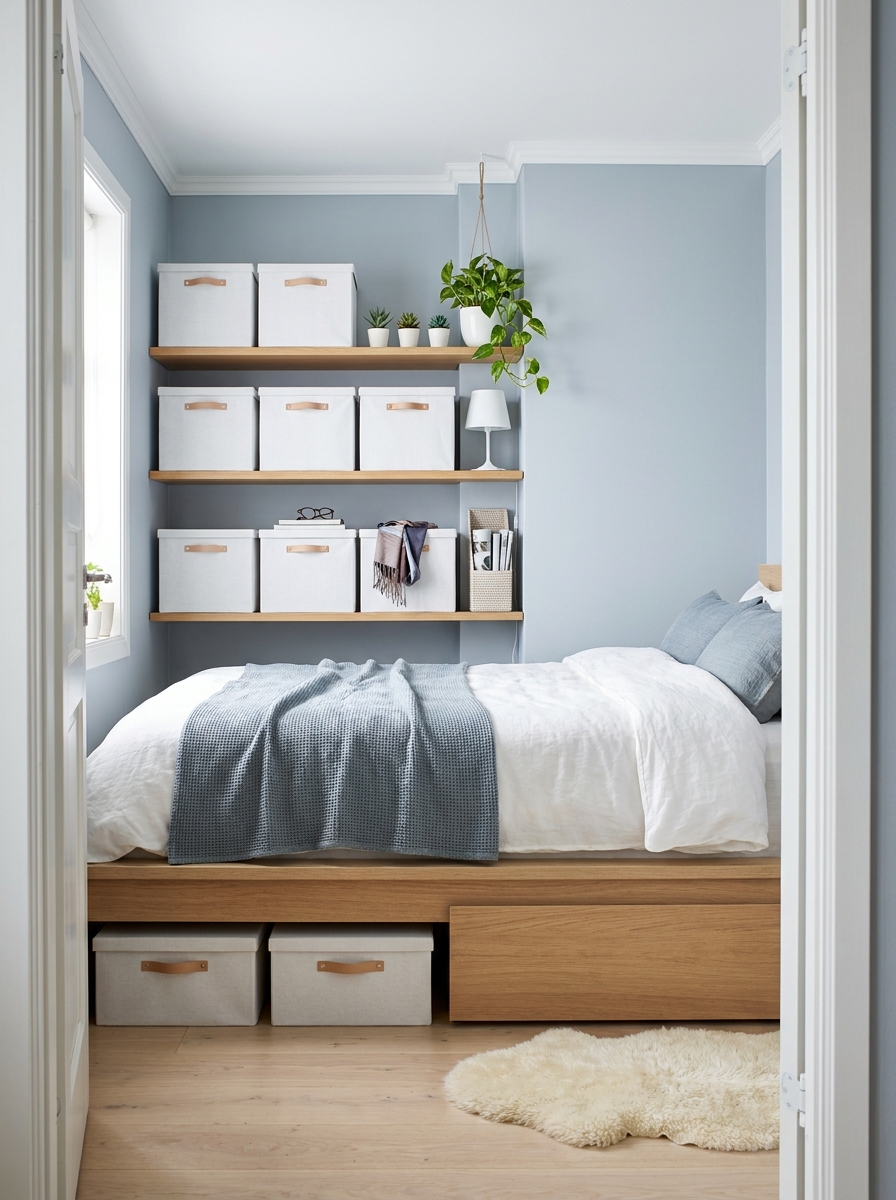
You know what makes a small room feel even smaller? A million mismatched storage solutions screaming for attention.
But when you use identical storage boxes—same color, same material, same size—suddenly your random collection of stuff looks like an intentional design choice. Stack them under a console table, line them up on open shelving, or tuck them under your bed. The uniformity creates visual calm instead of clutter chaos.
I’m obsessed with this trick because it’s so cheap and so effective. Grab a bunch of fabric bins or woven baskets in the same neutral tone. White, natural linen, light gray—whatever matches your vibe. Then use them everywhere. They’ll blend together and your eye sees one cohesive storage system instead of a bunch of random junk.
It’s like creating the illusion of custom built-ins without the construction cost or commitment. Your bedroom suddenly looks curated and intentional, even though you’re literally just hiding your sweaters in matching boxes.
29. Tuck a Slim Wardrobe Into an Awkward Corner
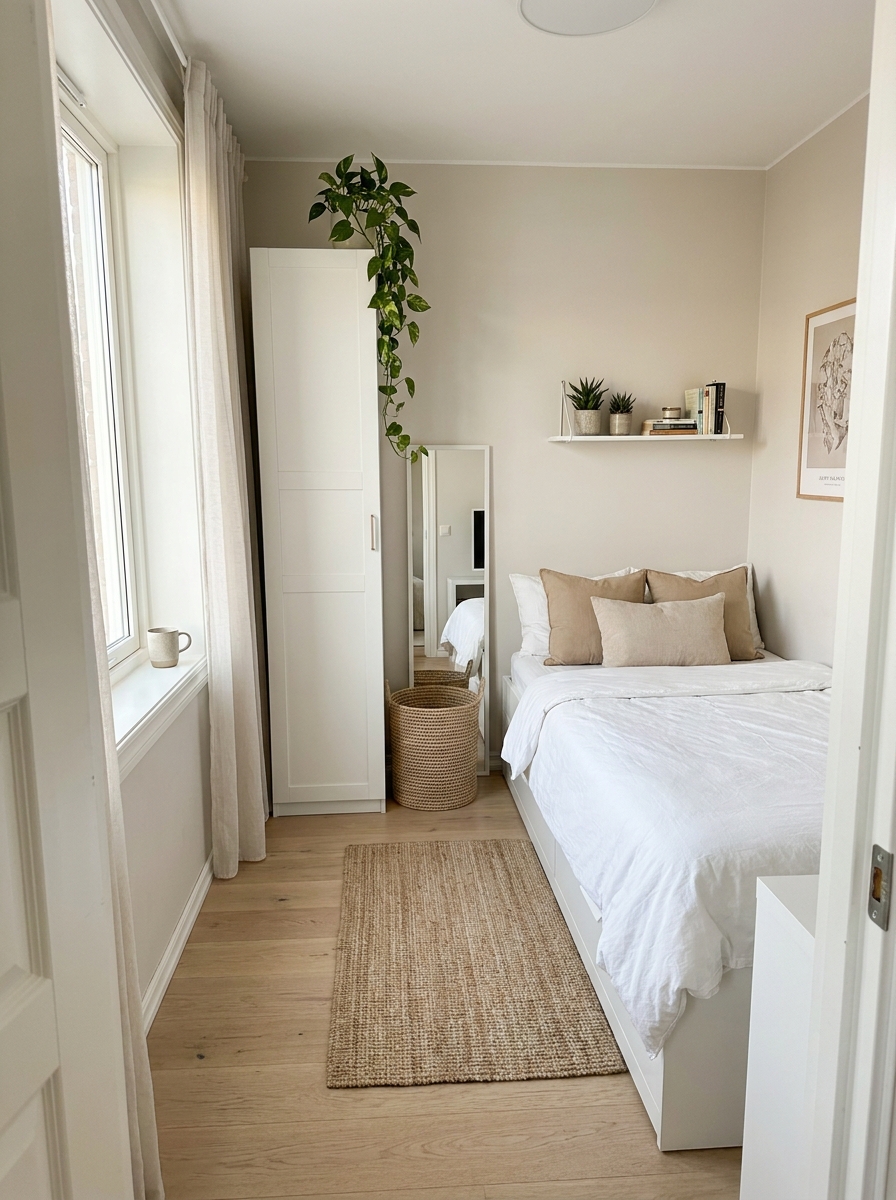
That weird corner space between your window and the wall? That’s not dead space—it’s your next closet. A tall, narrow wardrobe can slide right into those forgotten corners and give you hanging storage without eating up your whole wall.
I love armoires that are only 18-24 inches deep. They feel custom-made for tight spots but still hold plenty of clothes. Look for ones with a rod on top and shelves below, or even a built-in shoe rack at the bottom. The vertical storage means you’re not sacrificing floor space for function.
Corner pieces also pull your eye around the room instead of stopping at one flat wall. That little visual trick makes your bedroom feel bigger and more interesting. Plus, you can use the top as display space for baskets or plants—bonus storage that doesn’t look like storage. Just make sure it’s not so wide that you can’t open the doors all the way.
30. Use Under-Bed Risers to Add Instant Storage Height
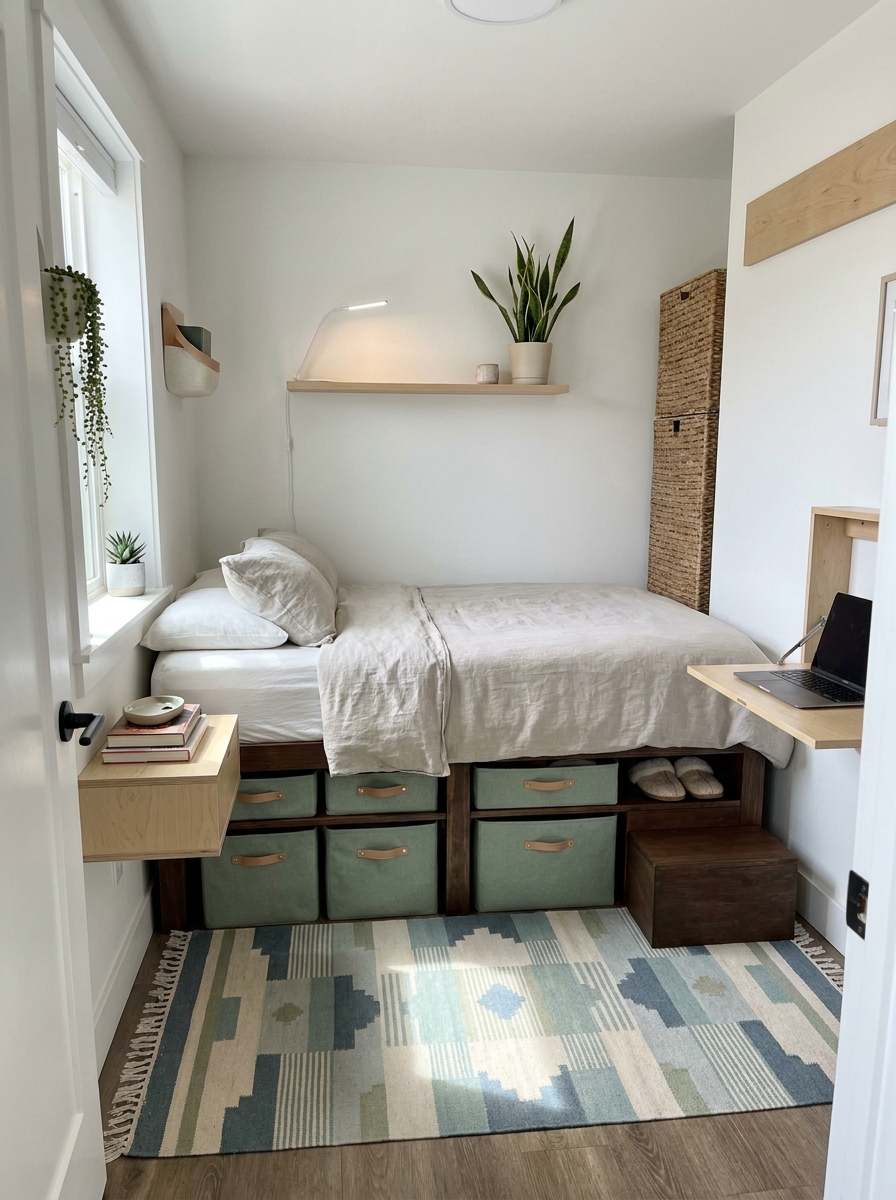
Sometimes you don’t need a whole new bed frame—you just need a few more inches underneath it. Bed risers are these magical little blocks that lift your existing bed higher, instantly creating storage space where there was none before.
I’m talking about the kind that add 5-8 inches of clearance. Suddenly you can slide storage bins, out-of-season clothes, or even a set of luggage under there. It’s hidden, it’s accessible, and it costs about twenty bucks. Just make sure you get sturdy risers that can handle the weight—cheap plastic ones can crack and send you crashing in the middle of the night.
This trick works especially well if you already love your bed frame but hate how low it sits. You get storage without changing your whole bedroom setup. And if you use matching bins or baskets underneath, it looks intentional and organized instead of like you’re hiding junk under there.
31. Mount Your TV on a Swivel Arm Instead of a Stand
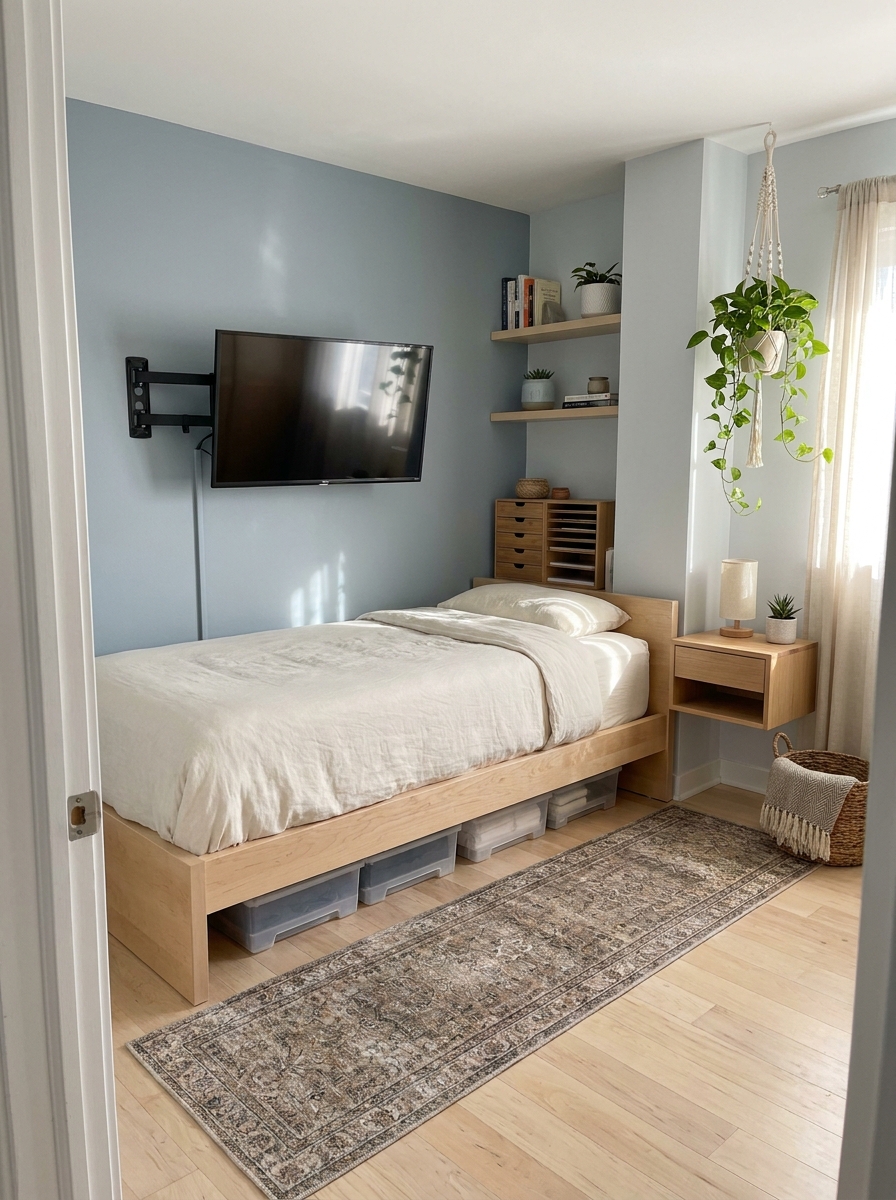
TV stands are space hogs, especially in a small bedroom where every square foot counts. A swivel wall mount lets you watch from bed, from your desk, or even while you’re getting dressed—all without surrendering precious floor space to a bulky media console.
I love the articulating mounts that pull out and swivel. You can tuck the TV flat against the wall when you’re not using it, then angle it exactly where you need it when you are. No more craning your neck or propping yourself up with seventeen pillows just to see the screen.
It also keeps your surfaces clear for the stuff you actually use daily. Instead of a TV stand collecting remote controls and dust, you’ve got room for a small dresser, a reading chair, or even just beautiful empty space. Mount it at eye level when you’re sitting in bed, and suddenly your whole room feels more streamlined and intentional.
32. Replace a Traditional Closet Door with a Tension Curtain
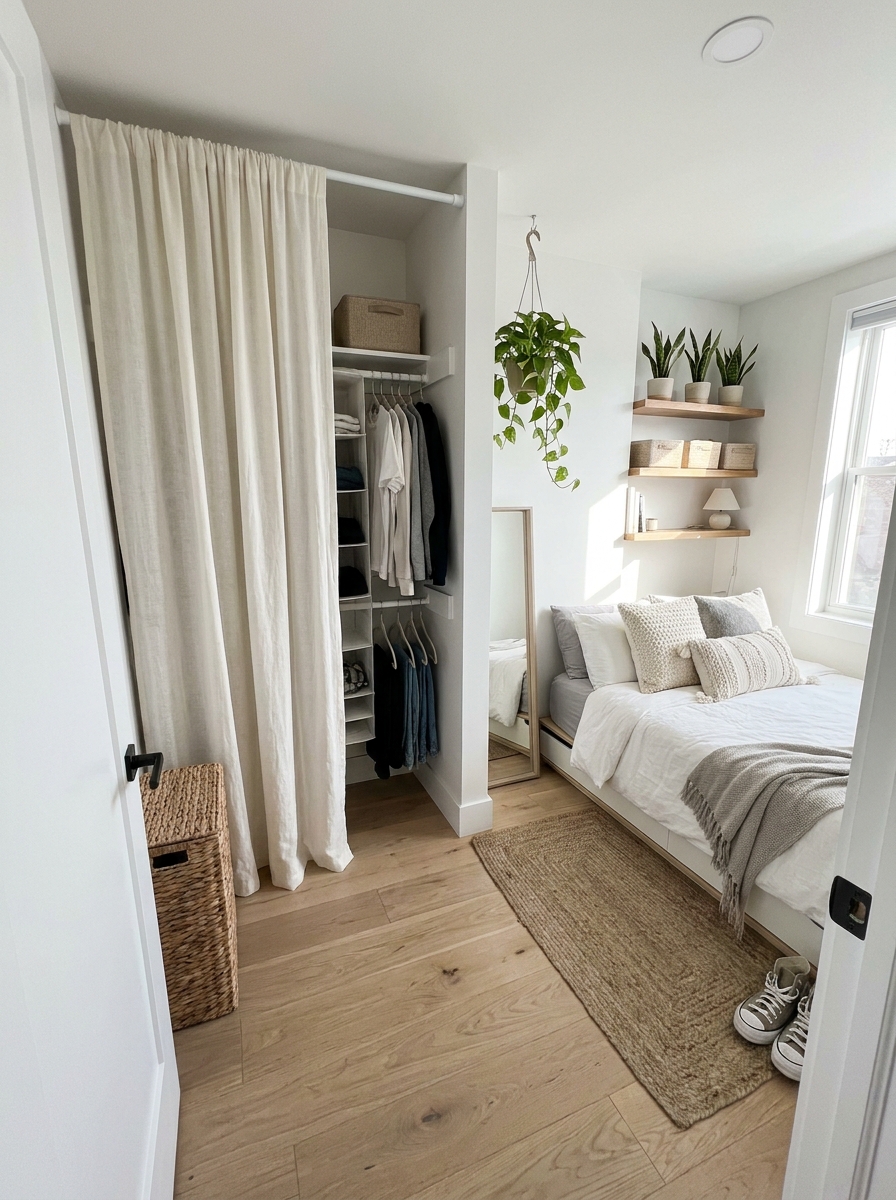
Closet doors that swing out eat up so much space you could’ve used for furniture. Sliding doors are better, but they still take up visual weight. A simple tension curtain rod with a pretty fabric panel? That’s the move.
I’ve seen this transform tiny bedrooms. You install a tension rod inside the closet opening and hang a curtain that matches your bedding or wall color. It softens the whole room, hides clutter when you need it to, and costs practically nothing. Plus, you can swap out the fabric whenever you want a new look—no tools required.
The best part is how much easier it is to access your clothes. No more fighting with a sticky sliding door or worrying about clearance space for a swinging door. You just pull the curtain aside and you’re in. It’s especially perfect for rental bedrooms where you can’t make permanent changes but still want to maximize every inch.
33. Use Acrylic Furniture to Let Light Pass Through
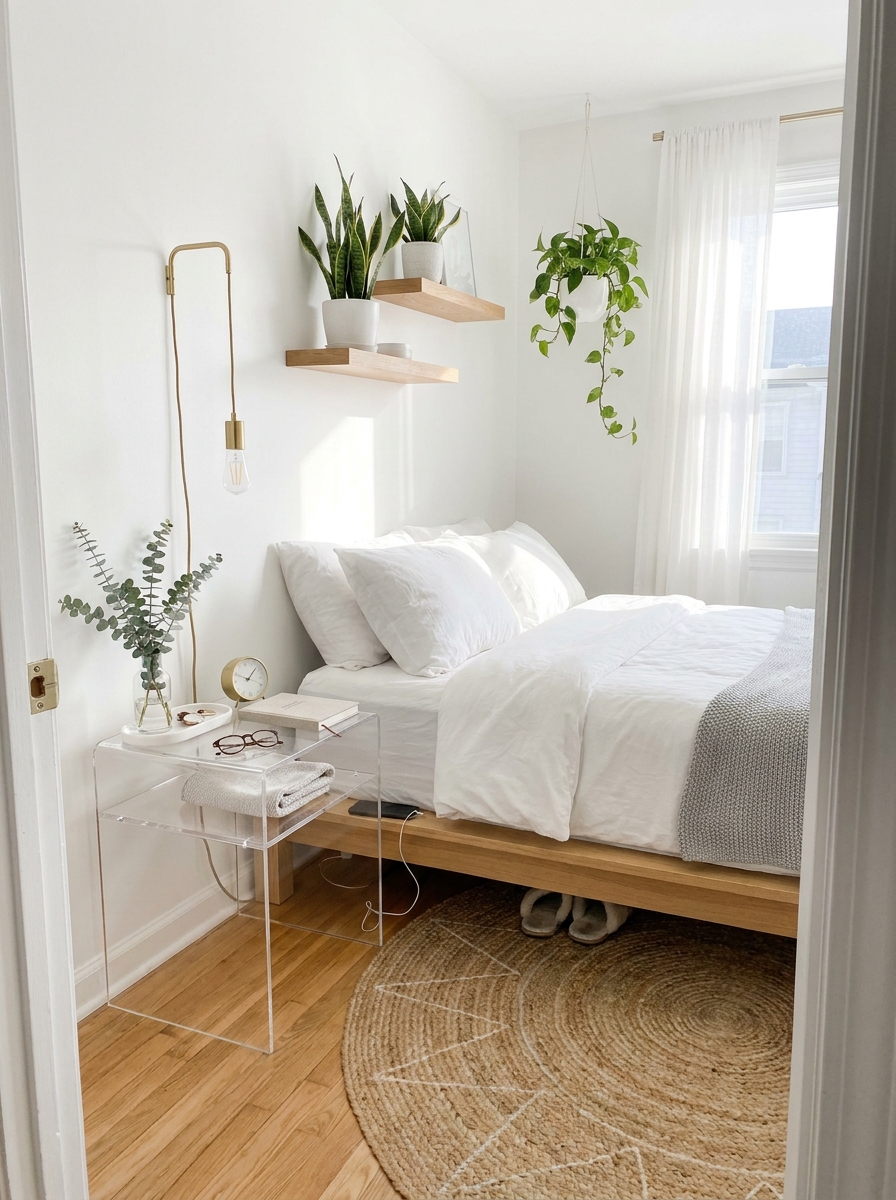
This might sound fancy, but hear me out. Acrylic or lucite furniture is basically invisible furniture. A clear acrylic chair, nightstand, or desk lets light flow right through it instead of blocking your sightlines. That makes your room feel way more open than solid wood pieces ever could.
I love this trick for small bedrooms because it gives you all the function without the visual weight. Your eye doesn’t get stopped by another bulky object. It just keeps traveling across the room, which tricks your brain into thinking there’s more space. Plus, acrylic pieces look modern and elegant without trying too hard.
You can find acrylic everything now. Nightstands, vanity stools, desk chairs, even bed frames. Start small with one piece and see how much lighter your room instantly feels. It’s like furniture that doesn’t count against your square footage.
34. Build Upward with a Lofted Sleeping Platform
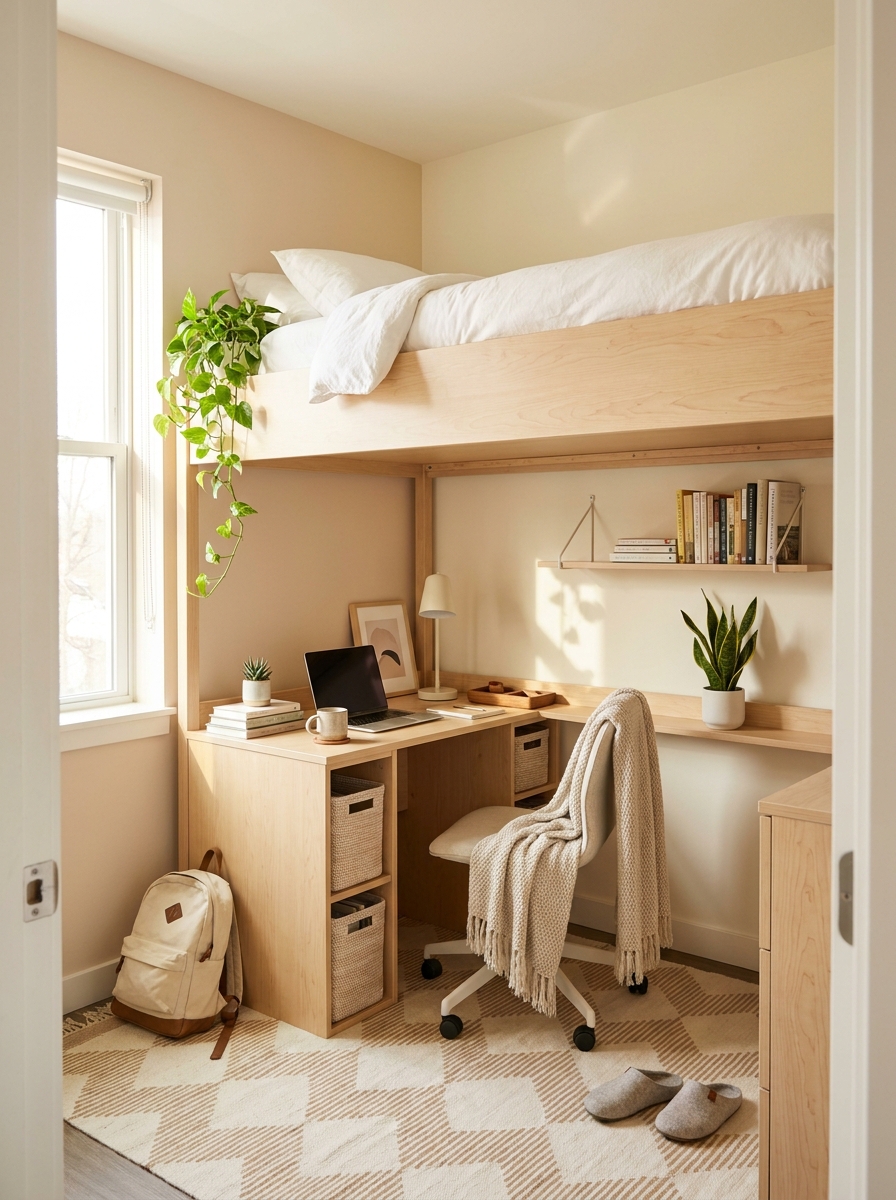
If your ceiling height allows it, a lofted bed is like adding a whole second floor to your tiny bedroom. You sleep up top and suddenly have an entire workspace, reading nook, or closet underneath. It’s basically the ultimate space hack for studio living or super small bedrooms.
I know lofted beds sound like dorm room territory, but modern versions are actually really sophisticated. Think clean-lined wooden platforms with built-in ladders and underneath areas that look like actual furnished rooms. You can tuck a desk, a cozy chair, open shelving, or even a mini closet system below.
This setup works best if you have at least nine-foot ceilings and don’t mind climbing a ladder every night. But the payoff is huge. You essentially double your usable floor space without moving walls or sacrificing comfort. Just make sure you install really good reading lights up top!
35. Create a False Wall Headboard with Secret Storage Behind It
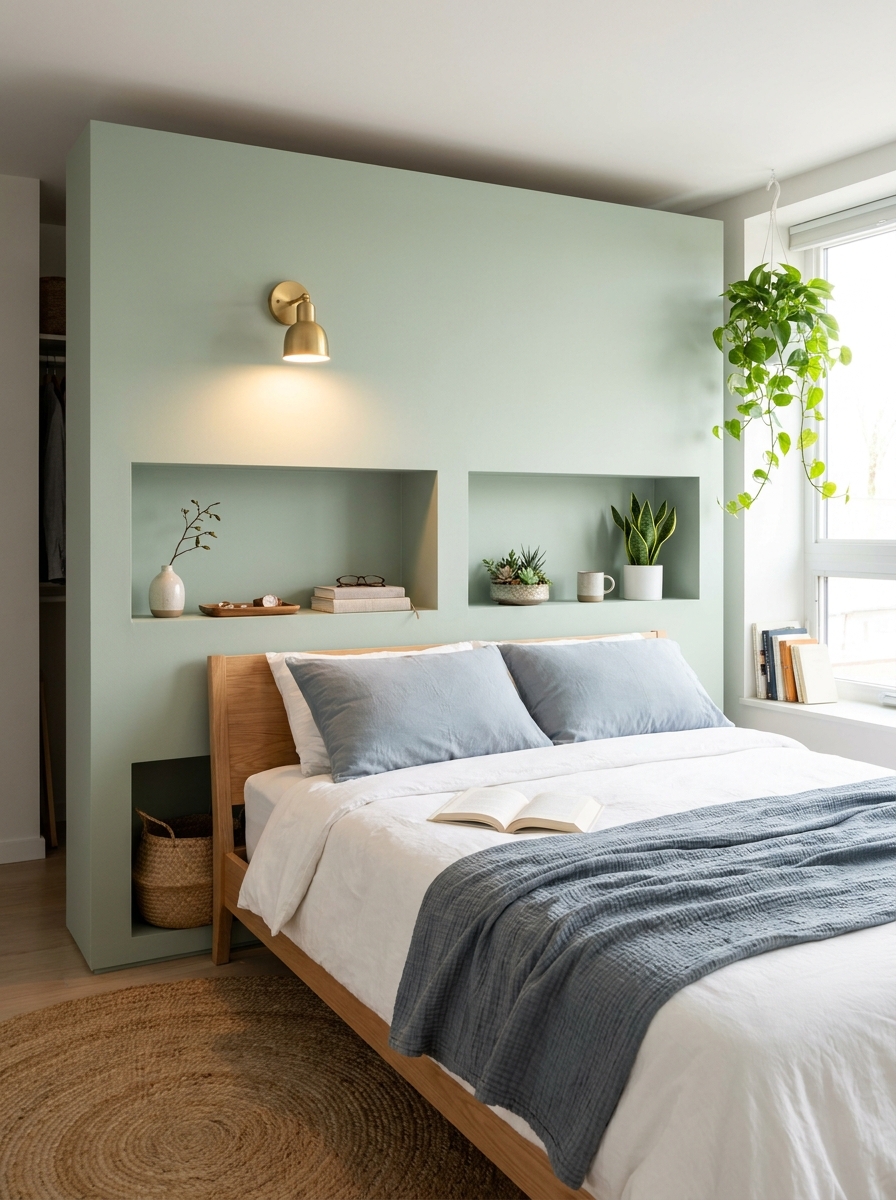
Here’s a sneaky one. Build a short false wall behind your bed that creates a freestanding headboard. The genius part? The space behind that wall becomes hidden storage for all your seasonal stuff, luggage, or anything you don’t need daily access to.
This works especially well in super narrow bedrooms where you can’t fit nightstands on both sides. The false wall headboard gives you that pulled-together look while secretly carving out storage space that would otherwise go unused. Paint it the same color as your walls and it blends right in.
You can make the false wall any height. Stop it at headboard height for a clean modern look, or take it all the way to the ceiling for maximum hidden storage. Either way, you get a custom built-in feel without the built-in price tag. Your stuff disappears and your room looks bigger.
Quick Guide
## Small Bedroom Budget Breakdown
Not sure where to spend and where to save? Here’s what actually matters:
Under $50: Bed risers, floating shelves, under-bed storage bins, slim hangers to maximize closet space
$50–$200: Floating nightstands, ladder shelving units, wall-mounted hooks and racks, curtain rods and light-filtering curtains
$200–$500: Storage bed frame with drawers, narrow dresser, large mirror to bounce light, quality bedding that feels luxe
$500+: Custom closet systems, murphy bed or loft bed frame, built-in shelving
Start with the free stuff first—declutter ruthlessly and rearrange what you already own. Then invest in one or two key pieces that do double duty. You don’t need to buy everything at once. Small bedrooms get better in layers.
Your Small Bedroom Can Actually Breathe
Small bedrooms aren’t a design curse. They’re just a different kind of challenge, and honestly? Some of the coziest, most personal spaces I’ve ever seen have been tiny. There’s something about working with limits that forces you to get creative and intentional.
You don’t need a bigger bedroom. You need smarter furniture, vertical thinking, and a willingness to let go of stuff that’s just taking up space. Every single idea in this list works because it either creates storage where there wasn’t any, or it tricks your eye into seeing more room than actually exists.
Start with one or two changes that feel doable. Maybe it’s raising your bed and sliding bins underneath. Maybe it’s swapping your chunky nightstand for a floating shelf. Small wins add up fast in a small bedroom.
And remember, the goal isn’t to make your room look like a magazine spread. It’s to make it work for your actual life. A small bedroom that feels calm, organized, and like it’s actually yours? That’s the real win.
Frequently Asked Questions
How can I make my small bedroom look bigger without painting?
Focus on vertical storage to draw the eye upward, use mirrors to reflect light and create depth, and keep the floor as clear as possible with wall-mounted furniture. Decluttering is your best friend—less visual noise makes any room feel more spacious. Light, airy curtains instead of heavy drapes also help the room breathe.
What size bed is best for a small bedroom?
A full or queen bed works for most small bedrooms, but measure your room first. You need at least 24 inches of walking space on each side of the bed and at the foot. If your room is truly tiny, a twin or twin XL might be smarter. Choose a bed frame with built-in storage to maximize functionality without taking up extra floor space.
How do I organize a small bedroom with no closet?
Use a freestanding clothing rack or armoire as your main storage, and add wall-mounted hooks for daily-wear items. Under-bed storage is crucial for off-season clothes and shoes. Floating shelves can hold folded items, and over-the-door organizers work wonders for accessories. Think vertical and make every piece of furniture do double duty.
What colors make a small bedroom feel more spacious?
Light, neutral colors like soft white, pale gray, warm beige, and gentle blues reflect more light and make walls recede visually. That said, you can absolutely use darker colors if you love them—just balance them with light bedding, mirrors, and good lighting. The key is keeping the overall palette cohesive so the eye flows smoothly around the room.
Should I put a dresser in a small bedroom?
Only if you have the floor space and don’t have a storage bed. A tall, narrow dresser takes up less floor area than a wide, short one. But honestly, if you can store clothes under your bed or in a closet system, skip the dresser entirely. Use that precious floor space for breathing room instead.