20 Gorgeous Furniture Layouts to Love Your Small Living Room
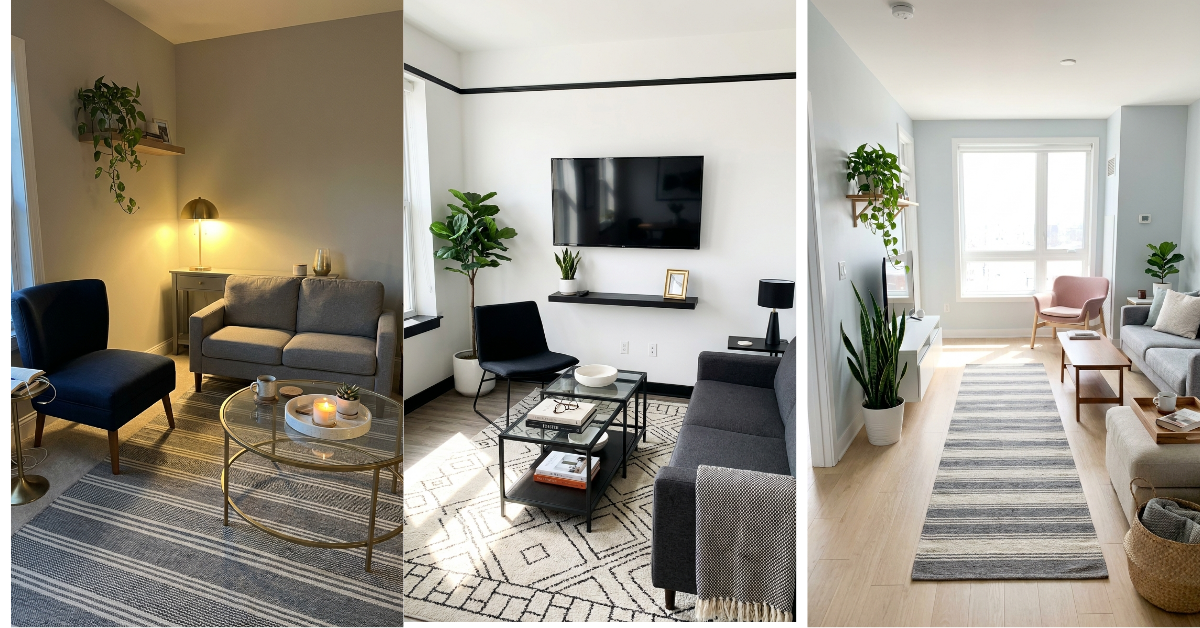
You stare at your small living room and wonder how everyone else makes it look so effortless on Pinterest. The sofa feels too big. The coffee table blocks the walkway. And don’t even get started on where to put that armchair you love but can’t quite fit anywhere.
Here’s the thing: arranging furniture in a small living room isn’t about cramming everything in and hoping for the best. It’s about being strategic with what you have and where you put it. A few smart moves can completely change how your space feels—more open, more functional, way more you.
I’m sharing 20 furniture layout ideas that work in real apartments and real homes. Not magazine spreads. These are the tricks that actually make a difference when you’re working with limited square footage but unlimited dreams. Let’s get into it.
1. Float Your Sofa Away from the Wall
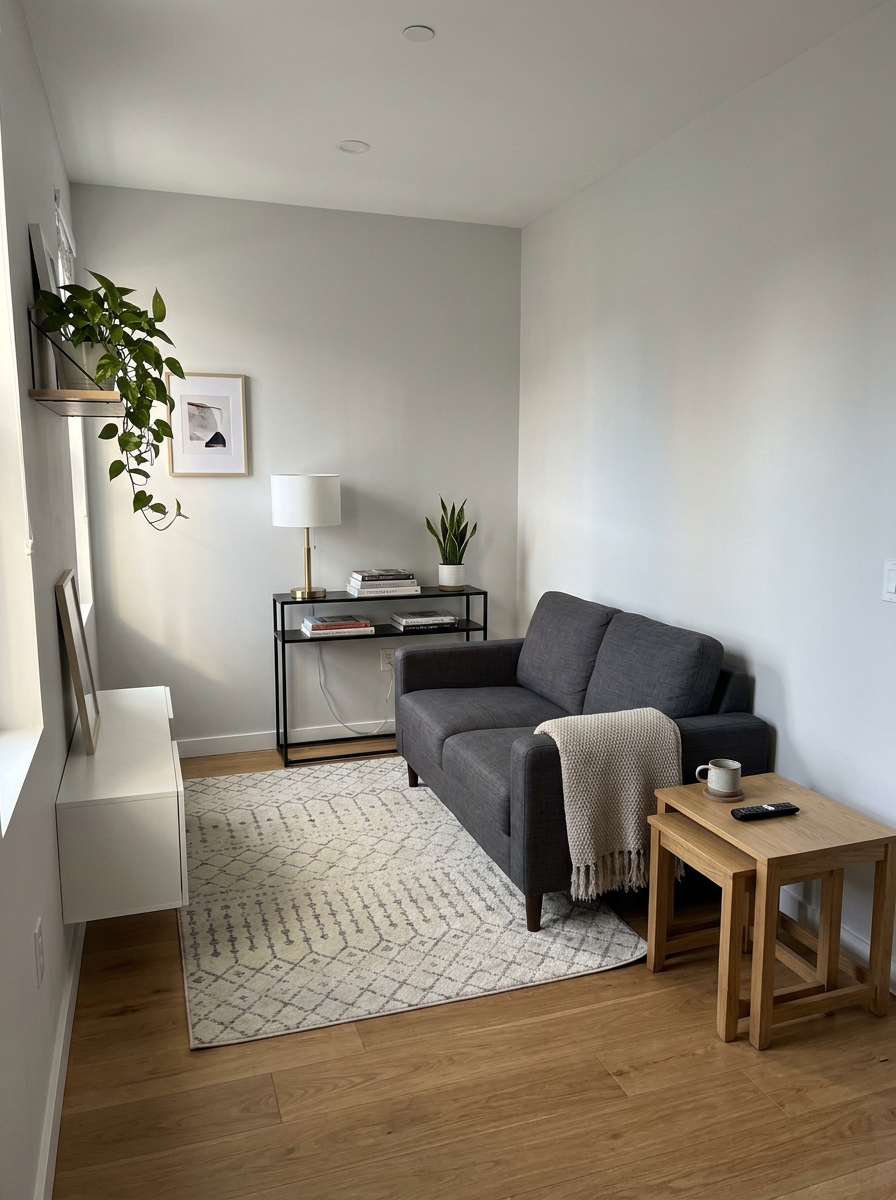
This one feels counterintuitive, right? When you’re short on space, your first instinct is to shove everything against the walls. But pulling your sofa even just 12 inches away from the wall creates the illusion of more room. It makes the space feel intentional instead of cramped.
The trick is using that gap behind the sofa. Add a narrow console table back there with a lamp and some books. Suddenly you’ve got a styled moment and extra surface space without eating up your floor plan. Plus, it creates a natural traffic flow around the furniture instead of making everyone shuffle along the walls.
This works especially well in studio apartments where you need to visually separate your living area from your sleeping space. That floating sofa becomes an anchor point that defines the room without blocking sightlines. You’ll be amazed how much airier everything feels.
2. Create Zones with an Area Rug
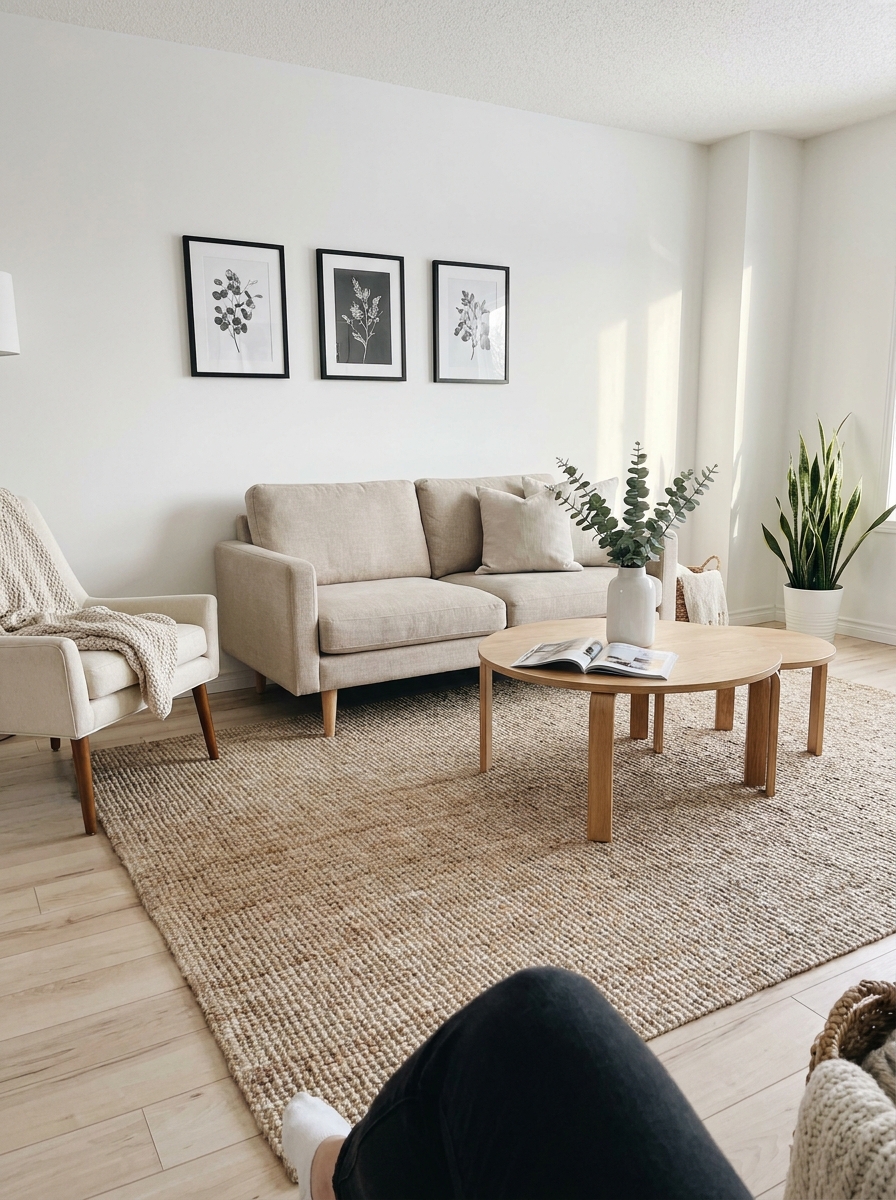
Area rugs are basically magic when you’re dealing with a small living room. They don’t just look pretty—they actually define your seating area and make the room feel purposeful. The key is getting the size right. Too small and your furniture looks like it’s floating awkwardly. Too big and the room feels even tinier.
Aim for a rug where at least the front legs of your sofa and chairs sit on it. This pulls everything together visually and creates a cohesive conversation zone. In a really tight space, even a 5×7 can work if you position it thoughtfully. The rug creates boundaries without putting up actual walls, which is especially helpful in open-concept spaces.
And here’s something people don’t talk about enough: the right rug can actually make your room look bigger. Light colors and simple patterns keep things feeling open. A jute or flatweave rug adds texture without visual weight, which is exactly what you want when every square foot counts.
3. Choose a Loveseat Over a Full Sofa
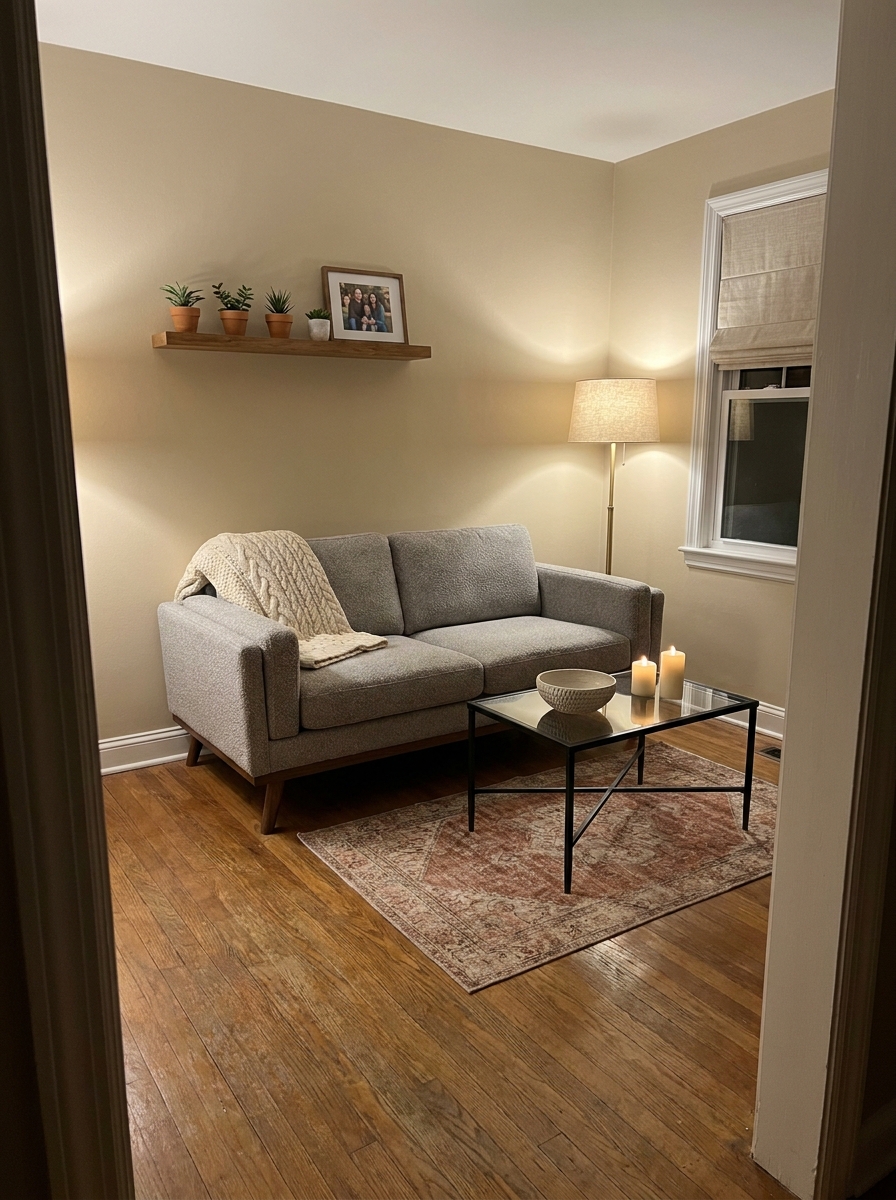
Sometimes the solution is simpler than you think. A loveseat instead of a full-size sofa can be the difference between a room that breathes and one that suffocates. We’re talking about saving 2-3 feet of length, which in a small living room is absolutely massive.
You’re not sacrificing comfort—you’re being realistic about how you actually use the space. Most loveseats comfortably seat two people, and let’s be honest, that’s usually plenty. The bonus square footage lets you add that accent chair you’ve been eyeing or leaves room for an actual walkway that doesn’t require turning sideways.
Look for loveseats with exposed legs rather than skirted bases. Those visible legs create negative space underneath that makes the whole piece feel lighter and less imposing. Bonus points if you find one with a low or minimal back—it won’t block sightlines across the room.
4. Use Nesting Tables for Flexibility
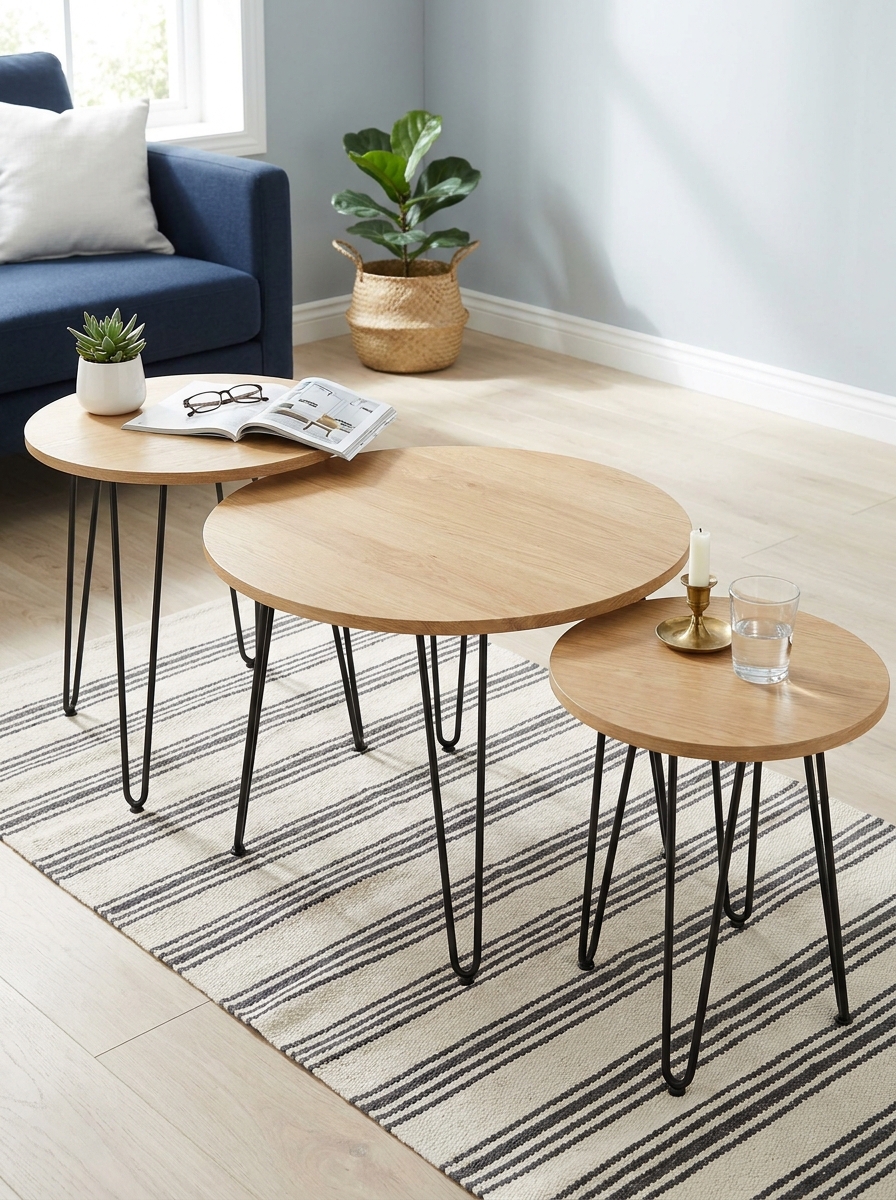
Nesting tables are the Swiss Army knife of small living room furniture. When you need extra surface space for drinks or snacks, pull them out. When you need floor space back, tuck them together. This kind of flexibility is gold when you’re working with limited square footage.
They’re perfect as coffee tables because you can adjust based on what you’re doing. Movie night? Push them together for a bigger surface. Hosting friends? Spread them around the room so everyone has a spot for their wine glass. The visual lightness of smaller separate tables also makes the room feel less cluttered than one bulky coffee table.
Go for nesting tables with slim profiles and open bases. Glass tops or light wood keeps things feeling airy. Metal frames add an elegant touch without visual weight. And the best part? When company leaves, you can stack them back together and reclaim that precious floor space for your Tuesday night yoga sessions or whatever you actually do in your living room when no one’s watching.
5. Mount Your TV to Save Floor Space
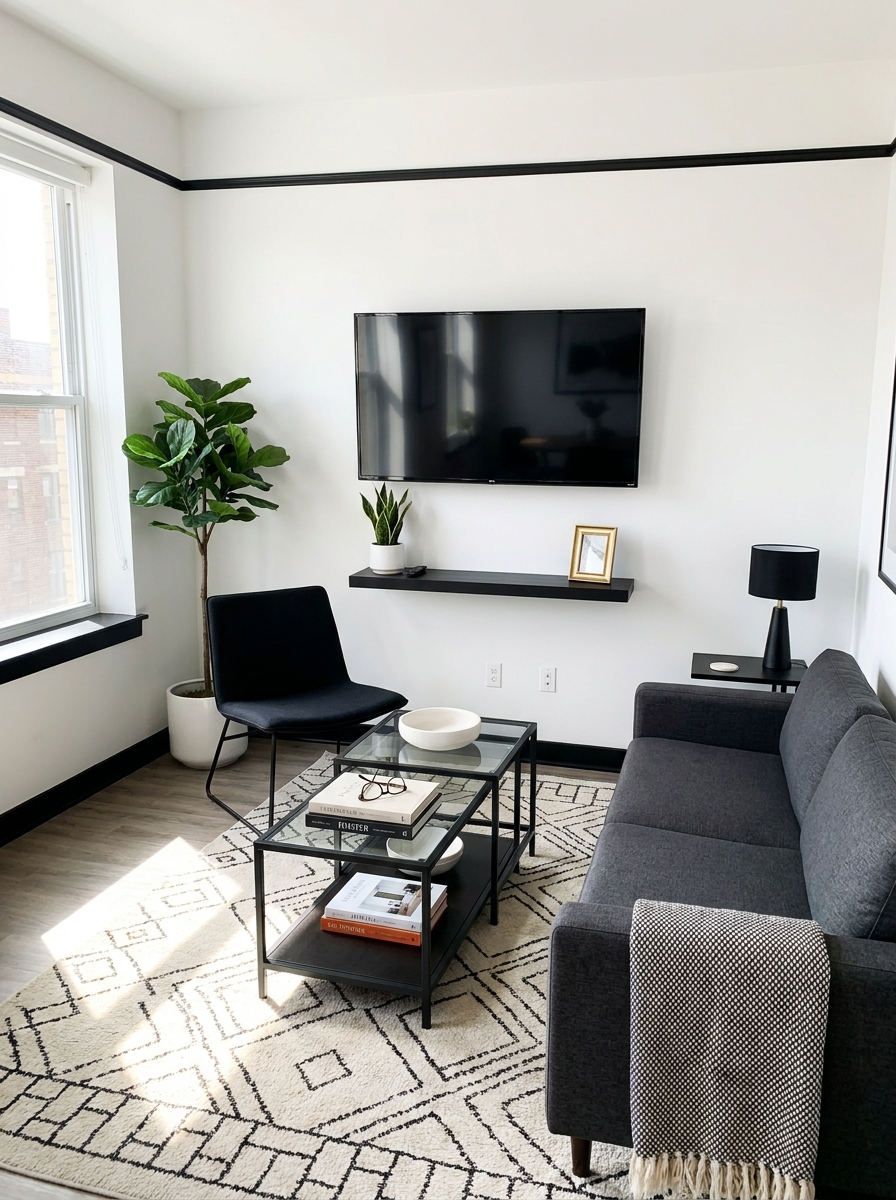
Here’s a game-changer that frees up so much room! Wall-mounting your TV eliminates the need for a bulky media console that eats up precious square footage. You instantly gain back that entire footprint for other furniture or just better flow.
I mounted mine about eye-level when seated, and wow, what a difference. The room feels so much more open without that big cabinet anchoring the wall. Plus, you can add a slim floating shelf underneath for your streaming devices and remotes without taking up floor space.
If you’re renting or can’t drill into walls, look into tension-mounted TV stands that go floor-to-ceiling. They’re surprisingly stable and give you that same space-saving benefit. The key is getting your entertainment center off the floor and vertical. Your small living room will breathe easier, and you’ll have more flexibility with your furniture arrangement since you’re not locked into placing everything around a heavy TV stand.
6. Swap a Coffee Table for an Ottoman
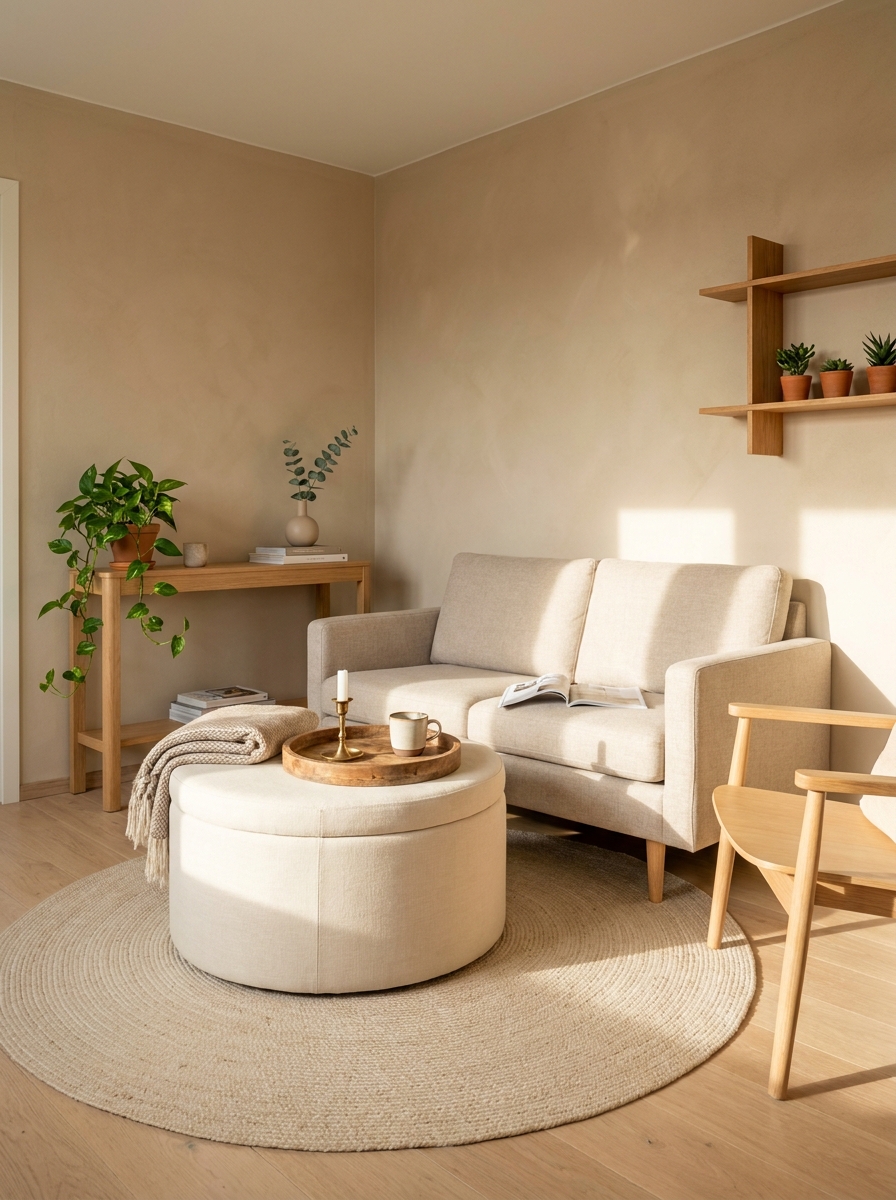
This is one of those switches that sounds small but makes a huge impact! An ottoman gives you the same surface space as a coffee table but with way more flexibility. You can move it around easily, tuck it under a console when you need floor space, or pull it out for extra seating when friends come over.
I love that ottomans have soft edges, so there’s no shin-banging when you’re navigating a tight space. And honestly? They just feel cozier. Toss a tray on top when you need a solid surface for drinks or remotes, then remove it when you want to put your feet up.
Look for one with hidden storage inside and suddenly you’ve got a place to stash throws, magazines, or all those random things that clutter up small spaces. It’s furniture that works triple-duty, which is exactly what you need when square footage is tight. Plus, you can slide it right up against your sofa when you’re not using it, completely opening up the room.
7. Position Furniture at Angles for Better Flow
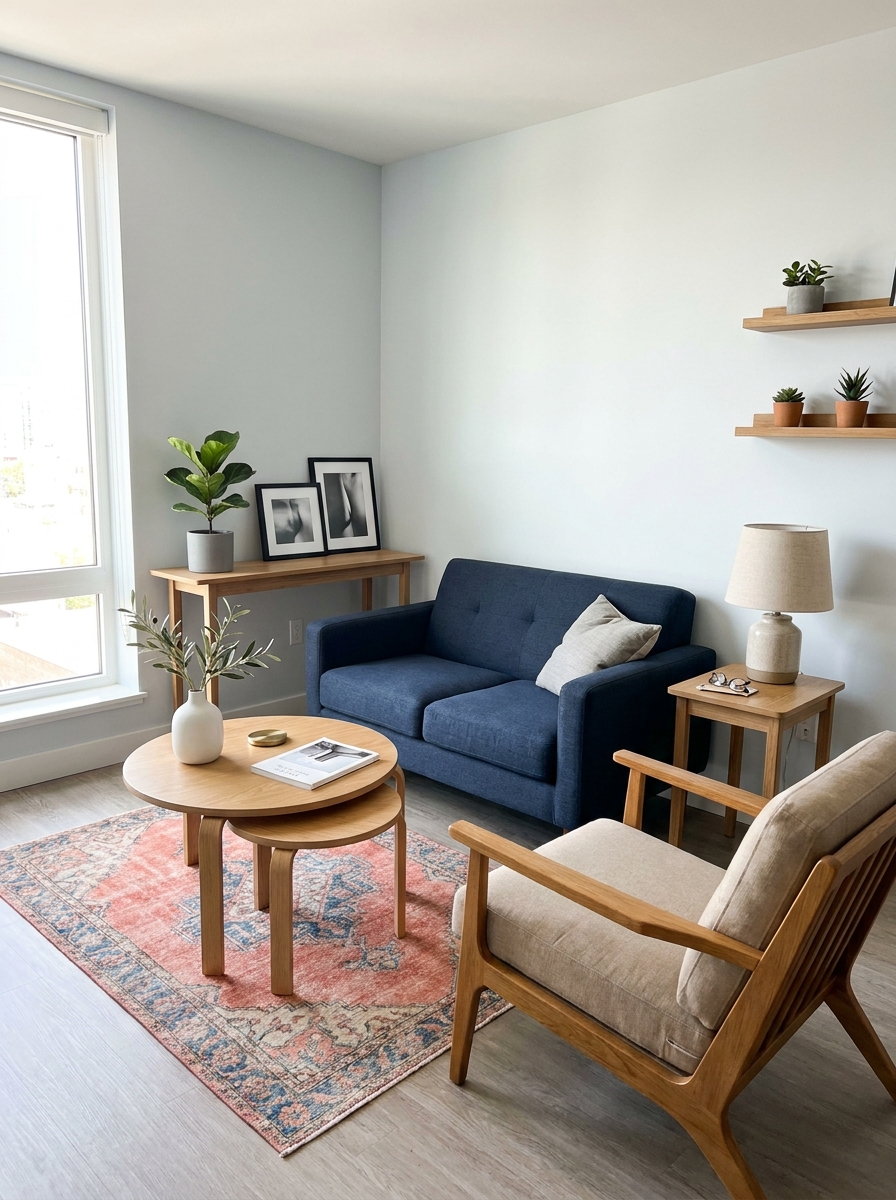
I know it seems counterintuitive, but angling your furniture can actually make a small room feel bigger! Instead of shoving everything flush against the walls, try floating a chair or sofa at a slight angle. It creates more interesting sightlines and breaks up that boxy, cramped feeling.
When I angled my reading chair in the corner, it instantly made the room feel more dynamic. The diagonal lines trick your eye into seeing more space, plus you create these cozy little pockets that make the room feel purposeful rather than just crowded.
This works especially well in square rooms that feel static. Just a 15-degree angle on one piece can completely change the energy. You’re also naturally creating better conversation areas because angled furniture encourages people to face each other rather than sitting in a rigid line. Just make sure you’re not blocking major walkways. The goal is graceful flow, not an obstacle course.
8. Use Armless Chairs to Save Visual Weight
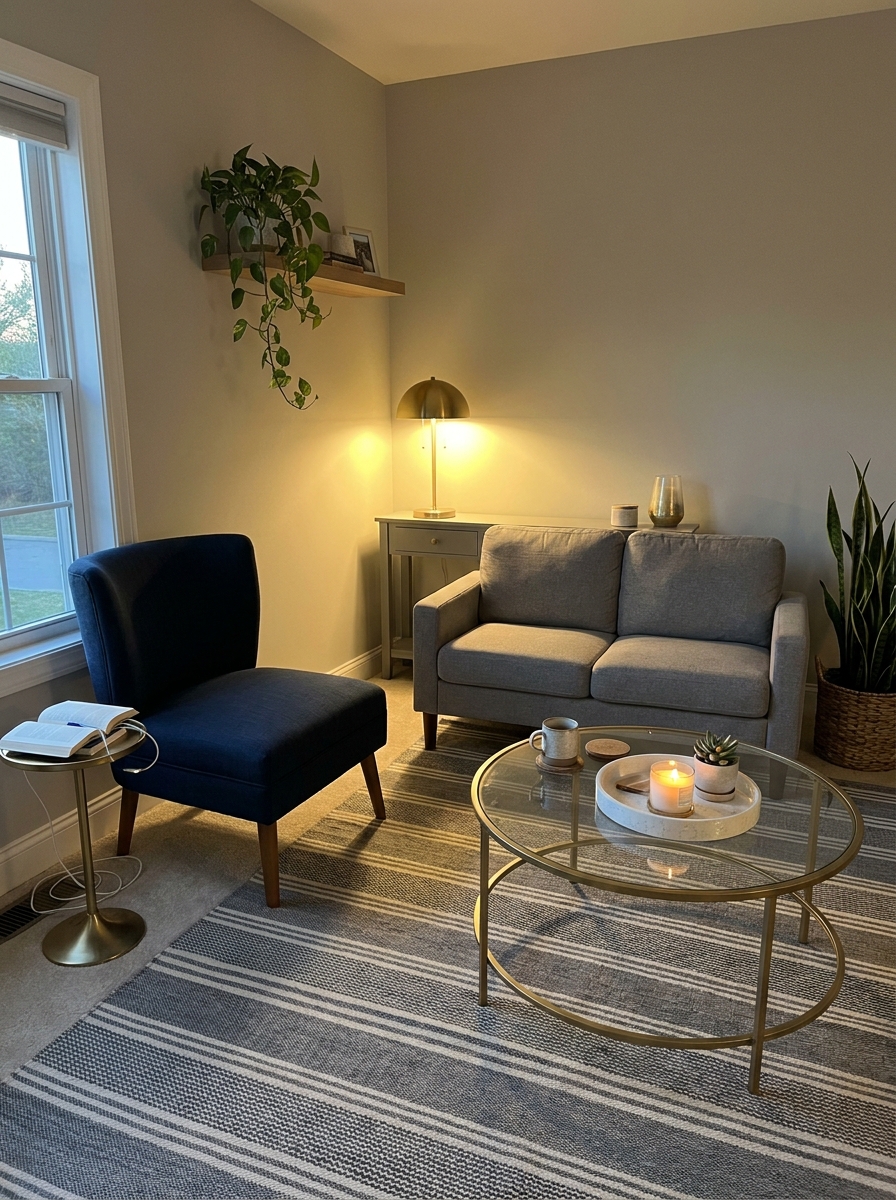
Arms on chairs take up more space than you think, both physically and visually! Switching to armless chairs or slipper chairs can save you 6-8 inches on each side, which is huge in a small living room. And honestly, they just look lighter and airier.
I added an armless accent chair to my tiny living room and couldn’t believe the difference. It provides the same seating but doesn’t feel like it’s crowding the space. You can tuck it closer to other furniture without that awkward arm-to-arm bulk, and it’s so much easier to move around when you need to.
These chairs are perfect for tight corners or as extra seating that doesn’t overwhelm. They also work beautifully in front of windows because they don’t block the light or view. Look for ones with exposed legs rather than skirted bases to keep that light, open feeling going. The more floor you can see underneath your furniture, the bigger your room will feel.
9. Place a Console Table Behind Your Sofa
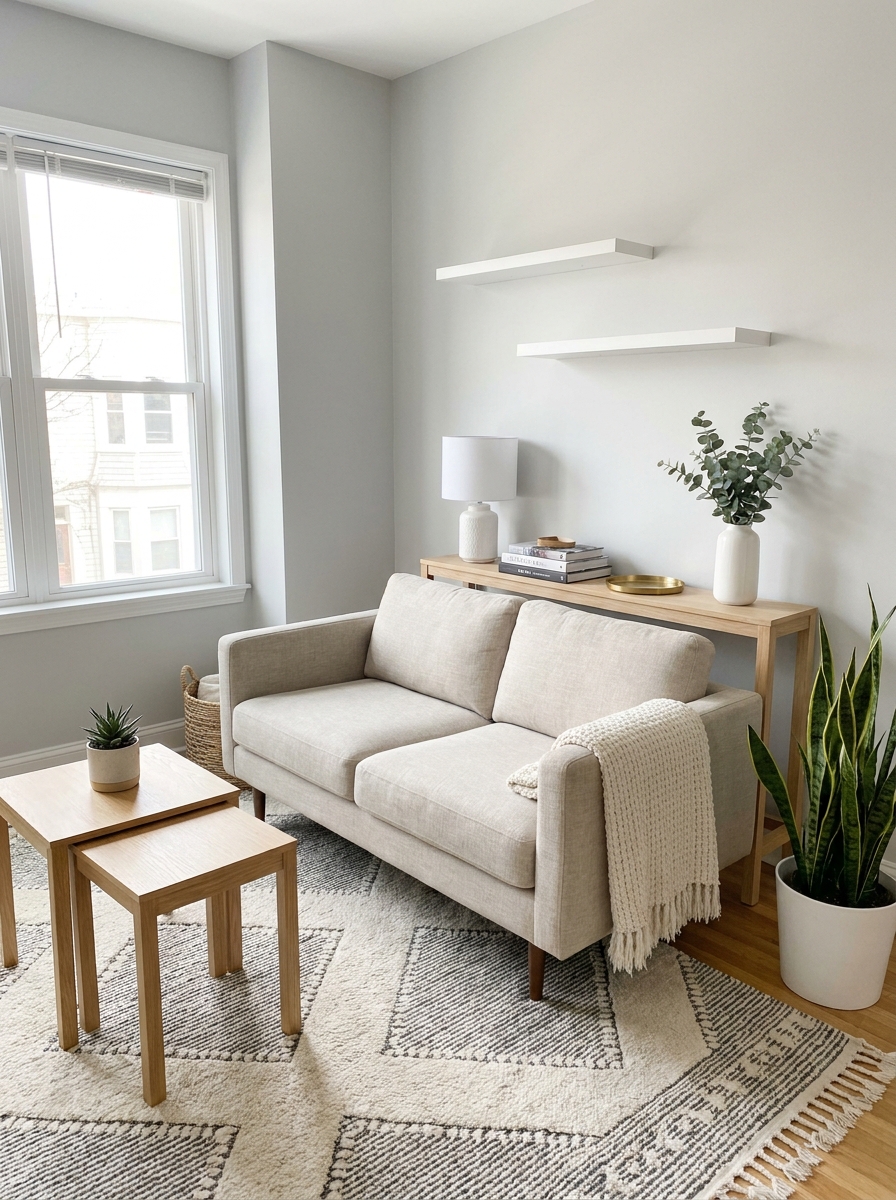
This is one of my absolute favorite tricks for tiny spaces! A narrow console table tucked behind your sofa creates instant bonus surface area without eating up extra floor space. It’s such a smart way to squeeze function out of every single inch.
I love using mine for lamps, which frees up my side tables completely. You can also style it with books, a little tray for your phone and remote, or even turn it into a mini bar setup. The best part? It gives you somewhere to set things without cluttering your coffee table.
Look for consoles that are no deeper than 10-12 inches so they don’t stick out awkwardly. And here’s the thing—this only works if your sofa is floating away from the wall. If your couch is pushed against the wall, you’ll need to pull it forward about a foot to make room. Trust me, it’s worth losing that foot of floor space for all the function you gain!
10. Keep One Side of the Room Open
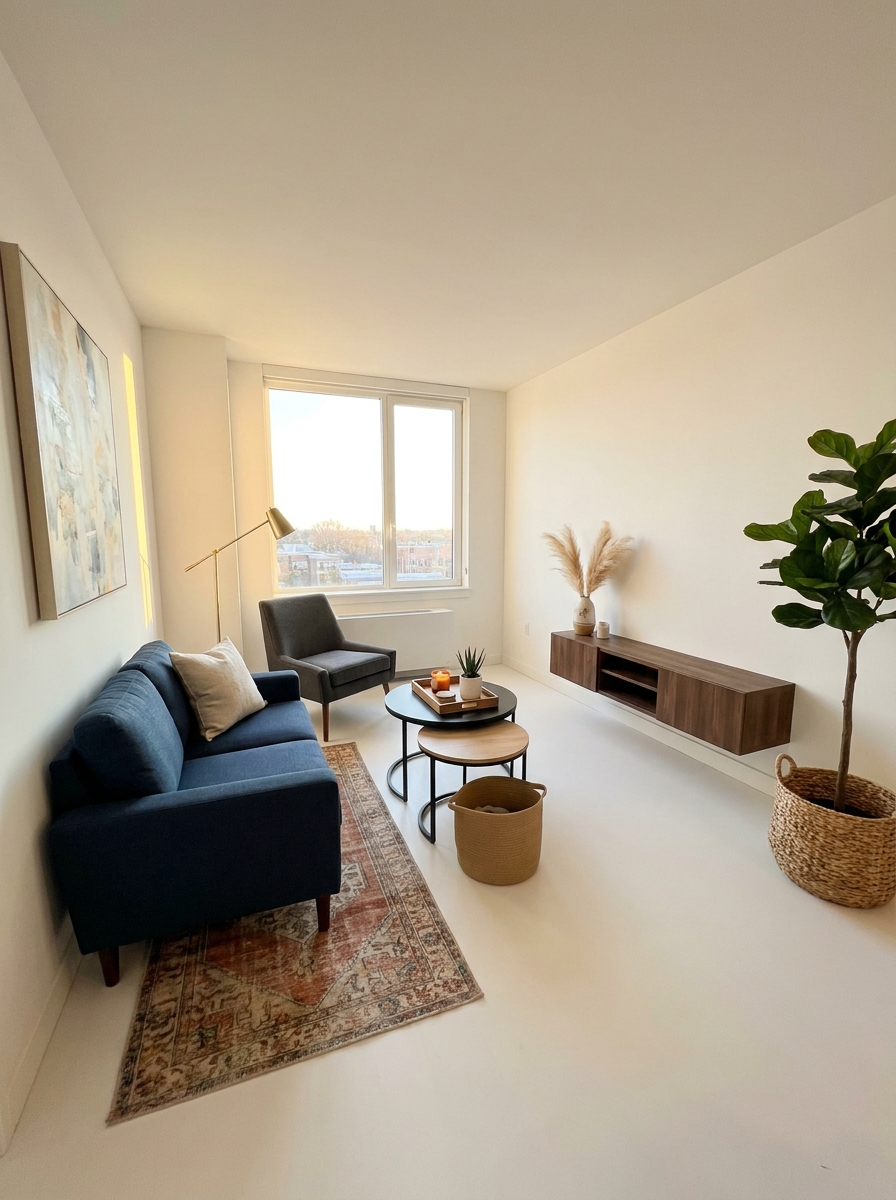
I see this mistake all the time—people try to cram furniture on every single wall, and suddenly the room feels like a furniture showroom. The secret? Leave one side of your living room completely open. No furniture, no clutter, just breathing room.
This creates what designers call negative space, and it makes your entire room feel twice as big. Your eye needs somewhere to rest! When you pack furniture everywhere, your brain registers the room as cramped even if you technically have walking space.
I usually keep the wall opposite my sofa open, maybe with just one tall plant or a piece of art. It makes the room feel so much more intentional and grown-up. Plus, it gives you flexibility when you need floor space for yoga, playing with kids, or just sprawling out with a book on a Sunday afternoon.
11. Anchor with Properly Sized Rugs
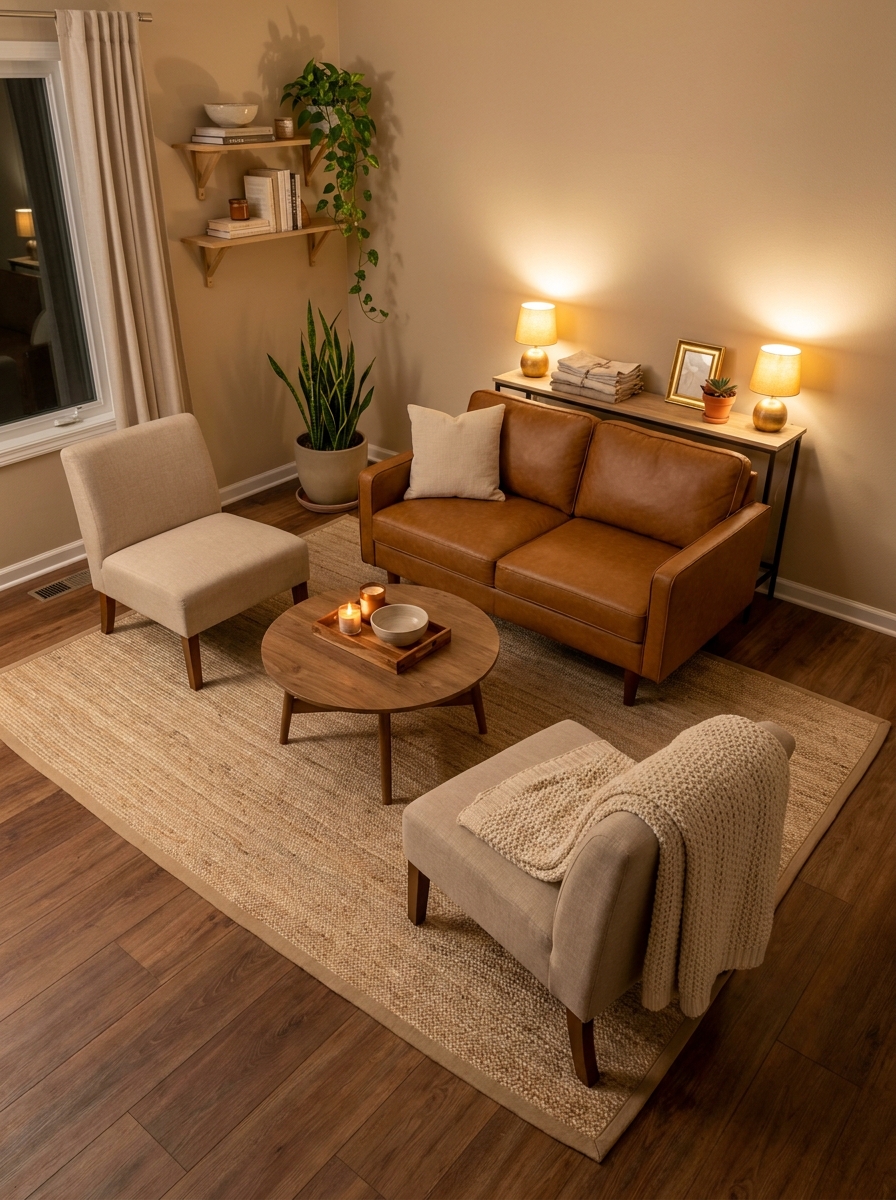
Oh, the rug mistakes I’ve made over the years! Here’s what I finally learned: in a small living room, your rug size matters more than almost anything else. Too small, and everything looks disconnected. Too big, and the room feels even tinier.
The magic formula? All your furniture’s front legs should fit on the rug. Not the whole sofa, just the front legs. This creates one cohesive zone without overwhelming your limited floor space. A 5×7 or 6×9 rug usually hits the sweet spot for most small living rooms.
And please, skip those tiny 3×5 accent rugs that float in the middle of nowhere! They chop up your floor space and make everything feel smaller. I’d honestly rather see no rug than one that’s too small. Your rug should anchor your seating area and visually expand it, not shrink it down like a sad little island.
12. Create a Clear Pathway Through the Room
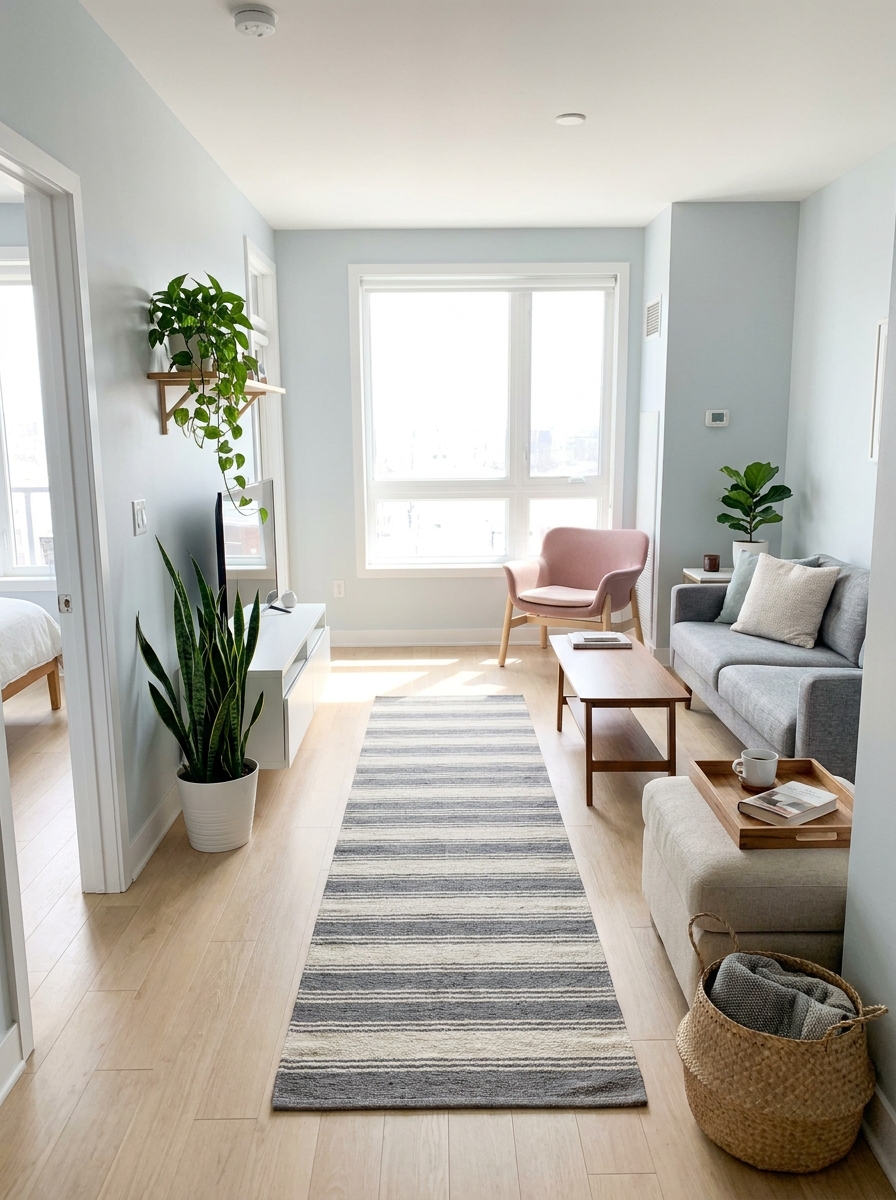
This might sound basic, but you’d be shocked how many small living rooms have furniture arranged like an obstacle course! You need a clear, obvious pathway from your entry point through the room. I’m talking at least 24-30 inches of walking space—enough that you’re not doing that awkward sideways shuffle.
Walk through your own living room right now. Are you bumping into the coffee table? Squeezing between the sofa and the wall? That’s your sign that something needs to move. A cramped pathway makes your whole room feel smaller and honestly kind of stressful.
I always start by planning my main traffic flow first, then arrange furniture around it. Think of it like a river flowing through your space. Everything else gets positioned to respect that flow, not block it. This is especially crucial if your living room connects to other rooms or has multiple doorways. Clear pathways aren’t just practical—they make your space feel open and welcoming the second someone walks in.
13. Use Vertical Storage to Free Up Floor Space
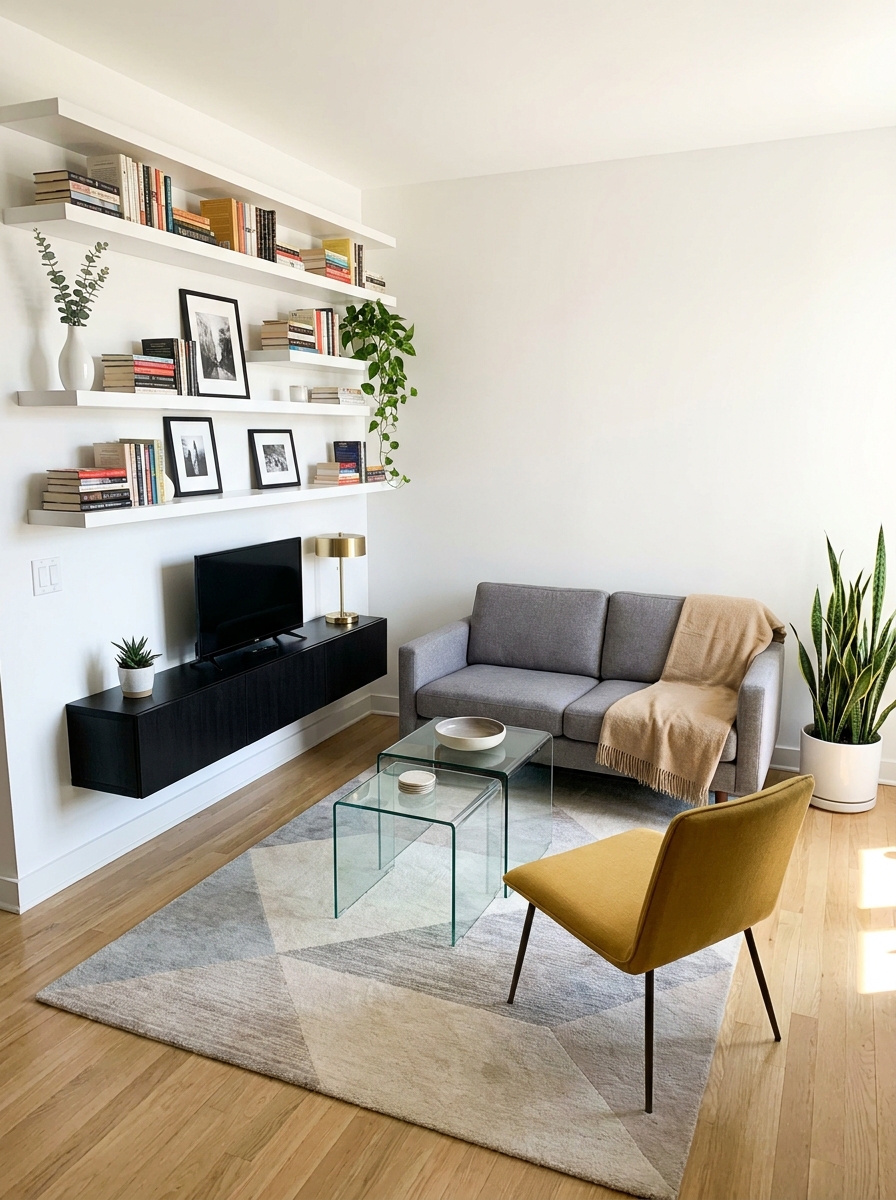
Here’s the thing about small living rooms—every inch of floor space is precious real estate. So why waste it with bulky storage units when you could go up instead?
Wall-mounted shelves, tall bookcases, and floating cabinets pull your eye upward and make ceilings feel higher. They also keep the floor clear, which tricks your brain into thinking the room is bigger than it actually is. I learned this after living with a chunky media console that ate up half my living room. The day I switched to a wall-mounted shelf system? Game changer.
Think about it like this: the more floor you can see, the more spacious everything feels. Stack books vertically, hang baskets on the wall, mount your plants on floating shelves. Your furniture can breathe, your vacuum cleaner will thank you, and you’ll actually have room to walk around without doing that awkward sideways shuffle.
Plus, vertical storage adds visual interest without crowding the room. It’s basically free square footage hiding in plain sight.
14. Choose Furniture with Exposed Legs
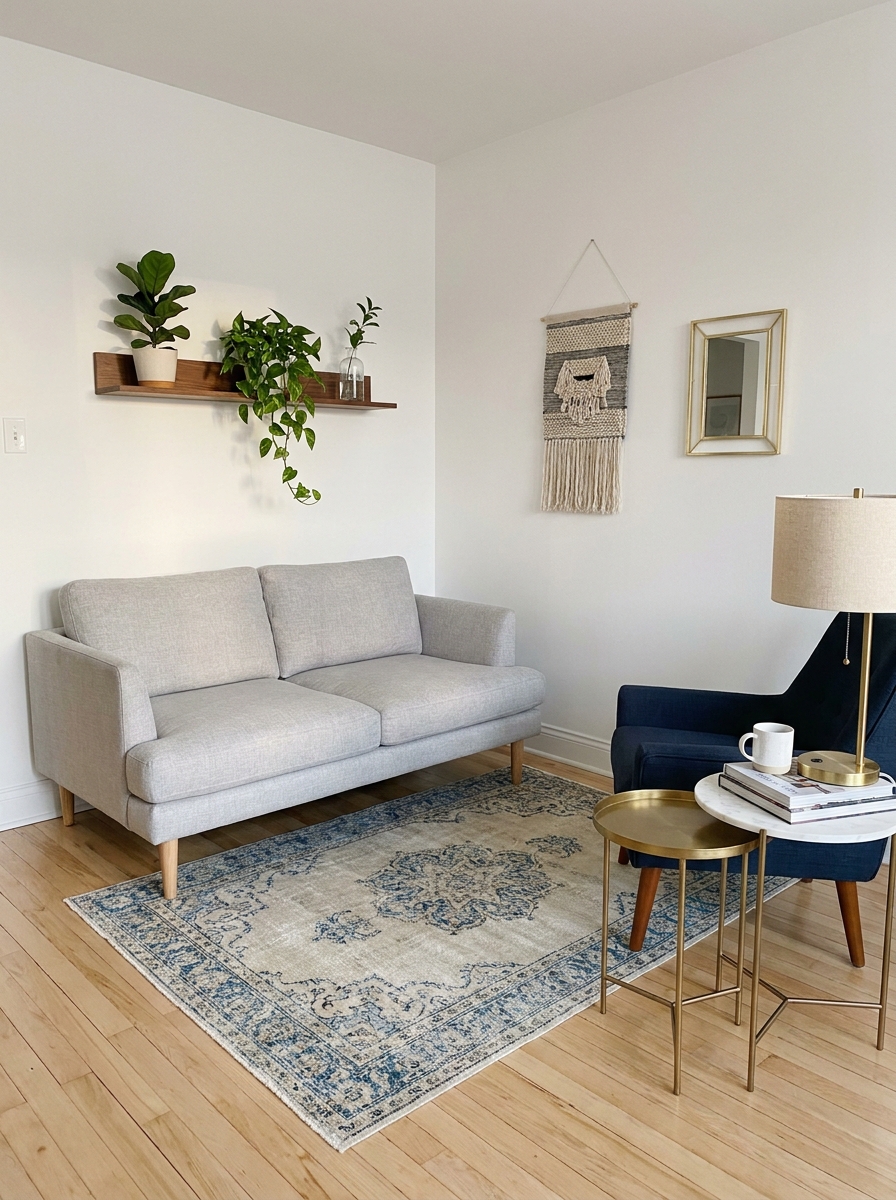
This sounds weirdly specific, but furniture with visible legs is a total game-changer in small spaces. And no, I’m not losing it—there’s actual logic here.
When you can see underneath your sofa or chair, it creates visual breathing room. Your eye travels all the way to the floor instead of hitting a solid wall of furniture. That little bit of negative space makes the whole room feel lighter and less cluttered. Furniture that sits directly on the floor—like those big skirted sofas—can feel heavy and imposing when you’re working with limited square footage.
I always look for sofas and chairs with legs that are at least four to six inches high. Wooden legs, tapered legs, metal hairpin legs—they all work. The style doesn’t matter as much as the fact that light and sight lines can pass underneath.
Bonus: furniture with legs is also way easier to clean under. You can actually vacuum without moving everything around, which is honestly reason enough to make the switch.
15. Add a Mirror Opposite Your Best Light Source
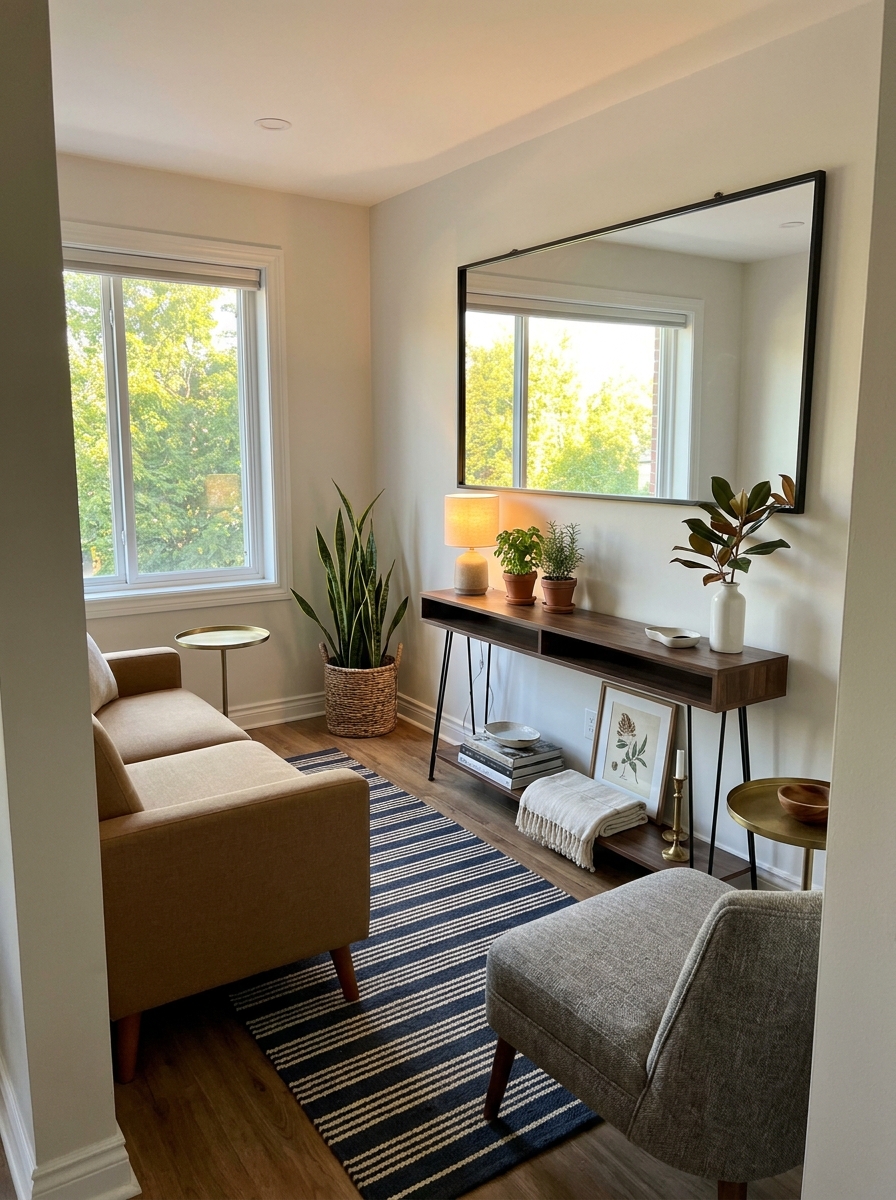
Okay, mirrors aren’t technically furniture, but they’re such a powerful tool for small living rooms that I had to include them here. And placement? That’s everything.
Hang a large mirror directly across from your brightest window or your best light source. The mirror will bounce that light around the room and basically double its impact. More light equals a room that feels bigger, brighter, and way more open. I’ve seen this work magic in basement apartments and windowless city studios.
Don’t just slap any mirror anywhere, though. You want it positioned so it reflects something pretty—a window view, your favorite wall, some greenery—not your messy hallway or the back of your TV. Think about what you’ll see in that reflection before you commit.
A large floor-to-ceiling mirror can actually make your room feel twice as big. It creates the illusion of depth and adds another dimension to your space. It’s basically architectural trickery, and I’m here for it.
16. Invest in Multi-Functional Furniture Pieces
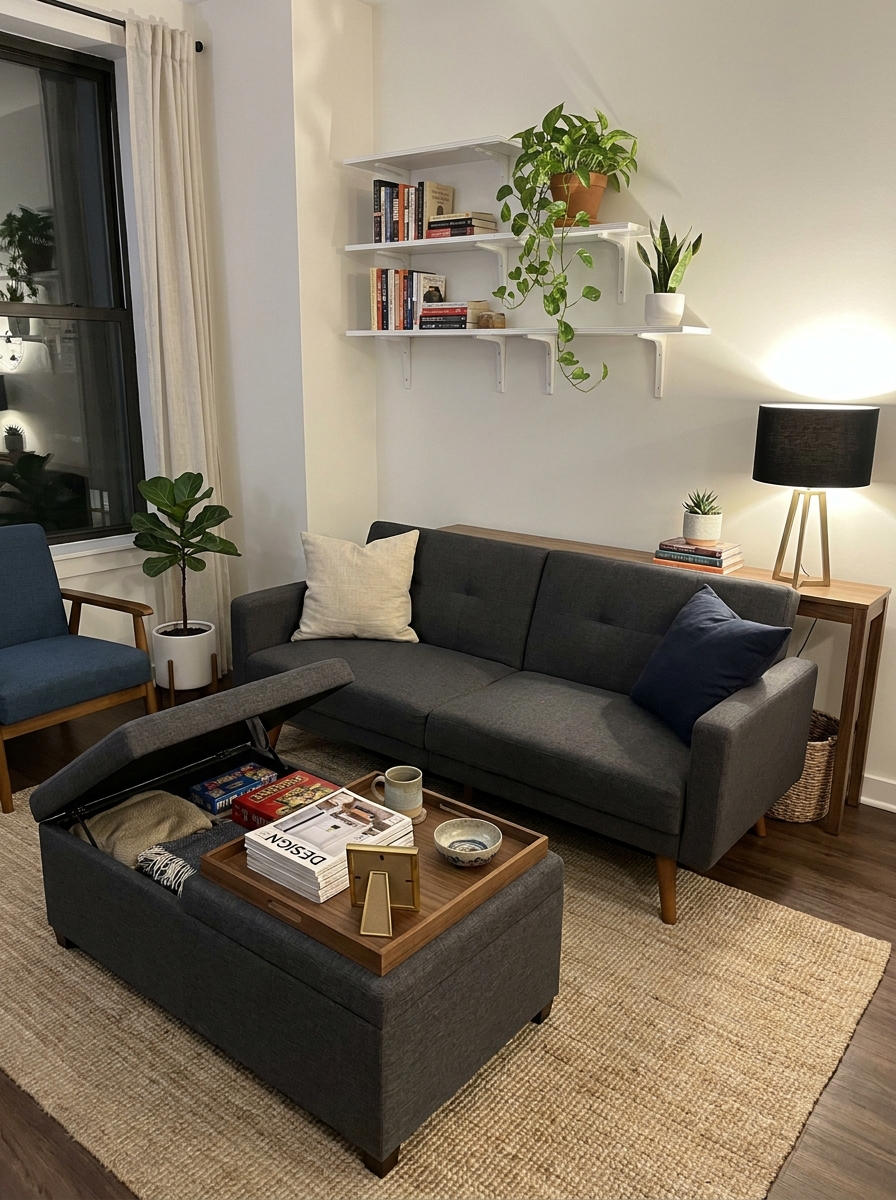
In a small living room, every piece of furniture needs to earn its spot. If something only does one job, it’s probably taking up space you can’t afford to waste.
This is where multi-functional furniture becomes your best friend. Storage ottomans that hold blankets and double as extra seating. Sofa beds for when guests crash. Coffee tables with lift tops that turn into work surfaces. Benches with hidden compartments. These pieces work twice as hard so your room doesn’t have to feel twice as crowded.
I used to resist this idea because I thought multi-functional meant cheap or ugly. But honestly? The options now are gorgeous. You can find beautiful pieces that do double or triple duty without looking like they’re trying too hard.
The trick is choosing furniture that serves your actual life. If you work from home, get that lift-top coffee table. If you host often, invest in the storage ottoman. Make your furniture work for you, not the other way around.
17. Arrange Seating in an L-Shape Configuration
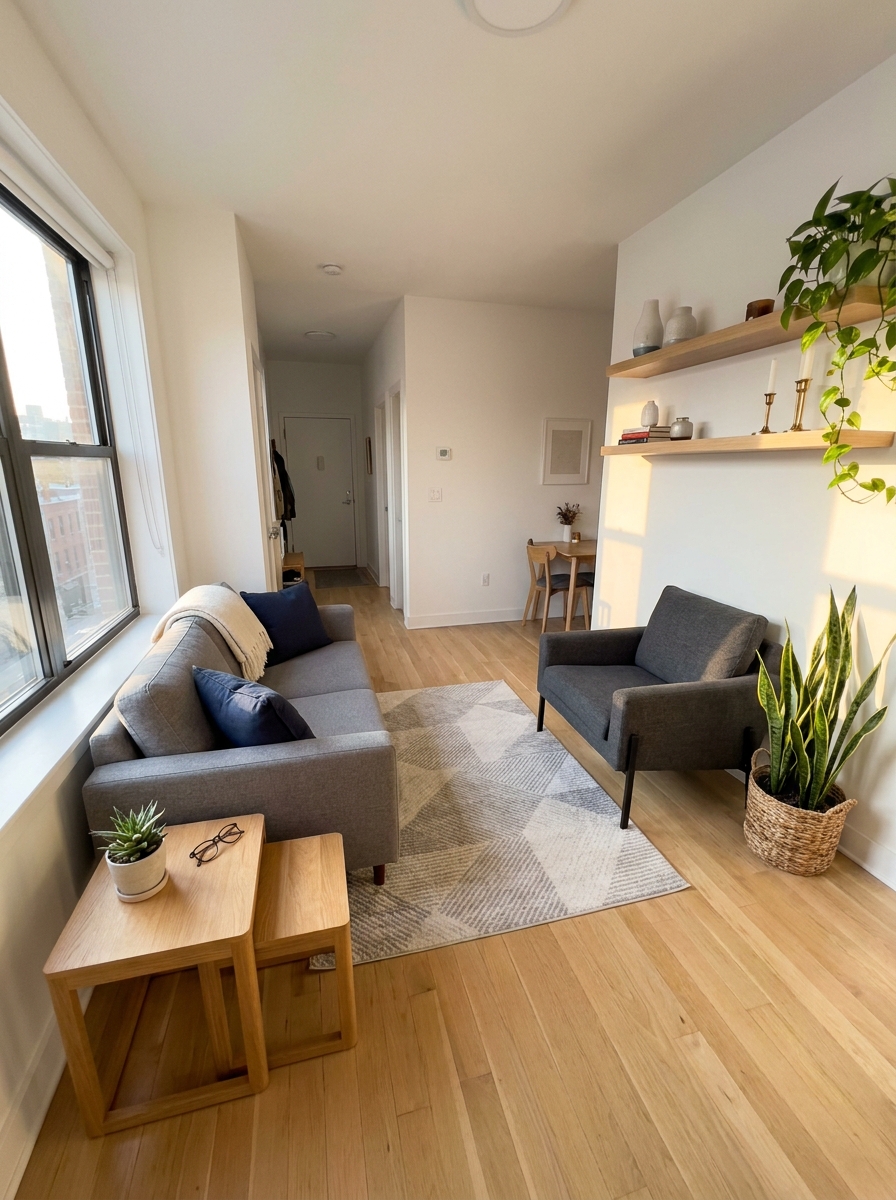
This one totally changed how I think about small living rooms! Instead of lining everything up against the walls, try creating an L-shape with your sofa and a chair or loveseat. It makes the room feel so much more intimate and conversation-friendly.
The magic happens because you’re defining the space without blocking it. The L-shape creates a cozy seating area while leaving the rest of the room open for traffic flow. Plus, it naturally draws people together instead of having everyone stare straight ahead like they’re on a bus.
I love positioning the L-shape to face a focal point like your TV or a window with a great view. It gives the room purpose and direction. And here’s the thing nobody tells you—this arrangement actually makes small rooms feel bigger because you’re using the corner efficiently instead of wasting that awkward dead space. Your eye follows the L-shape around, which creates movement and interest instead of just seeing one flat wall of furniture.
18. Pull Chairs Slightly Forward from Corners
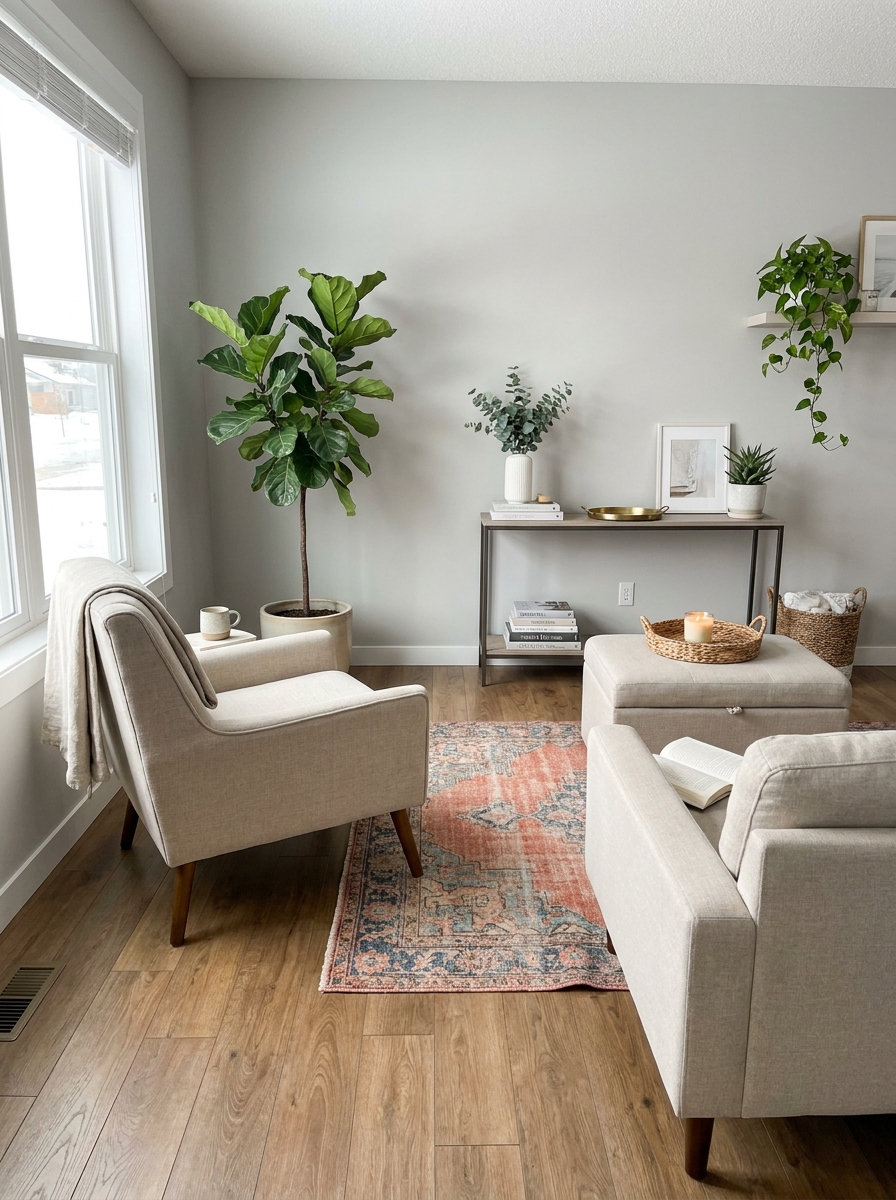
Okay, this sounds backwards but hear me out. When you have accent chairs in a small living room, don’t shove them all the way into the corners. Pull them out just 6 to 12 inches and angle them slightly inward. Game changer!
It creates this welcoming, pulled-together look instead of the “furniture is hiding in the corners” vibe. The slight angle makes the room feel intentionally designed rather than like you just pushed everything against the walls to make space. And weirdly, it actually makes the room feel bigger because you’re creating depth and dimension.
I tried this in my own tiny living room and couldn’t believe the difference. The space behind the chair becomes useful—perfect for a narrow floor lamp or a tall plant. And the angled position makes conversation flow so much better because people aren’t sitting rigidly parallel to each other. It’s like the room suddenly has personality and movement instead of feeling like a waiting room.
19. Designate One Wall as Your Activity Zone
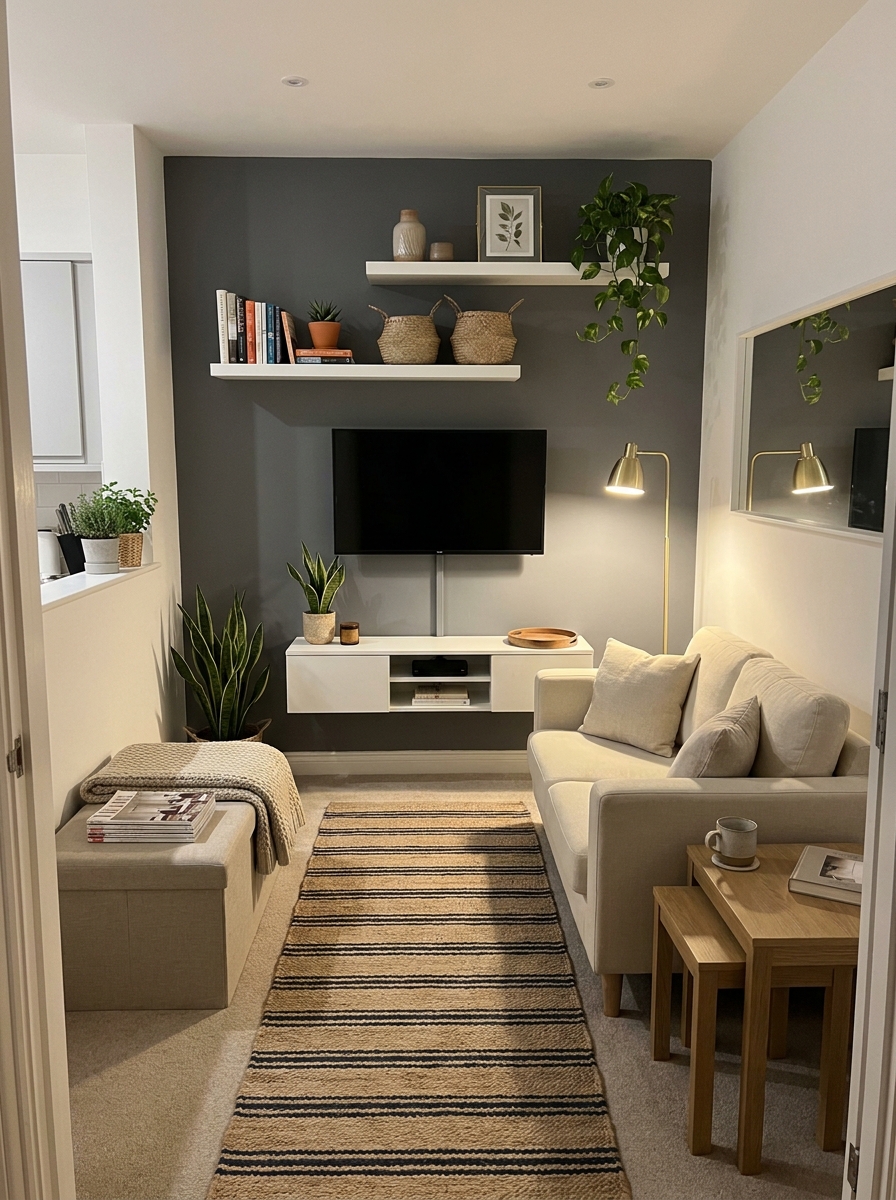
Here’s something that really helped me stop feeling overwhelmed by my small living room—pick one wall and make it your “everything wall.” Your TV, shelving, media console, maybe some art. Everything that needs wall space goes on this one wall, and you keep the other walls super minimal.
This approach stops the room from feeling cluttered and busy. When every wall has stuff happening, your eyes don’t know where to land and the space feels chaotic. But when you consolidate everything onto one feature wall, the room suddenly feels calm and organized. It’s like giving your brain a break.
I usually choose the wall opposite the main seating area for this. Mount your TV there, add floating shelves on either side, maybe a gallery wall above. Then keep the adjacent walls clean—just paint, maybe one mirror or piece of art. The difference is incredible. Your small room feels intentional and put-together instead of randomly stuffed with furniture and things.
20. Leave at Least One Corner Completely Empty
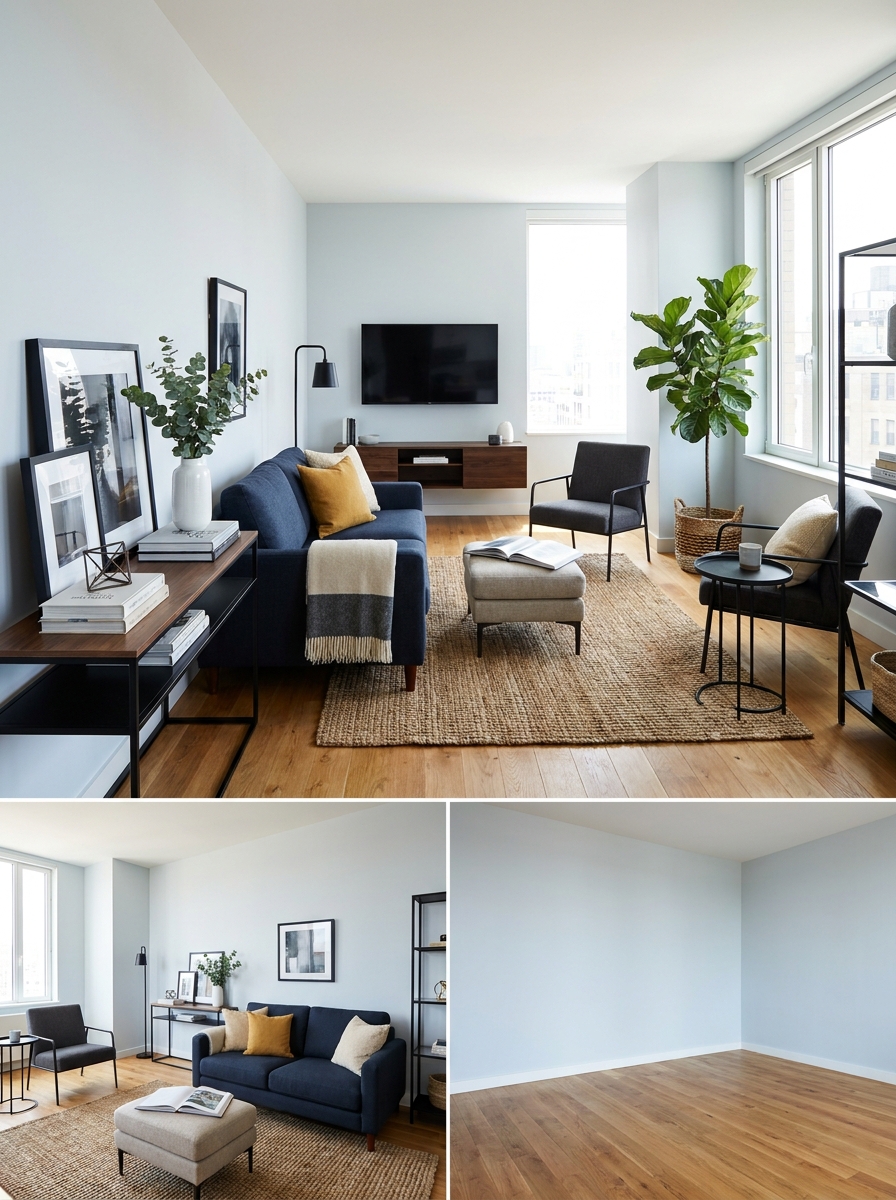
This feels so wrong when you’re trying to fit everything into a small space, but leaving one corner totally empty is honestly brilliant. It gives your room breathing room and makes the whole space feel less cramped and cluttered.
I know, I know—every corner feels like valuable real estate when you’re working with limited square footage. But here’s what happens when you resist the urge to fill every single spot: your eye travels around the room and lands on that empty corner, and your brain goes “ahhhh, space!” It’s a visual exhale. That one empty corner makes the entire room feel less stuffed and more intentional.
Think of it like negative space in design. That emptiness is doing important work. It’s balancing out all your furniture and creating flow. Plus, you’ll love having that spot available when you need to move around, bring in extra seating for guests, or just want to do some yoga without rearranging everything. Open space is a luxury in small rooms—treat it like one!
Quick Guide
Small Living Room Furniture Scale Cheat Sheet
Sofa/Loveseat: 60-72″ max length | Look for raised legs and low arms
Coffee Table: 36″ max length | Keep it 14-18″ from sofa edge | Consider nesting or oval shapes
Accent Chair: Choose armless or slim-arm styles | Width under 30″ works best
Side Tables: 18-22″ diameter max | Go tall and narrow over short and wide
Media Console: Wall-mounted or legs showing underneath | Keep depth under 16″
Area Rug: 5×7 or 6×9 for most small spaces | All furniture front legs should touch it
Traffic Paths: Maintain 24-30″ walkways minimum | 18″ in a pinch for tight spots
The golden rule? Every piece should earn its place. If it doesn’t serve a function or bring you joy, it’s taking up space you don’t have to spare.
Your Small Space Has Big Potential
Here’s what I want you to remember: a small living room isn’t a design problem you need to solve. It’s just a different kind of canvas. Every choice matters more, sure, but that also means every choice has more impact.
You don’t need a bigger apartment to have a living room you actually love. You need the right furniture in the right spots, arranged in a way that works with your space instead of fighting against it. Those 20 ideas we just covered? They’re not rules—they’re starting points. Mix and match what speaks to you.
Maybe you’ll float that sofa and feel like a genius. Maybe you’ll swap your monster sectional for a loveseat and suddenly have room to breathe. Whatever you try, give yourself permission to experiment. Move things around on a Saturday afternoon. See what feels right.
Your small living room is about to work so much harder for you. And look gorgeous doing it.
Frequently Asked Questions
What’s the best furniture layout for a narrow small living room?
Float your sofa parallel to the longest wall, about 12 inches out, with a slim console behind it. Place a loveseat or two chairs perpendicular to create an L-shape conversation area. This maximizes seating without blocking the narrow walkway. Skip the coffee table or use nesting tables you can tuck away when needed.
How do I arrange furniture in a small living room with a fireplace?
Treat the fireplace as your focal point and angle your seating toward it. A loveseat directly facing the fireplace with two small accent chairs flanking it creates symmetry without overcrowding. If the fireplace is off-center, float your sofa at an angle to face both the fireplace and TV if you have one. Keep at least 3 feet of clearance in front of the fireplace for safety and flow.
Should I push all my furniture against the walls in a small living room?
Surprisingly, no. Floating at least one piece away from the wall actually makes the room feel larger by creating depth and dimension. It also improves traffic flow and gives you space for functional elements like a console table. The exception is if your room is truly tiny—under 100 square feet—where wall-hugging might be your only option.
What size area rug works best in a small living room?
A 5×7 or 6×9 rug works for most small living rooms. The key is having at least the front legs of all your seating furniture rest on the rug to create a cohesive zone. Leave 12-18 inches of bare floor showing around the rug’s edges—this border actually makes the room look bigger than wall-to-wall coverage would.
How can I fit a TV and seating in a really small living room?
Mount your TV on the wall or use a narrow floating media console (under 16 inches deep) to save floor space. Position your loveseat or sofa 6-8 feet from the TV for comfortable viewing. If space is super tight, consider a corner TV mount or a TV that pulls out from a cabinet only when you’re watching—the rest of the time it disappears and opens up your room.