18 Gorgeous Curtain Tricks That Transform Any Ceiling
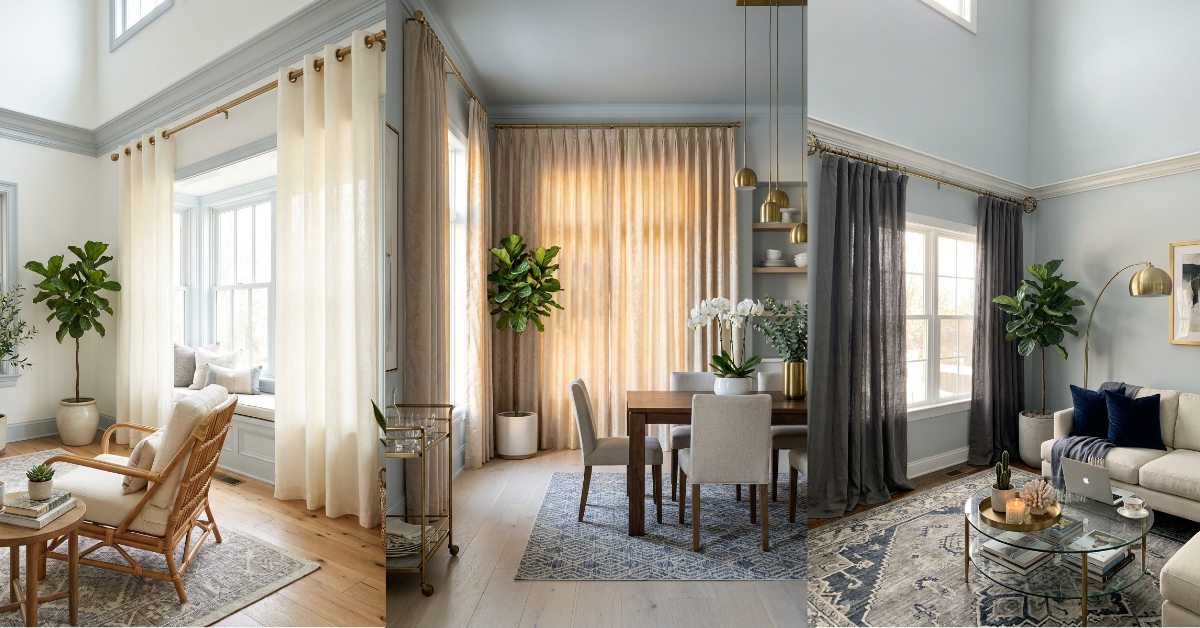
You know that feeling when you walk into a room and it just feels… taller? More spacious? Like someone waved a magic wand and added an extra foot of ceiling height? I’ve been there too, standing in my own living room wondering why it felt so cramped despite having perfectly average 8-foot ceilings. Then I learned the curtain secret that changed everything.
Turns out, where you hang your curtains matters way more than the curtains themselves. We’re talking about a simple shift in rod placement that tricks the eye into seeing height that isn’t technically there. It’s one of those designer moves that costs almost nothing but delivers that expensive, custom look.
I’m sharing 18 ways to use curtains to make your ceilings look higher. Some are classic tricks you’ve probably heard whispers about. Others are fresh takes I’ve discovered through years of hanging (and re-hanging) way too many curtain panels. Here’s what actually works.
1. Mount Your Rods Almost Touching the Ceiling
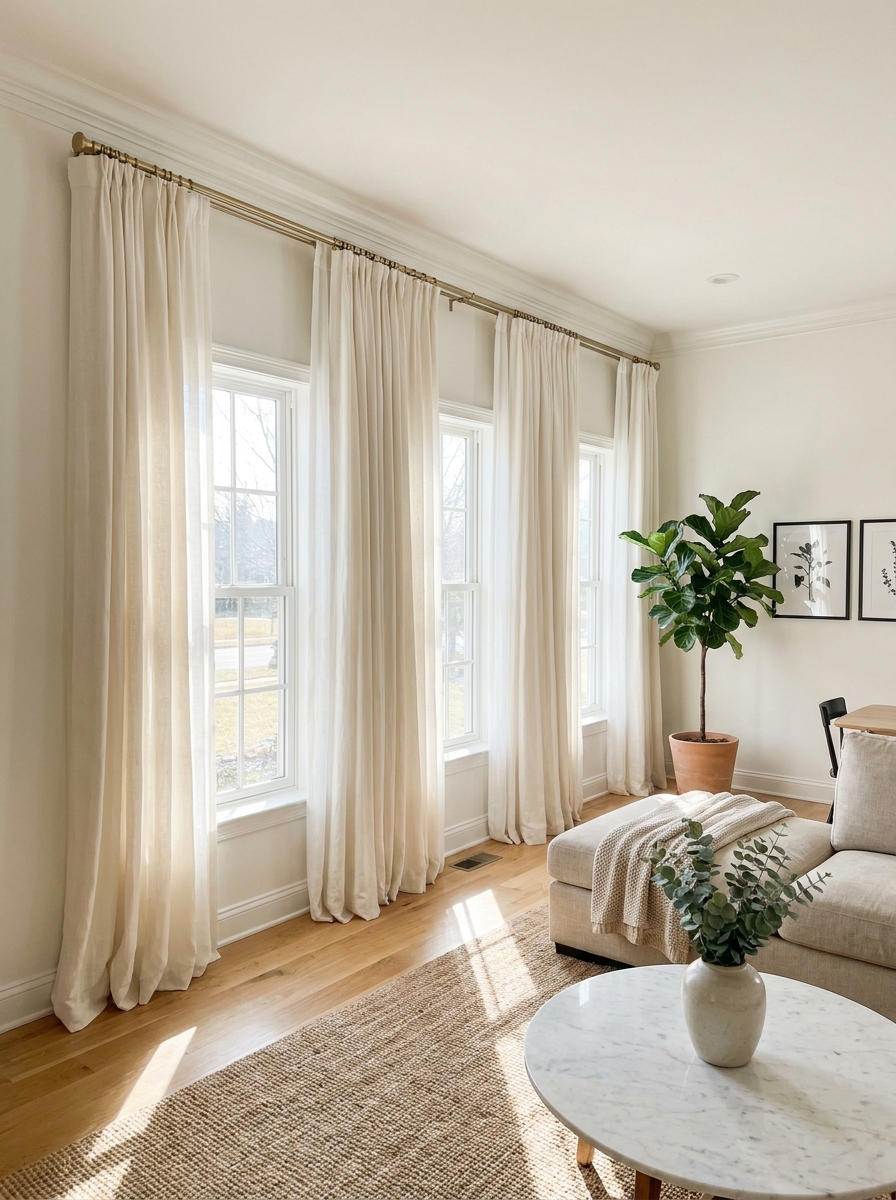
This is the big one. The trick that does most of the heavy lifting. Instead of hanging your curtain rod right above the window frame like most people do, mount it as close to the ceiling as you can get it. We’re talking 2-4 inches from the ceiling line, not 6-8 inches above the window.
Your eye naturally follows vertical lines upward. When those curtain panels start way up high, your brain assumes the ceiling must be up there too. It’s visual trickery at its finest, and it works in literally any room.
I was skeptical the first time I tried this in my bedroom. My contractor thought I was nuts. But the difference was immediate and dramatic. The whole room felt like it had better proportions, and suddenly my vintage brass bed didn’t look so oversized.
The only time you might skip this rule? If you have beautiful crown molding you want to show off. Even then, you can often tuck the rod right below the molding and still get the height-boosting effect.
2. Choose Extra-Long Panels That Kiss or Puddle on the Floor
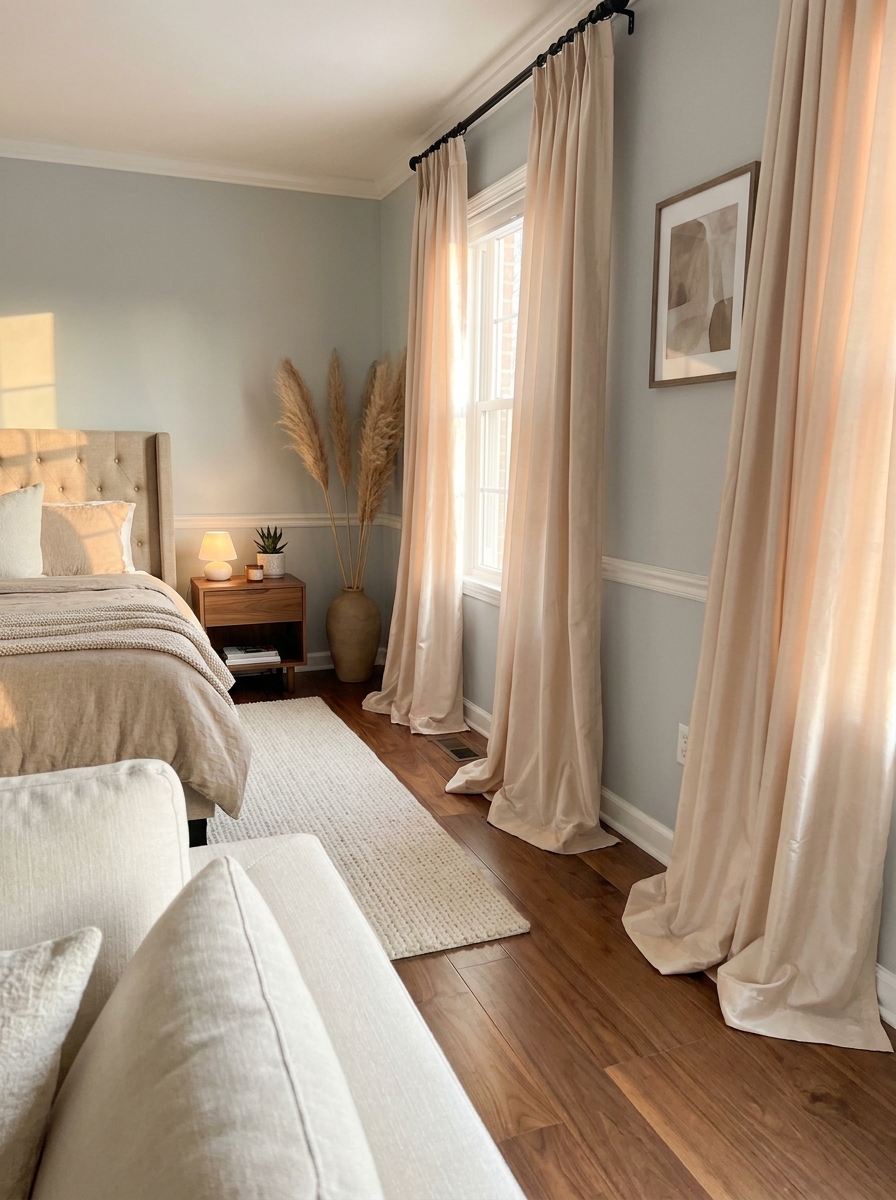
Short curtains are the enemy of high ceilings. Well, the illusion of high ceilings anyway. When your panels hover awkwardly a few inches above the floor, they create a visual break that chops the room into segments. Not what we want.
You need panels that reach all the way down and either just barely kiss the floor or puddle slightly with an extra 1-2 inches of fabric. This unbroken vertical line from ceiling to floor is what sells the height illusion.
I learned this the hard way with ready-made 84-inch panels that looked fine in the package but fell weirdly short in my dining room. Once I switched to 96-inch panels (and mounted them high), the whole room transformed. It’s like the difference between wearing ankle pants and full-length trousers. The proportions just work better.
And here’s something nobody tells you: that little puddle of fabric on the floor actually makes your curtains look more expensive and custom, like they were made specifically for your windows instead of grabbed off a clearance rack.
3. Extend Your Rods Beyond the Window Frame
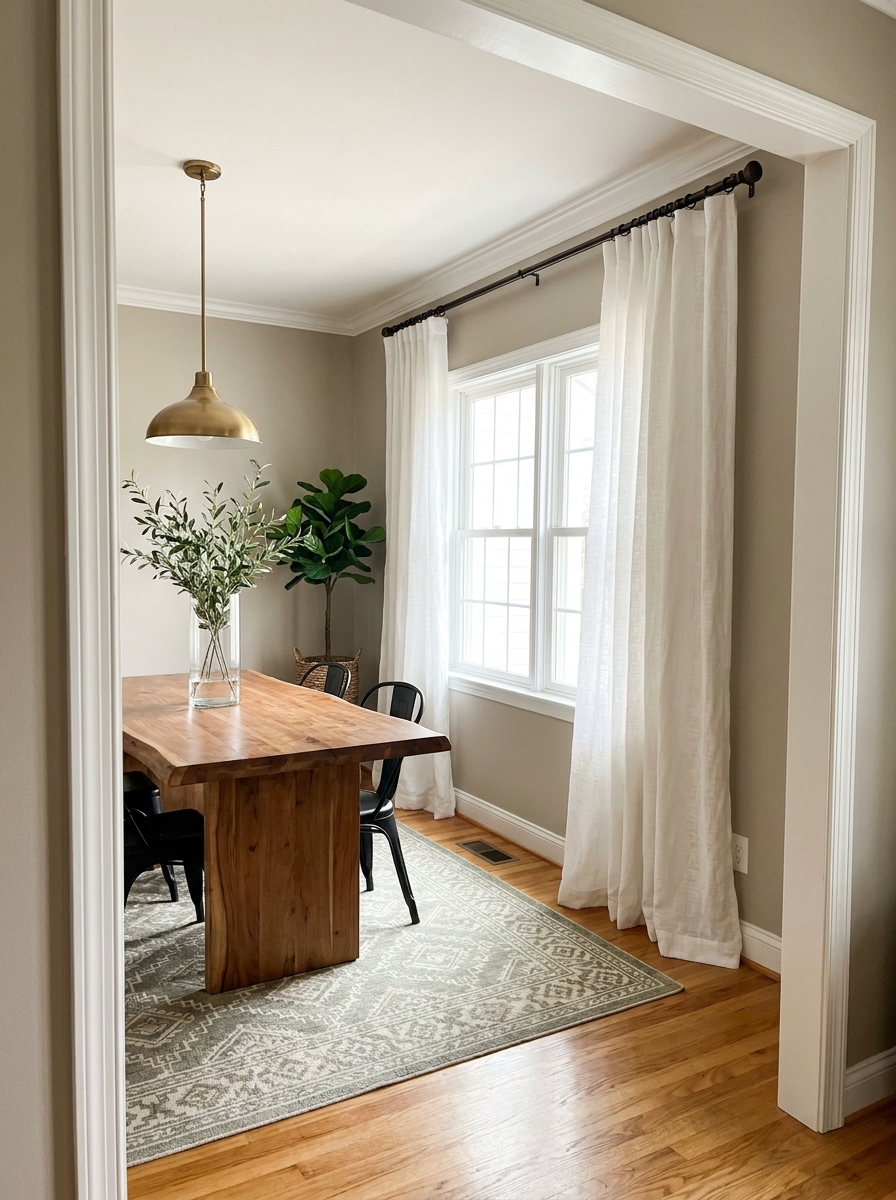
Don’t just cover your window. Frame it generously. Your curtain rod should extend 8-12 inches beyond each side of the window frame when possible. This creates the illusion that your windows are much larger than they actually are.
Bigger windows equal taller walls in your brain’s spatial math. Plus, when you pull the curtains open, the panels stack on the wall instead of blocking precious natural light. It’s a win-win that makes the whole wall feel more vertical and less chopped up.
I did this in my narrow kitchen and suddenly the space felt wider and taller, even though I literally changed nothing except rod placement. My sister walked in and asked if I’d painted the ceiling higher. That’s the power of good proportions.
The extended rod also gives you flexibility with how you dress the window. You can have panels that completely stack off the glass during the day, or you can layer sheers underneath for privacy while still showing off that beautiful wide rod and those ceiling-skimming panels.
4. Pick Vertical Stripe or Pattern Panels
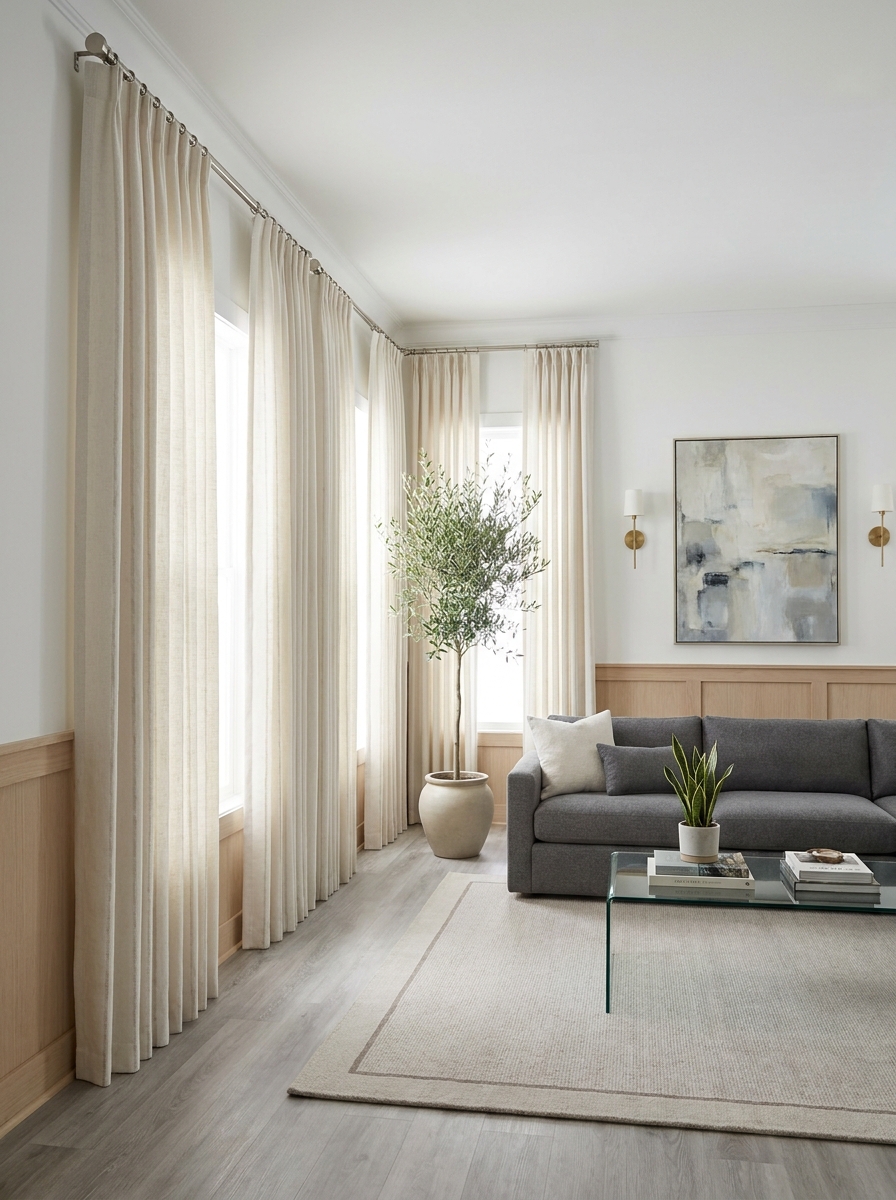
Solid curtains are beautiful and versatile, but if you really want to emphasize height, vertical stripes or patterns are your secret weapon. They create literal lines that guide the eye straight up to the ceiling.
You don’t need bold, obvious stripes. Even subtle tonal stripes or a vertical damask pattern does the trick. The key is that the pattern runs from rod to hem in one continuous flow, reinforcing that tall, unbroken line you’re creating.
I was nervous about patterned curtains in my small office because I thought they’d be too busy. But I chose wide, soft gray and cream vertical stripes, and they actually made the room feel bigger and more pulled-together. The pattern gives your eye something to follow upward instead of just stopping at a blank panel.
Horizontal patterns, on the other hand, do the opposite. They cut the height visually and make your ceilings feel lower. So if you love stripes, make sure they’re running the right direction for the effect you want.
5. Go Sheer or Semi-Sheer to Draw Light Upward
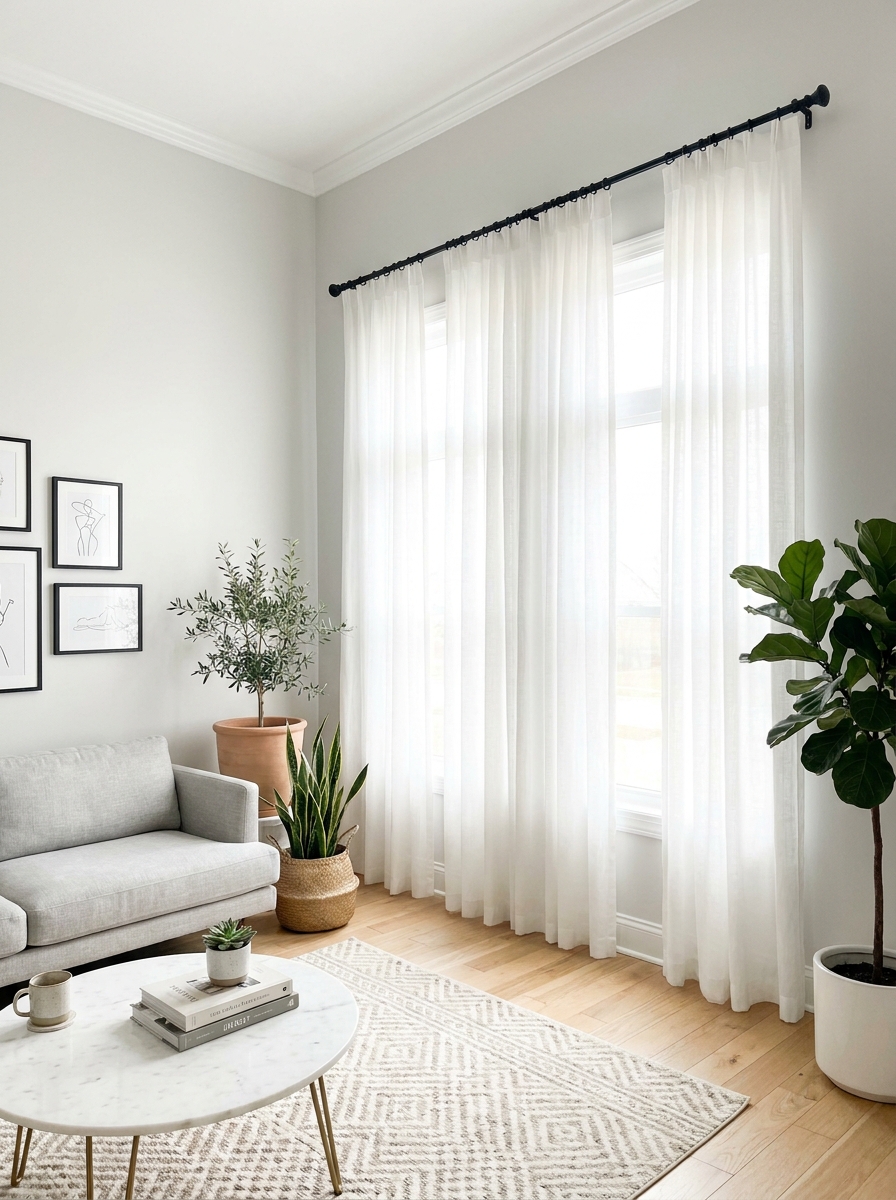
Here’s something I didn’t expect when I switched to sheer curtains: they don’t just filter light, they pull your eyes straight up to the ceiling. The way light travels through lightweight fabric creates this gorgeous vertical glow that makes walls feel endless.
Heavy, dark drapes can visually weigh down a room and cut it in half. But sheers? They’re like magic. They let natural light flood in while still giving you privacy, and that brightness naturally makes spaces feel taller and more open. I love layering sheers with heavier panels you can close at night, but during the day, those floaty sheers do all the work.
The key is choosing white, cream, or very light colors that almost disappear into your walls. You want people to notice the height and light, not the curtains themselves. Linen sheers are my favorite because they have that perfectly imperfect texture that catches light beautifully without looking too precious.
6. Skip Valances and Anything That Cuts the Line
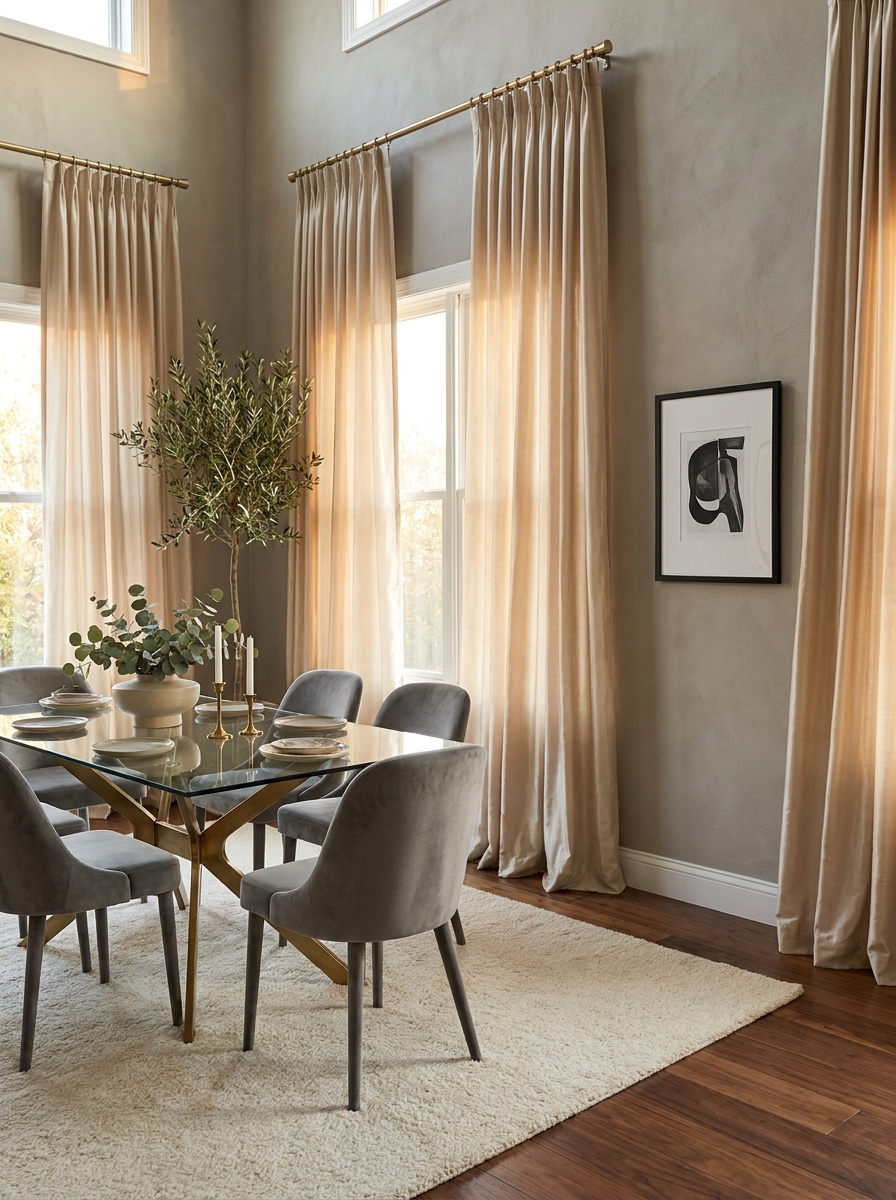
Okay, confession time. I used to think valances were the height of window elegance. Then I ripped mine down and instantly gained what felt like two feet of ceiling height. Anything that breaks up that clean vertical line from ceiling to floor is working against you.
Valances, cornices, and swags create a horizontal interruption right where you’re trying to create vertical flow. Your eye hits that decorative top treatment and stops instead of traveling all the way up to the ceiling. Same goes for tie-backs positioned too high or fussy details that chop your curtains into sections.
The most ceiling-height-friendly window treatment is refreshingly simple: one long, uninterrupted panel of fabric flowing from as high as possible to the floor. No breaks, no layers, no visual stops. Just clean, elegant lines that pull your gaze upward. It’s actually easier to achieve than all those complicated treatments, and it looks so much more current and sophisticated.
7. Match Your Curtain Color to Your Walls
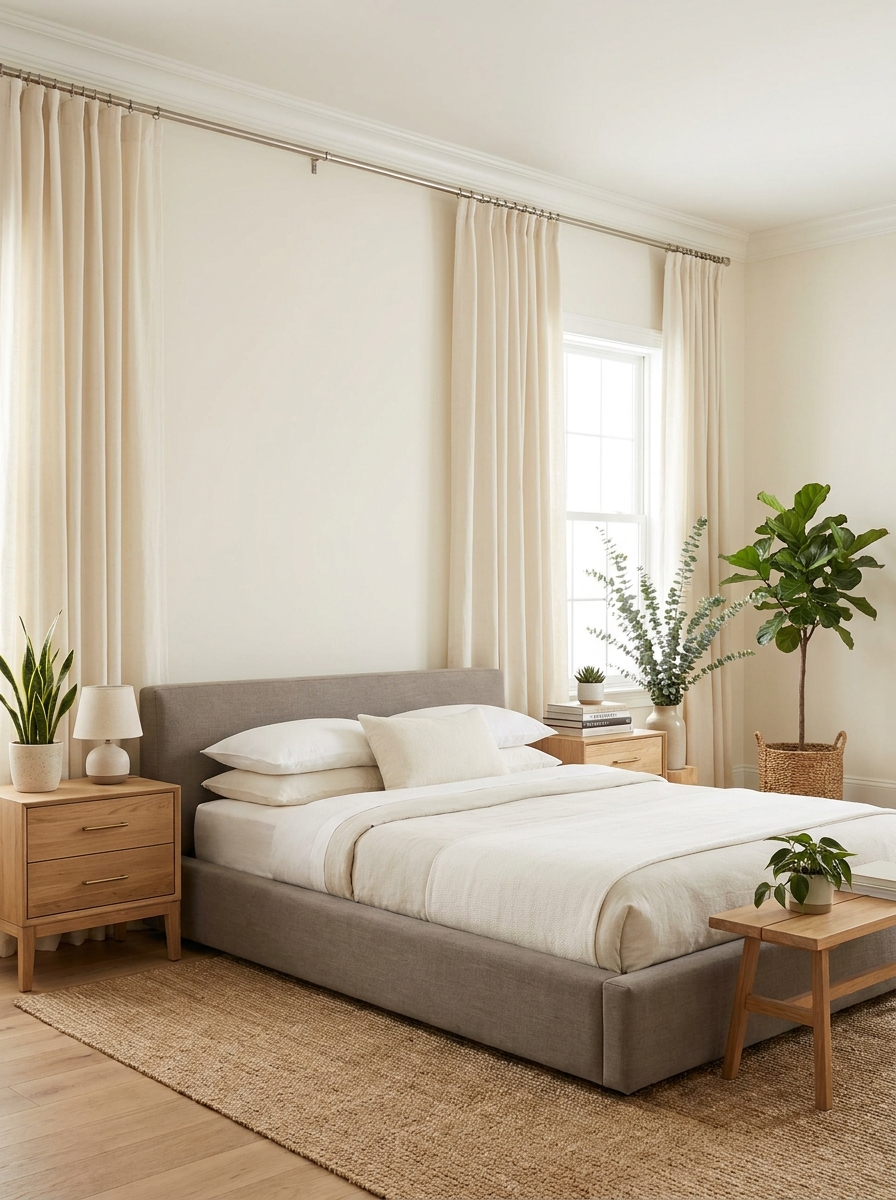
This trick feels almost too simple, but it’s ridiculously effective. When your curtains blend into your wall color, they become part of the architecture instead of a separate decorative element. And that creates one long, unbroken vertical sweep that makes ceilings feel miles high.
I tried this in my bedroom with soft white walls and white linen curtains, and people always ask if we did something structural to raise the ceiling. Nope! It’s just that your eye doesn’t know where the wall ends and the curtains begin, so everything reads as one tall, continuous surface.
You don’t need an exact match—even staying in the same color family works beautifully. Cream curtains with ivory walls, soft gray panels with greige walls, you get the idea. The goal is to avoid contrast that creates visual breaks. Save your pops of color for pillows and accessories at eye level, not on the windows where you want height and flow.
8. Use Rings or Grommets for Extra Height Illusion
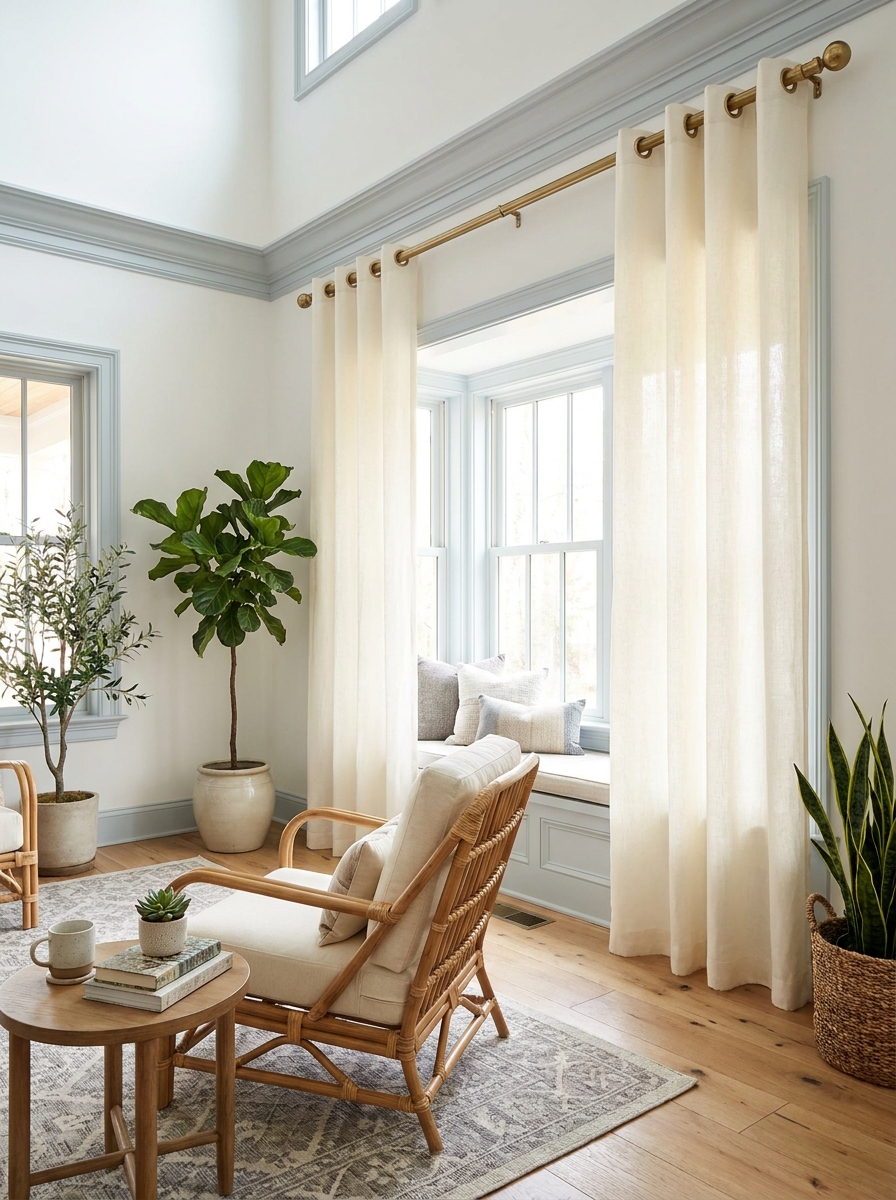
The way your curtains attach to the rod makes more difference than you’d think. Rings and grommets add several inches of visual height because they sit above the actual curtain panel, extending that vertical line even further.
I’m obsessed with curtain rings, especially the kind with clips. They give you that extra four to six inches of height, plus they create these gorgeous vertical pleats that draw your eye straight up. Grommets work the same way—the fabric hangs from above the panel top, adding bonus height while creating clean, modern folds.
Compare that to rod pocket curtains where the rod slides through the fabric. The rod essentially disappears into the curtain, and you lose that extended height. With rings or grommets, the hardware becomes part of the vertical story, pulling everything upward. It’s such a simple swap that makes a surprisingly big impact.
9. Hang a Single Panel Instead of Pairs for a Sleeker Line
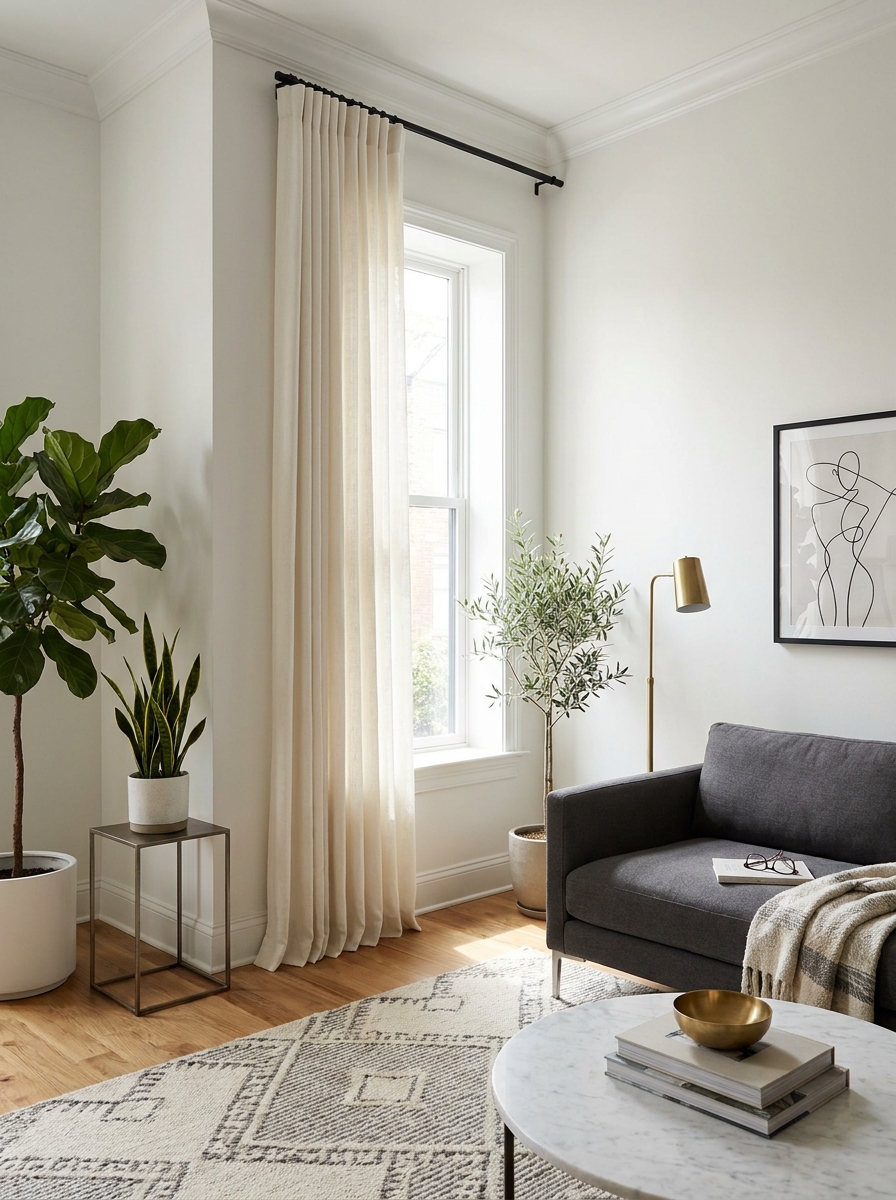
Okay, this one surprised me too! I used to think you needed matching pairs for every window. But hanging just one wide panel on each window creates this gorgeous unbroken vertical line that feels so modern and elevated.
The trick is choosing a panel wide enough to cover the window when closed, but hanging it so it stacks completely to one side when open. This asymmetry actually draws your eye up and down instead of side to side. It’s like wearing a long cardigan instead of a cropped jacket — that continuous line just elongates everything.
I love this look especially in bedrooms and home offices where you want function but also that clean, gallery-like feel. Plus, you’re buying half the fabric, which means you can splurge on something really special. The single panel movement is so simple but it genuinely changes how tall your windows look. And honestly? It’s refreshingly different from the matchy-matchy curtain look we’re all used to seeing.
10. Layer Sheers Behind Heavier Drapes on Two Rods
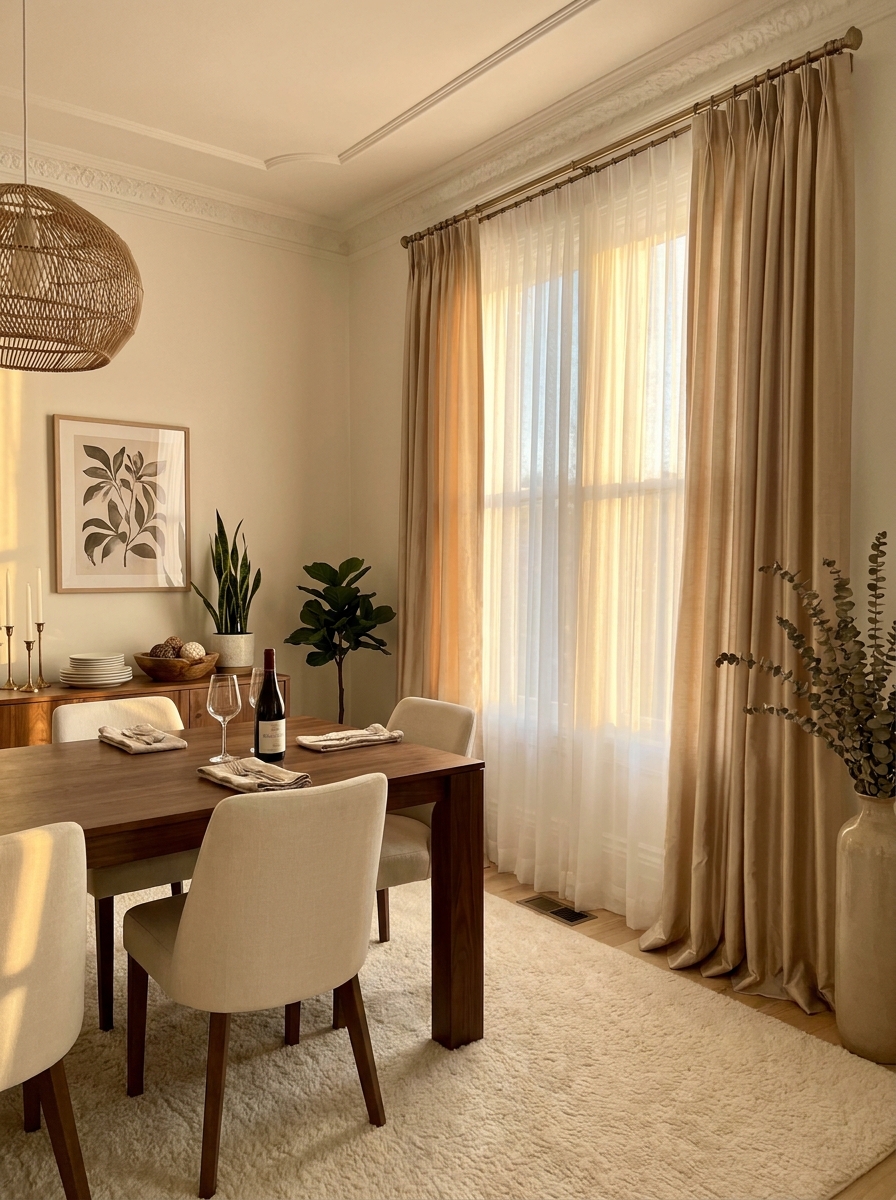
Double rod systems are absolute magic for creating height. When you mount two rods near the ceiling — one for sheer panels and one for heavier drapes — you get these gorgeous layers that add so much visual interest while still drawing the eye straight up.
The sheers sit closer to the window and stay closed most of the time, filtering light beautifully during the day. The outer drapes frame everything and can be tied back or left hanging. What’s cool is that both layers start at the same high point near your ceiling, which doubles down on that vertical emphasis. Your brain registers two sets of floor-to-ceiling lines instead of one.
I did this in my dining room and it completely transformed the space. The sheers give me privacy without blocking light, and the heavier linen drapes add that cozy, elegant feel for evening dinners. The layered look feels so custom and expensive, but it’s really just two sets of curtains working together to make everything look taller.
11. Choose Lightweight Fabrics That Create Soft Vertical Folds
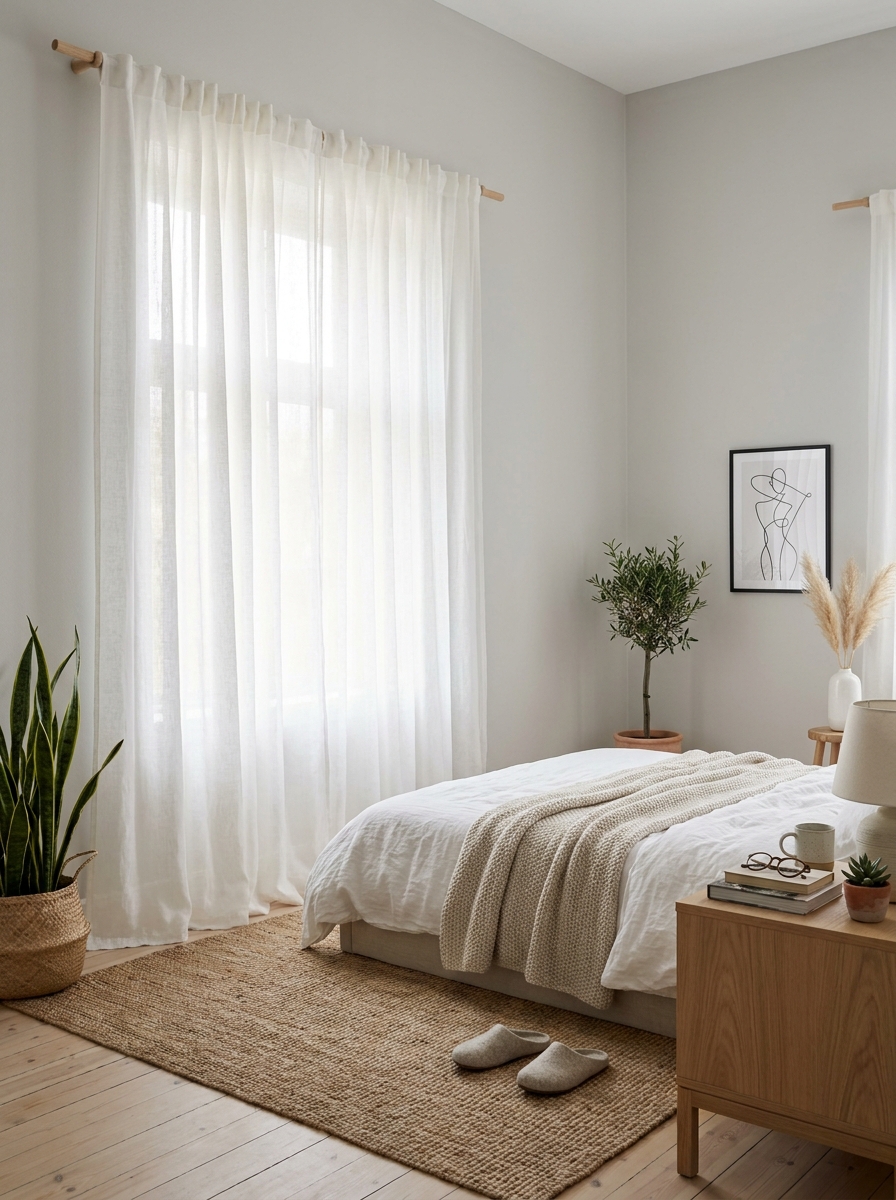
The way your curtains drape makes such a difference! Stiff, heavy fabrics can look bulky and overwhelming, but lightweight materials like linen, cotton voile, or silk blends create these soft, natural folds that guide your eye upward in the prettiest way.
Think about how fabric moves. When it’s lightweight and has nice drape, it forms gentle vertical pleats that enhance that tall, elegant line you’re going for. Heavier fabrics tend to just hang there like a wall, but flowing materials have movement and dimension. They catch the light differently throughout the day, which adds visual interest without breaking up that crucial vertical flow.
I’m obsessed with Belgian linen for this exact reason. It’s substantial enough to provide privacy and block light when you need it, but it’s not so heavy that it looks stiff. The natural wrinkles actually add to the relaxed, organic vibe. When you hang lightweight fabric from up near your ceiling all the way to the floor, it creates this gorgeous waterfall effect that absolutely makes your room feel taller.
12. Add a Decorative Finial That Draws Eyes to the Ceiling
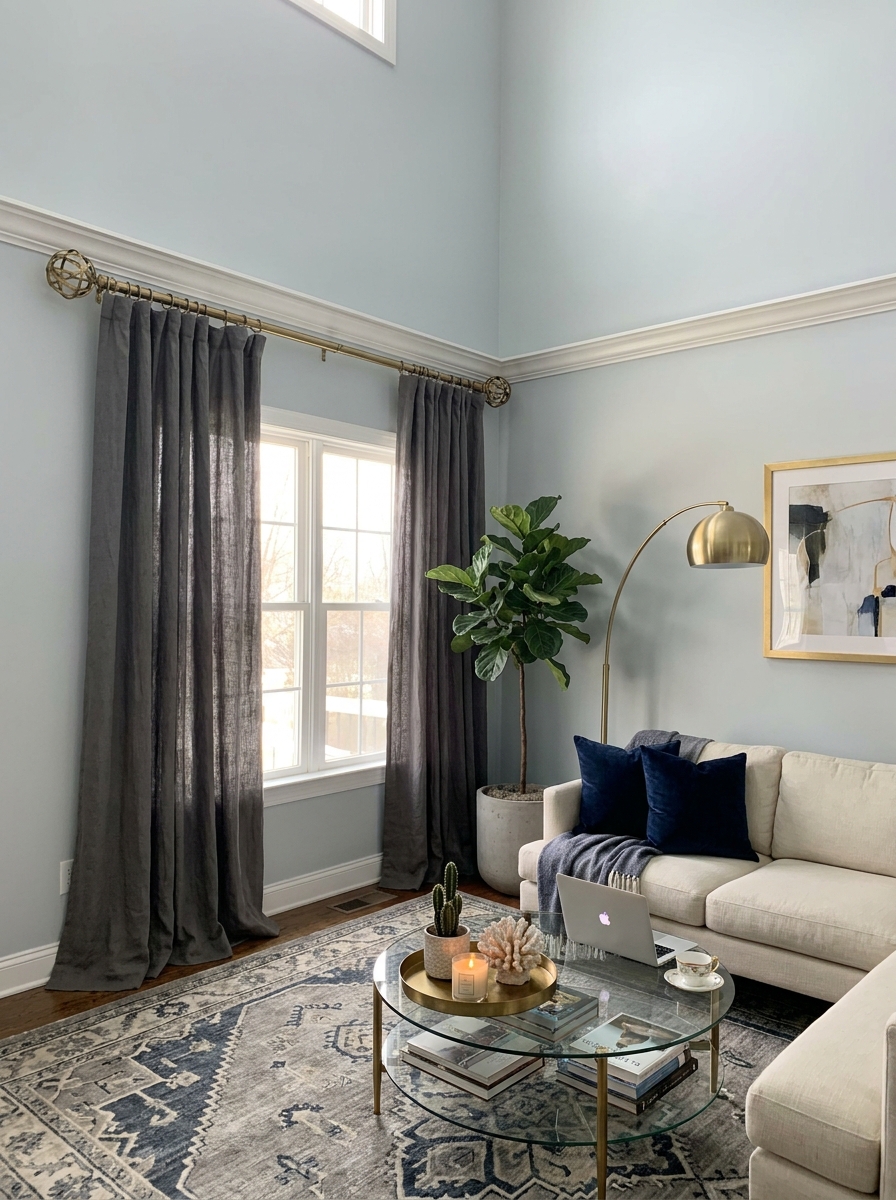
Here’s a tiny detail that makes a surprisingly big impact: your curtain rod finials! These end pieces are the jewelry of your window treatment, and choosing bold, beautiful ones actually helps guide eyes up to where your rod meets the ceiling.
I love oversized finials in interesting shapes — geometric spheres, modern cylinders, or classic urn shapes in brass, matte black, or brushed nickel. When they’re substantial and eye-catching, they become little focal points that say “hey, look how high up this curtain rod is!” It’s subtle, but your brain registers the height.
The key is making sure your finials complement your overall style without being too matchy-matchy with everything else in the room. I have these chunky brass ball finials in my living room, and guests always notice them. They’re like the exclamation point at the end of your ceiling-height curtain sentence. Don’t skip this detail — it’s the finishing touch that makes everything look intentional and polished instead of like you just threw up some basic hardware.
13. Install a Double Rod System with Different Heights
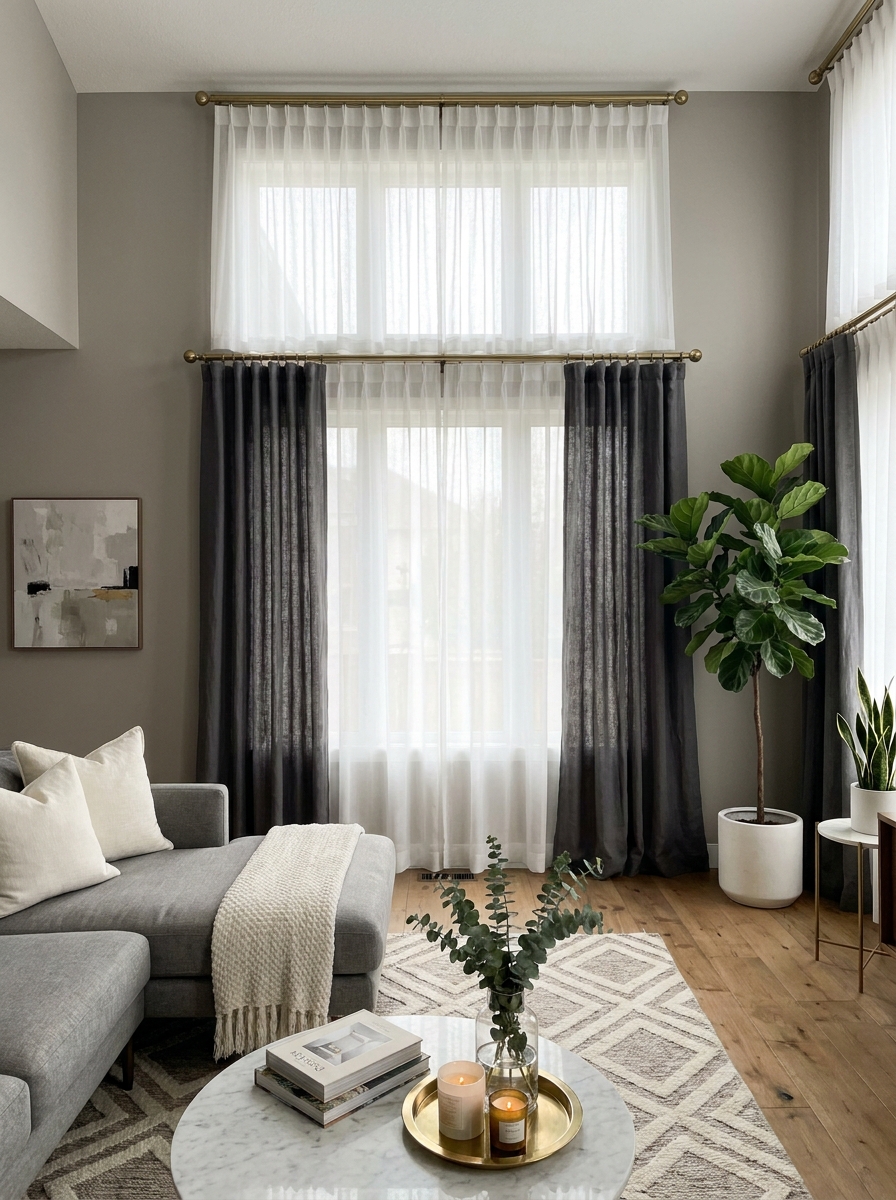
Here’s a sneaky trick I stumbled on by accident. Mount two curtain rods at slightly different heights—one right at the ceiling and another a few inches below. Hang sheer curtains on the top rod and heavier drapes on the lower one. Your eye gets confused about where the actual window starts, so it just keeps traveling up and up.
The magic happens because you’re creating layers at different vertical points. The top sheer panel starts at the absolute highest point, which your brain registers as the ceiling line. Then the second rod adds dimension without breaking that upward pull. It’s like wearing a long necklace over a short one—both draw attention, but the longer one sets the visual length.
This works especially well in rooms where you want flexibility. Pull the sheers for soft light during the day, then close the heavier drapes at night. You get function and that gorgeous illusion of height. Win-win!
14. Keep Your Curtain Hardware Slim and Minimal
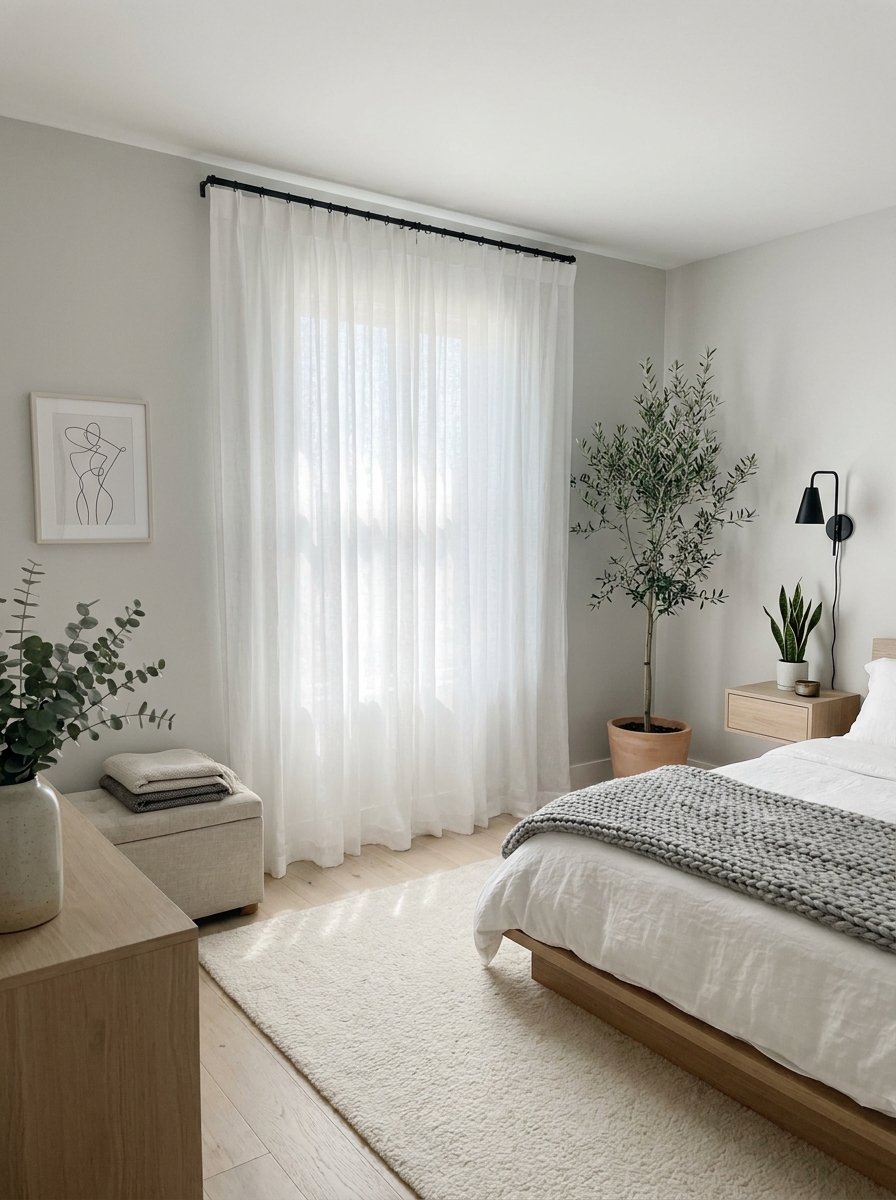
Chunky curtain rods can actually work against you. When you’ve got a thick, heavy rod taking up visual real estate near your ceiling, it creates a horizontal line that stops your eye from traveling upward. Instead, go for slim, streamlined hardware that almost disappears.
I’m talking about rods that are sleek and simple—maybe 3/4 inch to 1 inch in diameter max. Choose finishes that either blend with your wall color or match other metal accents in the room without screaming for attention. The goal is to let those beautiful long curtain panels be the star while the hardware just quietly does its job.
This is one of those details most people don’t think about, but it makes such a difference! A thin brass rod practically vanishes against a cream wall, while a big wrought-iron monstrosity draws a thick line across your sightline. Less is absolutely more here.
15. Avoid Busy Patterns Near the Top of Your Panels
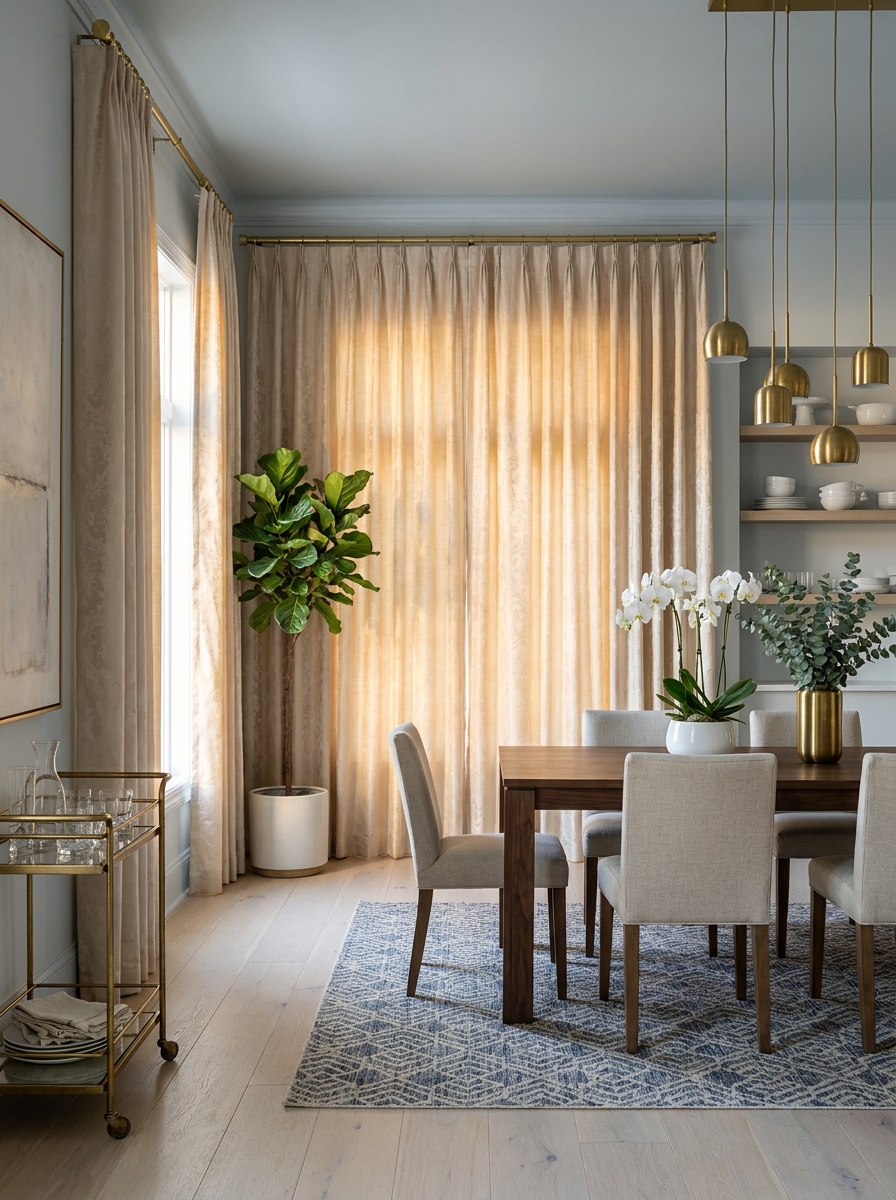
If you’re going with patterned curtains, pay attention to where that pattern hits. A bold design right at the top of your panels—near the rod—can create a visual stopping point that your eye fixates on instead of gliding smoothly upward. It’s like putting a speed bump right where you want traffic to flow.
The smartest move? Choose curtains with subtle patterns, or if you love a bold print, make sure it’s evenly distributed from top to bottom so there’s no heavy concentration near the ceiling line. Better yet, go with solid colors for the main panels and add pattern through pillows, rugs, or throws instead.
I learned this the hard way with some gorgeous printed curtains that had a decorative border at the top. Everyone’s eyes went straight to that border and stopped. The room felt shorter! Switched to solid panels and boom—instant height.
16. Choose Curtains Without Contrasting Trim or Borders
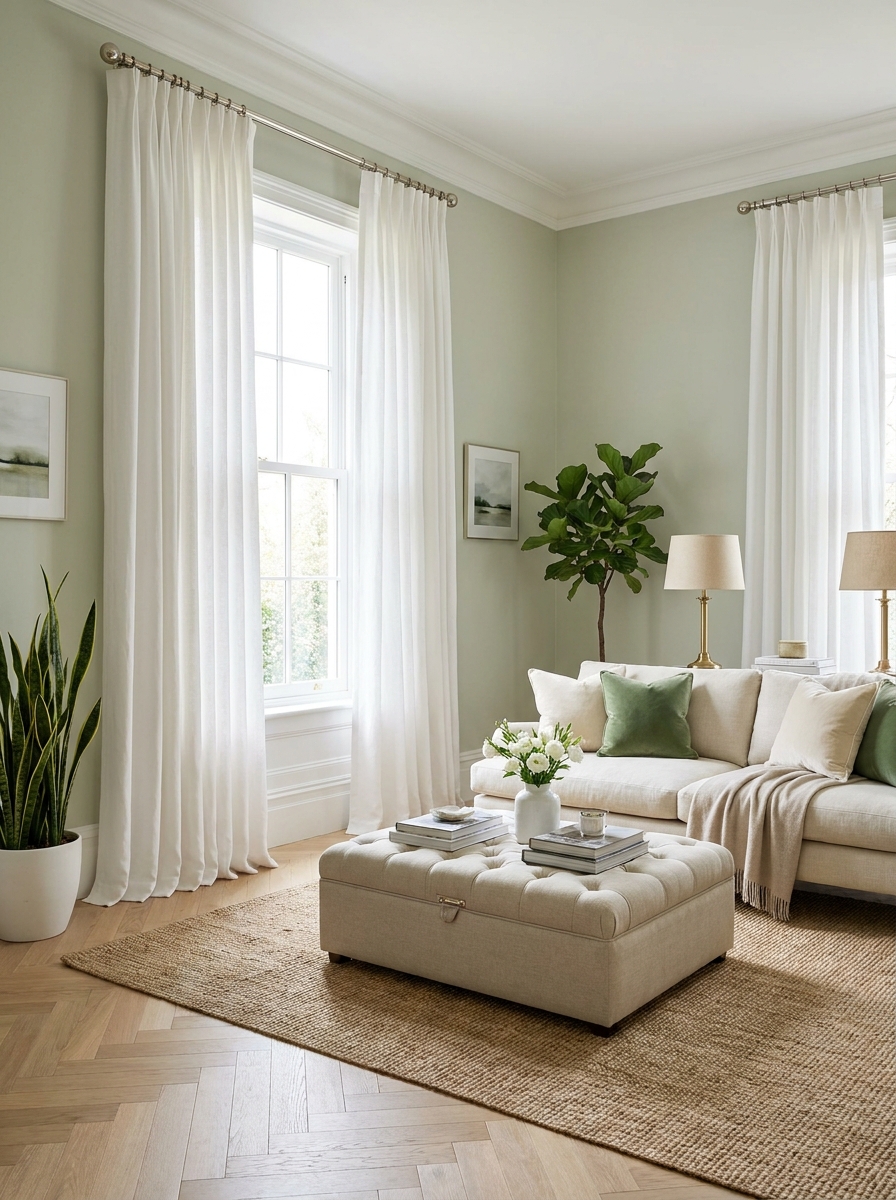
Those pretty curtain panels with contrasting trim along the edges? They’re gorgeous, but they can sabotage your height goals. Any horizontal line—especially a contrasting one—breaks up that beautiful vertical flow you’ve worked so hard to create. Your eye catches on that trim and pauses instead of sweeping smoothly from ceiling to floor.
I know it’s tempting! Those ribbon borders and grosgrain tape details are so pretty in the store. But when you’re trying to trick the eye into seeing more height, you want nothing interrupting that long, clean drop of fabric. Solid panels or subtle tone-on-tone textures keep everything moving in one direction: up.
Save the decorative borders for pillows or bedding where they won’t interfere with your vertical lines. Your curtains should be like a waterfall—one continuous, uninterrupted cascade that makes your ceiling feel miles away.
17. Steam or Iron Your Panels Before Hanging
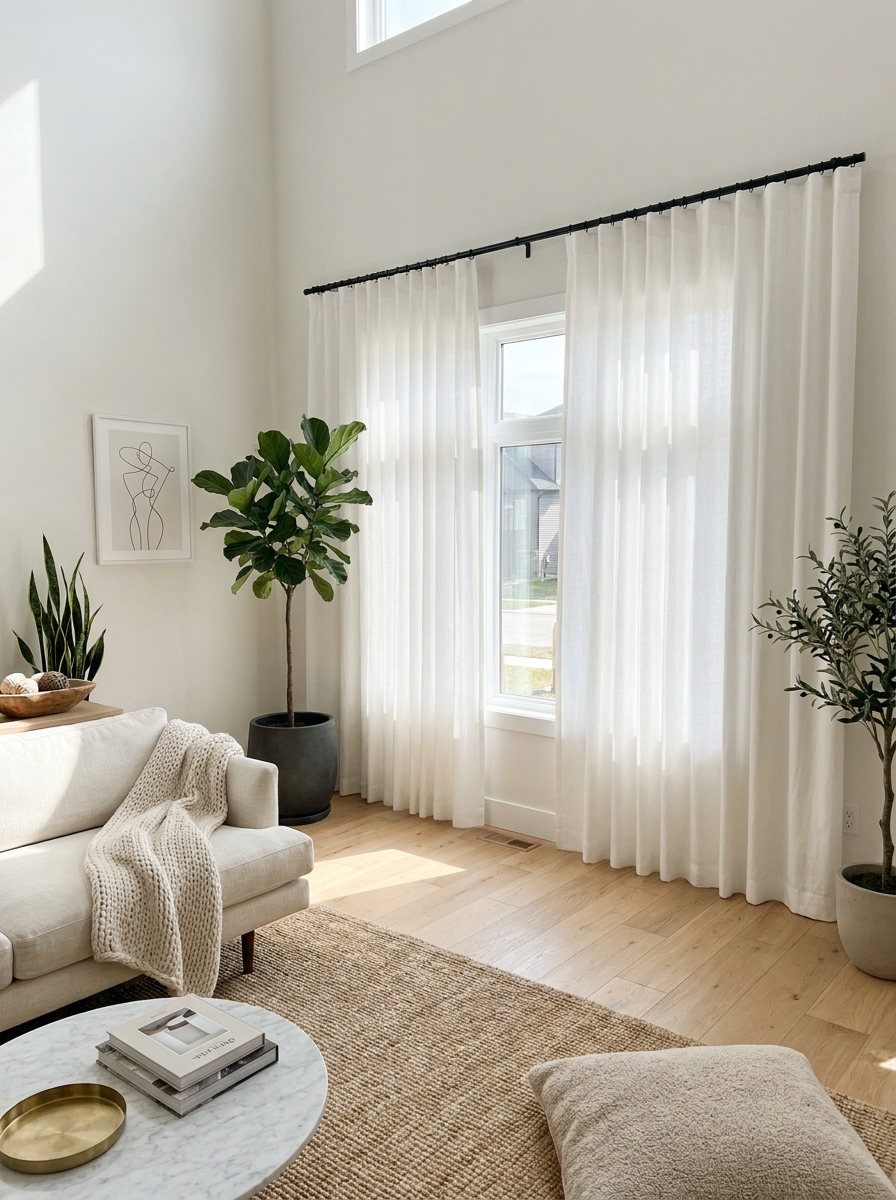
Wrinkled curtains absolutely ruin the ceiling-height illusion you’re working so hard to create. Those horizontal creases? They chop up the vertical line and make your eye stop halfway down the panel instead of traveling smoothly from ceiling to floor.
I learned this the hard way when I hung gorgeous linen drapes straight from the package. They looked crumpled and messy, and honestly? They made my ceiling look lower because all those wrinkle lines created visual breaks. The next day I steamed every single panel and wow, what a difference.
Smooth, crisp curtains create that uninterrupted vertical flow that tricks your brain into seeing more height. The fabric falls beautifully, the folds are intentional instead of chaotic, and the whole look feels polished and purposeful. It’s such a simple step but it makes a huge impact. Plus, when light hits smooth fabric, it creates those lovely shadowy folds that draw your eye upward instead of getting stuck on wrinkle chaos.
18. Paint Your Ceiling the Same Color as Your Walls
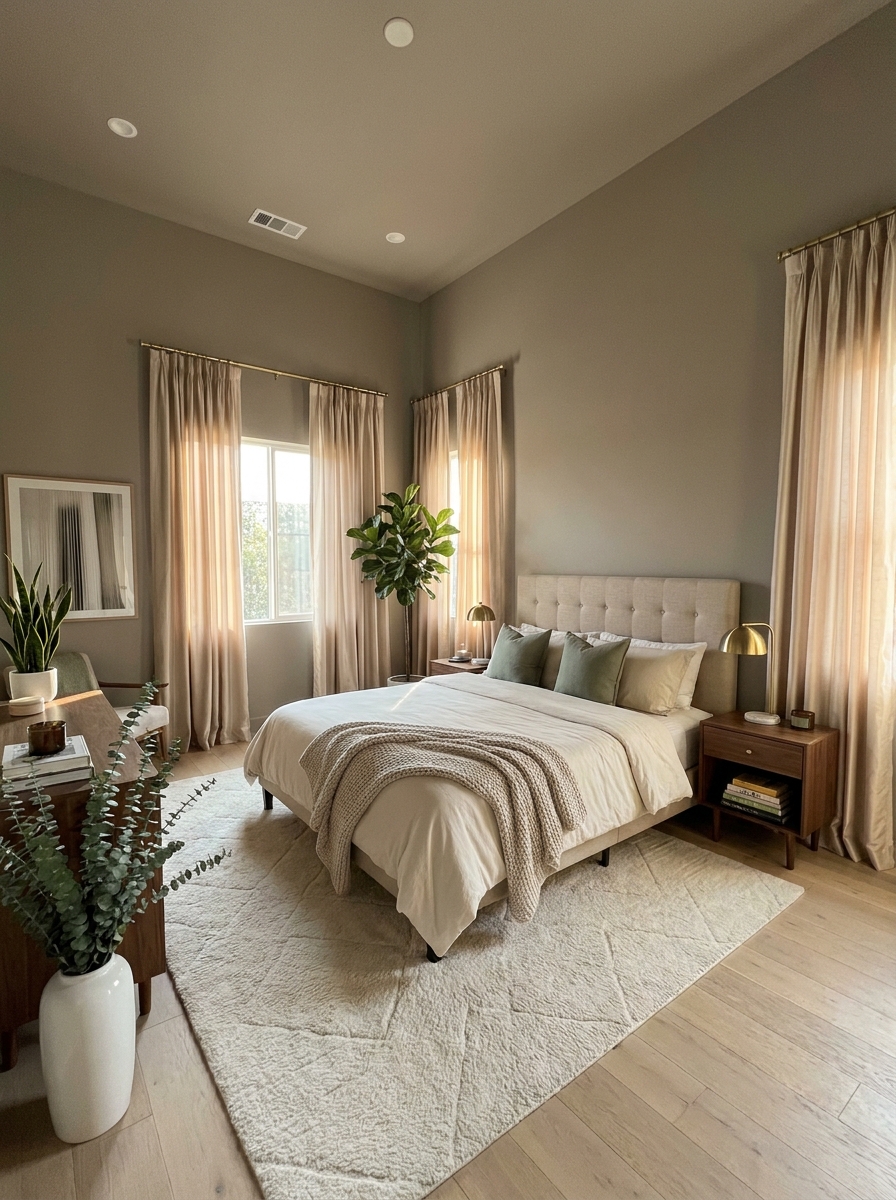
Here’s a sneaky trick that has nothing to do with the curtains themselves but makes them work even harder. When your ceiling is the same color as your walls, there’s no clear stopping point for your eye. Everything blends together in this beautiful, seamless way that makes the whole room feel taller.
Pair that with curtains mounted high and close to the ceiling? Magic. Your eye travels up the curtain panels, hits the rod, keeps going to the ceiling, and there’s no harsh white line saying “ceiling starts here.” It all flows together.
I did this in my bedroom with soft greige walls and ceiling, then hung white linen curtains all the way up. The room feels like it goes on forever. The curtains become these elegant vertical elements that bridge the walls right into the ceiling without any visual interruption. It’s especially gorgeous in rooms with lower ceilings because you’re erasing that obvious boundary that makes spaces feel boxy and cramped.
Quick Guide
Quick Rod Height Calculator
8-foot ceilings: Mount rod 92-94 inches from floor (2-4 inches from ceiling)
9-foot ceilings: Mount rod 104-106 inches from floor
10-foot ceilings: Mount rod 116-118 inches from floor
Panel Length Cheat Sheet:
– For kissing the floor: Measure rod height to floor, add 1 inch
– For subtle puddle: Measure rod height to floor, add 2-3 inches
– For dramatic puddle: Measure rod height to floor, add 4-6 inches
Rod Extension Guidelines:
– Minimum: 4-6 inches beyond each side of window frame
– Ideal: 8-12 inches beyond each side
– Maximum: Extend to meet adjacent wall or furniture
Can’t drill near the ceiling? Use tension rods for lighter fabrics or command hooks rated for your panel weight as a temporary solution while renting.
Your Room Is Already Taller Than You Think
Your Room Is Already Taller Than You Think
Frequently Asked Questions
How high should I hang curtain rods to make my ceiling look taller?
Mount your curtain rod 2-4 inches below the ceiling, or just below crown molding if you have it. This is typically 92-96 inches from the floor in standard 8-foot ceiling rooms. The closer to the ceiling, the taller your room will appear because the eye follows the curtain line upward and assumes the ceiling is way up there.
What length curtains make ceilings look higher?
Floor-length panels that either just kiss the floor or puddle slightly (1-3 inches of extra fabric) create the best ceiling-height illusion. The unbroken vertical line from ceiling-mounted rod to floor is what tricks the eye. Avoid panels that hover above the floor, as they create a visual break that makes ceilings feel lower.
Should curtain rods be wider than the window?
Yes, extend your rod 8-12 inches beyond each side of the window frame when possible. This makes windows appear larger, which in turn makes walls and ceilings feel taller. It also allows curtains to stack completely off the glass when open, maximizing natural light and emphasizing the vertical space.
Do vertical stripe curtains really make rooms look taller?
Absolutely. Vertical stripes or patterns create literal upward lines that guide the eye toward the ceiling. Choose wider stripes (3-4 inches) for a modern look that emphasizes height without feeling busy. Avoid horizontal patterns, which do the opposite and visually shorten your walls.
Can I make low ceilings look higher with curtains in a rental?
Yes! Use tension rods mounted as close to the ceiling as possible, or removable command hooks rated for your curtain weight. Choose lightweight panels in light colors with vertical interest. The same principles apply—high mounting and floor-length panels—you just need rental-friendly hardware.