17 Cozy Small Living Room Ideas with a Sectional
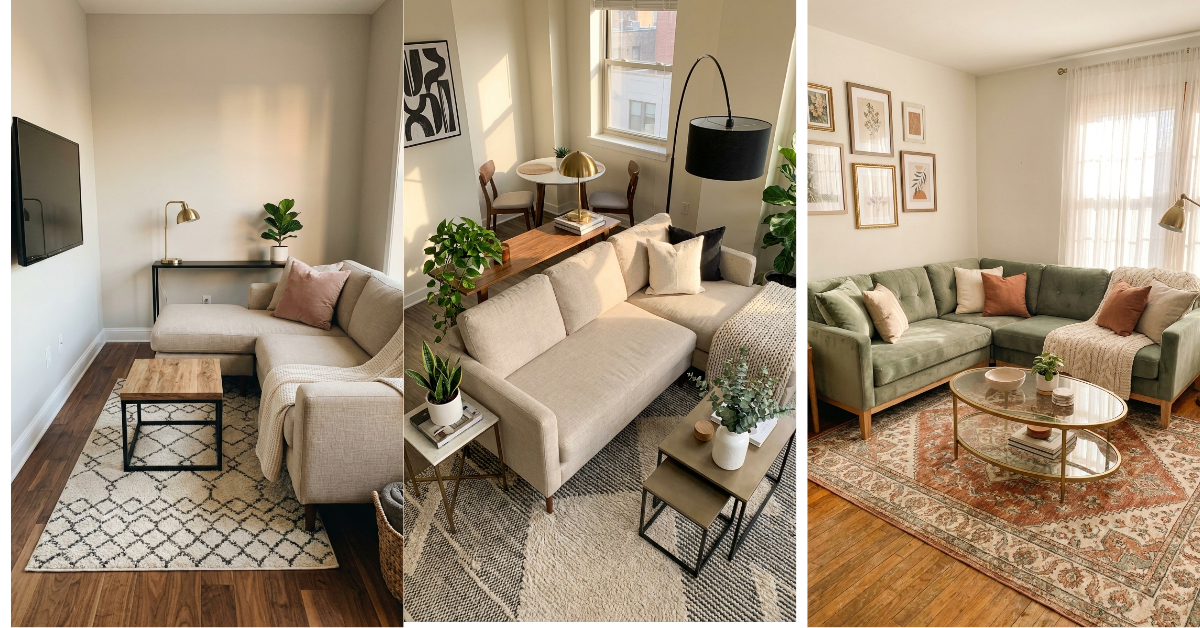
You’ve fallen in love with a gorgeous sectional, but your living room is… well, not exactly sprawling. Maybe you’re standing in your compact space right now, measuring tape in hand, wondering if you’re about to make a very expensive mistake. Here’s the truth: sectionals aren’t just for big rooms. In fact, they can be absolute magic in small spaces when you get the layout right. They define zones, maximize seating, and create that cozy vibe we’re all chasing. The trick isn’t avoiding sectionals in small rooms—it’s choosing the right configuration and styling it smartly. From clever corner placements to floating arrangements that open up your floor plan, there are so many ways to make a sectional work beautifully in a compact living room. And honestly? Some of the coziest, most inviting spaces I’ve seen have been small rooms anchored by the perfect sectional. Let’s get into it.
1. The Corner Configuration That Opens Everything Up
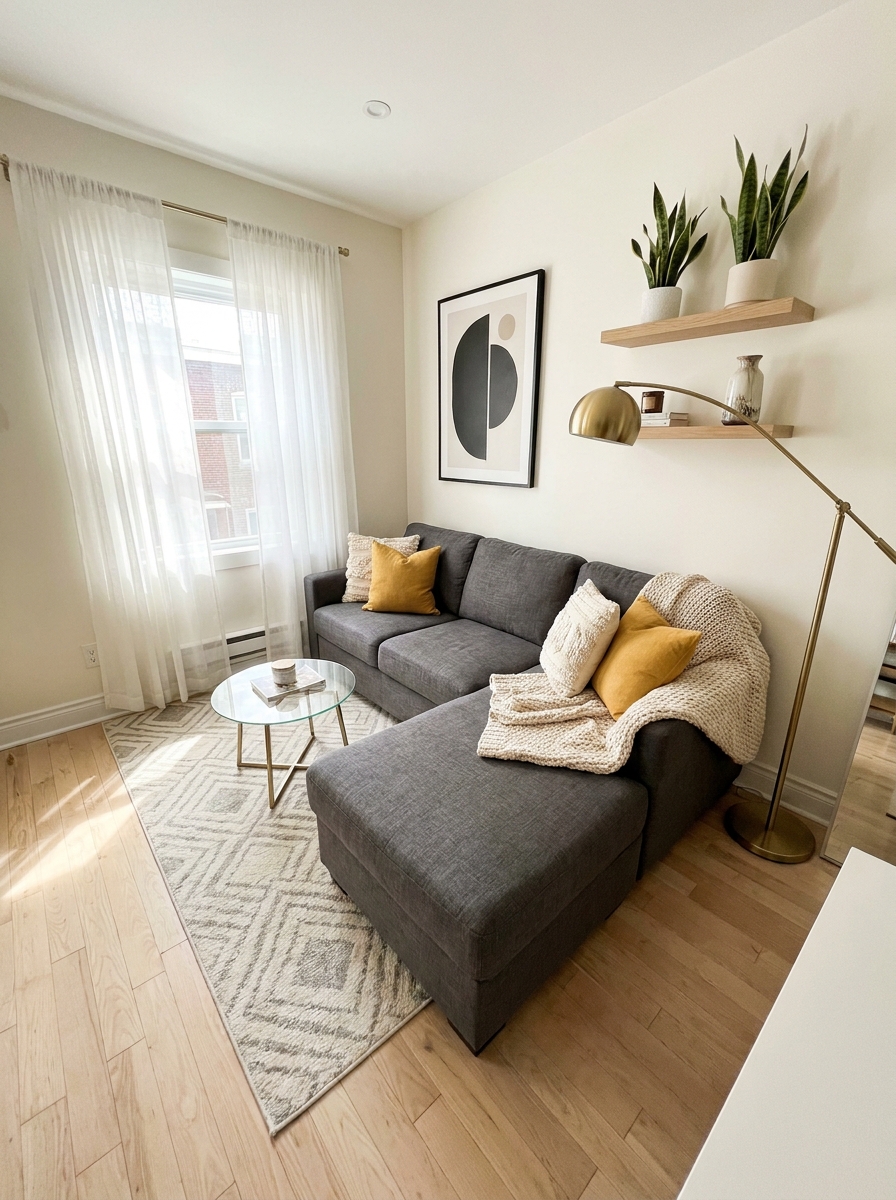
Tucking your sectional snugly into a corner is the classic small-space move, and there’s a reason it’s tried and true. When you anchor the longest part of your sectional against your main wall and let the chaise extend into the corner, you’re actually opening up the center of your room. That walking space matters so much more than you’d think.
The beauty here is that you’re maximizing seating without eating up the middle of your floor. Your coffee table gets to float in front, and suddenly you have this clear pathway that makes the whole room feel bigger. Choose a sectional with slim arms—those chunky rolled arms steal precious inches you can’t afford to lose.
And here’s what really makes this work: keep everything else low and streamlined. A glass coffee table, floating shelves instead of a big bookcase, and a floor lamp tucked behind the sectional. You want eyes to travel easily across the room without hitting visual barriers. The sectional becomes your cozy anchor without overwhelming the space.
2. The Floating Sectional That Tricks the Eye
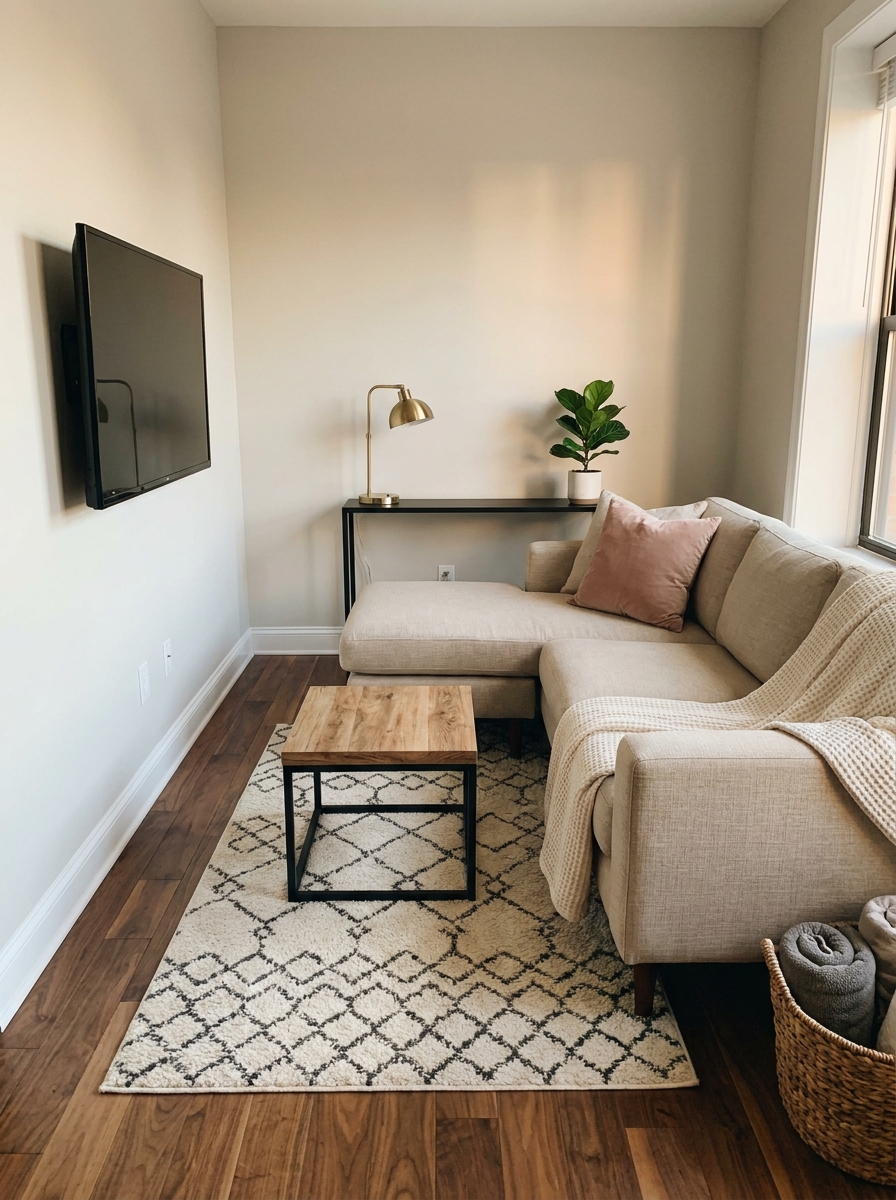
Okay, this one feels counterintuitive at first. Pulling your sectional away from the wall in a small room? But hear me out—it actually works magic. When you float a compact sectional a foot or so off the wall, you create this illusion of more space because you’re defining separate zones.
The key is keeping your sectional on the smaller side and positioning it to face your focal point—usually a TV, fireplace, or big window. That narrow space behind the sectional becomes super functional. Tuck a slim console table back there for lamps, books, or plants. Suddenly you have depth and layers instead of everything pushed flat against the walls.
This layout also gives you flexibility to add a small chair or pouf on the opposite side, creating a conversation area that feels intentional. The room breathes better. Just make sure you have at least three feet of clearance behind the sectional so it doesn’t feel awkwardly squeezed into the middle of nowhere.
3. The Small-Scale Reversible Sectional Secret
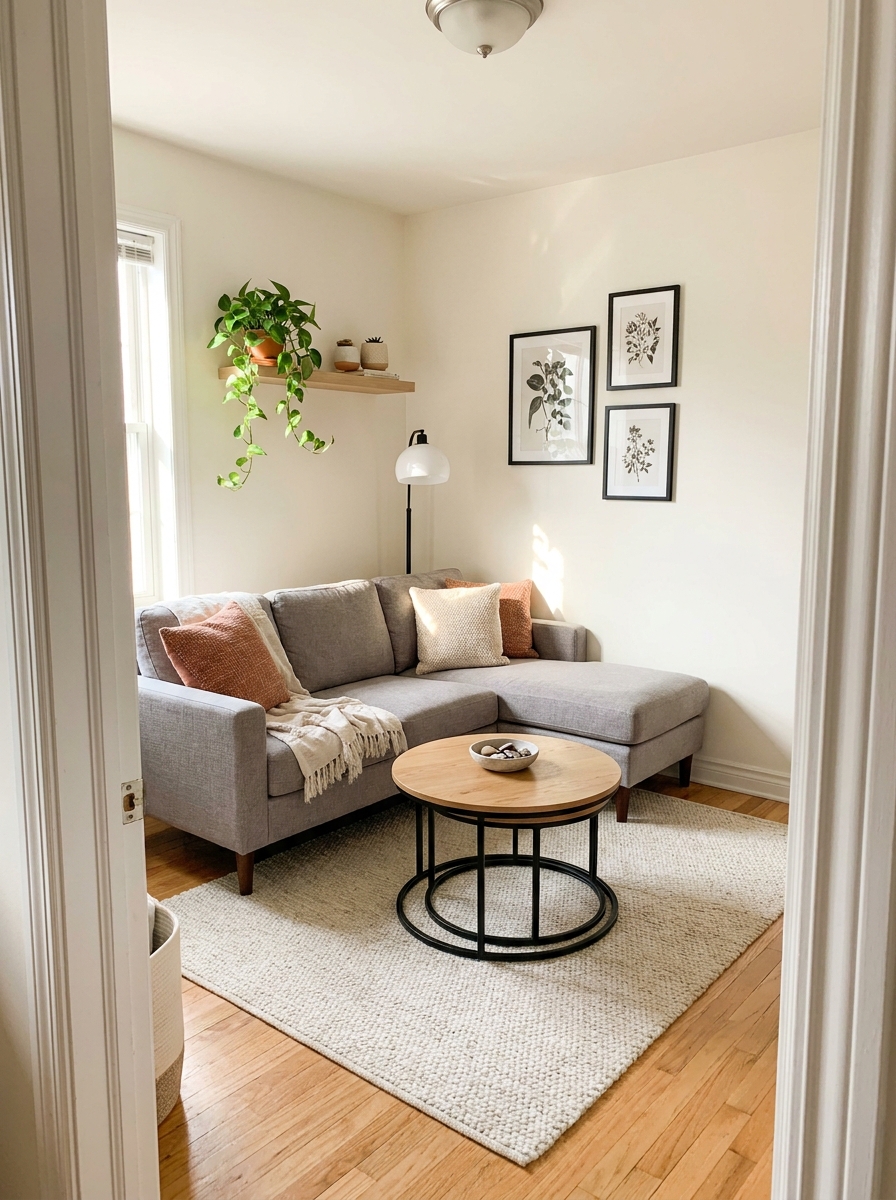
Not all sectionals are created equal, and this matters enormously in a small living room. A reversible sectional—where you can switch which side the chaise sits on—gives you flexibility if you move or just want to refresh your layout. But more importantly, look for sectionals specifically designed for compact spaces.
These smaller-scale sectionals usually have narrower seats (around 35 inches deep instead of 40+), slimmer arms, and tighter overall dimensions. They’re still crazy comfortable, but they don’t swallow your entire room. And honestly, in a small space, you might only need a three-seater sectional with a chaise, not a sprawling five-piece configuration.
The reversible feature is clutch because it lets you adapt to your room’s quirks. Maybe your outlet placement changes things, or your window is on one side. Being able to flip that chaise means you’re not locked into one layout forever. That freedom is worth so much when you’re working with limited square footage and trying to make everything just right.
4. The Light-Colored Sectional That Expands Your Space
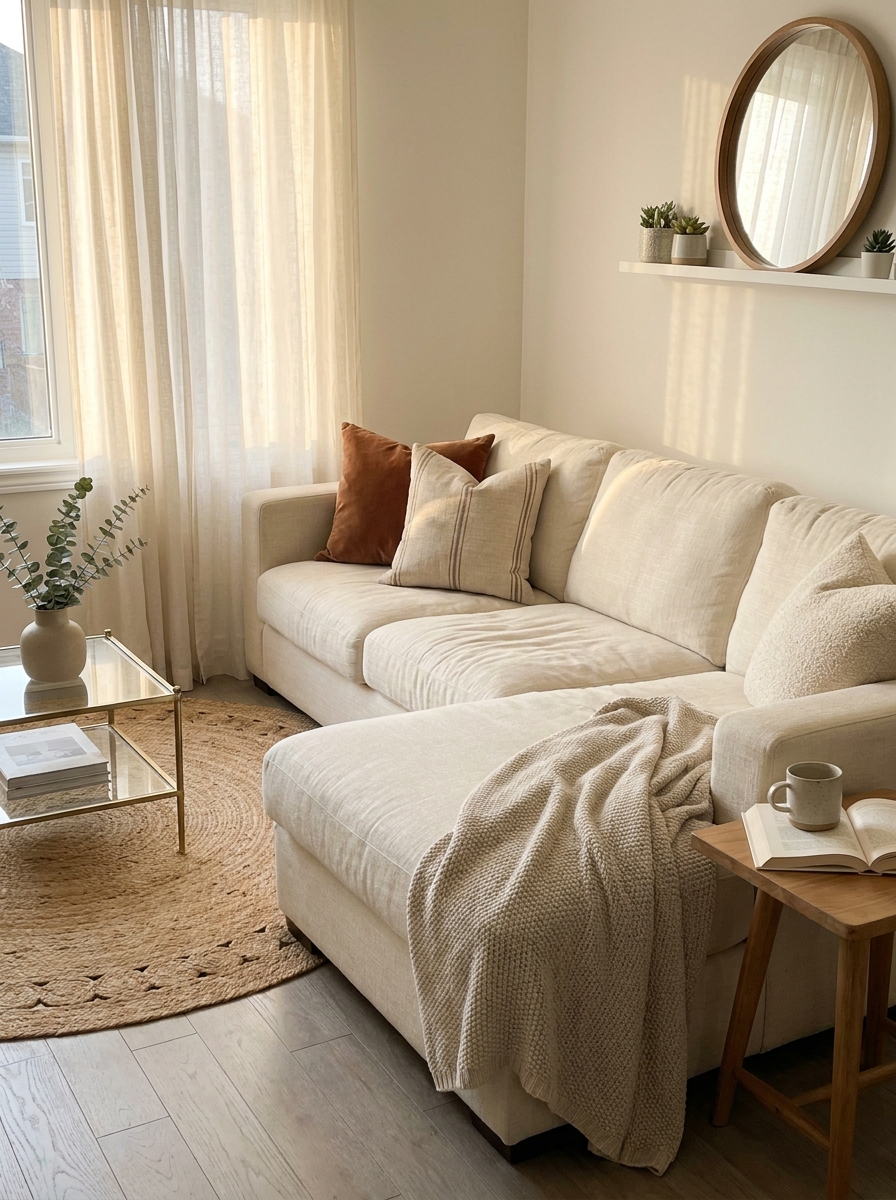
Color psychology is real, especially in small rooms. A sectional in a light neutral—think cream, soft gray, warm beige, or even pale blush—visually recedes and makes your room feel more open. Dark sofas can look stunning, but they also create visual weight that can make a compact space feel heavier.
This doesn’t mean your room has to be boring. A light sectional becomes the perfect neutral backdrop for layering in color and pattern through pillows, throws, and artwork. You get that airy, spacious feeling while still having tons of personality. Plus, light-colored sectionals reflect more light around the room, which is another secret weapon for making small spaces feel bigger.
If you’re worried about keeping a light sofa clean (valid concern), look for performance fabrics that repel stains. Modern upholstery technology has come so far—many light-colored sectionals now come in fabrics that can handle real life. You don’t have to sacrifice the spacious feel just because you have kids or pets or, you know, actually use your couch.
5. The Armless Sectional That Steals Extra Inches
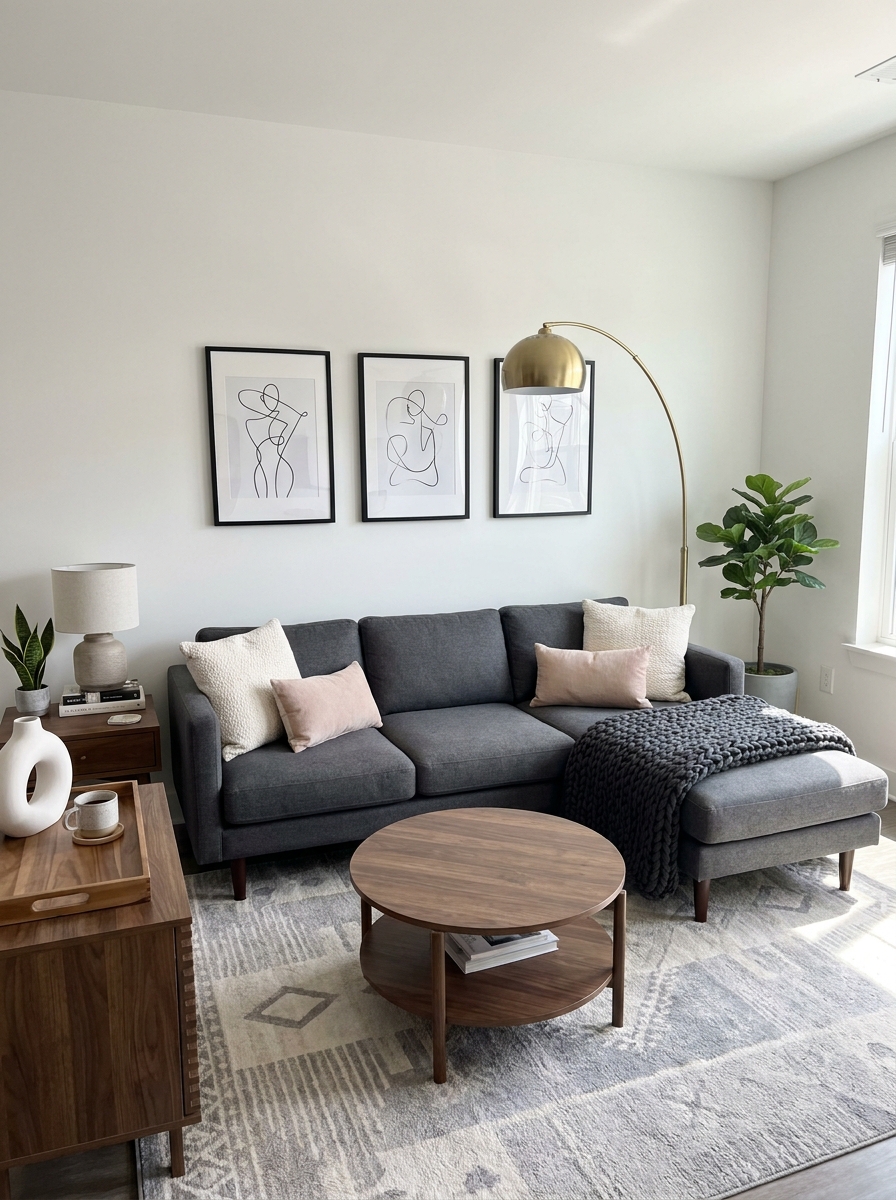
Here’s a secret that totally changed my small-space game: ditching those bulky sectional arms gives you back precious room without sacrificing seating. An armless sectional (or one with just a single arm) looks so much more streamlined and creates this beautiful open flow that makes your whole space breathe.
I love how armless designs let you push the sectional right up against walls without that awkward gap arms create. You can actually use every single inch of your room. Plus, they’re perfect for squeezing in a side table or floor lamp right next to the sofa without things feeling cramped.
The visual effect is pretty amazing too. Without those chunky arms breaking up the line, your sectional reads as one clean piece instead of this big blocky thing taking over. And honestly? I find armless sectionals just as comfortable. Pile on some oversized pillows for arm support and you’re golden. Your room instantly feels bigger and your sectional feels intentional instead of overwhelming.
6. The Two-Piece Sectional You Can Actually Rearrange
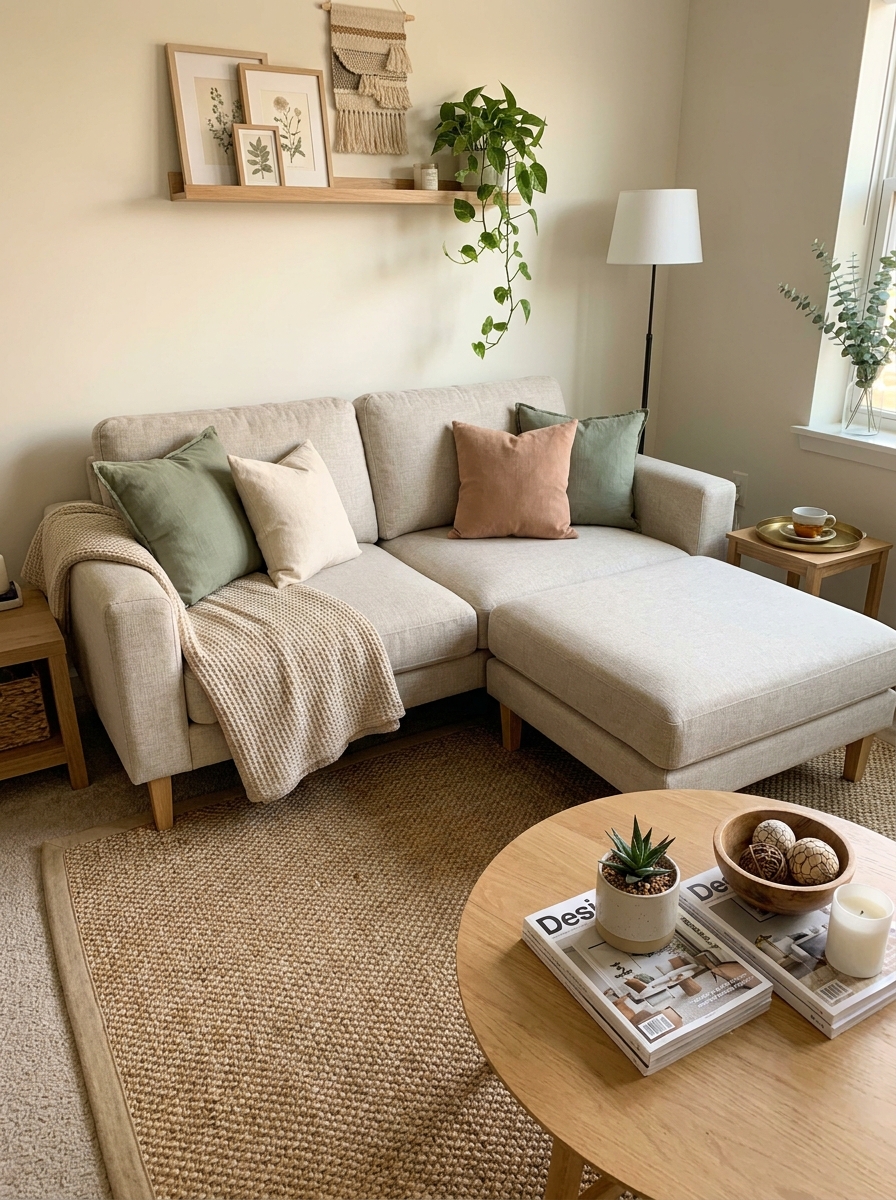
Can we talk about flexibility for a second? In a small space, your needs change constantly. Movie night needs different seating than book club, right? That’s why I’m obsessed with two-piece modular sectionals that you can actually move around.
Instead of one giant L-shaped unit, these come as separate pieces—usually a loveseat plus a chaise or ottoman. You can push them together for traditional sectional seating, separate them when you need to open up the room, or completely reconfigure based on what’s happening. I’ve moved mine at least a dozen times and it never gets old.
The beauty is you’re not locked into one layout forever. Hosting a big group? Push everything against the walls. Need more floor space for yoga or play time? Separate the pieces and slide one into another room. And if you move to a different apartment with a totally different layout? Your sectional moves with you without that “oh no, it doesn’t fit” panic. It’s like having multiple sofas in one.
7. The Sectional with Storage That Hides Your Clutter
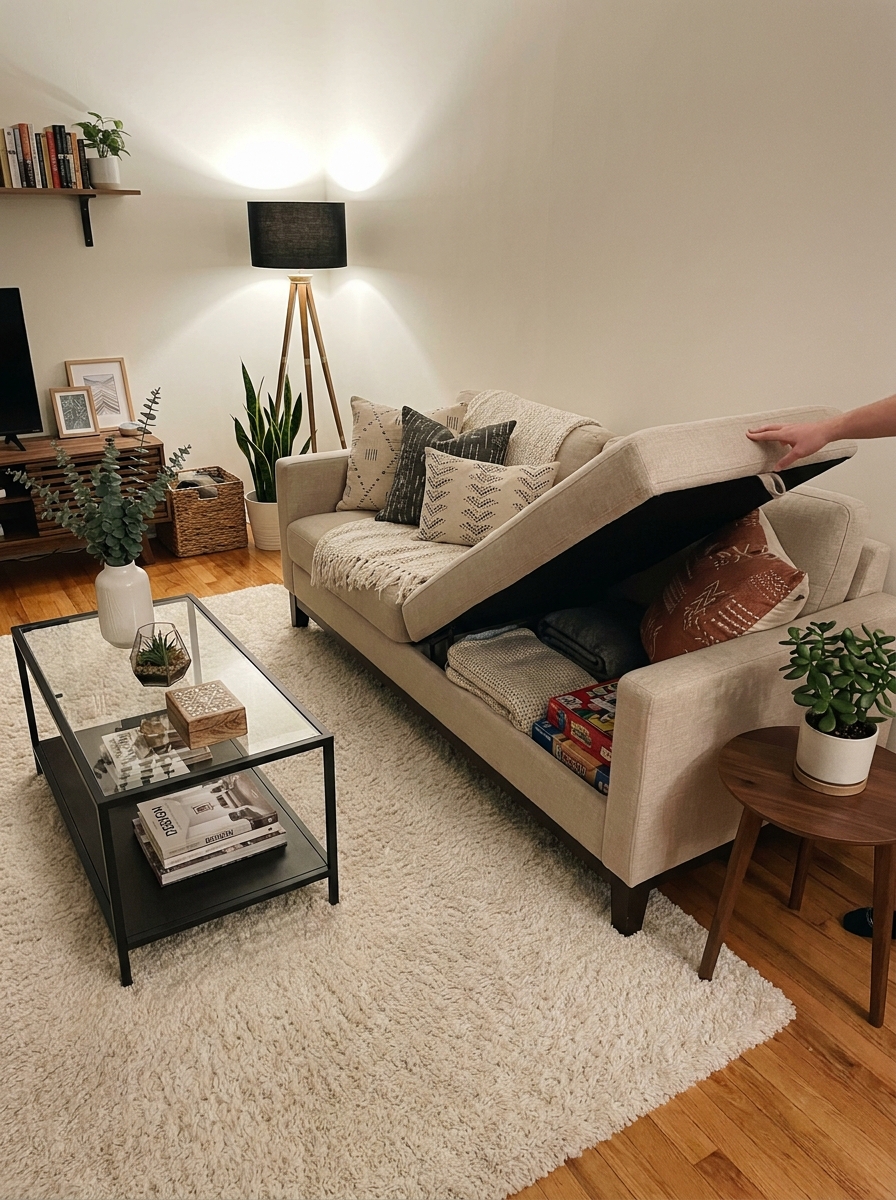
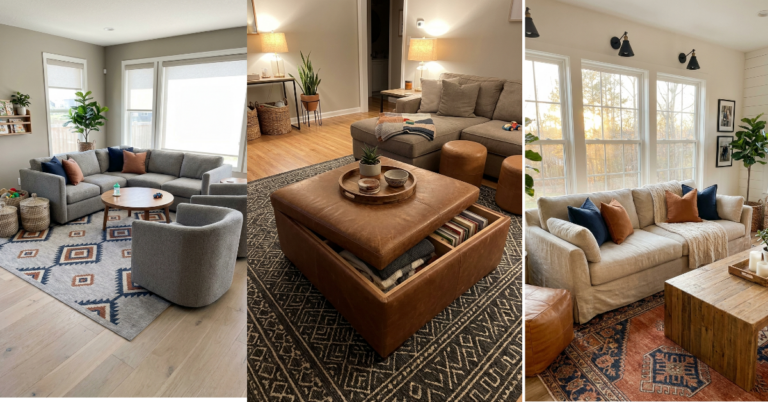
Storage is everything in a small living room, and a sectional with hidden compartments is like hitting the furniture jackpot. I’m talking about lift-up chaise storage or ottomans with secret stash spots that keep all your stuff tucked away but totally accessible.
Think about all the things cluttering up your small space right now. Extra throw blankets, board games, seasonal pillows, magazines you actually want to keep—they all need a home. A storage sectional gives you a place for everything without adding another piece of furniture. I keep my yoga mat, extra throws, and all my remote controls in mine and my room looks instantly cleaner.
The chaise storage is especially genius because it’s this huge compartment that doesn’t look like storage at all. Nobody knows it’s there until you lift it up. And bonus? It forces you to actually edit what you keep since you only have that space to work with. It’s organization therapy disguised as a sofa, and in a small room, that’s pure magic.
8. The Raised-Leg Sectional That Creates Visual Breathing Room
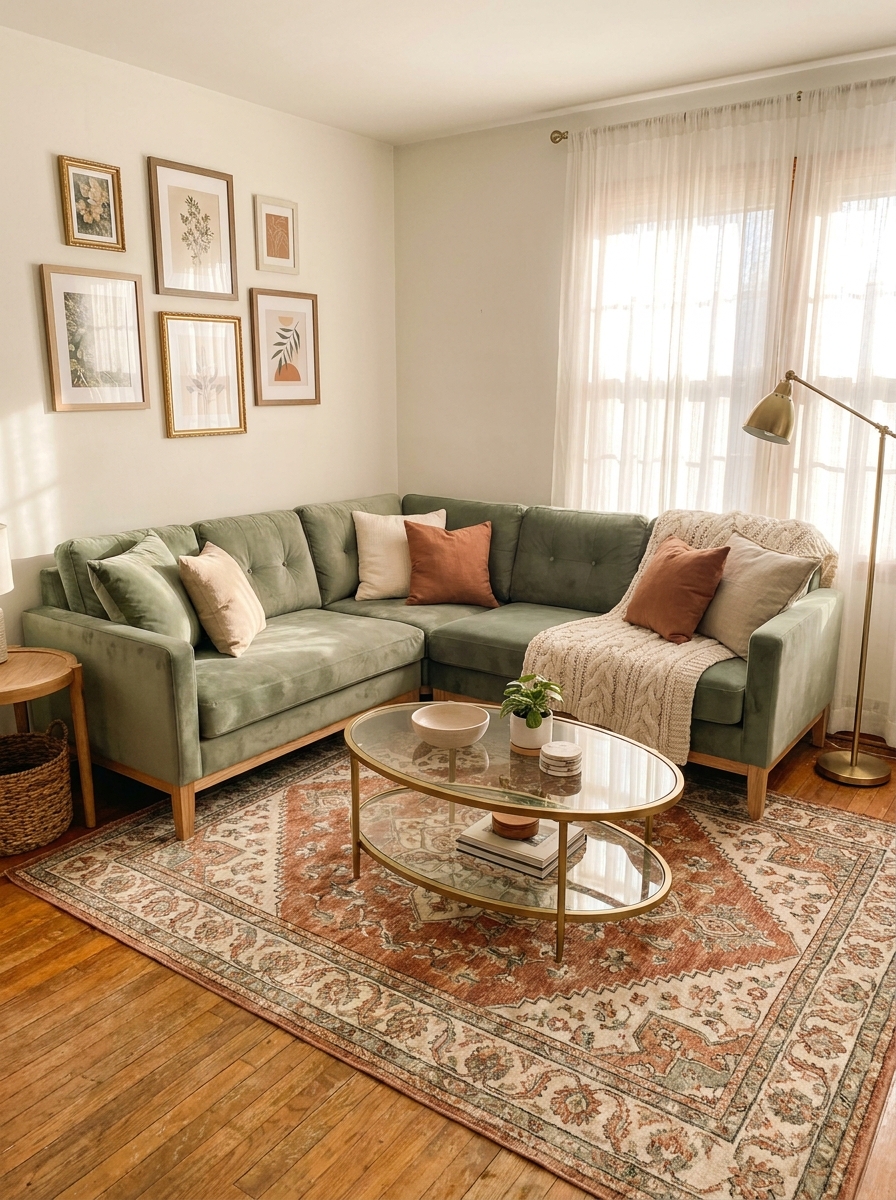
This might sound weird, but the space under your sectional matters just as much as the space around it. A sectional with tall, exposed legs creates this incredible sense of openness that low-profile or skirted sofas just can’t match in a small room.
When you can see the floor continuing under your furniture, your brain reads the room as bigger. It’s that simple. Those few inches of visible space make everything feel lighter and less cluttered. Plus, raised legs mean you can actually vacuum under there without moving furniture—and let’s be honest, in a small space, easy cleaning is essential.
I love how modern sectionals with sleek wooden or metal legs add this elegant, airy quality without sacrificing comfort. The sectional still feels substantial and cozy for sitting, but visually it’s not this heavy mass dominating your room. And the leg style becomes a design detail that ties into your other furniture. It’s such an easy way to make a big piece of furniture feel less overwhelming.
9. The Backless Chaise That Doubles as a Room Divider
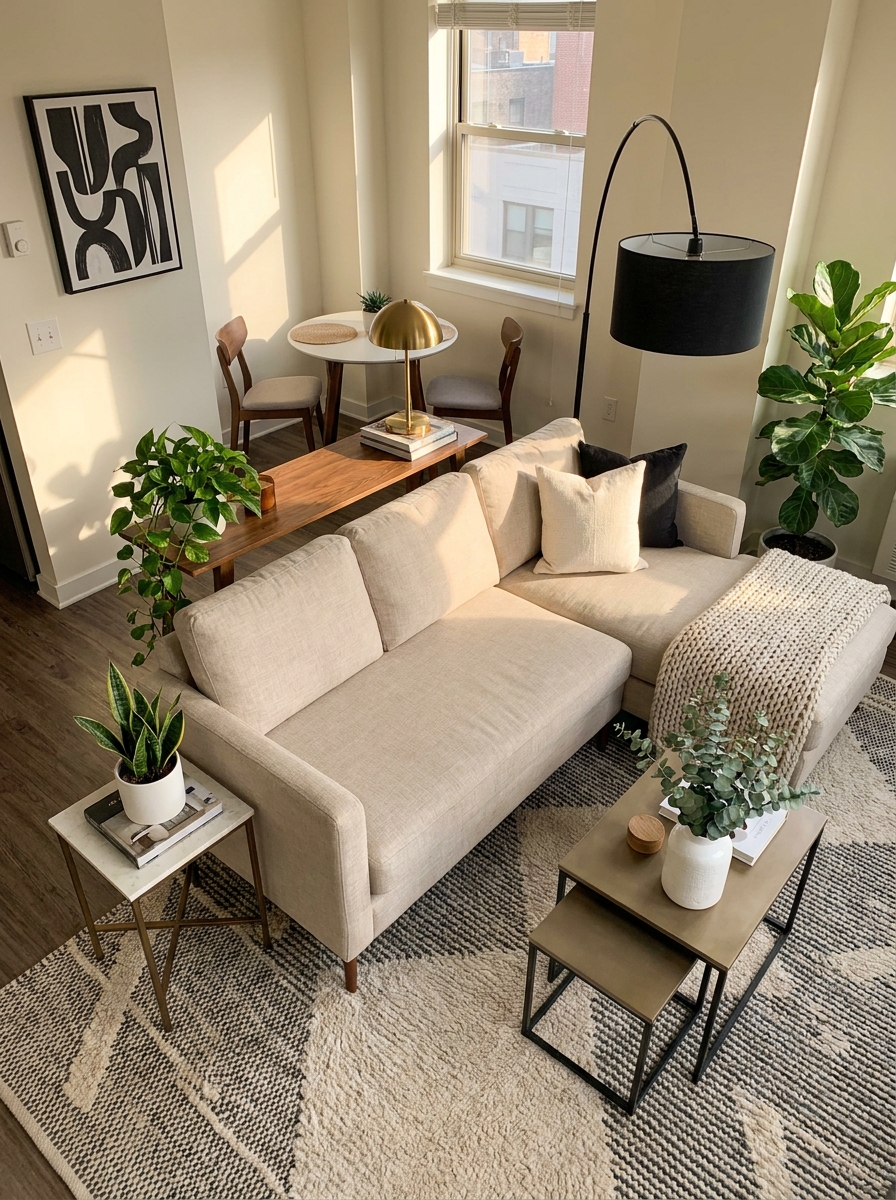
Here’s something brilliant I stumbled onto in a studio apartment: a sectional with a backless chaise. Sounds weird, right? But it completely changed the game for open-plan spaces.
Instead of pushing everything against the walls, this sectional floats in the room with the backless chaise acting as a subtle divider between your living and dining areas. You get the cozy corner seating you want without blocking sightlines or making the space feel chopped up. The backless design keeps everything open and airy.
I love how this creates distinct zones without actual walls. Your sectional becomes functional furniture and smart space planning all at once. Plus, you can style the back of that chaise with a console table for extra surface space. It’s like getting bonus real estate you didn’t know existed. The openness makes your small room feel deliberately designed rather than cramped.
10. The Wall-Hugging L-Shape That Maximizes Floor Space
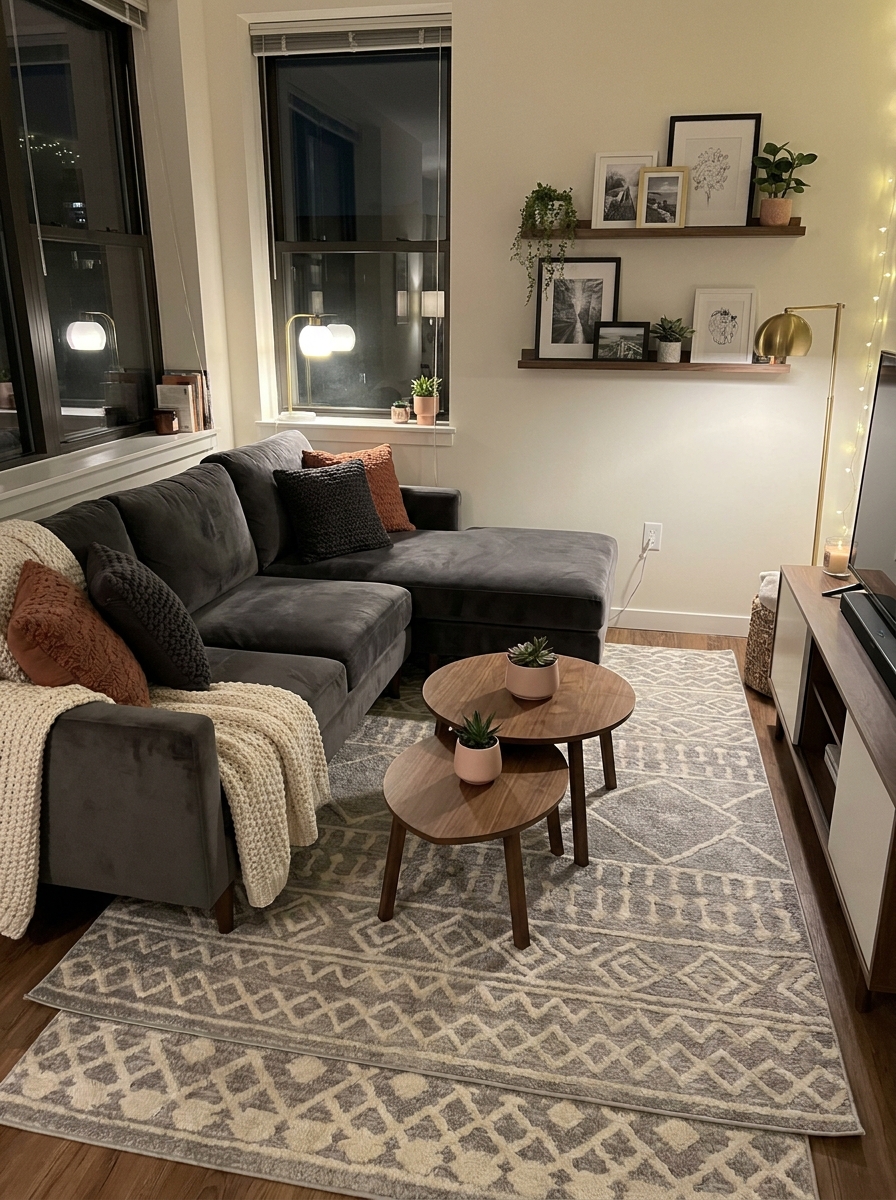
Sometimes the smartest move is the most obvious one. Tuck that L-shaped sectional snugly into the corner, both sides flush against the walls, and suddenly your floor space opens up like magic.
I know it sounds basic, but there’s real strategy here. When you commit fully to the corner with zero gap between sofa and walls, you create the largest possible open area in the center of your room. That’s where you walk, where kids play, where life happens. The sectional becomes this cozy wraparound hug that defines the seating zone without eating up precious square footage.
The key is choosing a sectional with a scale that fits your exact corner dimensions. Too big and it overwhelms. Too small and you waste that prime real estate. When you nail the sizing, this configuration makes a tiny living room feel surprisingly spacious and intentional.
11. The Apartment-Sized Sectional with the Perfect Depth
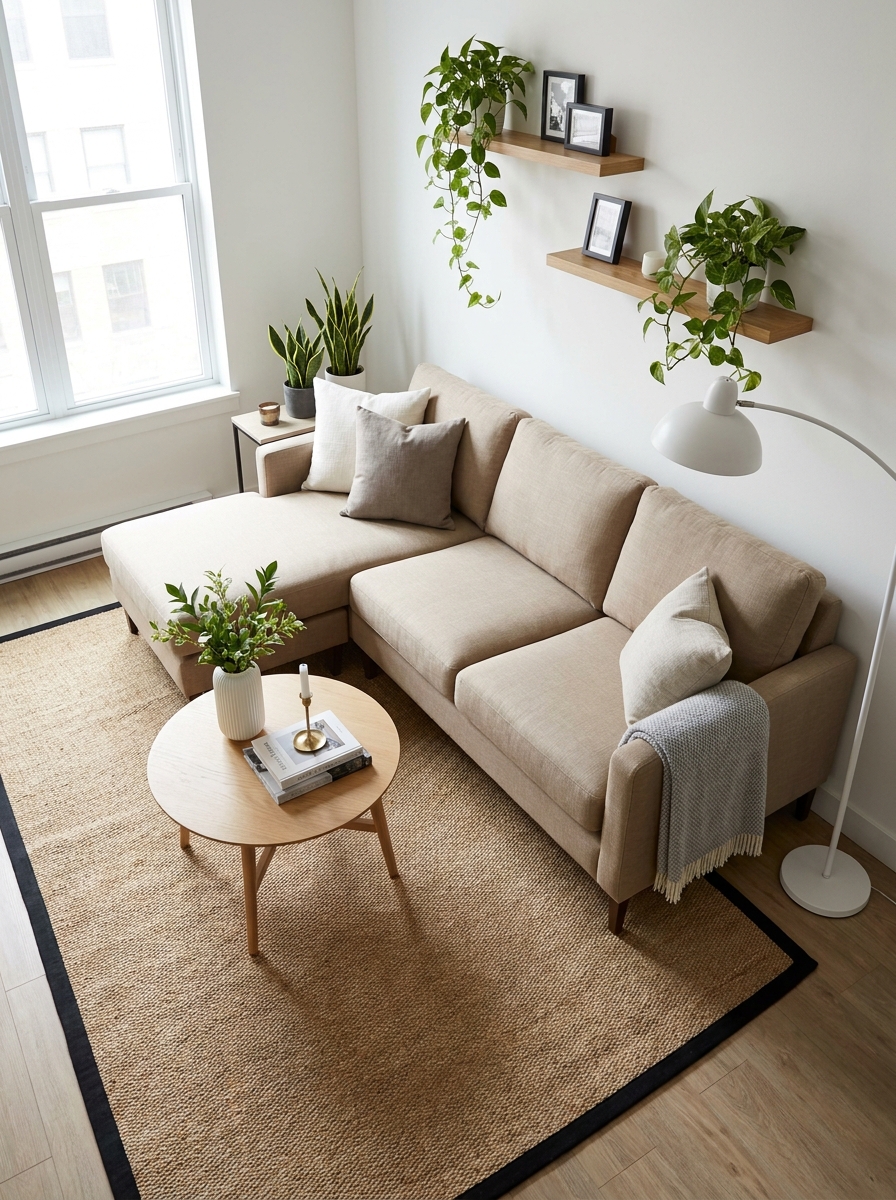
Not all sectionals are created equal, and depth matters way more than you think. I learned this the hard way when a standard 40-inch-deep sectional made my small living room feel like a furniture showroom explosion.
Apartment-sized sectionals typically have a shallower depth, around 32 to 36 inches, and that difference is everything. You still get comfortable seating, but the sofa doesn’t jut so far into the room that it blocks traffic flow or makes the space feel imbalanced. It’s proportional. It breathes.
This works especially well in narrow living rooms where every inch of depth you save translates to easier movement and better flow. Your sectional should invite you to sit, not force you to sidestep around it constantly. When the scale feels right, the whole room relaxes.
12. The Sectional-Plus-Ottoman Combo That Gives You Options
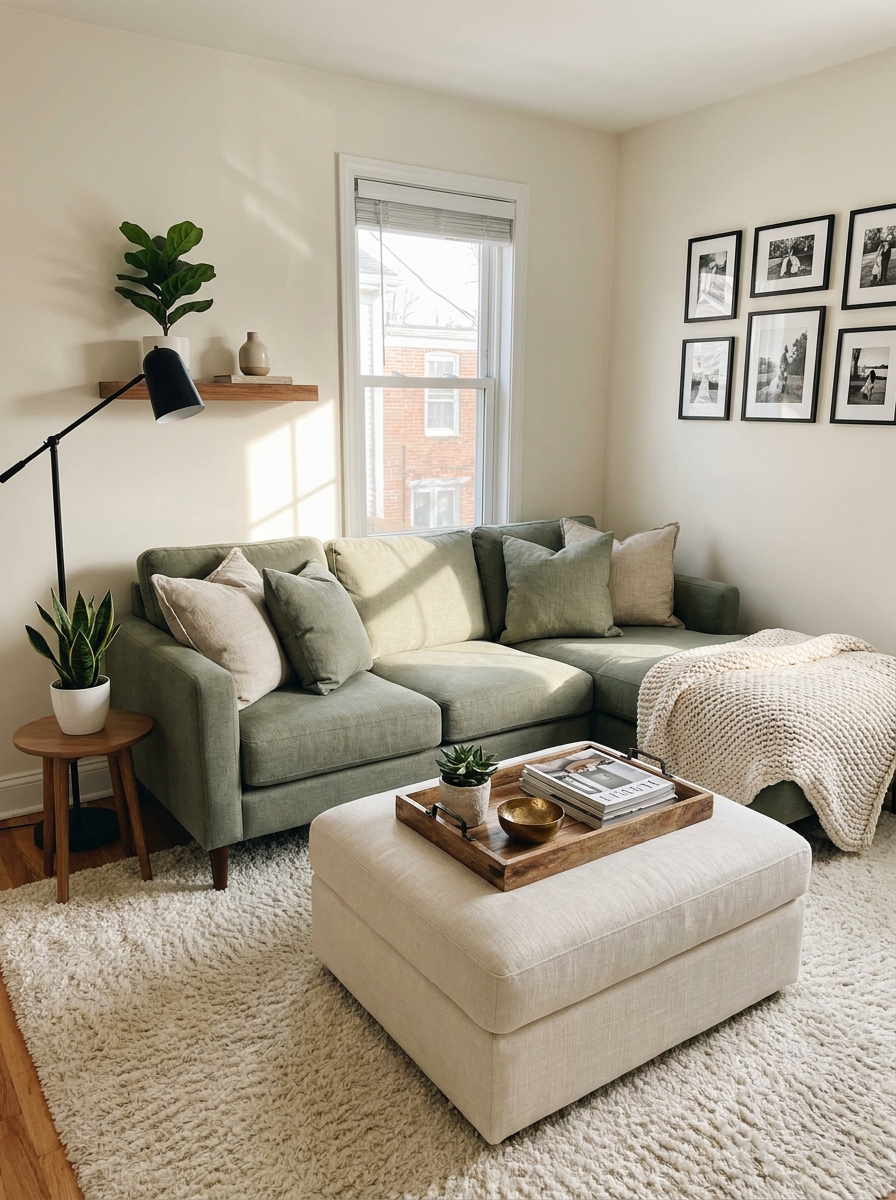
Here’s my favorite flexible solution: a smaller three-seater sectional paired with a large square ottoman. It sounds counterintuitive, but this combo actually works better in small spaces than one big sectional.
The ottoman is your secret weapon. It’s extra seating when friends come over, a coffee table when you need surface space, and a footrest for everyday lounging. You can move it around the room based on what you need that day. Hosting? Pull it close for extra seats. Movie night? Push it against the chaise for full-on sprawl mode.
I love that this setup doesn’t lock you into one configuration forever. Small space living requires flexibility, and this pairing gives you exactly that. Plus, an ottoman on casters? Game changer. You can roll it wherever you need it without breaking your back rearranging furniture.
13. The Modular Sectional That Grows with Your Life
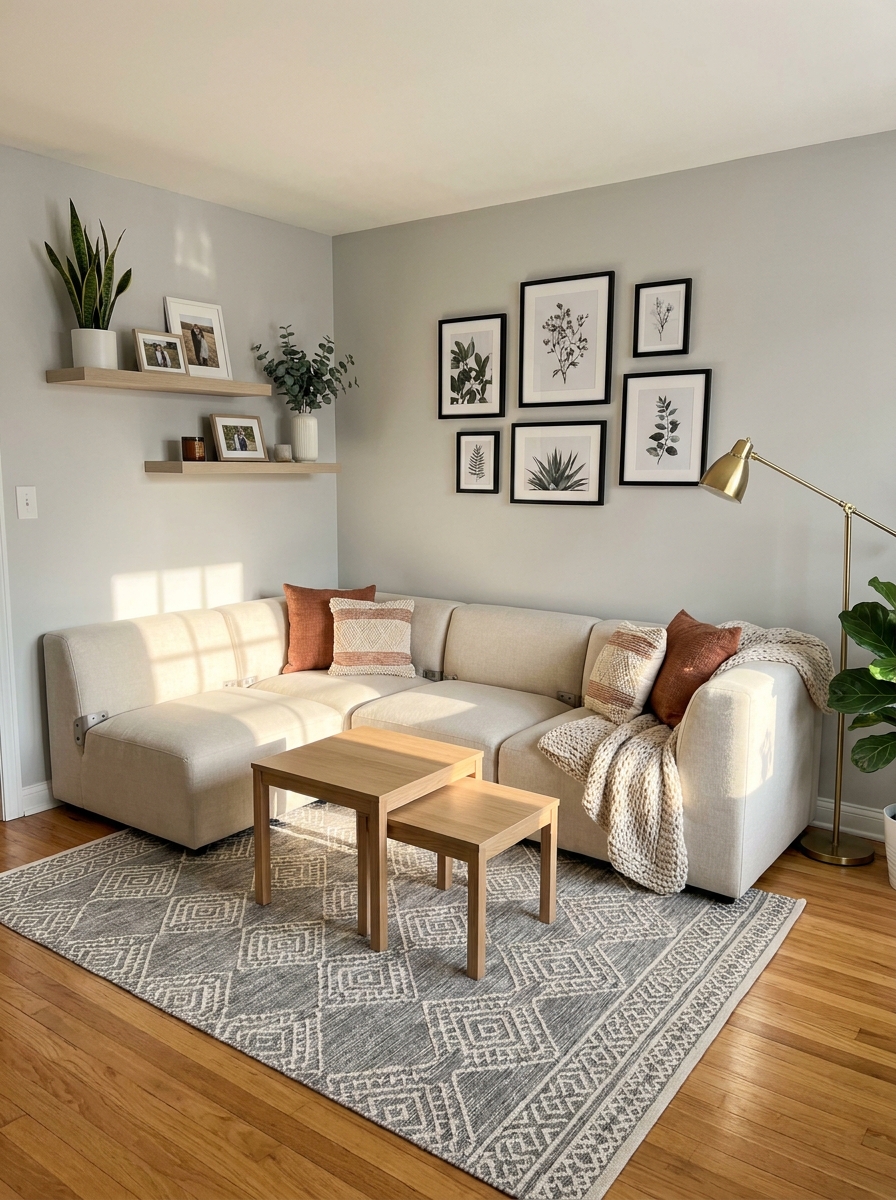
Here’s the thing about small living rooms—they change. You move, you rearrange, you suddenly need that sectional to face a different direction. That’s where modular sectionals become absolute lifesavers.
These aren’t your grandma’s built-in sectionals. We’re talking individual pieces that click together however you need them. This month it’s an L-shape against the wall. Next month? Maybe you want the chaise on the other side. The year after that, you might separate the pieces entirely and use them in different rooms.
I love how this takes the pressure off. You’re not committing to one configuration forever, which is huge when you’re dealing with limited space. You can experiment until you find what actually works for your room’s quirks—that weird radiator placement, the door that swings in at an angle, the window you didn’t account for. Modular means flexible, and flexible means you’ll actually love your sectional long-term instead of fighting with it every time you vacuum.
14. The Slipcovered Sectional That Forgives Everything
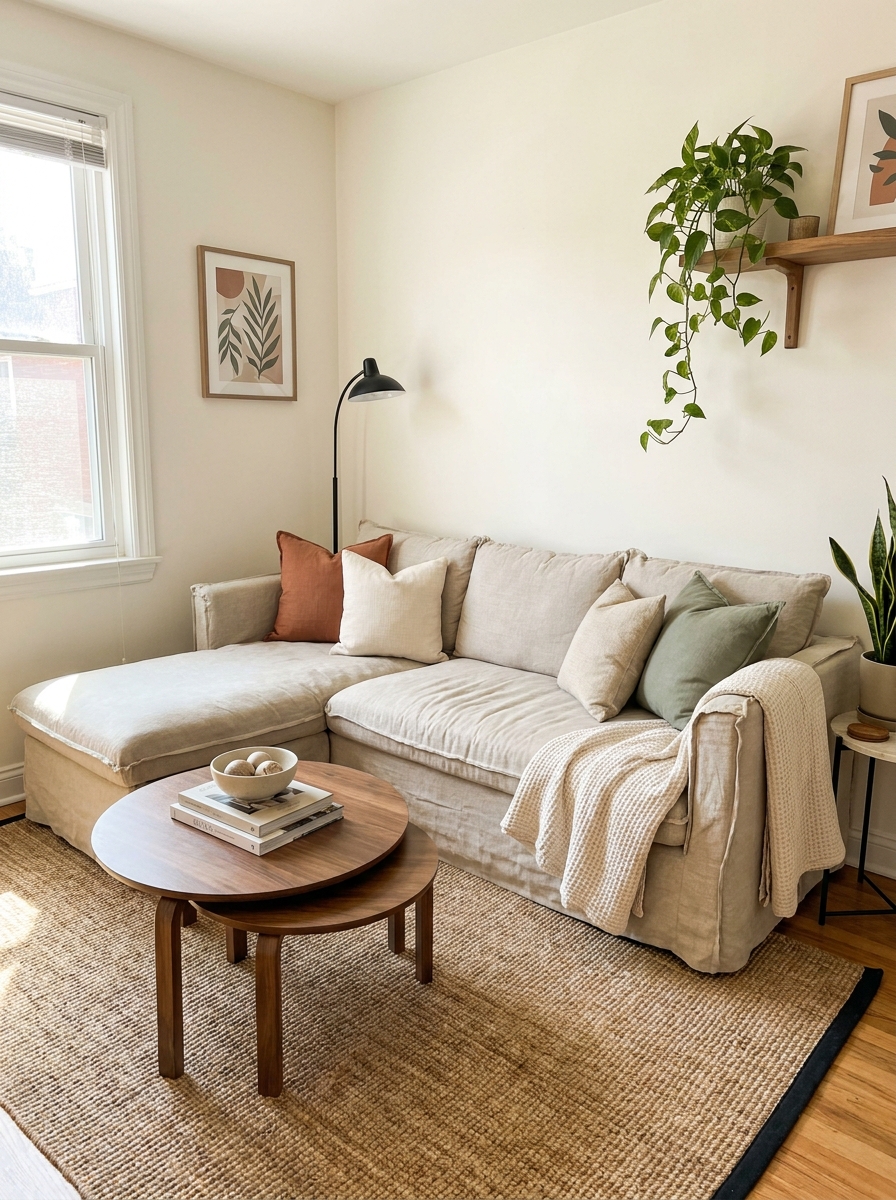
Small living rooms get lived in hard. There’s nowhere else for life to happen, so your sectional takes the brunt of everything—movie nights, impromptu naps, kids doing homework, that time you ate spaghetti a little too enthusiastically.
A slipcovered sectional in a small space is like having a reset button. Coffee spill? Whip off the cover and toss it in the wash. Dog hair embedded in every crevice? Quick vacuum and you’re golden. The whole thing looking a little tired after six months? Fresh covers make it look brand new again.
What I really love is how forgiving these are when you’re still figuring out your style. You can start with classic white or cream slipcovers, then switch to charcoal gray when you’re craving something moodier. It’s like getting a new sectional without the commitment or the price tag. In tight quarters where your sectional dominates the room visually, being able to change its look completely transforms your entire space.
15. The Sleeper Sectional That Hides a Whole Guest Room
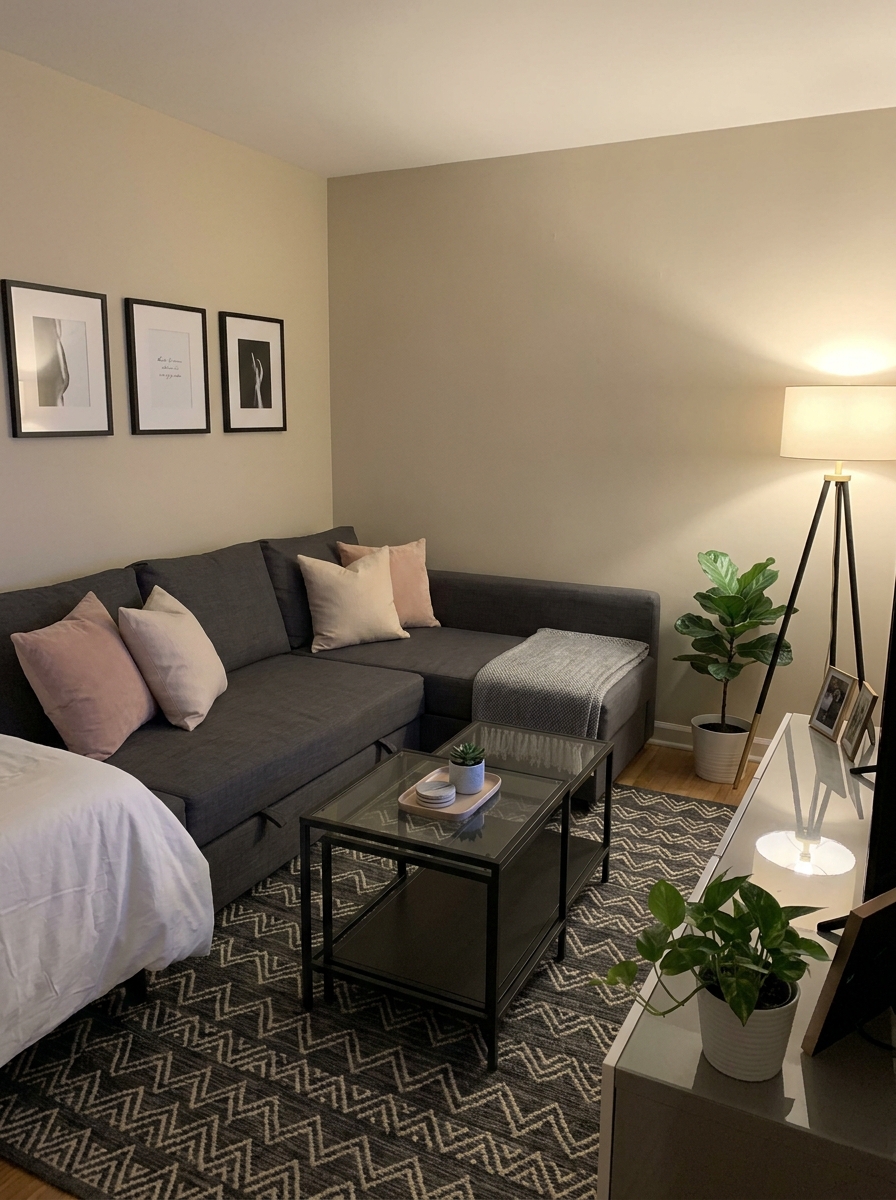
When your living room is already tight on space, where exactly are guests supposed to sleep? Enter the sleeper sectional—possibly the most underrated small-space hero ever invented.
Modern sleeper sectionals aren’t the lumpy torture devices your aunt had in 1995. We’re talking actual comfortable mattresses tucked inside surprisingly sleek frames. During the day, nobody would ever guess there’s a full bed hiding in there. Your sectional looks like, well, a sectional. But when friends visit? You pull out that mattress and suddenly you’ve got a guest room without sacrificing an entire room.
The key is finding one where the mattress mechanism doesn’t eat up your whole chaise or make the everyday seating uncomfortable. Test it out in person if possible. Sit on it like you normally would, then pull out the bed and actually lie down. In a small living room, this piece needs to work overtime, so make sure it’s genuinely comfortable in both configurations. Your back and your overnight guests will thank you.
16. The High-Back Sectional That Creates Instant Coziness
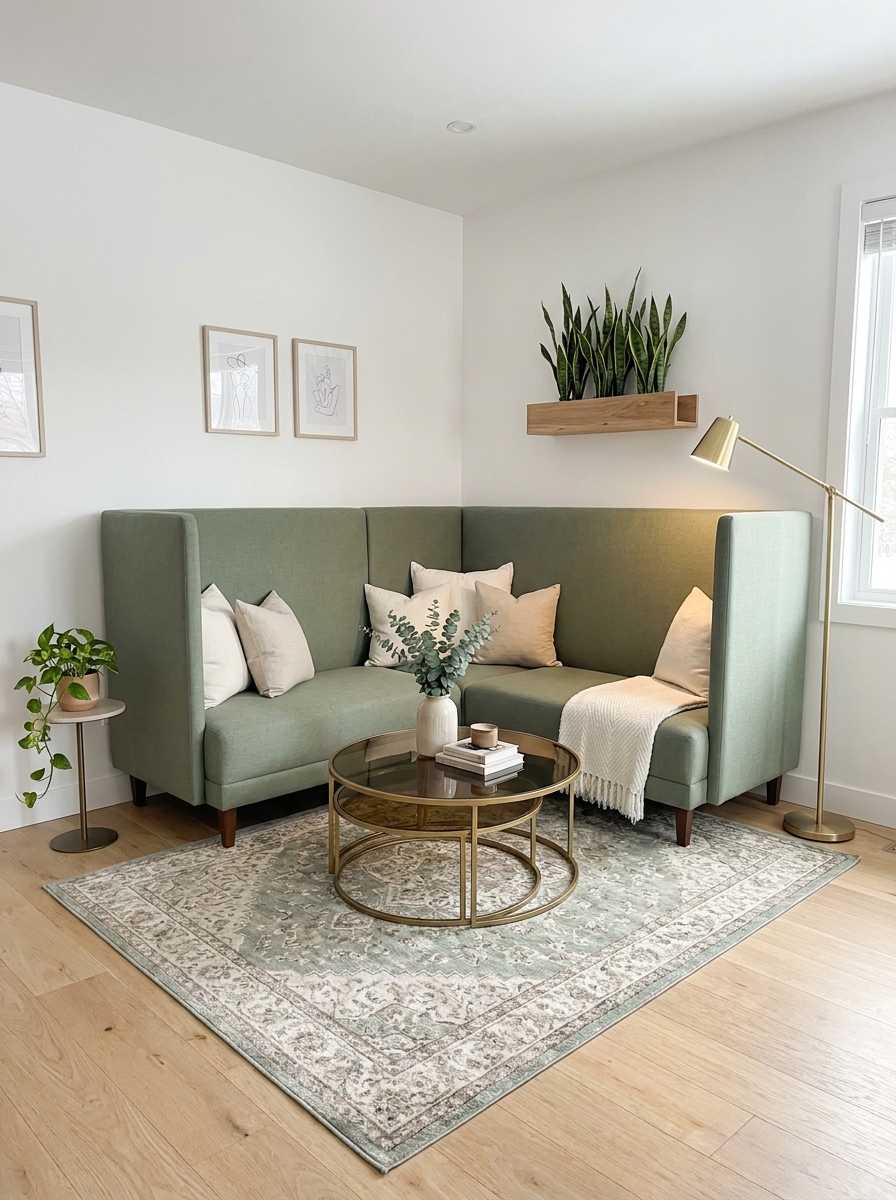
Small living rooms can sometimes feel exposed—like you’re sitting in a fishbowl with nowhere to really settle in. A high-back sectional changes that entire feeling instantly.
Those tall backs create a sense of enclosure without walls. You sink into your sectional and suddenly you’ve got this cozy nook carved out of your compact space. It’s like having a reading corner and a conversation pit built right into your sofa. The high backs also do something magical with sound—they absorb and soften noise, making your small living room feel more intimate even when the TV’s on.
Now, I’ll be honest—high-back sectionals can visually dominate a small room. But if you choose one in a light color and keep the lines clean, it adds drama without making the space feel cramped. The trick is embracing it as your room’s main feature instead of fighting it. Let it be substantial. In a tiny living room, that sense of being wrapped up and cozy might be exactly what’s missing.
17. The Low-Profile Sectional That Makes Ceilings Soar
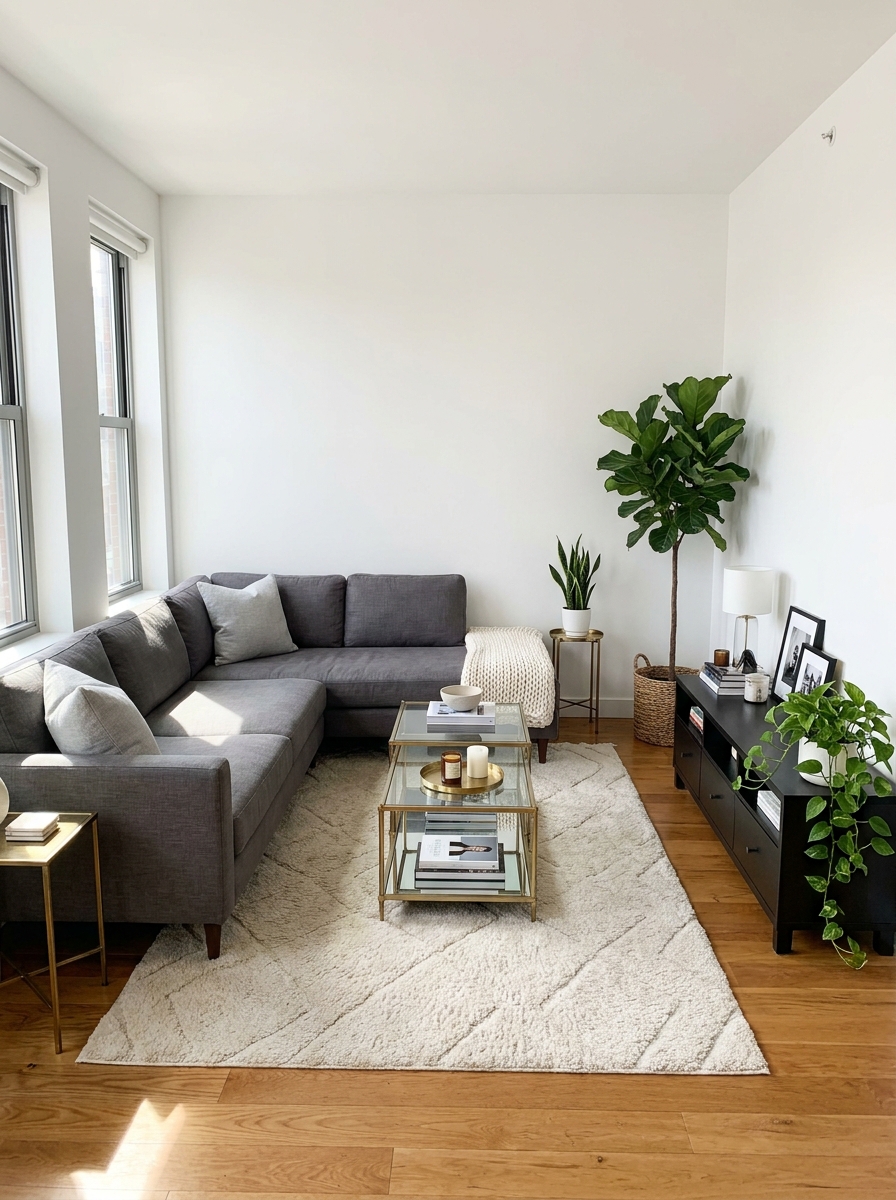
Here’s something nobody tells you: the height of your sectional changes everything about how big your room feels. A low-profile sectional with shorter back cushions actually makes your ceilings look higher and your whole space feel more open.
I’m talking about sectionals with backs that sit around 30-32 inches instead of the standard 36-38 inches. Those few inches make a massive visual difference. The room suddenly has more breathing space above the furniture, and your eye travels upward instead of stopping at a tall sofa back.
This trick works especially well in rooms with standard 8-foot ceilings or basement living rooms where every inch of vertical space counts. Pair your low-profile sectional with vertical elements like tall plants or floor-to-ceiling curtains, and suddenly your small living room doesn’t feel small anymore. It feels intentionally designed and surprisingly spacious. The lower sightlines also make it easier to see across the room, which creates that open-concept vibe even when you’re working with limited square footage.
Quick Guide
Quick Guide: Sectional Size for Your Small Living Room
| Room Size | Best Sectional Configuration | Ideal Dimensions |
|———–|——————————|——————|
| 10′ x 12′ | 2-piece reversible with chaise | 78-85″ L x 55-60″ W |
| 12′ x 14′ | 3-piece compact L-shape | 85-95″ L x 60-65″ W |
| 10′ x 14′ | Apartment-size with bumper chaise | 75-80″ L x 50-56″ W |
Pro sizing tip: Always measure your doorways and stairwells before ordering. A sectional with removable legs and modular pieces is way easier to maneuver into a small space. And remember—you need at least 30 inches of clearance around your sectional for comfortable traffic flow.
Your Small Living Room Is About to Feel So Much Bigger
The best part about styling a small living room with a sectional? You’re creating a space that’s both practical and ridiculously cozy. Every piece matters when you’re working with limited square footage, and a well-chosen sectional does the heavy lifting—it defines your space, maximizes seating, and becomes the anchor everything else flows around. Don’t let anyone tell you sectionals are only for big rooms. Some of the smartest, most inviting living rooms I’ve seen have been compact spaces where a perfectly placed sectional made everything click. Trust your measurements, go for lighter colors if you want that airy feel, and don’t be afraid to try floating your sectional off the wall. Your small living room has so much potential, and the right sectional might be exactly what unlocks it. Now go measure your space one more time (we both know you want to) and start planning that layout. You’ve got this.
Frequently Asked Questions
What size sectional works best in a small living room?
Look for compact sectionals between 75-90 inches long with depths around 35-36 inches instead of standard 40+ inch depths. A simple L-shaped configuration with three seats and a chaise works beautifully in most small spaces. Apartment-size sectionals are specifically designed for rooms under 150 square feet.
Should I put my sectional against the wall in a small living room?
It depends on your room shape. Corner placement against walls works great for very small spaces and maximizes floor area. But if you have a narrow rectangular room, floating your sectional slightly off the wall can actually make the space feel bigger by creating depth and defined zones. Try to maintain at least 30 inches of walking space around all sides.
How do I make a sectional look good in a tiny living room?
Choose light neutral colors to keep the space feeling open, add a properly-sized area rug underneath to anchor the sectional, and keep your coffee table small and low-profile. Use vertical space with wall-mounted shelves instead of bulky bookcases, and limit accent pillows to 3-4 so the sectional doesn’t look cluttered.
Can I fit a sectional and accent chairs in a small living room?
In most small living rooms, it’s better to choose one or the other. A sectional already provides plenty of seating in a compact footprint. If you really want additional seating, consider one small armless accent chair or a compact ottoman that can double as extra seating when needed without overwhelming your limited space.
What’s the smallest room size that can fit a sectional sofa?
You can fit a compact sectional in a room as small as 10 x 10 feet, though 10 x 12 feet is more comfortable. Look for apartment-size or small-scale sectionals specifically designed for tight spaces. The key is choosing a configuration that leaves at least 30 inches of clearance for walking and ensures you can still open doors and access windows comfortably.