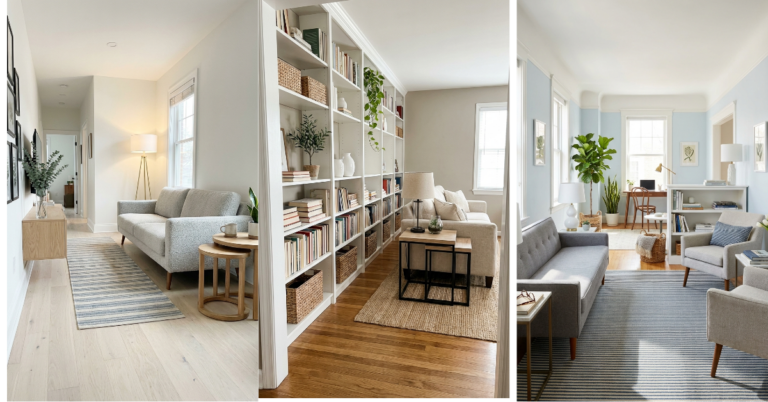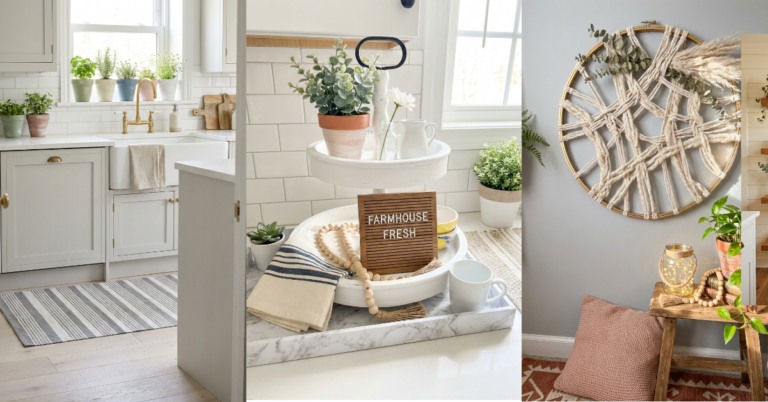
15 Dreamy Small Living Room Ideas to Create Airiness
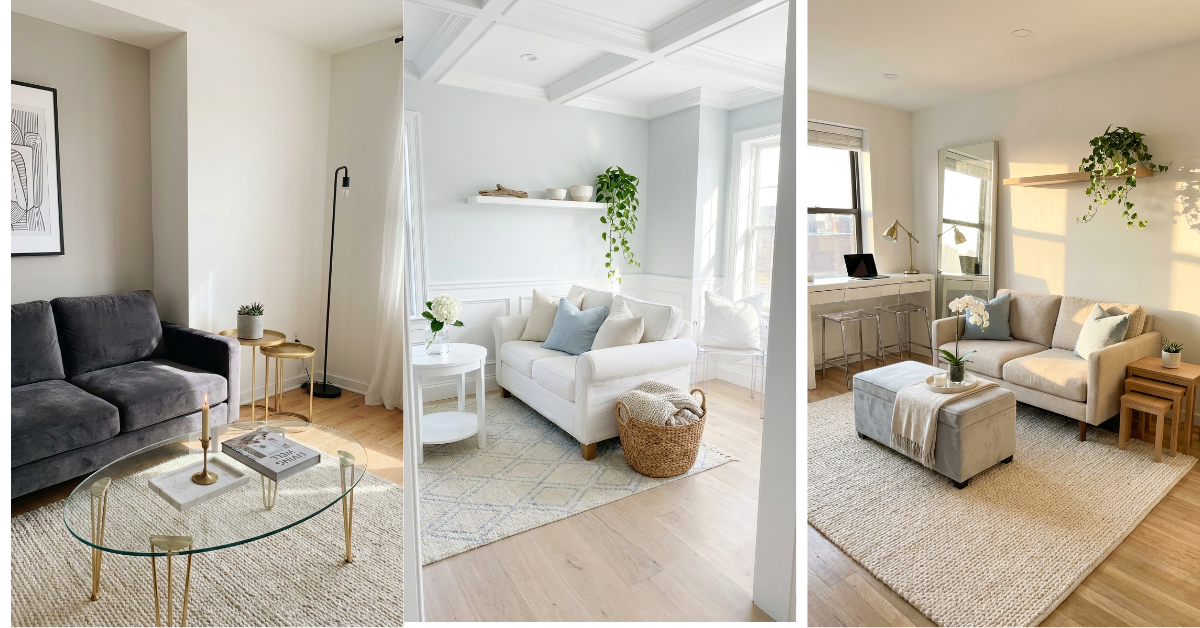
You know that moment when you walk into your living room and it just feels… tight? Like the walls are hugging you a little too closely? I’ve been there. My first apartment had a living room so small I could literally touch both walls while sitting on the couch. But here’s the thing — small doesn’t have to mean cramped. Over the years, I’ve picked up tricks that genuinely work to make compact spaces feel open and breathable. We’re talking strategic mirror placement, furniture that doesn’t eat up your floor space, and color choices that trick the eye in the best way possible. And honestly? Some of my coziest, most beautiful rooms have been the tiny ones. They just need a little thoughtful styling. So if you’re staring at your small living room wondering how to make it feel less like a shoebox and more like a sanctuary, you’re in the right place. Here’s what actually works.
1. Mount a Large Mirror Opposite Your Window
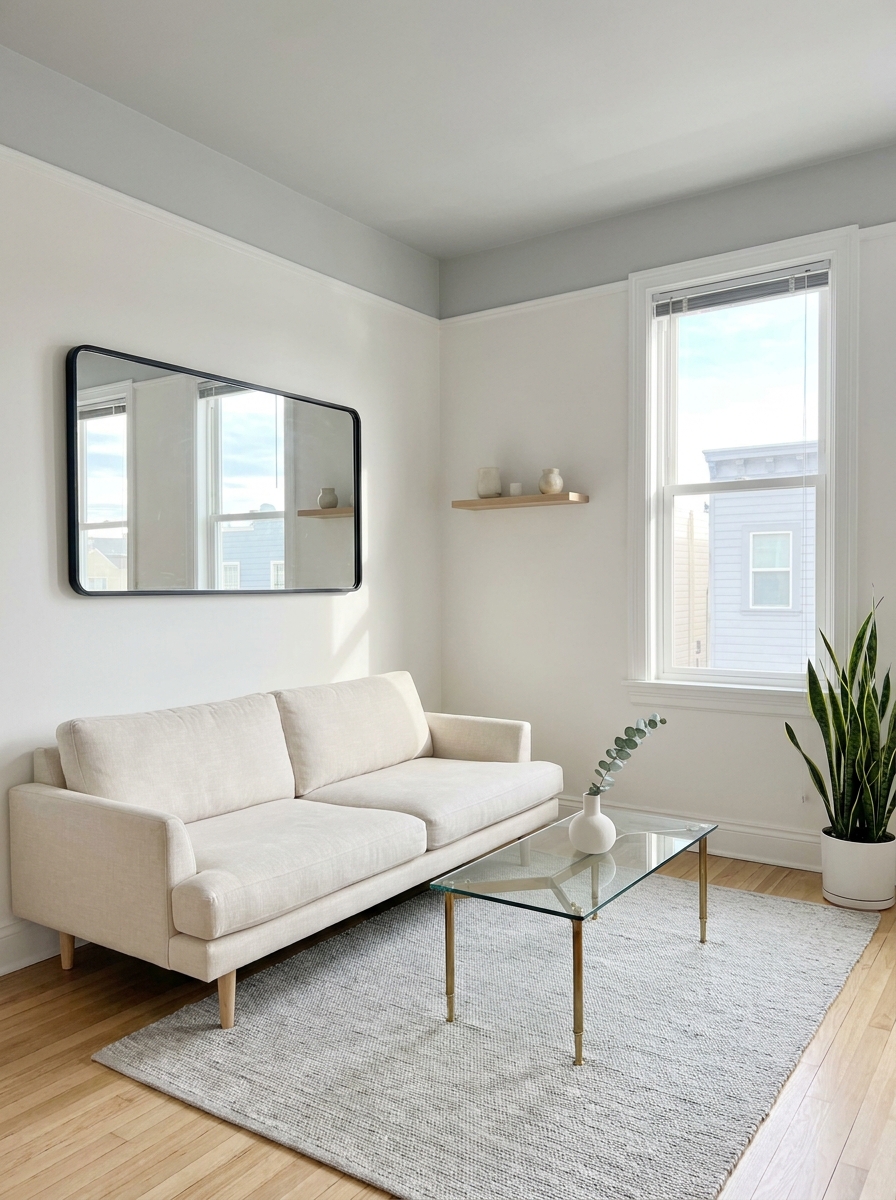
This is hands-down the oldest trick in the book, but it works like magic every single time. When you position a sizable mirror directly across from your window, it doubles the natural light bouncing around your room. The reflection creates this gorgeous illusion of depth that makes your brain think the space extends way beyond its actual walls.
I learned this the hard way in my studio apartment. I had this beautiful vintage mirror leaning against a wall nowhere near a window, and the room still felt dark and small. The day I moved it across from the window? Total game-changer. Suddenly my cramped living area felt like it had actual breathing room.
The key is going big here. A tiny mirror won’t cut it — you want something substantial that can reflect a good portion of that window light. Think oversized leaner mirrors or a large wall-mounted piece with a slim frame so it doesn’t add visual weight. And bonus? You get to check your outfit before heading out the door.
2. Choose a Glass or Lucite Coffee Table
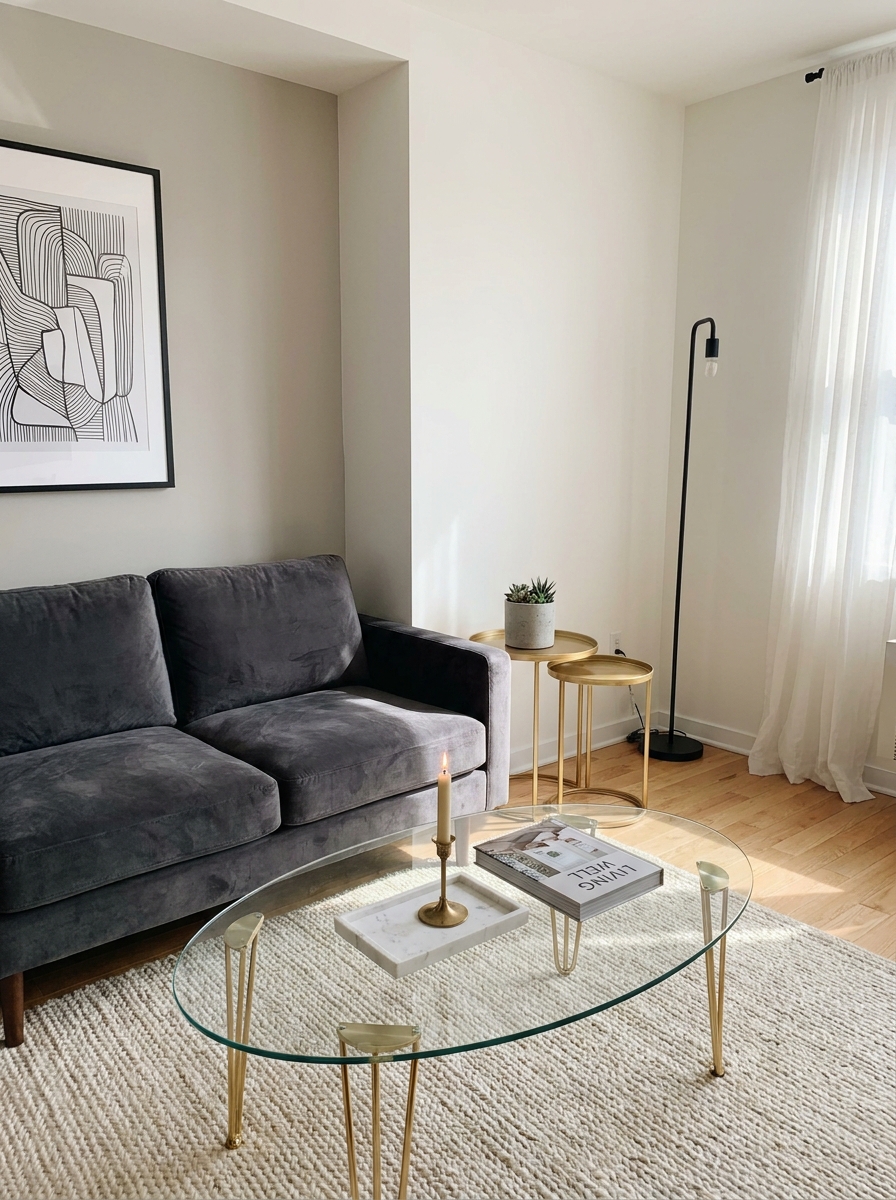
Okay, this one’s a total visual trick and I’m obsessed with it. A glass or acrylic coffee table essentially disappears into your room. Your eye travels right through it instead of stopping at a bulky piece of furniture, which makes the whole space feel more open and less cluttered.
I used to think glass tables were too fragile or cold-looking for everyday living. But then I tried one in my narrow living room, and wow. It didn’t block the sightline from my couch to the window, and suddenly the room felt way less crowded. You can still see your pretty rug underneath it too, which is such a nice bonus.
The transparent quality works especially well in small spaces because it doesn’t add visual weight. A chunky wooden coffee table can anchor a large room beautifully, but in a tiny living room? It just eats up precious visual real estate. Go for clean lines and simple shapes — you want the table to serve its purpose without announcing itself too loudly.
3. Paint Everything in Light Neutrals
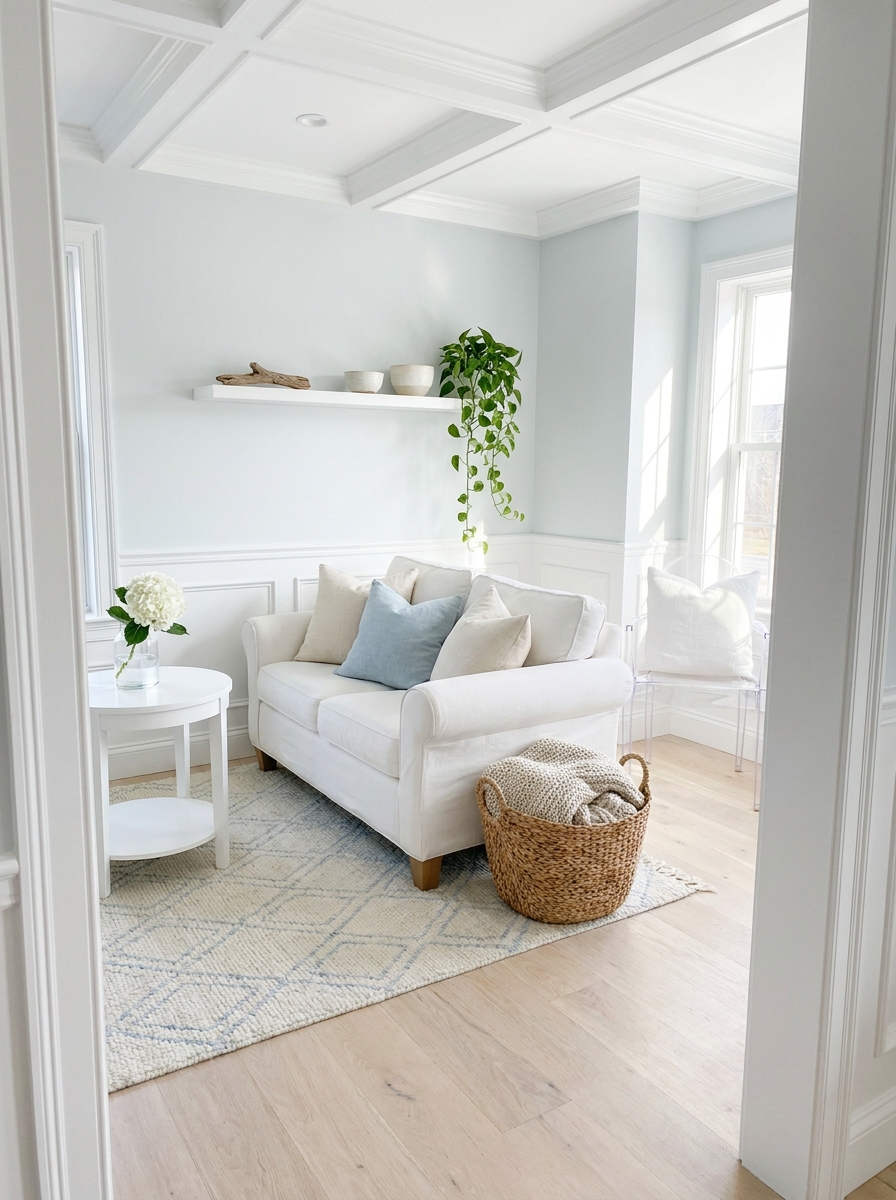
Listen, I love a moody dark wall as much as the next person. But in a truly small living room, light neutral paint colors are your best friend. Soft whites, warm creams, pale grays — these shades reflect light instead of absorbing it, which instantly makes your space feel bigger and brighter.
It’s not about making your room boring. Think of light neutrals as the perfect blank canvas that lets your furniture, art, and personality shine without competing for attention. I painted my tiny living room in the palest greige last year, and people genuinely ask if I knocked down a wall. Nope, just paint doing its spacious magic.
And here’s the thing about going light — you can layer in warmth and depth through textures and accessories. A cream room with linen throws, wood accents, and greenery feels cozy and inviting, not sterile. The light walls just give everything else room to breathe. Plus, your space will photograph beautifully, which matters when you’re obsessed with capturing your home for the ‘gram.
4. Float Your Furniture Away From the Walls
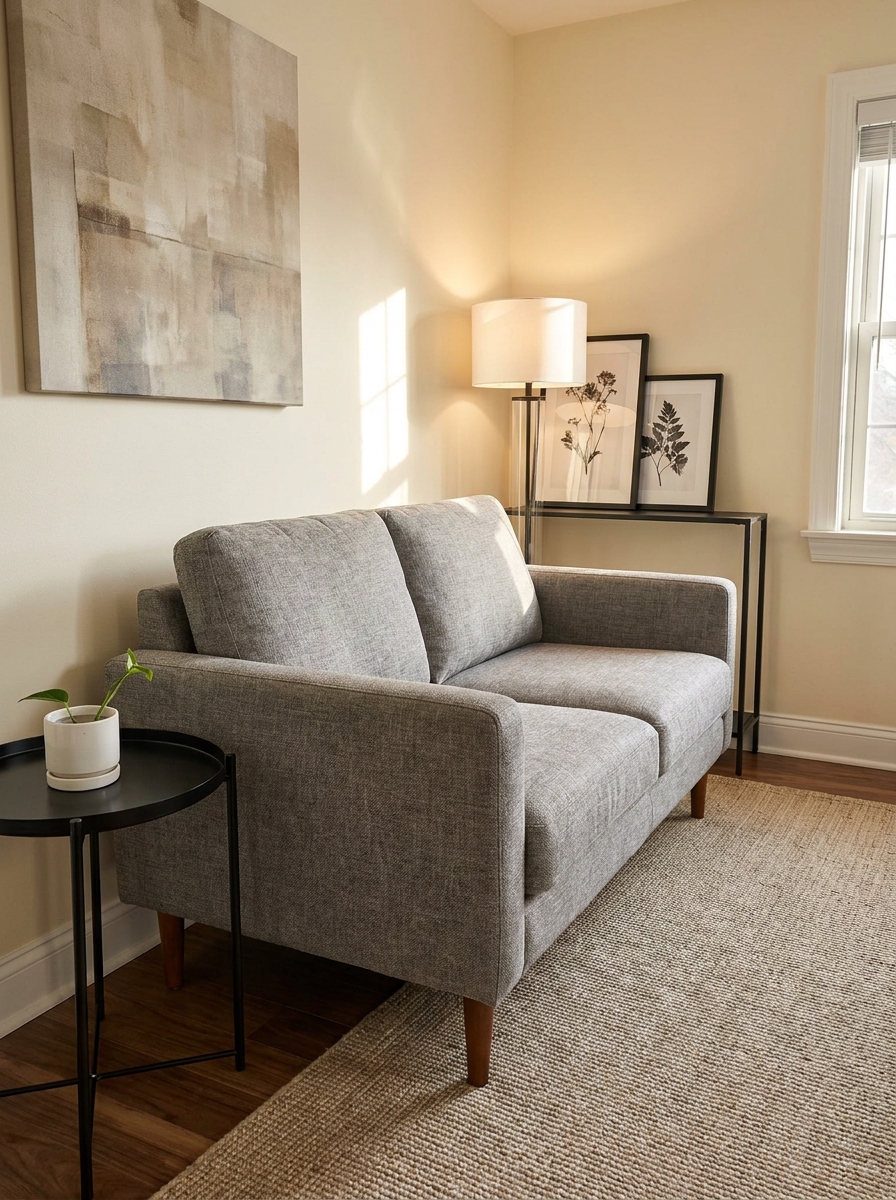
This sounds totally backwards, right? In a small room, shouldn’t you push everything against the walls to save space? Actually, no. Floating your furniture even just a few inches away from the walls creates breathing room and makes the space feel more intentional and larger.
When I first heard this advice, I was skeptical. But then I pulled my sofa about eight inches off the wall, and something clicked. The room suddenly had dimension and flow instead of feeling like a furniture showroom where everything’s shoved to the perimeter. It creates little pathways of negative space that trick your eye into seeing more square footage.
Obviously, you can’t float a massive sectional in a truly tiny room. But even pulling a slim sofa or a couple of chairs slightly inward works wonders. It also gives you space to tuck a narrow console table behind the sofa for extra storage and styling opportunities. The goal is creating zones and layers rather than one flat furniture lineup against the walls.
5. Go Vertical with Floor-to-Ceiling Shelving
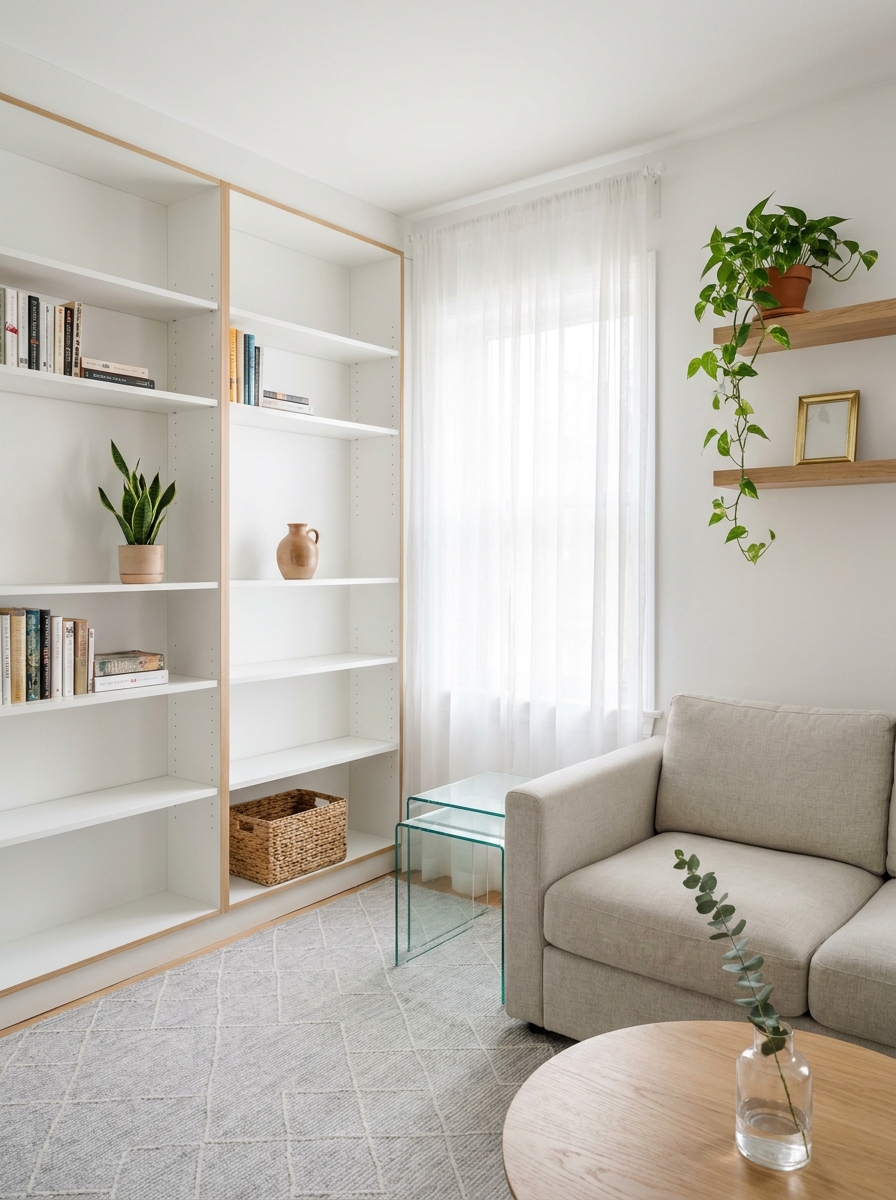
When floor space is tight, the only way to go is up! Tall, slim shelving units draw your eye toward the ceiling and make the whole room feel taller than it actually is. I’m obsessed with this trick because it gives you tons of storage without eating up precious square footage.
The key is keeping your shelves light and airy. Think open shelving in white or natural wood rather than heavy, closed cabinets. Style them with a mix of books, small plants, and pretty objects, but leave some breathing room. Empty space on shelves is just as important as what you put on them.
I love using floating shelves too. They practically disappear into the wall while giving you all the function you need. Place them above your sofa or flanking a window, and suddenly you’ve got display space that doesn’t take up an inch of floor. Your small living room will feel twice as tall and way more organized.
6. Use Multi-Functional Furniture Pieces
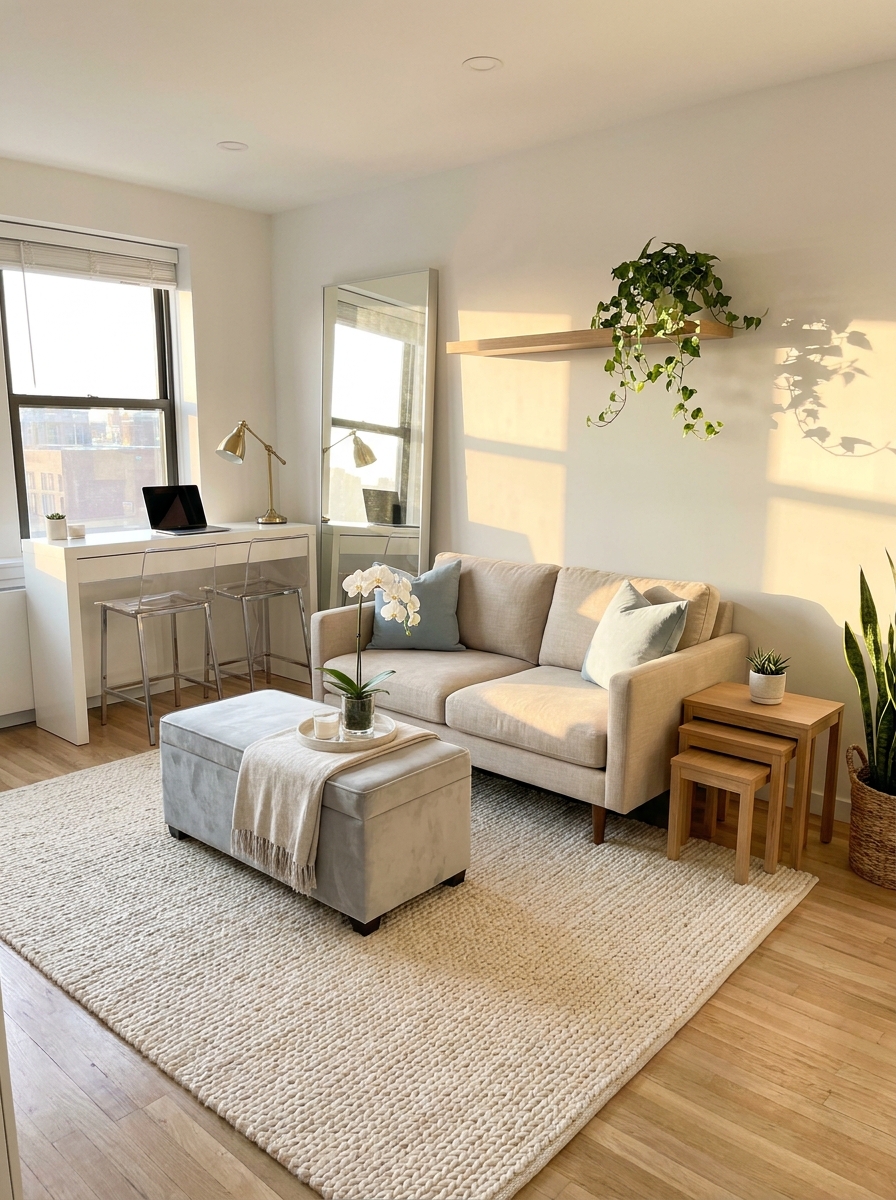
This is where you get to be really smart with every single piece you bring into your space. In a small living room, furniture needs to earn its spot by doing double or even triple duty. I’m talking ottomans with hidden storage, nesting tables you can tuck away, and sofas that convert into guest beds.
My favorite multi-tasker? A beautiful storage bench that works as extra seating, a coffee table, and a place to stash throw blankets. It’s like getting three pieces of furniture for the price of one, and your room doesn’t feel cramped with stuff.
The trick is choosing pieces that still look good while being super functional. You don’t want your living room to feel like a storage unit. Look for sleek designs in light colors that blend seamlessly with your decor. A gorgeous velvet ottoman with a lift-top? Yes, please! It holds all your remotes and magazines while looking absolutely chic.
7. Hang Curtains High and Wide
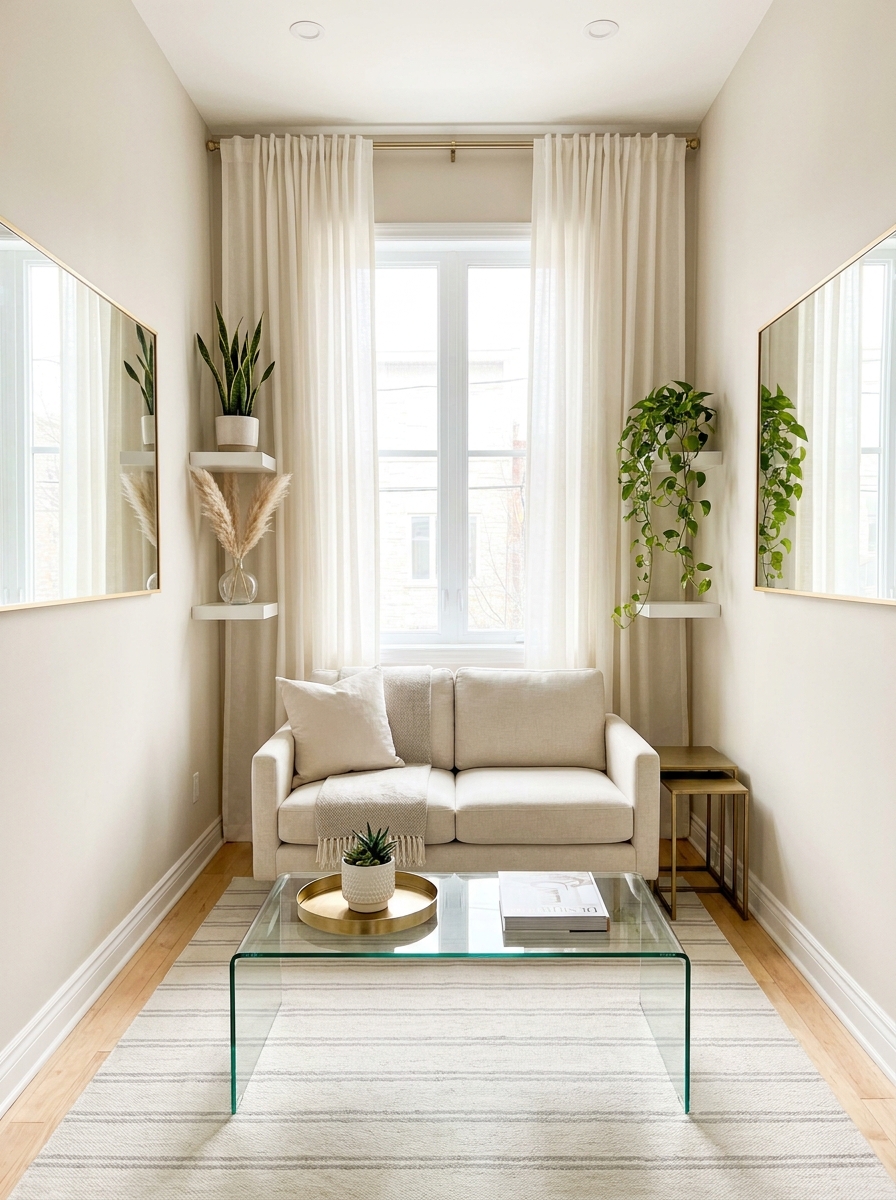
Want an instant room-enlarging trick that costs practically nothing? Hang your curtains as close to the ceiling as possible and extend the rod beyond your window frame. I’m serious—this one little change makes such a dramatic difference, you’ll wonder why you didn’t do it sooner.
When curtains start at the ceiling line, they create this gorgeous vertical line that pulls your eyes upward and makes your walls look way taller. And extending the rod past the window? That makes the window appear much wider than it actually is. It’s basically an optical illusion that works like magic.
Go for light, breezy fabrics in white or soft neutrals. Heavy, dark drapes will just weigh down your space and block precious natural light. I love sheer linen curtains that let sunlight filter through while still giving you privacy. During the day, push them all the way to the sides to maximize your window and flood the room with light.
8. Create Zones with a Light Area Rug
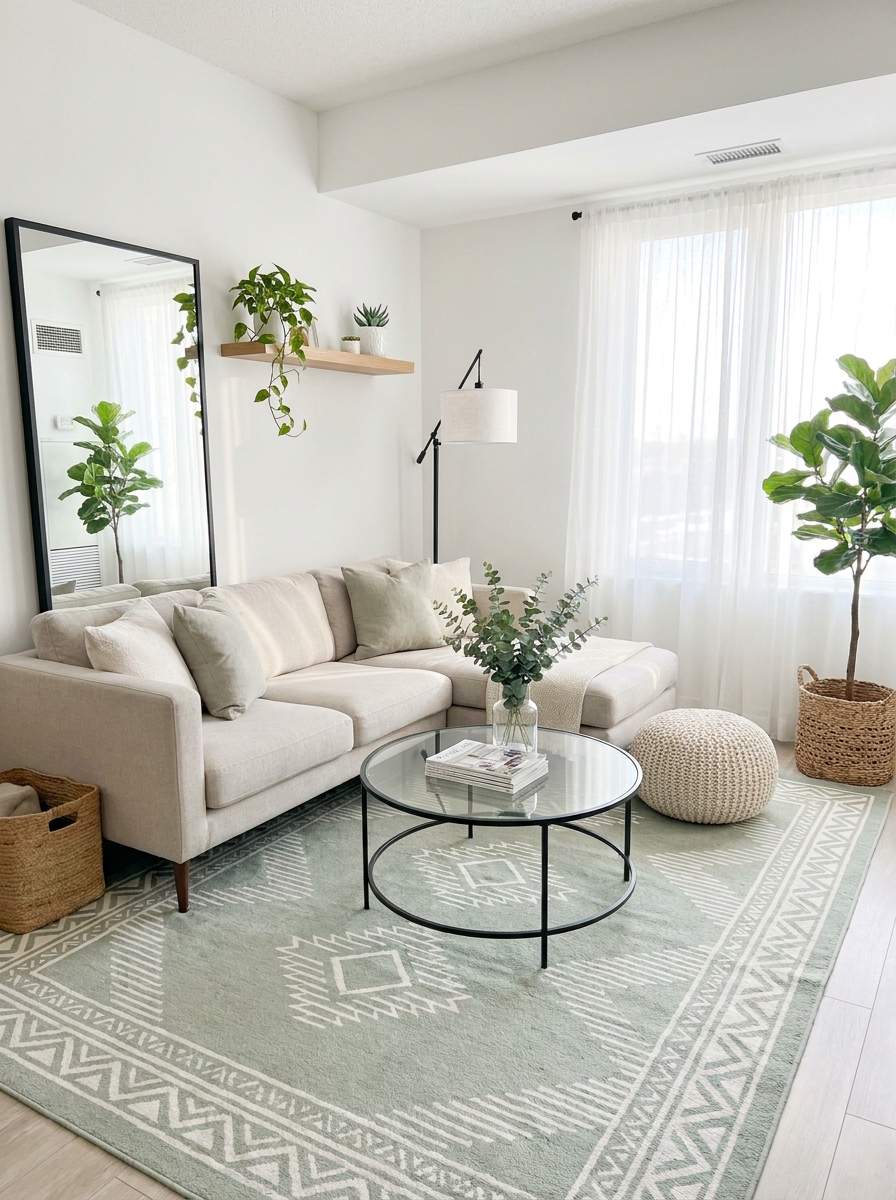
Here’s something that sounds backwards but totally works: defining your space with a rug actually makes a small living room feel bigger and more intentional. The trick is choosing a light-colored rug that doesn’t visually chop up your floor into tiny pieces.
A pale rug creates a “room within a room” effect that grounds your furniture and makes everything feel pulled together rather than scattered. It gives your eye a clear focal point without overwhelming the space. I always go for rugs in soft whites, warm beiges, or pale grays that blend with the floor rather than contrast sharply.
Size matters here too! Don’t go tiny. A rug that’s too small makes furniture look like it’s floating awkwardly and actually shrinks your space. Go as large as your room allows, ideally with at least the front legs of your furniture sitting on it. This creates cohesion and flow, making the whole area feel more spacious and designed.
9. Stick to Leggy Furniture with Visible Floor Space
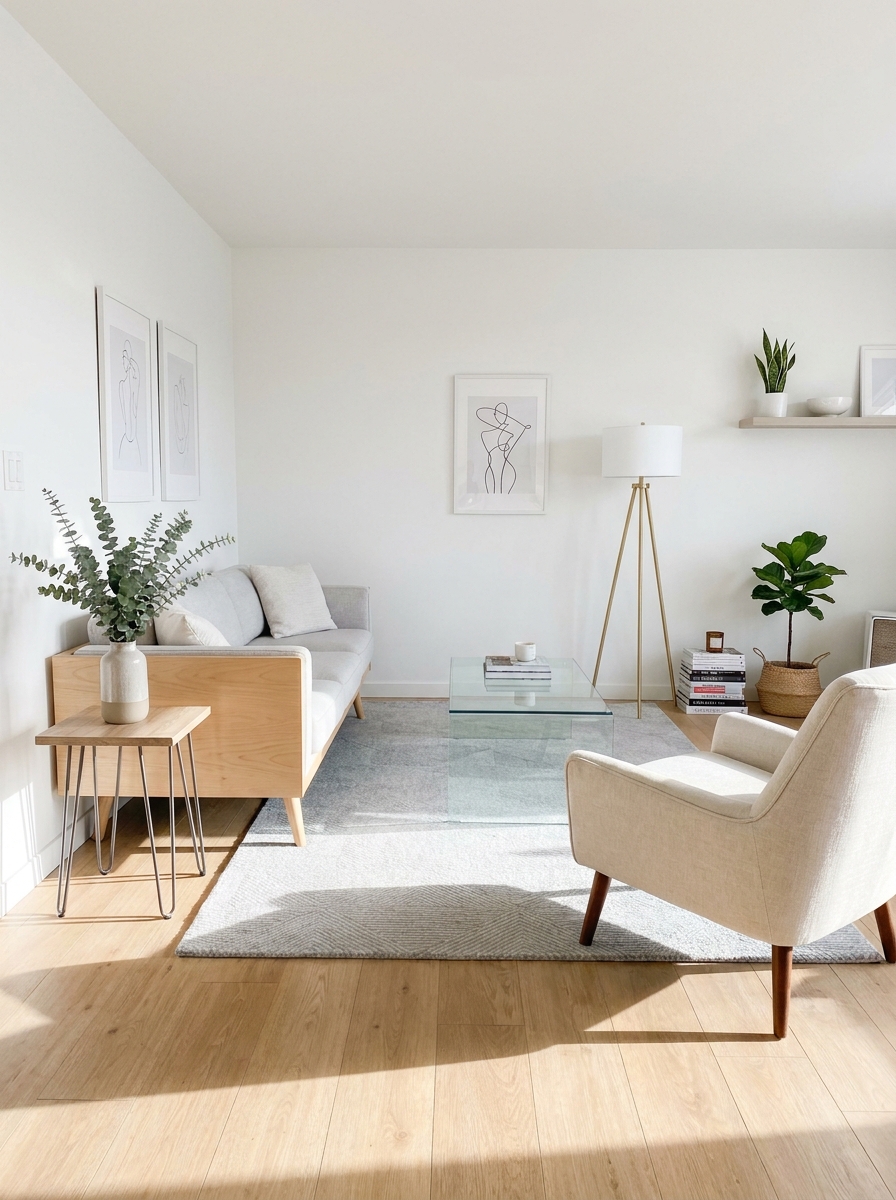
You know what makes a room feel cramped? Big chunky furniture sitting directly on the floor like immovable blocks. I learned this the hard way with my first apartment sofa—a beautiful piece that basically swallowed the entire room.
Furniture with visible legs changes everything. When you can see the floor underneath your sofa, chairs, and tables, your brain registers more open space. Those few inches make a huge difference! Mid-century modern pieces are perfect for this—they’re practically designed to make small spaces breathe.
Look for sofas with at least 4-6 inches of clearance. Same with side tables, TV stands, and accent chairs. Even your bed benefits from this trick. The more floor you can see, the bigger your room feels. It’s like magic, but it’s really just smart design psychology working in your favor.
10. Embrace One Large Statement Piece Instead of Many Small Ones
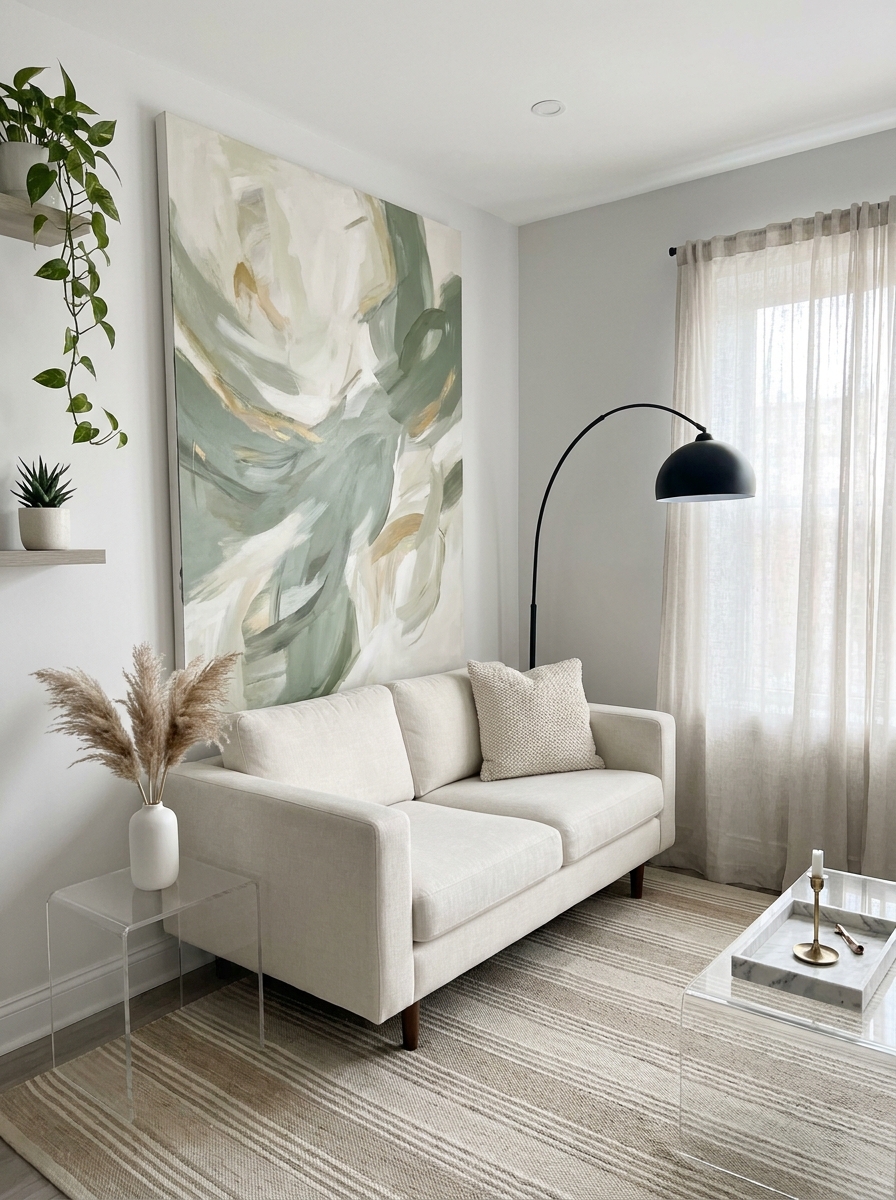
This one feels counterintuitive, right? But hear me out. A bunch of tiny decorations scattered everywhere creates visual chaos. Your eye doesn’t know where to land, and suddenly your small living room feels like a cluttered dollhouse.
One gorgeous statement piece—whether it’s oversized wall art, a dramatic floor plant, or a sculptural light fixture—gives your room focus. It draws the eye upward or to one spot, creating a sense of purpose and calm. I swapped six small frames for one large abstract canvas, and my living room instantly felt more grown-up and spacious.
This doesn’t mean your room should be boring! It means being intentional. That fiddle leaf fig in the corner? Let it be THE moment. That stunning mirror? Let it shine solo. Less really is more when you’re working with limited square footage.
11. Choose Furniture in the Same Color Family as Your Walls
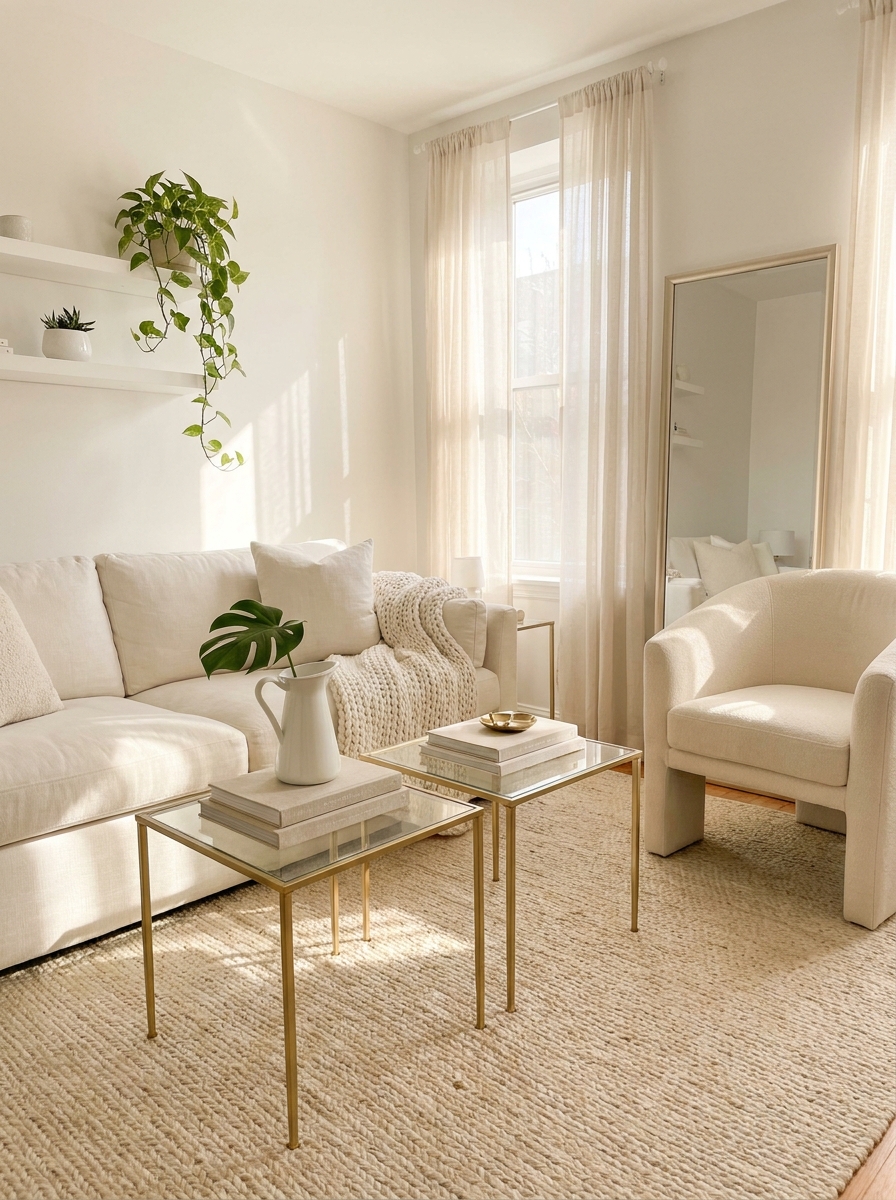
Want your furniture to disappear (in a good way)? Match it to your wall color. I’m not talking exact matches—that would be weird—but keeping everything in the same tonal family works wonders.
When your gray sofa sits against gray walls, the boundaries blur. Your furniture doesn’t visually chop up the room into separate chunks. Instead, everything flows together like one cohesive, calm space. This monochromatic approach is my secret weapon for tiny living rooms.
The key is playing with texture and subtle shade variations so things don’t look flat. A cream sofa against off-white walls with linen curtains and a jute rug? Chef’s kiss. It all blends beautifully while still having depth and interest. Your room reads as one continuous space instead of separate furniture pieces crammed together.
12. Install Recessed or Track Lighting Instead of Table Lamps
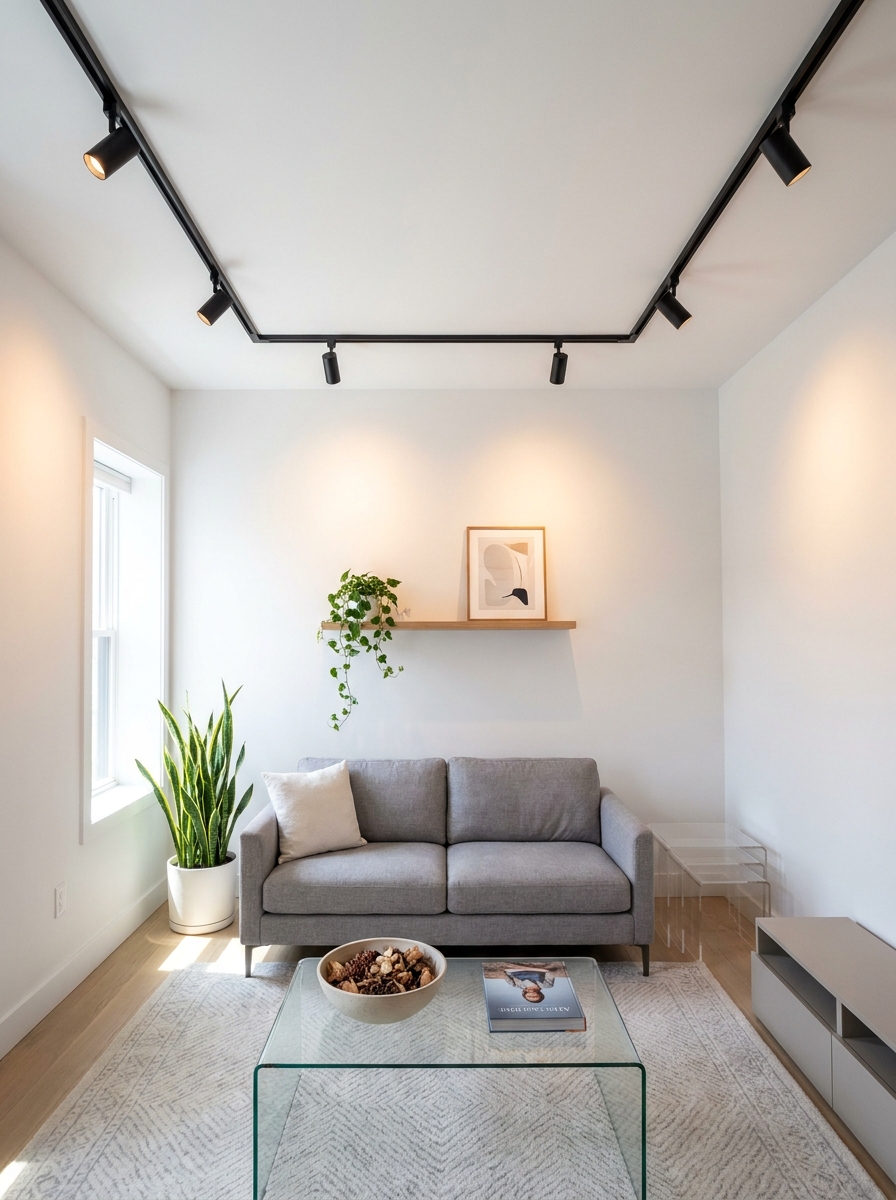
Table lamps eat up precious surface space. And in a small living room, every square inch of your coffee table or side table counts! Plus, lamp bases and shades create visual clutter that makes the room feel crowded.
Recessed lighting or sleek track lighting keeps your surfaces clear and your sightlines open. The light comes from above, washing your walls and making the whole room glow instead of creating isolated pools of light. I ditched my bulky table lamps last year and installed simple track lighting—game changer.
If you’re renting and can’t install permanent fixtures, try wall sconces or a dramatic arc floor lamp that curves overhead. The goal is getting light sources off your precious tabletop real estate. Your room will feel less cluttered, and you’ll actually have space for your coffee cup and that book you’re pretending to read.
13. Keep Window Treatments Sheer and Minimal
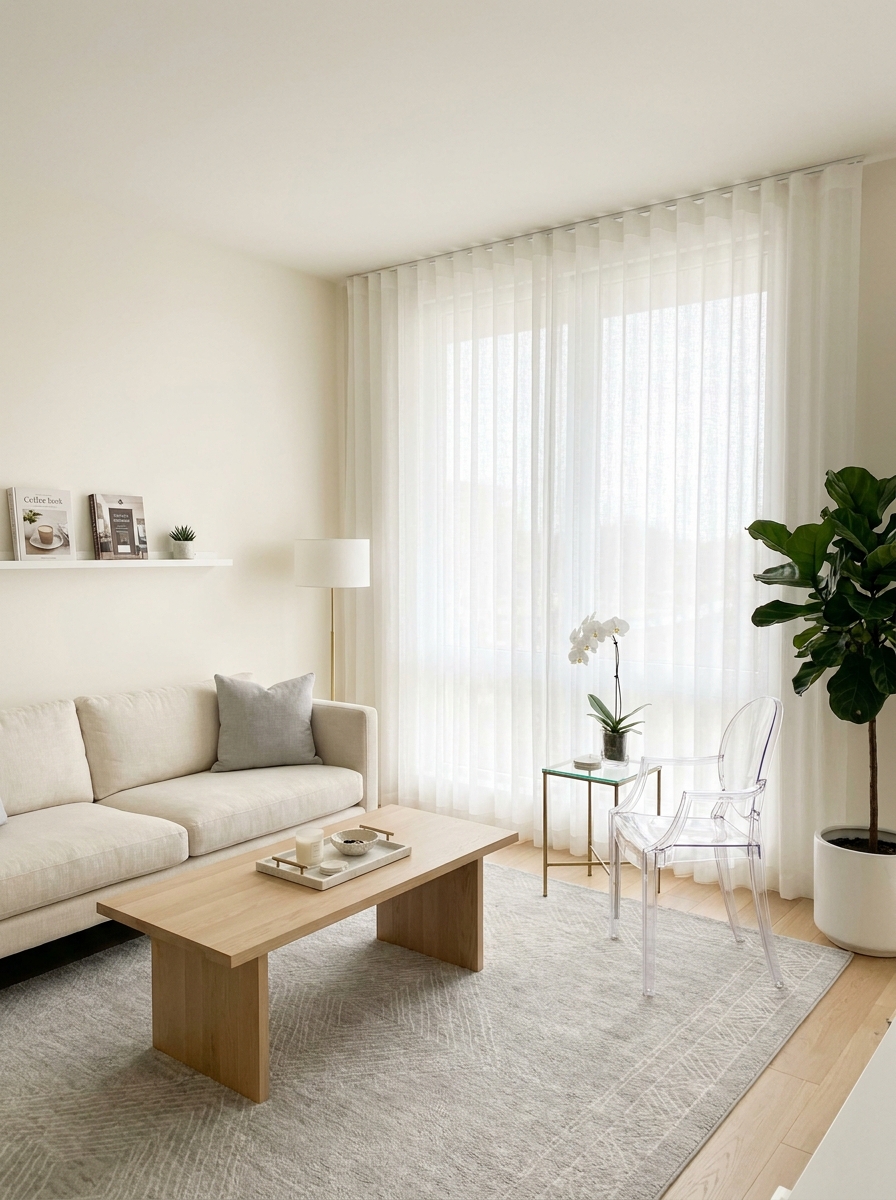
Heavy drapes are space killers. They block natural light and make windows look smaller than they actually are. I switched to sheer white curtains in my tiny living room and suddenly the whole space felt twice as big.
The trick is letting in as much daylight as possible while still having some privacy. Sheer linen or voile panels filter light beautifully without creating that cave-like feeling you get with thick curtains. Plus, they move with the breeze and add this lovely airy vibe.
If you need total privacy at night, layer sheers with slim roller blinds that disappear during the day. The key is keeping everything light-colored and lightweight. No heavy fabrics, no dark colors, no bulky hardware. Your windows should feel like they’re bringing the outside in, not blocking it out. When light flows freely through your space, rooms always feel more expansive and inviting.
14. Display Books and Decor Vertically on the Walls
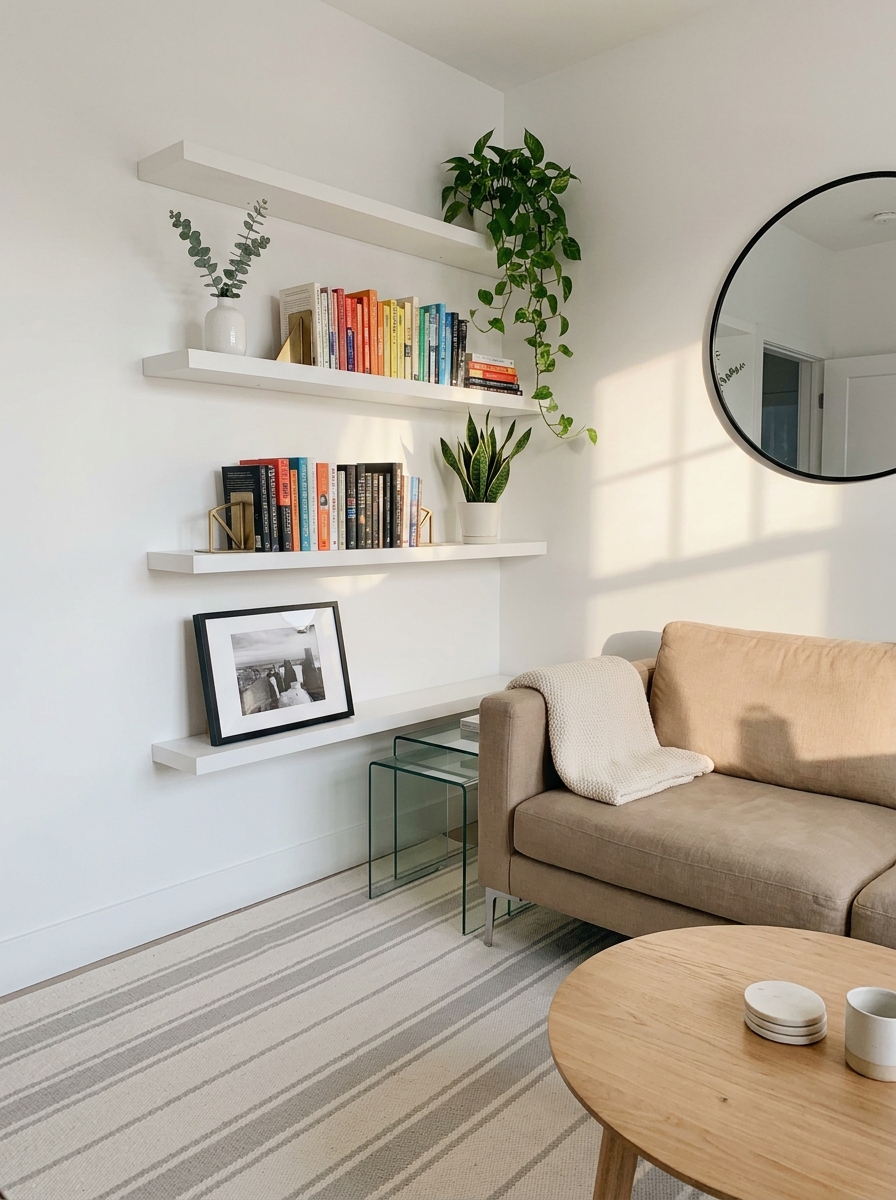
When you’re short on floor space, your walls become prime real estate. I started thinking vertically and it completely changed my small living room. Instead of letting books pile up on side tables, I mounted slim floating shelves up high.
Wall-mounted storage keeps surfaces clear and draws the eye upward, which makes ceilings feel taller. It’s like giving your room a visual lift. I love using narrow ledge shelves for books because you can see the covers instead of just spines, and they become part of your decor.
The best part? You’re using empty wall space that wasn’t doing anything anyway. Just keep it edited and intentional. A few well-styled shelves look sophisticated. Too many creates visual chaos. Stick to light-colored shelves that blend with your walls, and don’t overcrowd them. Leave breathing room between objects so everything feels curated, not cluttered.
15. Incorporate Stripes to Create Visual Length
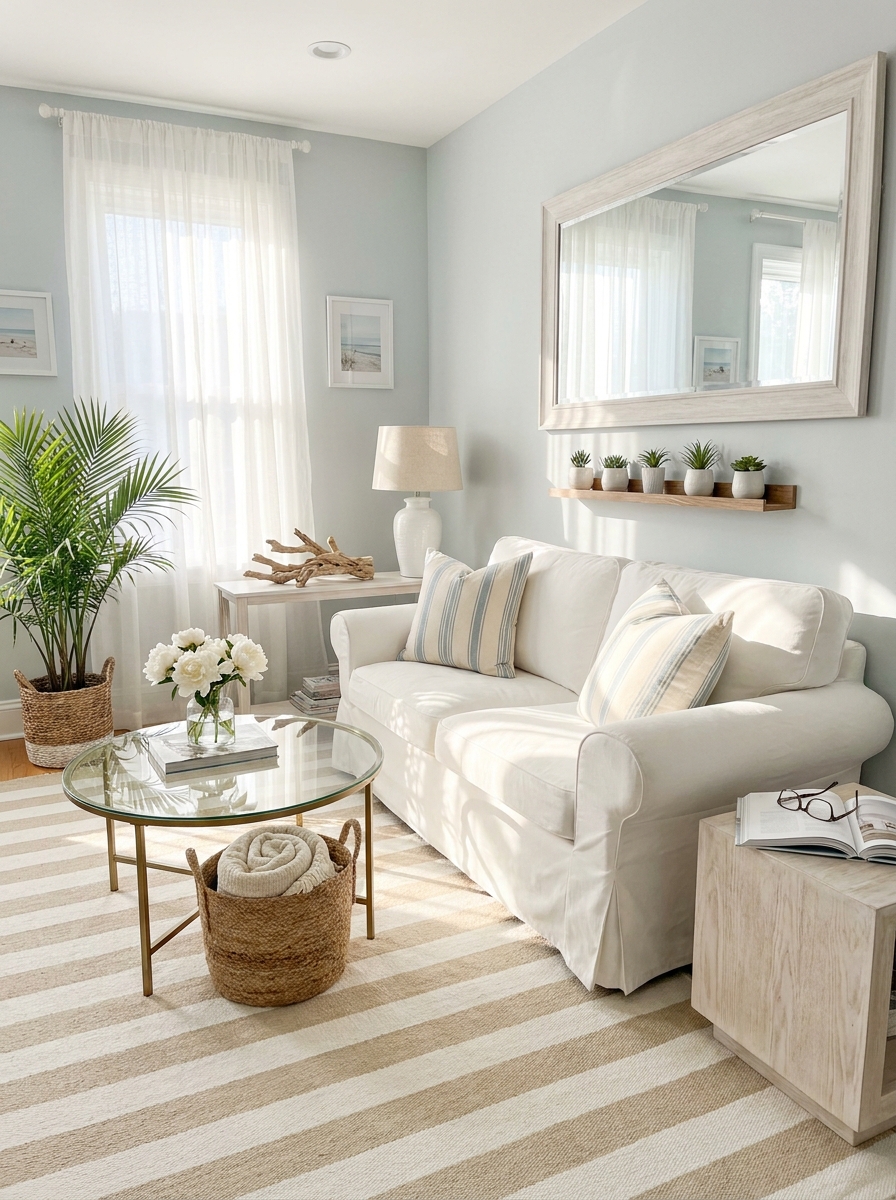
Stripes are sneaky little space expanders. Horizontal stripes make walls look wider, vertical stripes make ceilings look higher. It’s an optical trick that actually works, and I’m obsessed with how easy it is to pull off.
You don’t need to wallpaper entire walls. I added a striped rug to my living room and it made the whole space feel longer instantly. Even striped throw pillows or a vertically striped piece of art can shift how you perceive the room’s dimensions.
The key is keeping stripes subtle and in light colors. Bold, contrasting stripes can feel busy in a small space. Tone-on-tone stripes in creams, whites, or soft grays give you that visual stretch without overwhelming the room. It’s one of those design tricks that feels a bit like magic because it requires zero renovation but delivers real impact.
Quick Guide
## Small Living Room Budget Breakdown
Wondering what you’ll actually spend to transform your compact space? Here’s a realistic look at costs:
DIY Budget-Friendly ($200–$500): Paint walls yourself in light neutrals ($50–100), add one large affordable mirror from Target or HomeGoods ($80–150), swap to a simple glass coffee table ($100–200), rearrange existing furniture, add inexpensive white curtains.
Mid-Range Refresh ($500–$1,500): Quality wall mirror with designer frame ($200–400), new glass or acrylic coffee table ($250–500), professional paint job ($300–600), updated lighting, a few new throw pillows and lightweight furniture pieces.
Full Makeover ($1,500–$4,000+): Custom-sized mirror ($400–800), high-end lucite or brass-and-glass coffee table ($600–1,200), complete furniture swap to scaled-down pieces ($1,000–2,000), professional design consultation, new area rug, window treatments, and accessories.
Start with the changes that give you the biggest visual bang — paint and mirrors transform space immediately without breaking the bank.
Your Small Space Has Big Potential
Here’s what I want you to remember: a small living room isn’t a design limitation. It’s actually an opportunity to get really intentional about what you love and what works. Every piece matters more. Every color choice has impact. And honestly? There’s something so satisfying about creating a space that feels open and beautiful within a compact footprint.
You don’t need to do all fifteen of these ideas at once. Pick the two or three that excite you most and start there. Maybe it’s finally hanging that mirror you’ve had leaning in the closet, or swapping your chunky coffee table for something transparent. Small changes genuinely add up to create a room that feels twice its actual size.
And remember, the goal isn’t to make your small living room look like someone else’s spacious one. It’s about making your unique space feel open, comfortable, and unmistakably yours. So grab that paint swatch, measure for that mirror, and get ready to fall in love with your cozy living room all over again. You’ve totally got this.
Frequently Asked Questions
What color makes a small living room look bigger?
Light neutrals like soft white, warm cream, pale gray, and light greige make small living rooms feel significantly larger because they reflect natural light instead of absorbing it. These colors create an airy, open feeling that tricks the eye into perceiving more space. You can add depth and personality through textured accessories, wood tones, and greenery while keeping walls light.
How do you arrange furniture in a very small living room?
Float your furniture a few inches away from the walls instead of pushing everything to the perimeter — this creates breathing room and makes the space feel more dimensional. Choose appropriately scaled pieces like a loveseat instead of a full sofa, use a glass coffee table to maintain sightlines, and create distinct zones for different activities. Avoid blocking pathways and keep at least 18 inches of walking space around furniture.
Should I use a rug in a small living room?
Yes, but choose wisely! A light-colored area rug in the right size actually helps define your seating area and makes the room feel more pulled together. Go for low-pile rugs in neutral tones that don’t visually chop up the floor space. Make sure the rug is large enough that at least the front legs of your furniture sit on it — tiny rugs make spaces feel smaller.
Do mirrors really make a small room look bigger?
Absolutely, and it’s not just an old design myth. Large mirrors strategically placed opposite windows double the natural light and create the illusion of depth by reflecting the room back on itself. Your brain perceives the reflection as extended space, making the room feel significantly more open. The key is using a substantial mirror with a slim frame positioned thoughtfully to maximize light reflection.
What furniture should I avoid in a small living room?
Skip bulky oversized sofas, chunky wooden coffee tables, large entertainment centers, and heavy dark furniture that visually weighs down the space. Also avoid too many small scattered pieces which create clutter, and furniture with thick legs or bases that eat up visual space. Instead, choose streamlined pieces with exposed legs, glass or acrylic tables, and multi-functional furniture that serves more than one purpose.