27 Calming Bedroom Ideas That Invite Deep Rest
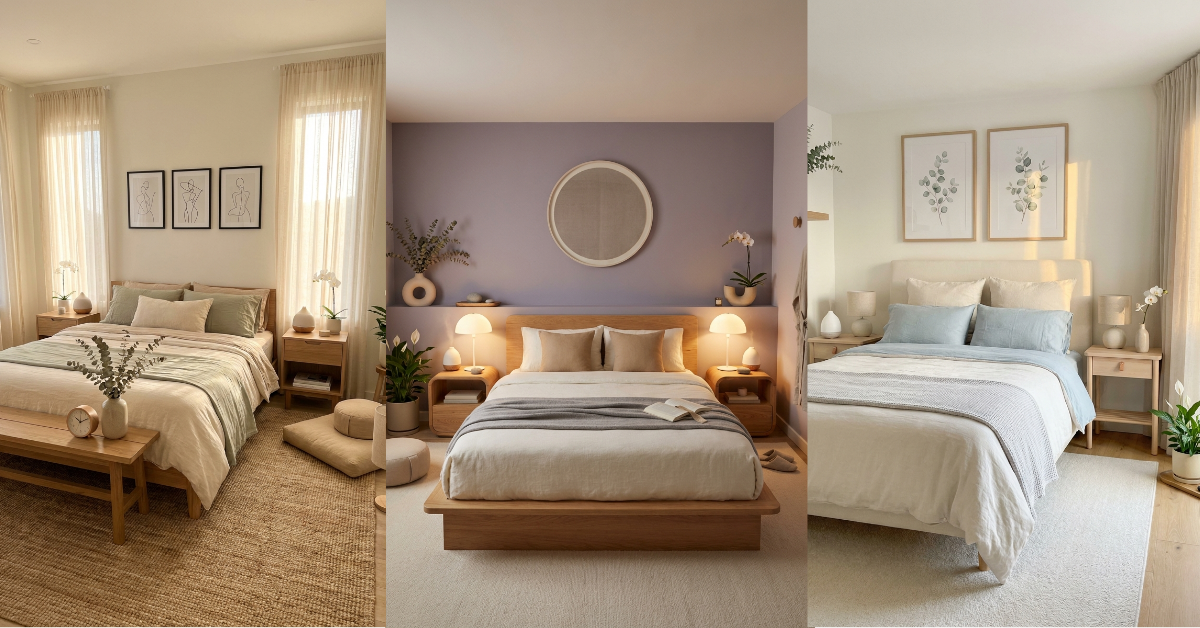
You know that feeling when you walk into a hotel room and instantly relax? Your shoulders drop, you take a deeper breath, and everything just feels… lighter. That’s not an accident. It’s intentional design at work, and honestly, it’s not that hard to recreate at home. Your bedroom should be the most restful room in your house, but let’s be real—most of us have clutter on the nightstand, mismatched lighting, and a vibe that’s more “laundry staging area” than “peaceful sanctuary.” Feng shui isn’t about following strict rules or buying expensive stuff. It’s about arranging your space so energy flows better and you actually feel calm when you’re there. And some of these tricks? They’re so simple you’ll wonder why you didn’t try them sooner. From where you position your bed to the colors on your walls, small shifts make a massive difference. Here’s what actually works.
1. Position Your Bed in the Commanding Spot
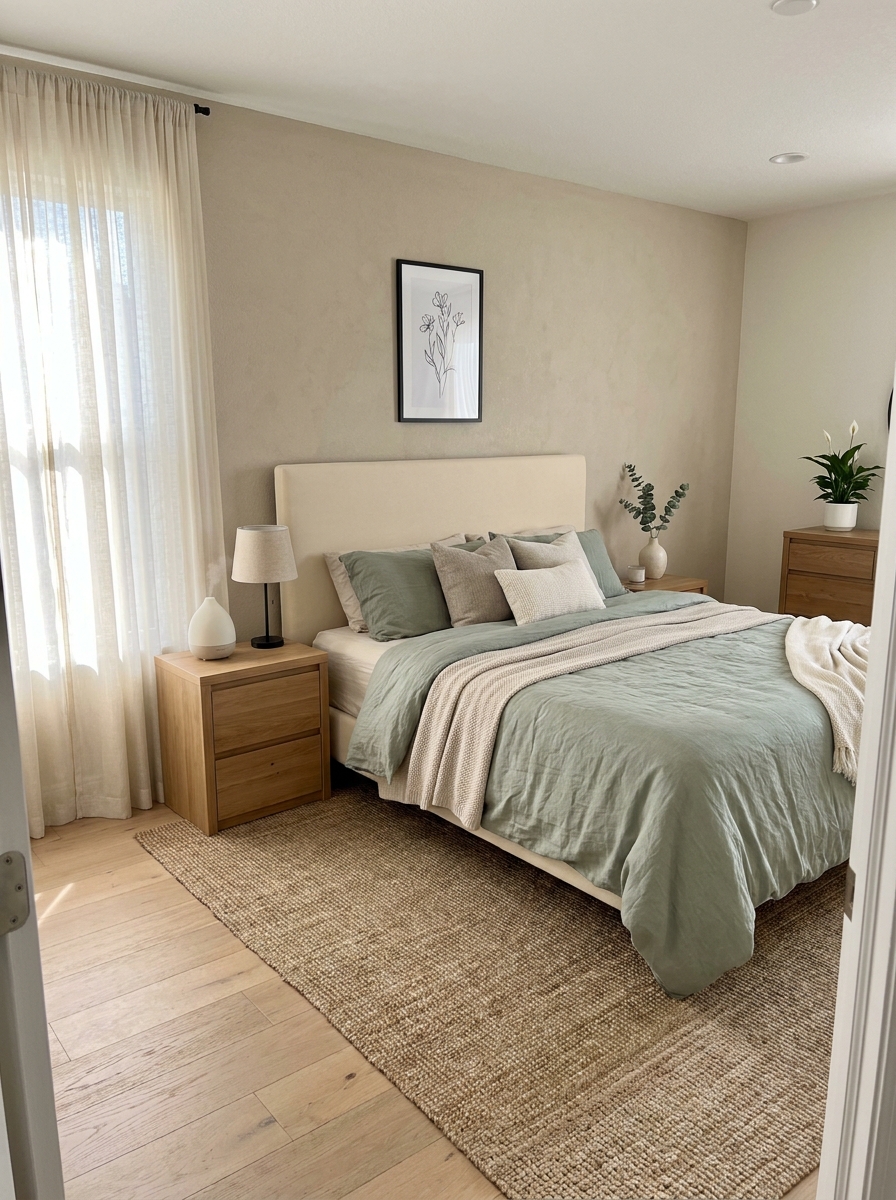
This is the number one feng shui rule, and it’s a game-changer. Your bed should face the door but not be directly in line with it. You want to see who’s coming in without being right in the pathway of energy rushing through. It sounds a little mystical, but think about it—when your bed is tucked in a corner where you can’t see the door, you’re subconsciously on edge. Your brain never fully relaxes because it’s always wondering what’s behind you.
Ideally, place your bed against a solid wall with space on both sides. That balance matters. If one side is crammed against a wall, the energy feels lopsided and so does your relationship (even if you’re single, it sets the tone). Both sides should have equal access, equal nightstands, equal breathing room.
And here’s the thing—this isn’t just feng shui. Interior designers have been doing this forever because it looks better and feels more intentional. When you walk into your room and your bed is the clear focal point, positioned with authority, the whole space feels more grown-up and put-together.
2. Choose Soft, Grounding Color Palettes
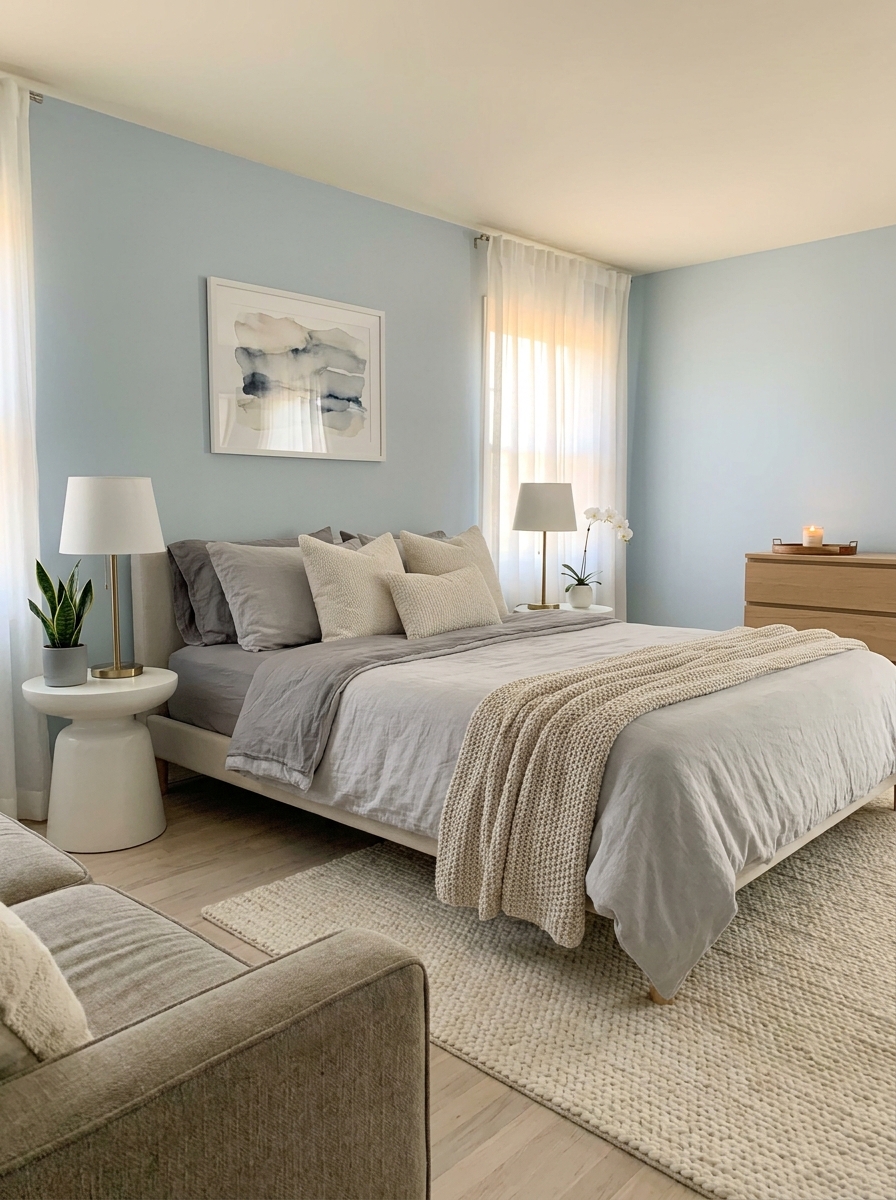
Bright red might energize you, but it’s terrible for sleep. Feng shui loves soft, earthy tones because they ground you and signal to your nervous system that it’s safe to rest. Think warm creams, gentle grays, dusty blues, barely-there lavenders, or that perfect shade of greige that makes everything look expensive.
You don’t have to repaint your whole room if you’re renting or not ready for that commitment. Start with bedding. Swap out those bold patterns for something in linen or cotton with a muted palette. Add a few throw pillows in complementary neutrals. The shift is immediate—it’s like your room takes a deep breath with you.
But if you are painting, go for matte or eggshell finishes. They absorb light instead of bouncing it around, which keeps the energy calm. And please, no accent walls in intense colors behind the bed. That’s where your head rests for eight hours—you want soothing, not stimulating. Save the drama for the living room.
3. Clear Clutter from Every Surface
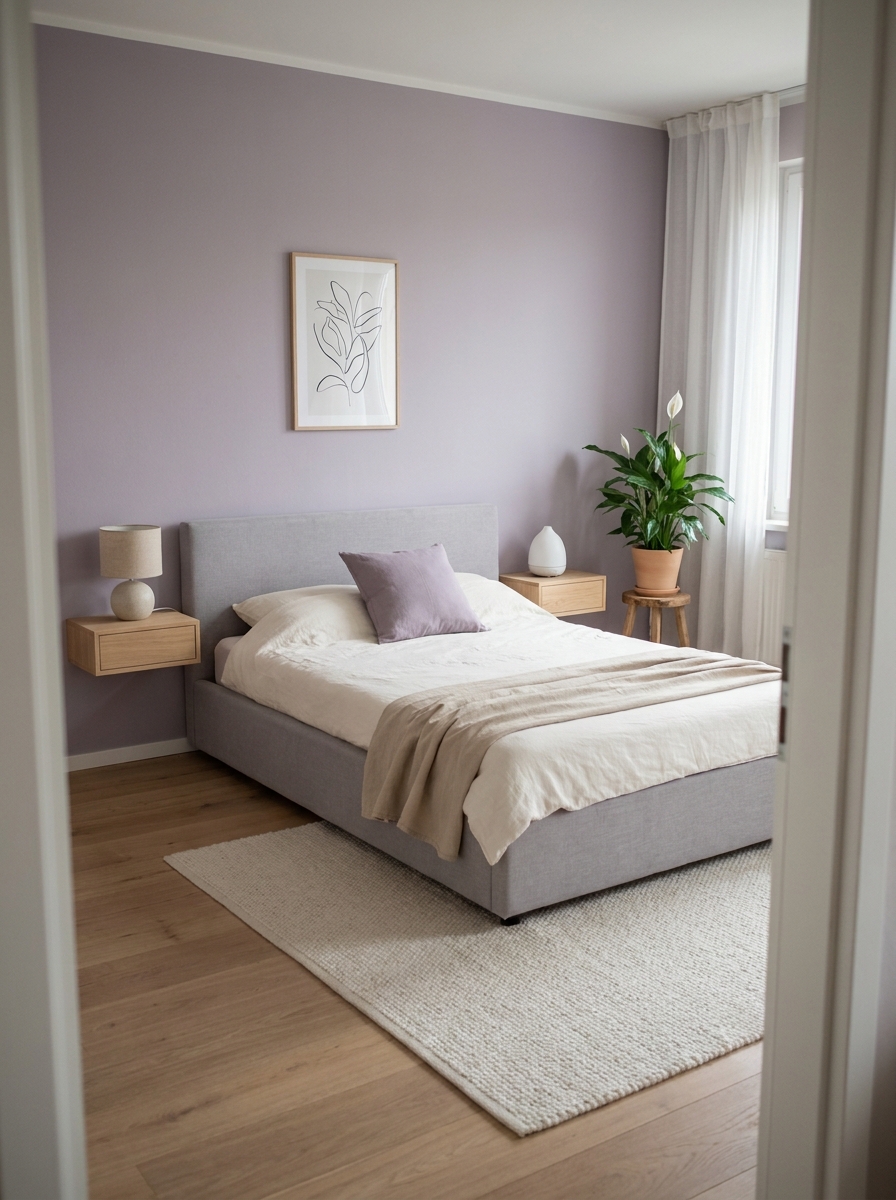
Clutter isn’t just messy—it’s energetically draining. Every time you look at that pile of books on your nightstand or the random charging cables snaking across your dresser, your brain has to process it. And in a room meant for rest, that’s the opposite of what you need.
Start with your nightstands. They should only hold what you actually use before bed—a lamp, maybe a book you’re currently reading, a small dish for jewelry. That’s it. Everything else can go in a drawer or find a home somewhere else. If you need your phone nearby, get a small tray or charging dock so it has a designated spot instead of just lying there with tangled cords.
Then tackle surfaces you see from bed. Your dresser top, that chair in the corner that’s become a clothes graveyard, the floor around your bed. Feng shui says stuck energy causes stuck life situations, and honestly, even if you don’t believe that, a clear room just feels better. You sleep better. You wake up calmer. It’s worth the 20 minutes it takes to clear it all.
4. Add Symmetry with Matching Nightstands
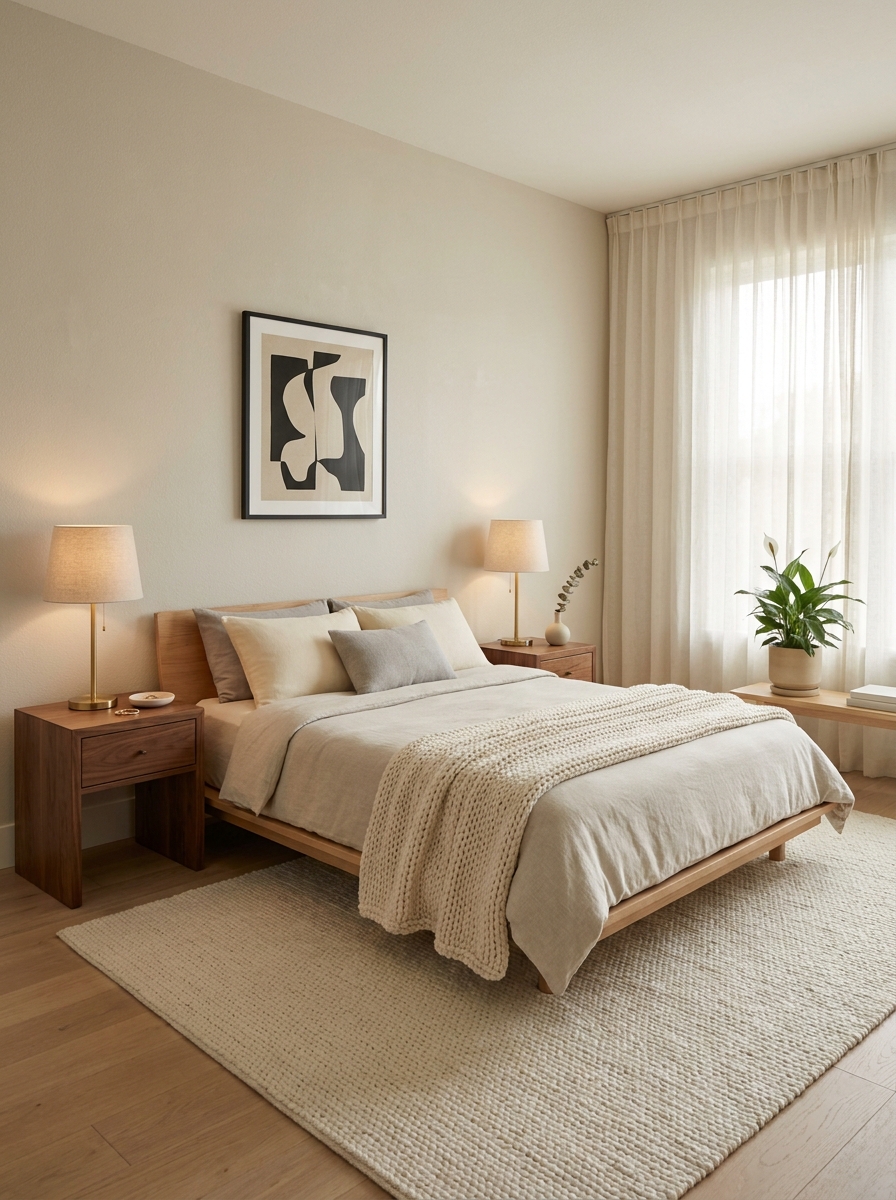
There’s something so visually satisfying about matching nightstands. It’s not just about aesthetics—in feng shui, symmetry represents balance and equality, especially in relationships. Even if you’re single, setting up your room with balance signals to the universe (or just your subconscious) that you’re open and ready for partnership.
Your nightstands don’t have to be identical twins, but they should feel cohesive. Same height, similar style, same general vibe. And here’s what matters more than you’d think—they should both be functional. If one side has a drawer and the other is just a floating shelf, that’s off-balance even if they match visually.
Style them the same way, too. A lamp on each side, maybe a small plant or object on each. Keep it simple and mirrored. This creates a sense of harmony that your brain picks up on the second you walk in. It’s one of those subtle shifts that makes a room feel more expensive and intentional without spending much at all. You can find matching vintage nightstands on Facebook Marketplace for less than one new piece from a big box store.
5. Keep Electronics Out of the Bedroom
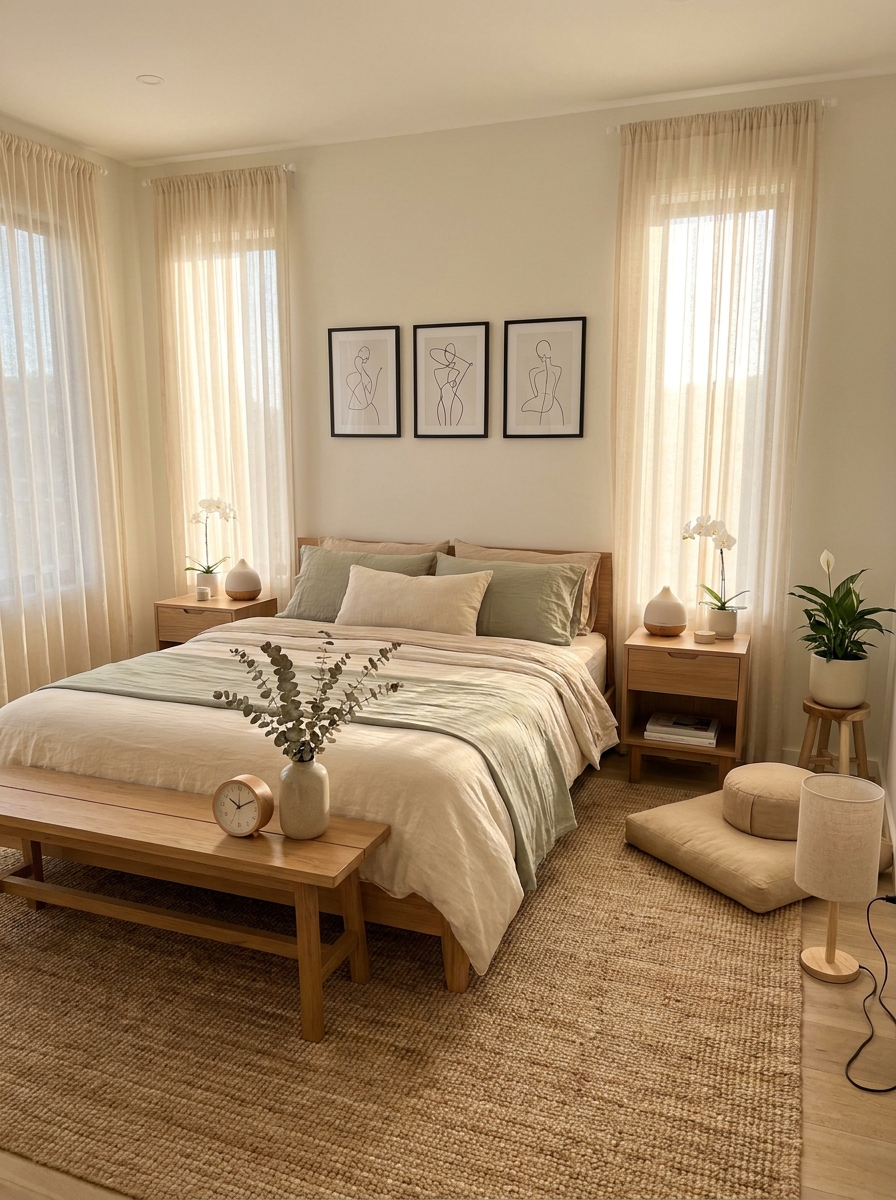
This one’s tough, I know. But feng shui experts say electronics create chaotic energy that messes with sleep. TVs, laptops, even your phone charging on the nightstand—they all emit electromagnetic fields that can disrupt your body’s natural rhythms.
I started putting my phone in another room at night, and honestly? Game changer. I sleep deeper, and I’m not doom-scrolling at 11 PM anymore. If you absolutely need your phone nearby for the alarm, keep it across the room in airplane mode.
The bedroom should be a tech-free sanctuary. Think of it as a place only for sleep, rest, and relaxation. When you remove screens, you remove that buzzing, always-on energy. Your nervous system actually gets to calm down. Replace your phone with a real alarm clock—one of those simple wooden ones feels so much more peaceful on your nightstand.
6. Use Natural Materials and Textures
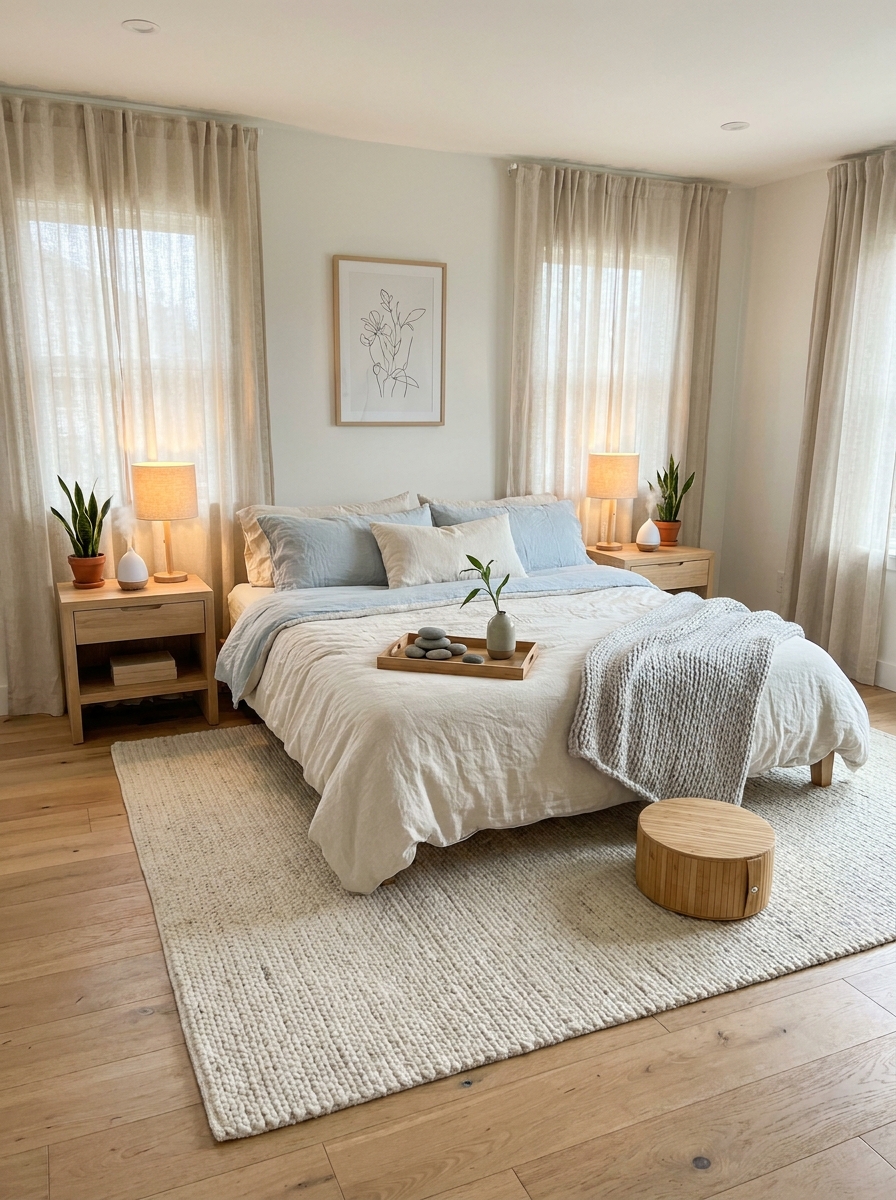
Feng shui is all about bringing nature’s calming energy indoors. That means choosing natural materials over synthetic ones whenever possible. Think wood, cotton, linen, wool, bamboo, stone—materials that breathe and feel good to touch.
I swapped my polyester duvet for an organic cotton one, and it’s amazing how different the room feels. More grounded. More alive. Natural materials have this warmth that man-made fabrics just can’t replicate.
Look around your bedroom. Can you add a wooden tray to your dresser? Switch to linen curtains? Get a wool throw blanket? Even small changes add up. Natural textures create visual softness too—they’re not shiny or harsh, just quietly beautiful. Your bedroom starts to feel like a retreat in the woods rather than a showroom. And that’s exactly the vibe we want.
7. Soften Sharp Corners with Plants and Curves
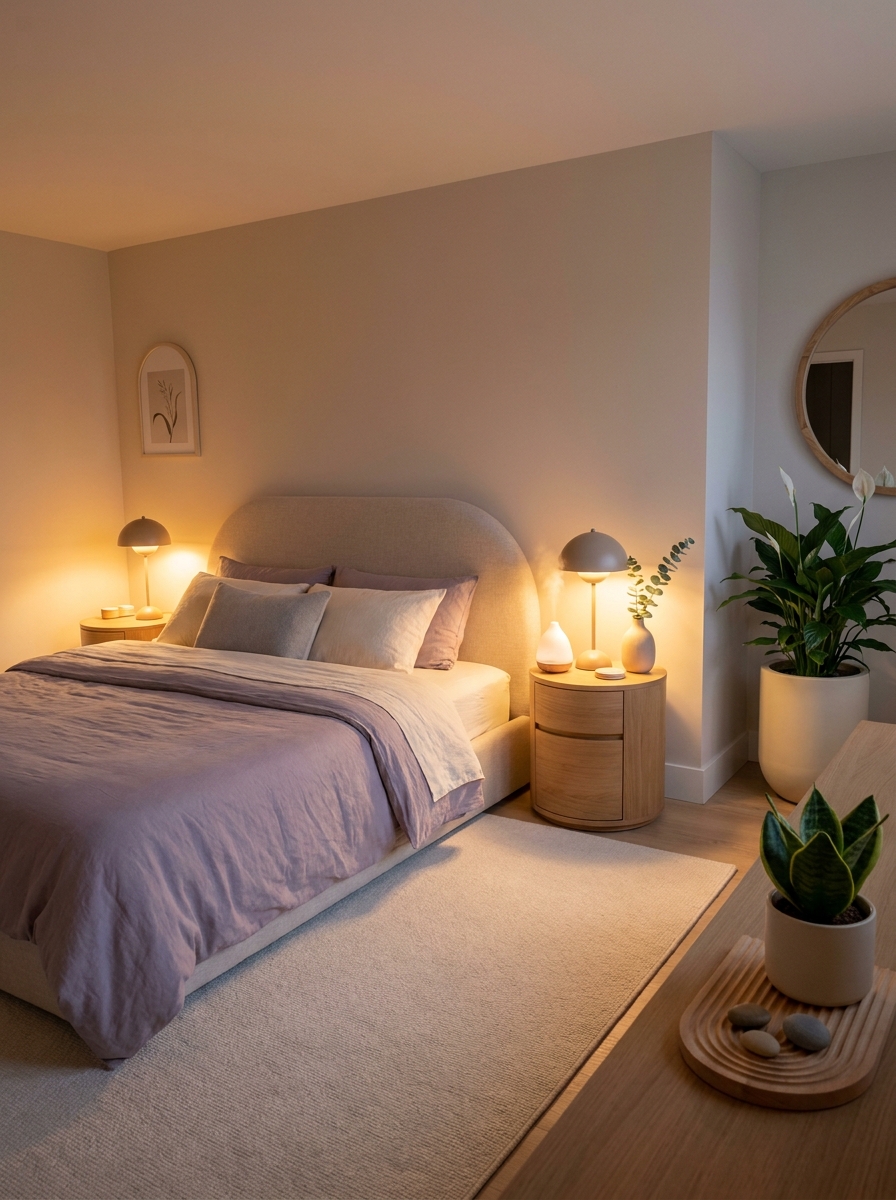
In feng shui, sharp corners create “poison arrows”—harsh energy that shoots across the room. Sounds dramatic, but when you think about it, sharp angles do feel more aggressive than soft curves, right?
I used to have a dresser corner pointing straight at my bed, and I’d constantly bump into it at night. Now there’s a tall plant softening that corner, and the whole room feels gentler. Plants are perfect for this because they add life and curves at the same time.
You can also choose furniture with rounded edges—a curved headboard, oval mirrors, circular nightstands. Even small touches help. Swap square picture frames for round ones. Add a curved ceramic vase. The goal isn’t to eliminate all corners (that’s impossible), but to balance sharp lines with organic, flowing shapes. Your eye moves more smoothly around the room, and everything just feels… easier.
8. Incorporate the Five Elements Mindfully
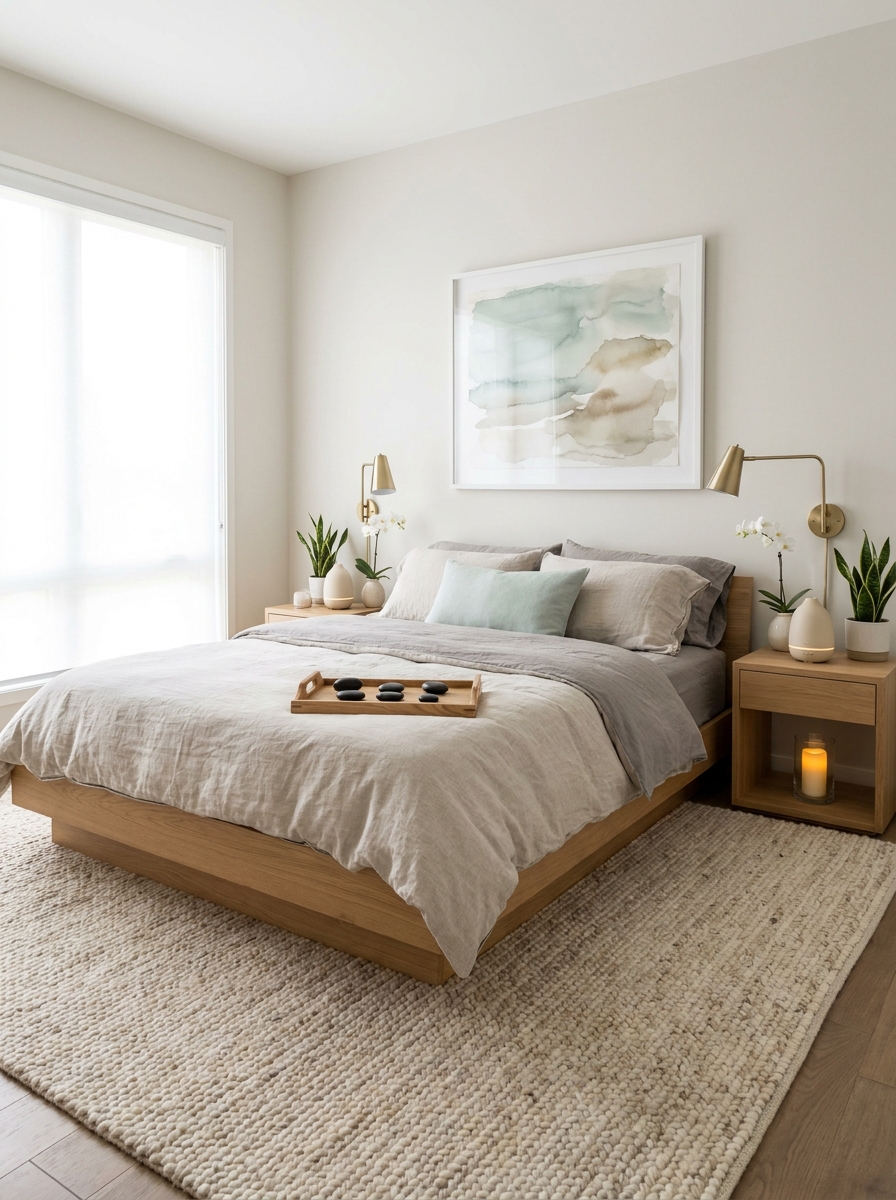
Feng shui centers around five elements—wood, fire, earth, metal, and water. When they’re balanced in your bedroom, the energy feels complete and harmonious. Don’t worry, you don’t need all five screaming for attention. Subtle touches work beautifully.
Wood comes from your furniture and plants. Earth shows up in clay pots, stone accessories, and earthy colors. Metal might be your lamp base or picture frames. Fire is tricky in bedrooms—candlelight works, but skip actual flames at night. Water can be represented through color (soft blues) or a small image of a peaceful lake.
I have wood nightstands, a ceramic vase (earth), brass lamp (metal), and soft blue-gray walls (water). It feels balanced without being matchy or obvious. The trick is weaving elements naturally into your existing decor. You’re not decorating a temple—you’re creating a peaceful bedroom that happens to have really good energy.
9. Let in Natural Light with Sheer Window Treatments
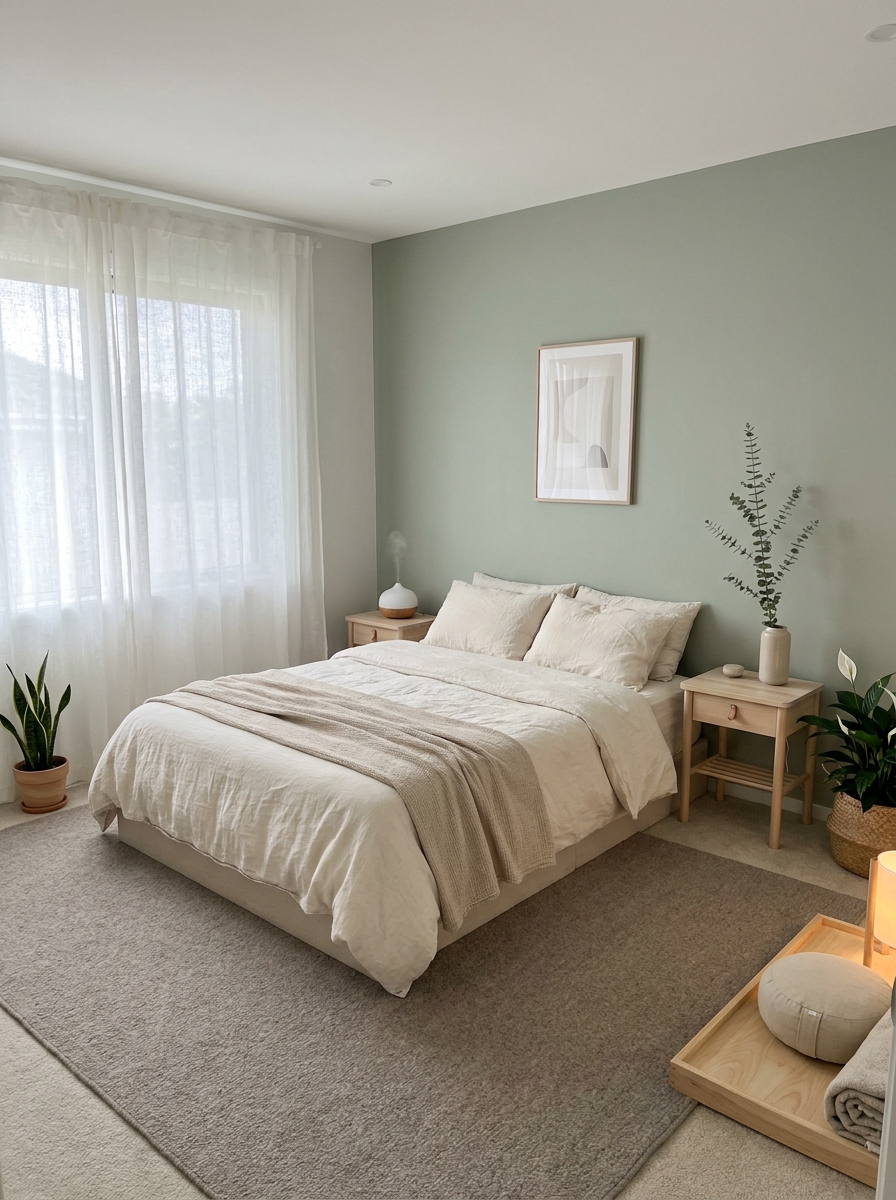
Natural light is absolutely essential in feng shui. It brings fresh yang energy into your space and helps regulate your circadian rhythm. But harsh, direct sunlight? That can feel aggressive and disrupt the calm vibe you’re going for.
I love using sheer curtains or light-filtering shades that let daylight gently diffuse throughout the room. You get all the brightness and energy without the glare. During the day, your bedroom feels airy and alive. At night, you can layer them with blackout panels for complete darkness and better sleep.
The key is having control. You want to welcome morning light gradually, not wake up feeling like you’re in an interrogation room. Soft, adjustable window treatments give you that flexibility. Plus, they add such a beautiful, flowing texture to your walls. Think breezy linen or light cotton in soft neutrals. It’s such a simple change, but it completely transforms how a bedroom feels throughout the day.
10. Choose Artwork That Feels Peaceful and Uplifting
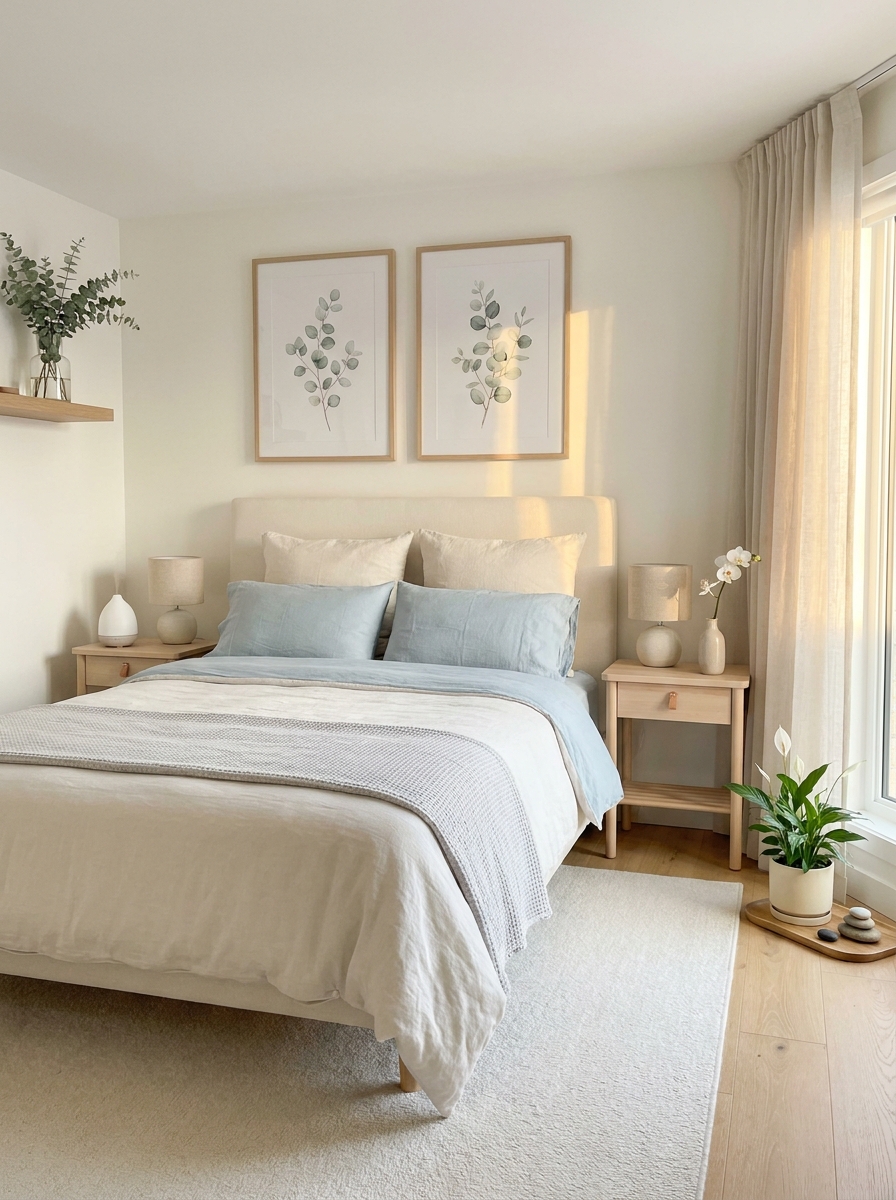
What you see before you fall asleep and when you first wake up? It matters more than you think. Feng shui teaches that images hold energy, and in the bedroom, you want that energy to be soothing, positive, and restful.
I always tell people to skip anything too激动 or emotionally charged. No stormy seascapes, no abstract chaos, and definitely no sad or lonely imagery. Instead, think gentle landscapes, soft botanicals, or abstract pieces in calming colors. Even better if the art comes in pairs for that beautiful symmetry feng shui loves.
Hang your artwork at eye level when you’re standing, and make sure it feels proportional to your bed. A tiny piece above a king bed looks lost. You want it to feel intentional and grounding. And here’s something I learned the hard way: avoid hanging anything heavy directly over your bed. It can create subconscious anxiety, even if you don’t realize it. Place it above your headboard or on another wall instead.
11. Keep Only Paired Items in the Bedroom
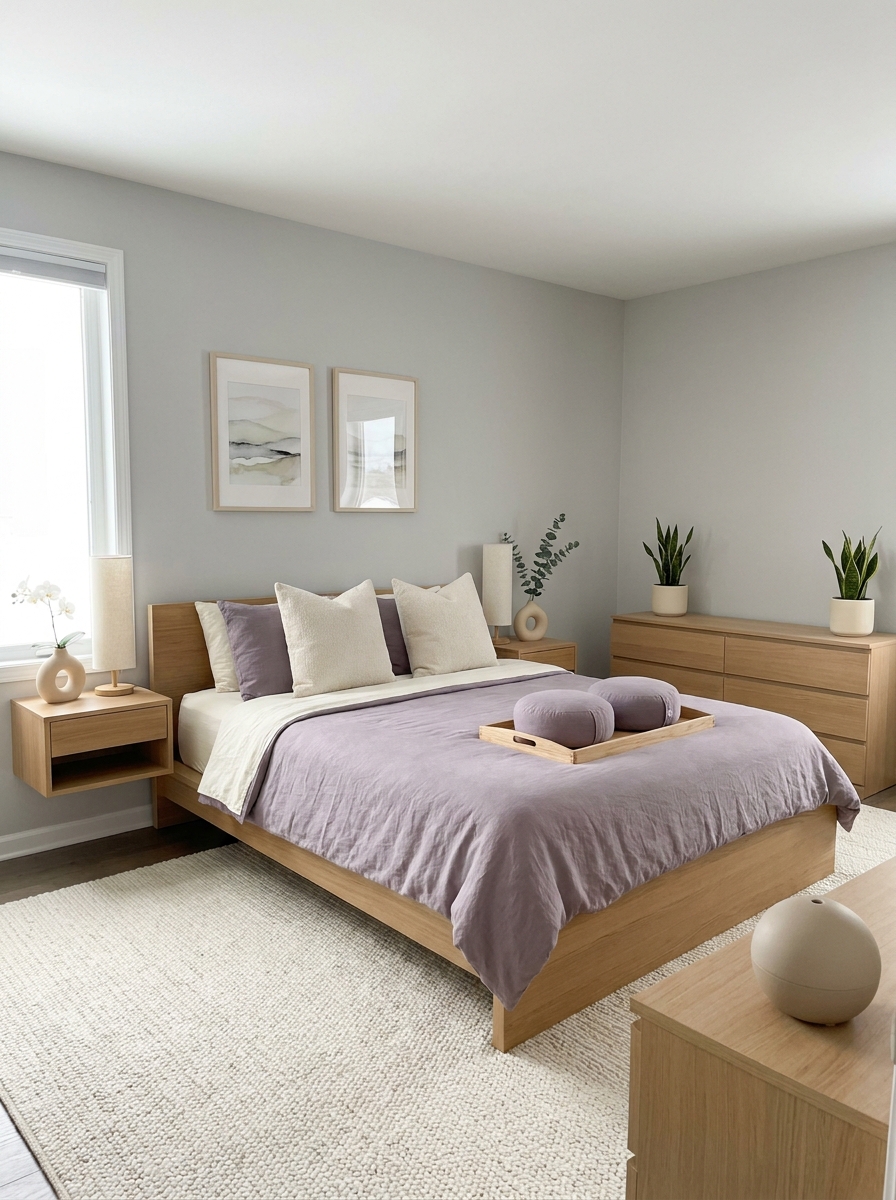
This feng shui principle is one of my favorites because it’s so symbolic. Pairs represent partnership, balance, and harmony. Even if you’re single, surrounding yourself with paired items invites that balanced, complete energy into your life.
Start with the obvious ones: two nightstands, two lamps, two pillows. But you can take it further. Two matching candles, a pair of small plants, even artwork in twos. It creates such a satisfying visual rhythm, and psychologically, it just feels more settled and calm.
The flip side? Avoid solo items or odd groupings in the bedroom. That lonely single nightstand or one big painting can subconsciously reinforce feelings of imbalance. I know it sounds a little woo-woo, but I’ve seen so many people feel better about their space once they embrace this simple shift. Everything feels more intentional, more pulled together, more… right.
12. Invest in a Solid Headboard for Support
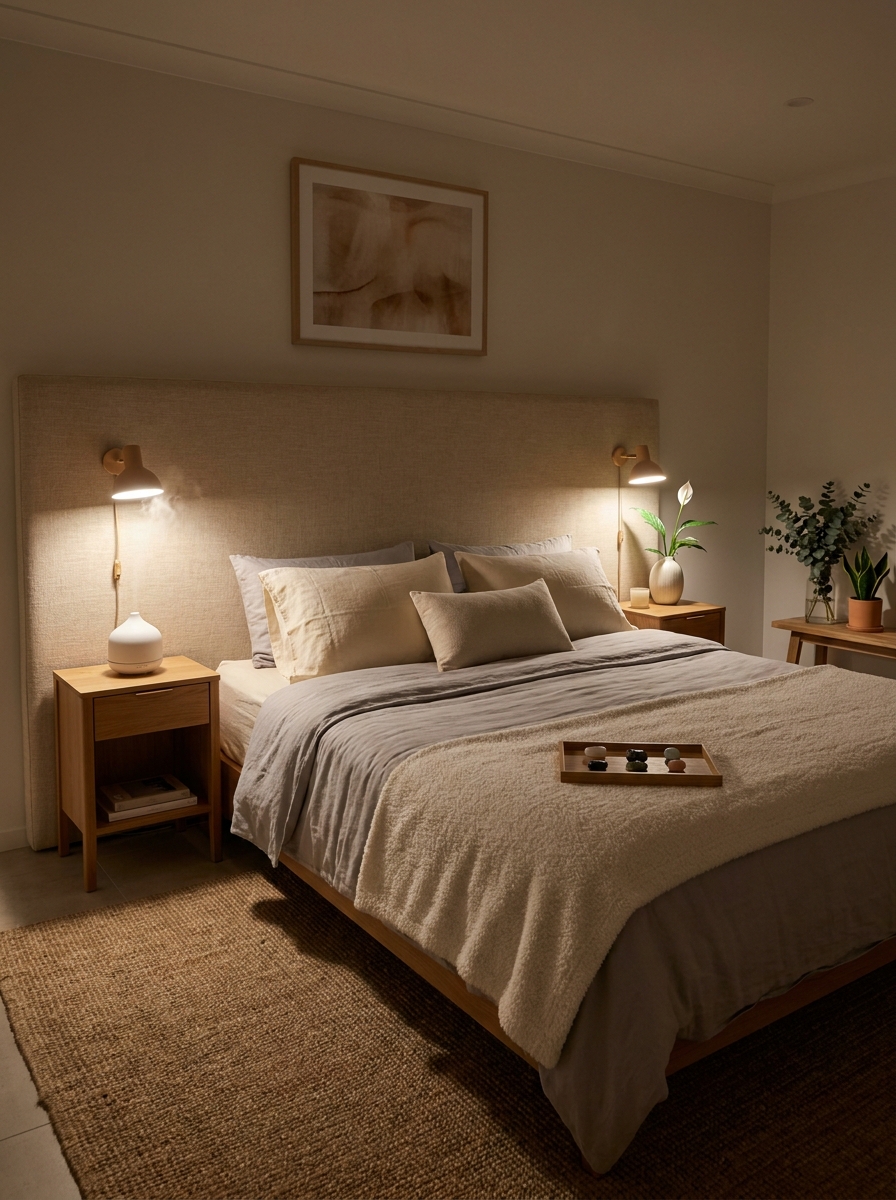
In feng shui, a headboard represents support and stability in your life. It’s not just about aesthetics, though a beautiful headboard definitely doesn’t hurt! It’s about creating that solid, grounded feeling when you’re at your most vulnerable during sleep.
I always recommend a headboard that’s attached to the bed frame or mounted securely to the wall. It should feel sturdy, not wobbly or flimsy. And here’s the thing about materials: wood is grounding and stable, upholstered is soft and nurturing. Both work beautifully depending on what energy you need more of.
Skip the metal headboards with bars or openings, though. In feng shui, they’re thought to let energy escape and can create restless sleep. You want something solid behind you. Think of it as having your back, quite literally. And make sure your headboard is pushed flush against the wall with no gap. That empty space can create unsettled energy when you’re trying to rest.
13. Position Your Bed Away from the Door
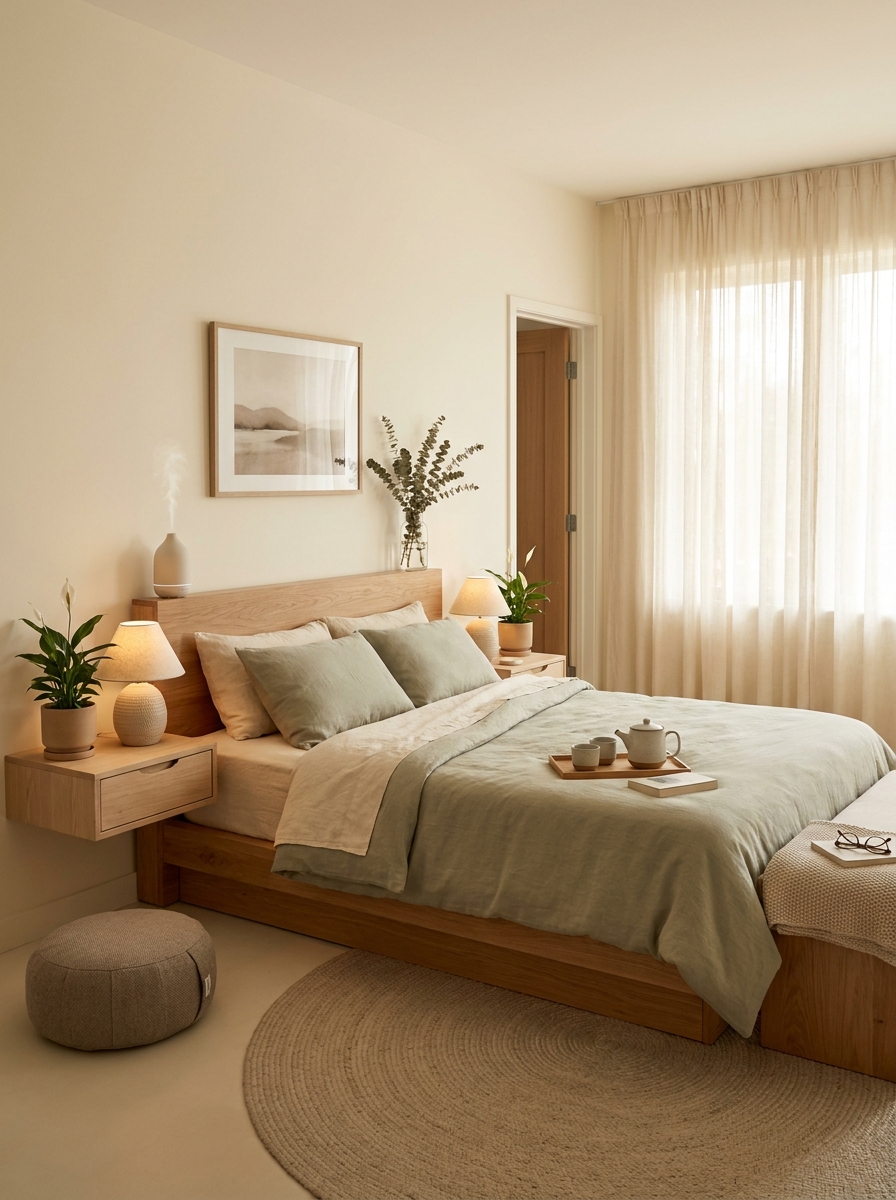
You know that uneasy feeling when you can’t see who’s entering your room? That’s exactly what feng shui wants you to avoid. Your bed shouldn’t be directly in line with the door—it’s called the “coffin position” and creates restless energy that disrupts sleep.
Instead, position your bed diagonally across from the door where you can see it without being in its direct path. This creates a sense of safety and control that lets your nervous system truly relax. I moved my bed just three feet to the left last year, and I swear I started sleeping more soundly within days.
If your room layout forces the bed to face the door directly, don’t panic! You can soften this energy by placing a substantial piece of furniture—like a bench or chest—at the foot of the bed. It acts as a buffer and makes the space feel more protected and intentional.
14. Keep Mirrors Away from the Bed
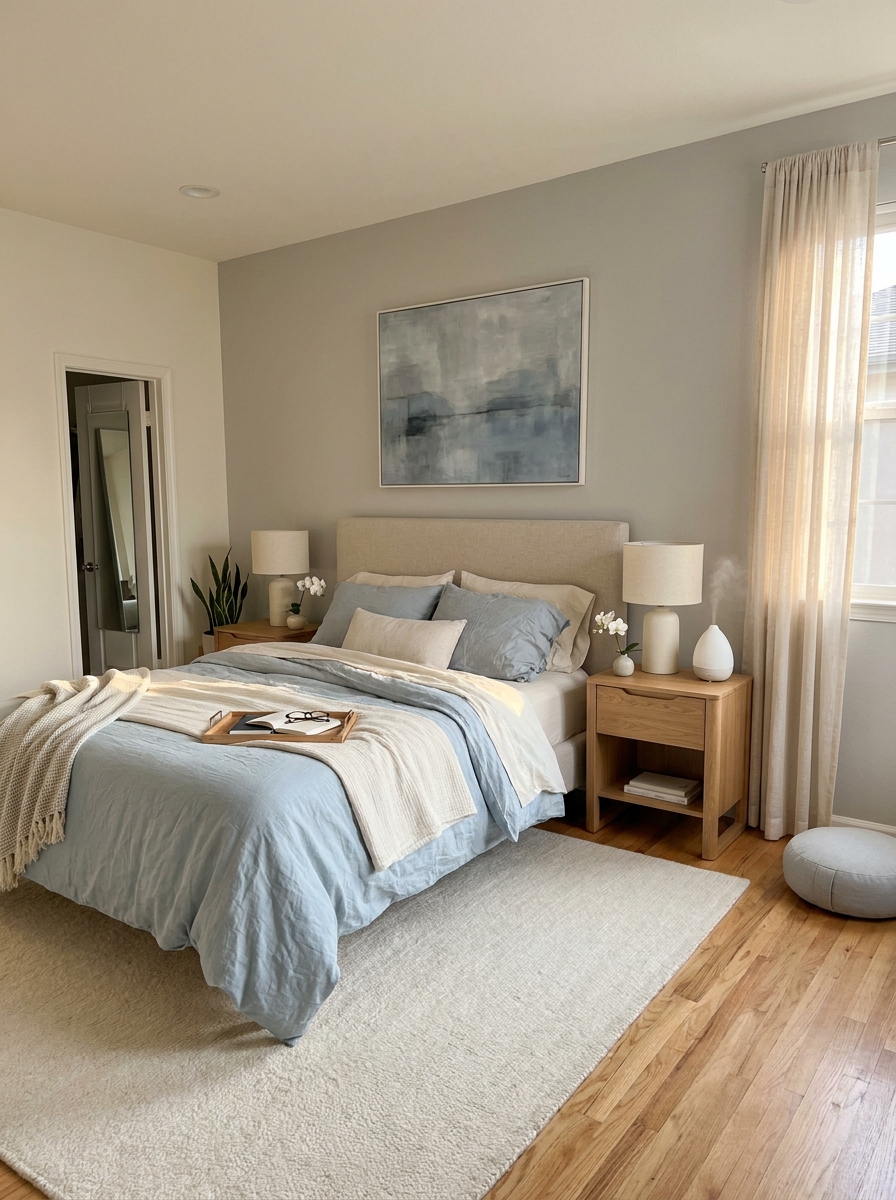
Here’s a feng shui rule that surprises everyone: mirrors reflecting your bed while you sleep create chaotic, restless energy. The idea is that mirrors are too active and stimulating—they bounce energy around the room when you need stillness and calm.
I used to have a gorgeous full-length mirror right across from my bed, and I’d wake up multiple times every night. Once I moved it to the inside of my closet door, my sleep improved dramatically. Coincidence? Maybe. But feng shui teaches that mirrors can invite unwanted energy or even symbolically bring a “third party” into your relationship.
If you absolutely need a mirror in your bedroom, position it where it won’t reflect the bed. A mirror on the inside of a closet door or on a wall perpendicular to the bed works beautifully. You get the function without the sleep-disrupting energy bouncing around all night.
15. Introduce Calming Scents with Intention
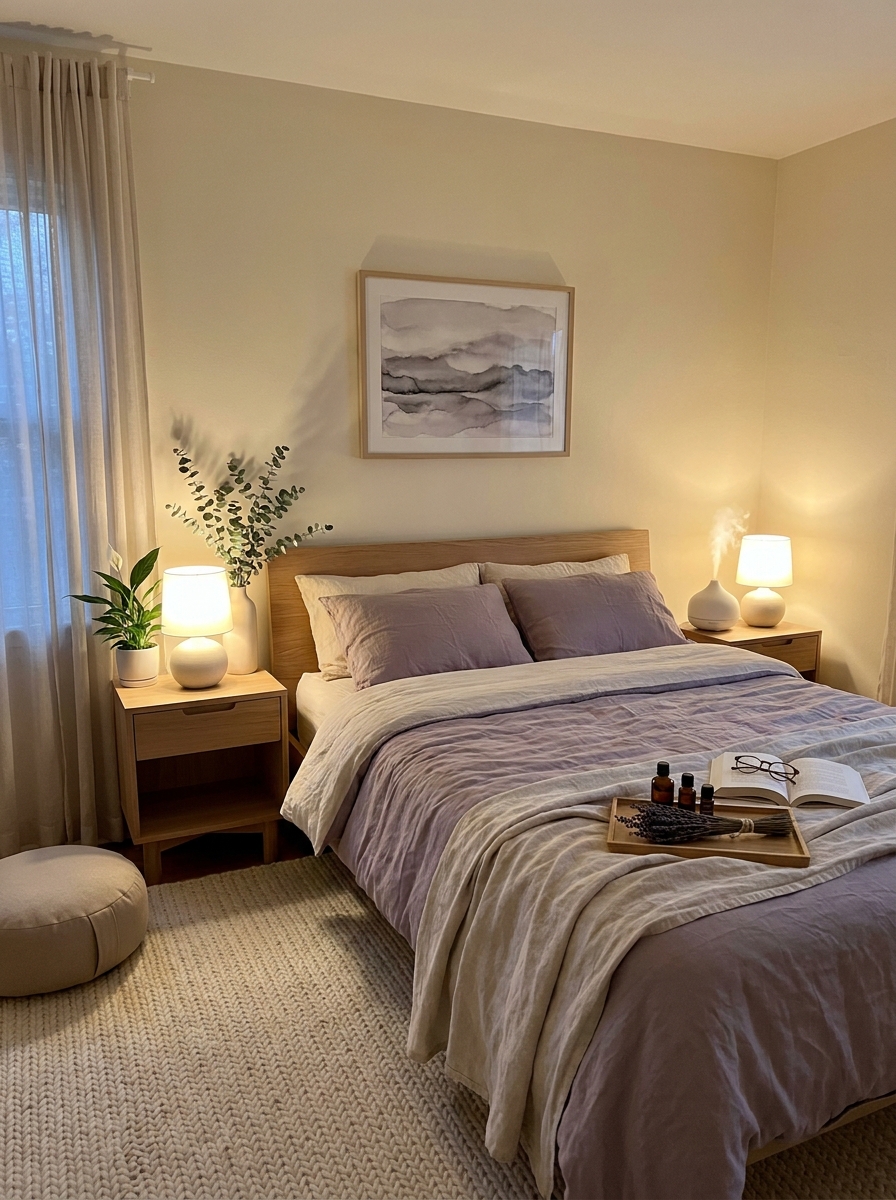
Your nose knows when something feels right. Scent is one of the fastest ways to shift the energy in your bedroom and signal to your brain that it’s time to unwind. Feng shui loves natural aromatherapy because it connects you to the earth element and creates instant calm.
Lavender, chamomile, and sandalwood are my go-to sleep scents, but ylang-ylang and bergamot work beautifully too. I keep a ceramic diffuser on my nightstand and run it for 30 minutes before bed—it’s become part of my wind-down ritual. The key is choosing pure essential oils, not synthetic fragrances that can feel harsh and chemically.
Don’t overdo it, though. Feng shui is all about balance, so a subtle scent is way more effective than an overwhelming one. You want your bedroom to smell naturally fresh and inviting, not like you’re trying too hard. Think gentle whisper, not loud announcement.
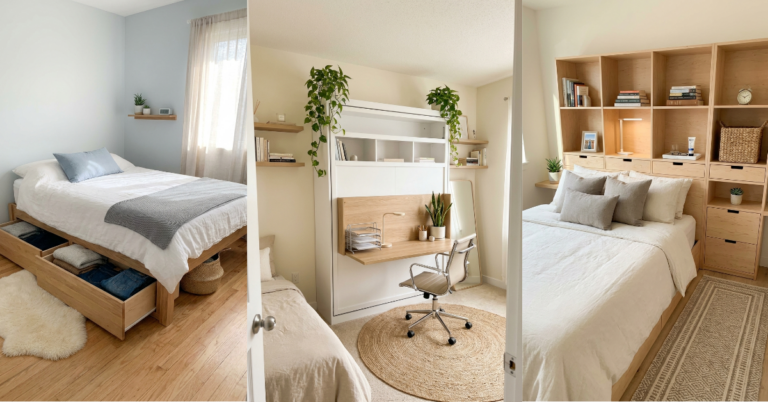
16. Create Space Under Your Bed for Energy Flow
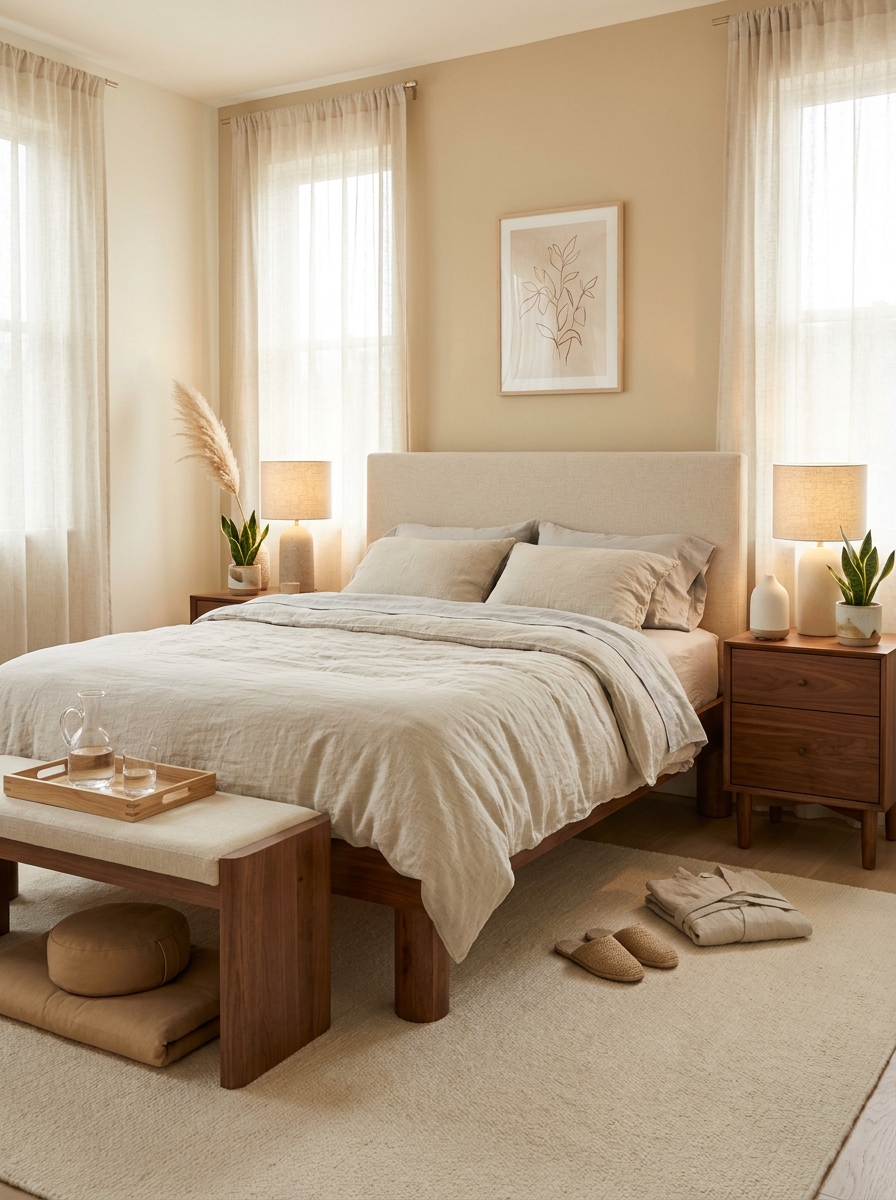
I’m about to tell you something that might make you rethink your entire under-bed storage situation. Feng shui says that stagnant energy collects under your bed when it’s crammed with boxes, shoes, and random stuff—and that stagnant energy? It affects your sleep quality and overall well-being.
The ideal feng shui bedroom has completely clear space under the bed so energy (or chi) can flow freely around you while you rest. I know, I know—storage is precious! But think about it: you’re sleeping on top of old tax documents and winter boots for eight hours a night. That’s not exactly the peaceful, flowing energy you want surrounding your body.
If you absolutely need under-bed storage, keep it minimal and organized. Store only sleep-related items like extra pillows, blankets, or fresh linens in matching containers. Avoid anything with negative associations or chaotic energy—no old photos, memorabilia, or junk.
17. Use Low-Profile Furniture to Enhance Flow
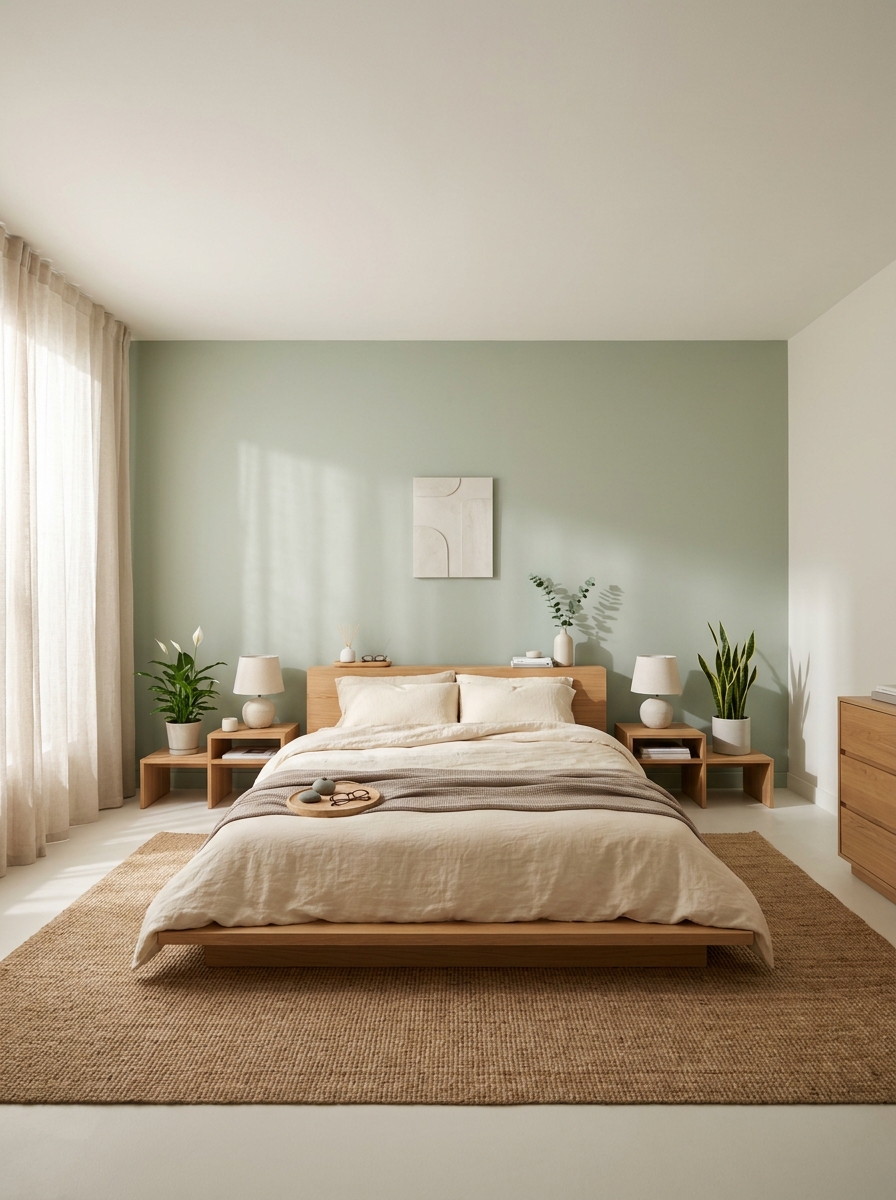
Here’s something I learned the hard way: tall, bulky furniture blocks energy flow and makes your bedroom feel heavy. Feng shui is all about keeping chi moving smoothly through your space, and furniture that’s too massive creates energetic traffic jams.
I switched to a low platform bed and streamlined nightstands a few years ago, and wow—the difference was instant. The room suddenly felt bigger, airier, and so much more peaceful. There’s something about keeping furniture closer to the ground that makes everything feel grounded yet open at the same time.
Think about it like this: when you walk into a room, your eyes should glide across the space easily. Heavy armoires and tall dressers interrupt that flow and create visual chaos. Lower pieces let your gaze travel freely, which translates to calmer energy overall. Plus, you’ll actually see more of your beautiful walls and windows, which makes the whole room feel more spacious and serene.
18. Balance Yin and Yang Energy with Textures
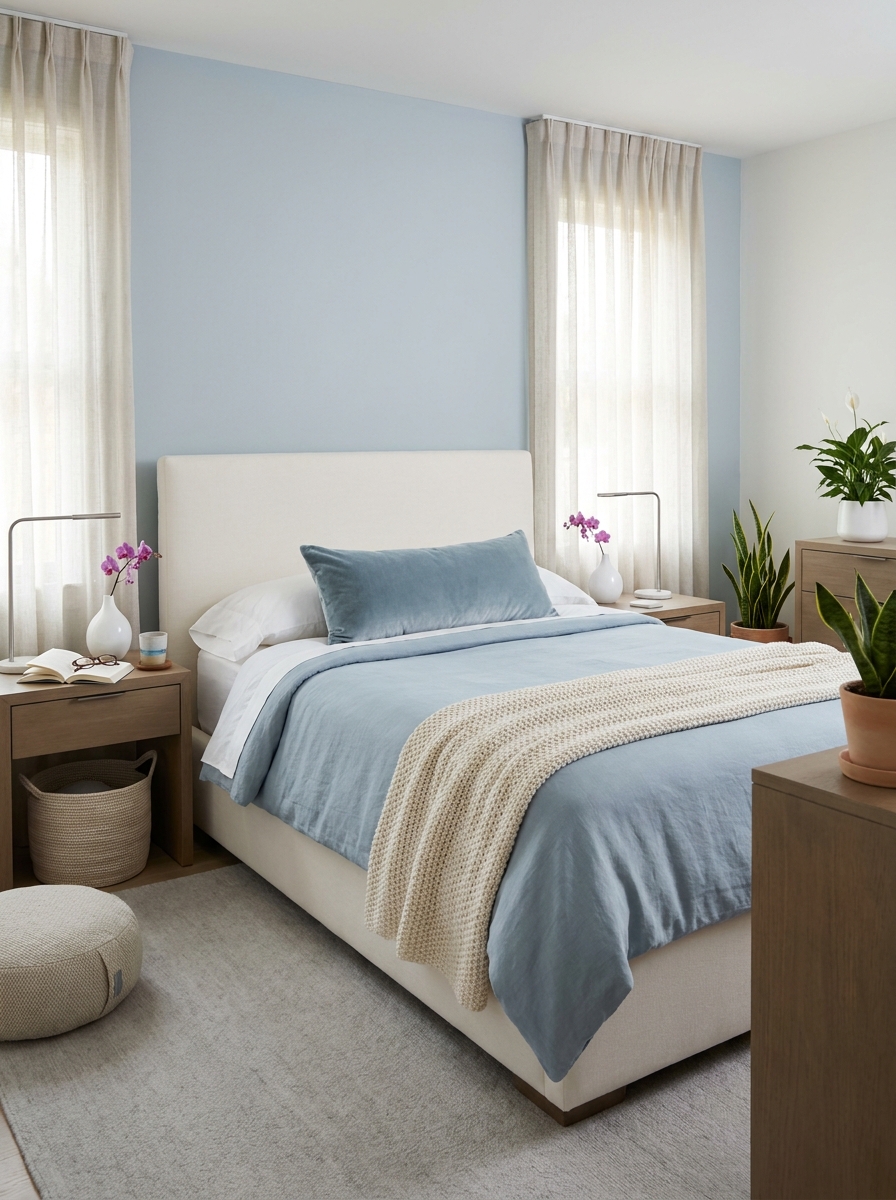
Okay, this might sound a little abstract, but stick with me—it’s actually super practical. Feng shui is all about balancing yin (soft, restful) and yang (active, energizing) energies. Your bedroom should lean heavily yin, but you need just a touch of yang to keep things from feeling lifeless.
I create this balance through textures. Think chunky knit throws (yin) paired with a sleek ceramic lamp (yang). Soft linen bedding (yin) with crisp geometric pillows (yang). It’s about mixing cozy with structured, plush with smooth. This creates visual interest without overwhelming the peaceful vibe you’re going for.
The magic happens when you get the ratio right—about 70% yin to 30% yang in a bedroom. Too much softness makes a room feel boring and stagnant. Too much structure feels cold and uninviting. When you balance both, your bedroom becomes this perfect sanctuary that’s calming but still feels alive and intentional.
19. Choose Rounded Furniture Over Sharp Edges
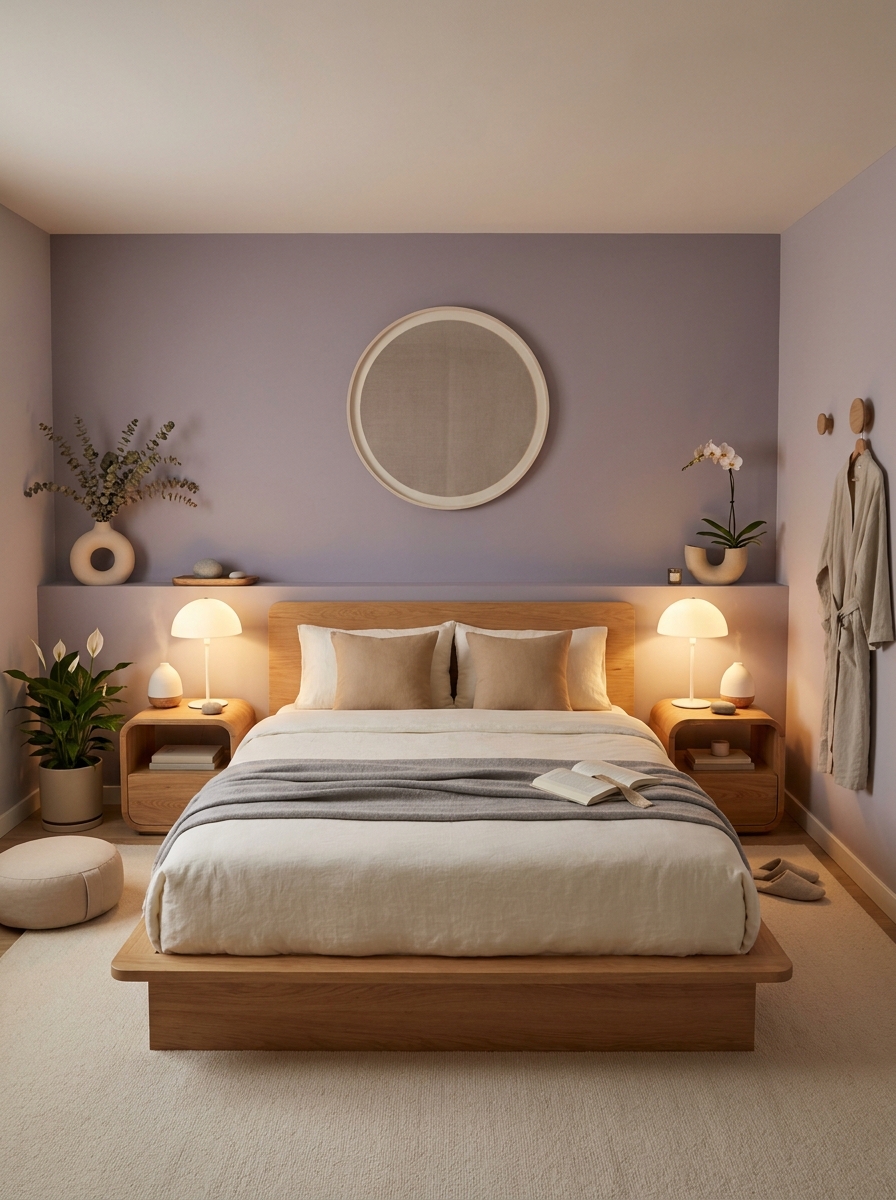
I used to have a nightstand with the sharpest corners—I can’t tell you how many times I bumped into it in the dark! But beyond the bruises, sharp edges create what feng shui calls ‘poison arrows’—harsh energy that disrupts the peaceful flow in your bedroom.
Rounded furniture is a total game-changer. Curved nightstands, oval mirrors, circular side tables—they soften the entire energy of your room. There’s something psychologically soothing about gentle curves versus hard angles. Your nervous system literally relaxes when there aren’t sharp points aimed at you while you’re trying to sleep.
You don’t need to replace everything at once. Start small—swap out angular lamps for rounded ones, choose a curved bench for the foot of your bed, or add a circular tray to your dresser. Even small curves make a noticeable difference in how calm and welcoming your bedroom feels. Your shins will thank you too!
20. Add a Touch of Water Element for Wealth Energy
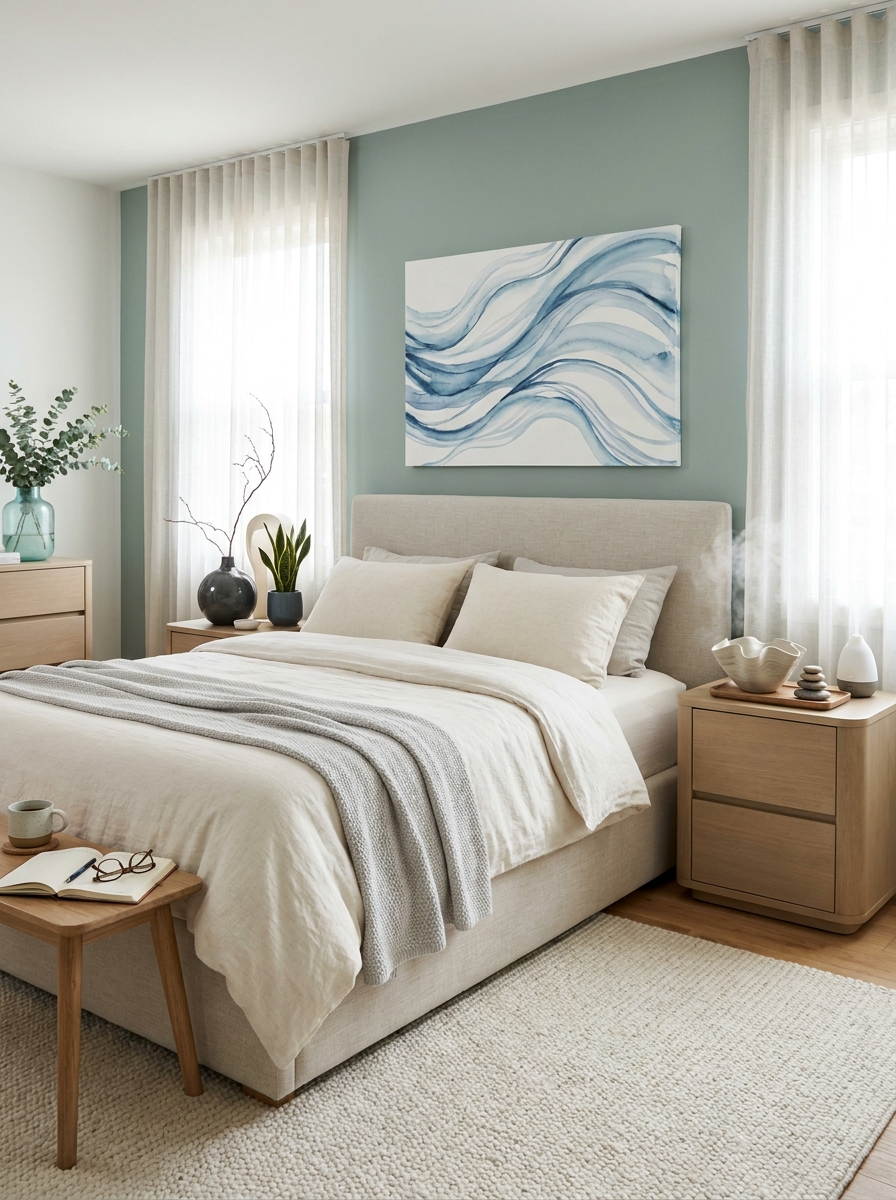
The water element in feng shui represents flow, abundance, and calm—all things we want in a bedroom! But here’s the tricky part: you don’t want actual water features like fountains in your bedroom (too much yang energy), so you bring in water through color and imagery instead.
I love incorporating soft blues, charcoal grays, and black accents to represent water. A beautiful abstract painting with flowing lines, a wavy ceramic bowl, or even bedding in ocean-inspired hues works perfectly. The idea is to suggest fluidity and depth without creating active, moving water energy that would disrupt sleep.
Just don’t overdo it—water element should be an accent, not the dominant force. Too much water energy in a bedroom can make you feel emotionally unstable or restless. A few thoughtful touches are all you need to invite that smooth, prosperous energy into your space while keeping things peaceful and sleep-friendly.
21. Place a Rug to Ground the Bed’s Energy
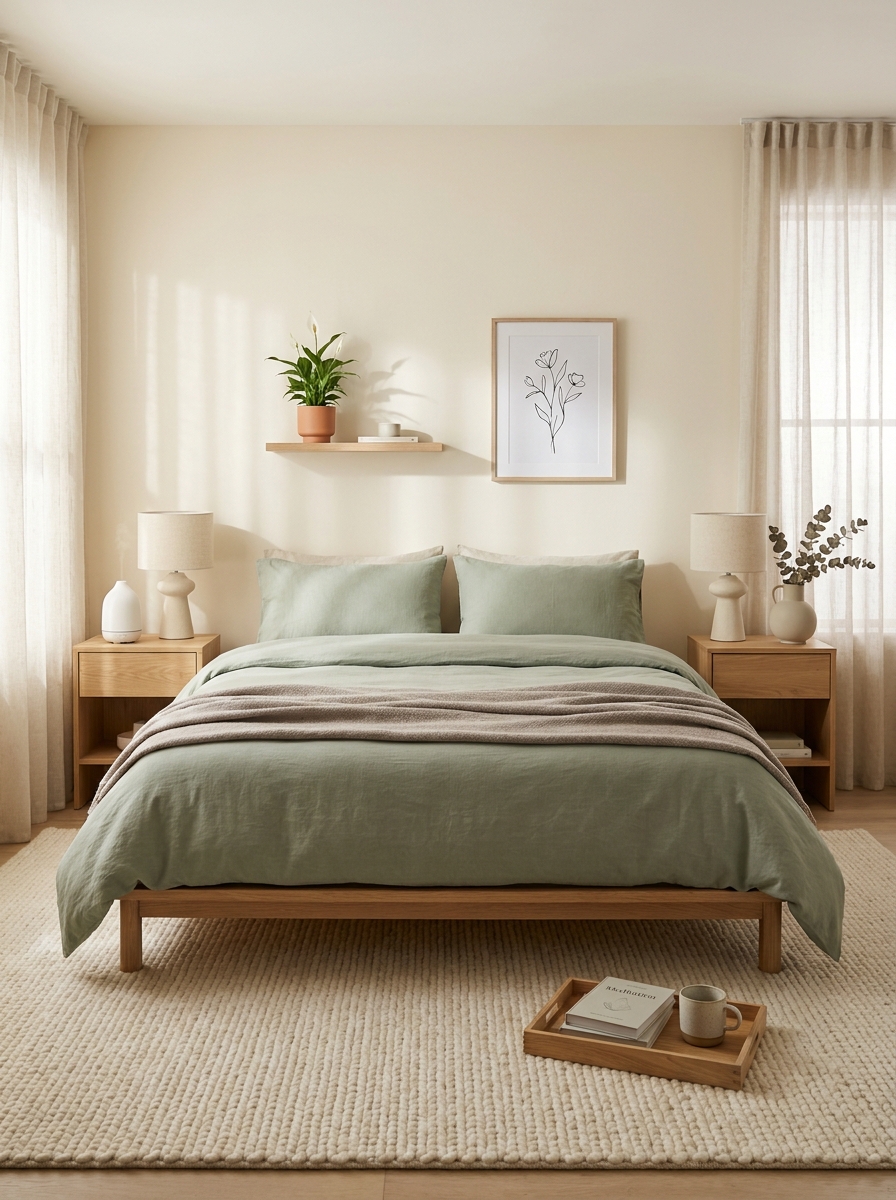
A rug under or beside your bed does more than protect your feet from cold floors. It actually grounds the entire energy of your sleeping space. Think of it as an anchor that defines the bed area and creates a sense of stability and warmth.
When you step onto something soft first thing in the morning, you’re literally starting your day on gentler footing. Natural fibers like wool, jute, or cotton are ideal because they connect you to earth energy. The rug should be large enough to extend beyond both sides of the bed so you’re landing on softness no matter which side you exit.
I love how a beautiful rug can tie together your whole color scheme while adding that cozy, layered texture that makes a bedroom feel finished. Just make sure it’s not too busy or overly patterned. Subtle, calming designs work best for maintaining that peaceful feng shui vibe.
22. Avoid Overhead Beams Above the Bed
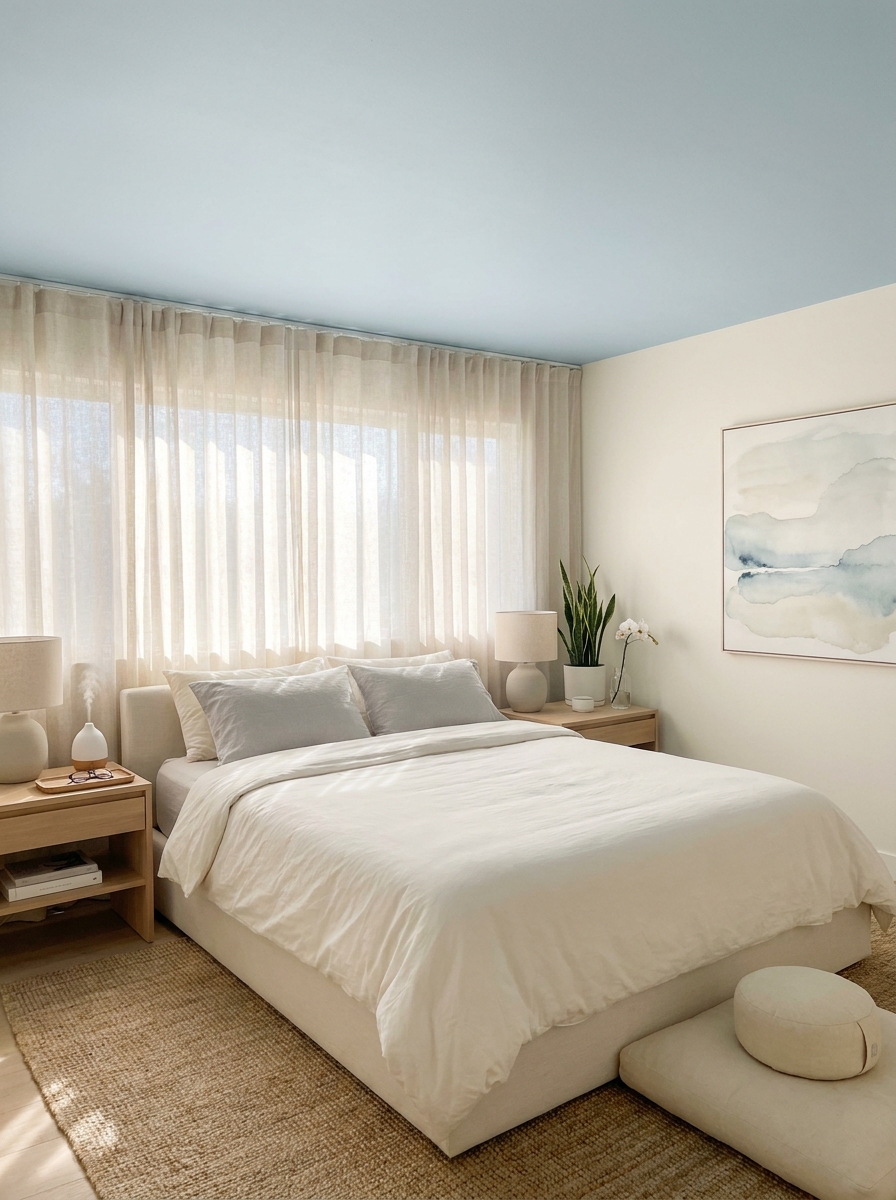
If you’ve got exposed beams running directly over your bed, feng shui says that’s creating what’s called oppressive energy. It’s like having something heavy pressing down on you while you sleep. Not exactly relaxing, right?
Even if you love the rustic look of ceiling beams, positioning your bed directly underneath them can make you feel restless or even give you headaches over time. The energy feels compressed and blocked rather than open and flowing. If moving your bed isn’t possible, there are workarounds like hanging fabric to soften the beam or using uplighting to lift the energy.
I totally get that sometimes our bedroom layout doesn’t give us much choice. But if you can avoid placing your bed under beams, ceiling fans, or sloped ceilings, you’ll likely notice you sleep better and wake up feeling less weighed down.
23. Use Dimmable Lighting for Adjustable Energy
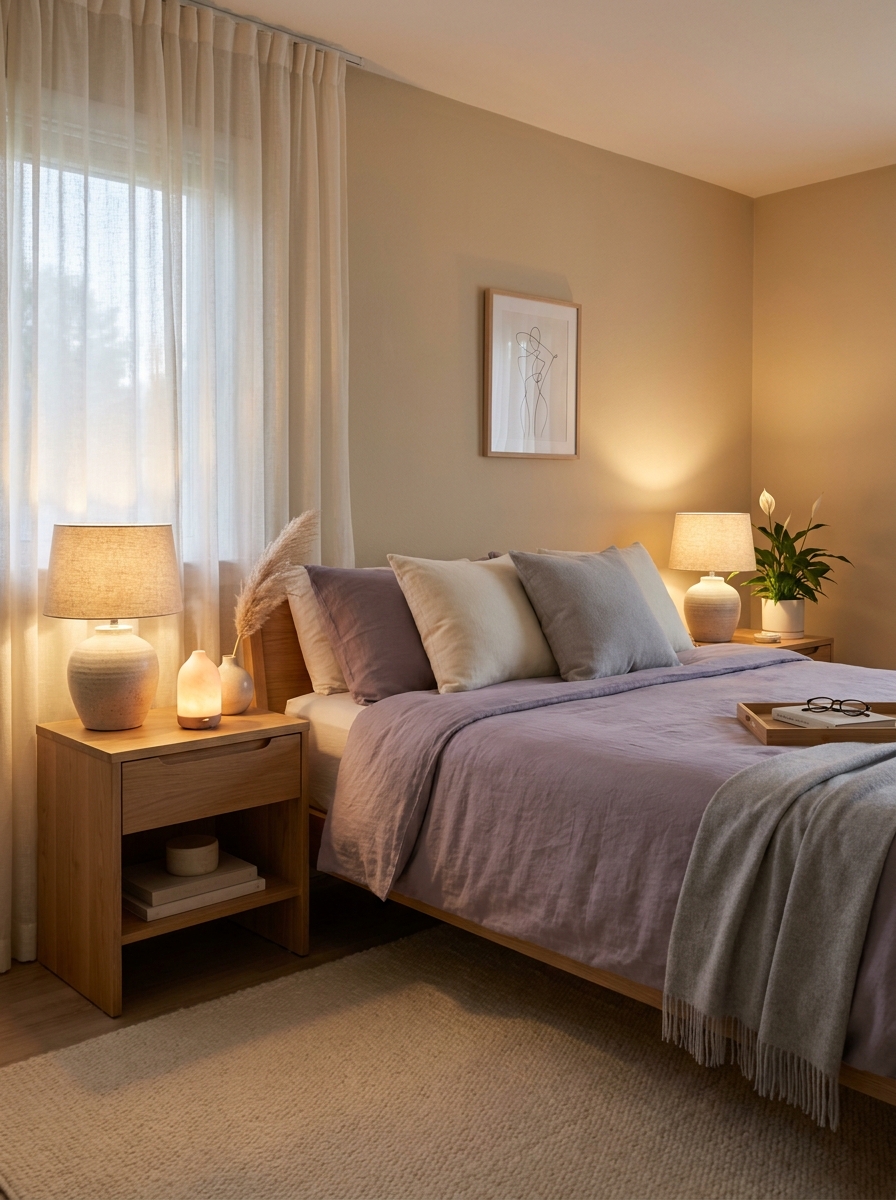
Harsh overhead lighting has no place in a feng shui bedroom. You need control over the mood and energy of your space, and dimmable lights give you exactly that. Bright light energizes, soft light calms. You want both options depending on what you’re doing.
Think about it: reading requires more light, but winding down for sleep needs gentle, warm illumination that signals to your body it’s time to relax. Dimmer switches or three-way bulbs let you adjust the intensity throughout your evening routine. Layered lighting with bedside lamps, wall sconces, or even candles creates depth and warmth without being overwhelming.
I’m obsessed with warm-toned bulbs around 2700K because they mimic candlelight and make everything feel instantly cozier. Skip the cool white bulbs that feel clinical and jarring. Your bedroom should glow, not glare.
24. Display Only What Brings You Joy and Peace
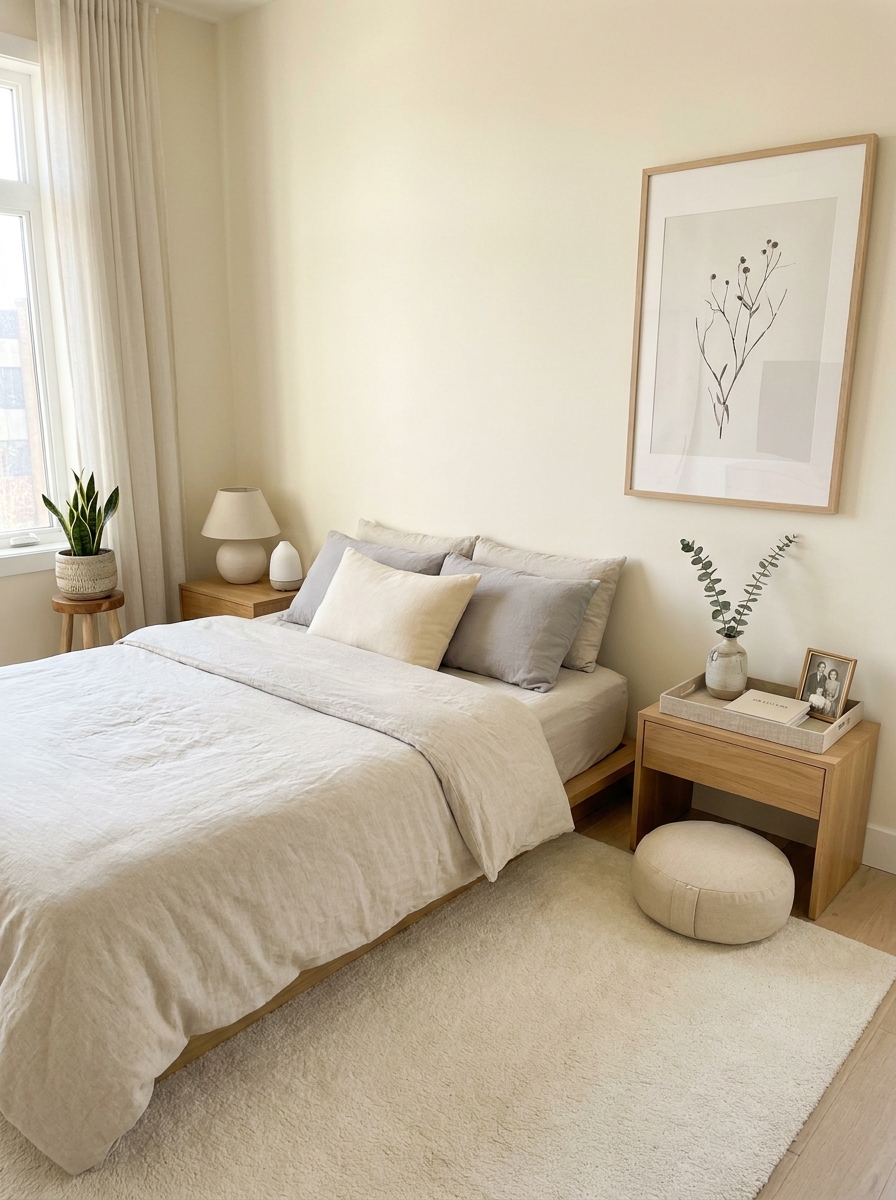
Every single thing in your bedroom should earn its place. If it doesn’t make you feel calm, loved, or happy when you look at it, it’s taking up valuable energy. This isn’t just about decluttering—it’s about being intentional with what you invite into your most personal space.
That random photo from a work event? The knickknack you got as a gift but never really liked? They’re creating visual noise that disrupts your peace. Your bedroom should feel like a sanctuary filled only with things that genuinely resonate with you. Maybe it’s a photo of loved ones, a piece of art that makes you smile, or a special keepsake from a meaningful trip.
I’ve noticed that when I remove everything neutral or negative from my view, my bedroom immediately feels lighter. Quality over quantity always wins here. A few beloved, meaningful pieces create so much more positive energy than a bunch of stuff you’re indifferent about.
25. Keep Living Plants for Fresh, Vital Energy
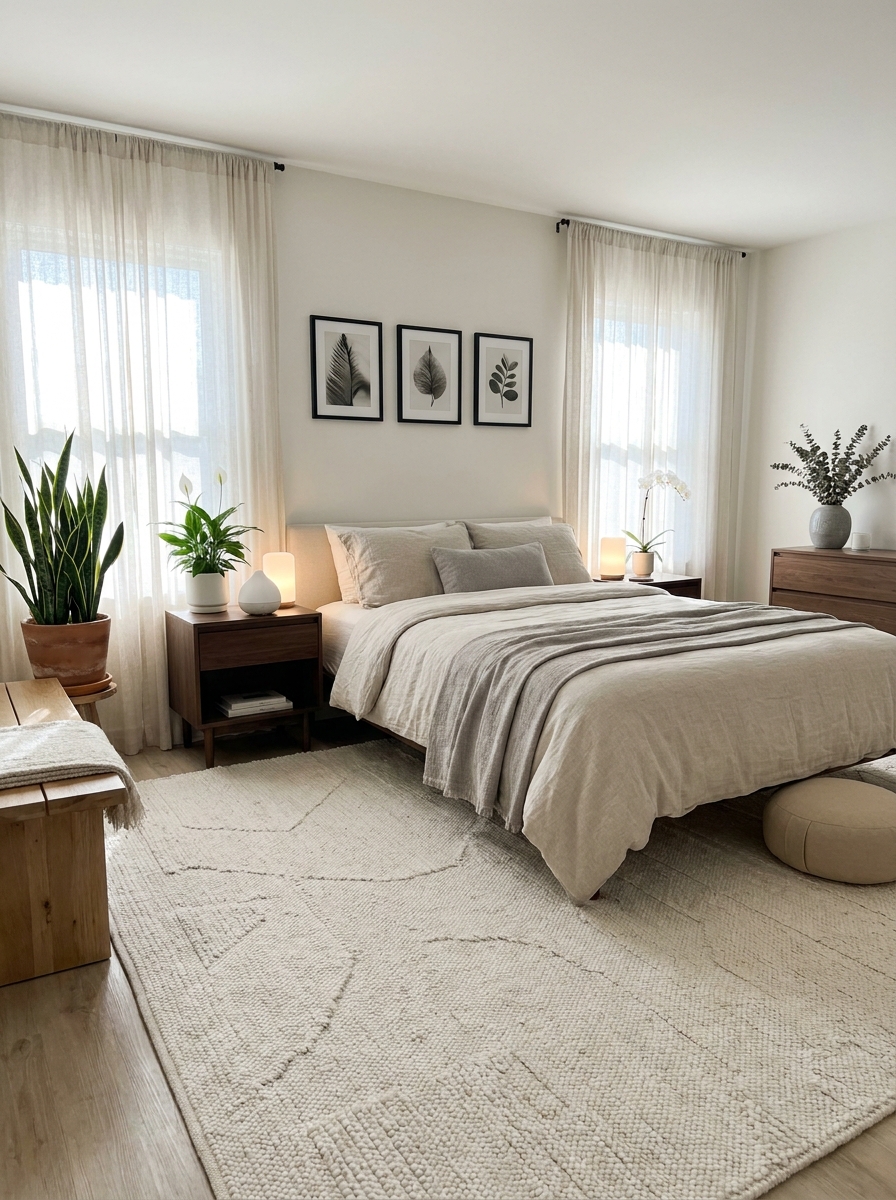
Nothing brings life force energy into your bedroom quite like healthy, thriving plants. In feng shui, plants represent growth, vitality, and the wood element—they literally clean your air while raising the room’s chi. But here’s the thing: only living, well-cared-for plants create positive energy. Wilted or dying plants do the opposite, so commitment matters here.
I keep two small snake plants on my dresser and honestly? I sleep better knowing they’re quietly purifying the air all night. Choose low-maintenance varieties that won’t stress you out. Peace lilies, snake plants, and pothos are all bedroom-friendly and nearly impossible to kill.
Place them thoughtfully—not directly next to your pillow (that’s a bit much), but on dressers, nightstands, or window sills. Avoid spiky plants like cacti in the bedroom; feng shui says those sharp edges create attacking energy. Stick with soft, rounded leaves that feel gentle and welcoming. Your bedroom should feel like a sanctuary, and plants are nature’s easiest way to bring that calm, grounded energy inside.
26. Hang Curtains High and Wide for Expansive Energy
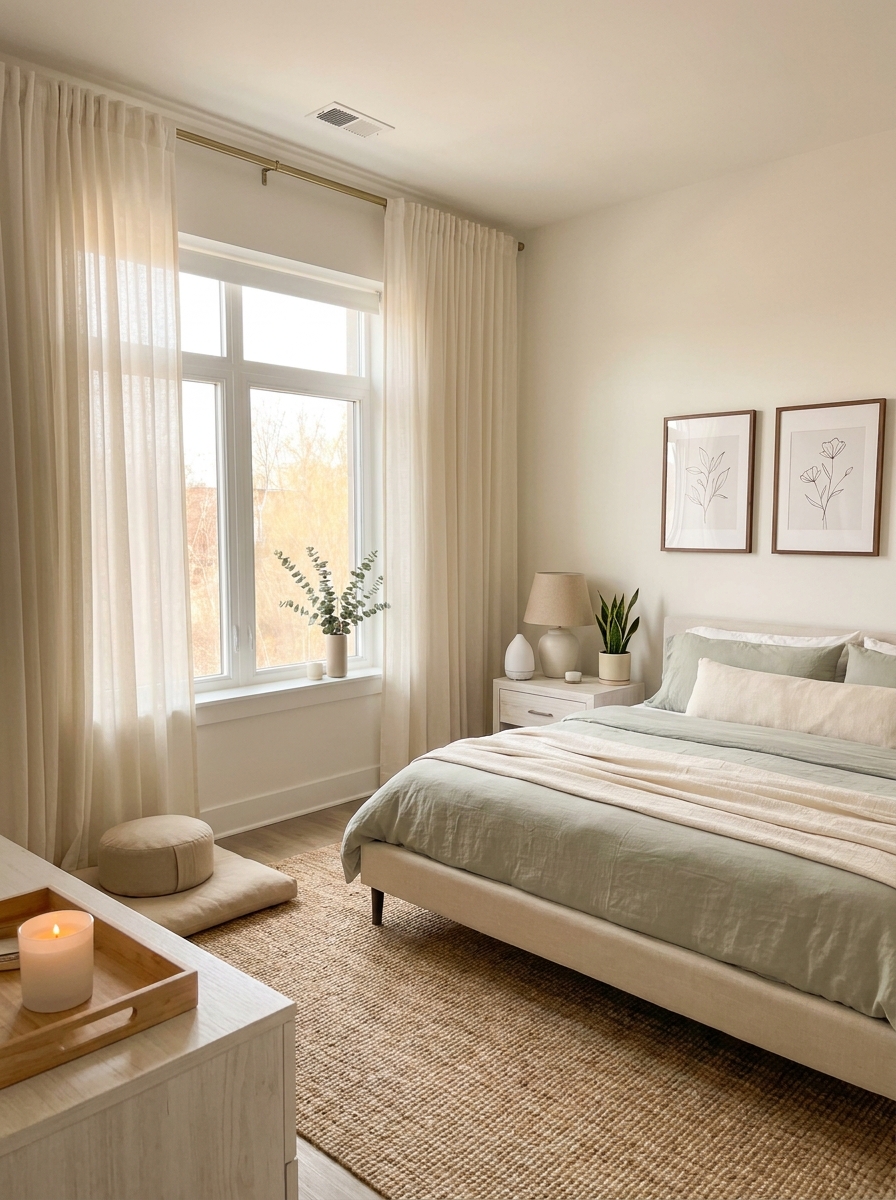
This feng shui trick is also an interior design secret: hang your curtains as close to the ceiling as possible and wider than your window frame. It completely transforms how energy moves through your bedroom. When curtains are mounted high and wide, they draw the eye upward, making ceilings feel taller and the whole room more spacious and open.
That sense of space? It’s everything for calming energy. Low, cramped curtains make a room feel closed in, which translates to stuck, heavy chi. High curtains create lift and flow—your bedroom literally feels like it can breathe. I made this change in my own room and wow, the difference was instant.
Choose light, flowy fabrics in soft neutrals that puddle slightly on the floor for that luxurious, grounded feeling. Avoid heavy, dark curtains that block all light; you want to be able to control light levels without creating a cave. The goal is to filter and soften natural light during the day while maintaining privacy. This simple adjustment makes your bedroom feel twice as expensive and infinitely more peaceful.
27. Create a Tech-Free Bedside Charging Station Elsewhere
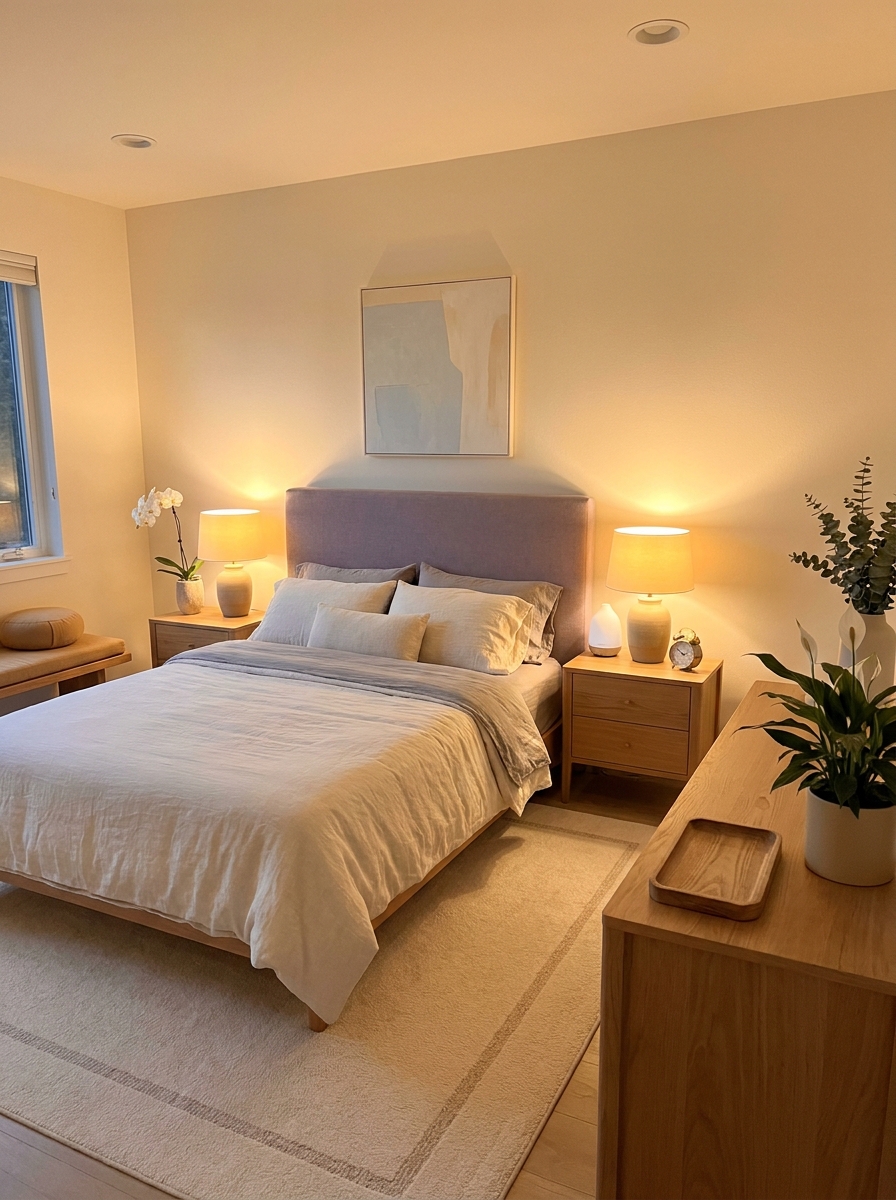
Here’s the feng shui challenge of modern life: we need to charge our phones, but having them buzzing on our nightstands destroys bedroom peace. The solution? Create a dedicated charging station somewhere else entirely—in your closet, bathroom, hallway, or even just across the room on a dresser.
When your phone isn’t within arm’s reach, something magical happens. You stop scrolling before bed. You’re not tempted to check emails at 2 a.m. The electromagnetic fields aren’t interfering with your sleep. Your bedroom becomes just for rest, not for the entire digital world. I moved my charging station to my bathroom counter and honestly? Best decision ever.
Set up a small tray or basket where you deposit all devices when you enter the bedroom. Keys, phone, smartwatch—everything that beeps, buzzes, or glows. This becomes your decompression ritual, a physical boundary between the busy world and your sleep sanctuary. If you absolutely must have an alarm, use a simple battery-operated clock. Your nervous system will thank you, and your sleep quality will improve almost immediately.
Quick Guide
Feng Shui Bedroom Quick Wins (Start Here)
Under $20: Remove all electronics, add a small plant, switch to softer light bulbs, clear nightstand clutter, use matching lamps.
Under $100: Buy a new set of neutral linen bedding, add blackout curtains, get matching nightstands from a thrift store, invest in a good essential oil diffuser, swap harsh overhead lighting for bedside lamps.
Under $500: Reposition your bed to the commanding spot (may need furniture rearranging help), paint walls in a soft neutral, upgrade to a natural fiber area rug, add a solid upholstered headboard, invest in symmetrical nightstands and quality bedding.
The 24-Hour Fix: Clear all clutter, make the bed with intention, remove anything work-related, add one living plant, light a candle. You’ll feel the shift immediately.
Your Bedroom, Your Sanctuary
Here’s the truth—you don’t need to follow every feng shui rule perfectly or buy all new furniture to create a bedroom that feels like a retreat. Start with one or two changes that resonate with you. Maybe it’s finally clearing your nightstand or moving your bed so you can see the door. Maybe it’s just swapping your bright duvet for something softer and more neutral.
The goal isn’t perfection. It’s creating a space where you actually want to be, where your nervous system can downshift, and where sleep comes a little easier. These 27 ideas aren’t about rigid rules—they’re about noticing what feels good and intentionally designing for rest instead of just letting your bedroom happen by default.
Pay attention to how you feel when you walk into your room tonight. Does it welcome you, or does it stress you out? That feeling is your guide. Trust it, make small shifts, and watch how much better you sleep and wake up. You spend a third of your life in this room—make it worth it.
Frequently Asked Questions
What is the most important feng shui rule for bedrooms?
Position your bed in the commanding spot—against a solid wall, facing the door but not directly in line with it, with space on both sides. This creates a sense of safety and balance that helps you actually relax. It’s the foundation everything else builds on.
What colors are best for a calming feng shui bedroom?
Soft, earthy neutrals work best—warm creams, gentle grays, dusty blues, muted lavenders, soft greiges, and pale sage greens. These ground your energy and signal your nervous system to rest. Avoid bright reds, intense oranges, or anything too stimulating where your head rests.
Can I have a TV in a feng shui bedroom?
Feng shui says no—screens stimulate your mind and disrupt sleep energy. But if you must have one, keep it in a cabinet you can close or cover it with a fabric panel when not in use. The key is removing visual stimulation when you’re trying to wind down.
Do I really need matching nightstands for good feng shui?
Matching nightstands create symmetry and balance, which feng shui values for harmony and relationships. They don’t have to be identical, but they should be similar in height and style. If budget’s tight, two identical stools styled the same way work just as well.
How do I apply feng shui principles if I’m renting and can’t paint?
Focus on what you can control—bed position, decluttering, bedding colors, lighting, and adding plants. Use neutral textiles like curtains, rugs, and throws to soften wall colors you don’t love. Feng shui is more about arrangement and energy flow than permanent changes.