20 Sleek Modern Living Room Decor Ideas That Transform
You walk into your living room and something feels off. The couch is fine, the coffee table works, but the whole space just sits there looking blah. It’s not ugly—it’s just not quite right. And you know what? That’s the thing about modern living rooms. They look so effortless in magazines, but getting that clean, pulled-together vibe in your actual home can feel tricky. Maybe you’re worried about it looking too cold or too minimalist. Or maybe you just don’t know where to start without buying all new furniture. Here’s the thing: modern doesn’t mean stark or expensive. It means intentional. It’s about choosing pieces that matter and letting them breathe. I’ve pulled together 20 ideas that’ll help you create a living room that feels current, sophisticated, and totally you. Let’s get into it.
1. Layer Neutrals in Different Textures
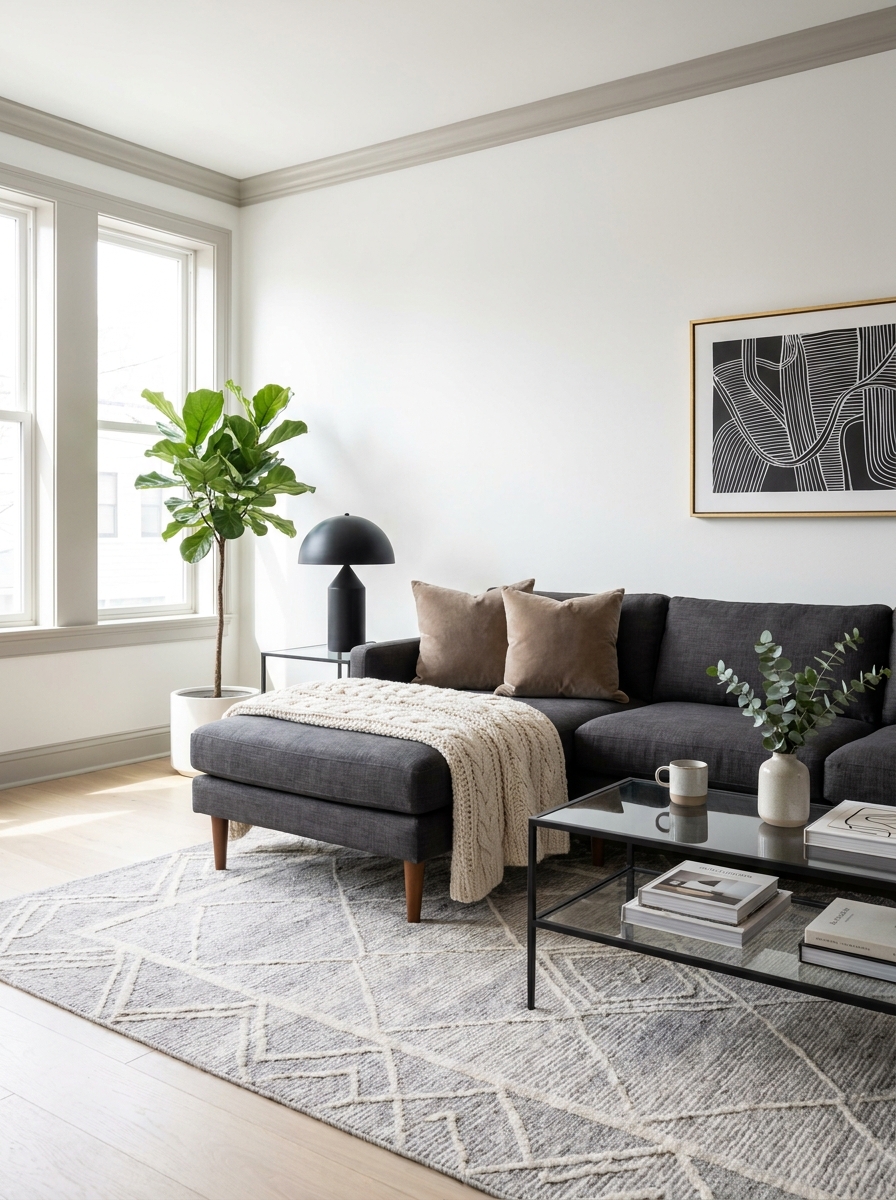
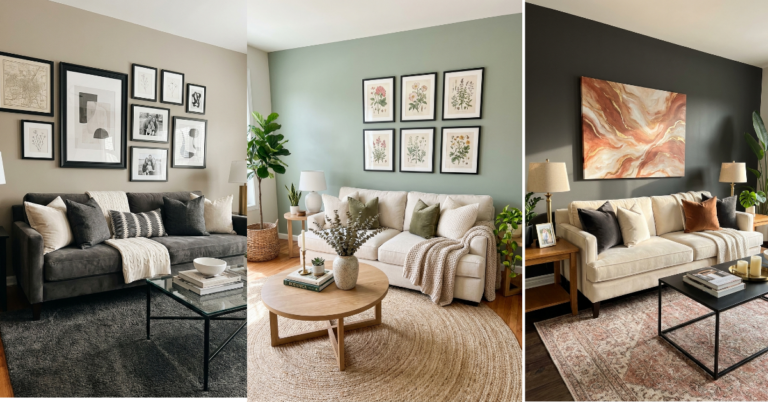
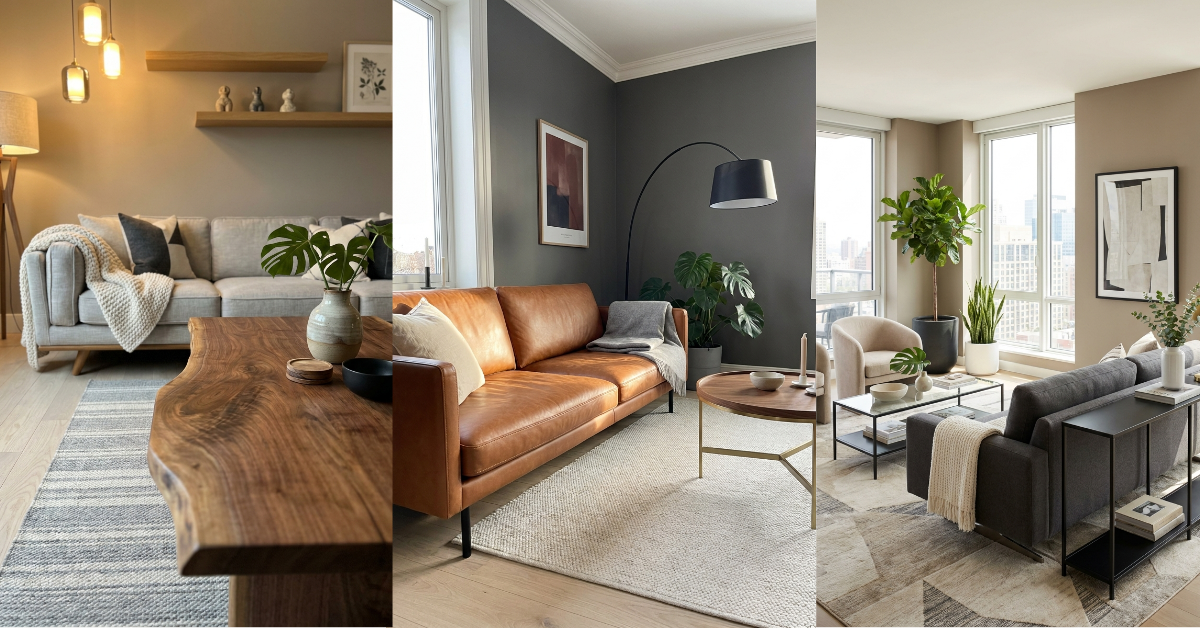
Neutral doesn’t have to mean boring. The secret to a modern living room that feels warm instead of cold? Texture, texture, texture. Think about it—a linen sofa paired with a chunky knit throw, a smooth leather ottoman next to a nubby wool rug. When you layer different materials in similar tones, you create depth without visual chaos.
Start with your biggest pieces in soft neutrals like warm gray, cream, or taupe. Then bring in contrast through texture instead of color. A velvet pillow catches light differently than a cotton one. A jute rug feels totally different underfoot than a plush shag. These little differences make the whole room feel richer and more interesting.
And here’s what I love about this approach—it’s forgiving. You can swap out a throw blanket or add new pillows without feeling like you’re redecorating from scratch. The neutral base stays consistent while the textures keep things from feeling flat. It’s like building a wardrobe for your living room, where everything works together but nothing’s matchy-matchy.
2. Invest in One Statement Sofa
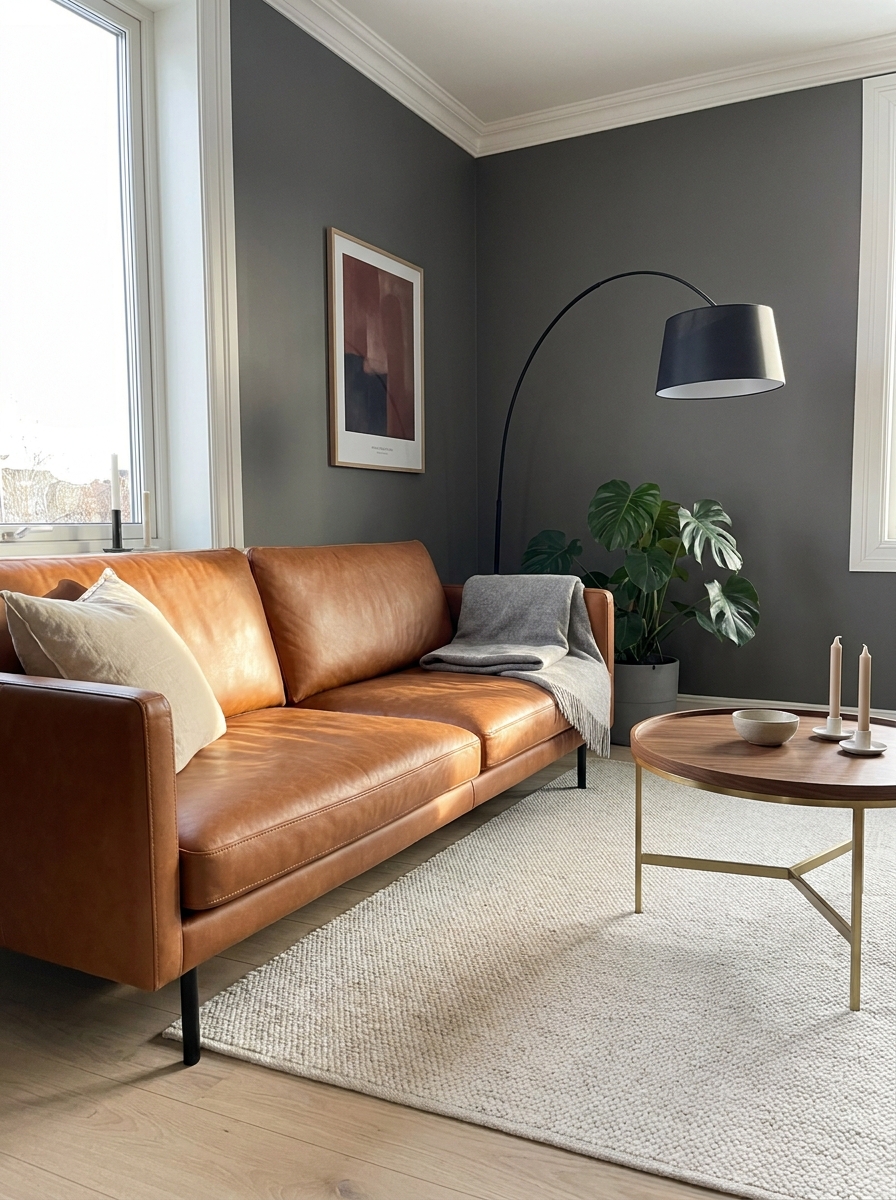
Your sofa is the backbone of your living room. It’s where you curl up with coffee on Sunday mornings, where friends pile up during game night, where life actually happens. So yeah, it deserves some attention. In a modern living room, the sofa often becomes the hero piece—and that’s exactly how it should be.
Look for clean lines and interesting proportions. Maybe it’s a low-slung silhouette with track arms, or a curved beauty that softens all those straight edges. The key is choosing something with a strong shape that can stand on its own without needing a ton of pillows to make it look finished. Think architectural, but still comfortable enough to actually sit on.
Don’t be afraid to go bold here, either. A cognac leather sofa adds instant warmth to a neutral room. A rich navy velvet brings depth without feeling too colorful. Or stick with classic gray or cream if you want to play it safe—just make sure the shape is interesting enough to carry the room. This is one piece worth saving up for because it sets the tone for everything else.
3. Create a Gallery Wall with Oversized Art
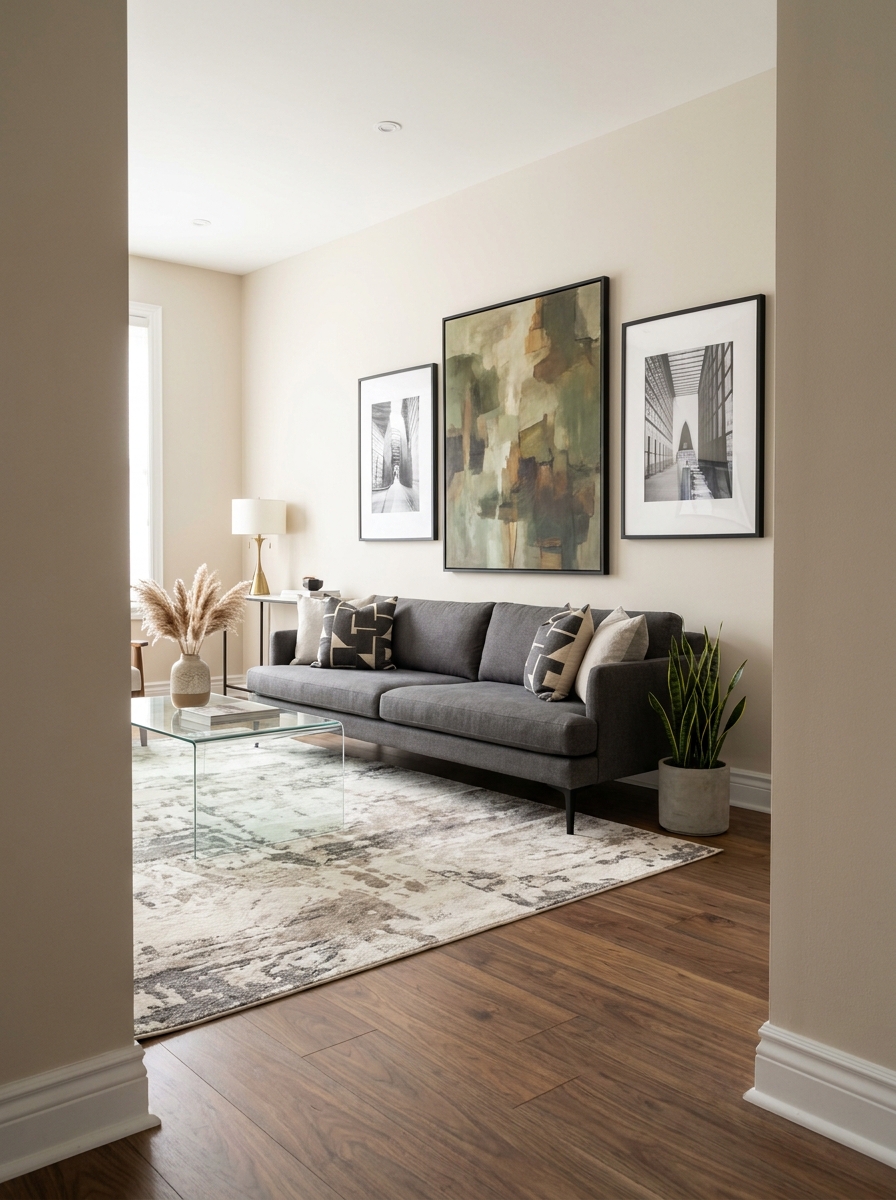
Blank walls are missed opportunities. But in a modern space, you don’t want a cluttered collage of tiny frames fighting for attention. Instead, go big. Oversized art makes a statement without requiring a ton of pieces, and it instantly elevates your room from basic to curated.
One large-scale piece above your sofa can anchor the whole wall. Or create a gallery wall with just three to five pieces in varying sizes, keeping generous space between them. The key is scale—modern design loves breathing room, so resist the urge to fill every inch. Choose art that speaks to you, whether that’s abstract paintings, black and white photography, or graphic prints.
Frame consistency matters here too. Stick with matching frames in black, natural wood, or thin gold to keep the look cohesive. And if you’re nervous about commitment, removable picture hanging strips are your friend. You can rearrange until it feels right without putting twenty nail holes in your wall. The goal is impact, not perfection.
4. Bring in Natural Wood Tones
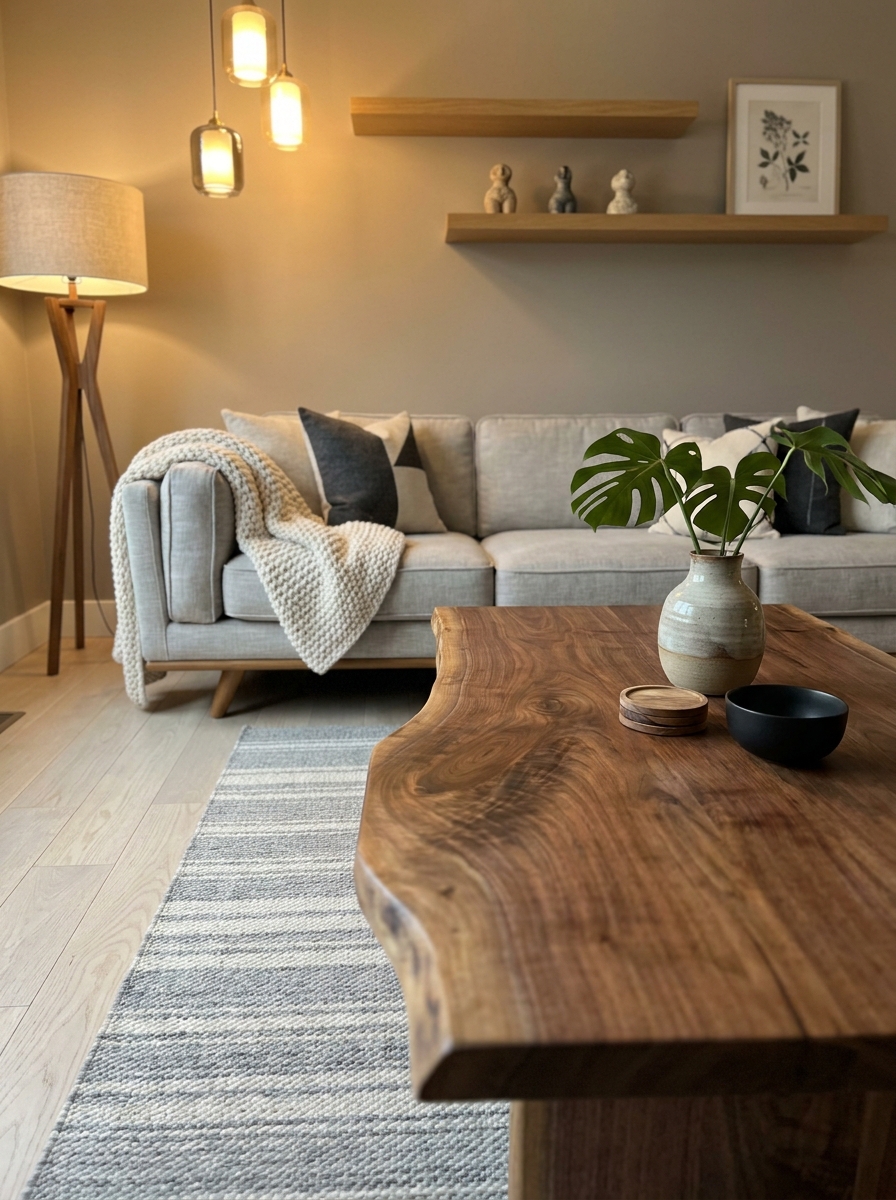
Modern doesn’t mean everything has to be gray and white and cold. Wood brings soul to a contemporary space. It adds warmth, texture, and that organic element that keeps a room from feeling too sterile or staged. And the beauty is, you don’t need a ton of it to make an impact.
A wooden coffee table with a natural edge. Floating shelves in warm oak. A media console in walnut. Even smaller accents like wooden picture frames or a turned wood bowl can do the trick. The grain and imperfections in real wood create visual interest that man-made materials just can’t replicate. It’s like bringing a little bit of the outdoors inside.
Stick with one wood tone throughout the room if you can—mixing too many different finishes can look chaotic. Blonde woods like oak and ash feel light and Scandinavian. Darker walnut or teak brings richness and sophistication. Either way, that natural element softens all those clean lines and makes your modern living room feel like an actual home instead of a showroom.
5. Float Your Furniture Away from Walls
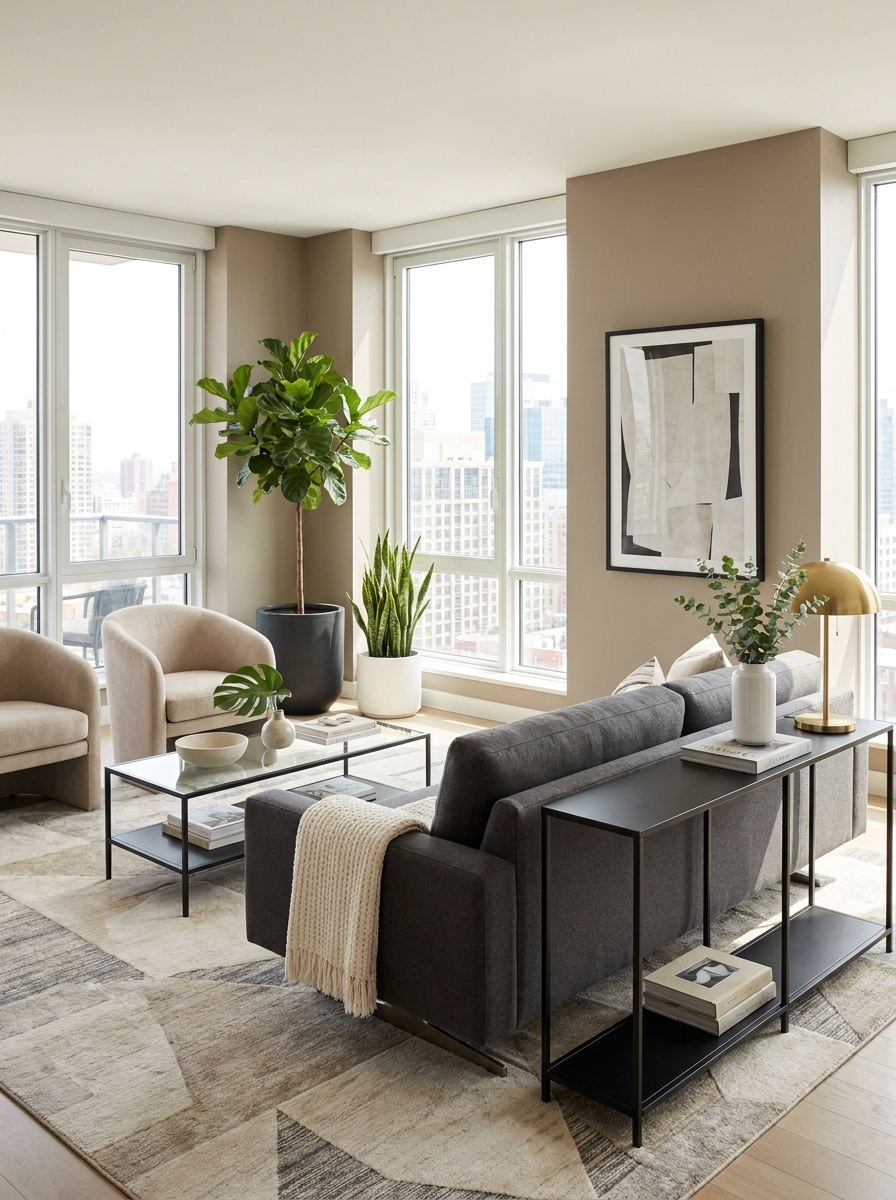
This trick completely changed how I design living rooms. Instead of pushing everything against the walls, pull your sofa into the room and create actual zones. It sounds counterintuitive, but it actually makes your space feel bigger and way more intentional.
I love putting a console table behind a floating sofa with a table lamp and a few styled objects. It creates this gallery-like moment and gives you usable surface space. Your living room suddenly feels like a real room, not just furniture arranged around the perimeter.
The key is making sure you have enough clearance—at least 30 inches for walkways. Position your sofa to face a focal point like a fireplace or window. Then arrange chairs and side tables around it to create an intimate conversation area. It’s how designers make rooms feel collected and sophisticated instead of cookie-cutter.
6. Mix Metal Finishes with Intention
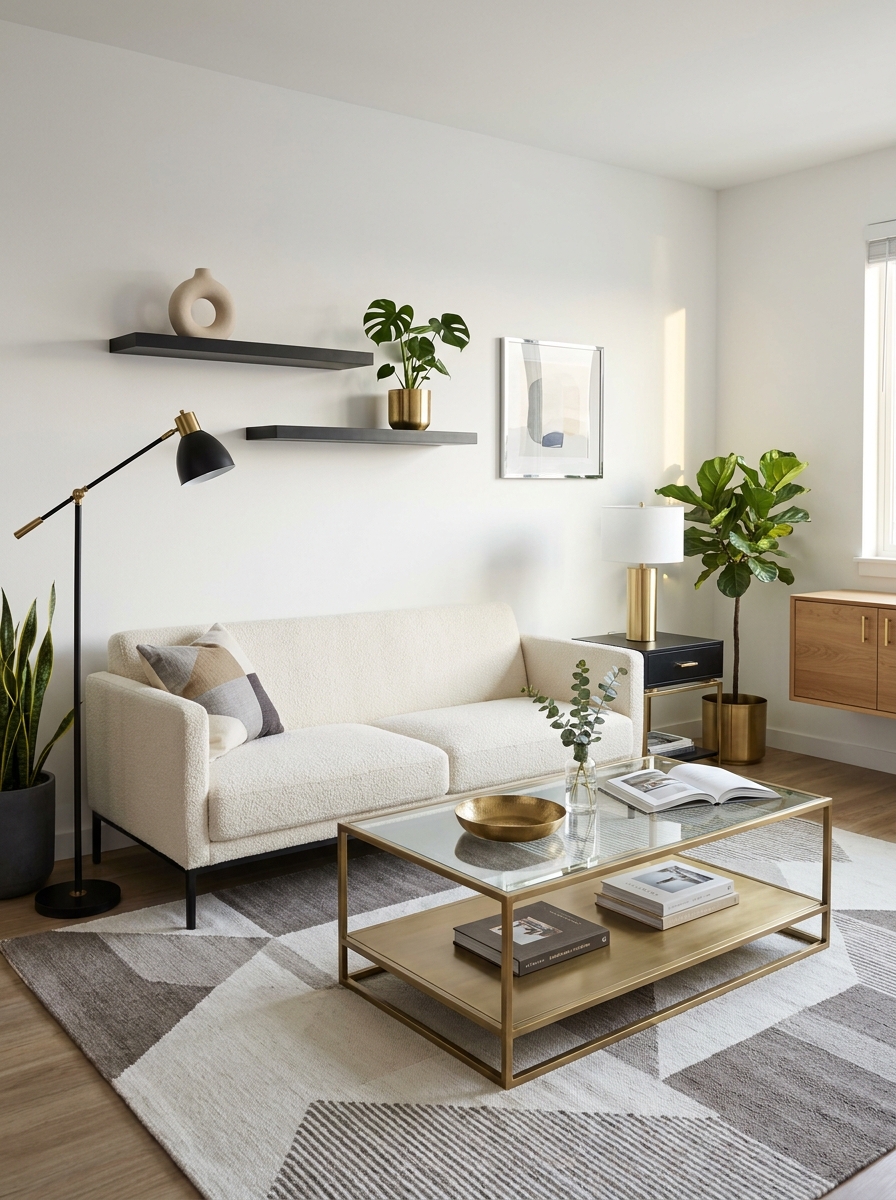
Gone are the days when everything had to match. Mixing metals is how you get that high-end, collected-over-time look. I usually stick to two or three finishes max—like brushed brass, matte black, and maybe polished chrome.
The trick is repeating each finish at least twice so it looks intentional, not random. If you have brass legs on your coffee table, bring in a brass floor lamp or picture frames. Then let black show up in your side table and maybe cabinet hardware. It creates this visual rhythm that feels really sophisticated.
I’m obsessed with warm metals right now—brass and bronze feel so much richer than all-chrome everything. But honestly, the best combo is whatever makes you excited. Just make sure one finish is dominant (about 60% of the metals in the room) and the others are accents. That’s the secret to making it look intentional instead of accidentally mismatched.
7. Add Drama with Floor-to-Ceiling Curtains
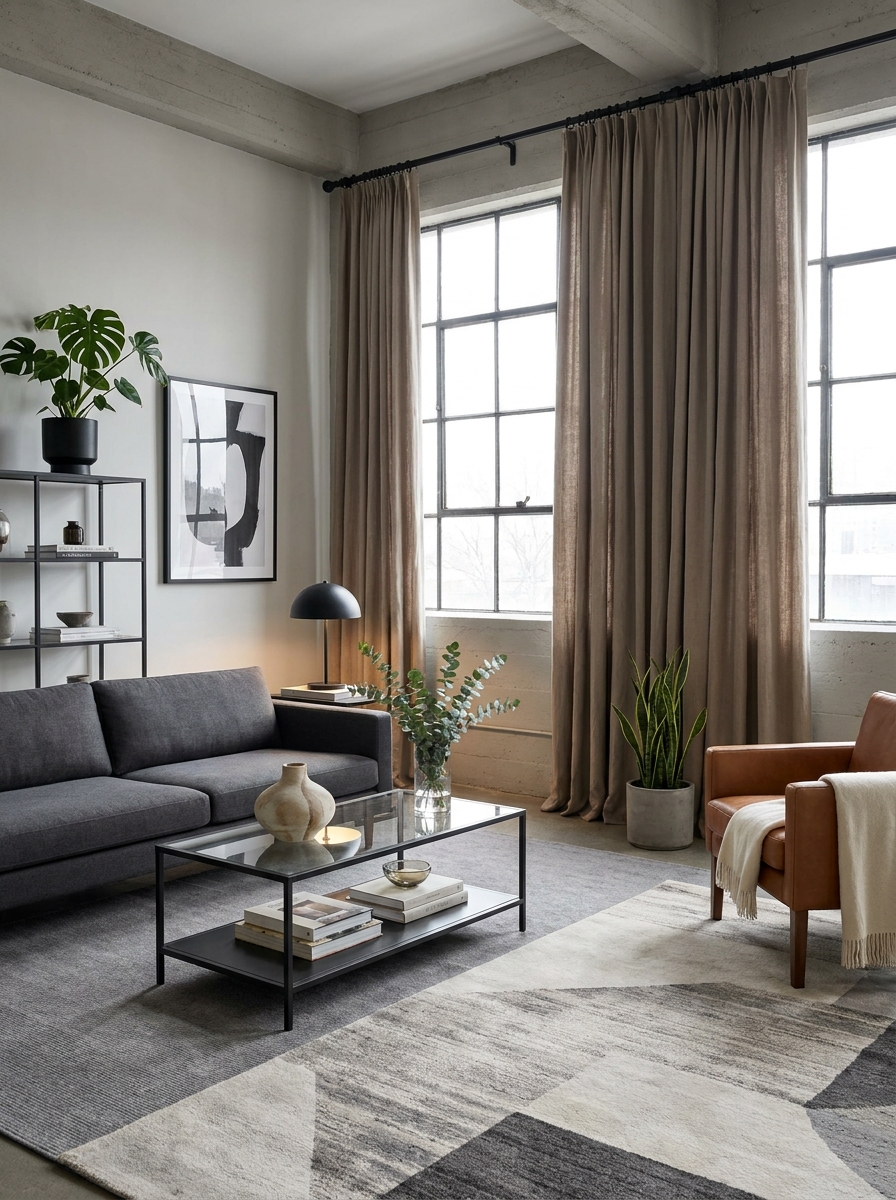
Hanging your curtains all the way at the ceiling—even if your windows are shorter—is the easiest way to make your living room feel taller and more expensive. I’m talking about a difference you can literally see in photos. It draws your eye up and makes the whole room feel more grand.
I always use simple, tailored panels in neutral linen or cotton. Nothing fussy or pleated. Let them just barely kiss the floor or puddle slightly for that custom look. The fabric should be substantial enough to drape beautifully but not so heavy it looks like you’re trying too hard.
The color matters too. I usually go tone-on-tone with the walls—maybe one shade darker—so the curtains feel like an architectural element instead of window dressing. It keeps everything feeling clean and modern. And if you’re worried about light control, add simple roller shades behind them. Pure function hidden behind pure style.
8. Ground Your Space with a Large-Scale Rug
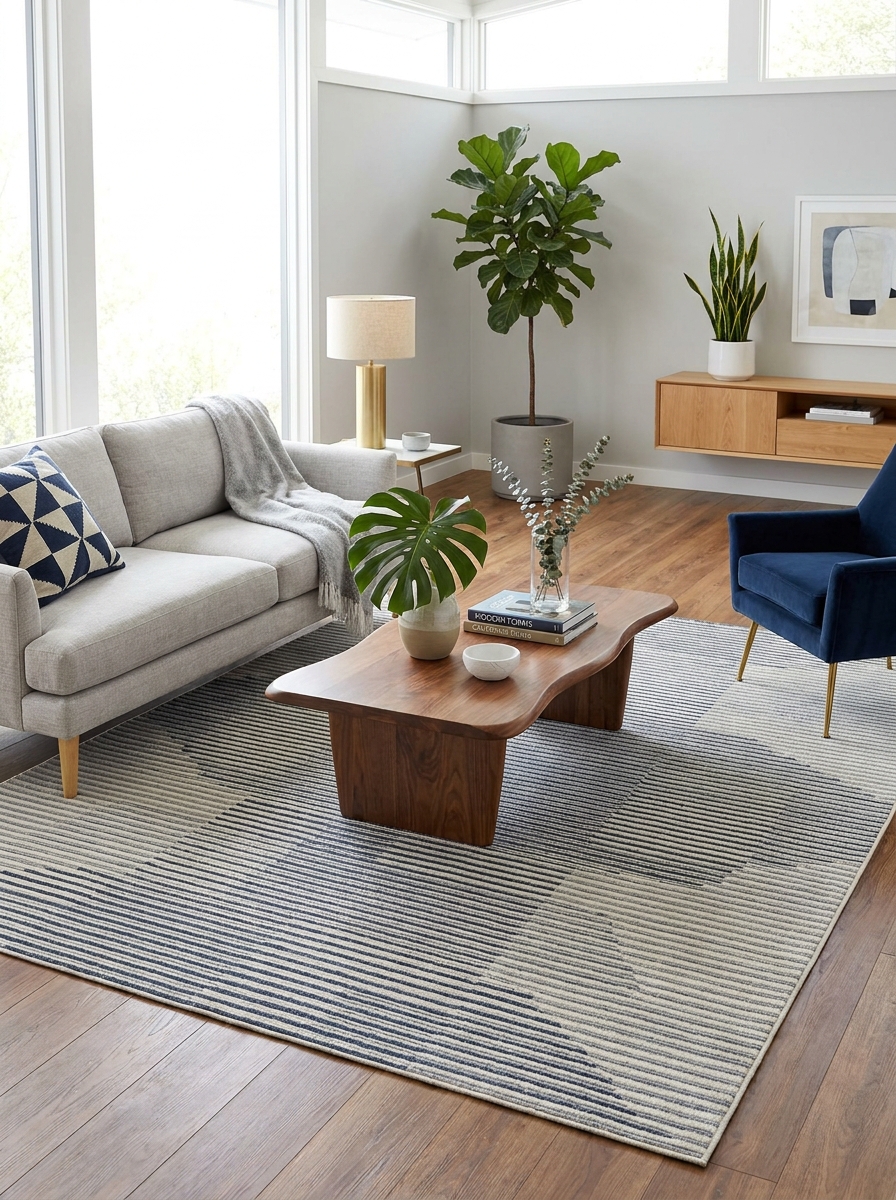
This is the mistake I see everywhere—tiny rugs that float in the middle of the room with all the furniture around them. Your rug should be big enough that at least the front legs of all your seating pieces sit on it. That’s what anchors everything together and makes it feel like a cohesive room instead of random furniture.
I’m talking about going bigger than feels comfortable when you’re shopping. An 8×10 is usually the minimum for a living room, but a 9×12 often looks even better. Yes, it’s an investment, but it’s the foundation that makes everything else work. Think of it as the frame that holds your furniture arrangement together.
For modern spaces, I love geometric patterns or abstract designs in neutral tones. They add visual interest without competing with your other design elements. Solid rugs work too, especially in a textured weave. Just make sure it’s substantial enough to handle the scale of your furniture. A rug that’s too small makes everything look like it’s floating in space.
9. Use Low-Profile Furniture to Maximize Height
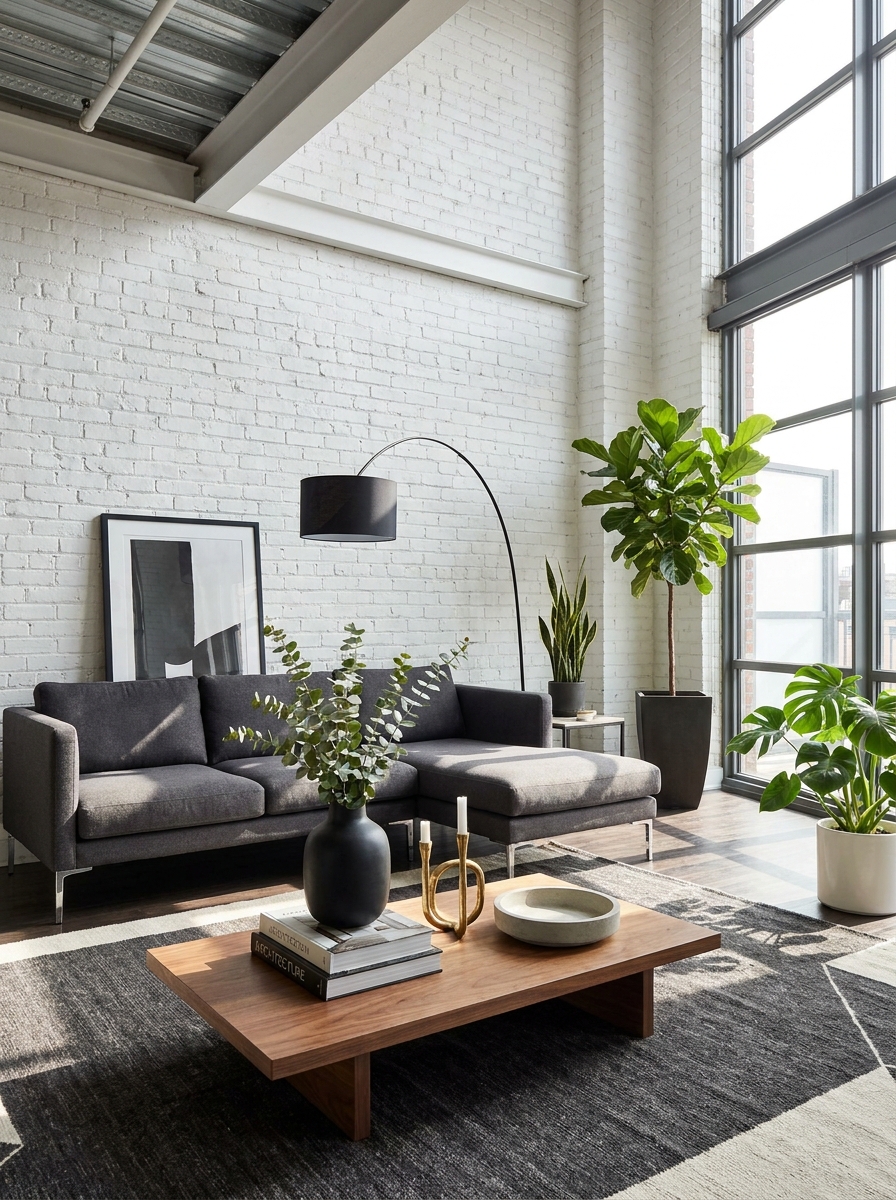
Here’s a designer secret I wish I’d learned earlier: low furniture makes your ceilings look miles higher. I’m talking about sofas with legs instead of bulky bases, coffee tables that sit closer to the ground, and streamlined armchairs that don’t block your sightlines.
When I switched out my old puffy sofa for a sleek low-back sectional, my living room instantly felt twice as spacious. The vertical space just opens up. Your eye travels across the room instead of stopping at chunky furniture pieces. It’s almost like visual breathing room.
This works especially well in apartments or rooms with standard 8-foot ceilings. The lower your furniture sits, the taller everything else appears. Plus, modern low-profile pieces have this effortlessly cool vibe that screams contemporary without trying too hard. Look for sofas with exposed wooden or metal legs and avoid anything with a skirt or heavy upholstered base.
10. Incorporate Sculptural Lighting as Functional Art
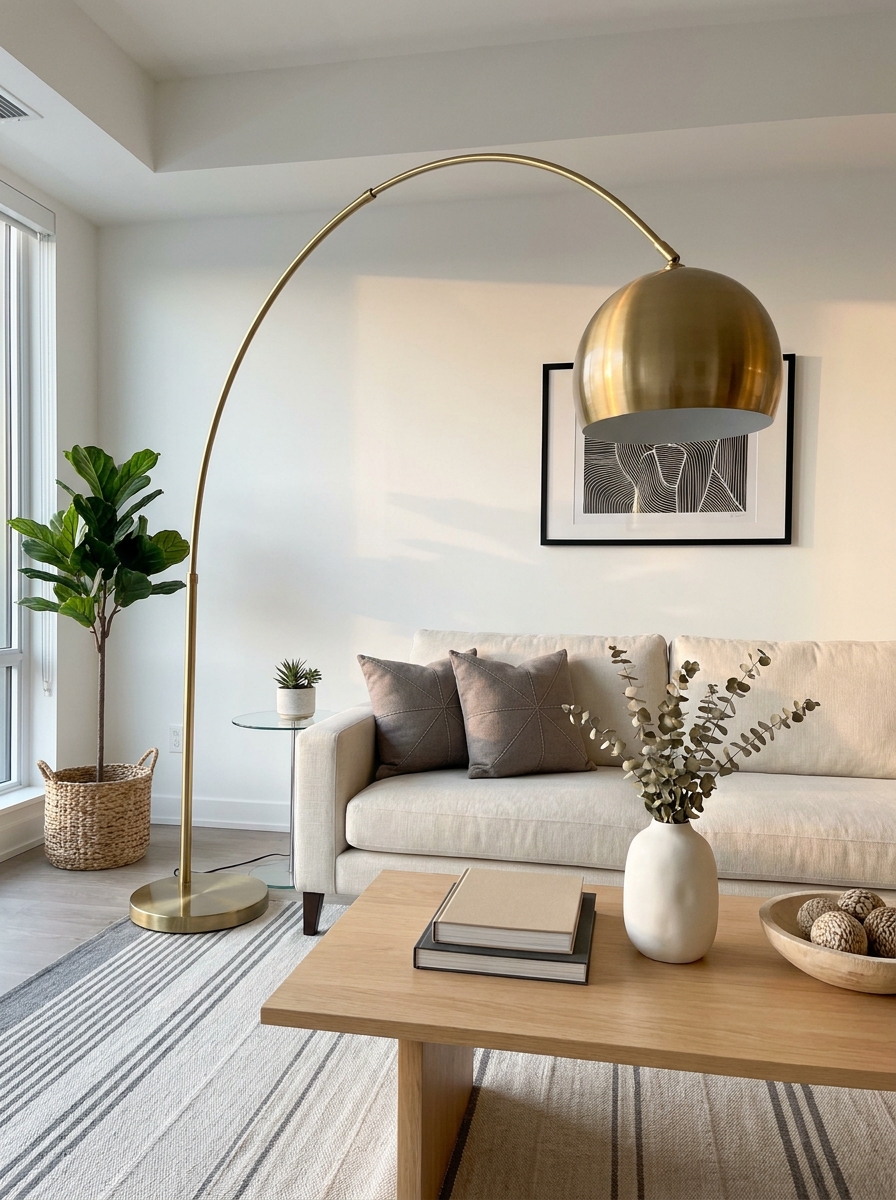
Lighting shouldn’t just brighten a room. It should make people stop and stare. I’m obsessed with using light fixtures as actual art pieces—ones that look incredible even when they’re turned off.
Think oversized pendant lights with interesting shapes, arched floor lamps that create drama in empty corners, or a chandelier that’s more sculpture than traditional fixture. These pieces become conversation starters while serving a real purpose. My favorite trick? Choose one bold lighting piece per room and let it be the star.
Modern sculptural lighting has come so far. You can find gorgeous options at every price point, from sleek brass arc lamps to geometric pendants in matte black. The key is treating your lighting like you’d treat art—intentionally, thoughtfully, and with a little bit of boldness. Don’t just default to boring overhead fixtures. Your lighting should reflect your style just as much as your furniture does.
11. Create Depth with a Monochromatic Color Scheme
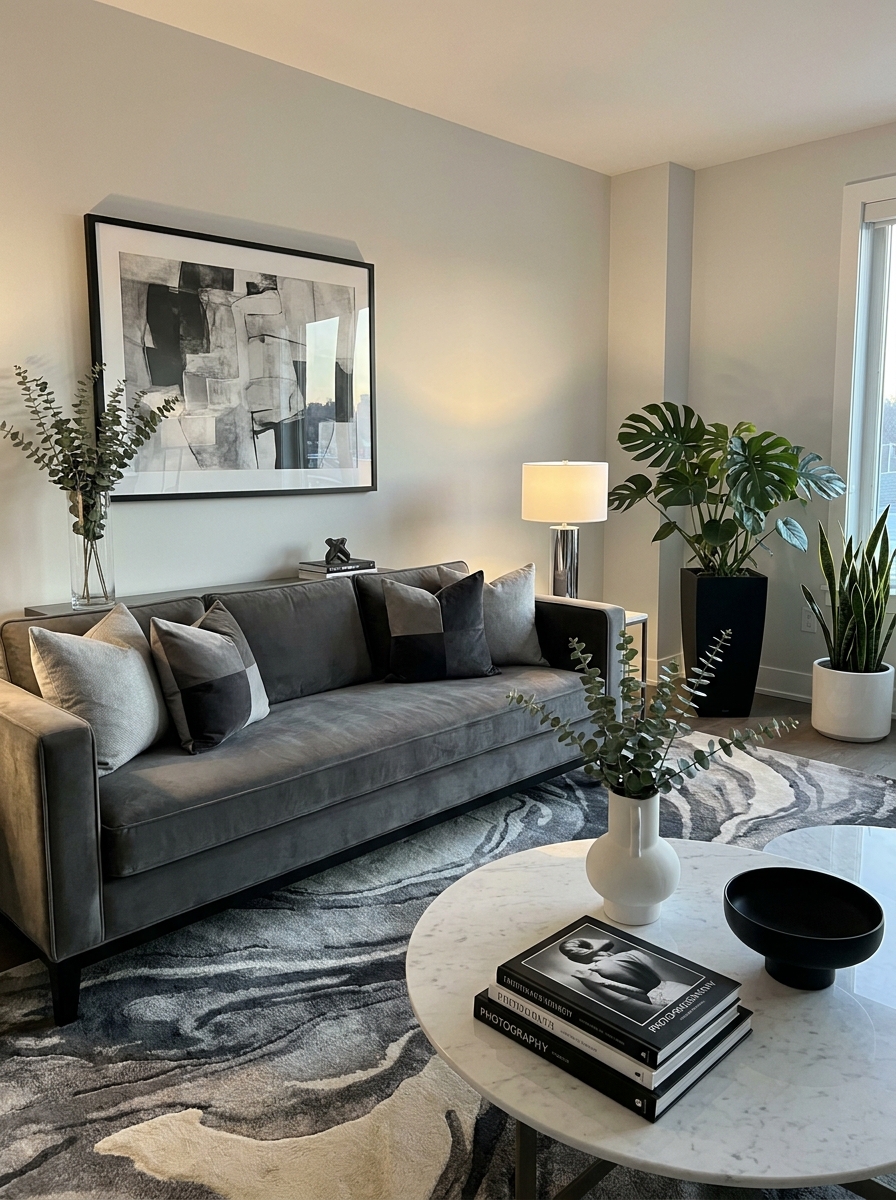
Going all-in on one color family sounds boring, right? Wrong. A monochromatic living room is actually one of the most sophisticated moves you can make. I’m talking different shades of gray, or layers of warm beige, or even all whites with subtle cream undertones.
The magic happens in the variation. When you use one color in different intensities—light walls, medium sofa, darker rug, deepest accent pillows—you create this incredible sense of depth without any visual chaos. It’s calming but never flat. Your eye picks up on all the subtle shifts in tone.
I tried this in my own space with grays ranging from pale dove to charcoal, and honestly? It felt like a spa. The cohesiveness makes everything look more expensive and intentional. You’re not competing for attention with a rainbow of colors. Instead, texture and form become the stars. It’s modern elegance at its absolute finest.
12. Add Warmth with Organic Curved Furniture
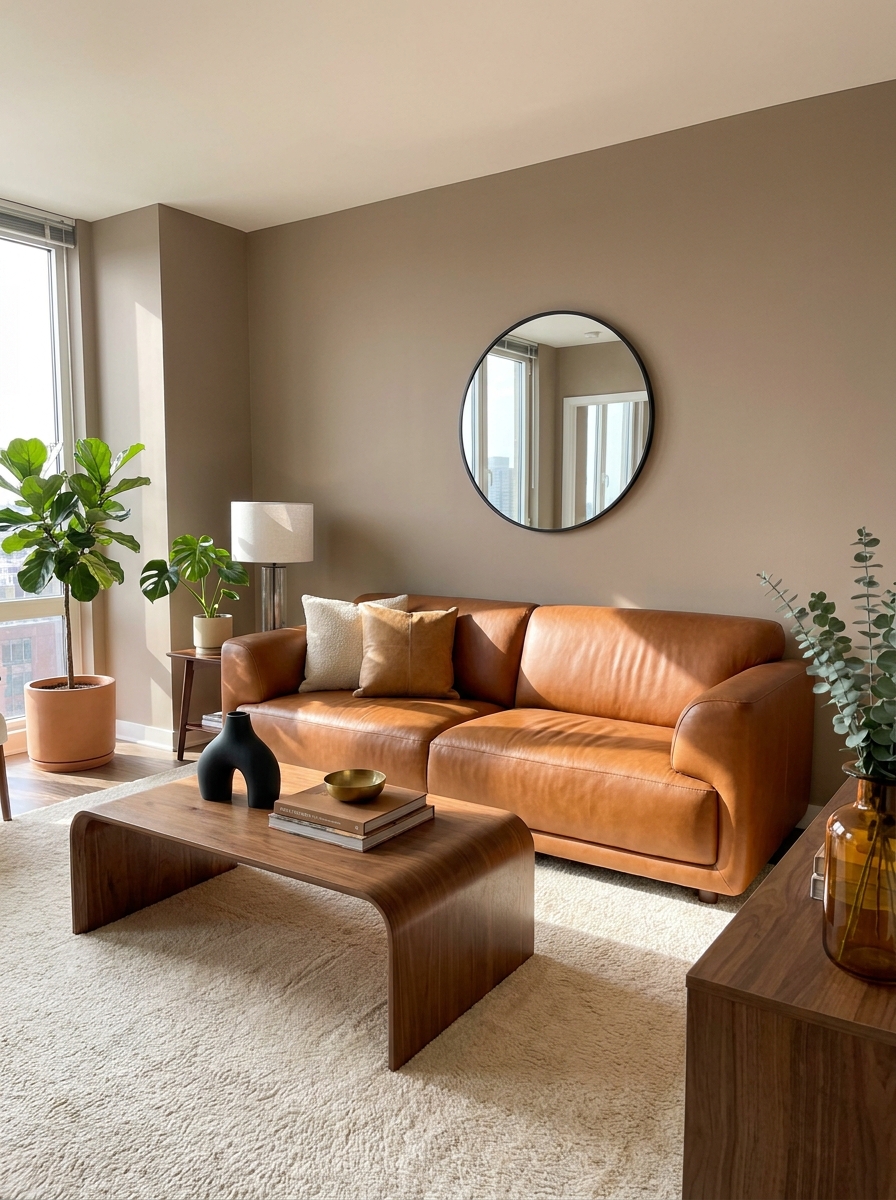
Modern doesn’t have to mean cold and boxy. Actually, the hottest trend right now is softening all those straight lines with curved, organic-shaped furniture. I’m talking rounded sofas, kidney-shaped coffee tables, and oval mirrors that add instant warmth.
Curves make a room feel approachable and inviting. They’re visually softer, more human, and they break up all the hard angles that modern architecture tends to create. When I added a curved armchair to my very linear living room, it completely changed the energy. Suddenly the space felt like somewhere you’d actually want to curl up with a book.
You don’t need to go full curvy-everything. Even one rounded piece among your straight-lined furniture creates beautiful contrast. Look for arched floor lamps, circular side tables, or a sofa with rounded arms. These organic shapes are having a major moment because they make modern spaces feel less austere and more livable.
13. Embrace the Power of Negative Space
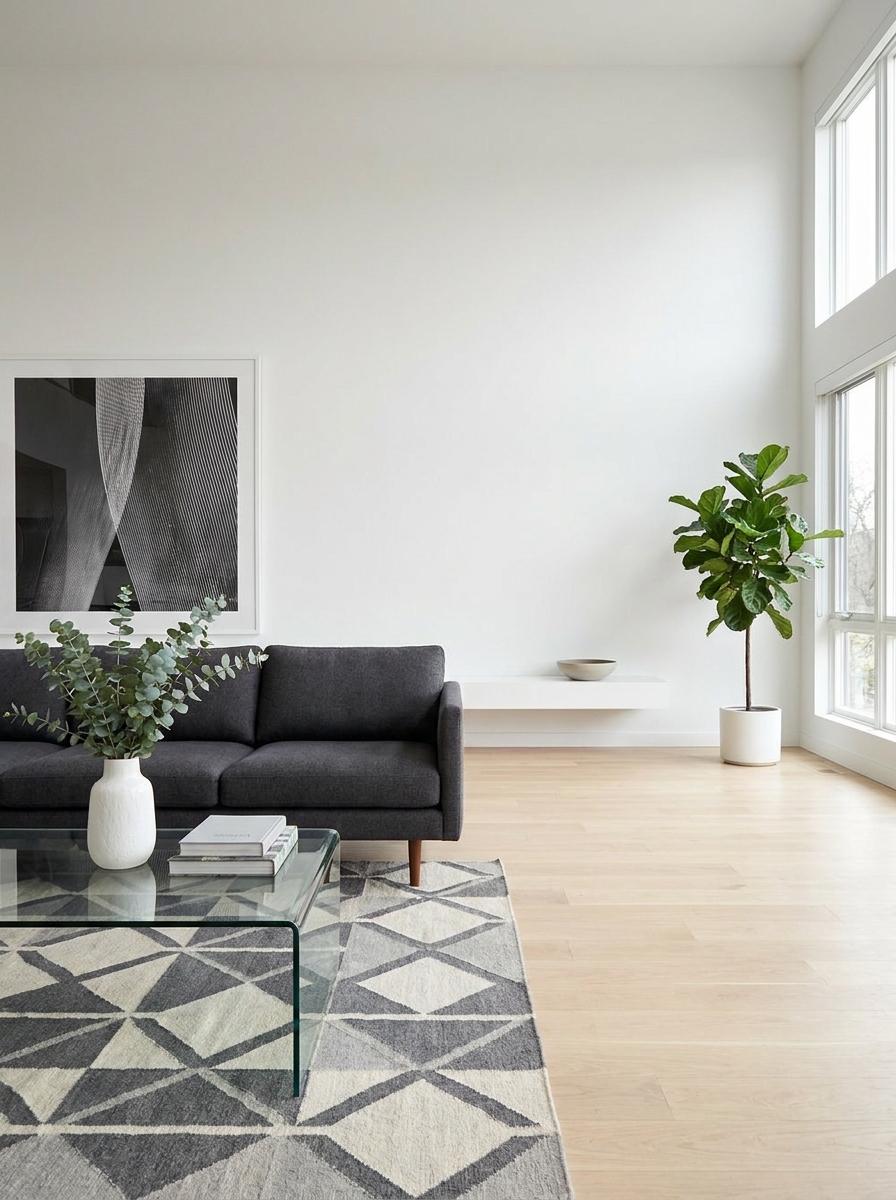
Here’s the thing about modern living rooms: what you DON’T put in them matters just as much as what you do. Negative space is that beautiful breathing room between your furniture, that empty wall section, that clean expanse of floor. It’s not lazy decorating—it’s intentional design.
I used to think I had to fill every corner and cover every surface. But once I started editing ruthlessly? My living room finally felt calm. That’s when I understood that empty space actually makes your statement pieces stand out more. Your gorgeous sofa looks even better when it’s not competing with seventeen throw pillows and three side tables.
Let your room breathe. Leave some walls bare. Keep surfaces mostly clear. Space around your furniture lets light move through the room differently. It creates visual rest stops for your eyes. And honestly? It makes cleaning SO much easier, which is a bonus I didn’t expect but absolutely love.
14. Layer in Living Greenery at Different Heights
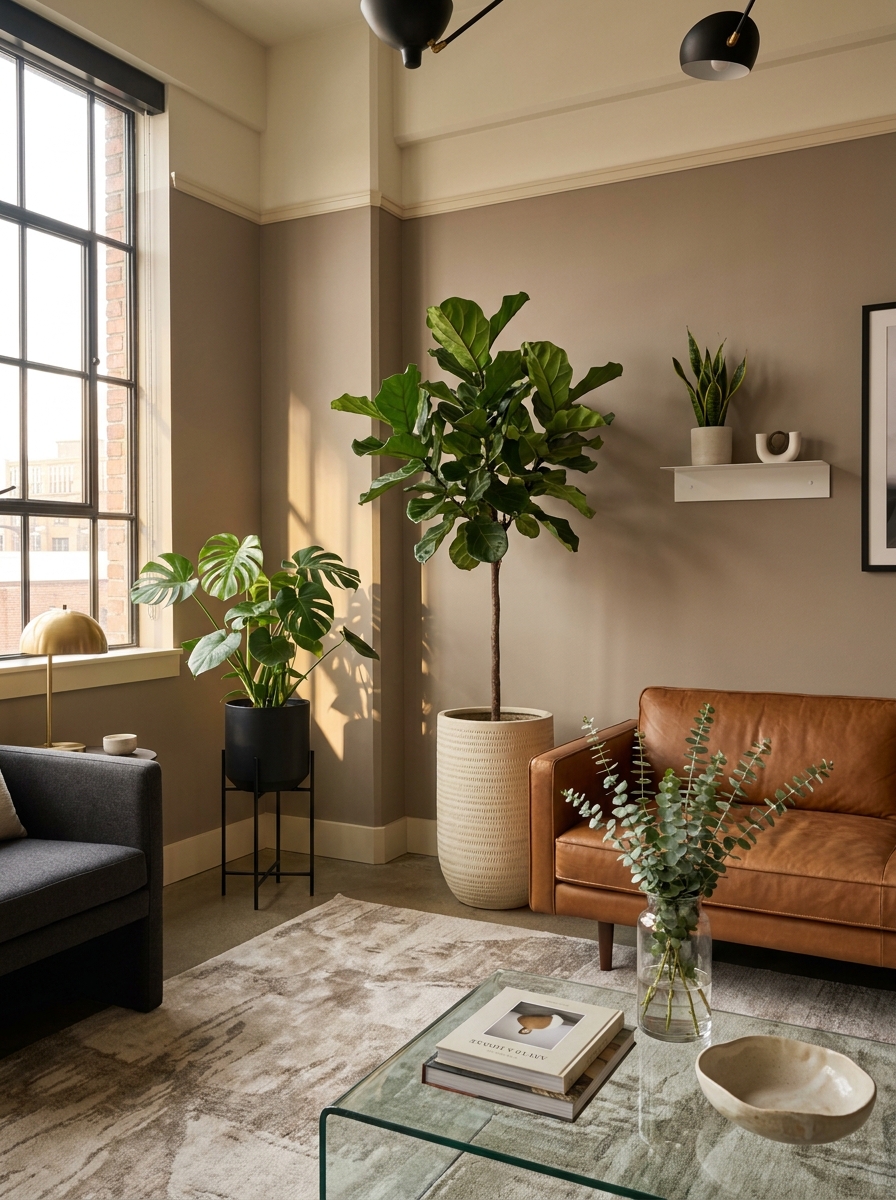
Plants aren’t just pretty—they make a modern living room feel alive. But here’s what I learned: one sad little succulent on the coffee table doesn’t cut it. You need different heights and sizes to create that “I actually live here and care about my space” vibe.
Think vertically. A tall fiddle leaf fig anchors a corner. A medium monstera sits pretty on a plant stand. Snake plants tuck into shelving. Fresh eucalyptus stems in a vase add softness to hard surfaces. When you layer greenery at different levels, your eye travels around the room naturally. It adds depth without adding clutter.
The best part? Plants soften all those clean modern lines without making the space feel fussy. They’re organic shapes against geometric furniture. They’re living texture that changes and grows. And they make your air better, which is honestly just a nice bonus to how gorgeous they look.
15. Design with Intentional Asymmetry
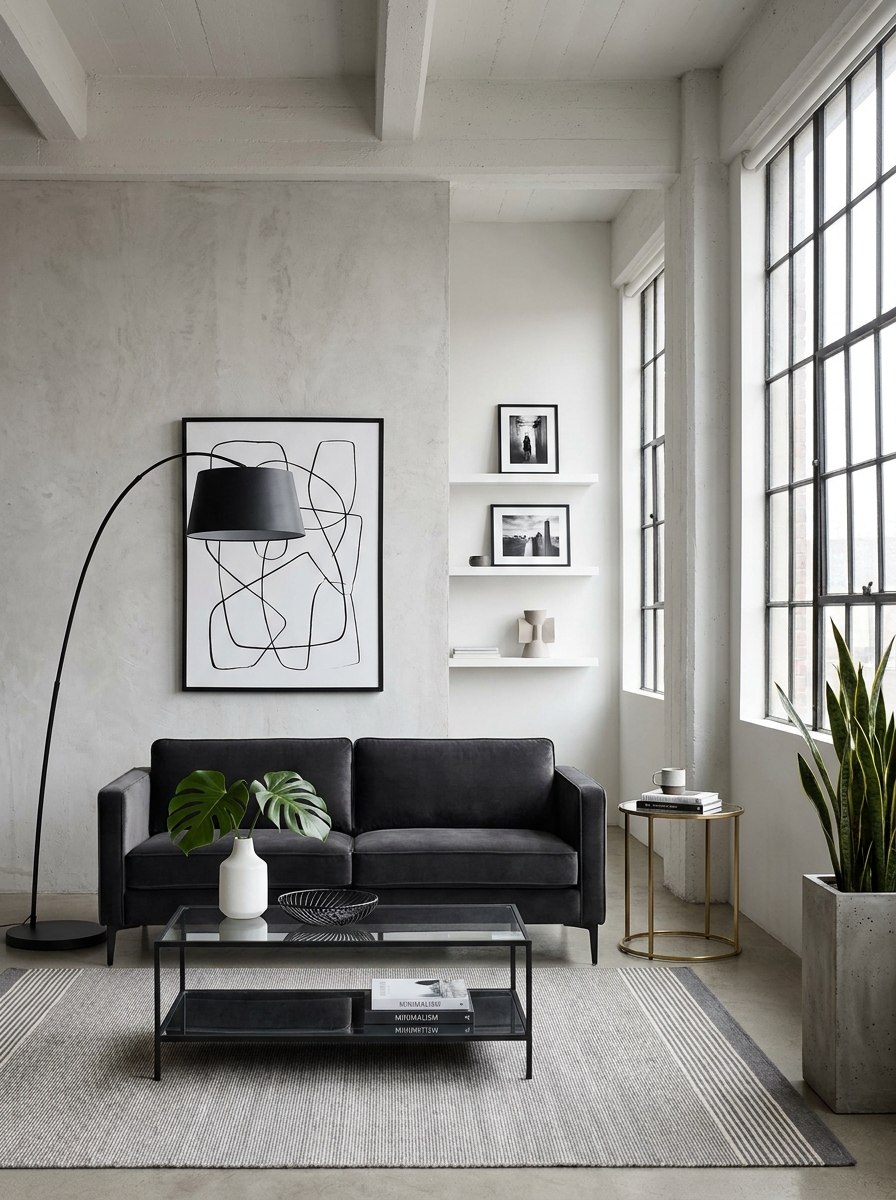
Forget matching everything perfectly. Modern design is all about balanced asymmetry—things that feel harmonious without being identical twins. It’s way more interesting than the matchy-matchy look, and honestly, it feels more real.
Instead of two identical side tables flanking your sofa, try one side table and one floor lamp. Hang art off-center with intention. Place your coffee table slightly to one side. The trick is creating visual balance through weight and proportion, not mirror images. A large plant on one side can balance a gallery wall on the other. A chunky armchair offsets a sleek floor lamp.
This approach makes your space feel curated over time rather than bought all at once from a showroom. It gives you permission to mix pieces you already love instead of searching endlessly for “the perfect match.” And when you get it right? The room feels dynamic and interesting from every angle.
16. Introduce Unexpected Texture Through Textiles
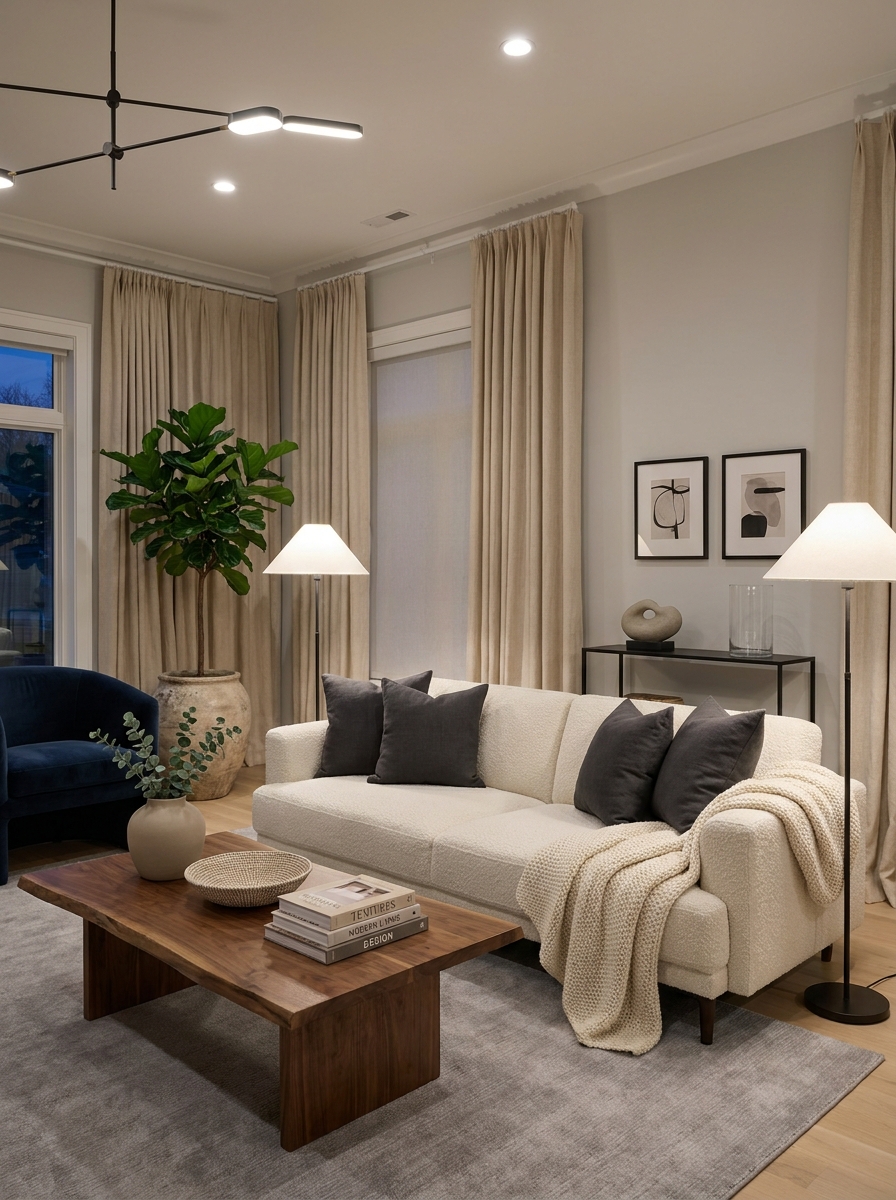
Modern doesn’t mean cold and untouchable. The secret to making a contemporary living room feel inviting? Texture. And I’m not talking about your grandma’s crocheted afghans—I mean interesting, tactile fabrics that add dimension without visual chaos.
Think bouclé throw pillows against smooth leather. A chunky knit blanket casually draped over clean-lined furniture. Linen curtains that catch the light differently than your velvet sofa. These textural moments make you actually want to sit down and stay awhile. They catch shadows and light in beautiful ways. They beg to be touched.
The key is keeping your color palette tight while letting texture do the talking. All cream and white can still feel incredibly rich when you layer different fabrics. The contrast between smooth and nubby, sleek and soft—that’s what makes a modern space feel lived-in and loved instead of like a waiting room.
17. Build a Focal Point with a Textured Accent Wall
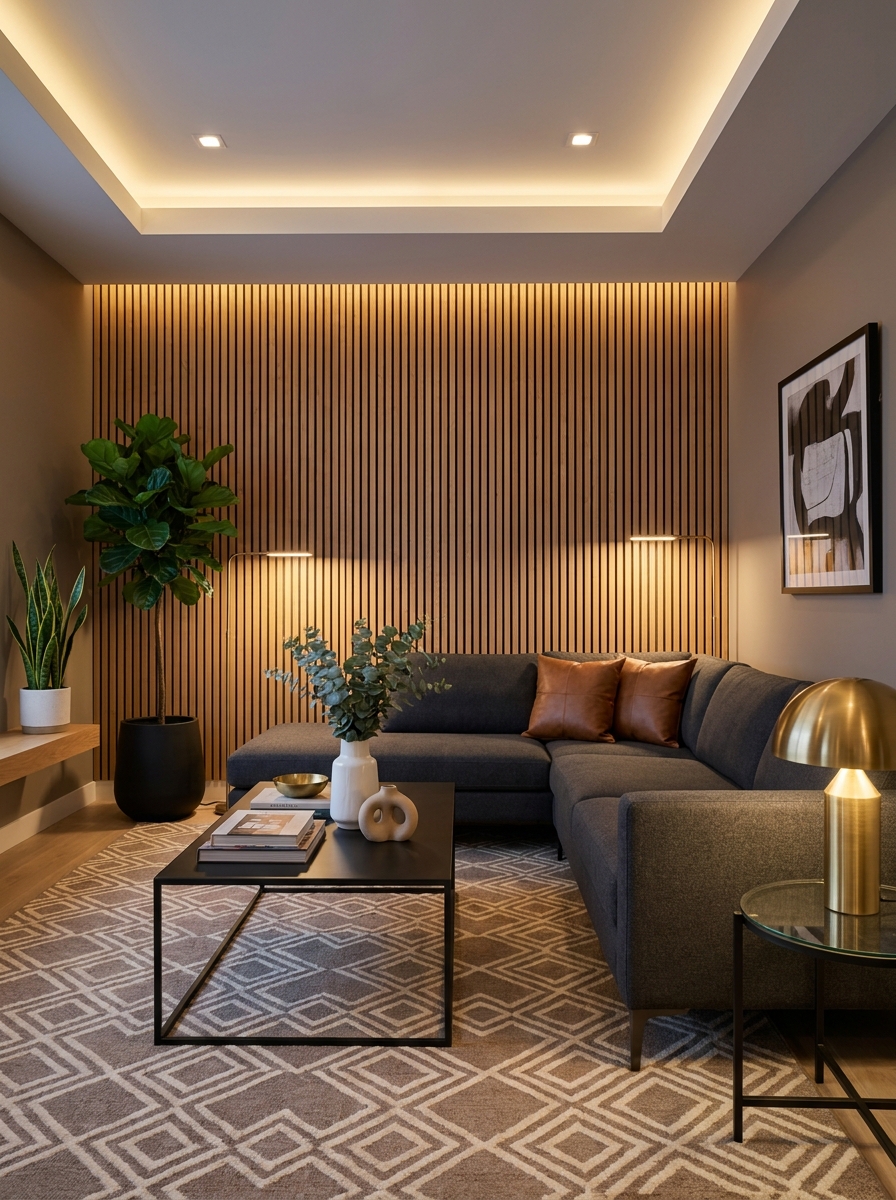
One textured wall changes everything. I’m talking about the kind of feature wall that makes people stop and stare the second they walk in. It doesn’t have to be complicated—think wood slats, 3D wall panels, or even grasscloth wallpaper. The texture creates depth and dimension that flat paint just can’t deliver.
I love placing the accent wall behind the sofa or opposite your main seating area. It gives your eye somewhere interesting to land and instantly elevates the whole room. The beauty of a textured wall is that it adds personality without needing a bold color. You can stick with neutrals and still get major visual impact.
Just keep the rest of your walls simple. The accent wall should be the star, not competing with busy patterns everywhere else. I’ve seen rooms where every wall has something going on, and it feels chaotic. One stunning focal point is always better than four mediocre ones.
18. Choose Furniture with Exposed Legs for Airiness
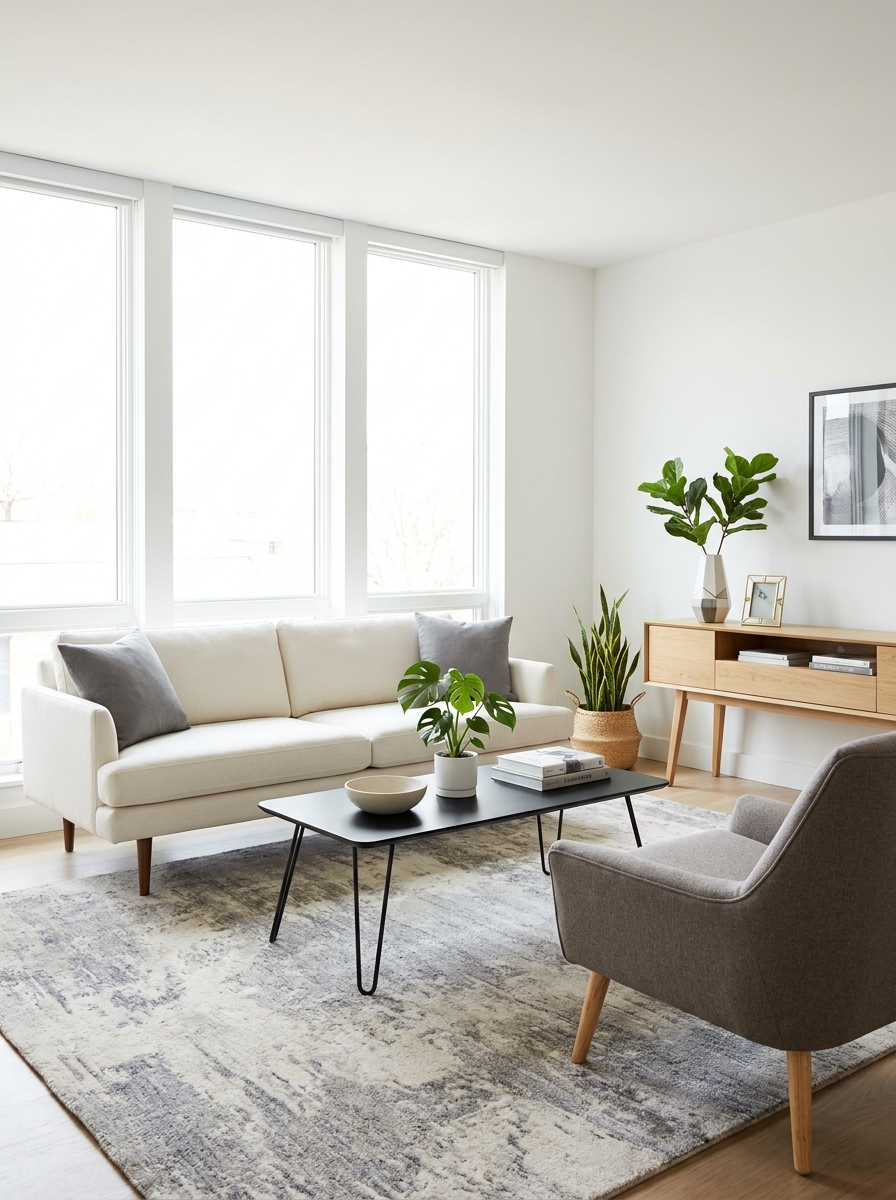
This is my favorite trick for making a room feel less heavy. Furniture with visible legs—raised off the ground—creates breathing room underneath. Visually, it’s a game-changer. Your space instantly feels lighter and more open because you can see the floor extending beneath each piece.
I’m obsessed with sofas and chairs on slender legs, especially tapered wood or metal. Compare that to a chunky skirted sofa that sits flat on the ground—it’s like a visual roadblock. Exposed legs give you sightlines across the room, which tricks your brain into thinking the space is bigger than it actually is.
This works for every piece—coffee tables, media consoles, accent chairs, even your shelving units. When air and light can flow underneath your furniture, the whole room feels less cluttered. Plus, it makes cleaning SO much easier. You can actually vacuum under things without moving half your living room around.
19. Anchor Your Seating with a Bold Coffee Table
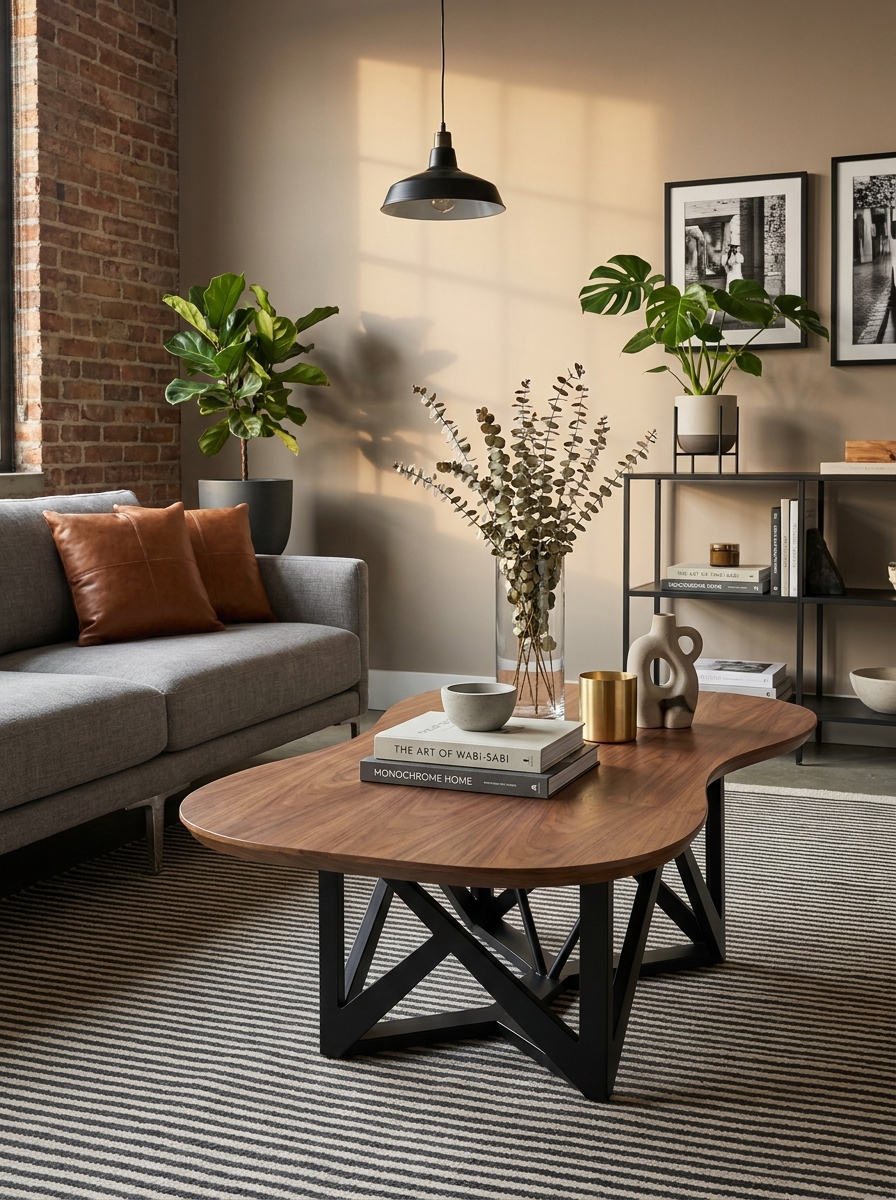
Your coffee table deserves more credit than it gets. It’s literally the center of your living room—the anchor point everything else relates to. So why not make it interesting? I’m talking about a piece with serious personality. A sculptural base, an unexpected material, or a striking shape that makes people look twice.
Forget those boring basic rectangles. Give me a live-edge wood slab, a marble oval, or a geometric metal base that feels like functional art. The coffee table is one place where you can take a risk without overwhelming the room. It sits low, so even a bold choice doesn’t dominate your sightlines.
What I love most is how the right coffee table pulls your whole seating area together. It creates a visual center that connects your sofa, chairs, and rug into one cohesive zone. And because you see it from every angle, it’s worth investing in something you genuinely love looking at every single day.
20. Define Zones with Strategic Furniture Placement
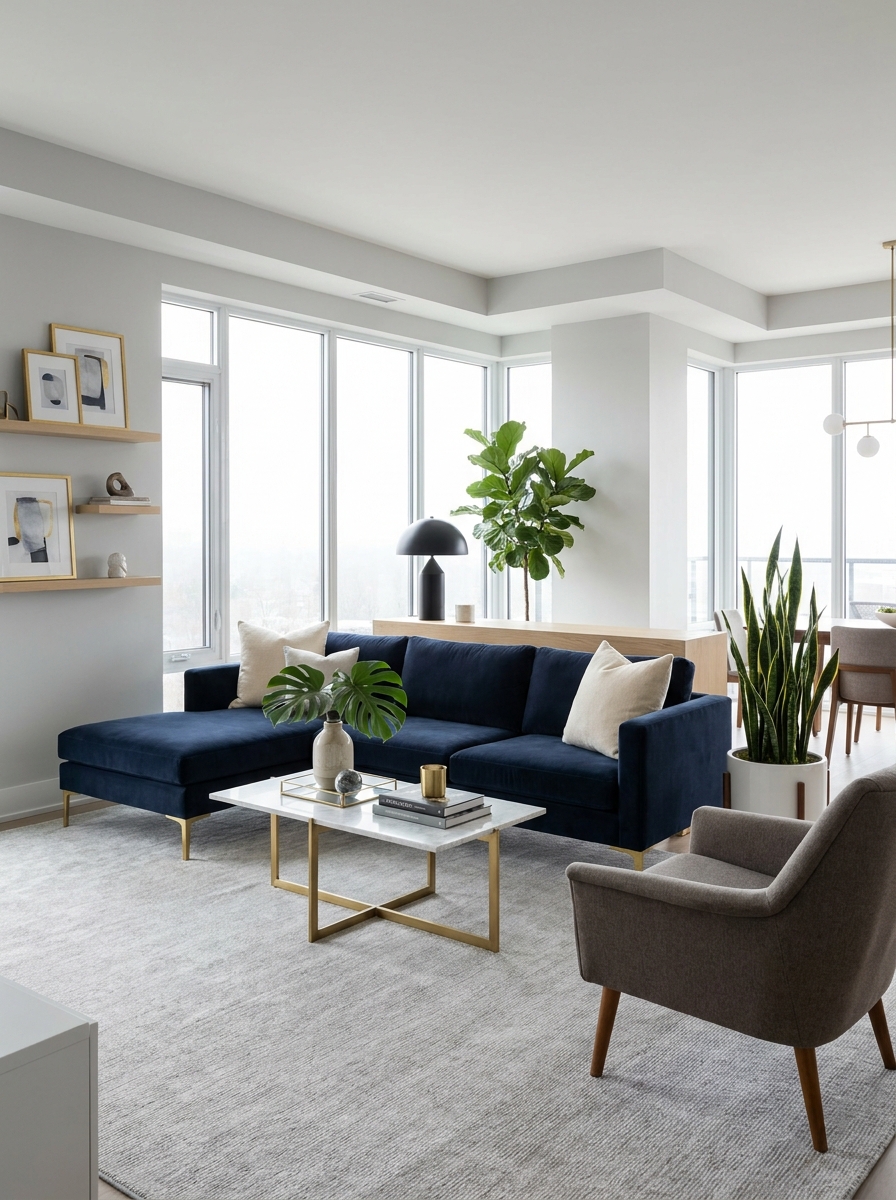
Open floor plans are amazing until you realize your living room, dining area, and entryway are all just one giant blob. That’s where strategic furniture placement becomes your secret weapon. You don’t need walls to create distinct zones—you just need to think about how your furniture can do that job instead.
I love using the back of a sofa to define the living area boundary, or positioning a console table to separate your entryway from the main space. Even an angled chair can signal a transition between zones. The goal is to create intentional pathways and purpose for each area without chopping up the flow.
The trick is making it feel natural, not forced. Your furniture arrangement should guide movement through the space while keeping sightlines open. Nobody wants to navigate an obstacle course in their own living room. Think about how you actually move through your space, then position pieces to support that flow while creating cozy, defined spots.
Quick Guide
Modern Living Room Budget Breakdown
Wondering where to spend and where to save? Here’s a realistic guide:
| Item | Splurge | Save |
|———-|————-|———-|
| Sofa | $1,200–$2,500 (quality frame, timeless shape) | Skip fast furniture—it won’t last |
| Coffee Table | $300–$600 (solid wood or quality materials) | IKEA hacks work great here |
| Rug | $200–$500 (wool or natural fiber) | Rugs USA, Wayfair sales |
| Art | $50–$200 (frame quality matters) | Print your own oversized photos |
| Lighting | $150–$400 (statement floor or table lamp) | Thrift vintage lamps, spray paint |
| Accessories | $100–$200 total (pillows, throws, plants) | Target, H&M Home, local nurseries |
The sweet spot for a full modern living room refresh? Around $2,500–$4,000 if you’re starting from scratch. But you can absolutely do it in phases, investing in one great piece at a time.
Your Living Room, Your Way
Here’s what I want you to remember: modern design isn’t about following a rigid set of rules or making your home look like a magazine spread. It’s about creating a space that feels intentional, uncluttered, and completely you. Maybe that means a sleek leather sofa paired with your grandmother’s vintage rug. Or a gallery wall of your own photography in matching frames. The point is, you get to decide.
Start small if the whole room feels overwhelming. Pick one idea from this list that excites you—maybe it’s finally investing in that statement sofa, or just rearranging your art. Do that one thing well, live with it for a bit, then add the next layer. Modern living rooms are built over time, not overnight.
And remember, the best spaces have a little personality mixed in with all that clean-lined perfection. So yes, embrace the neutral palette and the uncluttered surfaces. But also leave room for the things that make you smile. That’s what turns a modern living room into your modern living room. Now go make it happen.
Frequently Asked Questions
How do I make a modern living room feel cozy and not cold?
Layer in warm textures like chunky knit throws, velvet pillows, and wool rugs. Add natural wood tones through furniture or accents. Keep your lighting warm (not cool-toned bulbs), and don’t skip the greenery—plants instantly soften a modern space and make it feel lived-in.
What colors work best for a modern living room?
Neutrals are your foundation—think warm grays, beiges, creams, and whites. Then add depth with one or two accent colors like navy, charcoal, cognac, or muted green. The key is restraint—modern design thrives on a limited, intentional color palette rather than lots of competing hues.
Can I mix modern decor with other styles in my living room?
Absolutely! Modern works beautifully as a base because of its clean lines and neutral palette. Try mixing in mid-century pieces, industrial metals, or even bohemian textiles. The trick is keeping 70% of the room modern and letting the other 30% be your personality—that’s when it gets really interesting.
What’s the difference between modern and contemporary living room design?
Modern design refers to a specific style from the early-to-mid 20th century with clean lines, minimal ornamentation, and function-first furniture. Contemporary means whatever’s current right now—it’s always evolving. That said, most people use the terms interchangeably, and honestly, in your own home, it doesn’t matter much as long as you love it.
How much should I budget for modern living room furniture?
You can create a modern look at almost any budget. If you’re starting from scratch, expect $2,500–$4,000 for quality basics (sofa, coffee table, rug, lighting, accessories). But you can absolutely do it for less by shopping sales, mixing high and low pieces, and building your room over time instead of all at once.