17 Sophisticated Neo Deco Interiors That Transform Homes
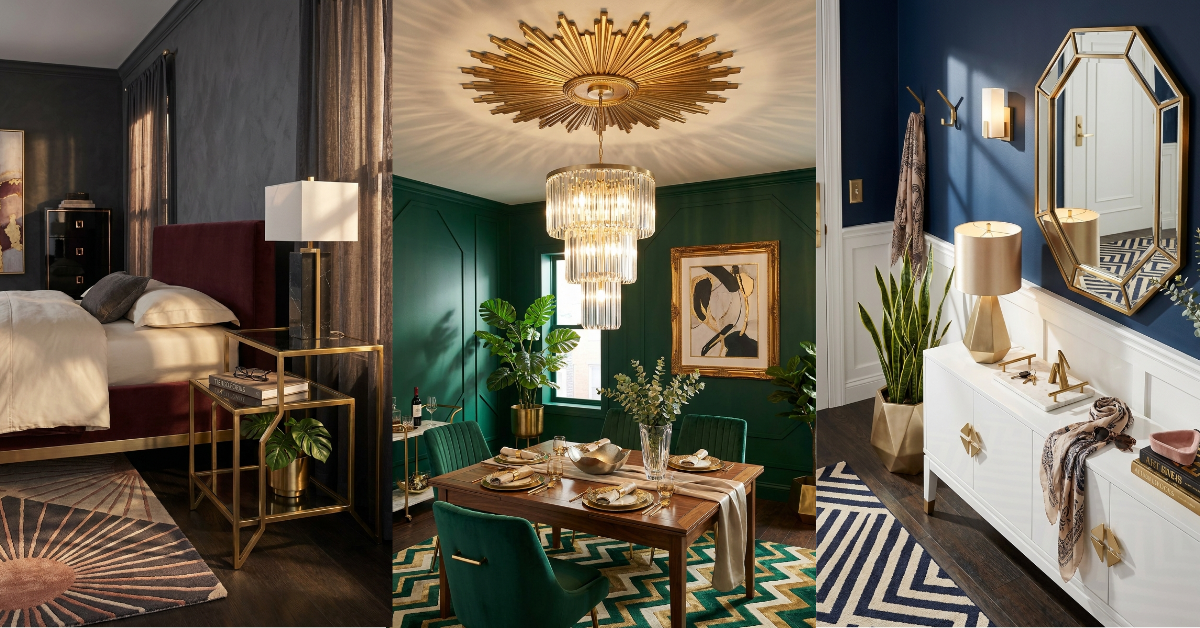
You know that feeling when you walk into a hotel lobby and everything just feels impossibly chic? Those sharp geometric mirrors, the velvet furniture that begs you to touch it, brass finishes catching light from every angle. That’s Art Deco magic, and here’s the thing — you don’t need a mansion to pull it off. Neo Deco is all about taking those glamorous 1920s vibes and making them work for actual living. We’re talking jewel tones that don’t feel dated, geometric patterns that aren’t overwhelming, and metallic accents that look intentional instead of shiny-for-no-reason. I’ve been obsessed with this style lately because it manages to be both dramatic and livable, which is exactly what my own space needs. You can go full maximalist or just add a few statement pieces. Either way, your home’s about to get a serious upgrade. Here’s what actually works.
1. Emerald Velvet Statement Walls with Brass Fixtures
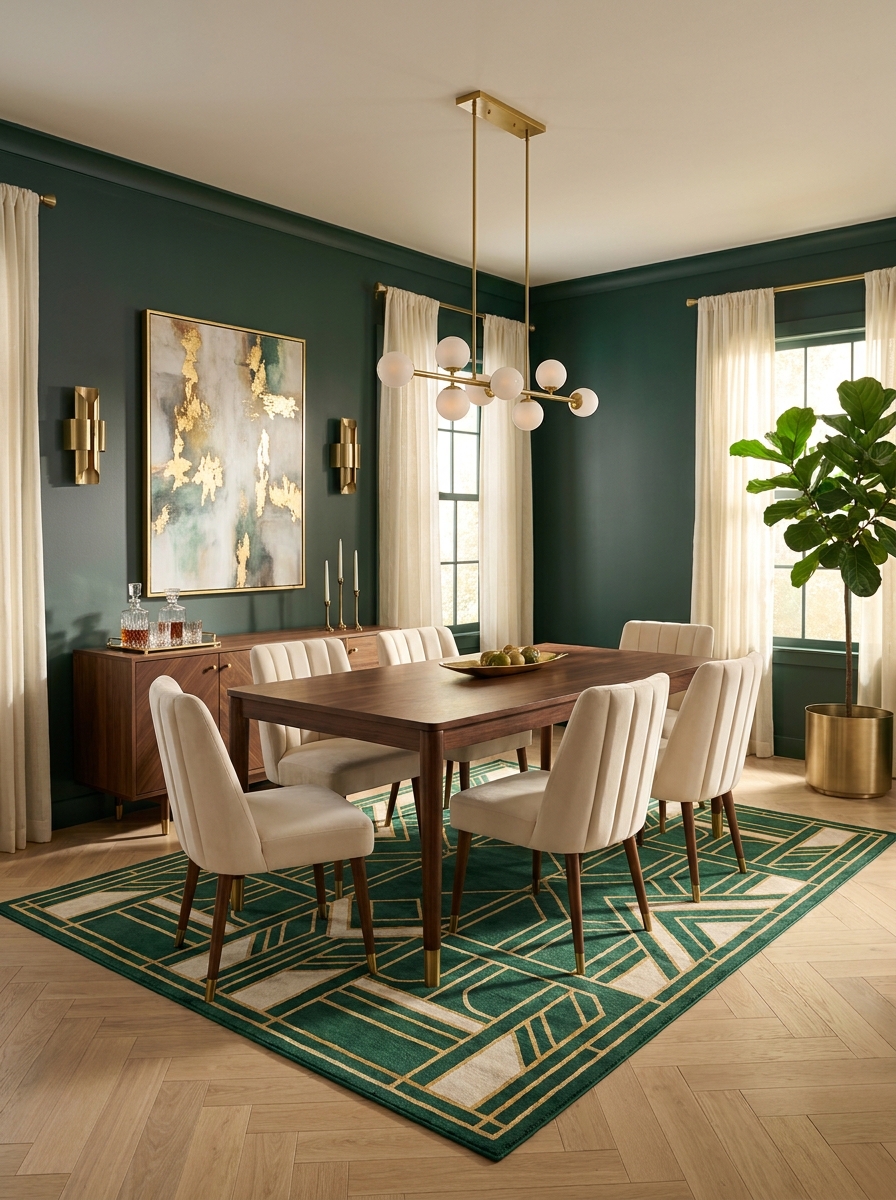
There’s something about a deep emerald wall that makes everything else in the room look more expensive. It’s like instant sophistication in a paint can. But here’s where Neo Deco gets interesting — you’re not just painting walls green and calling it a day. You’re layering in those architectural brass details that catch your eye from across the room.
Think wall sconces with geometric arms, brass picture rails that run horizontally at eye level, or even thin brass inlay strips creating subtle vertical lines. The green becomes your backdrop, and the brass creates all these little moments of shine that feel deliberately placed. I tried this in my own dining room and the transformation was wild — suddenly the space felt like it belonged in a boutique hotel.
The trick is picking the right green. You want something with grey undertones, not that bright Kelly green from the 90s. Look for names like ‘library green’ or ‘hunter’ on paint chips. And don’t skimp on the finish — go for eggshell or satin so light actually moves across the surface. Flat paint will kill the whole luxe vibe you’re going for.
2. Geometric Mirrors as Architectural Focal Points
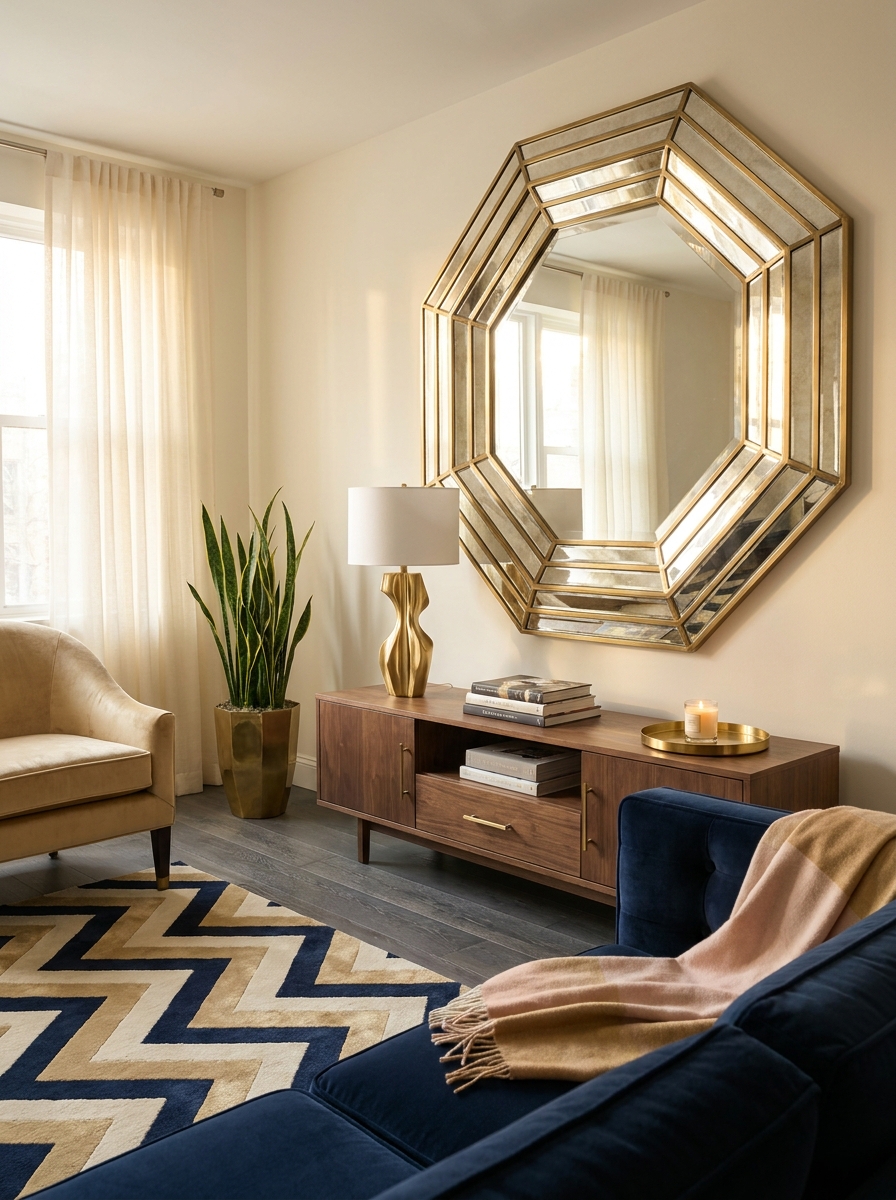
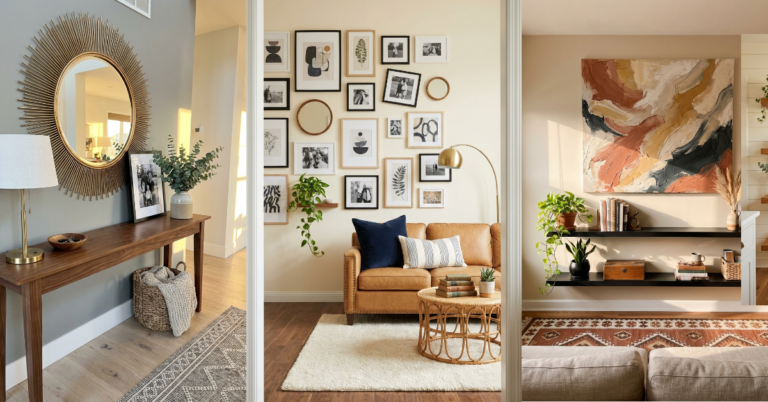
Mirrors in Neo Deco aren’t just for checking your outfit. They’re basically wall sculpture that happens to be reflective. The geometric frames are where all the drama lives — we’re talking sunburst designs with brass rays shooting out in every direction, octagonal shapes with beveled edges, or those stepped frames that look like miniature skylines.
What I love is how one really good mirror can completely change your room’s proportions. A tall vertical mirror with strong geometric lines makes your ceilings feel higher. A wide horizontal one above a console makes a narrow entryway feel expansive. It’s like architectural magic.
Size matters more than you’d think. Too small and it looks like wall decor. Too big and it overwhelms. You want something substantial enough to feel intentional — think at least 36 inches in one direction. And placement is everything. Across from a window, you’re doubling natural light. Above a fireplace or console, you’re creating an instant focal point. I hung a brass sunburst mirror in my bedroom opposite a small window and suddenly the whole space felt twice as bright and way more interesting.
3. Stepped Side Tables and Tiered Furniture Forms
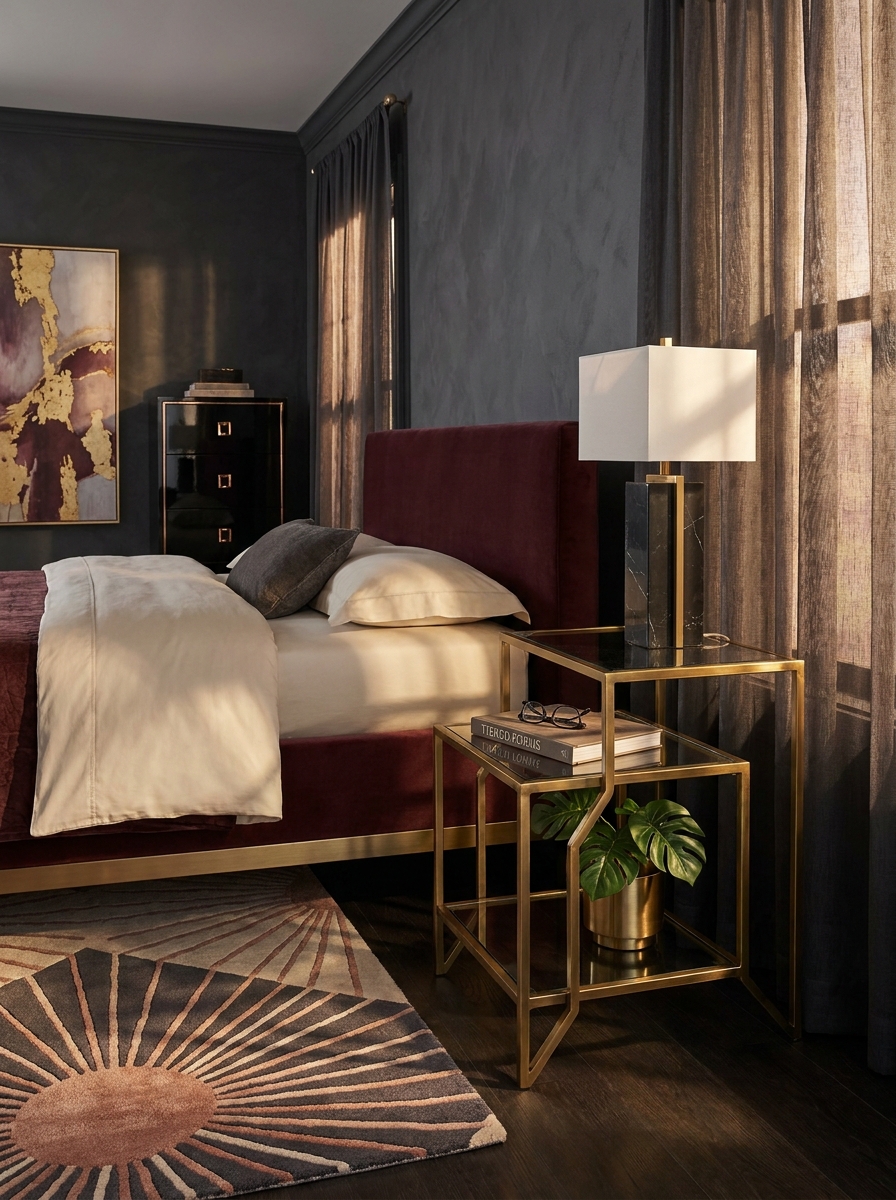
Art Deco loved a good ziggurat shape, and Neo Deco brings that stepped silhouette into furniture that’s actually functional. These aren’t your grandmother’s nesting tables. We’re talking side tables with tiered surfaces that create visual interest even when they’re empty, console tables with stepped-back shelving, and bar carts with multiple levels that feel sculptural.
The beauty is in the geometry. Each level creates a shadow line, and when you style them, you get to play with height in this really satisfying way. A martini glass on the top tier, books on the middle, a small plant below — suddenly you’ve got this composed vignette that looks effortlessly cool.
Materials matter hugely here. Look for combinations that feel luxe — think brass frames with smoked glass shelves, or lacquered wood with marble tops. The stepped shape is already eye-catching, so you want materials that elevate rather than compete. I found a three-tiered brass and glass side table at an estate sale for nothing, and it’s become the piece everyone asks about. It sits next to my sofa holding a lamp, my current read, and a little succulent, and the whole setup just works.
4. Channel-Tufted Upholstery in Jewel Tones
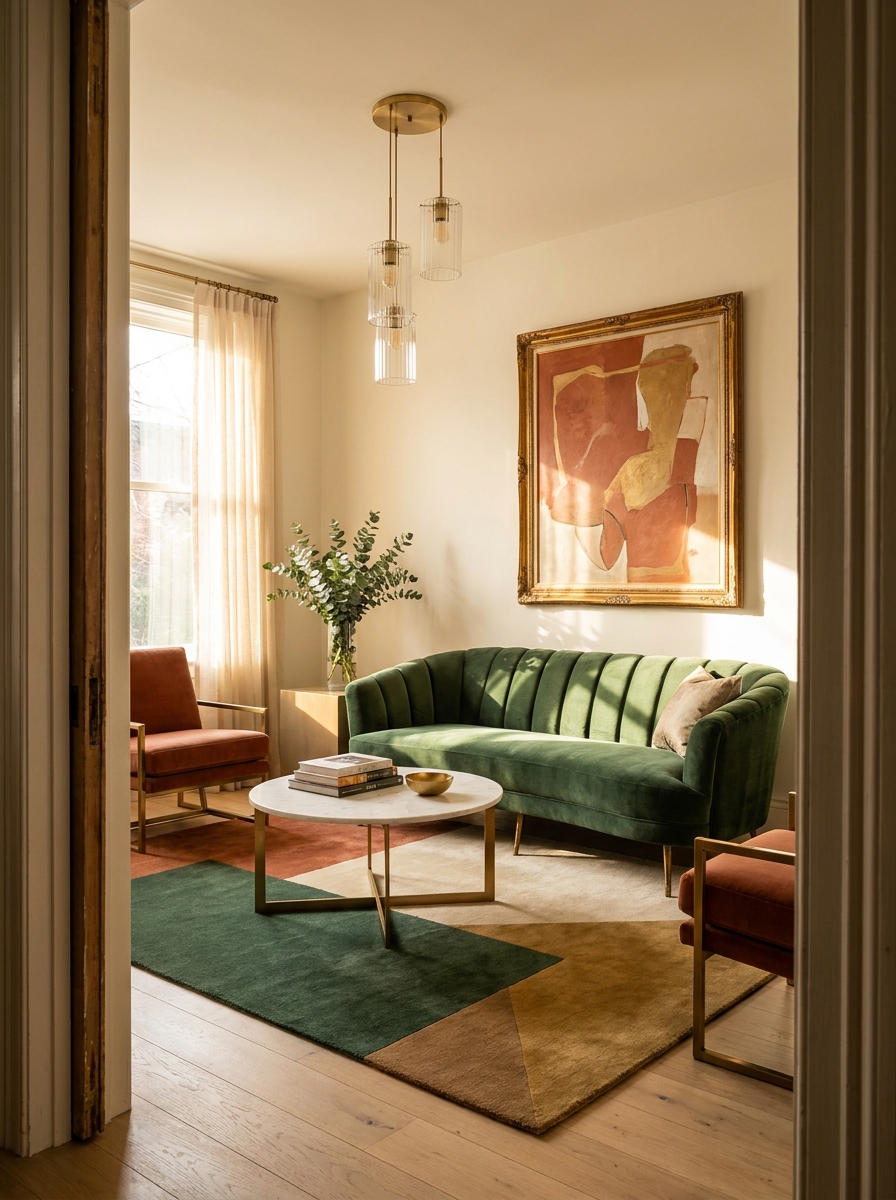
If there’s one furniture detail that screams Neo Deco, it’s channel tufting. Those vertical lines running down the back of a sofa or chair? Pure 1920s glamour updated for right now. The linear pattern adds this architectural quality to soft furniture, which is exactly the kind of contrast that makes this style sing.
Jewel tones are where you get brave. Emerald green velvet with the light catching each channel differently. Sapphire blue that looks almost black in shadow but glows in sunlight. Or go unexpected with a burnt orange or deep plum — colors that feel rich without being dark. The tufting adds dimension, so even a solid color becomes visually interesting.
Velvet is the fabric of choice because it plays with light in that changeable way. Run your hand down channel-tufted velvet and you literally change the color as the pile shifts direction. It’s tactile and visual at once. I swapped my boring beige sofa for a forest green channel-tufted one last year, and it completely transformed my living room from blah to wow. The brass legs don’t hurt either. Just make sure you’re okay with the commitment — these pieces make a statement, which is kind of the whole point.
5. Black Lacquer Accent Pieces with Metallic Inlays
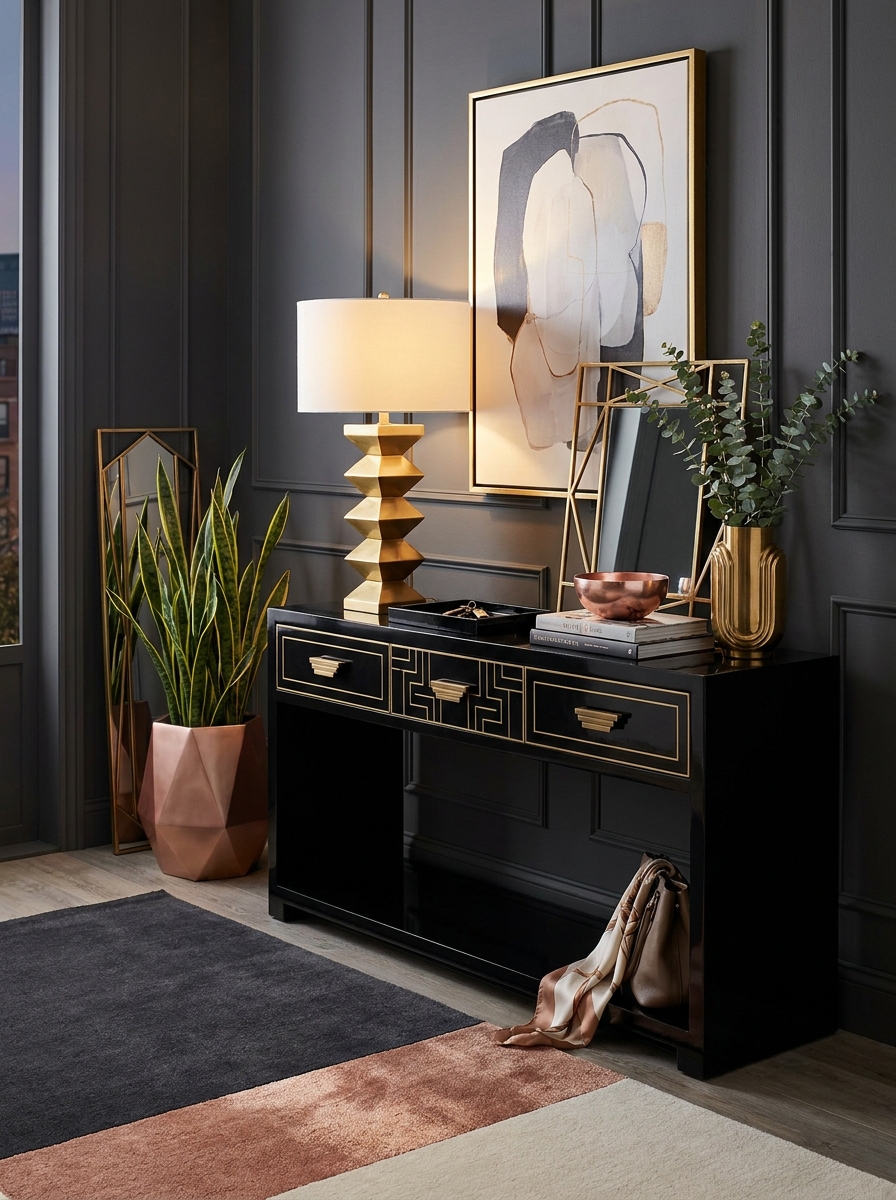
There’s something so unapologetically bold about black lacquer furniture. It’s glossy, dramatic, and catches light in the most beautiful way. When you add metallic inlays—think brass geometric patterns or gold sunburst details—you’re basically bringing old Hollywood glamour into your living room.
I love mixing black lacquer pieces with softer textures to keep things from feeling too cold. A lacquered console table with brass hardware looks incredible against a plush area rug, and it gives you that perfect high-low balance. The shine of the lacquer reflects everything around it, almost like a mirror, which makes your whole space feel more dynamic.
The best part? Black lacquer hides almost nothing, so it forces you to be intentional about what you display on it. A sculptural lamp, a small brass tray, maybe a single statement book—that’s all you need. Less really is more here, and that restraint feels very Neo Deco to me.
6. Sunburst Ceiling Medallions and Statement Lighting
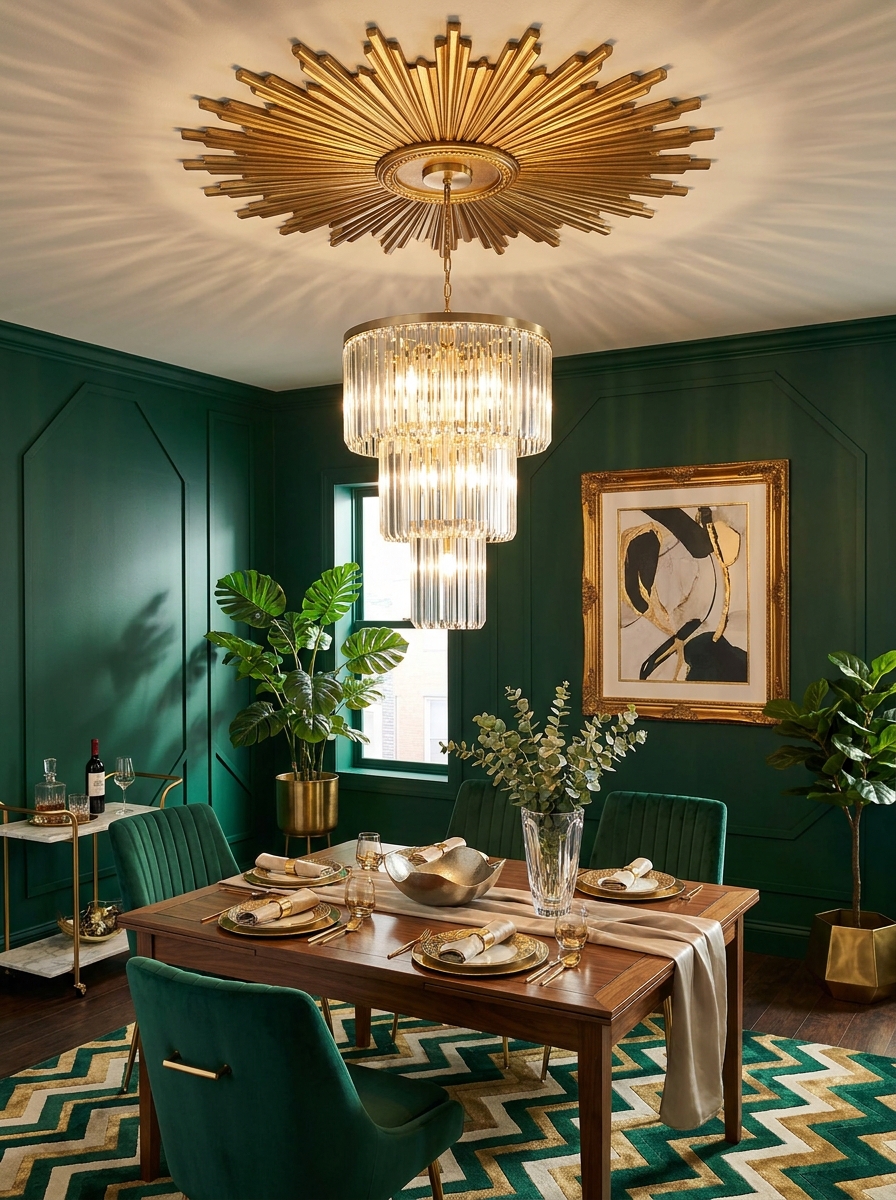
Look up! Seriously, your ceiling is prime real estate for Neo Deco drama. Sunburst ceiling medallions paired with show-stopping geometric chandeliers turn an ordinary room into something that feels like a 1920s ballroom—but make it modern.
I’m obsessed with how these medallions frame your light fixture. They draw your eye upward and add this architectural detail that most rooms are missing. And when you hang a tiered glass pendant or a geometric brass chandelier from the center? Chef’s kiss. The whole composition becomes this stunning focal point that pulls the room together.
You don’t need crazy high ceilings to make this work, either. Even in a standard-height room, a medallion adds dimension and makes the space feel more finished and intentional. It’s one of those details that people notice without quite knowing why the room feels so elevated.
Pair it with other geometric elements in the room—a chevron rug, angular furniture, stepped side tables—and suddenly everything clicks into place.
7. Zigzag Parquet Flooring with Geometric Rugs
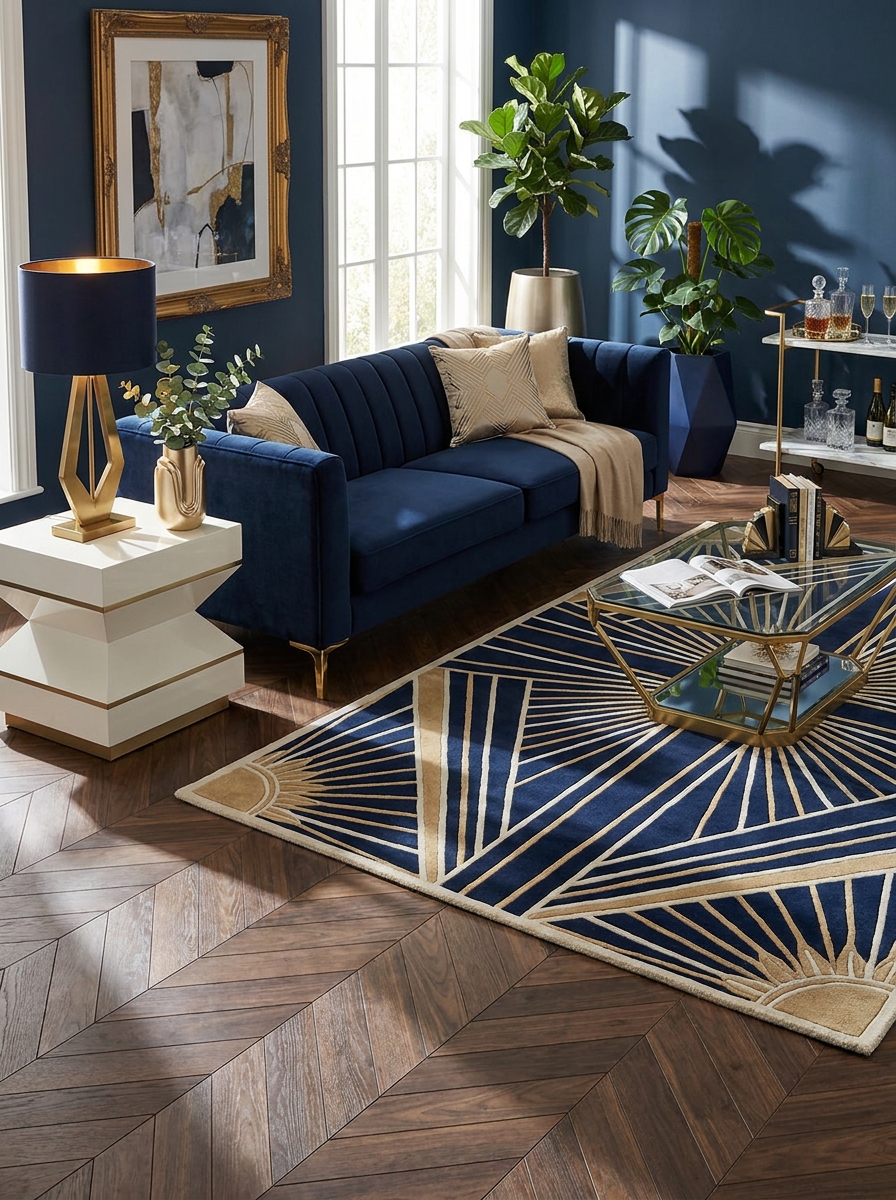
Okay, I know not everyone can install new flooring, but if you’re renovating or building? Zigzag parquet is where it’s at. The chevron pattern screams Art Deco, and it creates this incredible movement across your floor that makes the whole room feel more dynamic.
What I really love is layering a geometric rug on top of patterned flooring. I know it sounds like a lot, but when you choose complementary patterns—like a sunburst motif rug over chevron parquet—it actually amplifies the Neo Deco vibe instead of competing. The key is keeping your color palette cohesive so the patterns feel intentional, not chaotic.
If you’re renting or can’t change your floors, a really bold geometric rug can fake the effect beautifully. Look for rugs with strong zigzag or chevron designs in rich colors. Layer it over plain hardwood or even basic carpet, and boom—instant architectural interest without touching the actual floor.
8. Scalloped Wall Treatments and Curved Architectural Details
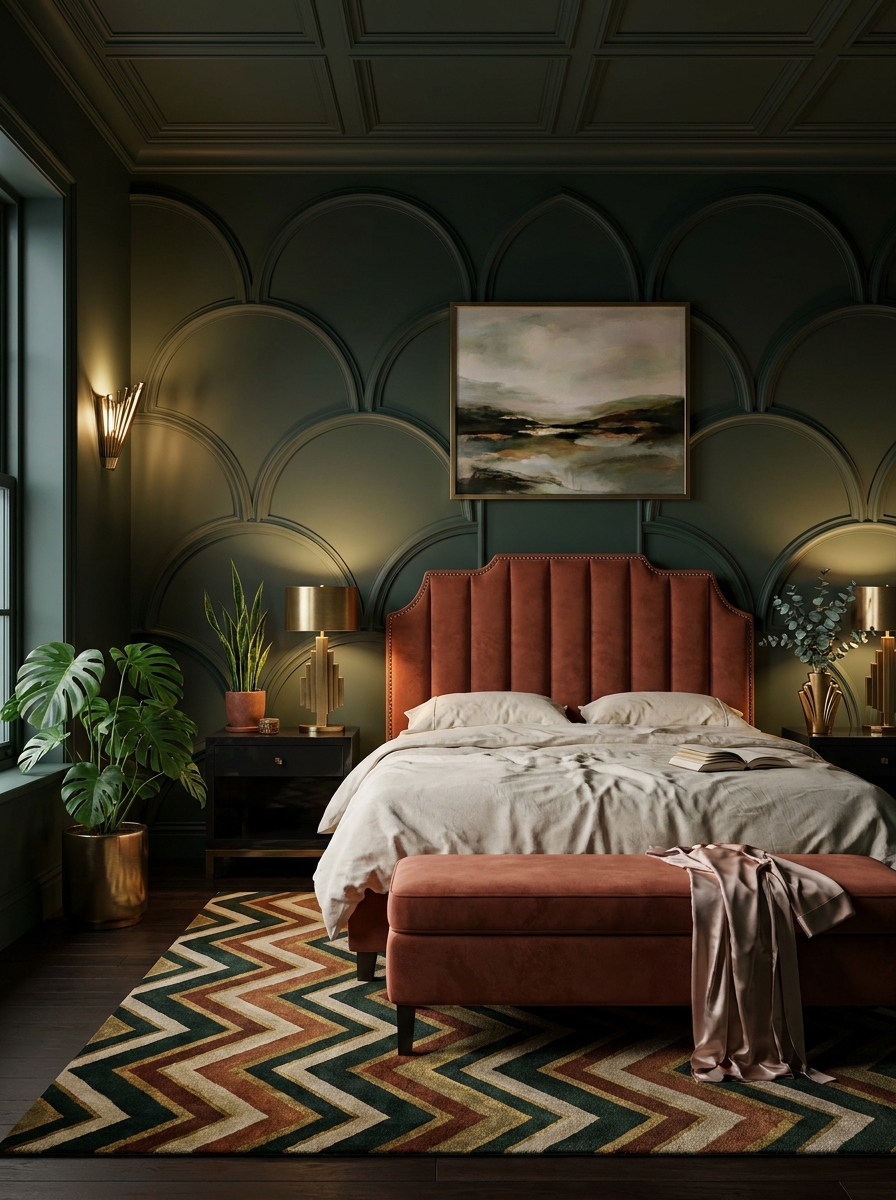
Not everything in Neo Deco has to be sharp angles and straight lines. Scalloped wall treatments and curved architectural details add this gorgeous Art Deco softness that balances all those geometric edges beautifully.
I’m talking about half-moon wall molding, scalloped archways, or even wallpaper with repeating curved motifs. These rounded elements were huge in the 1920s, and they’re having a major moment again. When you pair them with angular furniture—like a stepped console or a geometric mirror—you get this perfect tension between soft and structured that feels so sophisticated.
You can DIY this look with pre-cut molding pieces from the hardware store, or go bold with scalloped wall paneling. Even adding a curved archway mirror or a fan-shaped wall sconce brings in those iconic Art Deco curves without committing to a full wall treatment. It’s such an elegant detail that immediately elevates your space and gives it that vintage-meets-modern edge.
9. Champagne Gold Hardware and Fixtures Throughout
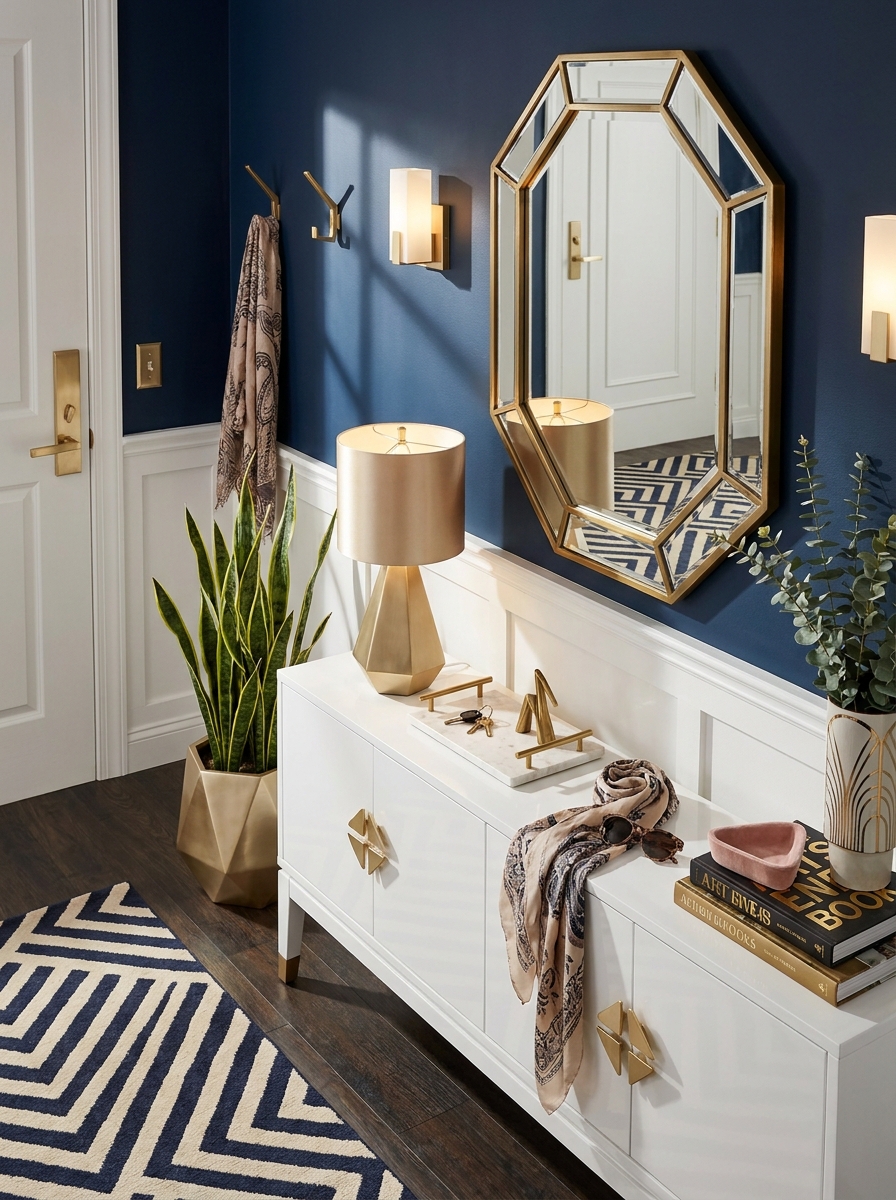
Here’s where the magic happens in the details. Neo Deco isn’t about one statement piece—it’s about threading that glamorous metallic through every touchpoint in your space. Cabinet pulls, door handles, light switches, curtain rods, even your picture frame corners. When you commit to champagne gold (or brushed brass, or rose gold), suddenly everything feels intentional and cohesive.
I love mixing metal finishes in most rooms, but Neo Deco is where I break that rule. Picking one metallic and running with it creates this incredible sense of luxury. It’s like the room is wearing matching jewelry. Start with your largest fixtures—faucets, lighting, major furniture hardware—then work your way down to the smallest details.
The finish matters too. High-polish gold reads very traditional Art Deco, while brushed or satin finishes feel more contemporary. I’m obsessed with champagne gold specifically because it sits right in that sweet spot between warm and cool, working beautifully with both jewel tones and neutrals.
10. Waterfall Edge Furniture with Sleek Lines
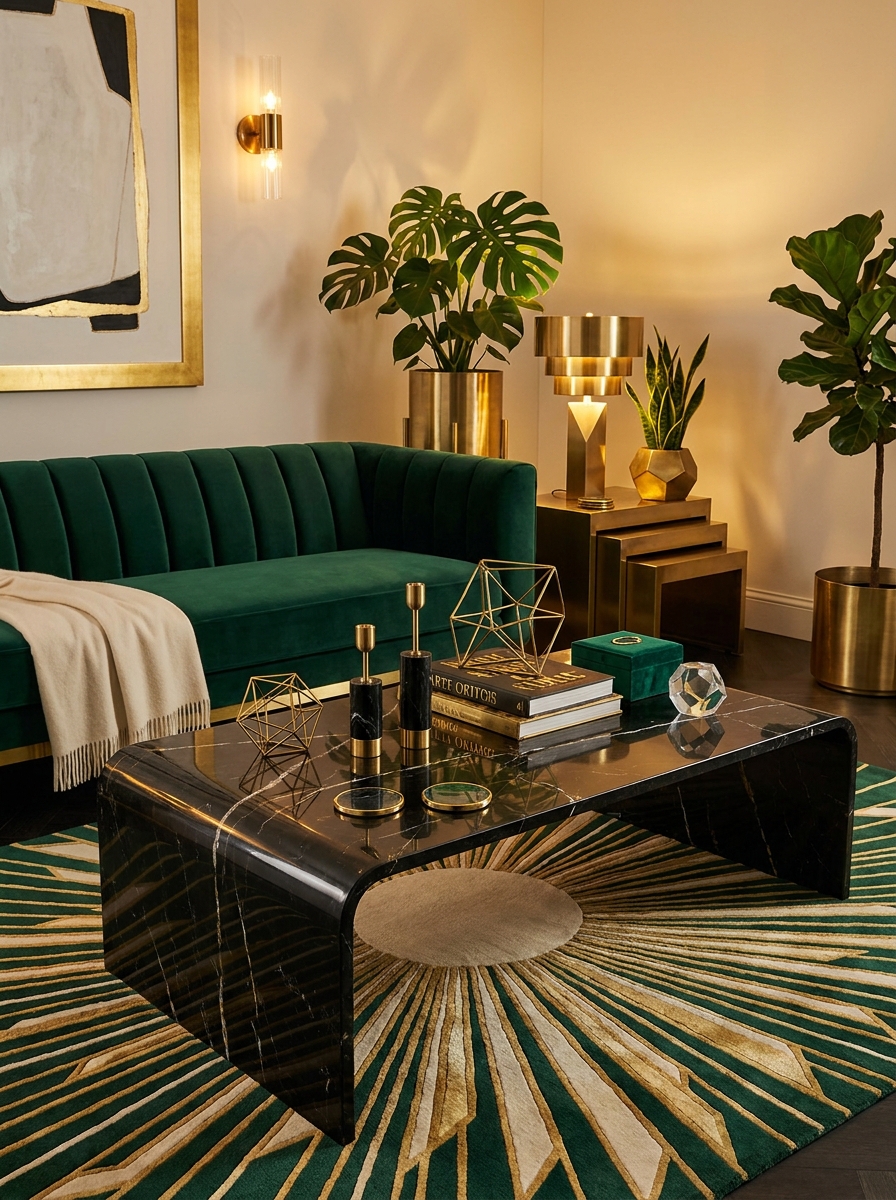
Waterfall edges are having such a moment, and honestly? They’re pure Neo Deco perfection. That continuous flow where the material cascades over the edge and down the side—it’s architectural drama that feels both retro and completely now. I’m seeing this on everything from marble coffee tables to lacquered credenzas to upholstered benches.
What I love about waterfall furniture is how it plays with proportion and weight. A thick marble slab with waterfall edges feels substantial and grounding, while a slim lacquered console with the same detail feels sleek and elevated. Either way, you get these beautiful clean lines that emphasize the material itself. No fussy legs or hardware to distract from that gorgeous stone grain or glossy finish.
Pair waterfall pieces with more angular, geometric furniture to create that perfect Neo Deco tension. A curved waterfall coffee table grounds a room full of sharp-edged brass accents and stepped side tables. It’s that mix of soft and hard, flowing and structured, that makes these spaces so visually interesting.
11. Two-Tone Color Blocking on Walls and Millwork
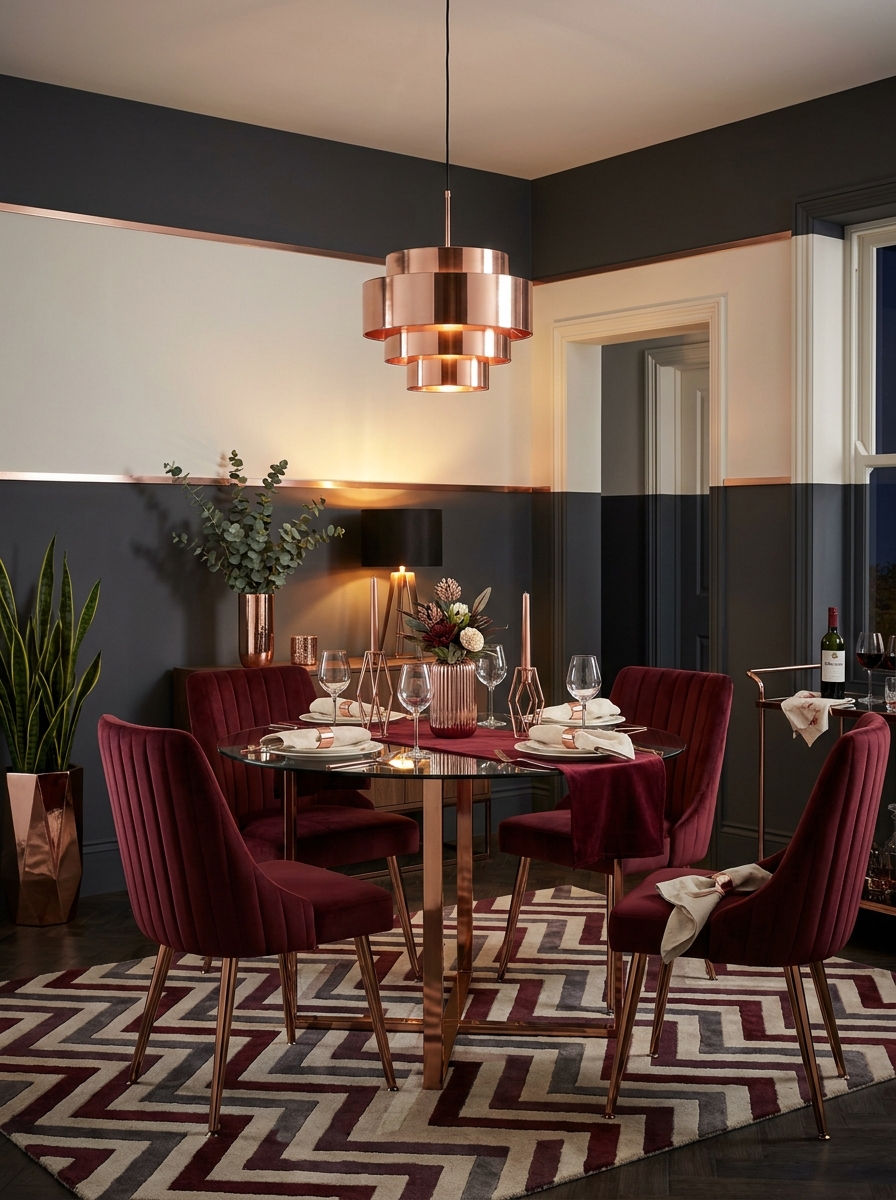
This is one of my favorite Neo Deco tricks that people always ask about. Instead of painting a room one color, divide your walls horizontally with a bold contrasting color or finish. Think deep charcoal on the bottom third with warm grey above, separated by a thin brass trim strip. Or navy wainscoting below cream walls. The effect is incredibly striking and so authentically Art Deco.
The key is getting your proportions right. I usually go one-third dark on bottom, two-thirds lighter on top, with the division happening around 36-42 inches up—basically chair rail height. This grounds the room and makes your ceilings feel taller. When you add that metallic trim strip at the dividing line, you’re basically creating architectural detail where none existed before.
Don’t stop at walls either. Paint your doorframes, window casings, and built-ins in that same two-tone scheme. It creates this incredible sense of continuity and intentional design. I recently did this in a dining room and people thought we’d installed custom millwork—nope, just paint and some seriously clever color blocking.
12. Fan-Shaped Headboards and Architectural Bed Frames
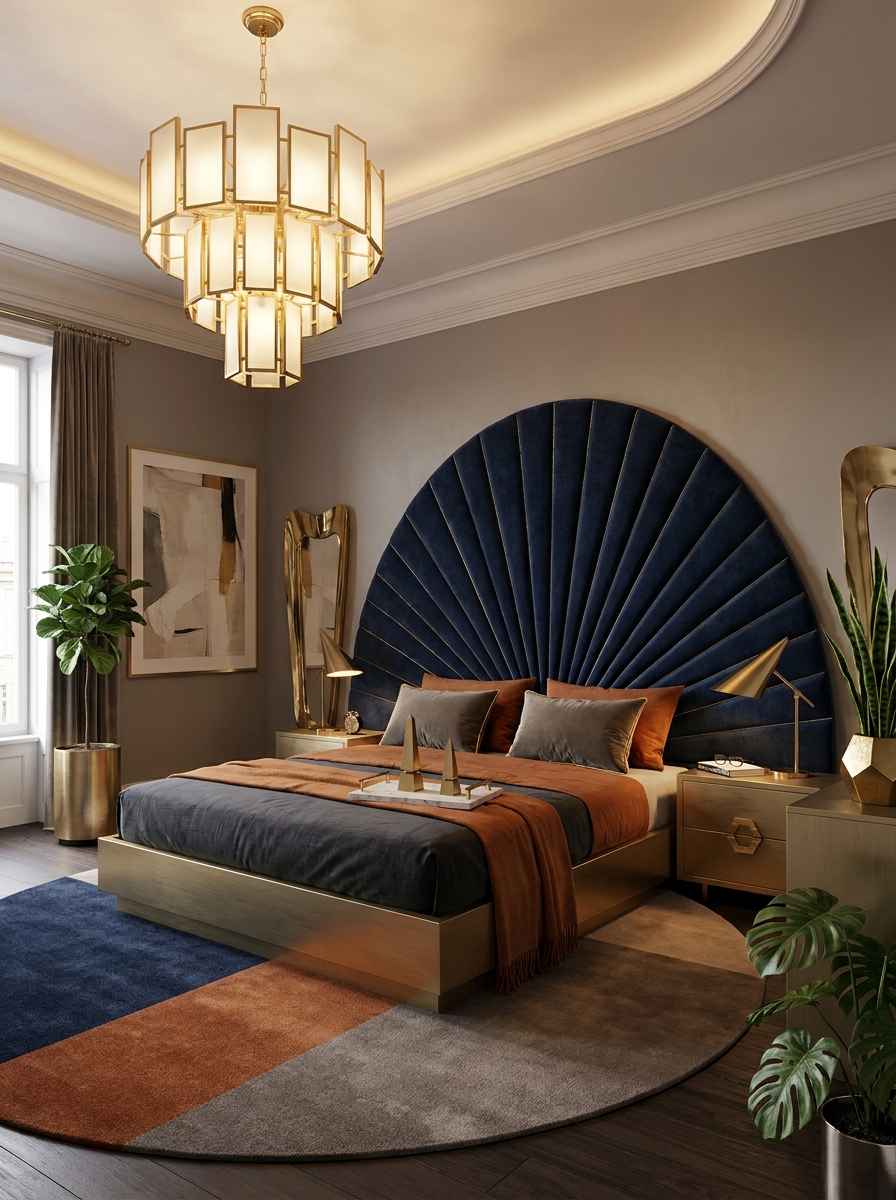
The bedroom is where Neo Deco really gets to show off, and nothing—I mean nothing—makes a statement like a fan-shaped headboard. That radiating sunburst silhouette is so distinctly Art Deco, but when you do it in channel-tufted velvet or sleek upholstered panels in a jewel tone, it feels completely contemporary and glamorous.
I’m obsessed with how these headboards create an instant focal point without needing a ton of other decor. The architectural shape does all the work. You can keep your nightstands simple, skip the gallery wall, and let that gorgeous curved silhouette be the star. Add some brass wall sconces on either side and you’ve got instant bedroom drama.
If a full fan headboard feels like too much, look for bed frames with stepped or tiered details, fluted posts, or geometric metal frames in brass or black. The goal is choosing a bed that feels like a piece of architecture, not just furniture. Layer in your geometric rugs, velvet bedding, and metallic accents, and you’ve created the most glamorous retreat.
13. Mirrored Furniture Reflecting Geometric Patterns
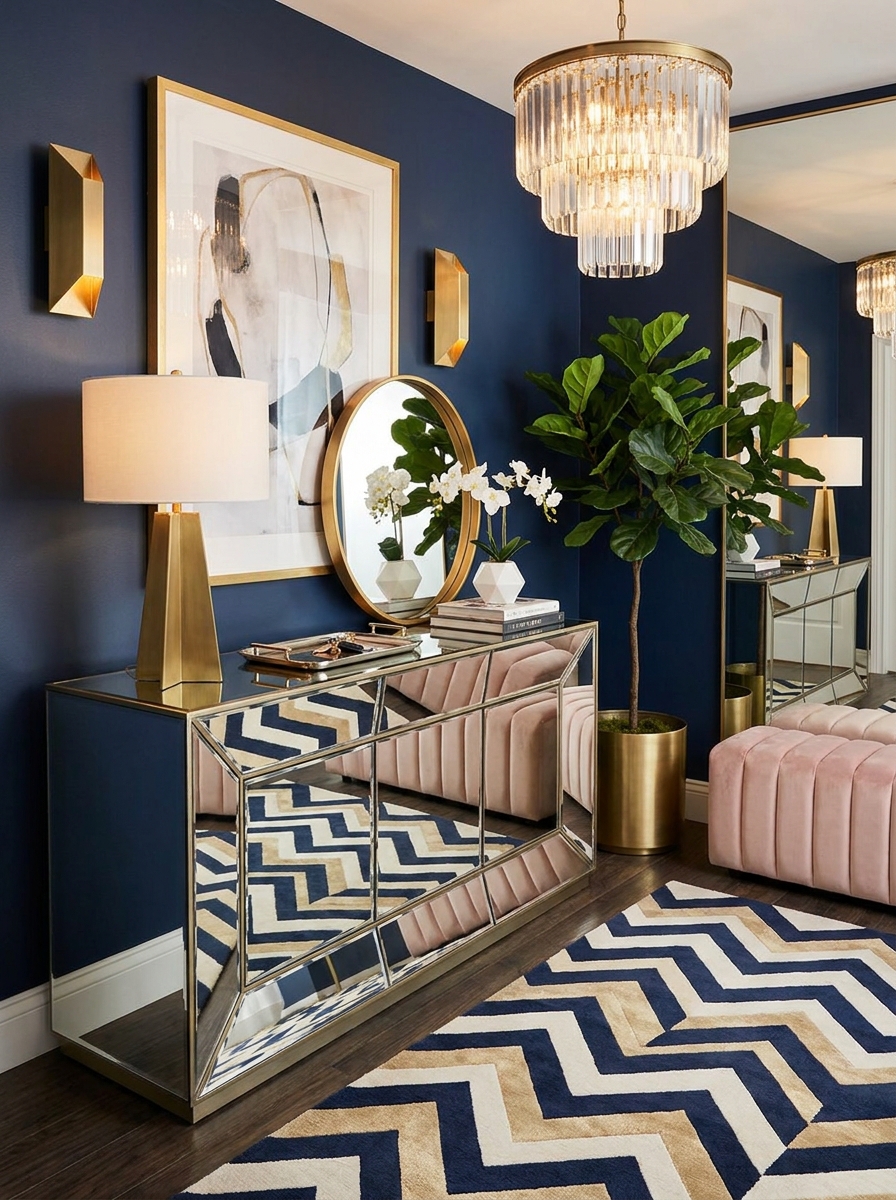
Mirrored furniture is having its moment again, but we’re not talking about your grandma’s mirrored vanity. Think sleek mirrored consoles with beveled edges, Art Deco-inspired nightstands with geometric facets, and sideboards that multiply light and pattern throughout your space.
The magic happens when these reflective surfaces bounce geometric rugs, angular lighting, and metallic accents around the room. A mirrored console table doubles the visual impact of everything you style on it while making your entryway feel twice as spacious. It’s architectural eye candy that actually serves a purpose.
I’m obsessed with how mirrored pieces catch different light throughout the day. Morning sun creates a totally different vibe than evening lamplight bouncing off those beveled edges. And here’s the best part: mirrored furniture works in small spaces because it visually disappears while still making a statement. It’s like decorating magic that actually follows the laws of physics.
14. Terrazzo Surfaces with Art Deco Flair
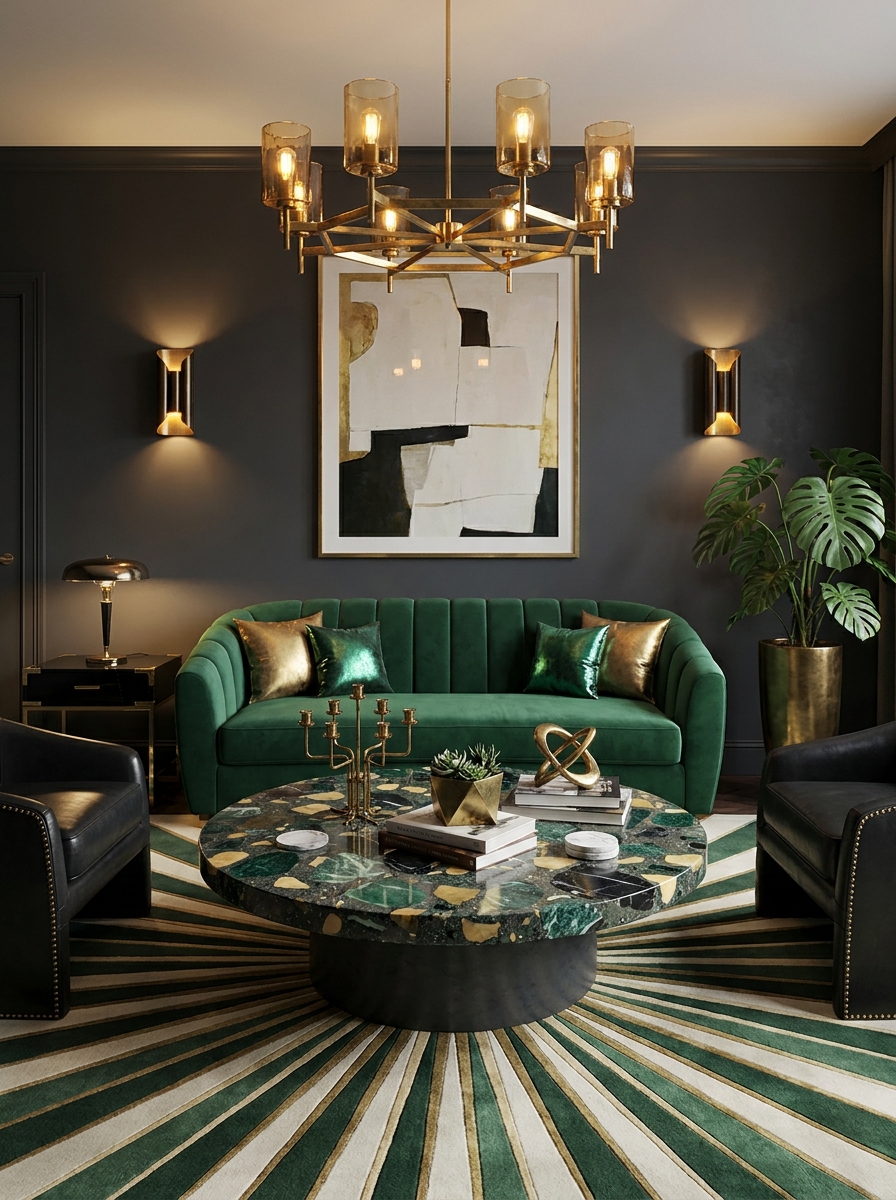
Terrazzo is back, baby! But we’re giving this speckled surface a serious Art Deco upgrade. Forget the pastel, Memphis-style terrazzo you’ve been seeing everywhere. Neo Deco terrazzo features bold geometric chips in deep jewel tones—think emerald green fragments mixed with brass and black marble on a charcoal base.
I’ve seen terrazzo coffee tables that look like pieces of art, bathroom vanities that steal the show, and even custom terrazzo wall panels that make a room feel like a 1920s hotel lobby (in the best way). The textured, speckled surface adds visual interest without being busy, and it pairs beautifully with the smooth brass and velvet textures that define Art Deco style.
What I love most is how terrazzo brings in color and pattern through material rather than print. It feels substantial and permanent, not trendy. A terrazzo piece instantly elevates a space and gives it that custom, high-end look that makes guests ask where you found it.
15. Column Details and Vertical Pilasters
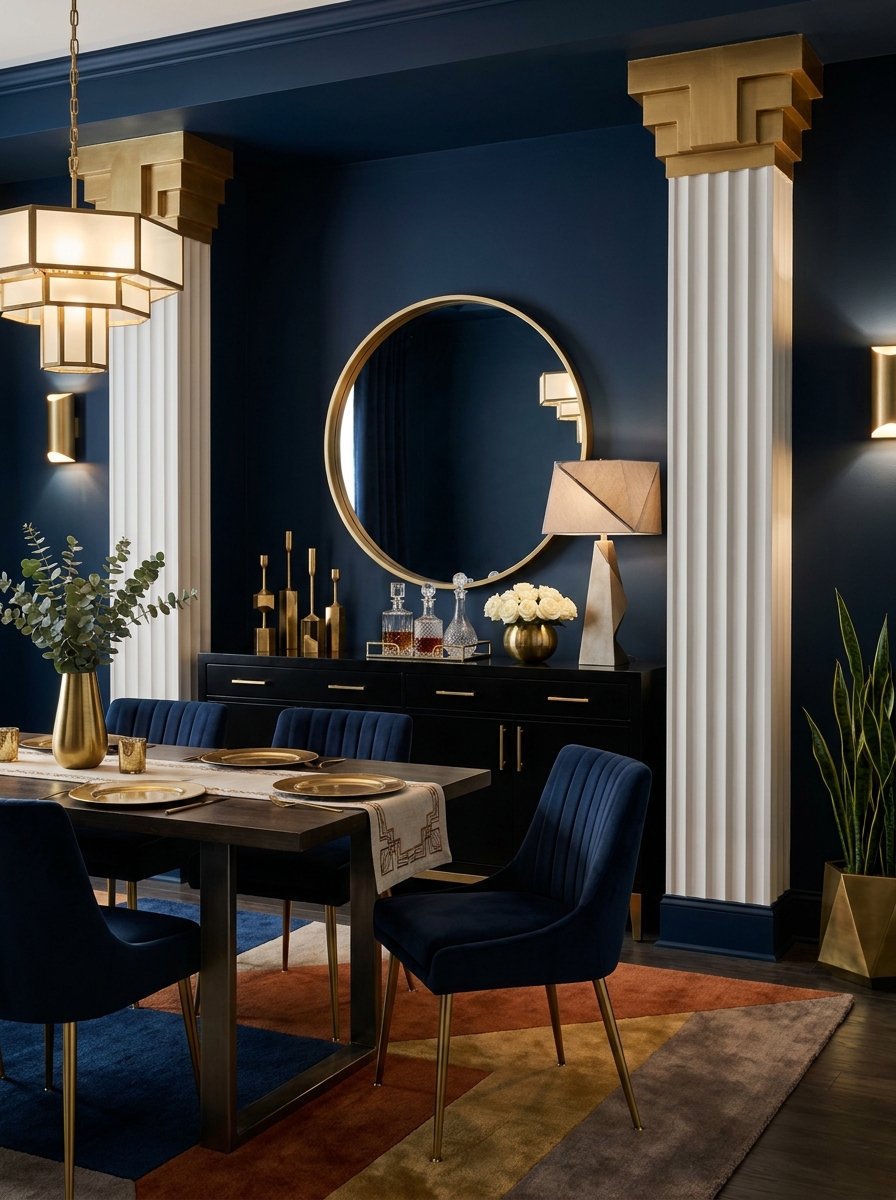
Architectural columns aren’t just for Greek temples anymore! Neo Deco style loves a good vertical pilaster or decorative column detail that draws the eye upward and adds that instantly luxurious architectural feel. Even if you’re working with a standard apartment, you can fake this look with applied molding or freestanding decorative columns.
I’m seeing these used to frame entryways, define room zones, or flank fireplaces and entertainment centers. The key is keeping them sleek and geometric rather than overly ornate. Think fluted brass columns, stepped plaster pilasters painted in contrasting colors, or even minimalist black columns that create dramatic vertical lines.
The coolest thing about adding column details is how they trick the eye into seeing higher ceilings and grander proportions. It’s architectural theater, and it totally works. Plus, that strong vertical rhythm is quintessentially Art Deco—those 1920s designers were obsessed with skyscraper-inspired lines for a reason.
16. Egyptian Revival Accents and Exotic Motifs
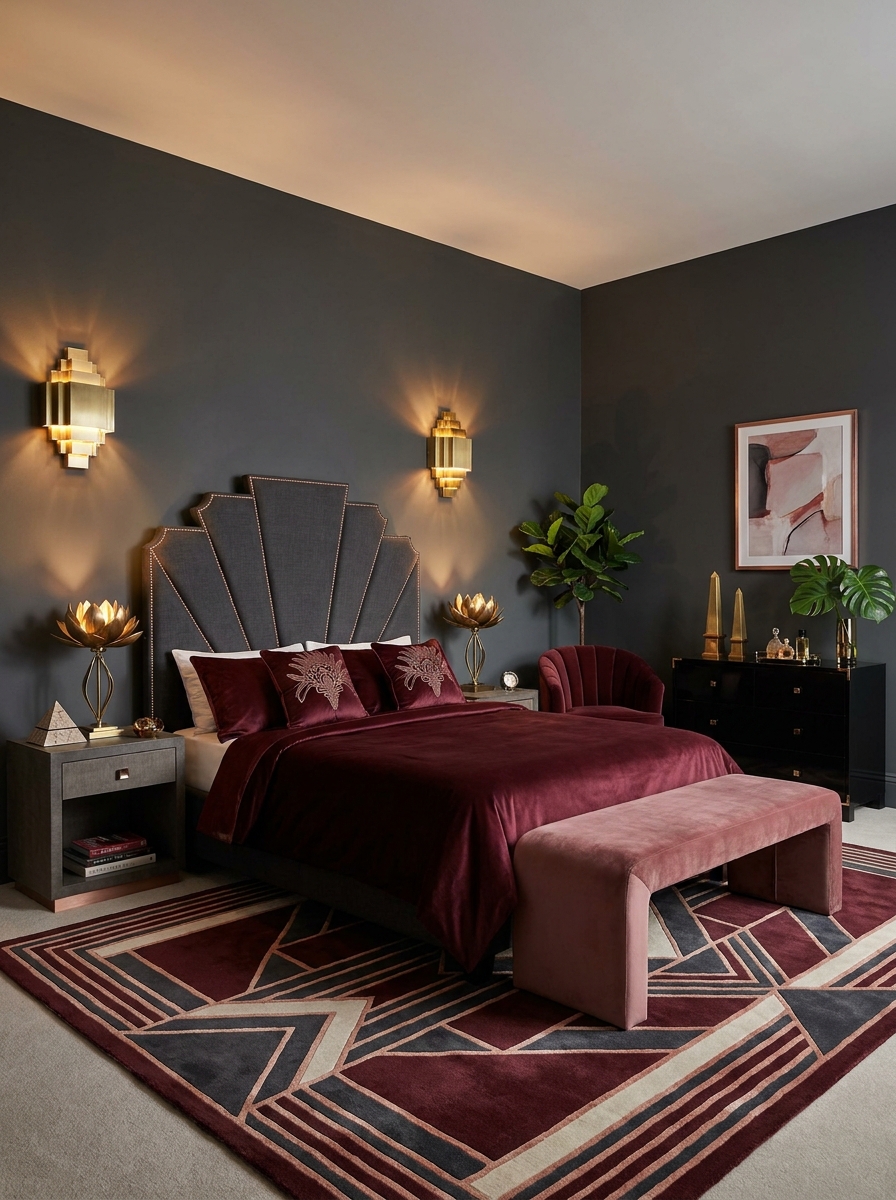
Art Deco’s original obsession with ancient Egypt is making a chic comeback, but we’re doing it with a lighter touch. Think sphinx bookends on your shelf, lotus flower lamp bases, or a pyramid-shaped side table instead of going full King Tut’s tomb. These exotic motifs add mystery and a touch of the unexpected.
I love mixing Egyptian-inspired pieces with more familiar geometric Art Deco elements. A papyrus-motif throw pillow on a channel-tufted sofa. An obelisk-shaped table lamp next to modern brass accessories. It creates layers of visual interest and shows you know your Art Deco history without hitting people over the head with it.
The key is restraint. One or two Egyptian Revival pieces in a room give you that worldly, collected-over-time vibe. Too many and you’ve decorated a museum gift shop. Choose pieces with clean lines and luxe materials—brass, gold leaf, polished stone—that feel contemporary even while nodding to ancient inspiration.
17. Curved Bar Carts and Cocktail Stations
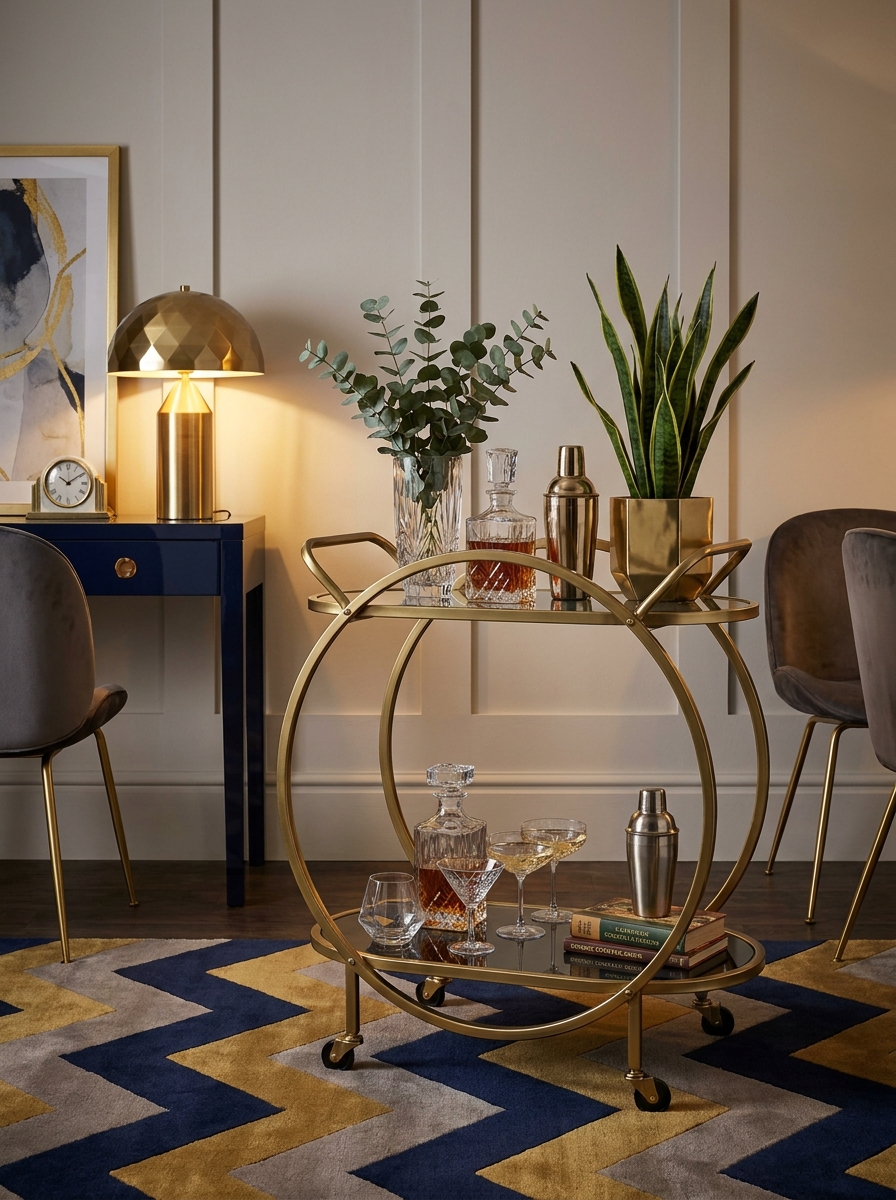
Nothing says Art Deco glamour quite like a show-stopping bar cart. These aren’t just functional pieces—they’re sculptural statements that channel the opulent cocktail culture of the 1920s.
Look for carts with curved silhouettes, tiered glass shelves, and that signature brass or gold finish. The best ones have those gorgeous rounded corners and geometric framework that scream vintage sophistication. I love how they create an instant entertainment zone while adding major visual interest to empty corners or dining room walls.
Style yours like you’re preparing for a Gatsby party. Display beautiful glassware with geometric patterns, a crystal decanter set, maybe some vintage cocktail books. Add a small sculptural object or art deco figurine. Thekey is making it look curated but not cluttered—you want that effortless elegance vibe. And here’s the thing: even if you don’t drink, these carts work beautifully as coffee stations or display areas for your favorite books and objects. It’s all about that glamorous aesthetic.
Quick Guide
Neo Deco Style Quiz: Which Approach Fits Your Space?
Luxe Maximalist — You love bold statements and aren’t afraid of color. Choose if: You want drama, have good natural light, and enjoy styling surfaces. Key pieces: Jewel-toned velvet sofa, oversized geometric mirror, metallic bar cart, statement chandelier. Budget: $$$ (invest in fewer statement pieces).
Geometric Glam — You prefer clean lines with just enough sparkle. Choose if: You lean modern but want warmth, have a smaller space, or like easy maintenance. Key pieces: Brass-framed mirror, one velvet accent chair, geometric rug, metallic lighting. Budget: $$ (mix high and low).
Sophisticated Moody — You’re drawn to darker, moodier palettes. Choose if: You have low natural light, want a cozy vibe, or love a good paint project. Key pieces: Deep painted walls, brass sconces, channel-tufted headboard, layered textures. Budget: $ (paint goes far).
Your Neo Deco Journey Starts Small
Here’s the truth about Neo Deco style — you don’t need to gut your entire home or spend a fortune. This isn’t about perfection. It’s about bringing in those geometric shapes, those rich materials, those little metallic moments that make you smile every time you walk into a room. Maybe you start with one amazing mirror. Or you paint an accent wall that deep moody color you’ve been scared to try. Or you swap out your basic lampshades for something with a geometric base and suddenly everything feels more intentional.
The beauty of this style is how well it plays with what you already have. Your existing furniture doesn’t need to go — it just needs some carefully chosen friends. A velvet pillow here, a brass side table there, and you’re already halfway to that sophisticated vibe you’re after. Trust your instincts on color. If you’re drawn to emerald, go emerald. If navy speaks to you, listen. This is your space, and Neo Deco is flexible enough to bend to your life while still delivering that glamorous edge. Start somewhere. Your home is already waiting to shine a little brighter.
Frequently Asked Questions
What’s the difference between Art Deco and Neo Deco interior design?
Art Deco is the original 1920s-1940s style with very specific historical elements, while Neo Deco takes those geometric shapes, metallic finishes, and luxe materials and interprets them for contemporary living. Neo Deco is more flexible, mixing vintage-inspired pieces with modern furniture and current color palettes. You get the glamour without feeling like you’re living in a museum.
How can I add Neo Deco style on a budget?
Start with paint and lighting — a deep jewel-toned accent wall costs under $50 and transforms a space instantly. Shop secondhand for brass mirrors and geometric frames, which show up constantly at estate sales. Focus your budget on one statement piece like a channel-tufted chair or velvet sofa, then build around it with affordable accessories like geometric throw pillows, metallic picture frames, and thrifted brass candlesticks. The style is about intentional placement, not expensive everything.
What colors work best for modern Art Deco interiors?
Deep jewel tones are classic Neo Deco — emerald green, sapphire blue, burgundy, and rich plum all work beautifully. Pair them with metallics like brass, champagne gold, or rose gold for that signature glamour. Sophisticated neutrals like charcoal grey, warm bone white, and black also anchor the style perfectly. The key is choosing colors with depth and pairing them with metallic accents so you get that luxe contrast between matte and shine.
Can Neo Deco work in small apartments or only large spaces?
Neo Deco actually works beautifully in small spaces because geometric mirrors expand the room visually and metallics reflect light to make things feel bigger. Focus on vertical lines with tall mirrors and tiered furniture to draw the eye up. Choose one or two statement pieces rather than filling every corner. A small space with a jewel-toned accent wall, one gorgeous brass mirror, and thoughtful lighting can feel incredibly luxe without overwhelming the square footage.
What furniture shapes are essential for Neo Deco style?
Look for geometric and stepped silhouettes — furniture with angular arms, tiered surfaces, curved Art Deco arches, and channel-tufted details. Coffee tables with brass geometric bases, side tables with stepped shelving, and sofas with defined linear tufting all capture the style. Avoid anything too organic or rustic. Even your lighting should have geometric bones — think angular pendants, stepped lamp bases, and fixtures with symmetrical arms