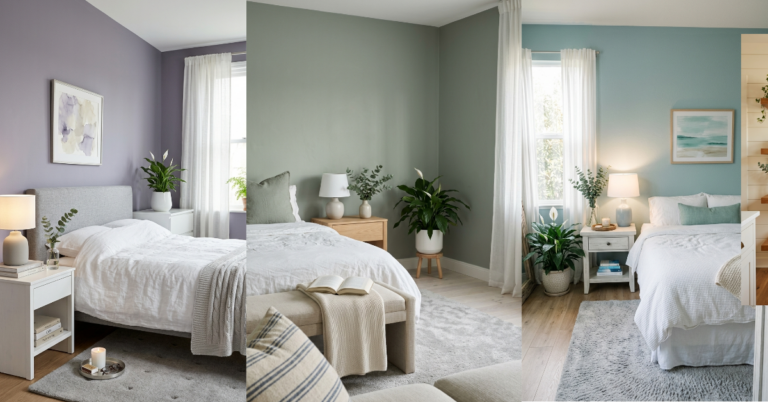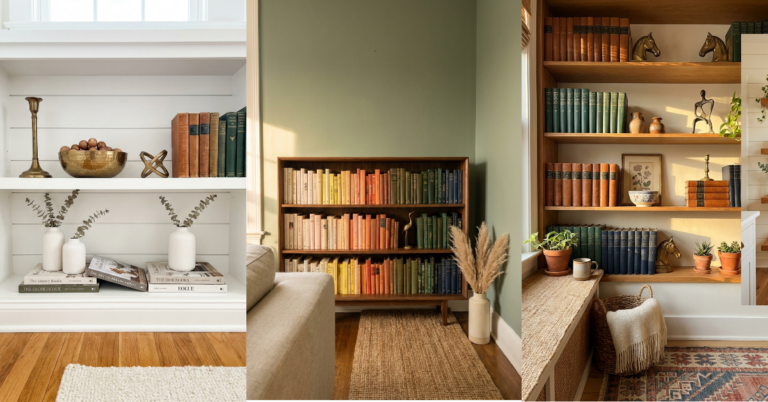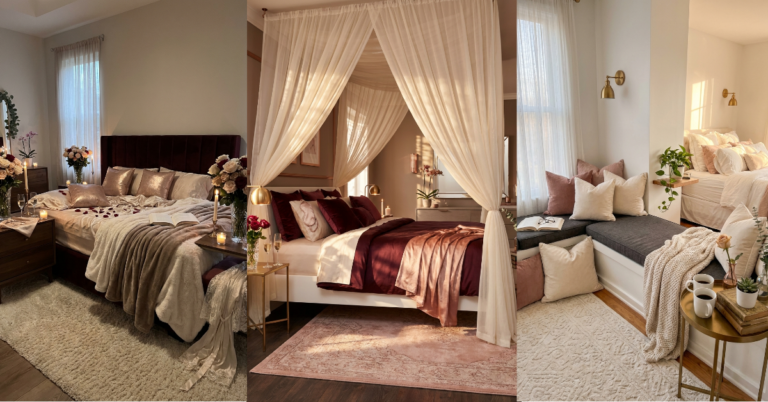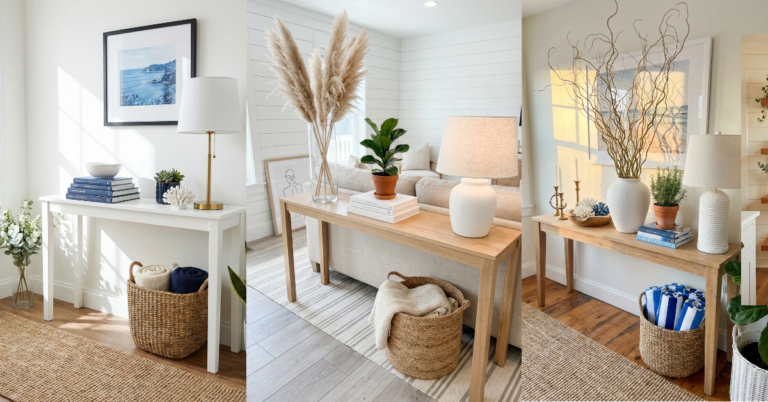
25 Serene Coastal Decor Ideas That Skip the Kitsch
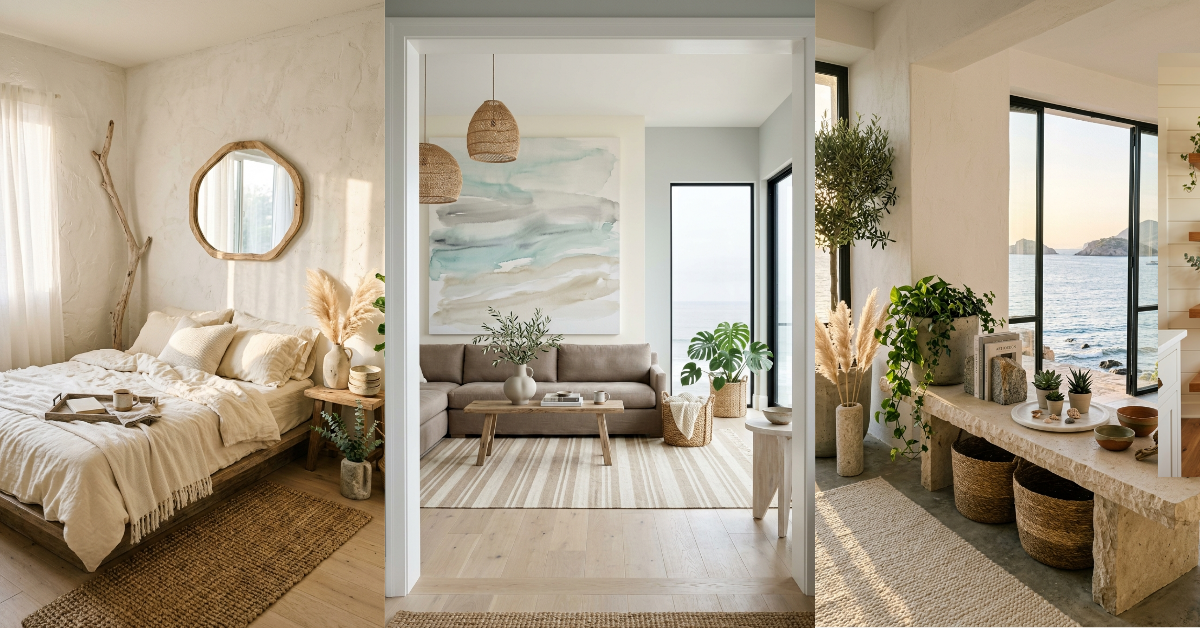
You know that feeling when you walk into a beachside hotel room and everything just feels lighter? The colors are soft, the textures are natural, and there’s not a single anchor or rope knot in sight. That’s the coastal vibe we’re going for here — the kind that whispers “expensive vacation rental” instead of screaming “I bought this at a tourist shop.” Real coastal style isn’t about nautical kitsch. It’s about capturing that breezy, sun-soaked feeling through textures, light, and a palette pulled straight from the shoreline. Think driftwood instead of ships’ wheels. Linen instead of sailcloth stripes. We’re talking about 25 ways to bring sophisticated beach house energy into your actual home, whether you’re landlocked in the suburbs or lucky enough to hear waves from your bedroom. These ideas work in real spaces with real budgets. Let’s get into it.
1. Sun-Bleached Wood Furniture That Feels Collected
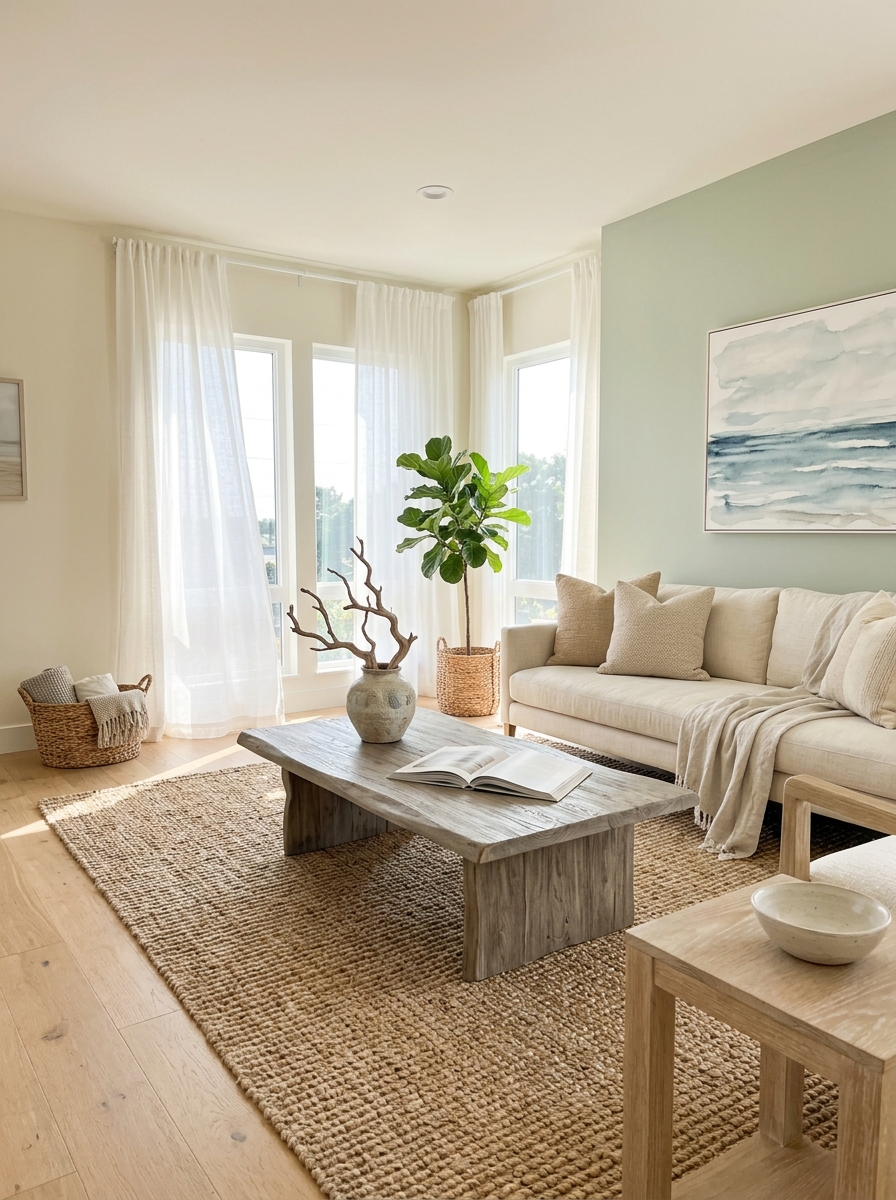
The right wood tone changes everything in a coastal space. You want pieces that look like they’ve been kissed by salt air and sunshine for decades — that gorgeous silvery-gray patina that new furniture just can’t fake. Look for tables, consoles, or shelving in weathered oak, reclaimed teak, or lime-washed pine.
But here’s the thing: one statement piece goes further than a whole room of matchy-matchy beachy furniture. A chunky coffee table with visible grain and natural imperfections brings more character than five perfectly distressed items from the same collection. Mix it with cleaner, more modern pieces so it feels curated instead of themed.
The beauty is in the variation. Some pieces can lean more gray, others warmer honey tones. That’s how actual coastal homes look — collected over time, not ordered from a single catalog. And if you’re on a budget, even one side table in this finish can shift the whole mood of a room.
2. Chunky Linen Everything (Yes, Really Everything)
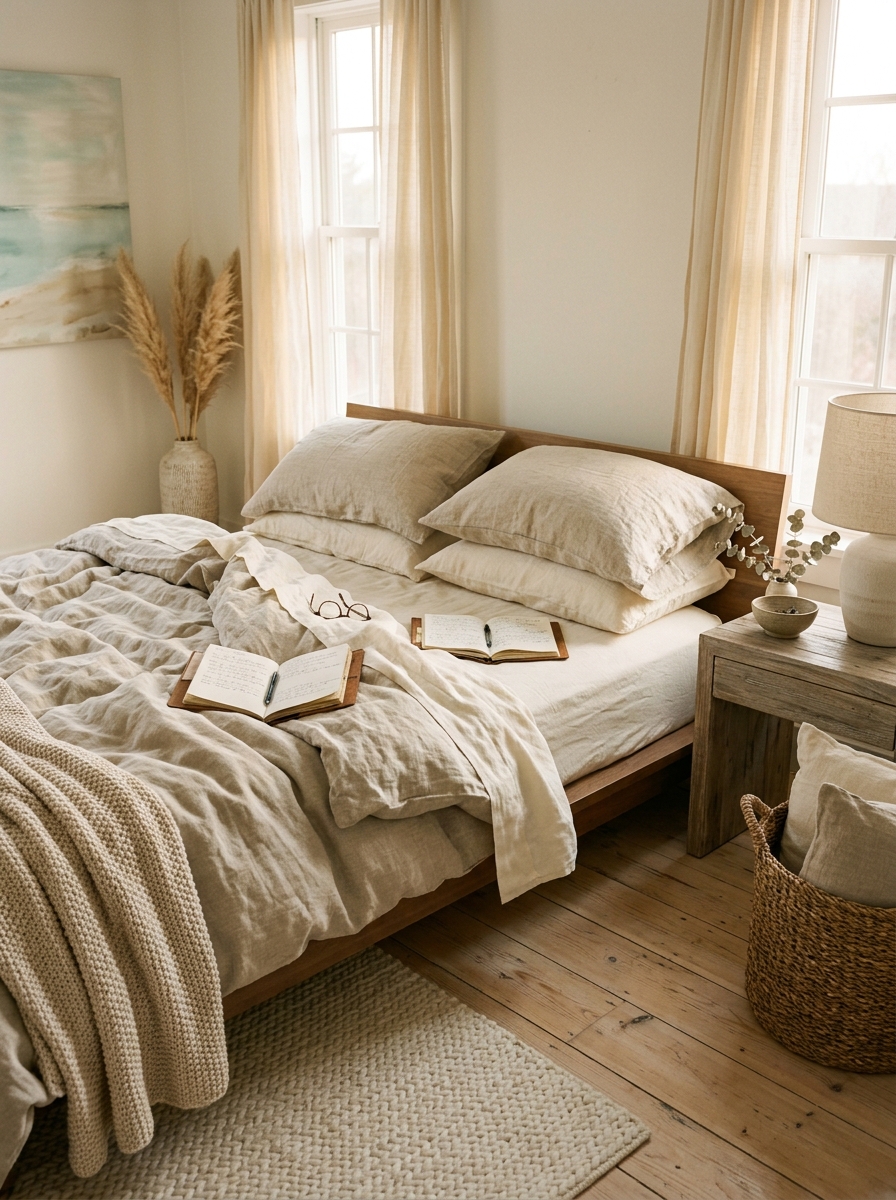
Linen is the MVP of sophisticated coastal design. It’s got that perfect rumpled, lived-in texture that cotton just can’t match. And the best part? It actually gets better with age and washing, developing this soft, relaxed character that screams effortless elegance.
Start with the big stuff: slipcovers, curtains, duvet covers. A linen sofa slipcover in oatmeal or natural flax immediately elevates a space from “beach themed” to “beach house chic.” Linen curtains diffuse light in the most beautiful way, creating that hazy, romantic glow you see in coastal photography. They move with the breeze, they puddle gracefully on the floor, they’re just dreamy.
But don’t stop there. Linen napkins, linen throw pillows, even linen storage baskets. Layer different weights and weaves for depth. The wrinkles aren’t a bug, they’re a feature. That slightly undone quality is exactly what makes a coastal space feel approachable and real instead of stuffy and overdone.
3. Oversized Abstract Art in Ocean Palette
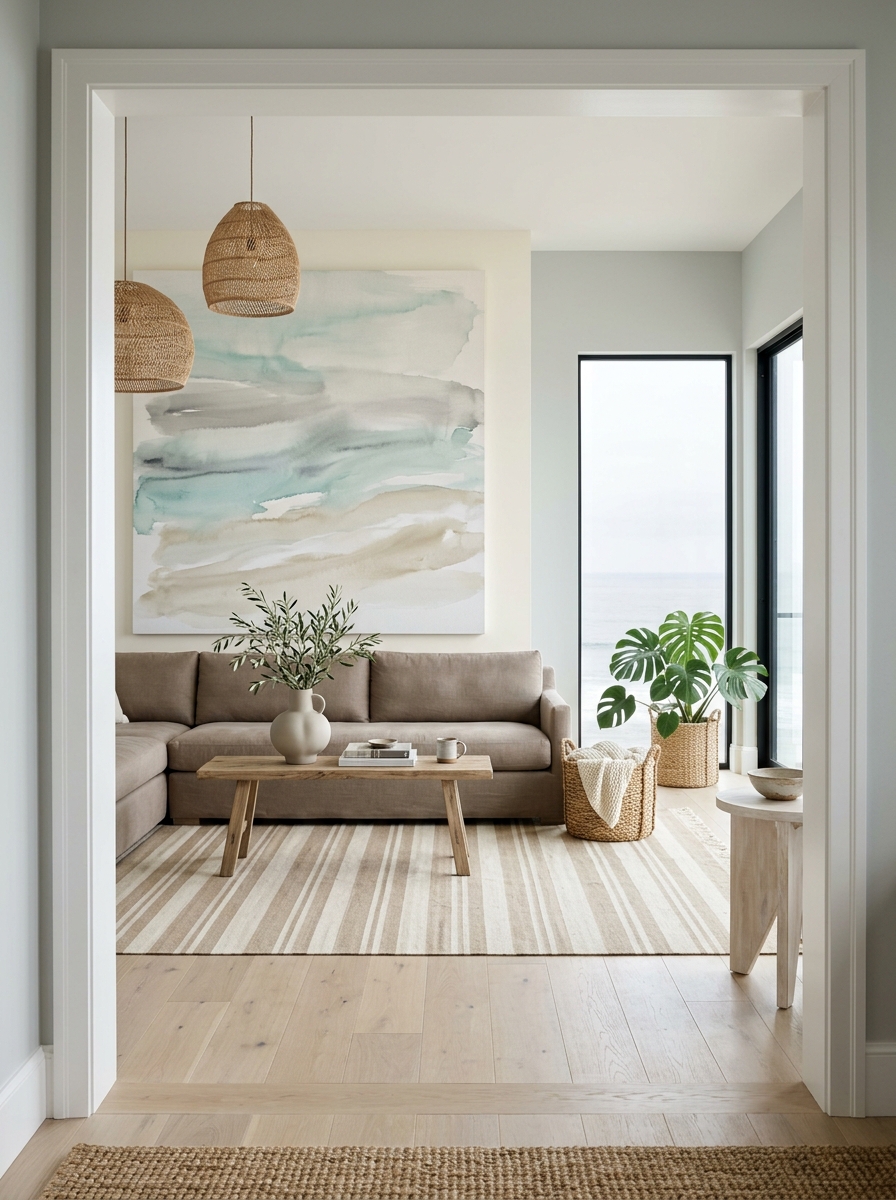
Forget the literal beach photography and sailboat prints. Sophisticated coastal art suggests the ocean without spelling it out. Large-scale abstract pieces in watery palettes bring that calming coastal energy while keeping your space feeling grown-up and gallery-worthy.
Look for paintings or prints with horizontal movements that echo the horizon line. Soft washes of seafoam, sand, misty gray, and cream that blend and blur together. The colors should feel familiar — like they came straight from a morning beach walk — but the composition should be artistic and interpretive. You want people to feel the ocean, not see a postcard.
Scale matters here. One big piece (at least 40×60 inches) makes a much stronger statement than a gallery wall of smaller coastal images. It becomes a focal point that grounds the room and sets the whole color story. And because it’s abstract, it works with your existing furniture without fighting for attention.
4. Natural Fiber Rugs Layered for Texture
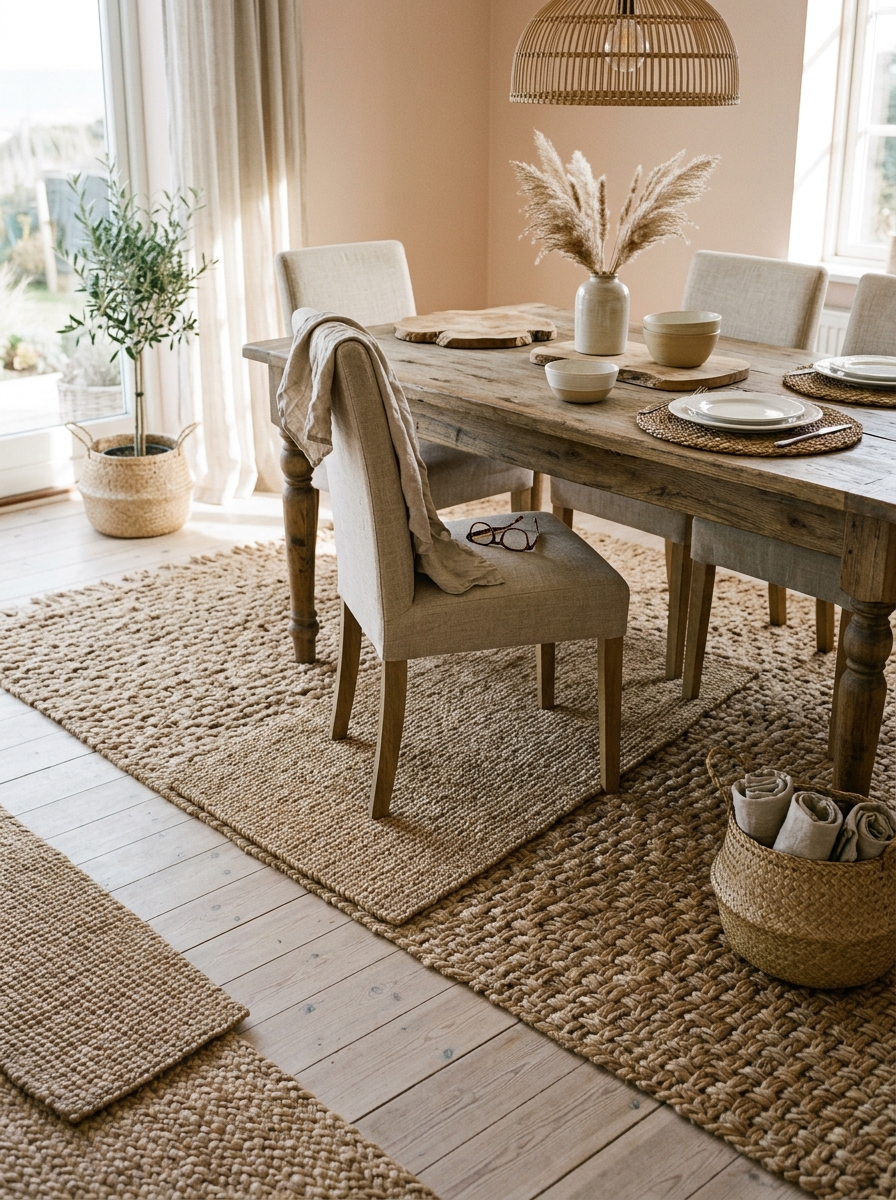
Nothing says coastal quite like the rough, organic texture of natural fiber underfoot. Jute, seagrass, sisal — these materials bring instant warmth and that perfectly imperfect handmade quality that polished rugs just can’t deliver. They’re durable, they hide sand and dirt like champions, and they ground a space without overwhelming it.
But here’s where it gets good: layering. A large jute rug as your base with a smaller, softer rug on top creates dimension and comfort. Maybe a chunky jute underneath with a vintage-inspired cotton runner or a sheepskin layered on top. It adds visual interest and solves the “jute is scratchy on bare feet” problem that everyone thinks about but nobody mentions.
Stick with natural, undyed fibers for the most sophisticated look. That range of wheat, sand, and warm taupe tones works with literally everything and never feels trendy or dated. And the texture contrast against smooth linen sofas or sleek wood furniture is chef’s kiss. Your space instantly feels more collected and intentional.
5. Whitewashed Walls with Textured Plaster Finish
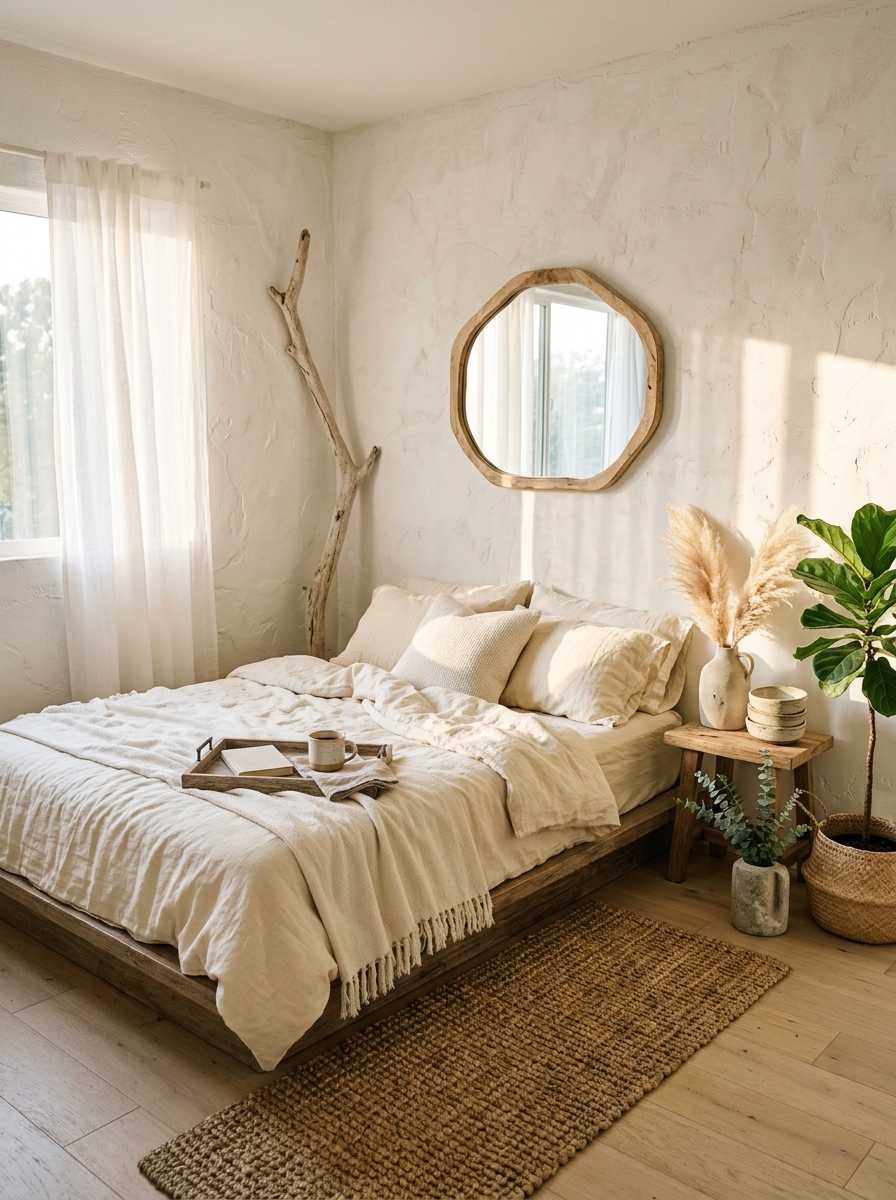
Forget flat builder-grade white. The walls in truly beautiful coastal homes have dimension and depth—think European plaster with a slightly irregular finish that catches light differently throughout the day.
This textured approach makes white walls feel alive instead of sterile. The subtle variations create soft shadows that shift as the sun moves, adding warmth without actual color. It’s that barely-there imperfection that makes a space feel collected over time rather than decorated in a weekend.
You can achieve this with lime wash paint, venetian plaster, or even a thick matte paint applied with intentional brushstrokes. The goal is a surface that feels handcrafted and organic. When sunlight hits these walls, they glow instead of glare. It’s the difference between a beach house that feels expensive and one that just looks… white.
6. Low-Profile Furniture That Embraces Horizontal Lines
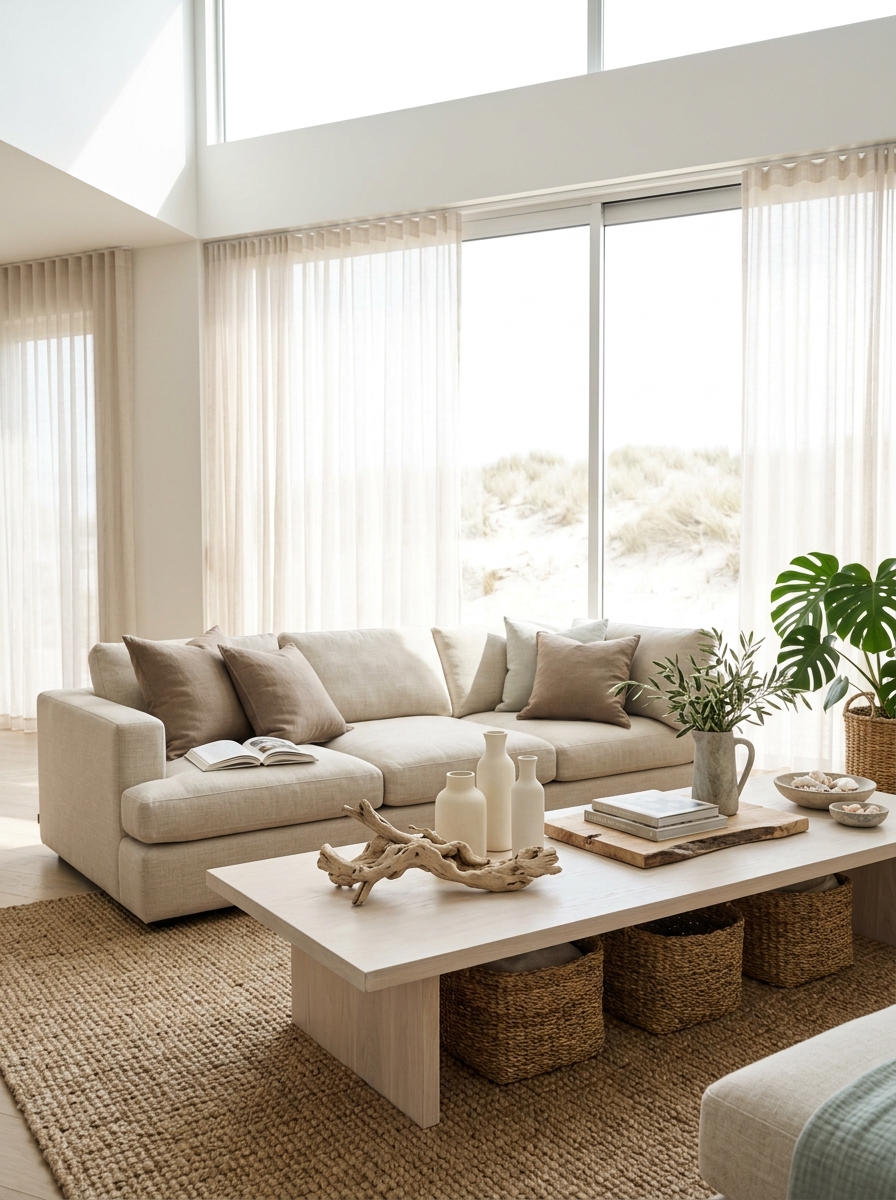
There’s something about low furniture that just feels coastal. Maybe it’s how it echoes the endless horizon line, or how it makes ceilings feel taller and rooms feel breezier. Whatever the reason, it works.
Swap your standard-height sofa for something with a lower back and deeper seat. Choose platform beds instead of tall frames. Pick coffee tables that hover close to the ground. This horizontal emphasis creates visual calm—your eye travels across the room instead of bouncing up and down between different furniture heights.
The effect is especially powerful in rooms with ocean views or large windows. Low furniture doesn’t compete with the view; it frames it. You get that effortless, lounge-all-day feeling without a single piece of rattan or wicker in sight. Just clean lines, natural materials, and furniture that invites you to sink in and stay awhile.
7. Stone and Concrete Elements for Grounding Weight
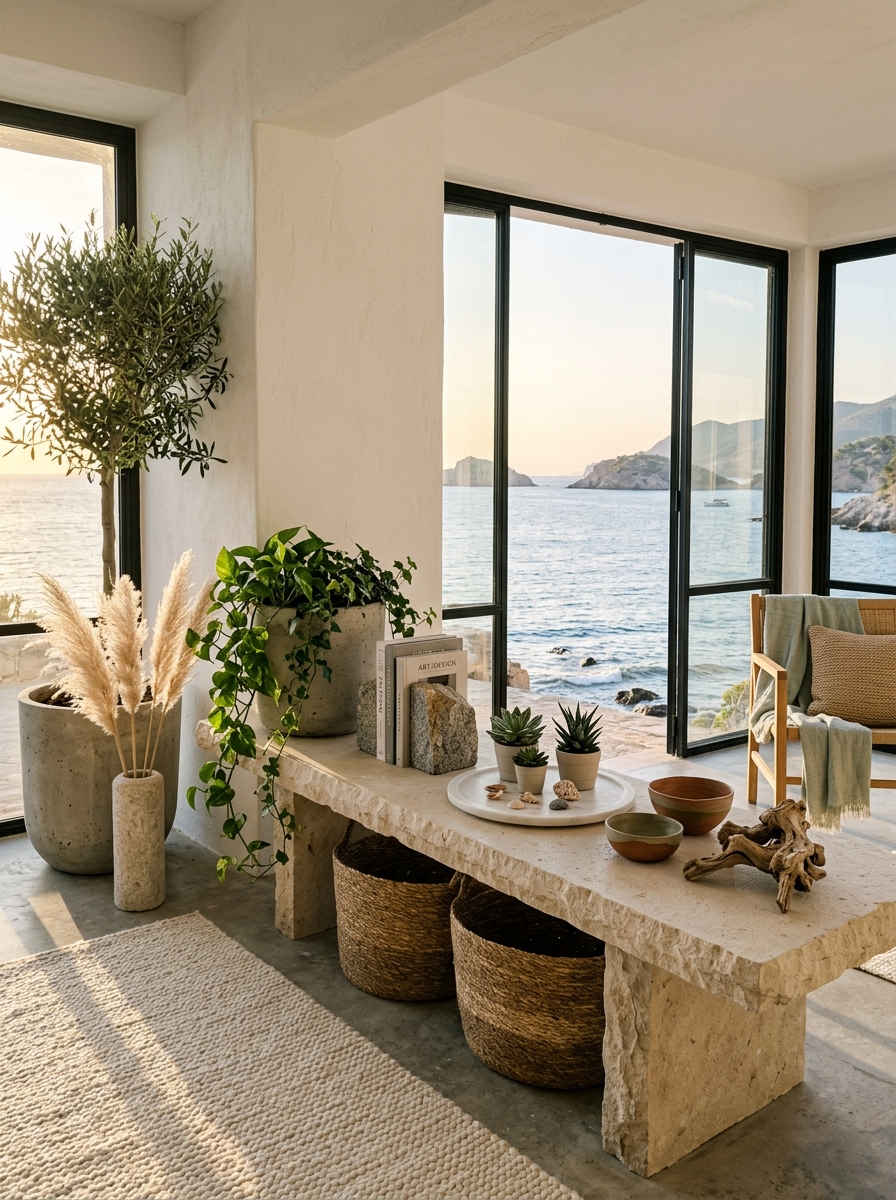
All that airy linen and bleached wood needs something substantial to keep it from floating away. That’s where stone and concrete come in—they add just enough weight and coolness to balance all the soft, warm textures.
I’m talking about concrete planters with irregular edges, stone vases that feel hand-carved, maybe a limestone coffee table or slate coasters. These materials bring an earthy, almost Mediterranean quality that feels perfectly at home near the coast. They’re neutral but never boring, smooth but with natural variation.
The beauty is in the contrast. When you set a piece of rough stone next to soft linen or place a concrete vessel on sun-bleached wood, both materials look better. The stone grounds the space while the lighter elements keep it from feeling heavy. It’s that push-and-pull between textures that makes coastal design feel sophisticated instead of themed.
8. Sheer Flowing Curtains That Move With the Breeze
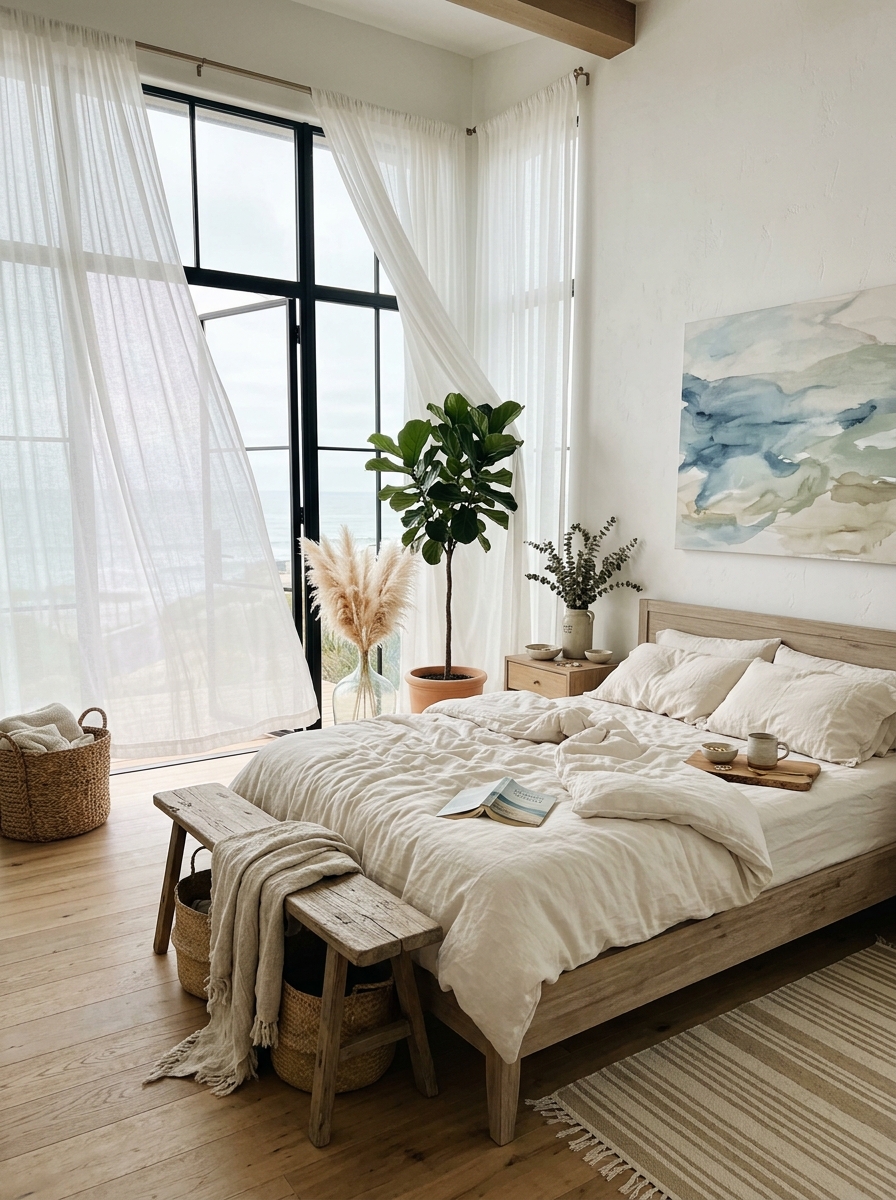
Nothing says coastal like curtains that actually move. I mean long, floor-to-ceiling sheers in the softest white linen or cotton that billow gently when the windows are open. It’s that effortless, caught-in-a-moment beauty that you can’t fake.
The key is getting them long enough—they should puddle slightly on the floor or just barely kiss it. Mount your rods high and wide to make windows look bigger and let in maximum light. Choose fabric with enough weight to drape beautifully but sheer enough to filter sunlight into that dreamy, diffused glow.
During the day, these curtains soften harsh light and create privacy without blocking views. At sunset, they catch that golden light and practically glow. And when a breeze comes through? Pure magic. It’s the kind of detail that makes a room feel alive and connected to the outdoors, which is exactly what coastal living should be.
9. Organic Curves in Furniture and Accessories
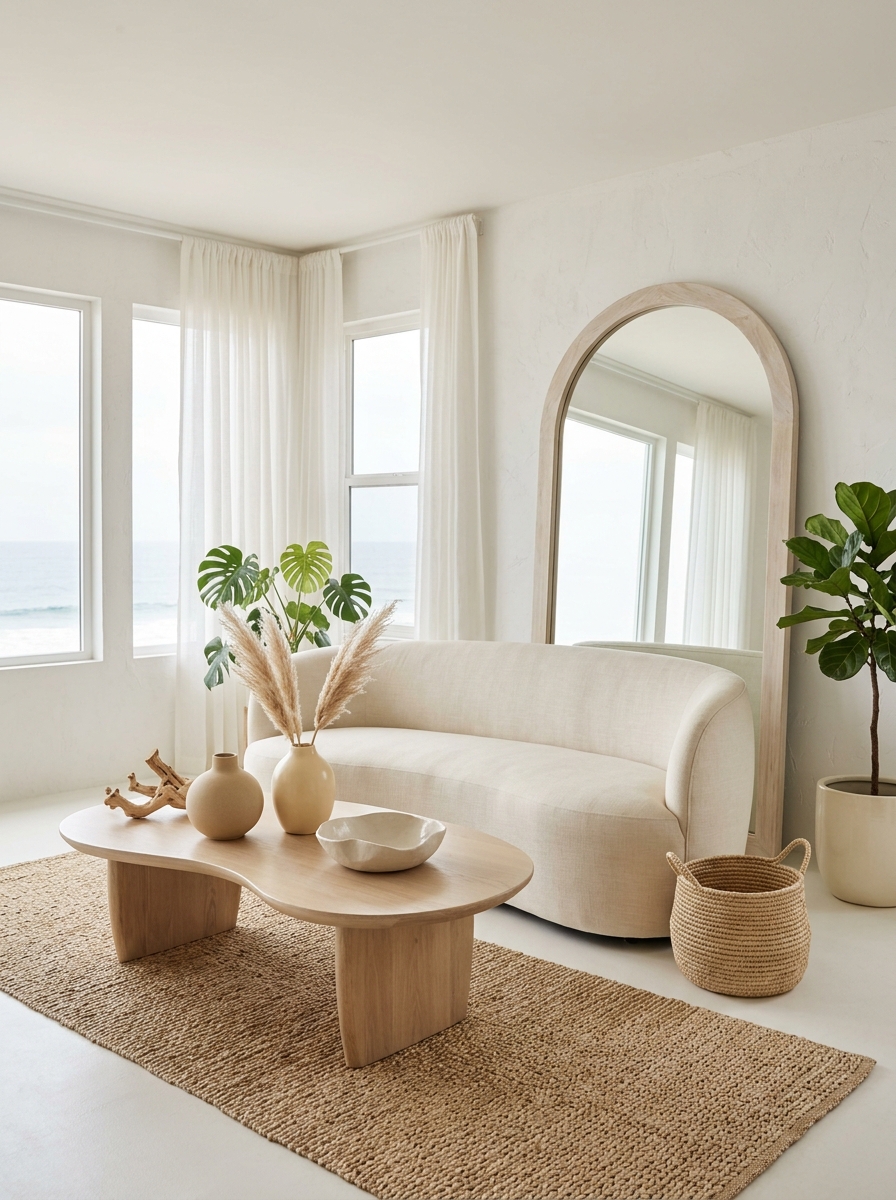
Sharp angles feel too aggressive for coastal spaces. You want that gentle, worn-by-the-waves vibe, which means embracing curves everywhere you can.
Think rounded coffee tables, arched mirrors, curved sofas with soft backs. Even your accessories should have that wind-sculpted quality—ceramic bowls with irregular edges, vases that bulge and taper organically, sculptural pieces that look like they were shaped by nature rather than a factory.
I swapped out my rectangular mirror for an oversized arched one, and the whole room instantly felt softer. It’s like the space can breathe better. Curves slow your eye down as it moves around the room, creating this calm, flowing feeling that straight lines just can’t deliver. And bonus—curved furniture tends to be more conversation-friendly. Everyone naturally angles toward each other instead of sitting in rigid rows.
10. Vintage Glass in Sea-Toned Hues
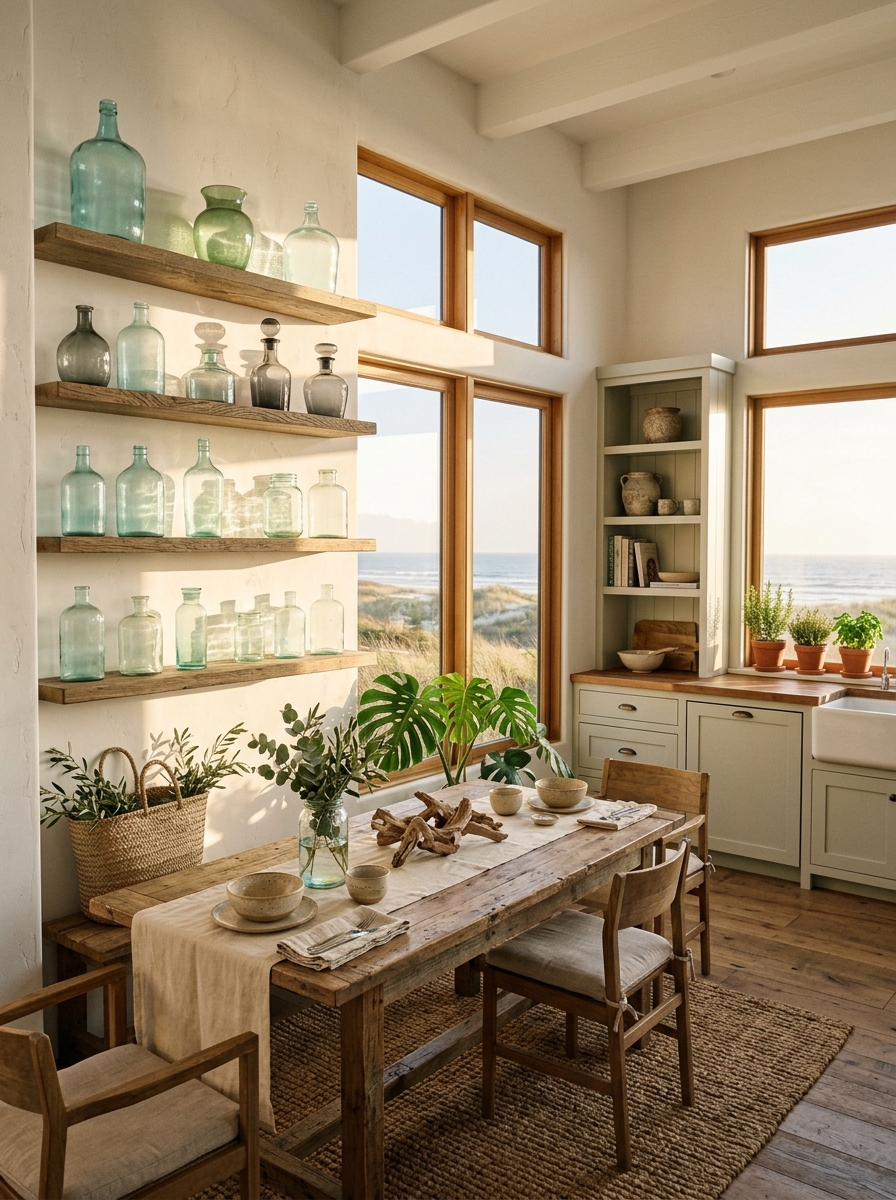
Here’s where you can sneak in actual color without it feeling heavy or themed. Vintage glass in soft aqua, pale green, or smoky gray adds that watery shimmer to your space.
I’m talking old glass bottles, collected vases, vintage apothecary jars—the kind with bubbles and imperfections that catch the light in the prettiest way. Cluster them on windowsills where the sun can shine through, or line them up on open shelving. They create these little moments of color that feel organic and found, not matchy-matchy.
The beauty of vintage glass is that imperfect quality. Modern glass is too perfect, too clear. But old glass has this cloudy, slightly uneven appearance that diffuses light like sea glass does. It brings in coastal color through transparency and refraction rather than solid, heavy pigment. Way more sophisticated than painting an accent wall blue.
11. Architectural Plants Over Fussy Florals
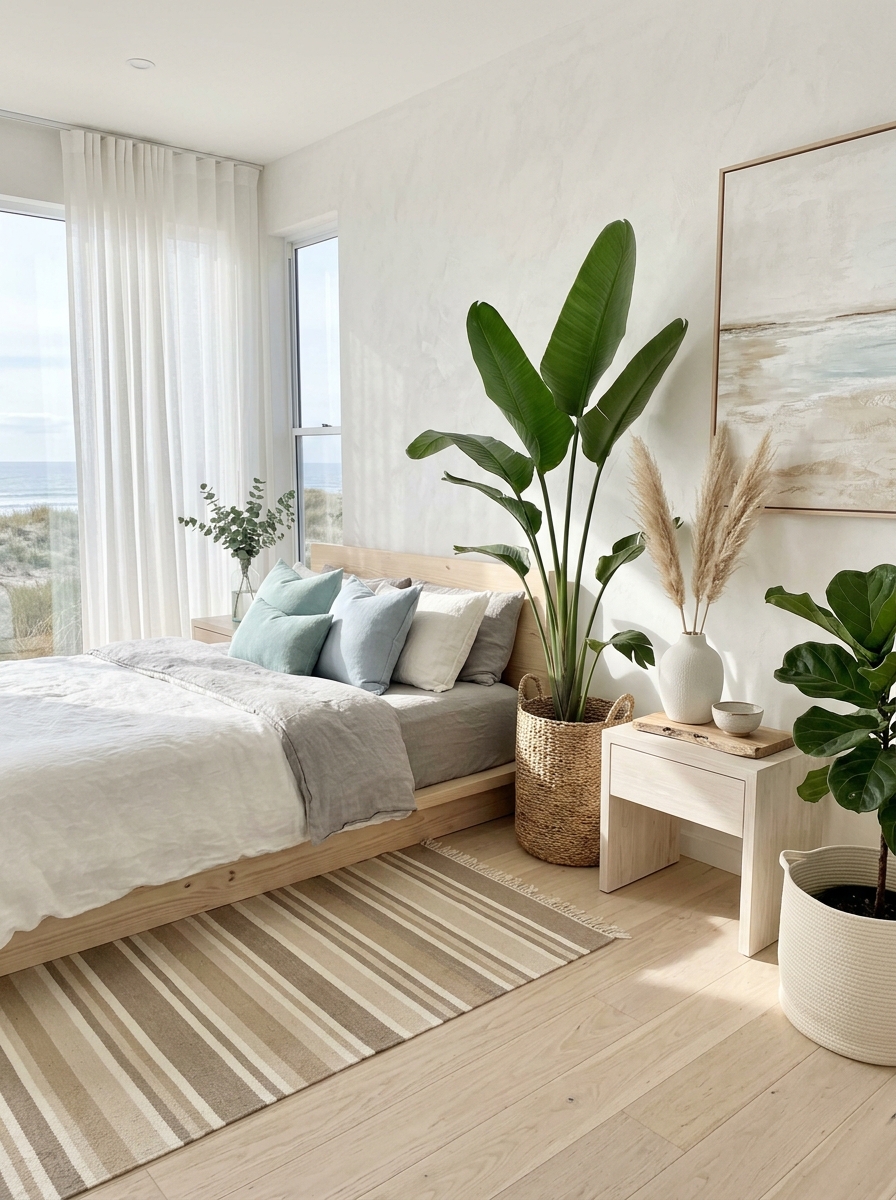
Forget the beach-themed floral arrangements. Coastal spaces call for plants with strong, sculptural silhouettes—think architectural rather than decorative.
I love oversized palms, bird of paradise, or even a dramatic fiddle leaf fig. These aren’t beachy in a literal sense, but they bring that tropical, breezy feeling without being too on-the-nose. Keep them in simple natural fiber baskets or clean ceramic planters—nothing ornate.
The key is scale. You want plants that make a statement, that feel almost like living sculpture. One massive palm in a corner does more for your coastal vibe than a dozen small potted succulents ever could. And dried elements work beautifully too—pampas grass, palm fronds, even twisted branches. They add movement and texture without needing water or fussing over. Just that effortless, slightly wild feeling that says “I live near the ocean and everything grows beautifully here.”
12. Woven Pendant Lights That Cast Beautiful Shadows
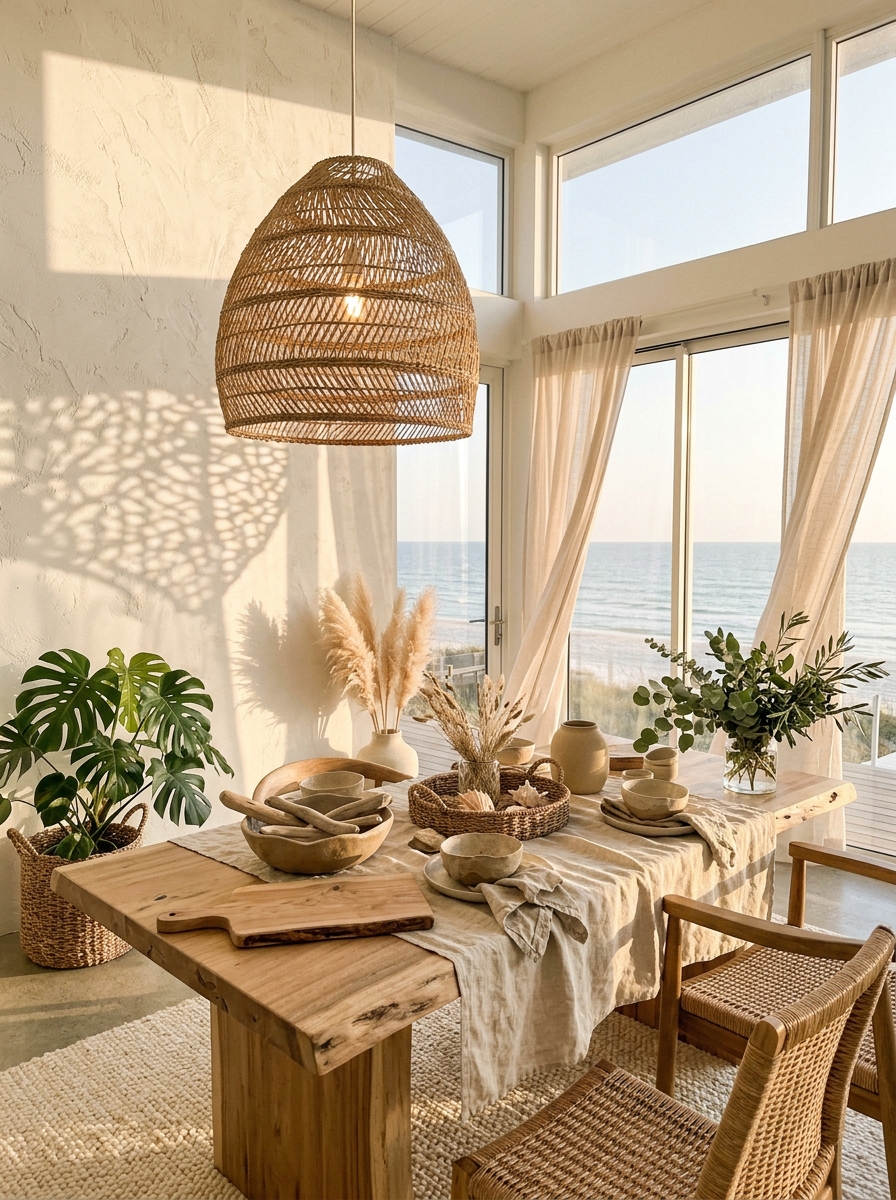
Lighting is where a lot of people default to those awful rope-wrapped fixtures or ship lanterns. Please don’t. Instead, look for oversized woven pendants that filter light through natural materials.
I’m obsessed with those big, blousy rattan or seagrass pendants that hang low over dining tables or in corners. They create the most gorgeous dappled light—like sun filtering through palm fronds. During the day they’re sculptural, and at night they cast these intricate shadow patterns that add so much visual interest.
The texture of woven lighting brings warmth without adding color, which keeps your palette clean. And because they’re made from natural materials, they reinforce that organic, coastal-collected feeling. Hang them at different heights in a cluster for even more drama, or go with one massive statement piece. Either way, they’re doing double duty as both light source and art.
13. Open Shelving With Curated Negative Space
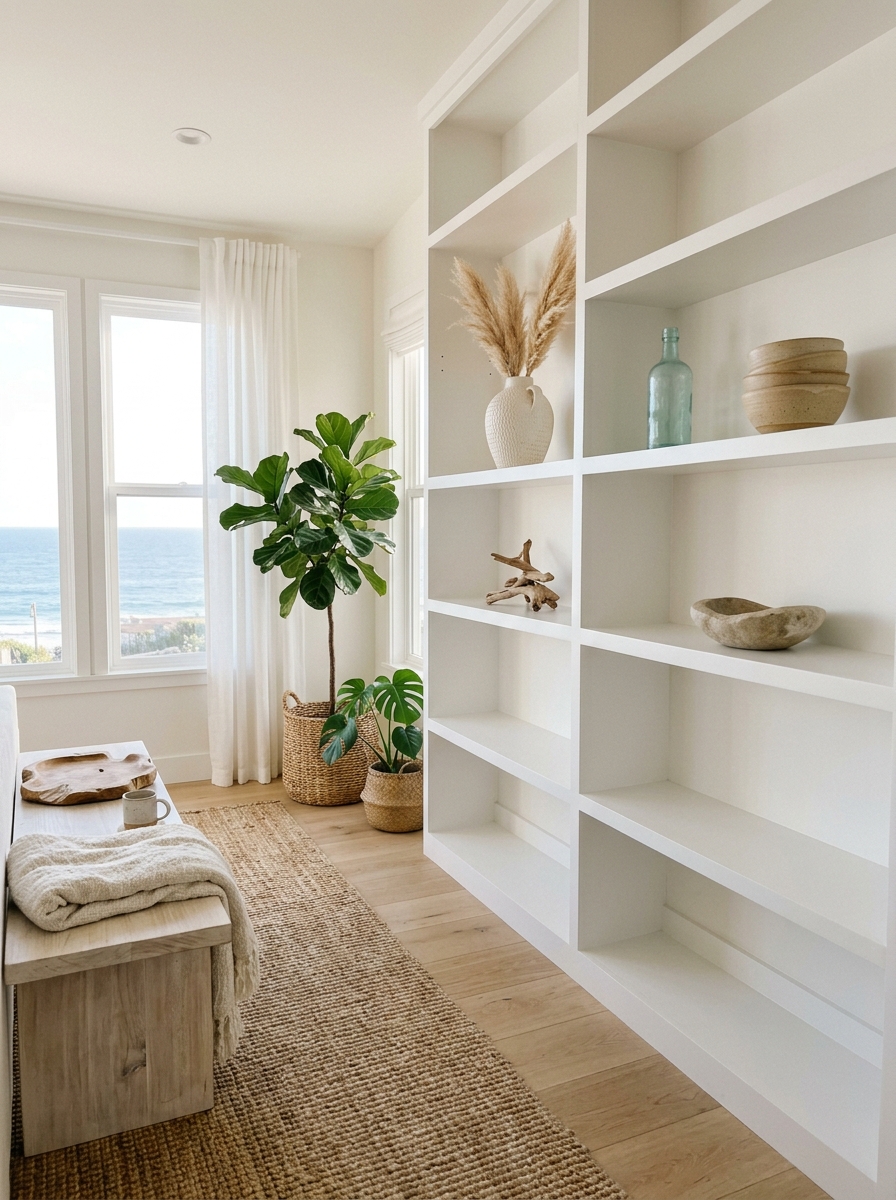
Here’s what makes coastal shelving different: it breathes. Instead of cramming every shelf full, you’re leaving intentional gaps that feel as important as what’s displayed.
I’m talking about floating shelves in pale oak or whitewashed wood, styled with maybe three beautiful objects per shelf instead of ten mediocre ones. A handmade ceramic bowl here. A small driftwood sculpture there. A single stem in a glass bottle. The empty space around each piece lets your eye rest and makes everything feel more special.
This approach mimics how light moves through coastal spaces—unobstructed and free. When you edit down to only pieces you truly love, each one gets its moment. And honestly? It makes dusting so much easier, which is a bonus I didn’t expect to care about but absolutely do. The key is choosing objects with organic shapes and natural materials that reference the coast without screaming “beach house.” Think texture over theme, always.
14. Matte Black Fixtures for Unexpected Contrast
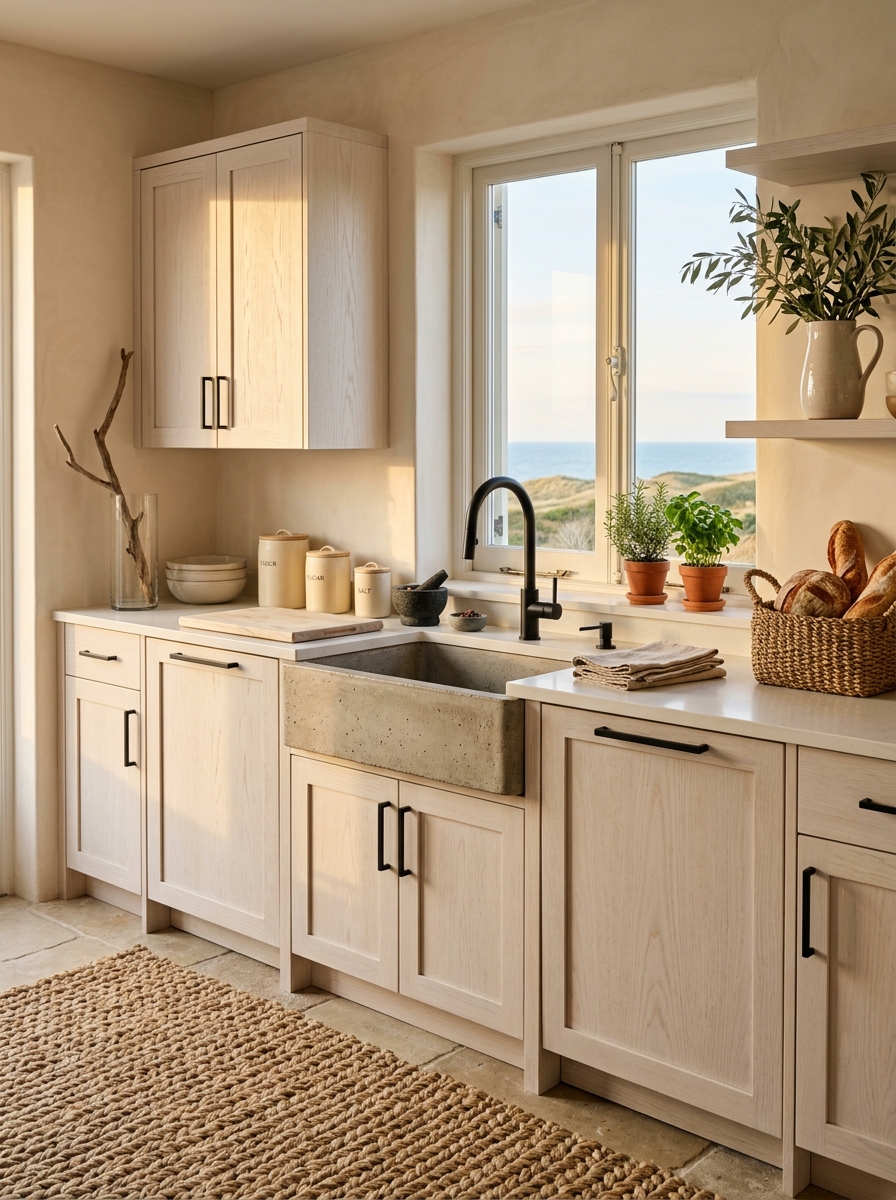
Okay, this one surprised me too. Matte black fixtures in a coastal space sound counterintuitive, but they’re actually the secret ingredient that keeps things from looking too precious or washed out.
When everything is pale wood and white linen and soft neutrals, a few hits of matte black create definition and visual anchor points. I’m talking about cabinet hardware, faucets, light switch plates, curtain rods—small intentional details that add quiet sophistication. It’s that barely-there contrast that makes all your soft textures pop instead of blending into a beige blur.
The key word here is matte. Shiny black reads formal and urban. Matte black feels organic and modern, almost like smooth river stones. It pairs beautifully with raw wood, concrete, and all those natural materials we’re already layering in. Think of it as the punctuation mark your coastal palette didn’t know it needed.
15. Built-In Seating That Hugs the Windows
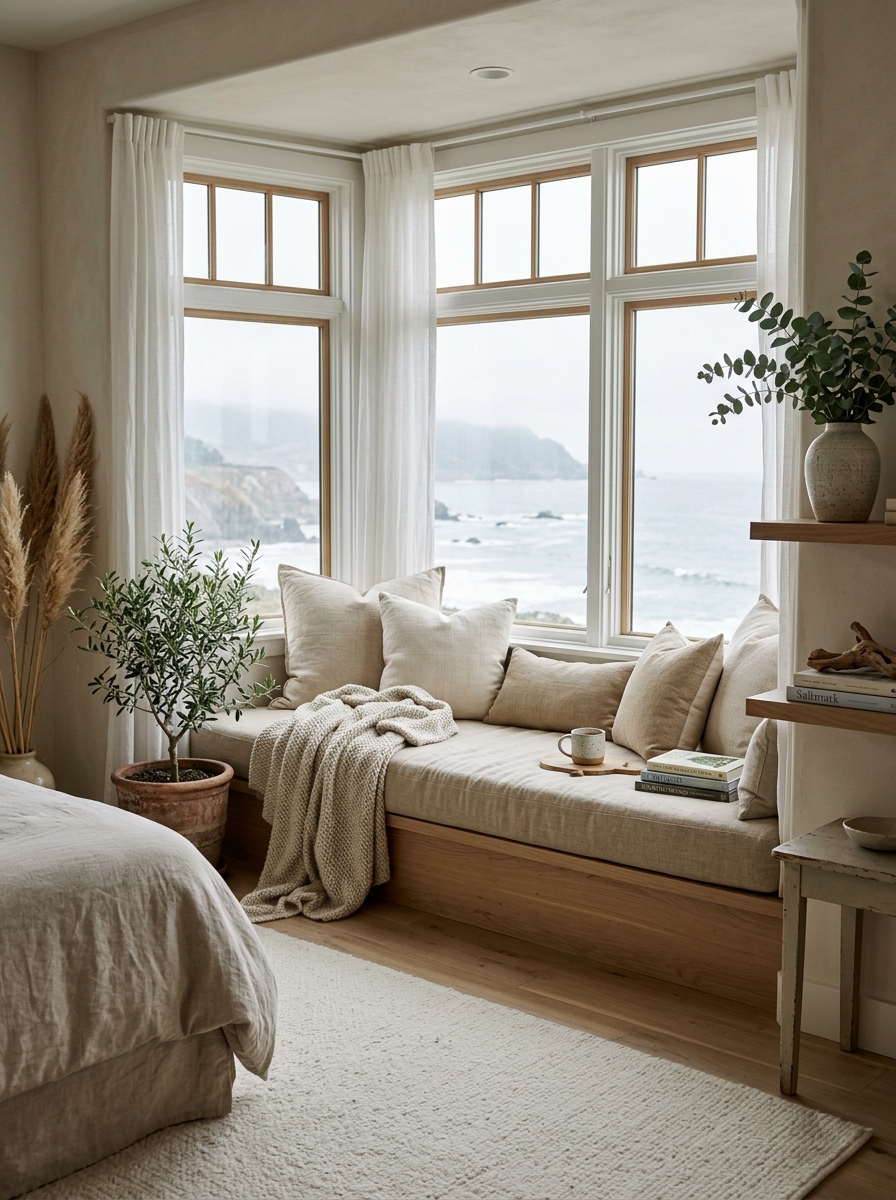
There’s something about built-in window seating that just screams elevated coastal living. It’s that perfect spot where architecture meets comfort, where you can actually sit and watch the weather roll in with a book and a blanket.
I love how built-ins maximize those prime window views without cluttering the floor space with furniture. A cushioned bench in chunky natural linen with a few throw pillows, maybe some hidden storage underneath—it’s functional and beautiful and feels permanent in the best way. It anchors the room while keeping sightlines open and unobstructed.
The coastal angle here is all about orientation toward light and view. You’re literally building the seating around the thing that makes coastal homes special: that connection to what’s outside. Add some simple floating shelves on either side for books or a small plant, keep the cushions in natural fabrics, and suddenly you have the coziest spot in the house that also looks completely intentional and designed.
16. Oversized Mirrors That Multiply the Light
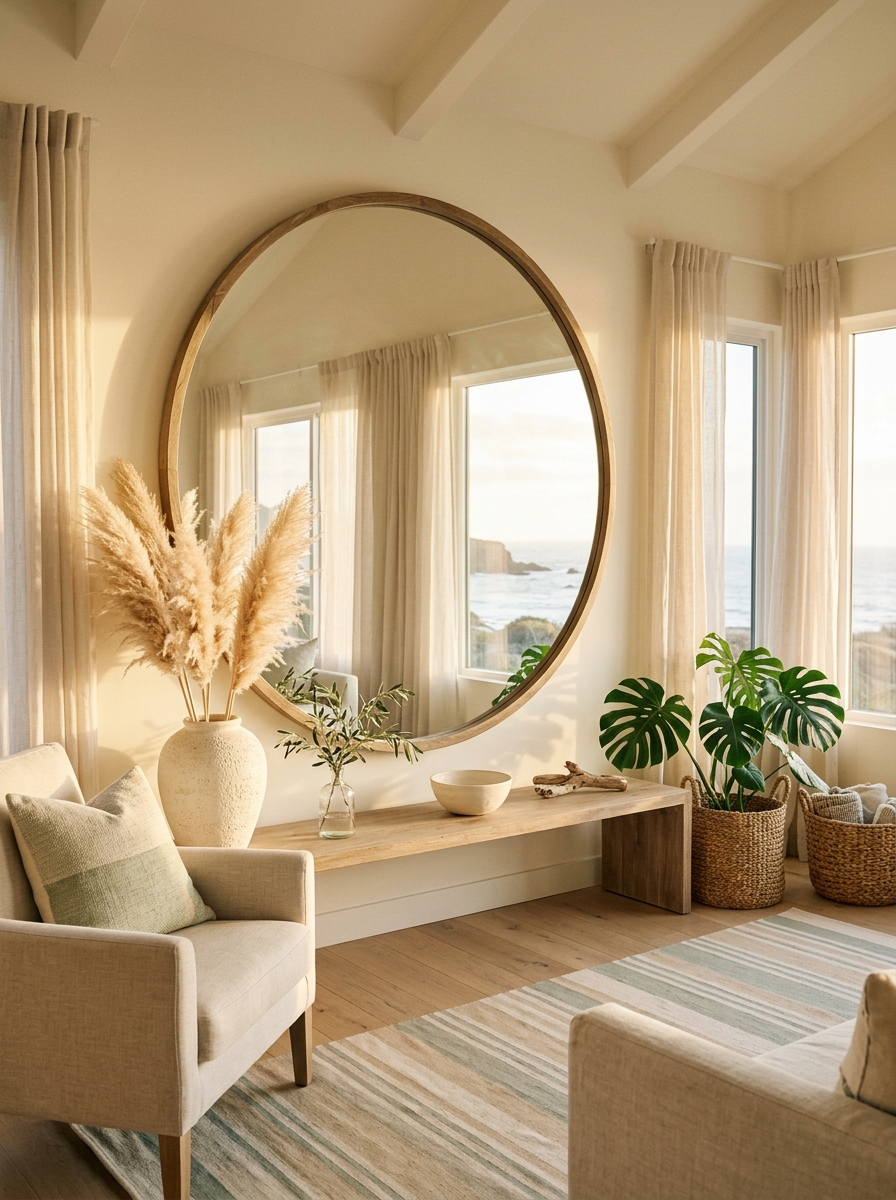
Mirrors in coastal spaces aren’t just decorative—they’re light catchers. And I’m not talking about small accent mirrors. I mean big, statement mirrors that double the brightness and make your space feel twice as open.
The trick is choosing mirrors with simple, organic frames—or no frame at all. I love a large rectangular mirror in bleached oak leaning casually against a wall, or a round mirror with a subtle rope-wrapped frame (yes, rope can work if it’s minimal and modern, not nautical craft-store vibes). Position it opposite a window and watch what happens: suddenly you have light bouncing everywhere, views reflected back, and a sense of depth that makes even small rooms feel expansive.
The coastal connection here is all about amplifying what’s already working in your space—the natural light, the views, the airy feeling. A well-placed mirror basically gives you another window without the construction cost.
17. Handmade Ceramics in Irregular Shapes
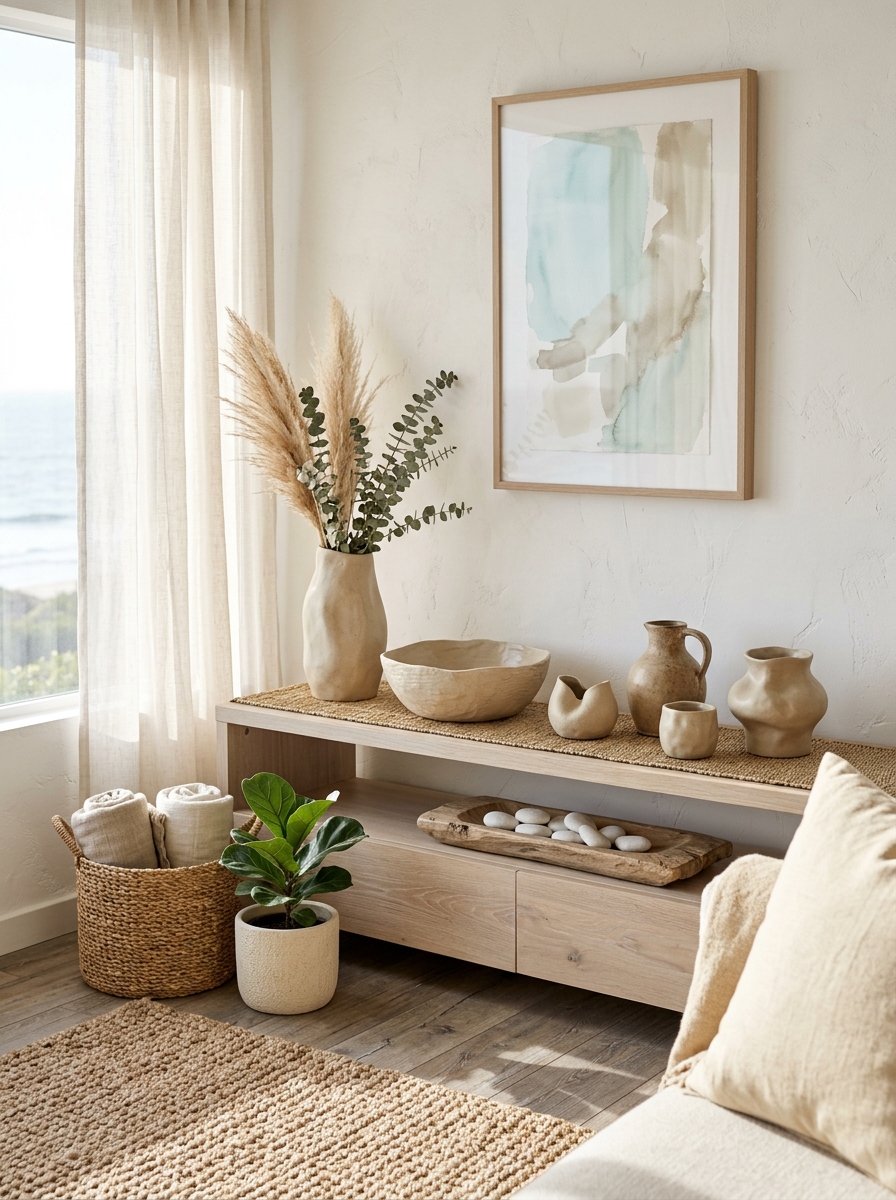
There’s something about imperfect pottery that just feels right in a coastal space. I’m talking about those chunky, hand-thrown bowls and vases with visible fingerprints and wobbly edges. The ones that look like an actual human shaped them, not a machine.
Forget the mass-produced stuff. Hunt down pieces from local potters or ceramicists on Etsy who work with raw, unglazed clay or those gorgeous matte finishes in sand and stone colors. The beauty is in the irregularity—no two pieces match exactly, and that’s the whole point.
I keep a collection of these on open shelving and they add so much warmth. Some hold dried grasses, others sit empty because their shape alone is sculptural enough. They bring that organic, earth-meets-sea feeling without trying too hard. Plus, every time you look at them, you remember there’s a real person behind the work. That connection to craft is what makes a house feel soulful instead of staged.
18. Exposed Ceiling Beams Left Natural
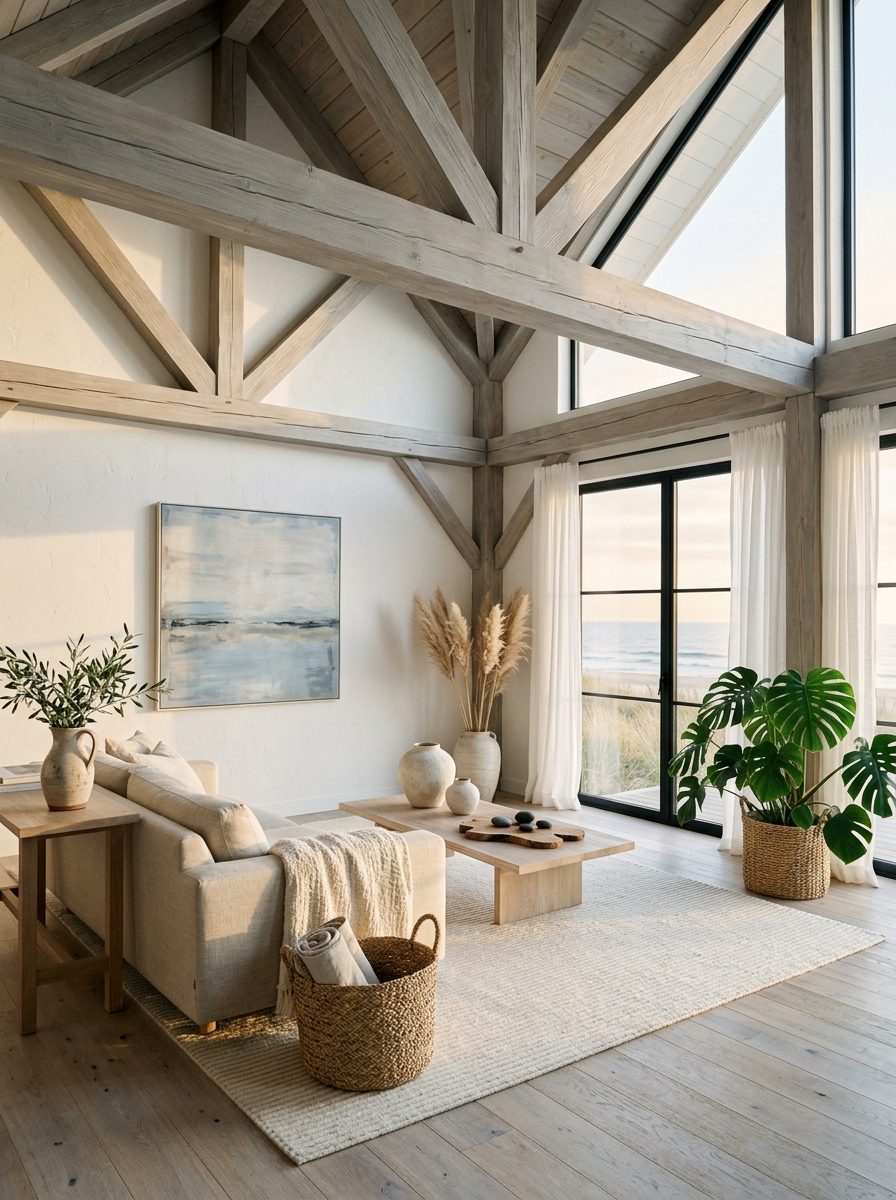
If you’re lucky enough to have ceiling beams, please don’t paint them white. I know, I know—white ceilings are classic. But leaving beams in their natural wood state (or stripping them back if they’re hiding under paint) adds such incredible warmth and architectural character.
The key is making sure the wood tone feels sun-bleached and weathered, not dark and cabin-y. Think driftwood gray or pale honey tones. If your beams are too orange or too dark, a lime wash or whitewash treatment can tone them down while still letting the grain show through.
The contrast between natural beams and crisp white walls is chef’s kiss. It draws your eye up and makes the whole room feel bigger and more dimensional. It’s that perfect balance of rustic and refined—the beams remind you of old beach cottages and boathouses, but in a way that feels elevated and intentional, not kitschy.
19. Soft Upholstery in Undyed Natural Fabrics
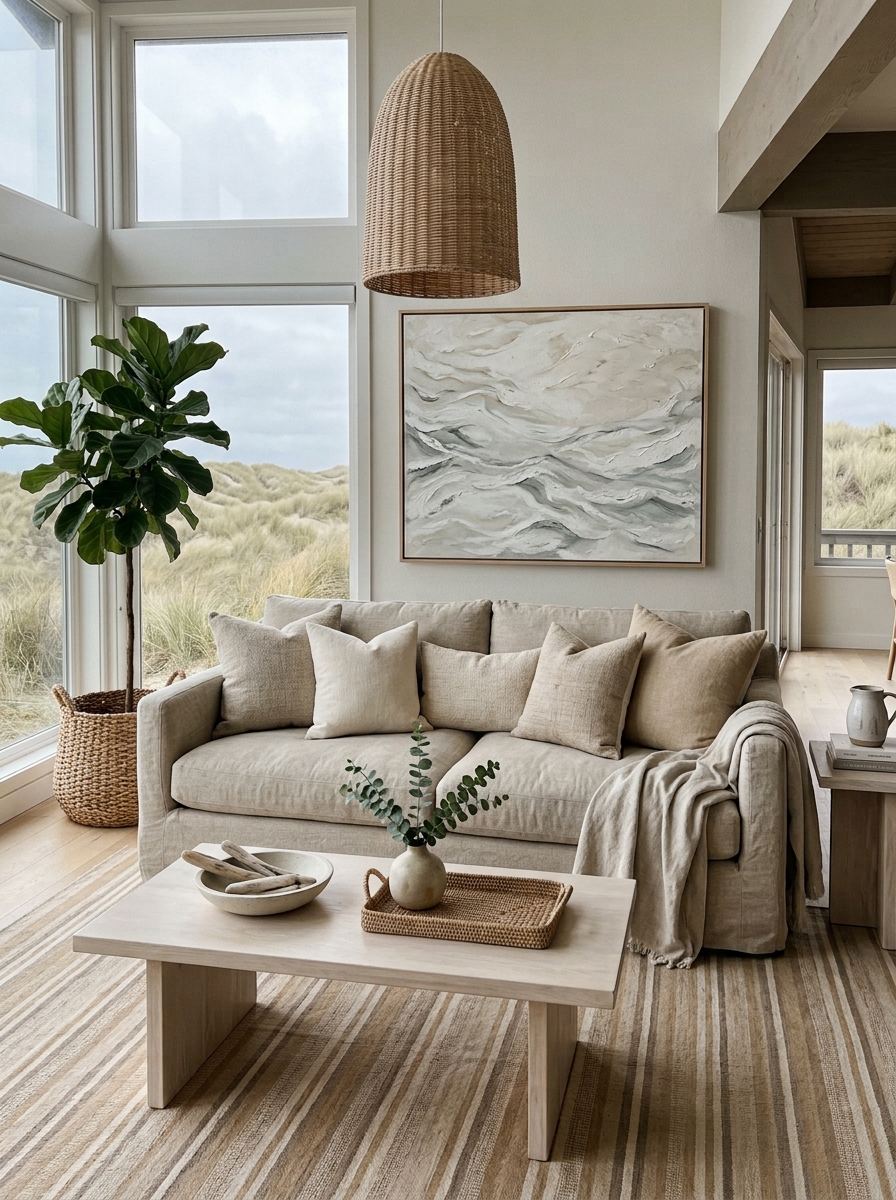
Here’s where coastal decor can go really sophisticated: choosing upholstery in its most natural, unbleached state. I’m obsessed with sofas and chairs covered in raw linen, organic cotton, or hemp in their original creamy, oatmeal, or flax tones.
These fabrics have subtle color variations and texture that you just don’t get with dyed materials. They feel earthy and honest, and they age beautifully—getting softer and more lived-in over time instead of looking worn out. The natural fibers also breathe better in humid coastal climates, which is a practical bonus.
What I love most is how these neutral upholstered pieces become a backdrop for everything else in the room. They don’t compete for attention. Instead, they let your art, plants, and architectural details shine while providing this quiet, comforting foundation. It’s the opposite of that matchy-matchy furniture set energy—this feels curated and calm.
20. Sliding Barn Doors in Weathered Finish
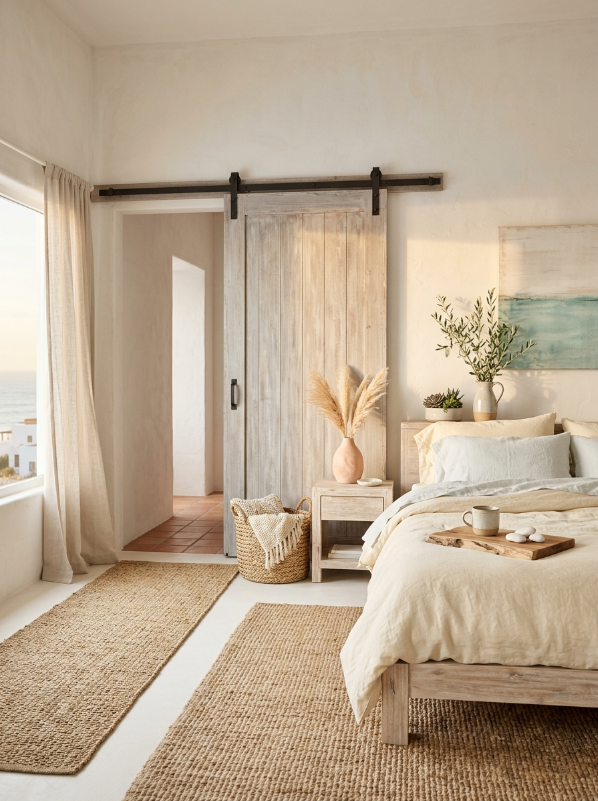
I never thought barn doors would work in coastal design until I saw them done right. The trick is choosing weathered, sun-faded wood in pale gray or silvered tones—not that rustic farmhouse orange-brown everyone was installing five years ago.
When you get the finish right, sliding doors become this beautiful architectural moment. They save space (huge bonus in beach cottages), add texture to plain walls, and create a sense of flow between rooms without the interruption of swinging doors. I especially love them between living areas and bedrooms or closing off a laundry space.
The hardware matters too. Skip the heavy black iron look and go for something sleeker—maybe matte black with clean lines or even brushed brass for warmth. You want it to feel like it belongs in a contemporary coastal home, not a country barn. When these doors are open, they become wall art. When closed, they’re a textural backdrop.
21. Indoor-Outdoor Flooring That Blurs the Boundaries
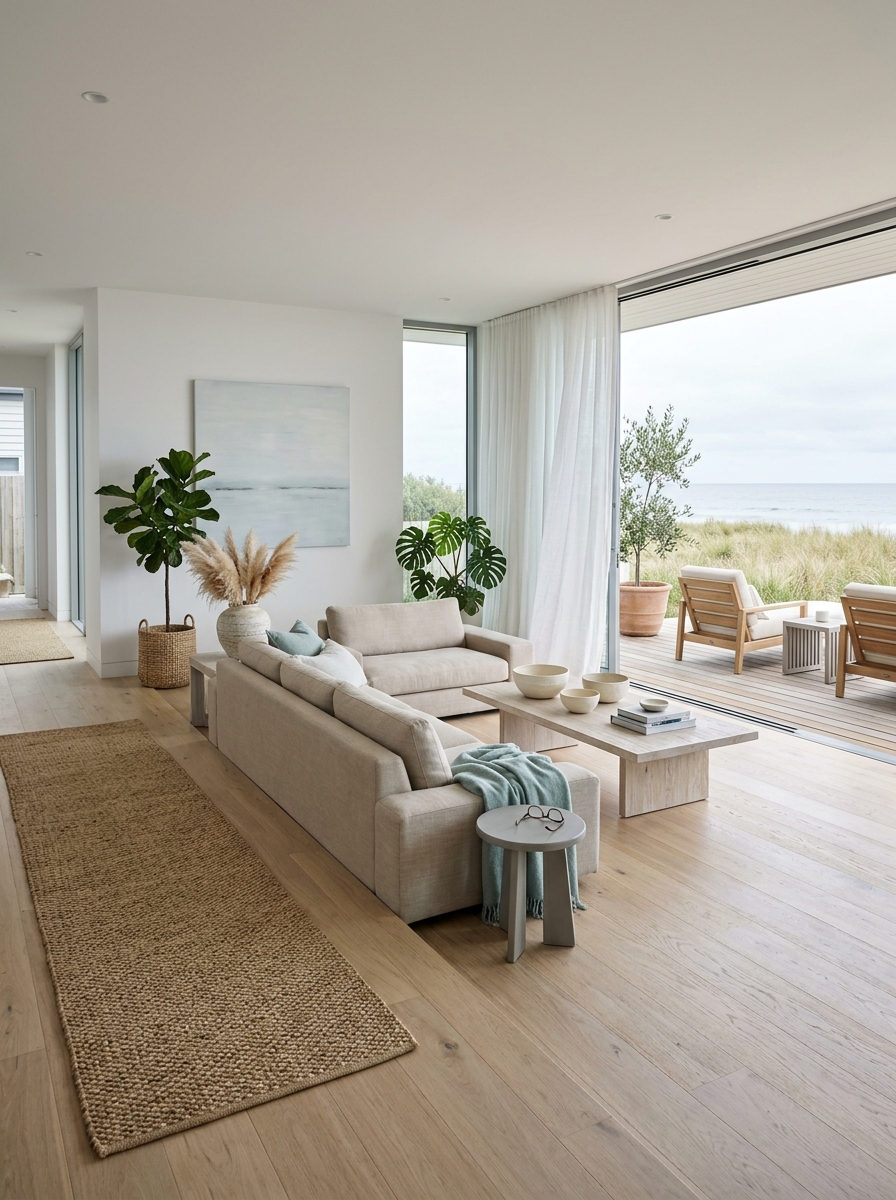
Want to know the secret coastal homes use to make spaces feel twice as large? They treat the floor like it flows right out to the deck.
I’m talking about continuing the same material from inside to outside. Polished concrete that slides under glass doors onto the patio. Wide-plank oak that becomes weathered teak on the terrace. Even large-format tile that looks identical indoors and out.
This one move does something magical to your brain. Suddenly walls feel like suggestions instead of barriers. The ocean breeze doesn’t stop at your threshold. Your living room becomes part of the landscape.
The key is choosing materials that can handle both environments. Porcelain tile that looks like limestone but won’t crack in winter. Sealed concrete with a honed finish that works beautifully inside and weathers gracefully outside. The investment pays off when your 800-square-foot room suddenly feels like 1,600.
And here’s the thing nobody tells you: this trick works even if you don’t have an ocean view. Any outdoor space benefits from this visual continuity.
22. Collected Shells and Stones Displayed Like Museum Pieces
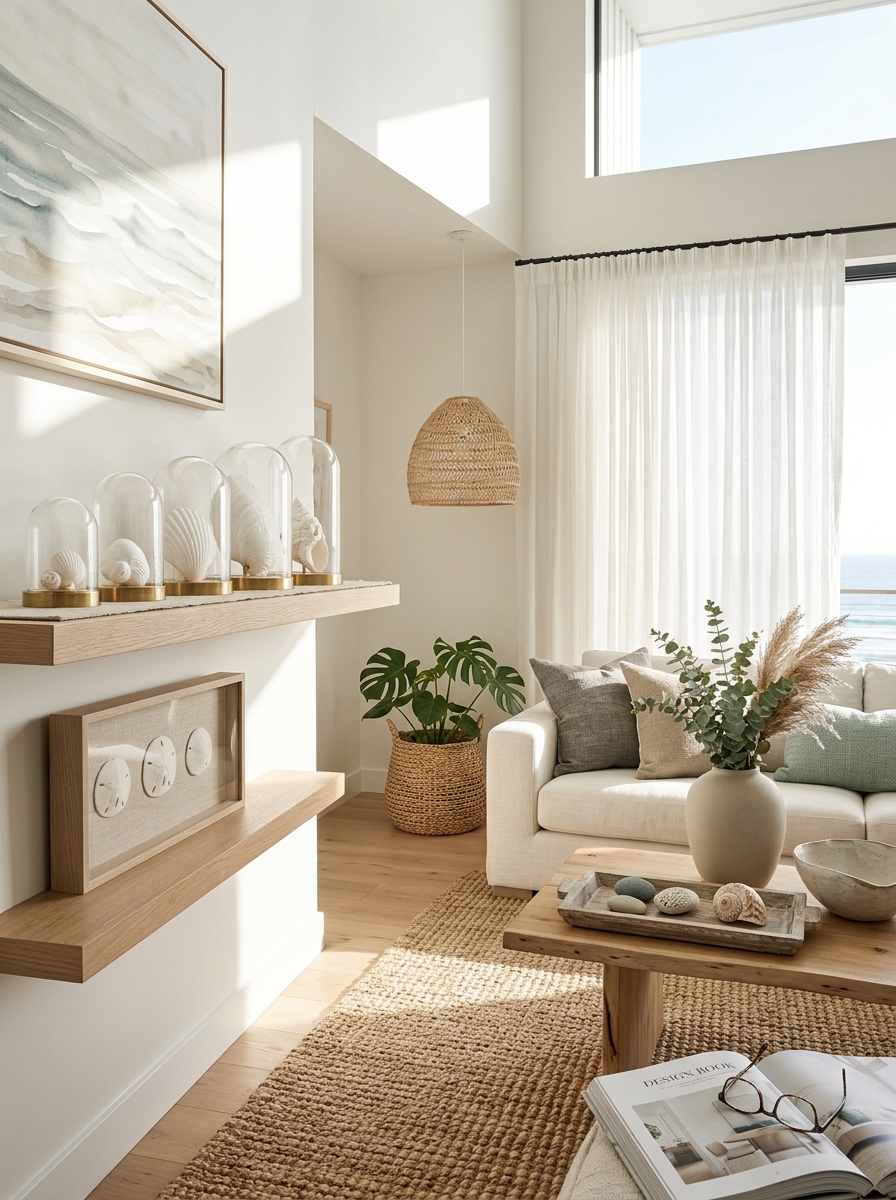
Okay, so you CAN have shells in coastal decor. But we’re not hot-gluing them to picture frames, promise.
The difference is curation and presentation. Think one perfect spiral shell in a glass cloche. A collection of similar stones arranged by gradient on a floating shelf. Five white sand dollars in a shallow ceramic bowl.
I love displaying them like you’d showcase any beautiful natural object. Under glass domes. In shadow boxes with linen backing. Lined up on a marble tray like they’re precious artifacts. Because honestly? They kind of are.
The key is editing ruthlessly. Not every shell makes the cut. You’re looking for unusual shapes, beautiful colors, perfect specimens. And you’re giving them space to breathe.
This approach takes beachy souvenirs and elevates them to sculpture. Your kids’ vacation finds become legitimate decor. That chunk of driftwood you couldn’t leave behind finally has a home that doesn’t scream “gift shop.”
It’s about intention. Thoughtful placement. Treating natural objects with the respect their beauty deserves.
23. Pale Plaster Walls with Subtle Wave-Like Texture
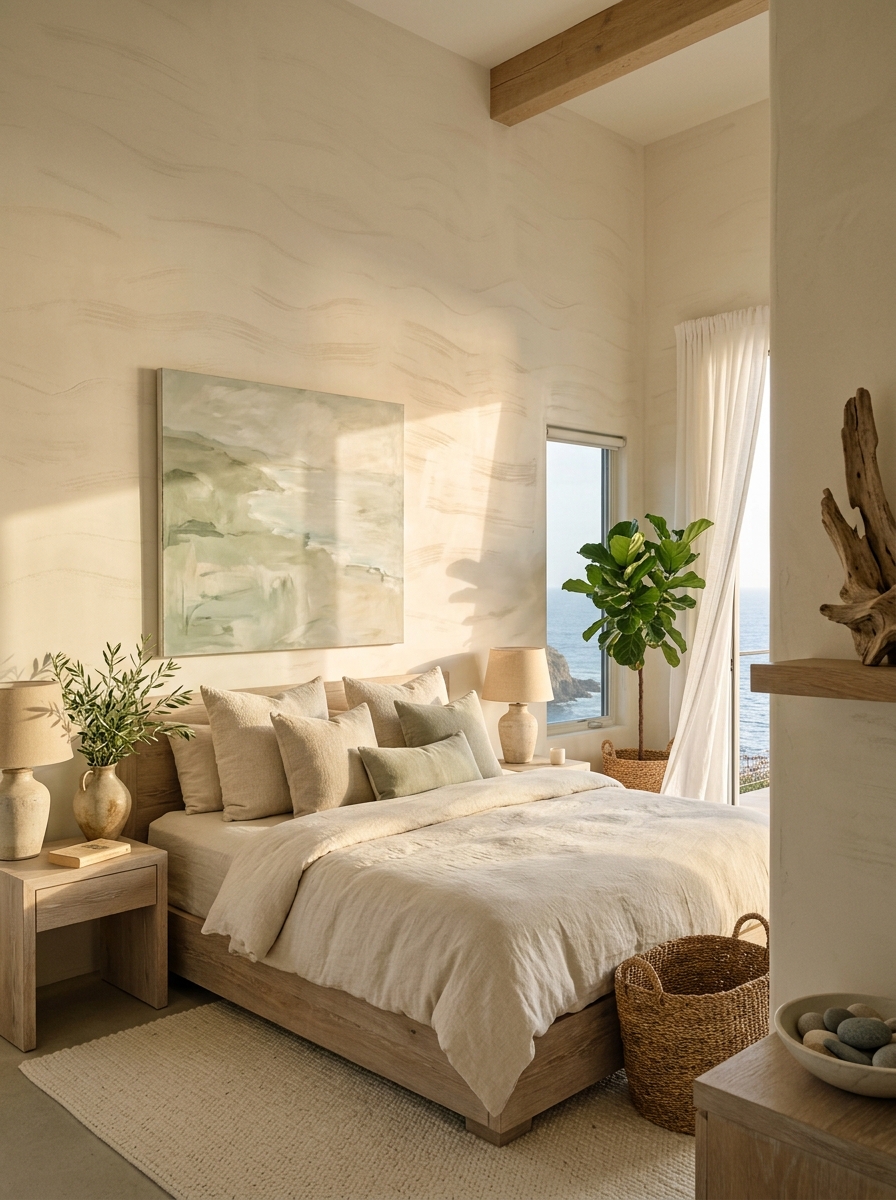
Flat white walls are fine. But textured plaster walls that catch light like moving water? That’s coastal magic.
I’m obsessed with wall finishes that have movement built in. Venetian plaster applied in sweeping horizontal strokes. Lime wash that creates subtle variations in tone. Even modern plaster techniques that leave gentle waves in the surface.
The beauty happens when light hits these walls throughout the day. Morning sun creates shadows in the texture. Afternoon light makes the walls almost glow. It’s constantly changing, just like the ocean.
And the color? Think beyond stark white. Warm ivory with a hint of sand. Pale gray that reads almost lavender in certain light. Creamy beige that feels sun-soaked. These subtle tones give depth without demanding attention.
The application matters too. You want visible trowel marks, not perfectly smooth surfaces. Organic irregularity. Human touch. Walls that feel handcrafted rather than contractor-grade.
It’s an investment, sure. But textured plaster transforms ordinary rooms into something that feels expensive and intentional.
24. Fireplace Surrounds in Raw or Whitewashed Brick
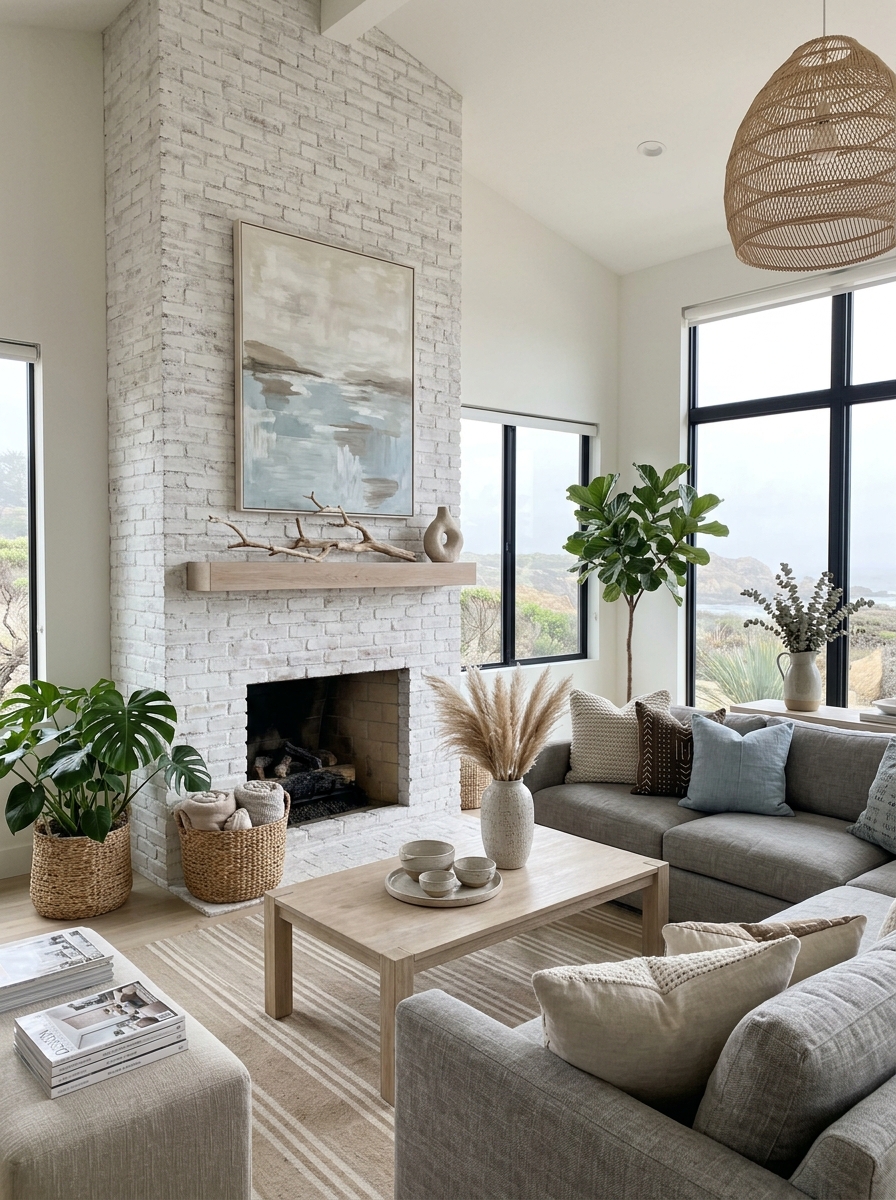
Nothing says “elevated beach house” quite like a fireplace that looks like it’s been there for decades.
I love raw brick left completely natural—those soft salmon and cream tones feel perfectly coastal without trying. Or brick painted in limewash that lets the texture show through. It’s rustic but refined.
The key is avoiding that suburban red-brick look. You want weathered, European, almost crumbling. Brick that looks like it survived a hundred winters by the sea. Mortar that’s slightly recessed so each brick casts a tiny shadow.
Pair it with a simple wood mantel in driftwood gray or leave it bare for modern minimalism. Keep the hearth uncluttered—maybe a stack of birch logs, a sculptural piece of coral, nothing cutesy.
This works whether your home is actually old or brand new. The texture and patina create instant character. And there’s something about gathering around a textured brick fireplace that feels deeply coastal, like you’re in a centuries-old cottage overlooking rocky shores.
It grounds the space. Adds warmth without heaviness.
25. Breakfast Nooks With Built-In Banquettes
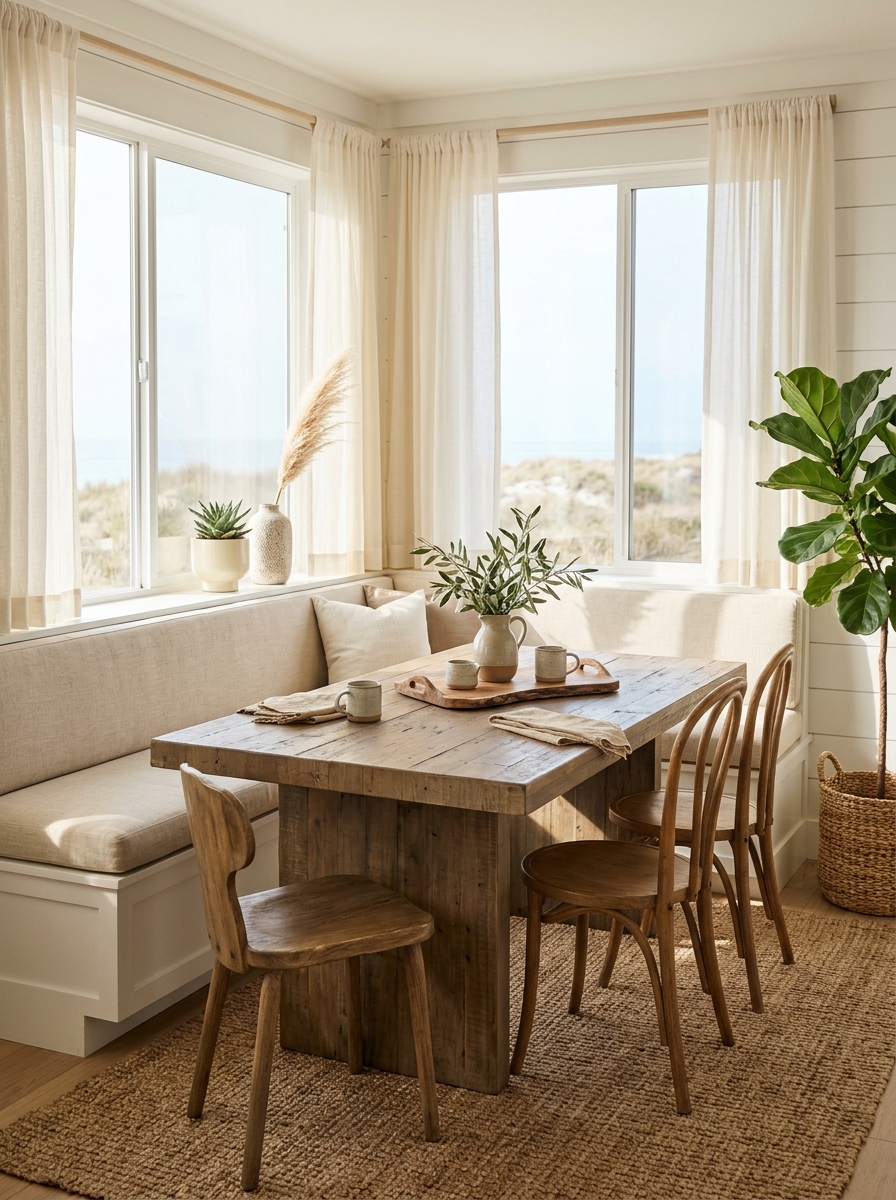
There’s something about a built-in breakfast nook that just feels right in a coastal home. Maybe it’s the way it creates this cozy little retreat while still staying open to the rest of the space. Or how it naturally draws you to sit down with coffee and stare out at the view.
I’m obsessed with banquettes upholstered in natural linen or cotton canvas—nothing too precious or fussy. The cushions should be thick and sink-in comfortable, and the whole setup should feel like it’s always been there. Add a simple wood table (bonus points if it’s on the chunky side) and some mismatched vintage chairs on the opposite side for that collected-over-time look.
The magic happens when morning light floods the space and everything just glows. This is where casual elegance really shines—it’s fancy enough to feel special but relaxed enough that you don’t worry about crumbs. Keep the styling minimal: maybe a small ceramic vase with eucalyptus, salt and pepper shakers that actually look good, and that’s it.
Quick Guide
## Coastal Color Palette Cheat Sheet
Not sure which colors work together without looking like a nautical nursery? Here’s your guide to sophisticated coastal combinations:
Warm Coastal: Sandy beige + warm ivory + driftwood gray + touches of seafoam
Scandinavian Beach: Chalk white + pale sage + natural linen + bleached oak
Mediterranean Minimalist: Creamy white + soft terracotta + warm taupe + sun-bleached pine
California Contemporary: Butter cream + powder blue + stone gray + raw cotton
The Golden Rule: Your base should be 70% neutrals (whites, beiges, grays in warm undertones), 20% natural wood tones, and only 10% actual blue or green accents. This keeps it sophisticated instead of themed. And always choose warm-toned whites over stark cool whites — they feel like sunshine instead of sterile.
Your Home, But Make It Breezy
The truth about coastal style? It’s not about where you live — it’s about how you want to feel. You can bring that light, airy, vacation-mode energy into a city apartment or a landlocked suburb. It’s all in the textures you choose, the way light moves through your space, and keeping things simple and natural instead of cluttered and themed.
Start with just one or two of these ideas. Maybe it’s swapping your coffee table for something in weathered wood, or finally investing in those linen curtains you’ve been eyeing. Small shifts create big mood changes. And remember, the best coastal spaces feel collected and personal, not like everything arrived in the same delivery.
The goal isn’t perfection or matching a magazine spread. It’s creating a space that makes you exhale when you walk in the door. That feels calm and uncluttered and just a little bit like you’re on vacation, even on a random Tuesday. You’ve got 25 ideas here — pick the ones that make you excited and ignore the rest. Your home should feel like you, just with better lighting and way more linen.
Frequently Asked Questions
How do I make coastal decor look expensive instead of kitschy?
Skip anything with literal beach imagery like anchors, sailboats, or shells as decor. Instead, focus on high-quality natural materials like linen, jute, and weathered wood in neutral palettes. Invest in fewer, better pieces rather than lots of themed accessories. The sophisticated coastal look comes from texture and light, not beach souvenirs.
What colors work for coastal decor without using navy and white stripes?
Think sandy beige, warm ivory, driftwood gray, soft sage, pale aqua, and sun-bleached wood tones. The key is warm-toned neutrals as your base (70% of the room) with very subtle blue or green accents (only 10%). This creates that breezy coastal feeling without looking like a nautical theme park.
Can I do coastal style in a home that’s nowhere near the beach?
Absolutely! Coastal style is about creating a feeling, not a literal location. Focus on maximizing natural light, choosing airy fabrics like linen, and incorporating organic textures like jute and weathered wood. The vibe comes from the materials and palette you choose, not your zip code.
What’s the difference between coastal and nautical decor?
Nautical decor is literal and themed — think anchors, rope, navy stripes, and sailing references. Coastal decor is subtle and sophisticated, capturing the feeling of the beach through natural materials, soft neutral colors, organic textures, and an emphasis on light and airiness. Coastal suggests the ocean; nautical depicts it.
What are the best budget-friendly ways to add coastal style?
Start with textiles: swap in linen curtains or pillow covers, add a chunky jute rug, or layer in cream and sand-toned throws. Paint is inexpensive and transformative — choose warm whites or soft beiges. Bring in natural elements like driftwood branches or pampas grass in simple vases. These small changes create big impact without the big price tag.