24 Dreamy Mid-Century Modern Decor Ideas to Transform Your Space
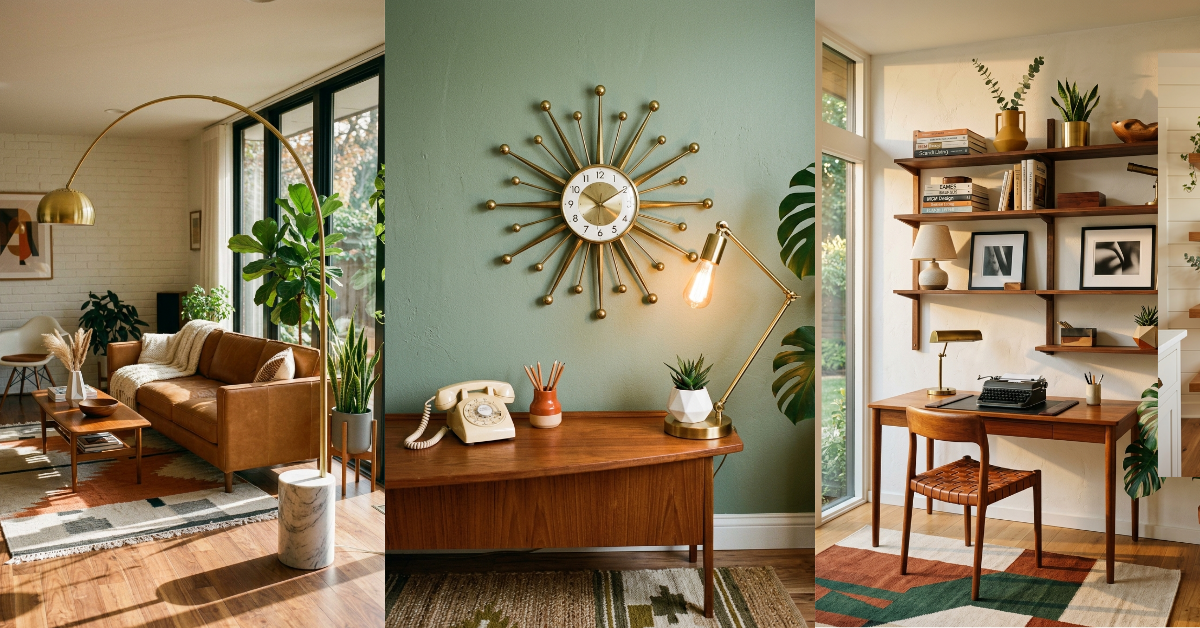
You know that feeling when you walk into a room and everything just feels right? The furniture has those gorgeous tapered legs, the wood glows warm and inviting, and there’s this perfect balance between cozy and sophisticated. That’s mid-century modern magic. But here’s the thing — you don’t need a massive budget or a degree in design history to bring this timeless style into your home. Whether you’re starting from scratch or just want to add a few iconic touches to your existing space, MCM design is surprisingly flexible. It plays well with what you already own. It makes small rooms feel bigger and boring corners feel intentional. And the best part? You can find pieces at every price point, from vintage scores at the thrift store to splurge-worthy replicas that’ll last decades. I’ve rounded up 24 ways to weave mid-century modern vibes into your real life — not a museum, not a showroom, just your actual home. Let’s get into it.
1. Start with an Iconic Lounge Chair
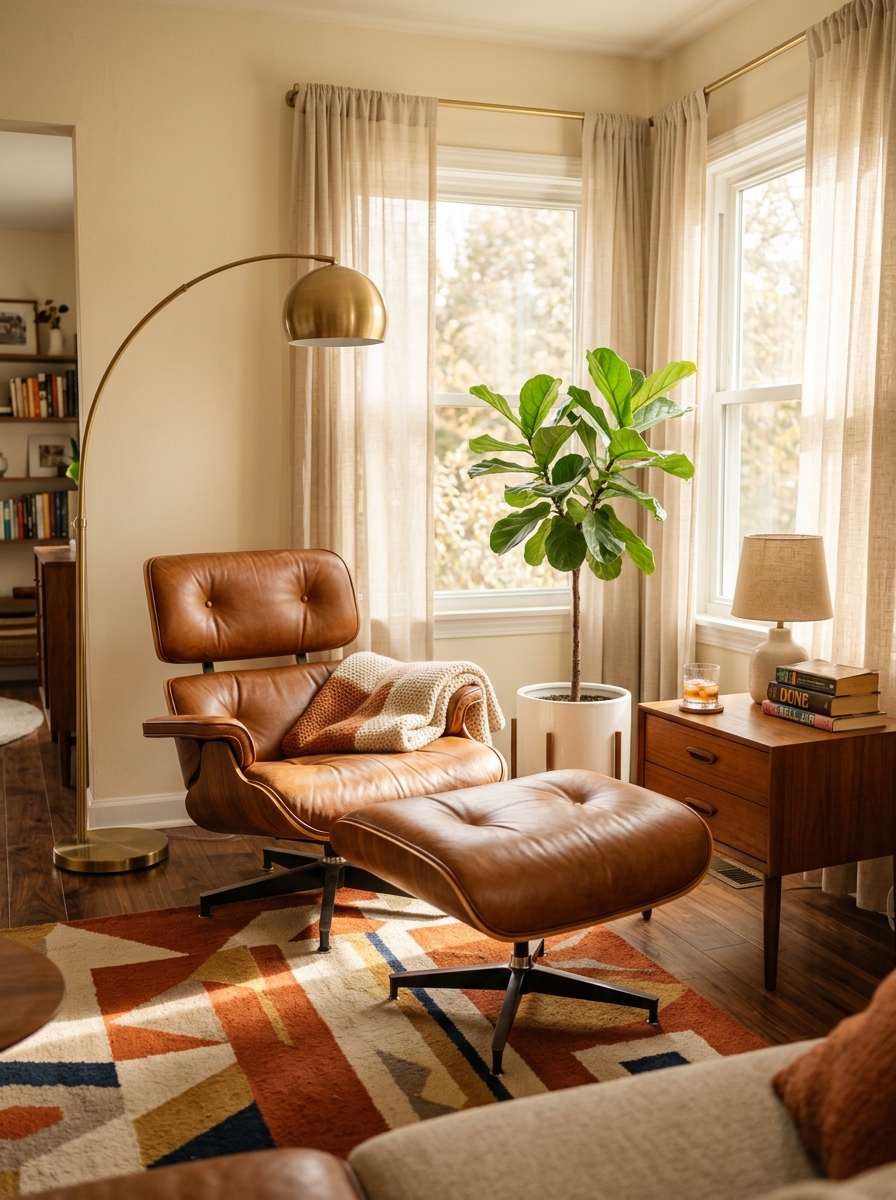
The Eames lounge chair isn’t just furniture — it’s basically a work of art that you get to sit in. And yes, the real deal costs as much as a used car, but hear me out. You can find beautiful replicas that capture that same sculptural vibe without the heart-stopping price tag. The magic is in those curved plywood shells and buttery leather cushions that somehow look both relaxed and impossibly chic.
Place one in a corner with a floor lamp arching over it, and suddenly you have a reading nook that makes you actually want to read. The rich wood tones anchor a room while the low profile keeps things feeling open and airy. It’s one of those pieces that works in a living room, a bedroom corner, or even a home office if you’ve got the space.
What I love most is how this chair plays with other styles. Pair it with a modern geometric rug, add a vintage side table, throw in some plants, and you’ve got layers. It doesn’t scream “I’m trying really hard to be mid-century.” It just whispers good taste.
2. Let a Teak Credenza Steal the Show
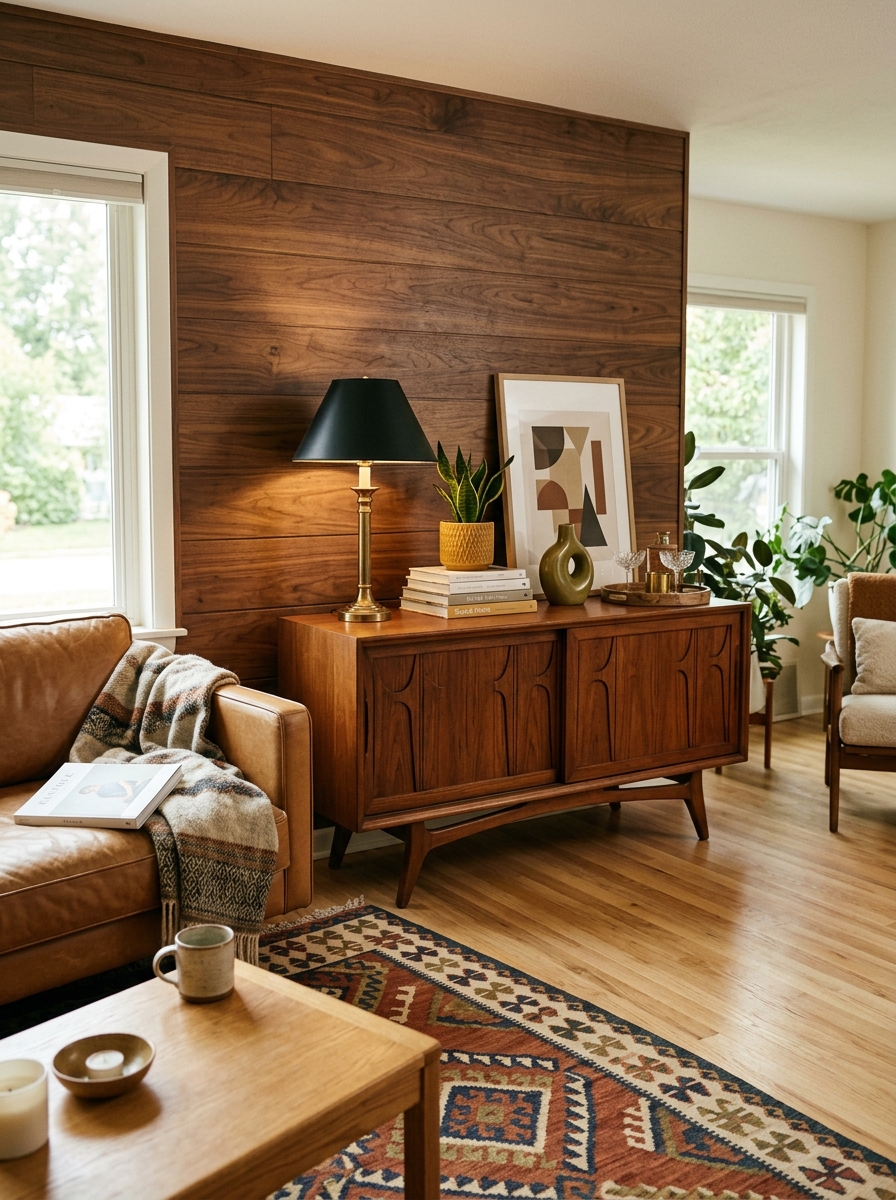
If you’re going to invest in one piece of vintage mid-century furniture, make it a teak credenza. These low-slung beauties are workhorses disguised as showpieces. They hide all your clutter — DVDs, board games, that tangle of charging cables — while displaying your pretty things up top. The sliding doors, tapered legs, and warm wood grain are classic MCM.
Hunt for them at estate sales, vintage shops, or even Facebook Marketplace. You’ll find them in every condition from “needs love” to “museum quality,” and honestly, a few dings just add character. The wood develops this gorgeous patina over time that you can’t fake. Style the top with a mix of heights — a tall ceramic vase, a small succulent in a brass planter, some art books stacked horizontally, maybe a vintage record player if you’re feeling it.
These credenzas work as media consoles, dining room buffets, or entryway storage. They’re so versatile that you’ll probably move yours from room to room over the years. And that’s the beauty of good design — it adapts to your life instead of demanding you adapt to it.
3. Add a Starburst Clock for Instant Retro Charm
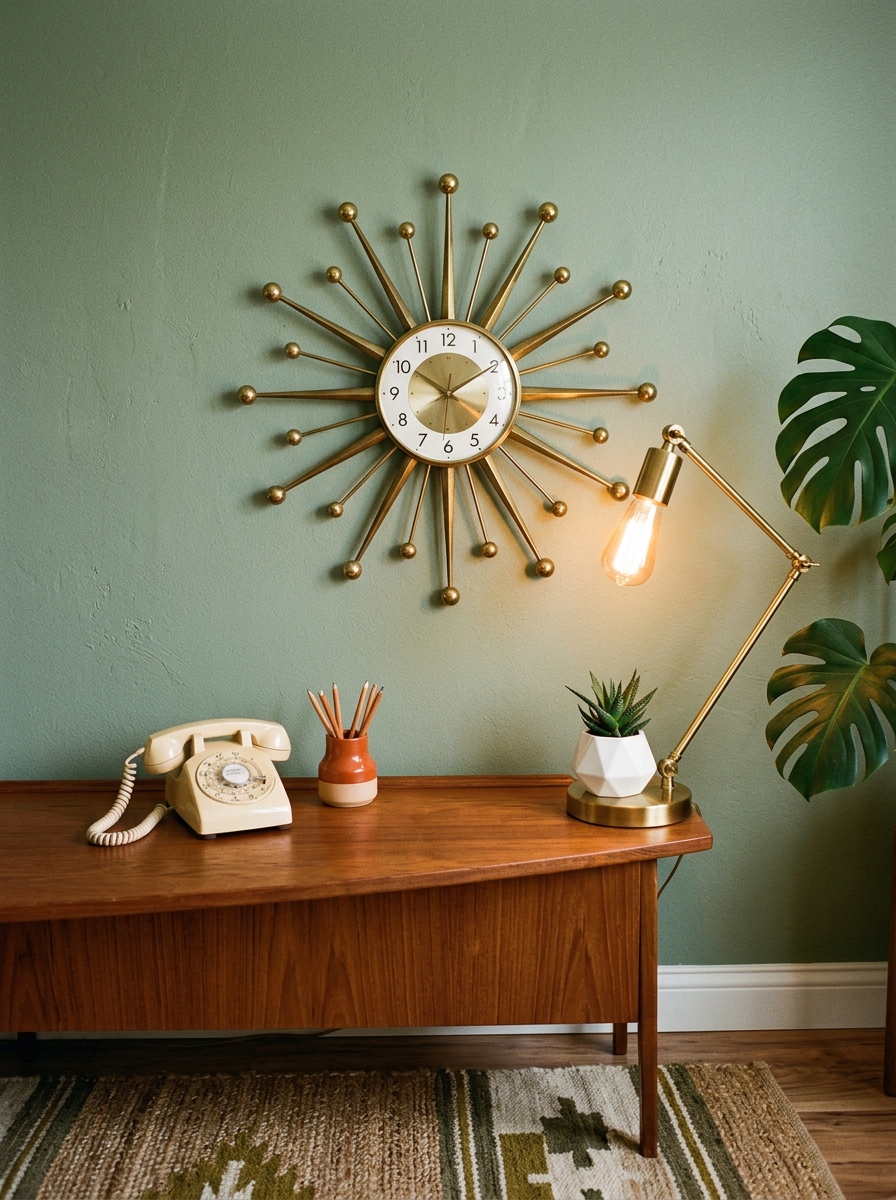
There’s something about a starburst clock that just screams mid-century without saying a word. Maybe it’s those pointy rays shooting out in all directions like a cheerful little sun. Maybe it’s the way it turns a blank wall into something special without any commitment or holes beyond the single nail you need to hang it. These clocks are the easiest, most affordable way to dip your toe into MCM style.
You can find them everywhere from Target to Etsy, in finishes like brass, walnut, or black metal. The key is choosing one with enough visual weight for your wall — too small and it disappears, too big and it overwhelms. I like them best in entryways where you actually need to check the time before running out the door, or above a credenza or desk where they add vertical interest.
And here’s the secret: even if the rest of your room isn’t particularly mid-century, a starburst clock nods to the era without forcing a full commitment. It plays surprisingly well with farmhouse, boho, even minimalist spaces. It’s like the friend who gets along with everyone at the party.
4. Create Conversation Areas with Low-Profile Seating
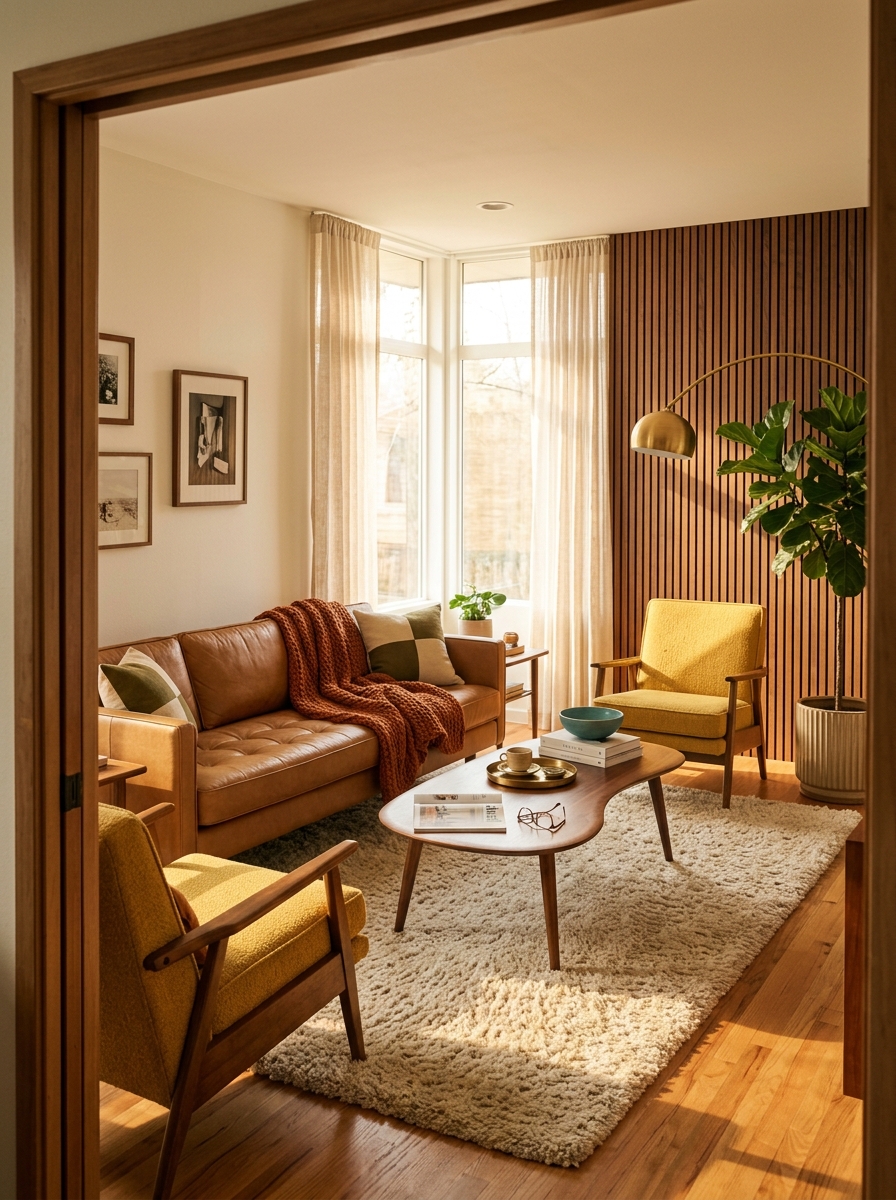
Mid-century modern furniture sits low and long, and that’s not just a style choice — it’s a vibe. Low-slung sofas and chairs make your ceilings feel taller and your rooms feel more open. They invite you to actually sit and stay awhile instead of perching awkwardly on the edge. When you’re arranging your living room, think about creating intimate conversation groupings rather than lining everything up against the walls.
Pull your sofa away from the wall a bit. Angle two chairs toward each other with a small side table between them. Add a coffee table that’s substantial but not bulky — something with tapered legs or a sculptural base. The goal is to create a space that feels inviting and intentional, where people naturally gather and talk instead of all facing the TV like it’s a doctor’s waiting room.
Layering is everything here. A low leather sofa gets even better with a few textured throw pillows and a chunky knit blanket. The area rug should be big enough that at least the front legs of all your furniture sit on it. This grounds everything and makes the whole arrangement feel cohesive. And don’t forget the lighting — a floor lamp with an arcing arm can define the space without taking up precious square footage.
5. Bring in a Sculptural Floor Lamp
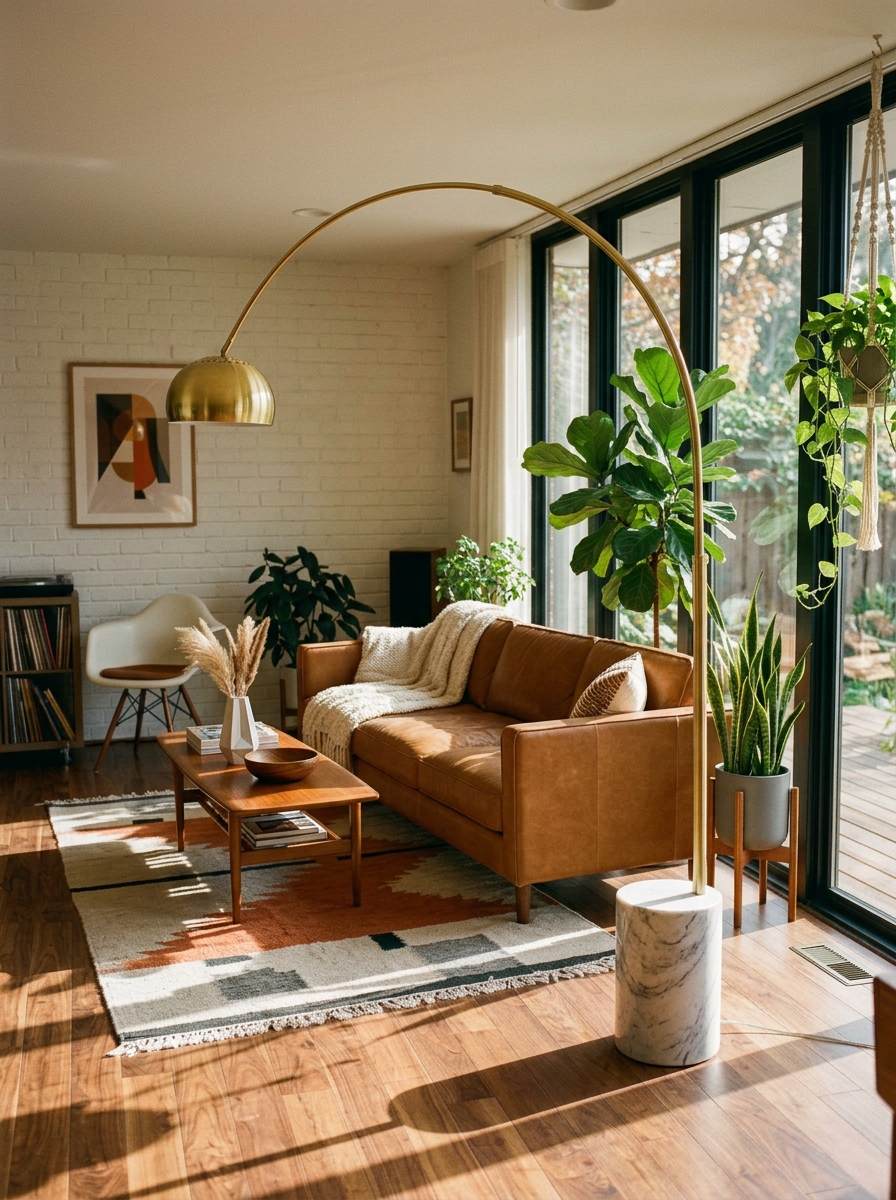
Lighting is everything in mid-century design, and a sculptural floor lamp isn’t just functional—it’s a showstopper. Think arc lamps that curve dramatically over a sofa or tri-pod designs with tapered wooden legs and cone shades. These pieces cast the perfect warm glow while adding serious personality.
I love how a good floor lamp creates layers of light in a room. It softens those clean lines and makes everything feel more inviting after dark. Look for brass or black metal finishes paired with wood accents—that mix of materials is so quintessentially MCM.
Place your lamp where it can shine, literally. Next to a reading chair or arching over a low sofa creates that cozy mid-century lounge vibe. The shadows these sculptural pieces cast are just as beautiful as the lamp itself. It’s like having functional art that makes your space glow.
6. Layer in Geometric Textiles and Throw Pillows
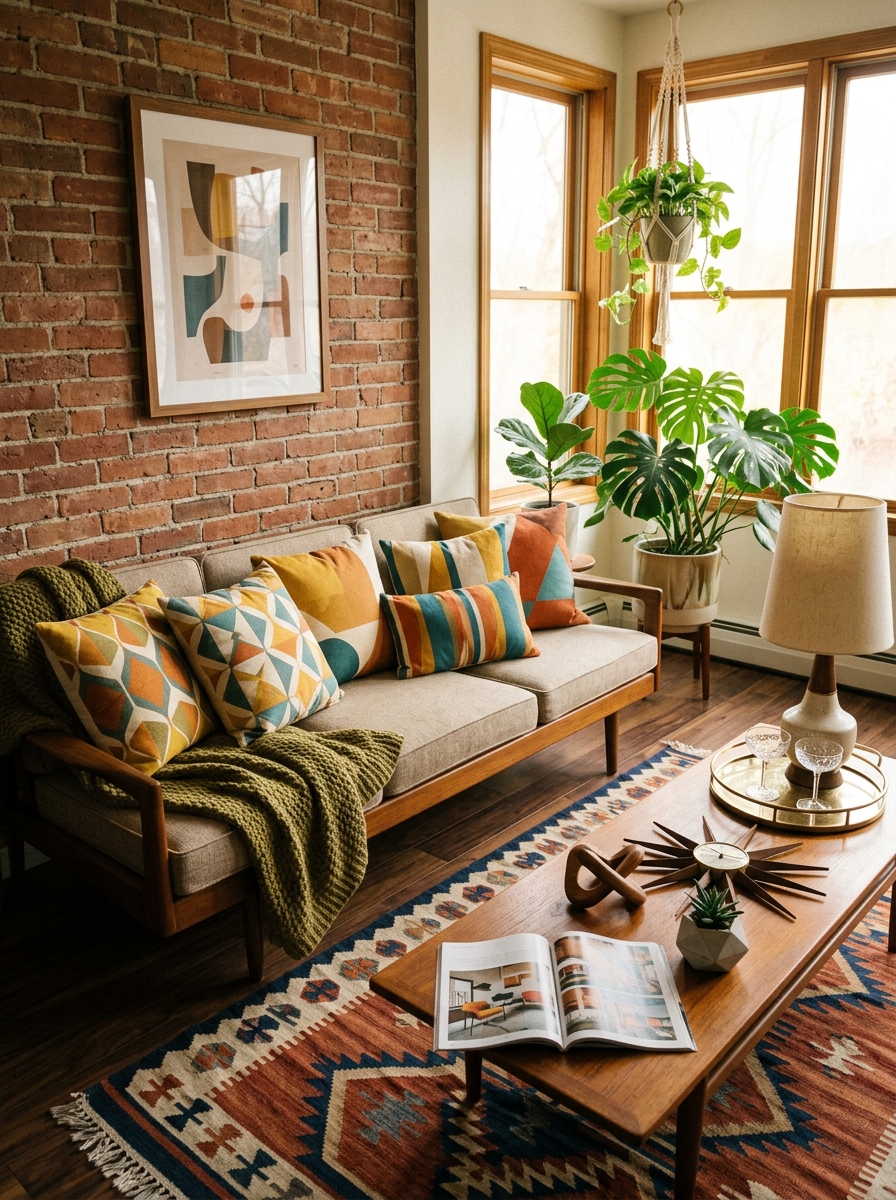
Mid-century modern isn’t all hard edges and wood—you need softness too! Geometric textiles are where you can play with pattern and color without overwhelming the clean aesthetic. Think throw pillows with atomic patterns, bold stripes, or abstract shapes in that classic MCM color palette.
I’m obsessed with mixing textures here. A nubby linen pillow next to a smooth velvet one in mustard yellow, maybe a graphic black-and-white pattern thrown in for contrast. It’s like creating little moments of visual interest that your eye can travel across.
The key is keeping it intentional—not too matchy, but definitely coordinated. Three to five pillows on a sofa is the sweet spot. Choose patterns that echo the era: sunbursts, boomerangs, abstract geometrics. And don’t forget a cozy throw blanket draped casually over the arm. That lived-in touch makes everything feel less museum, more home.
7. Style Open Shelving with Curated Displays
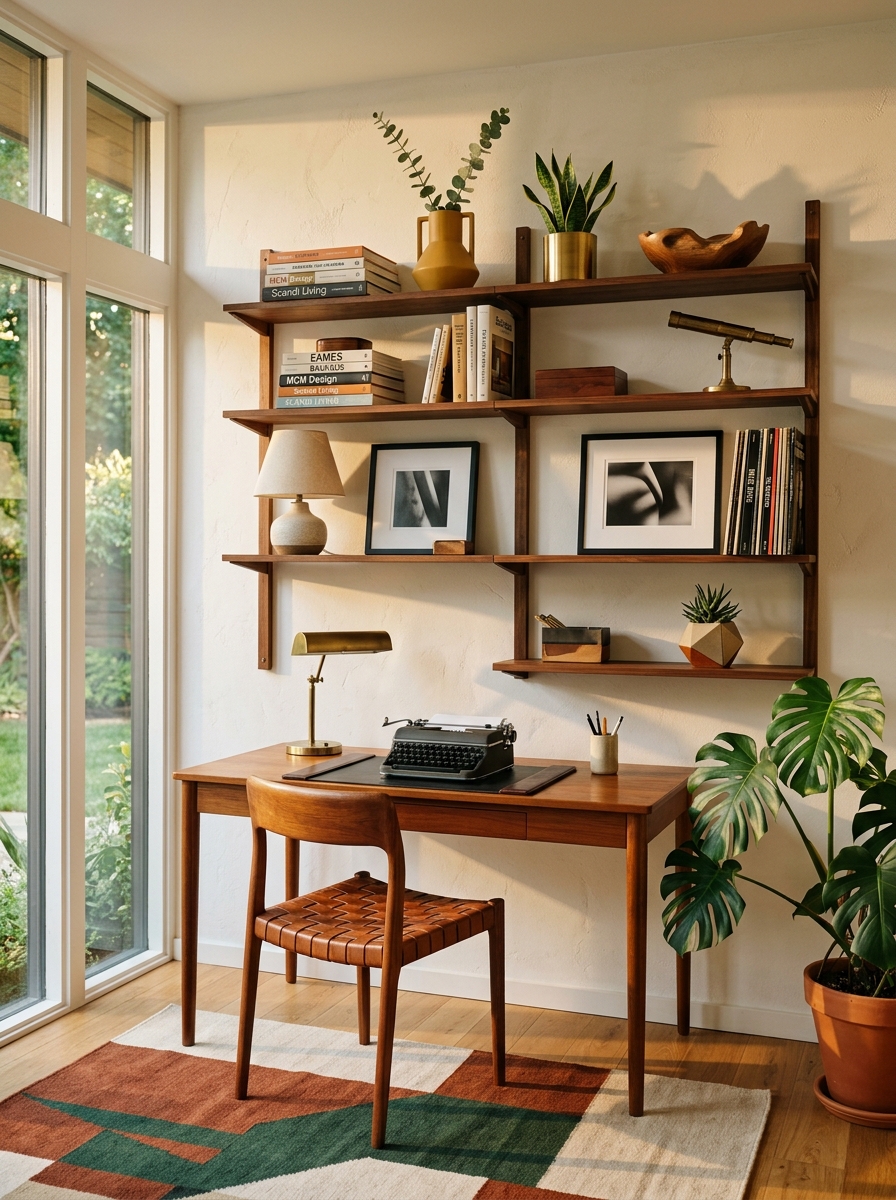
Open shelving is a mid-century staple, and styling it right is an art form. Those floating walnut shelves or ladder-style bookcases aren’t just storage—they’re mini galleries for your favorite things. The trick is balancing books, objects, and breathing room so it looks curated, not cluttered.
I always start with books—some stacked horizontally, others standing vertically—then layer in sculptural pieces. A ceramic vase here, a small plant there, maybe a vintage radio or wooden bowl. The negative space is just as important as what you display. Let your shelves breathe.
Think in triangles and odd numbers. Group three items together, vary the heights, and don’t fill every inch. This is where your personality shines through—travel finds, vintage treasures, handmade ceramics. The beauty of MCM is that it celebrates both form and function, so everything on display should either be beautiful, useful, or ideally both.
8. Mix Warm Wood Tones Without Matching
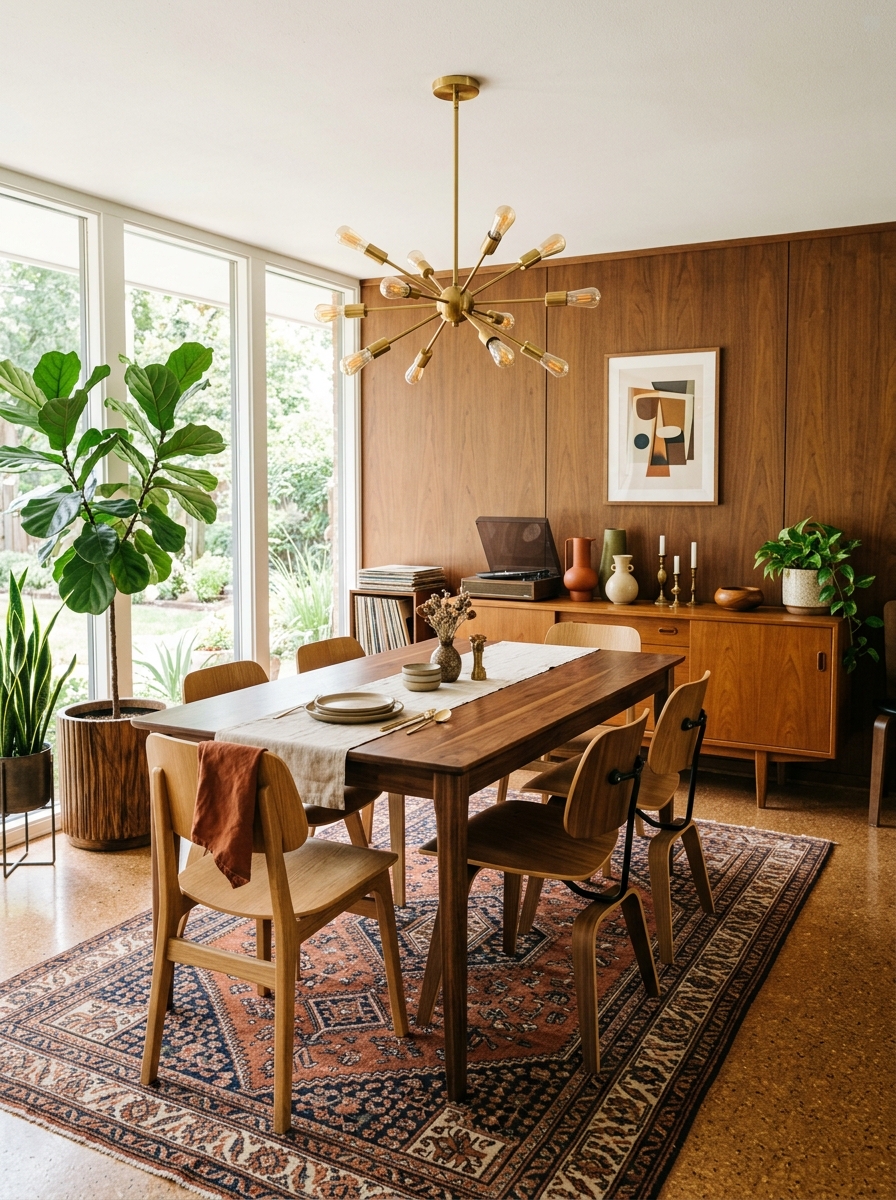
Here’s a secret: you don’t need all your wood to match! Mid-century spaces actually look better when you mix teak, walnut, and lighter oak pieces. It creates depth and keeps things from feeling too furniture-set-matchy. The key is making sure the undertones play nicely together.
I love pairing a dark walnut credenza with lighter teak side tables and maybe some blonde wood accents on chair legs. The variation adds richness and makes each piece stand out on its own. It’s like the wood furniture is having a conversation rather than just sitting there matching.
Pay attention to undertones—stick with warm woods that have orange, red, or golden notes rather than mixing in cool gray-toned woods. That warmth is essential to the MCM vibe. And let those wood grains shine by keeping them oiled and well-maintained. Nothing beats the glow of beautiful wood in natural light.
9. Hang Abstract Art with Bold, Simple Frames
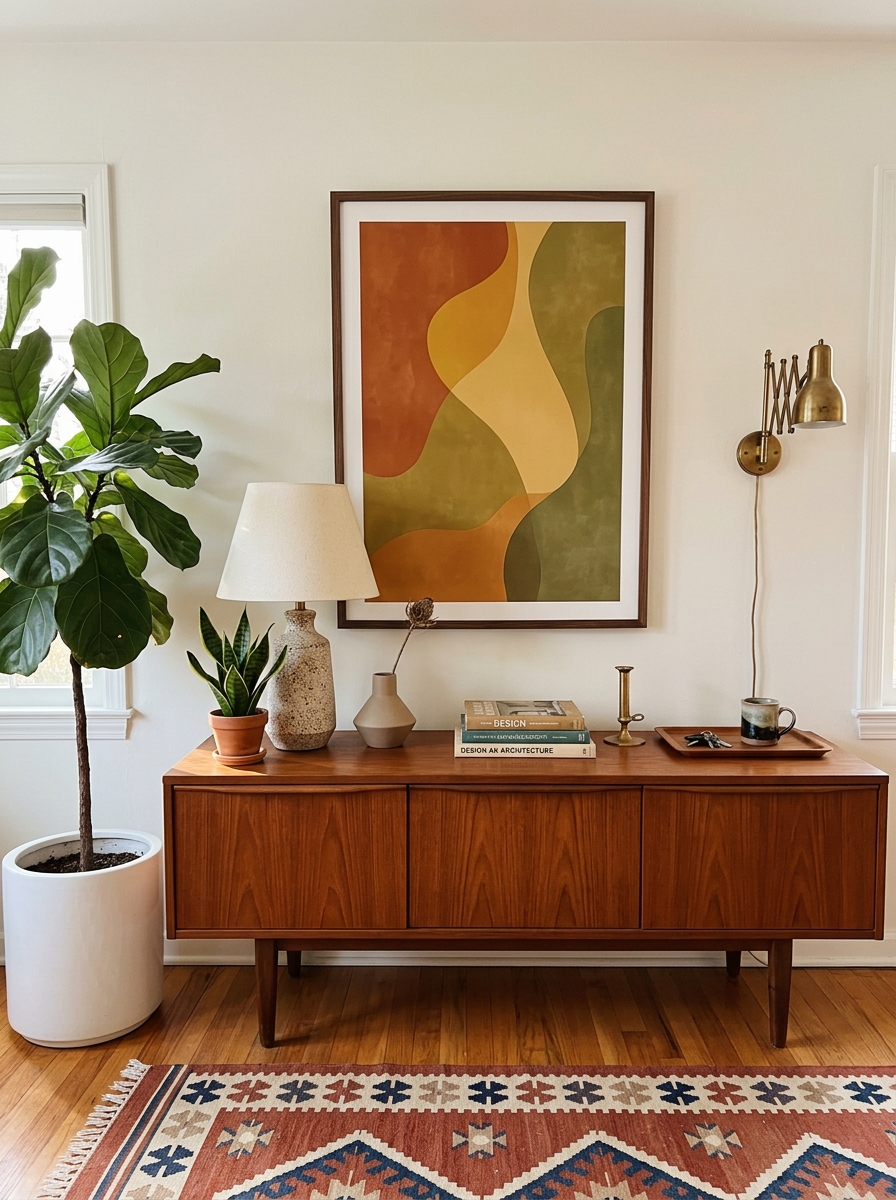
Mid-century modern art is all about making a statement without being fussy. Think bold abstract shapes, atomic patterns, or even a simple line drawing in a slim wooden frame. The art from this era was confident and playful—it didn’t take itself too seriously.
I love hunting for vintage prints at thrift stores or grabbing affordable reproductions online. Look for pieces with clean geometric shapes, organic blobs, or those fun atomic starbursts. The frames should be simple—thin wood or black metal. Nothing ornate or distracting.
Hang your art at eye level and don’t crowd it. Mid-century spaces breathe. A single large piece over the sofa or a pair of matching prints flanking a doorway works beautifully. Let the art have space around it so it can really shine and become a focal point in the room.
10. Introduce a Bar Cart for Function and Flair
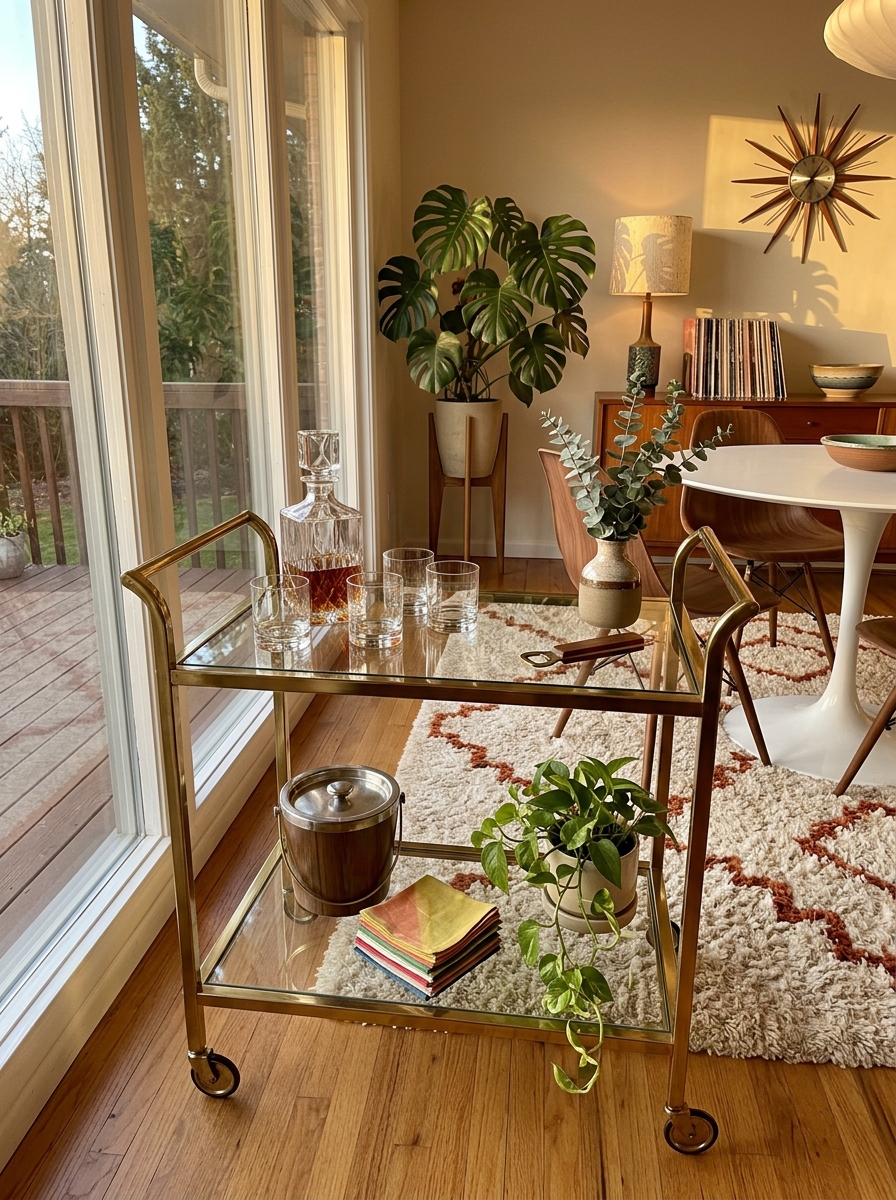
A brass or gold-toned bar cart is pure mid-century magic. It’s functional, mobile, and just looks so darn sophisticated sitting in the corner of your living room or dining area. These carts were everywhere in the ’60s, and honestly, they never went out of style for good reason.
I styled mine with a mix of glassware, a decanter, and a few decorative pieces that aren’t booze-related at all. A small plant, a ceramic bowl, maybe a vintage ashtray repurposed as a catch-all. The cart shouldn’t look like a liquor store—it should look interesting and personal.
The wheels mean you can roll it wherever you need it, which is pretty genius for entertaining. But even when it’s just sitting there, it adds this cool cocktail-hour vibe that makes your space feel more grown-up and intentional. It’s like furniture that doubles as decor.
11. Choose Furniture with Exposed Tapered Legs
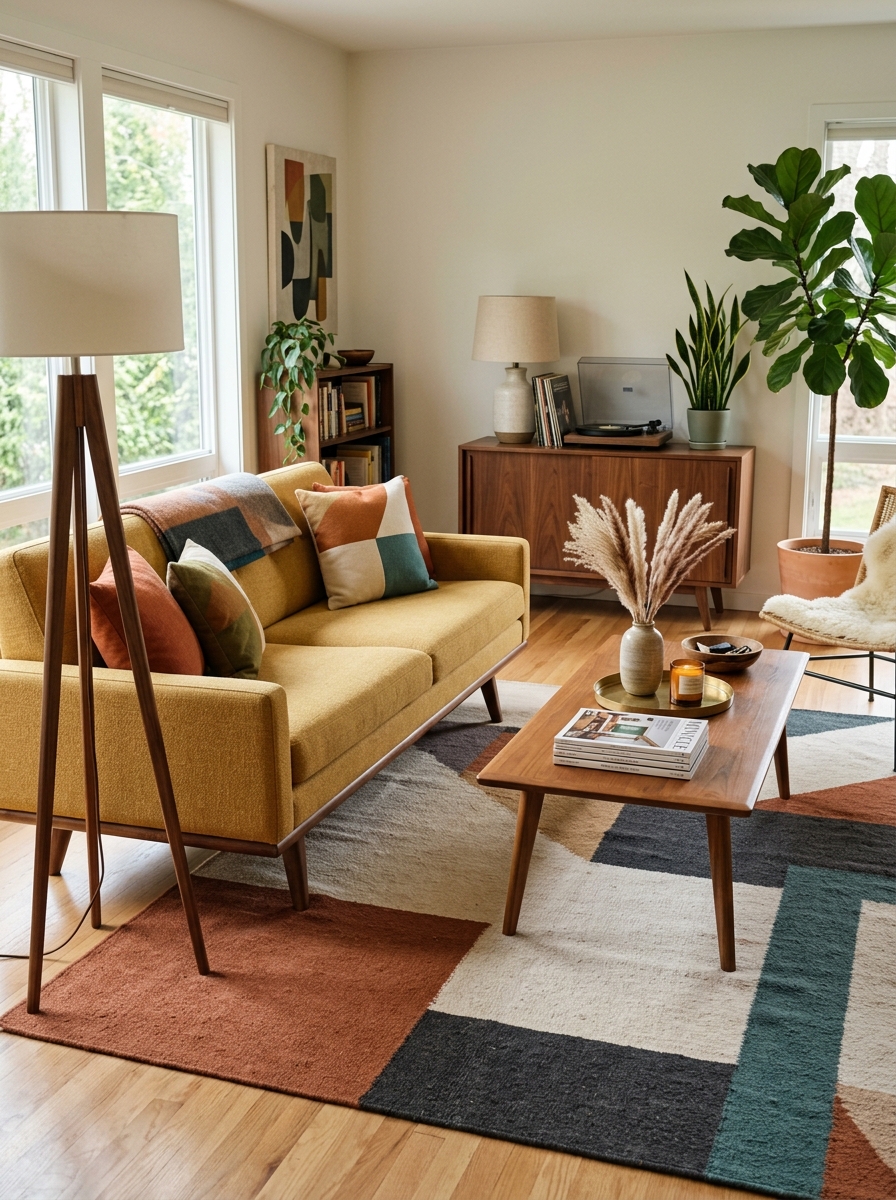
Those skinny angled legs are the signature of mid-century furniture, and they’re not just for looks. They make furniture feel lighter and less bulky, which is perfect for creating that airy, uncluttered vibe that defines the style. Every piece seems to float just a little.
When I’m shopping for MCM pieces, I always look at the legs first. Are they tapered? Do they angle outward slightly? Are they made of wood, not hidden under skirts or panels? That’s how you know it’s the real deal or at least a good reproduction. Sofas, chairs, credenzas, even beds—they all benefit from exposed legs.
This detail also makes cleaning underneath furniture so much easier, which is a bonus nobody talks about enough. But more importantly, it keeps sightlines open and makes your room feel bigger. It’s a small detail that makes a huge visual impact in how spacious and intentional your space feels.
12. Paint an Accent Wall in a Warm Retro Hue
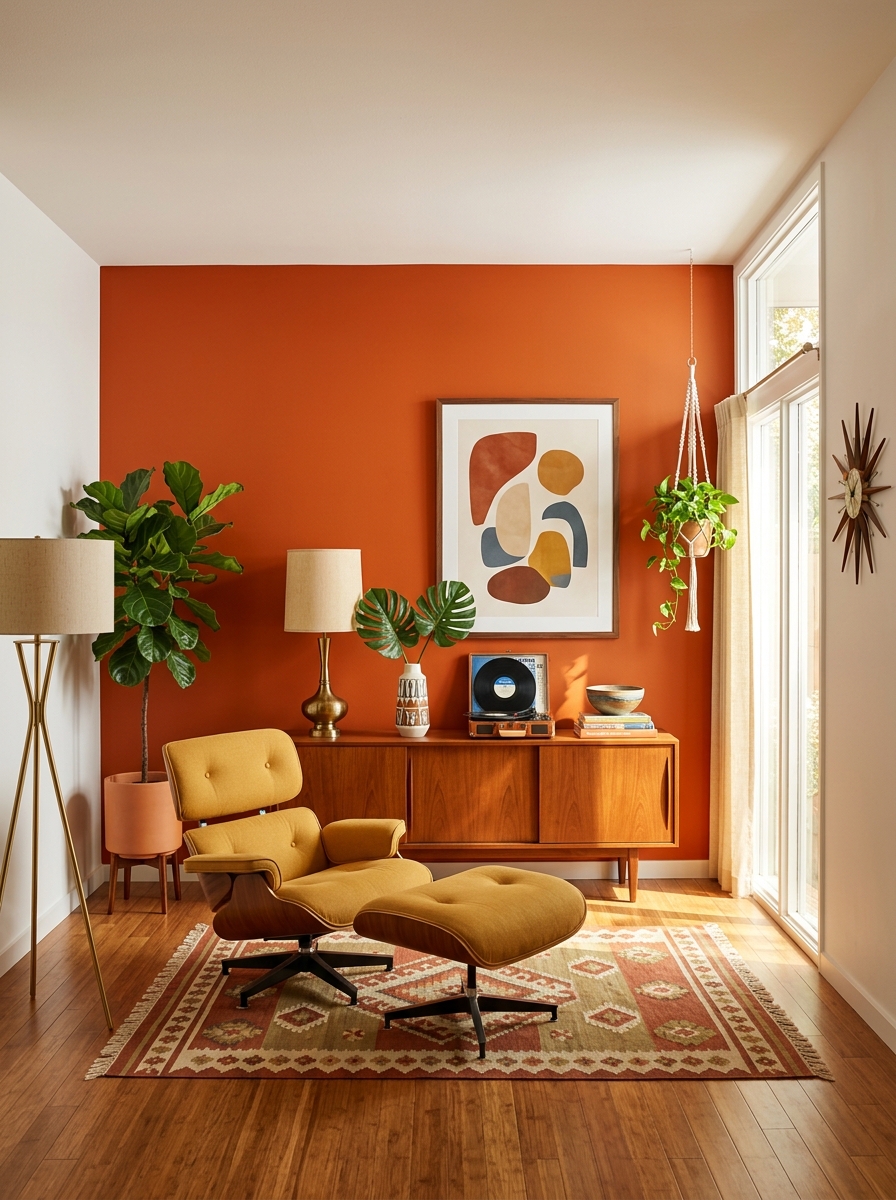
Mid-century spaces weren’t afraid of color, and one bold accent wall can completely transform a room without overwhelming it. Think burnt orange, avocado green, mustard yellow, or even a deep teal. These colors were huge in the ’50s and ’60s, and they still feel fresh and exciting today.
I painted my dining room wall in this gorgeous burnt sienna, and it made all my wood furniture pop in the best way. The trick is to choose one wall—usually the one behind your main furniture piece—and let it be the star. Keep the other walls neutral so the color feels intentional, not chaotic.
This is such an easy way to add personality without buying new furniture. It’s just paint! And if you get tired of it, you can always change it. But honestly, these retro colors have such warmth and character that they tend to grow on you. They make the whole room feel cozier and more grounded.
13. Use a Tulip Table to Anchor Your Dining Space
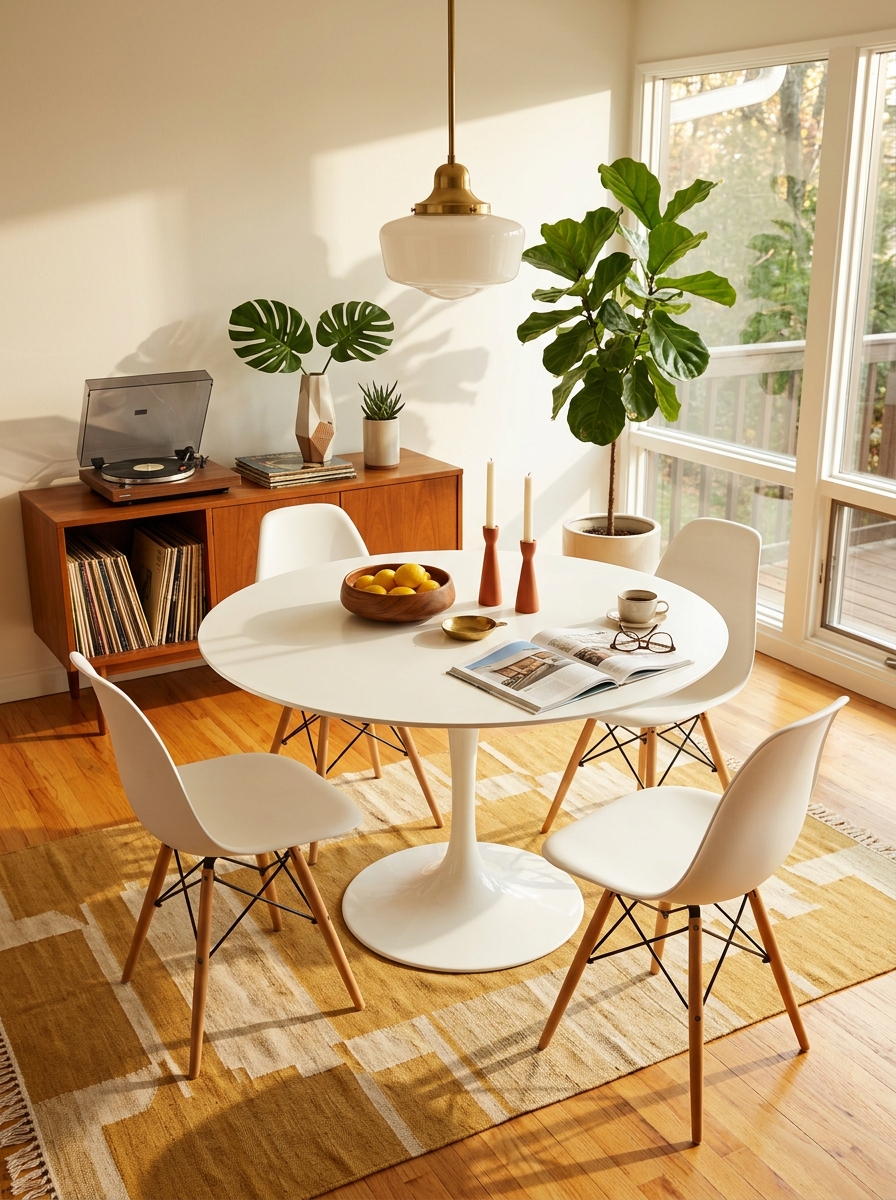
There’s something absolutely magical about a tulip table. That single pedestal base, the smooth oval top, the way it makes a room feel both retro and modern at once. Eero Saarinen designed it to eliminate the “slum of legs” under traditional tables, and honestly? Genius.
I love how a tulip table opens up your dining area visually. Without four chunky legs blocking the view, everything feels lighter and more spacious. The sculptural base becomes a conversation piece all on its own. You can find vintage originals or really good replicas in white, black, or even marble finishes.
Pair it with molded plastic chairs or upholstered ones with wooden legs, and you’ve got an instant mid-century moment. The beauty is in that clean, uninterrupted silhouette. It works in small breakfast nooks or larger dining rooms, and it always looks effortlessly cool. I’ve seen people style them casually with everyday dishes or dress them up for dinner parties, and they handle both beautifully.
14. Incorporate Natural Materials Beyond Wood
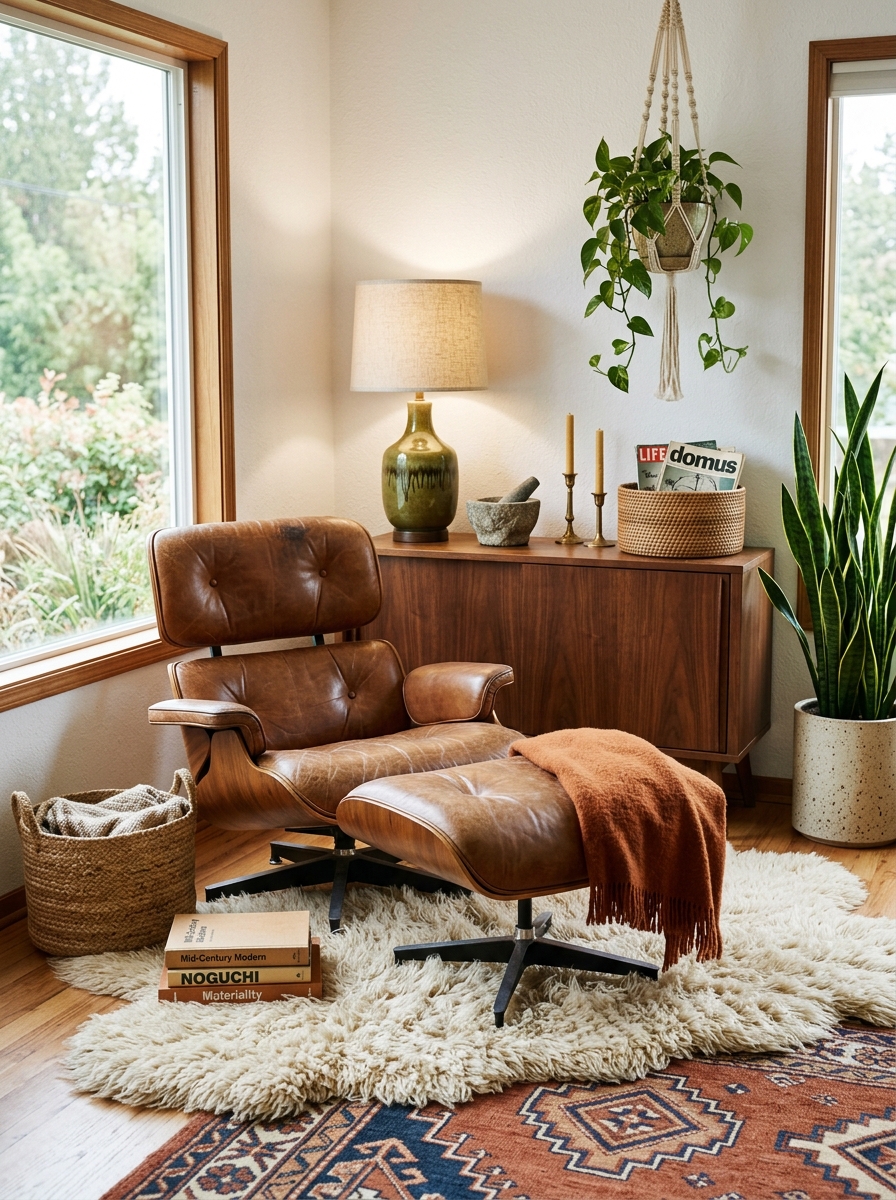
Mid-century design wasn’t just about teak and walnut. It was a celebration of natural materials in all their textured glory. Think leather, stone, wool, ceramic, rattan. This is where your space gets that warm, tactile quality that makes you actually want to touch everything.
I’m obsessed with mixing a smooth leather sofa with a nubby wool rug and maybe a ceramic lamp with a beautiful glaze. Each material brings its own personality. A stone planter adds weight and grounding. Rattan adds that organic, slightly bohemian touch that was super popular in the ’60s. Brass and copper bring warmth without feeling too precious.
The key is letting these materials speak for themselves. Mid-century designers loved showing off what things were made of rather than covering them up. A leather chair that develops a patina over time? That’s the whole point. The natural wear and character is part of the beauty. Don’t be afraid of materials that age gracefully.
15. Create a Reading Nook with a Womb Chair
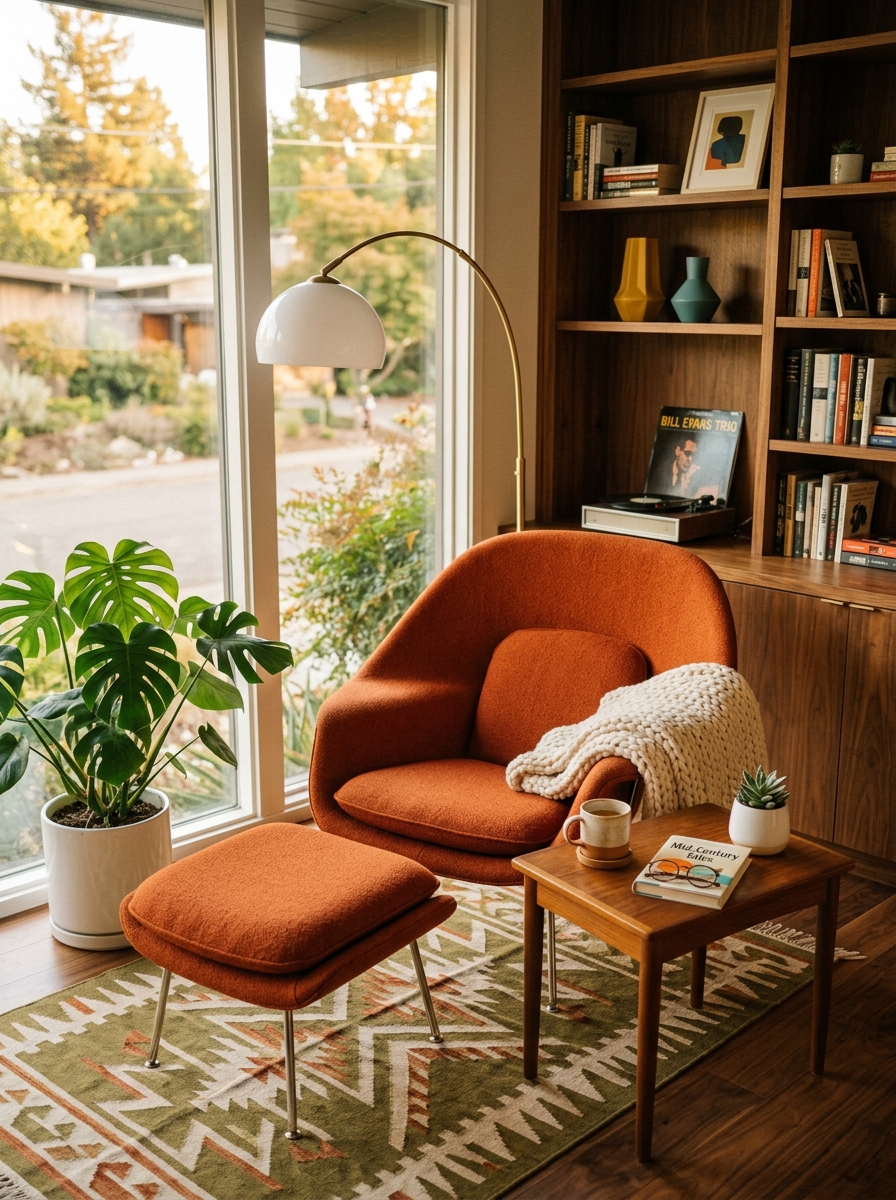
If you’ve never sunk into a womb chair, you’re missing out on one of life’s coziest experiences. Eero Saarinen designed it to feel like a little cocoon, and that’s exactly what it delivers. It’s sculptural enough to be a statement piece but so comfortable you’ll actually use it every single day.
I love placing a womb chair near a window with good natural light. Add a small side table, a reading lamp, and you’ve got yourself the perfect spot to disappear into a book with your morning coffee. The chair’s curves are so inviting, and the way it wraps around you feels both modern and incredibly comforting.
You can find them upholstered in everything from classic red wool to neutral bouclé. The ottoman is a must if you really want to commit to maximum relaxation. I’ve seen them styled in bedrooms, living rooms, even home offices. Anywhere you need a moment to yourself, this chair delivers.
16. Add Warmth with a Teak or Walnut Platform Bed
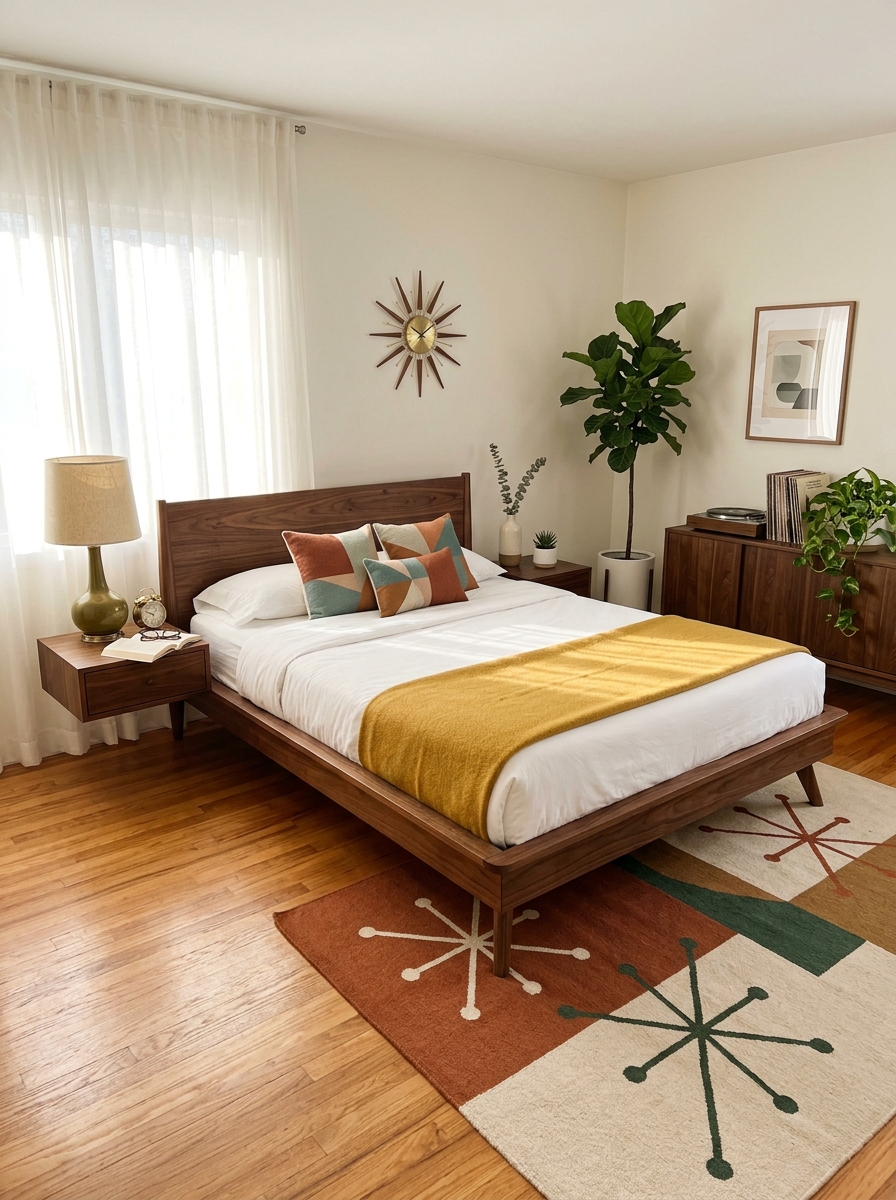
A platform bed is the foundation of mid-century bedroom style, literally and figuratively. That low-slung profile, the beautiful wood grain, the clean simple lines. It makes your bedroom feel calm and uncluttered, which is exactly what you want in a space meant for rest.
I’m drawn to how a platform bed changes the whole feel of a room. It sits closer to the ground, which somehow makes the ceiling feel higher and the space more open. The wood frame becomes a warm anchor without overwhelming the room. Teak and walnut are the classic choices, and both age beautifully over time.
Style it with simple geometric bedding in warm neutrals or classic mid-century colors like mustard or burnt orange. A pair of matching nightstands with tapered legs, a sculptural table lamp, maybe a vintage alarm clock. Keep it minimal. The bed’s horizontal lines and rich wood do most of the heavy lifting design-wise, so you don’t need much else to create that perfect retro-modern bedroom vibe.
17. Dress Your Windows with Simple, Clean-Lined Drapes
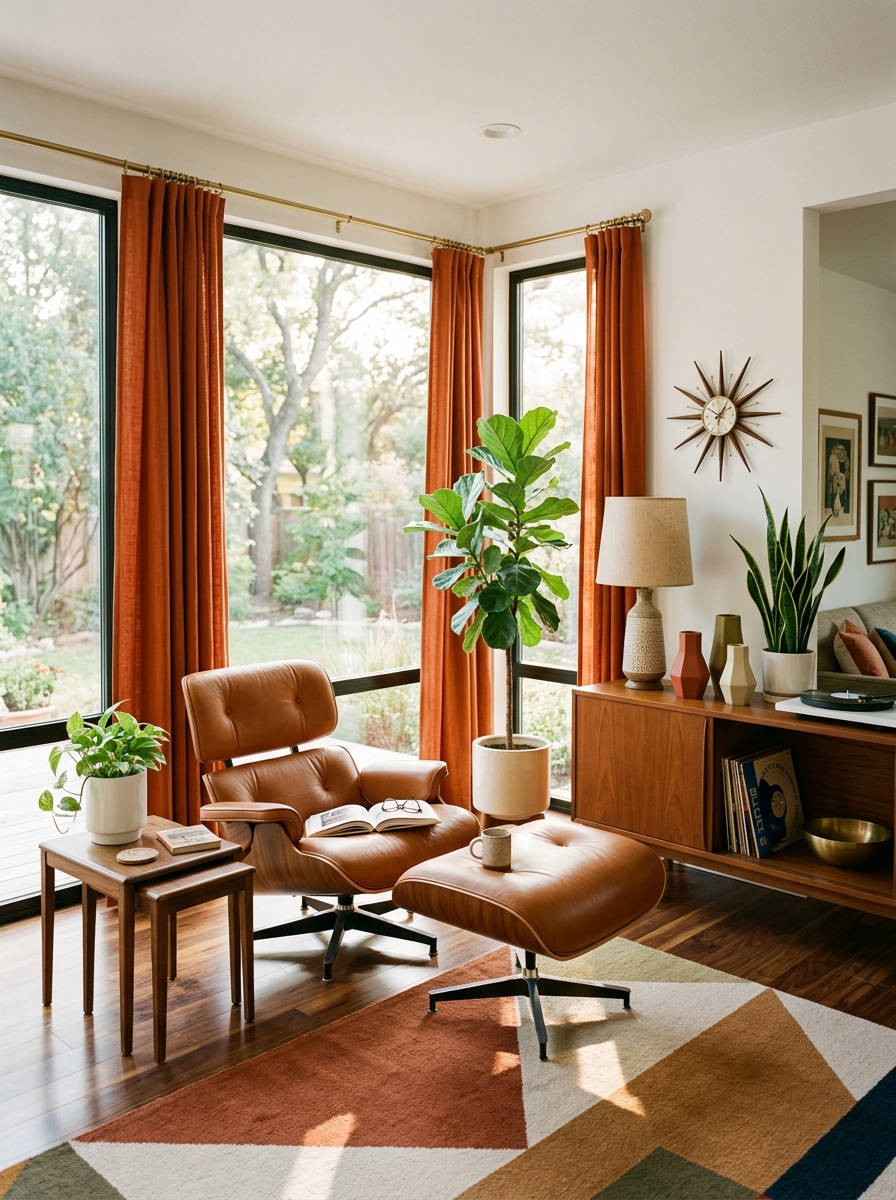
Window treatments in mid-century homes should never compete with the view or the architecture. Think simple, uncluttered panels that frame your windows without fuss. I love floor-to-ceiling drapes in solid colors—burnt orange, mustard yellow, or even a crisp white linen. The key is keeping them streamlined. No ruffles, no elaborate valances, just clean fabric that puddles slightly on the floor.
The hardware matters too. Look for slim brass or walnut rods with minimal finials. Nothing ornate or fussy. When you pull them open during the day, they should stack neatly to the sides, letting all that gorgeous natural light flood in. That’s what mid-century design is all about—bringing the outside in.
If you want privacy without blocking light, consider sheer panels in cream or white. They soften the space while maintaining that airy, open feeling. And honestly? Sometimes the best choice is no window treatment at all if you have great views and privacy.
18. Install Floating Shelves in Walnut or Teak
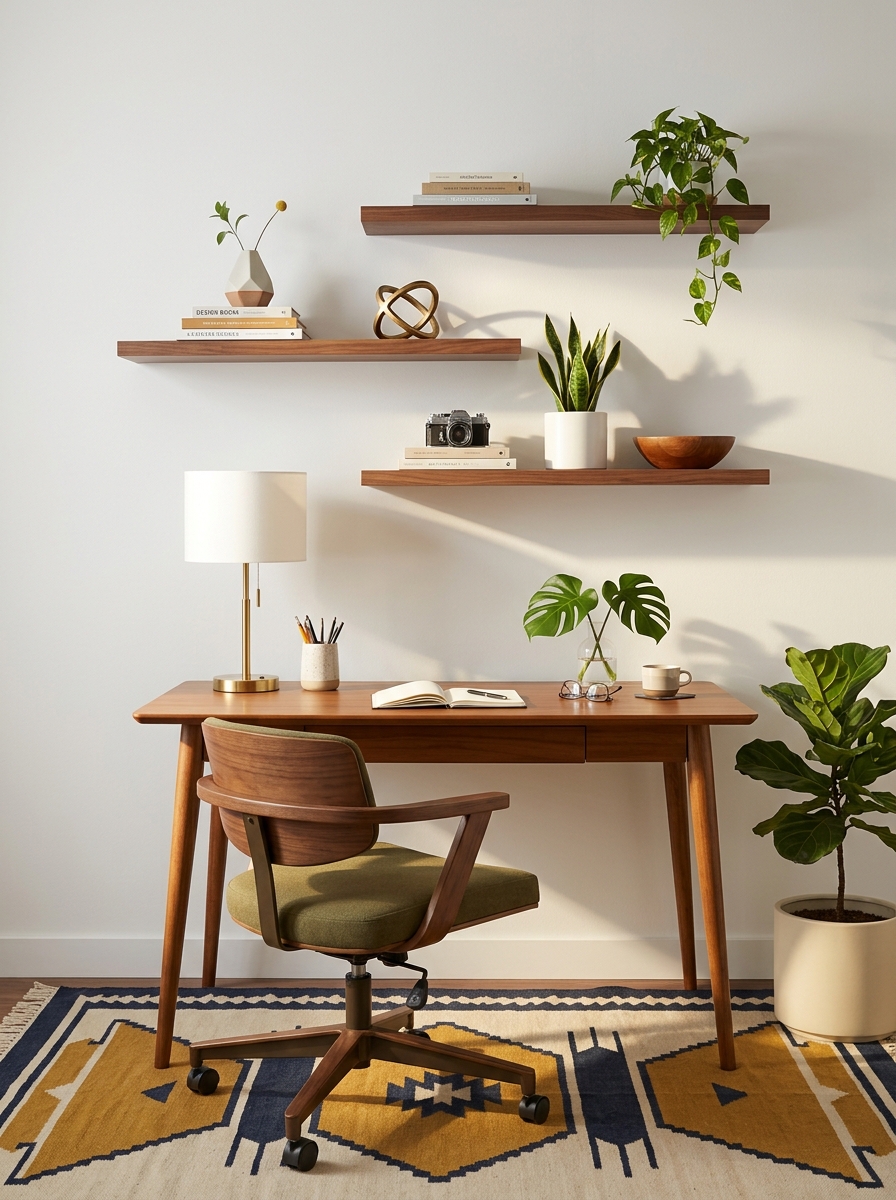
Floating shelves are like the perfect accessory for mid-century walls. They’re functional, they’re sculptural, and they give you a chance to show off your favorite things without the bulk of a bookcase. I’m obsessed with walnut or teak shelves that seem to hover against white walls—so clean, so elegant.
The beauty is in how you style them. Think curated, not cluttered. A few choice books stacked horizontally, a ceramic vase, maybe a small abstract sculpture. Leave plenty of breathing room between objects. Mid-century design celebrates negative space just as much as the stuff you put on display.
I like installing them at varying heights rather than perfectly symmetrical. It feels more organic and interesting. And they’re perfect for rotating seasonal displays—swap in different art objects or plants to keep things fresh. The wood grain becomes part of the art itself, warming up the whole wall.
19. Swap Out Builder-Grade Hardware for Brass or Walnut
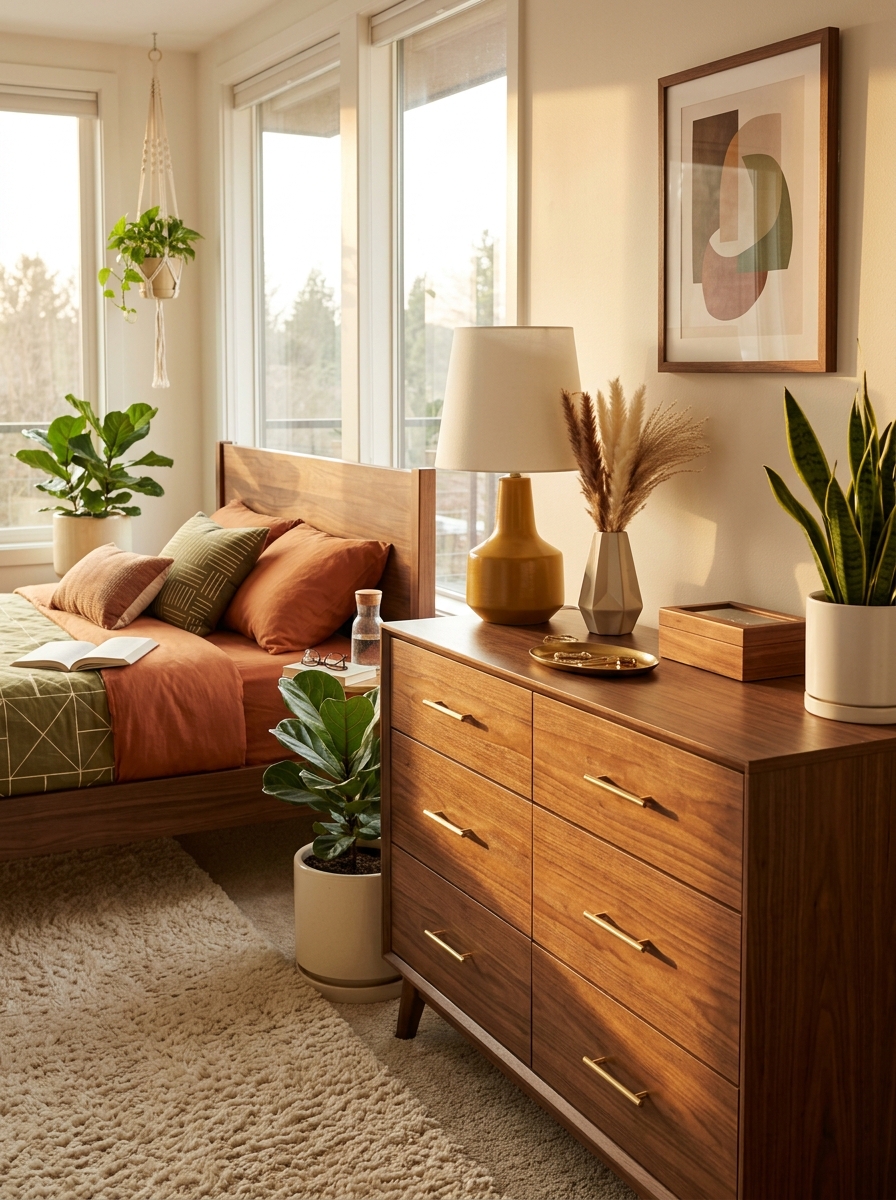
This one’s so simple but makes such a difference. Those generic chrome or brushed nickel cabinet pulls and door handles? They’re killing your mid-century vibe. Swapping them out for warm brass or walnut hardware is like giving your whole space a subtle facelift.
I replaced all the knobs in my kitchen with slender brass pulls, and wow—it completely transformed the room. Suddenly everything felt more intentional and cohesive. The warm metal ties into lamps, picture frames, and other brass accents throughout the house. It’s those little repeated details that make a space feel designed.
For bedroom furniture, consider walnut or teak knobs with brass accents. They’re tactile and beautiful, and every time you open a drawer, you get that little moment of joy. Don’t forget about door hardware too—brass lever handles on a bright white door? Chef’s kiss. It’s a small investment that pays off big time in overall aesthetic.
20. Ground Your Space with a Statement Fireplace Surround
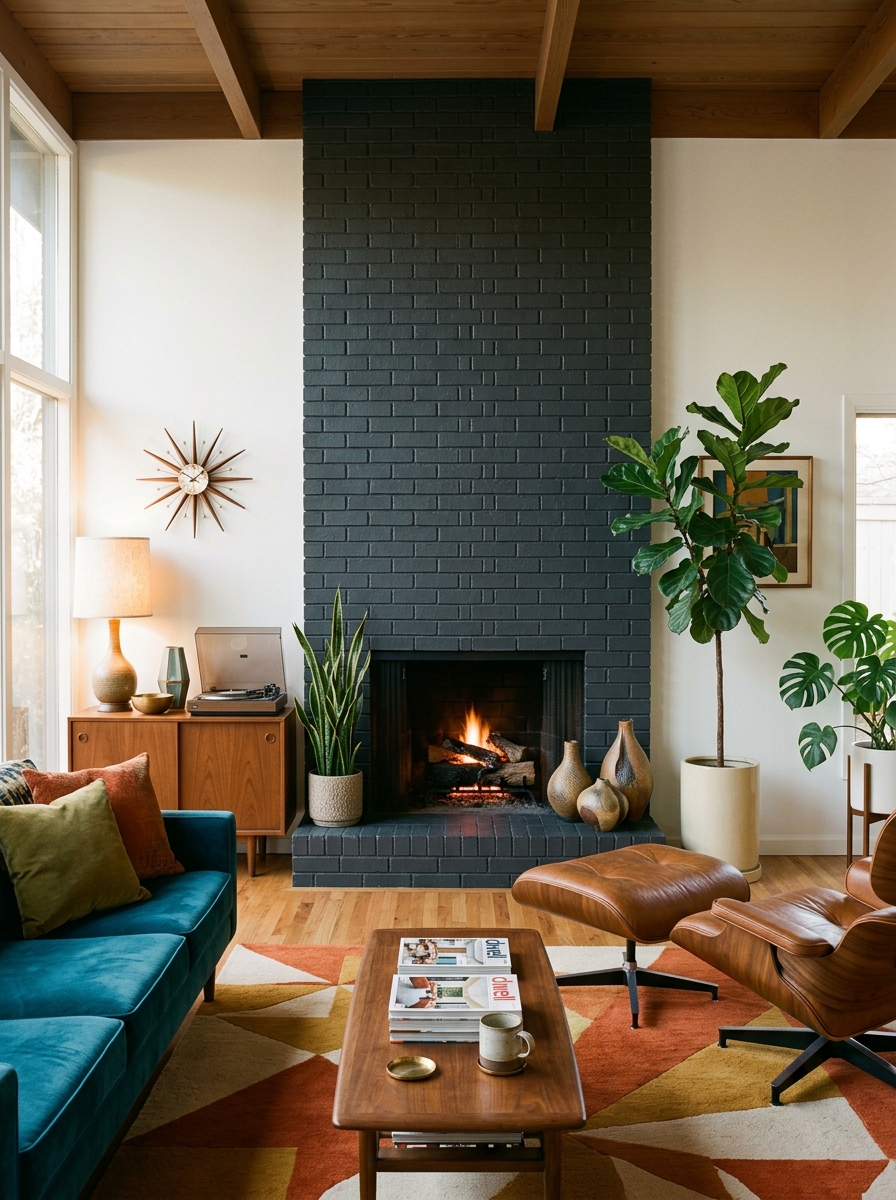
If you’re lucky enough to have a fireplace, make it mid-century magical. Think clean lines, interesting materials, and zero fussiness. I’ve seen gorgeous surrounds in everything from stacked stone to painted brick to sleek marble—all working beautifully in mid-century spaces.
My favorite look? A simple rectangular opening with no mantel, or just a slim floating shelf in walnut. The fireplace becomes this beautiful horizontal element that grounds the whole room. If you have an existing brick fireplace, consider painting it white or a warm cream to lighten things up. Or go bold with a floor-to-ceiling surround in charcoal or black for serious drama.
The hearth area is perfect for displaying a few sculptural objects—maybe a collection of ceramic pieces or a single oversized vase. Keep the mantel minimal if you have one. This isn’t the place for tchotchkes. Think one piece of art above, maybe a small plant, and that’s it. Let the fireplace architecture be the star.
21. Style a Coffee Table with Sculptural Ceramics
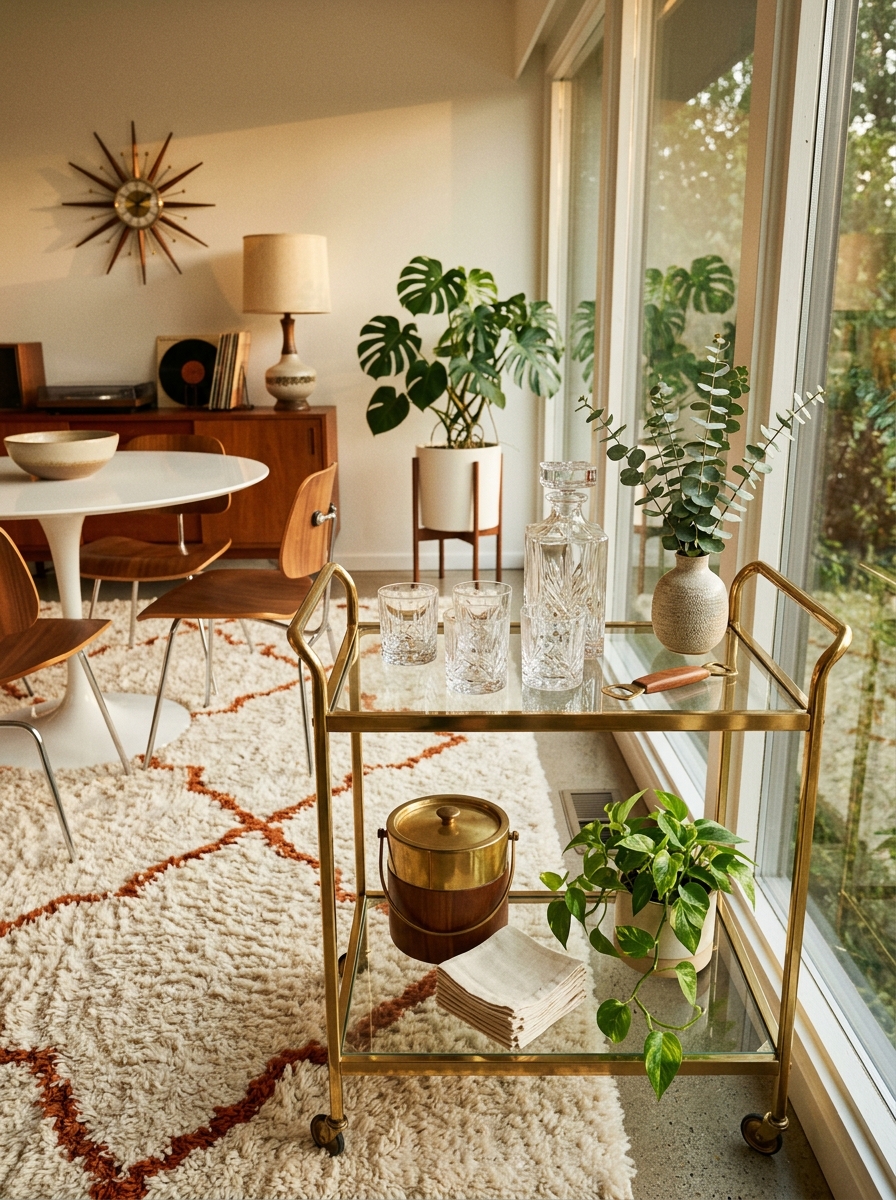
Your coffee table isn’t just furniture—it’s a gallery. And in mid-century design, less is way more. Think sculptural ceramic pieces in organic shapes, a stack of vintage design books, maybe a wooden tray with clean lines.
I love grouping things in threes or fives. A tall ceramic vase, a low bowl, and a small plant create this beautiful rhythm that feels intentional without trying too hard. Keep colors earthy—warm clay tones, matte blacks, creamy whites. The shapes should feel rounded and soft to contrast all those straight lines your furniture already has.
And here’s the thing: don’t overcrowd it. Mid-century style thrives on breathing room. Your coffee table should look curated, not cluttered. Each piece should have space around it to really shine. Switch things out seasonally if you want, but keep that minimalist mindset. A perfectly styled coffee table makes your whole living room feel more pulled together.
22. Introduce a Credenza as Your Media Console
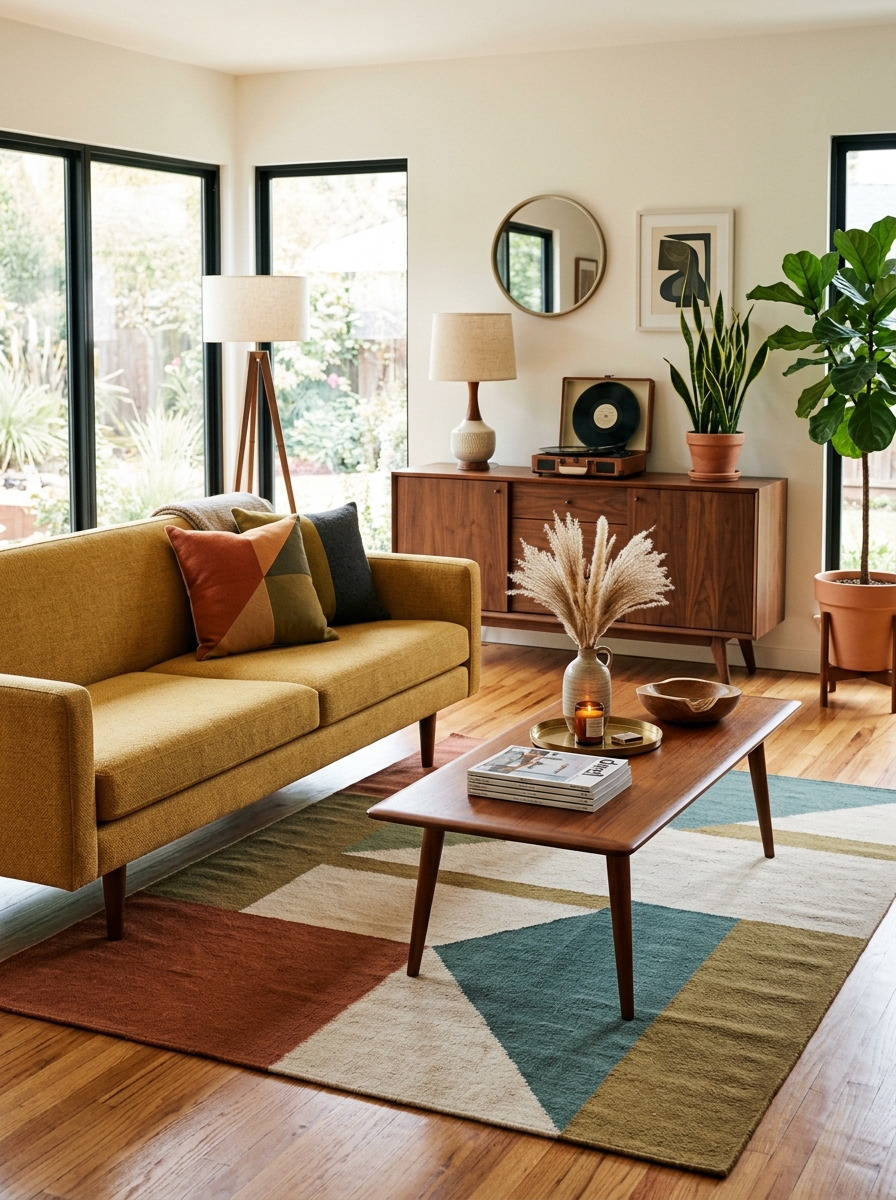
Forget boring TV stands. A teak credenza is where it’s at. These low-slung beauties were designed for storage, but they work perfectly for your TV, sound system, and all those streaming boxes we somehow accumulated.
The sliding doors or tambour fronts hide clutter while still looking gorgeous. I love how they sit low to the ground—it keeps your room feeling open and spacious instead of boxed in. Plus, the warm wood grain adds instant character. You can style the top with a few carefully chosen pieces: a vintage radio, a ceramic lamp, some greenery.
Look for credenzas with interior shelving so you can tuck away DVDs, remotes, and board games. The surface stays clean, and you get all that practical storage without sacrificing style. It’s functional furniture that actually looks incredible—which is basically the whole mid-century philosophy in one piece.
23. Bring in Pops of Period-Perfect Color
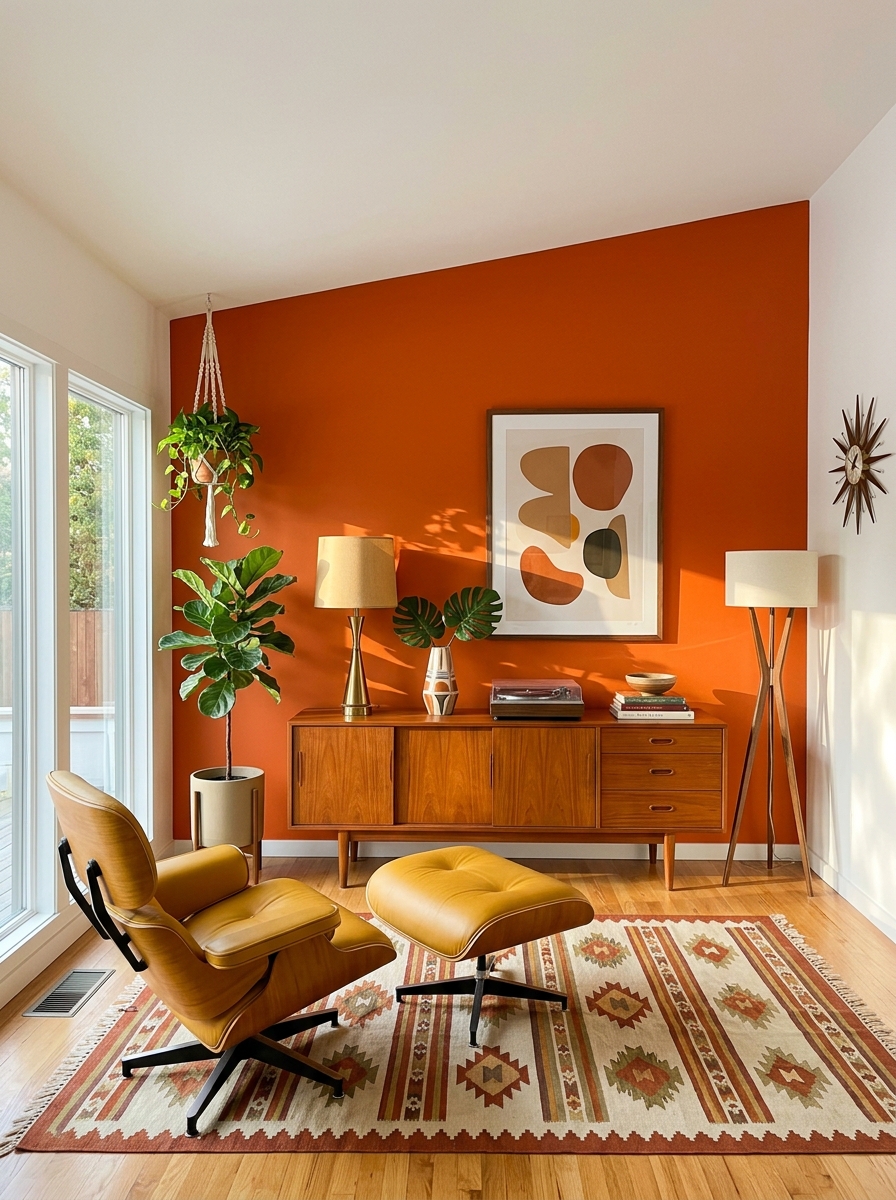
Mid-century modern isn’t all wood tones and neutrals—the era loved COLOR. We’re talking mustard yellow, burnt orange, avocado green, and teal. These warm, slightly muted shades add personality without feeling overwhelming.
Start small if you’re nervous. A mustard velvet pillow on your sofa. An orange ceramic vase on the credenza. A teal throw blanket draped over your lounge chair. These little hits of color bring energy and joy to a space. They also tie the room together when you repeat them—like an orange pillow echoing an orange rug.
Don’t be afraid to mix colors, either. Mustard and teal? Gorgeous. Burnt orange and olive green? Chef’s kiss. These vintage palettes were designed to work together. They feel retro but not costumey, bold but not chaotic. And they’re so much more interesting than playing it safe with all-beige everything.
24. Finish with Thoughtful Lighting Layers
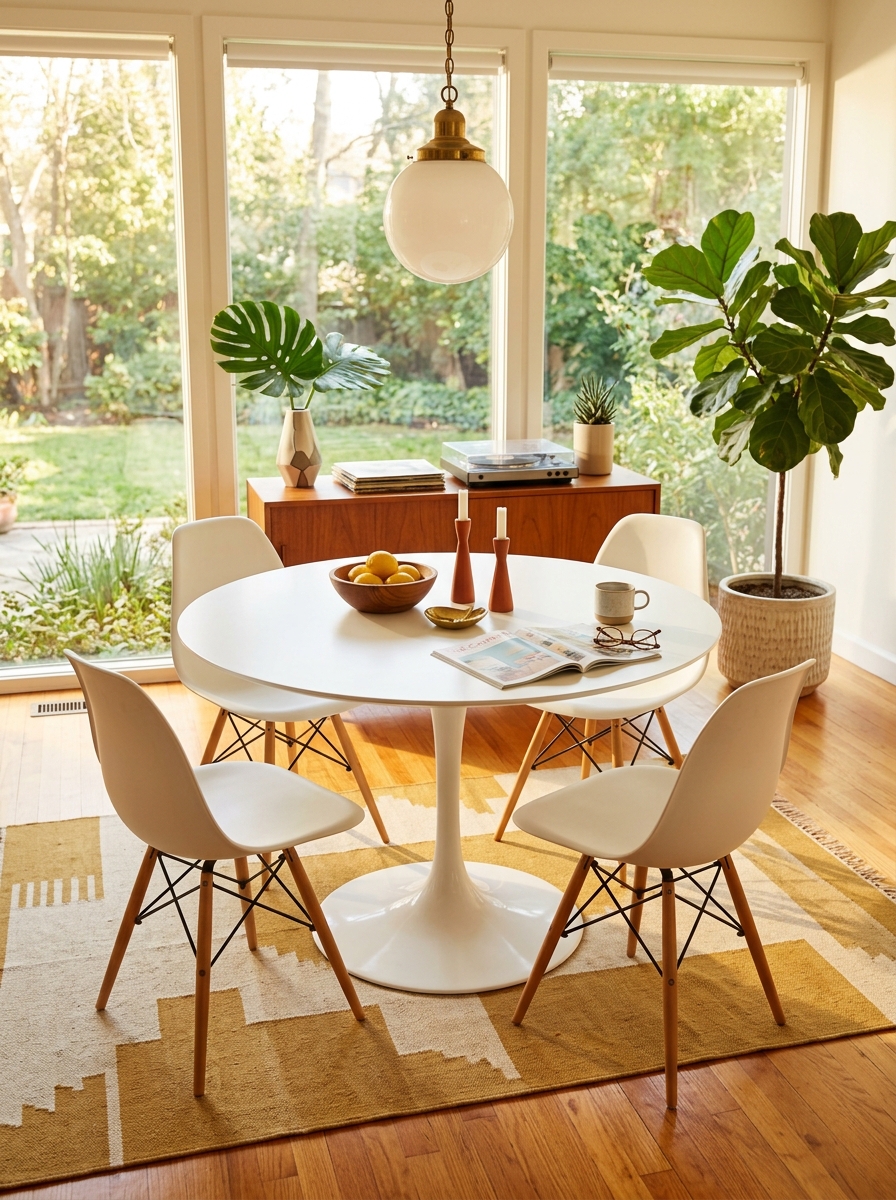
Lighting makes or breaks a mid-century space. You need layers—overhead, task, and ambient—to create that warm, inviting glow. Think Sputnik chandeliers, arc floor lamps, and ceramic table lamps with tapered shades.
I’m obsessed with arc lamps. They swoop over your seating area like a piece of sculpture, providing light exactly where you need it without taking up floor space. Pair one with a low table lamp on your credenza and maybe a pendant over your dining table. Each light source should feel intentional and beautiful on its own.
Skip the harsh overhead floods. Mid-century spaces glow—they don’t glare. Use warm bulbs (2700K) and dimmers wherever possible. Your lighting should highlight all those gorgeous wood tones and create pockets of coziness. When the sun goes down, your space should feel like a warm hug, not an interrogation room.
Quick Guide
## Quick Style Guide: Mixing MCM with Your Current Decor
If Your Style Is… | Add These MCM Touches
Bohemian: Teak credenza + geometric rug + brass accents. The clean lines balance boho’s busy patterns.
Minimalist: Eames chair + starburst clock + one statement plant. MCM’s simplicity enhances minimal spaces without adding clutter.
Farmhouse: Walnut side tables + leather seating + warm wood tones. The organic materials bridge both styles beautifully.
Traditional: Low-profile sofa + abstract art + atomic-age lighting. MCM adds contemporary edge without fighting classic pieces.
Industrial: Teak furniture + warm textiles + vintage ceramics. The warmth of MCM softens industrial’s harder edges.
The secret? Start with one or two key pieces in warm wood tones, then layer in textiles and accessories. MCM plays well with others because it’s rooted in quality materials and timeless shapes.
Your Home, Your Mid-Century Story
Here’s what I’ve learned after years of hunting for the perfect credenza and rearranging furniture more times than I’ll admit: mid-century modern isn’t about recreating a 1962 time capsule. It’s about borrowing the best parts of that era — the warmth, the craftsmanship, the belief that beautiful design should be functional — and making it work for how you actually live today. Maybe you start with a single iconic chair in the corner of your bedroom. Maybe you swap out your clunky media console for a sleek teak credenza. Or maybe you just hang a starburst clock and call it a day. There’s no wrong entry point. The beauty of MCM design is that it’s both specific and flexible. Those tapered legs, warm wood tones, and clean lines play well with almost any existing style. Your farmhouse table looks better next to an Eames chair. Your bohemian textiles pop against a simple walnut credenza. Your minimalist space feels warmer with a shag rug and some vintage ceramics. So start small, trust your instincts, and have fun with it. Your home should tell your story, not copy someone else’s. What’s one piece you’re excited to try first?
Frequently Asked Questions
What are the key elements of mid-century modern decor?
Mid-century modern is all about clean lines, organic curves, and warm wood tones — especially teak and walnut. Look for furniture with tapered legs, minimal ornamentation, and a low profile. The color palette typically includes warm neutrals with pops of mustard, burnt orange, olive green, and teal. Iconic pieces include Eames chairs, teak credenzas, starburst clocks, and geometric rugs. The overall vibe is uncluttered, functional, and timeless.
How can I add mid-century modern style on a budget?
Start with affordable accessories like a starburst clock, geometric throw pillows, or a vintage-inspired table lamp. Check thrift stores, estate sales, and Facebook Marketplace for authentic vintage pieces that need minor TLC. Replicas of iconic furniture have come way down in price — you can find quality Eames-style chairs for $300-500. Focus on one statement piece like a credenza or lounge chair, then build around it with budget-friendly accents.
Can mid-century modern work in small spaces?
Absolutely! MCM furniture is actually perfect for small spaces because of its low profile and clean lines. Low-slung sofas and chairs make ceilings feel higher, tapered legs create visual lightness, and multipurpose pieces like credenzas offer storage without bulk. Stick to a streamlined color palette and avoid clutter. The minimalist approach of mid-century design naturally makes rooms feel more spacious and intentional.
How do I mix mid-century modern with other design styles?
MCM is incredibly versatile because it’s rooted in quality materials and timeless shapes. Pair it with bohemian textiles for warmth, industrial metals for edge, or farmhouse wood tones for coziness. The key is balancing MCM’s clean lines with the personality of your other style. Start with one or two iconic MCM pieces, then layer in your existing decor. The warm wood tones and organic shapes typically bridge styles beautifully without fighting them.
What’s the difference between mid-century modern and retro style?
Mid-century modern refers to the design movement from roughly 1945-1969, emphasizing clean lines, functionality, and quality craftsmanship. Retro is a broader term that references various past eras with more playful, nostalgic, and sometimes kitschy elements. MCM tends to be more refined and timeless, while