18 Gorgeous Ways to Decorate with Plants Indoors
You bought the plant. Maybe even three plants. And now they’re just… sitting there on your windowsill looking a little lonely and not quite right. I get it. Bringing plants into your home and actually decorating with them are two totally different things. You want that lush, Pinterest-worthy vibe where greenery feels intentional and beautiful, not like you just plopped a pot somewhere and hoped for the best. The good news? You don’t need a jungle or a degree in interior design to make plants work in your space. You just need to know a few styling tricks that make greenery feel like it actually belongs. Whether you’re working with one fiddle leaf fig or fifteen trailing pothos, there are so many ways to weave plants into your decor that feel natural and gorgeous. Let’s get into it.
1. Create a Layered Plant Shelf
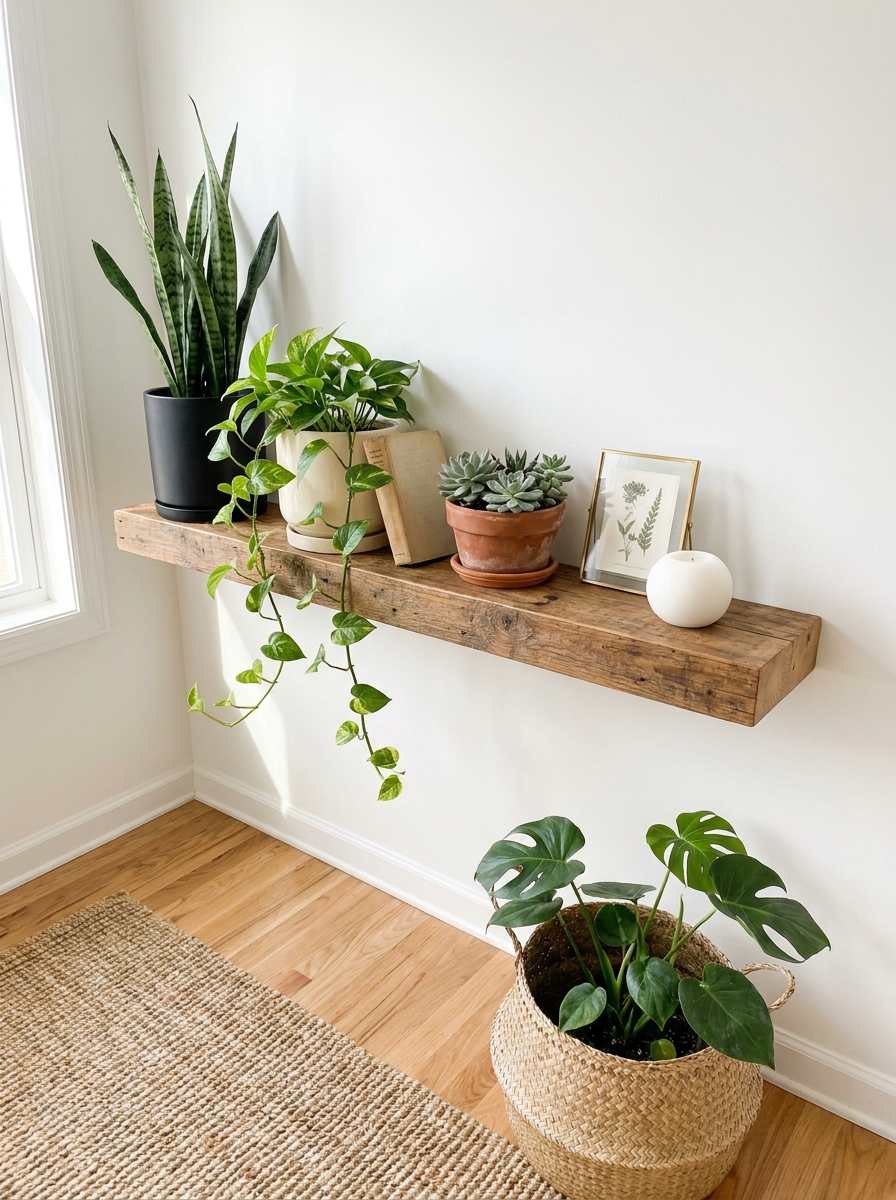
This is where plant styling gets really fun. A layered shelf lets you play with height, texture, and that collected-over-time look that feels so good. Start with your tallest plant in the back or on one end, then work your way down with medium and trailing plants. The key is varying the pot heights too — use plant stands, stack books, or add small risers so everything isn’t sitting at the same level.
Mix in a few non-plant objects so it doesn’t feel like a nursery display. A small framed print, a favorite candle, or a little ceramic dish breaks things up. I love tucking a trailing pothos or string of pearls at the front edge where it can cascade down. It adds movement and softness.
And here’s the thing: you don’t need a ton of plants to make this work. Three to five plants styled with intention looks way better than ten crammed together. Give each one a little breathing room. Let the eye travel across the shelf instead of landing on a jumbled mess.
2. Use a Plant Stand as a Statement Piece
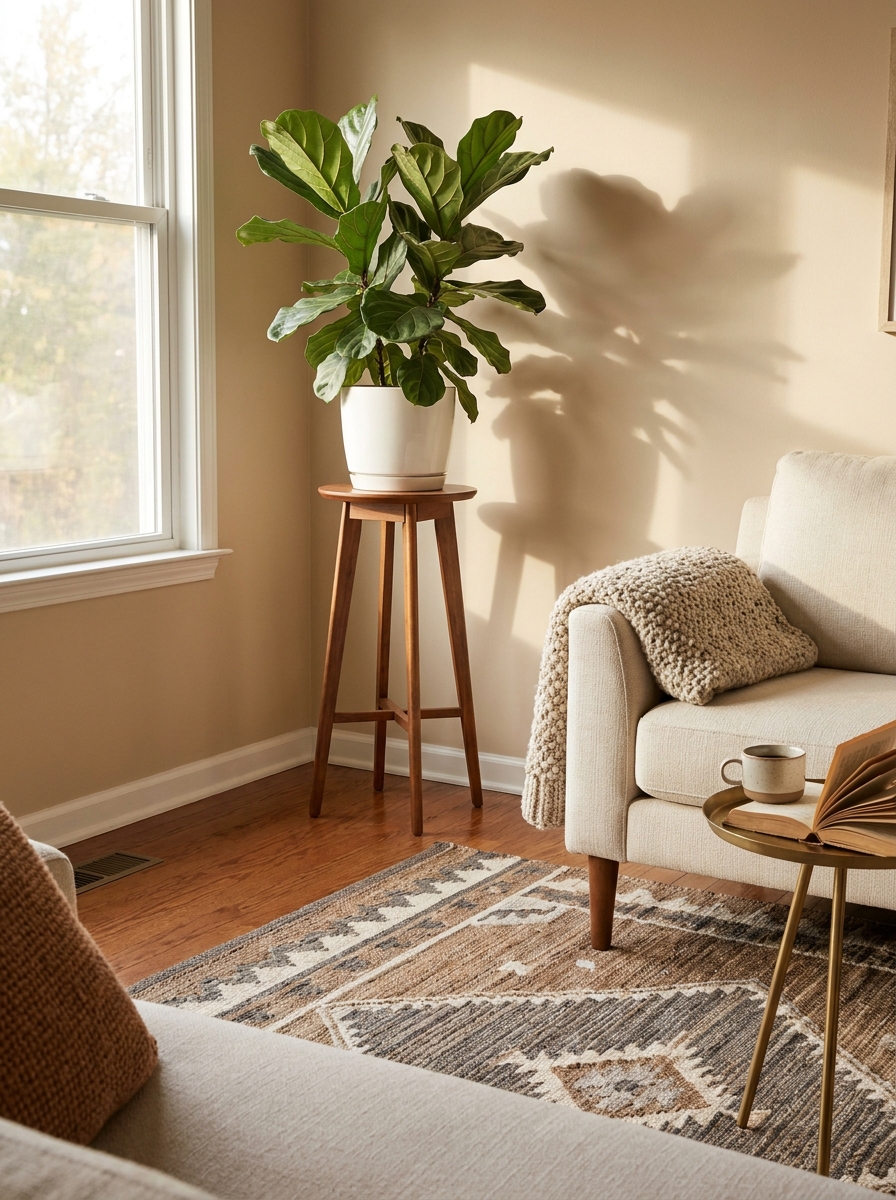
Plant stands are having a moment, and honestly, they deserve it. A good plant stand elevates your greenery — literally and visually. It gives a single plant enough presence to anchor a corner or fill an awkward space next to your sofa. Look for stands with interesting shapes or materials that complement your room’s vibe. Mid-century wood stands with tapered legs feel classic. Black metal stands work in modern spaces. Rattan or wicker adds texture and warmth.
The height matters more than you think. You want the plant at a level where you actually notice it, not down on the floor where it disappears. Somewhere between knee and hip height usually hits that sweet spot. And don’t feel like you need to buy something fancy. I’ve used vintage stools, stacked wooden crates, and even an old side table as plant stands.
Pair your stand with a plant that has personality — a fiddle leaf fig, a large monstera, or even a sculptural snake plant. This isn’t the spot for your sad little succulent. Go bold.
3. Hang Trailing Plants at Different Heights
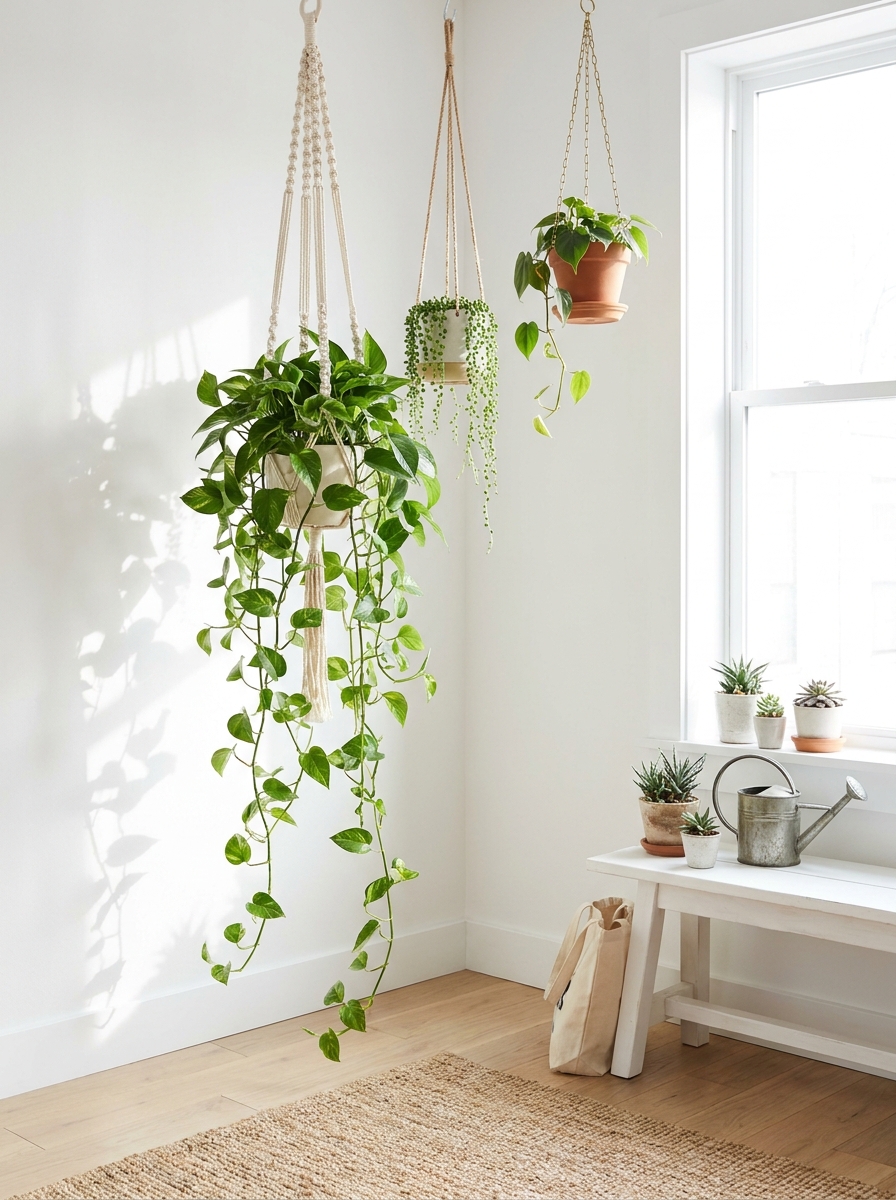
There’s something magical about plants that hang and drape. They draw your eye up and make a room feel taller and more dynamic. But here’s where people get it wrong — they hang one lonely plant in the center of a window and call it done. Instead, think about creating a little hanging garden with plants at different heights.
Use macrame hangers, simple rope hangers, or even ceiling hooks with decorative chains. Vary the drop length so some plants hang lower than others. Pothos, string of pearls, and spider plants are perfect for this because they actually want to trail. Cluster two or three together in one corner or stagger them across a blank wall.
You can also hang plants in front of windows without blocking too much light. The vines create this gorgeous filtered effect. Just make sure the hooks are secure — nobody wants a pot crashing down in the middle of the night.
4. Style a Kitchen Herb Garden
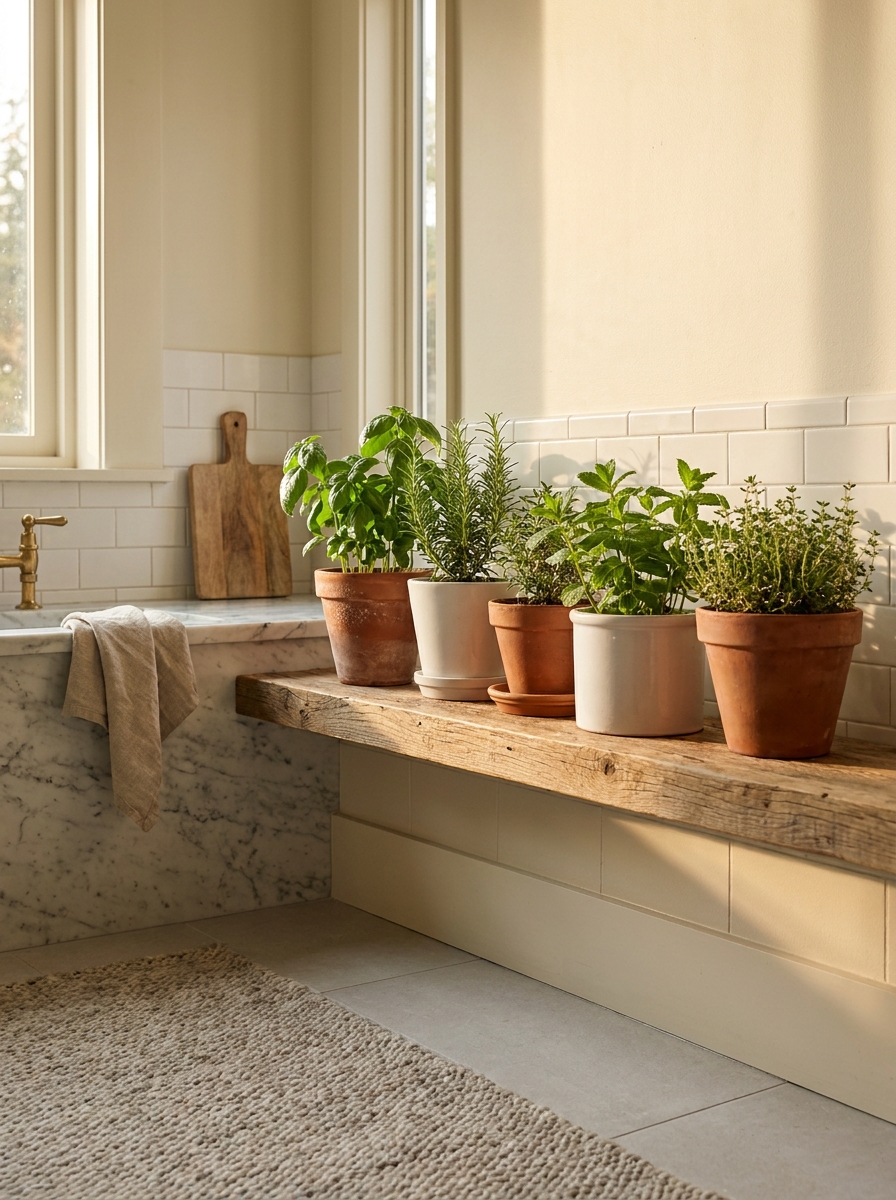
Why buy fresh herbs at the store when you can snip them right from your kitchen counter? A little herb garden is both practical and ridiculously charming. You don’t need a huge space — a sunny windowsill works perfectly. Basil, mint, rosemary, and thyme are easy starters that actually thrive indoors if they get enough light.
Style them in matching pots for a clean look, or mix and match vintage containers for something more eclectic. Small terra cotta pots feel classic and cottage-y. White ceramic planters keep things modern. You can even use old mugs or mason jars if you drill drainage holes. Line them up on a wooden tray or a narrow shelf above your sink.
The best part? Your kitchen will smell amazing, and you’ll actually use these plants. There’s something so satisfying about cooking with herbs you grew yourself. It makes even a Tuesday night pasta feel a little special.
5. Group Small Plants for Maximum Impact
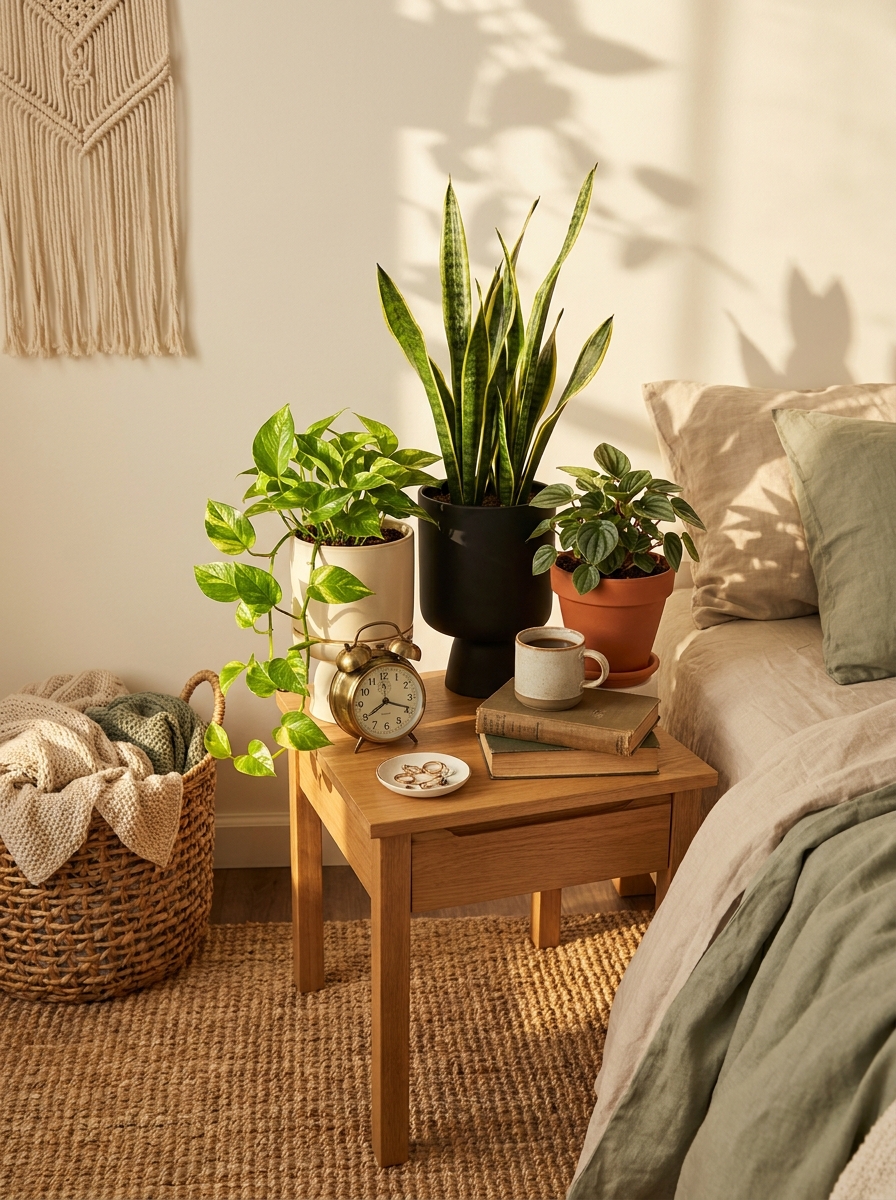
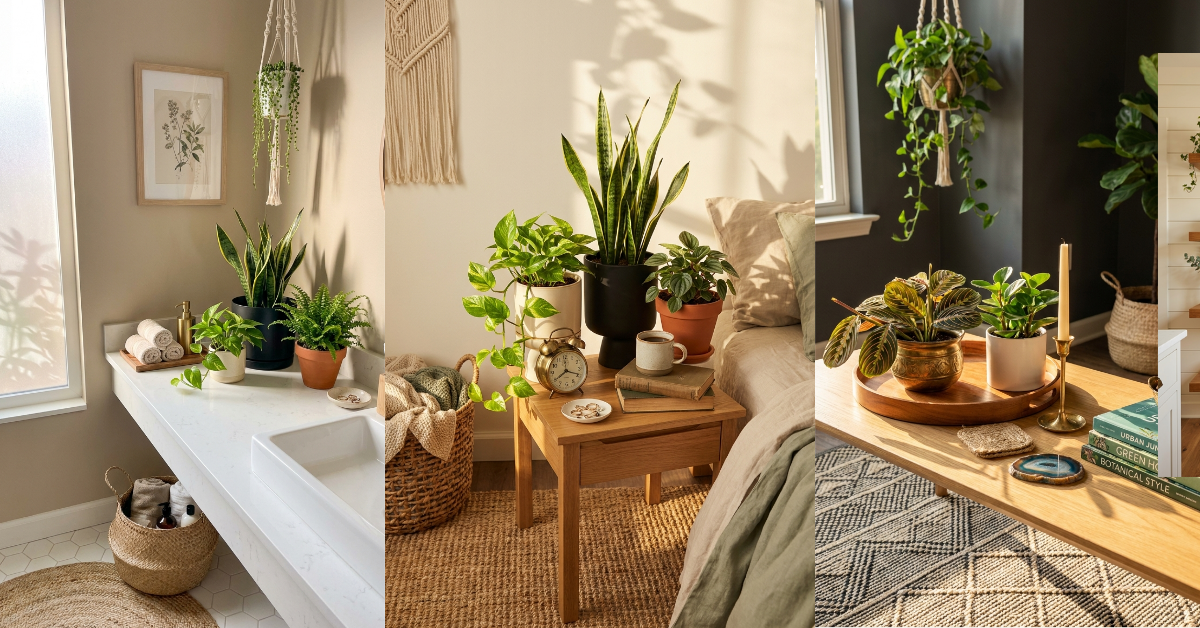
Here’s a secret: three small plants together always look better than one lonely guy sitting by himself. I learned this after wondering why my single succulent looked sad on that big empty console table.
The trick is mixing different heights and textures in a tight little cluster. Put a tall snake plant in back, a medium pothos in the middle, and a sweet little peperomia up front. Suddenly you’ve got this lush mini garden situation that catches your eye from across the room.
I love doing this on nightstands, side tables, and bathroom counters. It fills the space without feeling cluttered, and you can move the whole group around when you need the surface. Plus, it’s way more forgiving if one plant isn’t looking its best. The others pick up the slack! Try odd numbers (three or five plants) and vary your pot styles. Maybe two terra cotta and one white ceramic. The slight mismatch actually makes it feel more collected and personal.
6. Fill Empty Corners with Floor Plants
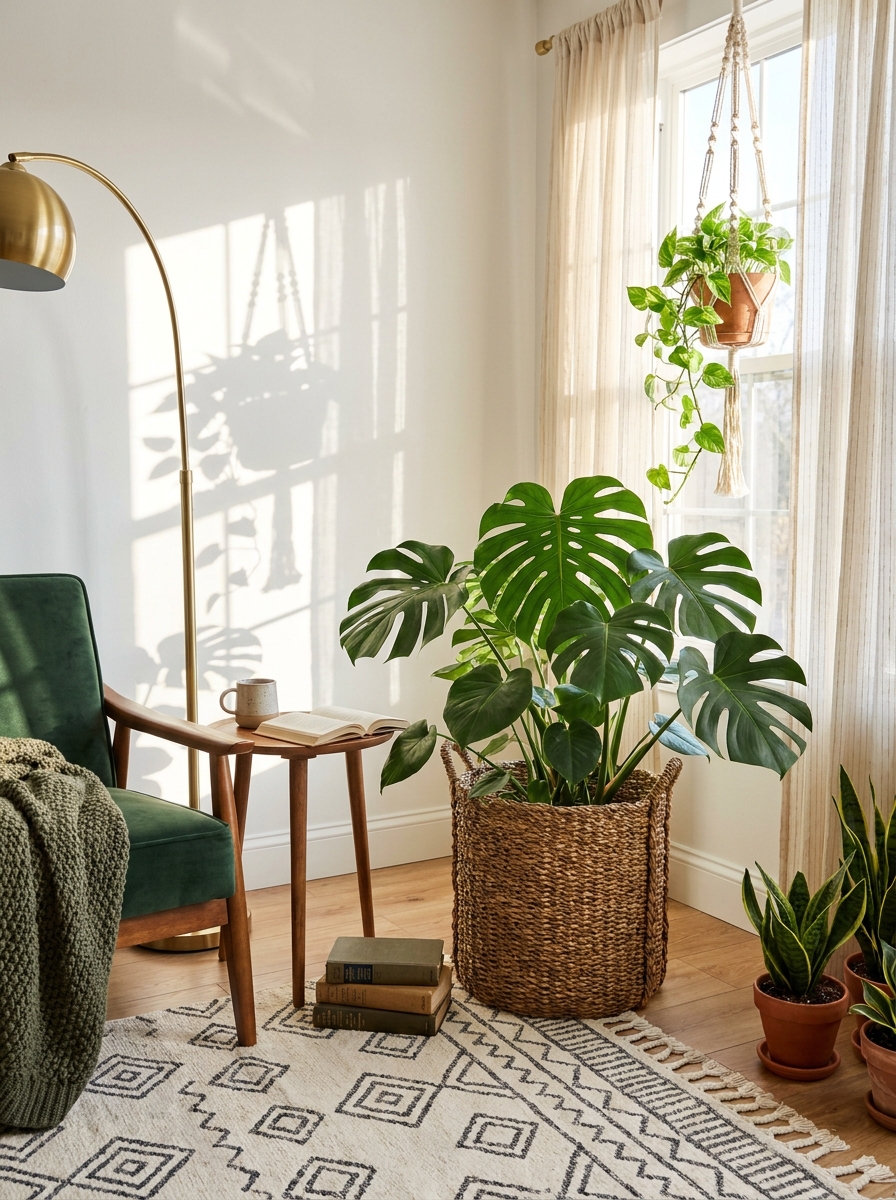
That awkward empty corner in your living room? That’s prime real estate for a big beautiful floor plant. I’m talking about the tall guys like fiddle leaf figs, bird of paradise, or a chunky monstera that makes a statement.
Floor plants are total game-changers because they fill vertical space without taking up your precious surface area. They soften hard corners and make rooms feel finished and alive. I put a huge monstera in the corner behind my reading chair and it completely transformed that dead zone into the coziest spot in the house.
The key is picking a plant that’s proportional to your space. Small corner? Go with a medium-sized snake plant. Big open corner? Bring in the drama with something tall and leafy. Set it in a woven basket or a stylish ceramic planter that matches your vibe. And honestly? One big plant often looks better and costs less than trying to fill that corner with furniture you don’t really need.
7. Create a Plant-Filled Window Sill Display
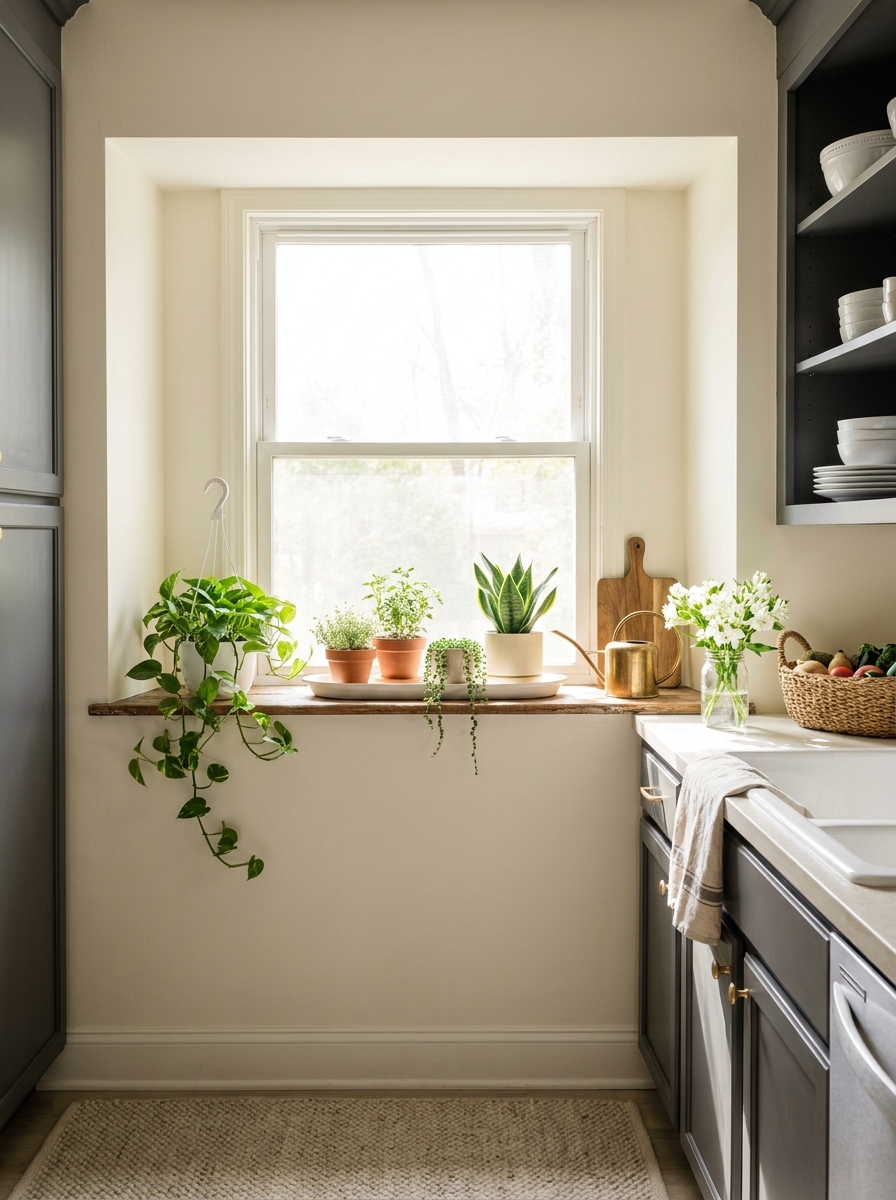
If you’ve got a sunny window, you’re basically sitting on plant gold. Window sills are the most natural spot for plants because, duh, that’s where the light is! But instead of just lining up random pots, think of it as creating a little living gallery.
I like mixing plant sizes and pot styles along the sill for that collected-over-time look. A tall skinny plant on one end, some medium guys in the middle, and maybe a trailing string of pearls spilling over the edge. It’s like styling a shelf, but everything is green and growing.
The best part? You walk by this view multiple times a day, so it genuinely makes you happier. My kitchen window sill has herbs mixed with a couple of pretty pothos, and I swear it makes doing dishes almost pleasant. Almost. Don’t forget to rotate your plants every week or so, because they’ll start leaning toward the light like they’re trying to escape.
8. Style a Bathroom Plant Moment
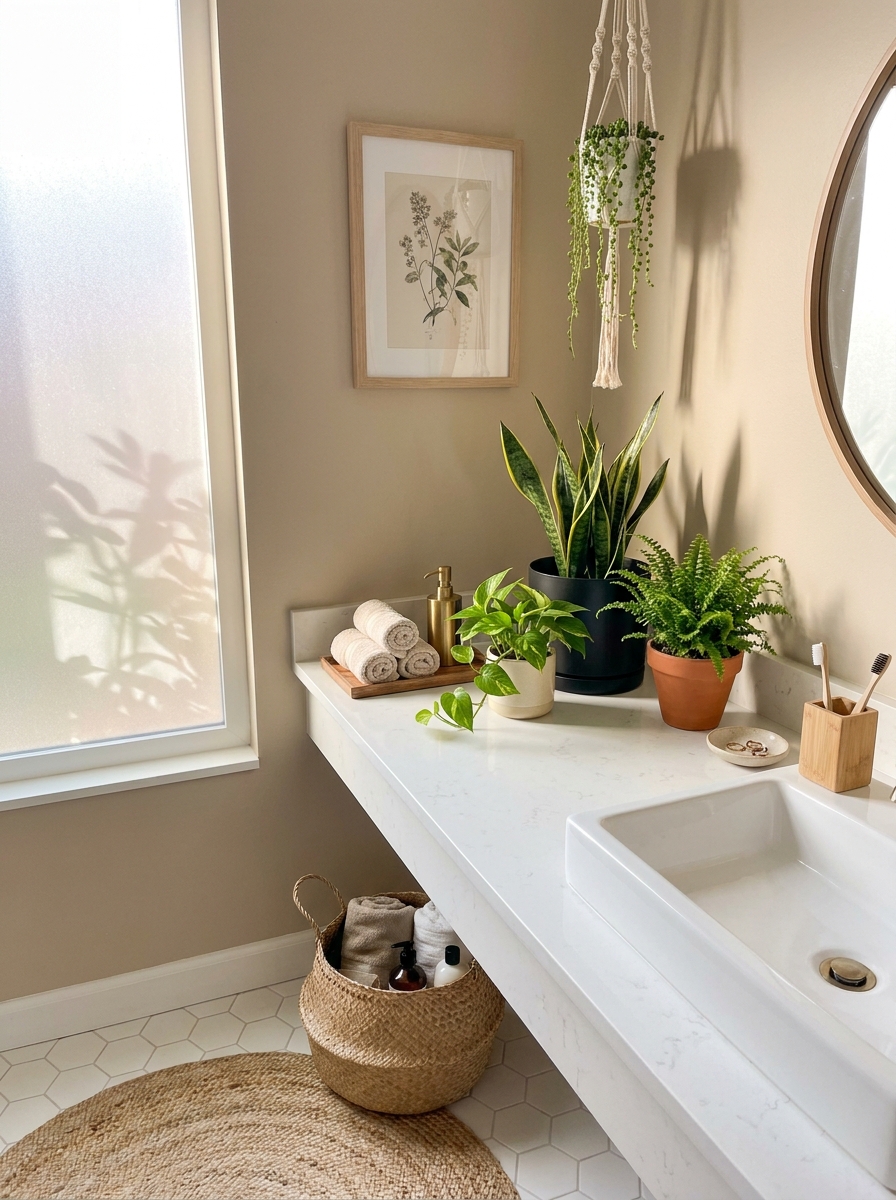
Okay, this one surprised me, but bathrooms are actually amazing for plants! The humidity from your shower creates this little spa-like microclimate that certain plants absolutely love. Plus, there’s something ridiculously luxe about having greenery in your bathroom.
Even if you have a tiny bathroom, you can squeeze in some plant life. Hang a pothos from the shower curtain rod (yes, really), put a snake plant on the back of the toilet, or line up small plants along the tub edge if you’ve got the space. Ferns, pothos, and snake plants are your best bets because they handle the moisture and often lower light.
I added three small plants to my bathroom counter, and it went from boring builder-grade to boutique hotel vibes instantly. It makes my morning routine feel special instead of rushed. Just avoid plants that need tons of direct sun unless you have a bright window situation going on.
9. Mix Live Plants with Dried Stems for Year-Round Interest
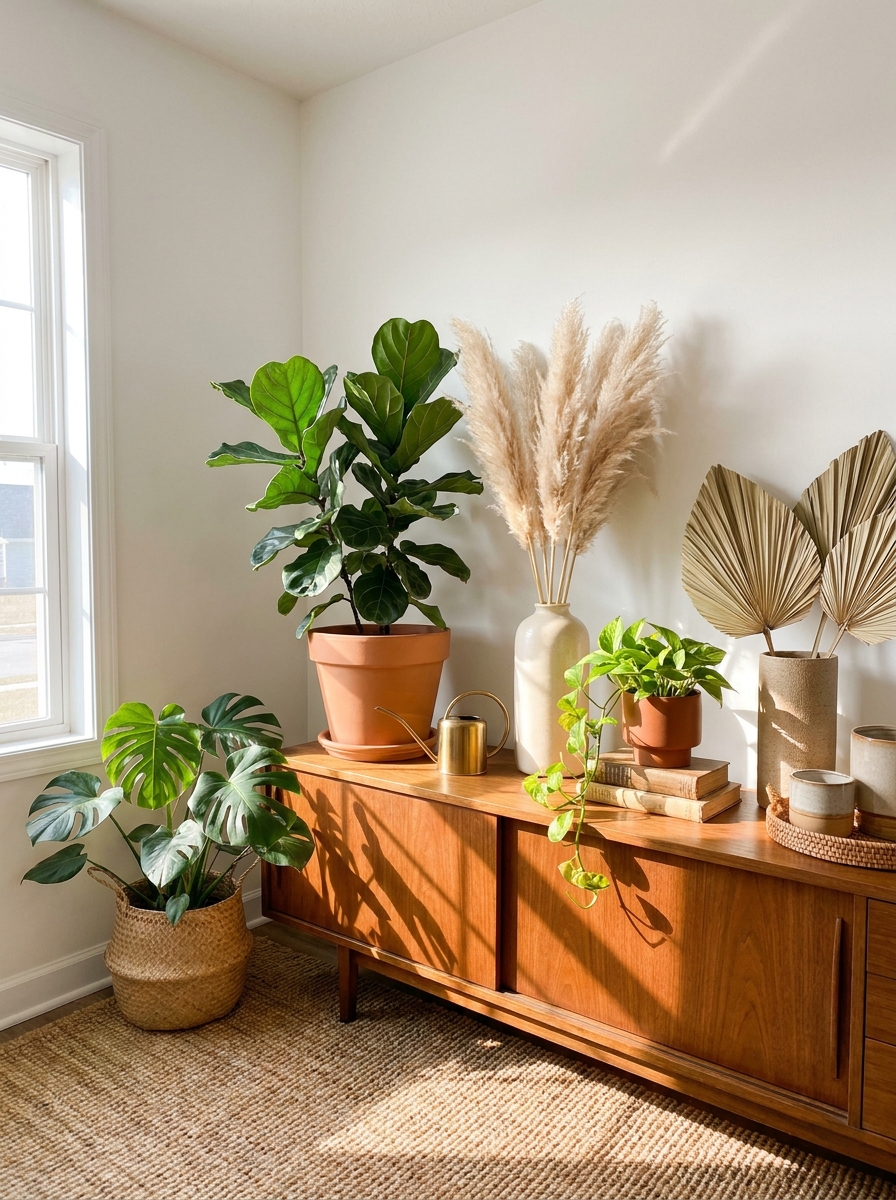
Here’s a styling trick that keeps things interesting even when you’re between plant shopping trips. I love combining my live potted plants with dried stems and grasses in the same space. It adds texture and height without needing more light or water.
Try placing tall pampas grass or dried palm leaves in a ceramic vase next to your fiddle leaf fig. The contrast between living green leaves and dried neutral tones creates such a beautiful, layered look. Plus, the dried elements give you that organic vibe without any of the care requirements.
I especially love this trick on shelves and credenzas where you want visual height but don’t have room for another big planter. A slim vase with dried eucalyptus branches next to a potted snake plant? Chef’s kiss. It makes the whole display feel more curated and intentional, like you really thought about the composition. And honestly, sometimes the dried stems steal the show.
10. Create a Living Wall with Mounted Planters
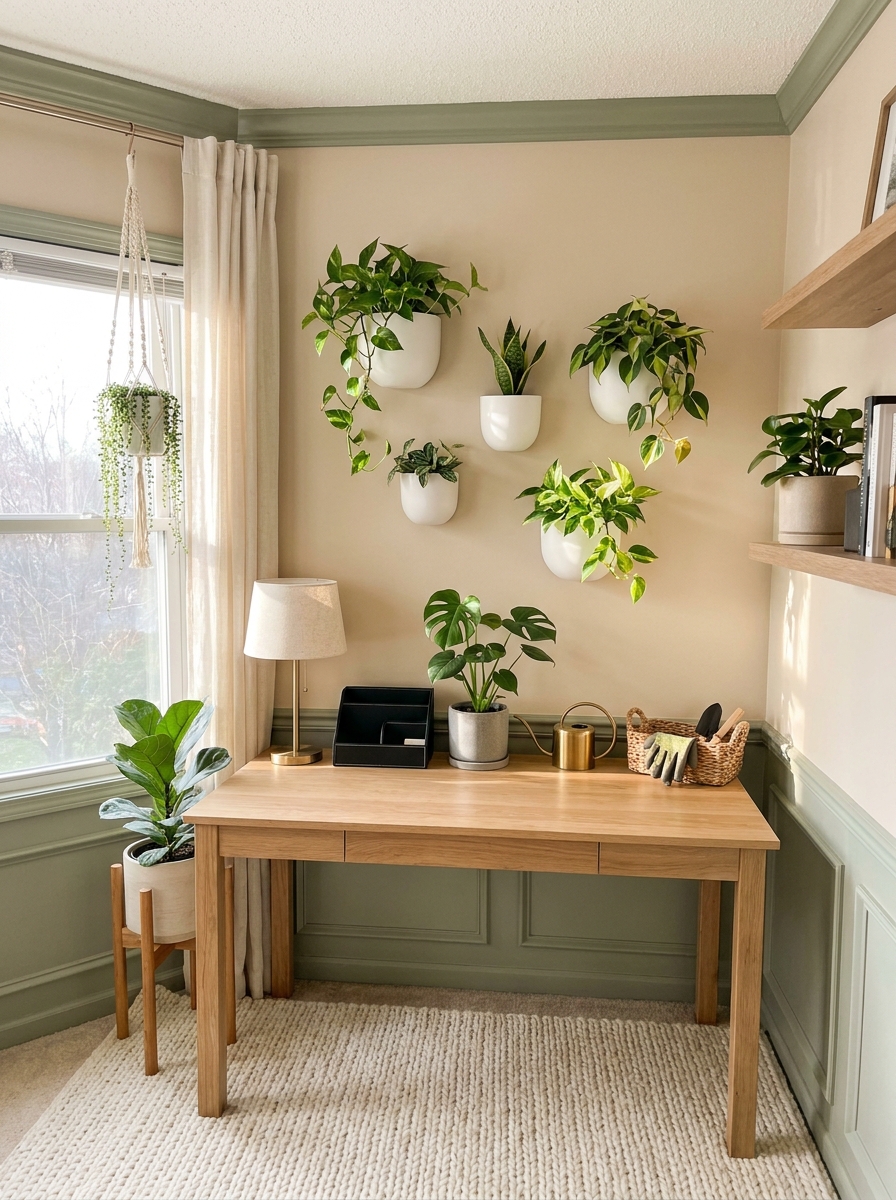
Okay, this one feels fancy but it’s actually pretty doable. Wall-mounted planters turn a blank wall into a living art installation. I’m talking about those little pockets or individual planters that you hang at different levels to create a vertical garden moment.
Start with three to five wall-mounted planters in the same finish—ceramic white or matte black looks clean. Arrange them in a loose cluster, not a perfect grid. You want it to feel organic, like the plants just naturally grew up the wall. Fill them with easy-care plants like pothos, philodendron, or small snake plants that won’t outgrow the space too quickly.
The beauty of a living wall is that it works in literally any room. I’ve seen them in entryways, above desks, next to beds, even in dining rooms. It’s a huge visual impact without taking up any floor space, which is perfect for small apartments or anyone who’s run out of horizontal surfaces.
11. Style a Plant-Focused Coffee Table Vignette
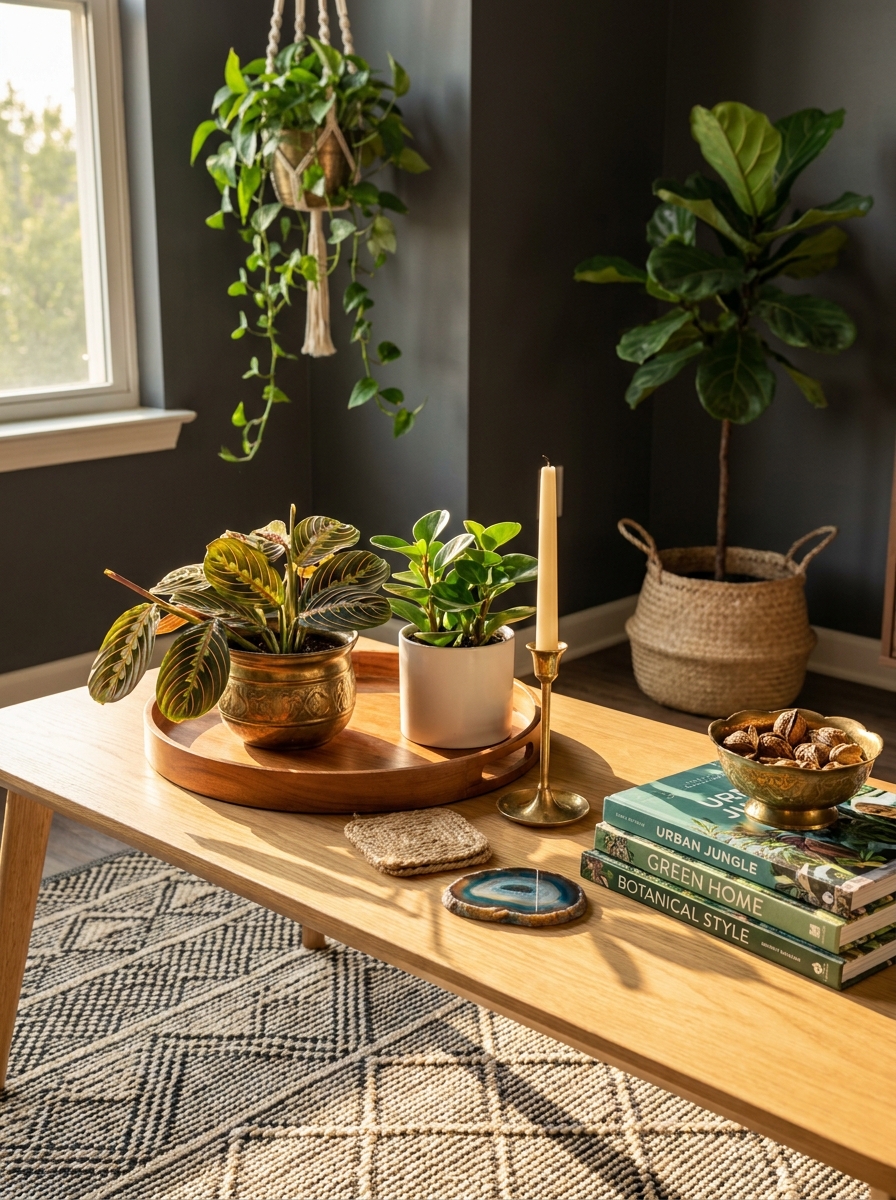
Your coffee table doesn’t just have to hold remotes and old magazines. I love using it as a mini plant display that makes the whole living room feel more alive. The trick is keeping it low and not blocking conversation across the table.
Choose one or two small potted plants with interesting leaves—maybe a prayer plant with its gorgeous patterns or a small peperomia with thick, sculptural foliage. Place them in low ceramic planters that won’t tip over easily. Then style around them with your usual coffee table stuff: a candle, a pretty tray, maybe a small stack of books. The plants become part of the everyday styling, not a separate thing.
I love how this brings life right into your main gathering spot. Every time you sit down with coffee or put your feet up, you’re surrounded by green. It makes the space feel so much more inviting and current. Just make sure whatever you choose can handle lower light if your coffee table isn’t right by a window.
12. Add Plants to Open Shelving in the Kitchen
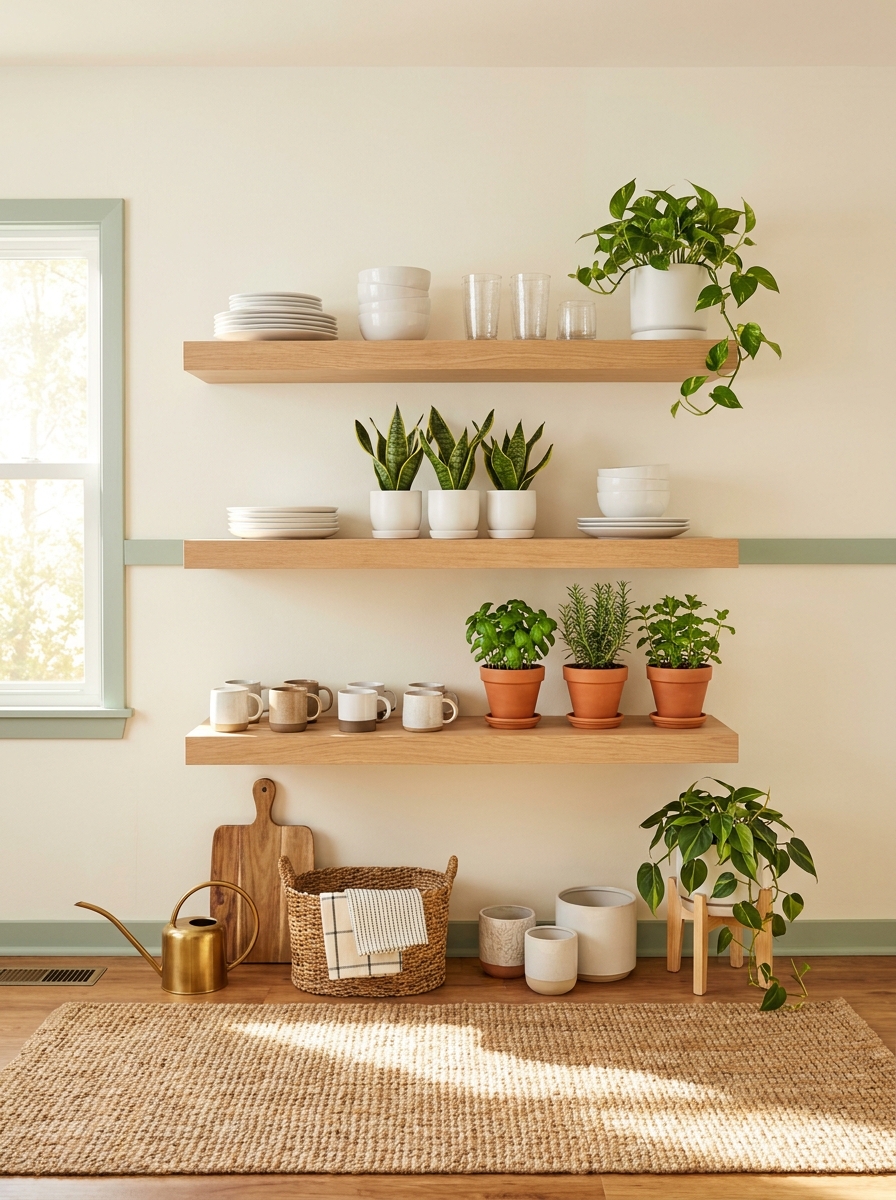
This is one of my absolute favorite ways to soften a kitchen. If you have open shelving, tucking a few small plants between your dishes and glassware makes everything feel less sterile and way more homey. It breaks up all those hard surfaces and straight lines.
Go for compact plants that won’t sprawl too much—pothos in small pots, a cute little succulent collection, or even fresh herbs if your shelves get decent light. Place them on different shelf levels so your eye travels up and down. One plant next to your coffee mugs, another by your dinner plates, maybe a trailing vine on the top shelf.
The key is not overdoing it. You still want your kitchen to feel functional, not like a garden center. Two to four small plants mixed in with your regular kitchen stuff is plenty. It adds personality and warmth without making it hard to reach what you actually need. Plus, having green in the kitchen just makes cooking feel better somehow.
13. Use a Rolling Bar Cart for Movable Plant Display
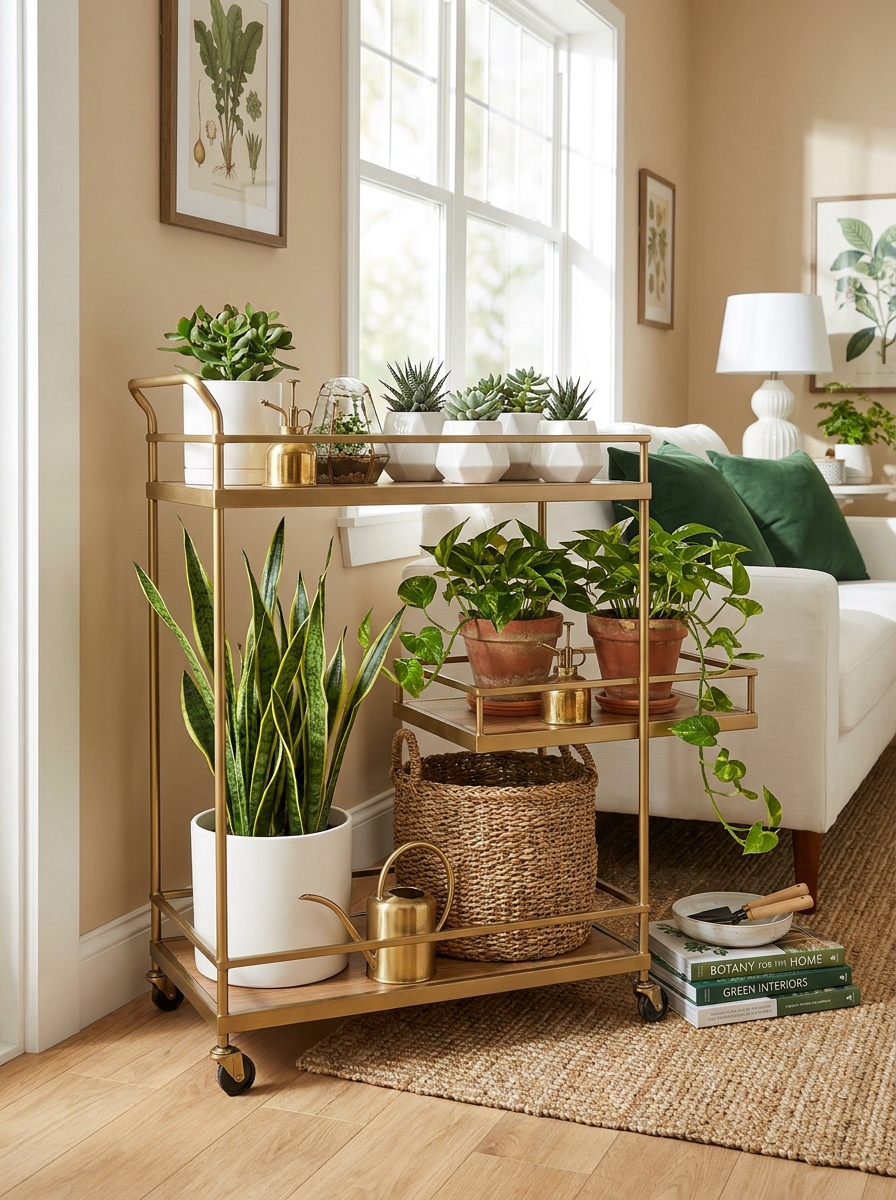
Okay, this is one of my favorite tricks! A bar cart isn’t just for cocktails anymore. I use mine as a rolling plant station that I can move around based on where the light is best. It’s genius because you can wheel it near a window during the day, then roll it back to your seating area when you have guests. Game changer.
Style it with plants at different heights. Put a tall snake plant on the bottom shelf, some medium-sized pothos in pretty pots on the middle tier, and smaller succulents or trailing plants on top. The key is mixing heights and textures so it looks curated, not cluttered.
I love that you can change this display seasonally or whenever you get a new plant baby. It’s like having a mobile plant gallery! Plus, it makes watering day so much easier because you can just roll the whole thing to your sink. No more carrying twenty individual pots back and forth. Trust me, your back will thank you.
14. Frame Your Headboard with Symmetrical Plant Styling
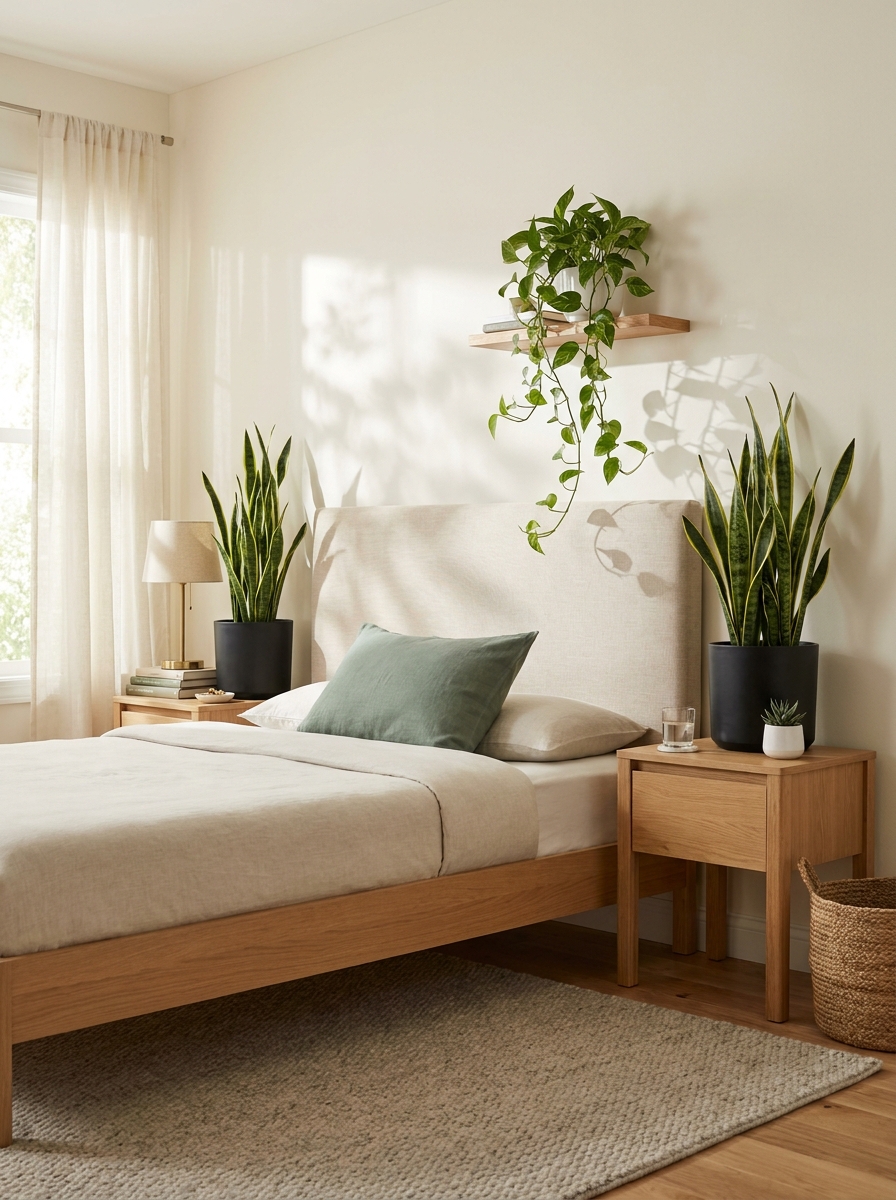
Your bedroom deserves the plant treatment too! I started flanking my headboard with matching plants on nightstands, and suddenly my whole room felt like a boutique hotel. There’s something so calming about waking up surrounded by greenery. It’s like bringing the spa home.
The trick here is symmetry. Use matching plants or at least similar heights on both sides of your bed. I’m obsessed with snake plants for this because they’re low-maintenance and have that perfect upright structure. They don’t sprawl all over your alarm clock or water glass, you know?
You can also add a trailing plant on a floating shelf above your headboard if you want to take it up a notch. Just make sure whatever you hang up there is secure! Nothing kills the zen bedroom vibe like worrying about a pothos crashing down at 3 AM. Go for lighter pots and use proper anchors. Your sleep sanctuary should feel peaceful, not precarious.
15. Create a Dining Table Centerpiece with Potted Plants
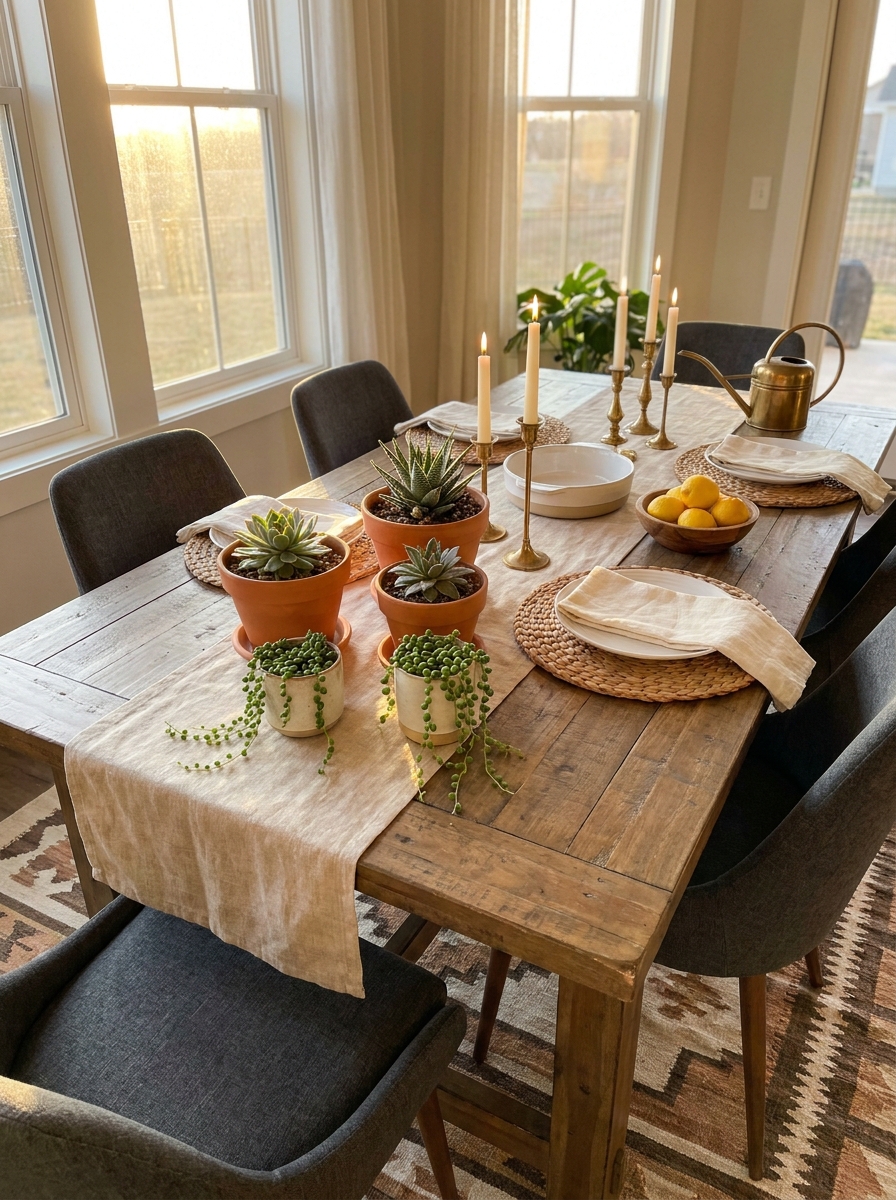
Forget fancy floral arrangements that die in three days. I’m all about using actual potted plants as my dining table centerpiece now. It’s more sustainable, way more interesting, and honestly? It looks so fresh and modern.
The secret is keeping it low. You want to be able to see and talk to people across the table, so choose plants that don’t block sightlines. I love clustering three to five small pots down the center of the table. Mix different leaf shapes but keep the pot style cohesive. All terra cotta or all white ceramic creates a pulled-together look without being boring.
For dinner parties, I sometimes add taper candles between the plants. The combo of flickering candlelight and green leaves? Chef’s kiss. It creates this intimate, restaurant-quality vibe that makes even Tuesday night pasta feel special. And unlike cut flowers, your centerpiece just keeps growing and getting better. Win-win!
16. Style Your Entryway with a Welcoming Plant Moment
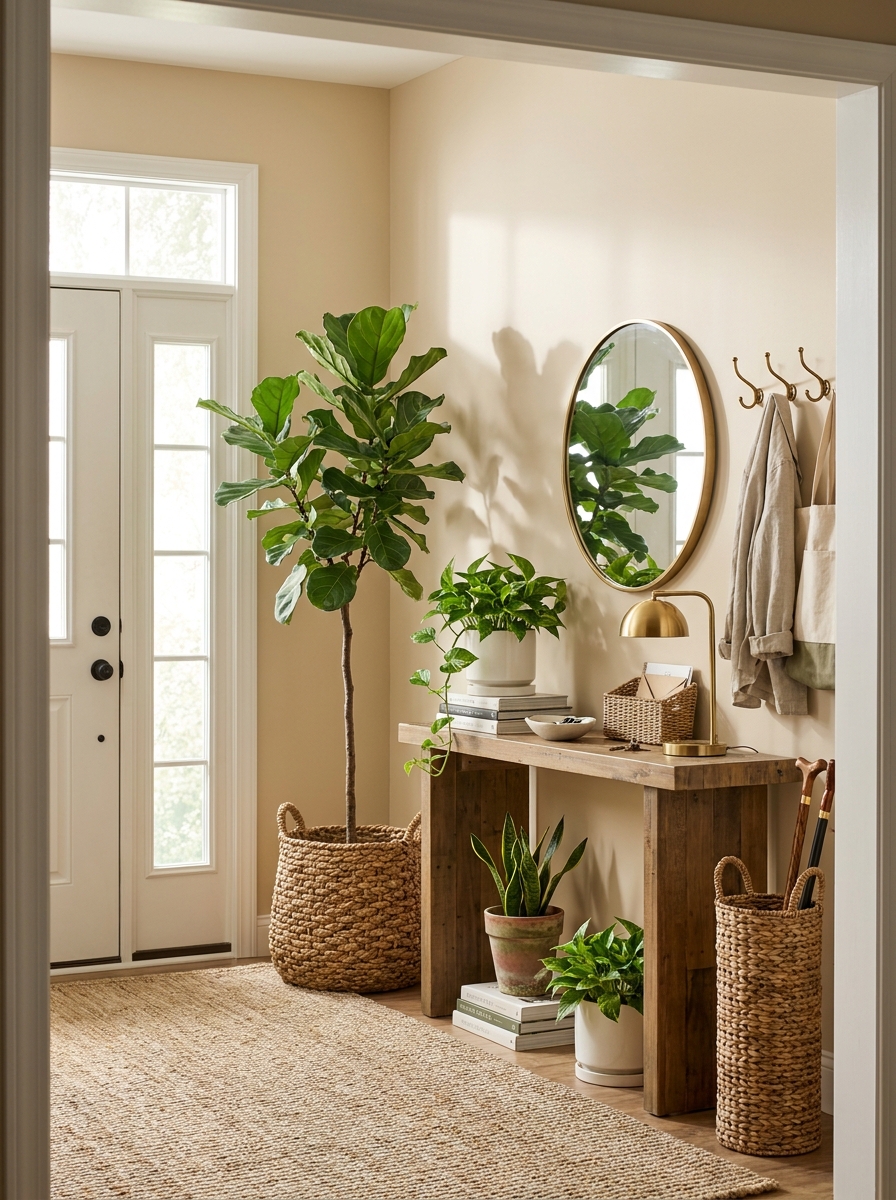
First impressions matter, and nothing says “welcome home” like a gorgeous plant greeting you at the door. Your entryway is prime real estate for a statement plant situation. I’m talking about creating that immediate wow factor the second you walk in.
If you have floor space, a tall fiddle leaf fig or monstera in a beautiful planter is absolutely perfect here. These big beauties fill vertical space and create drama without taking up too much square footage. Put it next to your console table or in an empty corner, and suddenly your entryway has personality.
Don’t have room for a floor plant? No problem! Style your console table with a collection of smaller plants mixed with your everyday essentials like your key bowl and mail basket. Layer in different heights with books or small risers. The goal is making your entryway feel intentional and alive. It sets the tone for your entire home, so make it count!
17. Build a Plant Collection on Floating Shelves
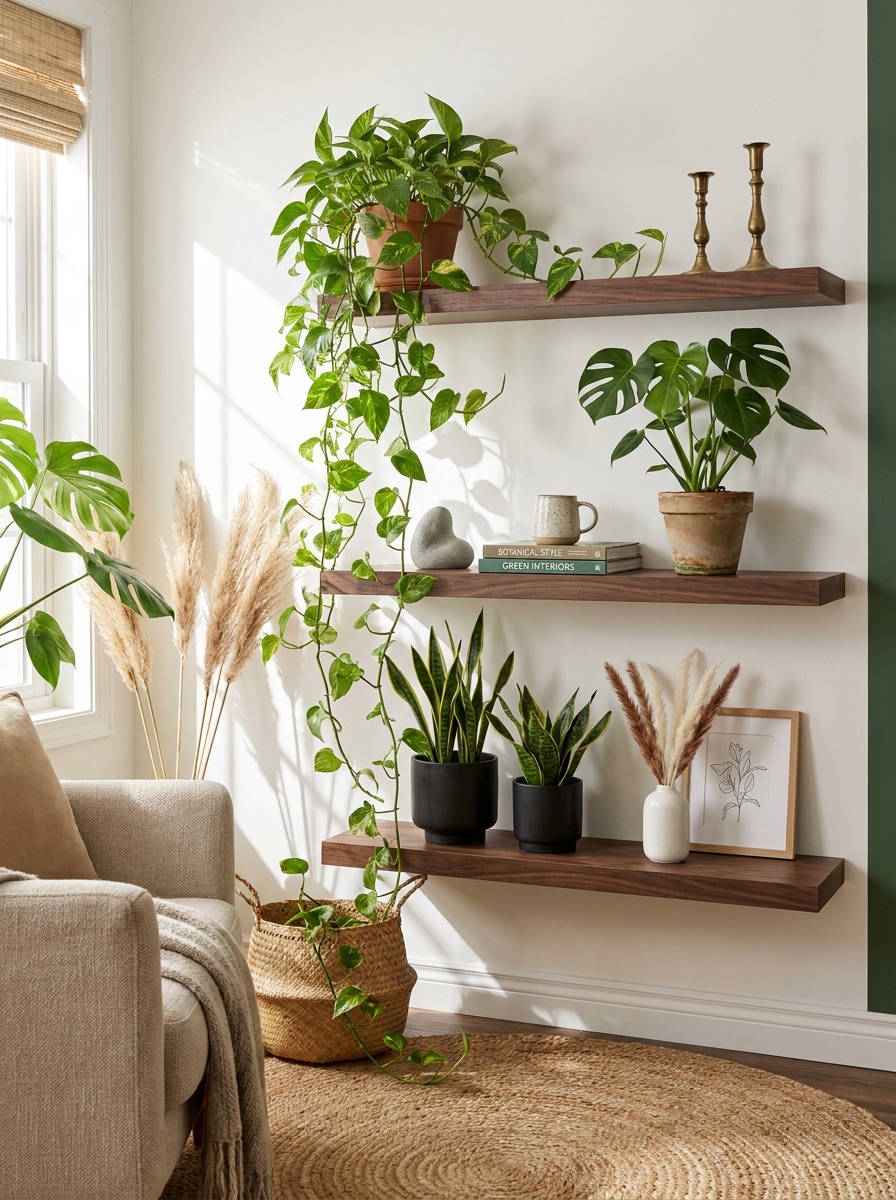
Floating shelves are honestly perfect for showing off a plant collection. You get to create this vertical garden situation without taking up any floor space, which is amazing for smaller rooms.
I love mixing different plant heights and pot styles on staggered shelves. Put a trailing pothos on the top shelf so it can cascade down, medium-sized plants in the middle, and maybe some small succulents or air plants on the lower shelves. The key is making it look collected over time, not matchy-matchy.
The other thing I love about this setup? You can totally style around your plants. Tuck in a few books, a small vase, maybe a framed photo. It makes the whole display feel intentional but still lived-in. And because the shelves float, your walls become this gorgeous green feature without overwhelming the room. It’s like plant styling and storage had a beautiful baby.
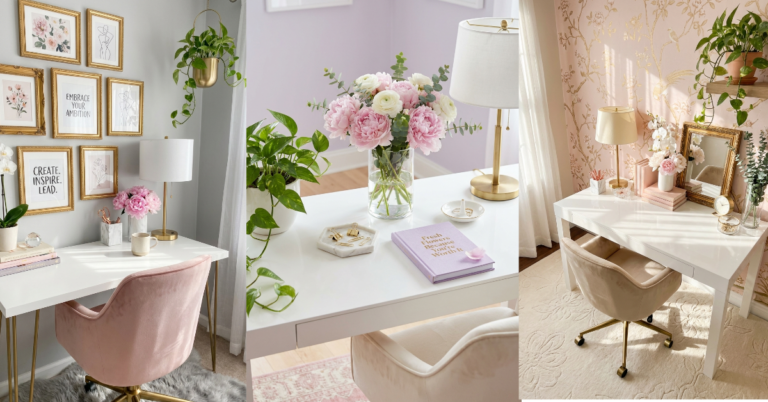
18. Transform Your Desk into a Plant-Powered Workspace
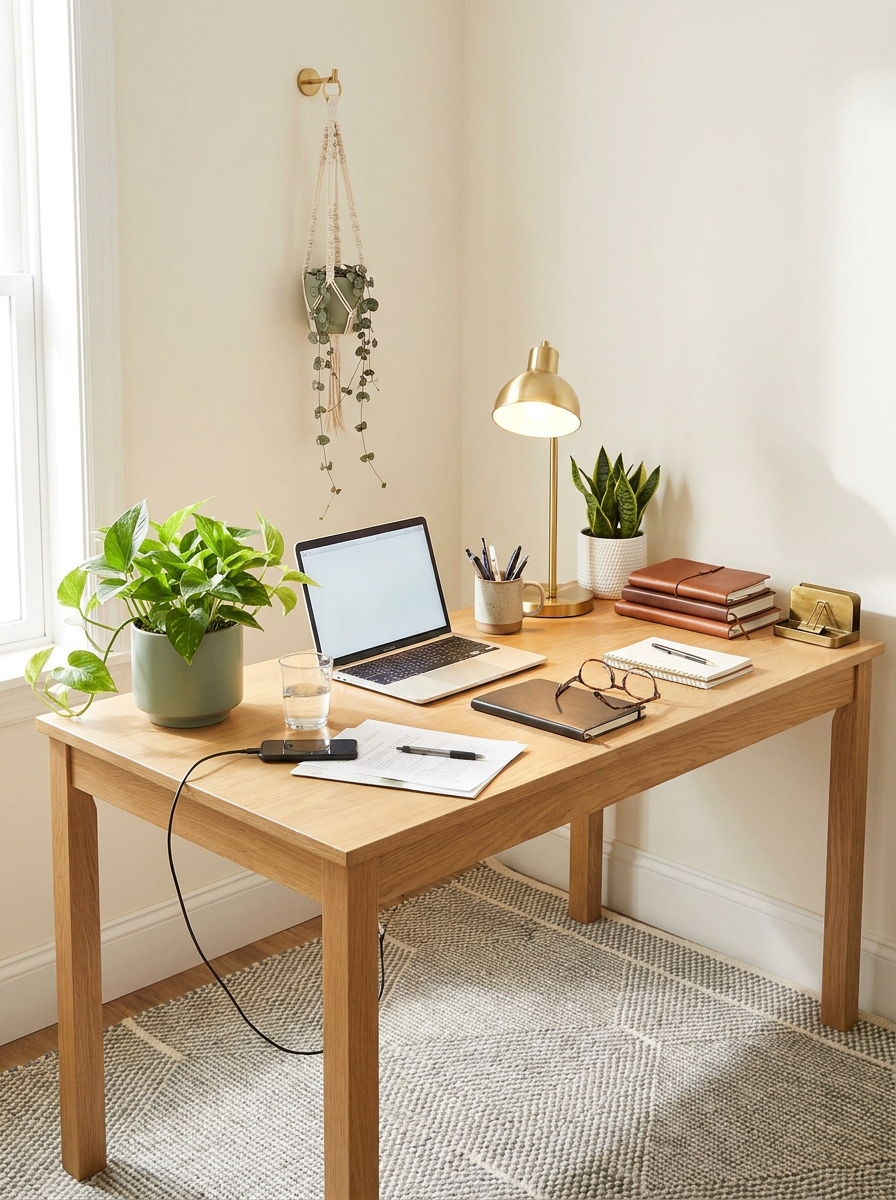
Working from home got a whole lot better when I started adding plants to my desk. Not just one sad succulent, but an actual little plant moment that makes me happy every time I sit down.
I like keeping smaller plants on my actual work surface—think pothos in a pretty ceramic pot, a snake plant that won’t judge me for forgetting to water, or even a tiny herb plant that smells amazing. The trick is choosing plants that don’t need a ton of fussing because, let’s be real, you’re trying to work here.
Position them where you’ll see them but they won’t be in your way. Next to your monitor is perfect, or clustered in the back corner of your desk. If you have a window nearby, even better. Plants near your workspace genuinely make the whole vibe more relaxed and focused. Plus, they give you something living to look at instead of just staring at a screen all day.
Quick Guide
Quick Guide: Matching Plants to Your Light Situation
Bright Direct Light (South-facing windows): Fiddle leaf fig, succulents, cacti, jade plant, croton. These sun-lovers will thrive and show their best colors.
Bright Indirect Light (East or West windows): Monstera, pothos, philodendron, prayer plant, most ferns. The goldilocks zone for most popular houseplants.
Low Light (North-facing or interior rooms): Snake plant, ZZ plant, pothos (they adapt!), cast iron plant, Chinese evergreen. These are your forgiving friends.
No Natural Light (Bathrooms, offices): Invest in a small grow light and you can grow almost anything. Or stick with ultra-low-light champions like snake plants and pothos.
Don’t fight your light situation. Work with it and your plants will actually survive.
Your Home, But Greener
Here’s the truth: decorating with plants isn’t about perfection. It’s about bringing a little life into your space and watching it grow alongside you. Some plants will thrive. Others might struggle. You’ll move them around, try different spots, and figure out what works through trial and error. And that’s completely okay. The beauty of plant decorating is that it’s never really finished — it evolves as your plants grow and as you discover what makes your space feel good. Start with one or two of these ideas. Maybe it’s a layered shelf or a simple hanging plant. See how it feels. Add more as you go. Before you know it, you’ll have that lush, lived-in look you’ve been pinning for months. Your home will feel fresher, more personal, and honestly just happier. So grab that plant you’ve been eyeing, find it a pretty pot, and give it a spot where you’ll see it every day. Your space is ready for a little green.
Frequently Asked Questions
What are the easiest indoor plants for decorating if I’m a beginner?
Start with pothos, snake plants, or ZZ plants. They tolerate low light, forgive inconsistent watering, and still look gorgeous. Pothos trails beautifully for shelves, snake plants add height and structure, and ZZ plants have that glossy, architectural look. All three are nearly impossible to kill and work in almost any decor style.
How do I style plants without making my home look like a jungle?
Less is more when you’re starting out. Choose specific zones for plants instead of scattering them everywhere — a dedicated shelf, a corner, a windowsill. Use matching or complementary pots to create cohesion. And mix plants with other decor objects so it feels curated, not cluttered. Three well-placed plants often look better than ten random ones.
What’s the best way to group plants together for maximum visual impact?
Vary the heights by using plant stands, shelves at different levels, or hanging some while others sit on surfaces. Mix leaf shapes and textures — pair big broad leaves with trailing vines and upright spiky plants. Use odd numbers like three or five plants in a grouping. And don’t forget to leave some breathing room between them so each plant gets noticed.
Can I decorate with plants in rooms that don’t get much natural light?
Absolutely. Choose low-light tolerant plants like snake plants, pothos, ZZ plants, or Chinese evergreens. You can also add a small grow light — they come in stylish designs now that don’t look clinical. Even a simple LED bulb in a regular lamp can supplement light. Just avoid placing sun-loving plants like fiddle leaf figs or succulents in dark corners.
How do I keep my plant decor looking fresh and not messy over time?
Wipe leaves down monthly to remove dust — it makes a huge difference. Trim dead or yellowing leaves right away. Rotate plants occasionally so they grow evenly. And don’t be afraid to rearrange things seasonally. Plants grow and change, so your styling should evolve too. What worked in winter might need adjusting by summer when everything’s grown six inches.