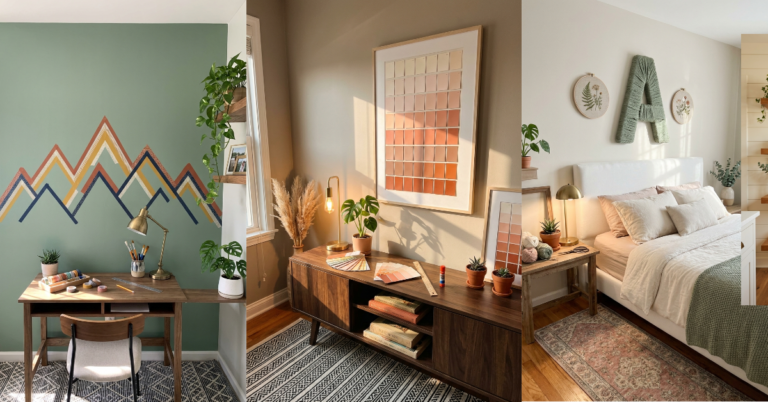
20 Genius Ways to Cover Ugly Rental Floors
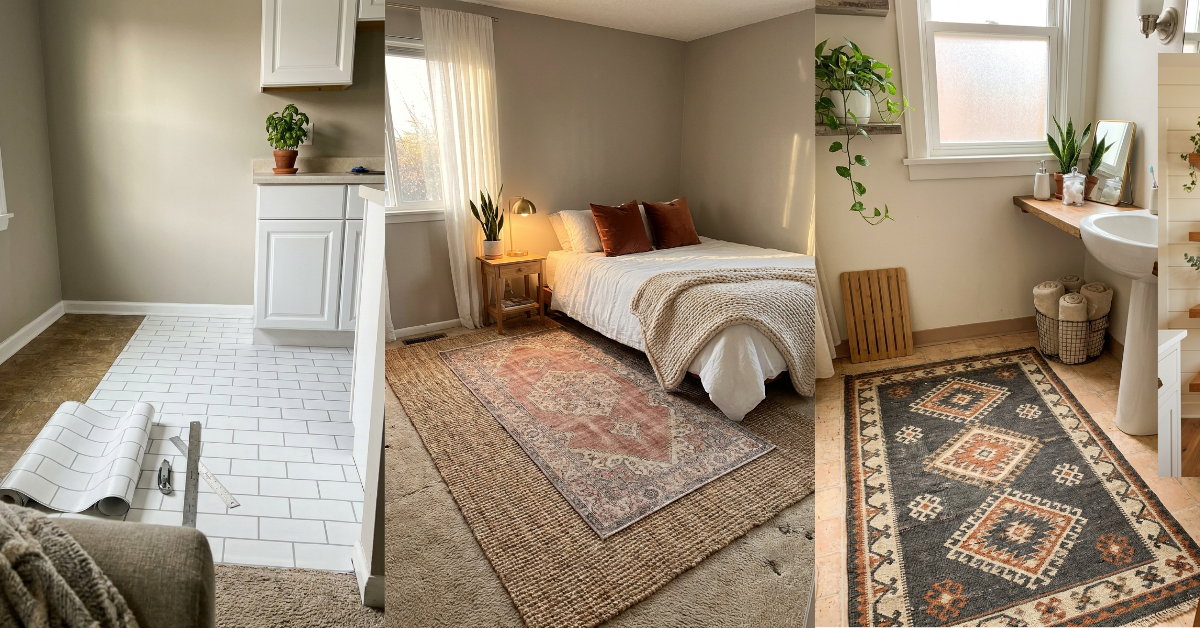
You walk into your new rental and your heart sinks a little. The floors are that weird brownish laminate from 2003. The counters have mysterious stains that won’t budge. And your landlord? Yeah, they’re not replacing anything anytime soon. But here’s the thing—you don’t have to live with ugly surfaces just because you’re renting. There are so many clever, removable ways to cover up the stuff that makes you cringe every single day. I’m talking peel-and-stick tiles that look like real marble, area rugs that hide entire kitchen floors, and contact paper that turns builder-grade counters into something you’d actually pin on Pinterest. You don’t need permission, you don’t need a huge budget, and you definitely don’t need to be handy. Just a little creativity and the right products. Here’s what actually works.
1. Large Area Rugs That Swallow Problem Floors Whole
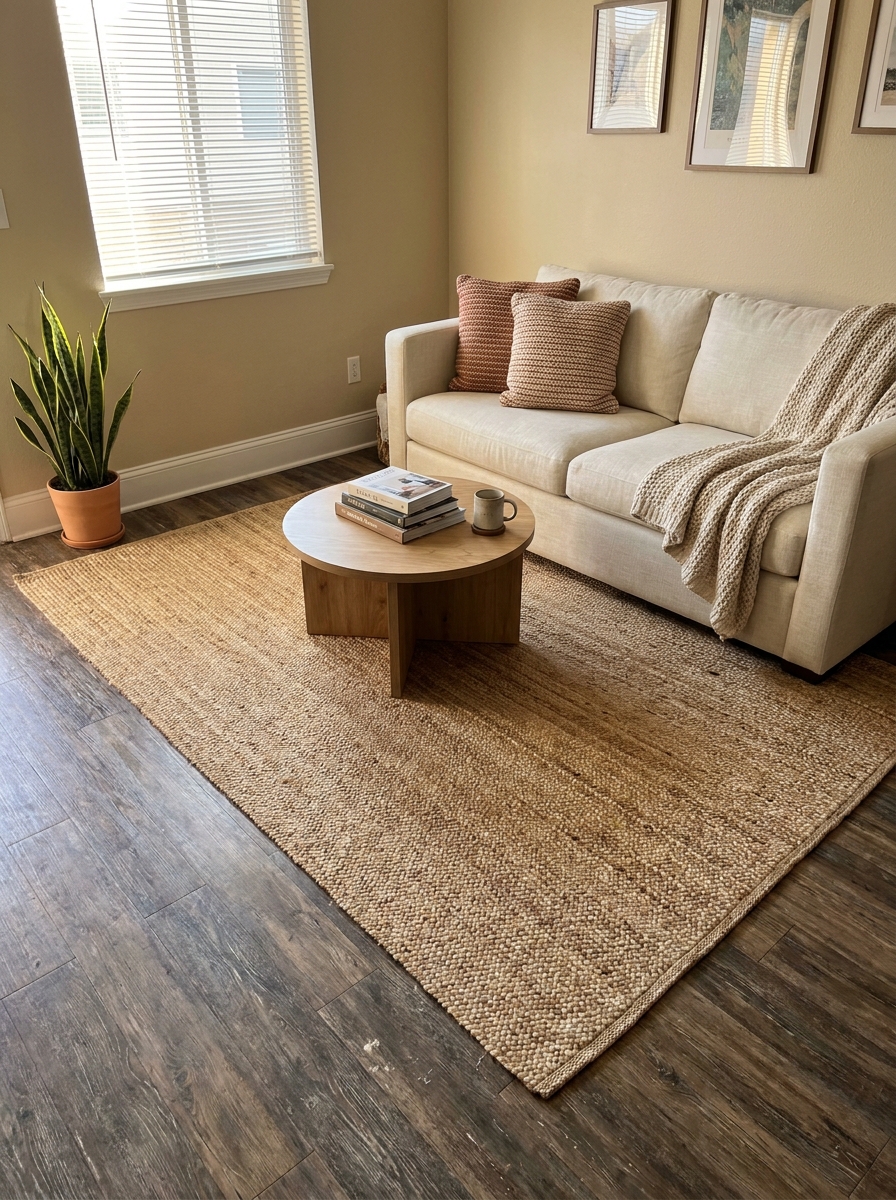
This is the fastest fix in the book. One oversized area rug can cover 90% of a hideous floor and completely change how a room feels. I’m talking about those big 8×10 or 9×12 rugs that anchor your whole space and make you forget what’s underneath.
The trick is going bigger than you think you need. Leave just a border of floor showing around the edges—maybe 12 to 18 inches. This creates a visual frame and makes the room look intentional instead of like you’re just hiding something. Which you totally are, but nobody needs to know that.
Jute rugs work beautifully for this because they’re affordable and they hide dirt like champions. Or go for a vintage-style Persian rug if you want something with more personality. Washable rugs are your best friend if you’re covering kitchen or dining areas. And here’s the bonus: when you move out, you roll it up and take it with you. Your landlord gets their ugly floor back, and you get to keep the rug you actually love.
2. Peel-and-Stick Vinyl Floor Tiles for a Faux Renovation
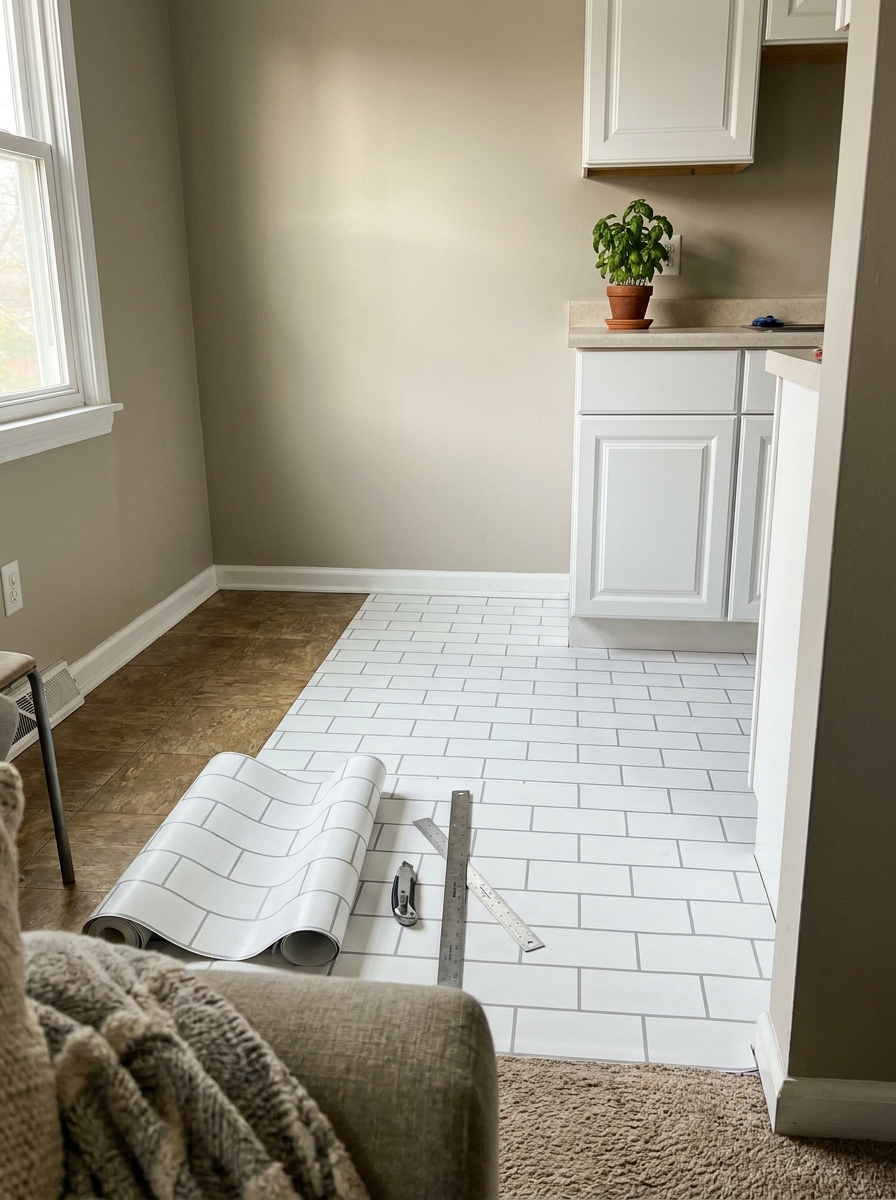
Okay, this one takes a little more effort, but the payoff is incredible. Peel-and-stick vinyl tiles have come such a long way. They don’t look cheap anymore—some of them genuinely look like real ceramic tile or hardwood planks. And the best part? They’re completely removable when your lease is up.
You can cover a small bathroom floor in an afternoon. Just clean the existing floor really well, plan your layout so the tiles are centered, and stick them down. Some people worry about damaging the floor underneath, but as long as you’re not putting them on damaged or freshly waxed floors, they peel right up.
I’ve seen renters transform entire kitchens with black-and-white checkerboard tiles or create a spa-like bathroom with marble-look hexagons. The transformation photos are wild. One day you have sad beige linoleum, the next day you have a floor you’d see in a boutique hotel. It’s not permanent, but it feels like it could be. And that’s the magic of it—you get the satisfaction of a renovation without losing your security deposit.
3. Marble Contact Paper That Transforms Dated Countertops
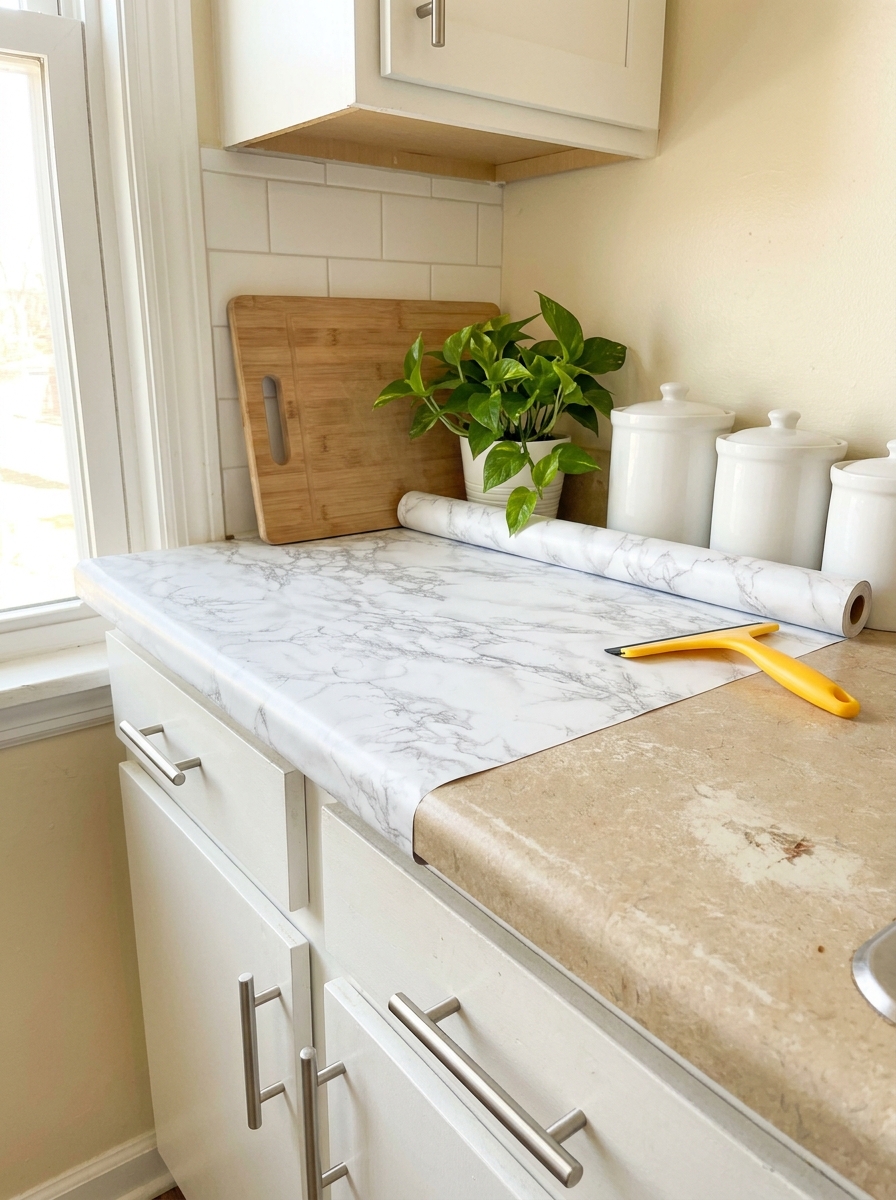
Contact paper is the unsung hero of rental makeovers. The marble patterns available now are shockingly good—if you apply it carefully, people will do a double-take and ask if you got new counters. It’s that convincing.
The key is in the prep and the application. You need to clean and dry your counters like your life depends on it. Any grease or dust will show up as bubbles later. Then you measure, cut slightly oversized pieces, and smooth it down slowly with a credit card or squeegee. Take your time on this. Rushing leads to wrinkles and air pockets that’ll drive you crazy.
I love using it on those beige laminate counters from the ’90s or the weird speckled ones that came in every apartment in 2005. Suddenly you have Carrara marble or matte black granite. It holds up pretty well to normal use, though you’ll want to use cutting boards and trivets. And when you move? Peel it off and take it with you if you want, or leave it as a gift to the next tenant. Either way, you’re out maybe fifty bucks and you got to enjoy beautiful counters.
4. Layered Rugs for Extra Coverage and Personality
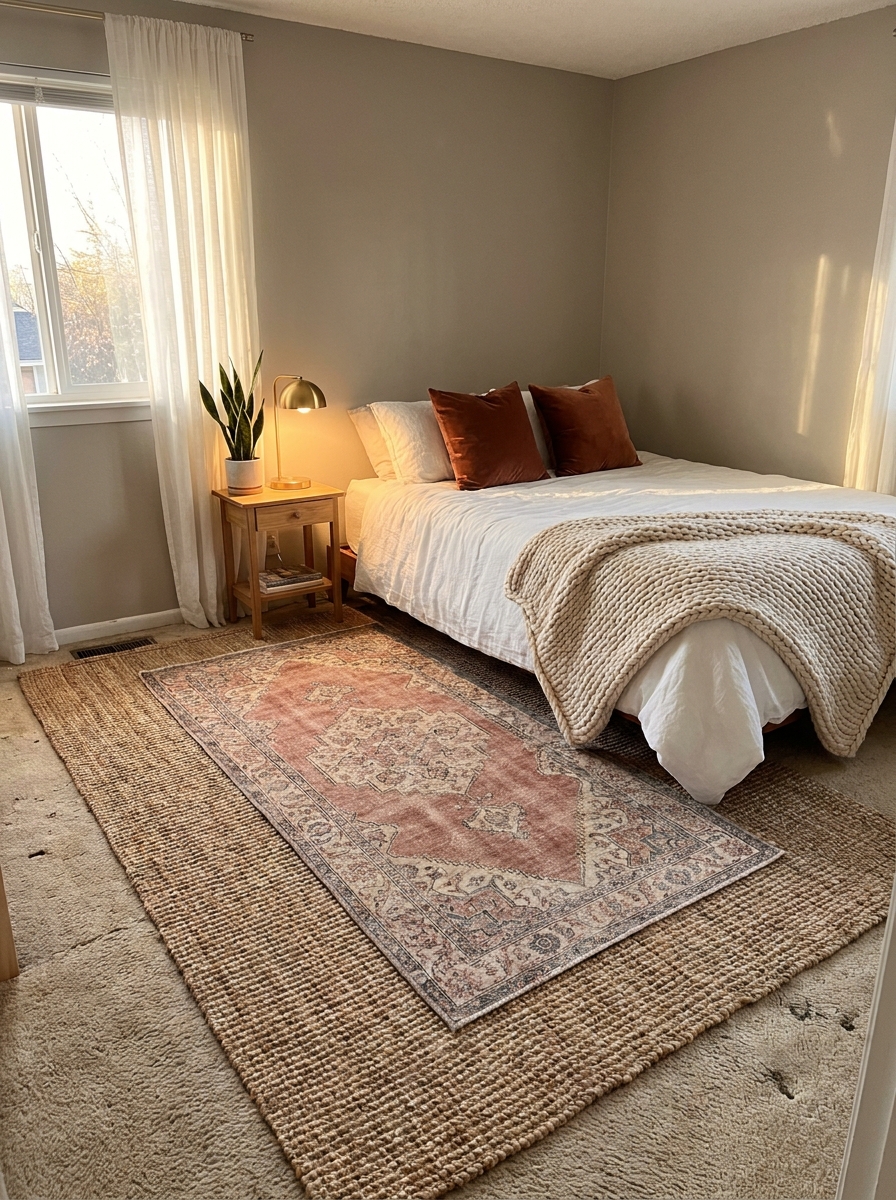
Sometimes one rug isn’t enough to cover all the ugly, and that’s where layering comes in. It sounds fancy, but it’s actually super practical. You put down a large neutral base rug—usually jute or a flat-weave—and then layer a smaller, prettier rug on top. Boom. Double the coverage, double the style.
This works especially well in living rooms and bedrooms where you want to define different zones. The bottom rug hides the bad floor, and the top rug adds color and pattern and makes everything look curated. Plus, layering gives you that collected, traveled look without actually spending years hunting for the perfect vintage finds.
I’ve seen people layer a cream shag over jute, a colorful Turkish rug over sisal, even a faux sheepskin over a basic flat-weave. The combinations are endless. And the practical side? That bottom layer protects your top rug from whatever horror is happening with the floor underneath. It’s coverage insurance. Your pretty vintage runner doesn’t have to touch that mystery-stained carpet. That’s what the boring base rug is for.
5. Interlocking Foam Floor Tiles for Workout and Play Areas
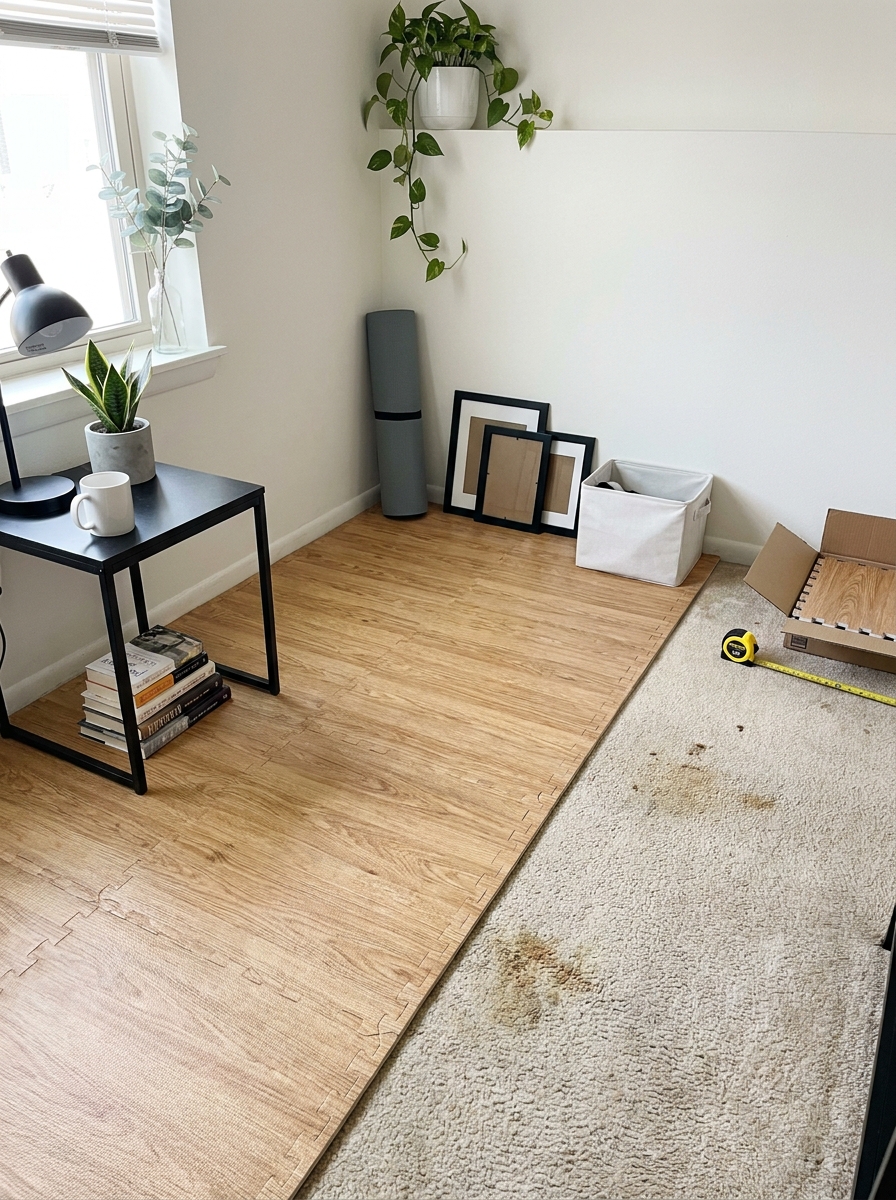
Okay, hear me out on this one. Those foam tiles aren’t just for gyms anymore. If you’ve got a room with truly awful flooring—we’re talking stained, cracked, or just plain depressing—interlocking foam tiles can completely cover it up. And they’re shockingly stylish now!
I love using them in home office corners or even under dining tables in rentals where the floor is beyond help. They come in wood-look finishes, sleek gray tones, even fun geometric patterns. You literally just snap them together like a puzzle. Zero tools required.
The best part? They’re cushy underfoot, which makes standing at your desk or playing with kids so much more comfortable. When you move out, pop them apart and take them with you. I’ve seen renters cover entire studio apartments with these, and it looks intentional and modern—not like a gym at all. Just pick a neutral color and commit to the whole space. It actually works.
6. Removable Wallpaper on Countertop Backsplashes for Vertical Drama
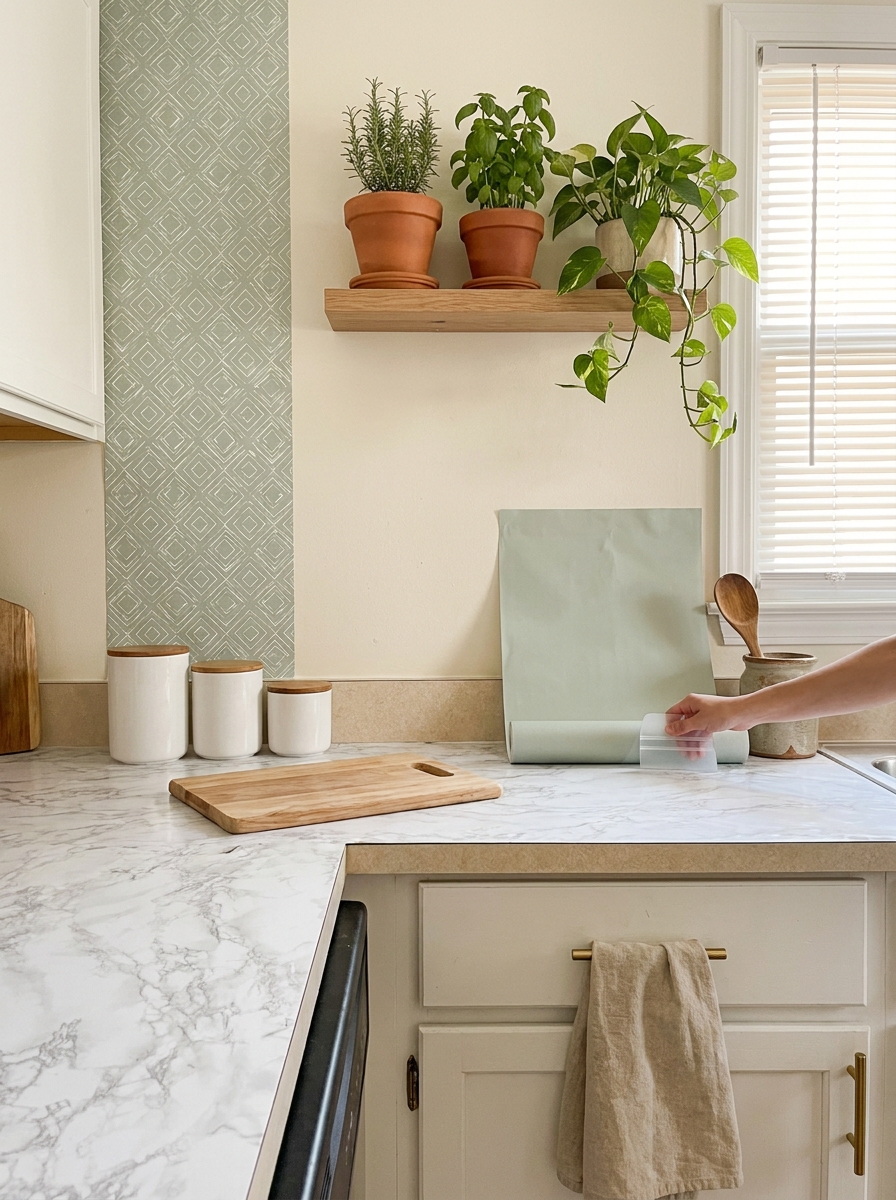
Why does everyone forget about the backsplash? If your rental counters are ugly, chances are the wall behind them isn’t winning any awards either. Removable wallpaper on that vertical space draws the eye UP and away from the countertop crimes below.
I’m obsessed with this trick for kitchens and bathrooms. Use a bold geometric pattern, a soft floral, or even faux subway tile wallpaper. It makes the whole area feel custom and intentional. And because you’re only covering a small section—just the backsplash zone—one roll usually does the job. Budget win!
The magic happens when you pair this with contact paper on the actual counter. Suddenly you’ve got a coordinated look that feels like a real renovation. Nobody’s looking at that dated laminate anymore because their eyes are busy admiring your gorgeous backsplash. It’s visual misdirection at its finest, and I’m here for it.
7. Temporary Floor Runners for Hallways and High-Traffic Zones
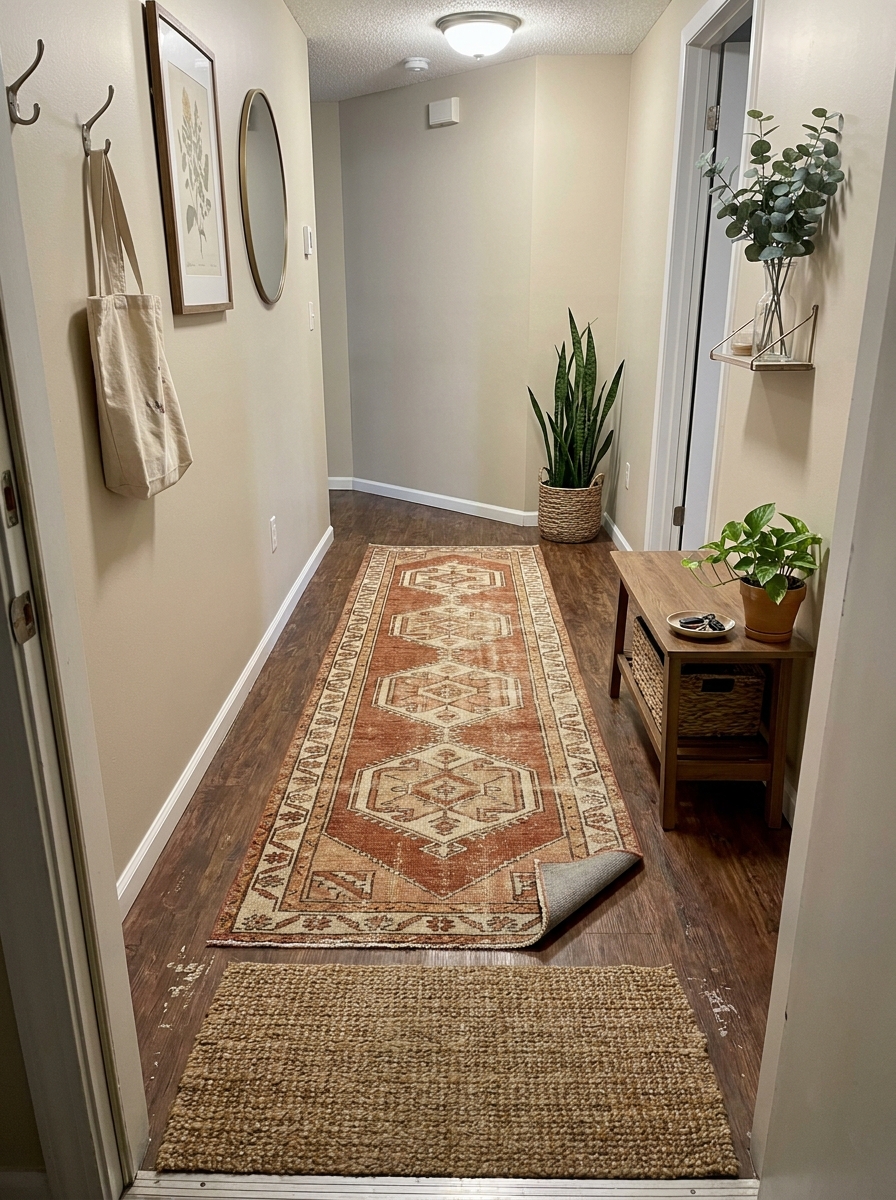
Hallways get zero love in rental decorating, but they’re usually where the worst flooring lives. Those narrow spaces show every scuff, stain, and mystery mark. Enter the humble floor runner—your new best friend.
I’m not talking about those slippery decorative runners your grandma had. Modern washable runners come in gorgeous patterns and actually stay put with the right rug pad underneath. They’re perfect for covering that tragic path from your front door to the kitchen where the previous tenant clearly had a shoe problem.
The trick is going bold here. Since it’s a narrow space, a runner with personality—stripes, vintage patterns, even animal print—makes the hallway feel like an intentional design moment instead of an afterthought. And when something spills or your dog tracks in mud? Toss it in the wash. I keep a backup runner for rotation because hallways work hard in our homes.
8. Butcher Block Covers That Sit On Top of Existing Counters
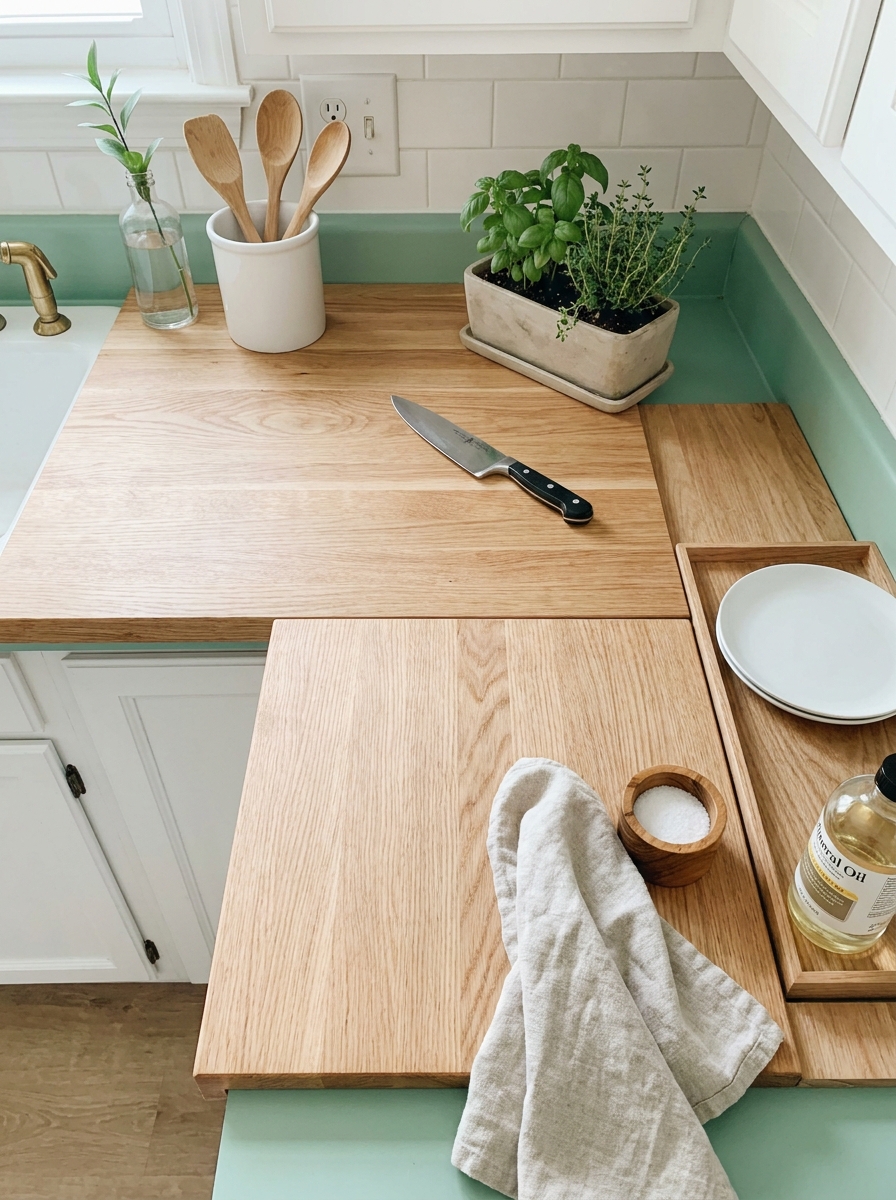
This one’s a game-changer for kitchens with truly hopeless countertops. Butcher block cutting board covers—the kind that sit directly on your existing counter—create a whole new surface without any permanent changes. I’m talking about the large ones, not the tiny chopping boards.
You can find affordable butcher block pieces at home improvement stores, or go vintage and hunt for old breadboards and wooden trays at thrift shops. Arrange them across your counter space, especially around your prep and sink areas. They cover the ugly laminate and give you a warm, natural work surface that actually functions.
I style mine with purpose—one near the stove for hot pots, another by the sink for produce prep, a long one covering that weird seam in the counter. It looks curated and chef-inspired, not like you’re hiding something. Plus, wood adds instant warmth to sterile rental kitchens. When you move, they stack up and travel with you.
9. Vintage-Style Rugs That Hide Bathroom Linoleum Disasters
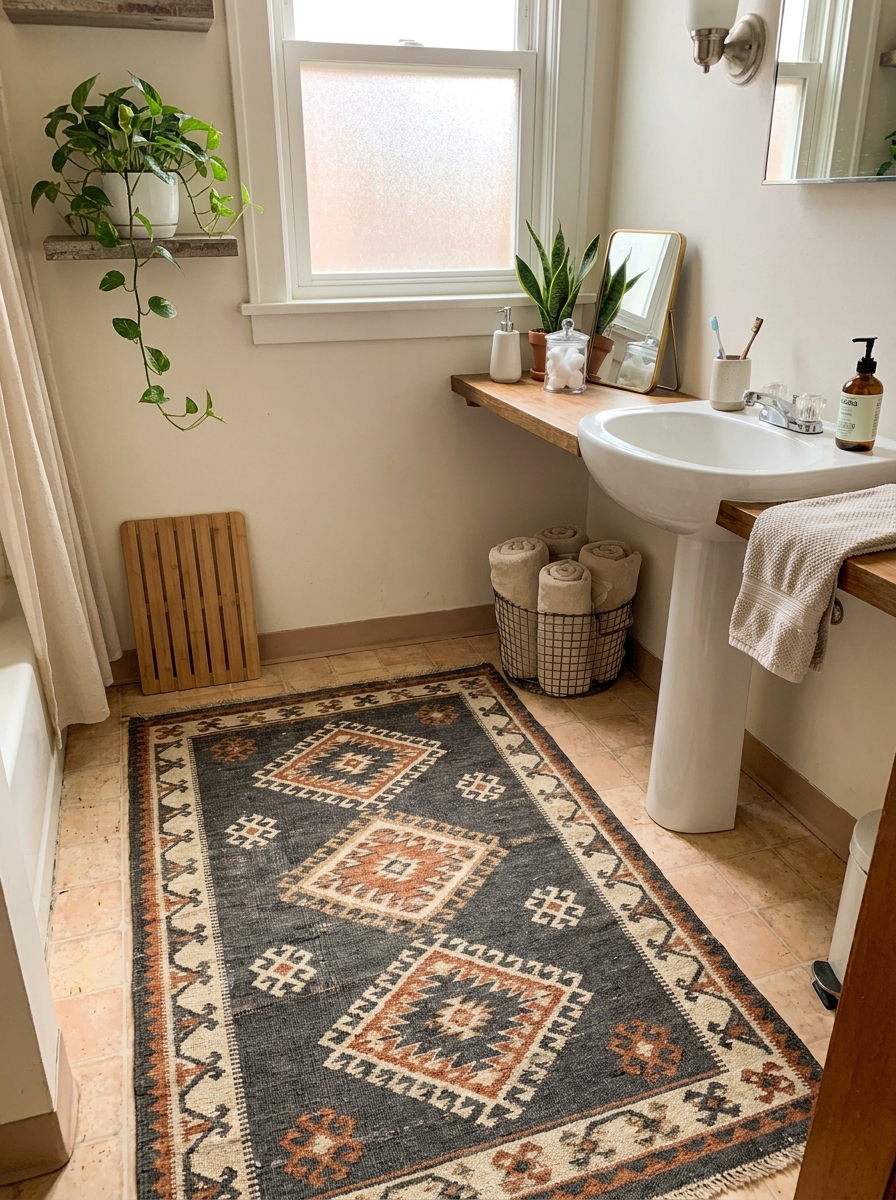
Okay, I know what you’re thinking. Rugs in a bathroom? But hear me out. If you’re dealing with cracked, yellowed, or just plain depressing bathroom linoleum, a good washable rug changes everything. I’m talking about those vintage-inspired, low-pile rugs that can handle moisture and look intentional, not like you’re trying to hide a crime scene.
The trick is choosing something that covers most of the floor without looking bulky. Flatweave cotton rugs work beautifully because they dry fast and you can toss them in the washing machine whenever they need a refresh. Go for patterns that distract from what’s underneath — geometric prints, faded Persian styles, or even bold stripes.
I transformed a bathroom with the grossest peachy-pink linoleum by layering a large charcoal and cream flatweave rug right over it. Suddenly the whole room felt boutique-hotel chic instead of 1987 rental special. Just make sure you use a non-slip pad underneath so you don’t end up doing the splits reaching for your toothbrush.
10. Peel-and-Stick Backsplash Tiles That Fake Expensive Renovations
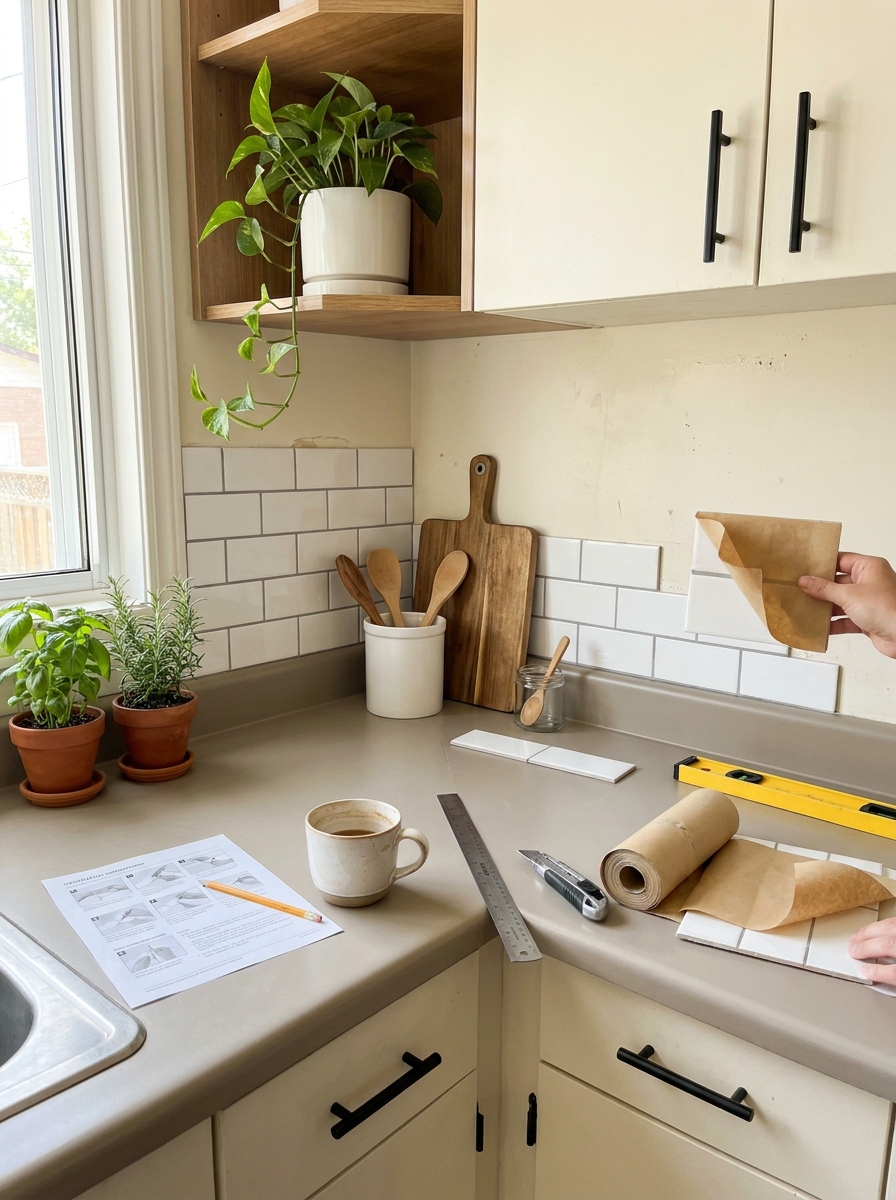
You know those subway tile backsplashes that make a kitchen look instantly expensive? You can fake that entire look with peel-and-stick tiles. I’m obsessed with these because they take maybe an afternoon to install and they stick right over your existing backsplash or directly onto painted walls.
The best part? They actually look real. The good ones have dimensional texture and a slight gloss that catches light like actual ceramic tile. I’ve seen renters use classic white subway tiles, Moroccan-inspired patterns, even marble hexagons. They completely change how your kitchen feels without touching a single permanent surface.
Measure your space first, then order a sample tile to test on your wall. Some brands stick better than others, and you want to make sure the adhesive works with your wall texture. Cut them with scissors or a utility knife, press firmly, and suddenly your dated kitchen looks like it belongs on a home tour. When you move out? They peel right off without damaging paint. I’ve done this in three different rentals now and I’ll never stop.
11. Faux Sheepskin Rugs That Soften Ugly Bedroom Carpet
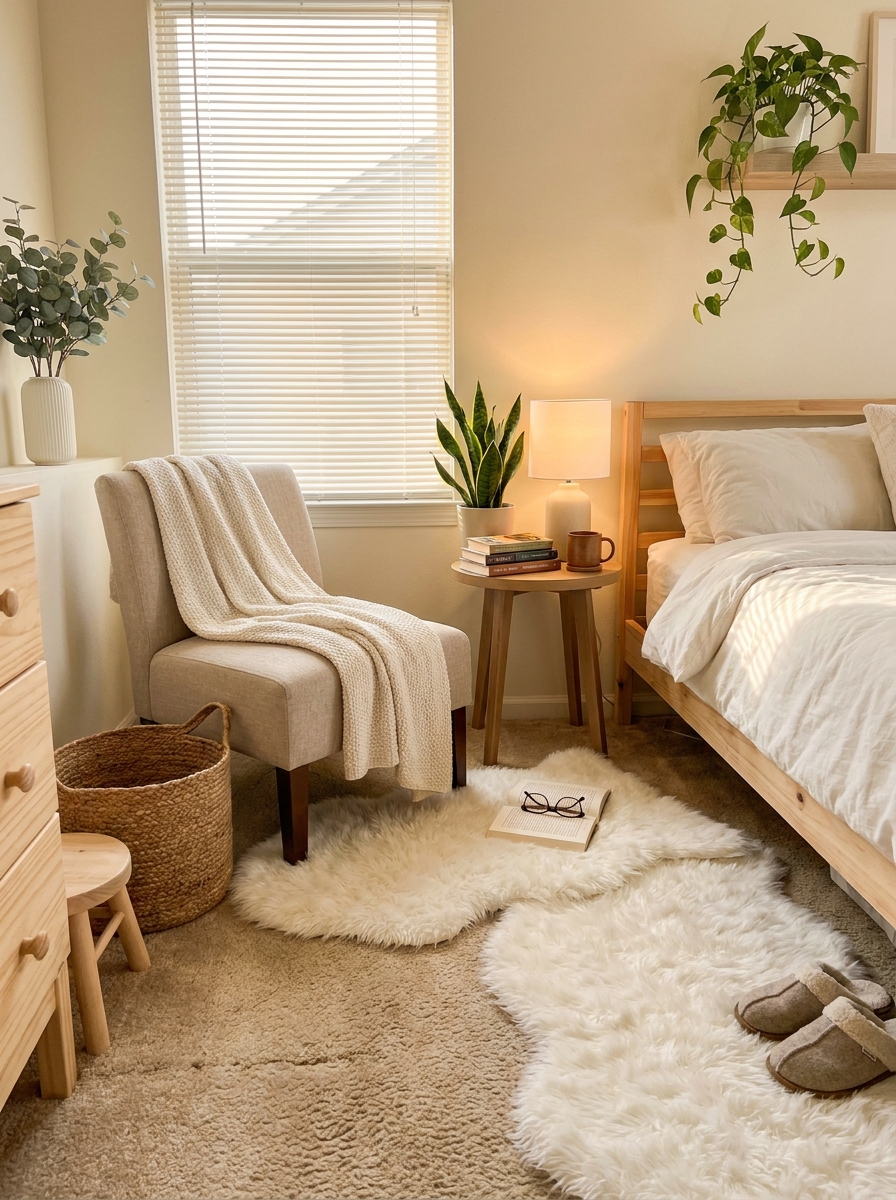
Sometimes your rental carpet isn’t damaged, it’s just aggressively ugly. Like builder-grade beige or that blue-gray color that makes everything look sad. Enter faux sheepskin rugs. These fluffy, cozy rugs are absolute magic for making terrible carpet disappear while adding major style points.
I love layering a couple of white or cream faux sheepskins next to the bed, over a desk chair, or in a reading corner. They create these intentional soft zones that draw your eye away from the sad carpet underneath. Plus they feel incredible under bare feet when you’re getting out of bed in the morning.
The affordable ones from home stores work perfectly fine — you don’t need real sheepskin for this trick. Go for bright white if you want that Scandinavian bedroom vibe, or try charcoal or blush pink if you want something a little different. They’re also surprisingly easy to keep clean. Just shake them outside and spot-clean any spills. For under forty bucks, you can completely change how your bedroom feels without covering every inch of floor.
12. Stick-On Floor Planks That Look Like Real Hardwood
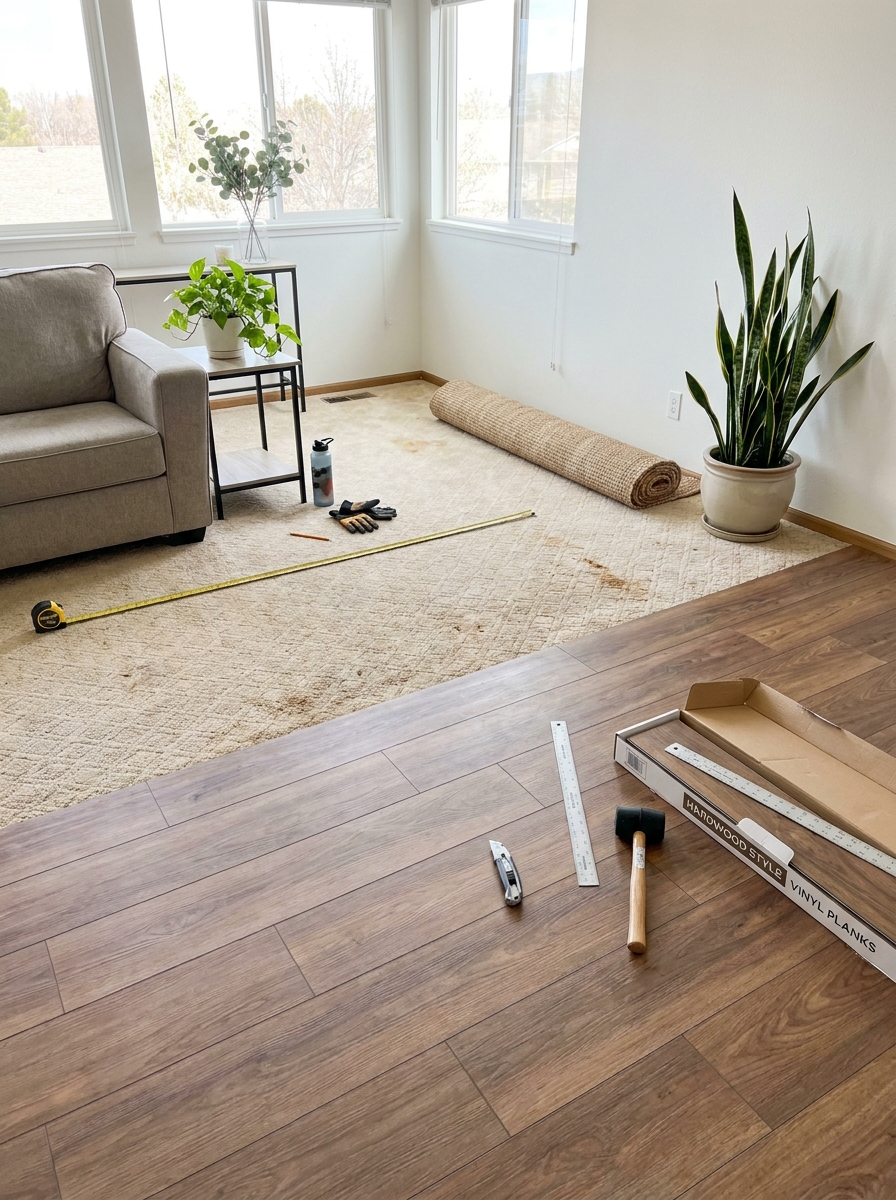
This is the big one. If you want to completely transform ugly rental floors and you’re willing to invest a weekend, peel-and-stick vinyl planks are your answer. These aren’t your grandmother’s vinyl floors. The good ones look shockingly realistic — complete with wood grain texture and subtle color variations.
I’ve watched friends cover entire apartments with these planks, and the transformation is wild. Stained carpet? Gone. Scuffed linoleum? Covered. Weird multi-colored tile? History. The planks click or stick together, they’re waterproof, and most landlords are fine with them as long as you keep the original floor intact underneath.
Start in the least visible corner and work your way out. You’ll need a utility knife, a straight edge, and patience for cutting around doorways and corners. But honestly, it’s easier than it looks. Choose a neutral wood tone that’ll work with different furniture styles — light oak and medium walnut are foolproof. When you move, they lift up and you can take them with you or leave them as a gift to the next renter.
13. Carpet Tiles You Can Rearrange When Spills Happen
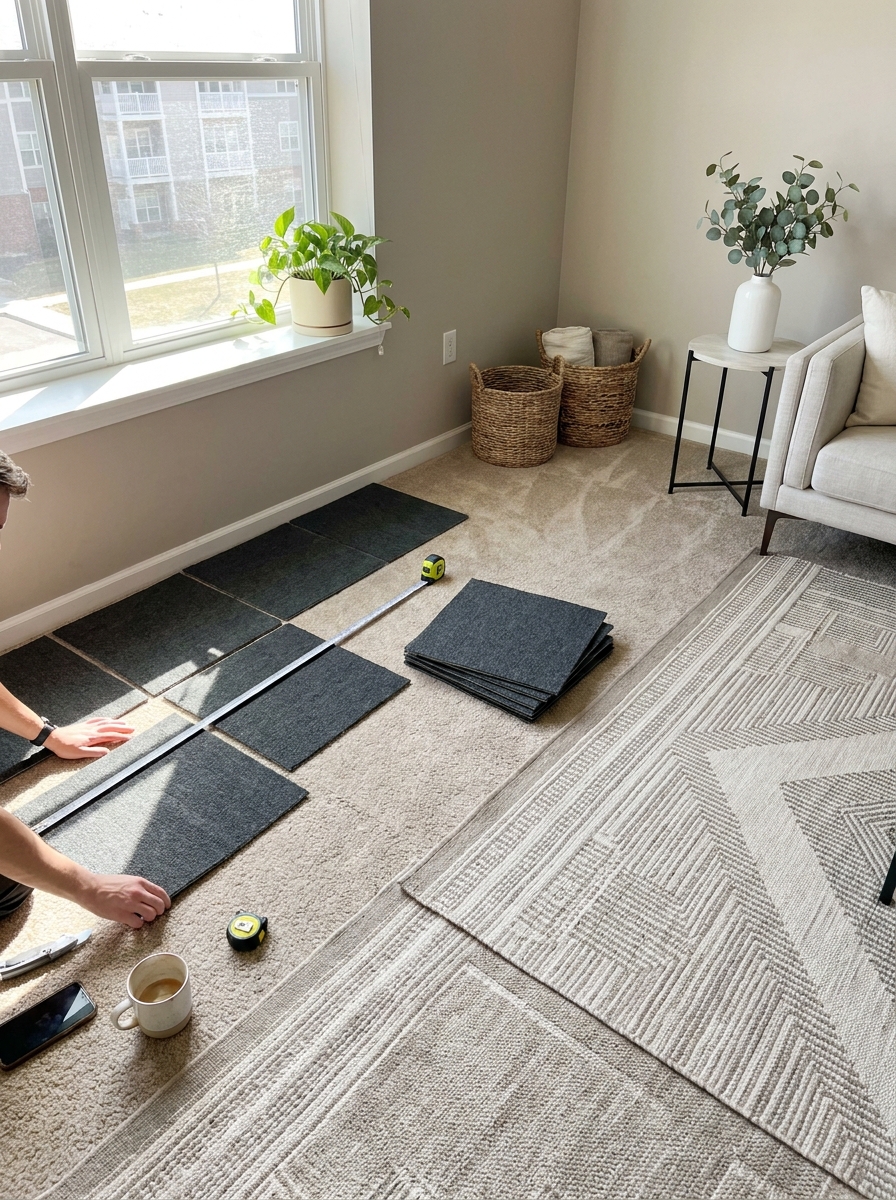
Here’s the thing about ugly rental carpet: sometimes you just need to cover specific disaster zones. Maybe there’s a weird stain by the couch. Or your entryway looks like a crime scene. Carpet tiles are absolute magic because you can arrange them however you want, replace individual squares when something spills, and take them with you when you move.
I love that you’re not stuck with one giant piece. You can create patterns, mix colors, or just cover the really bad spots. And when your coffee decides to make a break for it? Pull up that one tile, clean it or toss it, pop in a new one. Done.
The peel-and-stick backing makes installation so easy. No cutting, no measuring corners perfectly, no commitment. Just stick them down and live your life. They work amazing in bedrooms over scratchy old carpet, or in living rooms where the landlord’s beige nightmare is bringing down your whole vibe.
14. Cork Floor Squares That Add Warmth Without Commitment
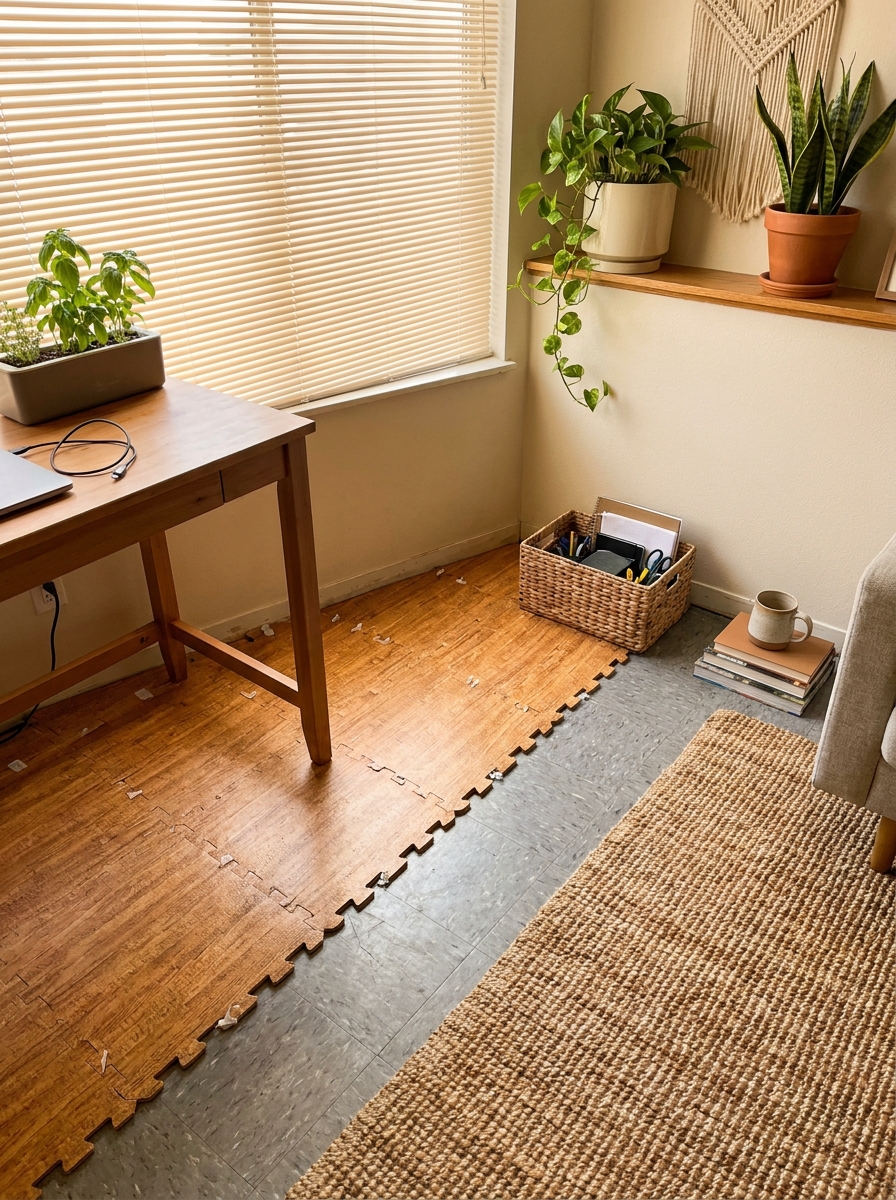
Cork is one of those materials that feels expensive but doesn’t have to be. It’s warm underfoot, it muffles sound (hello, downstairs neighbors), and it covers up seriously awful flooring without any permanent installation. Interlocking cork tiles just click together like a floating floor, and you can pull them up whenever your lease ends.
I’m obsessed with how cozy cork makes a room feel. It’s softer than hardwood but way more sophisticated than foam tiles. Perfect for bedrooms, home offices, or anywhere you’re tired of cold, ugly vinyl or mystery-stain carpet. The natural grain adds texture without being loud about it.
The best part? Cork is actually good for your floors underneath. It doesn’t trap moisture, it’s eco-friendly, and it gives you that upscale Scandinavian look everyone wants. Plus it’s gentle on your feet and joints if you stand a lot while cooking or working.
15. Silicone Counter Covers That Protect and Prettify Simultaneously
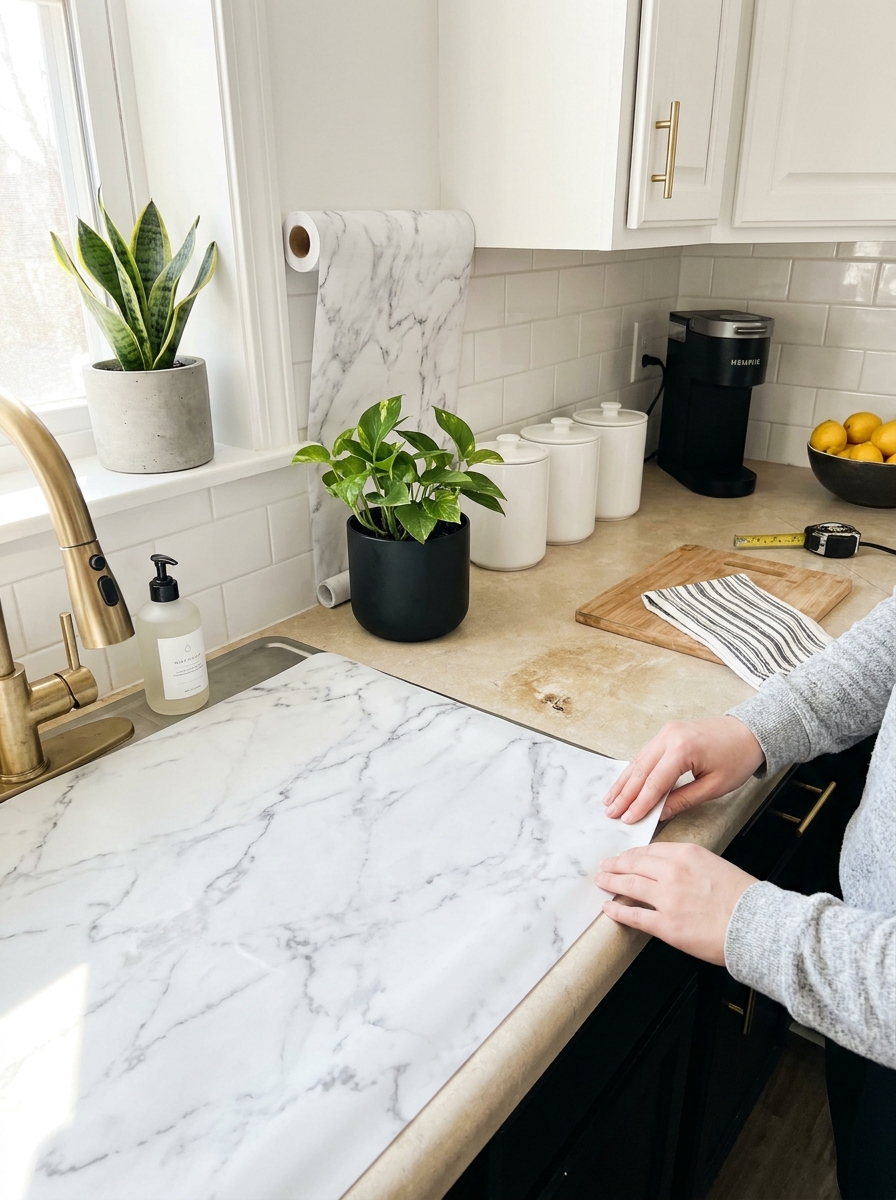
Okay, this one’s a total game-changer if you’re dealing with scratched, burned, or just plain ugly countertops. Custom-cut silicone mats sit right on top of your existing surface, protecting it while giving you a fresh new look. They’re heat-resistant, waterproof, and they don’t slide around like you’d think.
You can get them in marble patterns, concrete looks, or solid colors that actually fool people. I’ve watched friends run their hands over these thinking it’s real stone. The silicone is thick enough to hide imperfections but thin enough that it doesn’t mess with your counter height or feel weird.
They’re especially genius in kitchens where your landlord installed the cheapest laminate known to humanity. Roll them out, trim to fit, and suddenly you’ve got counters that don’t embarrass you when people come over. Easy to clean, removable whenever, and way cheaper than those big butcher block toppers.
16. Floor Stencils and Porch Paint for Permanent-Looking Pattern
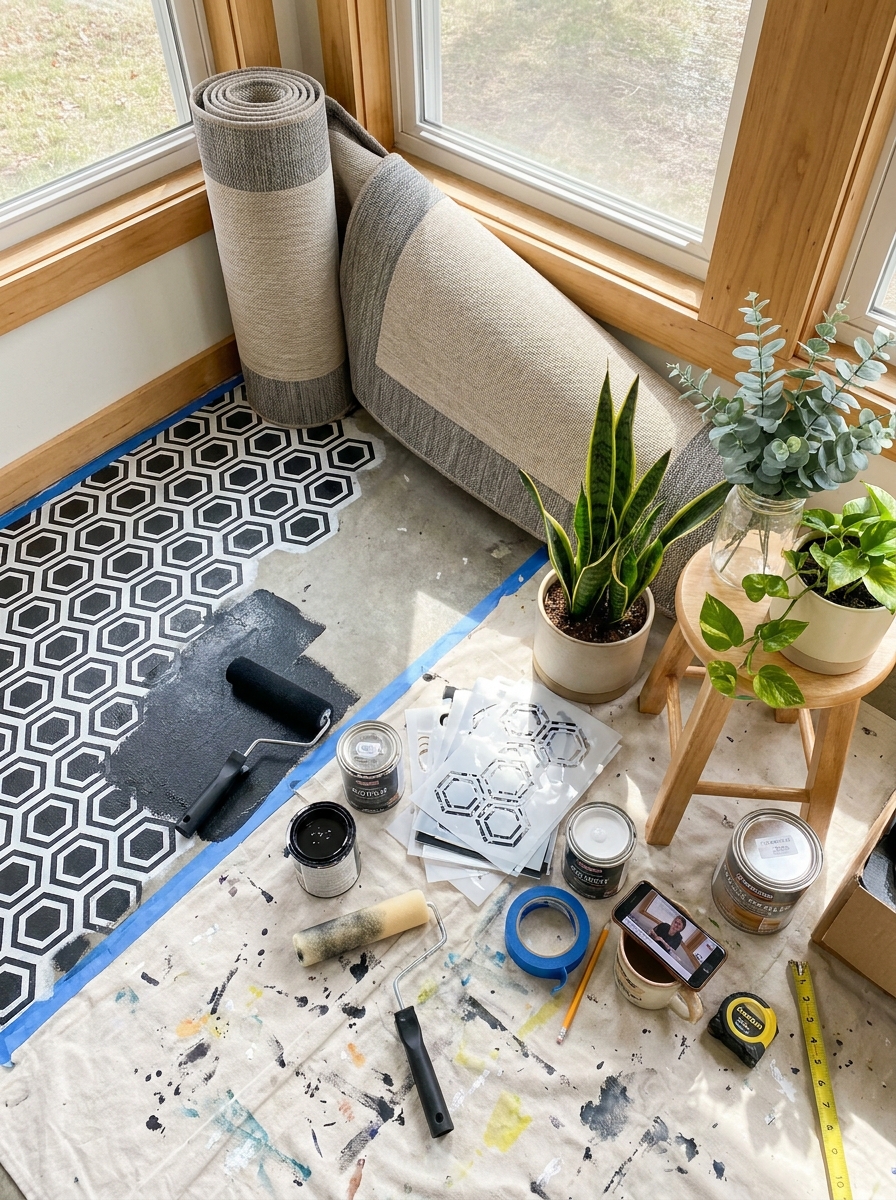
If you’re allowed to paint your floors (some landlords are surprisingly cool about it), stenciling over ugly plywood, concrete, or worn vinyl is ridiculously satisfying. Grab some porch paint, a good stencil, and suddenly you’ve got custom tile-look floors for about forty bucks. Seal it properly and it’ll last your entire lease.
I love this option for patios, sunrooms, laundry rooms, or any space where the floor is technically paintable but deeply unattractive. You can go bold with Moroccan patterns or keep it simple with geometric designs. The paint adheres like crazy, and when you’re done, it looks intentional and expensive.
The process is a little time-intensive, but it’s actually fun if you’re into DIY projects. Tape off your pattern, roll or stencil your paint, let it dry, seal it. You end up with something totally unique that covers every flaw underneath. Way more permanent than peel-and-stick, but still just paint your landlord can cover later.
17. Washable Flat-Weave Rugs That Actually Survive Real Life
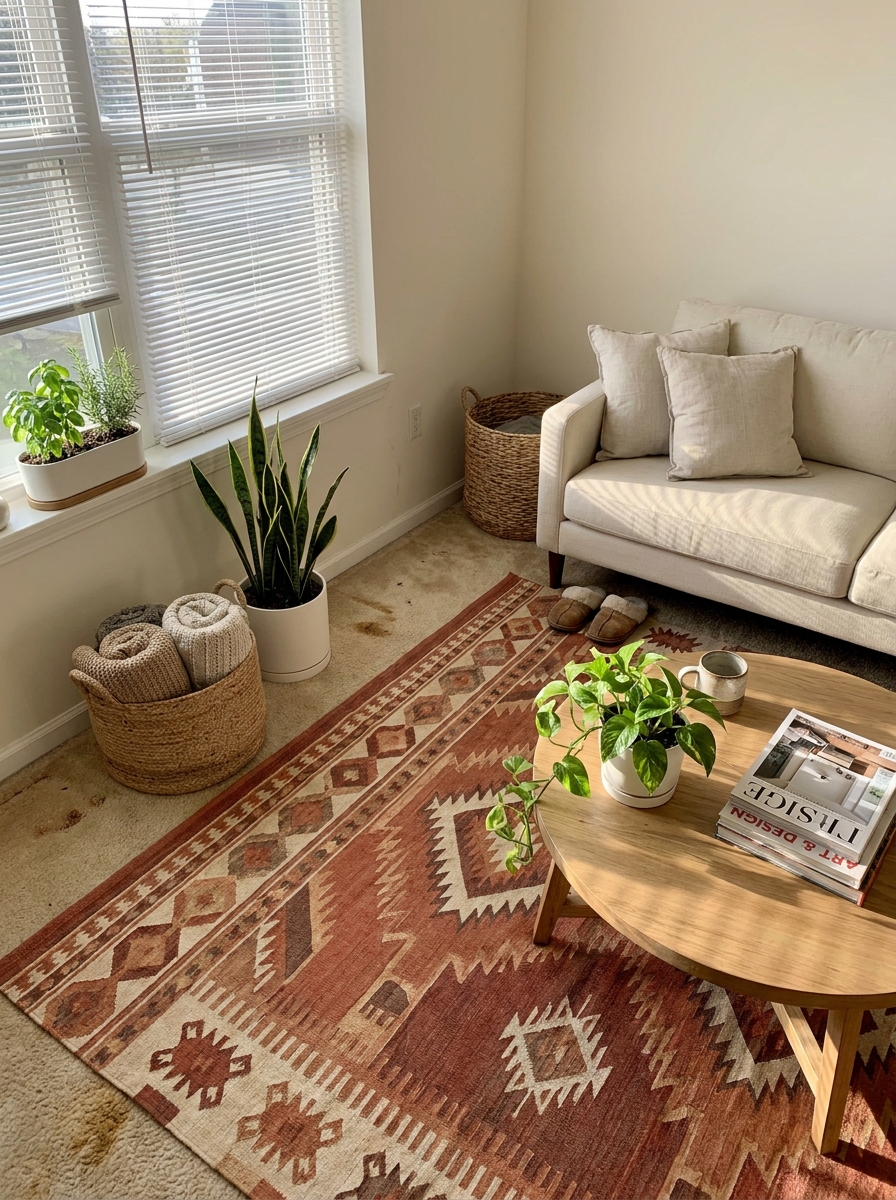
Listen, if you’re covering gross rental floors, you need rugs that can handle your actual life. Flat-weave washable rugs are the absolute MVP here. They lie flat so you don’t trip, they’re thin enough to fit under doors, and when your friend spills red wine or your kid tracks in mud, you literally throw them in the washing machine. Game changer.
I love the woven cotton ones with geometric patterns because they hide dirt between washes but still look intentional and put-together. They come in every size imaginable, so you can cover an entire disgusting living room floor or just that one horrifying stain by the bathroom door. The flat weave means they don’t show vacuum lines or get that weird matted-down traffic pattern that plush rugs get.
They’re also ridiculously affordable compared to traditional area rugs. You can buy two or three and rotate them when one’s in the wash. It’s like having a completely different floor whenever you want, without asking your landlord for permission or losing your security deposit.
18. Modular Deck Tiles That Make Balcony Floors Look Intentional
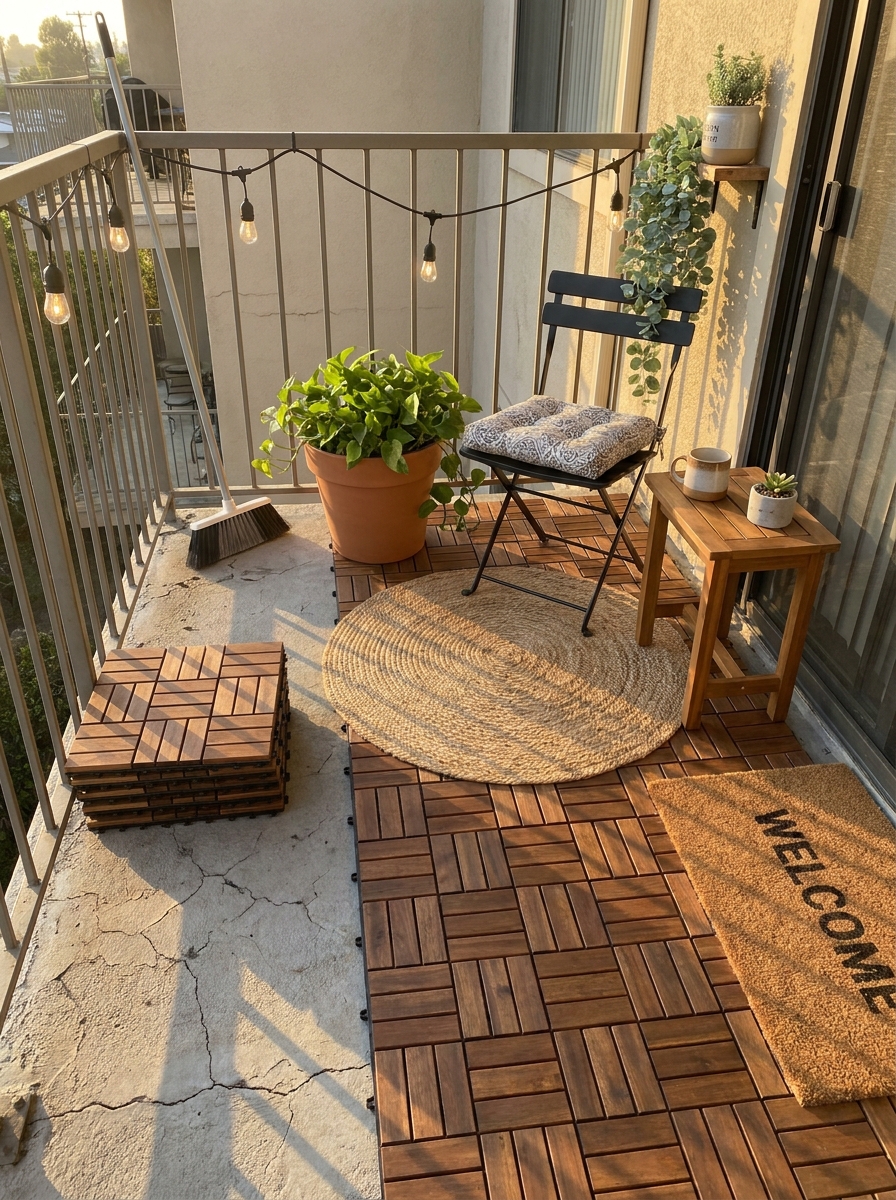
Your rental balcony floor is probably cracked concrete or that weird green outdoor carpet from 1987. Modular deck tiles snap together in minutes and suddenly your sad little balcony looks like a boutique hotel terrace. No tools, no commitment, no landlord involvement required.
These interlocking tiles come in wood-look composite, actual wood slats, or even fake grass if that’s your vibe. They have little plastic grid bases that snap together like puzzle pieces, and they just sit on top of whatever horror show is happening below. When you move, you unsnap them, stack them up, and take them with you. The whole installation takes maybe twenty minutes.
I’m obsessed with the wood-look ones because they instantly make your balcony feel like an extension of your living space instead of that forgotten zone where you store dead plants. You can cover the entire floor or just create a little defined seating area. Either way, you’ll actually want to sit out there instead of pretending that space doesn’t exist.
19. Oversized Kitchen Mats That Block Out Terrible Tile
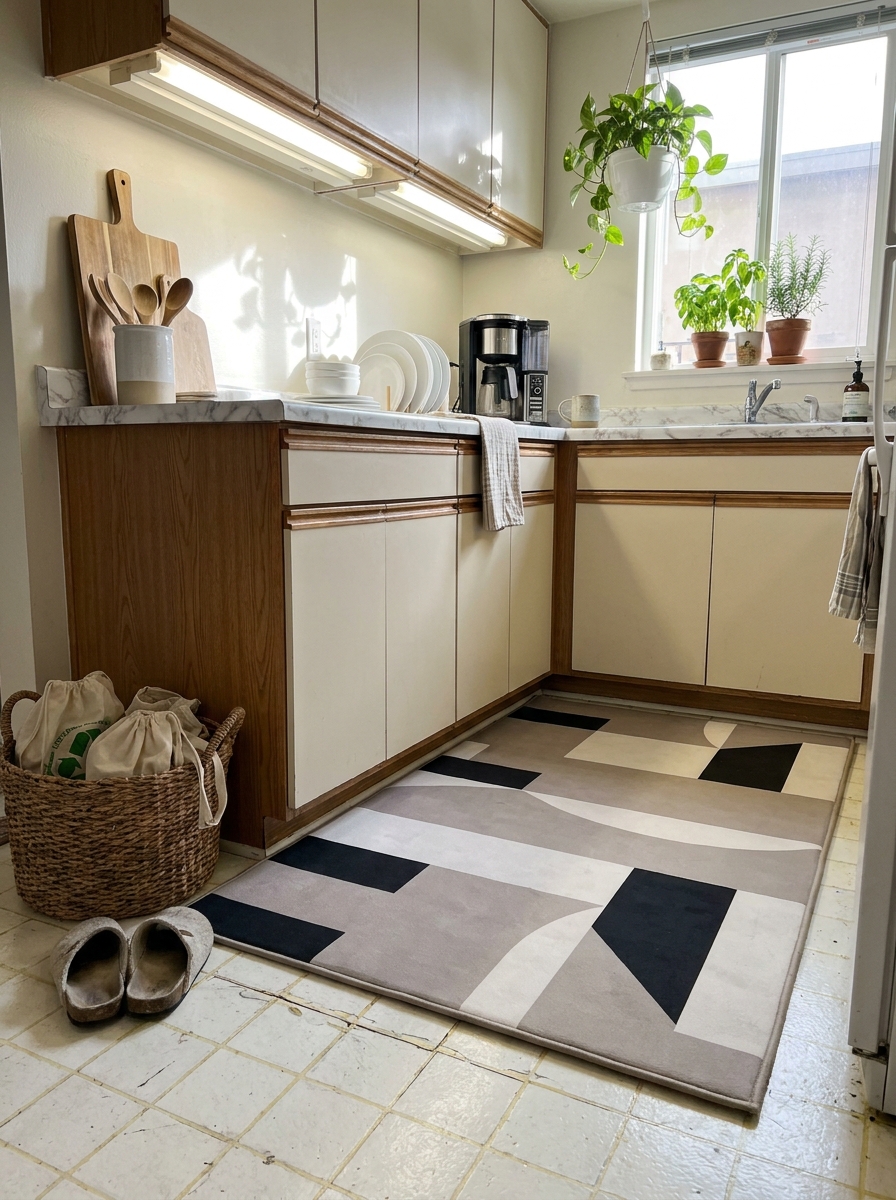
If your rental kitchen floor makes you want to wear shoes indoors, get yourself an oversized cushioned kitchen mat and just pretend the real floor doesn’t exist. I’m talking about those big gel-filled or foam mats that cover the entire cooking zone. They come in patterns now, so they actually look intentional instead of just utilitarian.
The cushioned ones are absolute magic for your feet and back if you cook a lot or do dishes by hand. But honestly, their main job is blocking your view of that hideous linoleum or the tile that looks like it survived three decades and a small fire. Look for the largest size that fits your kitchen layout because tiny mats just draw attention to the ugly floor around them.
These mats are also stupid easy to clean. Most of them you just wipe down or hose off outside. Some are even machine washable. And they provide a little padding if you drop a glass, which has saved me more times than I can count. Practical and pretty? That’s the rental dream right there.
20. Concrete Overlay Kits That Look Expensive But Peel Right Off
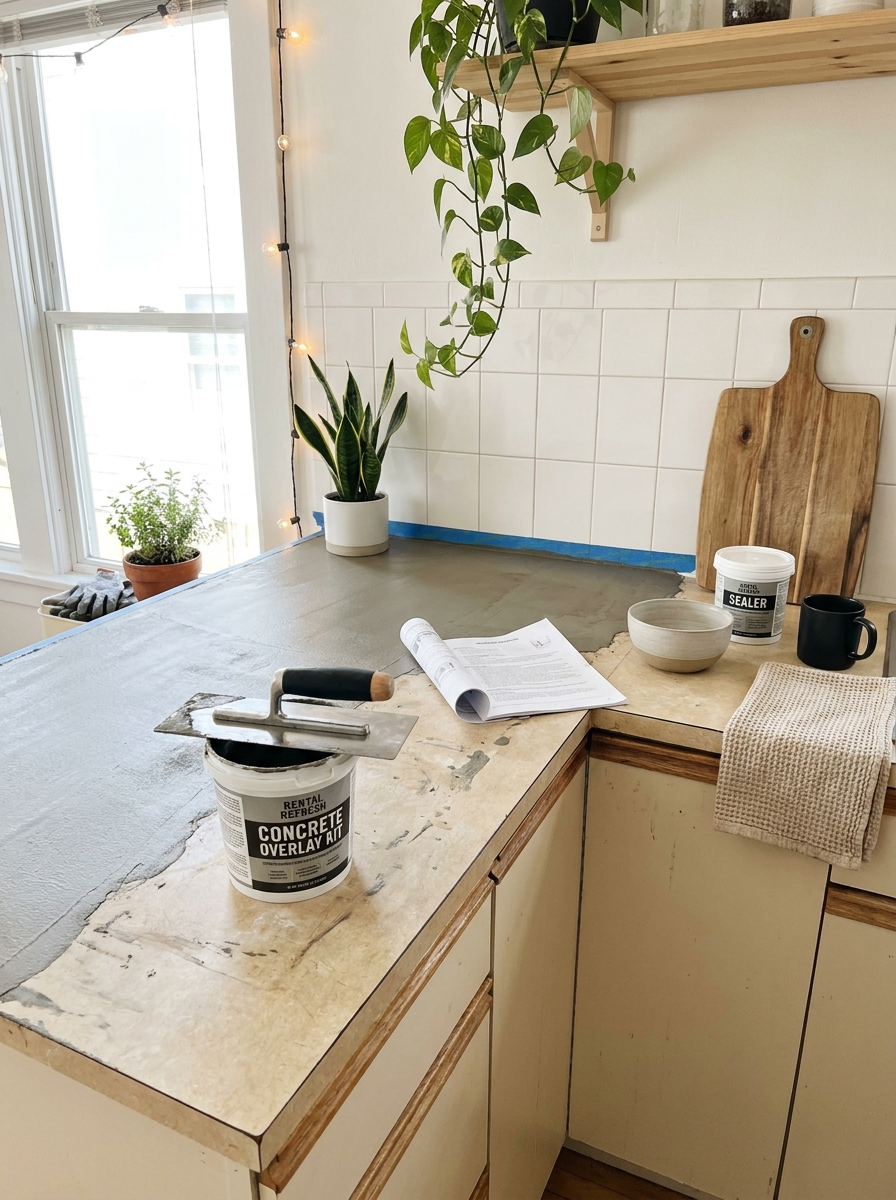
Okay, this one sounds wild but hear me out. There are these temporary concrete overlay products now that you can literally spread over ugly floors or counters, and they look like actual concrete or stone. But they’re removable. When you move out, they peel up in sections. It’s basically like really convincing removable floor skin.
You mix the compound, spread it thin with a trowel, let it dry, and seal it. The result looks like you poured custom concrete counters or floors. Some versions are more like thick paint, others are rubbery and flexible. Either way, they transform the ugliest surfaces into something you’d see in a design magazine. The best part? No one can tell it’s temporary unless you tell them.
This is definitely more involved than throwing down a rug, but if you’re staying put for a year or more and the ugliness is truly making you miserable, this is the nuclear option that actually works. I’ve seen people use it on bathroom floors, kitchen counters, even outdated tile surrounds. The transformation is absolutely unreal.
Quick Guide
Quick Cost Breakdown: What to Expect
Large Area Rugs: $150–$400 for an 8×10 jute or flatweave (washable options run higher). Vintage-style rugs from online retailers sit around $200–$300.
Peel-and-Stick Vinyl Tiles: $1–$3 per square foot. A small bathroom (25 sq ft) costs roughly $40–$75 in materials. Kitchen floors cost more but rarely top $200.
Marble Contact Paper: $8–$15 per roll. Most countertops need 2–3 rolls, so budget around $25–$45 total.
Layered Rugs: Combine a $100 jute base with a $150 patterned top rug for about $250 total.
Runner Rugs for Hallways: $40–$120 depending on length and material. Synthetic options cost less, wool costs more.
Most solutions fall under $300 per room. Compare that to actually replacing floors or counters—which you can’t do anyway in a rental—and suddenly these fixes feel like a steal.
Your Rental Can Actually Feel Like Home
Here’s what nobody tells you when you sign that lease: you’re allowed to make it yours. You don’t have to live with floors that make you sad or counters that embarrass you when friends come over. All these solutions—the rugs, the peel-and-stick magic, the contact paper transformations—they’re not just covering up ugly surfaces. They’re giving you permission to love where you live, even if it’s temporary.
And honestly? Some of the best design happens when you’re working within limits. You get creative. You find affordable solutions that you’d never have discovered if you owned the place and just threw money at contractors. Plus, everything you’re doing is removable. When you move, you can peel it all up, pack your rugs, and do it all over again somewhere new. That’s freedom.
So grab that measuring tape, screenshot your favorite peel-and-stick tiles, and start planning your transformation. Your rental is waiting. And your security deposit is safe.
Frequently Asked Questions
Will peel-and-stick floor tiles damage my rental’s existing floor?
Nope, not if the original floor is in decent shape. Peel-and-stick tiles are designed to be removable and won’t damage sealed laminate, vinyl, or tile. Just avoid putting them on damaged floors, freshly waxed surfaces, or unsealed wood. When you’re ready to move, they peel right up—sometimes you need a hairdryer to warm the adhesive, but they come off clean.
How do I keep large area rugs from sliding around on slippery rental floors?
Get a rug pad. Seriously, it’s a game-changer. A non-slip rug pad keeps your rug in place, adds cushioning, and actually protects both the rug and the floor underneath. They’re cheap—usually $20–$40 depending on size—and you can find them at any home store. Cut it slightly smaller than your rug so it doesn’t peek out, and you’re done.
Can I use contact paper on laminate countertops in a rental kitchen?
Absolutely. Contact paper works great on laminate counters and is completely removable. Just make sure the surface is super clean and dry before you apply it, and smooth it down carefully to avoid bubbles. It holds up well to daily use as long as you use cutting boards and don’t put hot pans directly on it. When you move out, it peels off without leaving residue or damage.
What’s the most affordable way to cover a large ugly floor in a rental?
A large area rug is your most budget-friendly option. You can find decent 8×10 jute or flatweave rugs for $150–$250, and they instantly cover most of the floor in a room. If you’re covering a really large space or multiple rooms, consider layering or using peel-and-stick tiles only in high-visibility areas and letting furniture cover the rest.
Do vinyl peel-and-stick tiles look cheap in person?
Not anymore. The quality has improved so much in the past few years. Higher-end brands have realistic textures, dimension, and color variation that genuinely look like ceramic tile or wood planks. Obviously they’re not fooling a contractor up close, but from normal standing height? They look convincing. Just avoid the super cheap options—spend a bit more per tile and you’ll get results you’re actually proud of.