32 New Year Home Reset Ideas to Start Fresh

You know that feeling when January hits and suddenly everything in your house feels… heavy? Like you’re carrying all of last year’s stuff—literally and emotionally—into this fresh new chapter. The junk drawer is overflowing, your closet makes you anxious every morning, and don’t even get me started on that catch-all chair in the bedroom. But here’s the thing: a New Year home reset doesn’t have to be overwhelming or perfect. It’s not about becoming a minimalist overnight or spending a fortune on matching bins. It’s about creating space that feels lighter, calmer, and totally yours. I’m talking real solutions for real homes—the kind that actually stick past January 15th. From quick decluttering wins to organizing systems that make sense for how you actually live, we’re covering 32 ways to reset your space this year. Some take ten minutes. Others are weekend projects. All of them will make your home feel like the fresh start you’re craving. Let’s get into it.
1. Clear Your Entryway Command Center
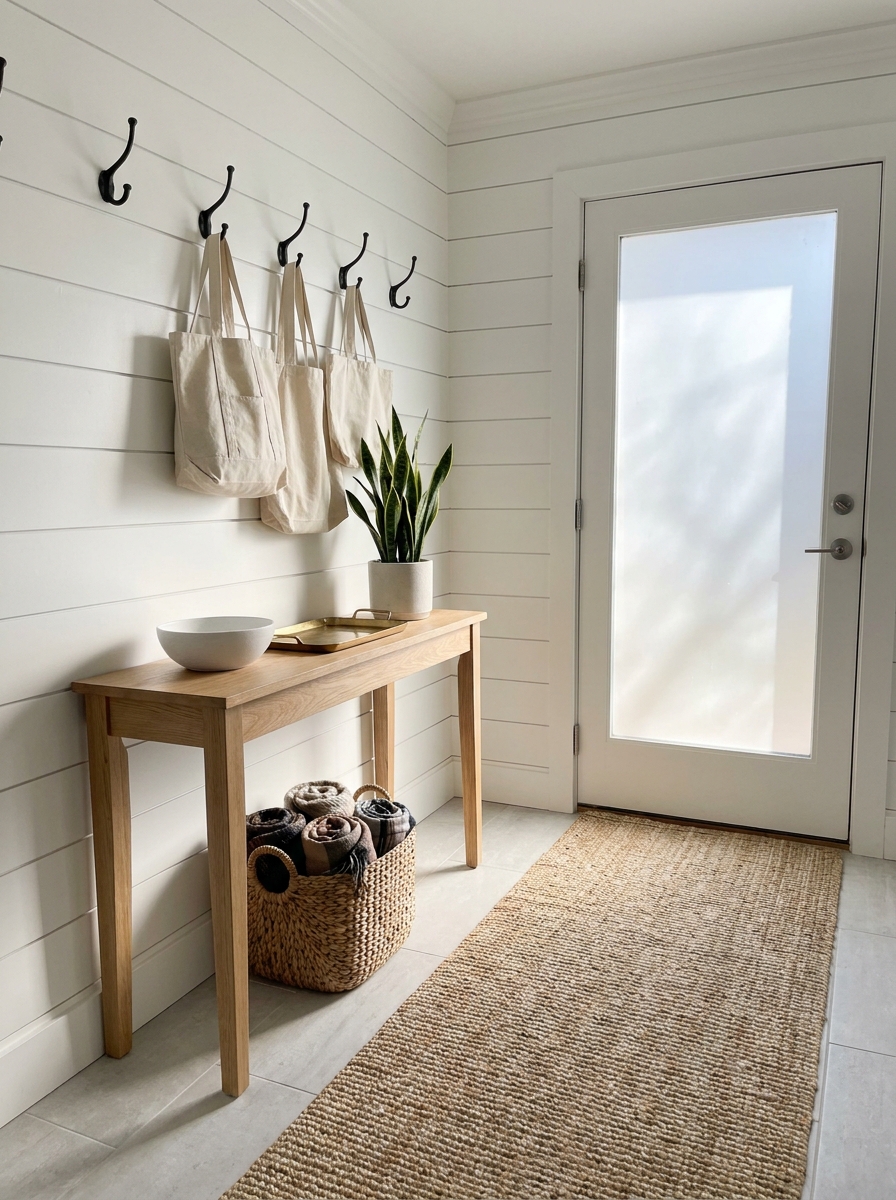
Your entryway sets the tone for your entire home. And right now? It’s probably buried under holiday shopping bags, random shoes, and mail from three weeks ago. Start your reset here because it’s the first thing you see every single day. Remove everything—and I mean everything—from this space. Wipe down surfaces, shake out the doormat, and only bring back what actually serves you right now.
Create zones that make sense for your life. Hooks for coats and bags. A small tray for keys and wallets. Maybe a basket for dog leashes or kids’ mittens. The magic is in the editing. You don’t need seventeen tote bags hanging by the door. Keep three favorites and store or donate the rest.
This reset takes maybe thirty minutes but the mental clarity it gives you? Worth it every single time. Walking into a clean, organized entry feels like your home is giving you a hug. Plus, you’ll actually find your keys on the first try, which is honestly life-changing.
2. Tackle the Kitchen Junk Drawer Reality
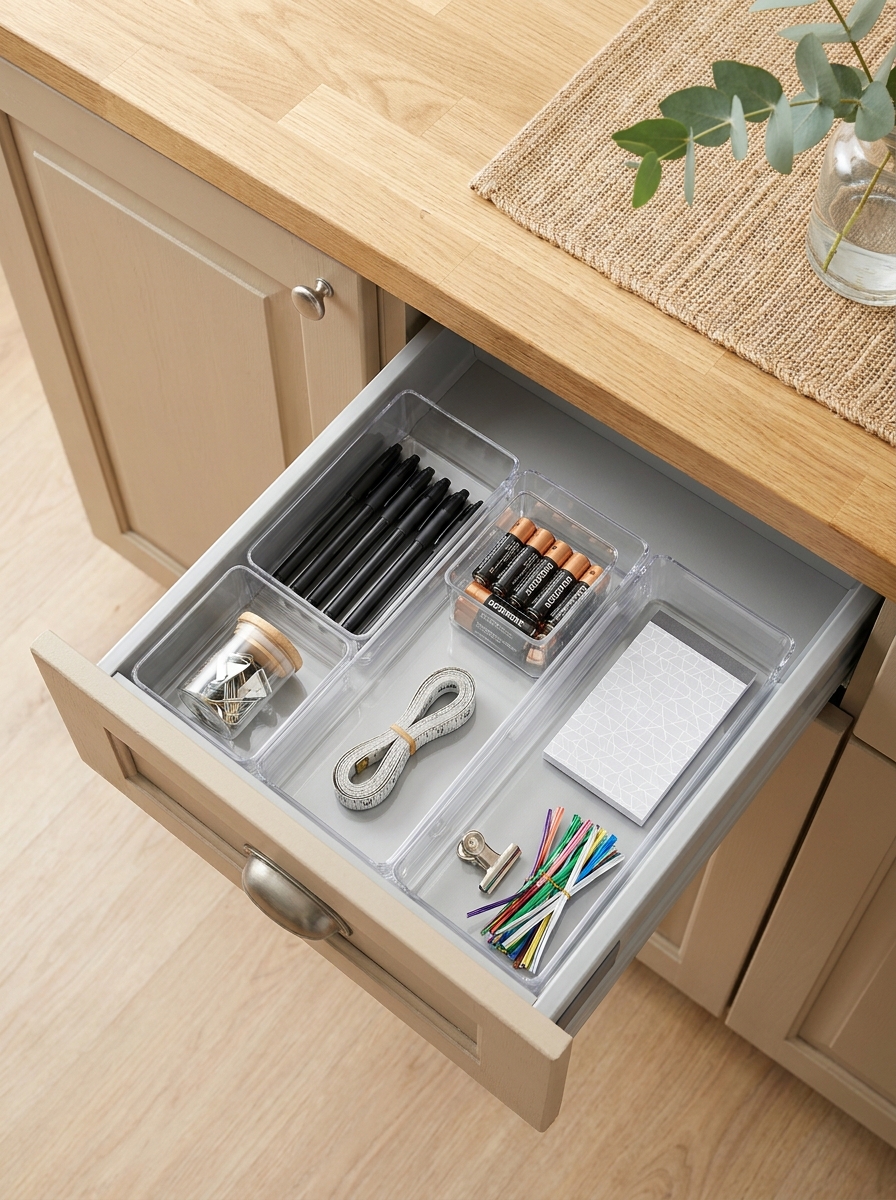
Let’s be honest—everyone has one. That drawer where batteries live next to expired coupons, twist ties, and approximately forty-seven pens that may or may not work. It’s time. Pull everything out and sort it into piles: keep, trash, relocate. You’ll probably find things you forgot you owned and things you definitely don’t need anymore.
The secret to a junk drawer that stays organized? Dividers. Cheap drawer organizers or even small boxes work perfectly. Group like items together—batteries in one section, pens in another, random screws and picture hooks in their own spot. Suddenly it’s not a junk drawer anymore. It’s a utility drawer that actually functions.
Test every pen before it goes back in. Toss the dried-out markers, the dead batteries, the instruction manual for an appliance you no longer own. This small reset creates such a disproportionate amount of satisfaction. Every time you open that drawer and actually find what you need? Chef’s kiss. That’s the energy we’re bringing into this year.
3. Reset Your Bedroom Closet Flow
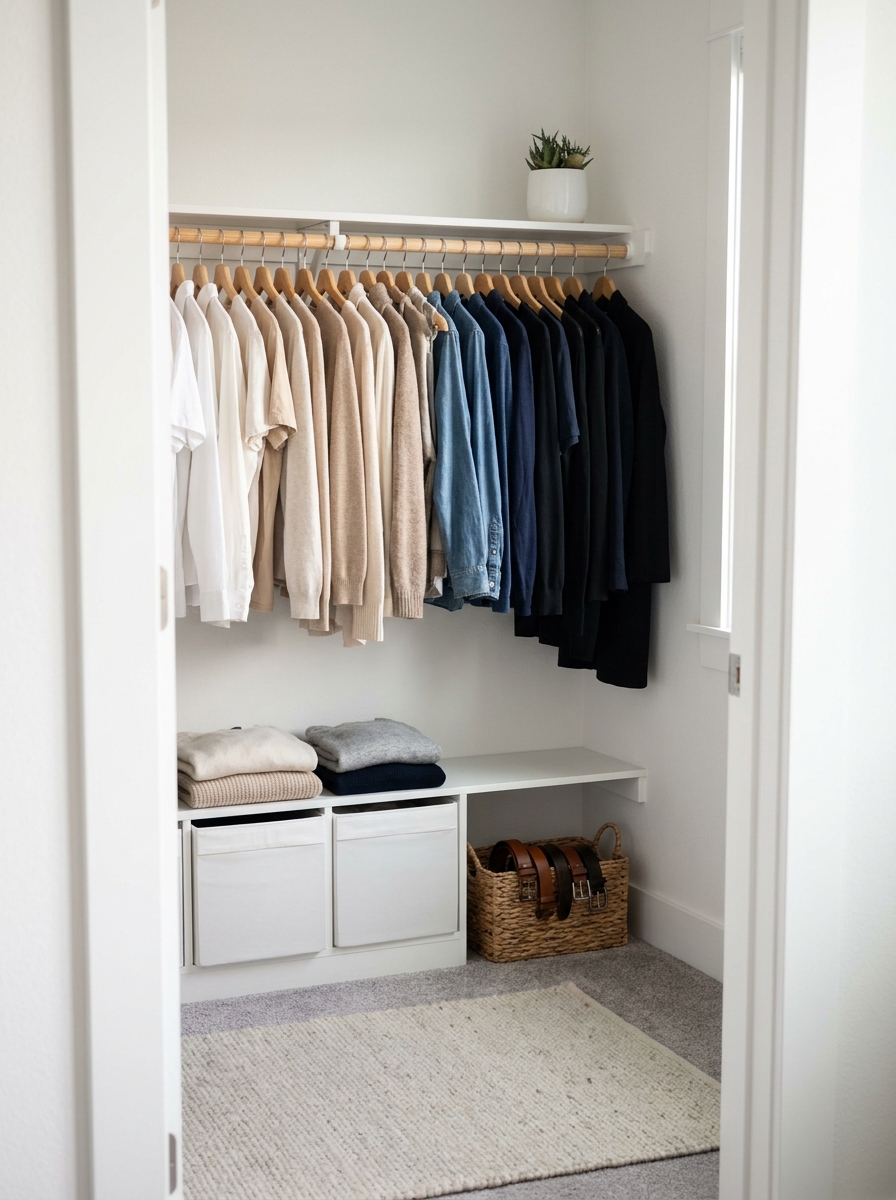
If your morning routine involves staring blankly into your closet feeling overwhelmed, this reset is calling your name. Start by pulling everything out—yes, everything—and trying things on. Not theoretically. Actually put them on your body. That dress you keep meaning to fit into again? If it doesn’t make you feel amazing right now, it’s taking up valuable mental and physical space.
Organize by category, then by color within each category. All the sweaters together, all the jeans together. It sounds simple but it changes everything. You’ll suddenly see what you actually own and what you actually wear. And those gaps? They’re useful information for intentional shopping later.
Invest in matching hangers if you can—even the basic velvet ones from the dollar store work wonders. Everything hanging at the same height and facing the same direction creates instant visual calm. Fold what makes sense to fold. Use drawer dividers for underwear and socks. Your closet should feel like a boutique you actually want to shop in every morning, not a storage unit you’re afraid to open.
4. Declutter Bathroom Counter Chaos
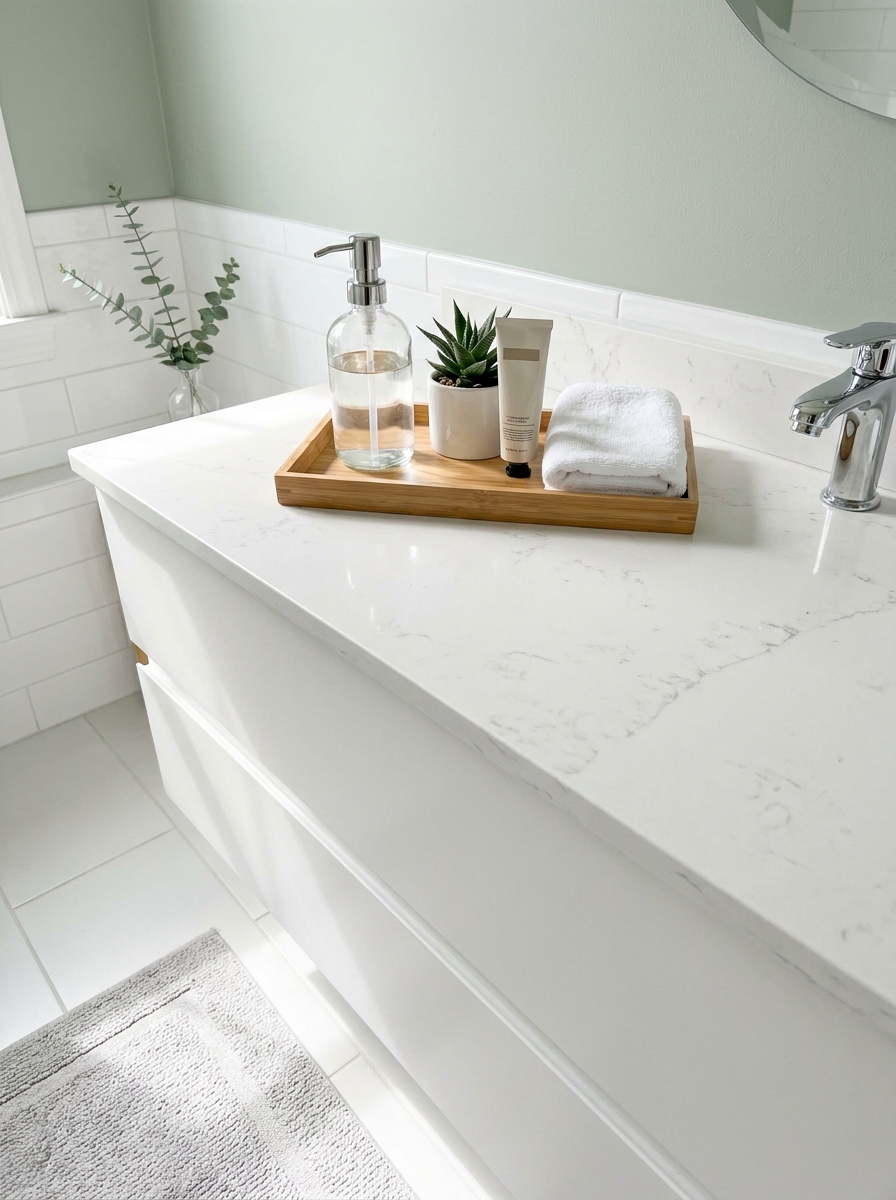
Bathroom counters are magnets for product creep. You buy one new serum, then suddenly there are seventeen bottles crowding the sink and you can’t find anything when you’re rushing in the morning. This reset is quick but mighty. Clear everything off—skincare, makeup, hair tools, random cotton balls, all of it. Wipe down the counter completely. You’ll probably find mystery smudges you didn’t even know existed.
Be ruthless about what earns counter space. Your everyday essentials? Yes. That body lotion you haven’t touched in three months? Under the sink or donated. Use a small tray or organizer to corral the things you use daily—it creates a boundary and looks intentionally styled instead of chaotic. Everything else goes in drawers or a cabinet, organized so you can actually see what you have.
The goal is walking into your bathroom and feeling spa-like calm, not storage unit stress. Clear counters make the whole room feel cleaner and bigger. Plus, wiping down surfaces becomes a thirty-second task instead of a whole production. It’s amazing how much lighter your morning routine feels when you’re not battling product clutter before you’ve even had coffee.
5. Transform Your Pantry Into a Visual Dream
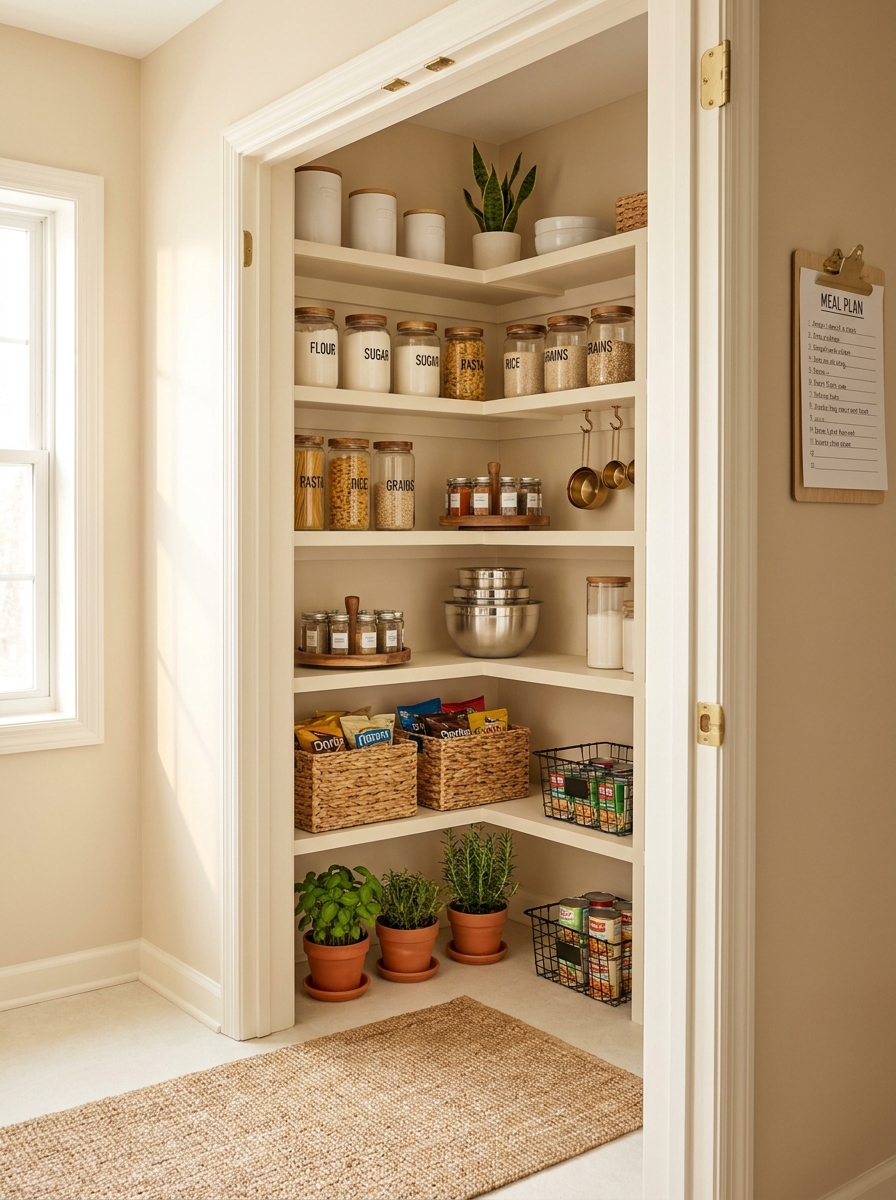
Open your pantry door and just look. Really look. Half-empty chip bags, mystery cans pushed to the back, pasta boxes tumbling over each other. It’s chaos hiding behind a door, but every time you open it, you feel that little stress spike.
Glass jars and clear containers are about to become your best friends. Transfer your flour, sugar, pasta, and snacks into matching containers. Suddenly you can see everything. You know what you have. You know what you need. No more buying duplicate ingredients because you couldn’t find the first one.
Group like items together. Baking supplies on one shelf, breakfast stuff on another, snacks corralled in a basket. Use a label maker if you’re feeling fancy, or just masking tape and a marker. The goal isn’t Instagram perfection. It’s opening that door tomorrow morning and feeling calm instead of overwhelmed. When your pantry works for you, meal planning becomes so much easier.
6. Reclaim Your Living Room Coffee Table Surface
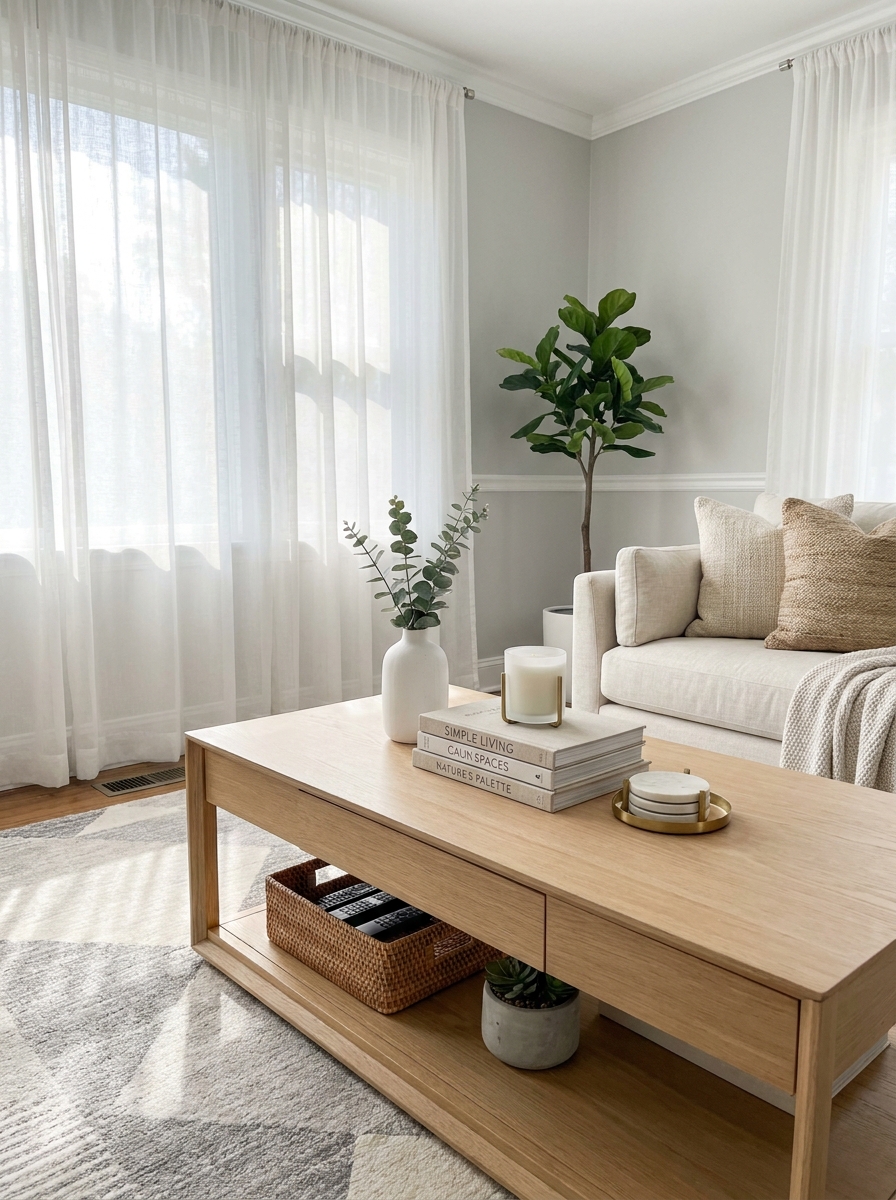
Your coffee table shouldn’t be a landing pad for everyone’s stuff. Remote controls, yesterday’s mail, random hair ties, half-finished water bottles, magazines from 2019. It’s like the Bermuda Triangle of your living room where things just accumulate.
Strip everything off. Completely bare. Now look at that beautiful surface you forgot you had. Before you put anything back, ask yourself: does this actually need to live here? Create a proper home for remotes with a small decorative box or basket. Corral magazines in a rack underneath or beside the sofa. Move those water bottles to the kitchen where they belong.
Now style it intentionally with maybe three things. A stack of current books, a small plant, a candle. That’s it. When your coffee table has breathing room, your whole living room feels more peaceful. Plus, you’ll actually want to have people over because you’re not scrambling to hide the mess under the couch cushions.
7. Organize Under the Bathroom Sink Mystery Zone
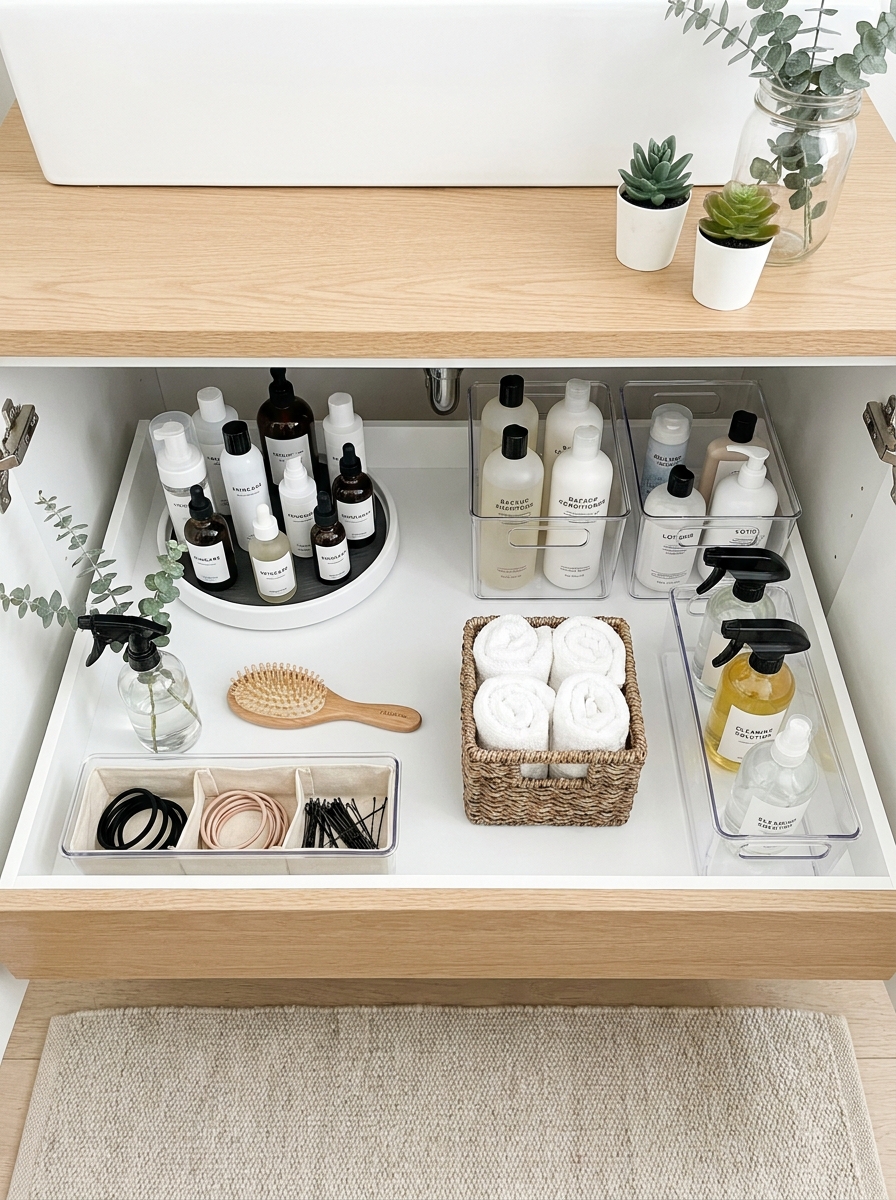
Under the bathroom sink is where logic goes to die. Half-empty bottles leaning at weird angles, cleaning products you forgot you owned, hair tools tangled together, mystery products from three years ago. It’s dark, it’s awkward, and you avoid looking at it.
Pull everything out. Yes, everything. You’re going to find stuff you didn’t even know you had. Toss anything expired, dried out, or that you haven’t touched in a year. Be ruthless. That fancy face mask you got as a gift but hate the smell of? Gone.
Now containerize everything by category. Clear bins or turntables are magic here. One bin for hair stuff, one for extra toiletries, one for cleaning supplies. Suddenly you can see what you have without playing Jenga every morning. The curved turntable is especially genius because you can spin it to reach things in the back. No more buying duplicate dry shampoo because you couldn’t see the three cans hiding behind the toilet bowl cleaner.
8. Clear Out Your Catch-All Coat Closet Madness
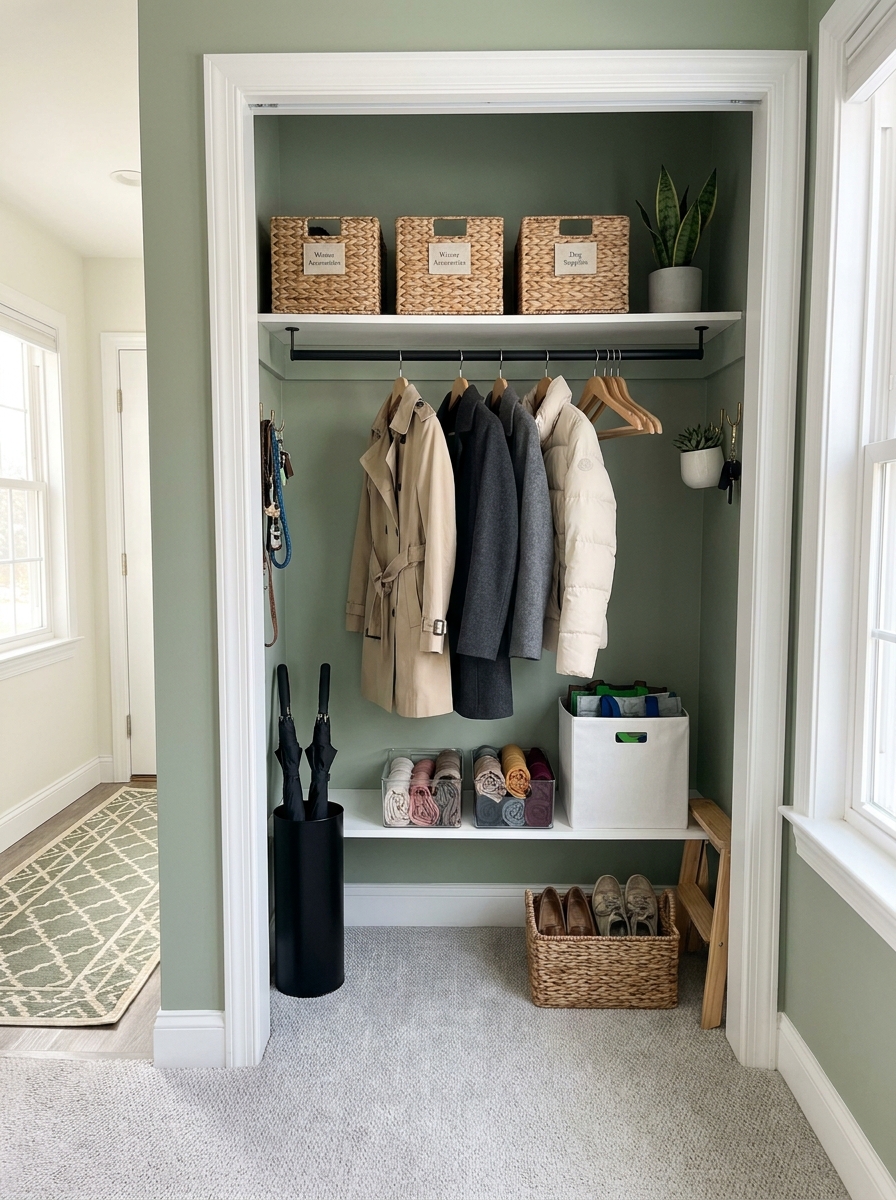
That coat closet by your front door started with good intentions. Then winter happened, then spring cleaning didn’t, and now it’s an avalanche waiting to happen. Coats you never wear, random scarves, shopping bags stuffed with shopping bags, a vacuum cleaner blocking everything, and probably a birthday gift bag from 2018.
Time to make this closet actually functional. Remove everything and sort ruthlessly. Keep only coats you actually wear this season. Store off-season coats elsewhere or donate ones you haven’t touched in two years. Give everything a proper spot using hooks, bins, and shelf dividers.
Think about what you really need to grab on your way out the door. Current coats get premium real estate on easy-access hooks. Dog leashes, reusable shopping bags, and your favorite scarf get designated homes in labeled baskets on shelves. Everything else? It doesn’t belong in your prime entryway real estate. This closet should make leaving the house easier, not a obstacle course.
9. Simplify Your Nightstand Chaos
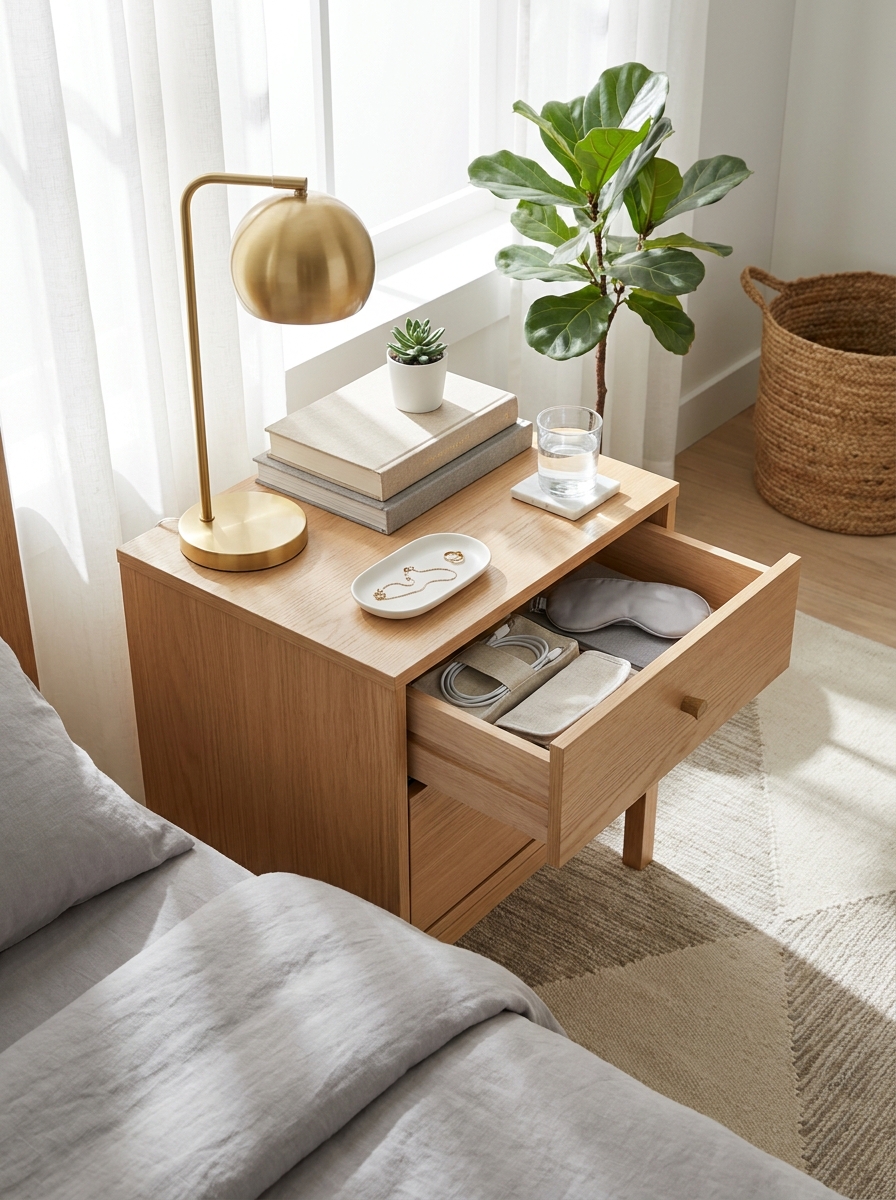
Oh, the nightstand. That tiny surface that somehow becomes a graveyard for water glasses, random receipts, hair ties, and books you swear you’ll finish. This little spot deserves better, and so do you.
Start by clearing everything off—yes, everything. Wipe it down and really think about what you actually use before bed. A lamp, maybe a book, your phone charger. That’s honestly it. Everything else is just visual noise stealing your calm.
Add one small tray or shallow dish for your jewelry and daily essentials. A single drawer organizer works wonders if you have drawer space. Keep books stacked neatly (limit it to three max), and maybe add a small plant or pretty candle. The key is breathing room. When you wake up and see a calm, tidy surface instead of clutter chaos, your whole morning feels different. Promise.
10. Organize Your Home Office Paper Pile Prison
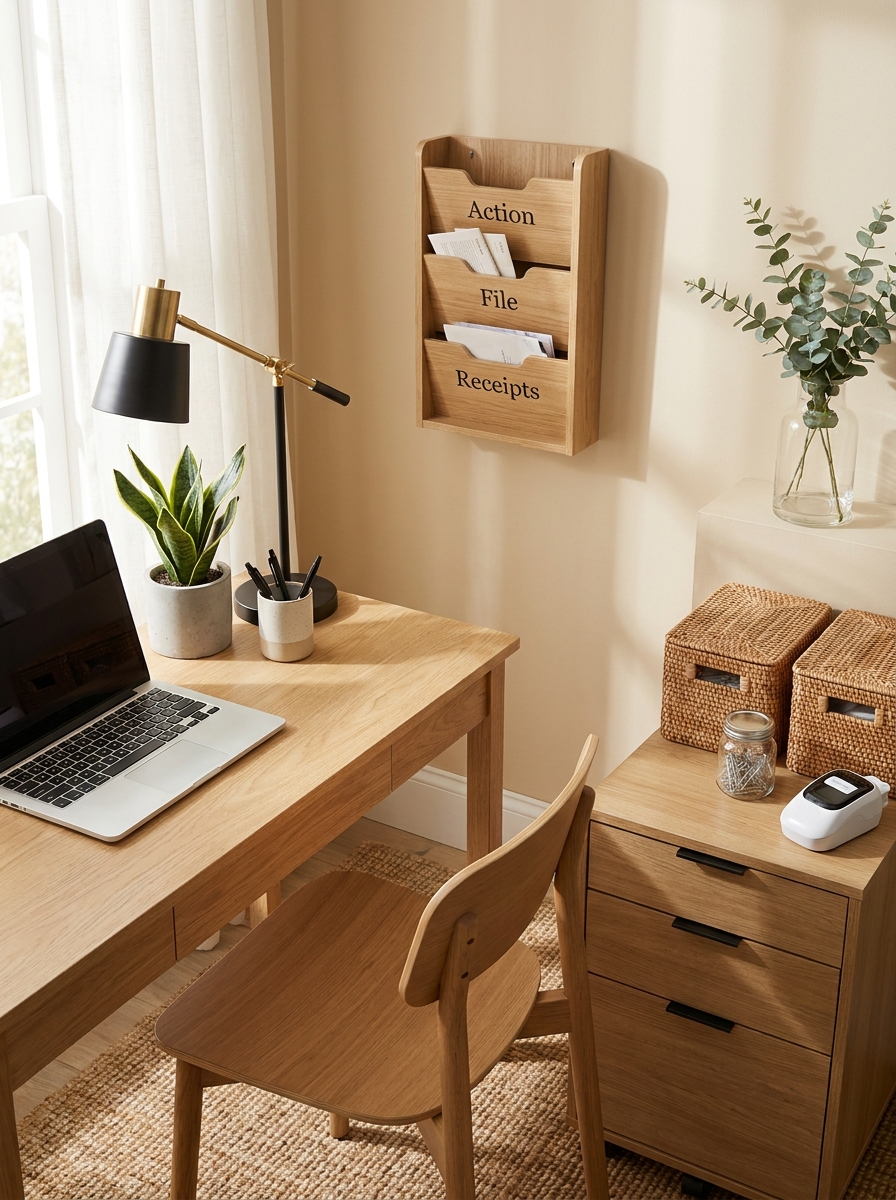
Let’s talk about that stack of papers that’s been sitting on your desk since… October? Maybe longer? Bills, school forms, receipts, things you’re “definitely going to file.” Yeah, that stack.
Grab a recycling bin and get ruthless. Shred what needs shredding, file what actually matters (spoiler: it’s less than you think), and photograph receipts you need digitally. Most paper clutter is just procrastination in physical form.
Set up a simple system going forward—a vertical file organizer or wall-mounted mail sorter with clear categories: Action Needed, To File, To Shred. Touch each paper once and put it where it belongs immediately. Add a small inbox tray for incoming mail so it doesn’t land directly on your desk. Your workspace should inspire productivity, not guilt. When you sit down to work and see clear surfaces and organized systems instead of paper chaos, everything feels more doable.
11. Refresh Your Linen Closet Avalanche Situation
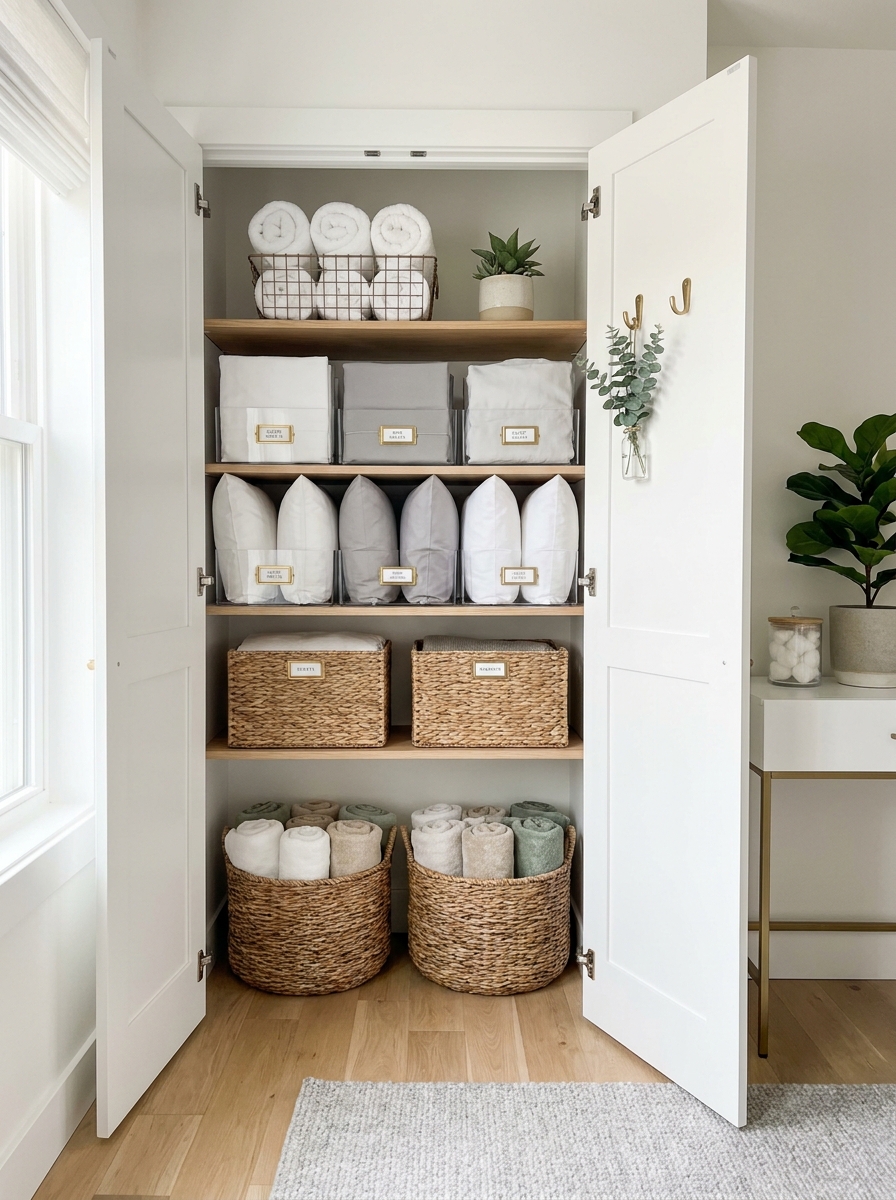
You know that moment when you open your linen closet and three fitted sheets fall on your head? Or you can never find a matching pillowcase? Girl, same. But it doesn’t have to be this way.
Pull everything out and actually look at what you have. Mismatched sheets, towels from 2012, those beach towels you never use. Donate sets you don’t love or need. Keep only what fits your beds and what you actually reach for regularly.
Fold fitted sheets properly (YouTube it—game changer), and store complete sheet sets inside one of their own pillowcases so everything stays together. Use shelf dividers or baskets to separate towels by type, and keep everyday items at eye level. Roll washcloths instead of stacking them. Add labels if you’re feeling extra. The goal is opening that door and actually finding what you need in three seconds flat.
12. Declutter Your Refrigerator Science Experiment Collection
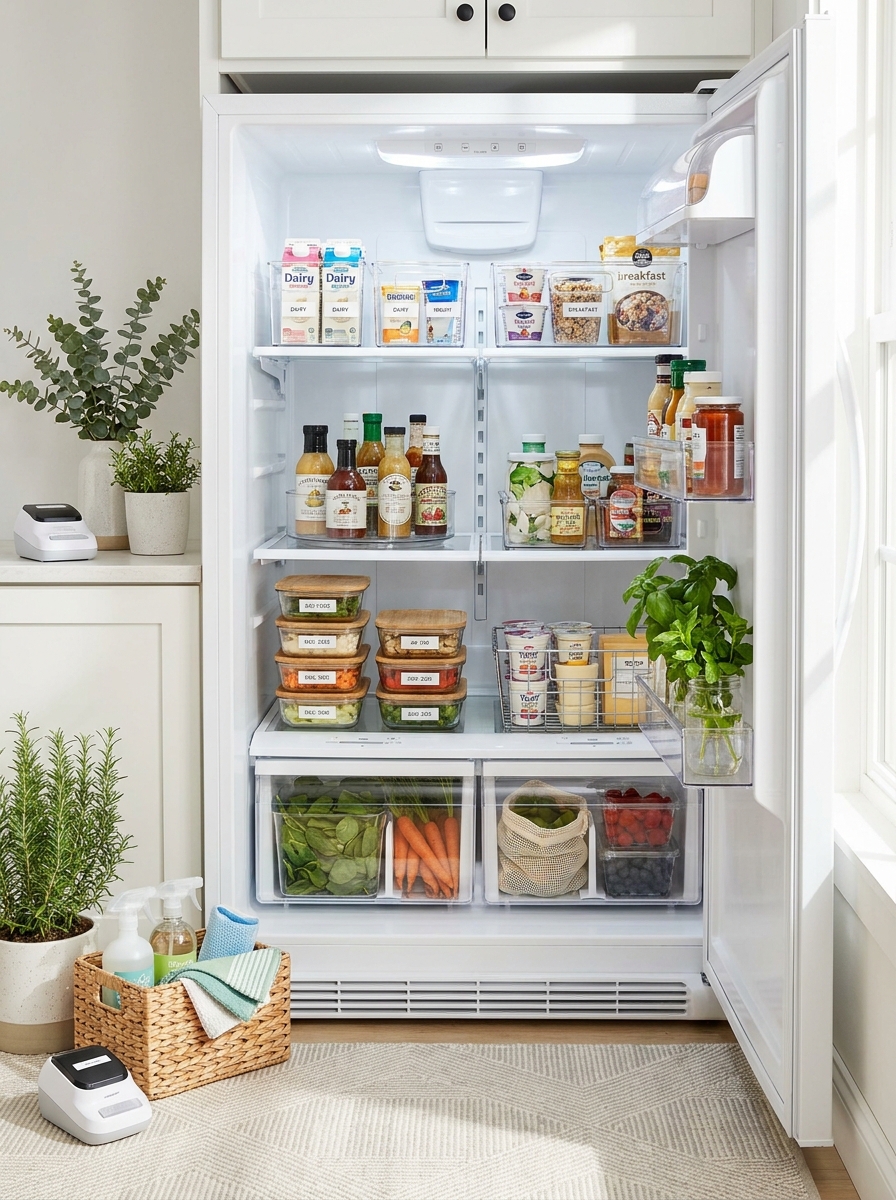
Real talk: when was the last time you actually cleaned out your fridge? Not just wiped a shelf, but really went through everything? That takeout container from two weeks ago isn’t getting better with age.
Take everything out, shelf by shelf. Toss expired items, mystery leftovers, and condiments you bought for one recipe eight months ago. Wipe down every surface with warm soapy water. It’s gross but necessary.
Now organize with intention. Use clear bins to group like items—one for dairy, one for snacks, one for breakfast stuff. Lazy Susans work magic for condiments. Store leftovers in matching clear containers so you can actually see what you have. Move older items to the front. Add a few labels if it helps your family put things back properly. A clean, organized fridge means less food waste, easier meal prep, and no more scary surprises lurking in the back.
13. Wrangle Your Bathroom Medicine Cabinet Time Warp
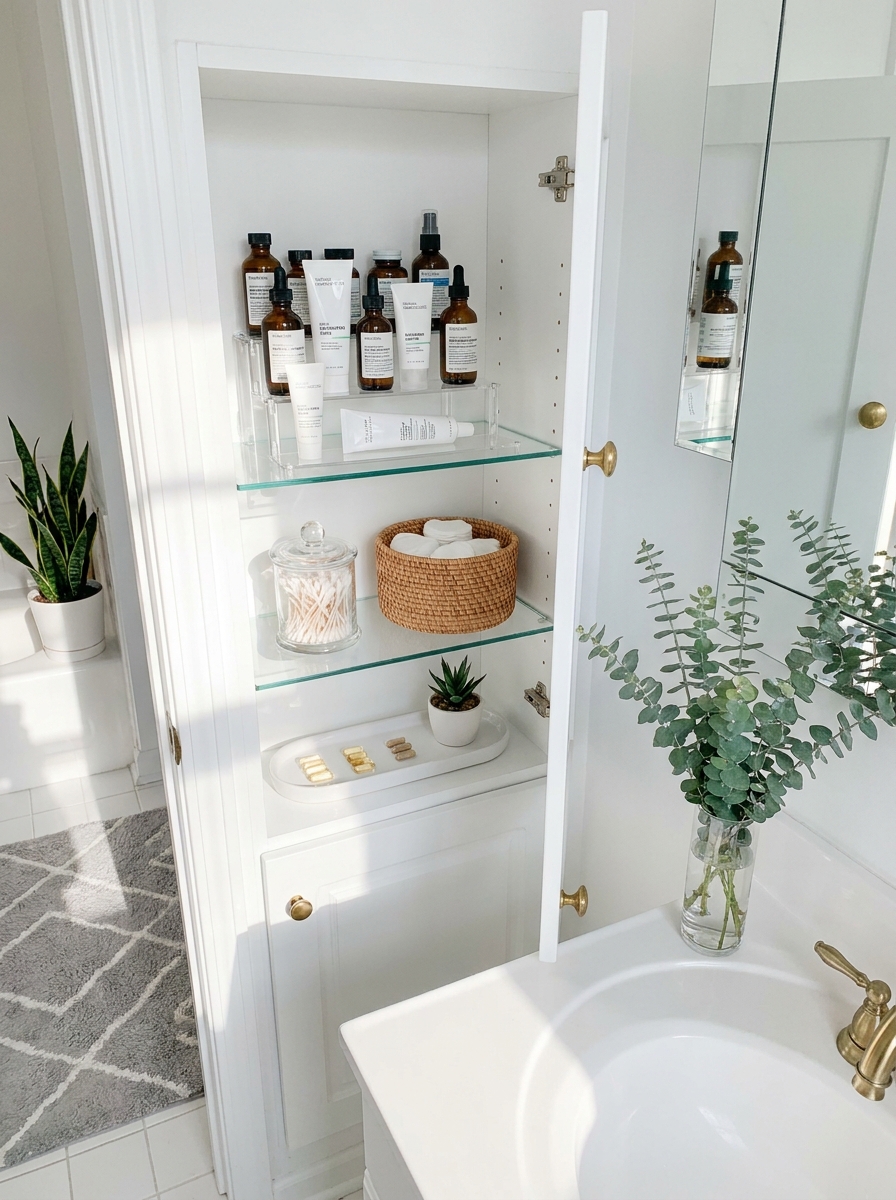
Open that cabinet and I guarantee you’ll find expired sunscreen from 2019. Maybe some mystery prescription bottles. Definitely band-aids stuck to the shelf with ancient adhesive.
This tiny space holds SO much chaos. Old makeup that’s probably growing things. Half-empty tubes of who-knows-what. Travel-size bottles you saved but never actually used again.
Start by pulling everything out. Yes, everything. Check expiration dates ruthlessly. Toss the gross stuff without guilt. Group what’s left by category—first aid, daily meds, skincare backups. Use small clear containers or a tiered organizer so you can actually see what you have. This might be the smallest reset task on the list, but it feels weirdly life-changing when you can find the Tylenol without an archaeological dig.
14. Clean Out Your Car Console Snack Graveyard
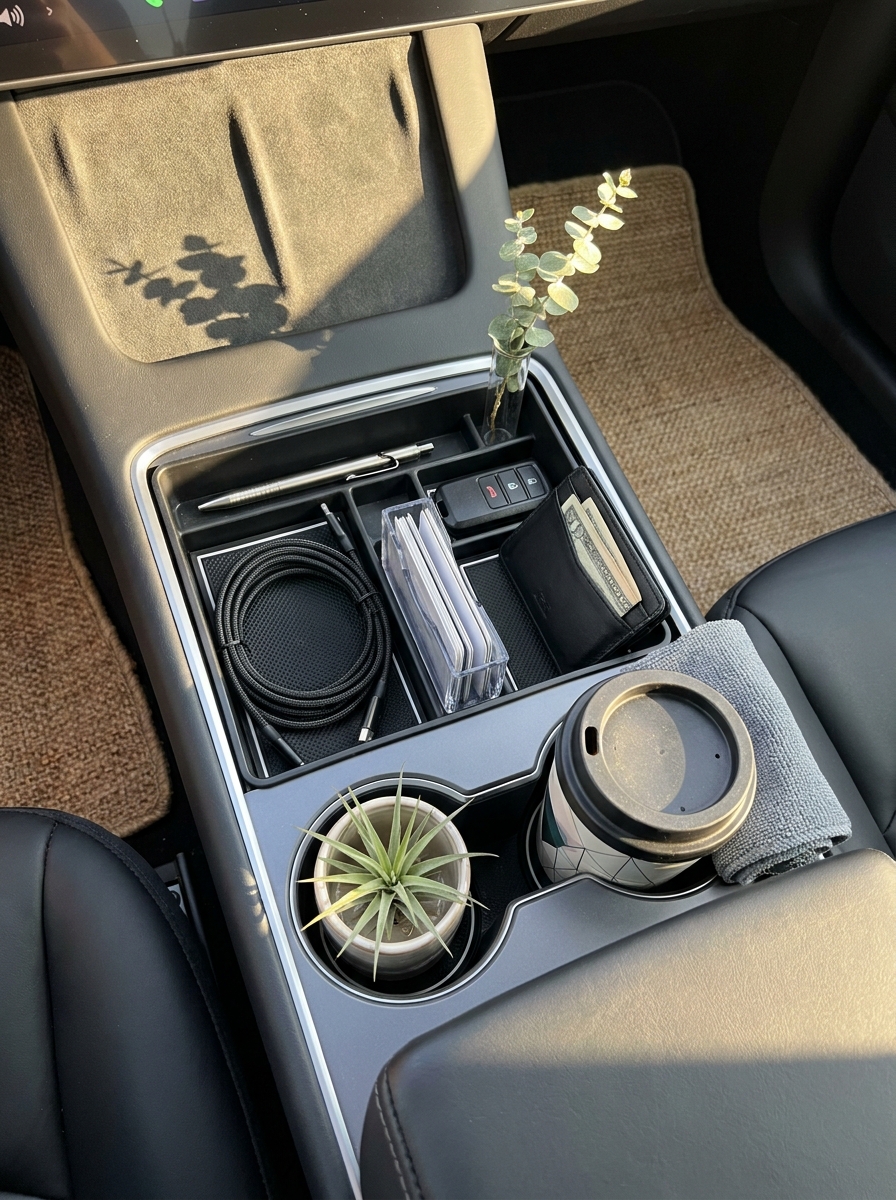
Your car is part of your home life, right? And that center console? It’s a disaster. Old receipts wadded up with ancient gum wrappers. Coins everywhere. A crusty ketchup packet from last March.
We spend so much time in our cars but treat them like rolling dumpsters. That console becomes a catch-all for everything we don’t want to deal with in the moment. Fast food napkins. Broken sunglasses. A pen that definitely doesn’t work anymore.
Empty it completely into a trash bag. Wipe down the sticky spots—you know they’re there. Keep only what you actually use: garage opener, one pen that works, maybe emergency cash. Use a small organizer or even a sunglasses case to corral the essentials. Your morning commute will feel weirdly more put-together when you’re not swimming in garbage every time you need chapstick.
15. Purge Your Tupperware Cabinet Lid Apocalypse
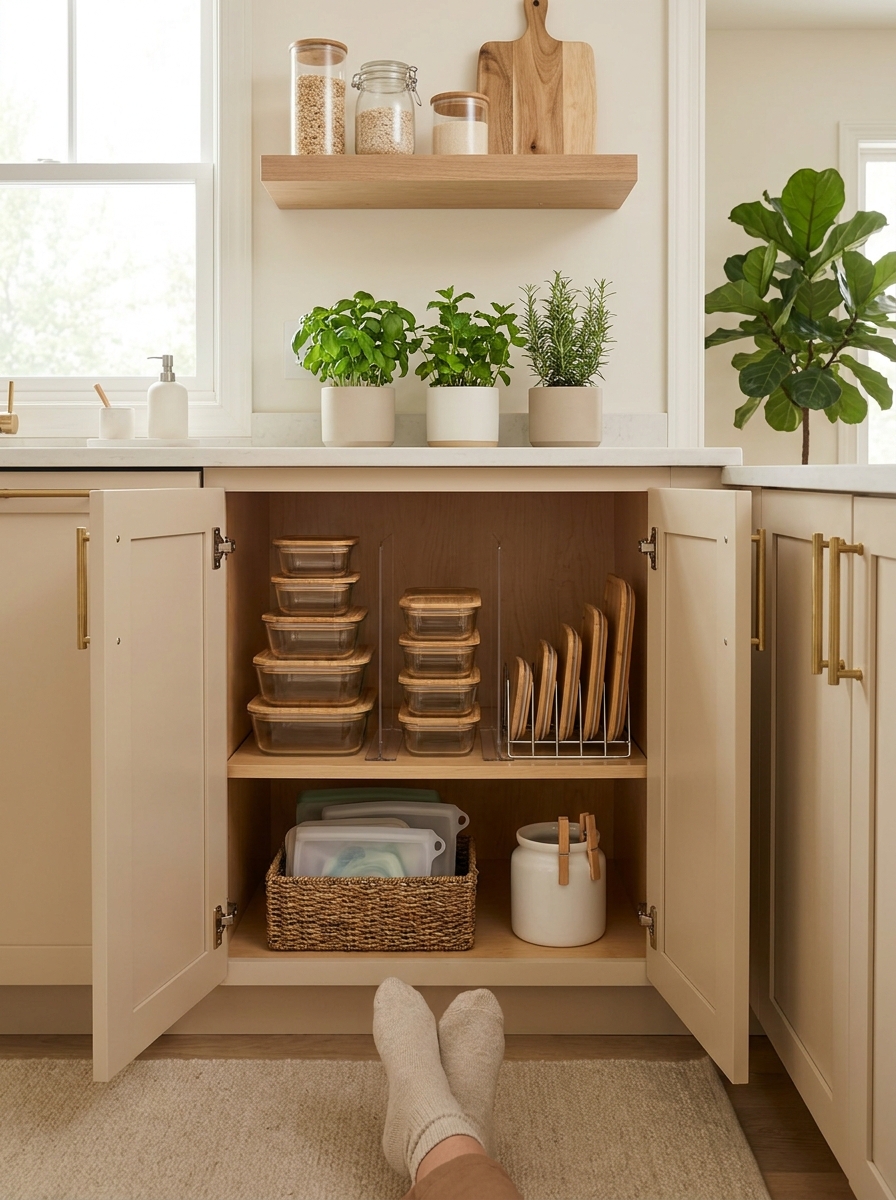
We all have that cabinet. The one where plastic containers avalanche out every time you open it. Lids that don’t match anything. Containers without lids. It’s pure chaos in there.
This might be the most frustrating cabinet in your entire kitchen. You KNOW you have the right container somewhere, but finding its matching lid requires a full archaeological expedition. Meanwhile, you’re late and your lunch is sitting there lidless.
Dump the whole cabinet out. Match containers with lids. If it doesn’t have a mate? Recycle it. Seriously, you’ll never find that lid. Keep only what you actually use—probably fewer than you think. Stack containers with lids inside them or use a simple organizer to keep lids upright and visible. Suddenly packing leftovers isn’t an anger management exercise.
16. Sort Through Your Email Digital Inbox Nightmare
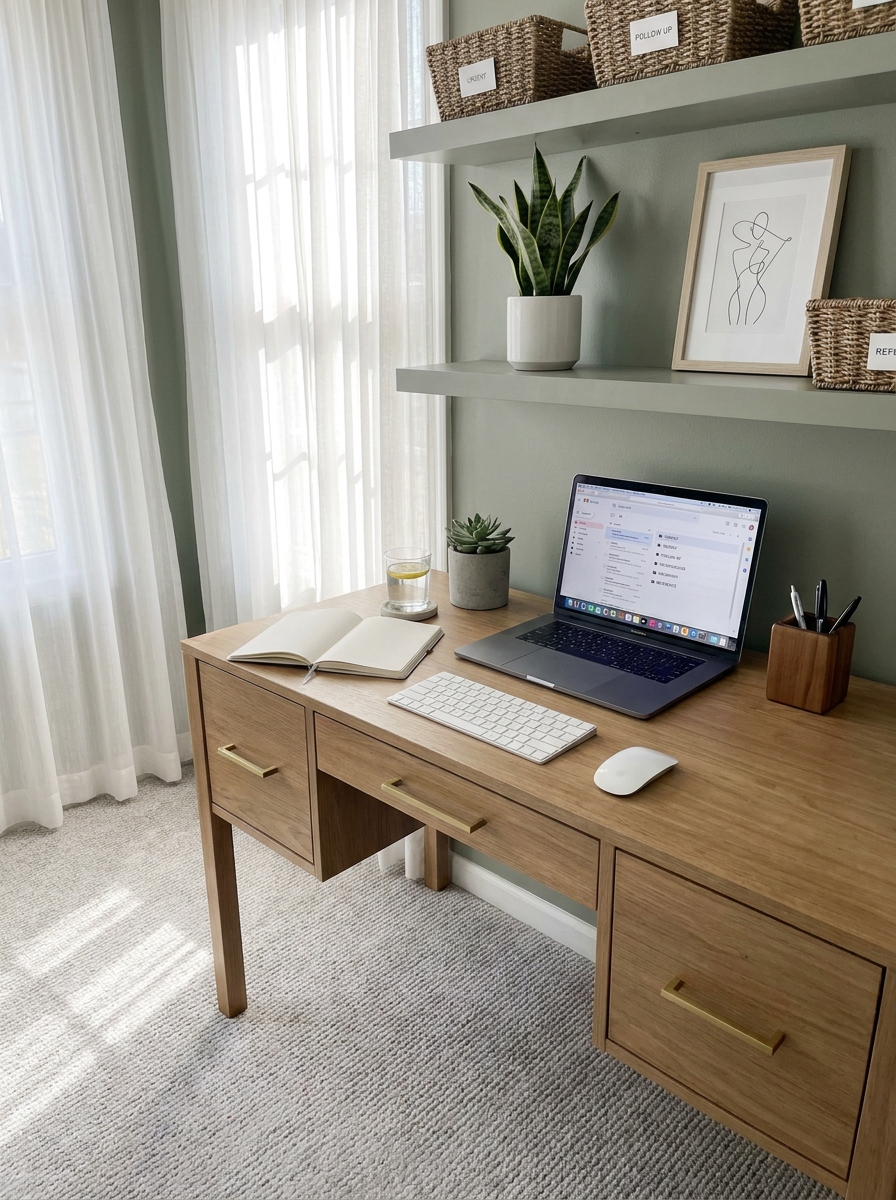
Okay, this isn’t a physical space, but your digital home counts too. And that inbox with 14,847 unread emails? It’s giving you low-key anxiety every time you look at it.
Your email is cluttered with newsletters you never read, store promotions you don’t need, and notifications from apps you forgot you downloaded. It’s visual noise that makes finding actual important messages nearly impossible.
Start with the unsubscribe button. Ruthlessly. If you haven’t opened emails from that store in six months, you don’t need them. Create three folders: Action Needed, Reference, and Archive. Anything older than 90 days that doesn’t fit those categories? Delete or archive it. Set up filters so future emails auto-sort. A clean inbox feels like a clean counter—suddenly you can breathe and think clearly again. Your brain will thank you for this digital reset.
17. Organize Your Laundry Room Lost Sock Dimension
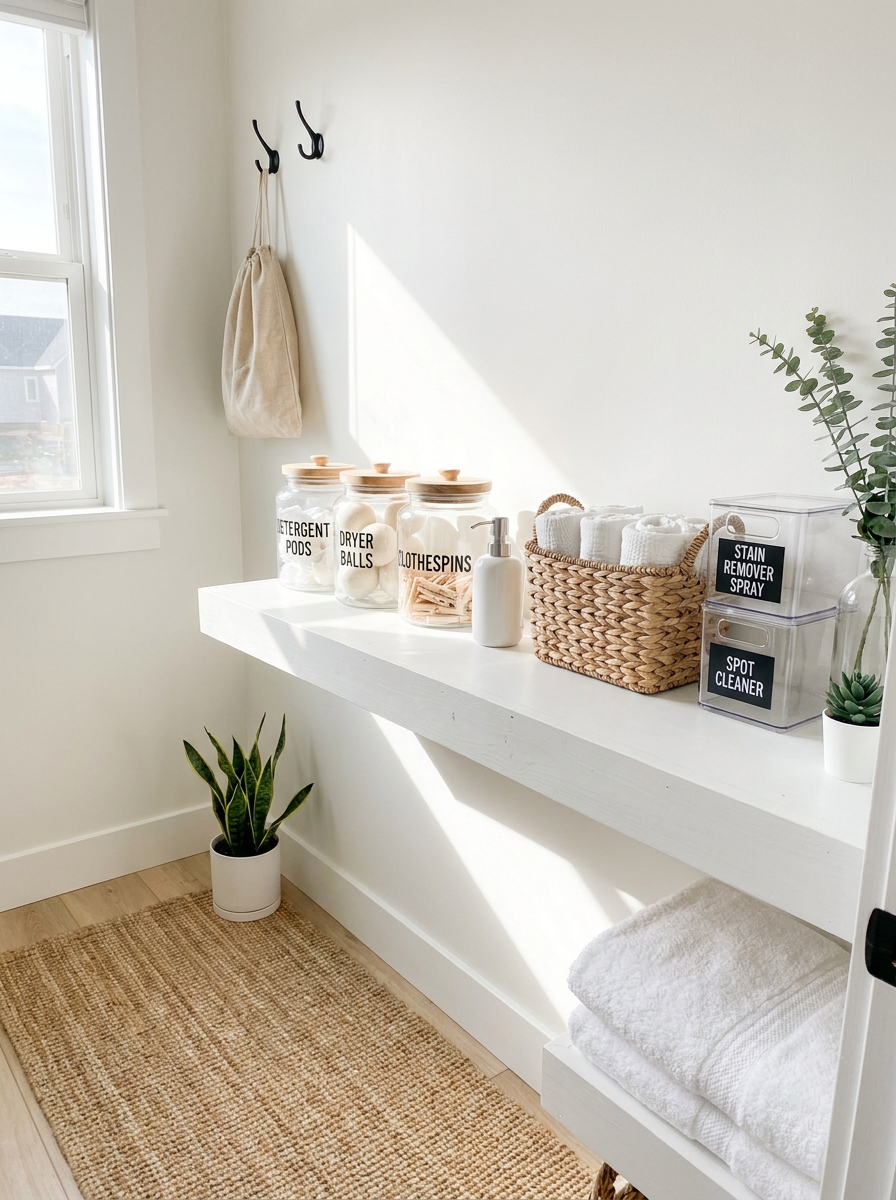
Oh, the laundry room. Where good intentions go to die and single socks vanish into another dimension. You know that shelf with the mystery stains and the dryer sheet box that’s been empty for three months? Yeah, let’s fix that.
Start by pulling everything out. And I mean everything—the random screwdriver, the lint roller from 2019, the fabric softener you bought by accident and never used. Sort what actually belongs in a laundry room. Spoiler alert: it’s less than you think.
Get yourself some matching containers for detergent pods, stain removers, and dryer balls. Clear bins are your best friend here because you’ll actually see when you’re running low. Add a small basket just for orphaned socks—give them a month to find their mate, then let them go. Create zones: washing supplies together, cleaning cloths in one spot, and a designated landing pad for items that need special attention. Your laundry room should make the chore easier, not harder.
18. Declutter Your Kids’ Artwork Archive Avalanche
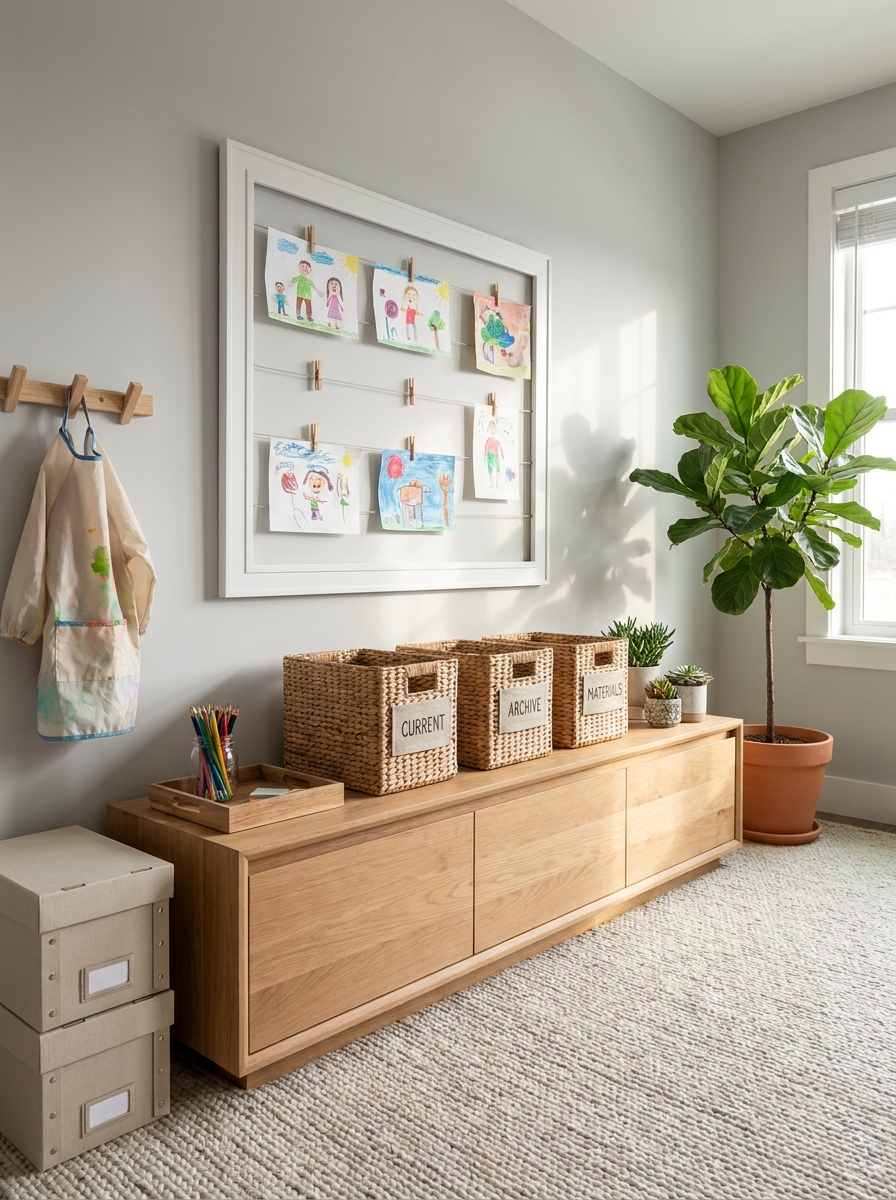
Listen, I get it. Every finger painting is a precious memory. Every crayon scribble is a future masterpiece. But if you’re drowning in construction paper creations from the past three years, it’s time for a loving edit.
Here’s the truth: you cannot keep everything. Create a simple system—one memory box per child, per year. Choose the pieces that genuinely made you smile or showed a milestone. Take photos of the rest before recycling them. Your kids won’t remember that random worksheet from October, I promise.
Set up a current display system where new art can rotate in and out. A simple clipboard wall, a wire with clothespins, or a large frame with clips inside works perfectly. When it fills up, something has to go. This teaches kids that not everything is precious—some things are just for the moment. And that’s okay! The goal is to honor their creativity without turning your home into a paper storage facility.
19. Reset Your Garage Tool Situation Nobody Can Find Anything In
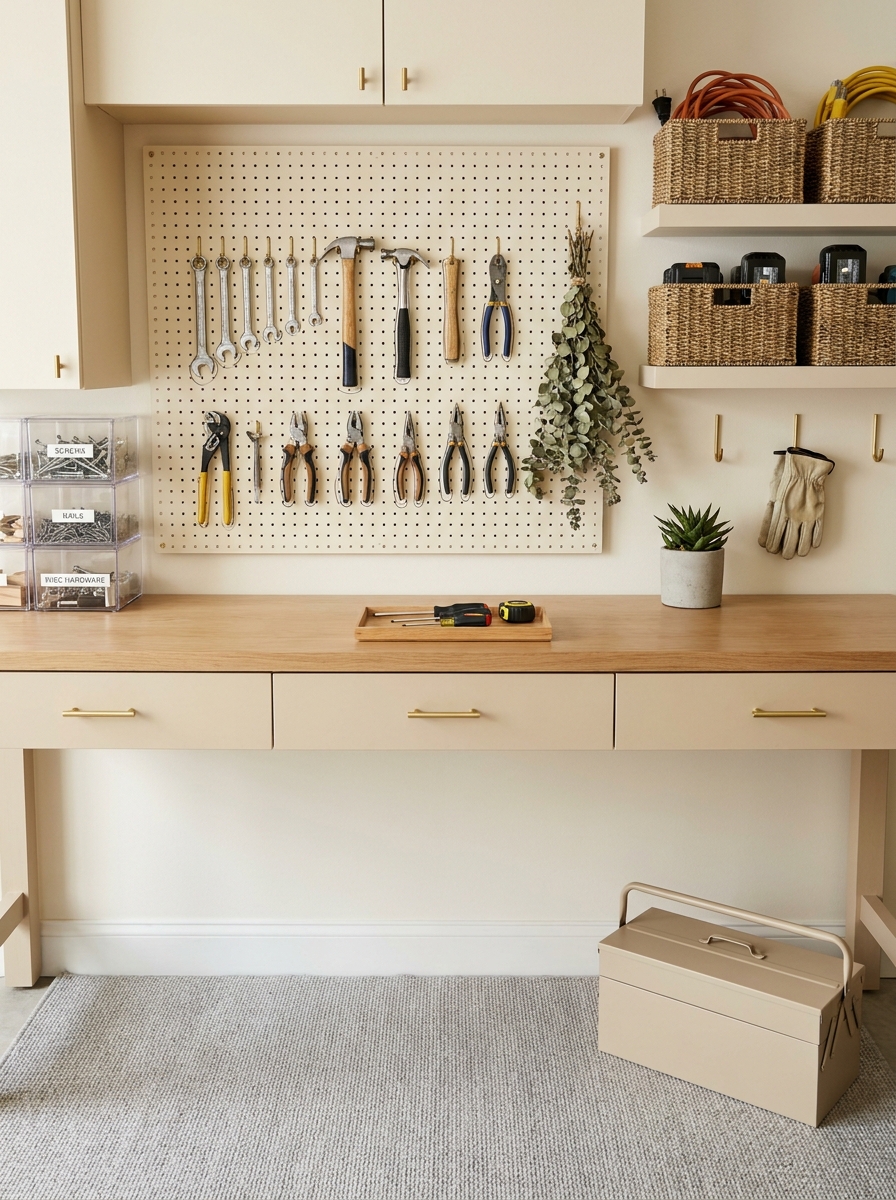
Your garage shouldn’t require a treasure map to find a hammer. If you’re spending more time searching for tools than actually using them, your New Year needs a garage intervention.
Start with the workbench or tool area—clear everything off and only put back what you’ve actually used in the past year. Be honest. That random sander you borrowed five years ago? Return it or donate it. Group tools by type: all screwdrivers together, all measuring tools together, all painting supplies in one zone.
Pegboards are absolute magic for garage organization. Outline each tool with a marker so you know exactly where everything goes—and more importantly, what’s missing. Use clear bins for smaller items like screws, nails, and picture hangers. Label everything. And here’s the big one: create a donation box for things that work but you never use. Someone else needs that extra rake way more than you need it taking up space. A functional garage is a gift to your future self every single time you need to fix something.
20. Purge Your Magazine and Book Pile Guilt Collection

Those magazines you’re saving for “inspiration” and books you swear you’ll read someday? Let’s have an honest conversation. If you haven’t opened it in six months, you’re not going to. That stack isn’t inspiring you—it’s stressing you out.
Pull out every magazine and book from every room. Yes, even that pile on your nightstand and the stack in the bathroom. Keep only what you’re actively reading right now or reference regularly. Everything else needs to go—donate books to your library, recycle magazines after tearing out any pages you genuinely want to keep.
For the keepers, create one designated spot. A single shelf, a small basket, a nightstand drawer—whatever fits your space. When that spot fills up, something has to leave before something new comes in. This isn’t about never buying books again. It’s about being intentional. Your home shouldn’t be a lending library for things you don’t actually love. Keep the books that changed you. Release the rest to change someone else.
21. Organize Your Gift Wrap Station Explosion
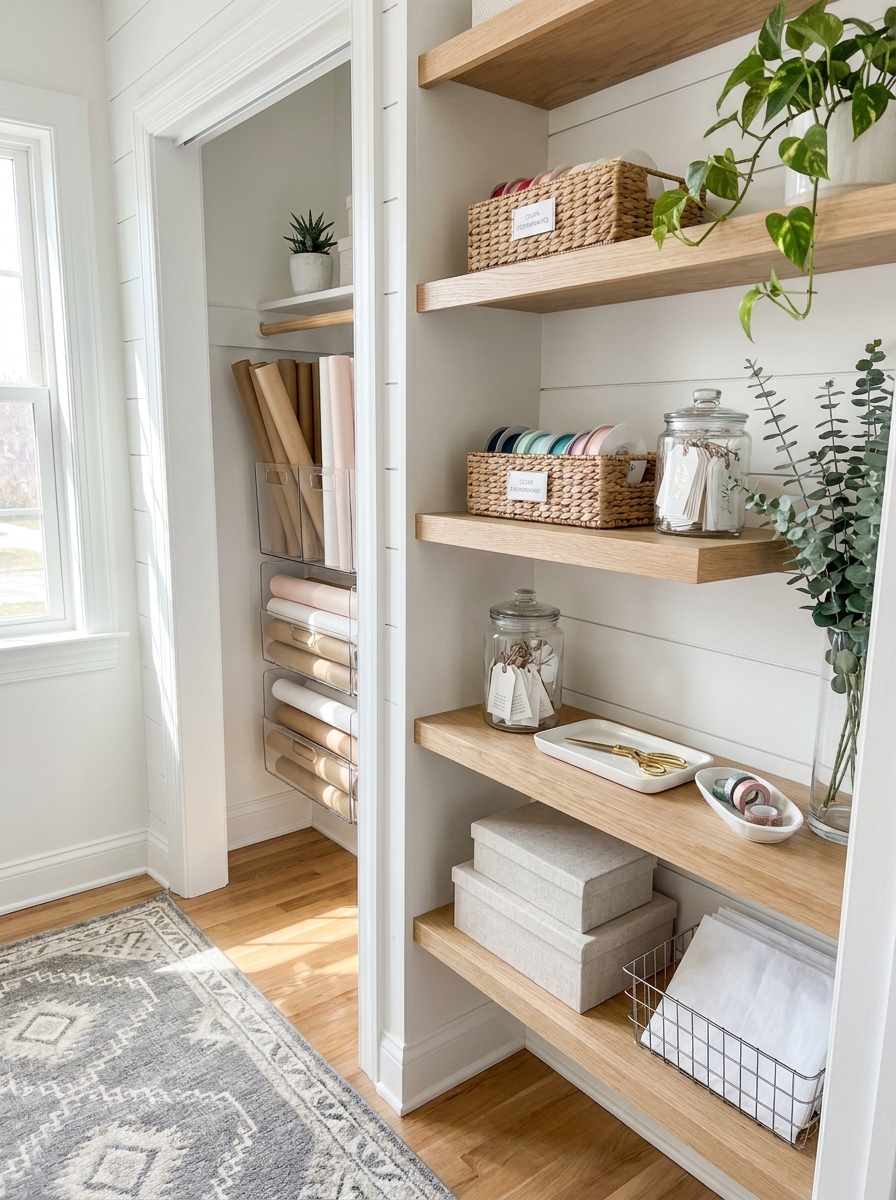
You know that closet shelf where wrapping paper tubes fall out every single time you open the door? The one with curled ribbon tangled around scissors and tape rolls hiding somewhere in the bottom?
It’s time. Pull everything out and be honest about what you actually use. Those five tubes of Christmas paper from 2019? The baby shower wrapping that’s turned yellow? Gone. Keep one or two neutral patterns, solid colors, and maybe one festive option per major holiday you celebrate.
Here’s the game-changer: vertical storage. Use a hanging organizer or mount simple hooks inside a closet door to keep paper tubes upright and visible. Corral ribbons in clear containers or over-the-door organizers with pockets. Scissors, tape, and tags go in one designated basket or bin. When everything has a spot, wrapping gifts becomes almost enjoyable. Almost. You’ll definitely stop dreading it, and that’s honestly a win.
22. Declutter Your Photo and Memory Box Overwhelm
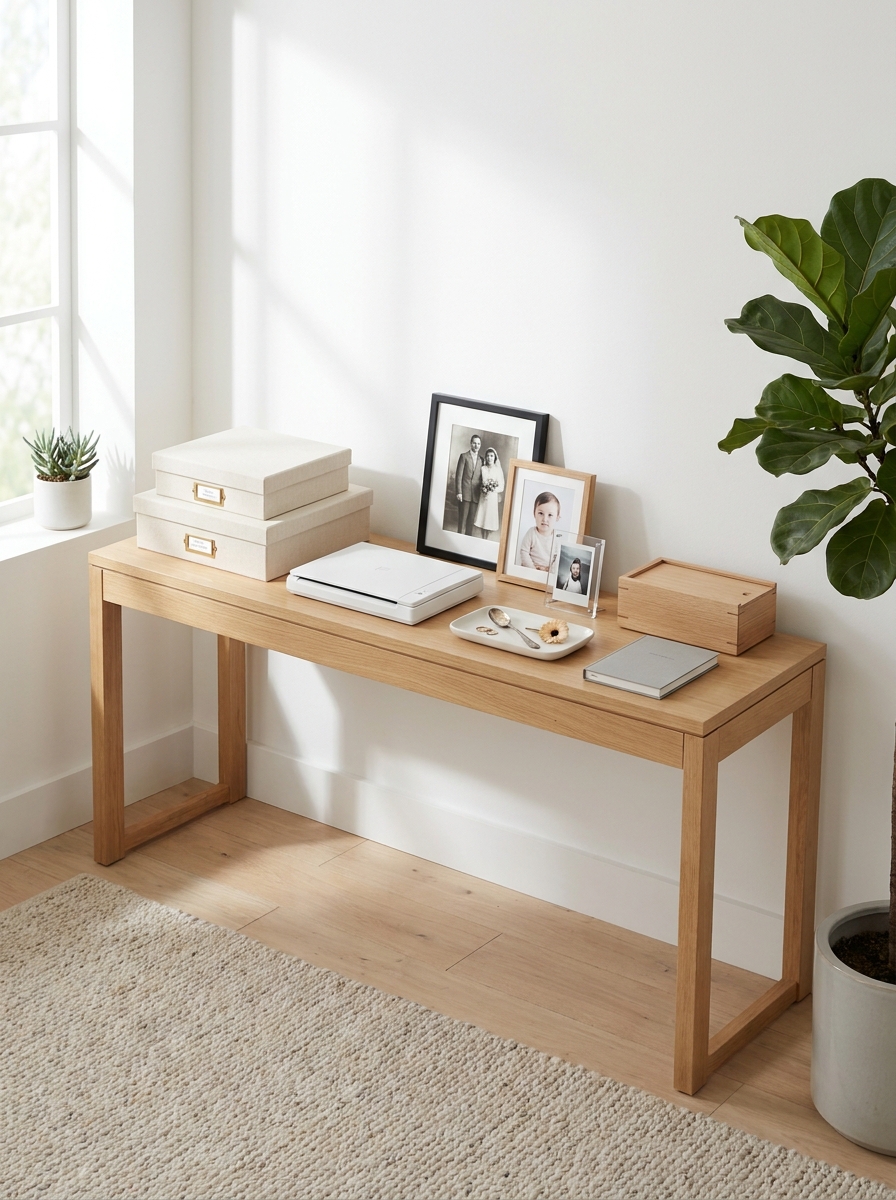
Those boxes of printed photos from the 2000s. The baby clothes you swore you’d turn into a quilt. Your kids’ hospital bracelets, ticket stubs from concerts, birthday cards from people you’re not even in touch with anymore.
Memory clutter hits different because it feels like you’re throwing away the actual memories. But you’re not. The memory lives in your brain, not in a shoebox under your bed that you haven’t opened in three years.
Start with one box or bag. Sort into three piles: digitize and donate/toss, keep the actual item, or pass it along to the person who’d actually cherish it. Take photos of bulky sentimental items before letting them go. Keep only what sparks genuine joy when you hold it, not guilt. Then store those keepers in labeled, archival-safe containers. Your memories deserve better than a crumbling cardboard box shoved in a closet corner.
23. Reset Your Digital Desktop Screenshot Cemetery
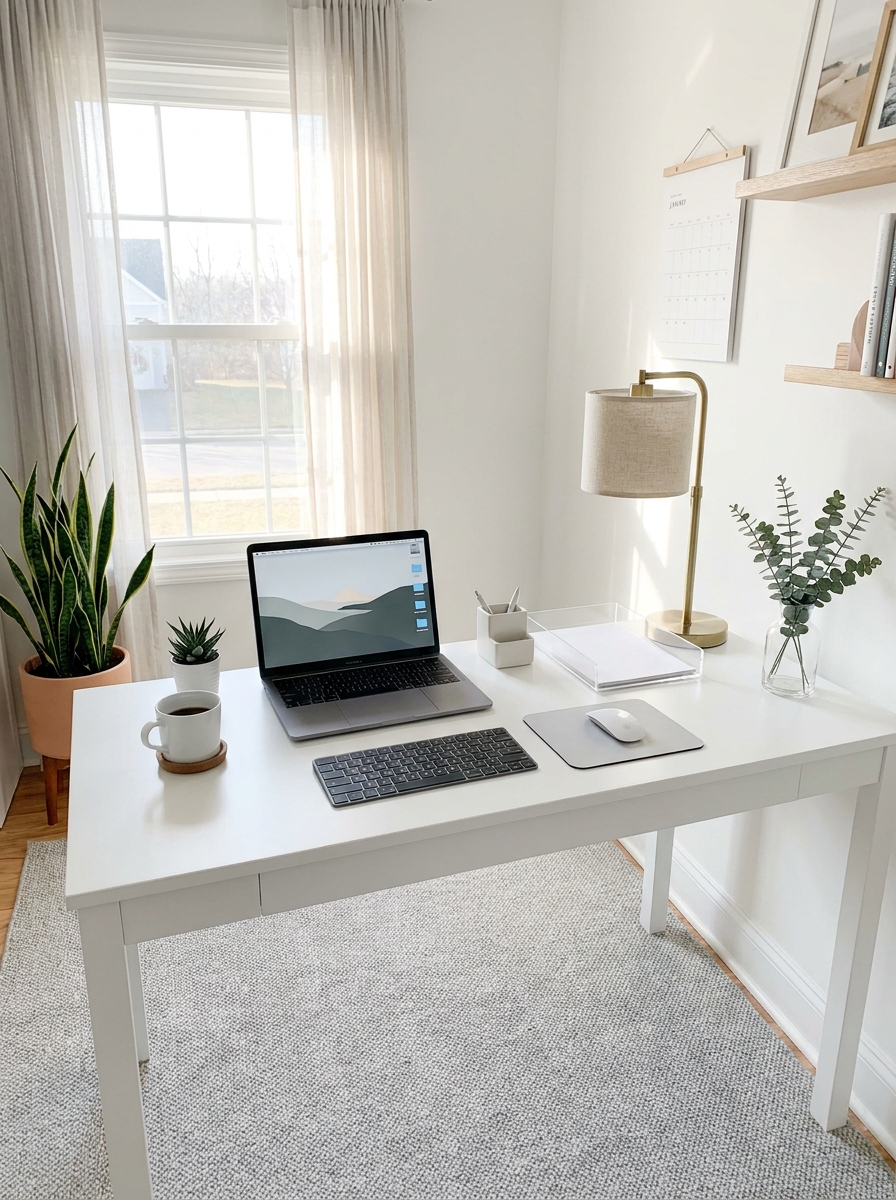
Your computer desktop has 147 files on it. Twelve are titled “Screen Shot 2024” with various numbers. You can’t find anything. Your laptop fan runs constantly because even your computer is stressed.
This invisible clutter weighs on you every single time you open your laptop. It’s visual noise that makes everything harder to find and creates this low-level anxiety you don’t even realize you’re carrying.
Spend 15 minutes creating a simple folder system. Mine is stupidly basic: Work, Personal, Photos, To Sort. Drag everything off your desktop into the appropriate folder. Delete duplicate downloads, old screenshots, and that PDF you definitely don’t need anymore. Set a rule: your desktop can only hold current project files. Everything else goes in folders. Bonus points if you change your desktop wallpaper to something calming afterward. The mental clarity you’ll feel is ridiculous for such a small task.
24. Purge Your Subscription and Membership Card Chaos
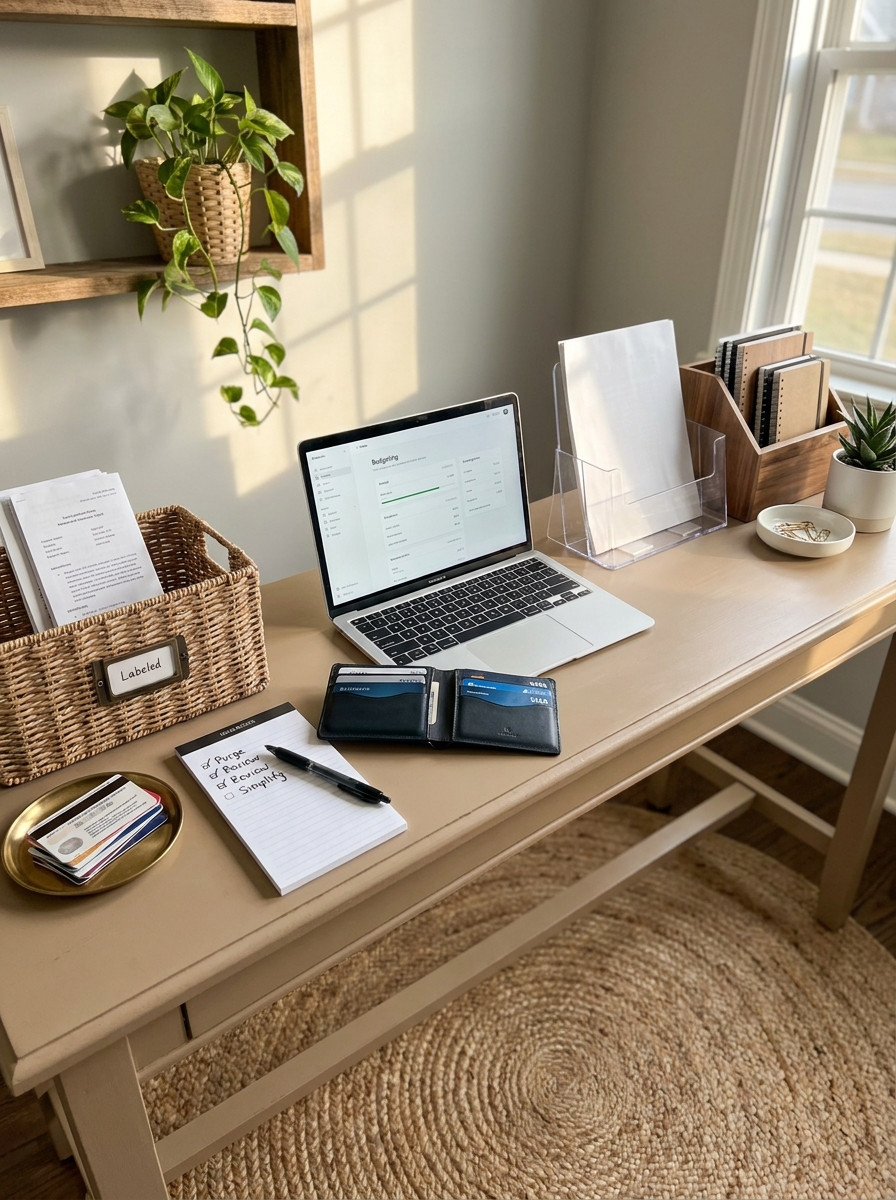
Your wallet is stuffed with seventeen loyalty cards you never use. You’re paying for three streaming services you forgot you had. There’s a gym membership auto-charging you $40 a month for a place you haven’t visited since February.
This is sneaky clutter because it’s financial and physical. It’s taking up space in your wallet, your email inbox, and your bank account. And unlike a messy drawer, it’s actively costing you money every single month.
Pull up your bank statement and highlight every recurring charge. Cancel anything you don’t actively use or love. Keep only the subscriptions that genuinely add value to your life right now. Then tackle your physical wallet: photograph or add loyalty cards to your phone, keep only your top three most-used cards. Recycle the rest. Your wallet should close easily, and your monthly expenses should reflect your actual life, not subscriptions from three apartments ago.
25. Organize Your Spice Cabinet Tiny Jar Tetris Game
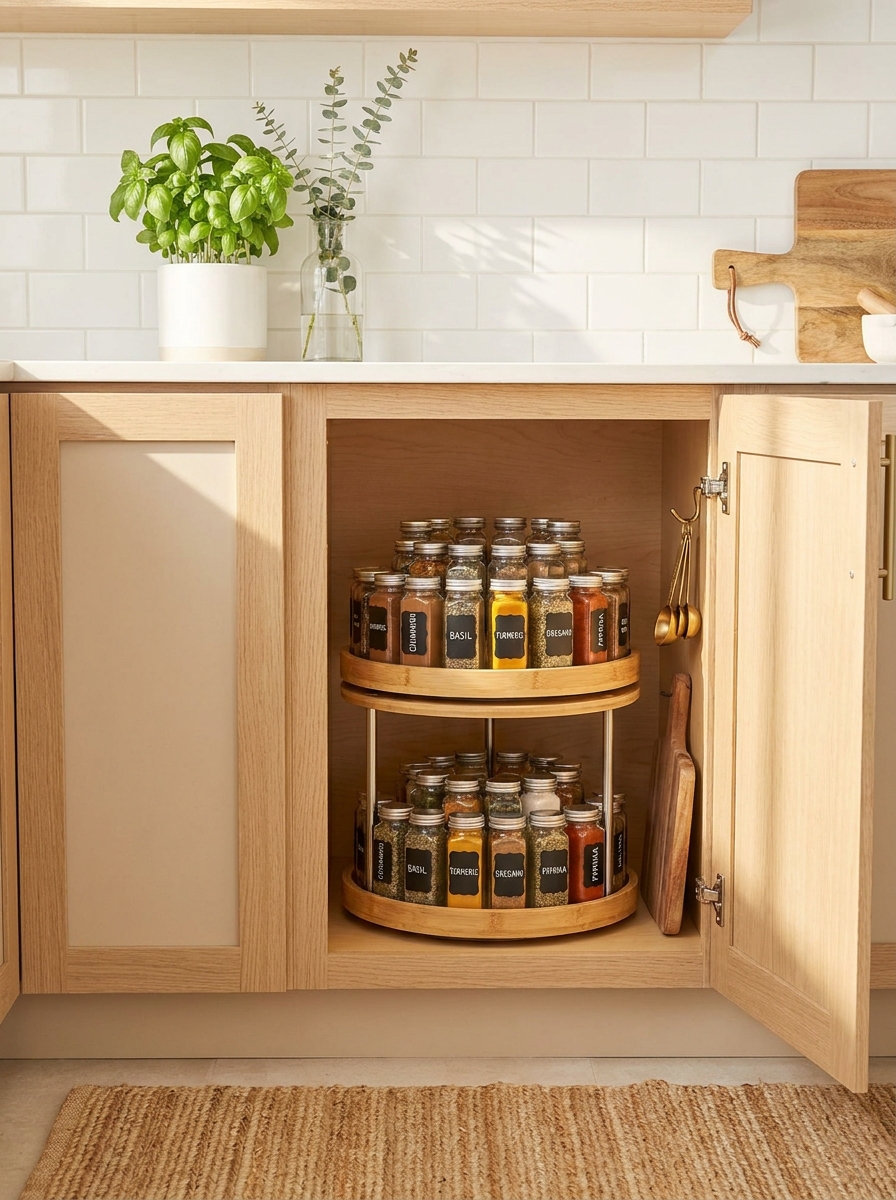
Oh my gosh, let’s talk about spice cabinets. You know what I’m talking about. That cabinet where you have seventeen half-empty jars of oregano from different decades, spices you bought for ONE recipe three years ago, and containers so old the labels have completely faded into beige mystery powder.
Pull everything out. Yes, everything. Check expiration dates because ground spices actually do lose their potency after about two years. Toss the ancient ones without guilt. Group what’s left by category—baking spices together, savory together, whatever makes sense for how you actually cook.
Here’s the thing that’ll change your life: uniform containers with labels you can actually read. No more digging through a pile of mismatched jars. Use a lazy Susan or tiered organizer so you can see everything at a glance. Suddenly you’ll realize you DON’T need to buy more garlic powder because you can actually find the three jars you already own. Game changer.
26. Declutter Your Makeup and Beauty Product Hoard
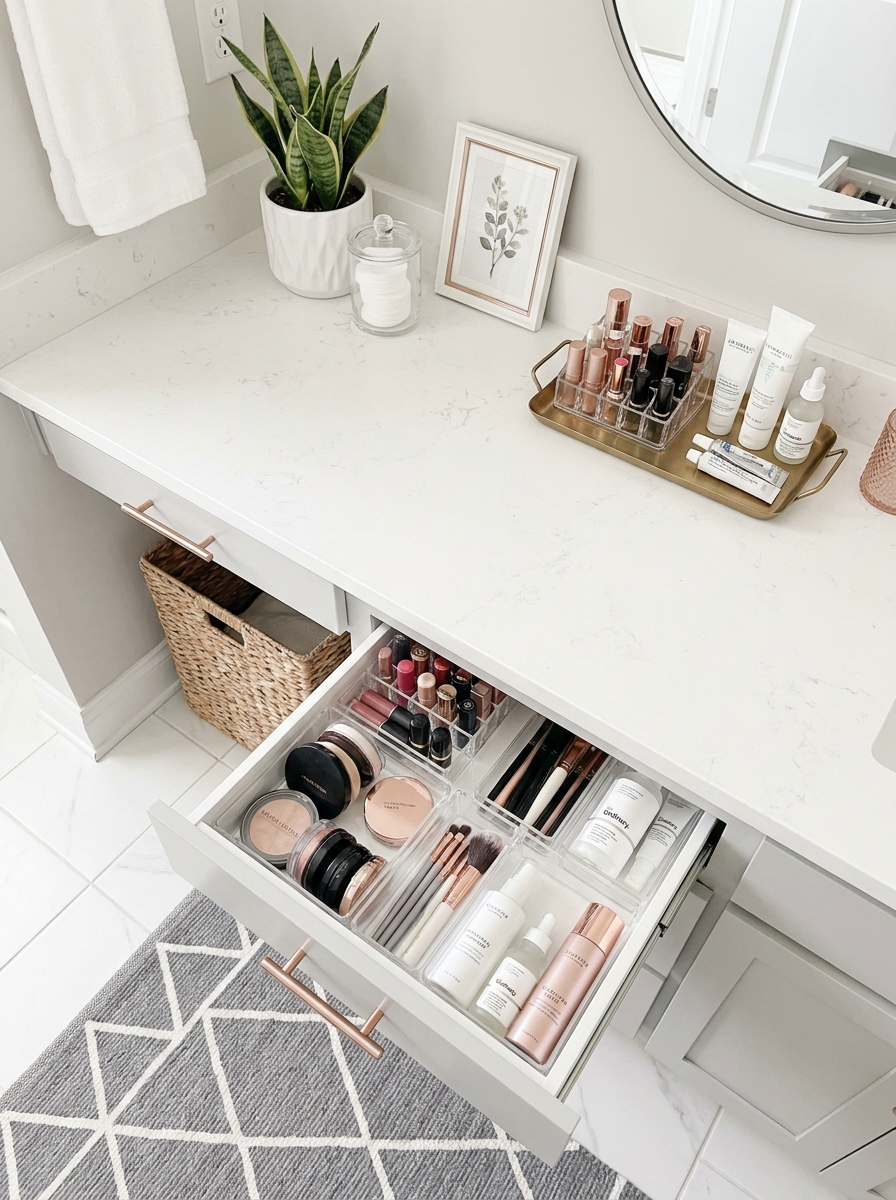
Real talk: if you haven’t worn that purple eyeshadow since 2019, it’s time to let it go. Beauty products expire faster than we want to admit, and that drawer stuffed with dried-out mascaras and lipsticks you wore once is not serving you.
Dump everything out onto your counter. Check those little jar symbols on the back that tell you how many months products last after opening. Mascara? Three months. Foundation? Six to twelve months. That cream blush from your college days? Yeah, it’s done. Toss anything expired, separated, or smells weird.
What’s left should be stuff you actually use and love. Organize by category in drawer dividers or clear acrylic organizers. Keep daily essentials within easy reach, special occasion stuff toward the back. When you can see everything clearly, you’ll stop buying duplicate bronzers and actually use what you have. Plus, your morning routine gets SO much faster when you’re not digging through chaos.
27. Reset Your Freezer Mystery Frost Layer
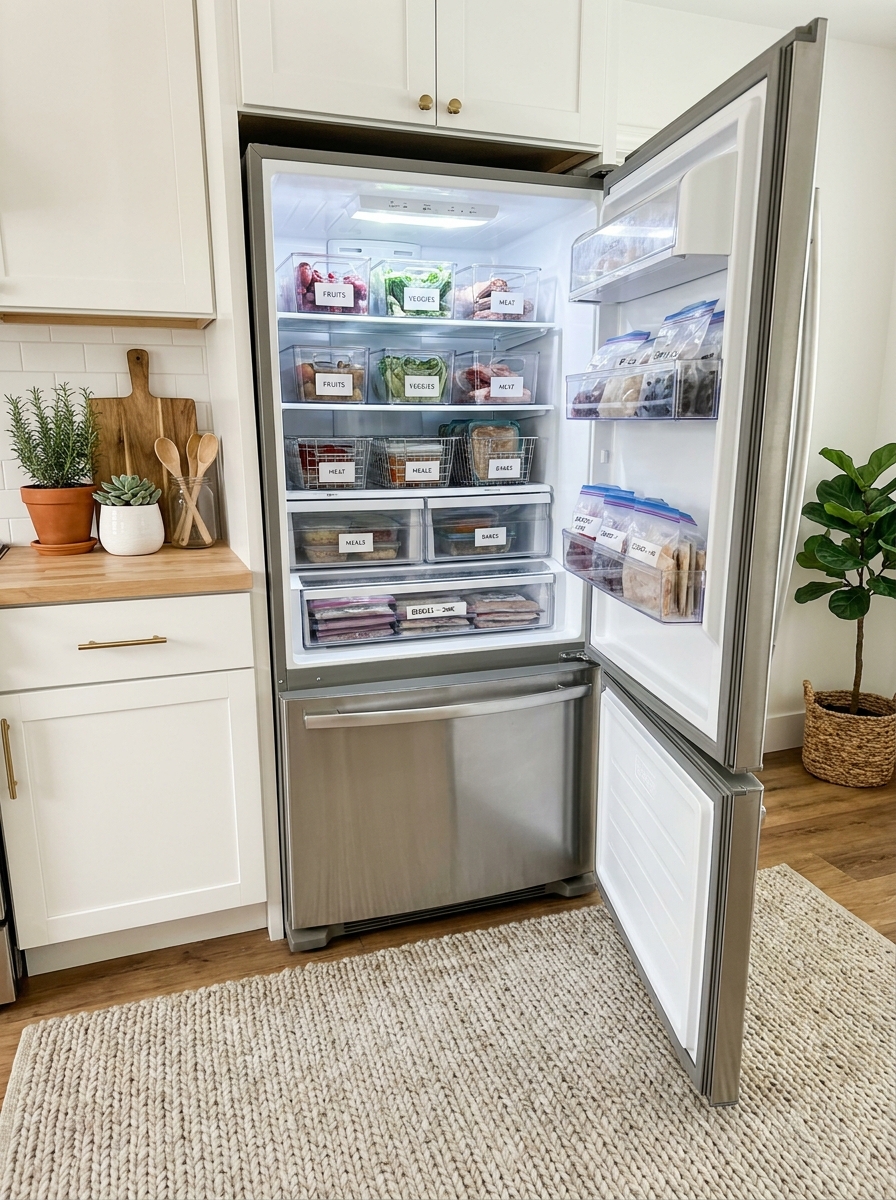
Can we be honest about what’s happening in the back of your freezer? There’s probably a bag of vegetables from 2022, something in a mystery container that could be soup or could be chili, and frost buildup that’s created its own ecosystem.
Time for a freezer reset. Turn it off or work quickly, pull everything out, and toss anything with serious freezer burn, anything unidentifiable, and anything you know deep down you’re never going to eat. Yes, even that expensive cut of meat that’s been there for eighteen months.
Wipe down the shelves and organize what remains in clear bins or labeled bags. Group like items together—proteins in one section, vegetables in another, quick meals together. Use a black marker to write dates on everything going back in. Stack flat freezer bags to save space. Suddenly you can actually see what you have, which means you’ll waste less food and save money by actually eating what you’ve already bought.
28. Purge Your Random Cable and Charger Tangle Nest
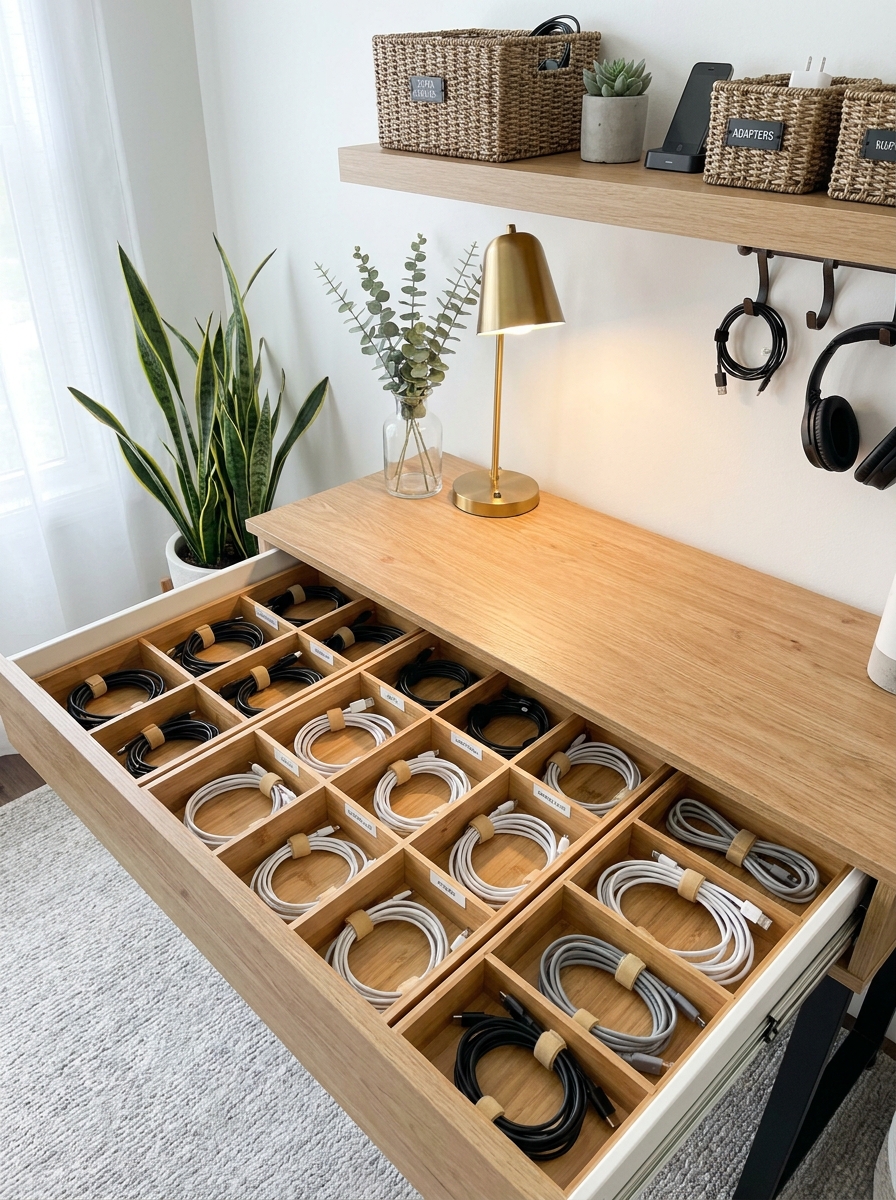
You know that drawer or basket where cables go to die? The one with fifteen mystery cords, three phone chargers from phones you haven’t owned in five years, and enough adapters to wire a small country? Yeah, that one.
Here’s your challenge: pull out every single cable and charger from every drawer, basket, and random spot in your house. Test each one—plug it in and see if it actually works and if you can identify what it goes to. No label? No current device? Toss it or donate it.
What you keep should be organized by type and stored where you’ll actually use it. Put phone chargers in your nightstand and office. Camera cords near your camera stuff. Use velcro ties or toilet paper rolls to keep cables from tangling into that impossible knot situation. Label anything that’s not immediately obvious. Trust me, future-you will be so grateful when you need a specific cable and can actually find it in thirty seconds instead of thirty minutes.
29. Organize Your Cleaning Supply Cabinet Black Hole
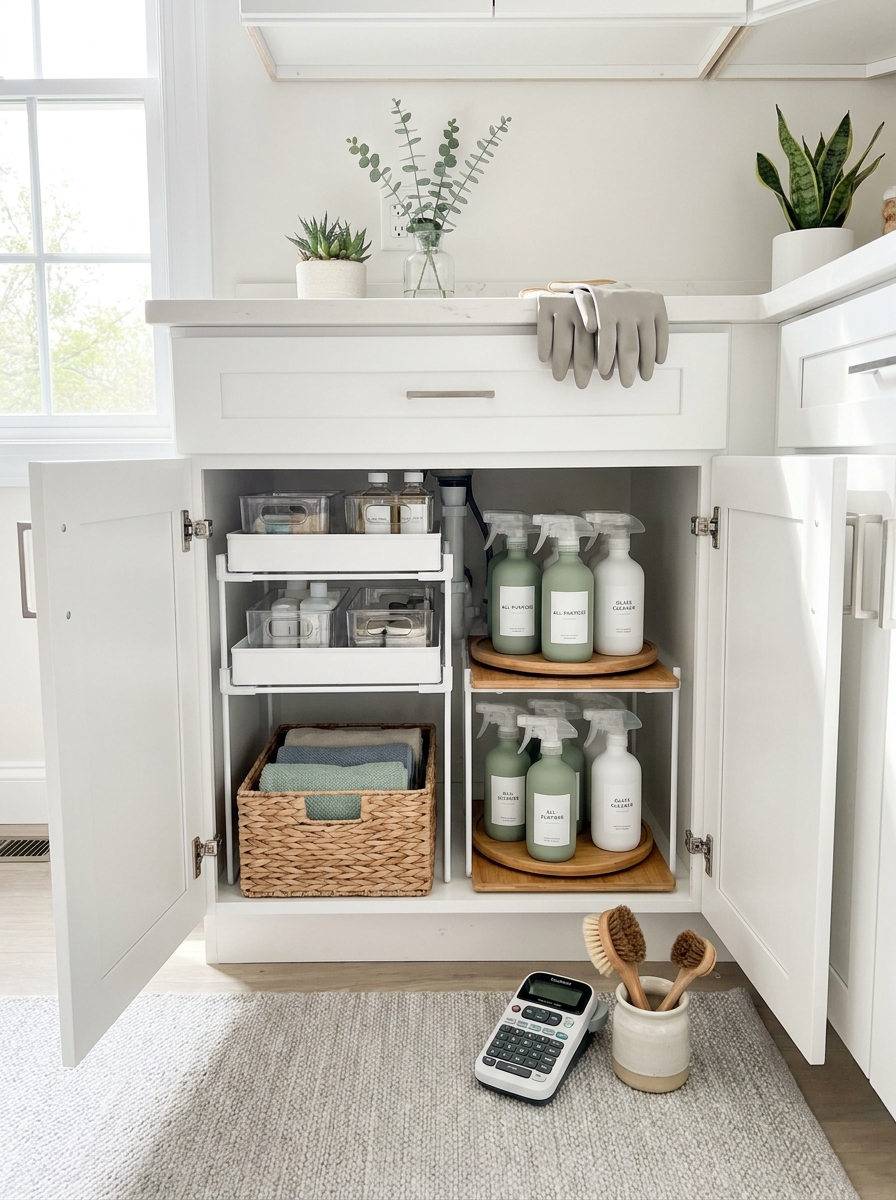
Why do we all have seventeen half-empty bottles of the same cleaner? I found four glass cleaners under my sink last week. FOUR. And none of them were the one I actually like.
This cabinet is where good intentions go to die. You buy something new, shove it in there, and forget it exists. Meanwhile, everything tumbles out every time you open the door because there’s no rhyme or reason to how things are stored.
Time to pull everything out and be honest. Toss anything crusty, expired, or that you haven’t touched in a year. Group like with like—all surface cleaners together, all bathroom stuff together. Use a turntable for spray bottles so you can actually see what you have. Clear bins keep everything contained and visible. And please, consolidate those duplicates. Your future self will thank you when you can actually find what you need without an avalanche.
30. Declutter Your Pet Supply Explosion Zone
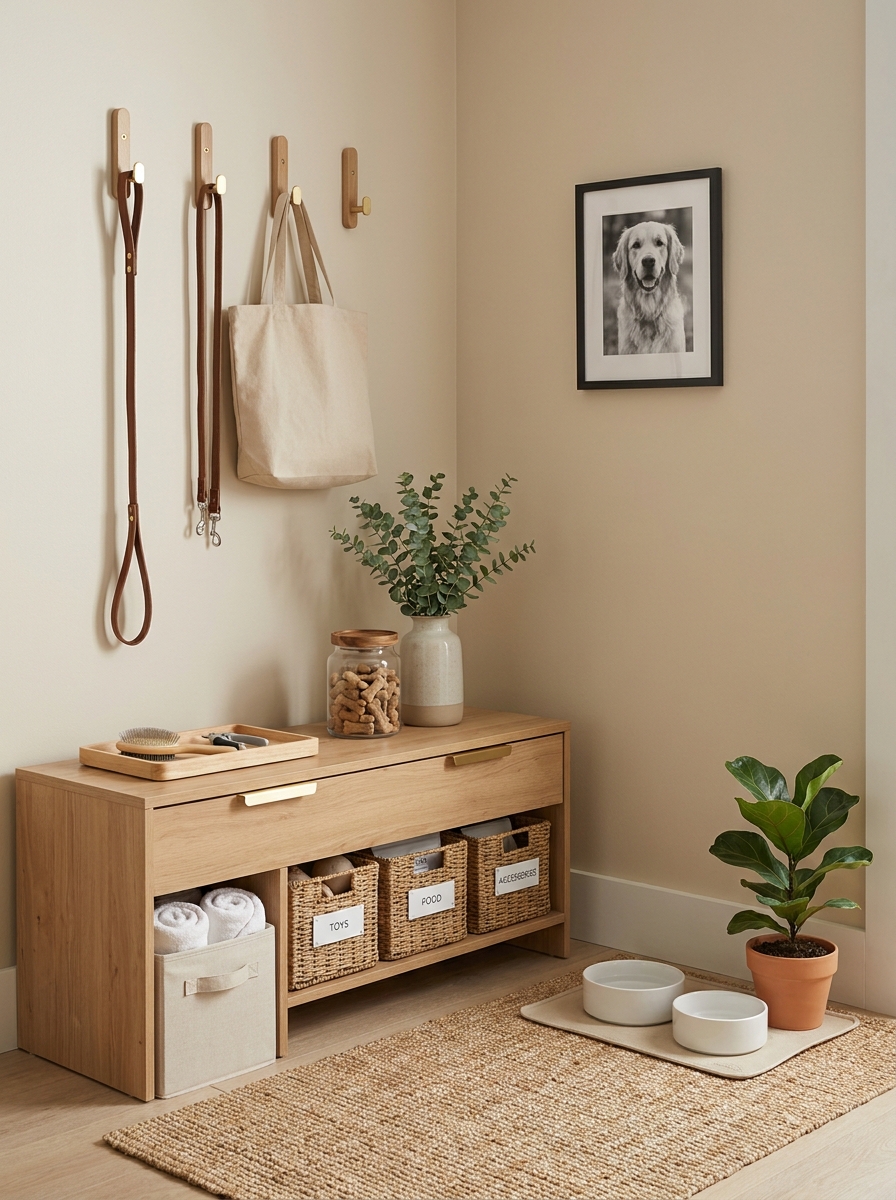
Look, I love my pets. But why do their supplies take over entire corners of the house? The toys scattered everywhere, the half-bag of treats you forgot you bought, the leashes multiplying like rabbits.
Pet stuff has this sneaky way of creeping into every room. You think you’re organized, then you find dog toys in the bathroom and cat treats in the kitchen junk drawer. It’s chaos disguised as cute.
Gather it ALL from every corner of your house. You’ll be shocked at how much you find. Toss broken toys, donate unopened food you know they won’t eat, and consolidate everything into one dedicated zone. Use a basket for toys, hooks for leashes, and clear containers for food and treats. Keep only what you actually use regularly. Your pet doesn’t need forty-seven toys at once—rotate them weekly to keep things interesting instead.
31. Reset Your Seasonal Decoration Storage Madness
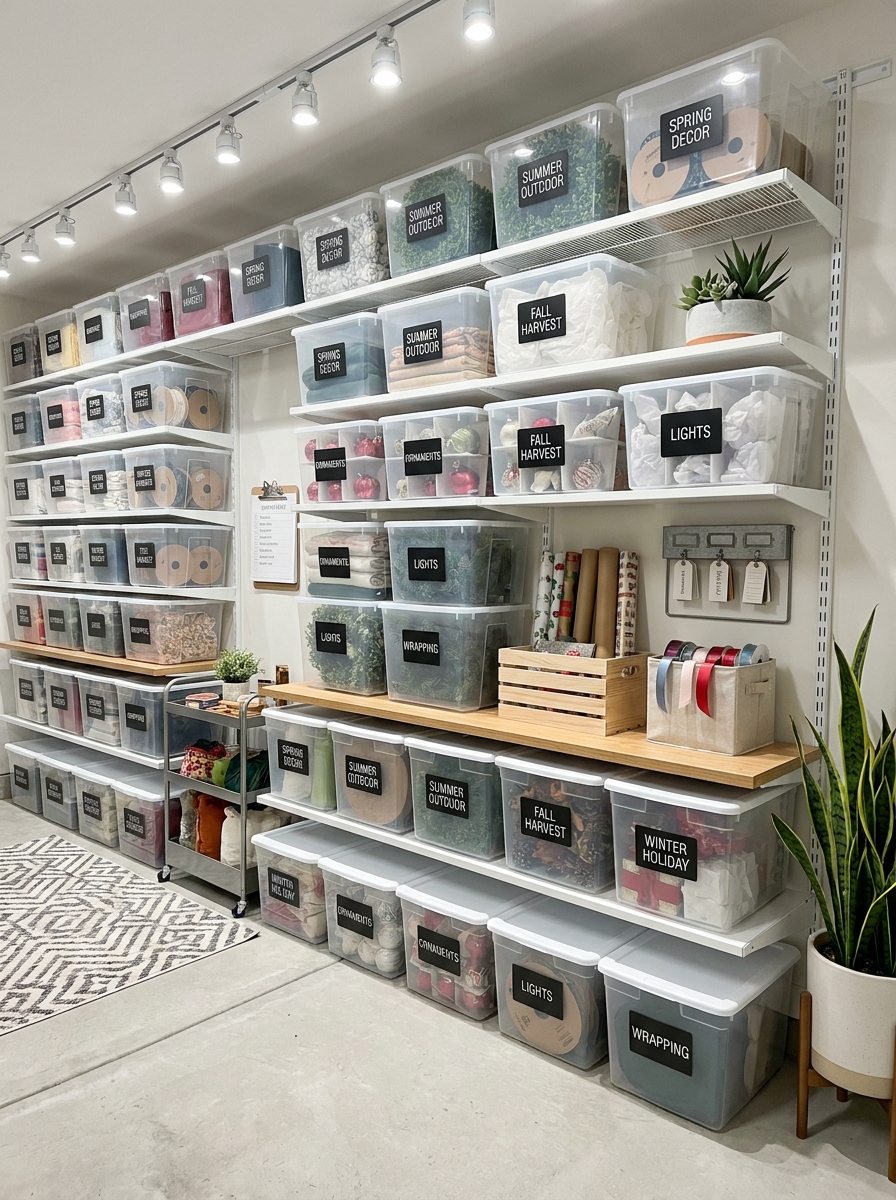
January is when you realize your holiday storage situation is a complete disaster. Ornaments thrown into random boxes, tangled lights, decorations you forgot you even owned buried at the bottom of bins.
And it’s not just Christmas. Halloween, Easter, Fourth of July—all of it mixed together in some closet or garage corner where you have to excavate like an archaeologist every time a holiday rolls around. Exhausting.
Now’s the perfect time while everything’s still fresh in your mind. Invest in clear bins labeled by holiday so you can actually see what you have. Wrap lights around cardboard or use special storage reels. Use dividers for delicate ornaments. Put the holidays in order of when they happen throughout the year so you’re not digging past Christmas to get to Valentine’s Day. Take photos of your favorite displays and tape them inside the bin lids—future you will love having that reference.
32. Purge Your Craft Supply and Hobby Overflow
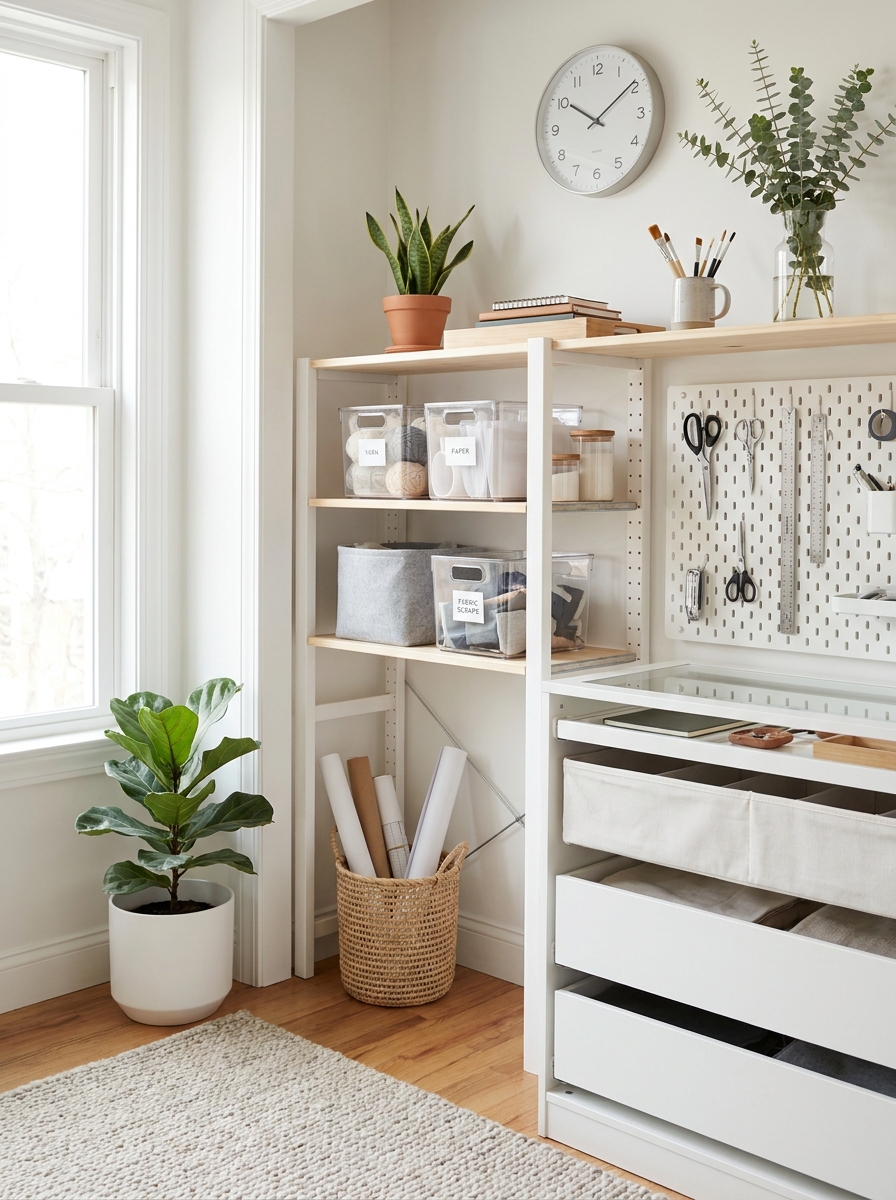
That scrapbooking phase from 2015? The yarn for the blanket you never finished? The paint supplies from when you thought you’d become an artist? Yeah, we all have that drawer (or closet) of abandoned dreams.
Craft supplies are deceptive because we think we’ll use them ‘someday.’ But someday never comes, and meanwhile they’re taking up valuable space and making you feel guilty every time you see them. Not worth it.
Be ruthlessly honest with yourself. If you haven’t touched something in over a year, you probably won’t. Donate complete sets to schools or community centers where they’ll actually get used. Keep only your current active hobbies and give them proper homes. Use clear containers so you can see exactly what you have—no more buying duplicate supplies because you forgot what’s buried in there. Group by project type and store vertically when possible. Less guilt, more space, and when inspiration strikes, you’ll know exactly where to find what you need.
Quick Guide
## Your Room-by-Room Reset Timeline
Week 1: High-Traffic Zones – Entryway, kitchen surfaces, bathroom counters. These give you immediate daily wins and motivation to keep going.
Week 2: Hidden Chaos – Junk drawers, under-sink cabinets, coat closets. The stuff you don’t see every day but secretly stresses you out.
Week 3: Personal Spaces – Bedroom closet, nightstands, desk areas. Where you start and end each day matters most.
Week 4: Deep Dives – Pantry, linen closet, garage/storage. The bigger projects that make everything else easier to maintain.
Don’t try to do everything in one weekend. Slow and steady wins actually stick. Pick one small area, set a timer for twenty minutes, and just start. Progress over perfection, always.
Your Fresh Start Is Already Here
Here’s what I want you to know: your home doesn’t need to look like a magazine spread to feel reset. It just needs to work better for how you actually live. Every drawer you organize, every surface you clear, every donation bag you drop off—that’s you choosing to move forward lighter. And that feeling? It spreads into everything else.
You don’t have to tackle all 32 of these resets this month. Or even this season. Pick the ones that’ll make your daily life noticeably easier and start there. Maybe it’s finally dealing with that coat closet avalanche situation. Maybe it’s creating a homework station that doesn’t make you want to scream. Whatever it is, trust that small consistent resets beat overwhelming overhauls every single time. Your home is where life happens—the messy, beautiful, chaotic, wonderful reality of it. These resets aren’t about perfection. They’re about creating space to breathe, to find what you need, to feel calm when you walk through your front door. That’s the real fresh start. And you’ve absolutely got this.
Frequently Asked Questions
How long does a complete home reset take if I tackle all 32 areas?
It really depends on the size of your home and how much decluttering each space needs, but realistically, plan for 4-6 weeks if you’re doing one or two areas per day. Some resets like clearing a bathroom counter take 20 minutes, while others like a full closet overhaul might take a whole afternoon. The beauty is you don’t have to do everything at once—pick your biggest pain points first and build momentum from there.
What should I do with items I’m decluttering during a home reset?
Create three clear categories: donate, trash, and relocate. Keep donation bags in your car so you’ll actually drop them off on your next errand run. Trash the broken, expired, or truly unusable stuff immediately—don’t let it linger. For the relocate pile, give yourself 24 hours to find proper homes for those items, or they go in the donation bag too. The key is getting things out of your space quickly before you second-guess yourself.
How do I maintain an organized home after completing the New Year reset?
Build tiny habits into your existing routine instead of creating a whole new system. Spend 10 minutes each evening doing a quick reset—clear the kitchen counters, return items to their homes, deal with the day’s mail. Do a weekly 15-minute sweep of high-traffic areas before they get chaotic again. The secret is maintaining as you go rather than letting things pile up until you need another big reset. Little and often beats occasional massive overhauls every time.
Should I buy organizing products before or after I declutter?
Always declutter first, then assess what you actually need. So many of us buy cute bins and baskets only to realize we don’t need them once we’ve edited down our stuff. Clear out each space completely, decide what’s staying, and then measure and shop for specific solutions. You’ll save money and end up with organizers that actually fit your space and serve your real needs instead of just looking pretty on a shelf.
What’s the best way to get my family on board with a home reset?
Start with shared spaces that make everyone’s life easier—the entryway, kitchen, or family room. When they experience how much better it feels to find their keys immediately or have clear counter space, they’ll be more motivated. Give each family member ownership over their personal spaces rather than doing it for them. And honestly? Sometimes you just have to lead by example and let the calm, organized energy speak for itself.