20 Dreamy Small Apartment Ideas That Transform Tight Spaces
You know that moment when you walk into your apartment and feel like the walls are closing in? I’ve been there. My first studio was so tiny I could literally touch three walls while standing in one spot. But here’s what I learned: small spaces aren’t the problem. It’s how we use them that makes all the difference. You don’t need to knock down walls or spend thousands on a renovation. Sometimes it’s about choosing a sofa that doubles as storage, or hanging shelves where you never thought to look. The best small apartment ideas aren’t complicated. They’re just smart. And honestly? Some of my most creative design moments happened when I had the least amount of space to work with. Constraints force you to think differently. So if you’re staring at your cramped living room wondering how to make it feel less like a shoebox, you’re in the right place. Here’s what actually works.
1. Murphy Beds That Don’t Scream ‘Murphy Bed’
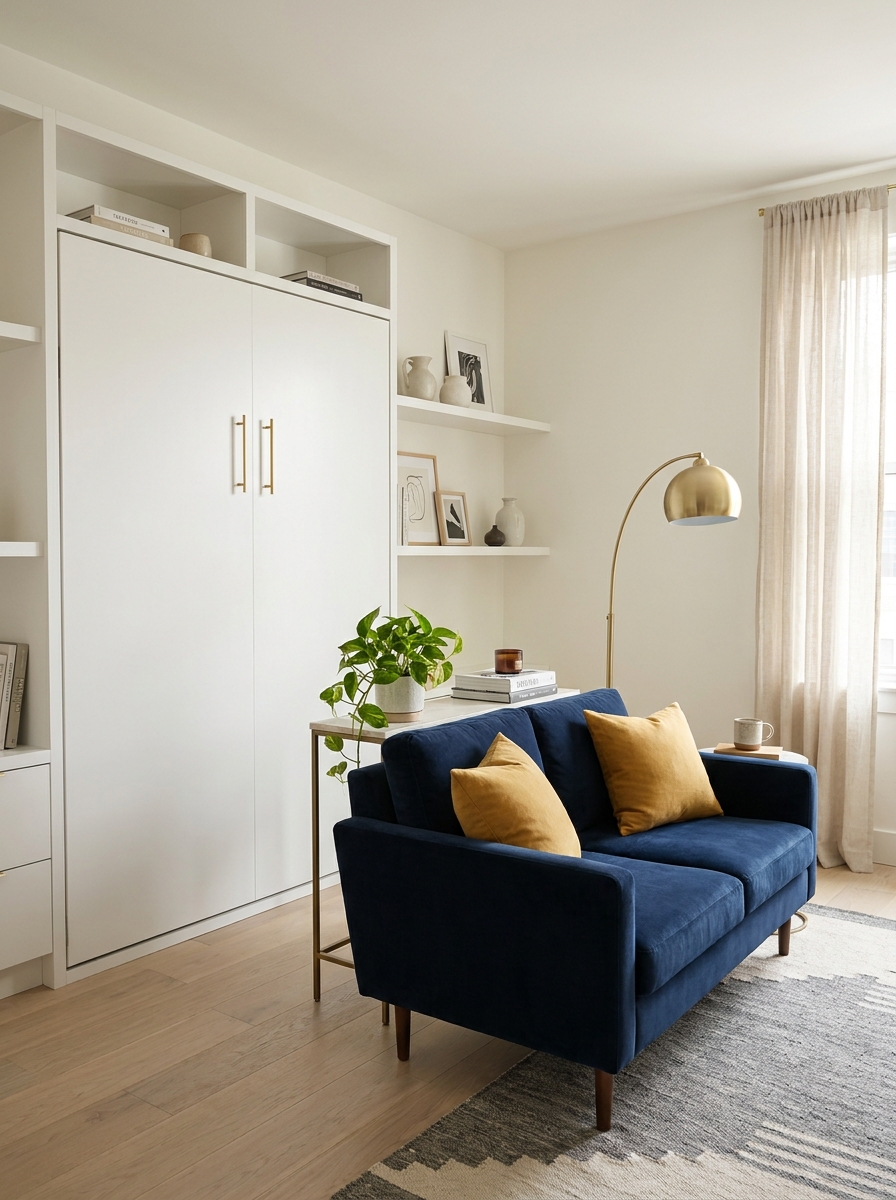
Gone are the days when Murphy beds looked like sad afterthoughts. The new generation is sleek, stylish, and honestly kind of genius. We’re talking about beds that fold up into what looks like a beautiful cabinet or bookshelf during the day. You reclaim an entire bedroom’s worth of floor space just by lifting your mattress.
The trick is finding one that matches your aesthetic. Some come with built-in desks that swing down when the bed goes up. Others have shelving on the exterior that stays functional whether the bed is deployed or not. I’ve seen modern Murphy beds with such clean lines you’d never guess what they’re hiding.
Installation does require some wall reinforcement, so you’ll want to check with your landlord first. But if you get the green light? Game changer. Suddenly your studio apartment has a proper living room during the day and a real bedroom at night. No more explaining to guests why there’s a bed in your dining area.
2. Vertical Storage That Climbs the Walls
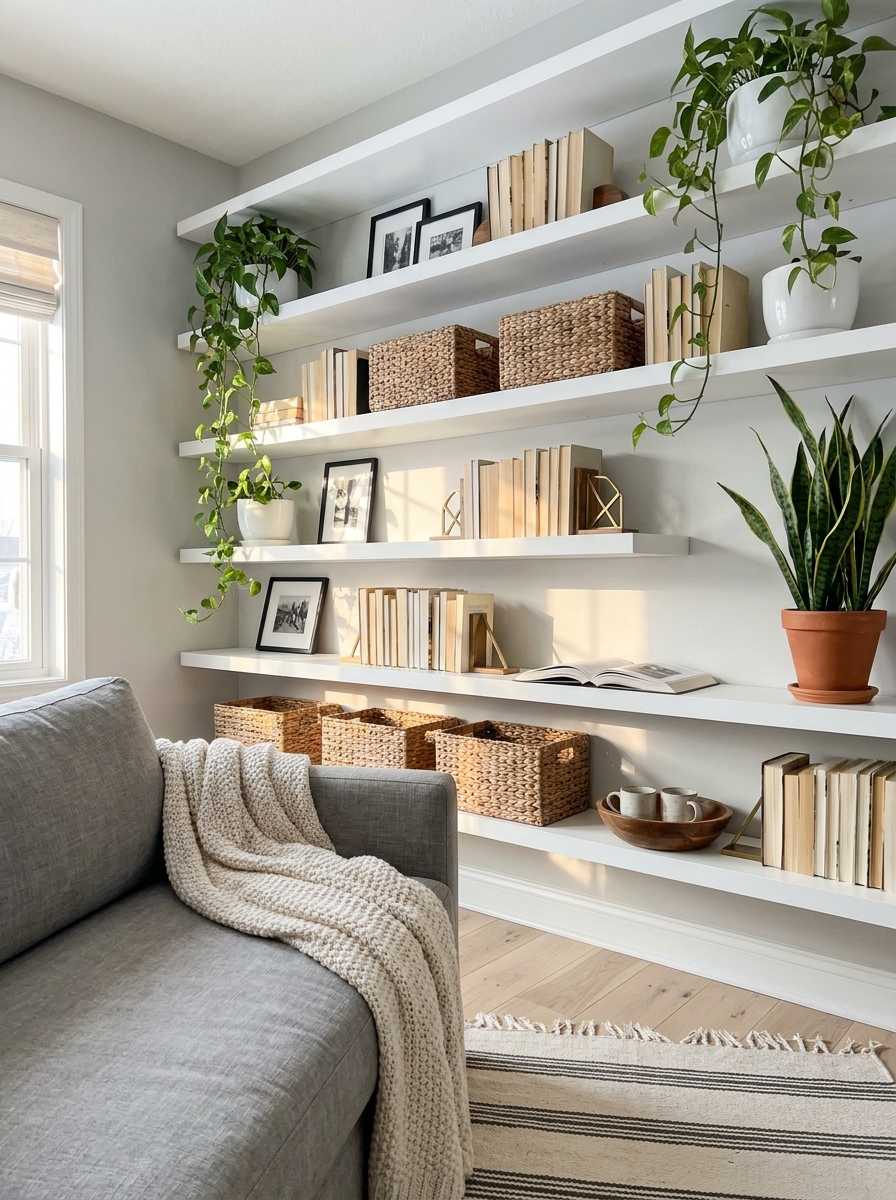
When you’re short on square footage, the answer is literally above you. Most people ignore all that wall space between shoulder-height and ceiling. That’s prime real estate going to waste. Floor-to-ceiling shelving units make your ceilings look taller while giving you tons of storage.
I’m not talking about those wobbly bookcases from college. Think slim, wall-mounted systems with adjustable shelves. You can customize them to hold books, baskets, dishes, whatever you need. The key is going all the way up. Stopping at six feet makes your ceiling feel lower.
Style them with intention though. Heavy items go on lower shelves for safety and visual weight. Lighter decorative pieces can hang out up top. And here’s a secret: putting everyday items up high forces you to be more intentional about what you keep. If you have to drag out a step stool every time you want that random gadget, you’ll probably realize you don’t actually need it. Vertical storage isn’t just practical. It’s a mindset shift about living with less on your floor and more on your walls.
3. Furniture That Earns Its Keep Twice
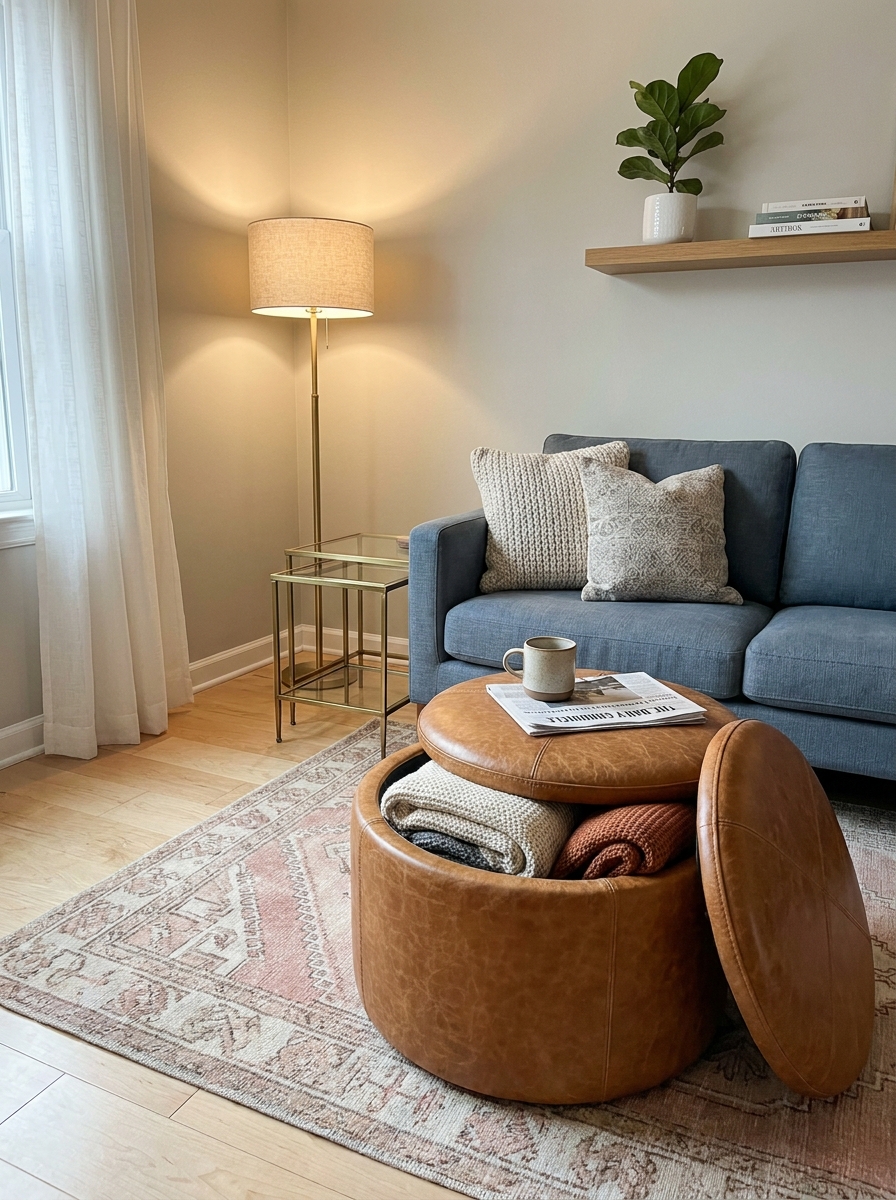
In a small apartment, every piece of furniture needs to justify its existence. And the best ones? They do two jobs at once. Ottoman that opens up for blanket storage. Coffee table that lifts to become a desk. Sofa with drawers underneath. This is where the magic happens.
I used to think multifunctional furniture looked clunky and obvious. But designers have gotten so much better at hiding the dual purpose. That gorgeous leather ottoman in the corner? Nobody needs to know it’s stuffed with your winter sweaters. The sleek bench under your window? It’s actually a filing cabinet.
The trick is choosing pieces that look good first and functional second. Because if it’s ugly, you won’t want it in your space no matter how practical it is. Start with the aesthetic. Then find the version that also gives you storage or converts into something else. Your small apartment will feel less cramped when you’re not surrounded by single-purpose furniture taking up precious floor space.
4. Mirrors That Double Your Square Footage (Visually)
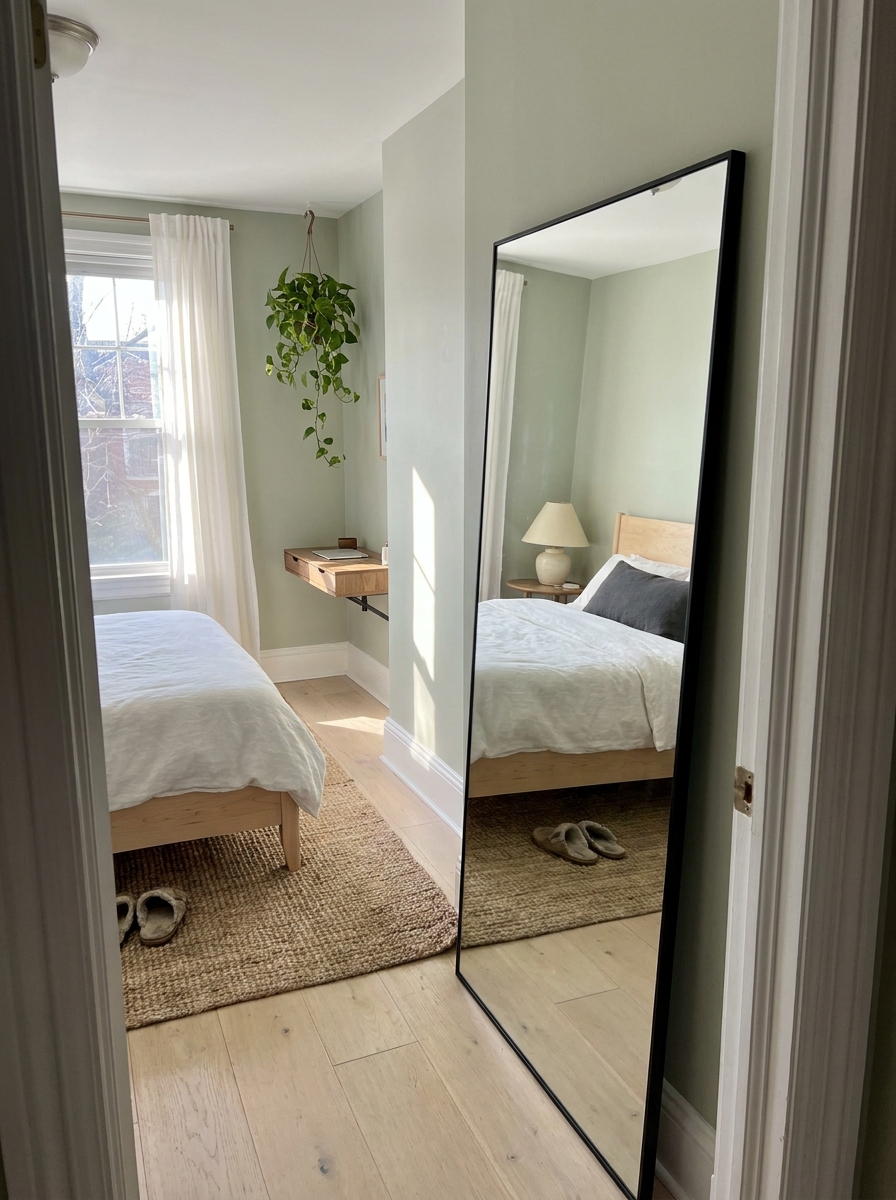
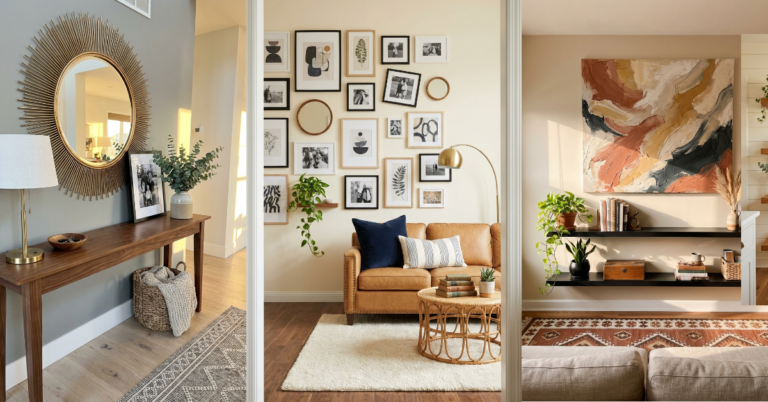
This is the oldest trick in the book, but it works every single time. A large mirror in a small space is basically architectural magic. It bounces light around. It creates the illusion of depth. And if you place it right, it can make your apartment feel twice as big.
The key is going big. Those tiny decorative mirrors scattered on a wall? They’re cute but they don’t do much for your space. You want a substantial mirror, ideally floor-to-ceiling or at least as tall as your doorway. Position it across from a window and you’ll maximize natural light. Put it at the end of a narrow hallway and suddenly that hallway has dimension.
I love leaning a large mirror against the wall instead of hanging it. It feels more casual and collected, less formal. Plus you can move it around until you find the perfect spot. And here’s something nobody talks about: mirrors make small spaces feel less lonely. There’s movement and reflection and life happening in the glass. Your tiny apartment suddenly feels dynamic instead of static and cramped.
5. Room Dividers That Create Zones Without Walls
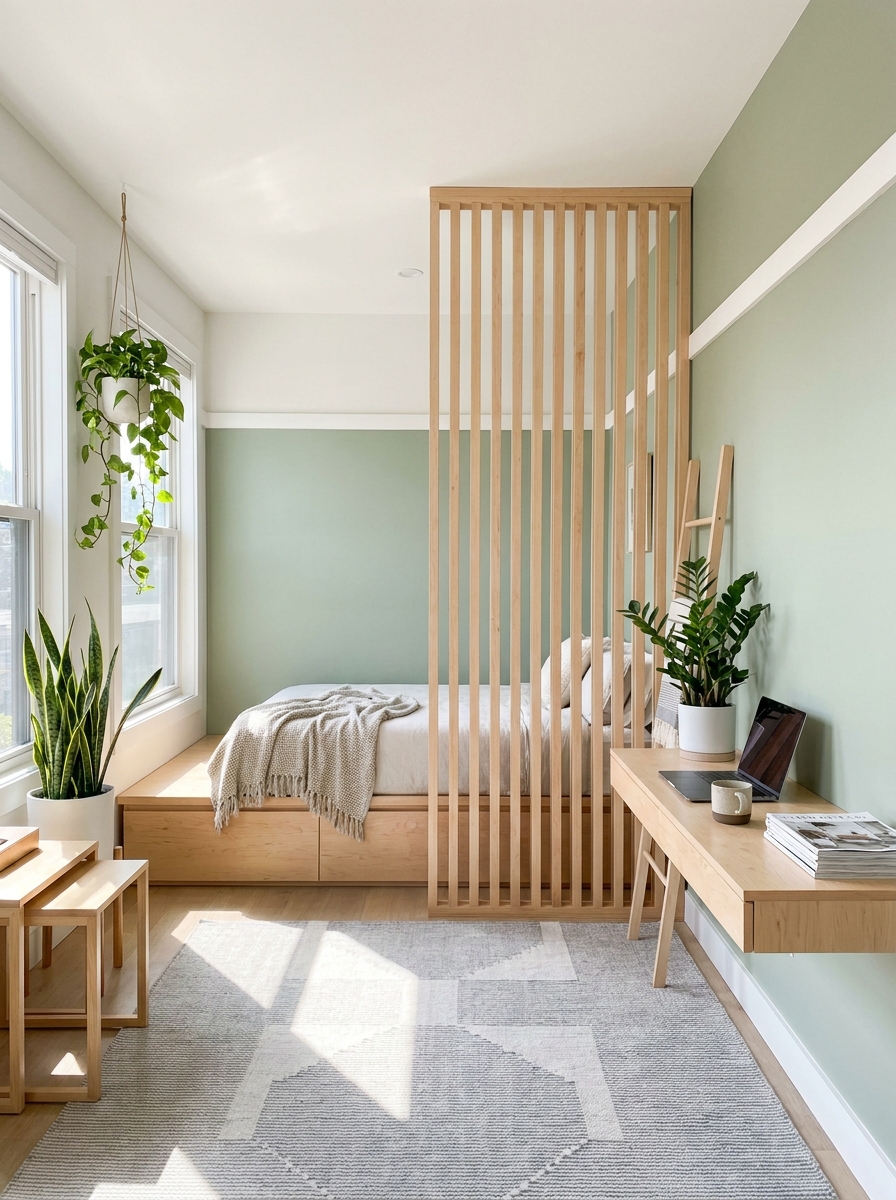
Open-concept studios are great until you realize your bed is staring at your kitchen. Awkward. This is where room dividers become your best friend—but forget those clunky folding screens from college.
Think open shelving units that let light through while creating definition. A tall bookcase perpendicular to the wall gives you storage AND separates your sleeping zone from your living area. Or try hanging curtains from ceiling tracks—you get privacy when you want it and openness when you don’t. The key is choosing dividers that don’t block natural light or make your space feel choppy.
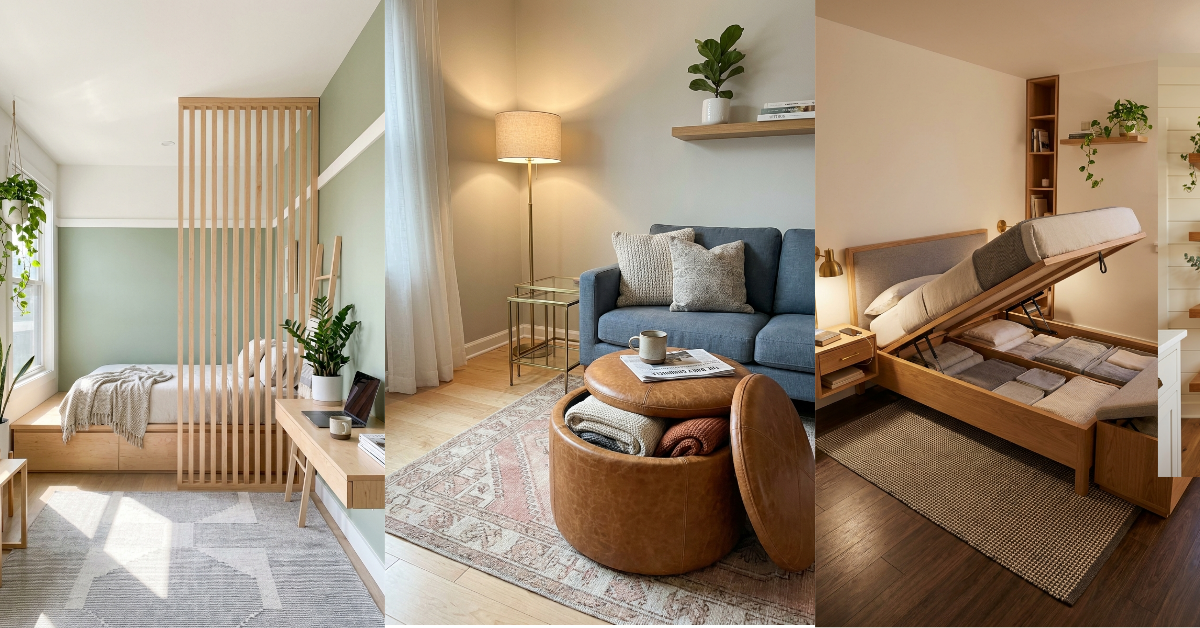
I’m obsessed with slatted wood dividers right now. They’re architectural, they let light filter through, and they add so much visual interest. Plus, you can find affordable versions that look way more expensive than they are. The goal is to create distinct zones that make your studio feel like a real apartment—without actually building walls.
6. Light Colors That Make Walls Recede
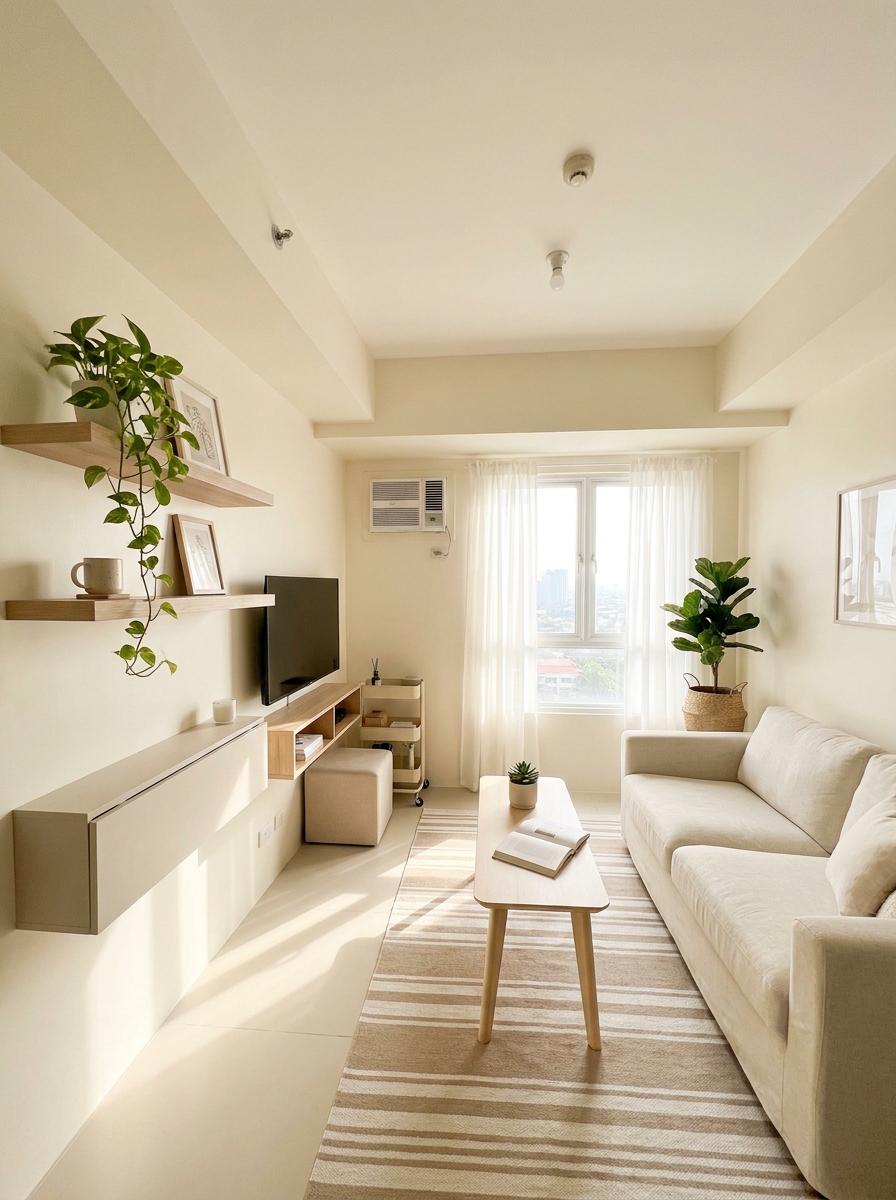
Dark walls are gorgeous, but in a tiny apartment? They’re basically space thieves. Light colors create the optical illusion that walls are farther away than they actually are. It’s design magic.
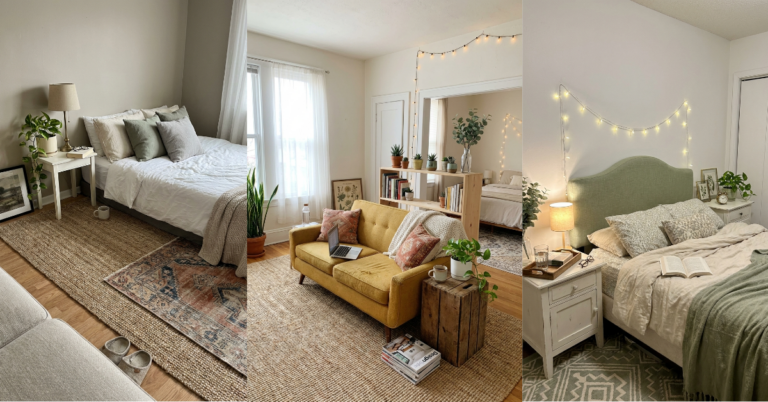
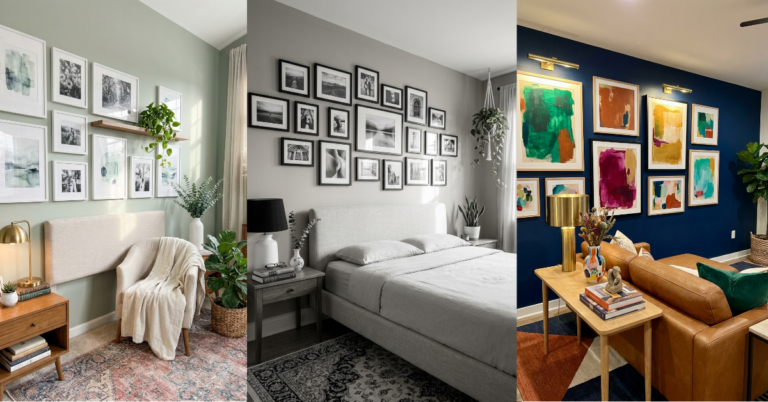
I’m not saying everything needs to be stark white—though white walls with warm wood tones will absolutely make your place feel bigger. Soft neutrals work beautifully too. Think warm beiges, pale grays, or the softest hint of blush. The trick is keeping walls, ceilings, and even large furniture pieces in the same light color family so your eye travels smoothly without interruption.
And here’s something most people don’t know: painting your ceiling the same color as your walls makes it disappear upward, adding perceived height. Suddenly your apartment feels like it has better bones than it actually does. Pair light walls with natural textures like jute, linen, and light wood to keep things from feeling sterile. You want airy and spacious, not doctor’s office.
7. Hidden Storage in Places You’d Never Expect
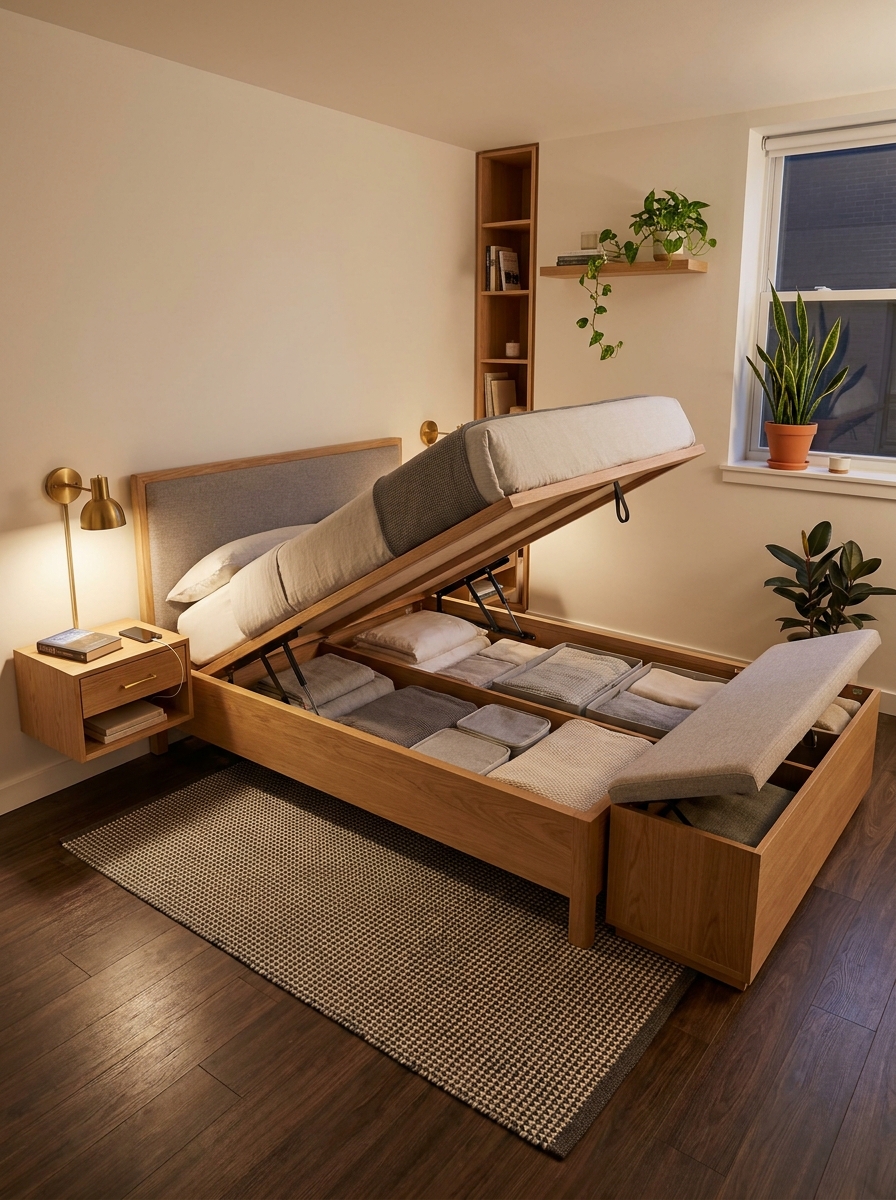
The best storage is the kind you don’t see. Every small apartment has secret storage potential hiding in plain sight—you just need to know where to look.
Under the bed is obvious, but what about inside your ottoman? Behind cabinet doors? Under your sofa cushions? I’ve seen stairs with pullout drawers, window seats with lift-up tops, and even baseboards with hidden compartments. Okay, that last one might be extreme, but you get the idea.
The coffee table with a lift-top is my current favorite sneaky storage piece. It looks totally normal, but lift that top and boom—storage for blankets, remotes, all the random stuff that usually clutters your space. Same with bed frames that have hydraulic lifts—the entire mattress lifts up to reveal massive storage underneath. No awkward sliding bins required. When you’re working with limited space, furniture that hides your stuff while looking good is worth every penny.
8. Floating Furniture That Frees Up Floor Space
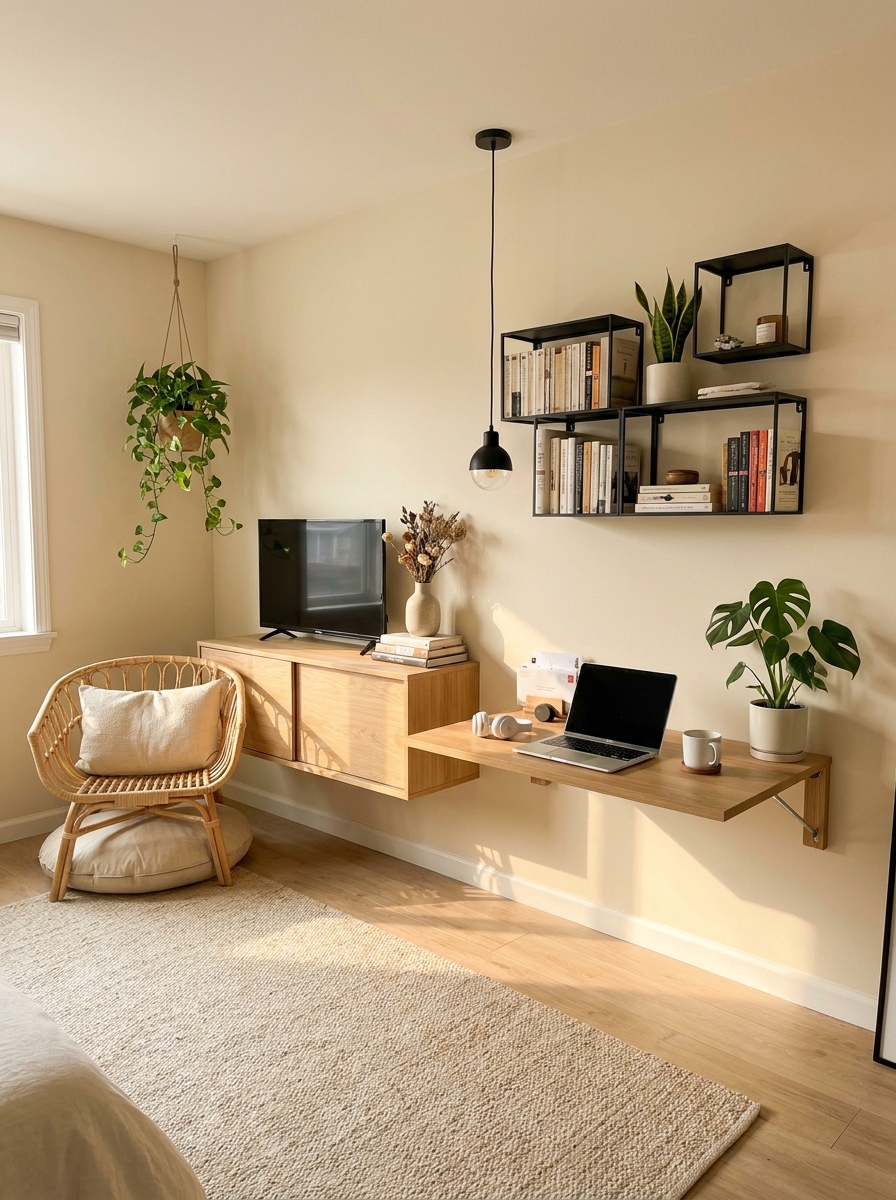
Here’s a weird truth: visible floor space makes a room feel bigger than actual square footage. When furniture legs and bulky bases disappear, suddenly your studio apartment breathes.
Wall-mounted everything is the move. Floating nightstands, floating desks, even floating TV consoles—they all create that magical feeling of spaciousness because you can see the floor continuing underneath. Plus, it makes cleaning SO much easier. No more maneuvering around furniture legs with your vacuum.
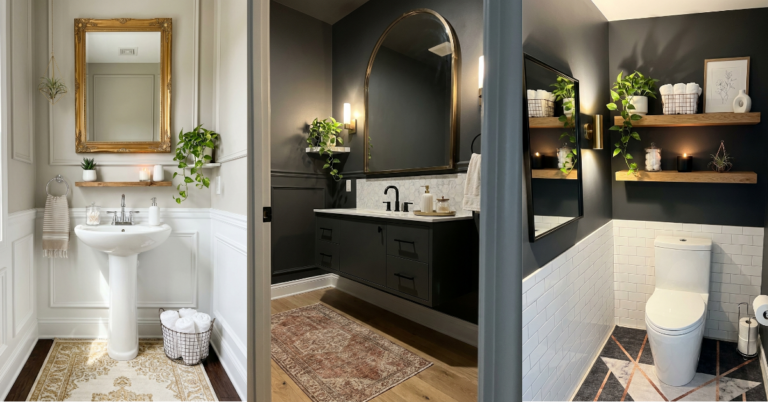
I especially love floating vanities in small bathrooms. They make a tiny bathroom feel twice as big, and you can tuck baskets or a small stool underneath for extra storage. The key is making sure everything is properly anchored—nobody wants their desk crashing down mid-Zoom call. But when done right, floating furniture completely transforms how spacious a small apartment feels. Your eye reads all that visible floor as bonus square footage, even though nothing actually changed.
9. Nesting Tables That Multiply When You Need Them
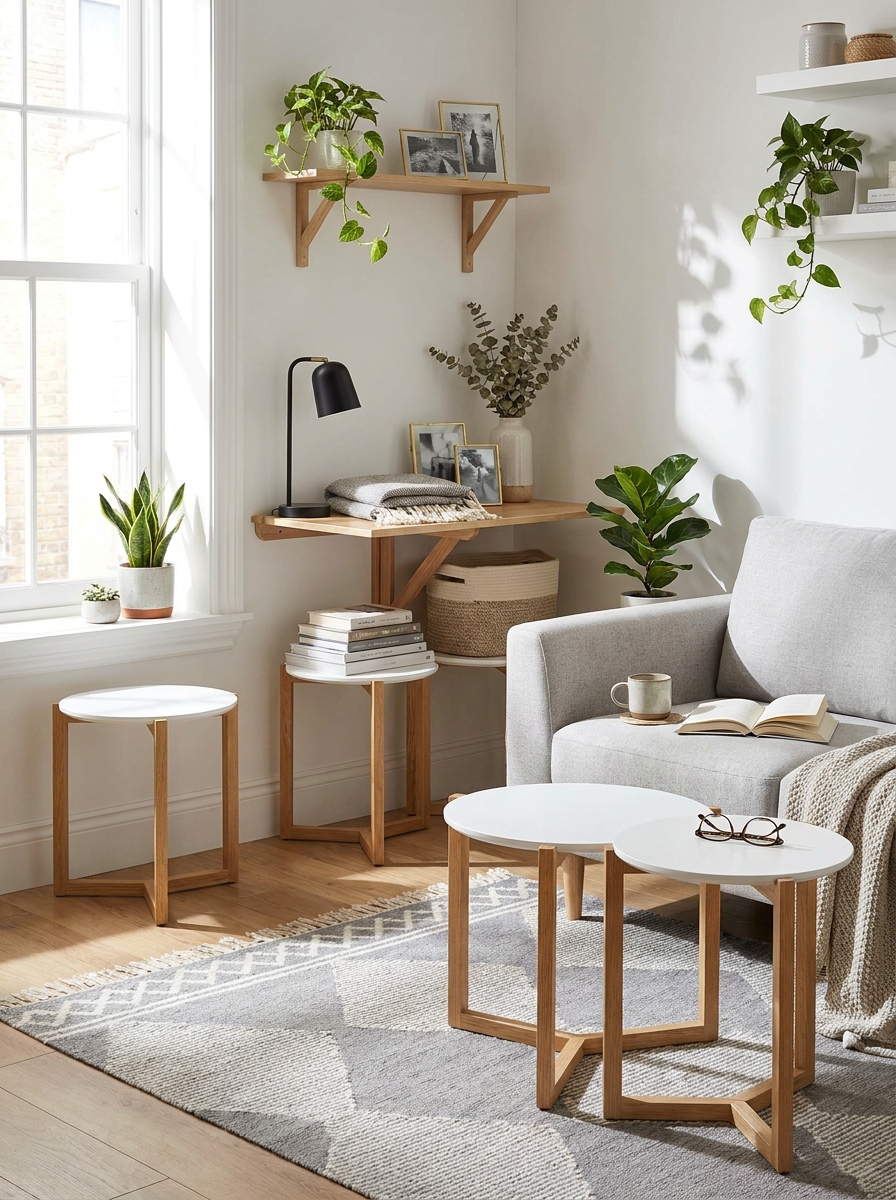
I used to avoid having friends over because I literally had nowhere to put drinks. Then I discovered nesting tables and honestly, they changed everything.
These genius little guys stack together when you’re solo, taking up barely any footprint. But when people come over? Pull them apart and suddenly you’ve got surface space everywhere. I keep mine tucked under my console table most days, and they slide out in about three seconds when I need them.
The beauty is how flexible they are. Use one as a laptop stand while you’re on the couch. Pull out two for a cheese board situation. Spread all three around the room when you’re hosting. Then stack them back up like nothing happened. It’s like having furniture that breathes with your life instead of just sitting there taking up space all the time. Plus they look way more intentional than random TV trays, which is what I was using before.
10. Corner Spaces That Finally Pull Their Weight
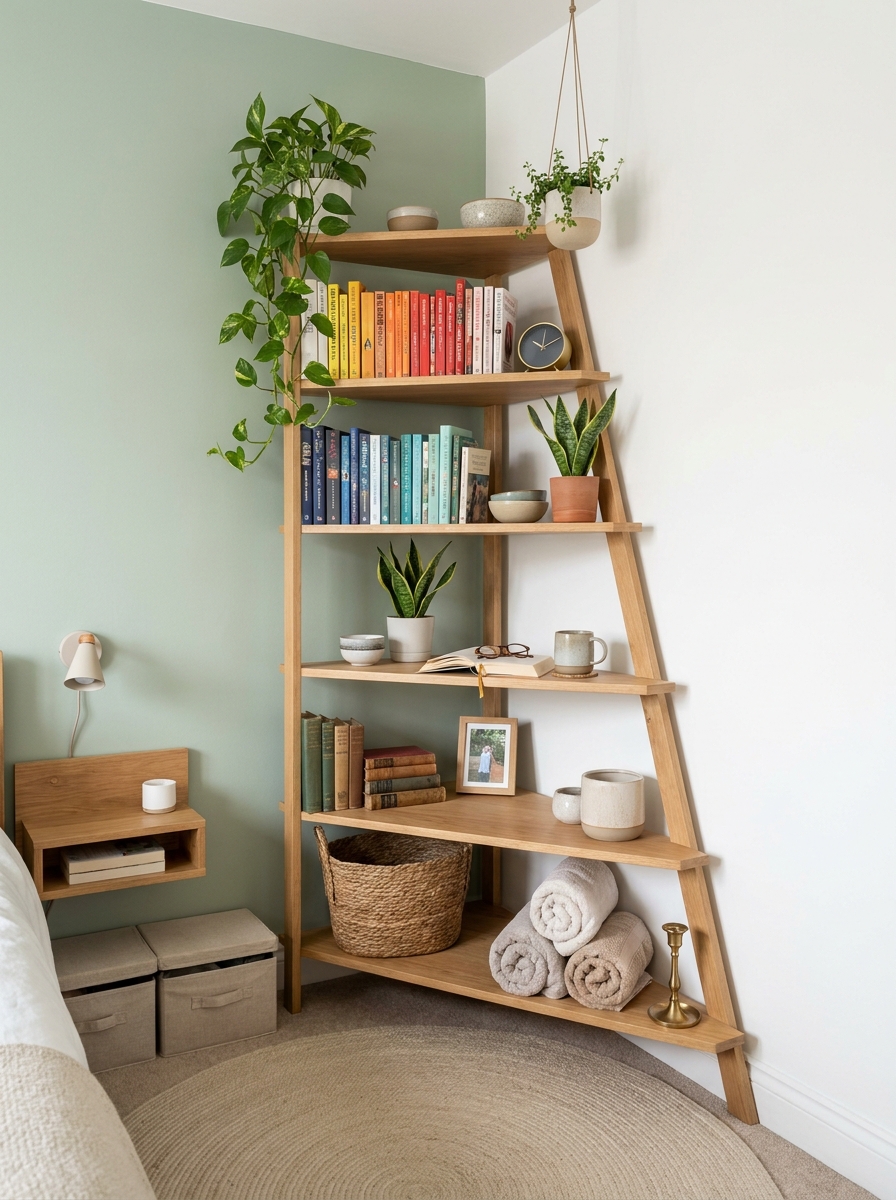
Corners are the weird forgotten stepchildren of small apartments. They just sit there being awkward while you cram everything against the flat walls. But here’s the thing—corners are actually secret storage goldmines.
I’m talking corner shelves that zigzag up the wall. Triangular corner desks that fit where nothing else will. Even those lazy Susan-style corner cabinets in kitchens that make everything actually reachable. Once you start thinking diagonally, you’ll see wasted corner space everywhere.
My favorite discovery? A corner ladder shelf in my bedroom. It takes up maybe eight inches of floor space but gives me five shelves of storage. I use it for books, plants, and all those pretty things that used to sit in boxes because I had nowhere to display them. The diagonal design also creates these interesting sight lines that make the room feel less boxy. It’s like the corner is finally earning rent instead of just existing.
11. Transparent Furniture That Doesn’t Take Up Visual Space
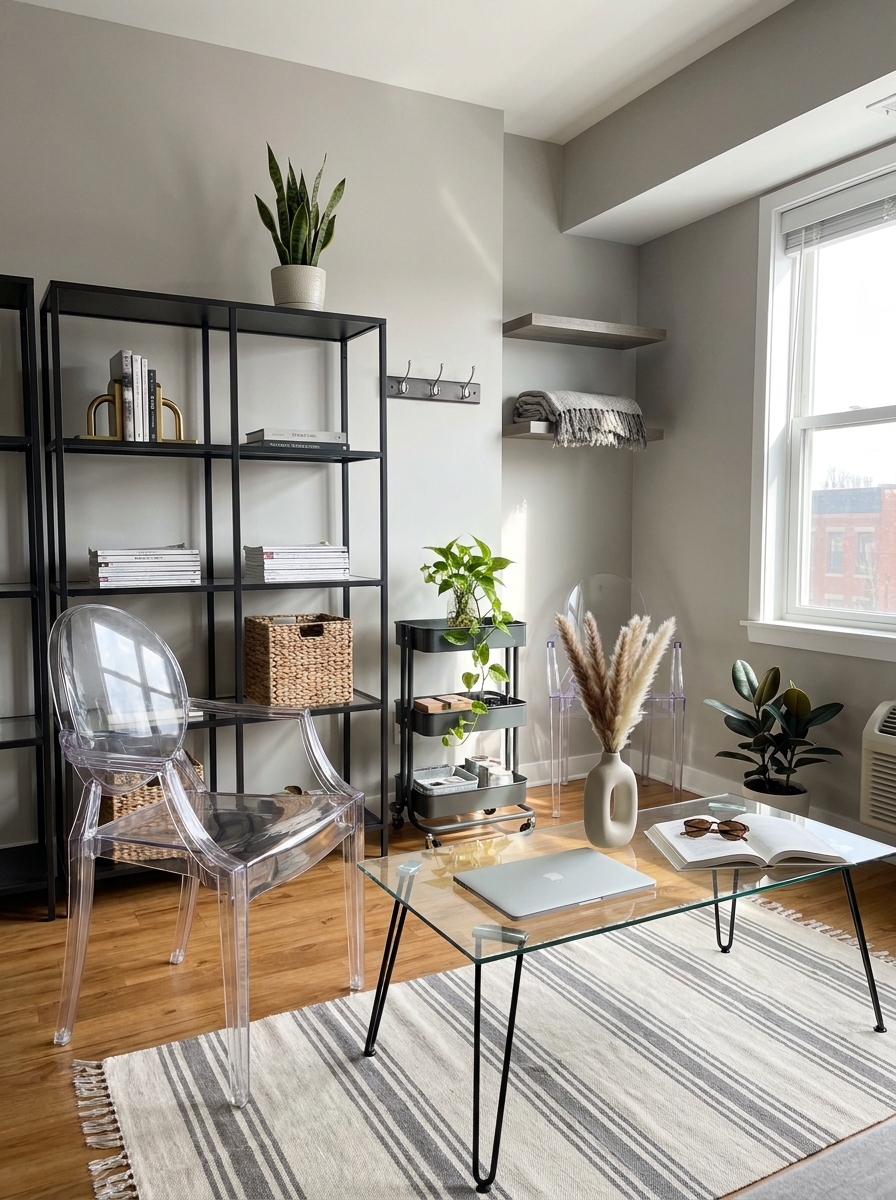
This sounds weird, but some of my favorite furniture is the stuff I can see through. Acrylic chairs, glass coffee tables, open metal shelving—they’re physically there, but your eye just keeps going. And in a small space, that visual flow is everything.
I replaced my chunky wooden coffee table with a simple glass one and I swear my living room grew by like twenty percent. Same footprint, totally different feeling. The room suddenly felt open and breathable instead of crowded. My mom thought I’d gotten rid of furniture.
The same trick works with acrylic dining chairs, wire bar stools, or those ghost chairs everyone’s been into lately. They give you the function without the visual weight. Even something as simple as switching to open metal shelving instead of solid bookcases makes a massive difference. Your walls don’t feel so chopped up, and light can travel through the whole space instead of hitting a wall of furniture.
12. Sliding Doors That Save That Awkward Door-Swing Space
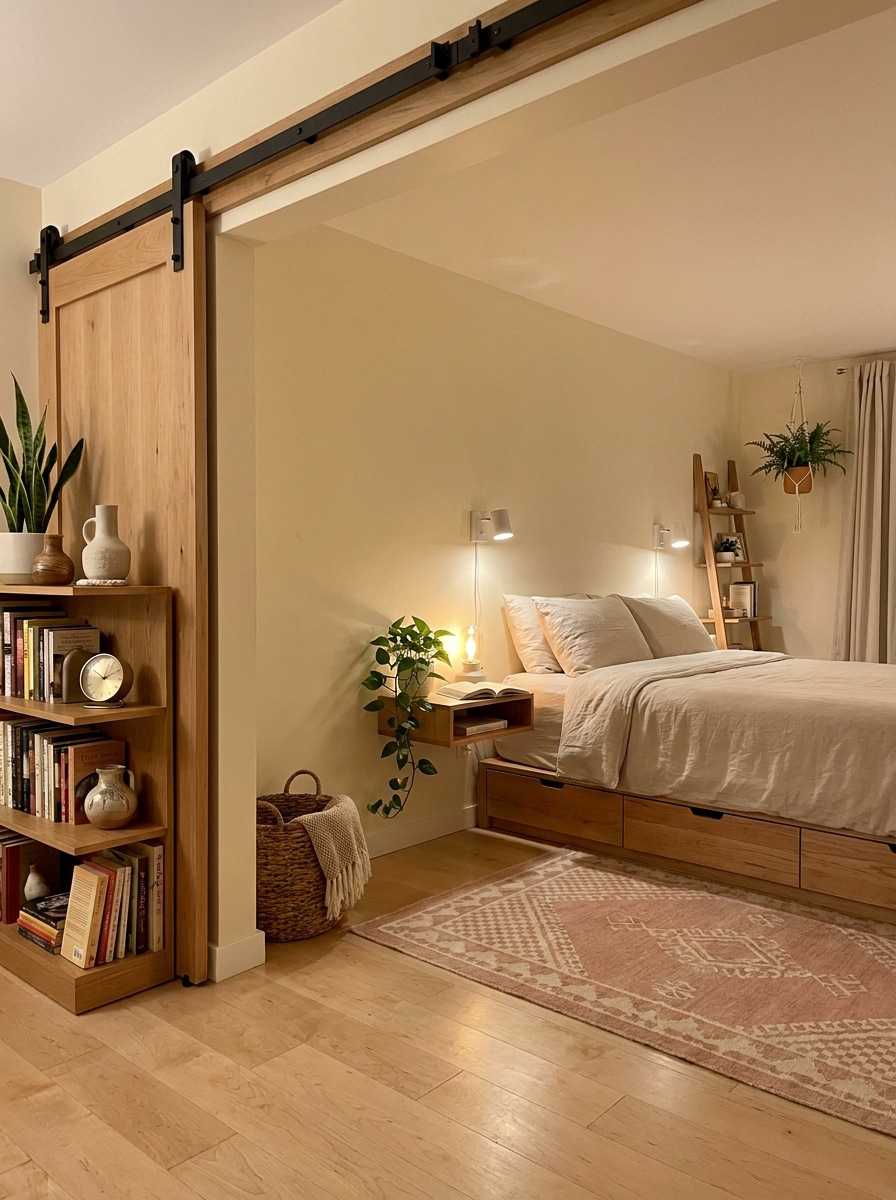
Can we talk about how much space regular doors waste? Every hinged door needs this weird bubble of clearance that you can’t put anything in. In a small apartment, that’s prime real estate just sitting there doing nothing.
I installed a sliding barn door on my bedroom and got back like six square feet. Sounds small, but that’s enough for a narrow bookshelf or a little reading chair. The door slides along the wall instead of swinging out, so suddenly that whole area is usable again. Game changer.
You can do this with closets too. Replace those bifold doors that always get stuck with a simple curtain or a sliding door, and boom—you can actually put furniture right up next to the closet. I’ve even seen people use sliding doors as room dividers, which is genius. They’re functional, they look modern and intentional, and they give you back space you forgot you were losing. Sometimes it’s the invisible waste that’s killing your square footage.
13. Under-Bed Storage That Turns Dead Space Into Closet 2.0
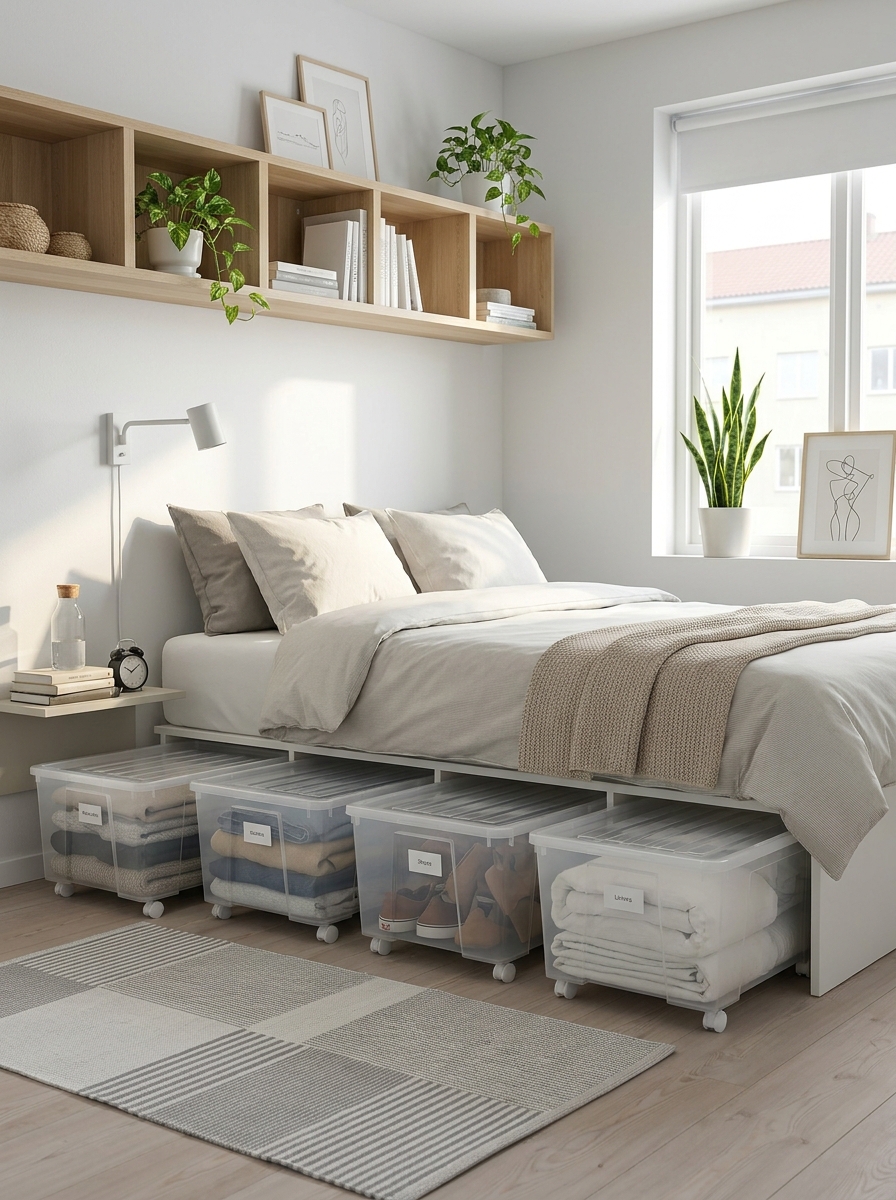
That gaping void under your bed? It’s basically a horizontal closet just begging to be useful. I’m not talking about shoving random boxes under there and calling it a day. I mean actual organized storage that slides out smoothly and holds everything from off-season clothes to extra bedding.
Get those rolling storage containers with lids—the flat ones designed specifically for this. They keep dust out and make everything accessible without you having to army-crawl under there. I organize mine by category: one for winter sweaters, one for extra sheets, one for shoes I don’t wear every day.
If you want to get fancy, bed risers can give you even more vertical space underneath. Just make sure they’re sturdy! The extra six inches can be the difference between storing a few sweaters or your entire winter wardrobe. And here’s the thing—when your closet isn’t bursting at the seams, your whole apartment feels more organized.
14. Foldable Dining Tables That Disappear When Dinner’s Over
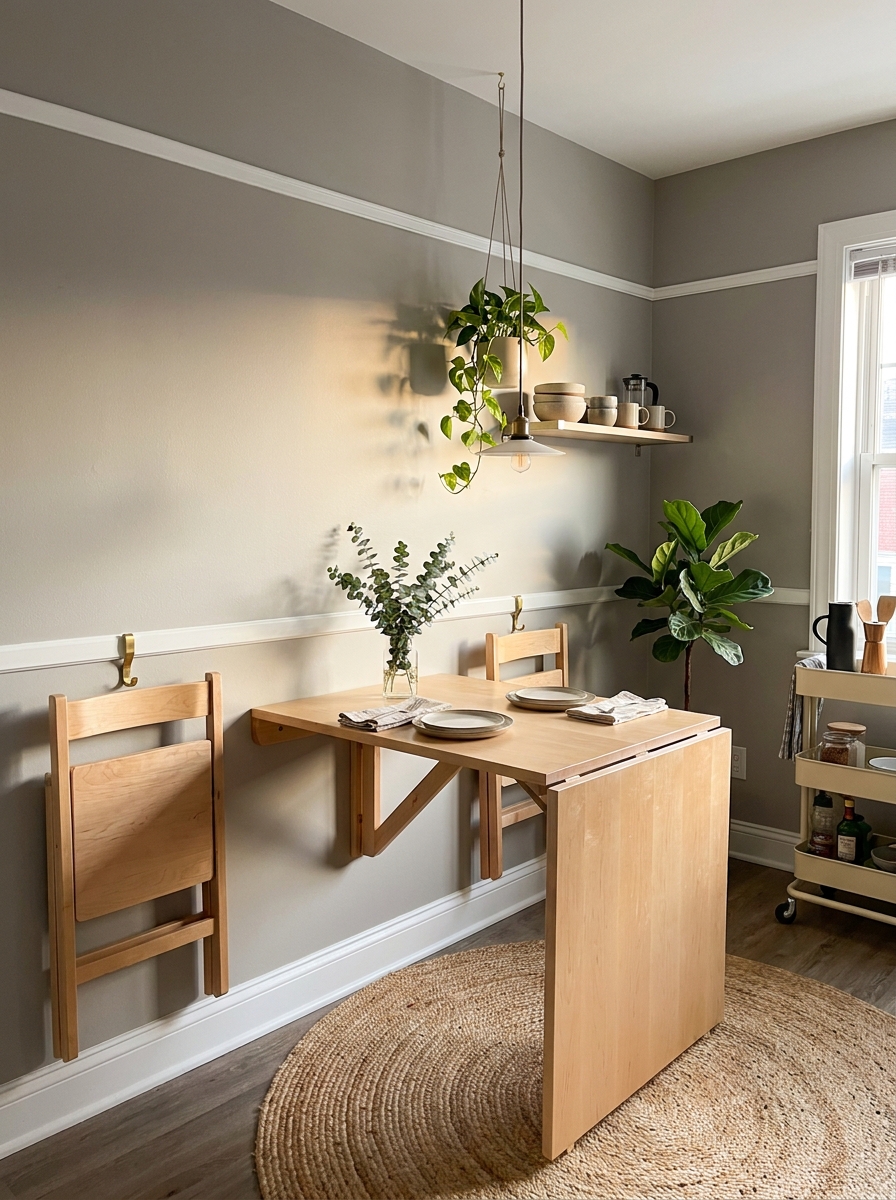
A full-size dining table in a tiny apartment feels like a commitment. You eat there for maybe an hour a day, but it takes up precious real estate 24/7. Enter the foldable dining table—the ultimate shapeshifter.
Wall-mounted drop-leaf tables are my favorite. They fold completely flat against the wall when not in use, then expand to seat four or six when friends come over. Some even have built-in storage for chairs! It’s like having a dining room that appears and disappears on command.
Or go for a console table that extends. When it’s folded, it’s a slim hallway table. When you need it, it extends to full dining size. I’ve seen these transform tiny studios into legitimate entertaining spaces. The trick is choosing one that looks good in both configurations—because you’ll see it compressed most of the time. Wood finishes usually look better than cheaper laminate when you’re staring at it daily.
15. Pocket Doors and Barn Doors That Reclaim Wasted Swing Space
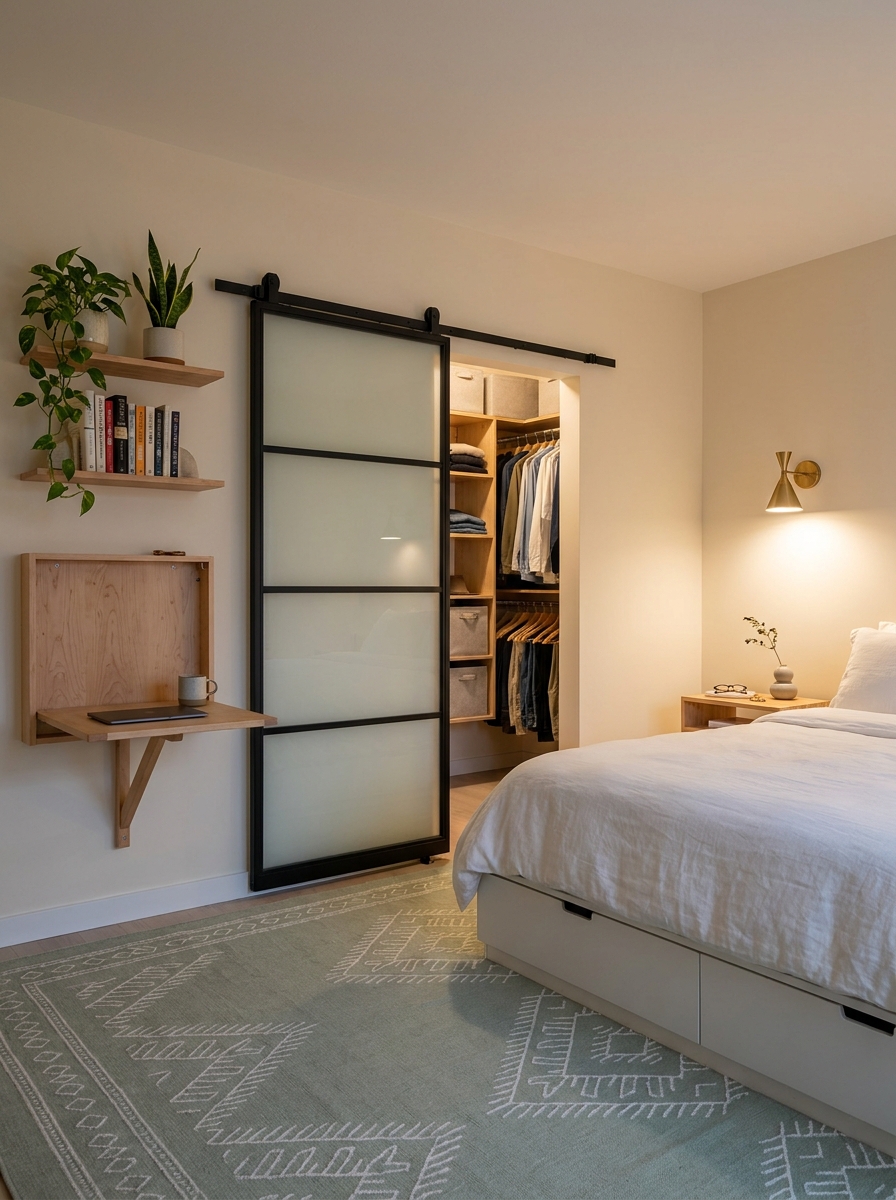
Traditional doors need clearance—that big arc of empty floor space where the door swings. In a small apartment, that’s valuable territory you can’t use for furniture. Pocket doors and barn doors solve this beautifully.
Pocket doors slide right into the wall, completely disappearing when open. They’re perfect for bathrooms and closets where you want privacy but don’t want to sacrifice floor space. The installation is more involved (you need wall depth), but the payoff is huge.
Barn doors slide along the wall surface, which is easier to install if you’re renting or don’t have hollow walls. They add character too—I’ve seen gorgeous modern barn doors that don’t look farmhouse-y at all. Just sleek panels on minimalist hardware. The only downside? They don’t seal as tightly for sound, so maybe not ideal for bathrooms if you have roommates. But for bedroom closets or separating living zones? Absolute game-changer.
16. Tall Narrow Shelving That Goes Up Instead of Out
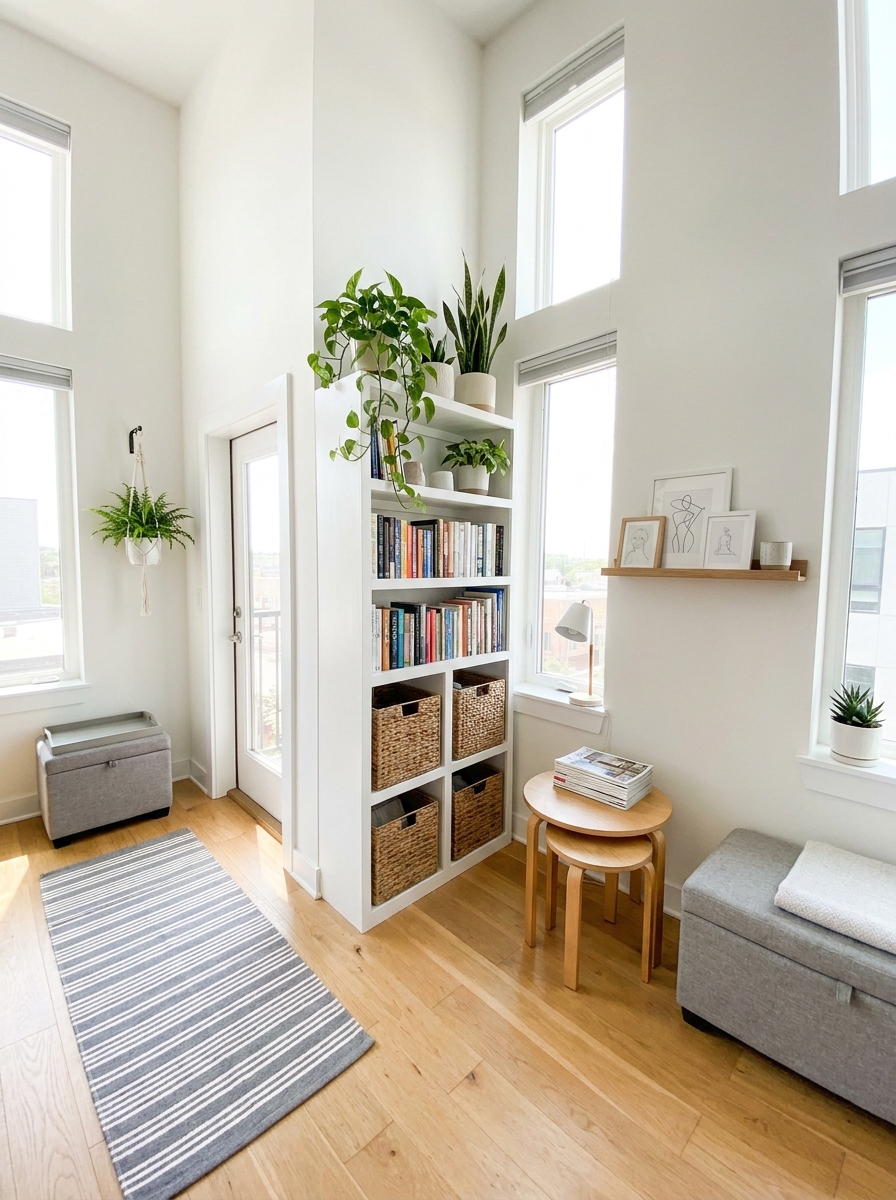
When you can’t grow outward, grow upward. Tall, narrow shelving units are the secret weapon for small apartments—they give you tons of storage without eating up your floor plan.
I’m talking about those slim bookcases that are maybe 12 inches deep but reach all the way to the ceiling. They fit in spaces where wider shelving wouldn’t—next to doorways, in that awkward gap between furniture, in corners you thought were useless. Suddenly you have room for books, plants, baskets of supplies, all your pretty things.
The key is anchoring them properly to the wall. Tall furniture can be tippy, and the last thing you need is your entire storage system toppling over. Use the right wall anchors for your wall type, and load heavier items on lower shelves. Keep the top shelves for lighter, pretty things. I style mine with a mix of practical storage and decor so it feels intentional, not just utilitarian.
17. Pegboards That Turn Blank Walls Into Functional Art
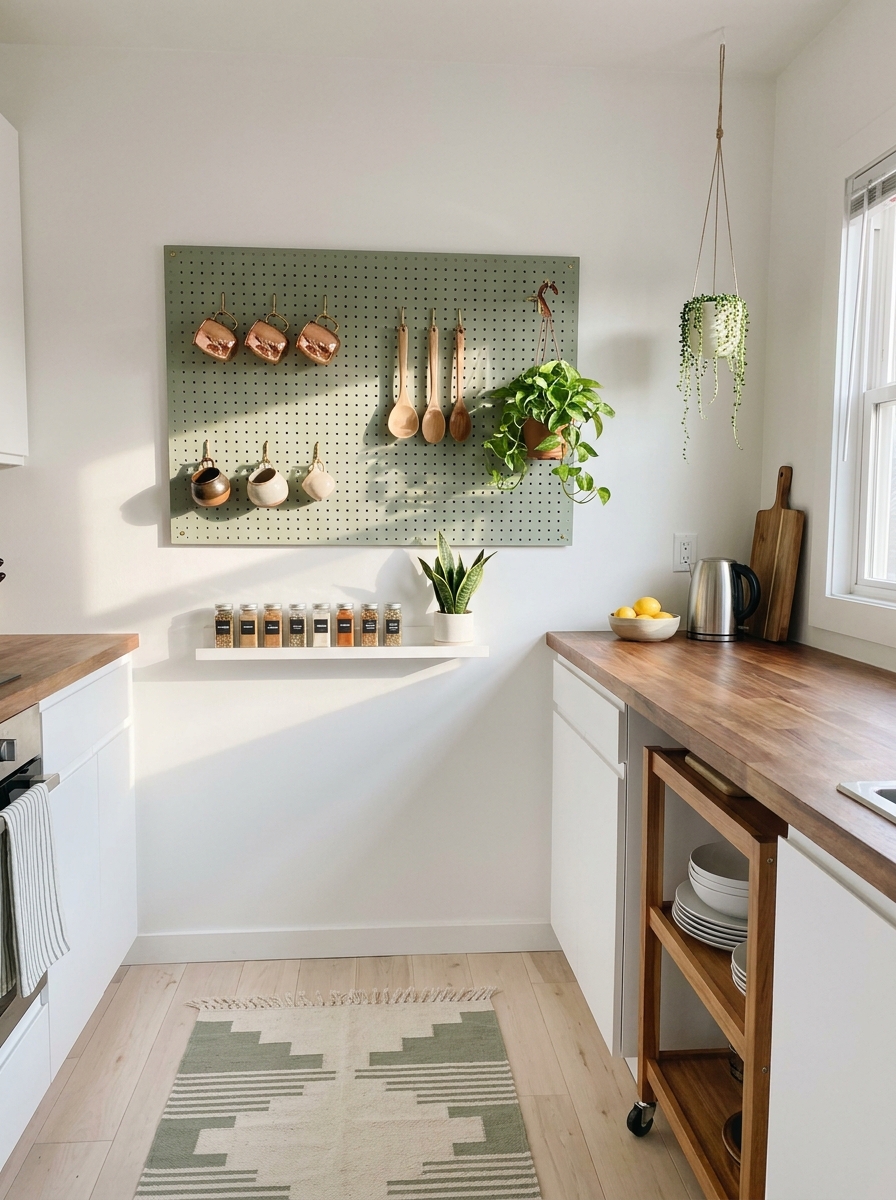
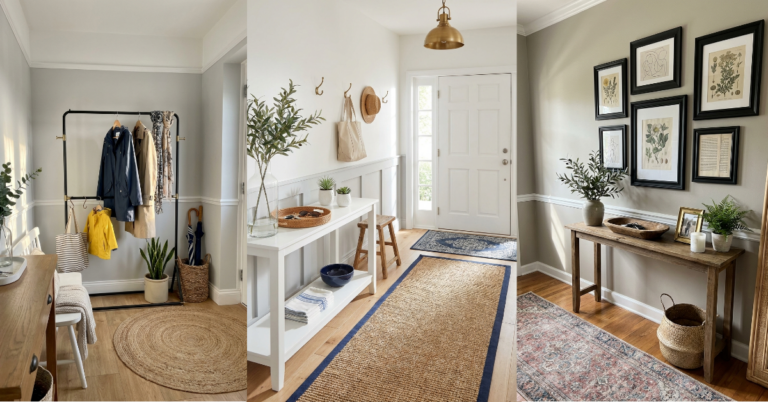
I never thought pegboards could be chic until I saw one styled properly. Turns out they’re not just for garages anymore. A painted pegboard on your kitchen wall becomes instant storage for utensils, mugs, and even hanging planters. Your entryway pegboard holds keys, bags, sunglasses, and that hat you always forget.
The genius is that everything stays visible and accessible without taking up counter or floor space. Plus, you can rearrange the hooks and shelves whenever your needs change. No drilling new holes, no commitment issues.
I’ve seen pegboards in every room now. Bedroom versions hold jewelry and scarves. Office pegboards organize supplies and inspiration boards. The trick is painting them a color that blends with your walls so they feel intentional, not industrial. Add brass or wooden pegs instead of metal ones, and suddenly it’s a design statement that happens to hold all your stuff.
18. Window Seats With Secret Storage Underneath
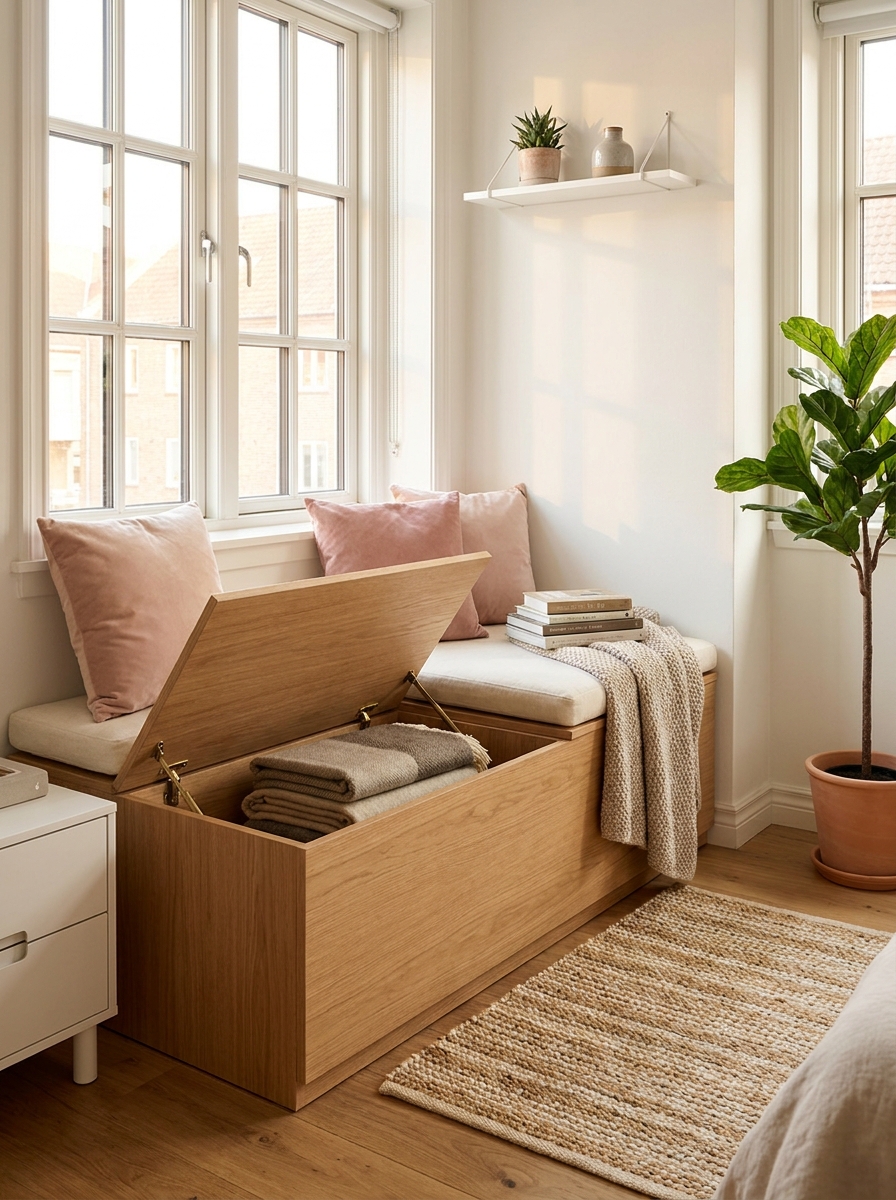
A window seat feels like a luxury, but in a small apartment, it’s actually brilliant strategy. That awkward space under the window? Turn it into a bench with lift-up storage inside. Suddenly you’ve got seating, storage, and a cozy reading nook all in one spot.
I love how this turns wasted space into the best seat in the house. You can store seasonal clothes, extra bedding, or all those books you keep meaning to read. Add some cushions and throw pillows, and it becomes your favorite place to sit with coffee on Saturday mornings.
The key is keeping it streamlined so it doesn’t look bulky. A simple upholstered bench with clean lines works in any style. If you’re renting, there are freestanding storage benches that fit perfectly under most windows. No construction needed, just instant charm and about three cubic feet of hidden storage you didn’t have before.
19. Compact Bar Carts That Roll Where You Need Them
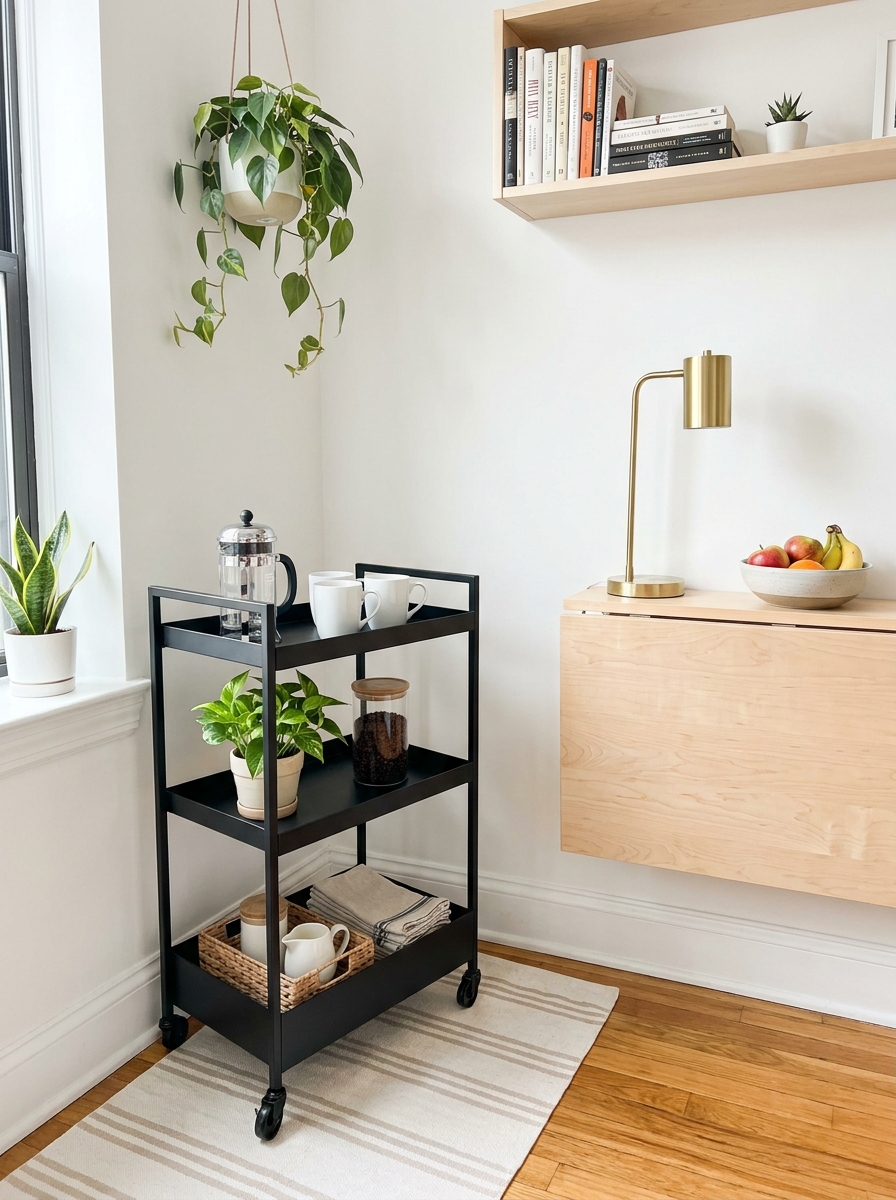
Bar carts aren’t just for cocktails anymore. These rolling wonders are the ultimate flexible furniture for tiny spaces. Use one as a coffee station that wheels to your couch. Roll it into the bathroom for extra towel storage. Park it beside your desk for supplies that move with you.
The magic is in the mobility. When you’re hosting, it’s a drink station. When you’re working, it’s an overflow desk. When you need floor space for yoga, it rolls into the closet. Two or three tiers give you vertical storage without committing to a permanent bookshelf.
I keep mine stocked with breakfast essentials in the morning and art supplies in the afternoon. The narrow profile fits in spaces where a regular table would feel chunky. And honestly? Even just looking at a well-styled cart makes me happy. It’s like functional decor that earns its square footage every single day.
20. Wall-Mounted Drop-Leaf Tables That Vanish After Meals
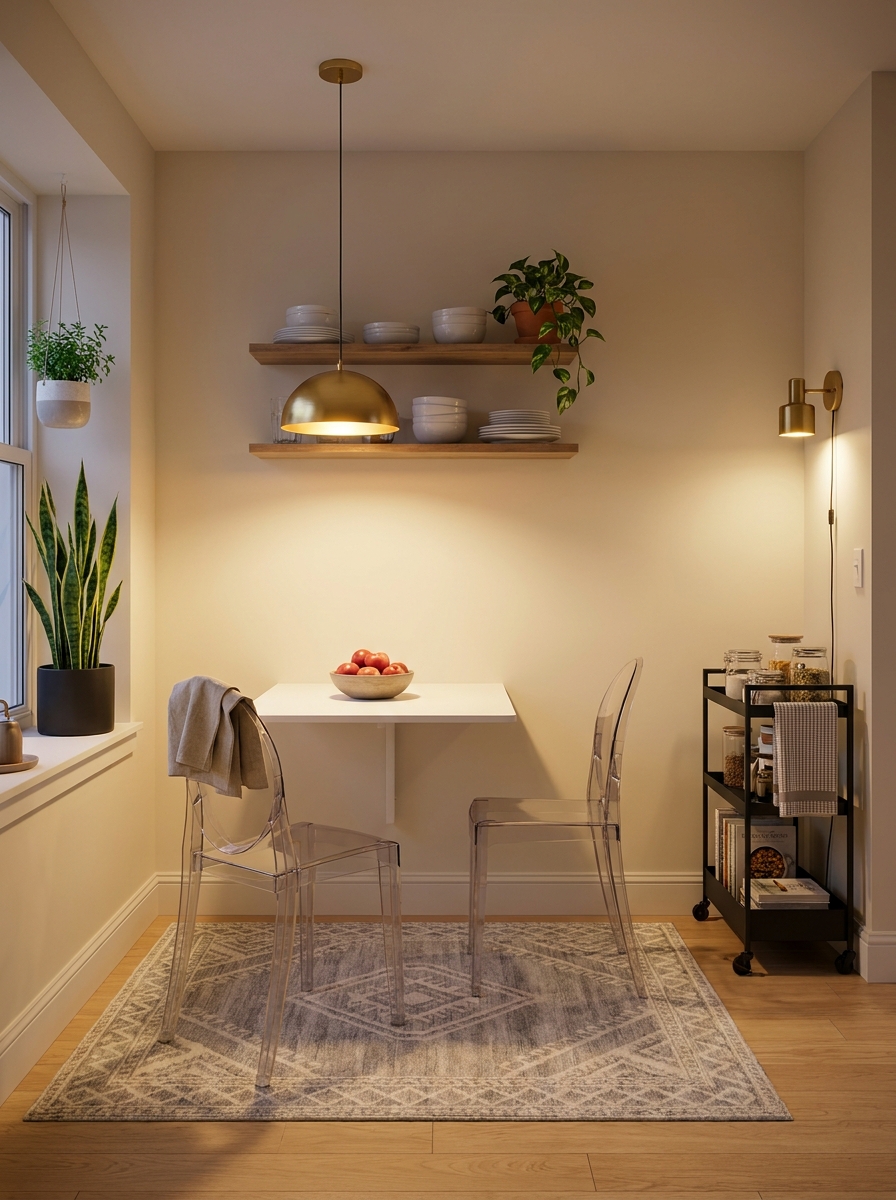
This is the trick that changed how I think about dining in small spaces. A wall-mounted drop-leaf table folds completely flat when you’re not eating. One second it’s a dining table for four, the next it’s a slim shelf that barely protrudes from the wall.
You mount it at whatever height works for you. Kitchen prep surface, desk, dining table, all in one piece that takes up maybe six inches when it’s down. When friends come over, you flip it up and suddenly you’ve got a real table. When they leave, it disappears and your floor space comes back.
I’ve seen these work beautifully in kitchens, home offices, even craft rooms. The fold-down chairs that hang on the wall nearby are the perfect companion. Everything stays ready but invisible until you need it. It’s like having a dining room that only exists when you’re actually dining.
Quick Guide
Small-Space Furniture: What to Prioritize
| Furniture Type | Best Choice for Small Apartments | Why It Works |
|—|—|—|
| Sofa | Apartment-sized (72″ or less) with storage underneath | Saves space, hides clutter |
| Coffee Table | Lift-top or nesting tables | Converts to desk, stores away |
| Bed | Platform with built-in drawers or Murphy bed | Eliminates need for dresser |
| Dining | Drop-leaf or wall-mounted fold-down | Disappears when not in use |
| Storage | Vertical shelving, not wide cabinets | Uses wall space, not floor space |
The golden rule? Measure twice, buy once. Furniture that’s even six inches too big can make a small room feel suffocating.
Your Small Space Is Full of Possibility
Here’s what I want you to remember: small apartments aren’t limitations. They’re opportunities to get creative, intentional, and honestly a little bit clever with your design choices. Every single idea we’ve covered—from Murphy beds to mirrors—works because it respects the space you have instead of fighting against it. You don’t need more square footage. You need smarter solutions.
And the best part? You can start small. Pick one idea that excites you. Maybe it’s finally installing those floating shelves, or swapping your bulky coffee table for nesting tables. You don’t have to overhaul everything at once. Small changes add up fast when you’re working with limited space.
Your apartment should feel like it’s working for you, not against you. It should breathe. It should make you smile when you walk in, not sigh at the clutter. So grab your tape measure, get a little creative, and start transforming your tight quarters into a space that feels surprisingly spacious. You’ve got this.
Frequently Asked Questions
How can I make a small apartment look bigger without painting?
Focus on three things: mirrors, vertical storage, and furniture with legs. Large mirrors double your visual space by reflecting light. Floor-to-ceiling shelving draws the eye up and makes ceilings feel higher. And furniture with exposed legs (instead of pieces that sit flat on the floor) creates sightlines underneath that make rooms feel more open and airy.
What’s the best furniture layout for a studio apartment?
Create zones using your furniture as dividers. Position your sofa to face away from your bed area, essentially creating a “wall” between sleeping and living spaces. Use a bookshelf or tall plant as a visual separator. Float furniture away from walls when possible—it counterintuitively makes the room feel bigger because you’re defining distinct areas instead of pushing everything to the perimeter.
Are Murphy beds worth it for small apartments?
Absolutely, if you need your space to be multifunctional. They’re ideal for studios or one-bedrooms where you want a proper living room during the day. Modern Murphy beds are stylish and well-made. Just factor in installation costs and make sure your lease allows wall mounting. If you’re renting short-term, a high-quality sleeper sofa might be a better investment.
How do I add storage to a small apartment without making it feel cluttered?
Go vertical and go hidden. Wall-mounted shelves and cabinets use space you’re not walking through. Choose furniture with built-in storage like ottomans, bed frames with drawers, and benches that open up. Keep surfaces clear by having a home for everything. The less visual clutter on counters and tables, the bigger your apartment feels.
What colors make small apartments feel more spacious?
Light neutrals are your best friend—soft whites, warm grays, pale greiges. They reflect light and create visual continuity. But don’t be afraid of color. An accent wall in a deeper tone can actually add depth. The key is keeping your color palette cohesive throughout the space so your eye travels smoothly instead of getting chopped up by too many competing colors.