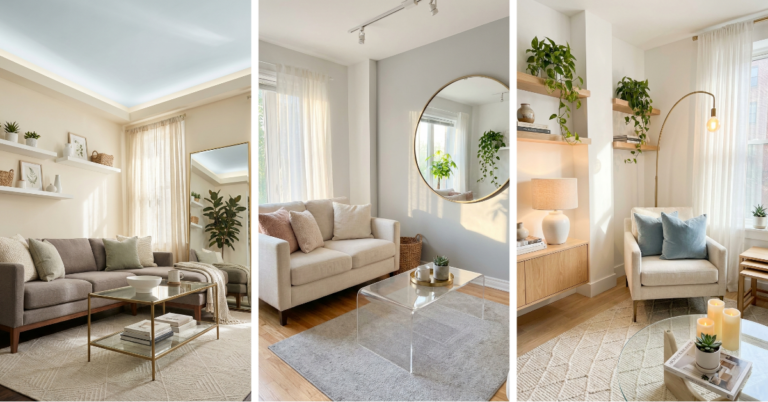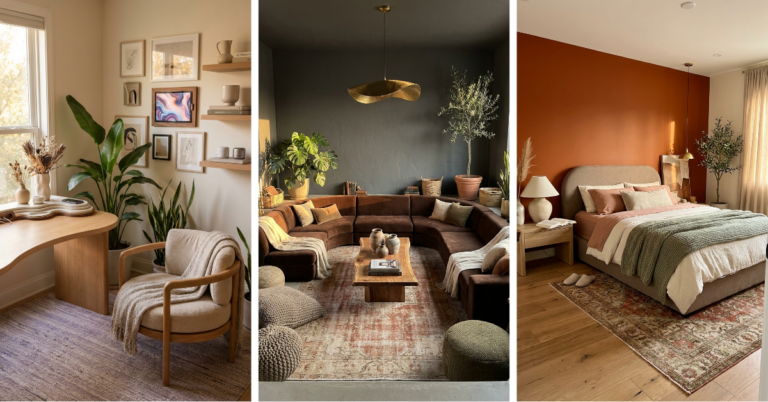
17 Gorgeous Small Living Room Ideas with a Sectional
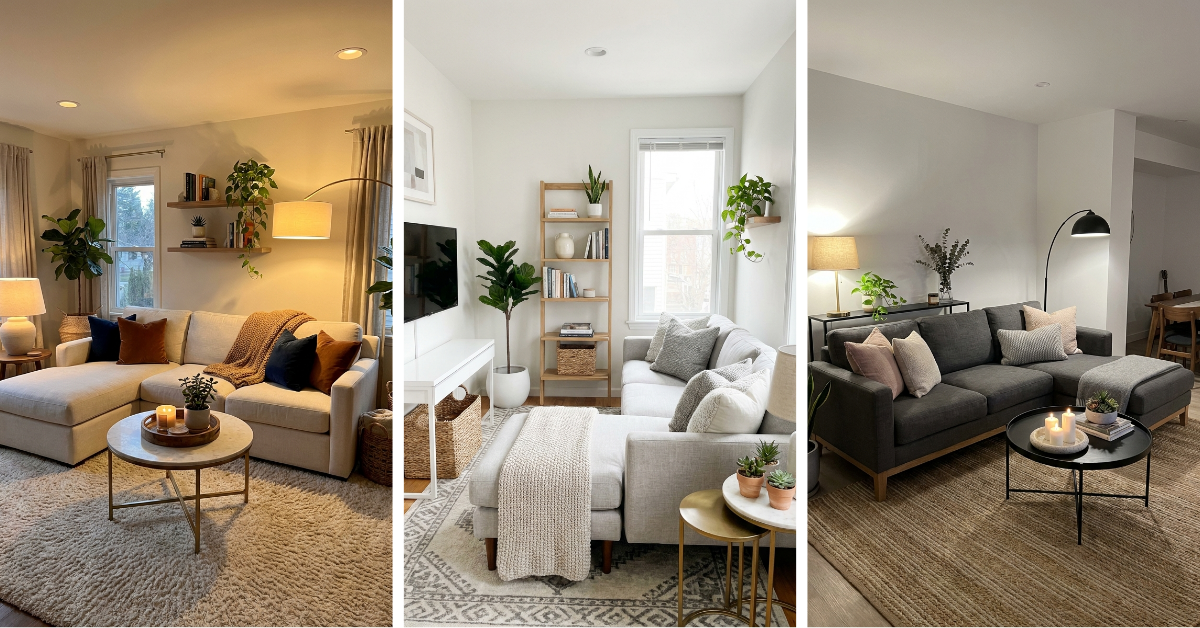
You’ve been eyeing sectionals for months, but your living room is barely bigger than a postage stamp. Everyone says sectionals are space hogs. They tell you to stick with a loveseat and call it a day. But here’s the thing: a well-chosen sectional can actually make a small room feel more intentional, more pulled together, and way more comfortable than a bunch of mismatched seating that floats awkwardly in the middle of nowhere.
The secret isn’t avoiding sectionals in small spaces. It’s knowing which ones work, where to put them, and how to style around them so your room feels cozy instead of cramped. I’ve spent years testing layouts in my own tiny living room, and I’ve learned that size matters less than shape, placement, and proportion. A small sectional in the right spot beats a traditional sofa setup every single time.
Ready to see how it’s done? Here’s what actually works.
1. Float Your Sectional Away from the Walls
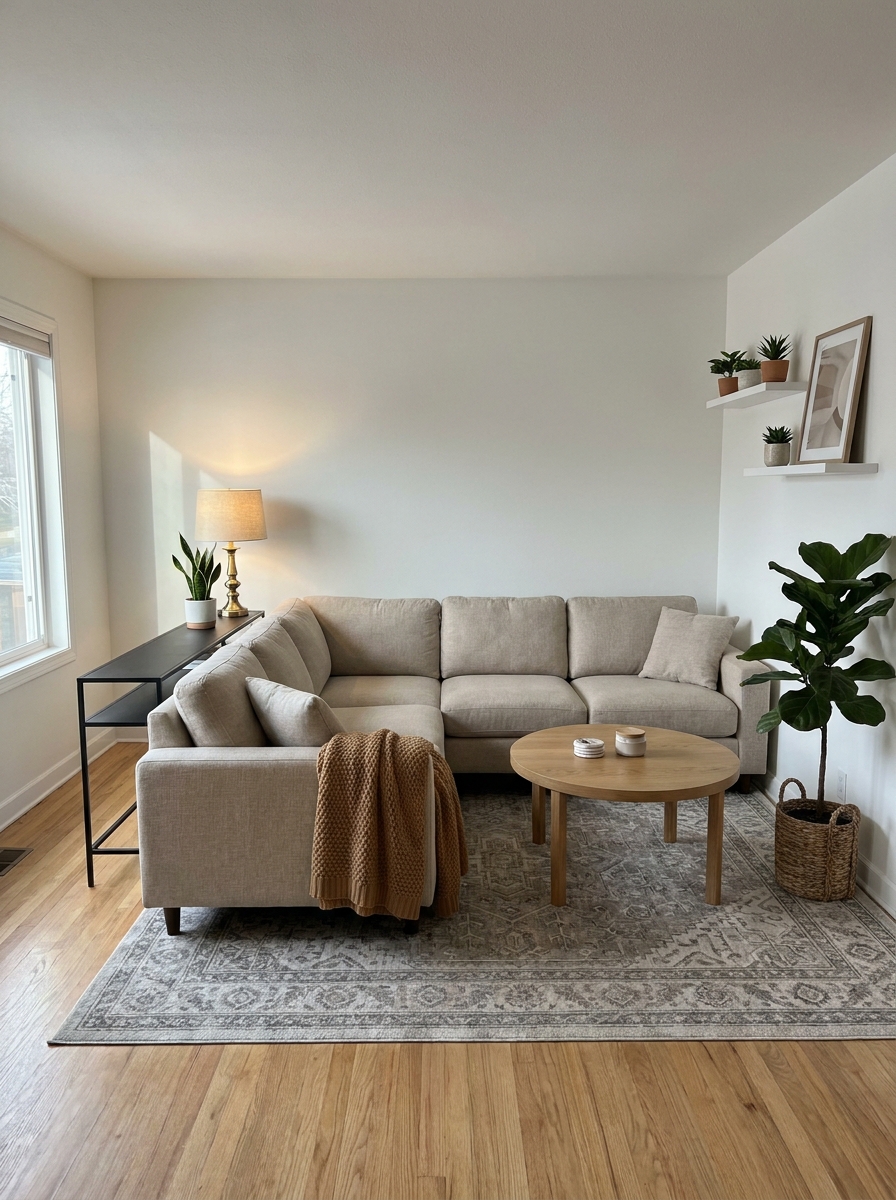
This one feels counterintuitive, I know. When you’re working with limited square footage, your instinct is to shove everything against the walls to maximize floor space. But floating your sectional even just twelve inches away from the wall creates breathing room that tricks your eye into seeing more space, not less.
It also gives you room to tuck a narrow console table behind the sofa for lamps, plants, or a spot to set your coffee mug. That little walkway behind the sectional adds dimension and makes the whole room feel less like a furniture puzzle crammed together. Plus, it helps with traffic flow if you’ve got a doorway or hallway nearby.
Start small if this freaks you out. Pull the sectional out just six inches and live with it for a week. You’ll notice how much more intentional and designed the room suddenly looks. It’s not about losing space. It’s about using it smarter.
2. Choose a Sectional with Exposed Legs
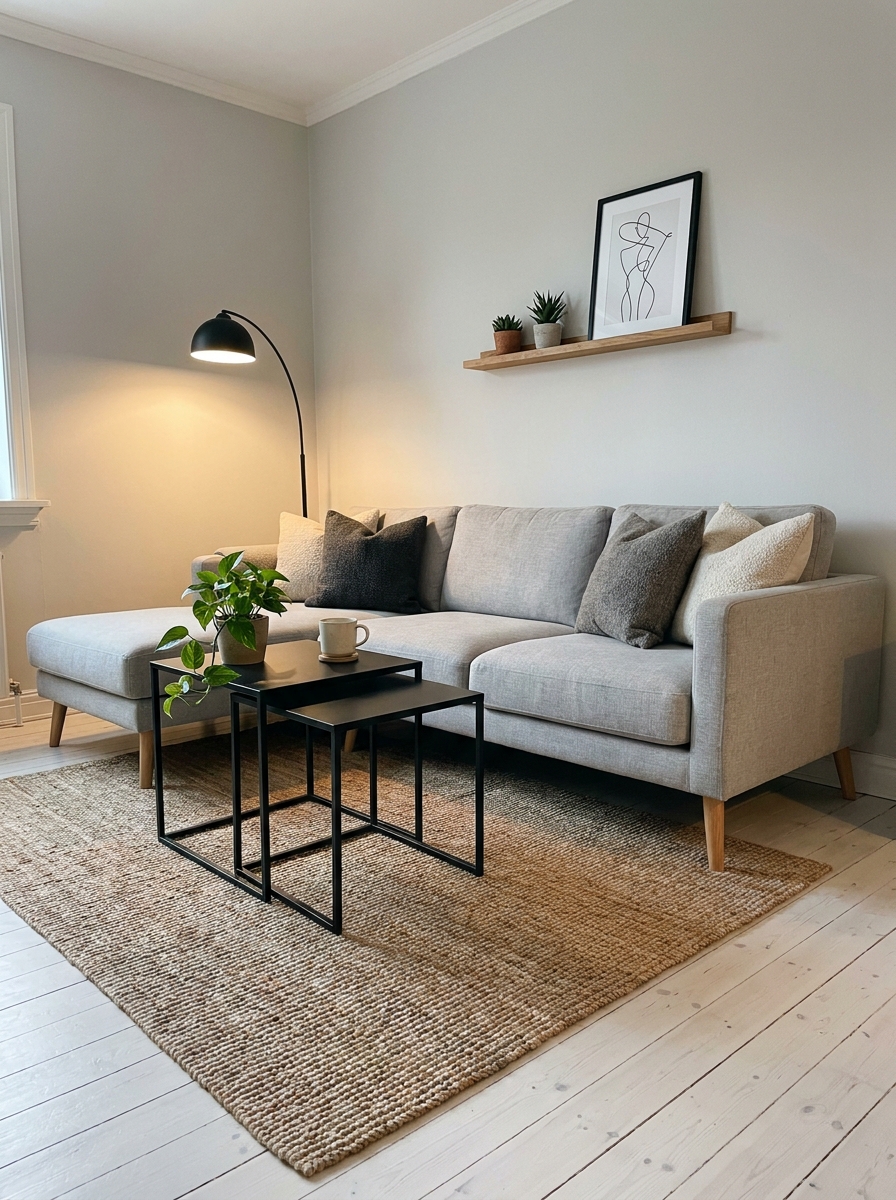
Sectionals that sit directly on the floor look heavy. They create a visual wall that makes your already-small room feel even more closed in. But a sectional with exposed legs—even short ones—lets light and sightlines pass underneath, which makes the whole piece feel lighter and less dominating.
Wood legs in walnut or oak add warmth. Metal legs in black or brass bring a modern edge. Either way, that little bit of space between the sofa base and the floor opens things up in a way that’s hard to explain until you see it in person. It’s one of those tiny details that makes a huge difference.
Aim for legs that are at least four inches tall. Anything shorter won’t give you that airy effect. And if you already own a sectional that sits flat on the floor, you can actually buy furniture legs online and attach them yourself. It’s easier than you think and completely transforms the look.
3. Anchor with a Rug That’s Just Right
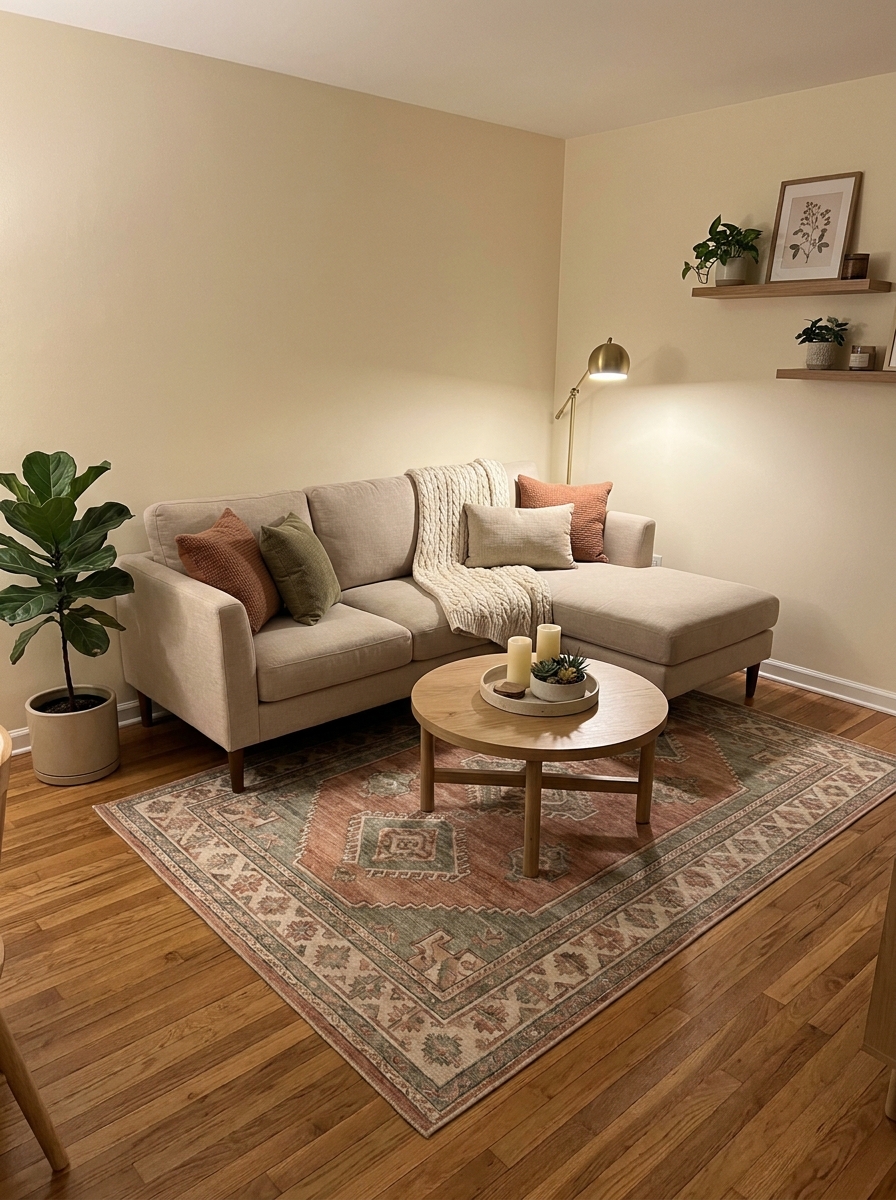
Rugs are tricky in small spaces. Too big and they overwhelm. Too small and they look like bath mats. The rule I swear by: your rug should fit under at least the front legs of your sectional, ideally extending a foot or so beyond the edges. This grounds the seating area and visually separates it from the rest of the room.
In a really tiny space, you might only get the front third of the sectional on the rug, and that’s okay. What matters is that the rug connects your sectional to your coffee table and creates a cohesive little zone. Skip the matchy-matchy thing and choose a rug with subtle pattern or texture that complements your sectional without competing.
Light colors make the space feel bigger, but don’t be afraid of a deeper tone if your sectional is neutral. A charcoal or navy rug can add just enough contrast to make everything pop without shrinking the room. Just keep the pattern low-key so it doesn’t visually chop up your limited floor space.
4. Go for a Chaise on One End Only
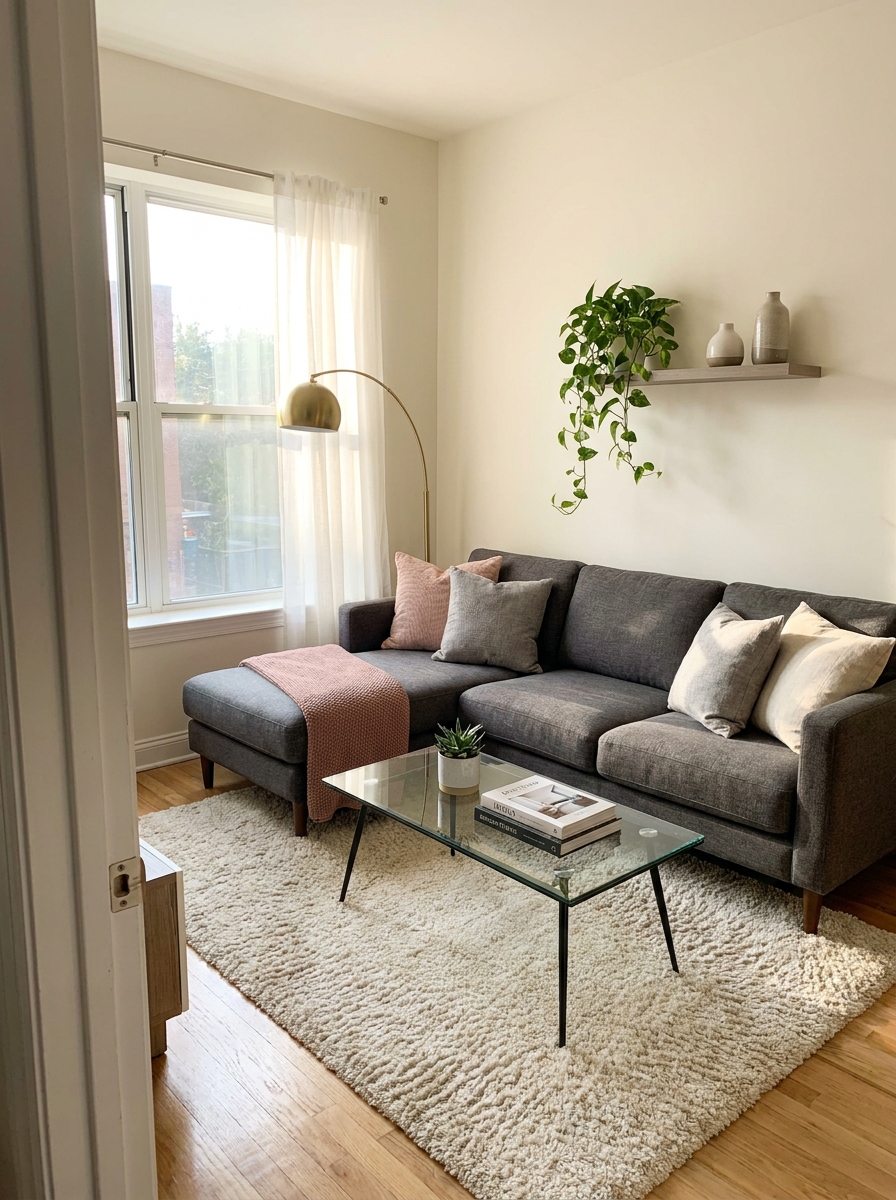
Double-chaise sectionals look amazing in spacious living rooms. In a small space? They’re a nightmare. One chaise is all you need to get that lounging vibe without eating up every inch of your floor plan. A single-chaise sectional gives you the best of both worlds: plenty of seating and a spot to stretch out, without turning your living room into an obstacle course.
Place the chaise end strategically. If you’ve got a corner that doesn’t get much foot traffic, tuck the chaise there. If your room is more of a narrow rectangle, let the chaise float near a window where it becomes a cozy reading nook with a view. The key is making sure the chaise isn’t blocking a major walkway or making you do awkward furniture gymnastics every time you need to cross the room.
And here’s a little secret: a left-arm chaise versus a right-arm chaise matters more than you think. Sketch out your room layout or use painter’s tape on the floor to figure out which configuration actually works before you buy. Returning a sectional is nobody’s idea of fun.
5. Embrace Light Colors to Open Up the Space
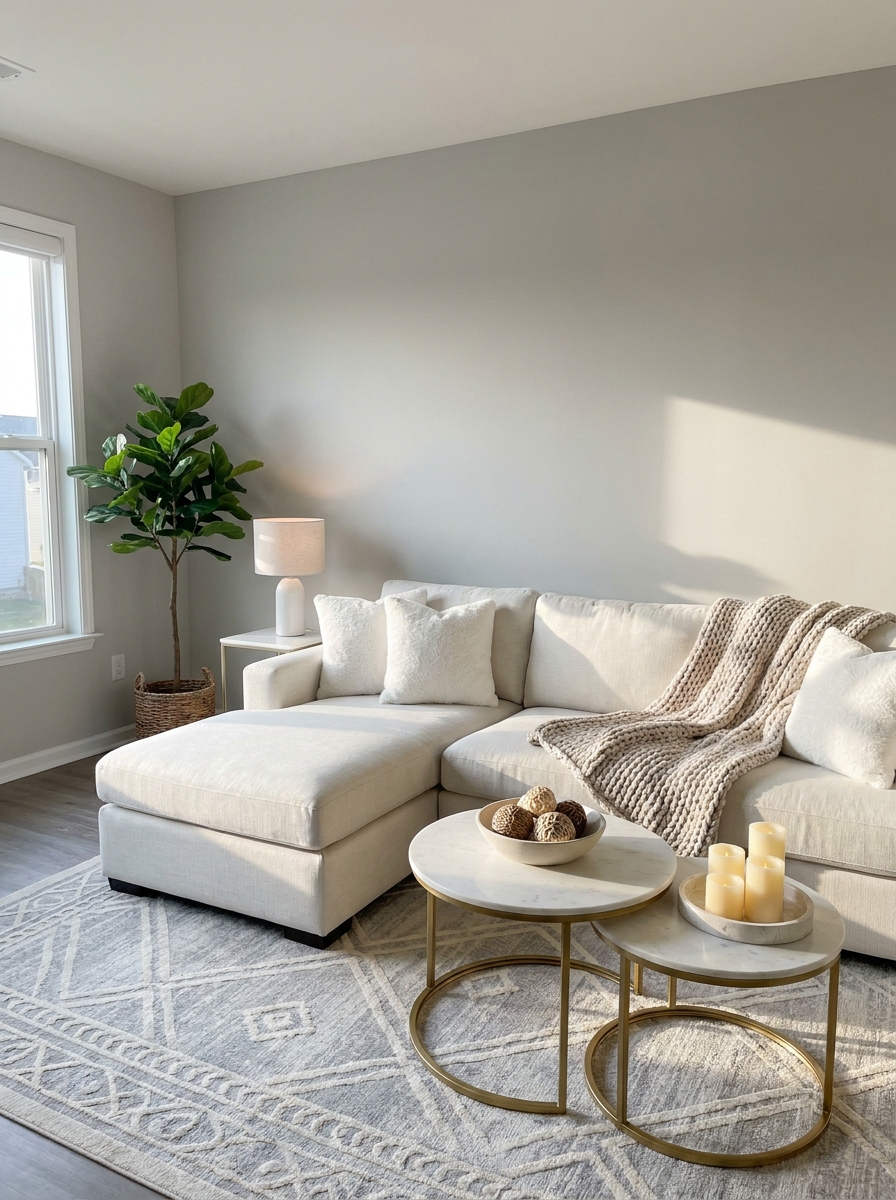
Here’s the thing about small living rooms—dark furniture can feel like it’s closing in on you. A light-colored sectional? Total game-changer.
I’m talking creamy whites, soft grays, gentle beiges. These shades literally reflect light around the room, making everything feel bigger and airier. It’s not magic, but it sure feels like it! Your sectional becomes this cloud-like presence instead of a visual anchor dragging the space down.
The beauty is you can still add personality with your pillows, throws, and other accessories. A cream sectional is the perfect blank canvas for swapping in seasonal colors or trying new patterns without commitment. Plus, lighter fabrics show off the sectional’s shape and lines, which helps it feel less bulky. I’ve seen tiny living rooms completely transform just by switching from a navy sectional to a light gray one. Same size sofa, totally different vibe.
6. Use the Sectional to Define Your Zones
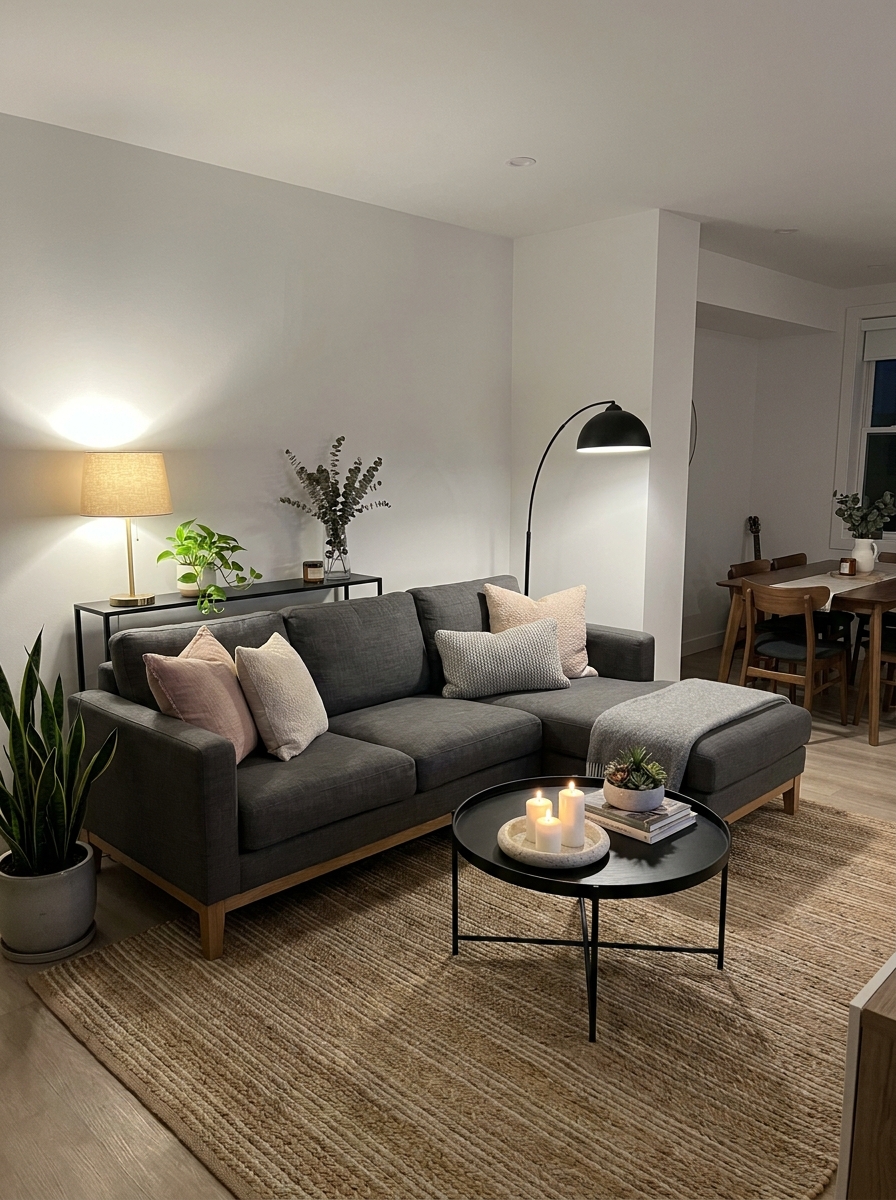
Small spaces need to work harder, right? Your sectional can actually help you carve out different areas without needing walls or bulky dividers.
Position your sectional to create a clear living zone, with the back acting as a natural boundary. This works beautifully in studio apartments or open layouts where you need separation between your sitting area and dining or workspace. The sectional becomes an anchor that says “this is the cozy corner” without blocking sightlines or making things feel choppy.
I love how this trick gives you psychological space even when you don’t have physical space. The area behind the sectional? Perfect for a slim console table, extra storage, or even a tiny desk setup. You’re using every inch intentionally, and it makes the whole room feel more organized and purposeful instead of just crammed with furniture floating everywhere.
7. Skip the Coffee Table (Or Go Really Small)
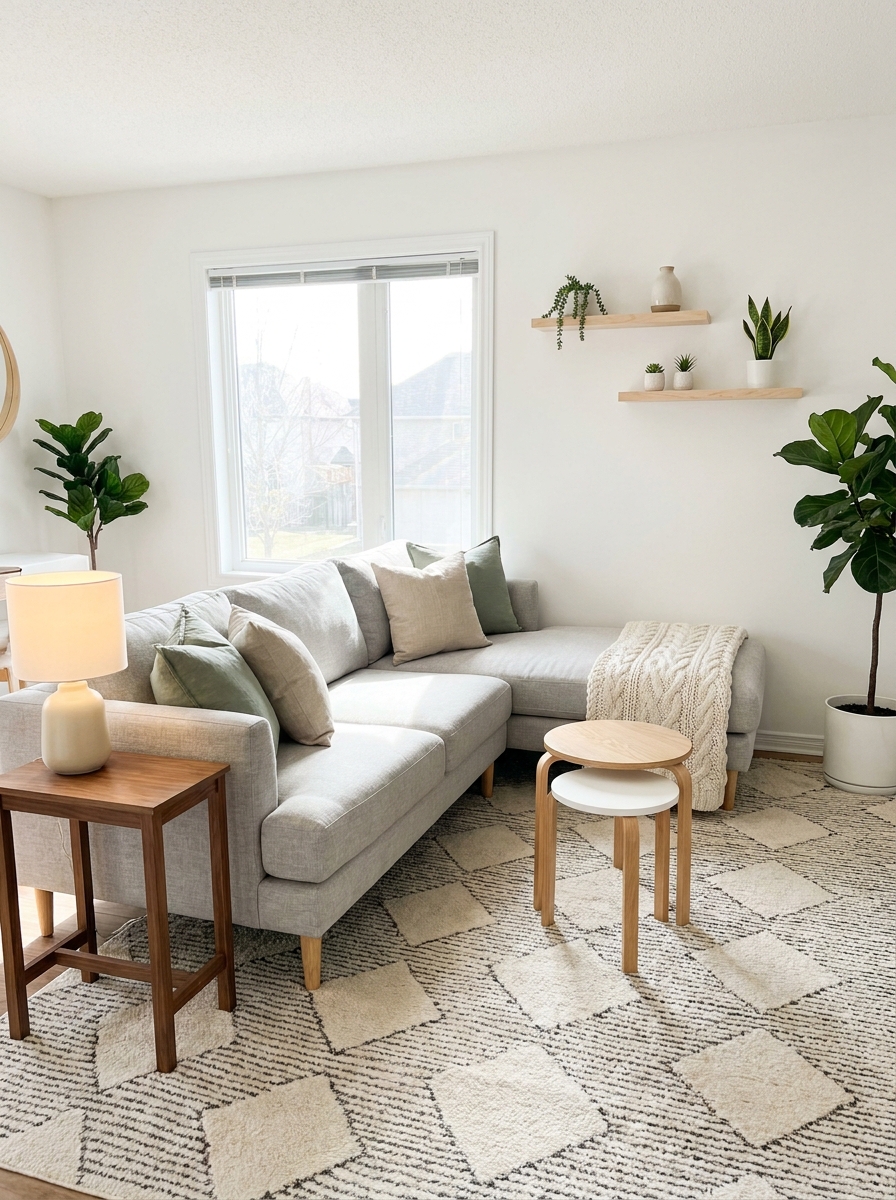
Okay, controversial take incoming: you might not need a coffee table at all. Or at least not the one you’re picturing.
In a small living room with a sectional, that big rectangular coffee table can eat up precious floor space and make navigation feel like an obstacle course. I’ve seen so many rooms instantly feel roomier when the coffee table shrinks down or disappears entirely. Try a small round ottoman instead, or nesting tables you can tuck away when not in use.
The visual breathing room is incredible. Suddenly you can actually walk through your living room without doing that awkward side-shuffle. Plus, keeping the center more open makes the whole space feel less cluttered. You can still have a spot for your coffee mug—just think smaller, lighter, and moveable. Side tables tucked next to the sectional work beautifully for this.
8. Play with Modular Pieces You Can Rearrange
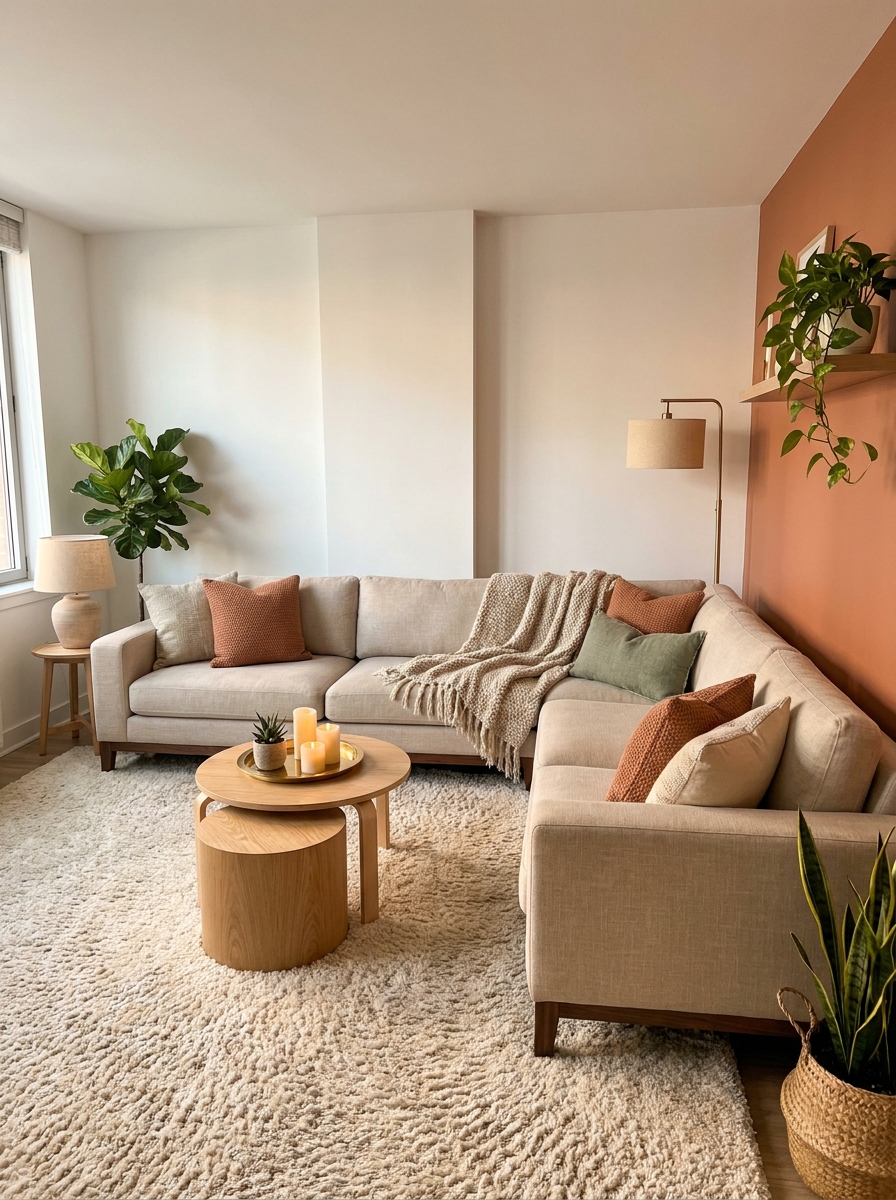
This is where sectionals really shine in small spaces—if you choose modular pieces, you’re not locked into one configuration forever.
Modular sectionals let you switch things up when your needs change or when you just need a fresh look. Host a party? Rearrange the pieces to open up the flow. Movie night? Push them together for maximum lounging. Some days you might want the chaise on the left, other times on the right. That flexibility is pure gold in a small space.
I’m obsessed with how this keeps your room from feeling stale or stuck. It’s like having multiple sofas in one, and you can actually adapt to how you’re really using the space instead of working around a fixed piece. Plus, if you move, you can reconfigure to fit your new layout. That’s serious long-term value right there.
9. Mount Your TV to Free Up Floor Space
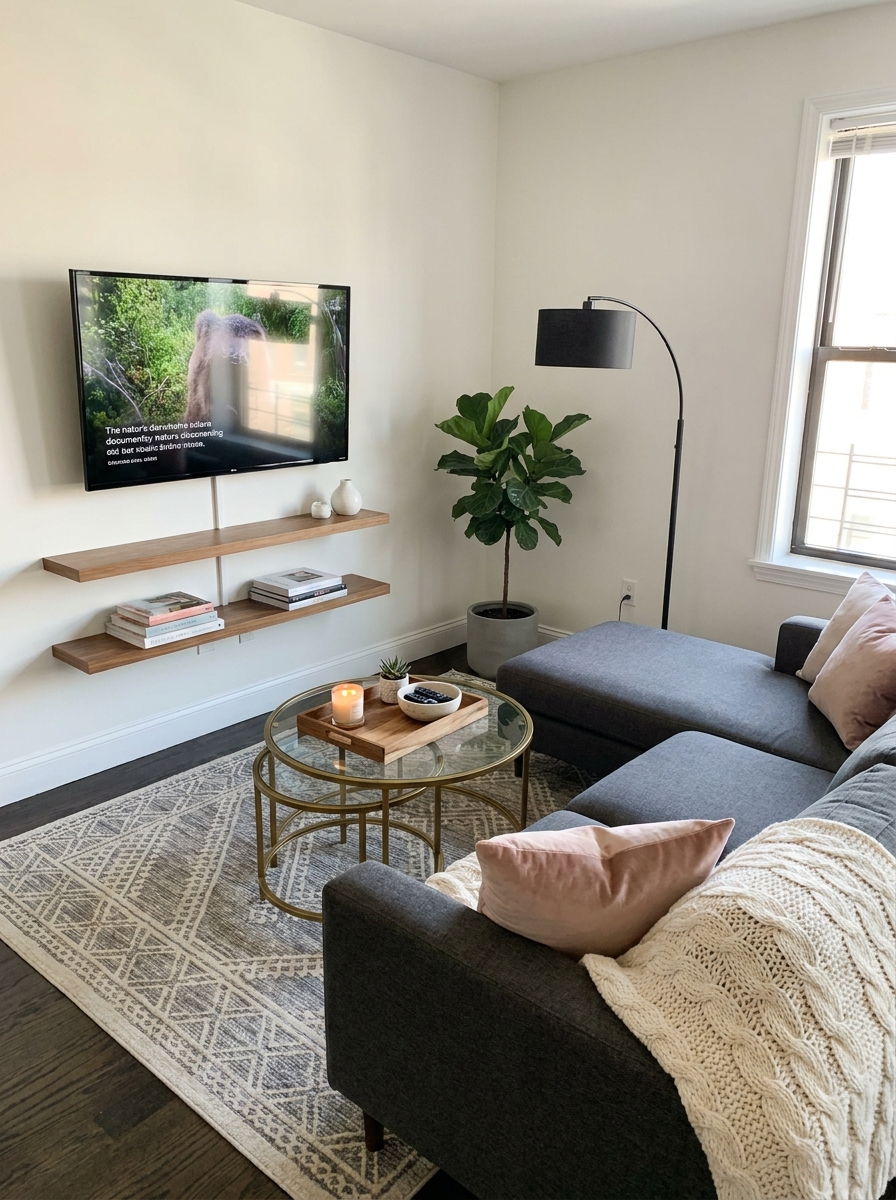
Okay, this one’s a game-changer. When you’re working with a small living room and a sectional, every inch of floor space counts. Instead of a chunky media console eating up precious real estate, mount that TV right on the wall.
I love how this instantly makes the room feel less cluttered. Your sectional becomes the star, and suddenly you’ve got breathing room you didn’t know you needed. Plus, it creates this clean, modern look that makes the whole space feel more intentional.
The beauty here is that you can position your sectional exactly where it needs to be without working around a giant TV stand. You get better viewing angles, more walking space, and honestly? It just looks so much cleaner. Add some floating shelves underneath if you need storage, but keep them minimal. The goal is to keep those sight lines open and let your sectional do its thing without competition.
10. Add a Narrow Console Table Behind the Sectional
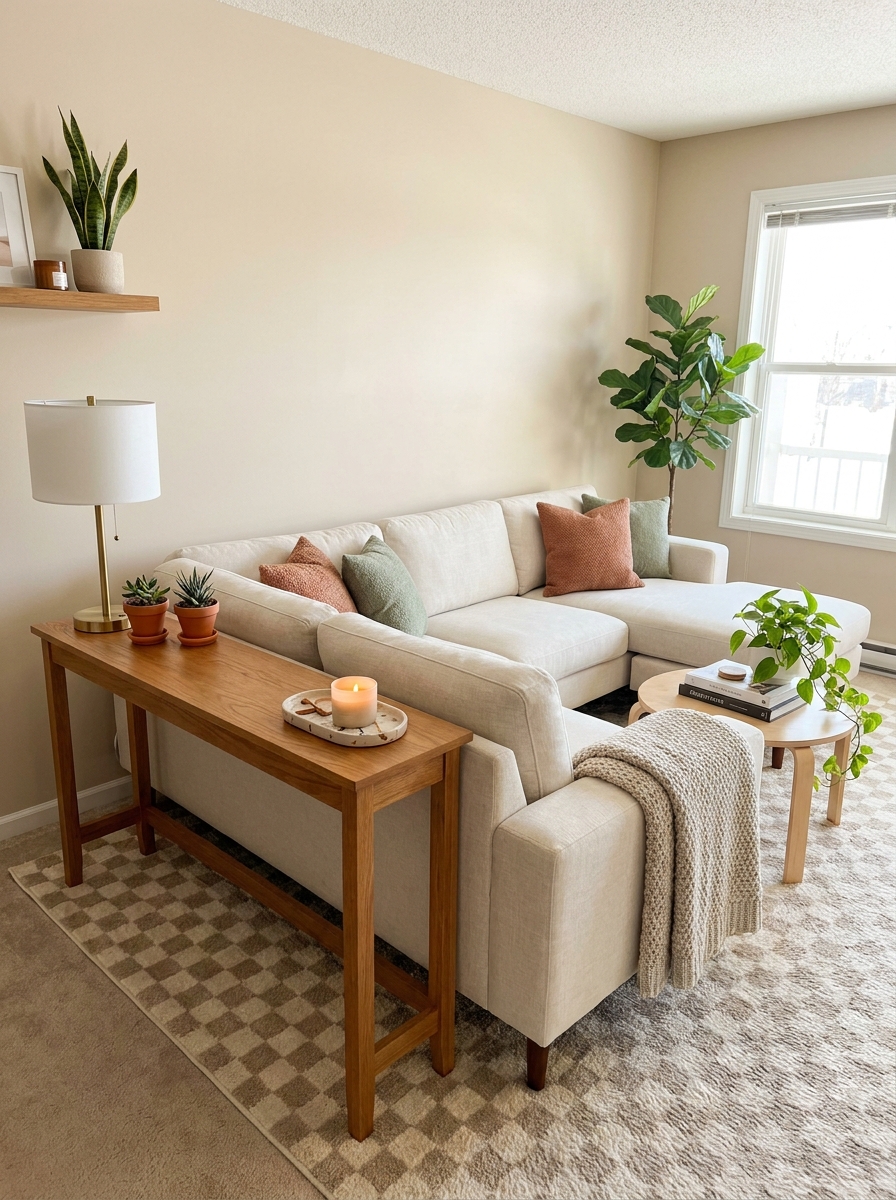
Here’s a sneaky trick I absolutely love: if your sectional floats in the room or backs up to a walkway, slip a narrow console table behind it. It’s like finding hidden storage you didn’t know existed.
This works magic in small spaces because it gives you a place for lamps, drinks, or your current book without taking up any extra floor space. The sectional is already there, so why not make the back of it work harder? I’m talking about those super-slim console tables, maybe 10 inches deep max.
It also makes your sectional feel more like a intentional room divider rather than just furniture pushed against a wall. You can style it with a pretty table lamp for extra lighting, a few small plants, or a decorative tray. It’s functional AND it makes the whole setup look more designed and pulled-together. Win-win.
11. Choose Low-Profile Armrests for a Sleeker Look
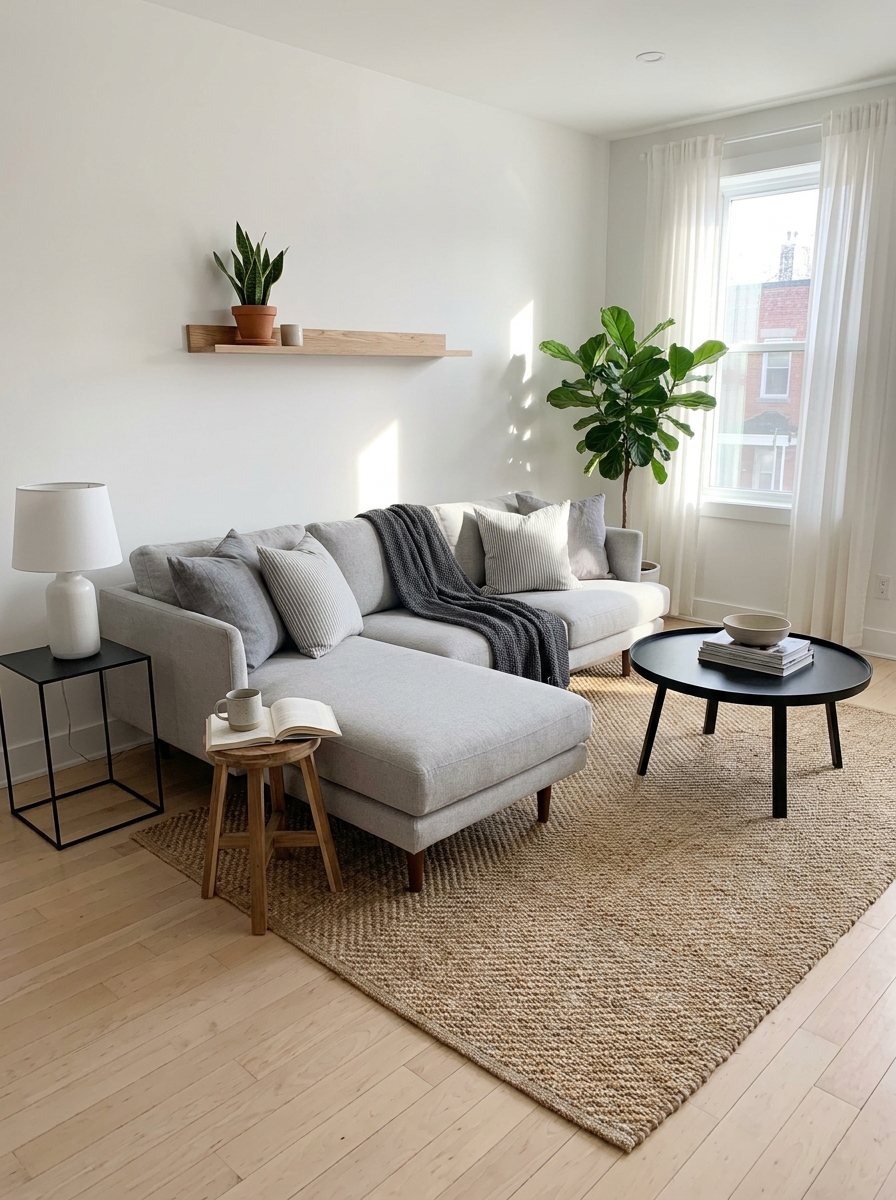
Not all sectionals are created equal, and in a small room, those chunky, puffy armrests can make everything feel crowded. Look for sectionals with low, slim armrests instead. Trust me, it makes such a difference.
Low-profile arms give you a cleaner visual line and they don’t eat up as much visual or actual space. Your room instantly feels less stuffed and more breathable. Plus, you can actually use the armrest as a little perch for your coffee cup or phone without it feeling awkward.
I’ve seen this work wonders in tight spaces. The sectional still gives you all that comfy seating you need, but it doesn’t dominate the room the way a super-plush, oversized-arm version would. It’s all about those sleek proportions. Look for track arms, flared arms, or even English rolled arms if you like a bit of classic charm. Just keep them slim and low.
12. Layer Your Lighting Around the Sectional
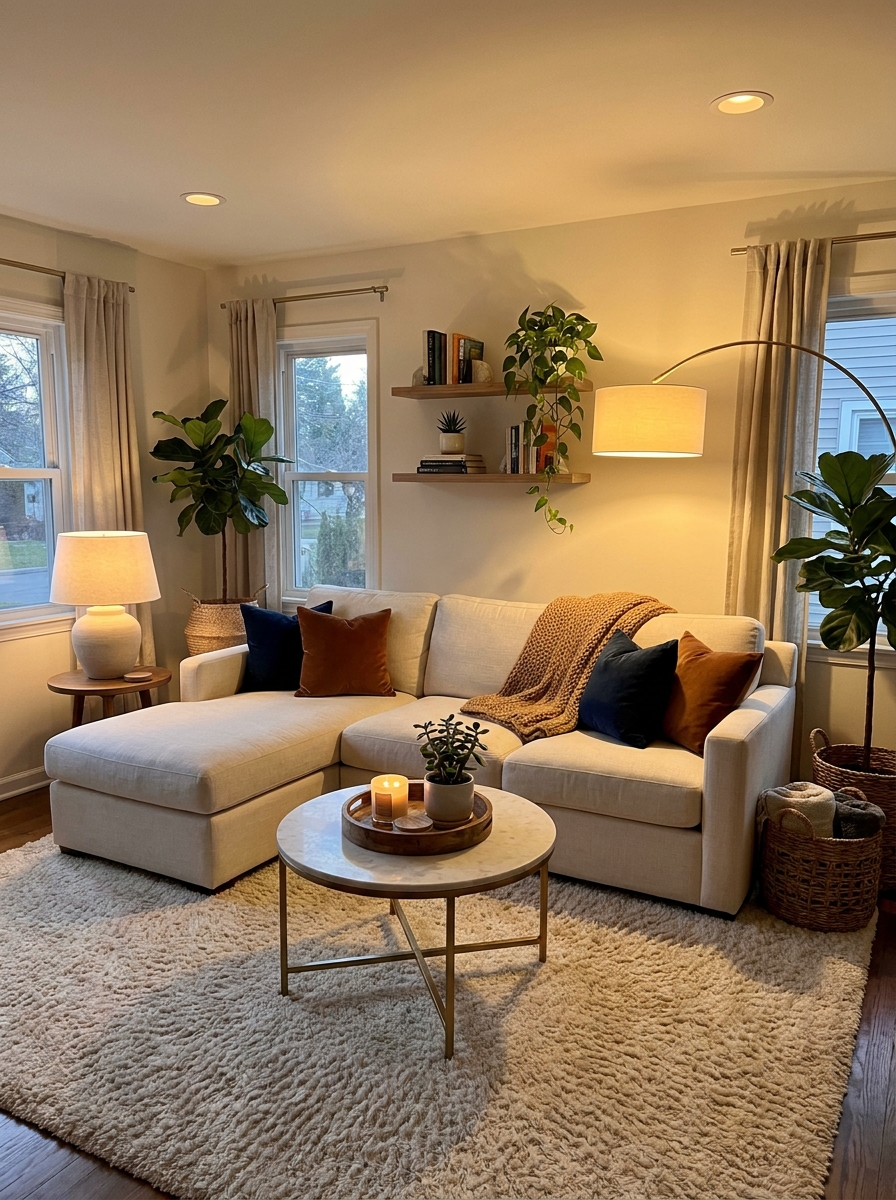
Lighting can totally transform how big or small your living room feels, and when you have a sectional, you’ve got the perfect anchor for creating cozy layers. One overhead light just won’t cut it here.
I love mixing different light sources around the sectional. A floor lamp in the corner behind the chaise, a table lamp on a side table, maybe even some LED strips behind the TV if you’re feeling fancy. When you layer lighting, you create depth and warmth, and that makes even the smallest room feel way more spacious and inviting.
The trick is to position lights at different heights. A tall floor lamp balances the low profile of the sectional, while a smaller table lamp adds task lighting for reading. Dimmers are your best friend too. Being able to adjust the mood from bright and energizing to soft and cozy makes your small living room work harder for you throughout the day.
13. Choose Slim Storage Pieces That Tuck In
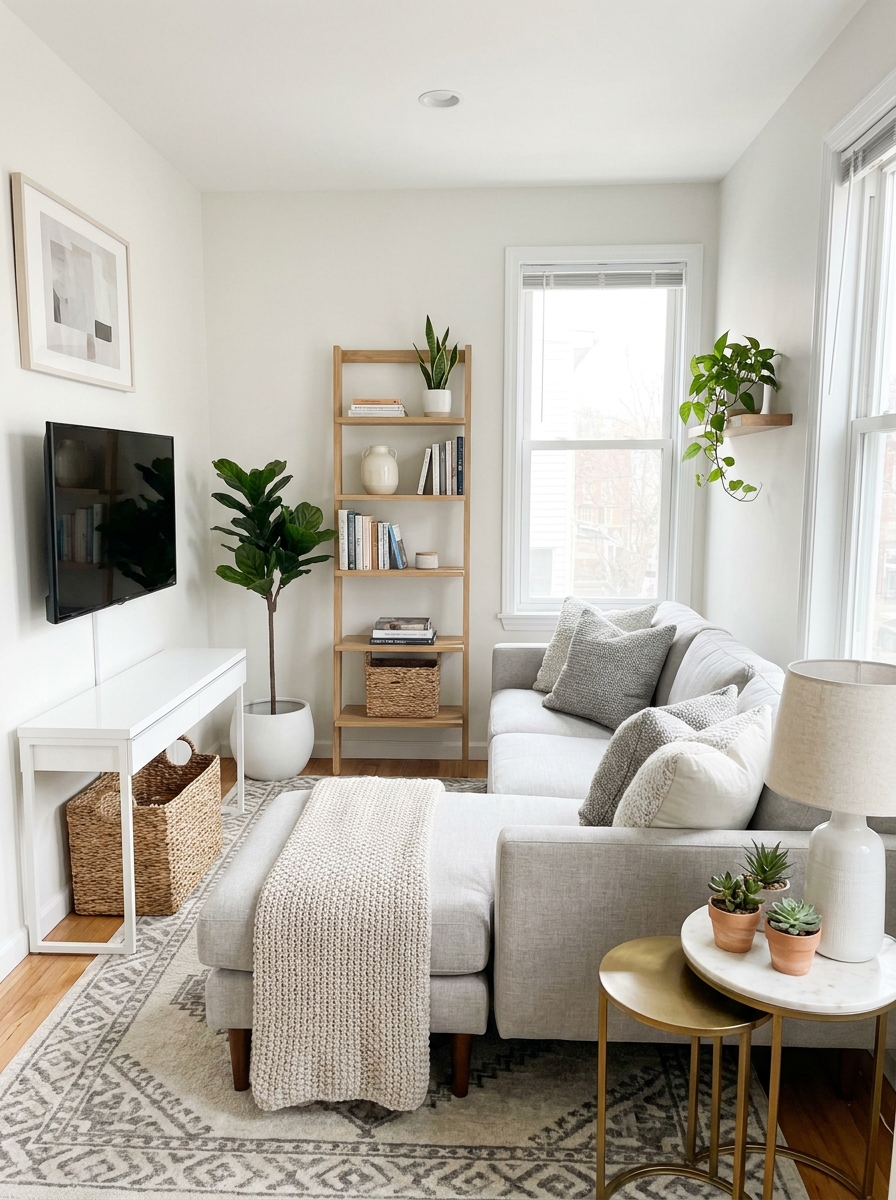
Storage is tricky when you’ve got a sectional taking up most of your living room. But you absolutely need it, so here’s the secret: go slim and go vertical.
Instead of chunky cabinets, think tall bookcases with a small footprint. A narrow ladder shelf next to your sectional holds books and plants without eating up floor space. Or try a slim media console that’s long but shallow—you get all the storage with way less bulk.
I’m obsessed with those floating shelves that run above or beside the sectional. They keep your stuff off the floor and give you display space without adding visual weight. The key is choosing pieces that feel intentional, not crammed in as an afterthought. When every storage piece earns its spot, your small space feels curated instead of cluttered. And honestly? Less floor clutter makes your sectional feel even more luxurious and spacious.
14. Opt for Armless Sections to Save Space
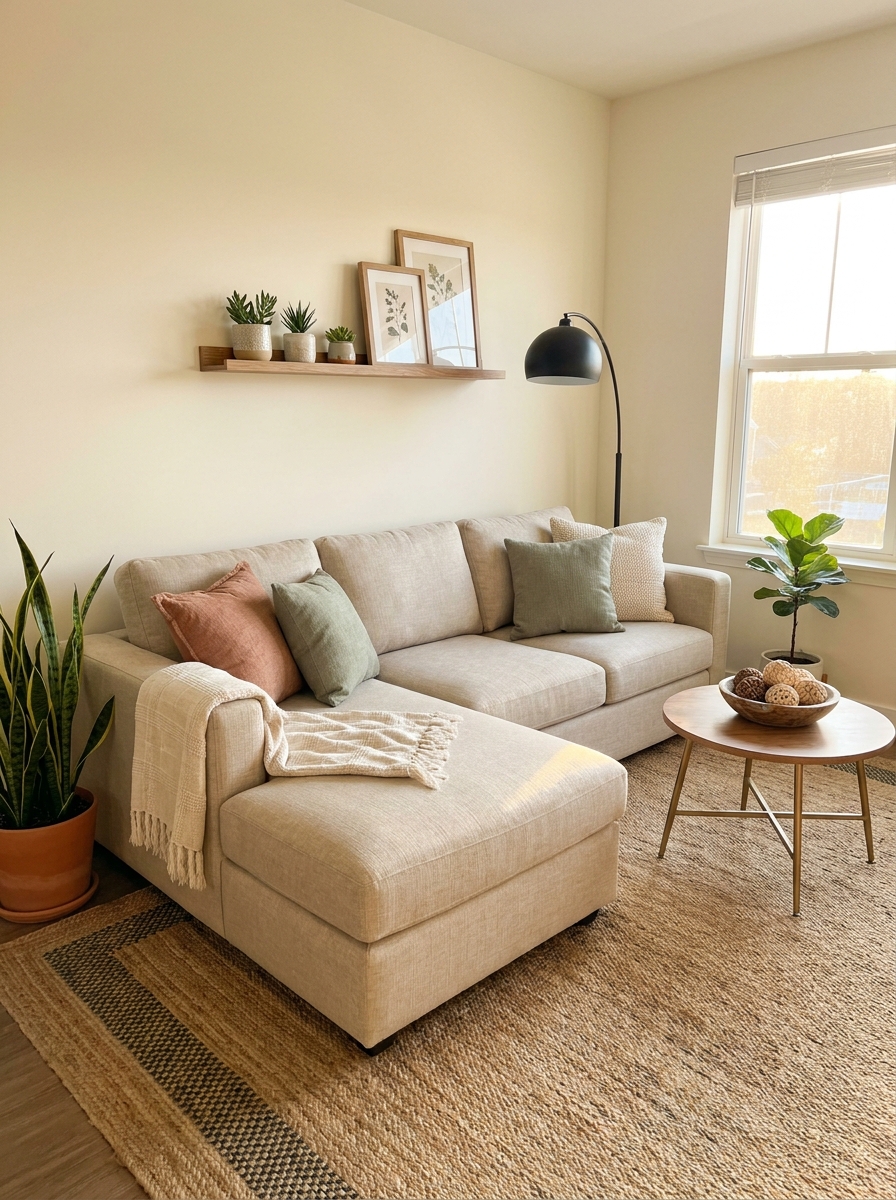
Here’s a game-changer I don’t see talked about enough: armless sectional pieces. Even just one armless section can make your whole sofa feel lighter and less bulky.
When you eliminate one or both arms, you instantly gain visual breathing room. The sectional doesn’t look like it’s taking over—it looks sleek and modern. Plus, you can actually sit more people because arms take up way more space than you’d think. I’ve seen small living rooms feel completely transformed just by swapping a traditional sectional for one with an armless chaise.
If you’re worried about comfort, don’t be. You can always add a firm cushion where you’d normally lean, or just embrace the streamlined look. The payoff is huge: your sectional takes up the same floor space but feels so much less imposing. It’s one of those small tweaks that makes a massive difference in tight quarters.
15. Create Symmetry with Matching Side Tables
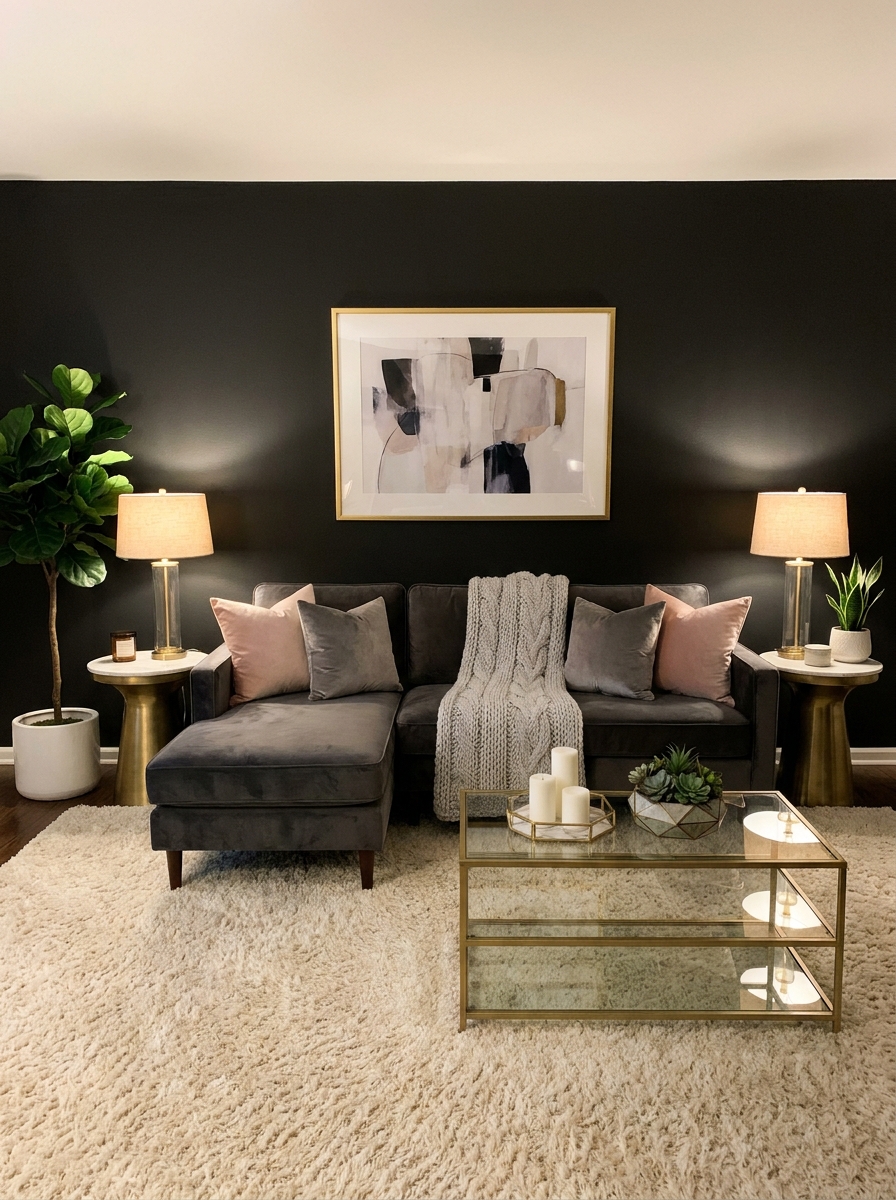
Small spaces can feel chaotic if there’s no visual order. That’s where symmetry comes in—and matching side tables flanking your sectional are the easiest way to get it.
I’m not talking about formal or stuffy. Just two similar tables (same height, same vibe) on either end of your sectional. It creates balance that makes the whole room feel more pulled together and, somehow, more spacious. Your eye follows the rhythm instead of bouncing around looking for a place to land.
This works especially well when your sectional has a chaise. The side tables ground both ends and give you functional surface space for lamps, drinks, or that book you’re definitely going to read. Go for slim profiles—round or square—and keep the styling minimal. The symmetry does the heavy lifting, so you don’t need much else to make the space feel complete and intentional.
16. Bring in Reflective Surfaces for Depth
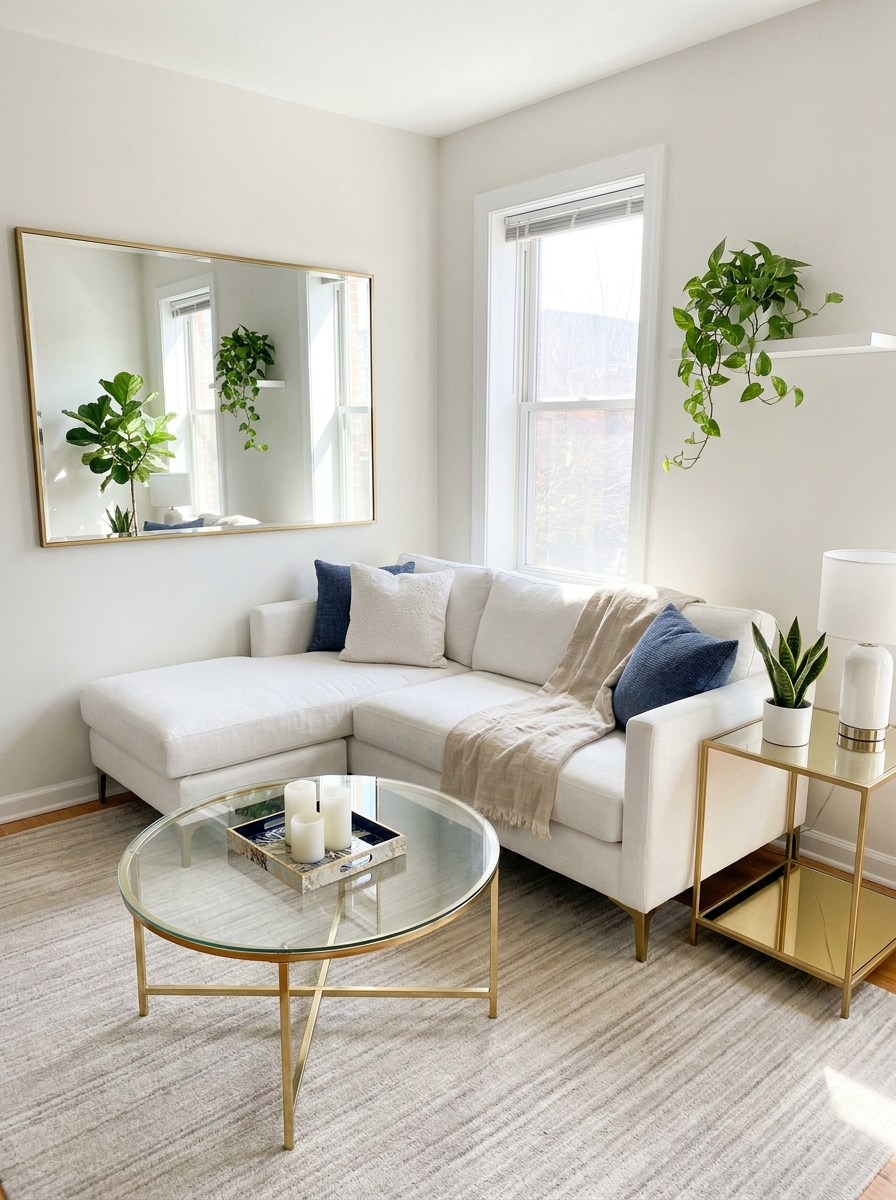
Mirrors aren’t the only reflective trick in the book. When you’re working with a sectional in a small room, any surface that bounces light makes the space feel bigger and brighter.
Think glass coffee tables, metallic side tables, lacquered trays, even a glossy console behind your sectional. These surfaces catch and reflect light—natural or artificial—which tricks your eye into seeing more dimension. A glass coffee table is especially genius because you can see straight through it, so it doesn’t add visual weight even though it’s totally functional.
I also love adding one statement mirror on the wall opposite a window. It doubles the light and makes the whole room feel twice as open. Just be strategic—you don’t want to overdo it and end up in a funhouse. One or two reflective pieces are plenty to create that airy, light-filled vibe that makes your sectional feel like it belongs, not like it’s crowding the room.
17. Embrace Vertical Storage to Keep It Clutter-Free
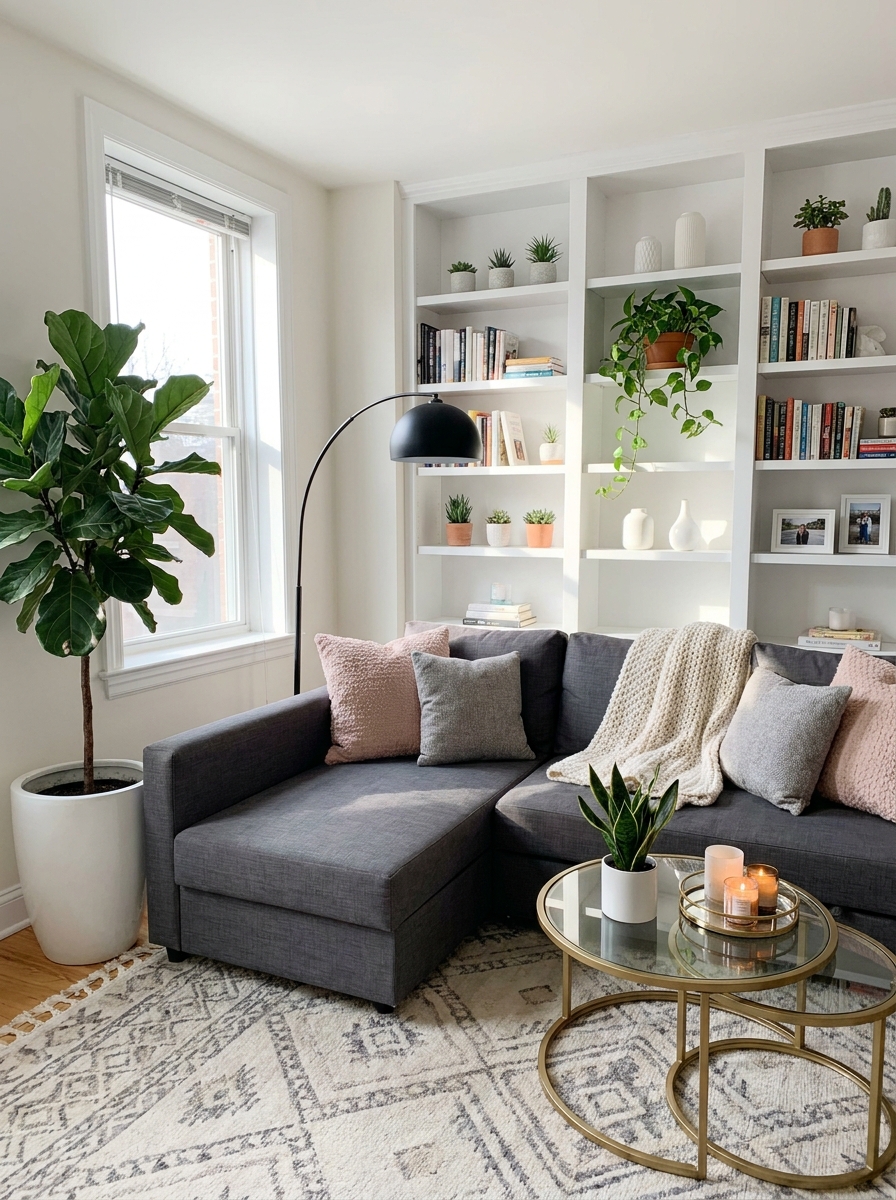
Here’s the thing about sectionals in small spaces—they take up floor space, so you need to think upward. Vertical storage is your secret weapon for keeping the room functional without feeling cramped. Floor-to-ceiling bookshelves, tall narrow cabinets, or even floating shelves stacked high draw the eye up and make your ceilings feel taller.
I love how vertical storage keeps all your stuff organized while leaving the area around your sectional open and breathable. When everything has a home above eye level, your living room doesn’t feel cluttered even when you’re living in it. Plus, styling those shelves gives you a chance to show off your favorite books, plants, and treasures.
The key is keeping the vertical pieces slim so they don’t jut out into your walking space. A tall bookshelf that’s only 10 inches deep does way more for you than a chunky media console that eats up precious square footage. Think tall and skinny, not short and wide.
Quick Guide
## Which Sectional Size Is Right for Your Space?
Less than 150 sq ft: Go for a compact two-piece sectional (loveseat + chaise or corner piece). Look for something under 80 inches on the longest side.
150–200 sq ft: A standard three-piece sectional works here. Aim for 85–100 inches total length with a single chaise.
200+ sq ft: You’ve got options! A larger L-shaped sectional or even a modular four-piece can work if your layout allows.
Quick tip: Measure your room’s longest wall and subtract 24 inches—that’s your max sectional length to maintain flow. And always account for doorways and walkways. If your sectional blocks the path to the kitchen, it’s too big no matter what the measurements say.
Your Small Space Deserves Big Comfort
Sectionals aren’t the enemy of small living rooms. Bad planning is. When you choose the right size, place it thoughtfully, and style it with intention, a sectional can actually make your space feel more cohesive and comfortable than any other seating arrangement.
The rooms that feel the most spacious aren’t always the biggest ones. They’re the ones where every piece of furniture has a purpose and a place. Your sectional can anchor your whole room, create natural conversation zones, and give you that deep-cozy-sofa feeling you’ve been craving.
So take the measurements, use the tape trick, and trust your gut. If a sectional makes you excited every time you walk into your living room, it’s the right choice. Your space is small, sure—but it’s yours, and it deserves to feel like the best spot in the house. Now go make it happen.
Frequently Asked Questions
Can you really fit a sectional in a small living room?
Absolutely. The trick is choosing a compact sectional that’s proportional to your space—usually something under 85 inches on the longest side. Measure your room, leave space for walkways, and opt for a single-chaise design. Floating the sectional away from walls also helps the room breathe and feel less cramped.
What’s the smallest room size that can fit a sectional sofa?
You can fit a small sectional in a room as compact as 10×12 feet (120 square feet). Look for apartment-sized or modular sectionals designed for tight spaces. The key is leaving at least 18 inches of walkway space around the furniture and choosing a layout that doesn’t block doorways or major traffic paths.
Should I put my sectional against the wall in a small living room?
Not necessarily. Floating your sectional a few inches from the wall can actually make the room feel bigger by creating depth and dimension. It also gives you room for a console table behind the sofa. If your room is extremely tight, pushing one side against the wall while floating the other end can be a good compromise.
What color sectional is best for making a small living room look bigger?
Light, neutral colors like cream, beige, light grey, or soft white reflect more light and make spaces feel open. But don’t stress too much—if you love a darker sectional, balance it with light walls, a bright rug, and plenty of natural light. The color matters less than the scale and placement.
How do I arrange a sectional in a narrow living room?
Place the sectional along the longest wall with the chaise pointing toward the center of the room, not blocking walkways. Avoid putting the sectional in the middle of a narrow space—it’ll cut off flow. Use a narrow coffee table or nesting tables to keep pathways clear and the room feeling open.