15 Genius Small Living Room Ideas That Transform Cramped to Cozy
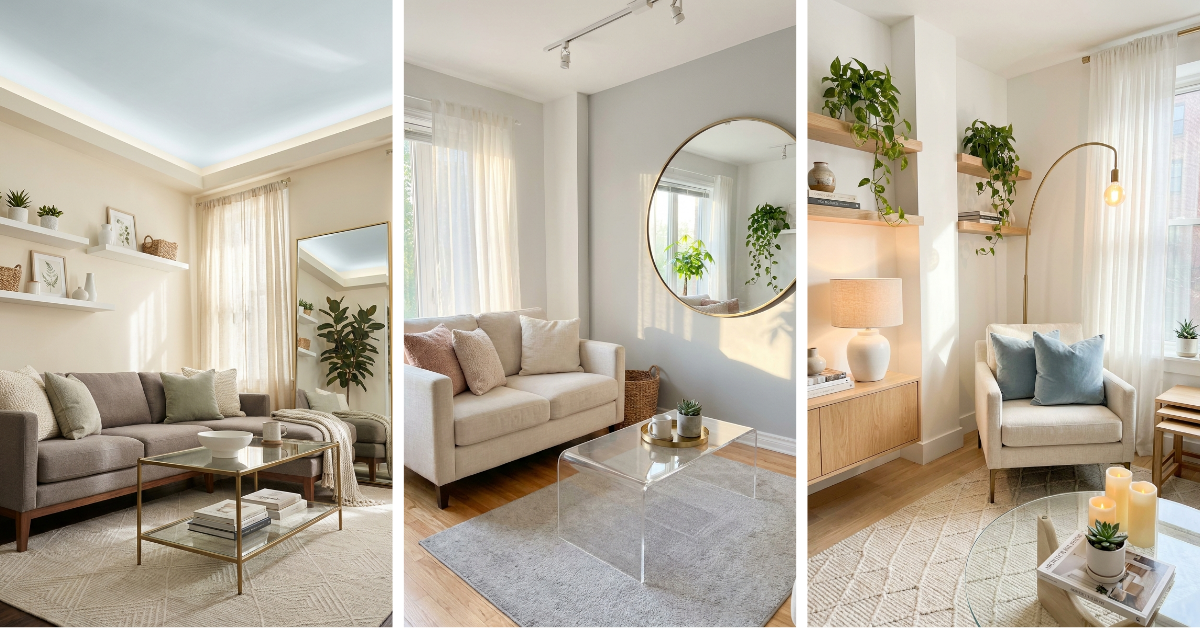
You know that moment when you walk into your living room and it just feels…tight? Like the walls are a little too close and your couch is somehow swallowing the entire space? I’ve been there. My first apartment had a living room so small I could practically touch both walls while standing in the middle. But here’s the thing—small doesn’t have to feel suffocating. With a few smart tweaks, you can actually trick your eyes (and your guests) into thinking you’ve got way more square footage than you do. We’re talking about strategic furniture placement, clever color choices, and yes, a mirror or two. Nothing crazy expensive or requiring a contractor. Just real, doable changes that make a genuine difference. Whether you’re working with a studio apartment or just a cozy space that needs some breathing room, these 15 ideas will help you transform cramped into comfortable. Let’s get into it.
1. Paint Everything in Light, Airy Neutrals
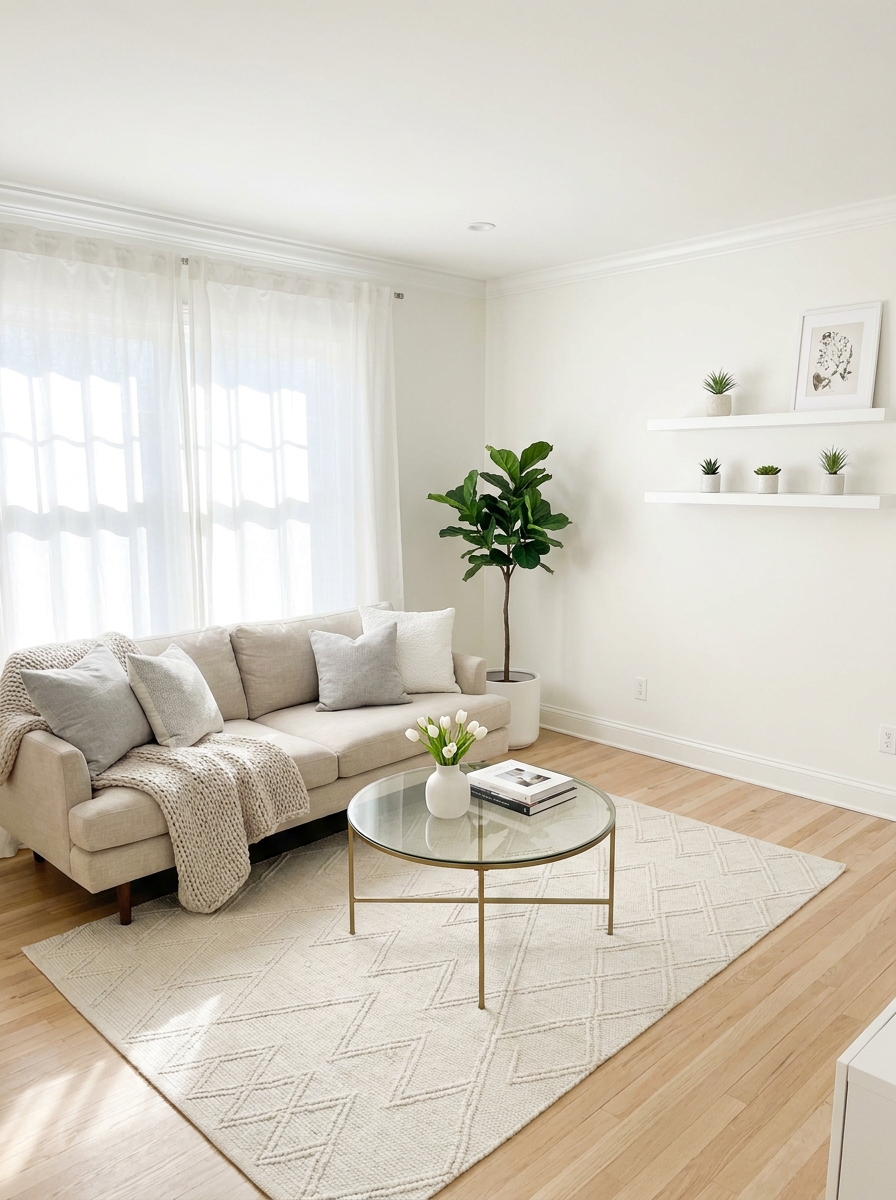
This one sounds obvious, but you’d be surprised how many people skip it. Light colors genuinely reflect more natural light, which makes walls visually recede. We’re talking soft whites, warm creams, pale grays—anything that feels open and breathable.
I painted my living room in a color called “Swiss Coffee” and it was like someone turned on extra lights. The space immediately felt less cramped. Dark colors can look stunning in photos, but in a small room? They close in on you fast.
And it’s not just walls. Consider painting your trim, ceiling, even your built-ins in similar light shades. When everything flows together without harsh contrast, your eye travels smoothly around the room instead of stopping at every dark corner. That continuous visual flow tricks your brain into perceiving more space. It’s one of those changes that costs you a weekend and some paint, but the payoff is huge. You don’t need to go stark white if that feels too sterile—just stay in that lighter, softer range.
2. Hang a Large Statement Mirror Opposite a Window
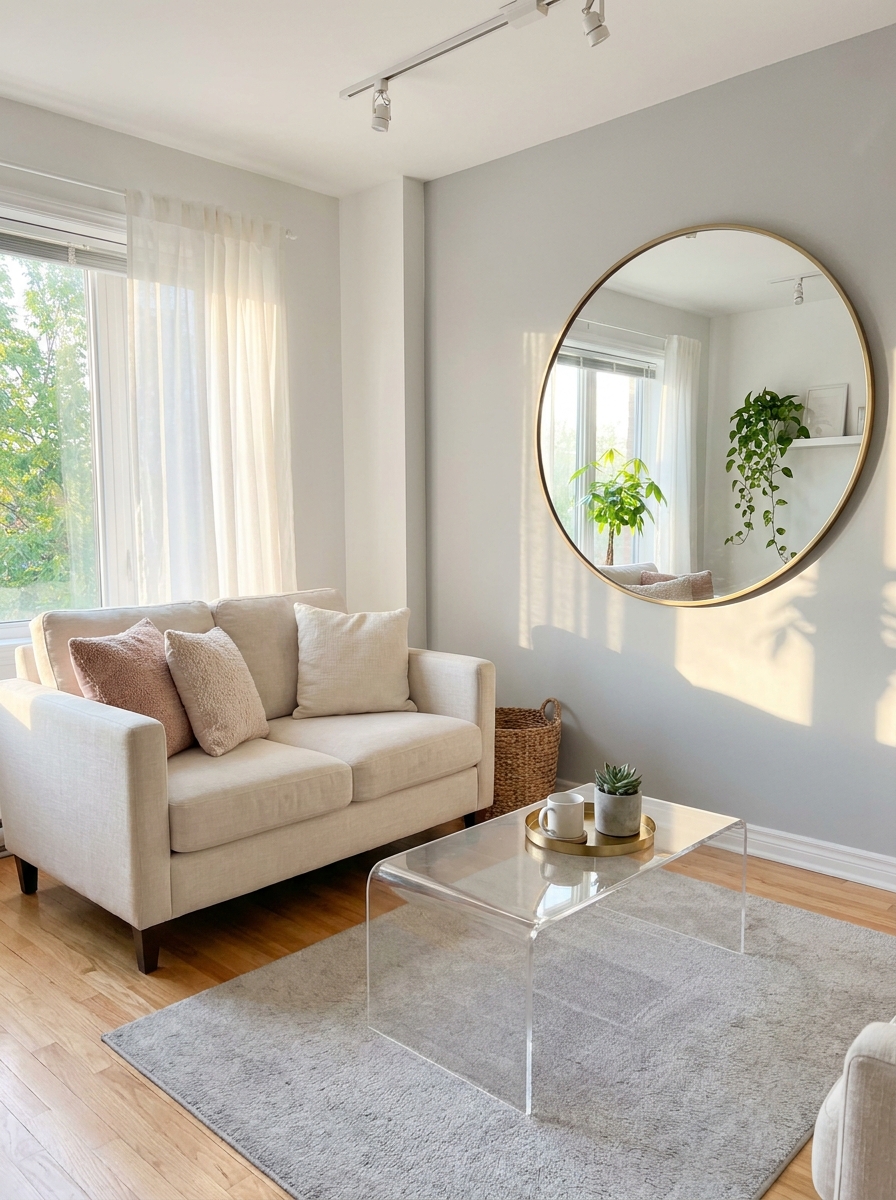
Mirrors are absolute magic in small spaces. But not just any mirror anywhere—you want to be strategic about placement. Hanging a large mirror directly across from a window doubles the natural light bouncing around your room and creates the illusion of another window.
I hung an oversized round mirror opposite my living room window last year and guests constantly ask if I added a skylight. It reflects the outdoors, the light, and suddenly the room feels twice as deep. The key is going big. A tiny decorative mirror won’t cut it—you need something substantial that commands attention.
Think about scale here. In a small room, one large mirror makes a much bigger impact than a gallery wall of small ones. It creates a focal point while serving a functional purpose. And bonus: it makes the room feel more dynamic because you’re catching different angles and reflections as you move through the space. Lean it against the wall for a casual look or mount it securely—either way works.
3. Choose Furniture with Exposed Legs
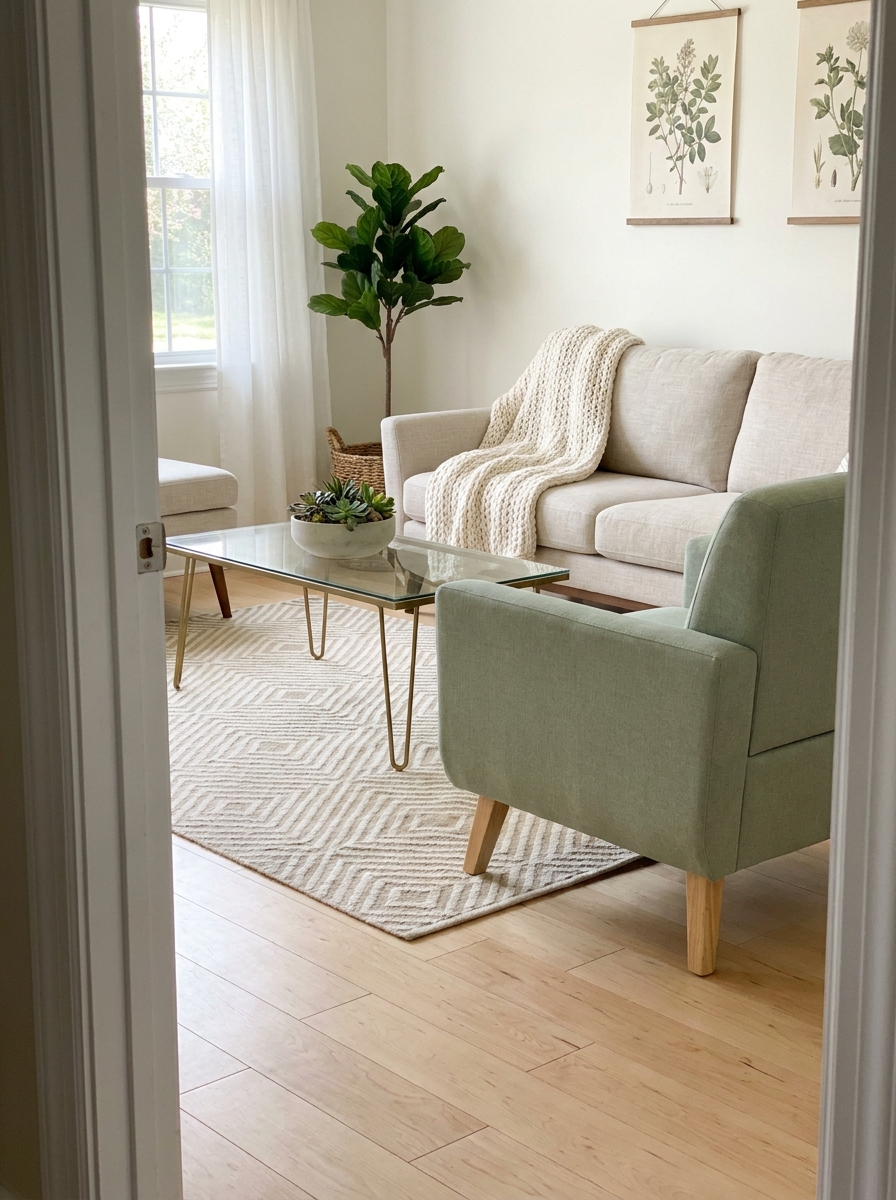
Bulky furniture that sits flat on the floor makes everything feel heavier and more closed-in. Furniture with visible legs—whether it’s a sofa, chairs, or even your coffee table—lets light and sightlines flow underneath, which visually opens up the floor space.
When I swapped my old skirted sofa for one with tapered wood legs, I could suddenly see more floor. And more visible floor equals the perception of more space. It’s a simple visual trick, but it works every single time.
Mid-century modern pieces are great for this because they’re designed with those slim, elevated legs. But you don’t have to commit to one style—plenty of contemporary and transitional furniture follows this principle too. The key is avoiding anything that creates a visual “wall” between your furniture and the floor. Even a few inches of clearance makes a difference. Your eye can travel under and around pieces instead of stopping abruptly, and that keeps the room feeling open and breathable instead of cramped and grounded.
4. Use Vertical Storage to Draw the Eye Up
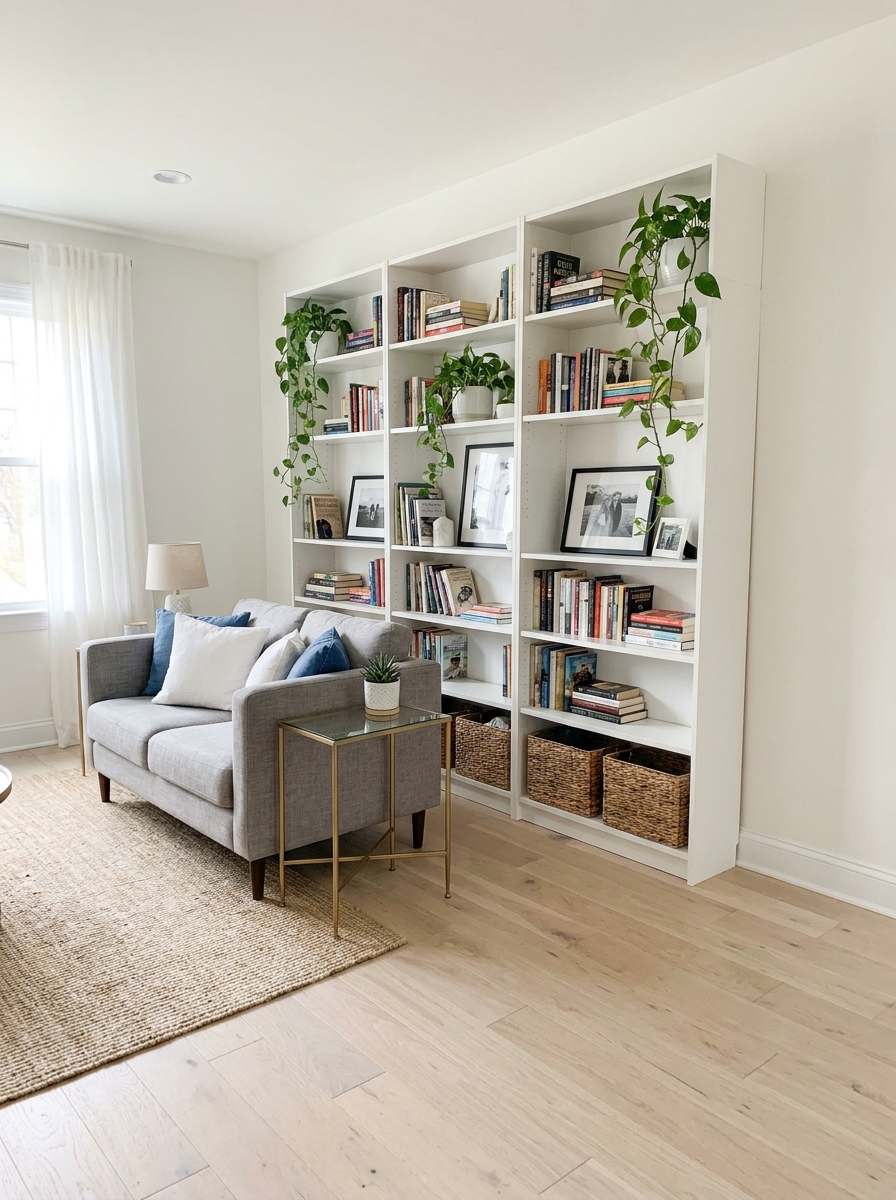
When floor space is limited, go vertical. Tall bookshelves, floor-to-ceiling shelving units, or even just stacking storage higher draws the eye upward and makes your ceilings feel taller. And taller ceilings? They trick your brain into thinking the whole room is bigger.
I installed floating shelves that run almost to the ceiling in my living room, and it completely changed the proportions of the space. Instead of everything hugging the ground, there’s visual interest at multiple heights. It makes the room feel more dynamic and less squished.
You don’t need built-ins to pull this off. A tall, narrow bookshelf works beautifully. The key is keeping the vertical lines clean and uncluttered—you want to emphasize height, not create a towering pile of stuff. Style your shelves with a mix of books, a few decorative objects, and some greenery. Keep it intentional. When you utilize that often-wasted upper wall space, you’re essentially giving yourself more storage without sacrificing precious square footage. It’s one of those win-win design moves.
5. Skip the Bulky Sofa and Go Modular
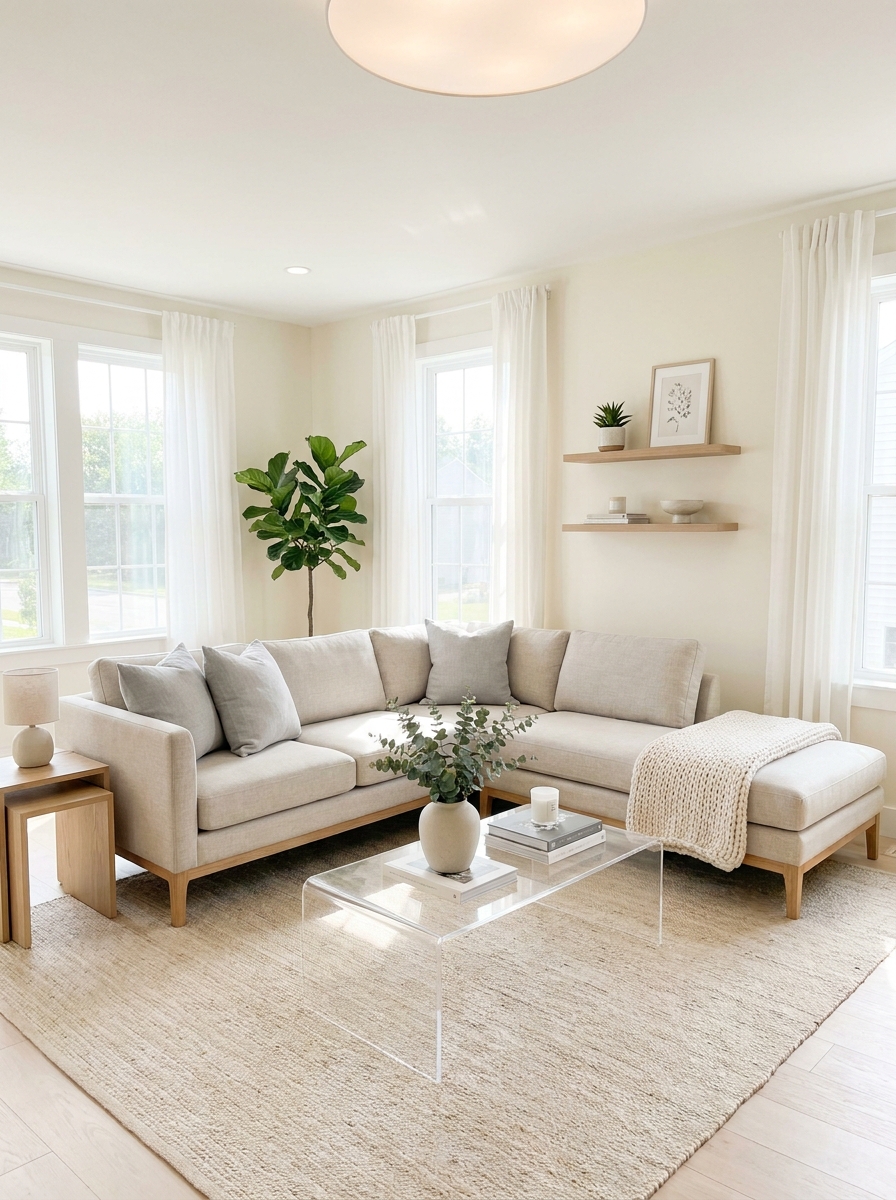
I know, I know. You love the idea of a giant sectional. But in a small living room? It’s basically a space-eating monster.
Modular sofas are your best friend here. They’re smaller, lighter-looking, and you can rearrange them whenever you need to. Plus, they don’t anchor the room in one heavy visual block. Instead of one massive piece dominating everything, you get flexibility and breathing room.
I switched to a modular setup in my old apartment and honestly? Game changer. I could pull sections apart for movie night, push them together for parties, and the whole room felt instantly more open. The key is choosing pieces with slim arms and those exposed legs we talked about earlier. And stick with light fabrics—think linen, cotton, or even performance fabrics in cream or soft gray. Dark leather might look sophisticated, but it’ll shrink your space faster than you can say “cozy.” Go light, go modular, and watch your tiny living room suddenly feel like it has room to breathe.
6. Layer Your Lighting Like a Pro
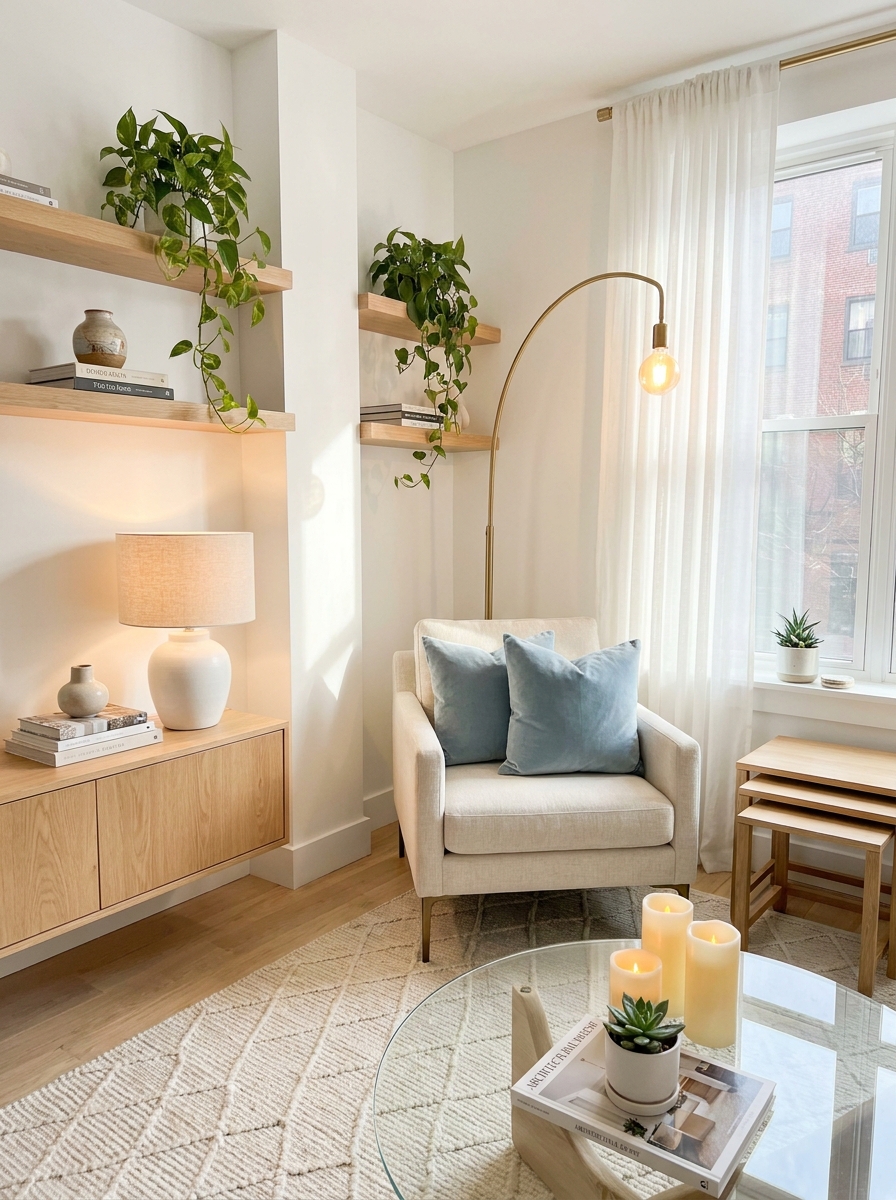
One overhead light? That’s not going to cut it. If you want your small living room to feel bigger, you need layers of light coming from different heights and corners.
Here’s the thing—good lighting creates depth. And depth tricks your eye into thinking there’s more space than there actually is. Start with your overhead fixture, but don’t stop there. Add a floor lamp in a corner to draw the eye across the room. Put a table lamp on a console or side table. Maybe even add some LED strips under floating shelves if you’re feeling fancy.
I’m obsessed with tall arc floor lamps for small spaces. They take up almost no floor space but cast light way up high, which makes your ceilings feel taller. And please, use warm white bulbs—not those harsh cool ones that make everything look like a dentist’s office. The goal is to eliminate dark corners and shadows. When every part of your room is lit, even subtly, it feels open and inviting instead of cramped and cave-like.
7. Use One Large Rug Instead of Multiple Small Ones
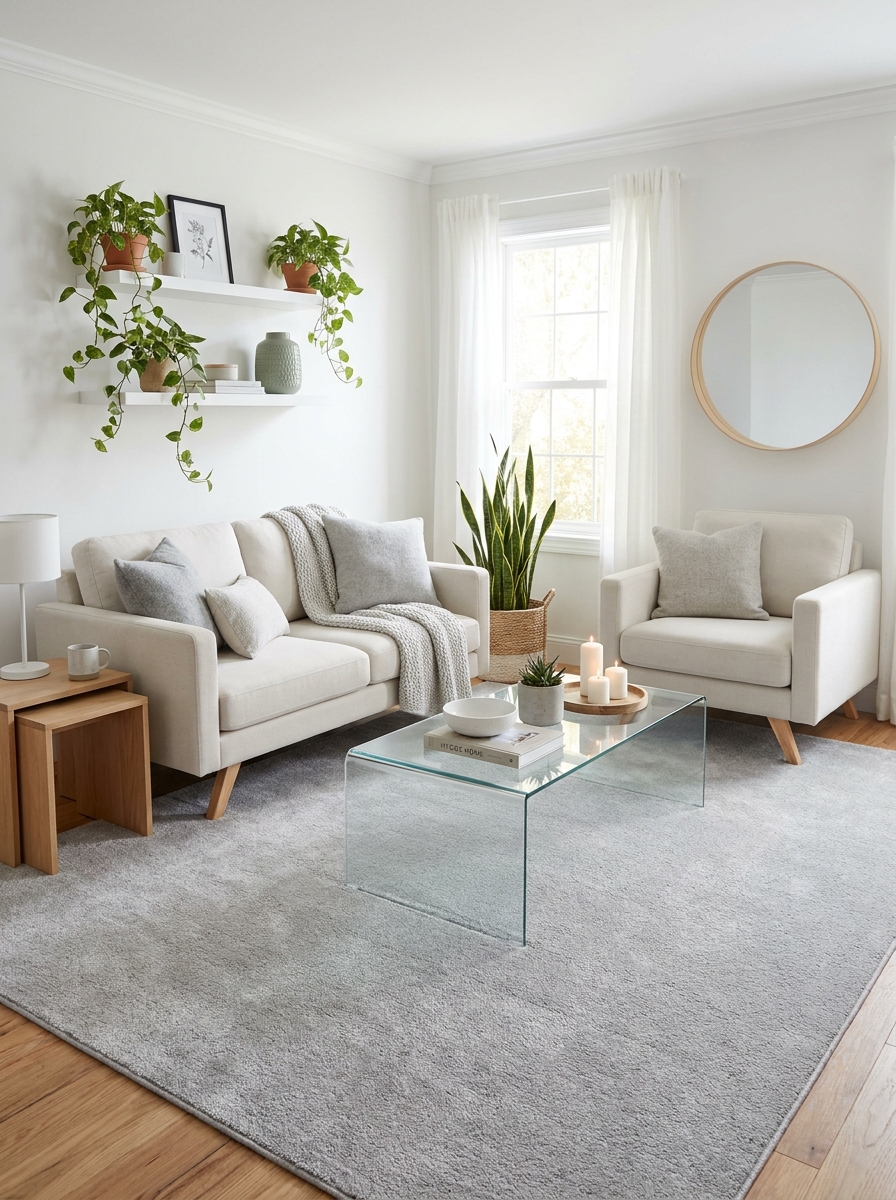
This might sound counterintuitive, but stay with me. A big rug actually makes a small living room look bigger.
When you use tiny rugs or scatter them around, you’re visually chopping up your floor space. It creates boundaries and makes everything feel fragmented and smaller. But one large rug? It unifies the whole room and makes the floor look more expansive.
The trick is getting the right size. Your rug should be big enough that at least the front legs of all your furniture sit on it. This creates one cohesive zone and pulls everything together. And stick with light colors—cream, pale gray, soft beige. You want something that almost blends with your floor but adds just enough texture and warmth. I learned this the hard way with a tiny rug that made my already-small living room look like a shoebox. Once I sized up and went lighter, everything clicked into place. Suddenly the room felt grounded but also way more open.
8. Keep Window Treatments Light and Simple
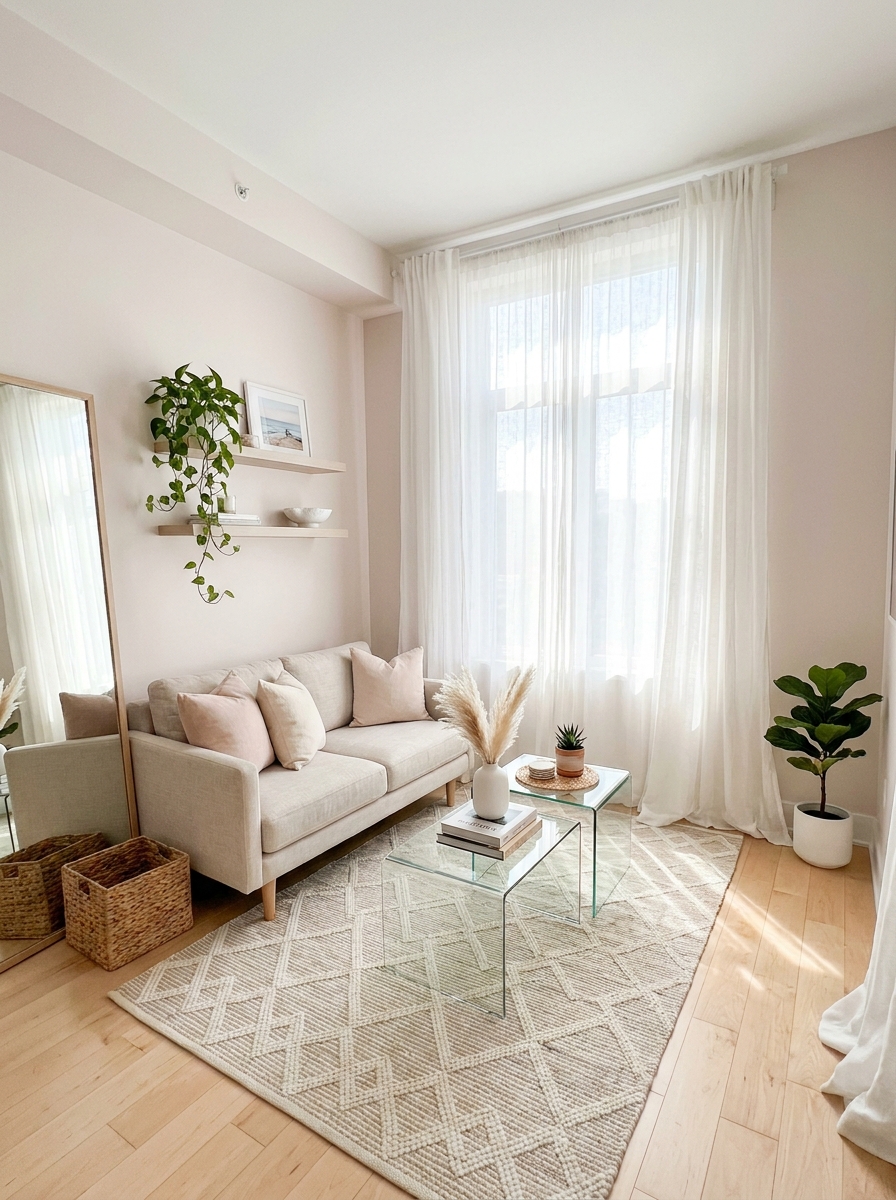
Heavy drapes might look dramatic, but they’re also swallowing up precious light and making your walls feel shorter. Not what we want.
Go sheer or go home. Lightweight linen curtains or sheer white panels let natural light pour in while still giving you privacy. And here’s a trick—hang your curtain rod as close to the ceiling as possible, not right above the window frame. This draws the eye up and makes your ceilings look taller. Let your curtains just barely kiss the floor for that elegant, elongated look.
I swapped my heavy patterned curtains for simple white linen panels and the difference was instant. The room felt brighter, taller, and so much more open. If you need more privacy at night, add some sleek roller shades behind your sheers. But during the day, let all that beautiful light in. Natural light is free and it’s the absolute best way to make any small space feel bigger and more inviting.
9. Create Zones Without Actual Walls
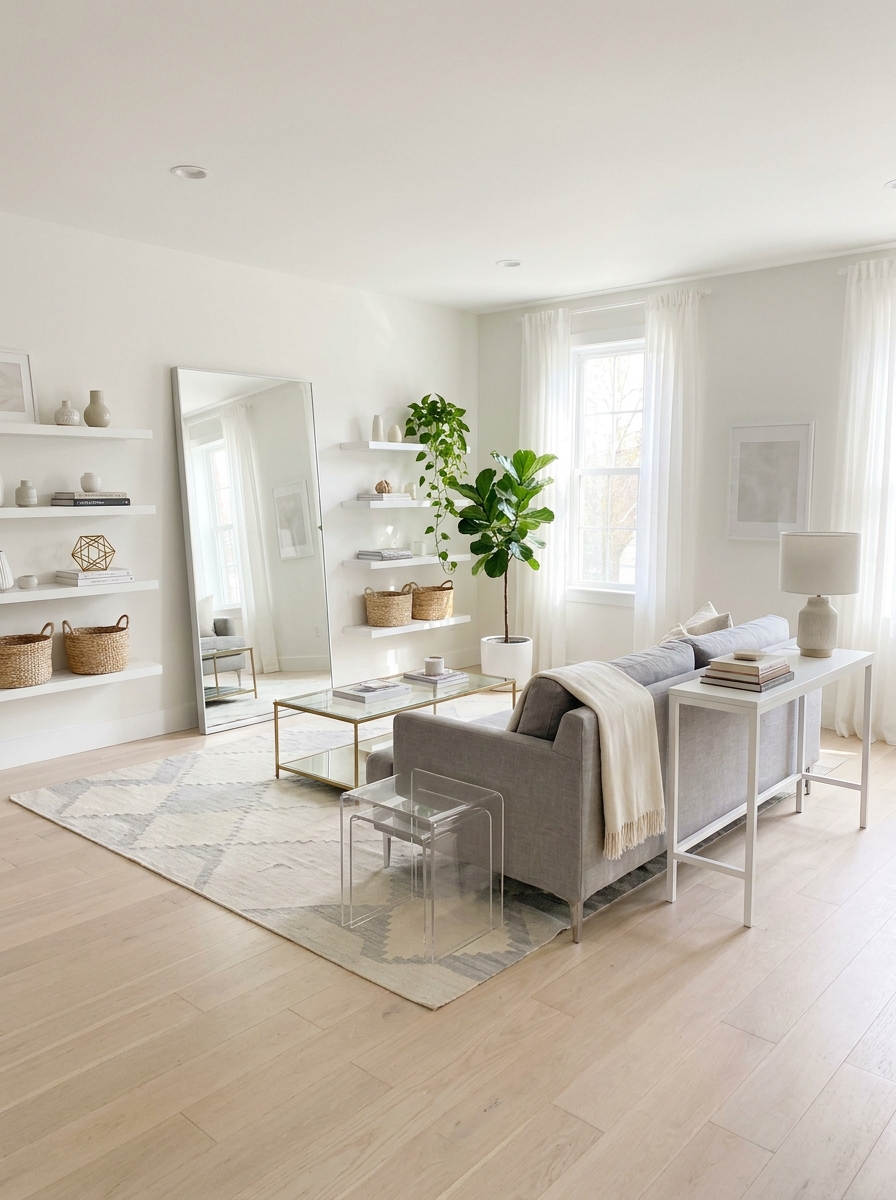
Here’s the thing about small spaces—walls make them feel even smaller. But you still need to define different areas, right? The trick is creating zones without blocking sightlines.
I love using a slim console table behind the sofa to separate the living area from a tiny dining nook. Or floating your sofa a few inches off the wall instead of pushing it all the way back. It sounds counterintuitive, but that little bit of breathing room actually makes the whole space feel bigger.
You can also use a narrow bookshelf as a divider, or even just a different rug to signal “this is the living area, that’s the workspace.” The key is keeping everything low-profile and open so your eye can still travel through the entire room. When you can see from one end to the other without hitting a visual wall, the space instantly feels more expansive. It’s like giving your room permission to breathe.
10. Embrace Negative Space Like It’s Your Job
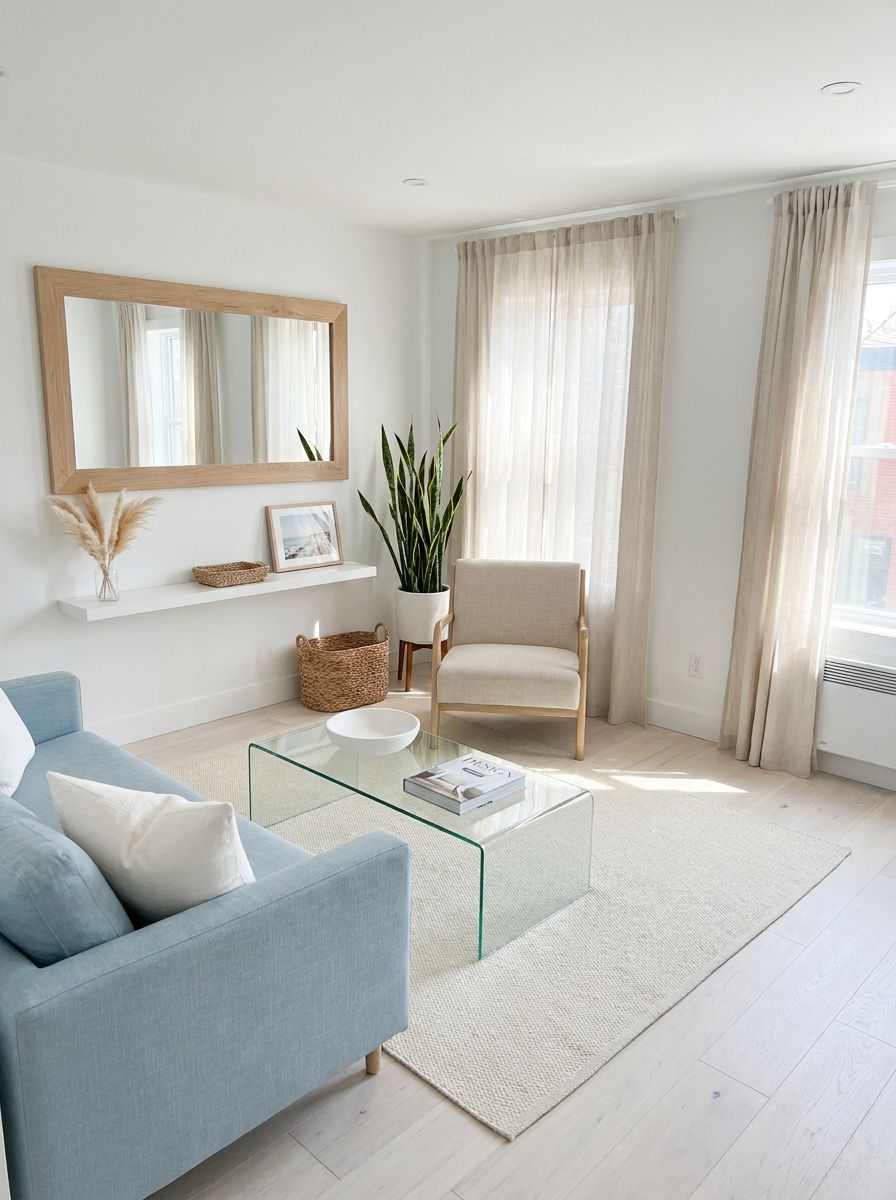
This one’s hard for people. We want to fill every corner, every surface, every bit of wall. But in a small living room? Empty space is your secret weapon.
I used to cram my tiny living room with every cute thing I owned. Then I cleared half of it out and suddenly the room looked twice as big. Negative space—those intentional empty areas—gives your eye a place to rest. It makes the room feel calm and, weirdly, more spacious.
Leave some wall space blank. Don’t put a plant on every surface. Let your coffee table breathe with just one pretty styling moment instead of seventeen. When you’re not fighting for every inch, the room stops feeling cramped and starts feeling curated. It’s the design equivalent of taking a deep breath. Your small space needs room to exist, not just furniture to hold it down.
11. Choose Clear or Glass Furniture Pieces
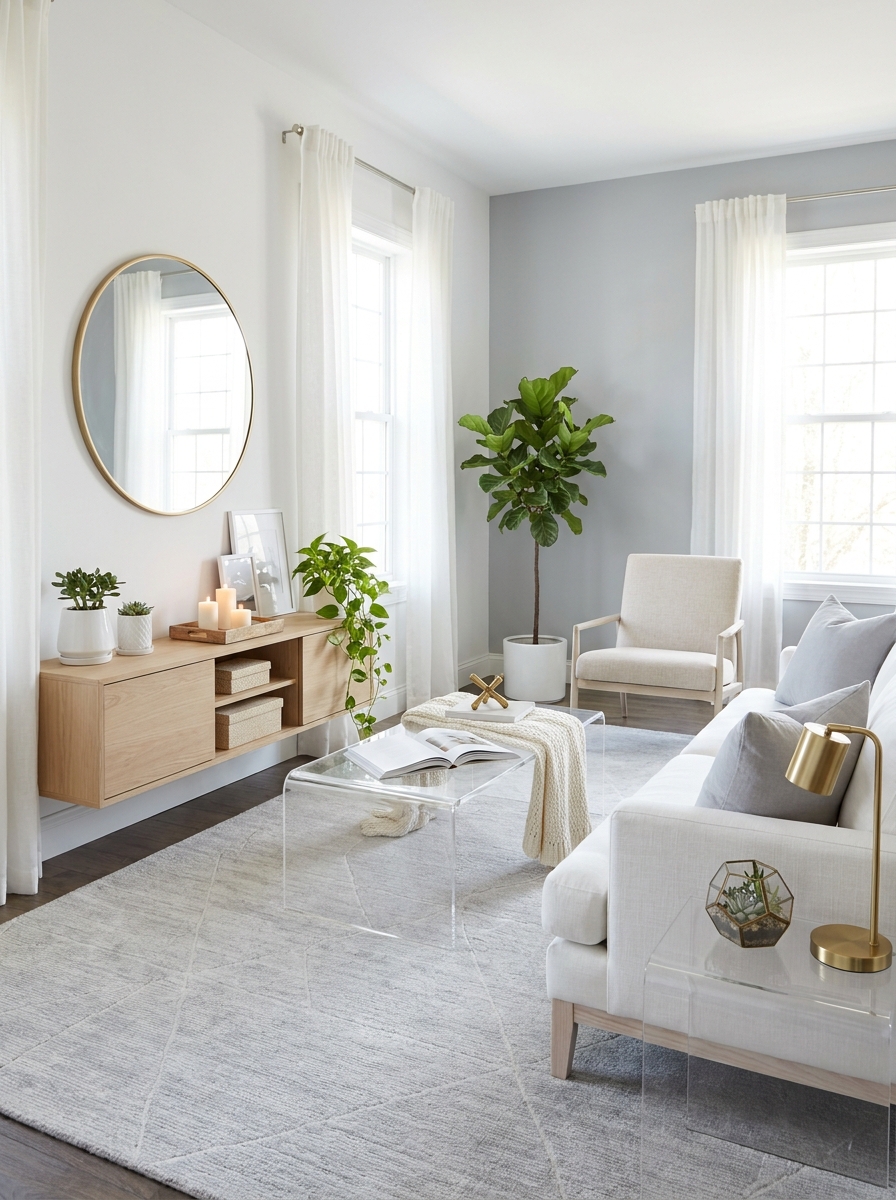
Okay, this tip sounds fancy but it’s actually genius. Clear acrylic or glass furniture basically disappears. Your brain registers it as empty space, even though it’s totally functional.
I swapped my chunky wooden coffee table for a clear acrylic one and the difference was immediate. The room felt so much lighter. You can see straight through to the floor and the rug, which makes the whole space feel continuous and bigger. Same goes for ghost chairs, glass side tables, or even lucite shelving.
The best part? These pieces still give you all the function you need—places to set drinks, extra seating, storage—but they don’t take up visual real estate. It’s like having furniture that works overtime without demanding attention. In a small living room where every piece counts, invisible furniture is honestly the smartest move you can make.
12. Paint or Paper Your Ceiling a Lighter Shade
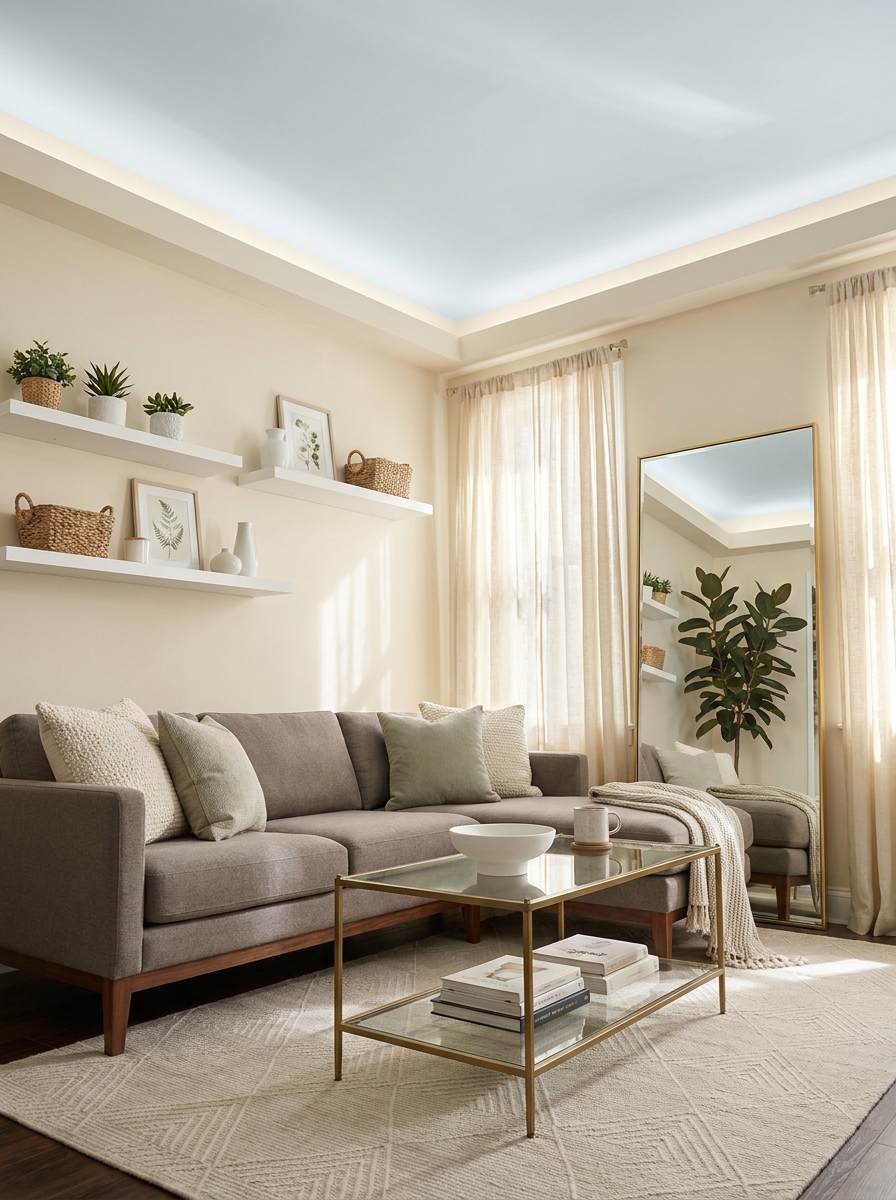
Everyone focuses on wall color, but your ceiling? That’s prime real estate for making your room feel taller and airier. Most people leave it builder-white and call it a day, but you can do better.
Try painting your ceiling a shade or two lighter than your walls. It creates this subtle gradient effect that draws your eye upward and makes the ceiling feel higher than it actually is. Or go bold and paint it a soft sky blue—it tricks your brain into thinking there’s more space above you. I’ve even seen people use subtle wallpaper with a light pattern up there, and it’s gorgeous.
The ceiling is the fifth wall, and in a small living room, you need every surface working to expand the space. A lighter ceiling reflects more light back into the room, brightening everything below it. It’s such a simple change, but the impact is huge.
13. Ditch the Coffee Table for Nesting Tables
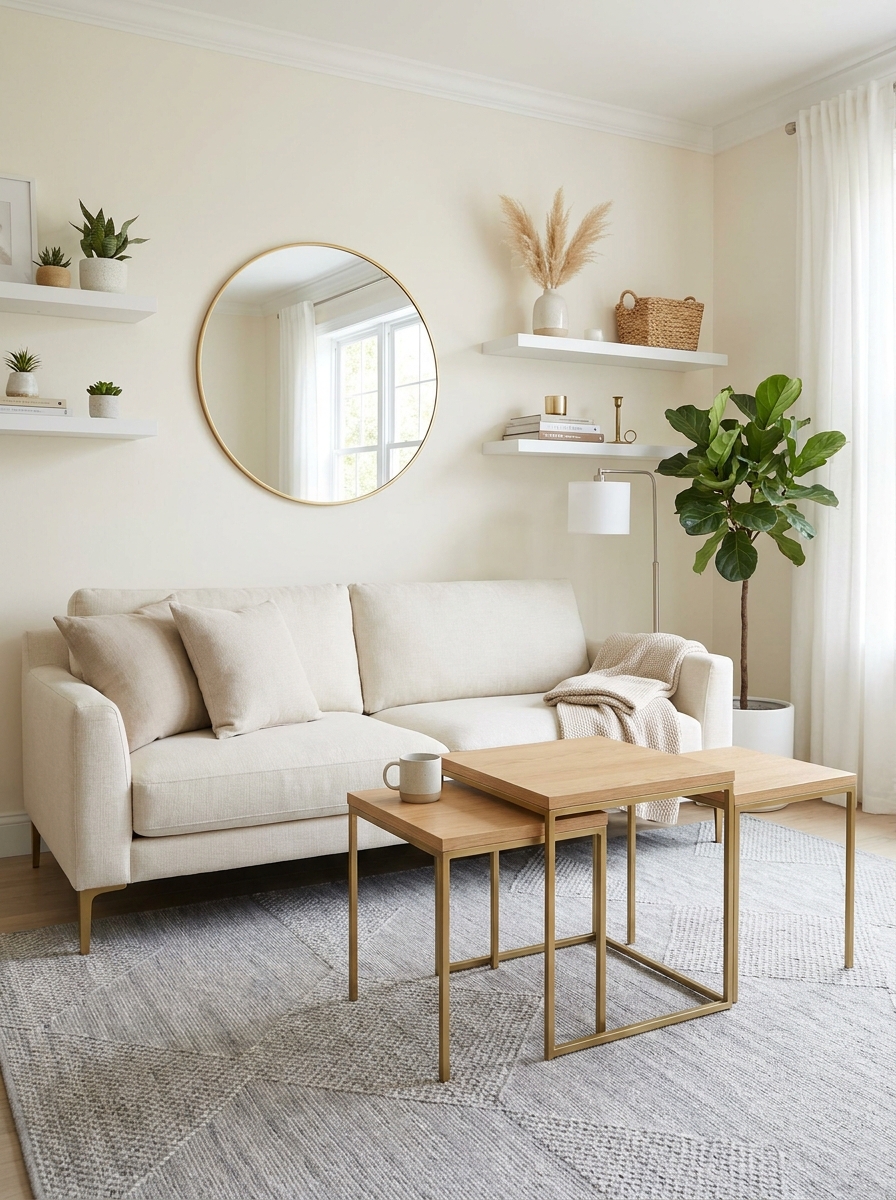
I know, I know. A coffee table feels essential. But hear me out—swapping it for a set of nesting tables is one of those small changes that makes a huge difference.
Nesting tables give you surface space when you need it, but they tuck away when you don’t. That flexibility is gold in a small living room. You can pull one out for your coffee, another for a guest’s drink, then slide them all back together when you want to open up the floor space. Suddenly your room breathes a little easier.
Plus, the visual lightness of smaller tables beats one chunky coffee table any day. Your eye travels across the room more easily instead of getting stuck on a big solid mass in the center. Choose ones with slim legs or even glass tops to keep that airy vibe going. I’ve seen people use them as extra seating surfaces during parties too—so smart! The key is having options without commitment. Your living room shouldn’t feel locked into one layout forever.
14. Mount Your TV Instead of Using a Bulky Console
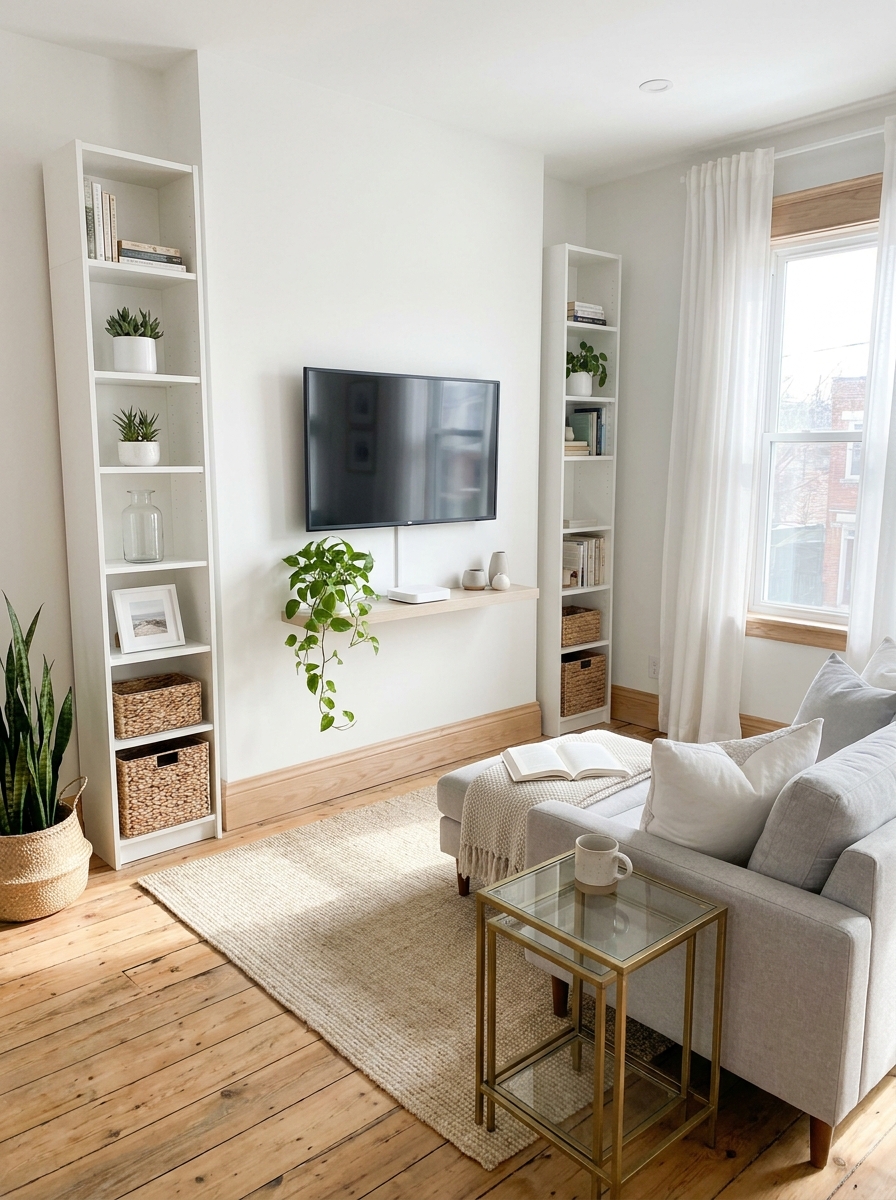
Wall-mounting your TV is probably the easiest square footage you’ll ever reclaim. I’m talking like a whole furniture footprint just—poof—gone.
A traditional TV console can eat up 18 to 24 inches of floor space, which is massive in a small living room. When you mount that TV on the wall instead, you get all that real estate back. You can float your sofa a little further into the room, add a narrow console table behind it, or just enjoy the extra breathing room. The visual impact is immediate—your walls look taller, your room looks longer.
And no, it doesn’t have to look cold or unfinished. You can add a slim floating shelf underneath for your streaming devices and a few pretty objects. Or flank it with tall narrow bookcases for storage that draws the eye up instead of out. The goal isn’t to make your TV disappear—it’s to make sure it’s not stealing precious floor space that could make your whole room feel bigger.
15. Use Low-Profile Furniture to Emphasize Ceiling Height
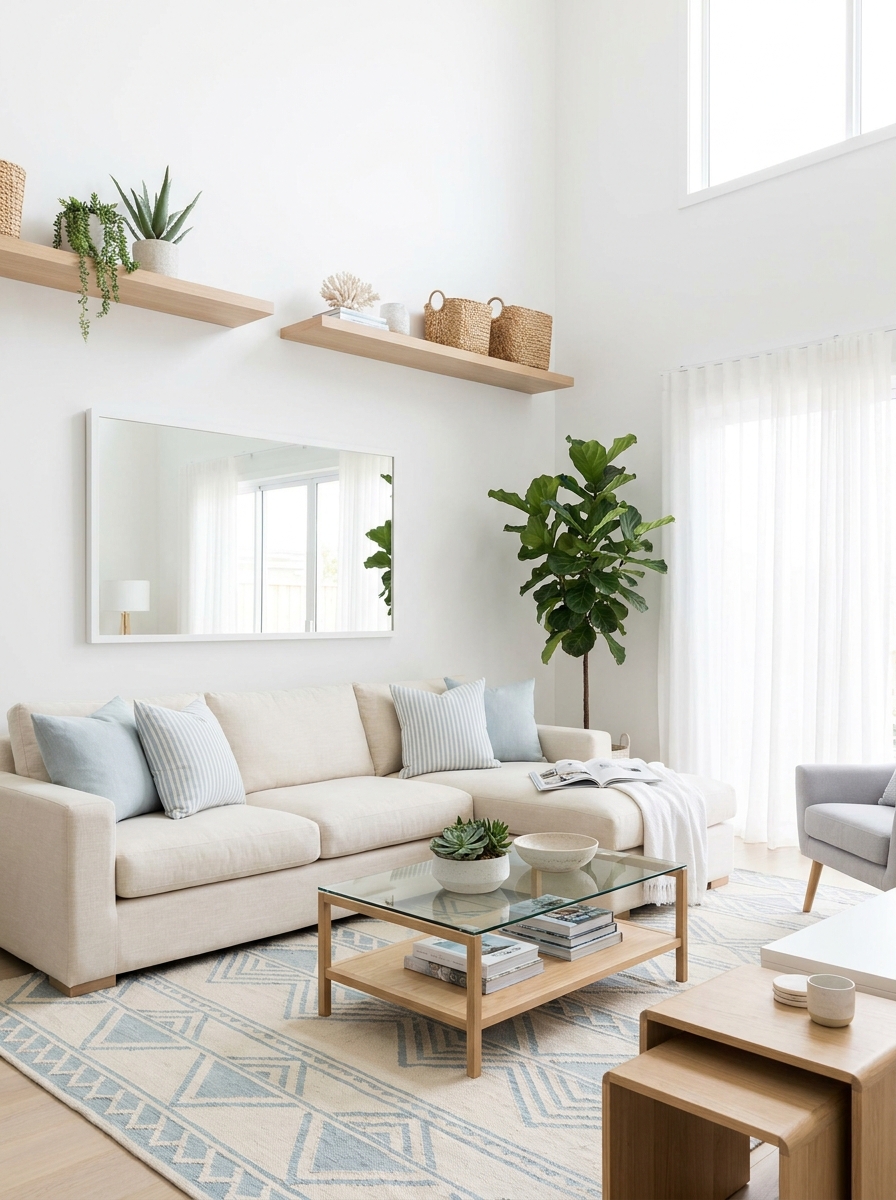
This one’s a total game-changer: go low. Lower furniture automatically makes your ceilings look higher, which tricks your brain into thinking the whole room is bigger.
I’m talking about low-slung sofas, armchairs with shorter backs, and coffee tables that sit closer to the ground. When you lower your furniture’s visual weight, you create more wall space above it—and that wall space reads as volume. Your room suddenly feels taller and airier even though literally nothing about the actual dimensions changed. It’s pure visual magic.
The Japanese have been doing this forever with low platform beds and floor cushions, and there’s a reason it works. Your eye travels up those walls and you feel the height of the room instead of feeling hemmed in by tall furniture. Pair this with those vertical storage tricks we talked about earlier and you’re really emphasizing that up-and-down dimension. Just make sure your low furniture is still comfortable—you’re not going for floor-sitting unless that’s your thing. Modern low-profile pieces are totally supportive and stylish.
Quick Guide
## Quick Guide: Small Living Room Color Palette Cheat Sheet
Not sure which light colors work best together? Here’s a simple breakdown:
**Warm & Cozy Neutral Palette:**
Walls: Warm white or cream | Furniture: Beige, oatmeal, soft taupe | Accents: Terracotta, rust, warm wood tones
**Cool & Airy Scandinavian Palette:**
Walls: Soft white or pale gray | Furniture: Light gray, white, pale blue | Accents: Black metal, greenery, natural wood
**Coastal Calm Palette:**
Walls: Crisp white or pale seafoam | Furniture: White, light driftwood tones | Accents: Soft blues, sandy beige, woven textures
**Modern Minimalist Palette:**
Walls: True white or off-white | Furniture: White, light oak, pale concrete gray | Accents: Matte black, greenery, one bold art piece
Pick one and stick with it throughout your space for maximum cohesion and openness.
Your Small Space Has Serious Potential
Here’s the truth: you don’t need to knock down walls or move to a bigger place to make your living room feel spacious and inviting. Sometimes it’s just about working smarter with what you’ve got. Light colors that reflect instead of absorb. Mirrors that double your natural light. Furniture that doesn’t hug the floor. Vertical lines that draw your eye up instead of across.
These aren’t designer secrets or expensive renovations—they’re just smart, intentional choices that add up to a room that feels completely different. And honestly? Small spaces have a coziness that bigger rooms sometimes lack. You just need to make sure they feel cozy, not cramped.
So take a look around your living room with fresh eyes. What’s making it feel tight? What could you swap, shift, or simplify? Start with one or two of these ideas and see how it feels. I promise, you’ll notice the difference faster than you think. Your small living room isn’t a limitation—it’s just waiting for a little smart styling.
Frequently Asked Questions
What colors make a small living room look bigger?
Light, neutral colors like soft white, warm cream, pale gray, and light beige make small living rooms feel more spacious because they reflect natural light instead of absorbing it. These colors help walls visually recede, creating the illusion of more square footage. Avoid dark or bold wall colors in truly tiny spaces—they tend to close in on you.
How do you arrange furniture in a very small living room?
Choose furniture with exposed legs to create visual flow underneath, and opt for pieces that are appropriately scaled—nothing oversized or bulky. Float your sofa away from the wall if possible to create depth, and use multi-functional pieces like ottomans with storage. Keep pathways clear and avoid pushing all furniture against the walls, which can actually make the room feel smaller.
Do mirrors really make a room look bigger?
Yes, absolutely. Mirrors reflect light and create the illusion of depth, especially when placed opposite windows or light sources. A large statement mirror works better than several small ones because it creates one expansive reflective surface. The key is strategic placement—across from natural light sources gives you the best space-enhancing effect.
What type of furniture is best for small living rooms?
Look for furniture with visible legs (at least 4-6 inches high), slim profiles, and multi-functional features like storage ottomans or nesting tables. Glass or acrylic pieces are great because they take up physical space without blocking sightlines. Avoid bulky, oversized sectionals or furniture that sits flat on the floor—they make the room feel heavier and more cramped.
How can I make my apartment living room feel less cramped without renovating?
Focus on light colors, strategic lighting, and smart furniture choices. Paint walls in soft neutrals, add a large mirror to reflect light, choose furniture with legs, and utilize vertical storage to draw the eye upward. Declutter surfaces and keep window treatments light and sheer to maximize natural light. These changes require zero construction but make a dramatic visual difference.