20 Gorgeous TV Decor Ideas to Transform Your Space
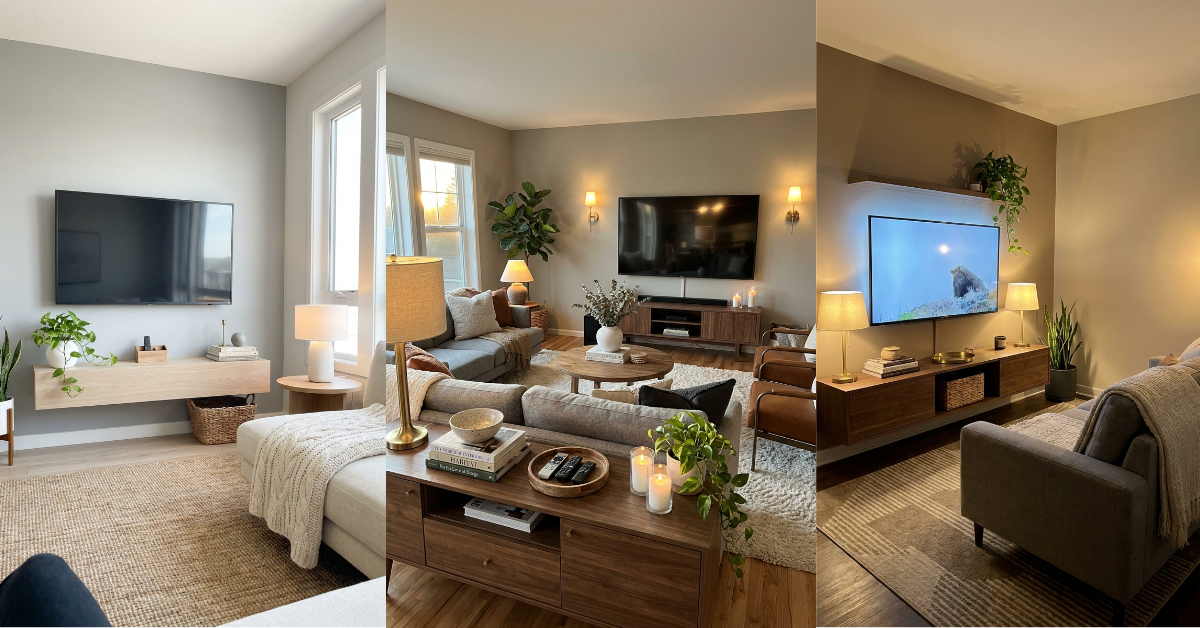
You’ve got a beautiful living room vision. Then there’s the TV. That big black rectangle just sitting there, throwing off your whole vibe. I get it. You want a space that feels curated and cozy, not like a sports bar or a college dorm. But here’s the thing — your TV doesn’t have to be the enemy of good design. With a few smart moves, you can make it work with your aesthetic instead of against it. Whether you’re dealing with a wall-mounted screen or a chunky console situation, there are so many ways to style around it that feel fresh and intentional. From gallery walls that trick the eye to floating shelves that add balance, these 20 ideas will help you create a living room that’s both gorgeous and totally functional. Let’s get into it.
1. Float Your Console for an Airy Modern Look
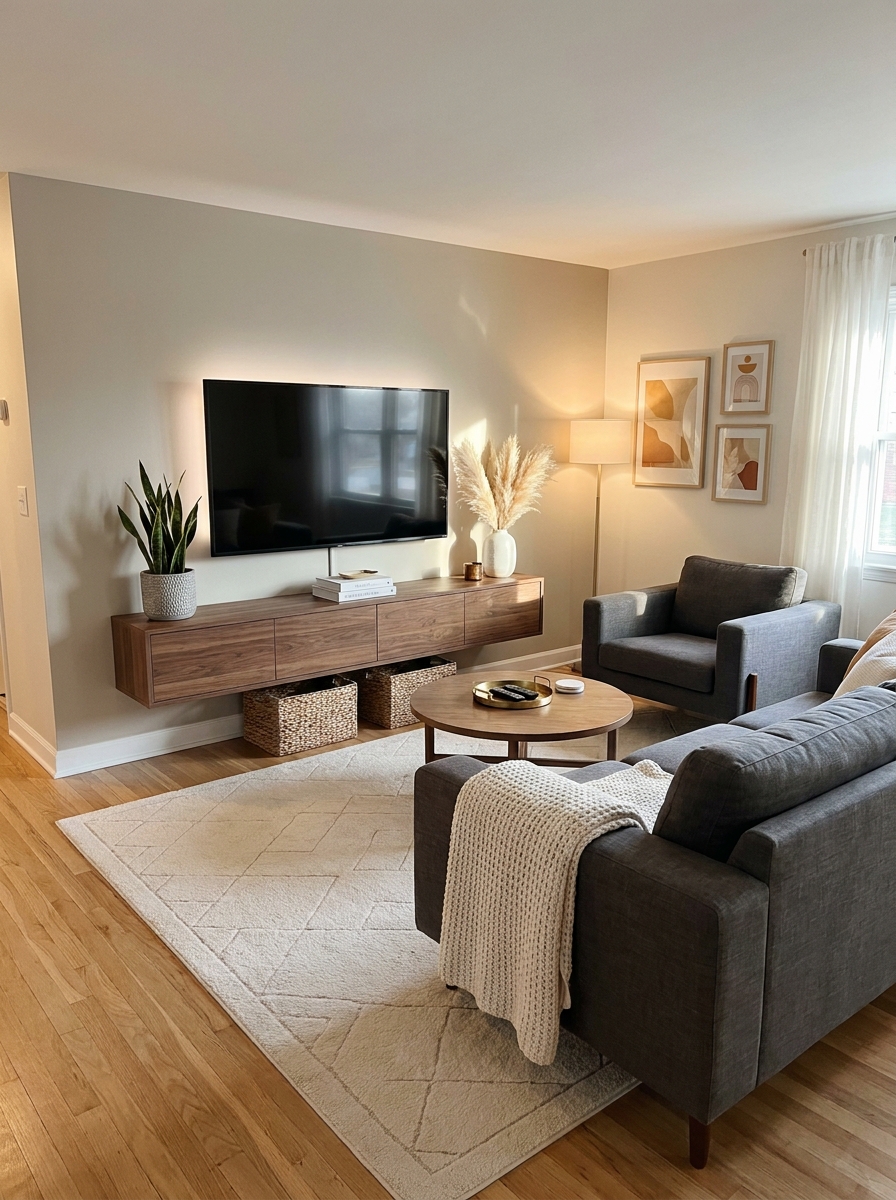
Mounting your media console to the wall instead of letting it sit on the floor changes everything. It instantly makes your space feel lighter and more contemporary. Plus, you get that bonus storage underneath for baskets or a low-profile sound bar.
This trick works especially well in smaller living rooms where every inch of visual space counts. The floating effect draws the eye upward and makes your ceiling feel higher. And let’s be honest, it’s way easier to vacuum under a floating console than around chunky furniture legs.
Choose a console in a warm wood tone to soften the sleek vibe, or go all-in with glossy white lacquer for a truly modern moment. Just make sure it’s anchored properly into studs. The last thing you want is your beautiful setup crashing down during movie night. Style the surface with a few carefully chosen objects — maybe a sculptural vase, a small plant, and a pretty box for remotes.
2. Create a Gallery Wall That Includes Your TV
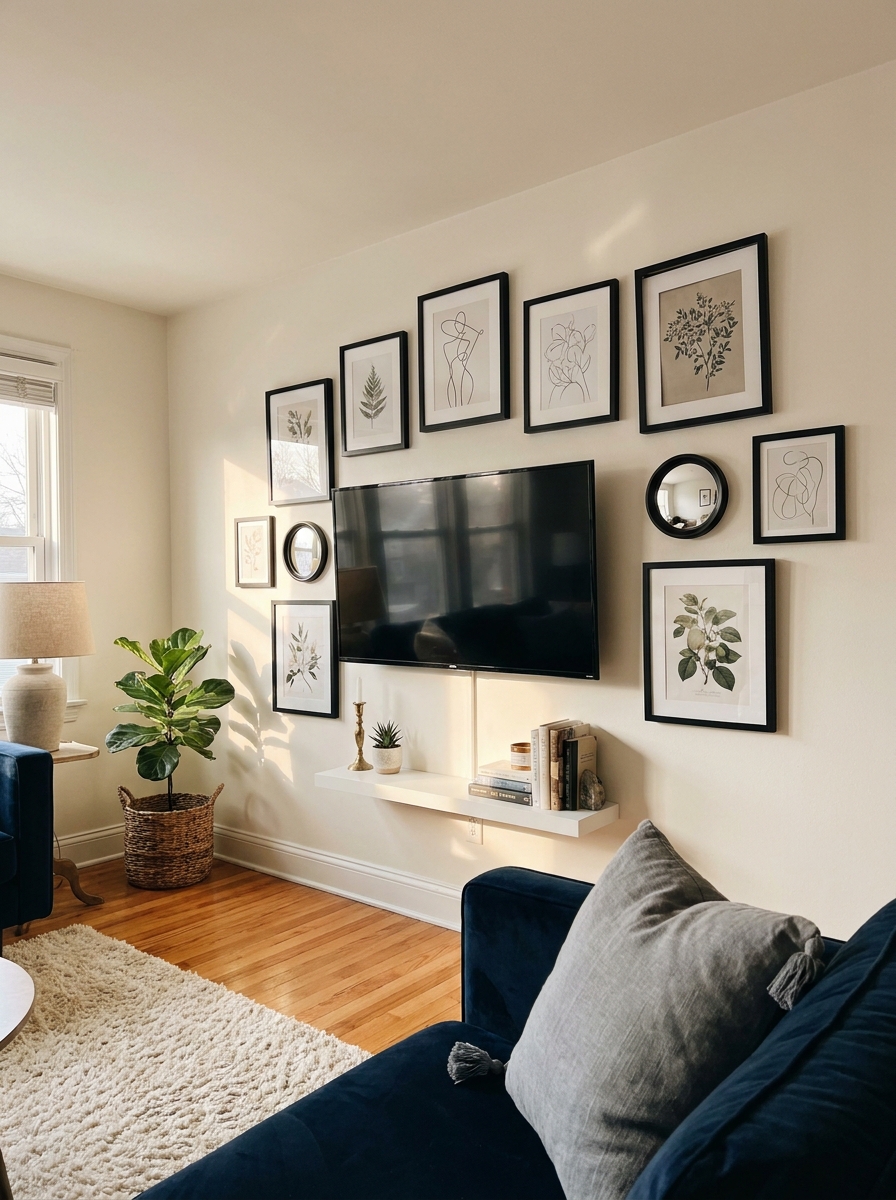
Stop trying to hide your TV. Instead, make it part of the art moment. A gallery wall that incorporates your screen as one of the frames is such a smart design move. It takes that black rectangle and turns it into an intentional focal point.
The key is treating your TV like the largest piece in your gallery arrangement. Build around it with frames of varying sizes, keeping everything balanced but not too matchy. Mix in some art prints, family photos, maybe a small mirror or two. The result? Your TV practically disappears into the design when it’s off, and when it’s on, it just feels like part of the whole composition.
Go for a cohesive frame color — black, white, or natural wood all work beautifully. And don’t stress about perfection. A slightly organic, collected-over-time vibe always feels more personal than something that looks like it came straight from a catalog. Leave a few inches of breathing room around the TV so it doesn’t feel cramped.
3. Balance with Symmetrical Styling on Either Side
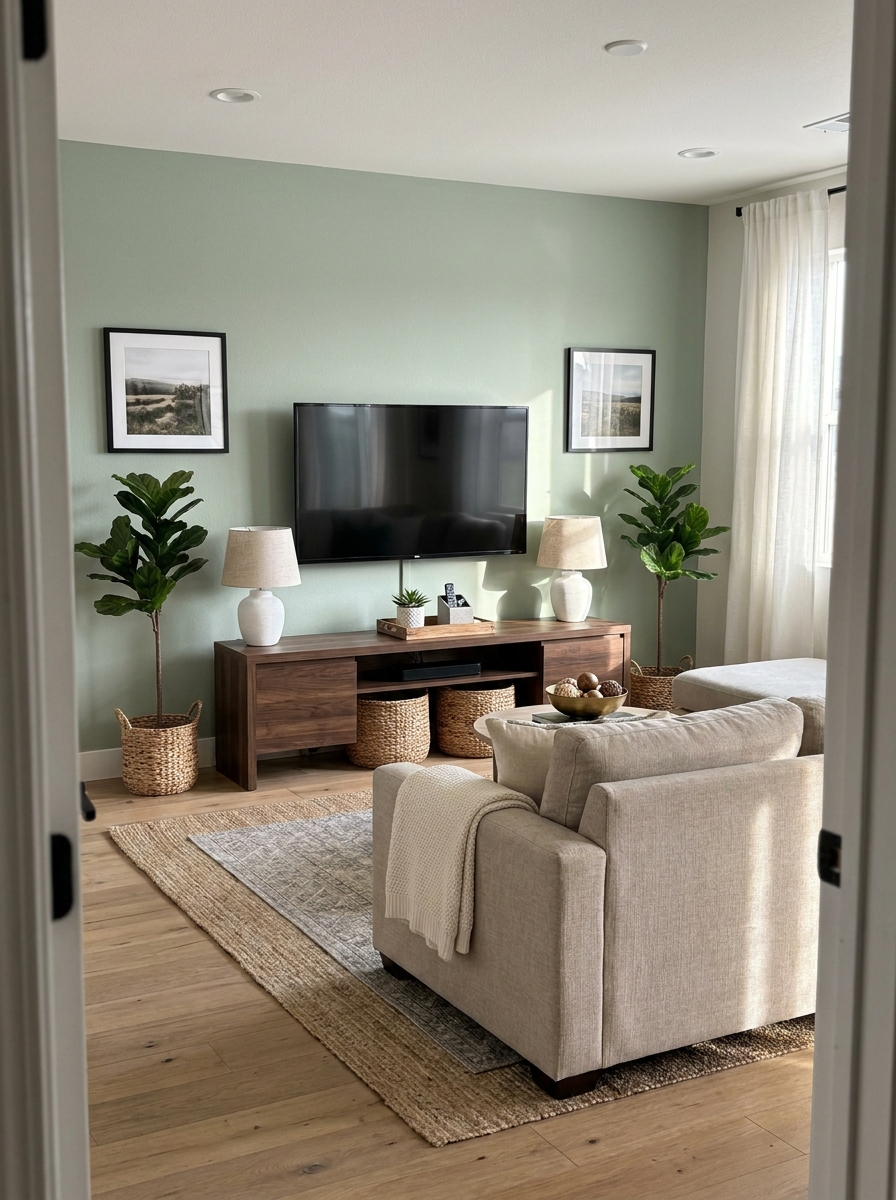
Our brains love symmetry. It feels calm and pulled-together without trying too hard. Flanking your TV with matching elements on both sides creates instant visual harmony. Think tall plants, matching table lamps, or even a pair of narrow bookcases.
This approach works especially well if your TV sits on a console rather than being wall-mounted. The symmetry grounds everything and makes the whole setup feel intentional. You’re basically creating a frame within a frame, and it’s so pleasing to look at.
You don’t need identical objects, but they should feel balanced in height and visual weight. Maybe a tall snake plant on one side and a stack of books with a table lamp on the other. Or two identical fiddle leaf figs if you really want that classic look. The repetition creates rhythm, and suddenly your TV isn’t just sitting there — it’s part of a whole designed moment.
4. Layer Textures Around Your Media Console
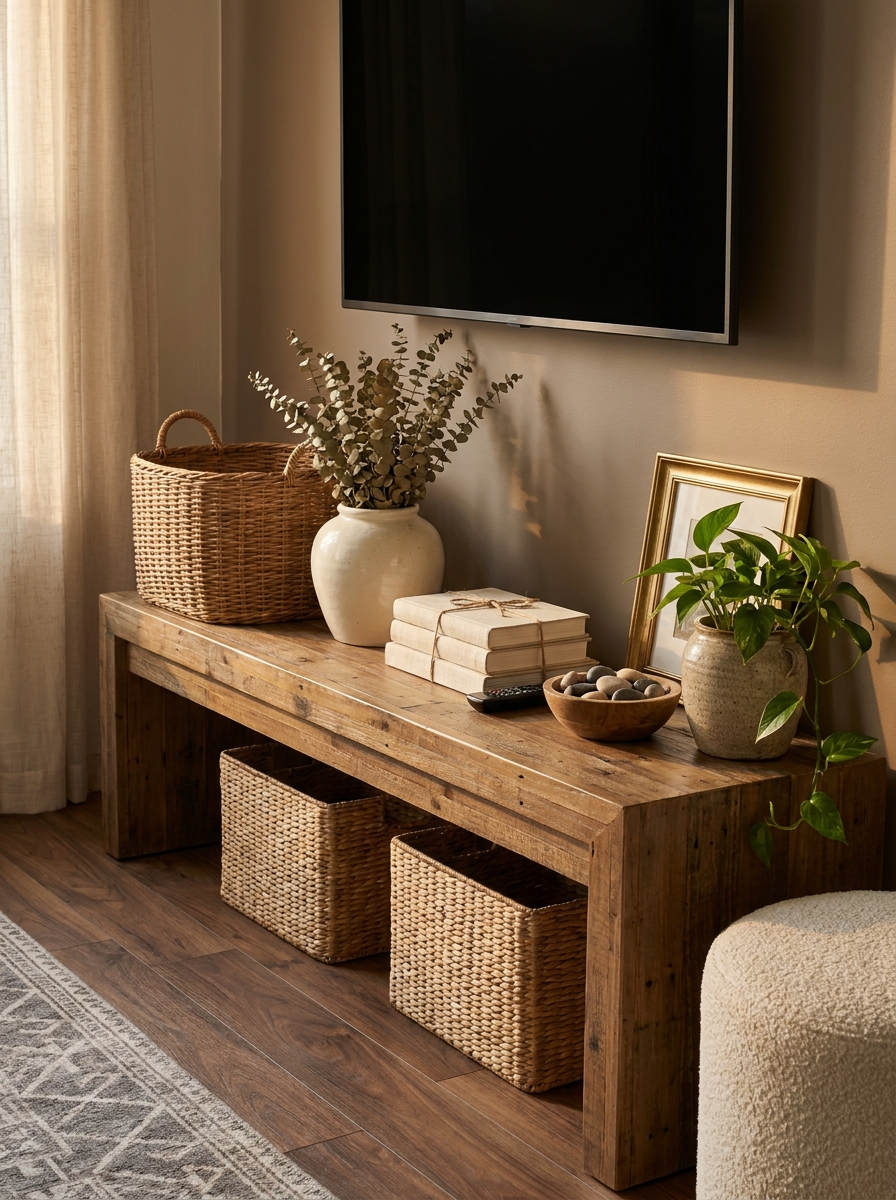
Texture is the secret weapon that makes a room feel expensive and thoughtfully designed. When you’re styling around a TV, layering different materials softens all that tech and brings warmth into the space. Think woven baskets, a chunky knit throw, smooth ceramic vases, and maybe some rough-hewn wood.
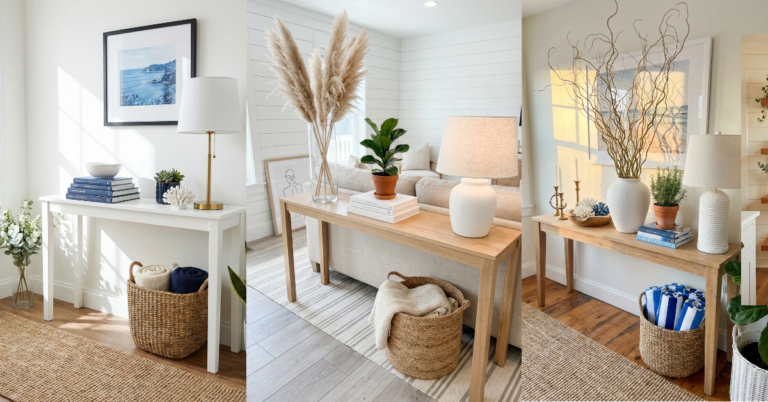
Start with your console itself — is it smooth lacquer, natural wood, or maybe rattan? Build from there. Add a ceramic vase with dried grasses, a wooden tray, some linen-bound books. Each material catches light differently and adds depth to what could otherwise feel flat and boring.
The TV and all its cords and gadgets are inherently smooth and modern. By bringing in organic, tactile elements around it, you create contrast that feels intentional rather than accidental. Your eye moves around the whole vignette instead of landing hard on the screen. And when you walk into the room, it just feels more inviting and less like a tech showroom.
5. Add Wood Tones to Soften the Black Screen
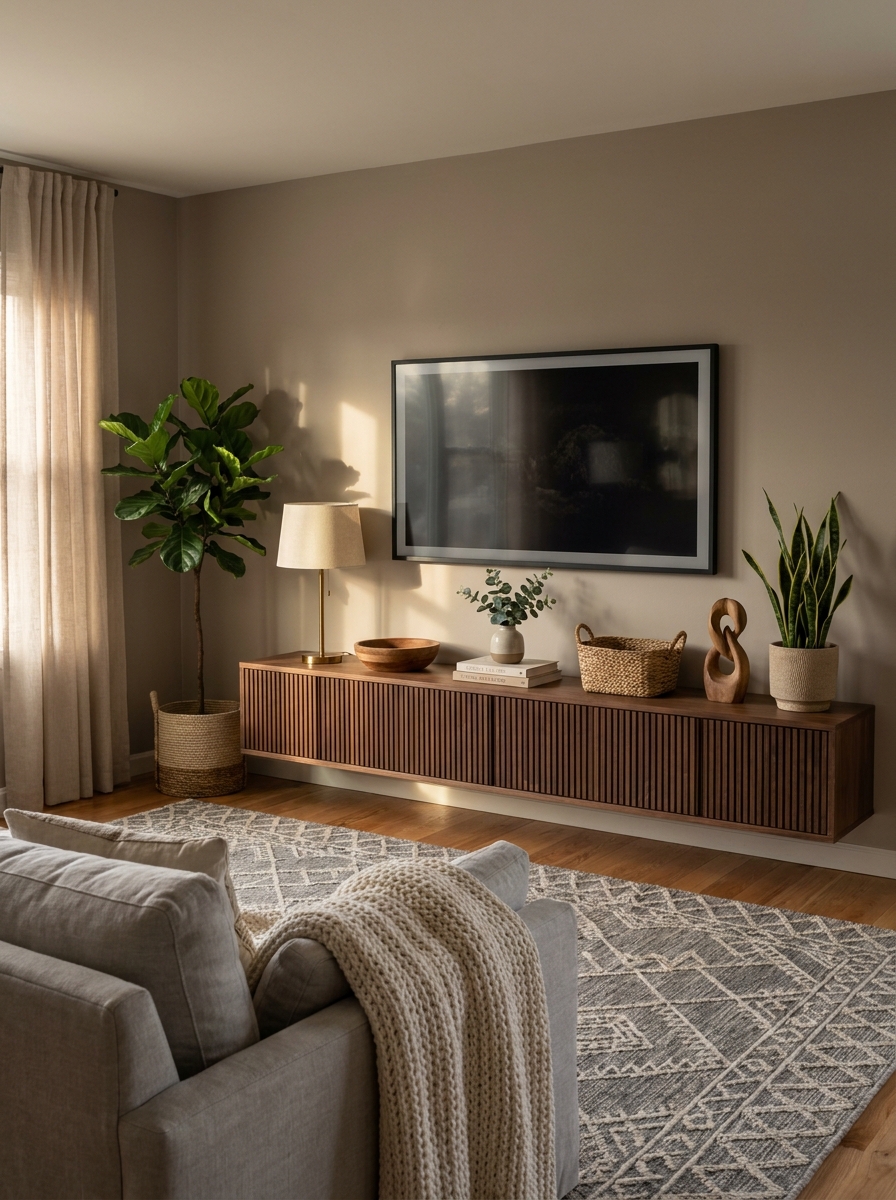
Here’s the thing about TVs — they’re just big black rectangles. But you know what makes them feel less techy and more homey? Wood. Natural wood tones around your TV create this amazing warmth that balances all that sleek black glass.
I’m obsessed with walnut media consoles right now. That rich, warm brown just melts into any color scheme and makes your TV look like it belongs there. Or go lighter with oak or maple if your room leans Scandinavian. Even a simple wooden floating shelf under your wall-mounted TV changes everything.
The wood doesn’t have to stop at your console either. Add a wooden bowl for remotes, a carved figurine, maybe wooden picture frames in your gallery wall. These natural textures create visual bridges between your TV and the rest of your cozy living room. Your eye stops focusing on “big black screen” and starts seeing a thoughtfully styled entertainment wall instead.
6. Mount It High Enough (But Not Too High!)
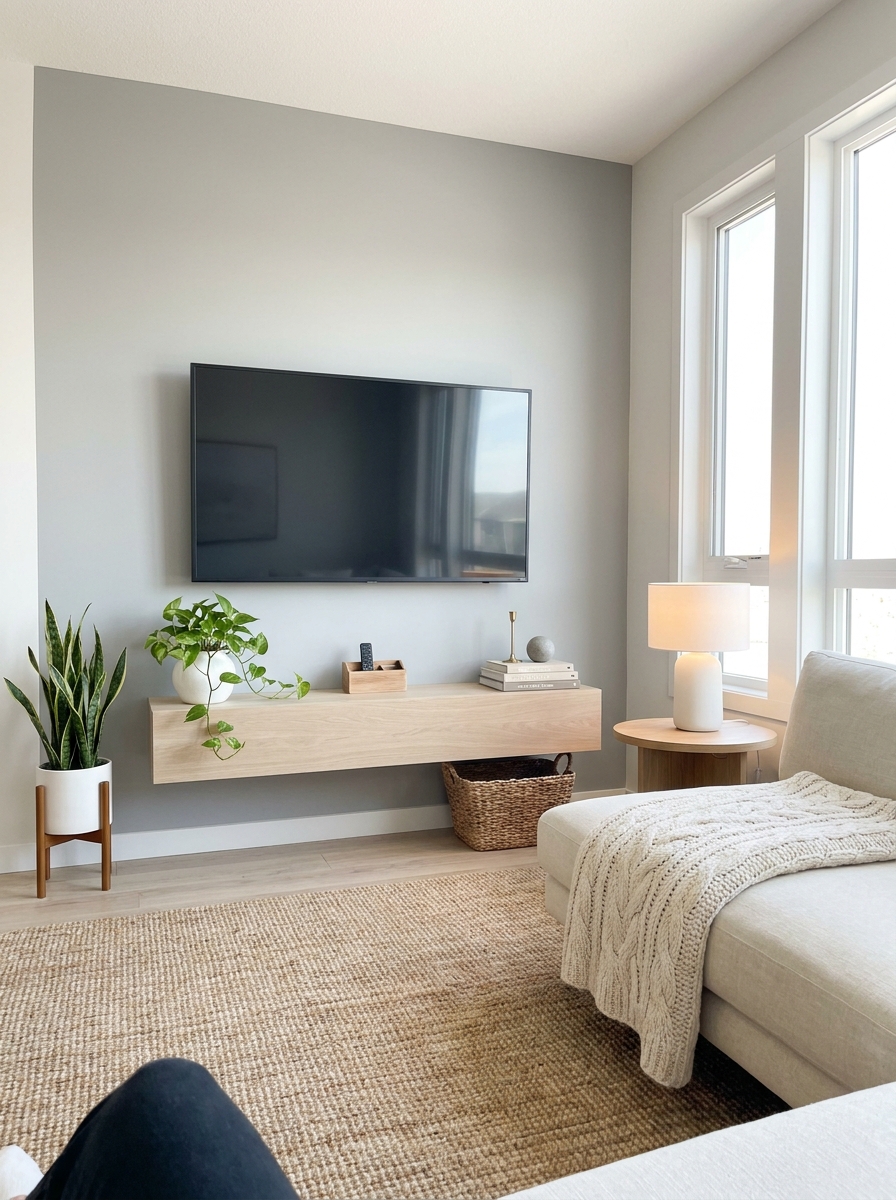
Can we talk about TV height for a second? Because I see this mistake everywhere and it actually hurts my neck just looking at it. Your TV should not be mounted above your fireplace mantel unless you enjoy watching television like you’re in the front row of a movie theater.
The center of your screen should be at eye level when you’re sitting down. That’s it. That’s the magic formula. For most people, that means the center sits about 42 inches from the floor. I know it’s tempting to go higher because it looks dramatic, but trust me — after one movie night, you’ll understand why I’m so passionate about this.
If you’re wall-mounting, use a level and measure from your couch before drilling a single hole. And if your TV is already mounted too high? Tilting mounts can help angle it down toward your seating, which at least saves your neck even if it’s not perfect.
7. Use Your TV as an Anchor for the Whole Room Layout
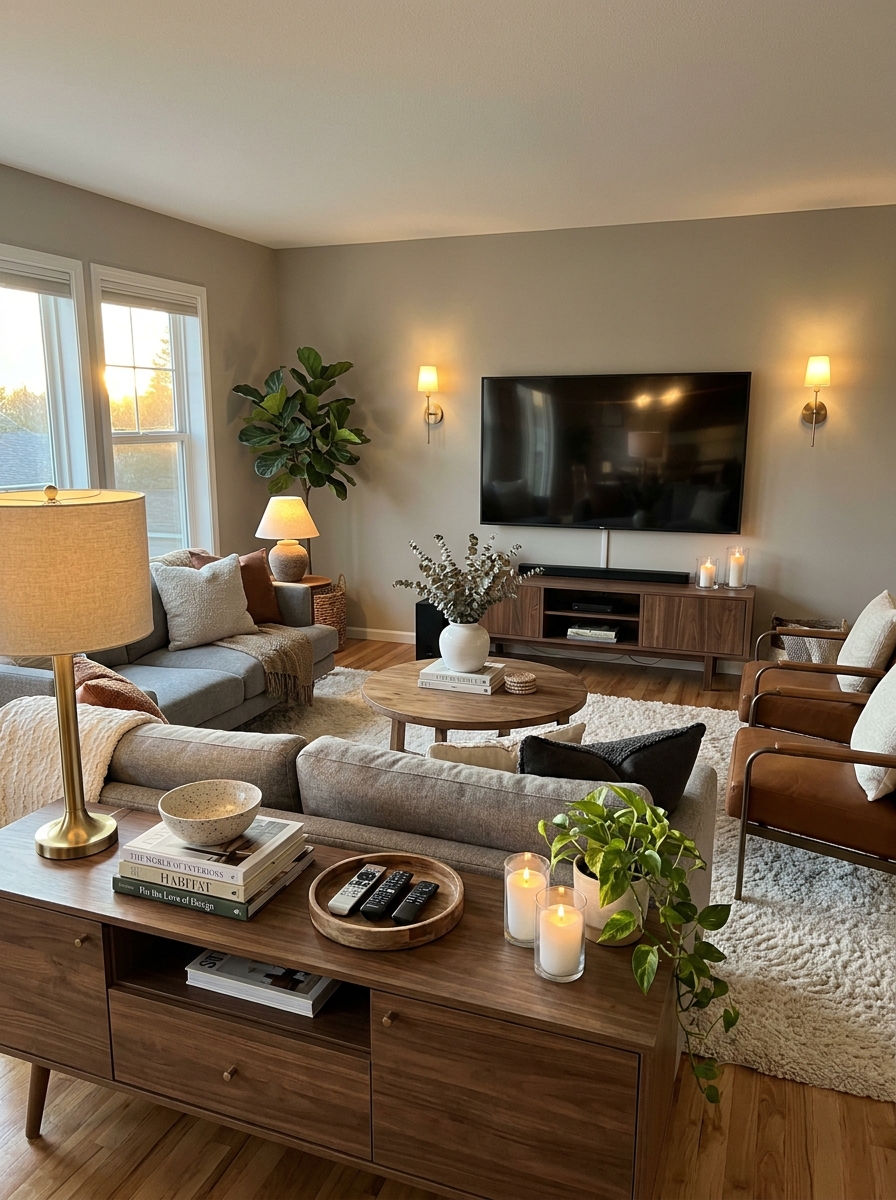
Your TV isn’t just a screen — it’s actually your room’s conversation starter (literally). Everything else should arrange around it. Your sofa, your chairs, your coffee table — they all want to face this focal point because that’s where everyone naturally looks.
Start with your TV wall, then float your sofa directly across from it at a comfortable viewing distance. For a 55-inch TV, that’s about 7 to 9 feet away. Then build from there. Add a pair of accent chairs angled slightly toward both the TV and the sofa to create this cozy conversation zone that works for movie night and book club.
I love adding a console table behind a floating sofa. It grounds the furniture arrangement and gives you bonus styling space that doesn’t compete with your TV wall. The whole layout should feel intentional, like every piece has a purpose beyond just “we needed somewhere to sit.”
8. Hide the Cords (Your Eyes Will Thank You)
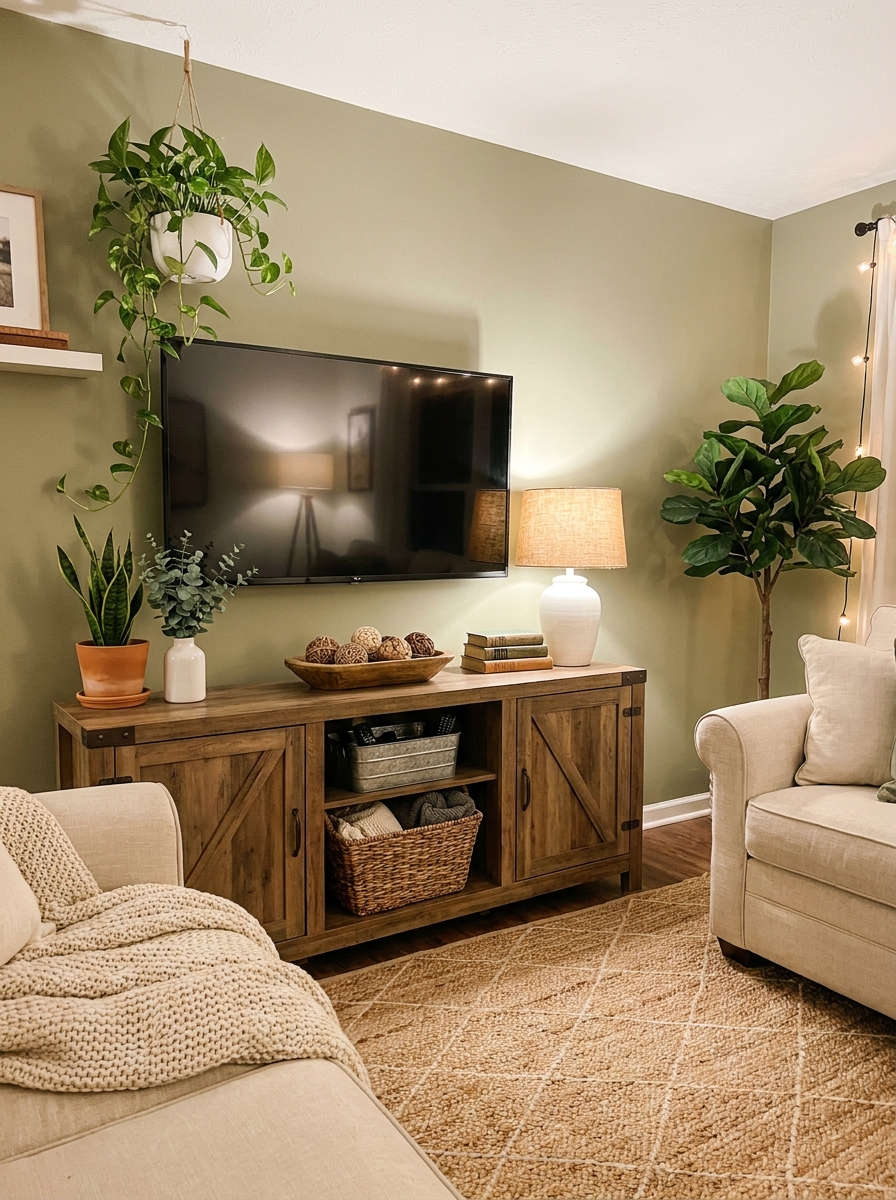
Nothing ruins a beautifully styled TV wall faster than a tangle of black cords snaking down to your outlet. I’m serious — you can have the most gorgeous media console and perfect gallery wall, but those visible cables scream “we gave up.”
If your TV is wall-mounted, invest in an in-wall cable management kit. They’re easier to install than you think (or worth hiring someone for an hour). The cords run through the wall and pop out behind your console where nobody can see them. Game changer.
For TVs sitting on consoles, use the back panel (if it has one) or get clever with cable ties and adhesive clips to route everything down the back legs. Baskets on your console shelves can hide power strips and extra cord length. The goal is making it look effortless, like your TV just magically works without all those annoying wires.
9. Build a Low Console That Grounds the Room
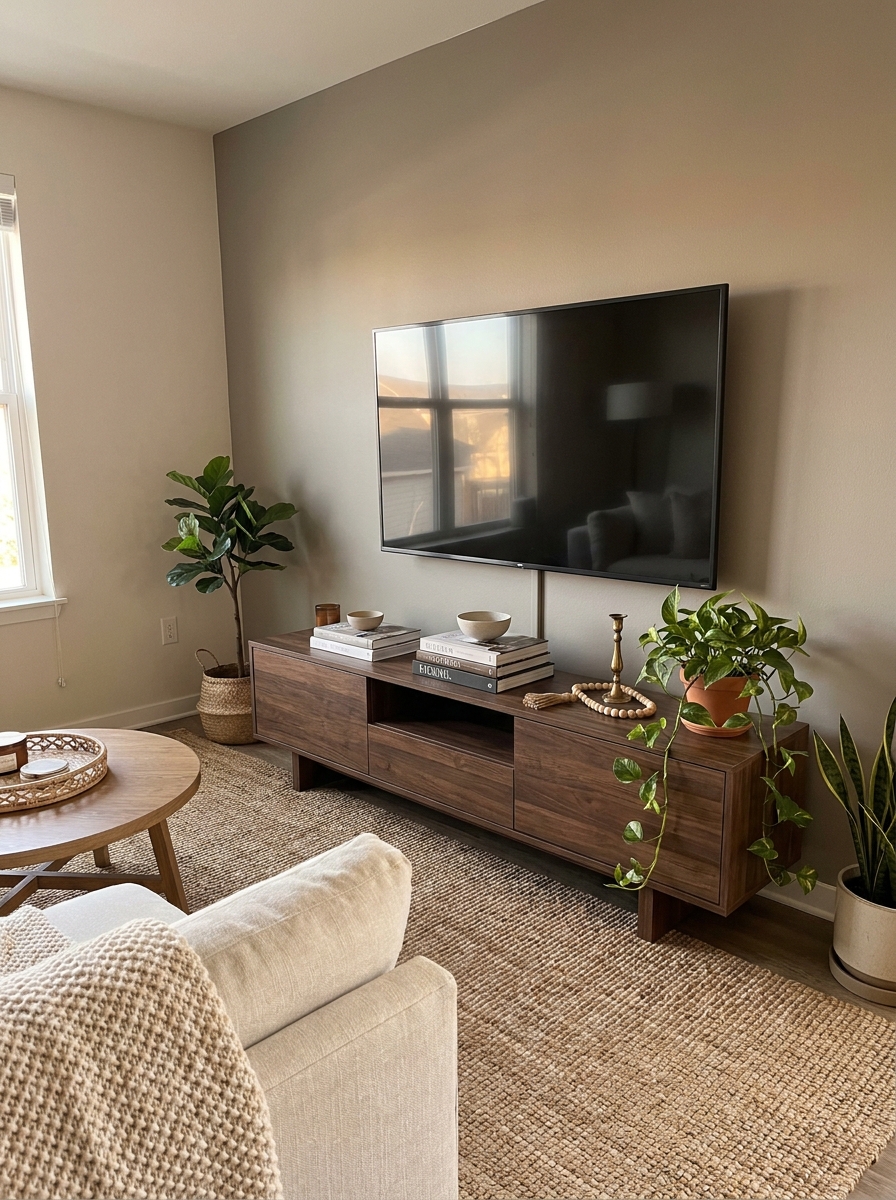
I’m obsessed with low media consoles right now. They make your ceilings feel taller and give your TV this grounded, intentional look instead of that floating-in-space vibe.
A console that sits close to the floor creates this horizontal line that pulls your eye across the room instead of just straight to the screen. It’s calming somehow. Plus you get all that vertical wall space above to style however you want—art, shelves, nothing at all.
I love pairing a low walnut console with a mounted TV that sits just above it, maybe six inches of space between. Then style the surface with books, a sculptural bowl, and a trailing plant that softens the edge. The low profile makes everything feel more relaxed and less “entertainment center” and more “beautiful living room that happens to have a TV.” It’s especially perfect if you have lower ceilings because it doesn’t chop up your wall space.
10. Choose Furniture That Faces the TV (Without Making It Awkward)
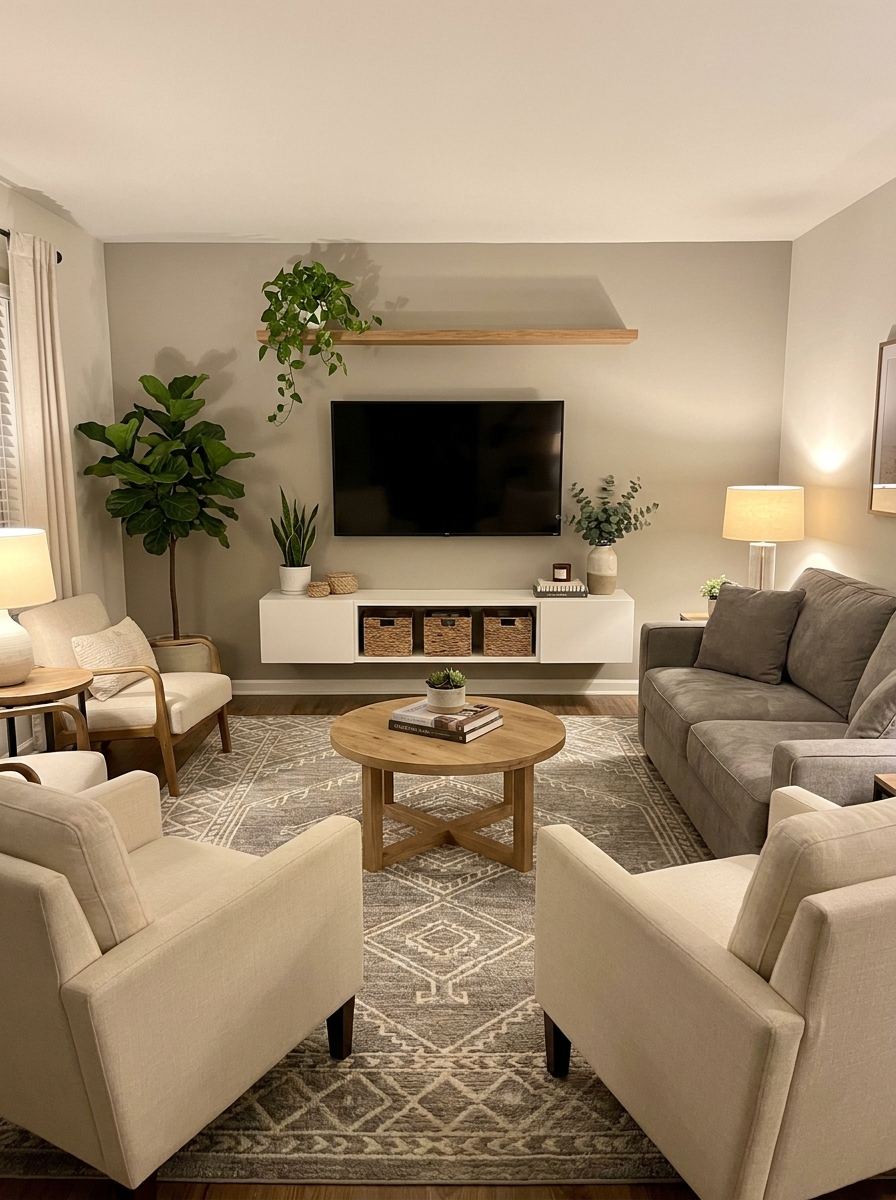
Okay, this is where people get stuck. You want a conversation-friendly layout, but also everyone needs to actually see the screen without craning their necks, right?
I do a slightly angled arrangement. Sofa directly facing the TV, then chairs that angle toward both the sofa AND the screen. It feels way more natural than everything lined up like a movie theater. You can still chat during commercials, but nobody’s twisting around when the show’s on.
The key is leaving that center space open. Coffee table in the middle, clear sightlines, nothing blocking the view. If your room’s small, skip the bulky recliner and go with a sleek armchair or even a cute pouf you can move around. You want it to feel like a gathering space that works whether the TV’s on or off. Both purposes, one beautiful room.
11. Add a Pop of Color to Compete with That Black Screen
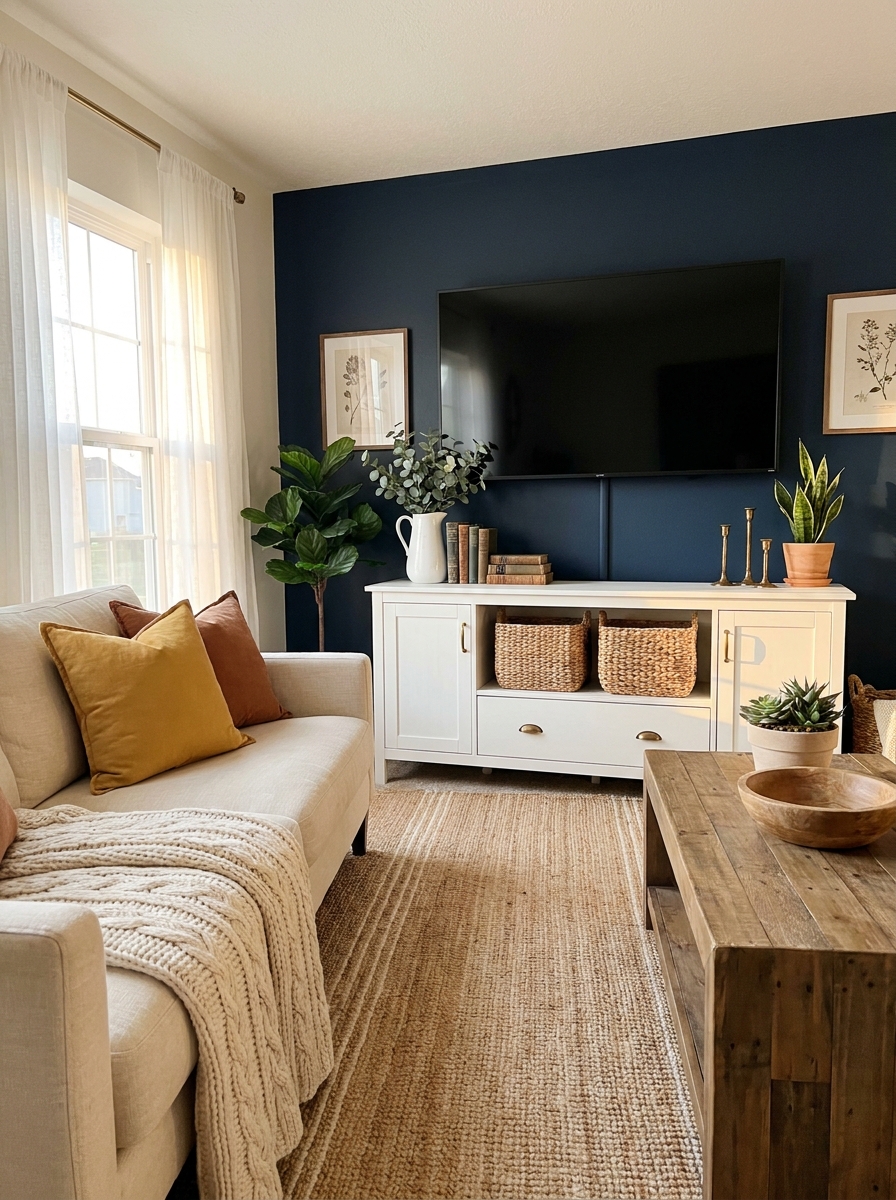
Here’s something nobody talks about: that big black rectangle can suck all the personality out of a room if you’re not careful. It just sits there, flat and dark, making everything else feel blah.
So give it some competition! I’m not saying go wild, but a navy accent wall behind the TV or a sage green console makes such a difference. Suddenly the TV is part of a bigger colorful moment instead of the only thing you see.
Or keep the walls neutral and bring in color through pillows, throws, and art around the TV. A terracotta vase on the console, a mustard throw on the sofa, some greenery that pops. The black screen becomes just one element in a room full of good stuff instead of the dark void that dominates everything. Your eyes need somewhere else pretty to land, you know?
12. Style the Coffee Table to Balance the TV’s Visual Weight
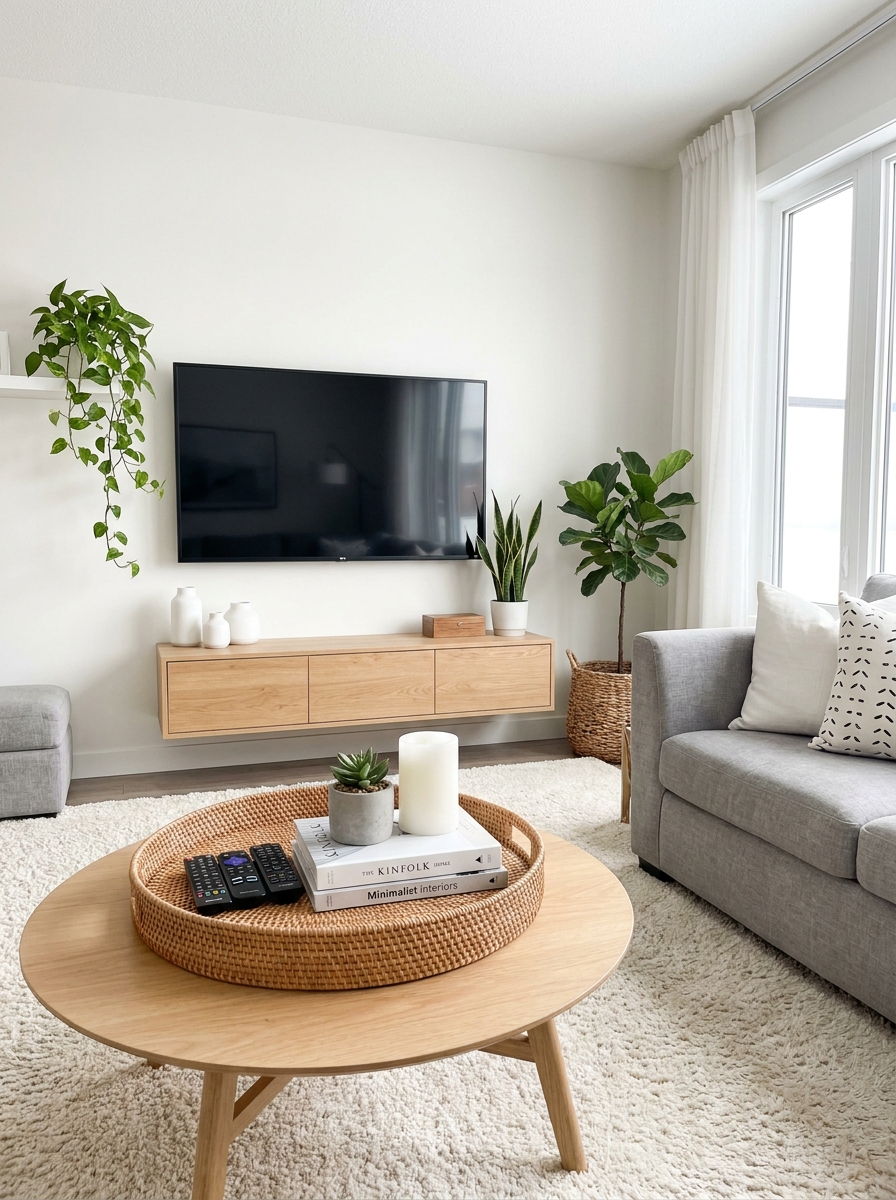
Your TV is probably the heaviest visual thing in the room, right? It’s big, it’s dark, it commands attention. If you don’t balance that weight, the whole room feels top-heavy and weird.
This is where your coffee table comes in. Style it with intention—a pretty tray, some books, a plant, maybe a candle. You want enough visual interest down at coffee table level that your eye travels around the room instead of just sticking on that screen. It creates balance.
I like using a wooden or stone coffee table that has some presence. Not flimsy, you know? Then layer it with a woven tray holding your remotes (keep them pretty!), a small potted plant, and a couple of books. It gives your eye a reason to wander down from the TV and creates this nice flow through the whole space. The room feels complete instead of dominated by one big screen.
13. Add Lighting That Competes with Screen Glow
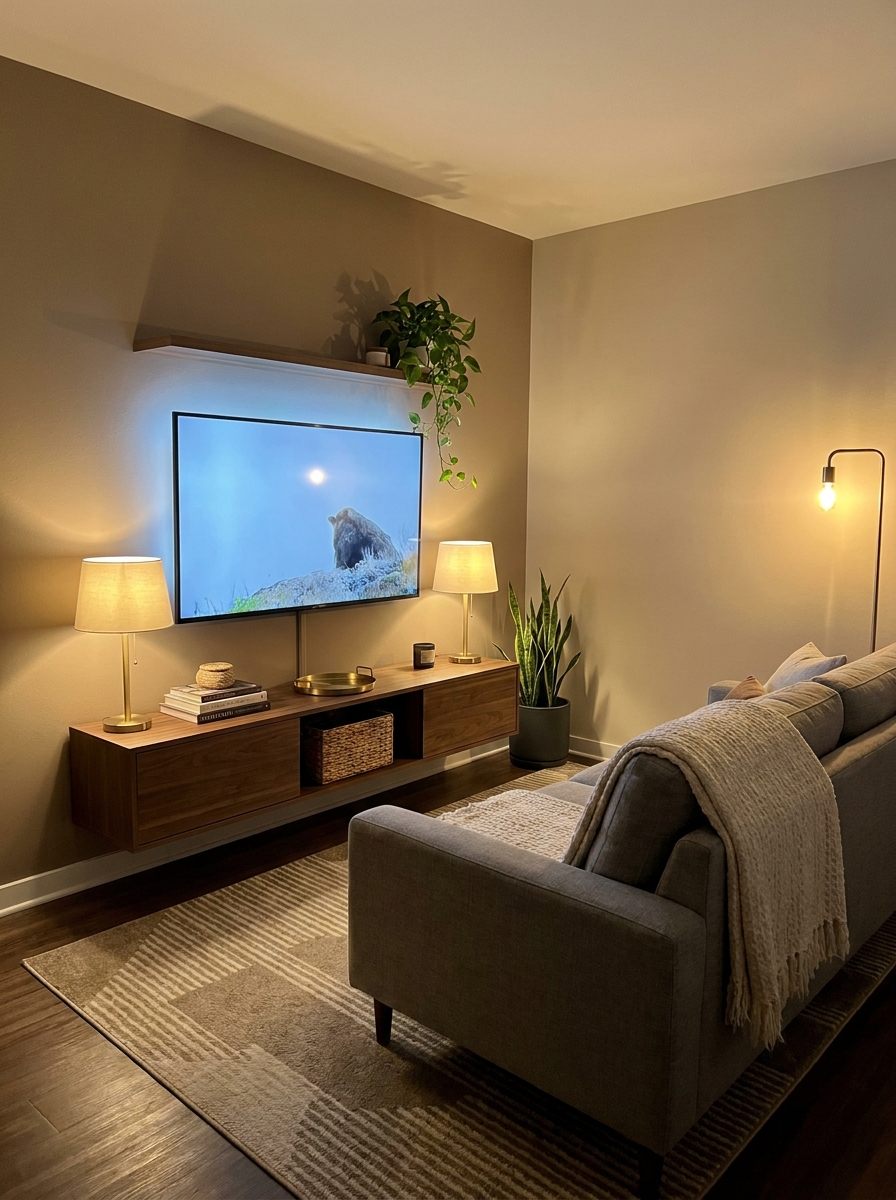
Your TV emits this cool blue light that can make the whole room feel like a cave at night. The fix? Layer in warm lighting that gives the screen some competition.
I’m talking table lamps on either side of your console, a floor lamp behind your sofa, maybe even some LED strips behind the TV itself (yes, really!). When you create multiple light sources around the room, that glowing screen becomes just one element instead of the only light source. Your space feels balanced and intentional, not like you’re sitting in a dark theater.
The key is warm bulbs. I use 2700K everywhere because it creates this cozy glow that softens everything. Turn on your lamps before you flip on the TV, and suddenly you’ve got atmosphere. It’s the difference between watching a show and actually enjoying your evening in a room that feels good.
14. Frame Your TV with Tall Elements for Visual Balance
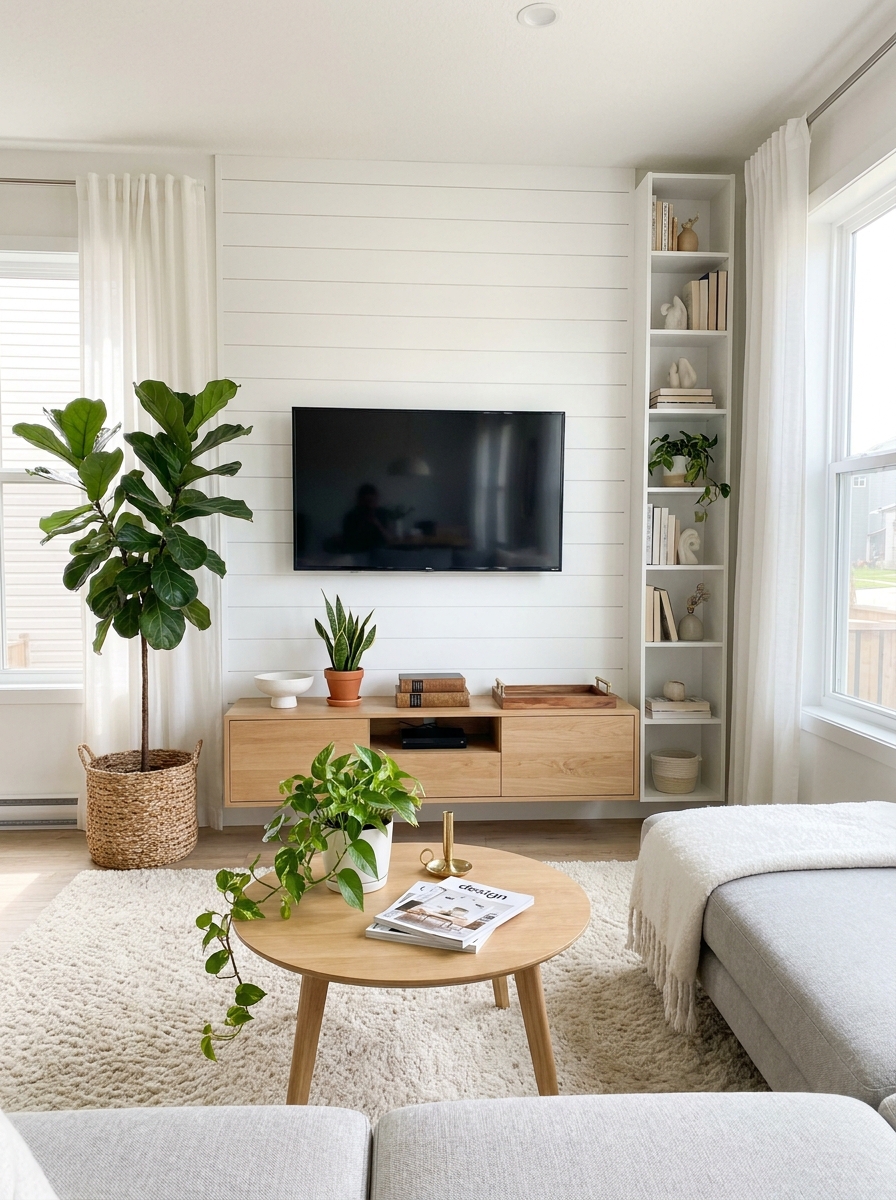
Here’s something I learned the hard way: a TV floating alone on a big wall looks awkward. It’s like it’s just… hanging there with nowhere to go.
The trick is flanking it with tall elements that give it context. I’m talking floor plants, tall bookcases, or even vertical art pieces. When you create height on either side of your TV, it suddenly looks like it belongs there. The screen becomes the center of an intentional composition instead of a black rectangle somebody stuck on the wall.
I especially love using tall plants for this. A fiddle leaf fig on one side and a bird of paradise on the other? Chef’s kiss. Or try tall narrow shelves filled with books and pretty objects. The vertical lines draw your eye up and make the whole wall feel purposeful and designed, not just “place where TV lives.”
15. Don’t Let Your Console Float in Empty Space
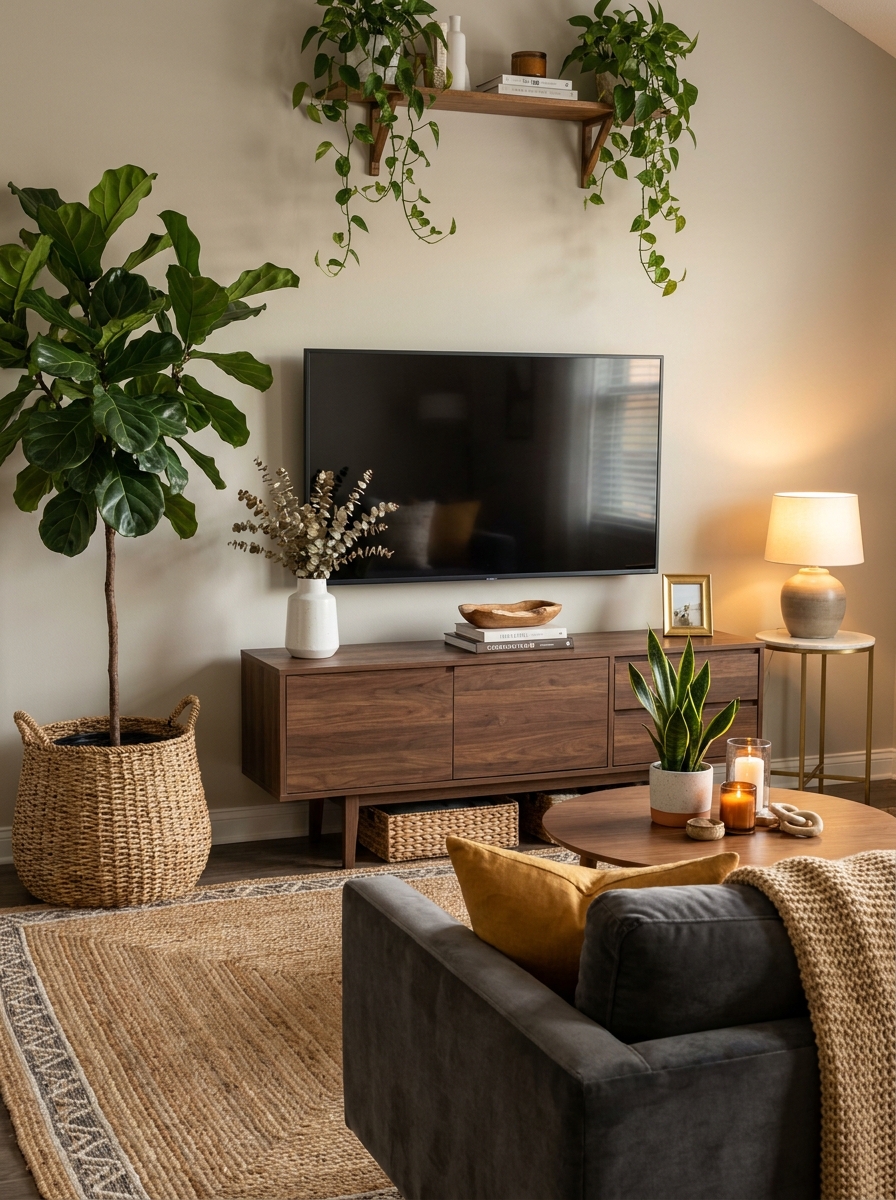
I see this all the time: a beautiful TV console just sitting there with a mile of empty floor on either side. It looks lonely! And kind of unfinished.
Your console wants friends. Anchor it with something substantial on at least one side. A floor plant in a pretty basket. A tall stack of vintage suitcases. A narrow side table with a lamp. Even a cozy reading chair angled nearby. When you add an anchoring element, your whole media wall setup feels grounded and complete.
This is especially important if you have a smaller console. That visual weight on the side keeps it from looking like it’s floating in the middle of a big wall. Plus, it gives you more styling opportunities and makes the whole corner of your room feel pulled together and intentional.
16. Style Your Console Top Like a Shelf (Not a Dumping Ground)
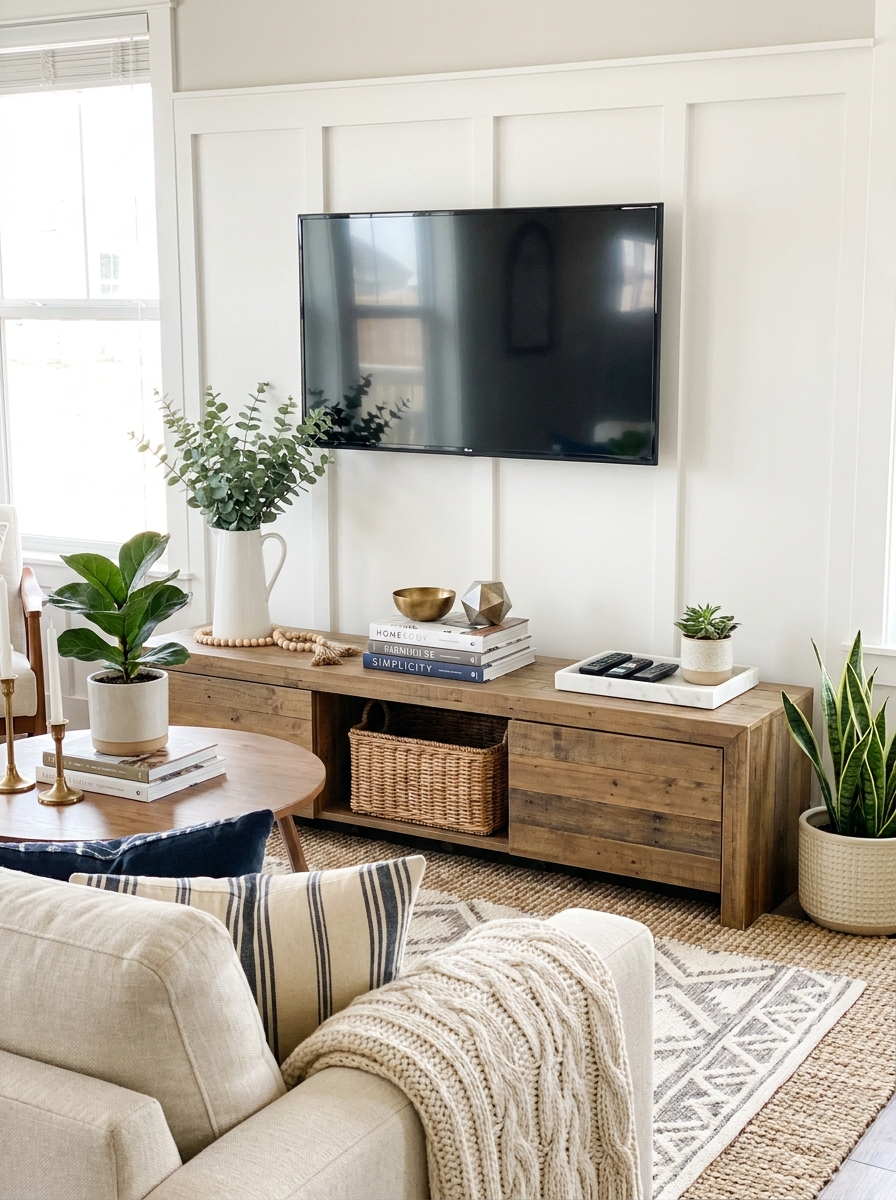
Real talk: that console top can quickly become where-the-remotes-go-to-die. But it’s prime real estate! It’s literally right under your TV, which means it’s one of the first things people see.
Treat it like you would a bookshelf or mantel. Create little vignettes with varying heights. A tall vase on one side, a stack of books in the middle, a pretty tray with your actual remotes on the other side. Add a plant, a sculptural object, maybe a small lamp if you need light. The goal is curated, not cluttered.
I keep a basket on mine for random stuff that accumulates, but everything else is intentional. When your console looks styled, your whole TV wall looks expensive and thoughtful. Plus, it’s way easier to keep tidy when everything has a designated pretty spot.
17. Turn Your TV Wall Into a Feature Wall (And Mean It)
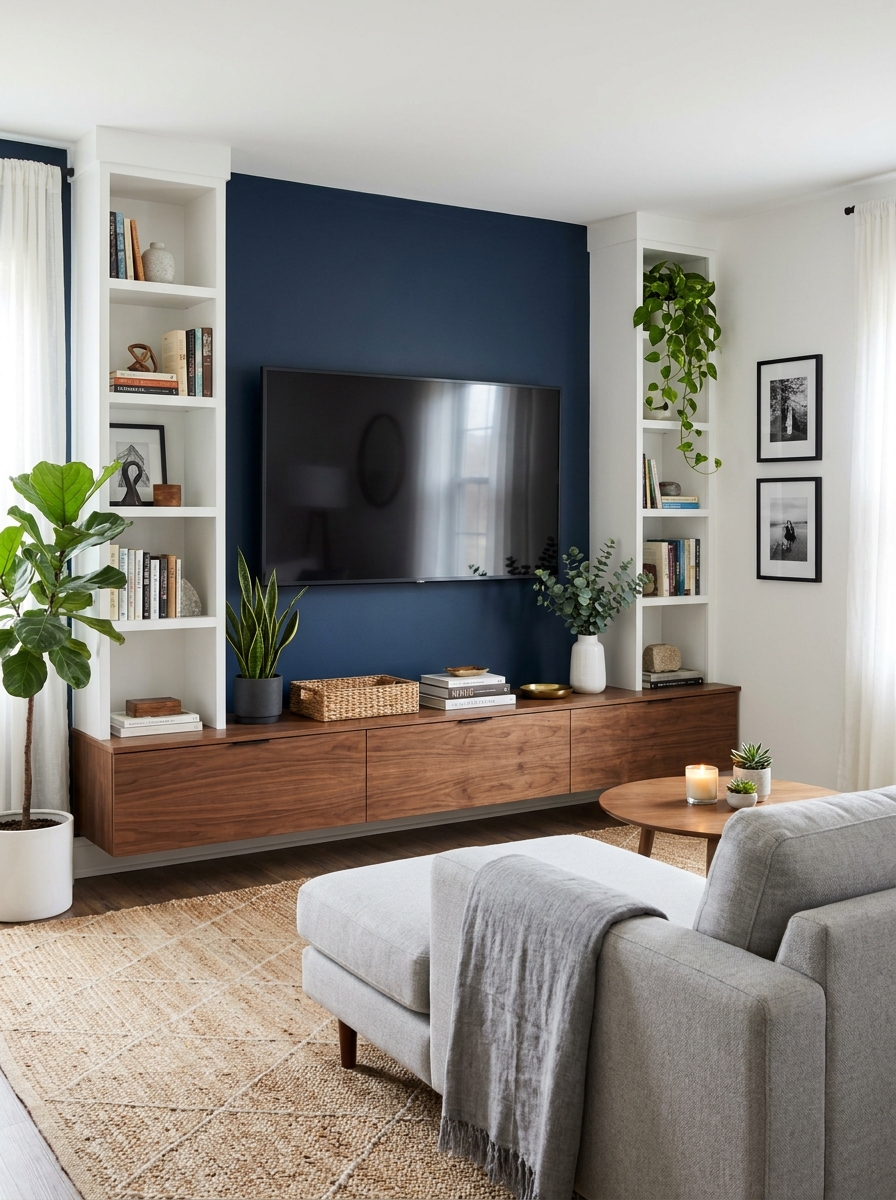
If your TV is going to be the focal point anyway, why not double down? Make that entire wall something special instead of pretending the screen isn’t there.
Paint it a gorgeous dark color—navy, charcoal, even black. Suddenly your TV blends in instead of sticking out like a sore thumb. Or go with board-and-batten paneling that gives the wall texture and dimension. Your TV becomes part of the architecture instead of fighting against it.
Wood slat walls are having a moment too, and they’re perfect behind a TV. The vertical lines add height, the wood adds warmth, and the whole thing feels intentional. You can even add LED strip lighting behind the slats for a subtle glow that makes movie nights feel like an event. The key is treating that wall like it deserves attention—because with a TV on it, it’s definitely getting looked at.
18. Use Open Shelving to Break Up the Black Rectangle
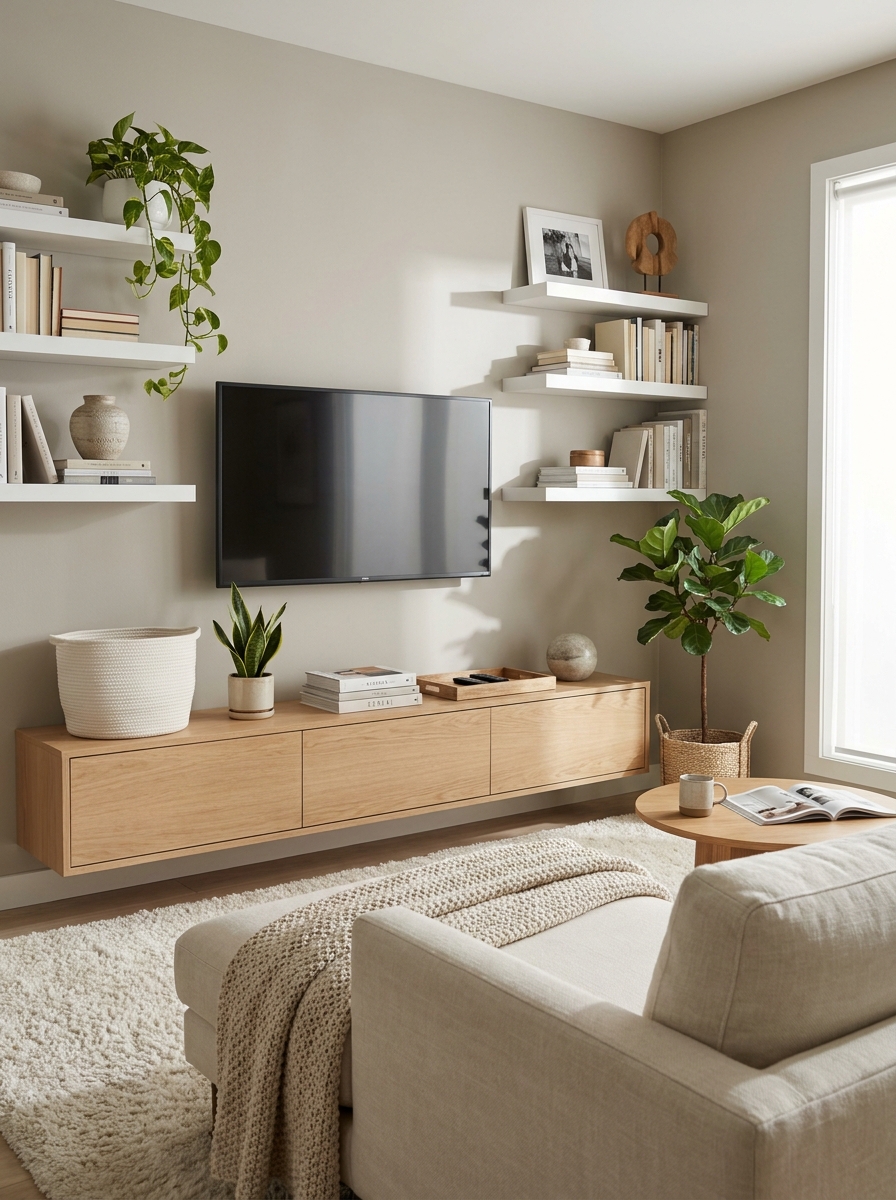
A big black screen can feel heavy and serious. Open shelving around it lightens things up—literally and visually.
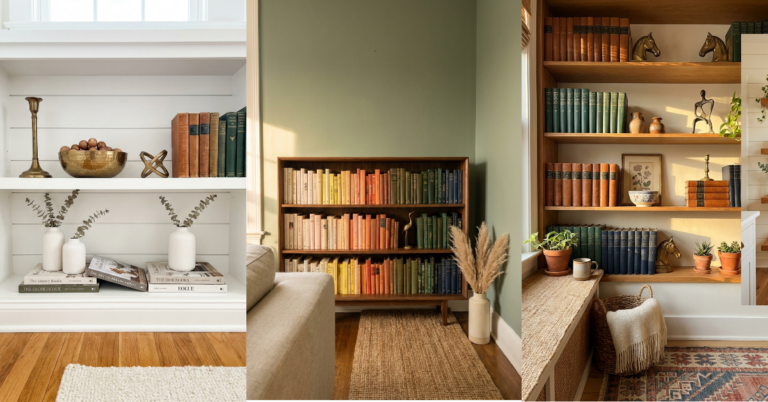
Built-ins are the dream, but floating shelves work just as well. Style them with books, plants, pretty objects, and suddenly your TV is just one element in a whole curated display. The shelves give your eye places to rest and make the wall feel balanced instead of screen-heavy.
I love asymmetrical arrangements too—shelves on just one side of the TV, styled thick with greenery and texture. It feels modern and unexpected. Just make sure whatever you put up there isn’t too precious. You’ll be looking at this wall every single day, and dust happens. Keep it simple, keep it real, and swap things out when you get bored. That’s the beauty of open shelving—it’s never finished.
19. Add Softness Above the TV (Yes, Really)
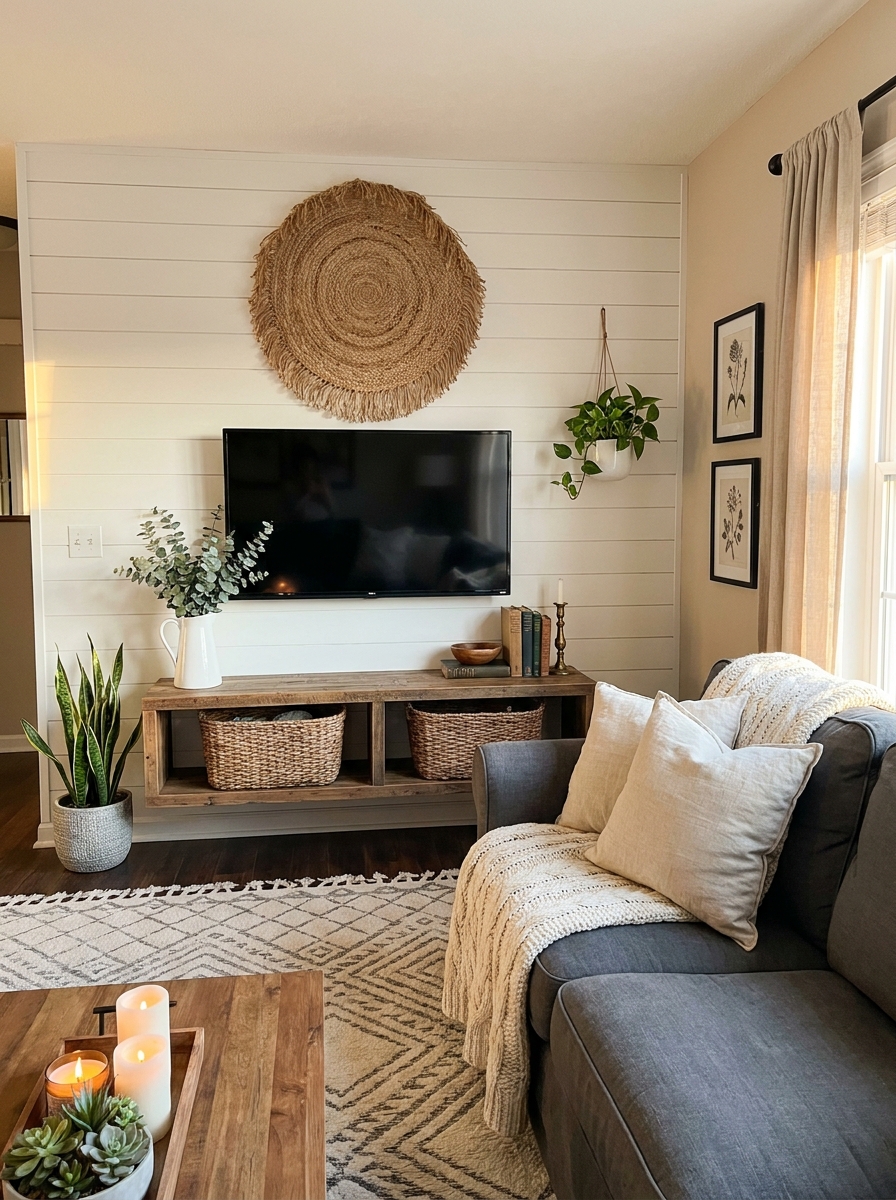
Most people stop decorating right at the TV. But that empty space above? It’s just begging for something soft and interesting.
If your TV is mounted, try hanging a large piece of art or a textile above it. A woven wall hanging, a macramé piece, or even a gorgeous framed print adds texture and draws the eye up. It makes the wall feel finished and intentional instead of like you just slapped a screen up and called it a day.
I’ve even seen people do picture ledges above the TV with leaning frames and small plants. It’s unexpected and it works. The softness balances the hard edges of the screen, and suddenly the whole wall feels like a cohesive moment instead of just “the TV wall.” Just keep it proportional—you don’t want something tiny floating up there looking lost.
20. Create Zones So Your Living Room Isn’t Just a TV Cave
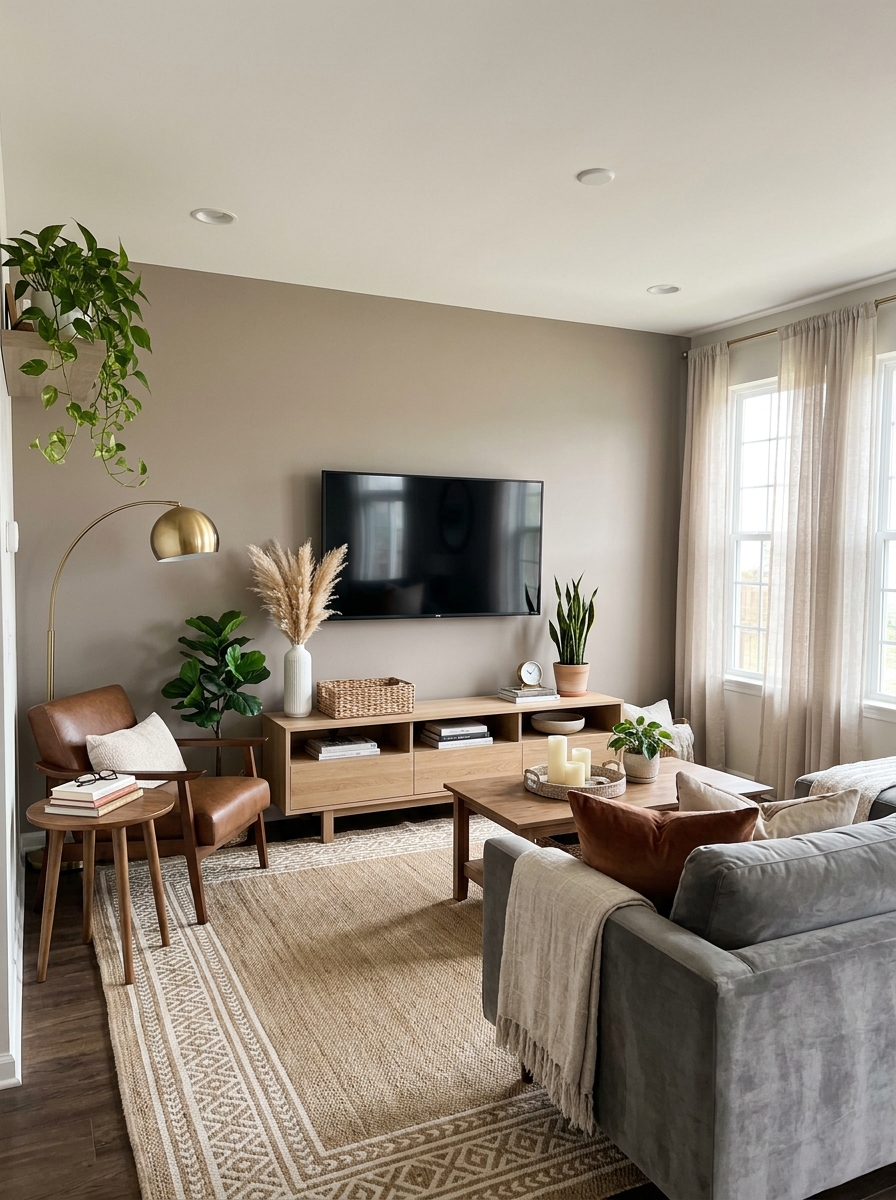
Here’s the thing—your living room can have a TV without being a TV room. It’s all about creating little zones that give the space purpose beyond binge-watching.
Add a reading chair in the corner with a floor lamp and a side table. Boom, you’ve got a cozy nook that has nothing to do with the screen. Or style a bar cart, a small desk area, or even just a really gorgeous plant corner. These zones make the room feel layered and interesting, and they give people options for how to use the space.
When you walk in, your eye travels to multiple focal points instead of just the TV. It makes the room feel bigger, more intentional, and way more inviting. Plus, on those rare nights when the TV isn’t on, the room still feels complete and purposeful. That’s the magic of good design.
Quick Guide
Quick Style Guide: Match Your TV Setup to Your Vibe
Modern Minimalist: Floating white console, hidden cords, one statement plant, monochrome palette
Warm Transitional: Wood console with drawers, symmetrical styling, mix of metal and ceramic, neutral tones with one accent color
Cozy Farmhouse: Rustic wood console, woven baskets, vintage finds, lots of greenery, shiplap or wood accent wall
Mid-Century Modern: Tapered leg console in walnut, brass accents, geometric art, clean lines with pops of color
Boho Eclectic: Rattan or carved wood console, macramé wall hanging, layered textiles, plants everywhere, global-inspired decor
Pick your vibe, then stay consistent with materials and finishes. Your space will feel cohesive instead of chaotic.
Your TV Can Finally Feel Like It Belongs
Here’s what I want you to remember: your TV isn’t a design problem that needs solving. It’s just another element in your room that deserves thoughtful styling, just like your sofa or your coffee table. The difference between a living room that feels thrown together and one that feels intentional often comes down to these small choices — the console you pick, how you arrange what’s around it, whether you’re working with your TV or against it.
You don’t need a massive budget or a complete room overhaul. Sometimes it’s just about moving your furniture three feet to the left or adding a plant where there used to be empty space. Start with one idea from this list that speaks to you. Maybe it’s the floating console, or maybe you’re ready to commit to that gallery wall you’ve been pinning for months. The point is to make your space work for how you actually live — because a beautiful room that you can’t use for movie night isn’t really that beautiful at all. You’ve got this.
Frequently Asked Questions
How do I hide TV cords and cables in my living room?
Use an in-wall cable management kit if your TV is wall-mounted — it’s cleaner than any cord cover. For consoles, run cables through the back and use velcro ties to bundle them together. You can also use decorative boxes or baskets on your console to hide power strips and excess cord length. If you’re renting, adhesive cord covers that match your wall color work surprisingly well.
What size media console do I need for my TV?
Your console should be at least as wide as your TV, but ideally 8-12 inches wider on each side. This creates visual balance and gives you room for styling. Measure your TV width first, then shop for consoles that provide that extra breathing room. A 55-inch TV looks best on a 65-75 inch console.
Should I mount my TV or put it on a stand?
It depends on your space and lifestyle. Wall mounting saves floor space and looks super clean, but requires making holes in your wall. A console gives you storage and flexibility to rearrange, plus it’s renter-friendly. If you have small kids or pets, mounting higher might be safer. There’s no wrong answer — just what works for your situation.
How high should I mount my TV on the living room wall?
The center of your TV screen should be at eye level when you’re seated — usually about 42-48 inches from the floor. Sit on your sofa and note where your natural eye line hits the wall, then mount accordingly. Mounting too high (like above a fireplace) causes neck strain. Your comfort matters more than design rules.
What can I put on my media console besides the TV?
Keep it simple: one or two plants, a decorative object like a vase or sculpture, a small tray for remotes, and maybe a table lamp on one end. Don’t overcrowd the surface — you want breathing room around your TV. Use baskets underneath the console for hidden storage of cords, gaming controllers, and DVDs you still haven’t gotten rid of.