21 Gorgeous Living Room Ideas on a Shoestring
You know that feeling when you scroll Pinterest at 11 PM and suddenly your entire living room feels… wrong? Like it needs a complete overhaul, but your bank account is laughing at you? Yeah, me too. Here’s the thing though: creating a living room you actually love doesn’t mean dropping thousands at West Elm or waiting for some magical windfall. I’ve decorated more living rooms on a tight budget than I can count, and I promise you can make yours look intentional, pulled-together, and honestly kind of expensive without spending like you’re rich. It’s all about knowing where to splurge your $20 bills and where to get creative. From rearranging what you already own to strategic thrift store scores that’ll make your friends ask where you got that amazing piece, these ideas actually work in real homes. Not the kind with professional stagers and perfect lighting, but yours. With the kids’ toys and the spot on the couch where everyone sits. Let’s get into it.
1. Rearrange Your Furniture (It’s Free and Transformative)
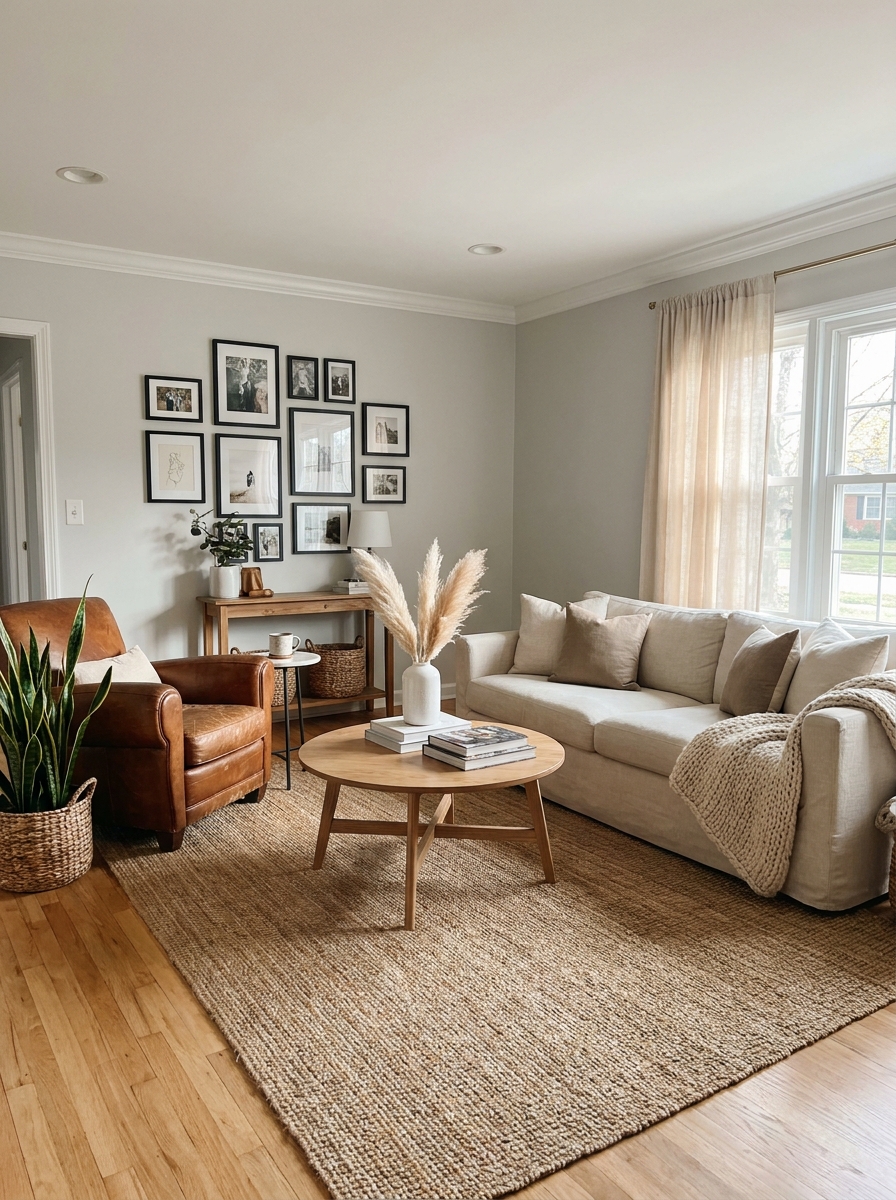
Before you spend a single dollar, try this: pull everything away from the walls. I know it feels weird, but floating your furniture creates conversation areas that make your whole room feel more intentional and honestly, more expensive. Most of us push everything against the walls because that’s what we think we’re supposed to do, but designers never do that.
Start with your sofa angled or floated a few feet from the wall, then build your seating arrangement around it. Pull chairs in closer than feels comfortable at first. You want people to actually talk without shouting across the Grand Canyon of your living room. And that bookshelf? Try it as a room divider if you’ve got an open layout.
The wildest part is how this one change makes everything you already own look completely different. Your room gets zones, purpose, flow. It tricks the eye into thinking you bought all new stuff when really you just moved things around on a random Tuesday night.
2. Paint One Accent Wall in a Bold Color
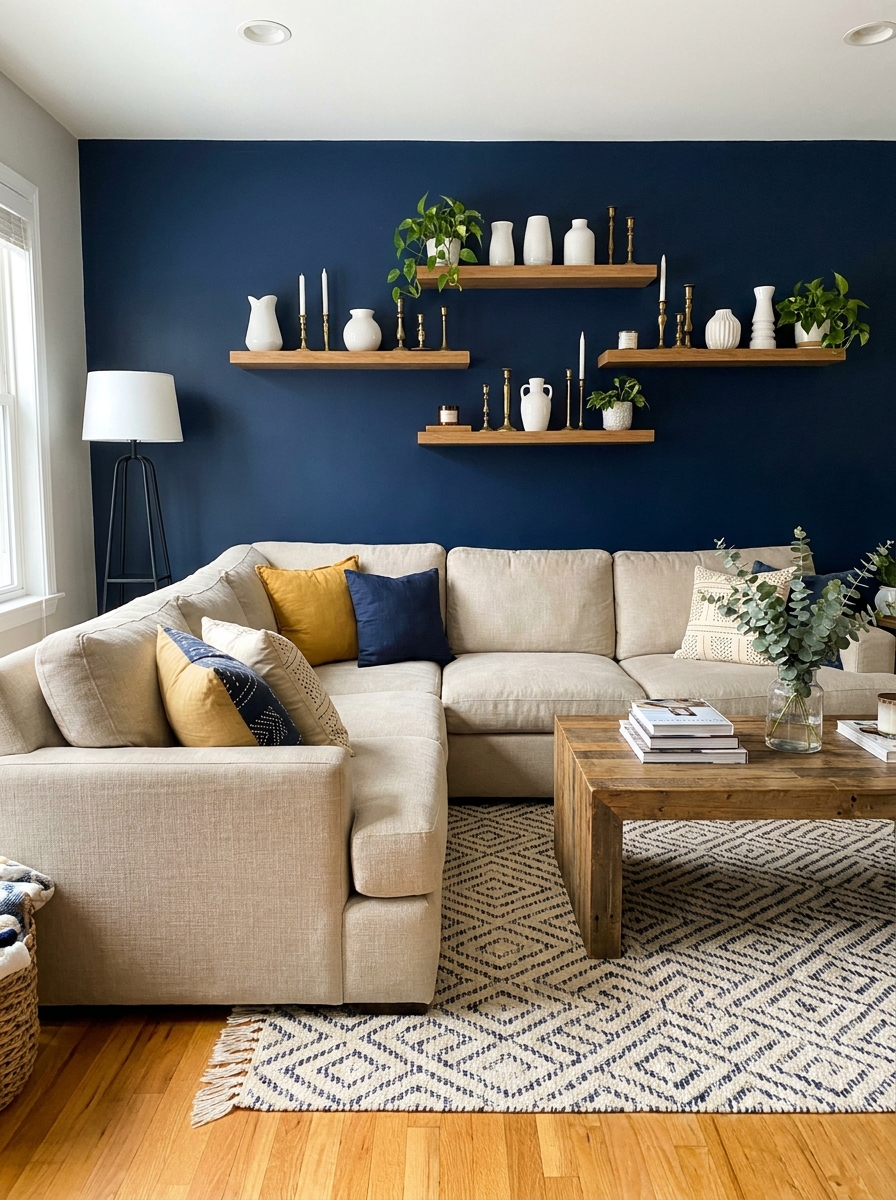
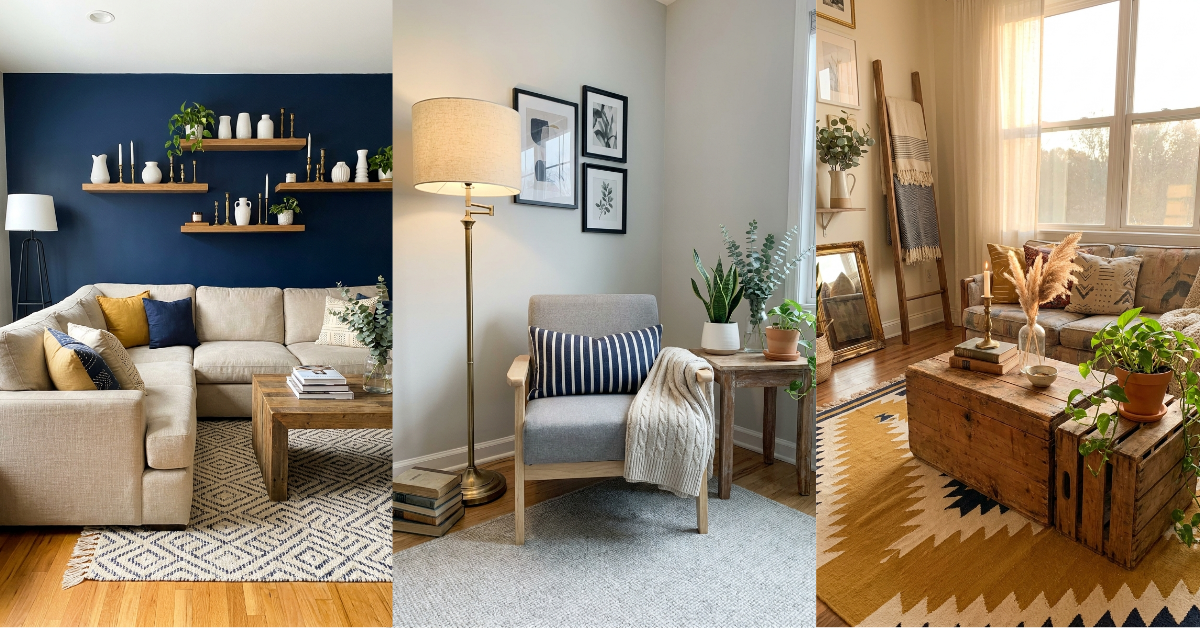
Paint is the cheapest way to make a dramatic statement, and you only need one gallon for an accent wall. We’re talking $30-40 max. Pick the wall behind your sofa or the one you see when you first walk in. That’s your feature wall.
Forget boring beige for this one. Go deep navy, forest green, terracotta, or even black if you’re feeling brave. The contrast makes everything in front of it pop, and suddenly your Target pillows look like they came from somewhere fancy. I painted my living room accent wall this moody sage green two years ago and people still ask about it.
You don’t need perfect painting skills either. Accent walls are forgiving, and honestly, a few brush strokes showing just makes it feel more handmade and authentic. Just tape off your edges, put on a playlist, and spend a Saturday afternoon transforming your space. The paint smell fades but the compliments don’t.
3. Create a Gallery Wall with Thrifted Frames
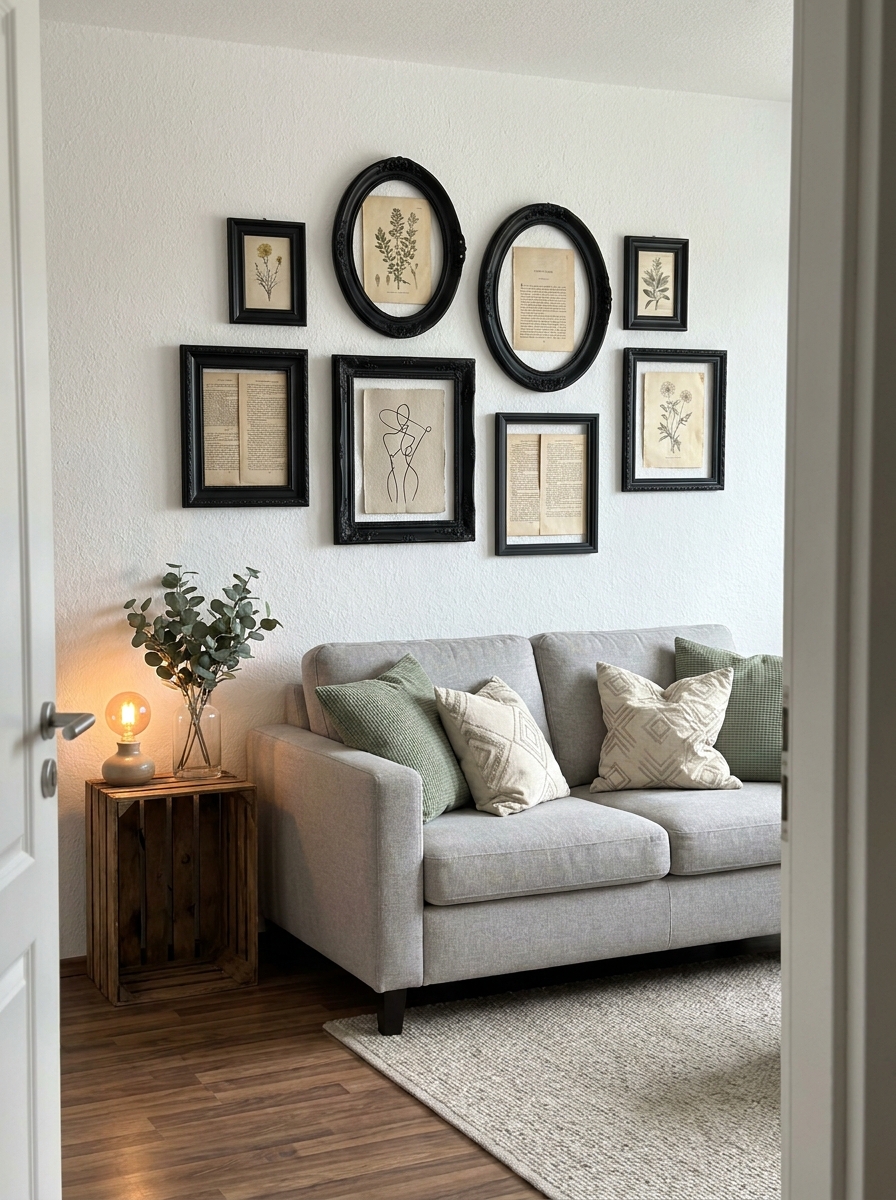
Gallery walls look like you spent a fortune, but here’s the secret: thrift stores are overflowing with frames that nobody wants. I’m talking $2-5 each, sometimes less. Grab different sizes and don’t worry about them matching. That mismatched look is actually what makes gallery walls interesting.
Take them all home and spray paint them the same color. Matte black, white, or even gold if that’s your vibe. Now they’re a collection. Fill them with anything: free printables from Etsy (search “free wall art printables”), pages from old books, your own photos printed at Walgreens, or even fabric scraps. I’ve used sheet music, postcards, and once, wrapping paper that was too pretty to throw away.
Lay the whole arrangement on the floor first and take a photo. That’s your template. Then start hanging, starting from the center and working out. It doesn’t have to be perfect. Actually, the slightly imperfect ones feel more collected over time, like you’re a person with taste who’s been gathering art for years.
4. Layer Affordable Throw Pillows in Different Textures
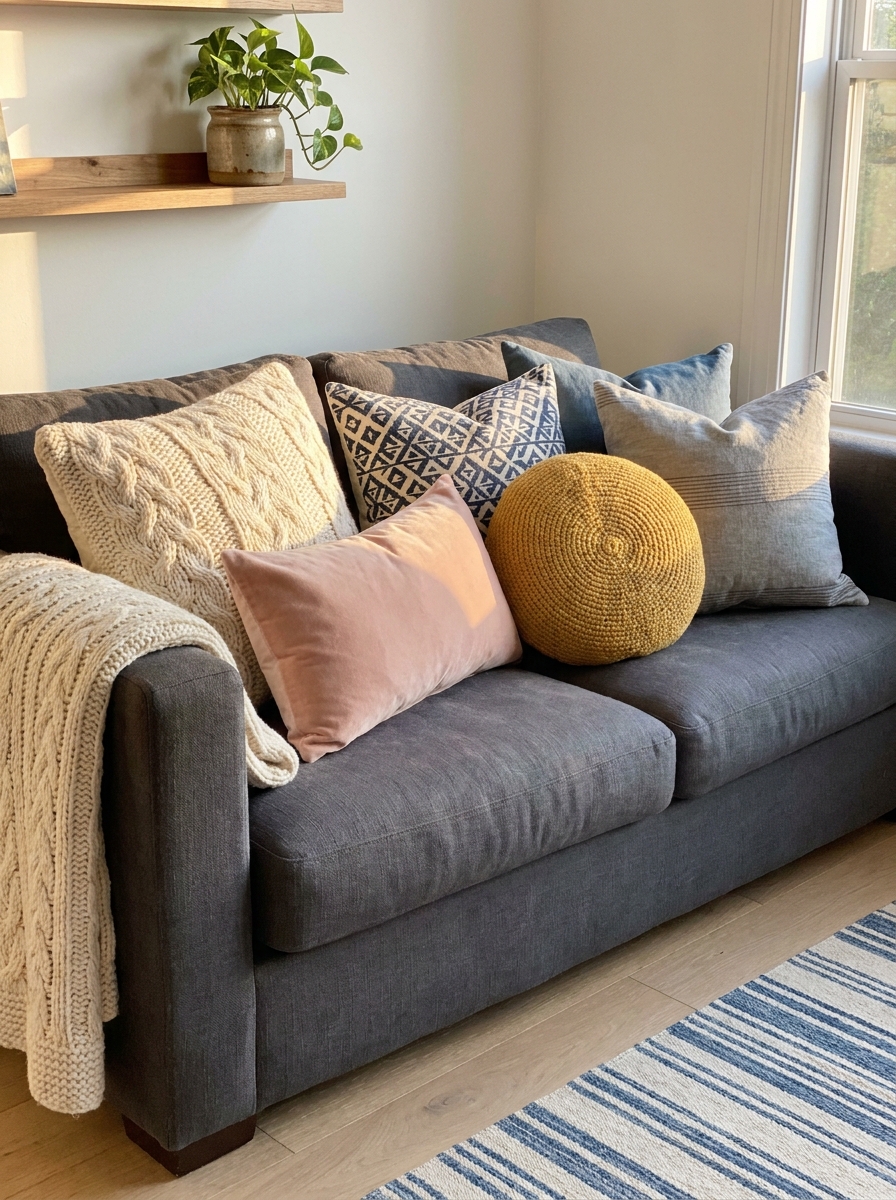
This is possibly the fastest way to make your sofa look expensive. But here’s where people mess up: they buy a matching set. Don’t do that. Instead, mix textures and patterns like you’re creating a little fabric story. Start with different sizes — some 20×20, some lumbar, maybe one oversized 24-inch.
Hit up stores like HomeGoods, TJ Maxx, or Target’s clearance section. You want at least three different textures: maybe a chunky knit, a smooth velvet, and a woven cotton. Pick a color palette (three colors max) and stick to it, but vary the patterns. One solid, one geometric, one with texture. Suddenly your $299 IKEA sofa looks like it’s worth triple.
The trick is odd numbers and layering. Five or seven pillows usually looks better than four or six. Don’t line them up like little soldiers either. Overlap them, prop some at angles, let one fall slightly forward. You want it to look like you just naturally tossed them there, even though you definitely spent fifteen minutes arranging them.
5. Swap Out Lampshades for an Instant Refresh
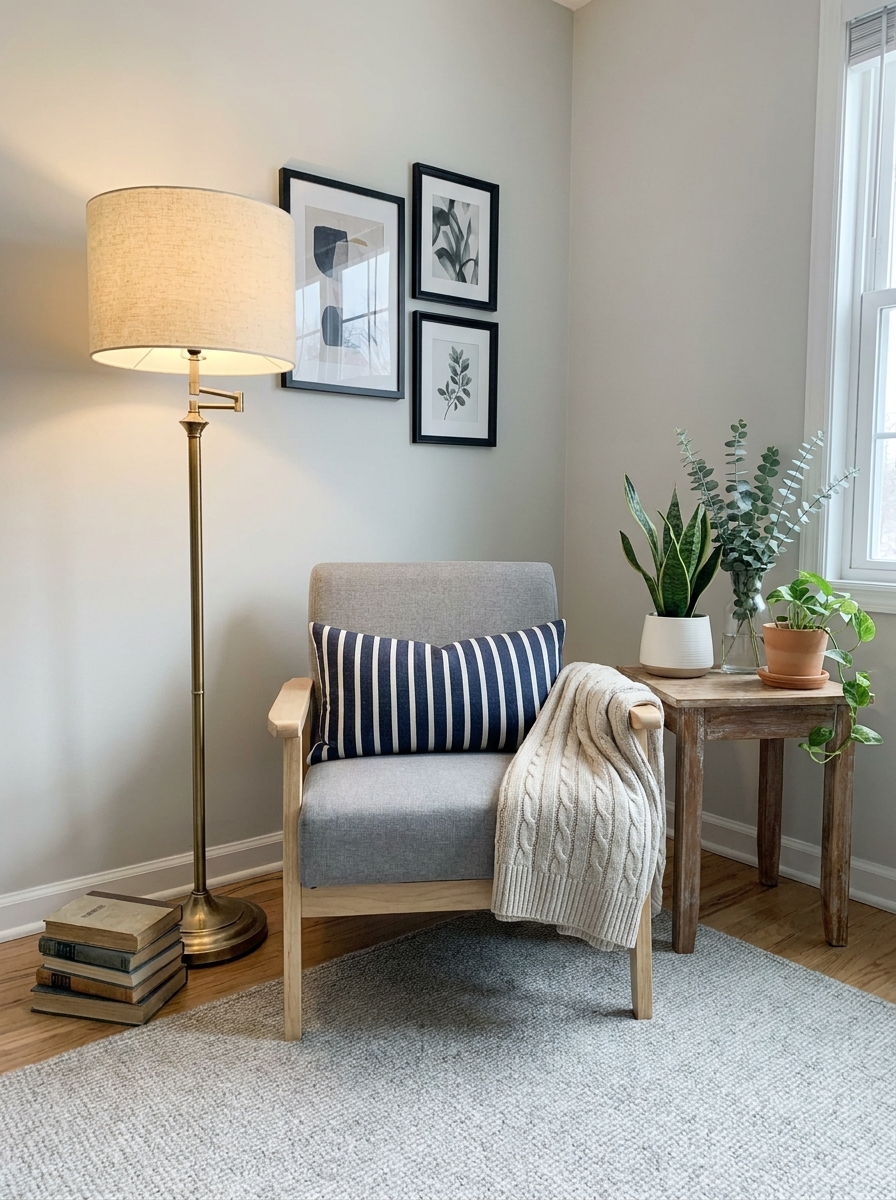
Here’s something you probably haven’t thought about: that boring lampshade might be killing your whole vibe. I’m serious! Lampshades are one of those sneaky details that make a huge difference, and they’re dirt cheap to replace.
Head to HomeGoods, Target, or even Amazon and grab a textured linen shade, a fun patterned one, or even a simple drum shade in a fresh color. We’re talking $15 to $30 max. The difference is wild. A new shade changes the light quality, adds texture, and suddenly that $10 thrift store lamp base looks like a designer piece.
I did this in my living room last spring with a nubby oatmeal linen shade, and three people asked where I got my “new lamp.” It was the same lamp! Just a $22 shade from Target. This trick works on floor lamps, table lamps, even that weird lamp you inherited from your aunt. Sometimes the smallest swaps create the biggest impact.
6. Bring in Oversized Greenery (Real or Faux)
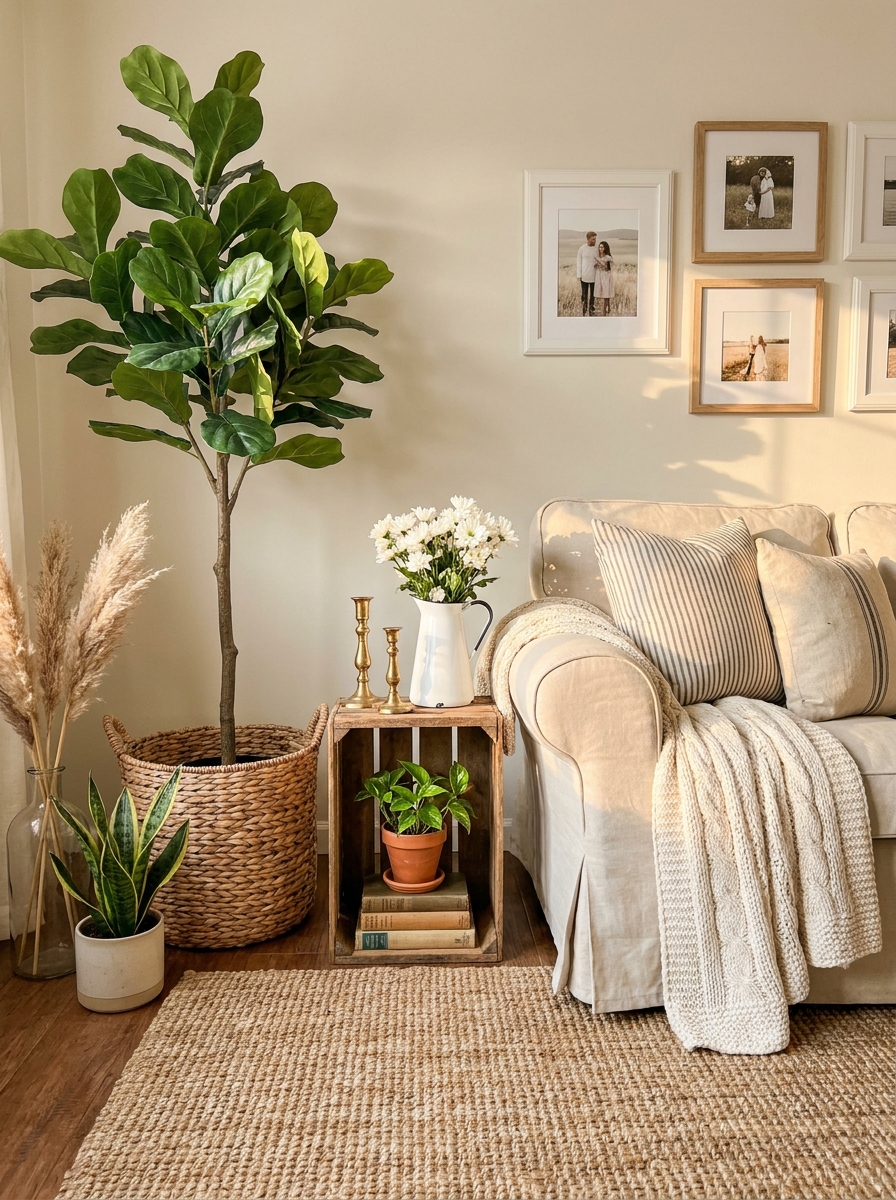
Want to know the secret expensive-looking living rooms have in common? Big, dramatic plants. I’m not talking about your sad little succulent collection. I mean a statement fiddle leaf fig, a tall snake plant, or even a good quality faux tree that fills a corner and makes the whole room feel alive.
You can find affordable real plants at Trader Joe’s, Costco, or your local nursery sales. A big snake plant or pothos in a $15 woven basket instantly adds that collected, layered look. If you’re plant-challenged (no judgment), invest in one really good faux tree. IKEA and Target have shockingly realistic options now for under $60.
Here’s the thing: greenery adds height, texture, and that organic element that makes spaces feel finished. It fills empty corners without buying more furniture. One tall plant in a budget-friendly basket planter does more for your room than five tiny plants scattered around ever could.
7. Style Your Coffee Table Like a Designer
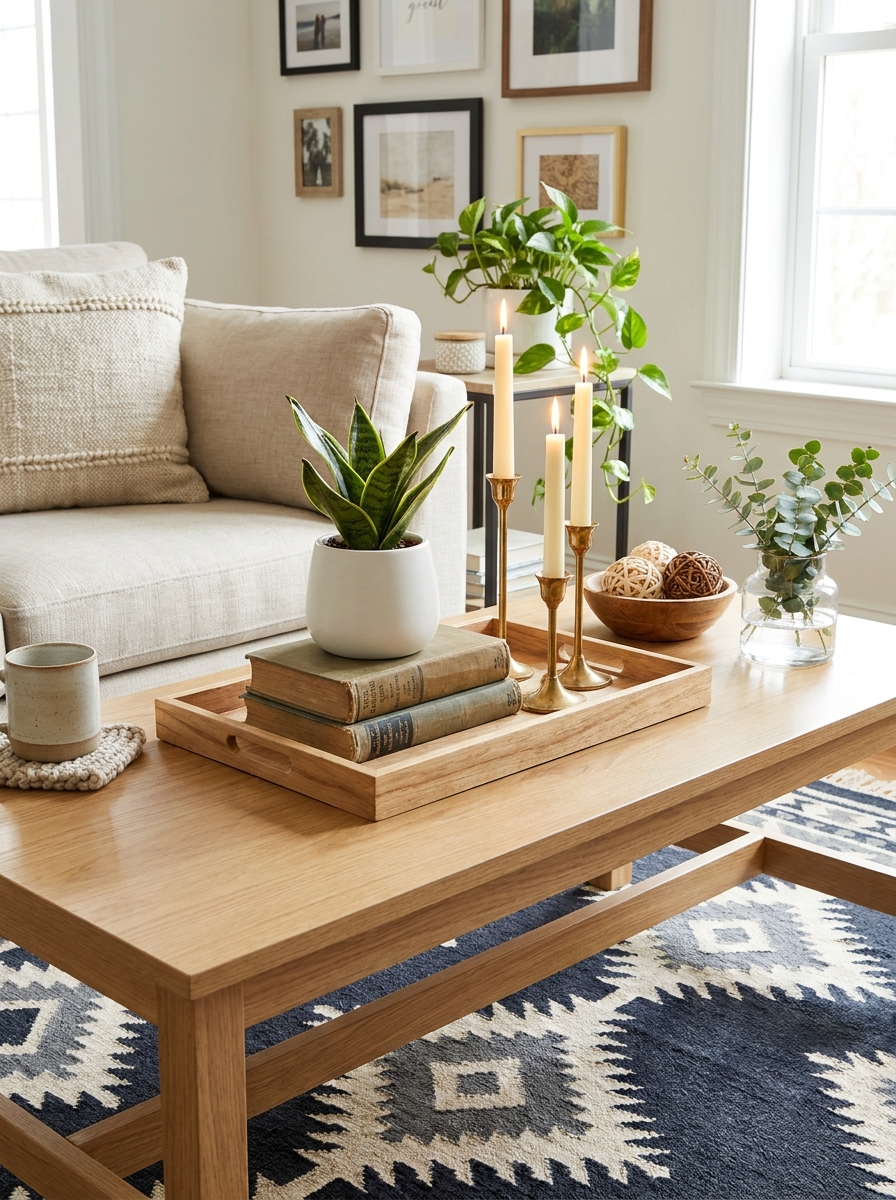
Coffee table styling is an art, and it’s completely free if you shop your own home first. The trick isn’t buying fancy stuff — it’s arranging what you have in a way that looks intentional instead of cluttered.
Start with a tray (thrifted or from Target for $12) to anchor everything. Then use the rule of three: pick three elements with different heights. Maybe a stack of books, a small plant or vase with greenery, and a candle or decorative object. Keep it simple. Less is always more here.
I like mixing textures — a chunky knit coaster under a ceramic mug, a vintage wooden bowl, some matte black candlesticks. The key is varying heights and leaving some breathing room. Your coffee table shouldn’t look like a store shelf. It should look lived-in but curated, like you casually set things down and they happened to look perfect. That’s the vibe we’re going for.
8. Add Warmth with Layered Lighting
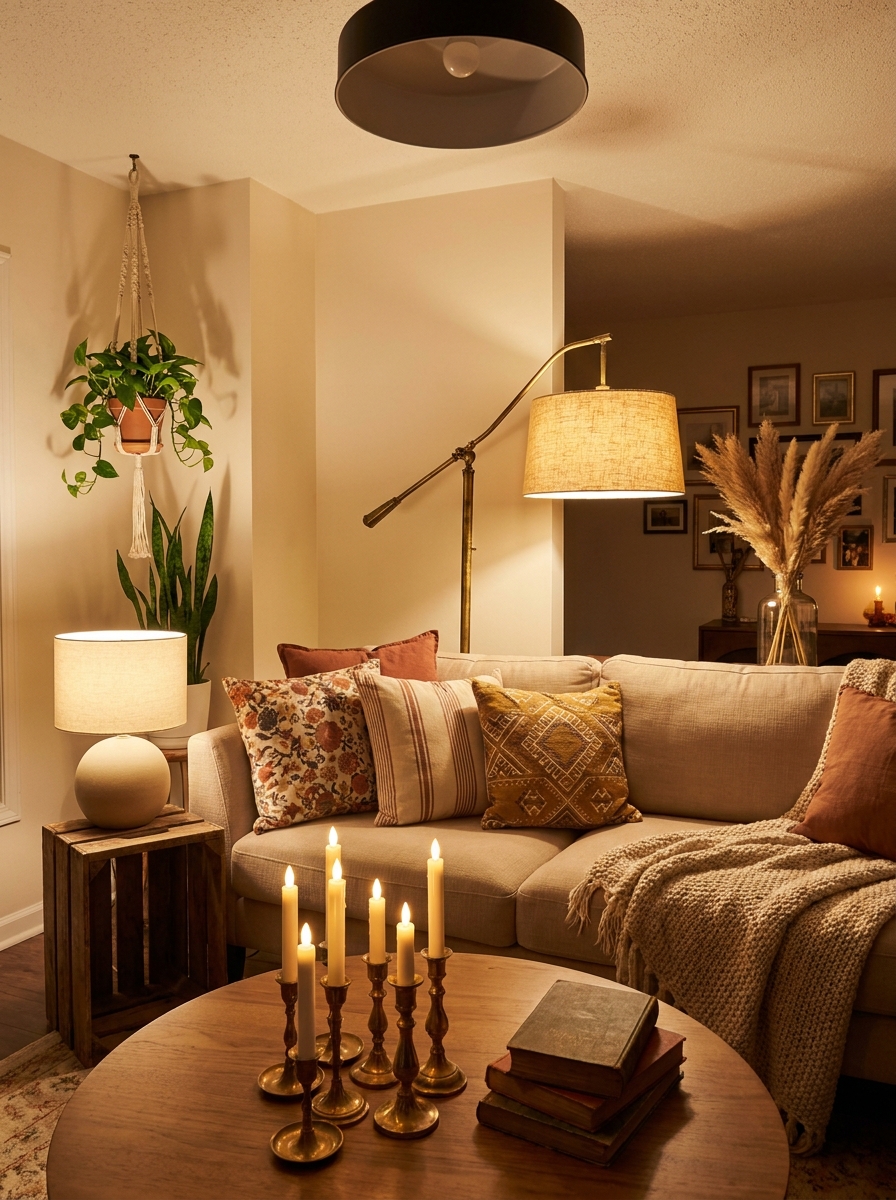
Overhead lighting alone makes every room look flat and sad. I learned this the hard way. The secret to making your living room feel cozy and expensive? Layer your lighting like you layer your outfit.
You need three types: ambient (your overhead), task (reading lamps), and accent (candles, string lights, or small decorative lamps). You don’t need to buy all new fixtures. Add one $25 table lamp from Target, put a dimmer switch on your overhead (seriously, $15 at the hardware store), and grab some LED candles from the dollar store.
When you have multiple light sources at different heights, you can control the mood. Overhead off, lamps on? Instant cozy vibes. It’s the difference between “bright waiting room” and “I want to curl up here with a book.” This is how designers make spaces feel expensive and intentional, and it costs almost nothing to recreate.
9. Use Curtains to Add Height and Drama
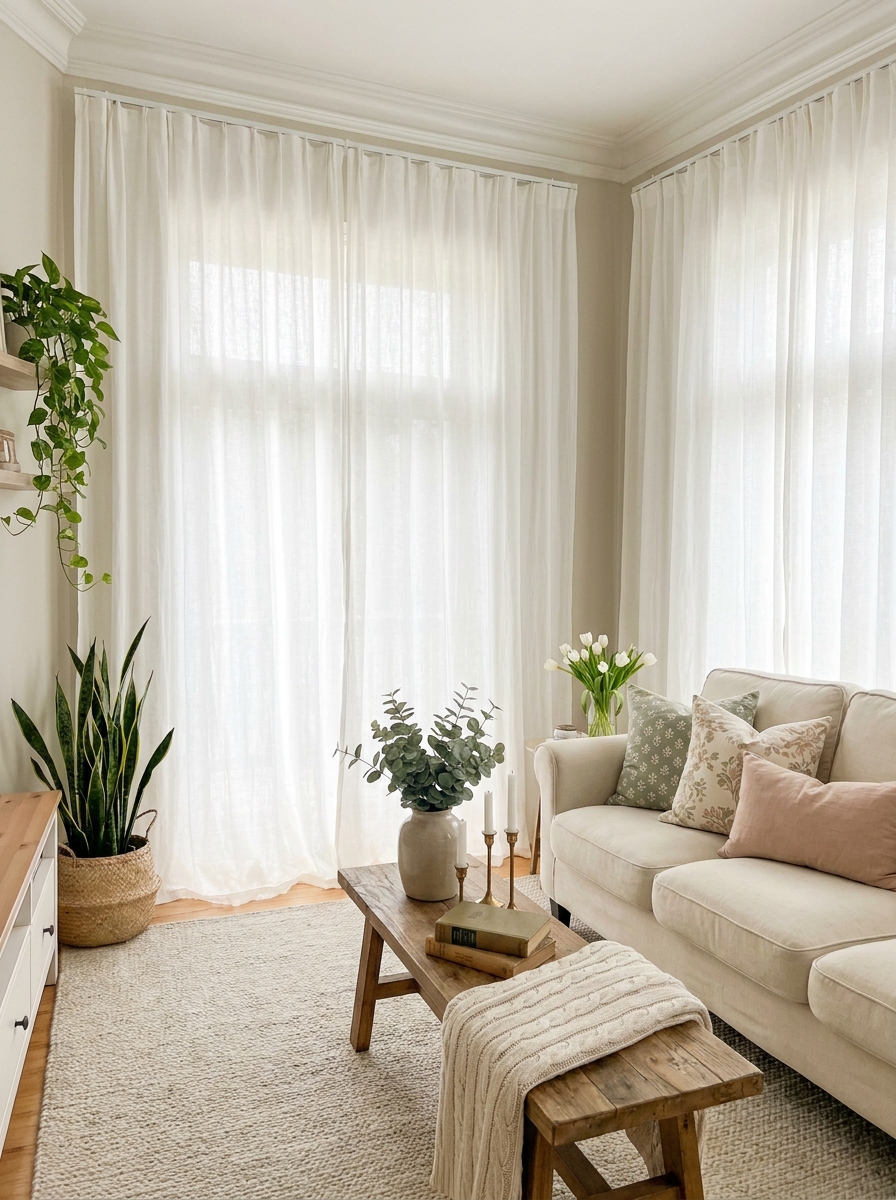
Want to make your living room feel taller and more expensive? Hang your curtains as close to the ceiling as possible. Seriously, this one trick changes everything. It draws the eye upward and makes your whole room feel more spacious and intentional.
You don’t need custom drapes either. I’ve found gorgeous affordable panels at Target and IKEA that look way more expensive than they are. The secret is in how you hang them. Mount your curtain rod just a few inches below the ceiling, not right above the window frame. Let the panels puddle slightly on the floor or just kiss it for that designer look.
Go for floor-length panels in a light, flowing fabric. White, cream, or soft linen-look curtains work with literally any decor style. They soften hard edges, add texture, and make even basic windows look like a million bucks. If you’re renting and can’t drill holes, tension rods placed high still work wonders.
10. Repurpose Vintage Finds as Unexpected Decor
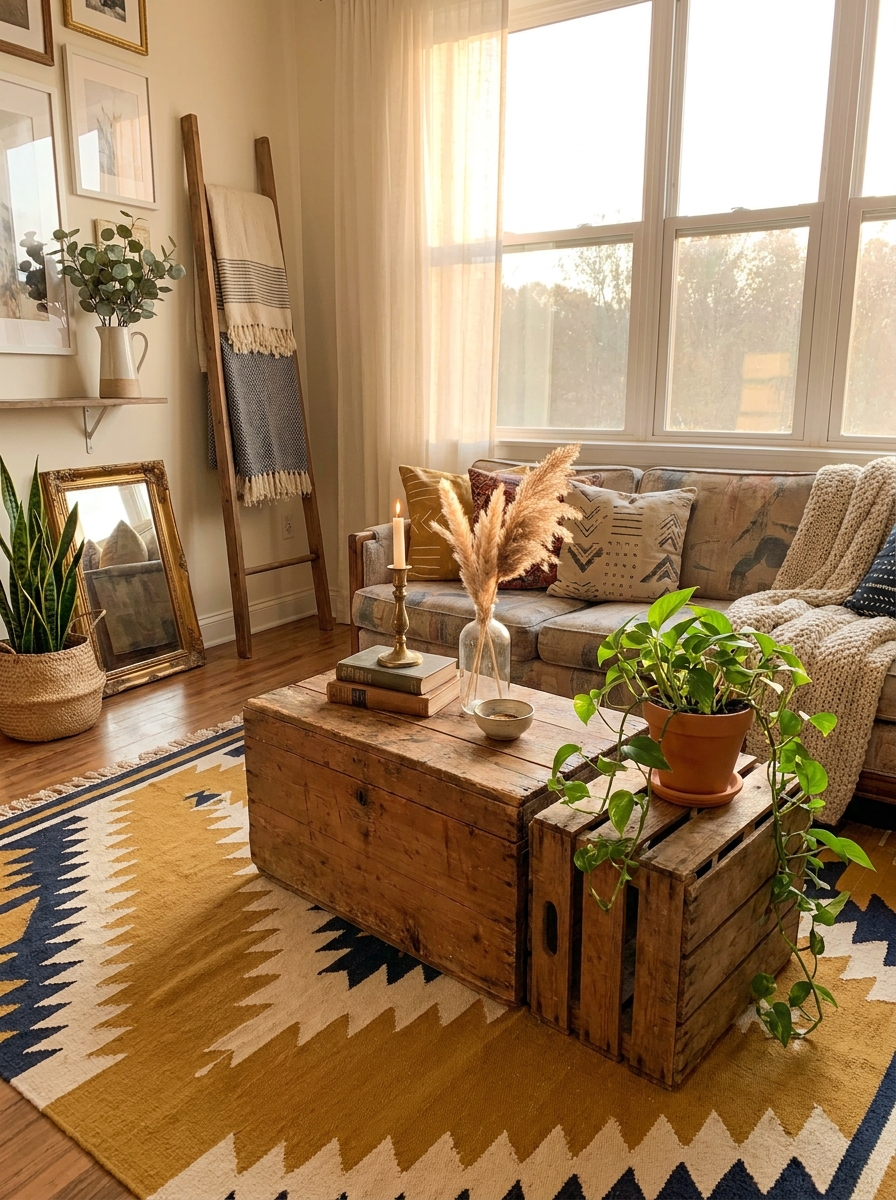
Thrift stores and estate sales are absolute goldmines for unique pieces that add so much character. I’m talking old wooden ladders as blanket holders, vintage suitcases stacked as side tables, or an antique mirror propped against the wall. These finds cost next to nothing but give your living room that collected-over-time vibe that you just can’t buy new.
The beauty of vintage pieces is that they’re one-of-a-kind. Nobody else will have that exact weathered wooden crate you’re using as a plant stand. Start small if you’re new to thrifting. Look for solid wood pieces, interesting shapes, or anything with good bones that you can clean up or paint.
Mix your vintage scores with modern budget finds to keep things feeling fresh, not dusty. A thrifted brass tray on your IKEA coffee table? Perfect. An old wooden stool holding a new plant? Chef’s kiss. It’s this high-low mix that makes rooms feel personal and interesting instead of cookie-cutter.
11. Dress Up Builder-Grade Features with Removable Details
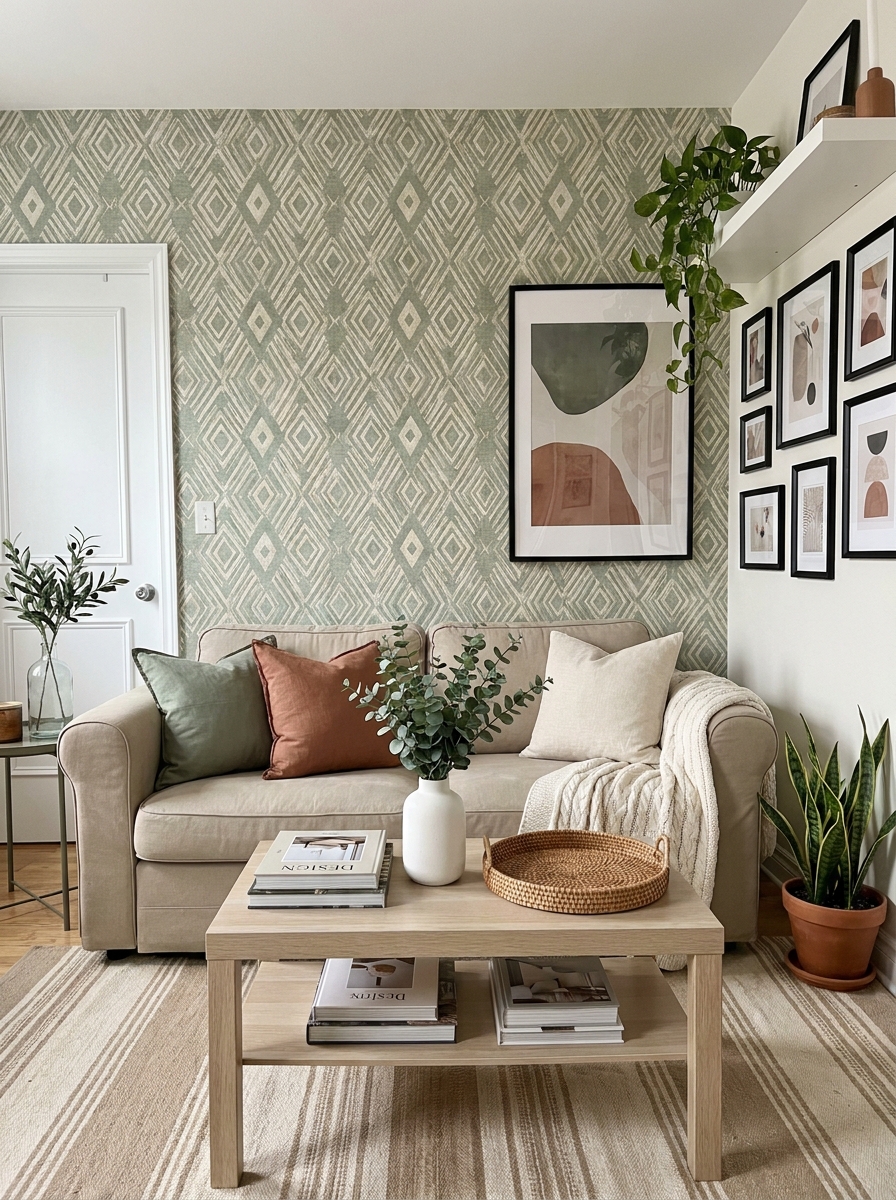
Stuck with boring builder-grade everything? Same, friend. But here’s the thing—you can totally disguise bland features without losing your security deposit or doing a major renovation. Peel-and-stick wallpaper on one wall, removable trim on basic doors, or adhesive tile covers can completely transform a blah space.
I love using peel-and-stick options because they’re renter-friendly and way less commitment than permanent changes. Try a textured wallpaper behind your sofa to create an instant focal point, or add stick-on molding to flat cabinet doors for a custom look. These little upgrades make your space feel intentional and designed, not like every other apartment in the building.
The best part? When you move, you can take it all down and start fresh somewhere new. And if you get bored? Just peel it off and try something different. It’s like decorating with training wheels—all the style, none of the stress or big price tag.
12. Invest in One Statement Piece (and Keep Everything Else Simple)
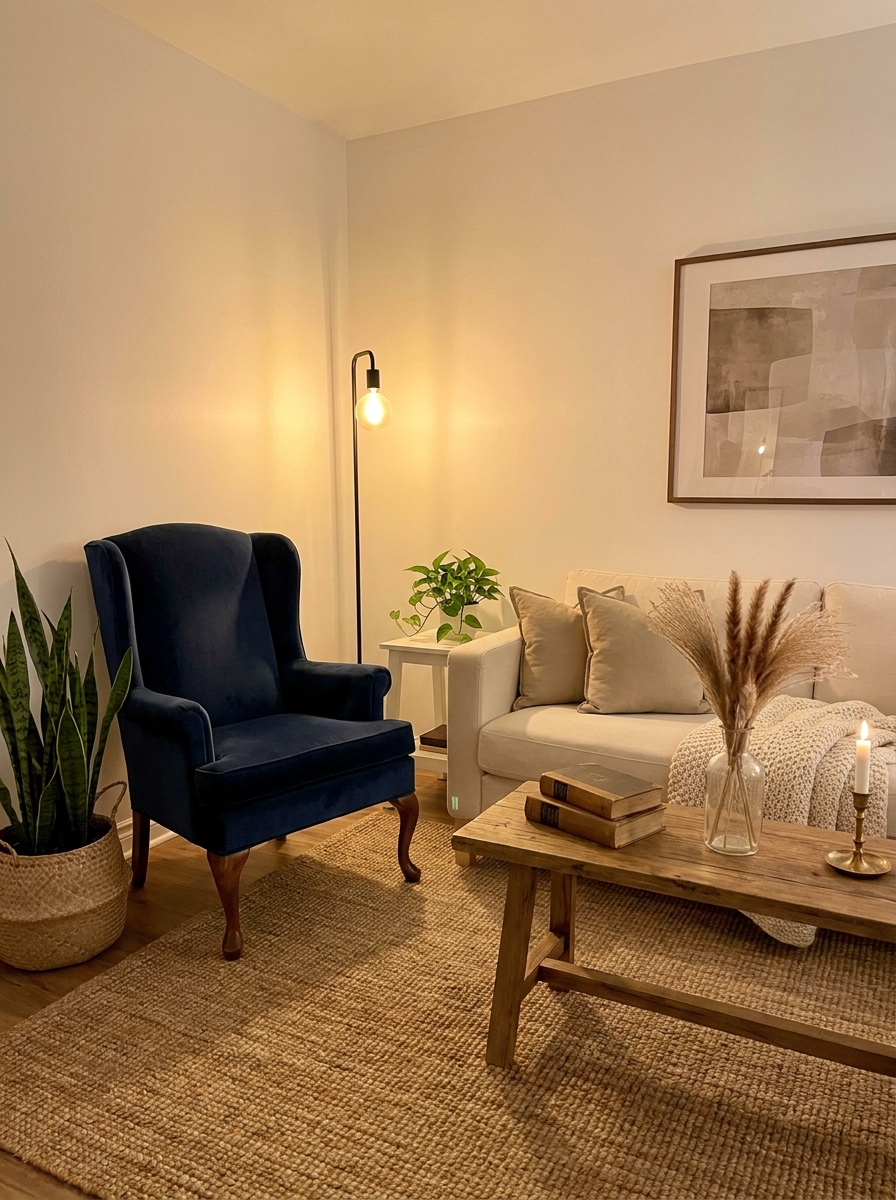
Here’s a budget decorating secret that really works: instead of spreading your money across a bunch of medium-nice things, save up for one really good statement piece and keep everything else simple and affordable. Maybe it’s a gorgeous vintage rug, a velvet accent chair, or an oversized piece of art. That one special item becomes your room’s personality.
I did this with a beautiful secondhand leather chair I found on Facebook Marketplace. Everything else in my living room is pretty basic—IKEA sofa, Target pillows, DIY art—but that chair makes the whole space feel pulled together and interesting. People always ask where I got it.
The trick is to let your statement piece shine by keeping the surrounding decor neutral and unfussy. Think of it like wearing a bold necklace with a simple black dress. Your eye goes straight to the good stuff, and everything else just supports it. This approach saves money and creates way more impact than filling your room with lots of forgettable pieces.
13. Create Depth with a Textured Rug (Even a Cheap One Works)
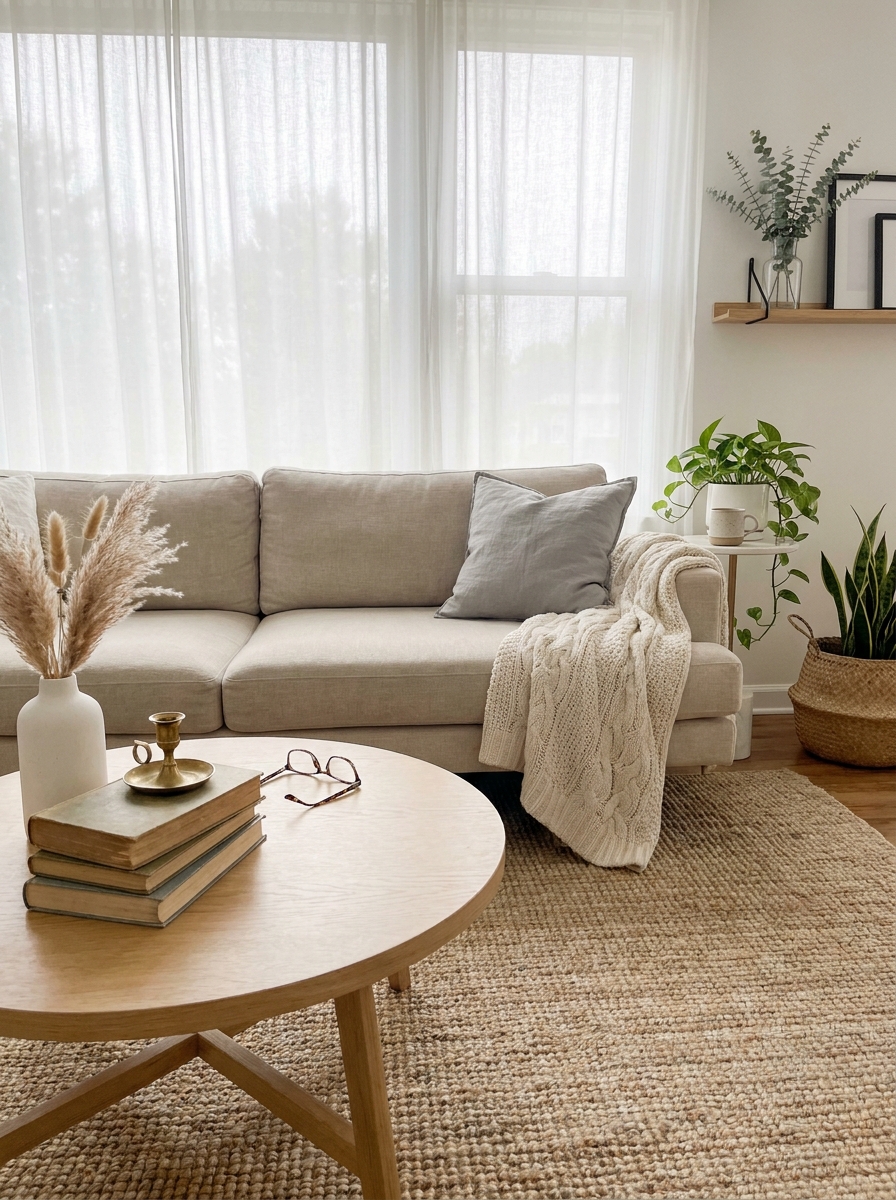
Here’s something nobody tells you: a rug can make your living room look intentional even when nothing else matches. I’m not talking about expensive Persian rugs. I mean a basic textured rug from Target or a jute one from HomeGoods that instantly grounds your space.
The trick is using it to anchor your furniture. Pull your sofa and chairs slightly onto the rug so everything feels connected instead of floating randomly around the room. Suddenly your mismatched furniture looks curated instead of chaotic.
I found a striped dhurrie rug at a local discount store for thirty bucks and it completely transformed my living room. It made the space feel bigger, warmer, and way more put-together. The texture alone adds visual interest without needing fancy furniture to back it up. Even if your rug is neutral and boring, it creates that designer layer that pulls everything together. Sometimes the simplest addition makes the biggest impact.
14. Hang Floating Shelves for Display and Storage
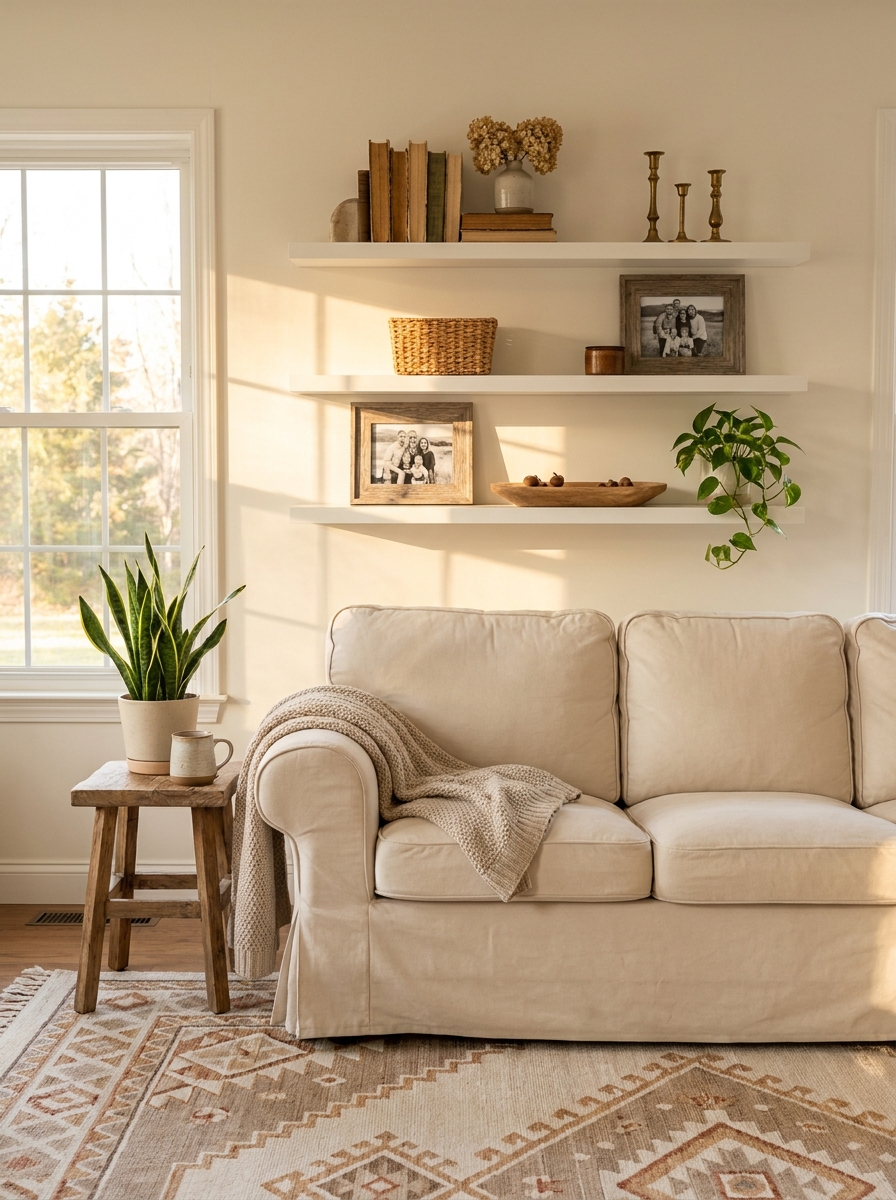
Floating shelves are like jewelry for your walls. They’re ridiculously cheap, super easy to install, and they give you a place to show off all those little treasures you’ve been hiding in closets.
I installed three basic white shelves from IKEA above my sofa for less than twenty dollars and suddenly had a whole styling moment happening. Books, plants, candles, thrifted vases—it all gets a home and looks intentional instead of cluttered on random surfaces.
The beauty of floating shelves is they work in any style. Go minimal with just a few carefully chosen pieces, or pack them full of colorful finds for an eclectic vibe. Either way, you’re adding dimension to boring blank walls without committing to anything permanent. Plus you can switch up what’s on them whenever you get bored. It’s like redecorating without spending another dime. My favorite styling trick? Group items in odd numbers and vary the heights so your eye moves along the shelf naturally.
15. Mix High and Low Pieces (Nobody Will Know the Difference)
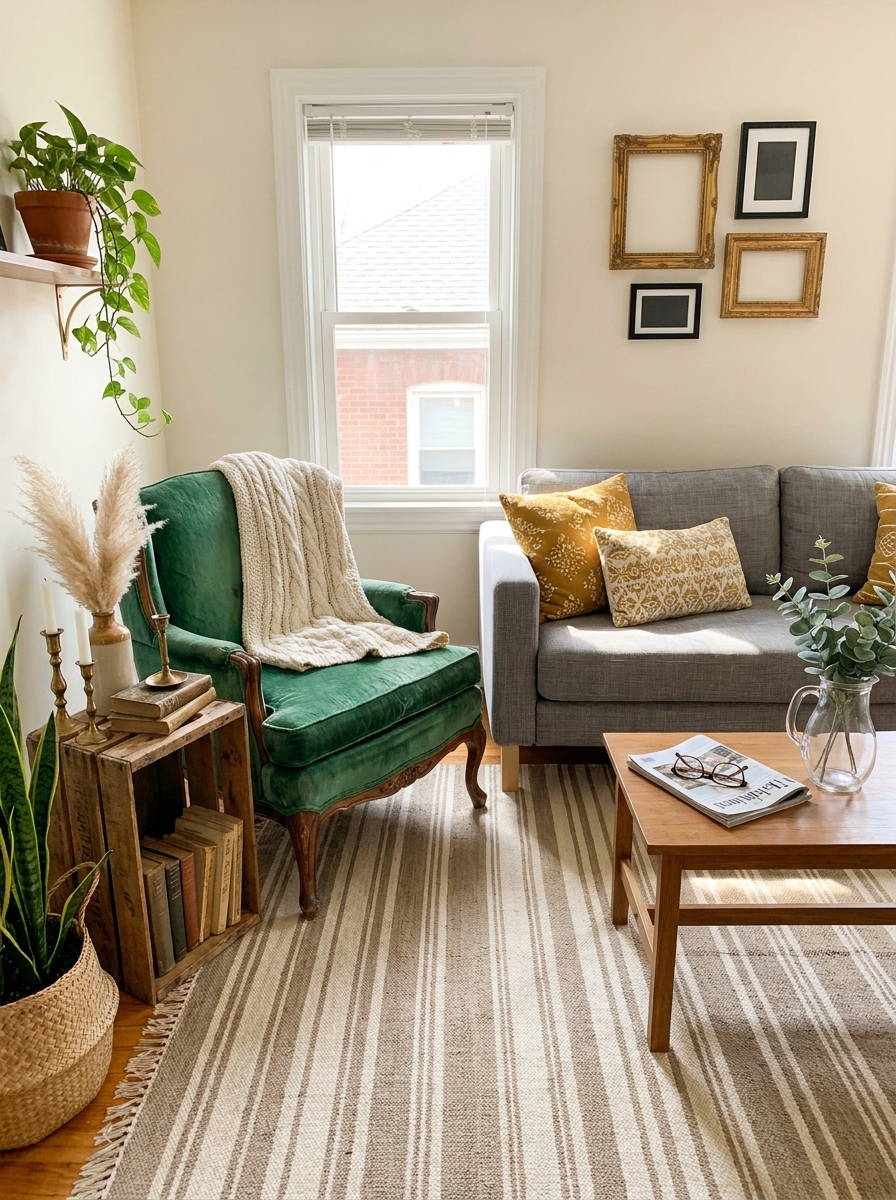
Want to know the real secret designers use? They mix expensive stuff with cheap stuff and nobody can tell which is which. Your living room doesn’t need to be all West Elm or all IKEA. The magic happens when you blend them together.
I have a gorgeous vintage brass floor lamp I scored at an estate sale next to a side table from Target, and people always assume the whole setup cost a fortune. The trick is choosing your splurge carefully—maybe one amazing thrifted chair—then surrounding it with budget-friendly neutrals that let it shine.
This approach makes your space feel collected over time instead of bought all at once from the same store. Way more interesting and personal. Plus it takes the pressure off. You don’t need to save up for months to buy everything matching. Grab what you love when you find it, fill in the gaps with affordable basics, and suddenly you’ve got a living room with actual character and depth.
16. Use Baskets for Stylish Hidden Storage
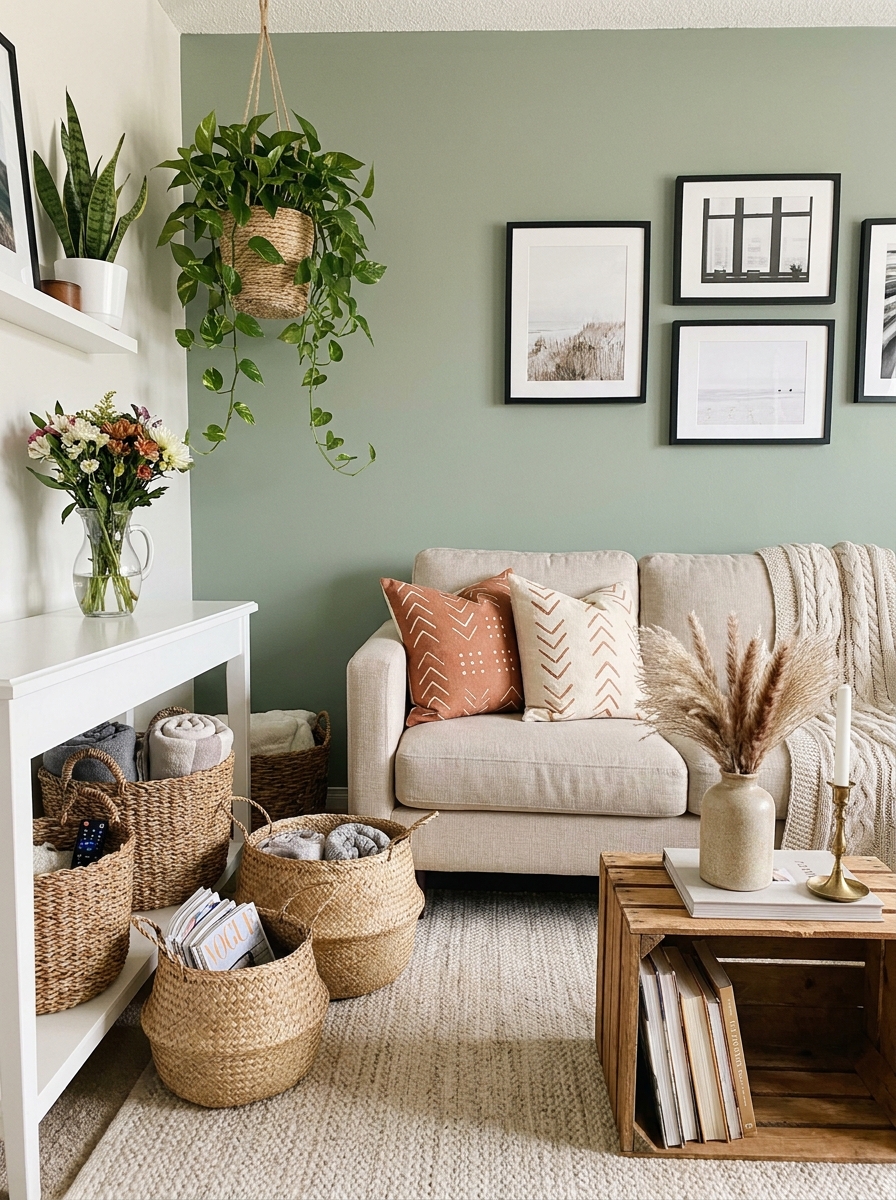
Baskets are the ultimate cheat code for a tidy living room. They hide all your junk but still look intentional and pretty sitting out in the open. I’m obsessed with them because they’re cheap, versatile, and they work with literally any decorating style.
Tuck woven baskets under your console table to corral remotes and magazines. Stack them in corners to hide extra throw blankets. Use them as planters for your bigger greenery. They add texture and warmth while solving your clutter problem at the same time—total win-win.
I found a set of three seagrass baskets at HomeGoods for fifteen dollars and they’ve been workhorses in my living room ever since. One holds my son’s toys, one stores extra pillows, and one is home to a big faux fiddle leaf fig. Nobody knows they’re hiding chaos because they just look like purposeful decor. The natural texture makes any space feel cozier and more layered, like you actually tried instead of just shoving everything in a closet.
17. Paint or Stain Old Wood Furniture for a Custom Look
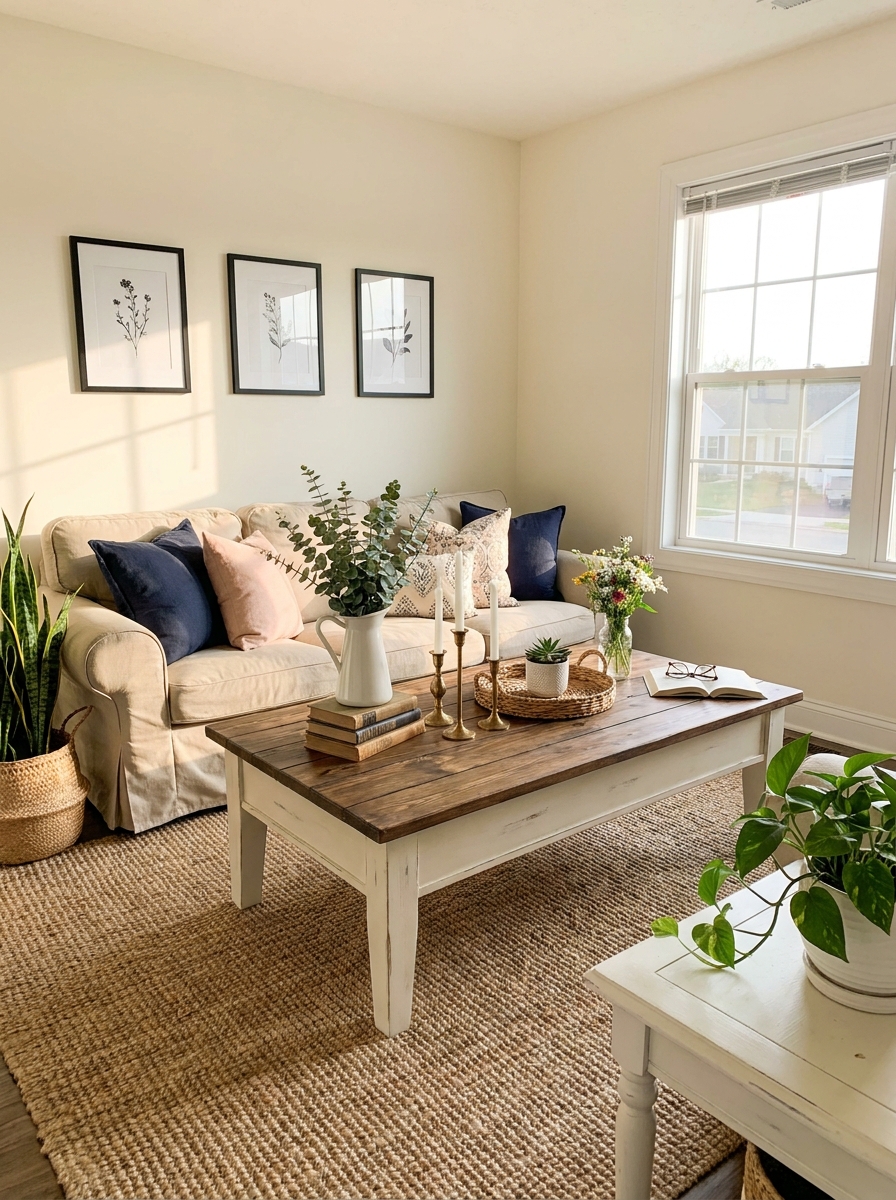
That ugly wood coffee table you inherited from your aunt? It’s actually a goldmine. A can of paint or wood stain can turn any dated furniture piece into something that looks expensive and custom-made for your space.
I’ve transformed so many sad thrift store finds with just paint and an afternoon. A beat-up side table becomes chic in matte black. An old bookshelf gets farmhouse charm with white paint and new hardware. Suddenly you’ve got unique pieces nobody else has, and you spent maybe twenty dollars on supplies.
The best part is you can match your furniture to your exact color palette instead of hoping stores carry what you need. Want a coffee table in that perfect greige? Mix your own. Need navy nightstands? Paint them yourself. It’s weirdly empowering and super satisfying. Plus painted furniture hides wear and tear better than stained pieces, so it’s actually practical for real life. Don’t be scared—worst case, you paint over it again.
18. DIY Your Own Artwork (It’s Easier Than You Think)
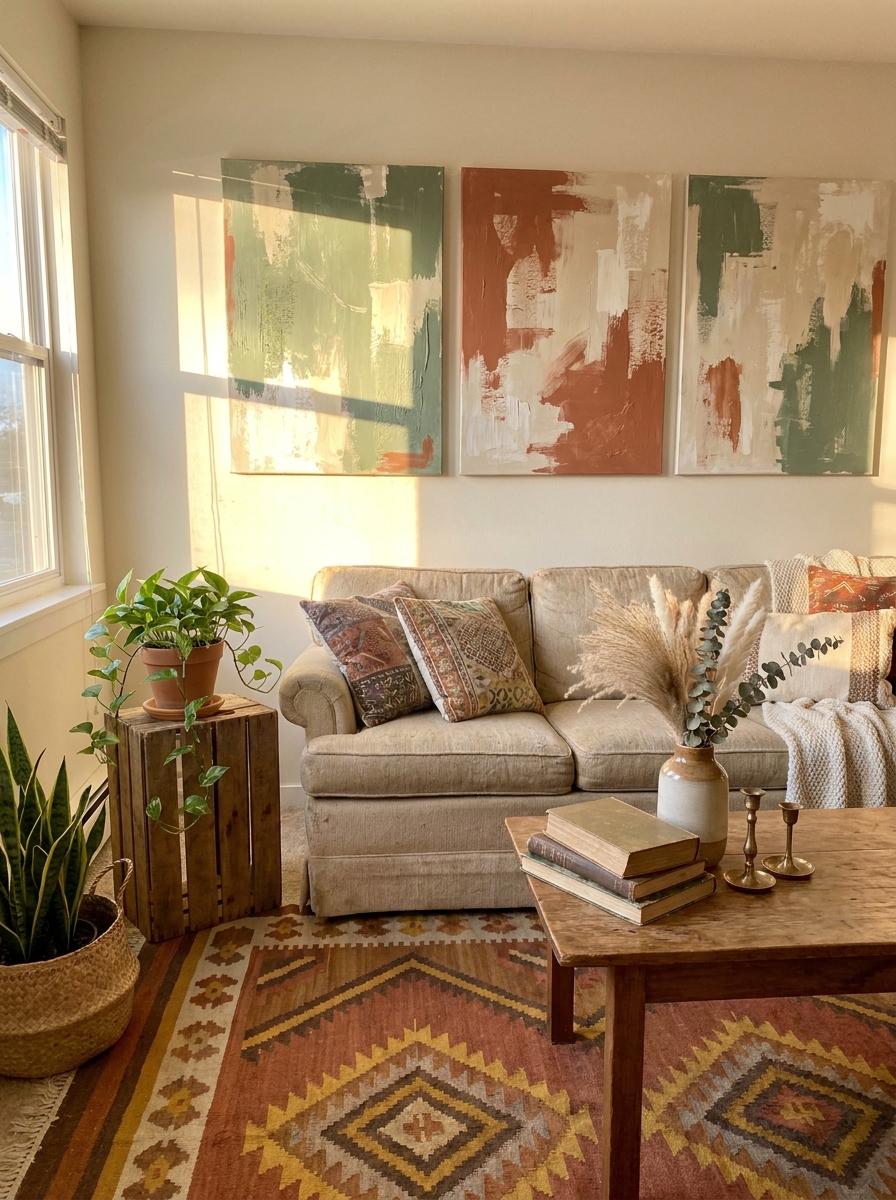
Look, I’m not saying you need to become Picasso. But homemade art is the ultimate budget hack that makes your space feel totally custom. Abstract paintings are ridiculously forgiving—grab some cheap canvases from the craft store, pick 2-3 colors that match your room, and just go for it. Brush strokes, splatters, geometric shapes—it all works.
I once made three matching abstract pieces for under $20 total, and guests still ask where I bought them. The trick is keeping your color palette simple and repeating the same colors across multiple canvases so they look intentional together. Even if you’re nervous, remember that abstract art literally has no rules.
You can also frame fabric remnants, pages from old books, pressed flowers, or even paint chips arranged in an ombré pattern. Mount them on foam board, pop them in cheap frames, and suddenly you’ve got original art that cost next to nothing. The best part? Nobody else will have the same pieces hanging in their living room.
19. Use Mirrors Strategically to Fake More Space
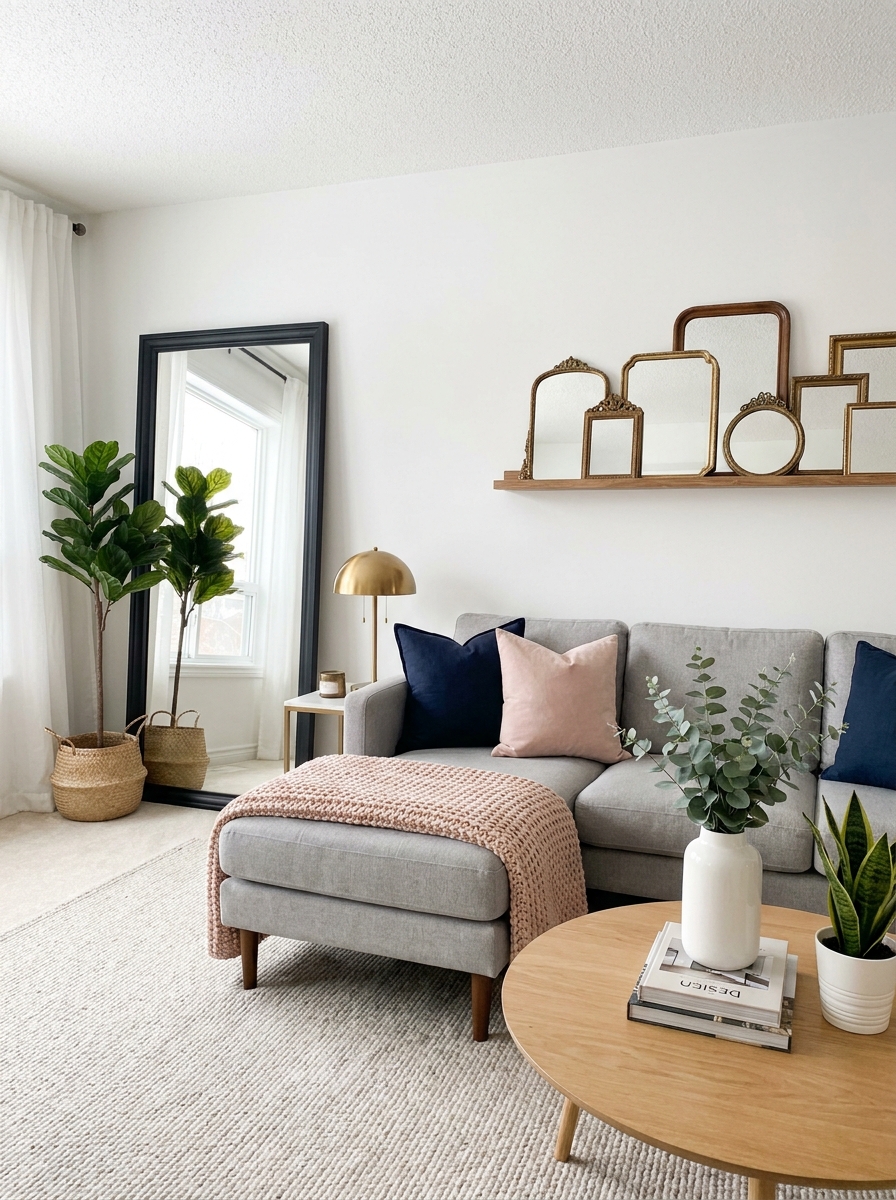
Mirrors are like magic for small living rooms on a budget. They bounce light around, make your space feel twice as big, and you can find them cheap literally anywhere—thrift stores, HomeGoods, even Facebook Marketplace. The key is placement. Put a big mirror across from a window and watch your room transform.
I’m obsessed with leaning oversized mirrors against the wall instead of hanging them. It looks effortlessly cool and saves you from putting holes in the wall. Plus, you can find huge floor mirrors at places like IKEA or Target for under $50. If you want something fancier, hit up estate sales for vintage mirrors with ornate frames—they add character without the custom price tag.
Don’t just think one big mirror, either. A collection of small vintage mirrors arranged on one wall creates a gallery effect that feels collected over time. Mix different shapes and frame styles for that eclectic, high-end look. The reflection adds dimension and the varied frames add visual interest without costing a fortune.
20. Change Your Hardware for Maximum Impact with Minimum Spend
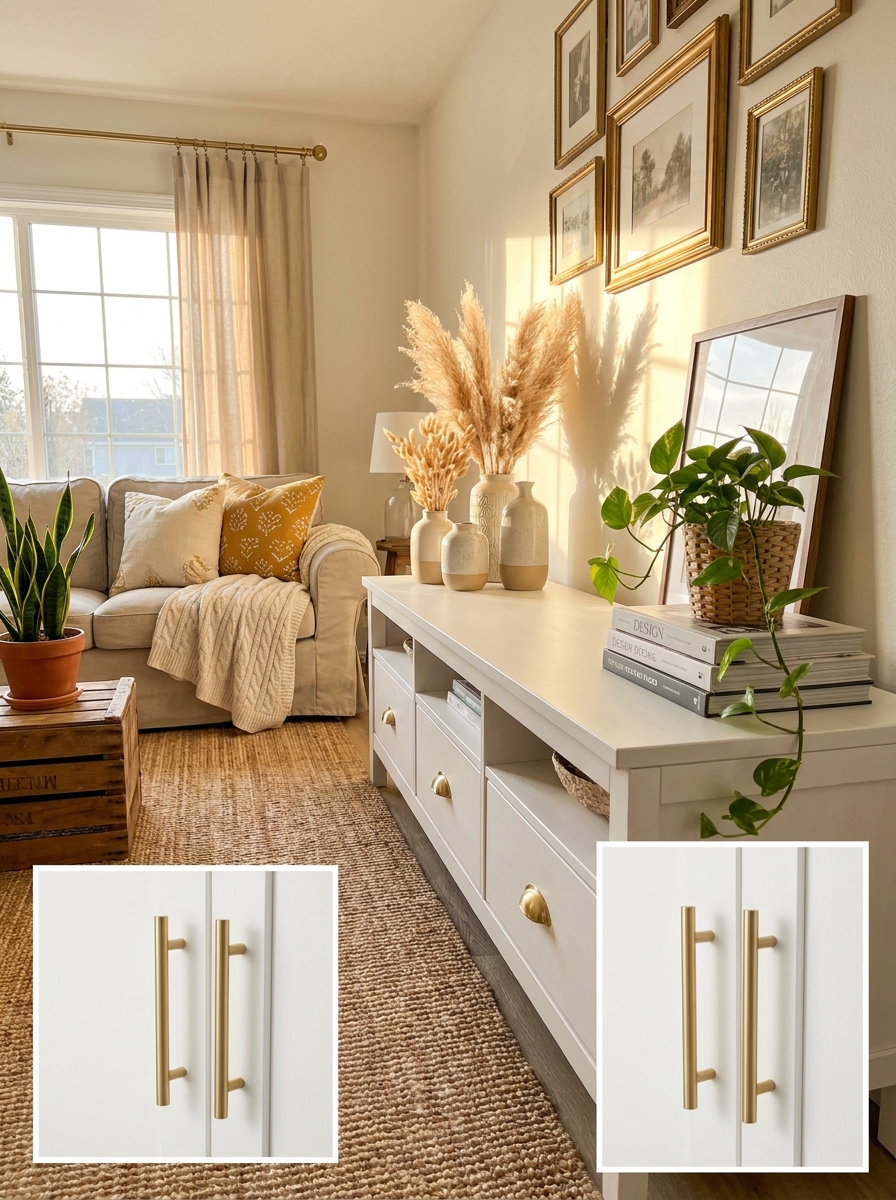
This is one of those tiny changes that makes a shockingly huge difference. Swapping out old, builder-grade hardware on your media console, bookshelf, or storage pieces costs maybe $3-5 per knob and completely transforms the look. Brass pulls instantly add warmth, matte black feels modern, ceramic knobs bring in vintage charm—it’s all about what vibe you’re chasing.
I replaced the boring silver handles on my TV stand with brass pulls from Amazon, and suddenly the whole piece looked custom and expensive. It took ten minutes and maybe fifteen bucks. You can also update curtain rods, switch plates, and door handles for that cohesive, thought-out feel throughout your living room.
The trick is choosing one finish and sticking with it across the room. All your metals should talk to each other—if you go brass on your hardware, echo it in your lamp base, picture frames, or candle holders. That repetition is what makes a space feel designed instead of random. It’s the cheapest way to look like you hired someone.
21. Style Empty Corners to Make Every Inch Feel Intentional
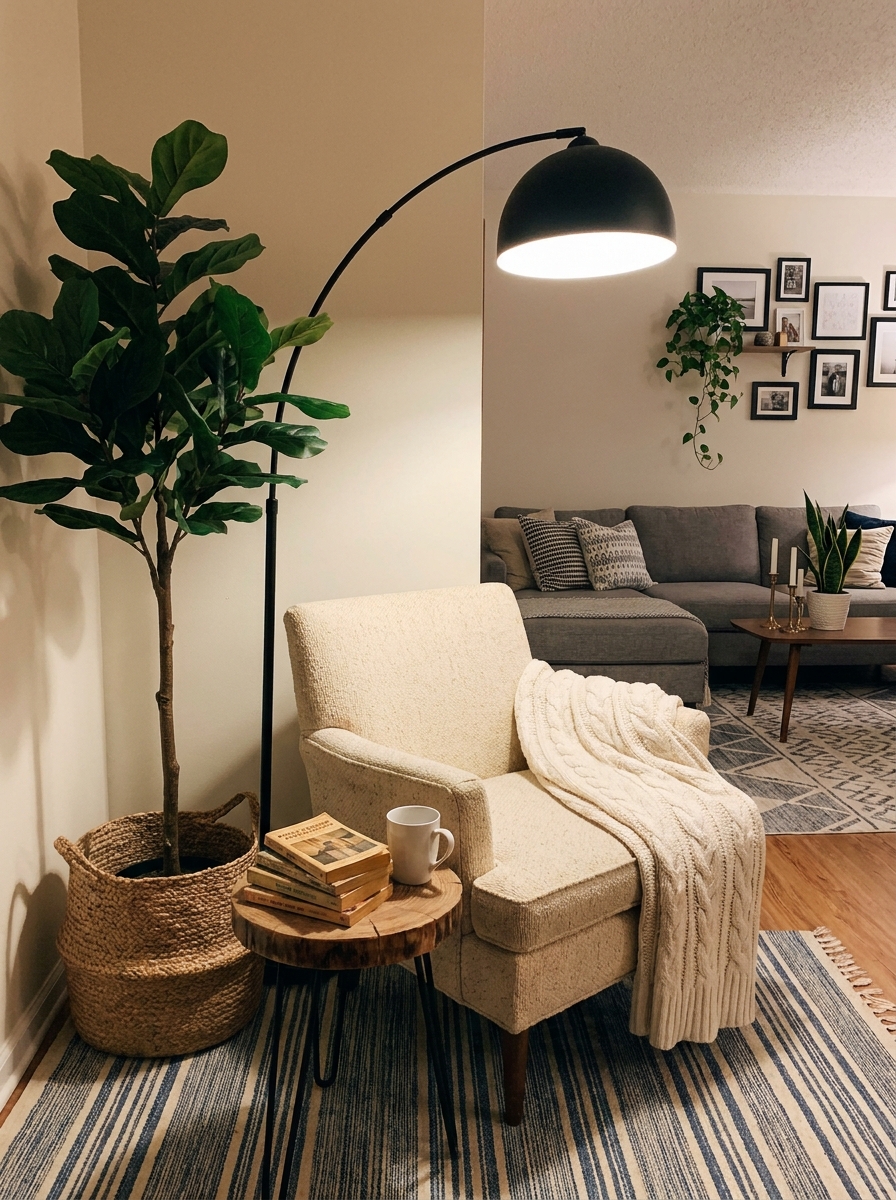
Empty corners always feel like wasted potential, but they’re actually your secret weapon for making a living room feel complete and decorated. A tall plant in a corner instantly softens the space and draws your eye up. Add a small side table or stool, a lamp, and maybe a stack of books, and suddenly that dead zone becomes a curated moment.
I love using corners for reading nooks on a budget—a thrifted chair, a cheap floor lamp from Target, and a cozy throw create an actual destination spot without taking up your main seating area. Or go minimal with just an oversized faux fiddle leaf fig and a basket for blanket storage underneath. The corner becomes functional and beautiful.
Floor lamps are especially perfect for corners because they add height and lighting exactly where rooms tend to feel dark. Look for arched styles that reach over seating or simple tripod designs that don’t cost much but look super modern. Layer in texture with a small rug or pouf, and you’ve turned forgotten space into a design feature that makes your whole room feel more finished and thought-out.
Quick Guide
Budget Breakdown: What to Spend Where
| Category | Budget Range | Best Sources |
|———-|————–|————-|
| Paint (accent wall) | $30-50 | Hardware stores, sample sales |
| Throw pillows (covers only) | $40-80 for 5-7 | Target, TJ Maxx, Amazon |
| Thrifted frames | $15-30 for gallery wall | Goodwill, estate sales, Facebook Marketplace |
| Area rug | $50-150 | Rugs USA, Walmart, IKEA |
| Plants & planters | $30-60 | Local nurseries, grocery stores, thrift planters |
| DIY materials (spray paint, hooks, supplies) | $25-40 | Dollar stores, hardware stores |
Total for major impact: $190-410
The secret? Invest in the big stuff that fills space (like rugs), and go budget or DIY on the small stuff that adds personality.
Your Living Room, Your Budget, Your Rules
Here’s what nobody tells you about decorating on a budget: it actually makes you more creative. When you can’t just swipe your card at Pottery Barn, you have to think differently. You thrift, you DIY, you rearrange, you get scrappy. And honestly? Those rooms have so much more personality than the ones where everything came from the same store on the same day.
Your living room doesn’t need to look like it belongs in a magazine. It needs to feel like you, function for your actual life, and make you happy when you walk in after a long day. If you can pull that off with smart paint choices, thrifted finds, and pillows from Target’s clearance aisle, you’ve won. Start with one or two of these ideas this weekend. Not all 21 at once — that’s overwhelming and unnecessary. Pick the ones that made you think “oh, I could totally do that,” and just start. Your living room is waiting, and it doesn’t care what your budget is.
Frequently Asked Questions
How can I make my living room look expensive on a tight budget?
Focus on three key areas: paint an accent wall for drama, layer different textures with affordable throw pillows and blankets, and declutter ruthlessly so what you do have can shine. Adding greenery and creating a gallery wall with thrifted frames also tricks the eye into seeing a curated, expensive space. The secret is editing and intentional styling, not spending more money.
What’s the cheapest way to update my living room decor?
Rearrange your furniture first — it’s completely free and shockingly transformative. Float your sofa away from walls and create conversation areas. Then add paint (one accent wall costs about $30-40) and swap out or add throw pillow covers for under $50. These three things can make your room look completely different without major purchases.
Where should I shop for budget-friendly living room decor?
Hit up thrift stores and Facebook Marketplace for unique finds like frames, side tables, and planters. Target’s clearance section and TJ Maxx are goldmines for pillows, throws, and small decor. IKEA and Walmart have surprisingly good budget rugs. Dollar stores work great for vases and basic styling props you can spray paint to match your aesthetic.
How do I decorate my living room with no money?
Start by shopping your own home — move decor from other rooms, rearrange furniture to create new zones, and declutter to let your space breathe. Create free wall art from printables, use things from nature like branches or stones, and repurpose items you already own. Even just editing what’s out and restyling your coffee table costs nothing but makes a visible difference.
What are the best DIY projects for living room decorating on a budget?
Gallery walls with thrifted frames you spray paint yourself give huge impact for under $30. Making your own throw pillow covers from fabric remnants or even dish towels costs less than $10 each. Painting an accent wall, creating art from free printables, and repurposing wooden crates as side tables are all weekend DIY projects that transform your space without breaking the bank.