19 Dreamy Studio Apartment Ideas That Feel Twice the Size
You walk into your studio apartment and feel that familiar squeeze. Everything’s right there — your bed, your kitchen, your workspace, your entire life in one room. But here’s the thing: small doesn’t have to mean cramped or chaotic. I’ve seen 400-square-foot studios that feel more spacious and put-together than some two-bedroom apartments. The secret? It’s not about having less stuff (though that helps). It’s about being ridiculously smart with every single inch. We’re talking furniture that works overtime, visual tricks that fool the eye, and storage solutions so clever they basically deserve their own award. Whether you’re in your first post-college place or you’ve chosen studio living for the freedom it brings, these ideas will help you create a home that feels open, organized, and completely you. Let’s get into it.
1. The Magic of a Murphy Bed
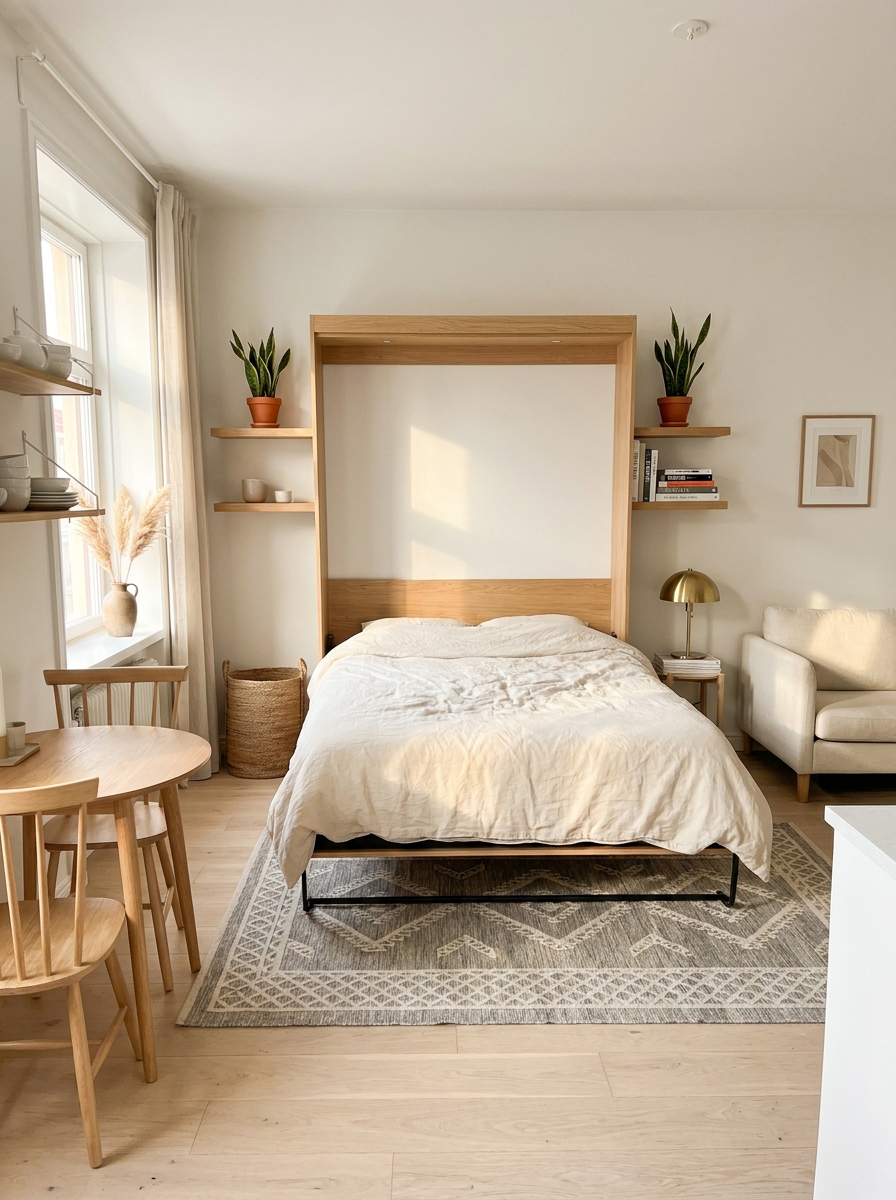
Okay, let’s talk about the ultimate space-saver. A Murphy bed literally gives you your floor back during the day. When it’s folded up, you’ve got a full living room. When it’s down, you’ve got a real bed — not some uncomfortable futon situation. Modern Murphy beds don’t look like your grandma’s clunky wall contraption anymore. They come with built-in shelving, integrated desks, or even stylish cabinetry that looks intentional when closed. Some have cushioned panels that turn into a sofa when the bed’s tucked away.
The installation does require some commitment (you’re mounting to the wall), but the payoff is massive. You’re basically getting two rooms in one. I love the versions with floating nightstands on either side that stay put whether the bed’s up or down. And if you’re renting? Some companies make freestanding Murphy bed units that don’t require wall mounting. Just make sure you measure your ceiling height first — you need about eight feet of clearance. The fold-down motion becomes second nature after a week, I promise.
2. Room Dividers That Actually Look Good
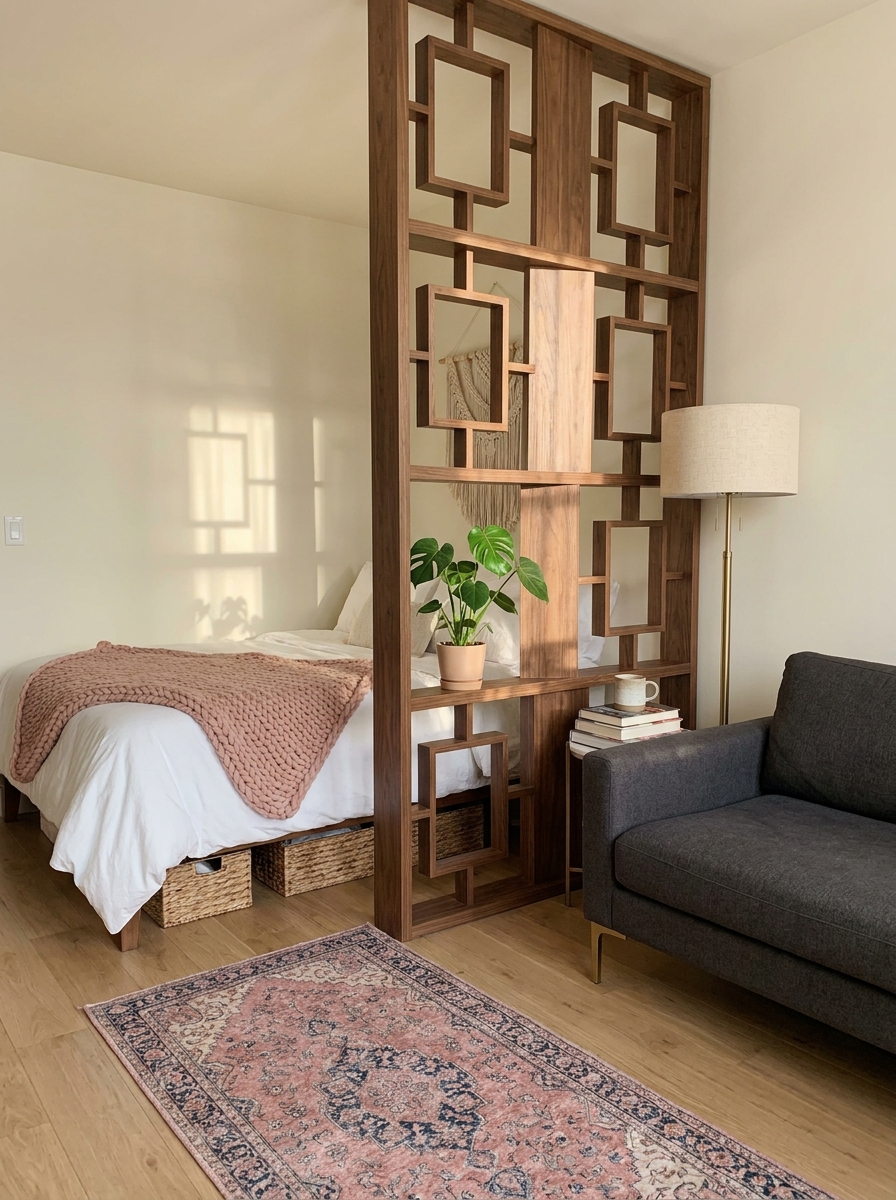
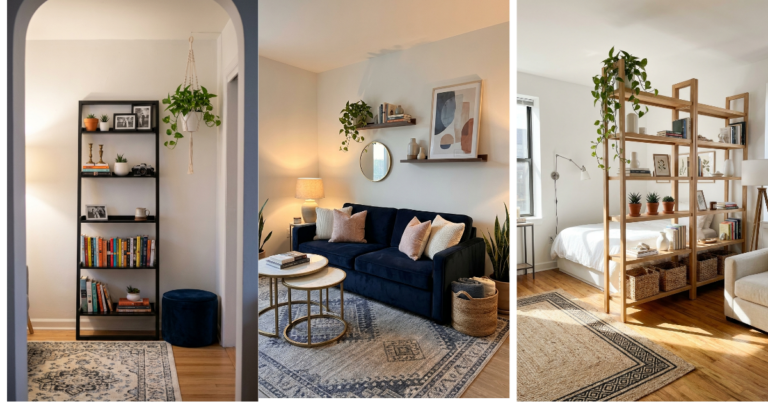
You need to separate your bed from your living space, but a solid wall isn’t happening. Enter the room divider. But we’re not talking about those flimsy accordion things from college. Think open shelving units that let light through, fabric curtains that add softness, or even a tall bookcase turned sideways. The key is choosing something that defines the zone without blocking all the light and air.
I’m obsessed with those mid-century inspired wooden dividers with geometric cutouts. They create privacy while keeping the whole space feeling connected. Or try a ceiling-mounted curtain track with linen drapes you can pull closed at night and open during the day. It’s like having a studio and a one-bedroom depending on your mood. Plants work too — a row of tall potted fiddle leaf figs or a hanging macramé planter situation can create a soft, living boundary. The bonus? You’re adding texture and life to your space at the same time. Whatever you choose, make sure it doesn’t go all the way to the ceiling unless you really need that level of separation. Leaving a gap keeps things feeling open.
3. Floating Shelves for Vertical Storage
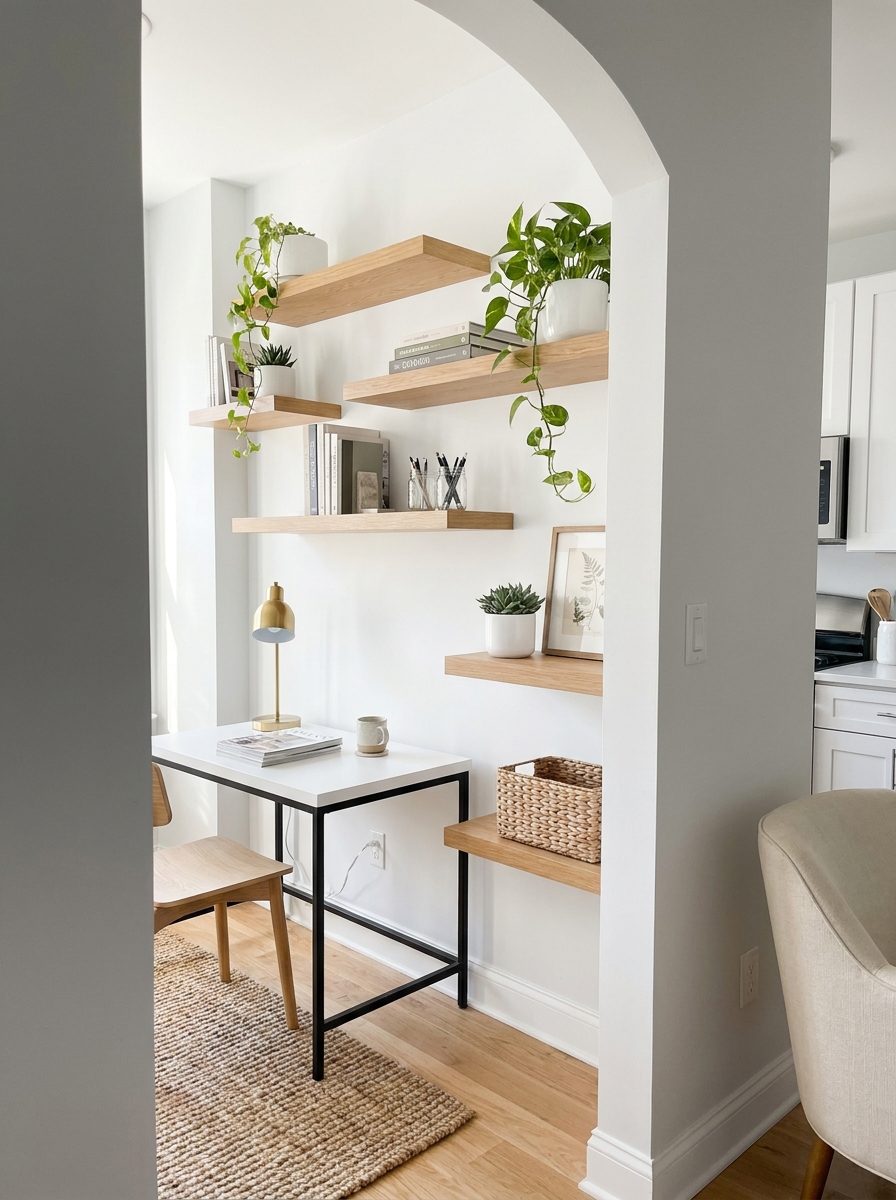
When you don’t have floor space, you go up. Floating shelves are your best friend because they add storage and style without eating up precious square footage. The trick is installing them at varying heights to create visual interest and maximum function. Put them above your desk for books and supplies. Line them along the kitchen wall for dishes and pretty jars of pantry staples. Add a cluster above your bed as a nightstand alternative.
I love mixing shelf lengths — a long one paired with a couple shorter ones looks intentional, not random. And don’t just think horizontal. Corner shelves utilize that awkward dead space beautifully. The key is not overloading them. Each shelf should have a mix of functional items and pretty things. Stack three books, add a small plant, include one decorative object. That’s it. White or light wood shelves disappear into the wall and keep things feeling airy. Darker shelves make more of a statement but can feel heavy if you go overboard. Start with three shelves and see how you feel before you turn your wall into Swiss cheese. Use a level, people. Nothing screams amateur like crooked shelves.
4. A Sofa That Pulls Double Duty
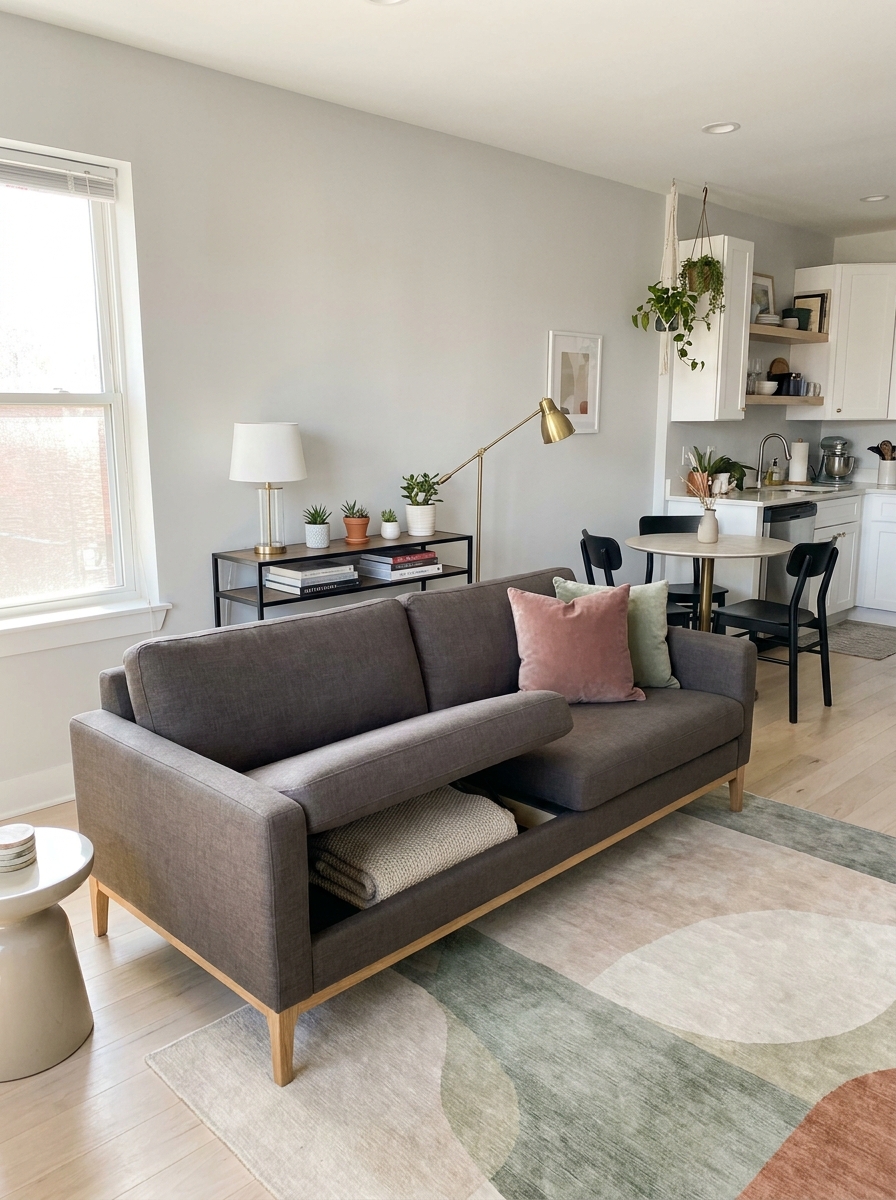
In a studio, your sofa can’t just be a sofa. It needs to work harder than that. Look for one with hidden storage underneath the cushions for extra blankets, or a pull-out sleeper for when guests crash. Sectionals might seem too big, but a small L-shape can actually define your living area beautifully and provide tons of seating without needing extra chairs. Plus, that corner spot? Perfect for an end table or a tall plant.
I’m a huge fan of sofas with low profiles and slim arms. They take up less visual space even if the actual dimensions are similar to a bulkier style. Skip the oversized overstuffed look — it’ll swallow your studio whole. And pay attention to leg style. Exposed legs (especially in wood or metal) create a sense of openness because you can see the floor underneath. Skirted sofas that go to the ground make the room feel heavier. Neutral colors are your friend here because you can switch up pillows and throws as your style evolves. But if you want color, go for it. Just make sure it’s a color you genuinely love because this piece is going to anchor your entire space.
5. Mirrors That Make Your Space Feel Massive
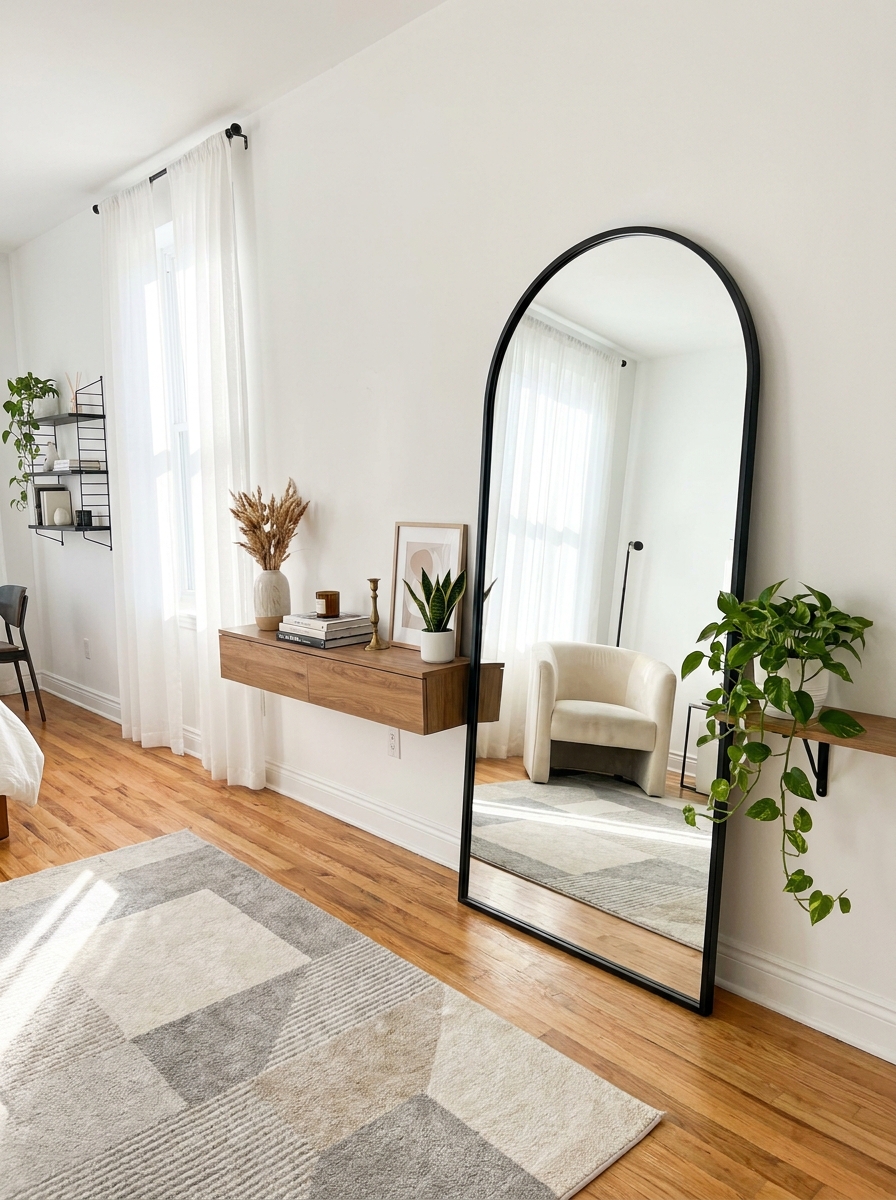
I learned this trick from my tiny NYC apartment days: mirrors are absolute magic for studios. A large floor-to-ceiling mirror can literally double how big your space feels. Wild, right?
The key is placement. Put a big mirror across from a window and you’re basically borrowing all that natural light twice. I once positioned a full-length mirror behind my dining nook and guests genuinely thought I had a whole extra room back there. The reflection creates depth your eyes can’t help but fall into.
Don’t just grab any mirror though. Go for something substantial with a gorgeous frame that feels like actual furniture. Arched mirrors are having a moment and they add this elegant architectural element that studios desperately need. Lean one against the wall or mount it securely. Either way, position it where it reflects something pretty, not your unmade bed or laundry pile. Trust me on that one.
6. Under-Bed Storage You’ll Actually Use
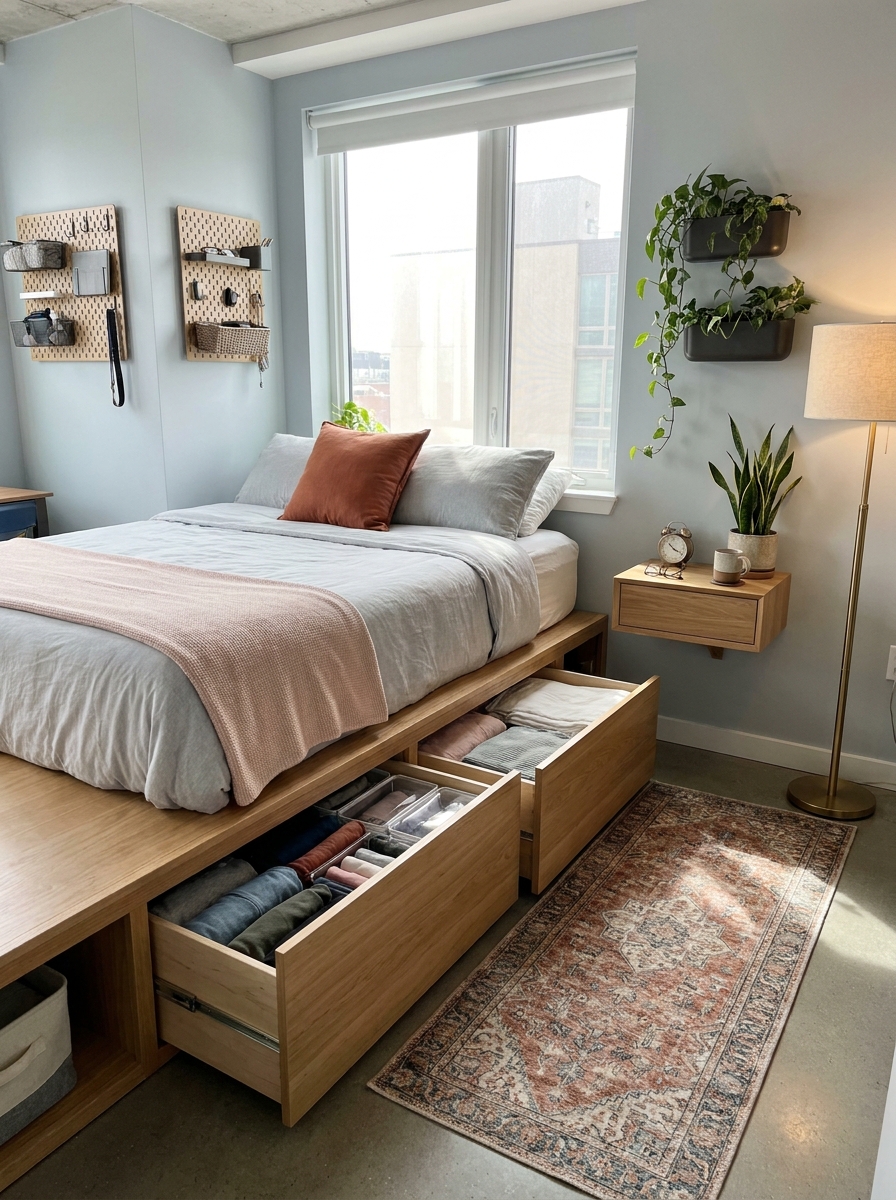
Let’s talk about that massive empty space under your bed. In a studio, ignoring it is basically a crime against square footage. You’re sitting on probably 15-20 cubic feet of potential storage and you’re just… not using it?
I’m obsessed with bed risers and rolling storage bins. Lift your bed up six inches and suddenly you’ve got a whole closet situation happening underneath. Slide in some flat bins for your winter clothes, extra bedding, or all those books you keep meaning to read. The rolling part is crucial because you’ll actually access stuff if it glides out easily.
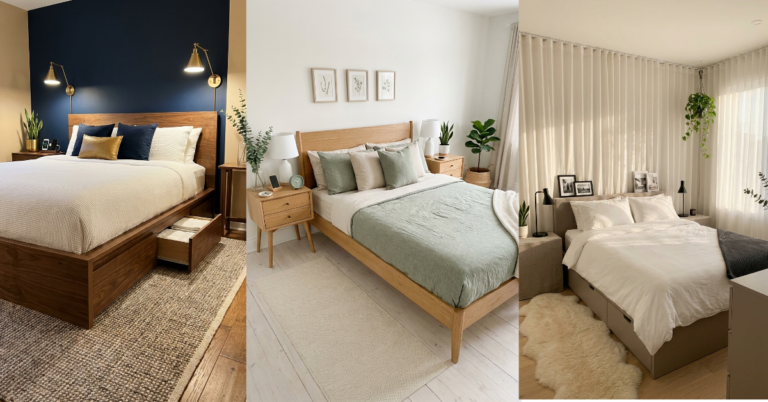
Or go full genius mode with a platform bed that has built-in drawers. Yes, they’re pricier upfront, but think about what you’d pay for a dresser. This way your dresser IS your bed frame. I keep my entire off-season wardrobe, shoe collection, and gift-wrapping supplies under mine. Out of sight but totally accessible.
7. Foldable Furniture That Doesn’t Scream Dorm Room
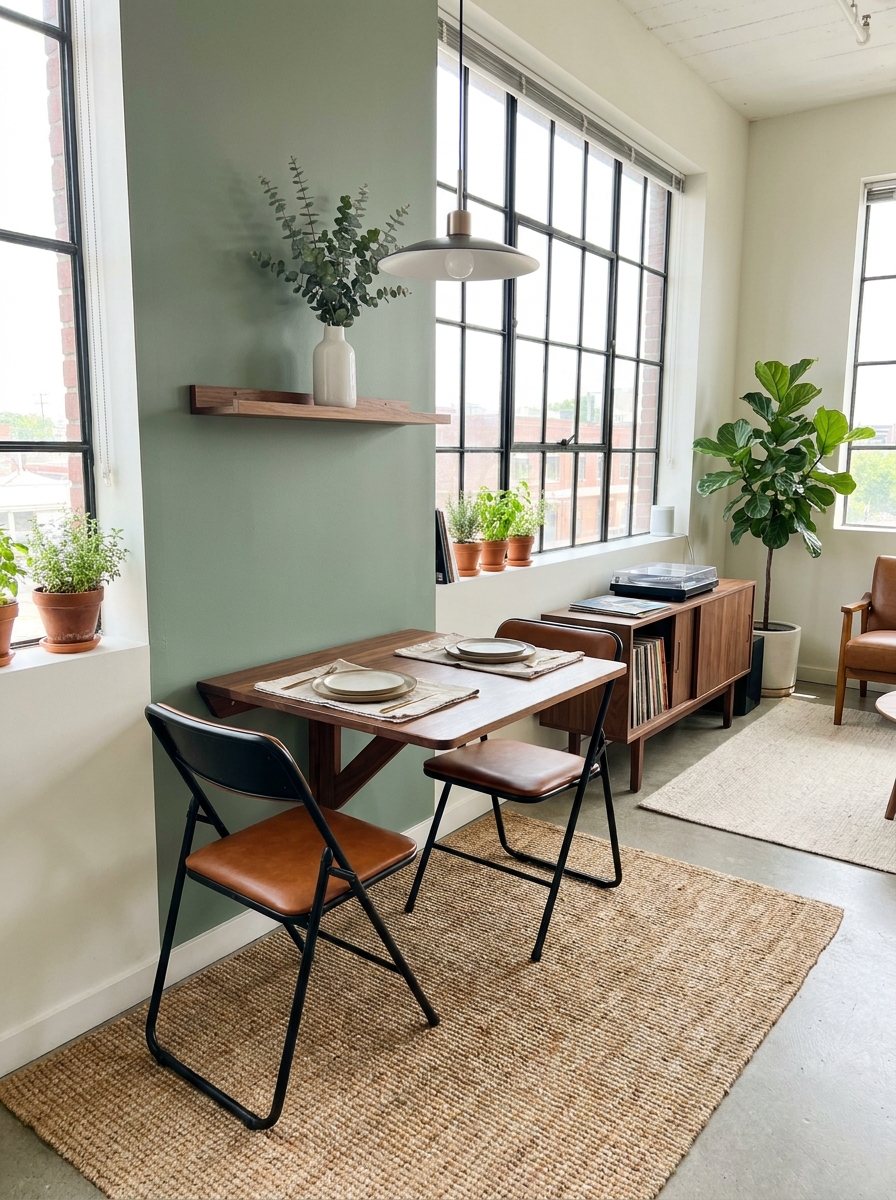
Okay, foldable furniture got a bad rap from those wobbly card tables we all had in college. But the new generation? Gorgeous and genuinely sturdy. I’m talking drop-leaf tables that look like real dining tables, folding chairs that are actually comfortable, nesting tables that feel expensive.
My favorite is a wall-mounted drop-leaf table that folds completely flat when I’m not using it. Dinner for four? No problem, fold it down. Need floor space for yoga? Fold it up and it’s just a slim wooden panel on the wall. The whole thing takes up maybe four inches of depth.
The trick is choosing pieces in quality materials—solid wood, not particle board. Look for clean lines and finishes that match your actual decor. A beautiful teak folding chair doesn’t look temporary, it looks intentional. And bonus: if you move (studios are usually transitional), everything packs up easily.
8. Corner Spaces That Work Harder Than You Think
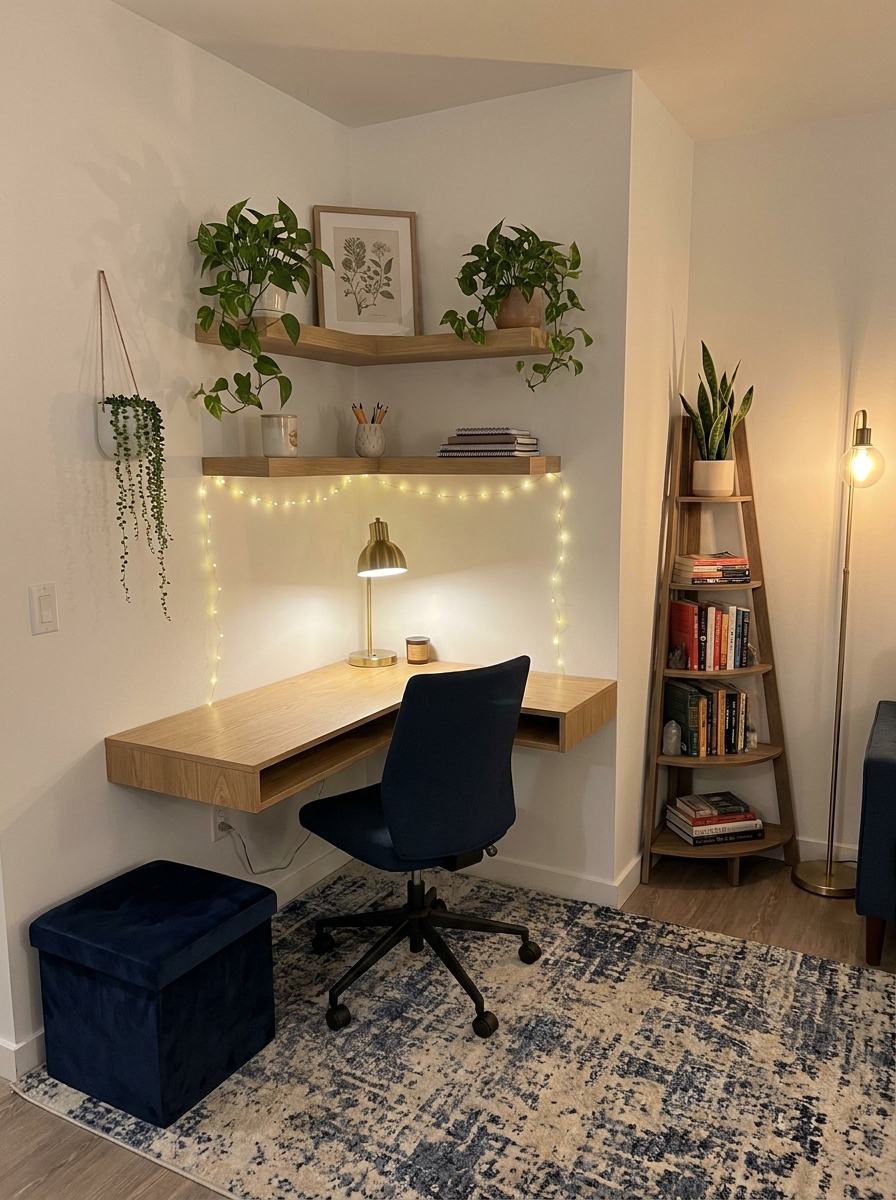
I used to completely waste my corners. Just dead space where dust bunnies threw parties. Then I realized corners are actually premium real estate in a studio. They’re these perfect little nooks just waiting for a purpose.
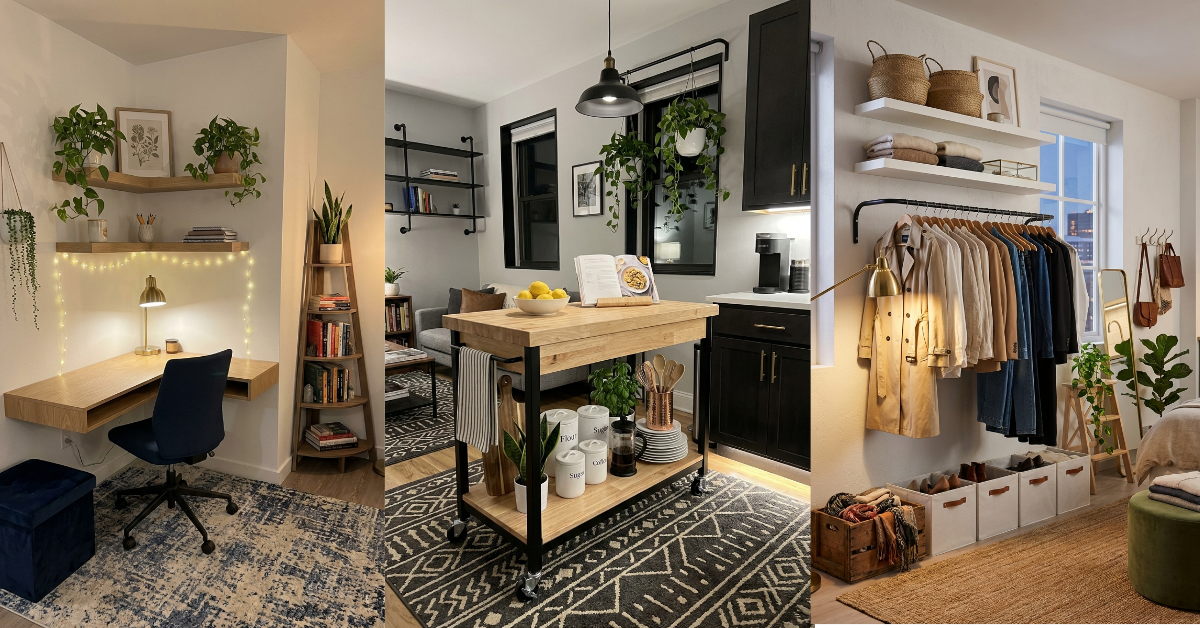
A corner desk setup is brilliant because it tucks your workspace away without eating up a whole wall. Add a corner shelf unit and suddenly you’ve got vertical storage that feels built-in. I’ve seen people create entire reading nooks in corners with just a compact chair, a floor lamp, and some floating corner shelves for books.
The secret is thinking triangular. Corner furniture is specifically designed to fit these angles efficiently. A corner TV stand, a triangular plant stand, even a corner hamper. Each one maximizes space that would otherwise just… exist. And visually, filling corners makes your whole studio feel more finished and intentional, like every inch has been thoughtfully considered.
9. A Kitchen Cart That Moves With Your Needs
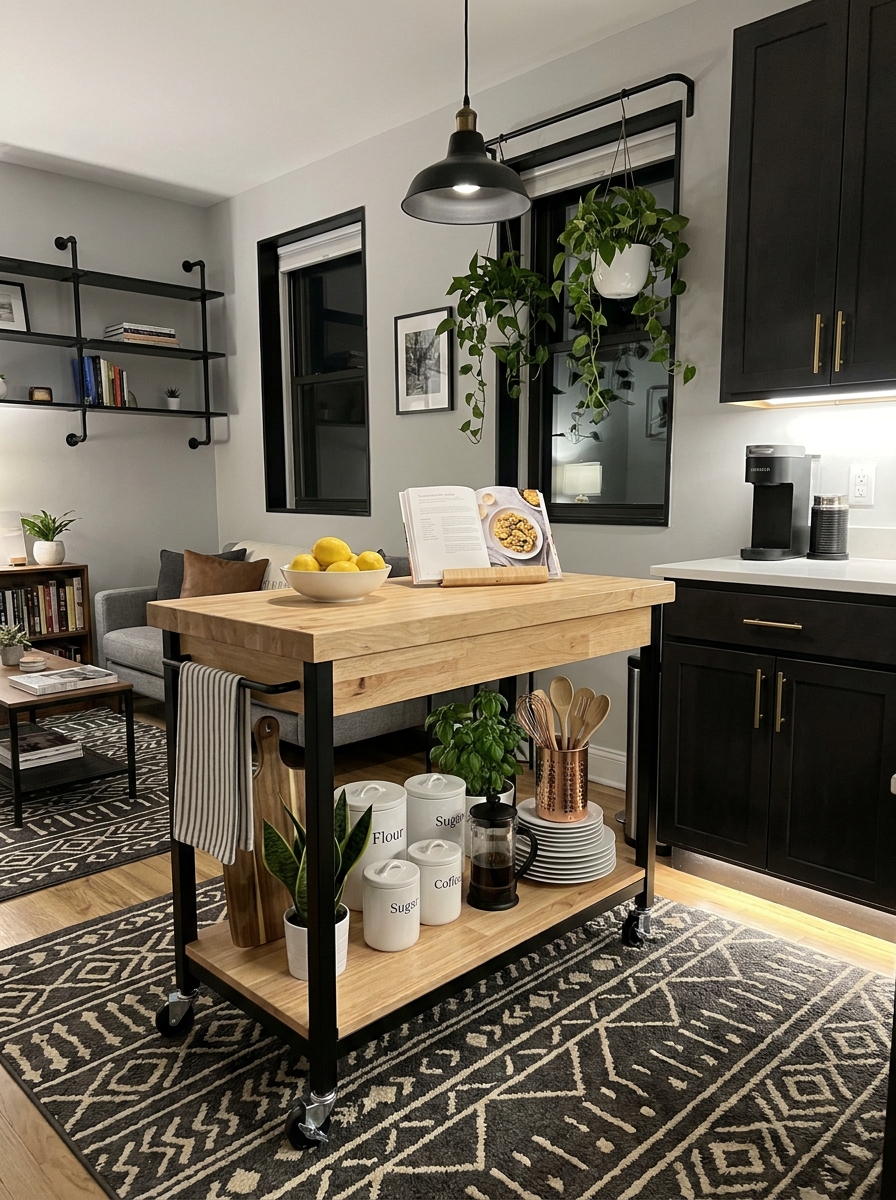
I used to think kitchen carts were just for grandmas, but wow, was I wrong. In a studio where your kitchen is basically a wall with some appliances, a rolling cart is basically extra counter space you can shove wherever you need it. I keep mine next to my two-burner stove when I’m cooking, then roll it against the wall when friends come over.
The best part? The storage underneath. I stack my pots, stick cutting boards on the side hooks, and keep my most-used ingredients on the lower shelf. It’s like a mini pantry that moves. Some carts even have butcher block tops, so you get a legit prep surface that doesn’t look cheap.
Mine lives in three different spots depending on what I’m doing. Cooking? Next to the stove. Working from home? It becomes my printer stand. Movie night? It’s my snack station next to the couch. That’s the kind of flexibility that makes studio living actually fun instead of frustrating.
10. Curtains That Create Instant Rooms
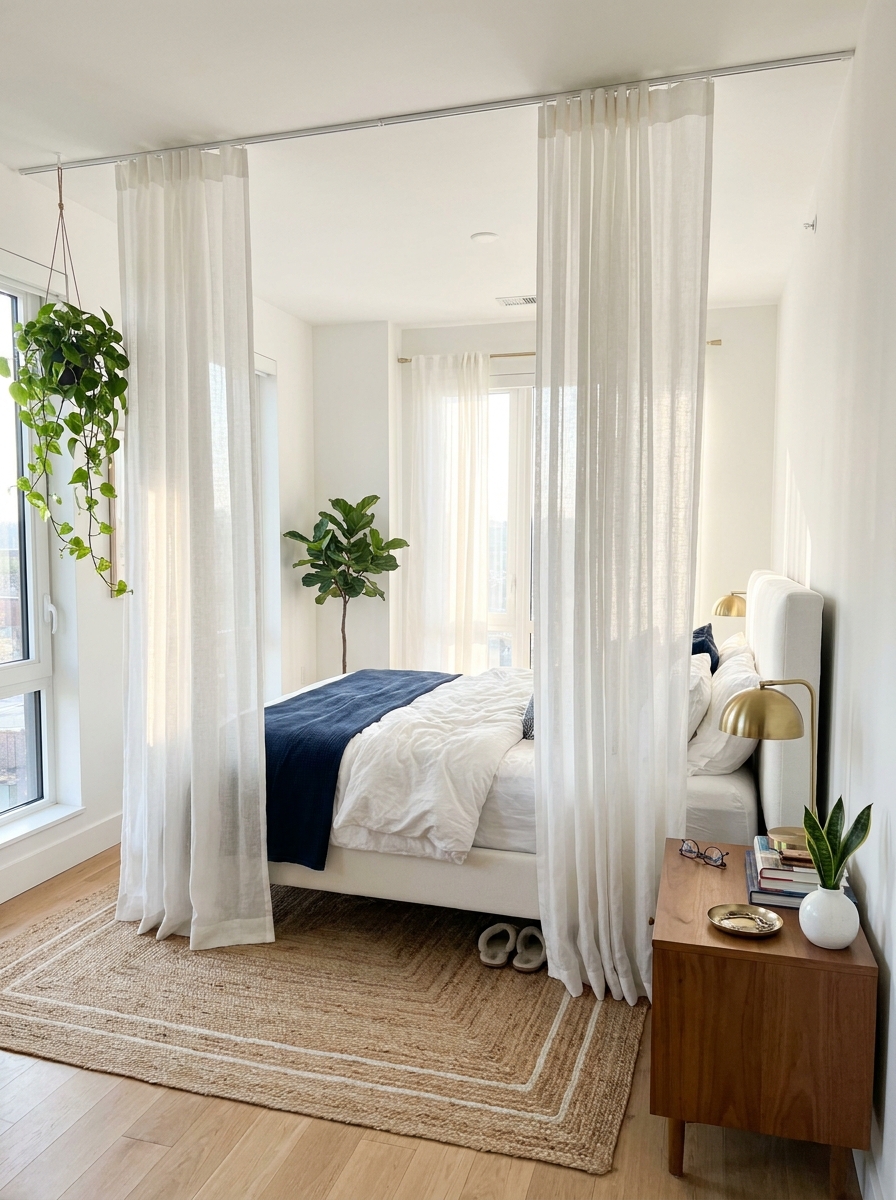
Okay, so walls aren’t happening in your studio. But curtains? Curtains are total game-changers. I hung a ceiling-mounted curtain track around my bed area, and suddenly I had a bedroom. Like, an actual separate space that I could close off when my apartment looked like a disaster or when I just needed to feel cocooned.
The trick is using the right fabric. Sheer curtains let light through but still give you privacy, which is perfect if your bed is near a window. Heavier linen or velvet curtains block more light and sound, which I love for creating a real sleeping zone. You can even layer them—sheers during the day, heavy ones at night.
I’ve seen people use curtains to hide their clothing racks, section off a home office, or create a cozy reading nook. They’re so much softer and prettier than those accordion dividers, and they don’t make your space feel chopped up. Plus, when you want your studio to feel open again, you just pull them back.
11. A Pegboard Wall That’s Actually Chic
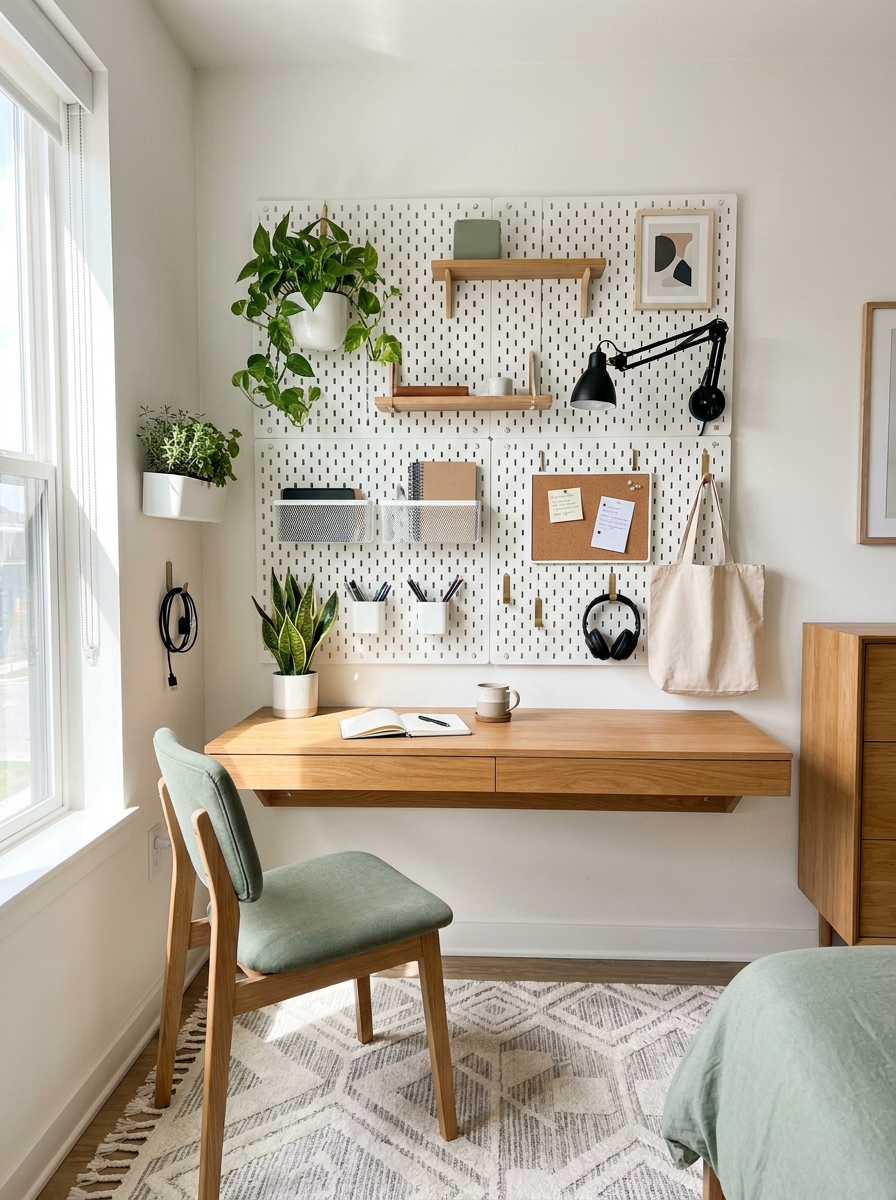
I know pegboards sound very middle-school shop class, but hear me out. When you’ve got zero closet space and not enough drawers, a pegboard wall is like giving yourself an entire storage system that also looks cool. I put one above my desk area, and now all my supplies, headphones, and random stuff have actual homes instead of living in sad piles.
The modern pegboards come in colors now—not just that orange-y wood tone. I got a white one that blends with my wall, but I’ve seen black ones that look super sleek and even pastel ones that add a fun pop. You can customize the hooks and shelves to hold whatever you need. Mine has little baskets for chargers, hooks for bags, and a tiny shelf for plants.
What I love most is that everything is visible and accessible. No digging through drawers or bins. And when your whole apartment is one room, keeping things organized and pretty on display actually makes the space feel bigger, not more cluttered. It’s like functional wall art that earns its keep.
12. Ottomans That Hide Your Entire Life
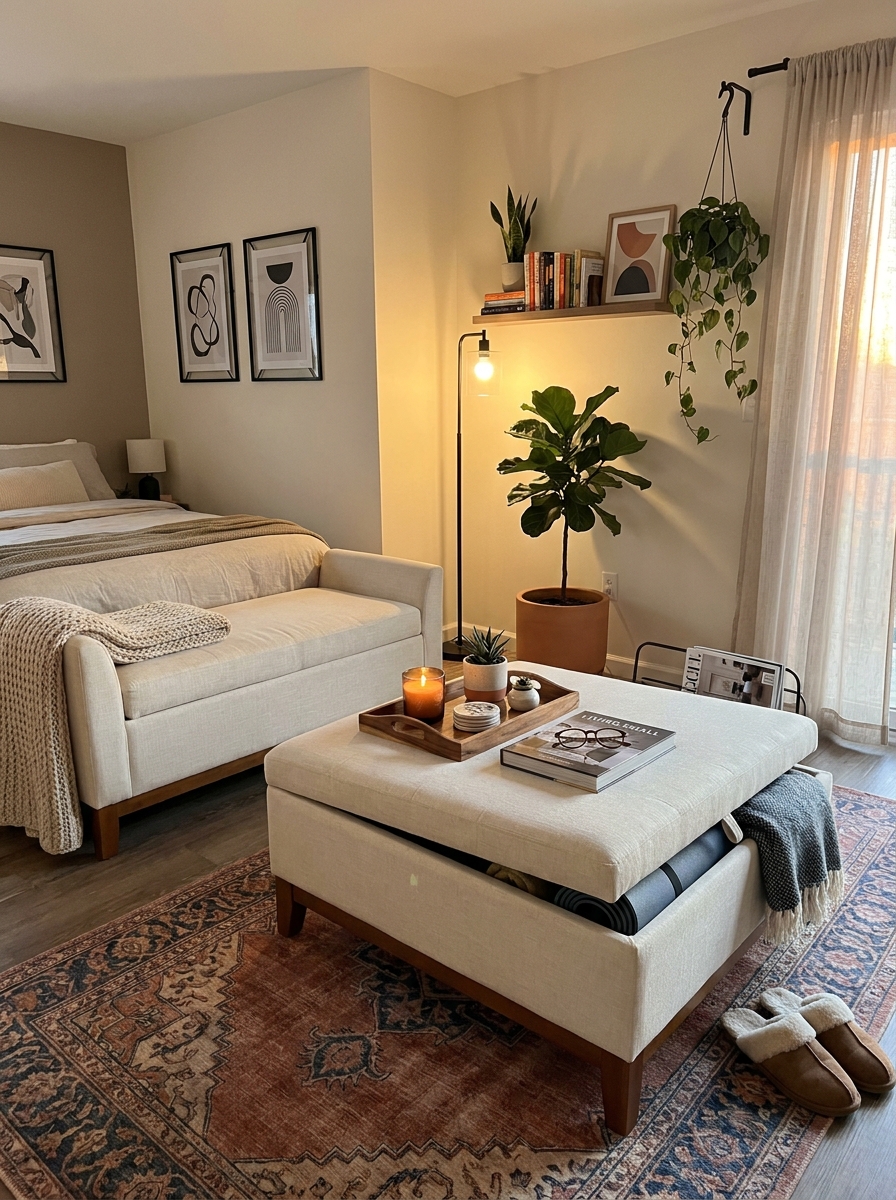
Storage ottomans are secretly the MVPs of studio apartment furniture. They look like regular furniture, but inside? That’s where I hide everything I don’t want to look at but need to keep—extra blankets, out-of-season clothes, my collection of reusable shopping bags that somehow multiplied.
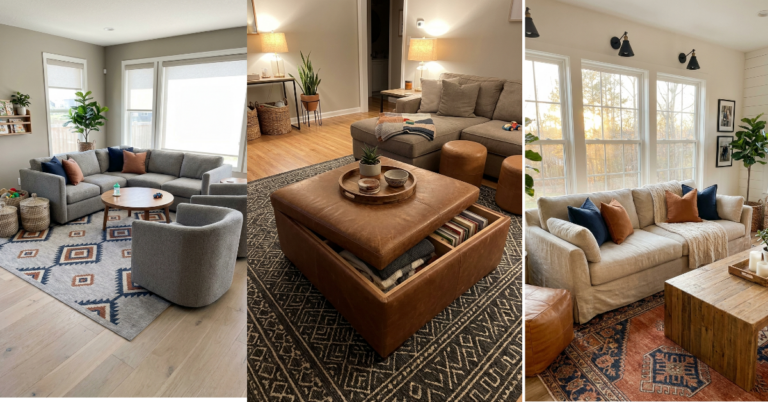
I have two in my living area. One serves as my coffee table (with a tray on top for stability), and the other sits at the foot of my bed for extra seating when friends visit. Both are stuffed with things that would otherwise be exploding out of my one tiny closet. The best ones have hinged tops that stay open while you dig around, because trust me, nothing’s more annoying than a lid that slams on your hand.
They’re also perfect for last-minute cleanups. Guest coming over in ten minutes? Throw all your mess into the ottoman, close the lid, sit on it, and look totally put-together. I’m not saying I do this regularly, but I’m not not saying it either. It’s the kind of furniture that works as hard as you do.
13. A Loft Bed That Doubles Your Square Footage
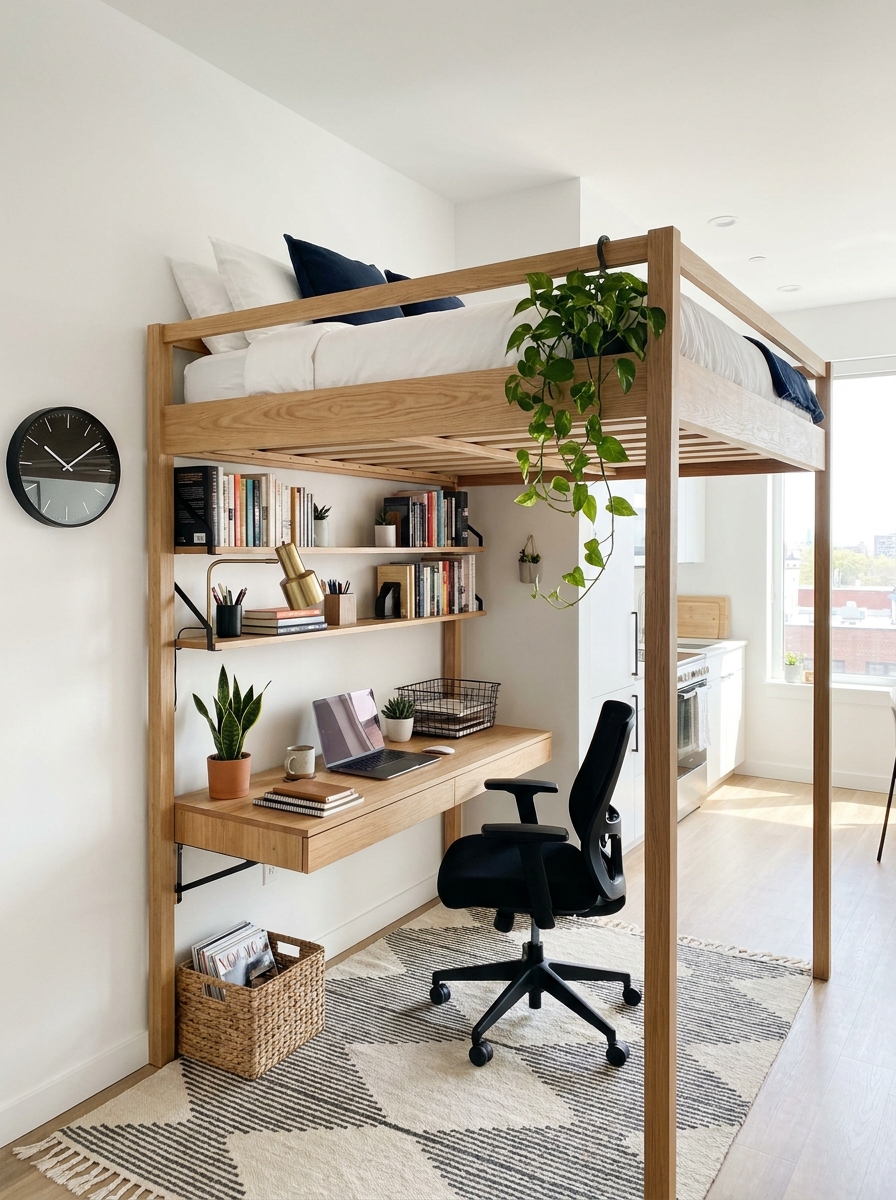
Okay, hear me out. Loft beds aren’t just for college kids anymore. When you lift your bed up, you suddenly have an entire room underneath it. I’m talking a cozy reading nook, a mini home office, or even closet storage you desperately need.
The key is making it look grown-up. Go for a sturdy frame in a nice wood finish or matte black metal. Dress it with real bedding, not dorm-store stuff. Add a pendant light that hangs at the perfect reading height below.
I’ve seen studios where the lofted bed creates a completely separate workspace underneath with a desk, filing cabinet, and task lighting. It’s like adding a whole room without knocking down walls. And bonus? Your sleeping area feels private and tucked away, even though you’re technically still in the same space. The vertical separation tricks your brain into thinking you have an actual bedroom.
14. A Fold-Down Desk That Disappears After Work
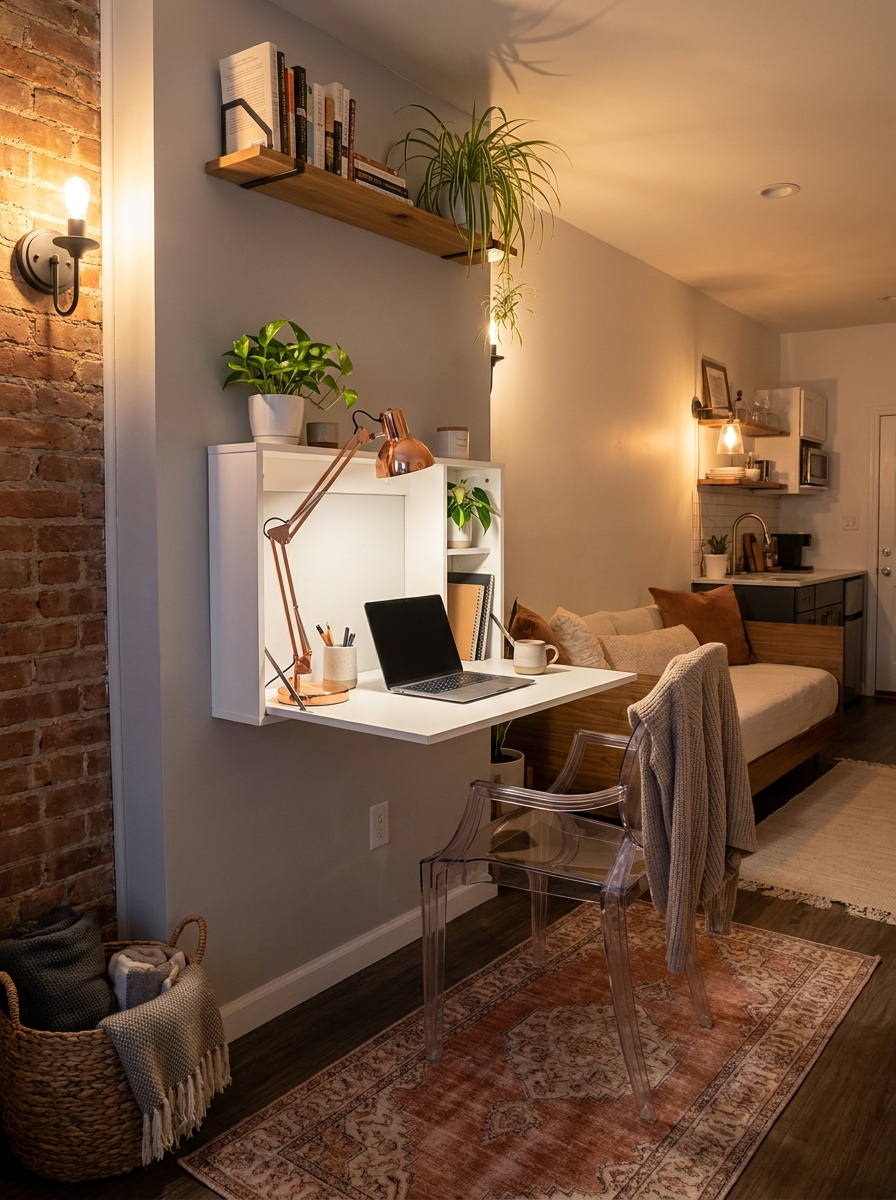
Working from home in a studio means your office and your living room are the same place. Unless you have a fold-down desk that literally vanishes when you clock out.
These wall-mounted desks are brilliant. You flip them down when you need a workspace, then fold them flat against the wall when it’s wine o’clock. No more staring at your laptop while you’re trying to relax on the couch. Out of sight, out of mind.
I love the ones with built-in storage cubbies or a corkboard on the inside panel. You can pin your to-do lists and keep pens organized, then hide the whole work situation behind a clean surface. Some even look like floating shelves when they’re closed. Your guests would never know your wall holds your entire office setup. It’s the ultimate work-life boundary in 200 square feet.
15. Nesting Tables That Multiply When Friends Come Over
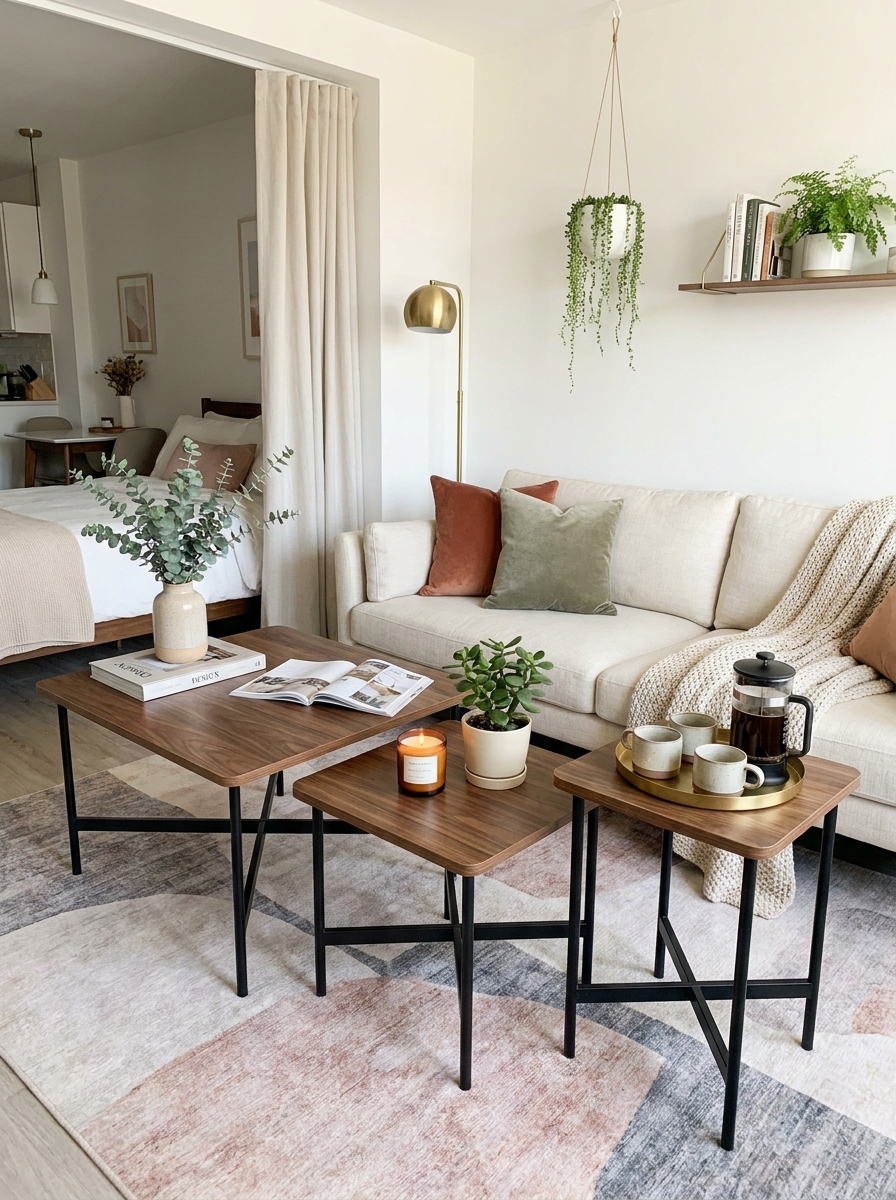
Nesting tables are like magic furniture. Most of the time, you use just one as a side table. But when you’re hosting? Pull out the whole set and suddenly you have surface space for everyone’s drinks and snacks.
They tuck together so neatly that they barely take up more room than a single table. I keep mine next to the sofa, and when people come over, I scatter them around the room. Instant coffee table, extra laptop stand, plant pedestal. Whatever you need in the moment.
The best part is they don’t look like space-saving furniture. A good set in brass and marble or walnut wood just looks like chic accent pieces. Nobody realizes you’re playing furniture Tetris. And when the party’s over, they slide back together like nothing happened. It’s the kind of flexibility that makes studio living actually work.
16. A Bar Cart That’s Actually a Storage Powerhouse
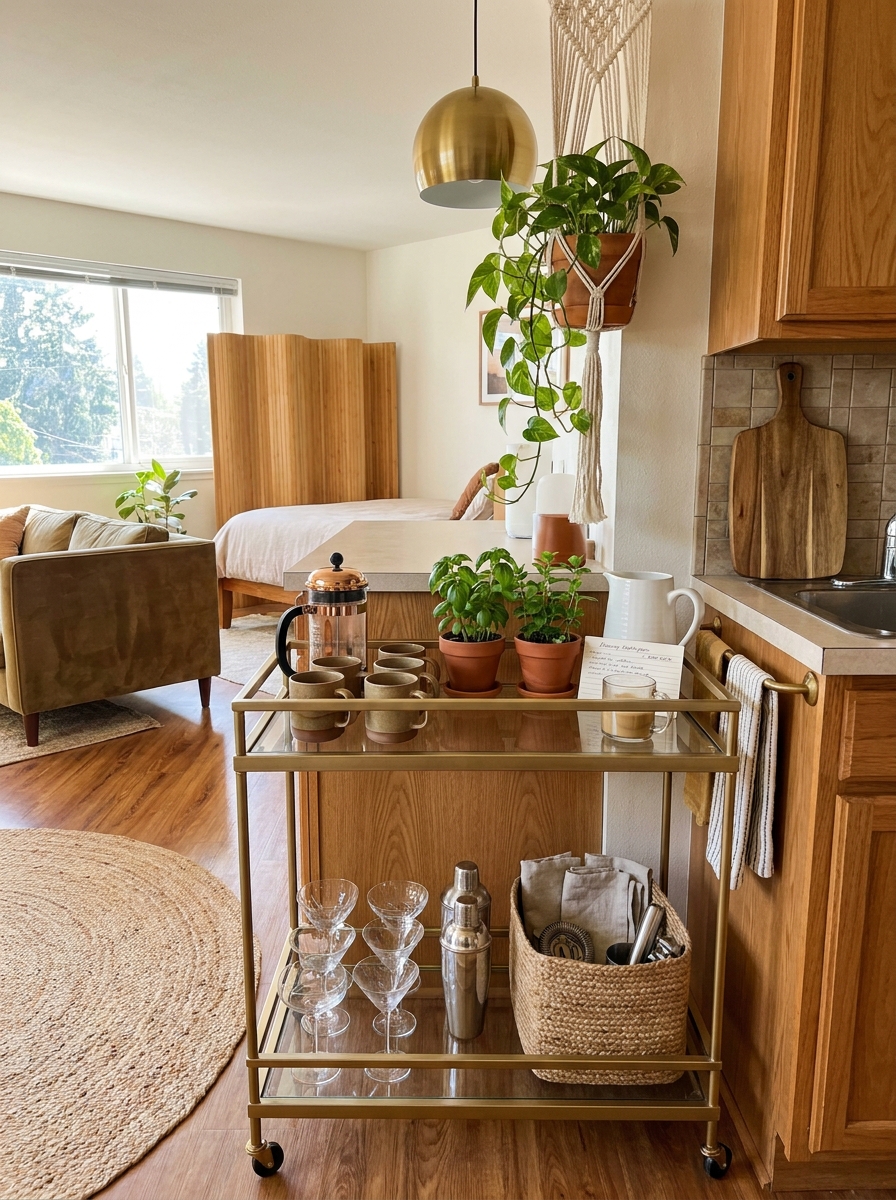
Bar carts aren’t just for cocktail enthusiasts. In a studio, they’re rolling storage that goes wherever you need it. I use mine as a coffee station in the morning, a serving cart when I have people over, and extra counter space when I’m cooking.
The wheels are the game-changer. You can tuck it next to your kitchen when it’s not in use, then roll it out to create a drinks station or a dessert display. Some nights, mine lives next to the sofa holding my current reads and a table lamp.
Style it with pretty glassware, a small potted herb, and some nice bottles. Even if you’re just storing sparkling water and coffee mugs, it looks intentional. The best part? It takes up barely any floor space but gives you storage and surface area that moves with your needs. That’s studio apartment gold right there.
17. Wall-Mounted Drop-Leaf Tables That Vanish
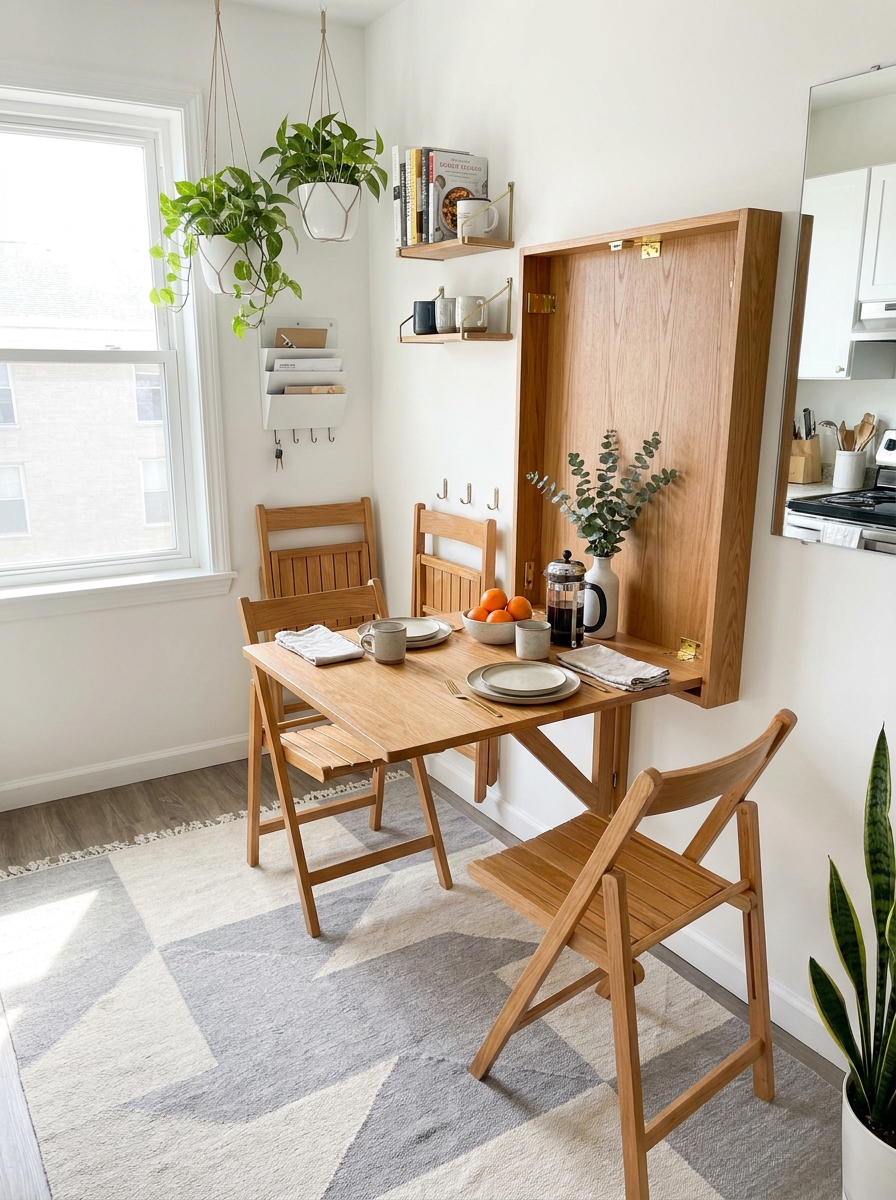
I cannot tell you how much I love a good drop-leaf table mounted to the wall. It’s there when you need it, gone when you don’t. Like magic, but with hinges.
You can mount one in your kitchen for meal prep that folds down after dinner. Put one by your entryway as a catch-all that disappears when friends come over. I’ve even seen people use them as bedside tables that fold up during the day to create walking space.
The best part? When it’s folded down, it looks like a narrow shelf or even wall art if you pick the right finish. Nobody needs to know it transforms into a full dining table or workspace. Mount it at the right height and add a couple of folding chairs that hang on hooks nearby, and you’ve got an entire dining setup that takes up maybe four inches of floor space when not in use. Your studio just gained about fifteen square feet of usable space.
18. A Capsule Closet System That Shows Everything
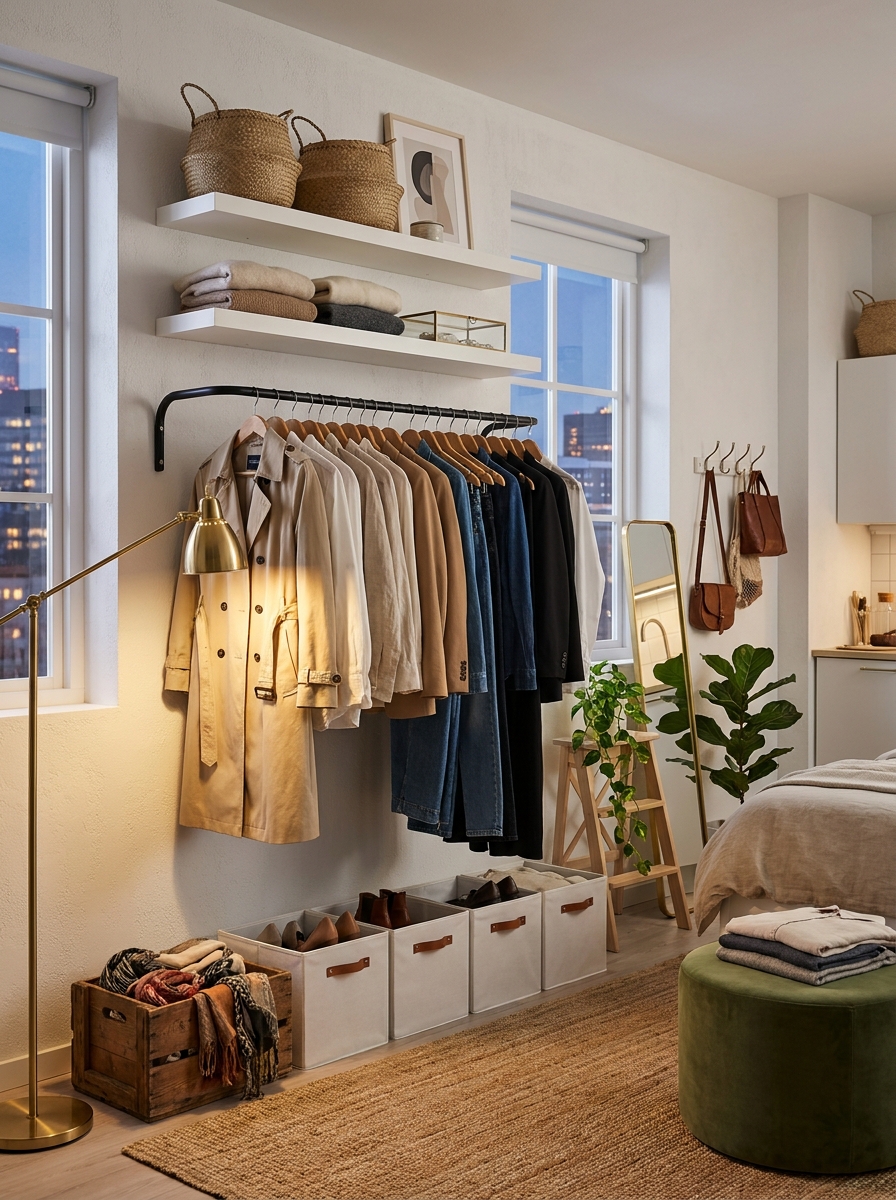
If your studio doesn’t have a proper closet, or the one you have is basically a sad little cave, it’s time to go open.
I’m talking about a wall-mounted clothing rail system with shelving above and below. Everything visible, nothing hidden in a dark closet where you forget it exists. This is actually genius for small spaces because you can only keep what fits, which means you’re forced to curate.
Get a sturdy rail system, add some floating shelves above for folded items and bags, maybe some baskets below for shoes or accessories. The key is treating it like a beautiful display instead of hiding your clothes away. When everything’s visible, you wear more of what you own, and your morning routine gets so much faster.
I love adding pretty hangers in one uniform style and organizing by color. It suddenly becomes a design feature instead of clutter. Your clothes are basically wall art now.
19. Ceiling-Height Bookcases That Draw the Eye Up
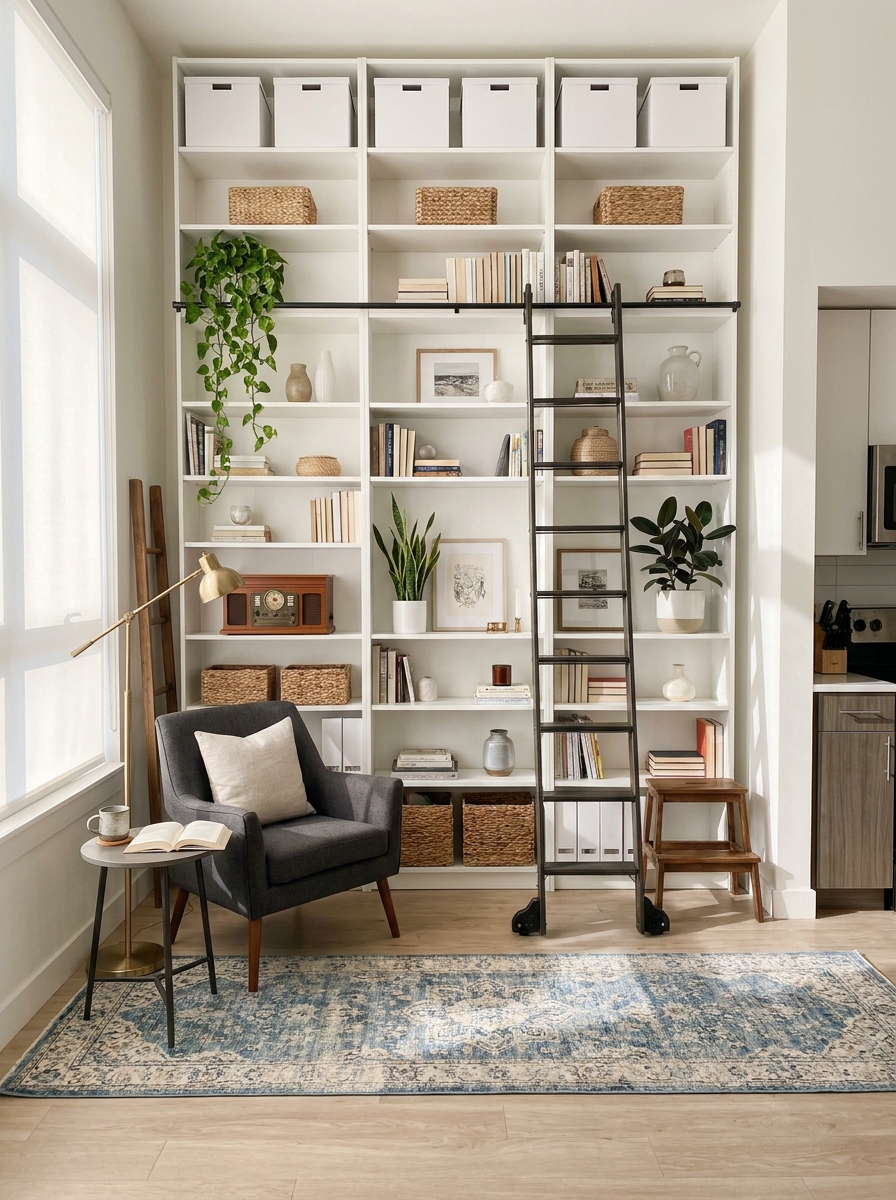
Here’s what nobody tells you about studio apartments: you have way more vertical space than floor space. So why are you storing everything at waist height?
A ceiling-height bookcase changes everything. It makes your ceilings look taller, gives you absurd amounts of storage, and creates a focal wall that actually makes your studio feel intentional instead of cramped.
I’m obsessed with the ones that go all the way up with a library ladder. Yes, it’s a little extra, but it’s also incredibly functional and gorgeous. You can store seasonal items and stuff you rarely use up top, everyday books and objects at eye level, and baskets with all your random junk on the lower shelves.
The trick is styling it so it doesn’t look cluttered. Mix books with objects, leave some breathing room, and use uniform baskets or boxes for anything messy. This vertical storage beast can hold as much as three regular bookcases while taking up the same floor space.
Quick Guide
Studio Furniture Budget Breakdown
Under $1,000 Total:
– Murphy bed: DIY wall-mounted version ($300-400)
– Sofa: IKEA sleeper or secondhand find ($200-350)
– Room divider: Curtain rod + fabric ($50-80)
– Shelving: Four floating shelves installed ($100-150)
– Storage: Ottomans, baskets ($100-150)
$1,000-$2,500 Total:
– Murphy bed: Mid-range with shelving ($800-1,200)
– Sofa: Quality compact with storage ($500-800)
– Room divider: Bookcase or wood screen ($200-400)
– Shelving: Mix of floating and standing units ($200-300)
– Storage: Custom closet organizers ($150-250)
$2,500+ Total:
– Murphy bed: Custom built-in system ($1,500-3,000)
– Sofa: High-quality modular sectional ($1,000-2,000)
– Room divider: Custom built or designer piece ($400-800)
– Shelving: Professional installation, quality materials ($300-500)
– Storage: Full closet system, multiple solutions ($300-600)
Your Studio, But Make It Spacious
Here’s what I want you to remember: living in a studio apartment doesn’t mean compromising on style or comfort. It just means getting creative and intentional with every choice you make. Each piece of furniture needs to earn its place by working hard and looking good. Every wall is potential storage. Every corner is an opportunity. And honestly? There’s something kind of freeing about editing down to what really matters. You learn what you actually use versus what just takes up space.
These 19 ideas aren’t about turning your studio into something it’s not. They’re about making it the best version of what it already is — efficient, personal, and totally livable. Start with one or two changes that excite you most. Maybe it’s finally installing those floating shelves, or investing in a sofa that actually fits your space instead of overwhelming it. Small changes add up to big transformations. And remember, some of the most beautiful homes I’ve seen have been tiny studios where every single inch was loved and considered. Your space is small, but your style doesn’t have to be.
Frequently Asked Questions
How do you make a studio apartment look bigger?
Use mirrors strategically to reflect light and create depth, stick to a light neutral color palette on walls, and choose furniture with exposed legs so you can see the floor underneath. Vertical storage keeps stuff off the ground, and avoiding clutter is crucial. Multi-functional furniture means fewer pieces overall, which keeps the space feeling open.
What’s the best way to separate sleeping and living areas in a studio?
Room dividers are your best bet — try open shelving units, curtains on ceiling tracks, or decorative screens. Even a strategically placed bookcase turned perpendicular to the wall works beautifully. Area rugs also help define zones visually. The key is creating separation without blocking light or making the space feel chopped up.
How much does it cost to furnish a studio apartment on a budget?
You can furnish a basic studio for $1,000-$1,500 if you shop smart — think IKEA, Facebook Marketplace, and DIY solutions. Focus your budget on a good sofa or Murphy bed first since that’s your biggest piece. Then add floating shelves, secondhand tables, and affordable storage baskets. Prioritize quality for items you use daily and save on decorative pieces.
What furniture is essential for a studio apartment?
A multi-functional sofa (preferably with storage or a pullout), a Murphy bed or quality futon, floating shelves for vertical storage, and a small dining table that can double as a desk. Add storage ottomans, a room divider to separate zones, and good lighting. Skip extra chairs and bulky dressers — use your closet efficiently instead.
How do you maximize storage in a small studio apartment?
Go vertical with floor-to-ceiling shelving and wall-mounted storage. Use furniture with hidden storage like ottomans and bed frames with drawers. Install hooks and pegboards on walls for bags, jewelry, and everyday items. Under-bed storage boxes are essential, and over-door organizers add space without taking up square footage. Don’t forget about corner shelves and the backs of doors.