15 Afrohemian Decor Finds That Transform Spaces
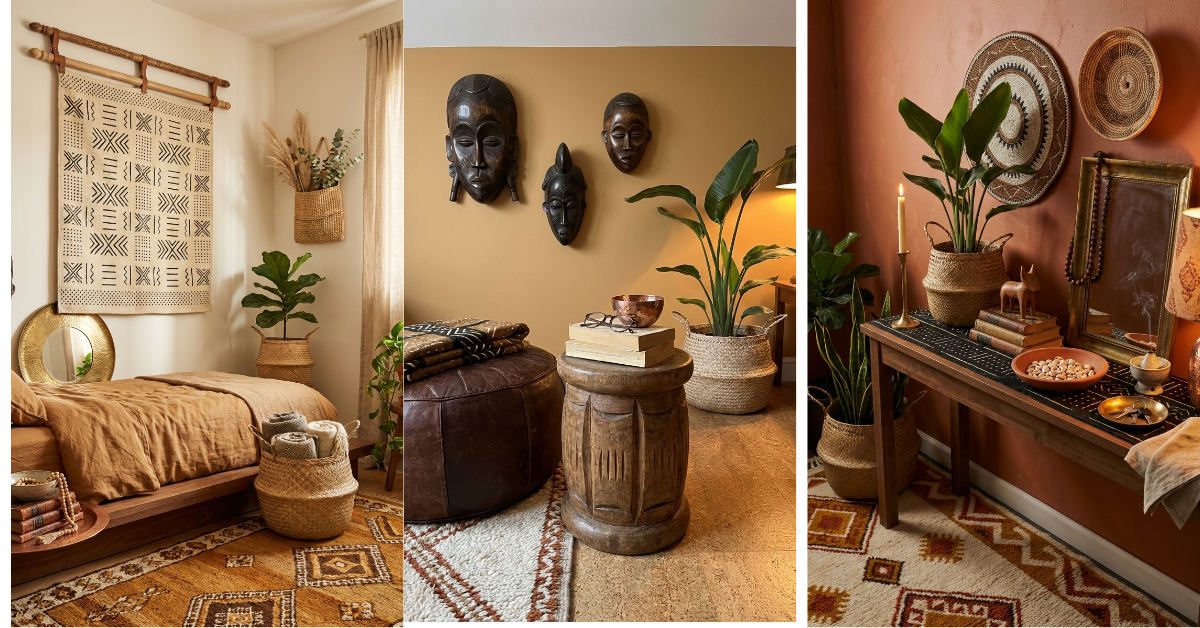
You know that feeling when you walk into a room and it just wraps around you like a warm hug? That’s Afrohemian decor. It’s not about following some rigid design rulebook or buying a matching set from one store. This is where African heritage meets bohemian soul—think rich terracotta walls, mudcloth pillows tossed on a vintage sofa, carved wooden masks hanging next to macramé, and textures layered so thick you want to touch everything. It’s earthy. It’s personal. And honestly? It’s the antidote to all those cold, minimalist spaces we’ve been seeing everywhere. The beauty here is in the mix—the handwoven basket next to the brass candlestick, the rust-colored throw draped over natural linen. Every piece tells a story, and nothing feels like it came from a showroom. If you’re craving a home that feels alive, culturally rich, and deeply you, this trend is about to change everything. Let’s get into it.
1. Mudcloth Magic on Every Surface
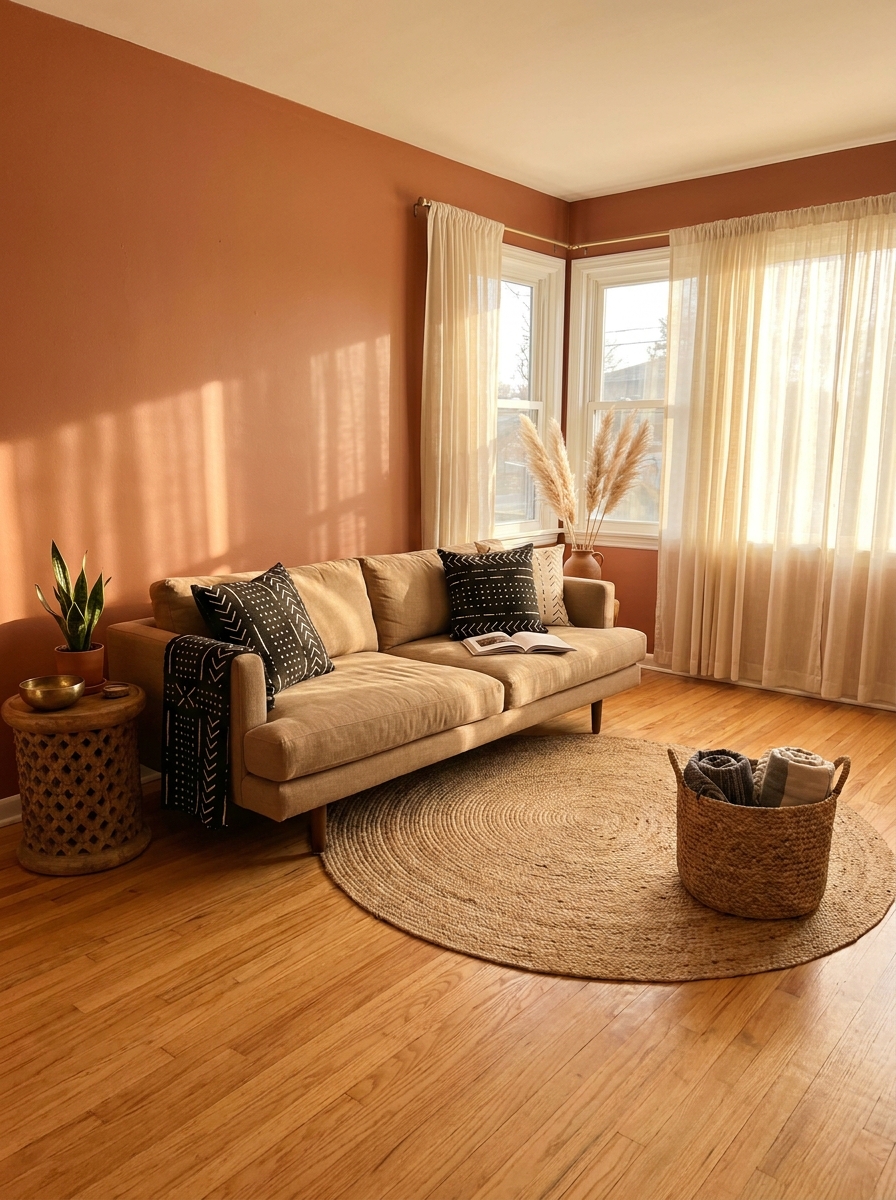
Mudcloth isn’t just fabric—it’s art with a heartbeat. Those hand-painted geometric patterns from Mali bring instant warmth and cultural depth to any room. Drape a mudcloth throw over your sofa, and suddenly your living room has a story to tell. You can use it as wall art too—just stretch it over a canvas frame or hang it from a wooden dowel. The beauty is in the imperfections. Each piece is slightly different because real hands made it, and that’s exactly what makes your space feel genuine instead of cookie-cutter.
But here’s where it gets really good. Layer mudcloth with other textures. Pair a black-and-white mudcloth pillow with a rust-colored linen cushion. Throw it over a natural jute chair. The contrast between the graphic patterns and softer bohemian elements creates this perfect visual tension that’s totally Afrohemian. And you don’t need to go overboard—two or three mudcloth pieces in a room is plenty. Let them be the punctuation marks in your design story, not the entire novel.
2. Carved Wood That Speaks Volumes
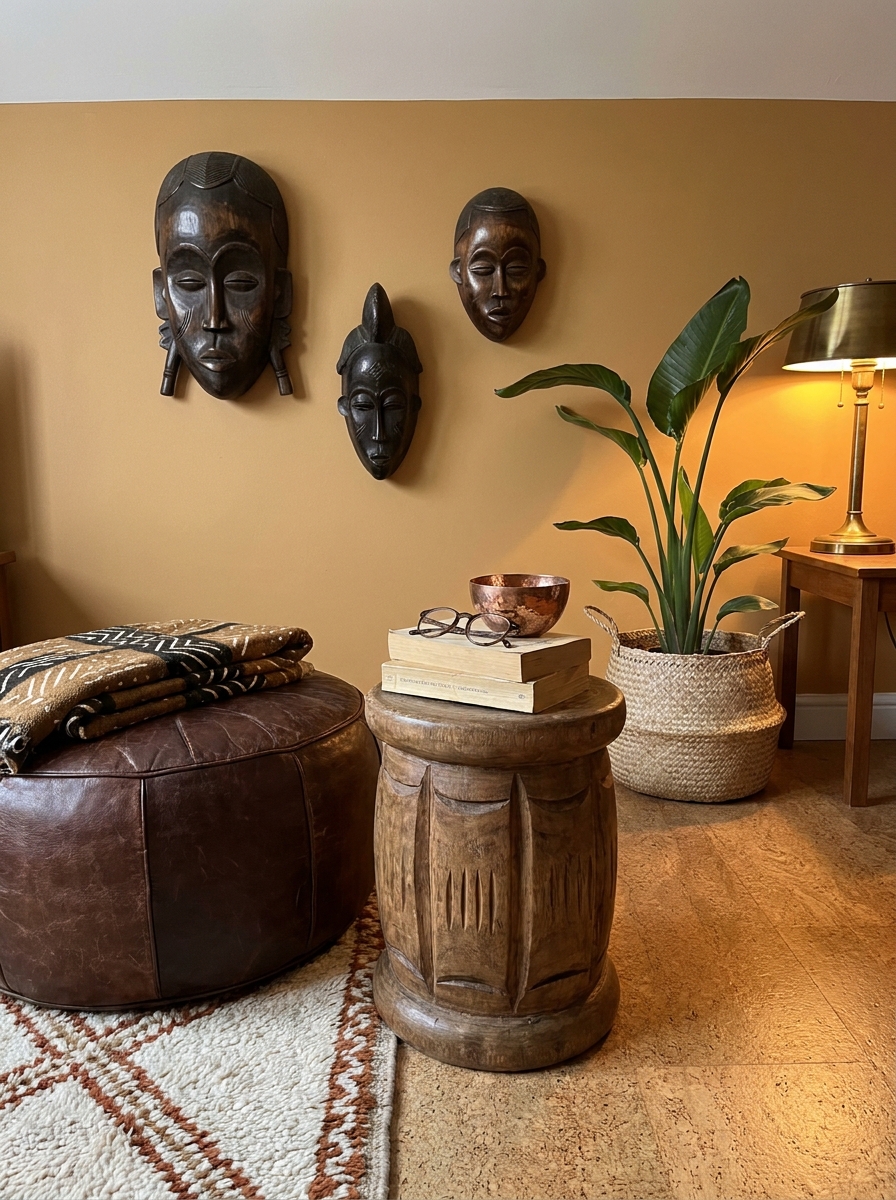
There’s something about carved wooden pieces that grounds a space. African wood sculptures—whether it’s a mask, a bowl, or a figurine—bring this incredible sense of history and craftsmanship that you just can’t fake. These aren’t tchotchkes. They’re conversation pieces with soul. Place a carved wooden mask on your gallery wall between modern prints, and watch how it anchors everything with its presence.
You can go big or keep it subtle. A large wooden sculpture on a console table becomes an instant focal point. Or scatter smaller pieces—a hand-carved bowl on your coffee table, a wooden candlestick holder on a bookshelf. The key is mixing the dark, rich tones of carved wood with lighter bohemian elements. Think: a deep espresso wood sculpture next to cream-colored ceramics and woven baskets. The contrast makes both elements pop. And here’s the thing—these pieces age beautifully. The wood develops a patina over time, which only adds to that collected, well-traveled aesthetic you’re after.
3. Woven Baskets as Functional Art
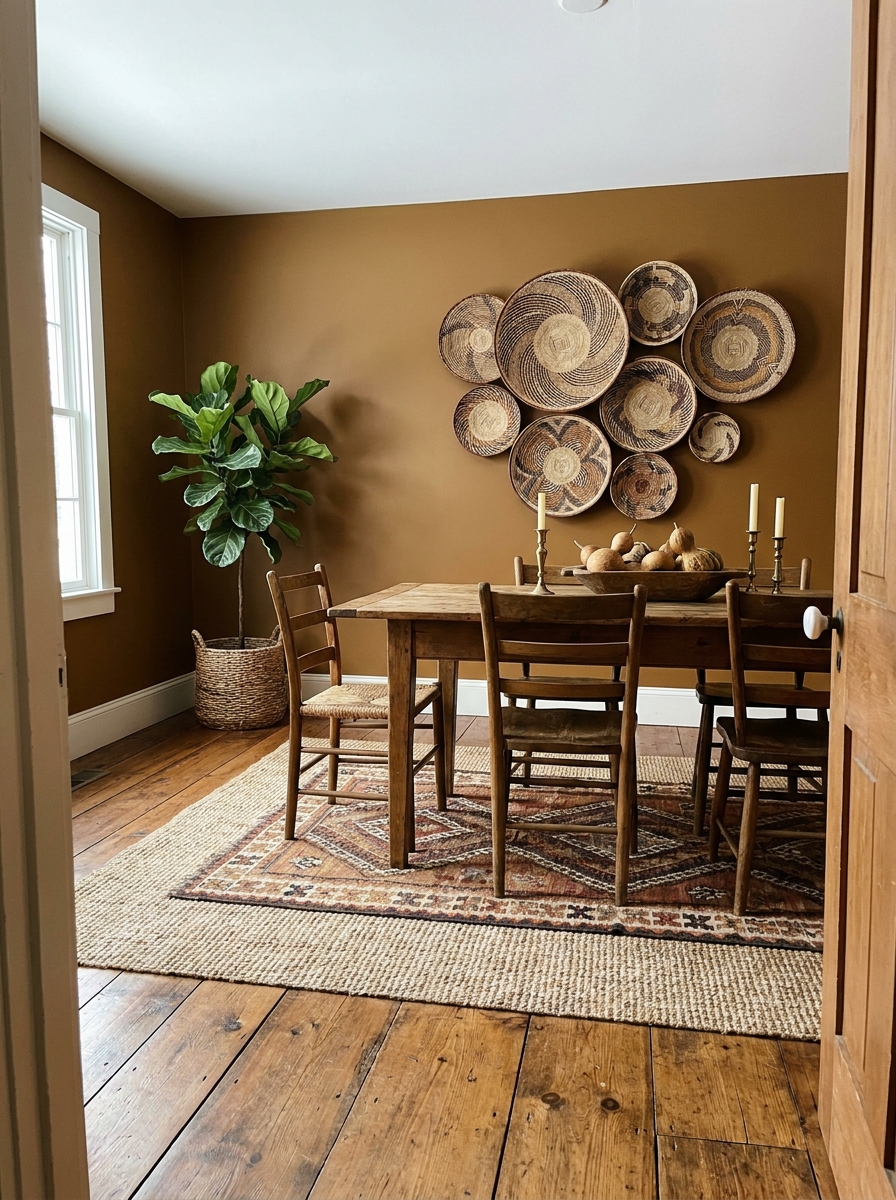
Forget hiding your baskets in closets. In Afrohemian spaces, they’re on full display—and they deserve to be. Handwoven African baskets in sisal, sweetgrass, or seagrass bring texture, warmth, and that artisan-made quality that makes a room feel collected rather than decorated. Hang them on walls in a cluster of varying sizes. The dimensional quality creates instant visual interest without drilling a hundred holes or spending a fortune on art.
But they’re not just pretty. Use them. A large woven basket becomes the perfect home for throw blankets. Medium ones can corral magazines or hold potted plants. Small ones look gorgeous on shelves filled with little treasures. The natural tones—warm tans, honey browns, ivory—blend seamlessly with the Afrohemian color palette while adding that crucial textural layer. And the best part? They’re lightweight and easy to move around when you want to refresh your space. Try grouping three baskets of different sizes on one wall, arranged in a triangle. It’s an instant statement that feels intentional but not stuffy.
4. Terracotta Tones Everywhere
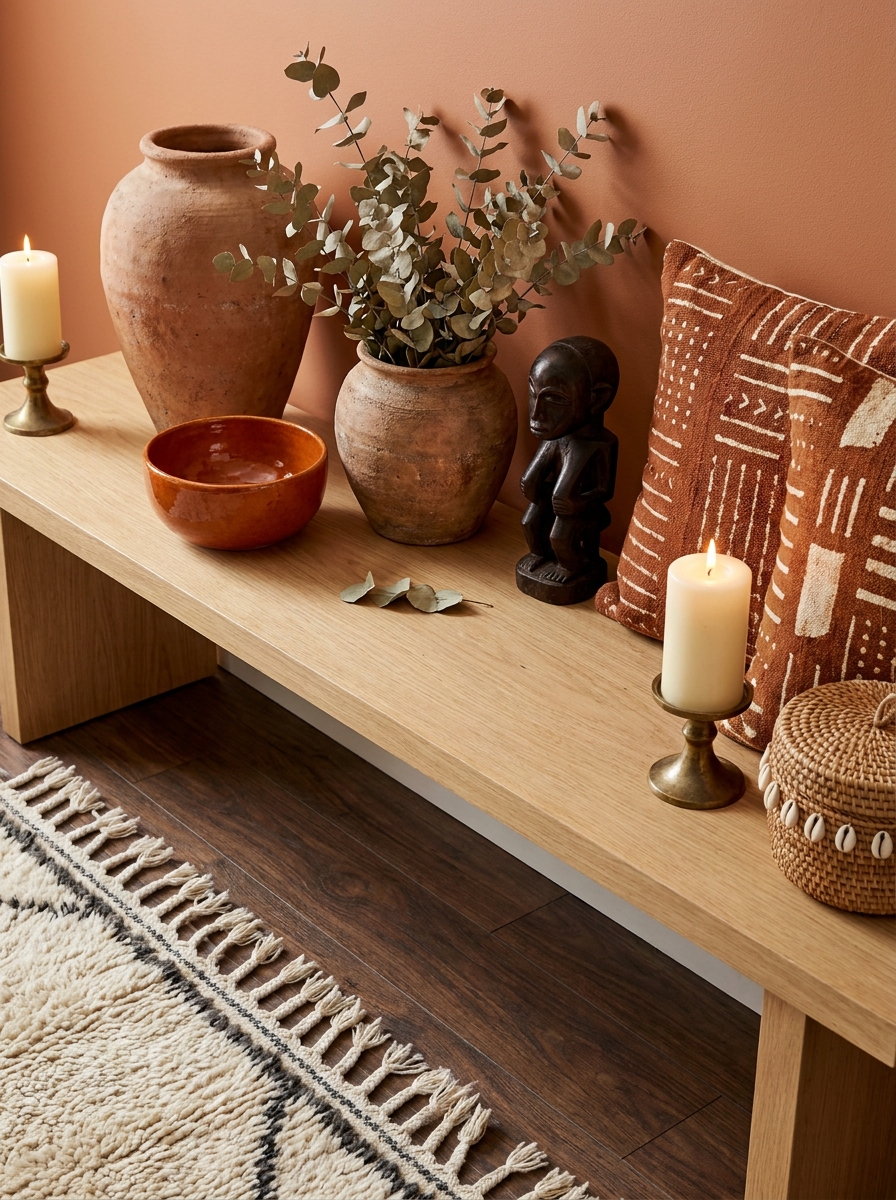
If Afrohemian had a signature color, it would be terracotta. That earthy, sun-baked clay tone is the backbone of this aesthetic—it’s warm without being aggressive, rich without being dark, and it makes every other color in the palette sing. Paint one accent wall in a deep terracotta and watch your whole room transform. Or if you’re not ready to commit to paint, bring it in through textiles, pottery, and decor.
The magic happens when you layer different shades. Rust-colored throw pillows on a burnt orange chair next to a clay-toned vase. It’s tonal but never boring because each shade has its own personality. And terracotta plays so well with the other Afrohemian staples—cream linen, black mudcloth, natural wood, brass accents. It grounds everything. Try this: start with a terracotta throw blanket, add a rust-colored pillow, then place a clay pot on your shelf. You’ve just created a color story that feels intentional and collected. The room suddenly has cohesion without looking matchy-matchy, which is exactly what we’re after here.
5. Layered Textiles in Rich Earth Tones
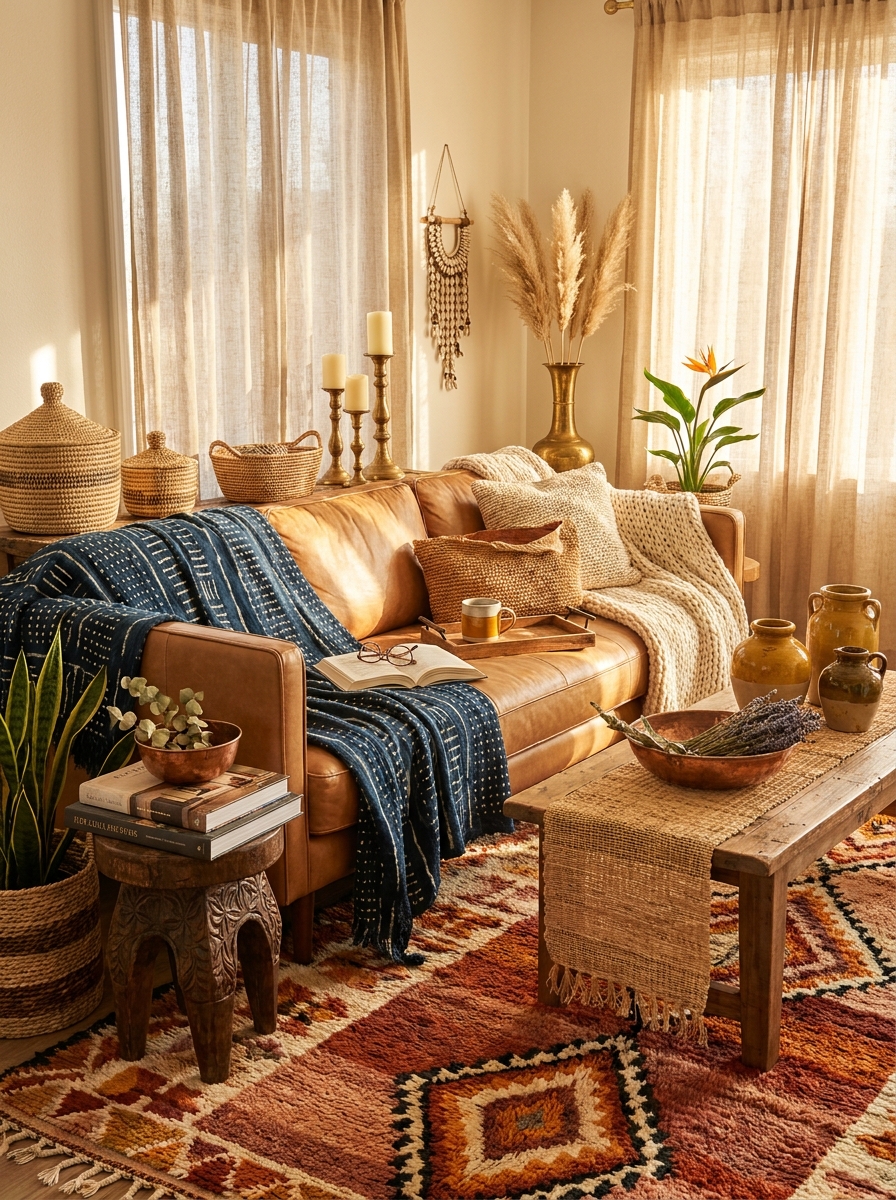
This is where Afrohemian really gets cozy. I’m talking about piling on textiles like you’re wrapping your room in a warm hug. Think mudcloth throws draped over a rust-colored linen sofa, kente-patterned pillows mixed with macramé cushions, and maybe a gorgeous indigo-dyed blanket tossed casually over an armchair.
The magic happens when you layer different textures and patterns without overthinking it. A smooth leather pouf next to a chunky knit throw. Raffia placemats under copper bowls. It’s that beautiful collision of African textile traditions and bohemian comfort that makes you want to curl up with a book and never leave.
I love mixing weights too—heavy woven fabrics with airy gauze curtains, thick wool with delicate beadwork. Your space should feel like it’s been collected over time, piece by piece, story by story. Nothing too matchy-matchy. Just layers of warmth and culture building on each other until your room feels like the coziest, most interesting place on earth.
6. Statement Walls with African Textiles
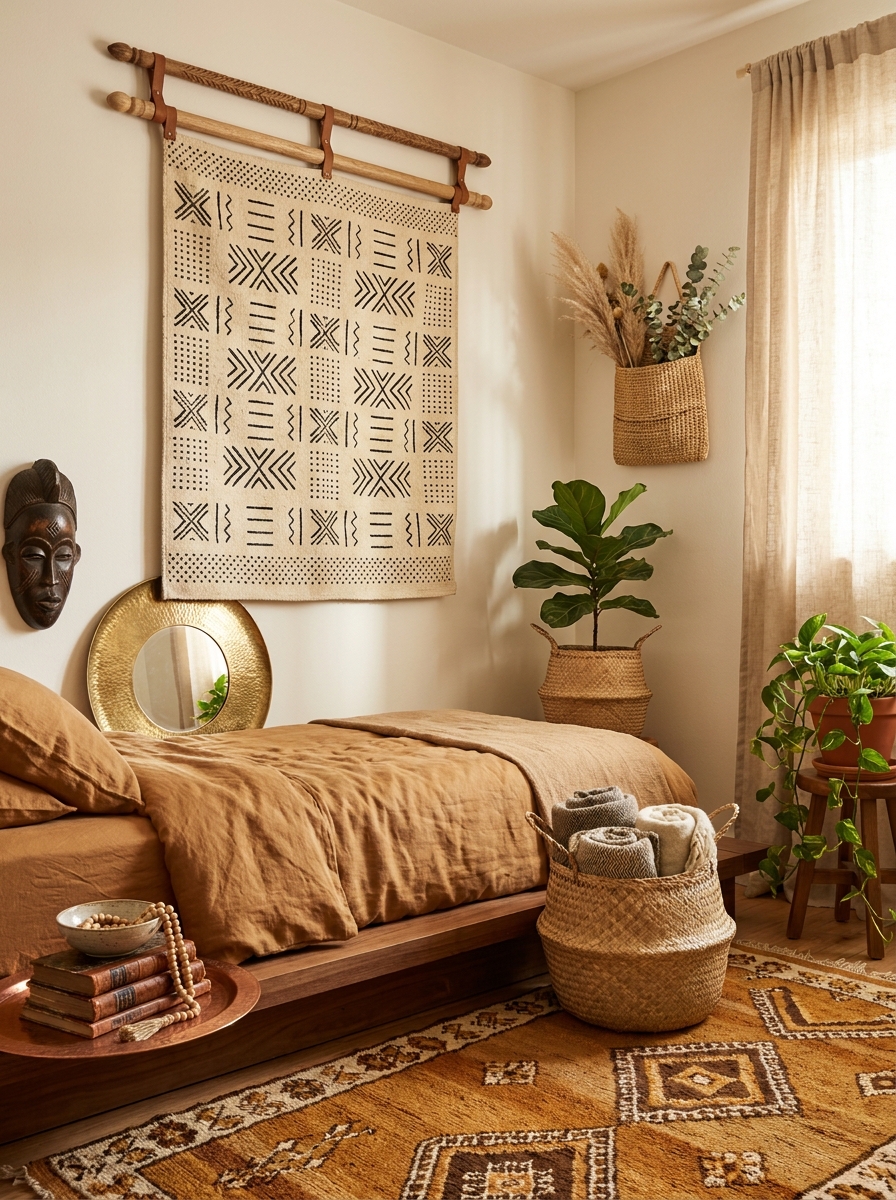
Forget wallpaper. I’m hanging fabric on my walls and it’s the best decision I’ve ever made. A large mudcloth tapestry, a collection of smaller kente cloths arranged in a grid, or even a gorgeous indigo-dyed textile stretched on a frame—these create instant drama and warmth.
What I love about this approach is how it softens a room. Hard walls suddenly feel cozy and touchable. The texture catches light differently throughout the day, so your wall is basically alive and changing. Plus, it’s renter-friendly! You can use a curtain rod, some clips, or even a simple wooden dowel to hang these beauties.
I’ve seen people create entire gallery walls using different African textiles as the backdrop for artwork and mirrors. The fabric becomes part of the story instead of just background noise. And if you ever get tired of it? Switch it out. Try that with paint or traditional wallpaper. Your walls should celebrate culture, not just hold up your ceiling.
7. Handcrafted Ceramics and Pottery
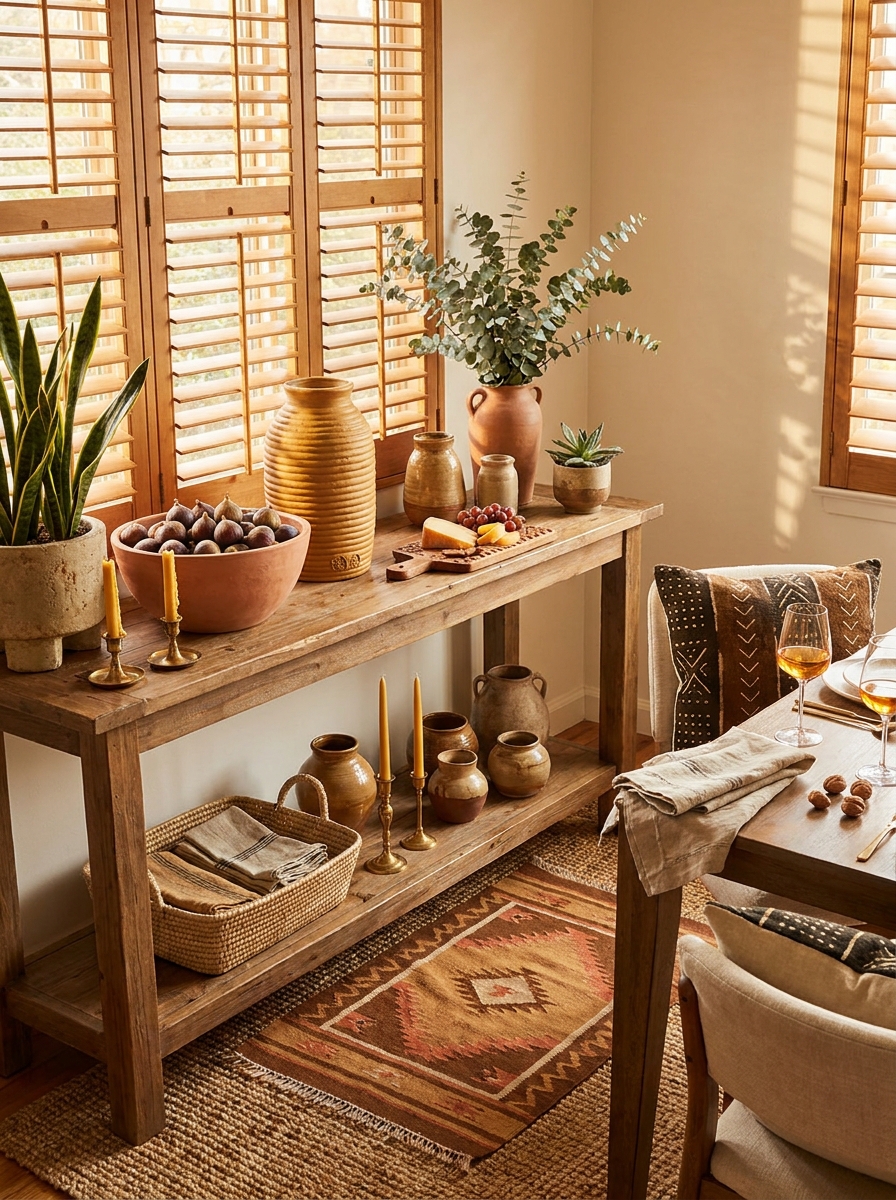
There’s something about handmade pottery that just grounds a space. In Afrohemian design, I’m drawn to those beautifully imperfect pieces—vessels with visible coil marks, bowls with organic shapes, planters with that gorgeous unglazed terracotta finish that shows the clay’s natural beauty.
Look for pieces from African artisans or ceramics inspired by traditional African forms. I’m talking about wide-mouthed bowls perfect for fruit, tall vessels that look like sculpture, and those chunky planters with subtle texture. The warm earth tones—sienna, clay, burnt umber—fit perfectly into this aesthetic.
What makes these pieces special is that each one tells a story. You can see the maker’s hands in every curve and texture. Display them proudly on open shelving, use them as catchalls on your entryway table, or cluster different sizes together as a centerpiece. They add that artisan-crafted soul that makes Afrohemian feel so authentically warm and human.
8. Metallic Accents in Brass and Copper
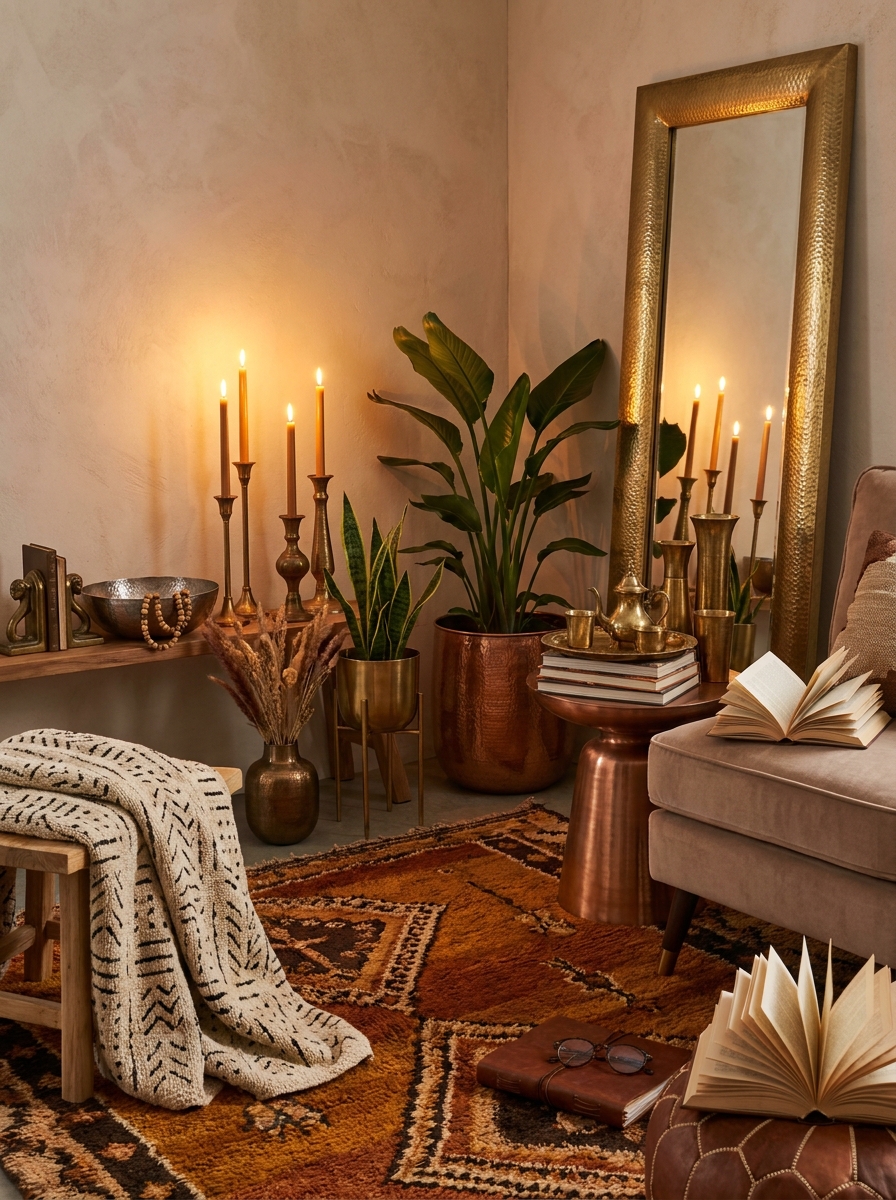
Here’s where we add a little shimmer to all that earthy warmth. Brass and copper are absolute stars in Afrohemian spaces—they catch the light, add richness, and have that perfect aged quality that feels collected rather than bought all at once.
I’m obsessed with mixing metal finishes. A hammered brass tray on a leather ottoman. Copper bowls holding jewelry or keys. Bronze candlesticks next to wooden sculptures. The warm metallic tones echo traditional African metalwork while adding that bohemian layer of global-inspired charm. And as they age and develop patina? Even better. That tarnished, lived-in look is exactly what we’re going for.
Don’t be shy about it either. A large brass mirror can be a showstopper. Copper planters bring instant warmth. Even small touches like metal drawer pulls or picture frames make a difference. These metals play beautifully with all those terracotta tones and natural fibers, adding just enough polish without feeling fussy or formal.
9. Low-Level Seating with Floor Cushions
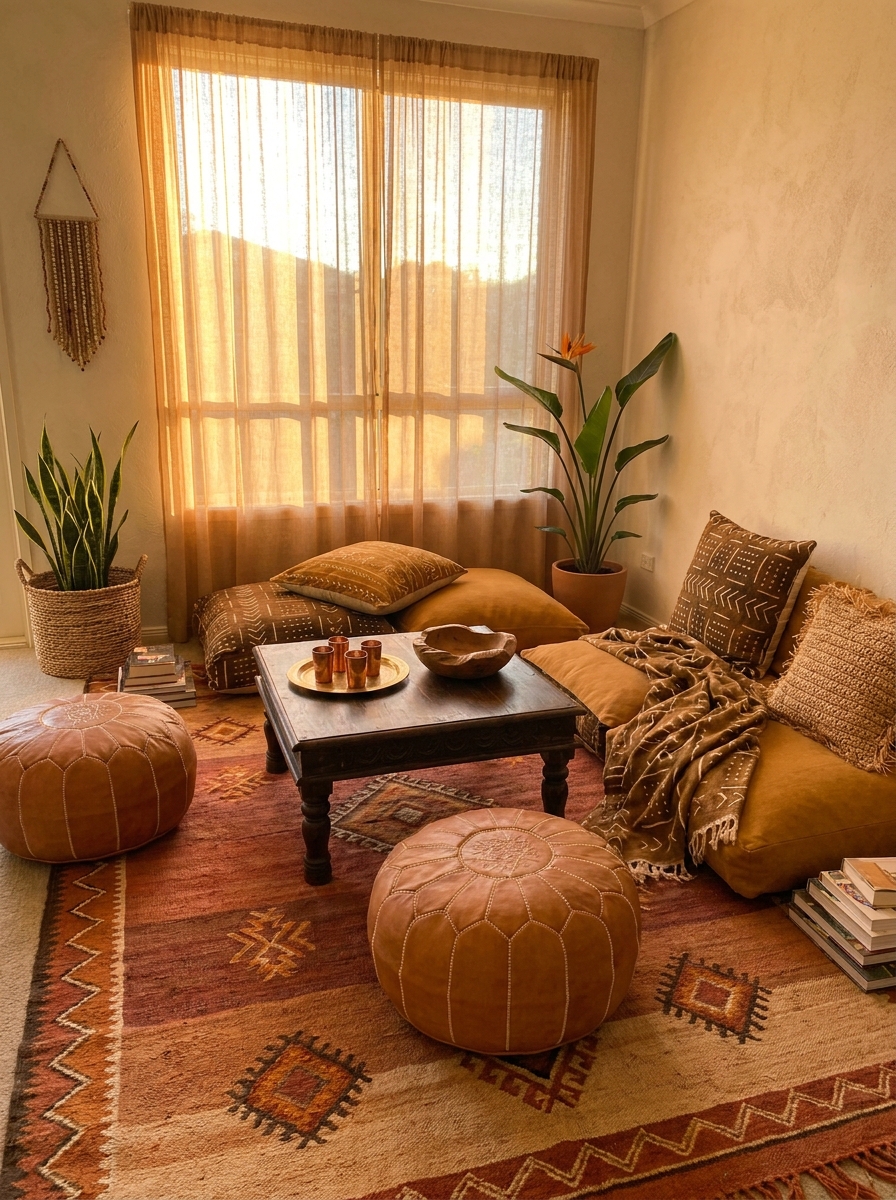
Okay, this is where Afrohemian gets cozy in the best way. We’re talking big floor cushions, poufs, and those gorgeous moroccan-style seating areas that make everyone want to kick off their shoes and stay awhile.
I’m obsessed with mixing different floor cushions—some in mudcloth prints, others in solid terracottas and mustards. Add a few leather poufs (the Moroccan kind, super authentic) and suddenly your living room feels like a cultural salon where people actually talk and connect instead of just staring at screens.
The beauty here is that low seating feels both ancient and modern at once. It’s how people have gathered for centuries across Africa and the Middle East, but it also fits perfectly with today’s casual, comfortable living. Layer them around a low wooden coffee table, throw down some kilim rugs, and you’ve created this incredibly inviting space that feels worldly and warm. Plus, it’s perfect for small spaces—these pieces tuck away or stack when you need the floor space back.
10. Natural Fiber Everything
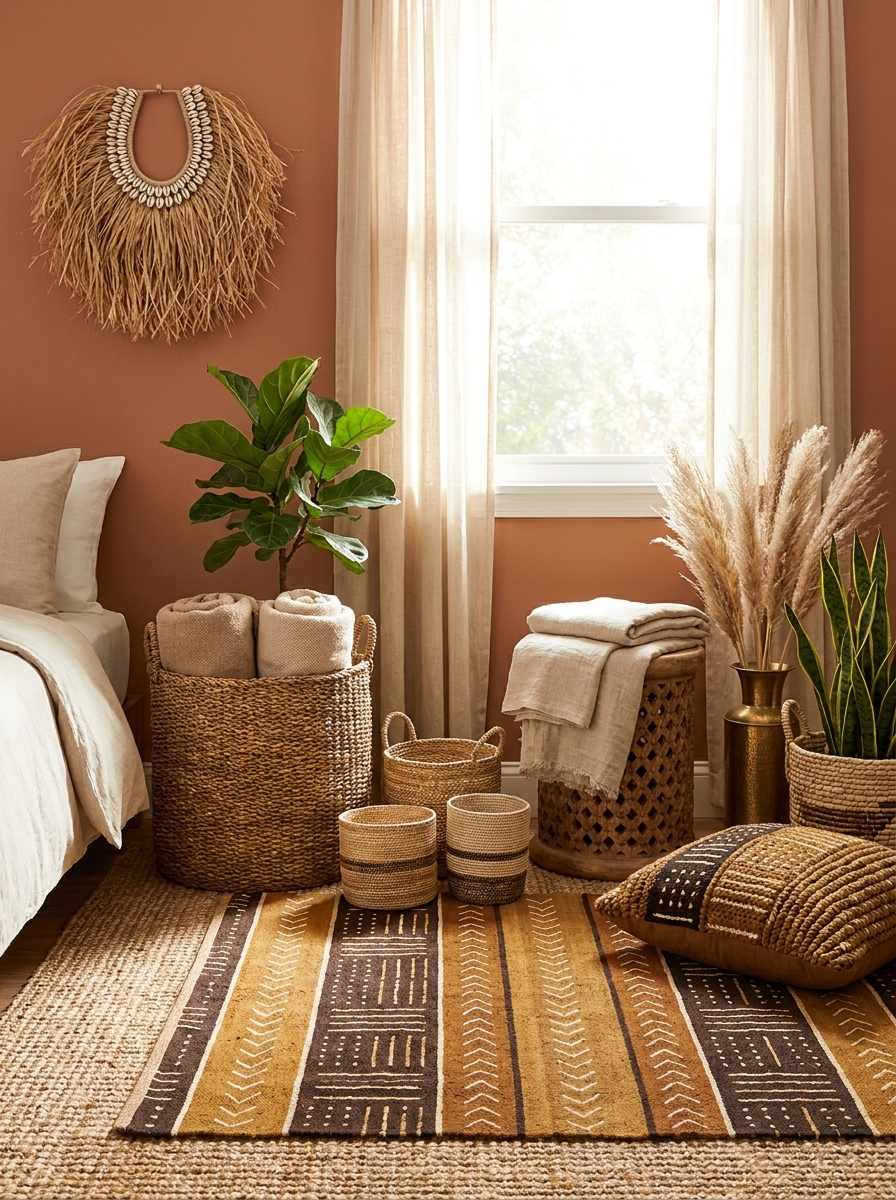
Listen, if it’s not woven from something that grew in the ground, we’re not interested right now. Jute, sisal, seagrass, raffia—these natural fibers are the backbone of Afrohemian style and they bring so much warmth and texture.
I’m weaving these materials into every corner I can. Jute rugs layered under patterned kilims, seagrass baskets absolutely everywhere (storage that looks this good?), raffia wall hangings that catch the light beautifully. There’s something deeply grounding about these materials. They smell earthy, they feel organic, and they connect your space to traditional African craft techniques that have been perfected over generations.
What I love most is how these fibers age. They don’t look worn out—they look loved and lived-in. A frayed edge on a jute rug? Character. A slightly uneven weave in a basket? That’s handmade authenticity. These imperfections are what make the style feel real and collected rather than bought all at once from a catalog. Embrace the beautiful irregularity of natural materials.
11. Gallery Walls with Cultural Artifacts
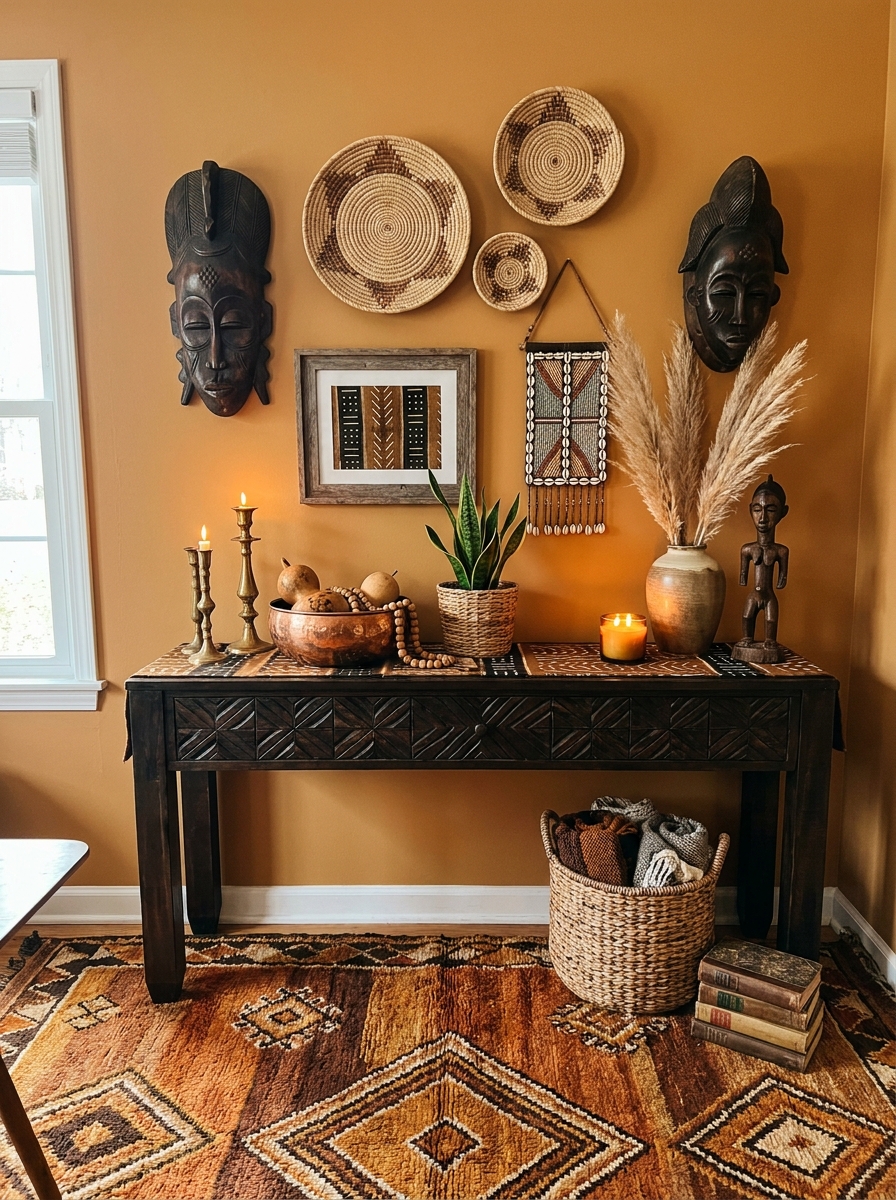
Forget boring frame-only gallery walls. Afrohemian style mixes framed art with actual three-dimensional cultural pieces—masks, woven wall plates, small sculptures, beaded hangings. It’s like your wall becomes a living museum of things you love.
I’m currently rearranging my own gallery wall and mixing carved wooden masks with framed prints and a cluster of those gorgeous woven African wall baskets. The key is balancing the weights visually—a large mask on one side might balance out three smaller framed pieces on the other. Play with negative space, too. You don’t need to fill every inch.
This approach tells a story. Each piece should feel meaningful, like something you discovered rather than ordered in a set. Maybe that mask reminds you of a trip, or those beaded hangings came from a local artisan market. The cultural depth here is what separates Afrohemian from generic boho—these aren’t just decorative objects, they’re pieces with heritage and history that deserve to be displayed proudly.
12. Greenery in Handwoven Planters
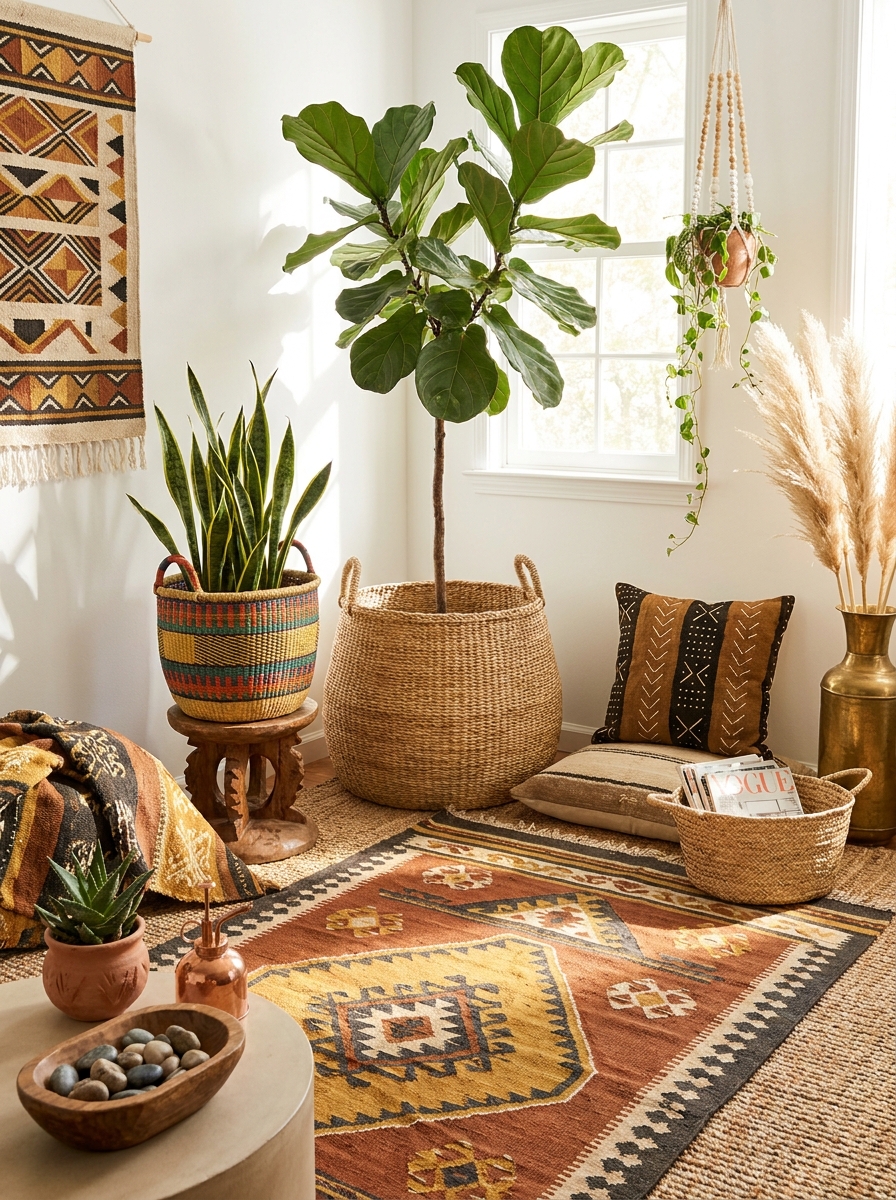
Plants and Afrohemian style? Match made in design heaven. But we’re not putting our fiddle leaf fig in some boring plastic pot. We’re talking handwoven baskets, African-style planters, and ceramic vessels that are works of art themselves.
I love using traditional woven baskets as planters—just drop the nursery pot right inside. Those Ghanaian bolga baskets? Perfect. Kenyan sisal baskets? Gorgeous. They add instant texture and cultural authenticity while solving the eternal question of what to do with ugly plastic plant pots. Mix different weaving styles and sizes for maximum visual interest.
The plants themselves matter too. Go for big leafy varieties like bird of paradise or fiddle leaf figs that have that lush, tropical energy. Snake plants in woven baskets are practically a requirement—they’re nearly indestructible and their architectural leaves look amazing against soft woven textures. Dried elements work beautifully too. Pampas grass in a tall brass vessel? Chef’s kiss. It’s all about bringing organic life into your cultural, layered space.
13. Bohemian Lighting with Cultural Flair
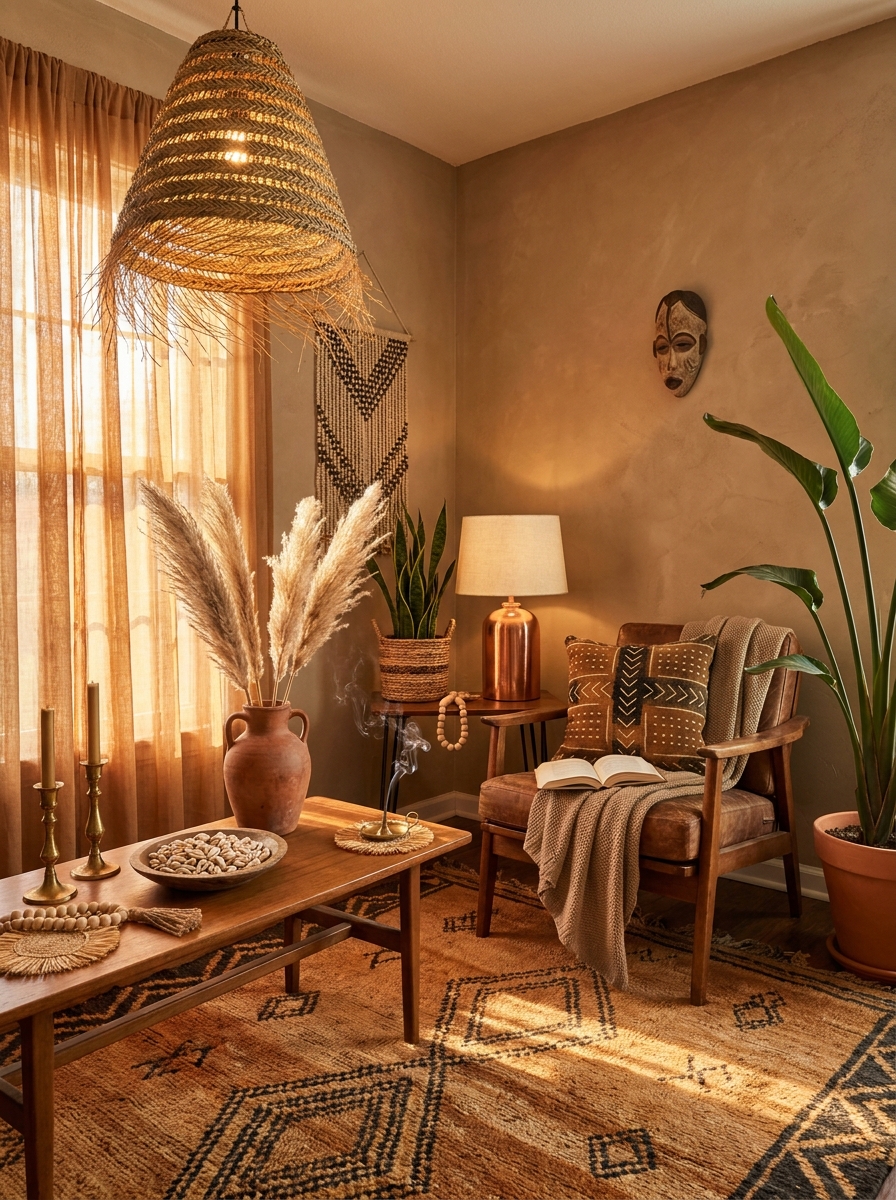
Lighting in Afrohemian spaces isn’t just functional—it’s storytelling. Think woven pendant lamps made from natural fibers, carved wooden lanterns casting gorgeous shadows, and brass candleholders clustered on low tables. The goal is warm, layered light that creates intimate pockets throughout your space.
I’m obsessed with how these fixtures become sculptural moments during the day and magical light sources at night. A large woven pendant over your dining table or seating area instantly becomes a conversation piece. Add smaller accent lights—maybe a copper table lamp with a linen shade or brass wall sconces—to build depth.
The beauty here is mixing handcrafted pieces with soft, warm bulbs. Forget harsh overhead lighting. Instead, scatter light sources at different heights. A beaded lamp on your side table, a raffia pendant overhead, candles in brass vessels on the coffee table. This creates that cozy, lived-in glow that makes Afrohemian spaces feel so inviting and soulful.
14. Vintage Finds with African Heritage
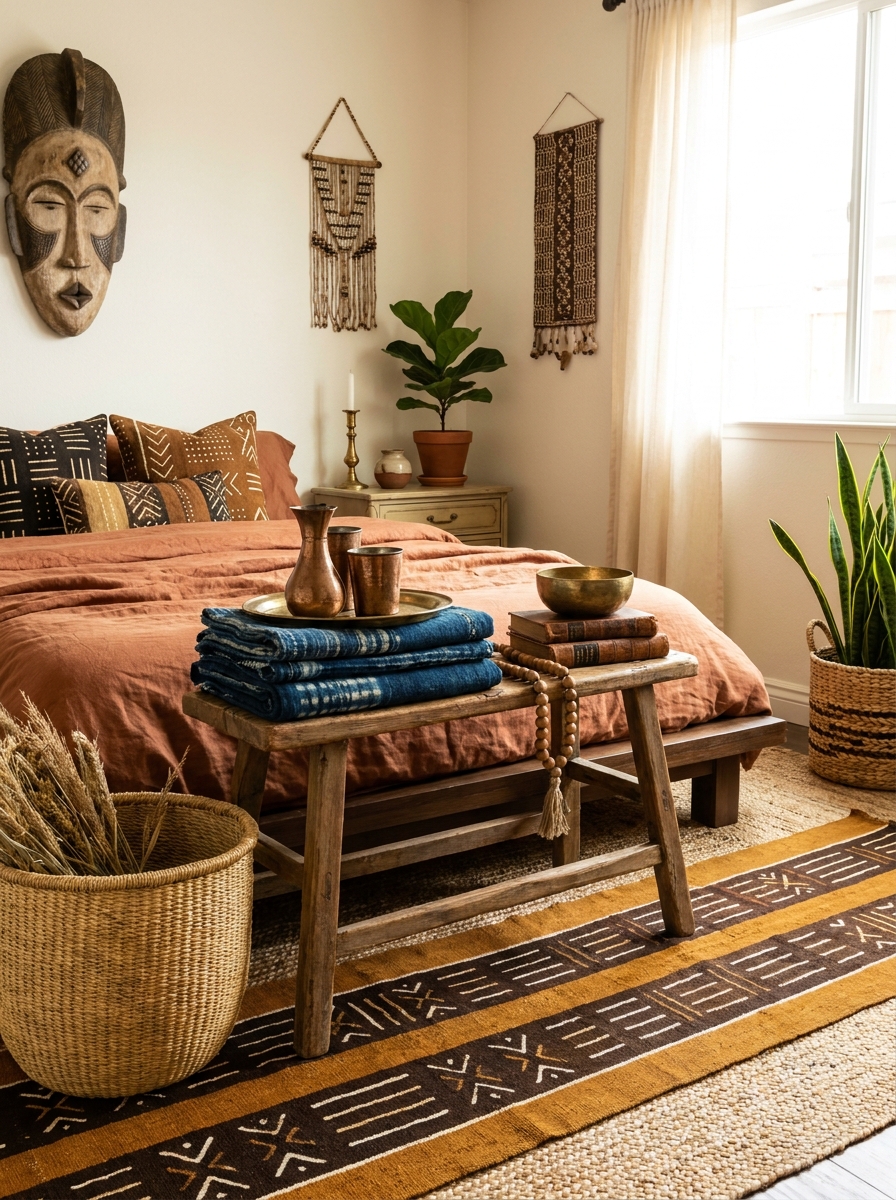
Here’s where Afrohemian gets really fun—the treasure hunt. Scouring vintage markets and antique shops for pieces with African heritage adds so much soul to your space. I’m talking vintage brass trays from Morocco, old wooden stools from West Africa, antique indigo-dyed textiles, or hand-carved walking sticks repurposed as decor.
These pieces carry history. They’ve lived other lives, traveled continents, been touched by many hands. When you bring them into your home, you’re honoring that journey. Mix them freely with your modern furniture—that contrast is pure magic. A vintage Berber rug under your contemporary sofa? Yes. An antique wooden mortar as a sculptural object on your shelf? Absolutely.
Don’t worry about everything matching perfectly. The beauty of vintage is in the imperfections, the worn edges, the patina that only time creates. These pieces ground your space and give it depth that you simply can’t buy new. Plus, you’re supporting sustainable decorating and preserving cultural craftsmanship.
15. Curated Vignettes on Every Surface
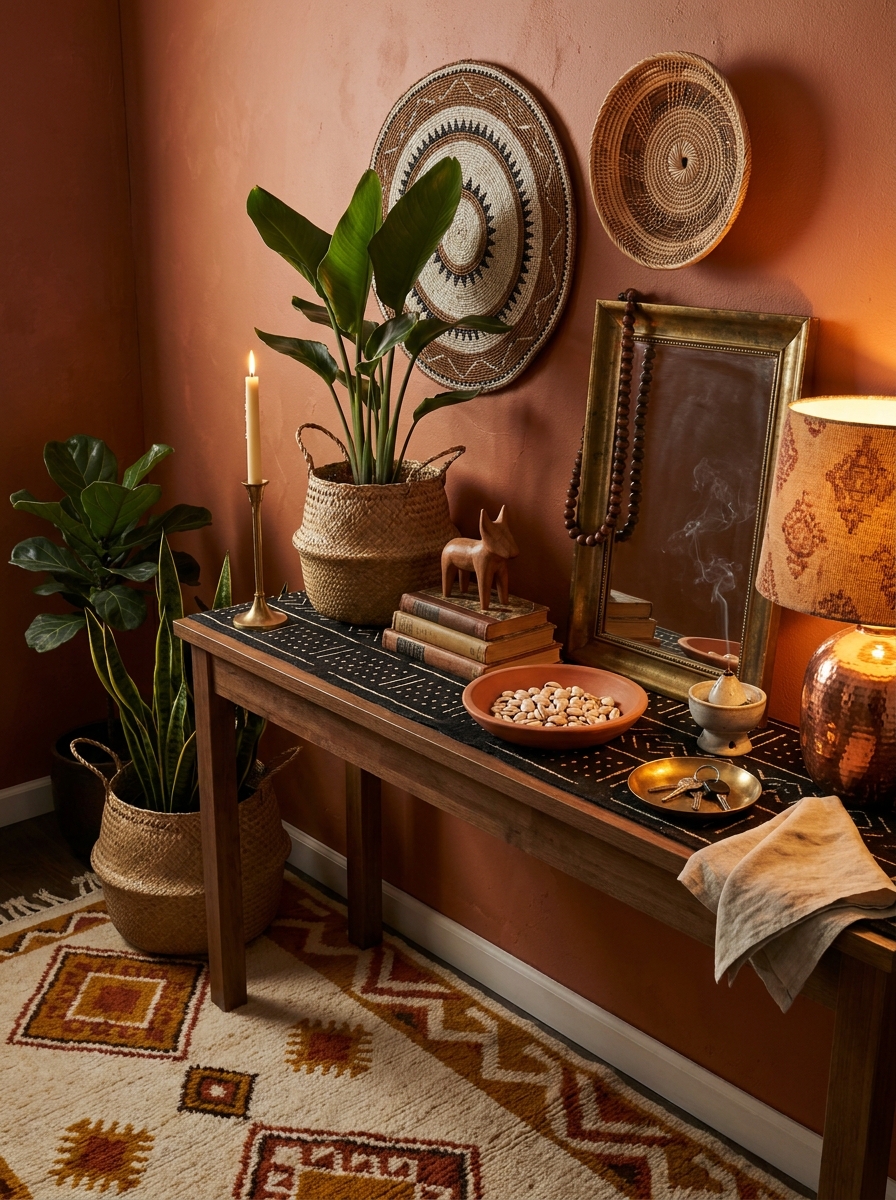
Afrohemian style thrives on the art of the vignette—those thoughtfully arranged little moments on shelves, side tables, and consoles. This is where you get to play and express yourself. Group your treasures in odd numbers, vary the heights, and always include something with texture, something with cultural meaning, and something natural.
I love building these mini-stories throughout my space. On my console table, I might cluster a brass vessel, a small carved figure, a candle in a terracotta holder, and a branch of eucalyptus in a woven basket. Each item speaks to the others. The mix of materials—metal, wood, fiber, greenery—creates visual interest that keeps your eye moving.
Don’t overthink it. Start with your favorite piece and build around it. Swap things seasonally or whenever the mood strikes. These vignettes make your home feel collected and personal, never decorated by a catalog. They’re conversation starters and daily reminders of the beauty in handcrafted, meaningful objects.
Quick Guide
Afrohemian Color Palette Quick Guide
Base Neutrals: Warm cream, natural linen, sand tones, ivory—these soften the richness and give your eyes a place to rest.
Signature Earthy Tones: Terracotta, rust, burnt orange, ochre, mustard, sienna, clay—the heart of the palette. Use these as your primary color story.
Deep Grounding Shades: Chocolate brown, espresso, charcoal, black—add these through carved wood, mudcloth patterns, and accent pieces for contrast and depth.
Metallic Accents: Brass, copper, bronze, gold—warm metals that enhance the earthy vibe without feeling cold or modern.
Natural Greenery: Snake plants, fiddle leaf figs, bird of paradise, dried pampas—bring life and softness to balance all those rich, grounded tones.
The Formula: Pick 2-3 earthy signature tones, anchor with one deep shade, soften with neutrals, accent with warm metallics.
Your Home, Your Heritage, Your Story
Here’s what I love most about Afrohemian decor—it refuses to be one thing. It’s not precious or untouchable. It’s warm and layered and real. Every mudcloth pillow, every carved mask, every woven basket adds another sentence to the story your home is telling. And that story? It’s about honoring heritage while embracing the free-spirited mix-and-match energy of bohemian style. It’s about choosing pieces that matter instead of filling rooms with stuff that doesn’t.
You don’t need to overhaul your entire house overnight. Start with one corner. Add a terracotta throw. Hang a basket on the wall. Swap in some mudcloth pillows. Let the space evolve as you find pieces that speak to you—whether that’s at a local artisan market, an online shop supporting African makers, or your grandmother’s attic. The beauty is in the curating, the layering, the mixing. So go ahead. Let your space get a little warmer, a little richer, a little more you. That’s what 2026 is all about.
Frequently Asked Questions
What exactly is Afrohemian decor style?
Afrohemian blends African cultural elements—like mudcloth textiles, carved wood, woven baskets, and tribal patterns—with the relaxed, layered, eclectic vibe of bohemian design. It’s warm, earthy, texture-rich, and celebrates handcrafted artisan pieces with soul. Think terracotta tones, natural materials, and spaces that feel collected and personal rather than designed.
Where can I find authentic African decor pieces for Afrohemian style?
Look for online shops that work directly with African artisans, like Etsy sellers specializing in authentic mudcloth or fair-trade home stores. Local markets, estate sales, and vintage shops can yield amazing finds too. Just make sure you’re buying from sources that respect the cultures and fairly compensate the makers—authenticity matters both ethically and aesthetically.
What colors work best in an Afrohemian living room?
Start with earthy terracotta, rust, burnt orange, ochre, and sienna as your base. Layer in warm neutrals like cream, sand, and natural linen to soften the richness. Add depth with chocolate brown, espresso, or black through mudcloth patterns and carved wood. Finish with brass or copper metallics for warmth and greenery for life.
Can I mix Afrohemian decor with my existing modern furniture?
Absolutely. Afrohemian actually works beautifully with modern pieces because the contrast creates interest. A sleek modern sofa becomes warmer with mudcloth pillows and a woven throw. Clean-lined furniture lets the textured, artisan elements shine without competing. Just balance the streamlined and the layered—you want harmony, not chaos.
How do I style Afrohemian decor without cultural appropriation?
Buy from African artisans and fair-trade sources whenever possible. Learn the stories behind the pieces—mudcloth patterns have meanings, masks have cultural significance. Display them with respect, not as random exotic decor. When you honor the heritage and support the makers, you’re celebrating culture rather than appropriating it. Intention matters.