32 Dreamy Small Dining Room Ideas That Feel Spacious
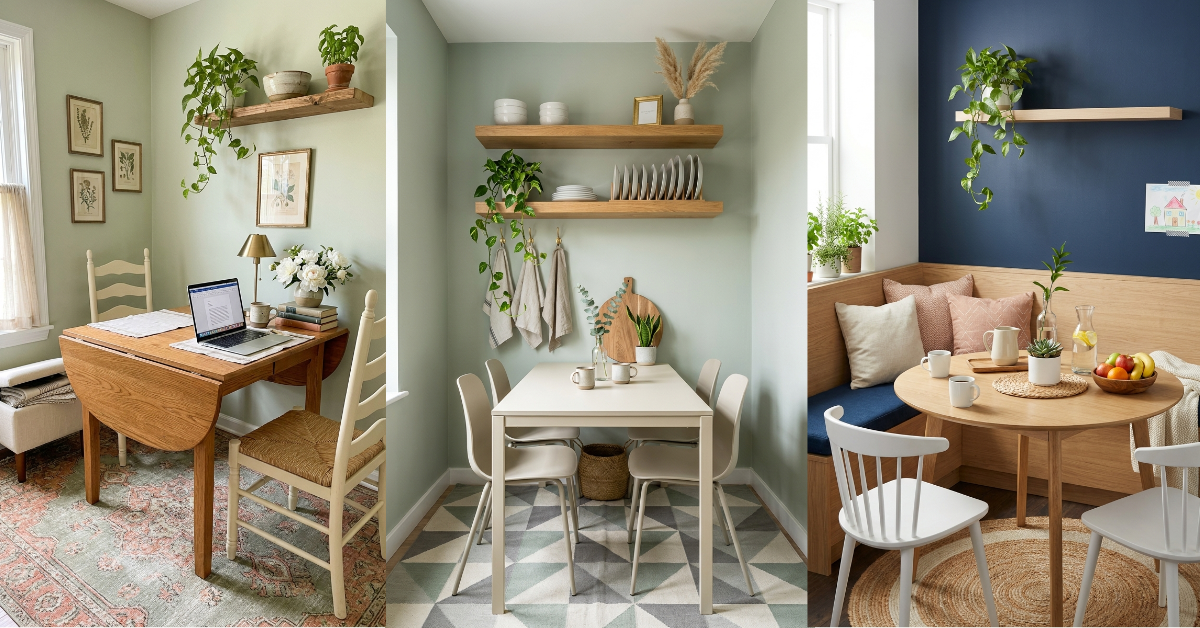
You know that awkward corner between your kitchen and living room? Or that narrow strip of space you’re not quite sure what to do with? Small dining rooms can feel like a design puzzle. You want a place where friends can gather, where Sunday morning pancakes feel special, but you’re working with maybe 80 square feet if you’re lucky. The good news? A compact dining space can actually feel more intimate and inviting than those massive formal dining rooms that end up collecting mail and dusty centerpieces. I’ve spent years figuring out what actually works in small dining areas, and it’s not about cramming in a table and calling it done. It’s about smart choices that make the space feel intentional, not squeezed. From clever furniture picks to visual tricks that open everything up, these 32 ideas will help you create a dining spot you’ll actually want to use every single day. Let’s get into it.
1. Round Tables Are Your Best Friend
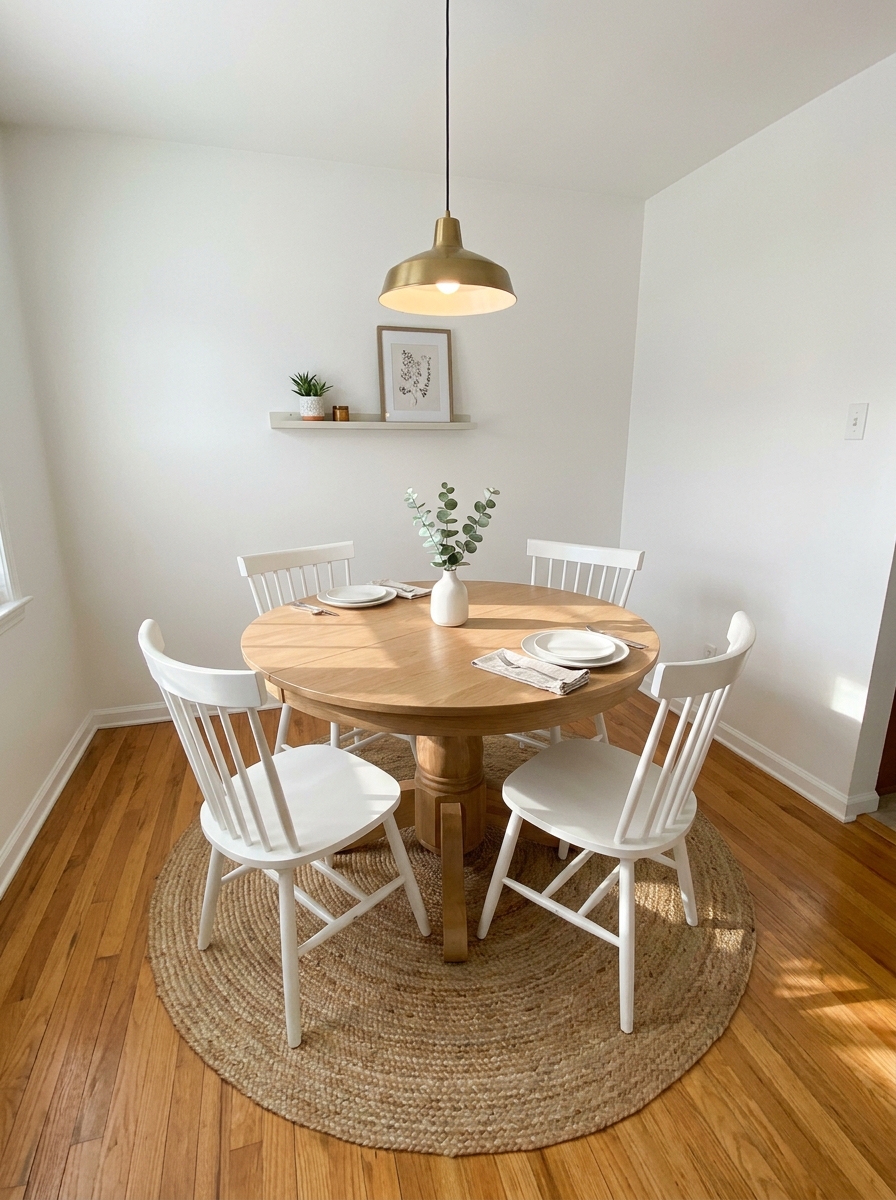
Here’s the thing about round tables in small dining rooms: they’re magic. No sharp corners mean you can actually move around the space without bruising your hip every time you walk by. Plus, a round table naturally encourages conversation because everyone’s facing each other instead of sitting in a line like you’re at a conference table.
I love how a pedestal base opens up even more floor space compared to four chunky legs. You can tuck chairs under completely, and in a pinch, you can squeeze in an extra person without anyone straddling a table leg. A 36 to 42-inch round table works perfectly for small spaces and still seats four people comfortably.
And honestly? Round tables just look softer and more approachable in a compact room. They don’t fight with the square angles of your walls. Instead, they create this nice visual contrast that makes the whole space feel more designed and less like you just shoved furniture wherever it would fit.
2. Bench Seating Saves Serious Space
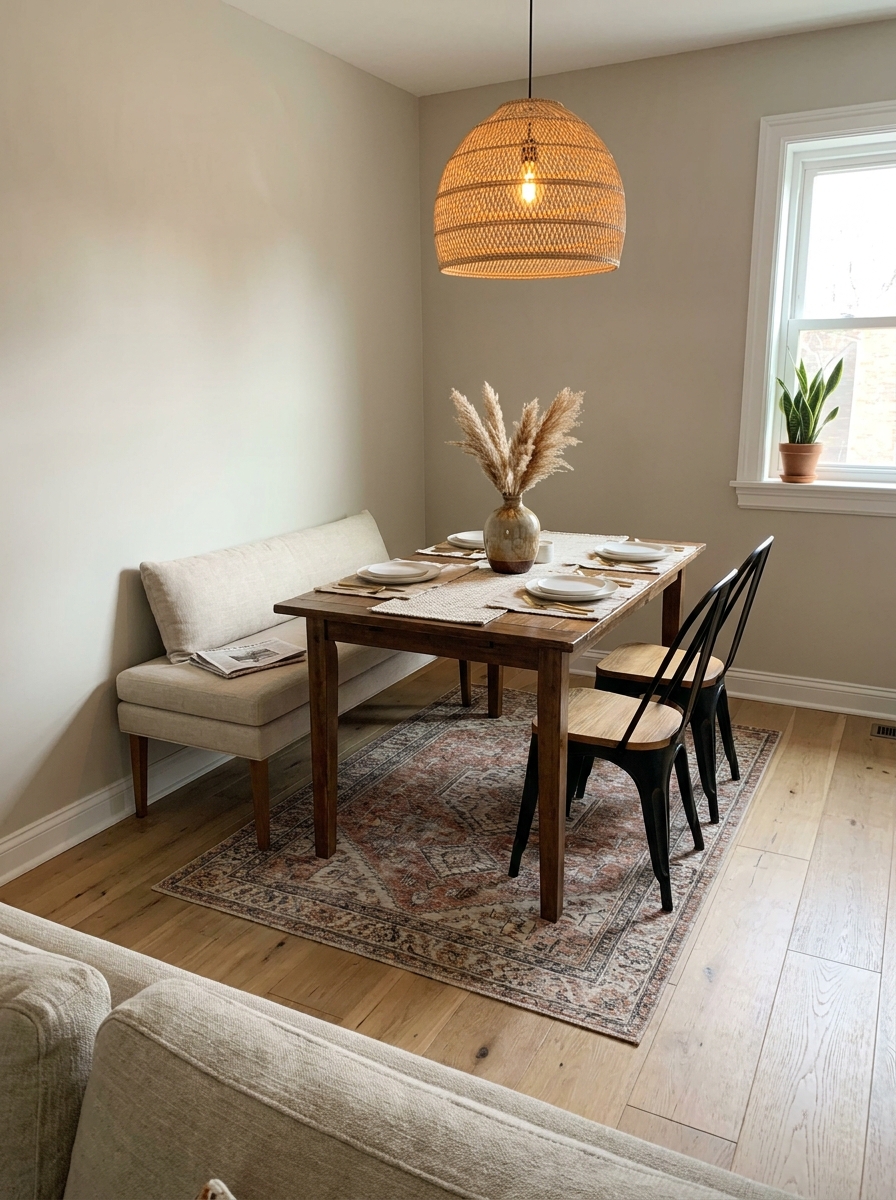
Swapping out chairs for a bench on one side of your table is such a game-changer. You can push a bench completely under the table when you’re not using it, which gives you back precious floor space. It’s especially perfect if your dining area is in a high-traffic zone where people are constantly walking through.
Benches also have this casual, welcoming vibe that makes your dining room feel less formal and more family-friendly. Kids love them. And when you have guests over, you can actually fit more people on a bench than you could with individual chairs. Three adults can squeeze onto a 48-inch bench pretty comfortably when you need the extra seating.
I particularly love benches with built-in storage underneath. You can hide table linens, extra candles, or even kids’ art supplies in there. It’s furniture that works twice as hard, which is exactly what you need in a small space. Look for benches with upholstered tops for comfort, or add a few throw pillows to make a wooden bench more inviting.
3. Wall-Mounted Drop-Leaf Tables Work Wonders
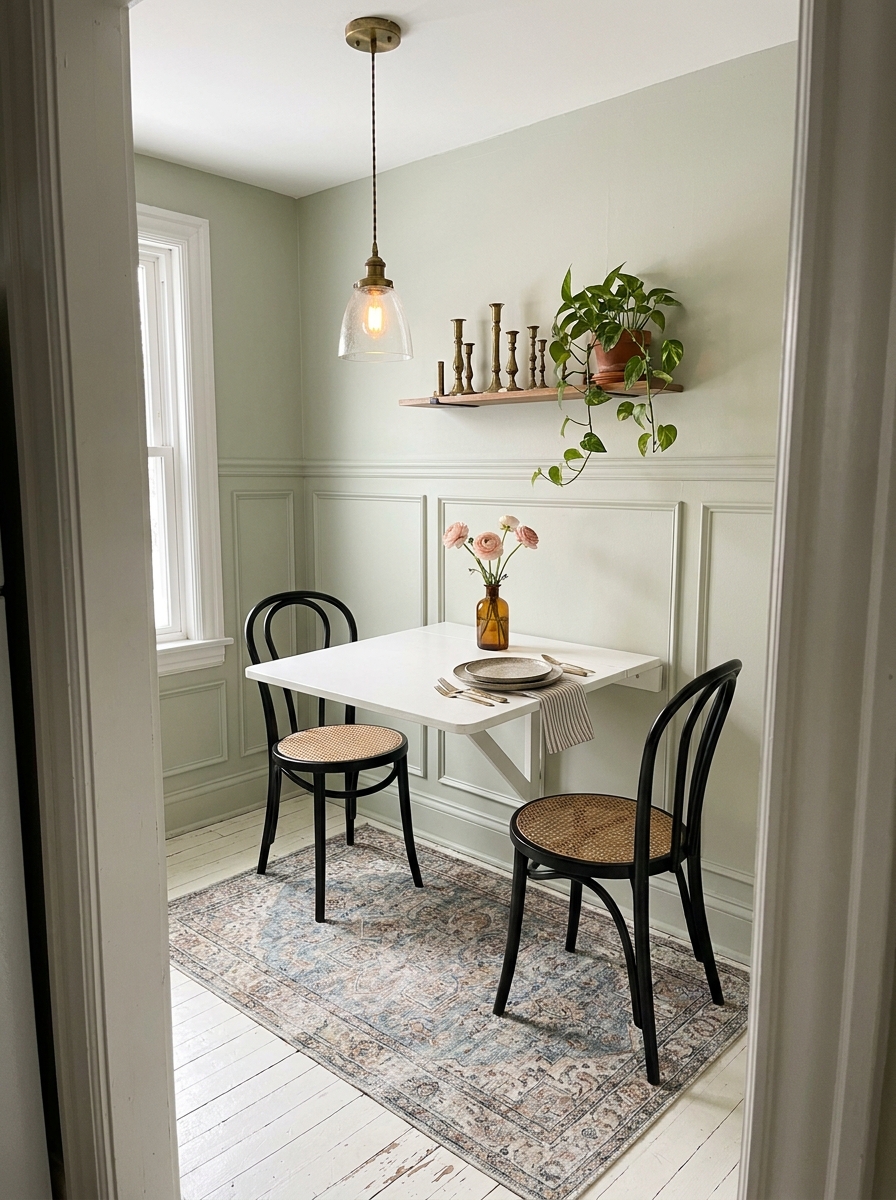
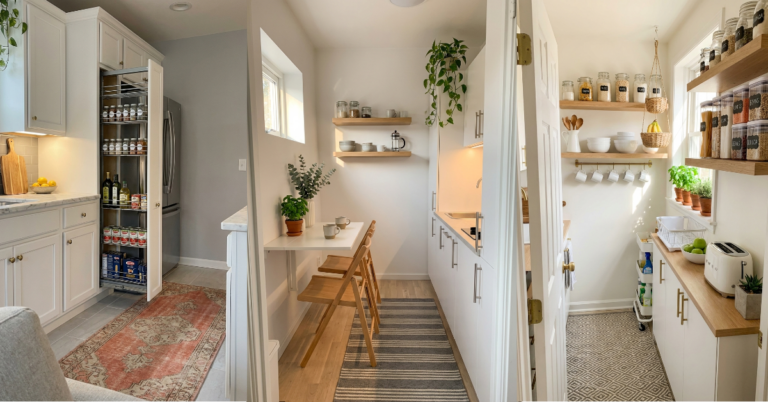
If you’re really tight on space, a wall-mounted drop-leaf table might be your hero. These fold down completely flat against the wall when you’re not eating, giving you back your entire floor. When it’s time for dinner, you just flip up one or both sides and pull out your chairs.
I’ve seen these work beautifully in studio apartments or narrow galley-style spaces where a permanent table would block the flow. The key is mounting it at the right height (about 28 to 30 inches from the floor) and making sure it’s securely anchored into wall studs. You don’t want any wobbling when you’re cutting into your chicken.
What I really love is how versatile these are. On a regular Tuesday night, maybe you only need the table big enough for one person and a laptop. But when friends come over for brunch, you can extend it fully and suddenly you’ve got room for four. It’s like having two different dining rooms in one tiny footprint, and that flexibility is priceless in a small home.
4. Light Colors Make Everything Feel Bigger
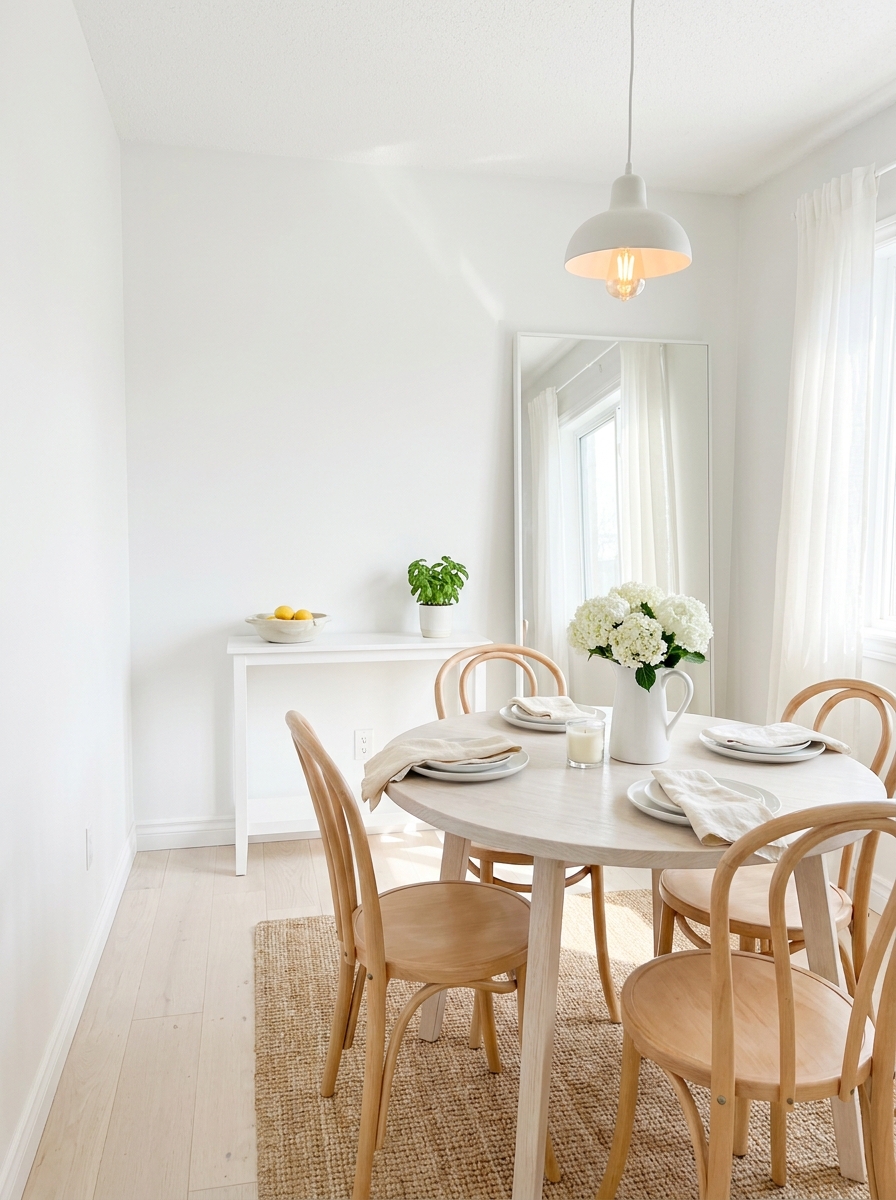
This might sound obvious, but I can’t stress enough how much lighter colors open up a small dining room. White, cream, soft gray, or pale sage walls reflect light and make the boundaries of the room feel less defined. Dark colors can look dramatic and cozy, but they also make walls feel like they’re closing in.
It’s not just about wall color either. Your furniture choices matter too. A light wood table or white painted chairs keep the visual weight of the room low. When everything is roughly the same lighter tone, your eye doesn’t get stopped by heavy dark furniture pieces, and the space flows better.
But here’s the thing: light doesn’t have to mean boring. You can absolutely layer in texture and interest with woven textiles, natural wood grains, and different shades of white and cream. The monochromatic look is actually super sophisticated when you play with textures. Think linen napkins, a jute rug, ceramic dishes, and maybe a weathered wood table. All light, all interesting, all working together to make your small dining room feel twice its actual size.
5. Mirrors Instantly Double Your Space
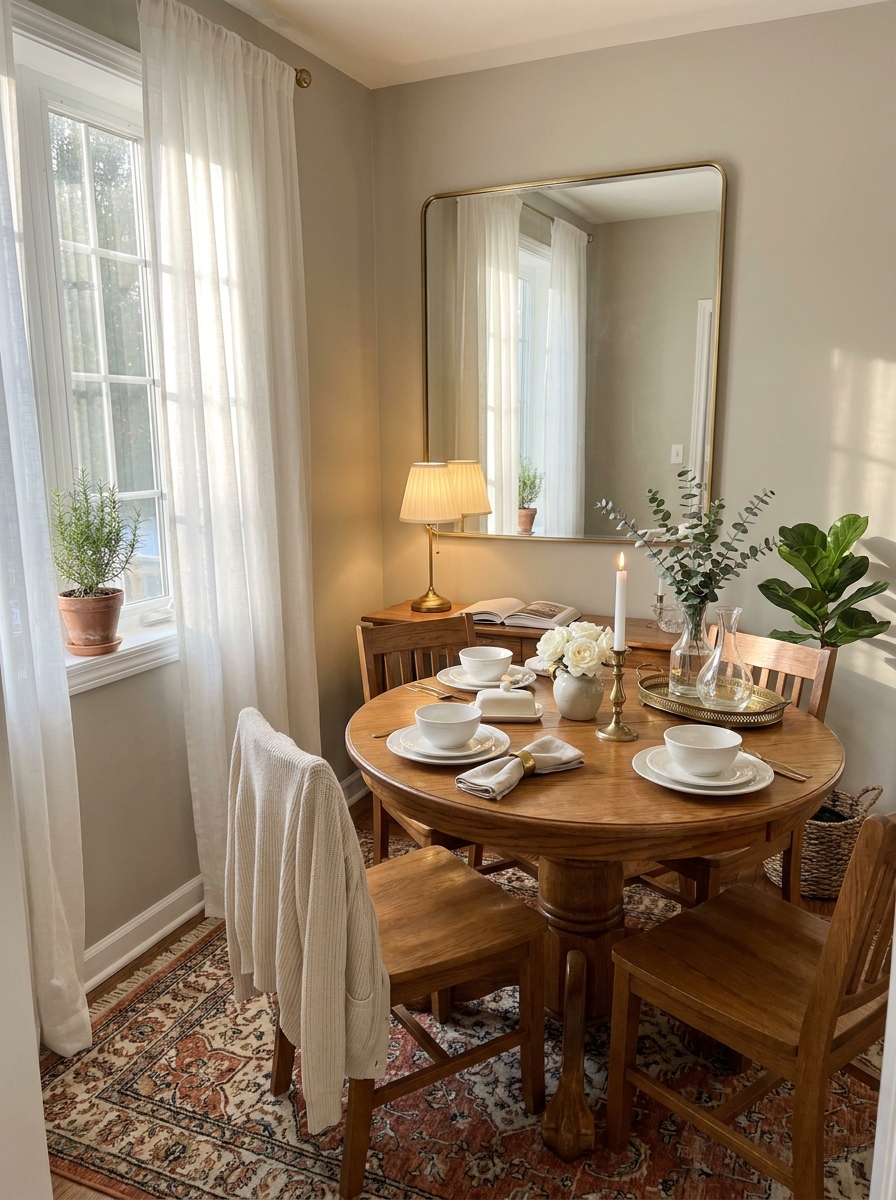
Okay, this one feels like actual magic. A well-placed mirror in a small dining room makes everything feel twice as big, twice as bright, and way more open. I’m obsessed with putting a large mirror on the wall opposite a window—it bounces all that gorgeous natural light around and suddenly your tiny dining nook feels like it has actual breathing room.
You don’t need anything fancy here. A simple frameless mirror or one with a slim frame works beautifully without adding visual weight. Lean a floor mirror against the wall for that effortless, lived-in vibe, or hang one horizontally above a console table to create the illusion of extra square footage.
The best part? Mirrors make your space feel lighter and airier without taking up a single inch of floor space. They’re basically the ultimate small-space multitasker. Plus, they reflect your pretty table settings and decor, so you get double the styling impact with zero extra effort.
6. Floating Shelves Replace Bulky Buffets
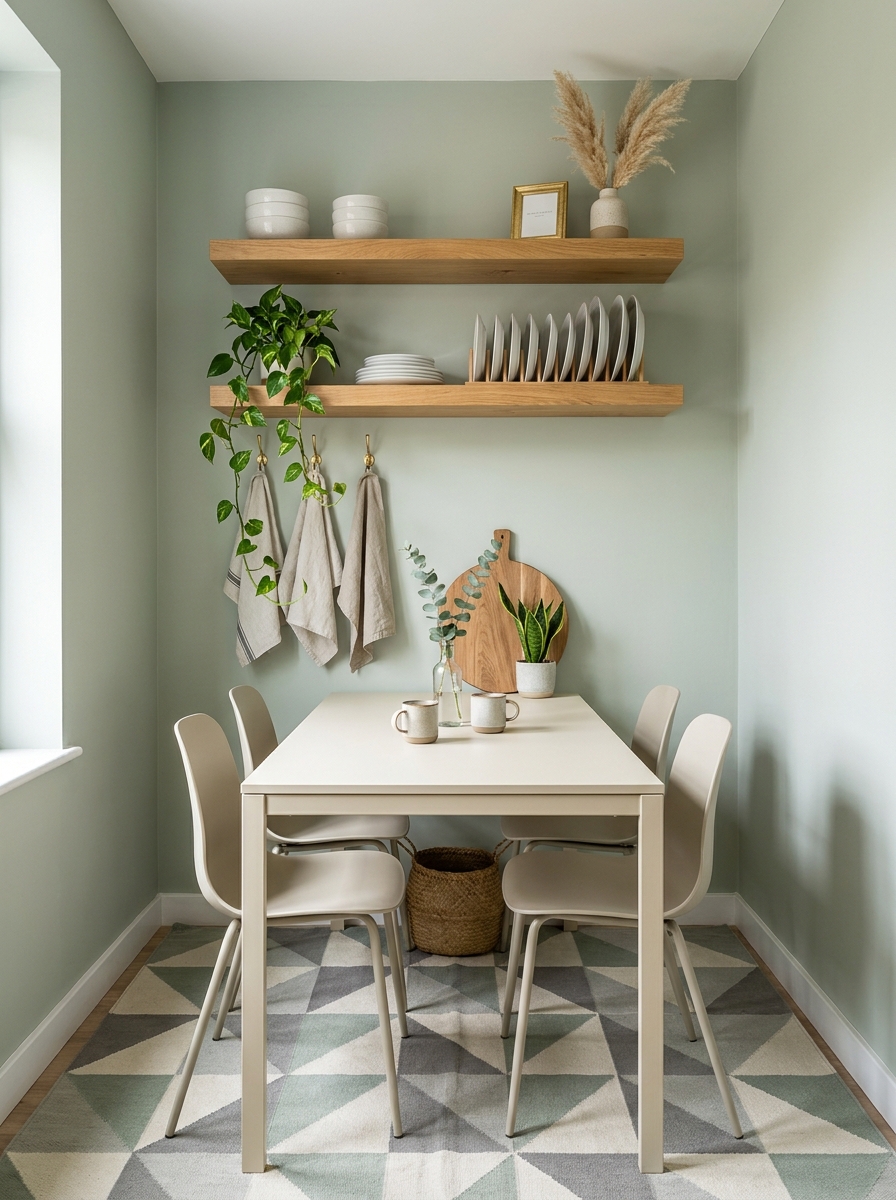
Here’s the thing about traditional buffets and sideboards—they eat up so much floor space in a small dining room. Floating shelves give you all the storage and display space you need without that heavy furniture footprint. I love running them along one wall to keep dishes, glasses, and pretty serving pieces within easy reach.
The key is keeping them styled but not cluttered. Use a mix of functional stuff (your everyday dishes, a few wine glasses) and pretty things (a small plant, a favorite bowl, maybe a little art piece). This keeps your dining essentials accessible while adding personality to your walls.
Floating shelves also draw the eye upward, which makes your ceiling feel higher and your whole room feel more spacious. It’s like you’re using vertical real estate instead of sacrificing precious floor space. And honestly? Open shelving just feels more modern and airy than those heavy, closed cabinets our grandmas had.
7. Glass Tables Keep Things Visually Light
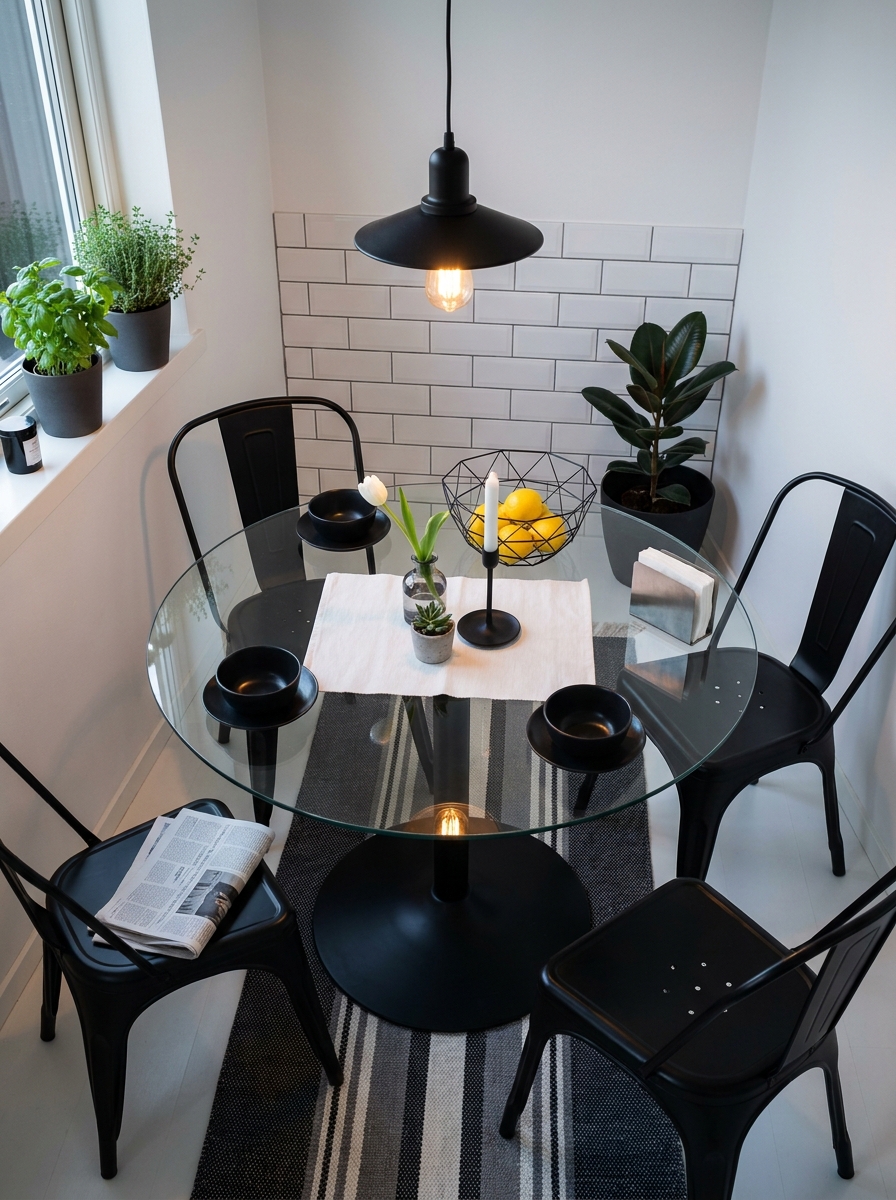
I’ll be honest—I used to think glass dining tables were kinda boring. But in a small space? They’re actually brilliant. A glass tabletop basically disappears visually, which means your dining area feels so much less crowded than it would with a big solid wood table taking up all that visual space.
You can see straight through to the floor and the rug underneath, which creates this uninterrupted sightline that makes your whole room feel more open and flowing. It’s especially great if you have a gorgeous rug you want to show off, or if you’re working with limited square footage and need every trick in the book to avoid that cramped feeling.
The best part? Glass reflects light just like a mirror does, so you get that bright, airy vibe without actually hanging mirrors everywhere. Pair it with slim metal legs or a sculptural base, and you’ve got a table that feels modern and sophisticated without overwhelming your small dining room.
8. Built-In Banquettes Maximize Every Inch
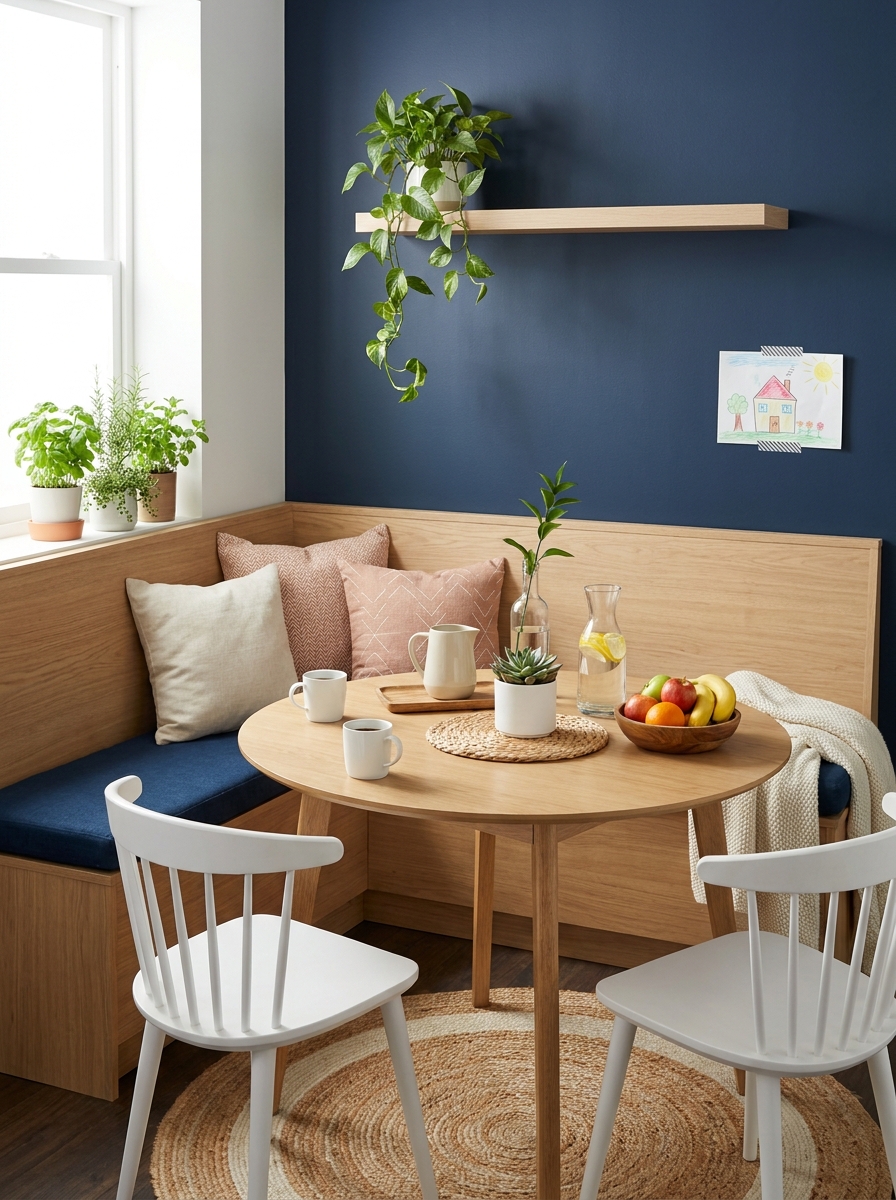
If you’ve got a corner or a wall you’re not using, a built-in banquette is hands-down one of the smartest small dining room moves you can make. It tucks seating right against the wall, which means you’re not wasting floor space with chairs that need pull-out room. Plus, you can usually fit more people on a banquette than you could with individual chairs in the same footprint.
I love banquettes with storage underneath—lift-up seats that hide table linens, extra dishes, or all those random serving platters you only use twice a year. It’s like getting a dining area and a storage closet in one. Add some comfy cushions and a few throw pillows, and suddenly your dining nook feels cozy and inviting instead of cramped.
The built-in look also makes your small space feel more intentional and custom, like you actually designed it this way on purpose instead of just squeezing furniture wherever it fits. It’s the difference between “small and awkward” and “charming breakfast nook.”
9. Chairs With Slim Profiles Change Everything
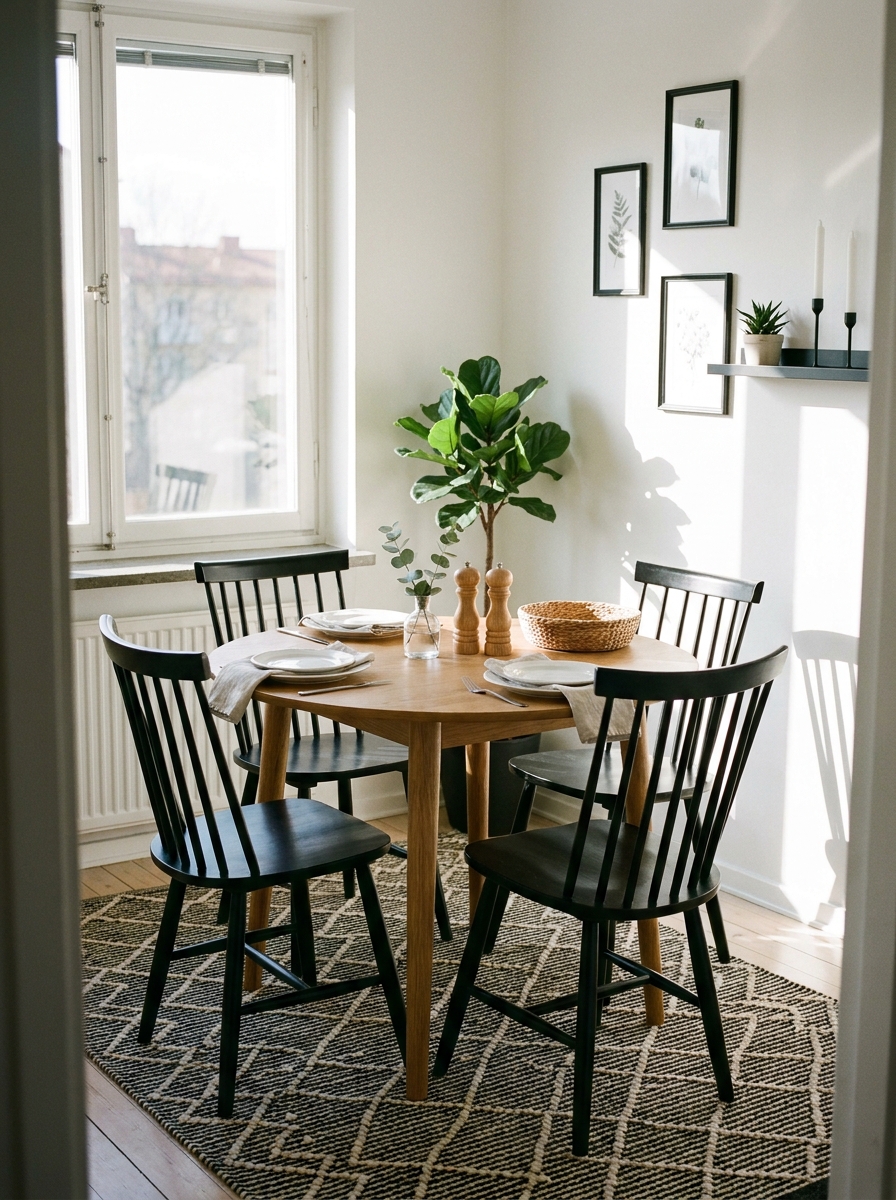
Here’s something I learned the hard way: chunky dining chairs eat up way more space than you think. Those big upholstered ones with arms? Total space hogs in a small dining room.
Slim-profile chairs are absolute game-changers. I’m talking chairs with open backs, skinny legs, or no arms. They give you all the seating you need without that visual weight. And honestly? When you can see more floor and more wall around your chairs, the whole room breathes easier.
I recently swapped my old padded chairs for some simple bentwood ones, and wow. Same table, same room, but suddenly it feels like I gained three feet of space. You can tuck them completely under the table when you’re not using them, which makes walking around so much easier. Plus, lighter chairs are way easier to move when you need to squeeze in an extra person or two. Small space living is all about flexibility, right?
10. Strategic Lighting Draws the Eye Up
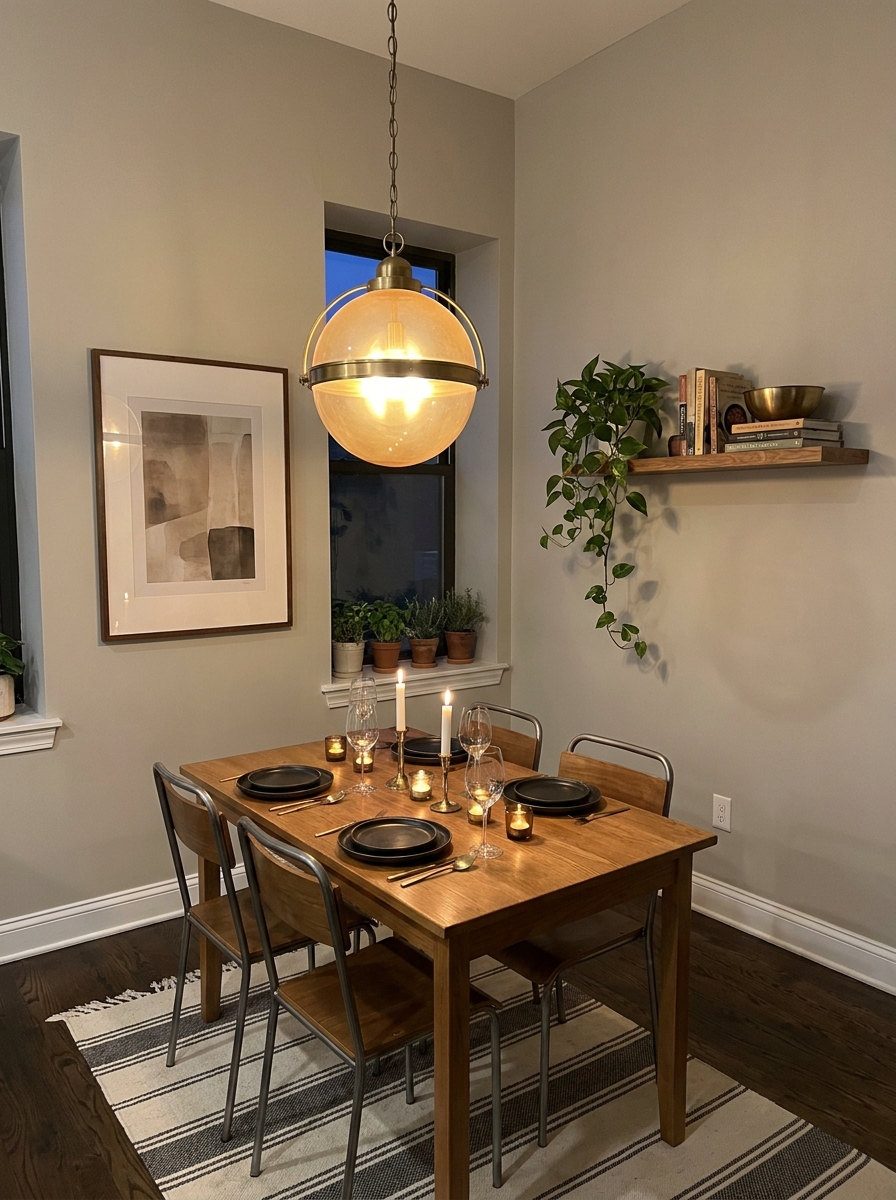
Want to know a sneaky trick that makes small dining rooms feel way bigger? Look up. Seriously! When you draw attention to the ceiling with great lighting, you’re basically telling everyone’s brain that this room has vertical space to spare.
A beautiful pendant light over your dining table becomes an instant focal point. It pulls eyes upward and makes the ceiling feel higher than it actually is. I’m obsessed with this trick because it works every single time. And bonus: good overhead lighting makes your whole space feel more intentional and designed, not just crammed together.
Go for something with visual interest but not too bulky. A sculptural fixture or a cluster of small pendants works beautifully. Just make sure it hangs low enough to create intimacy at the table but high enough that tall people won’t bump their heads. That sweet spot is usually around 30-36 inches above the table surface. The right light transforms your dining area from “corner we shoved a table into” to “charming dining space.”
11. Multipurpose Furniture Pulls Double Duty
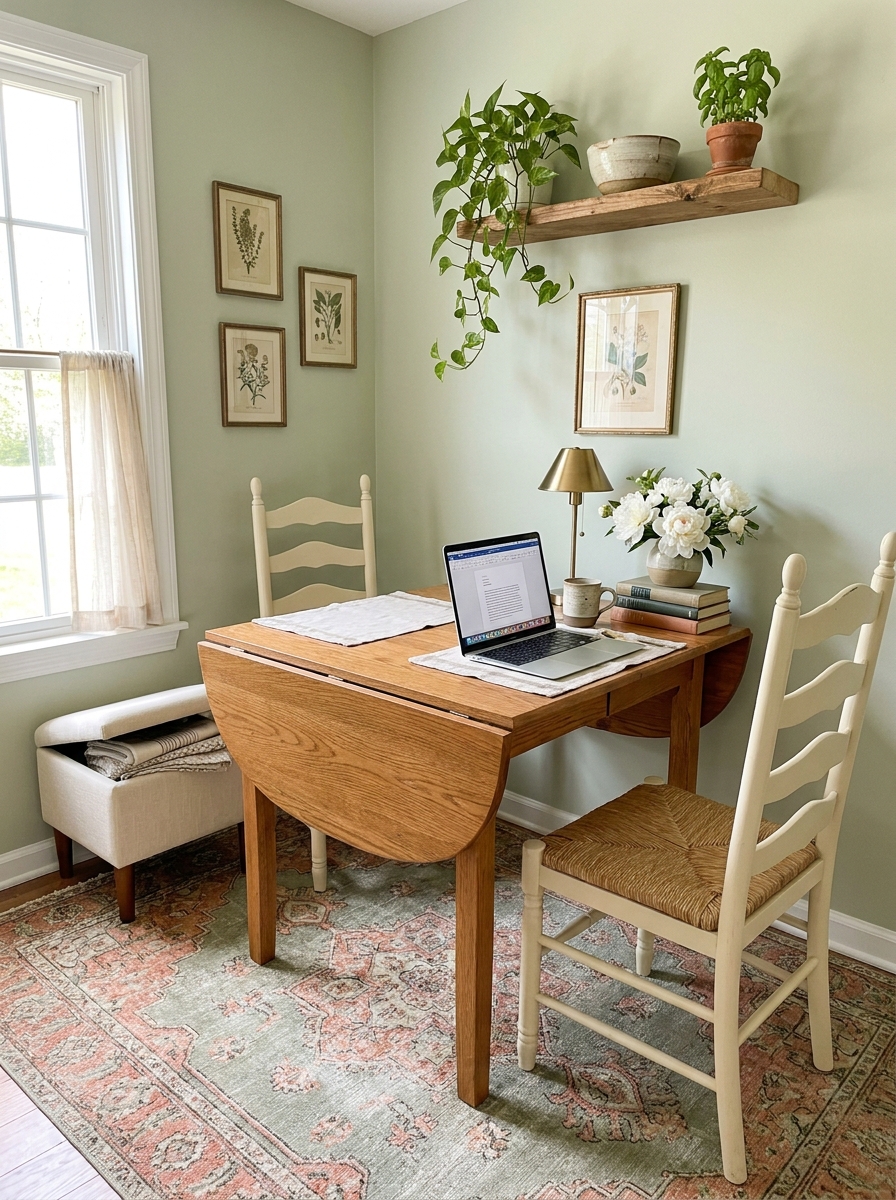
In a small dining room, every single piece of furniture needs to earn its keep. I’m totally over single-purpose anything when space is tight. That’s where multipurpose furniture becomes your absolute best friend.
Think dining tables that extend when you have guests but shrink down for everyday use. Or storage benches that give you seating plus a place to stash table linens, placemats, and all that stuff you don’t use daily. I’ve even seen console tables that transform into dining tables. Mind-blowing, right?
My favorite multipurpose move? A dining table that doubles as a workspace during the day. With more people working from home, this just makes sense. You eat breakfast there, work on your laptop all afternoon, then clear it off for dinner. One piece of furniture, three different uses. That’s the kind of efficiency that makes small space living actually enjoyable instead of frustrating. And honestly, furniture that adapts to your needs just feels smarter.
12. Vertical Storage Keeps Surfaces Clear
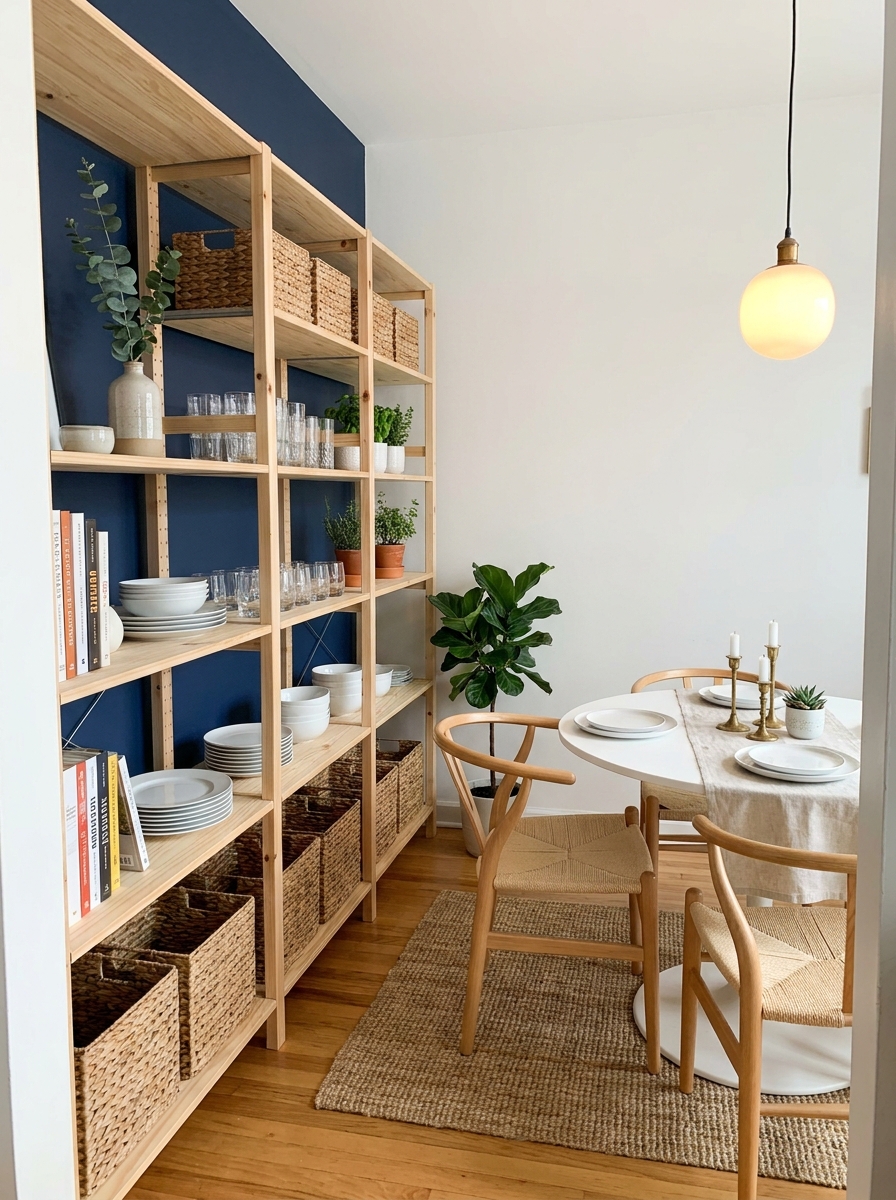
Here’s what happens in small dining rooms: clutter takes over fast. You need somewhere to put dishes, glasses, serving pieces, and all that dining stuff. But traditional buffets and china cabinets? Way too bulky for tight spaces.
Going vertical with your storage is absolutely the answer. Wall-mounted shelving, tall narrow cabinets, or even a ladder shelf can hold everything you need without eating up precious floor space. I installed some open shelving in my dining area last year, and it’s been a total revelation. Suddenly I have room for all my serving bowls and pretty glasses, but the floor space stayed exactly the same.
The key is keeping it organized and pretty. Use matching containers, display your nicest dishes, add a plant or two. When vertical storage looks good, it becomes part of your decor instead of just utilitarian stuff on the wall. Plus, having everything visible means you actually use those pretty serving pieces instead of forgetting they exist in some dark cabinet.
13. Corner Placement Utilizes Dead Space
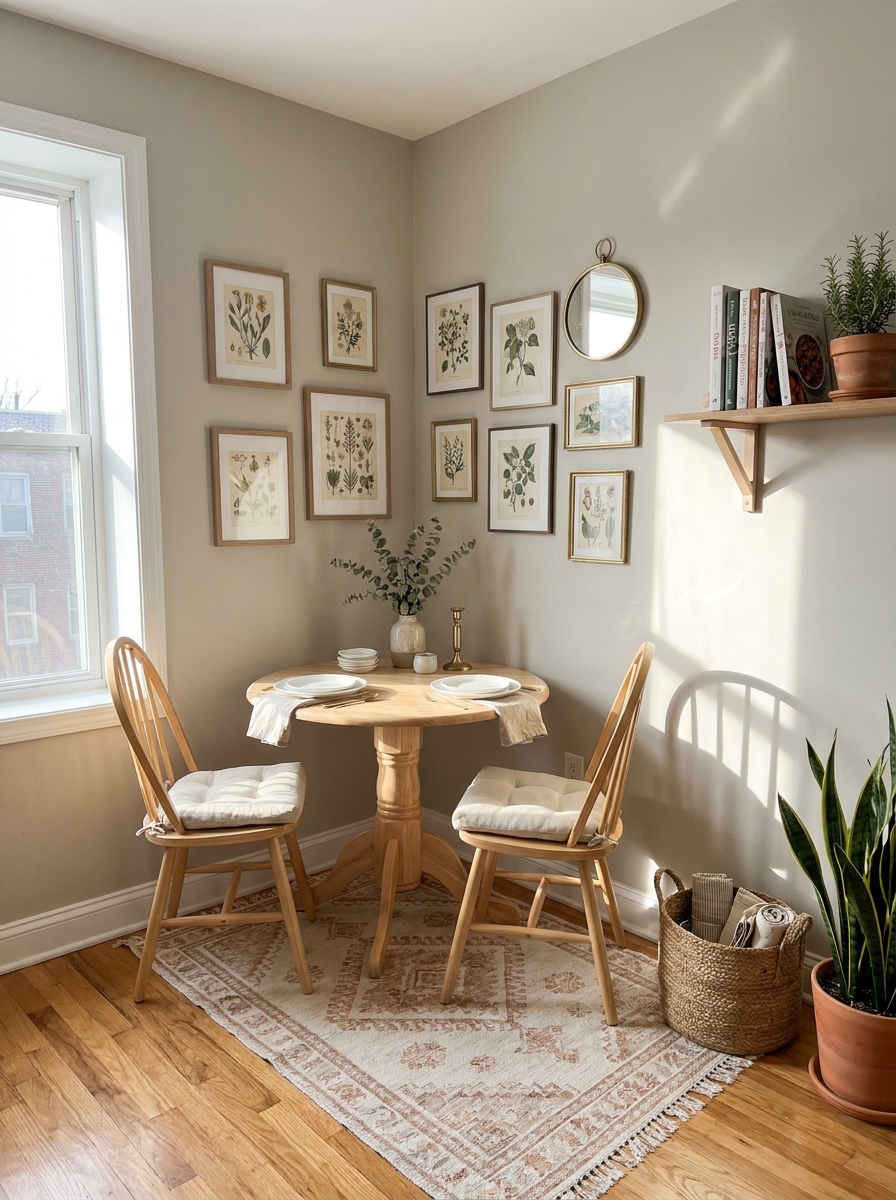
That awkward corner in your kitchen or living room? It’s actually the perfect spot for a small dining setup. Corners naturally create cozy, defined eating areas without eating up your main floor space.
I tucked a small round table into the corner of my apartment, and suddenly that forgotten nook became my favorite breakfast spot. The walls on two sides make it feel intentional and snug rather than squeezed in. You can push the table right up against both walls when it’s just you, then pull it out slightly when friends come over.
Corner dining setups work especially well in open-concept spaces where you need to carve out distinct zones. The placement naturally signals “this is the dining area” without requiring room dividers or rugs to define it. Plus, you’re using space that would otherwise just collect random stuff or become a plant graveyard.
14. Acrylic Chairs Practically Disappear
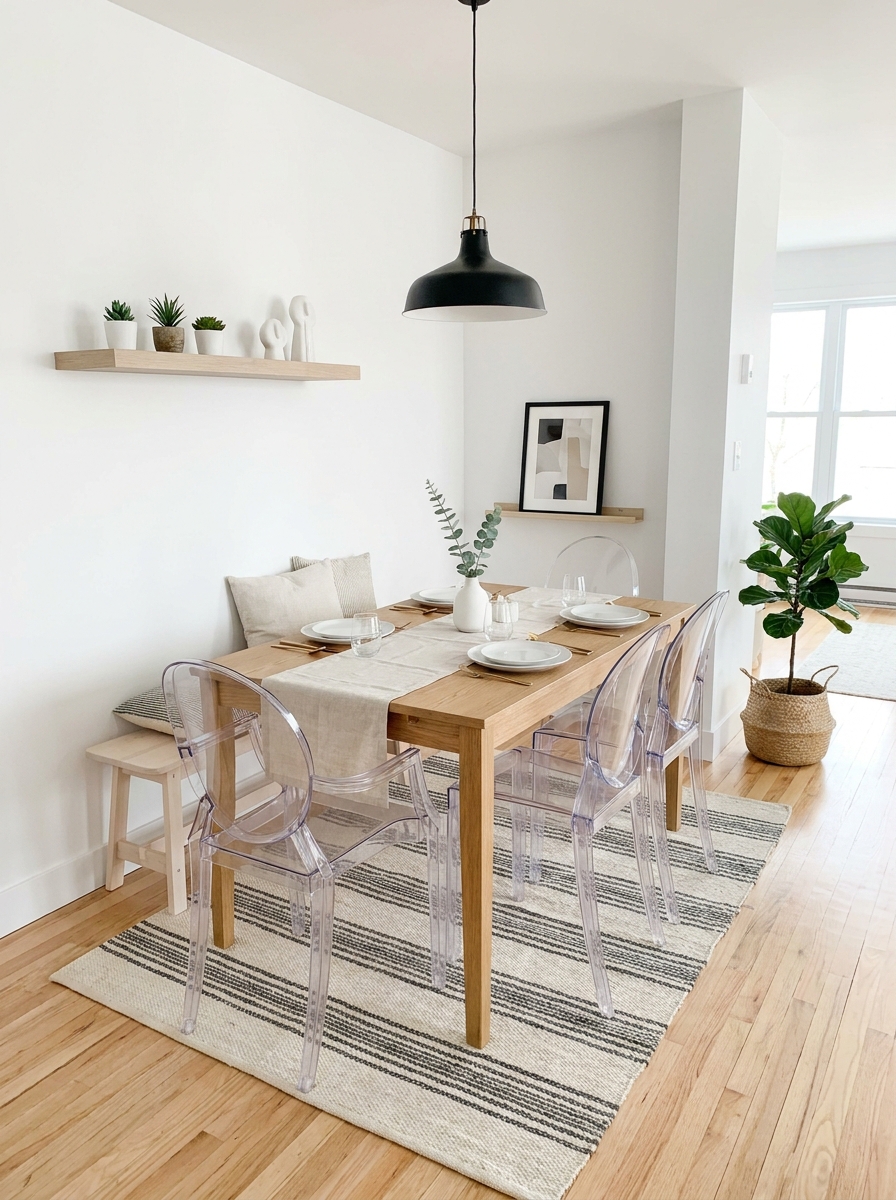
Here’s a small dining room secret that sounds too simple to work but absolutely does: clear acrylic chairs. They take up the same physical space as regular chairs, but your eyes just skip right over them. It’s like magic for cramped dining areas.
I was skeptical until I swapped my solid wood chairs for ghost-style acrylic ones. The difference was instant. My dining area suddenly felt twice as open, even though nothing else changed. You can see straight through to the walls, the floor, everything behind them, which tricks your brain into perceiving more space.
These chairs work with literally any style table too. Farmhouse? Industrial? Mid-century? They all look great because acrylic is so neutral. And let’s be honest, they’re also crazy easy to clean. Just wipe them down and you’re done. No upholstery to vacuum or wood to polish.
15. Pedestal Tables Eliminate Leg Battles
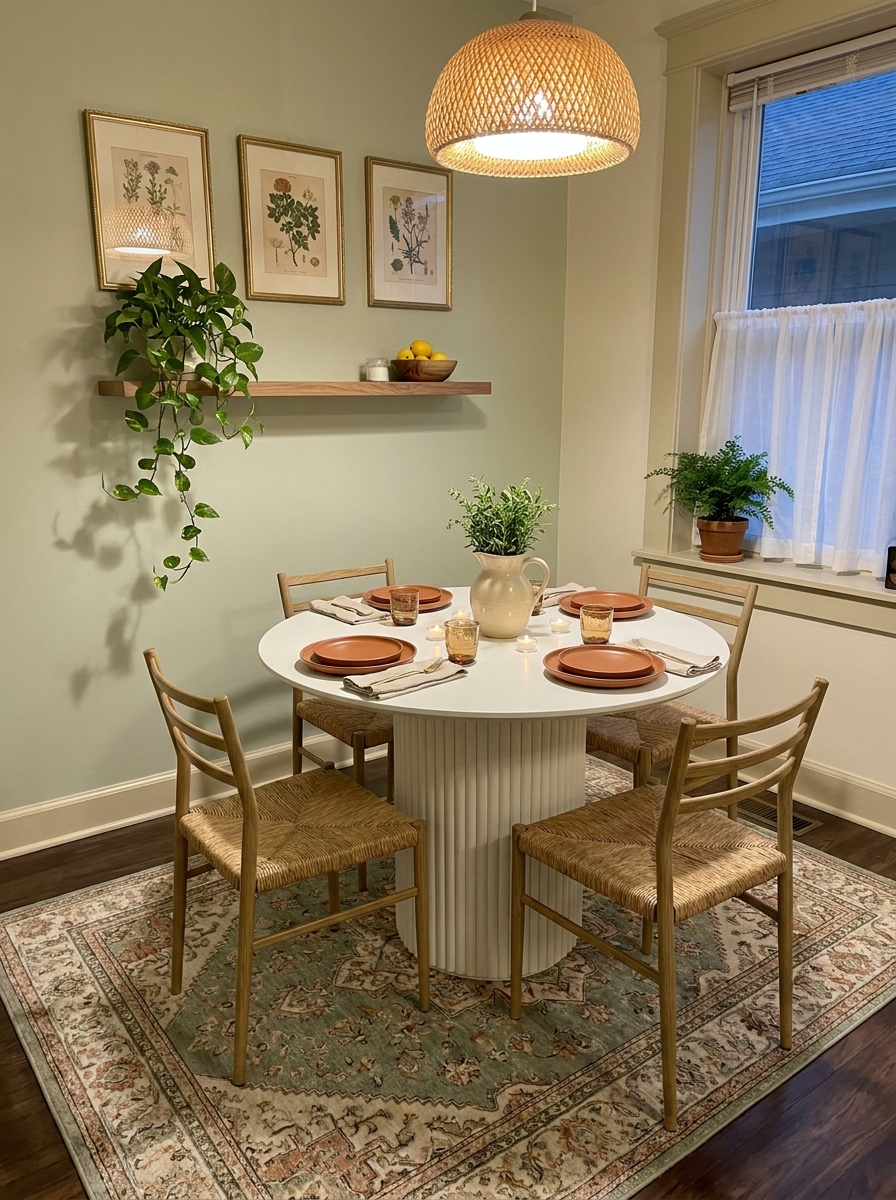
Nothing’s worse than sitting down to dinner and immediately smacking your knees into table legs. In small dining rooms, pedestal tables are absolute lifesavers because that single center base means everyone can actually sit comfortably.
I switched from a four-legged table to a pedestal style, and dinner parties became way less awkward. No more carefully positioning chairs to avoid the corner legs. No more guests doing that uncomfortable side-sit thing. Everyone can tuck their chairs in properly and actually have legroom. Plus, you can squeeze in an extra person when needed because there are no legs blocking the way.
Pedestal bases also make small rooms feel less cluttered visually. Four chunky legs create visual noise, but one streamlined base keeps things clean and simple. Round pedestal tables are especially perfect for tight spaces because you get all these benefits plus that easy-to-navigate circular shape.
16. Two-Tone Walls Create Dining Boundaries
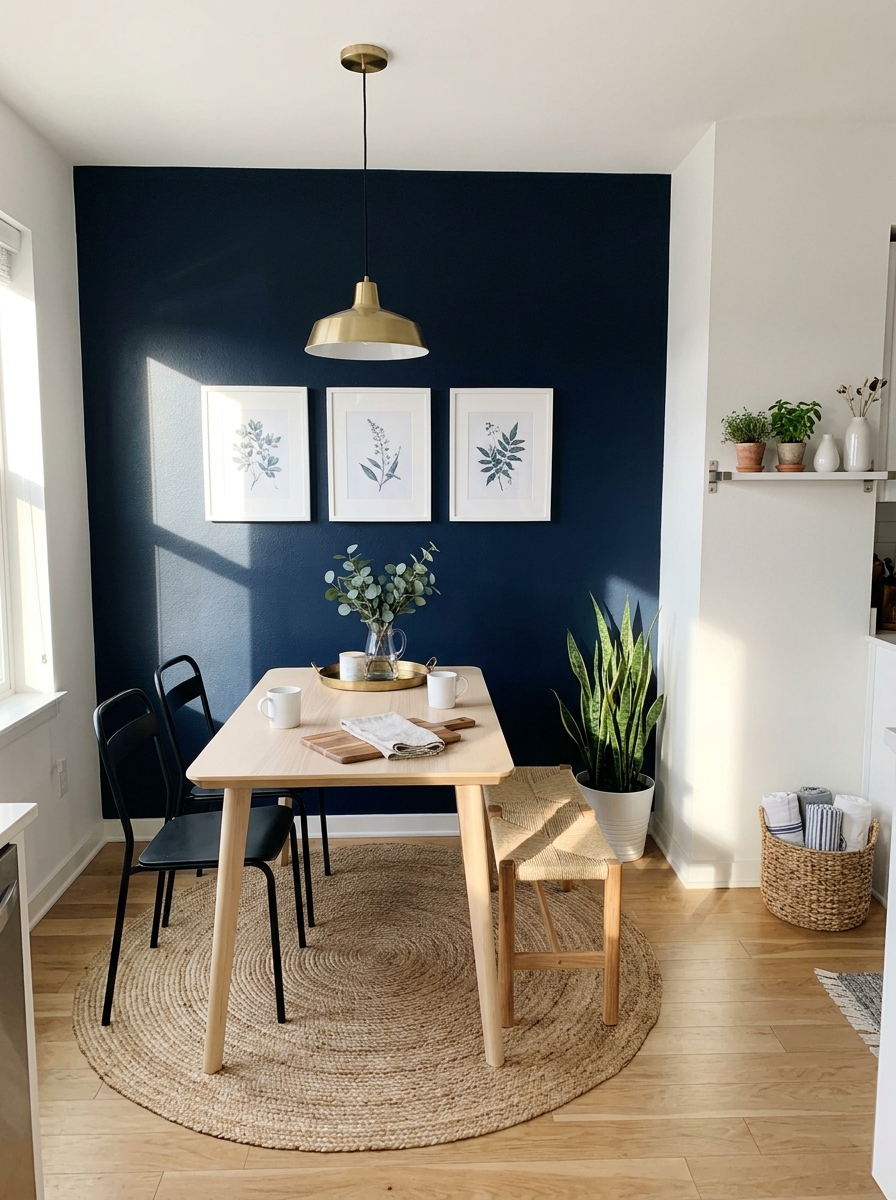
When your dining area shares space with your kitchen or living room, two-tone walls are a brilliant way to define the zone without building actual walls. Paint the lower half or create an accent wall, and boom, instant dining room.
I painted the wall behind my dining table a deep navy while keeping the rest of my space light and neutral. It completely transformed how the area felt. Suddenly my little table setup looked like an actual designated dining spot instead of just furniture floating in the room. The color change signals that you’re entering a different zone without making the space feel chopped up or smaller.
This trick works especially well in studio apartments or open layouts where you need to create separation but can’t afford to lose visual flow. The contrasting wall adds depth and makes your dining area feel special and intentional. It’s like giving your small space an architecture upgrade with just paint.
17. Narrow Console Tables Can Moonlight as Dining Spots
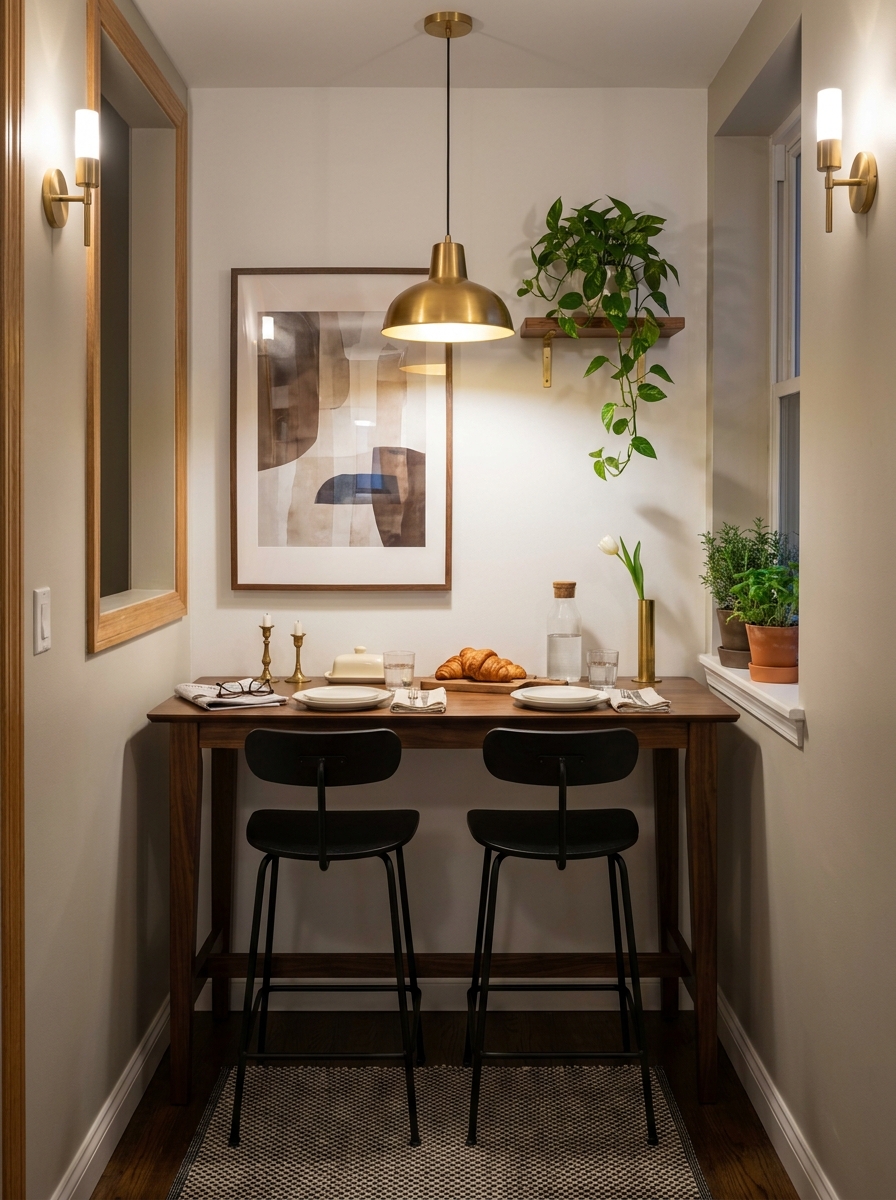
Who says dining tables have to be wide? A slim console table pushed against the wall becomes the perfect dining spot when you’re working with seriously tight square footage. I’ve seen these work beautifully in studio apartments and narrow galley-style spaces where a traditional table just won’t fit.
The genius is in how you style it. Add a couple of counter-height stools or sleek chairs, and suddenly that skinny table becomes a cozy place for two. When you’re not eating, it functions as a hallway console or workspace. That’s what I call furniture that earns its keep!
Look for console tables around 12-18 inches deep—they’re narrow enough to leave walking room but wide enough for actual meals. And here’s the thing: eating at a wall-facing table feels surprisingly intimate, like having breakfast at a Parisian café. Add a piece of art at eye level, and you’ve created a whole dining vibe in practically zero space.
18. Foldable Chairs Store Away When Not Needed
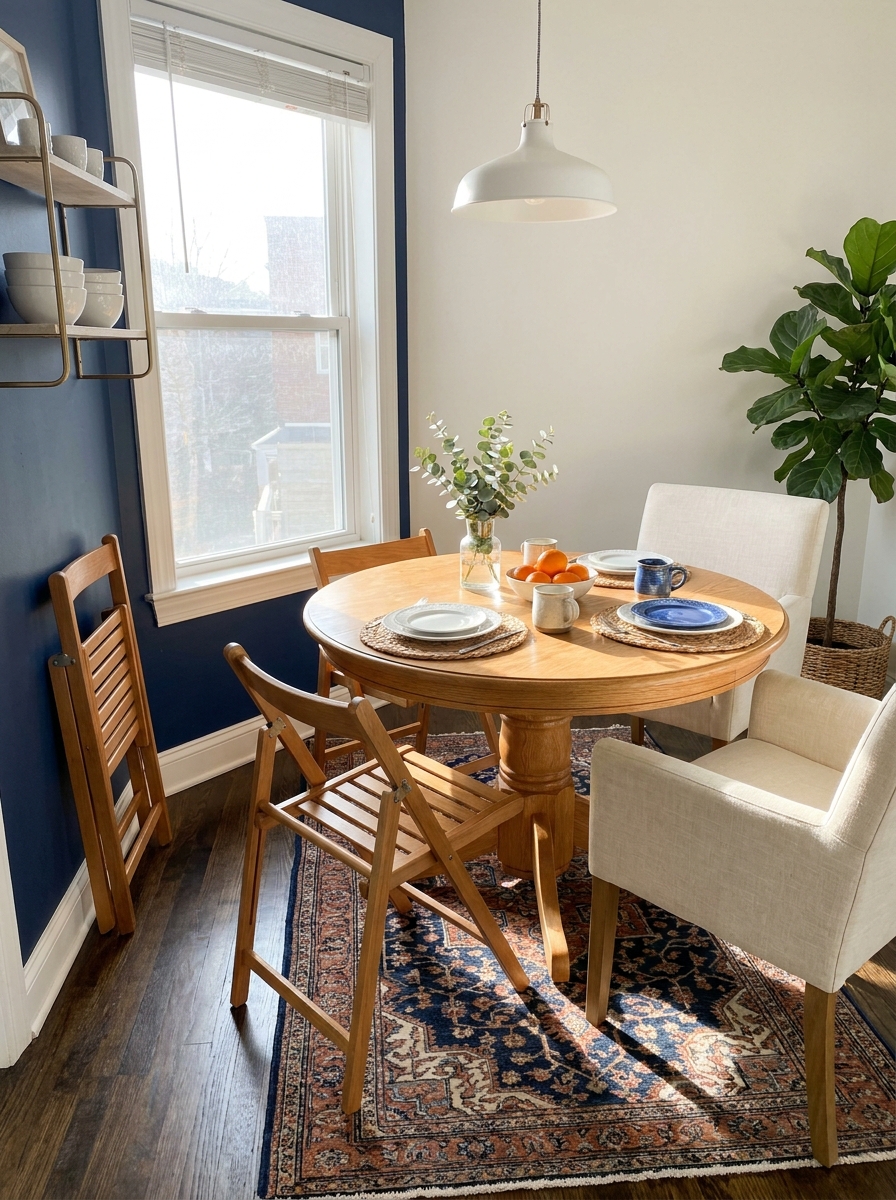
Can we talk about how brilliant foldable chairs are? I used to think they were just for card games and extra holiday seating, but modern versions have completely changed the game for small dining rooms. We’re talking sleek designs that actually look good—not your grandma’s metal folding chairs.
The beauty is flexibility. Keep two or four chairs out for everyday meals, then pull out the extras when friends come over. Between dinner parties, those folded chairs hang on wall hooks, slide into a closet, or tuck behind a door. Zero footprint when you don’t need them.
Look for wooden folding chairs with clean lines or even upholstered versions that feel more substantial. I’ve seen gorgeous rattan folding chairs and minimalist black metal designs that could pass for regular dining chairs. The key is finding styles you’re not embarrassed to leave out—chairs so pretty you might not want to fold them away at all.
19. Open Shelving Above Creates a Dining Hutch Feel
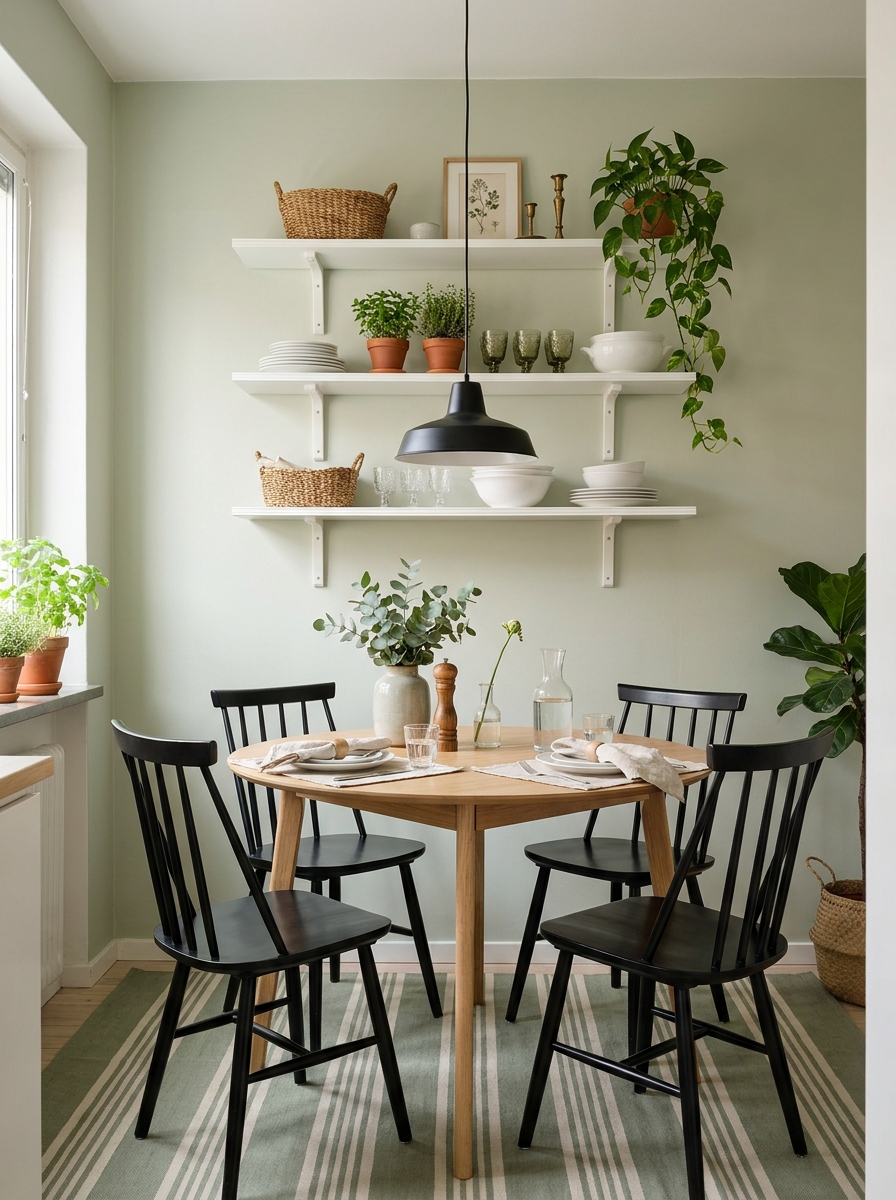
You know what small dining rooms don’t need? Giant china cabinets. But open shelving mounted on the wall behind your table? That’s the space-saving alternative that gives you all the charm without eating up your floor space.
I’m obsessed with how this creates a focal point and designated dining zone without adding bulk. Three floating shelves stacked vertically can hold your everyday dishes, pretty glassware, and those serving pieces that deserve to be seen. It’s functional storage that doubles as decor—and costs a fraction of traditional dining furniture.
The trick is keeping it edited and pretty. This isn’t the place for random clutter. Think matching dish sets, beautiful pitchers, maybe some cookbooks turned spine-out for color. Add a small plant or two, and suddenly your dining area has this collected, curated look. Plus, when everything’s visible, you’ll actually use those nice dishes instead of letting them gather dust in a cabinet.
20. Backless Seating Tucks Completely Under the Table
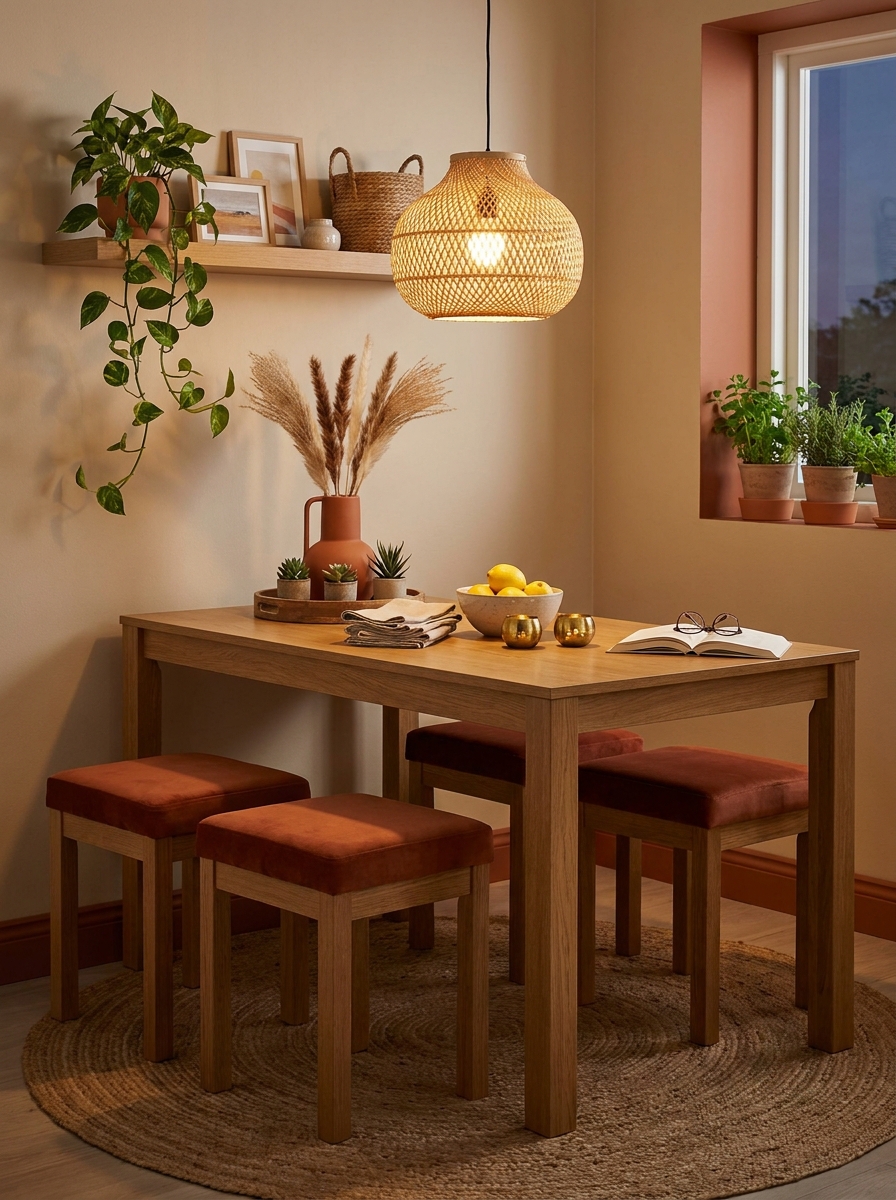
Here’s something I wish I’d discovered sooner: backless stools and benches that slide completely underneath your table when not in use. The visual difference is dramatic—suddenly your dining area looks twice as spacious because there’s nothing sticking out.
I love this trick especially for tables positioned in walkways or open-concept spaces where every inch of clearance matters. When the seating disappears under the table, you can actually move around your space without doing that awkward sideways shuffle between chair backs. It’s like your dining table has a secret hiding spot.
Backless doesn’t mean uncomfortable, either. Look for cushioned stools or upholstered benches with just enough padding. Some of my favorites are wooden stools with rounded edges or velvet ottomans sturdy enough for dining. Just make sure whatever you choose is low enough to tuck completely under your table’s apron. That clean, streamlined look when the table’s not in use? Chef’s kiss.
21. Rug Placement Defines the Dining Zone
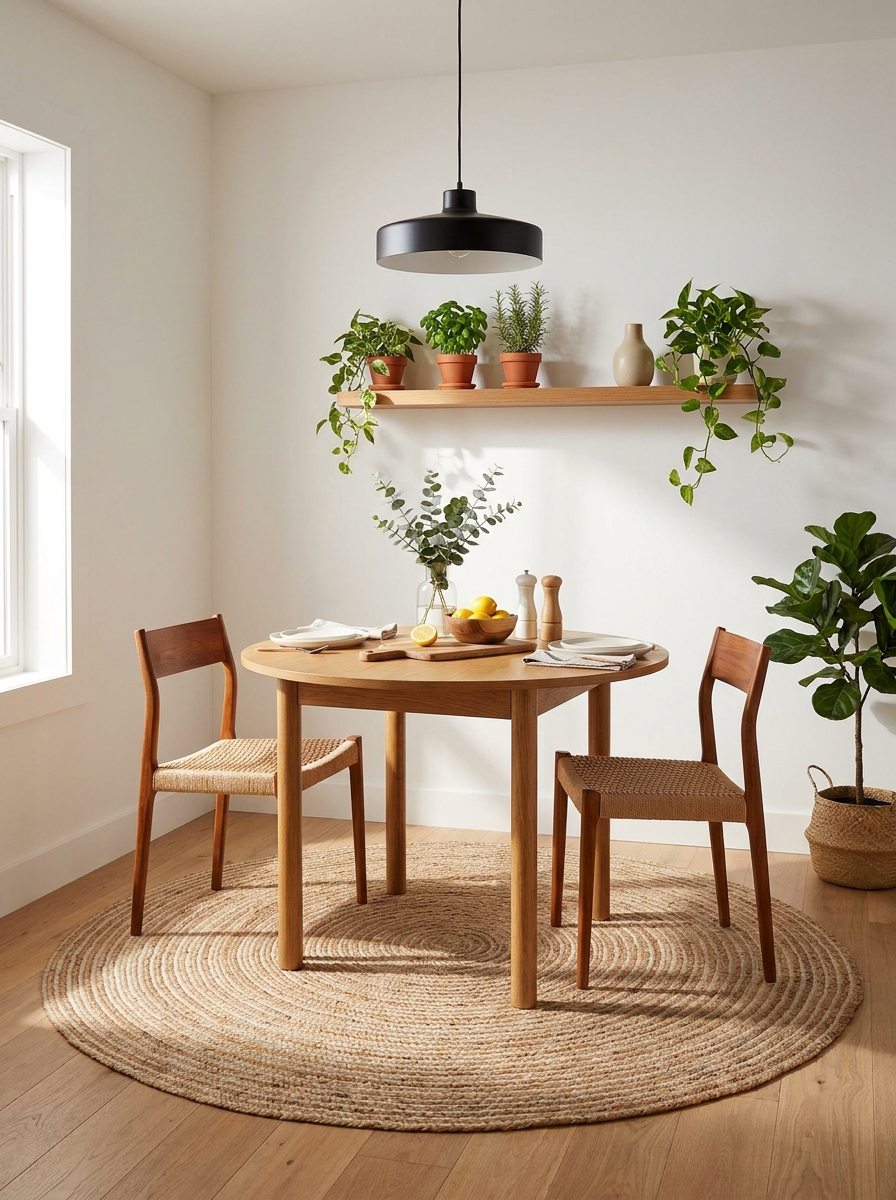
Here’s a trick that costs almost nothing but makes a huge visual impact: put a rug under your table. Even in the tiniest dining area, a rug creates an invisible boundary that says “this is the dining space” without building walls or dividers.
I love how a round jute rug softens the corners of a small room and makes everything feel intentional instead of crammed. The rug doesn’t need to be huge either—just big enough that the chairs stay on it when pulled out. That’s the key to making it look right.
And don’t skip the rug just because your space is tight! It actually makes small dining areas feel MORE defined and purposeful. Plus, it adds warmth and texture under your feet, which makes the whole space more inviting. Choose something with a low pile or flatweave so chairs glide easily without catching.
22. Skip the Full Dining Set
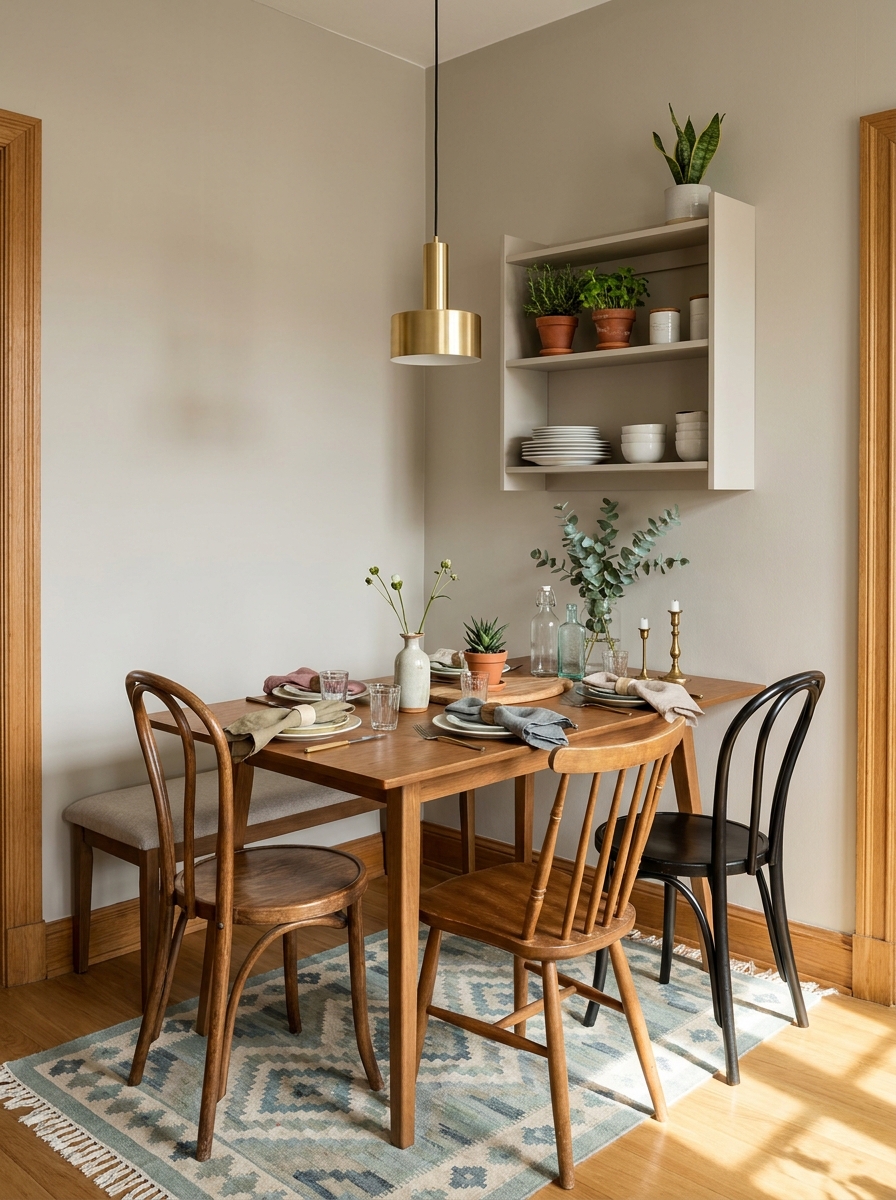
Nobody said your chairs have to match your table—or each other! Mixing different seating around one table actually makes a small dining room feel more collected and intentional, less like you bought everything in one panic-fueled afternoon at a furniture store.
I’m obsessed with pairing a simple wooden table with totally different chairs. Maybe two vintage finds, a slim bench on one side, and a modern metal chair at the head. It looks curated instead of cookie-cutter, and honestly? It’s way more interesting to look at.
This approach also gives you flexibility as your space evolves. Found the perfect chair at a thrift store? Great, add it in! Need extra seating? Grab something slim that fits without worrying about matching. The mismatched look feels personal and collected over time, which is exactly the vibe you want in a small space that needs character.
23. Skirted Tablecloths Hide Storage Underneath
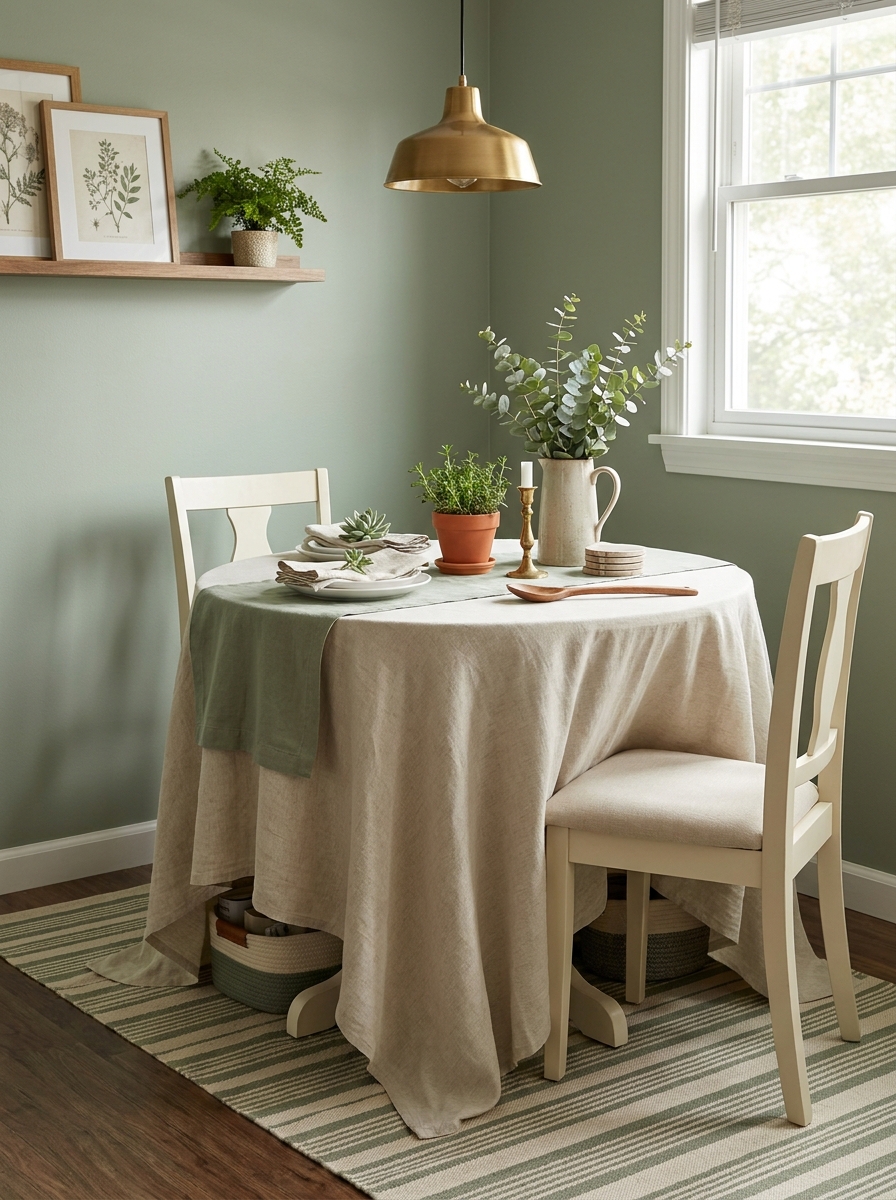
Okay, this might sound old-fashioned, but hear me out: a floor-length tablecloth turns your dining table into secret storage. And in a small space where every square inch counts, that’s basically magic.
Under my table, I stash extra folding chairs, seasonal decor, and even board games—all hidden behind pretty fabric. Nobody sees the clutter, but I know exactly where everything is. It’s like having an invisible closet right in your dining room.
The trick is choosing a tablecloth that fits your style so it doesn’t look like your grandmother’s house. Linen in a neutral color looks sophisticated and modern, or try a subtle pattern that coordinates with your space. Layer a shorter runner or placemats on top when you’re dining, and suddenly that practical storage solution looks completely intentional and styled.
24. Cart Storage Moves Where You Need It
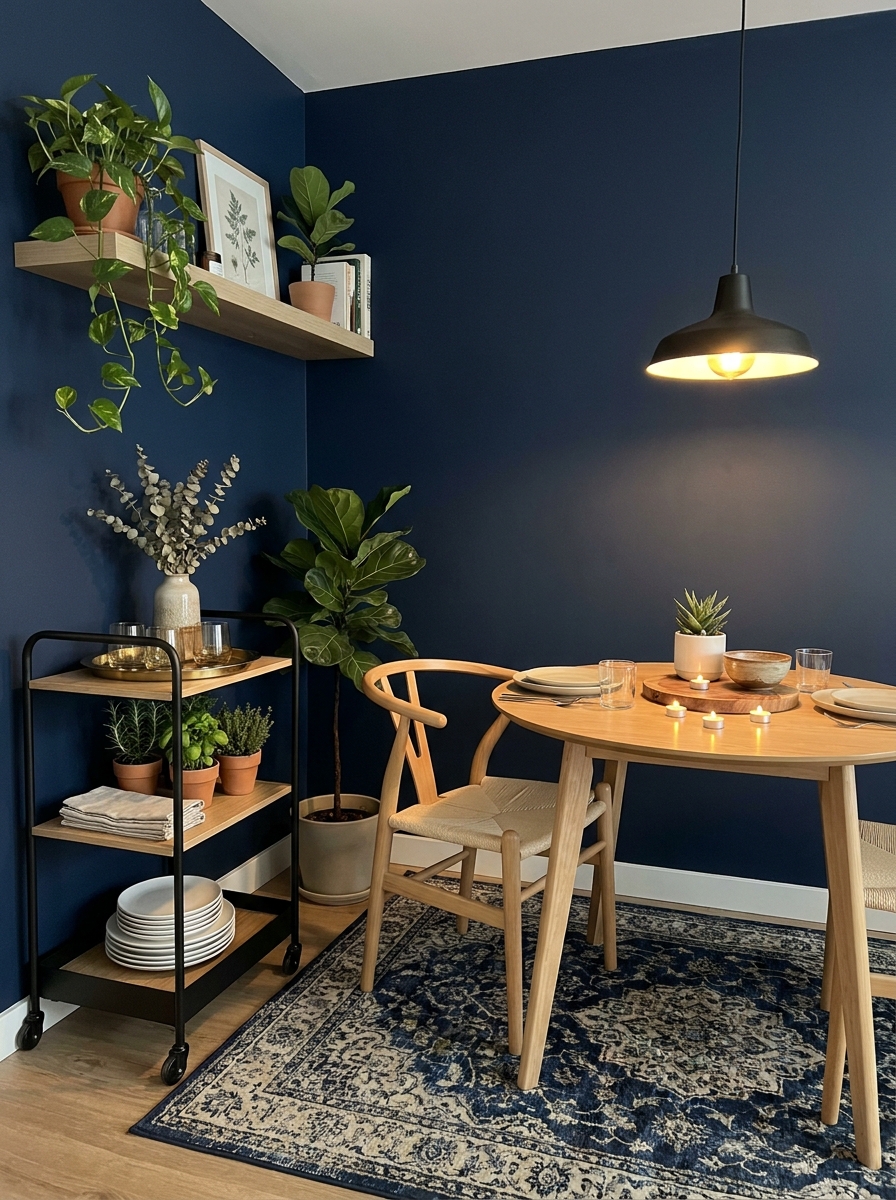
A rolling cart might be the most underrated piece of small dining room furniture ever. It stores all your dining essentials—napkins, placemats, serving pieces—but rolls out of the way when you need floor space. That’s the kind of flexibility tiny spaces desperately need.
I park mine in the corner during meals, but roll it right next to the table when I’m setting up or serving. It’s like having a mobile sideboard that doesn’t permanently eat up your limited square footage. And when friends come over, it becomes a drink station or extra surface for appetizers.
The beauty is you can style it to look decorative even when it’s just sitting there. Stack pretty dishes, display a plant, add some cookbooks—suddenly it’s décor that happens to be wildly functional. Choose one with multiple tiers to maximize vertical storage without taking up more floor space.
25. Extendable Tables Give You Options
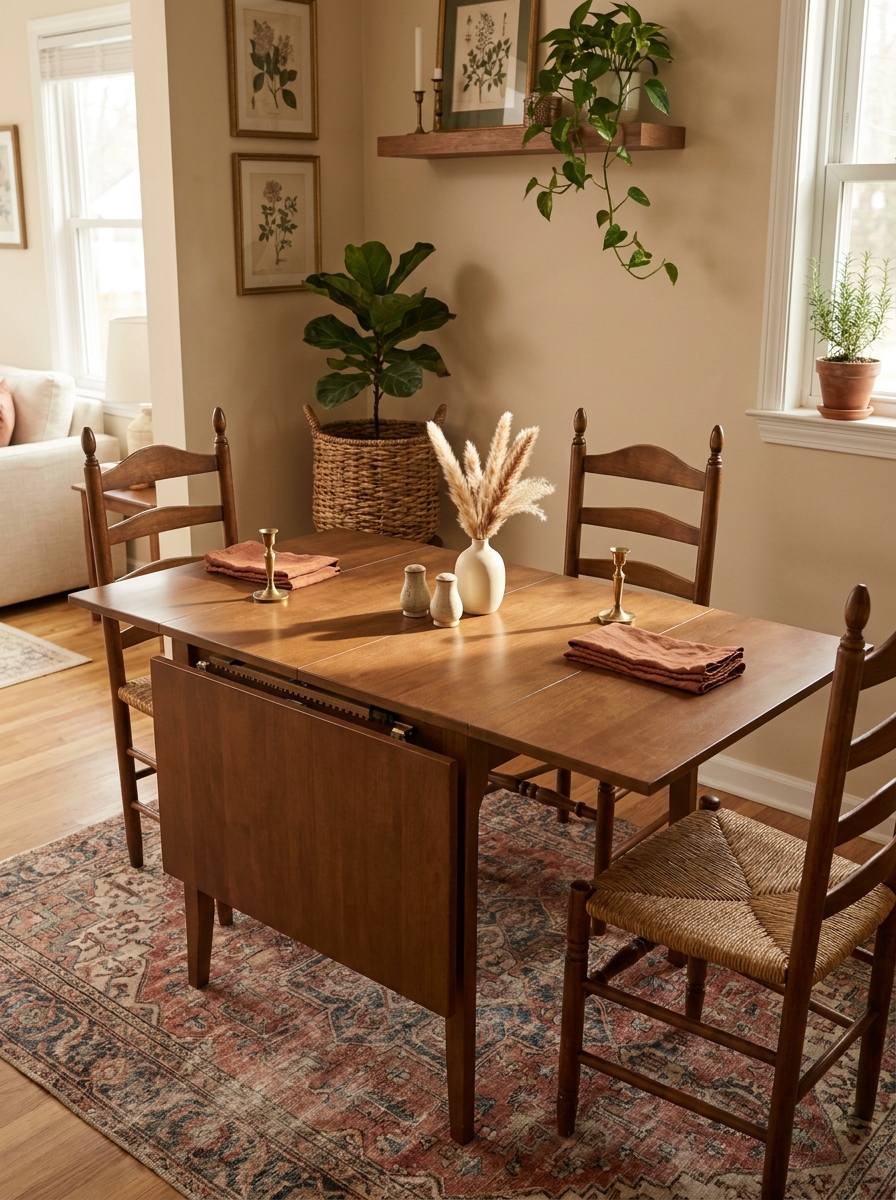
Here’s the thing about small dining rooms—sometimes you need space for two, and sometimes you’re hosting six. An extendable table solves this without permanently eating up your floor space.
I’m obsessed with modern versions that expand smoothly without that awkward middle seam. When it’s just you, keep it compact and enjoy the extra breathing room. When friends come over, pull it out and suddenly you’ve got a proper dinner party setup. The best part? You’re not sacrificing daily comfort for those occasional gatherings.
Look for styles where the extension stores inside the table itself. No hunting around for that leaf you stashed in the garage three years ago. Wood finishes work beautifully here because they feel substantial without looking heavy. And honestly, the ability to adjust your table size based on your needs? That’s the kind of flexibility small spaces absolutely demand.
26. Counter-Height Tables Feel More Casual
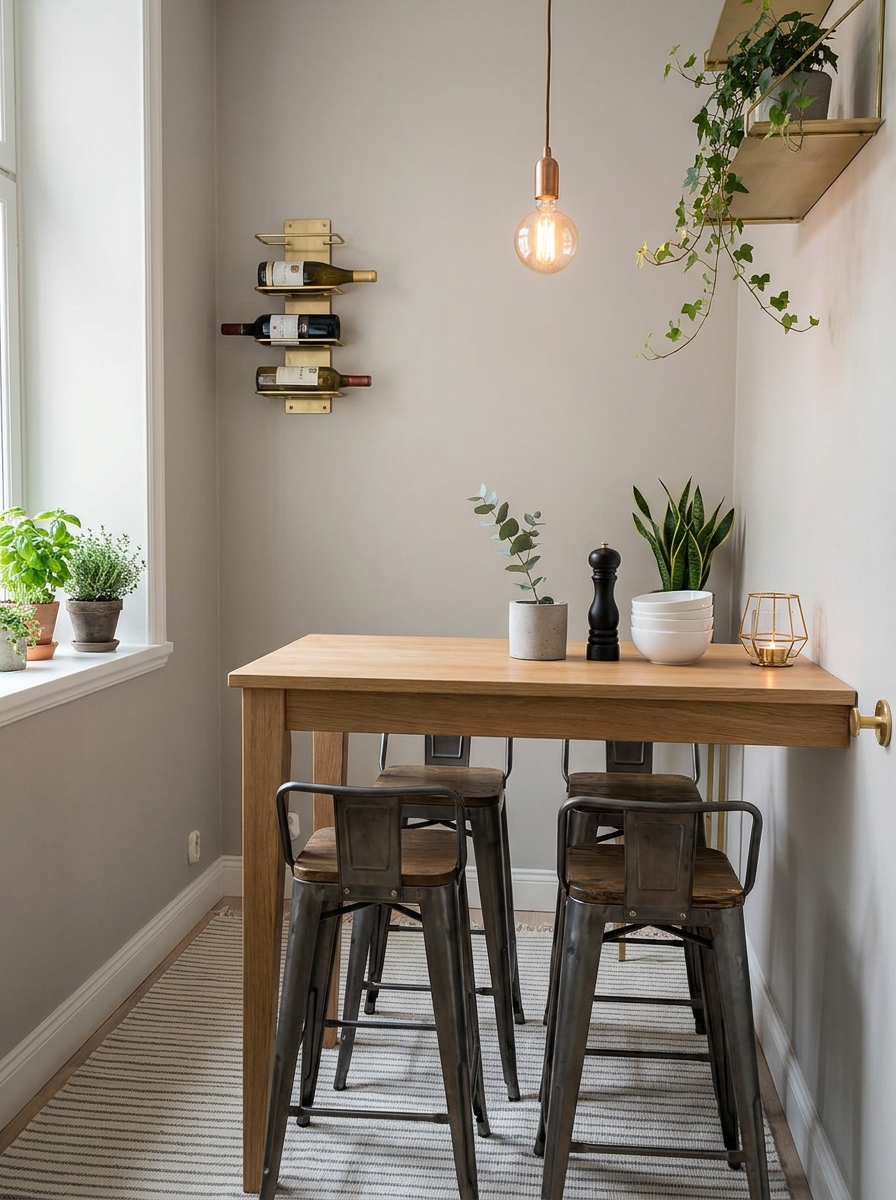
Switching to a counter-height table completely changes the vibe of a small dining room. It feels less formal, more like a café or bistro, which somehow makes tight quarters feel intentional instead of cramped.
The higher stools or chairs tuck underneath more completely than regular dining chairs, which visually cleans up your space. Plus, there’s something about sitting a bit higher that makes the room feel more open. Your sightlines change, and suddenly that small space doesn’t feel quite so closed in.
I’ve seen people use counter-height tables to create a seamless flow between kitchen and dining area too. If your counter is standard height, a pub-style table nearby feels cohesive rather than choppy. And let’s be real—these tables are perfect for quick breakfasts, laptop work, or wine with a friend. They’re wonderfully versatile in ways traditional dining tables sometimes aren’t.
27. Armless Chairs Keep the Flow Open
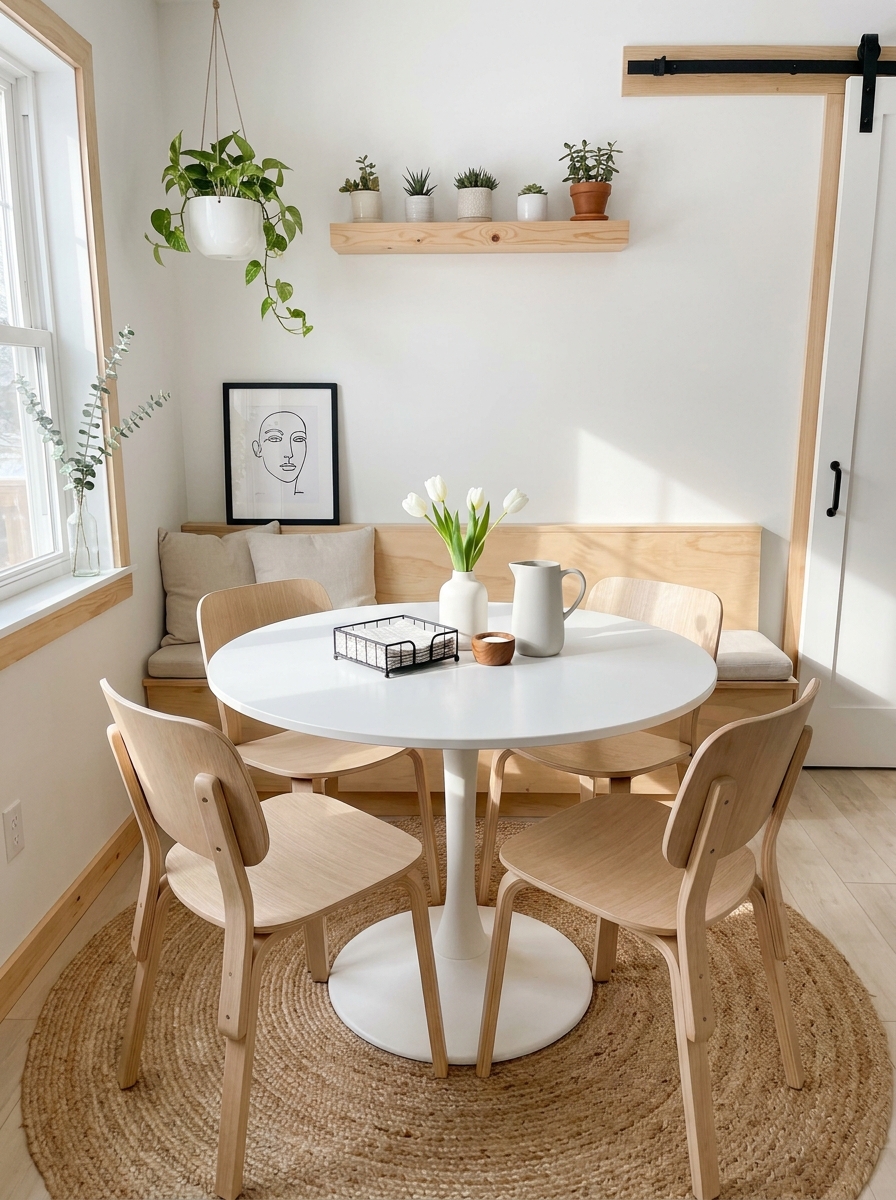
I never realized how much visual bulk chair arms added until I switched to armless versions in my own dining room. Suddenly everything felt lighter and more breathable. When you’re working with limited space, every little bit of visual simplicity counts.
Armless chairs slide under the table more easily, which means you can position them closer together when needed without that awkward elbow battle. They’re also way easier to move around—grab one for extra seating in another room without wrestling with bulky armrests. Your space feels more flexible.
The streamlined silhouette makes your whole dining setup look cleaner and less cluttered. And here’s a bonus: they’re usually more affordable than armed versions. You can put that savings toward a really gorgeous table or some killer lighting. In small dining rooms, choosing furniture that doesn’t fight for attention makes everything work better together.
28. One Statement Light Fixture Changes Everything
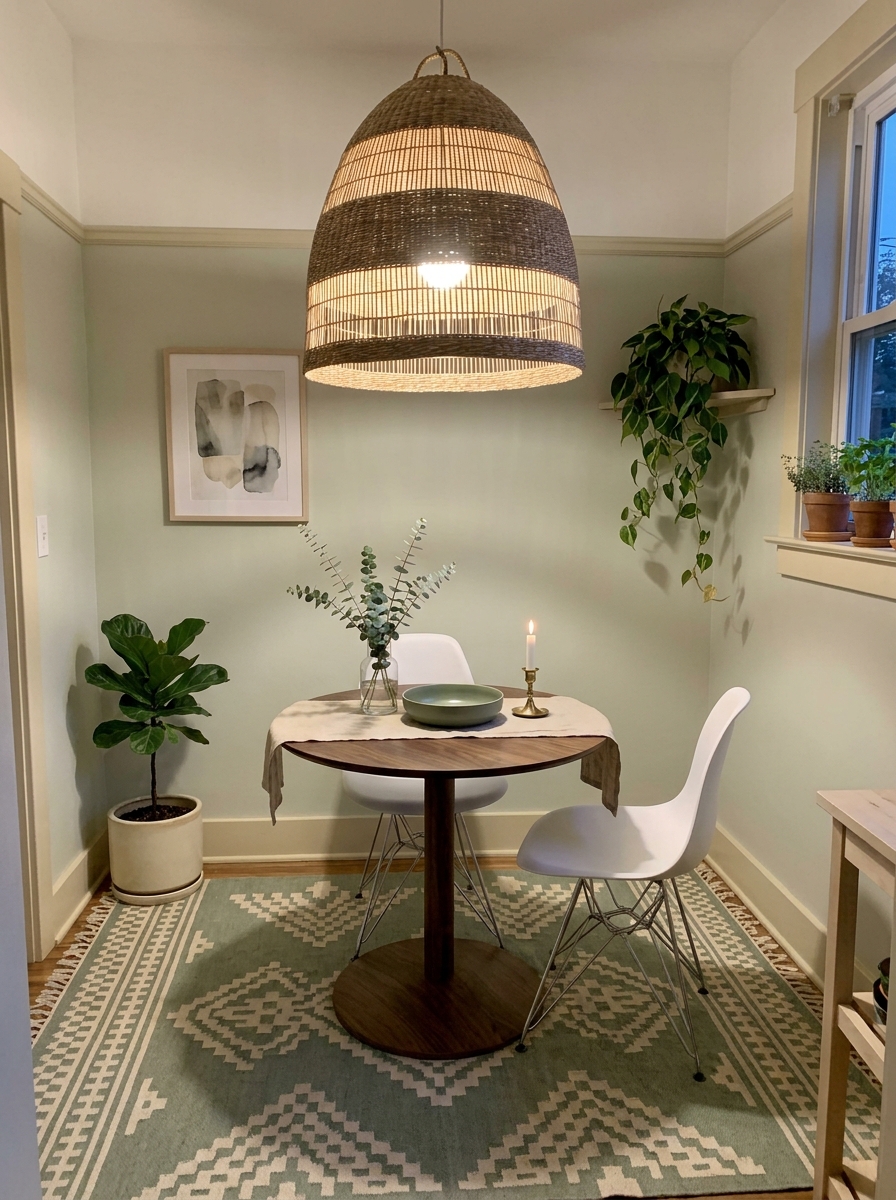
If you’re going to splurge on one thing in a small dining room, make it the light fixture. A gorgeous chandelier or pendant instantly elevates the entire space and gives your eye somewhere exciting to go instead of focusing on the room’s size.
Hang it low enough to create intimacy—about 30 to 36 inches above the table surface. This draws attention downward and makes the dining area feel like its own special zone, even in an open floor plan. The right fixture adds personality, warmth, and that designer touch that makes guests think you really know what you’re doing.
Don’t be afraid to go bold here. A dramatic brass chandelier, a sculptural modern pendant, or even a fun beaded fixture can become the room’s entire focal point. When everything else is kept simple out of necessity, that one stunning light fixture tells everyone this space was decorated with intention and style.
29. Window-Side Placement Maximizes Natural Light
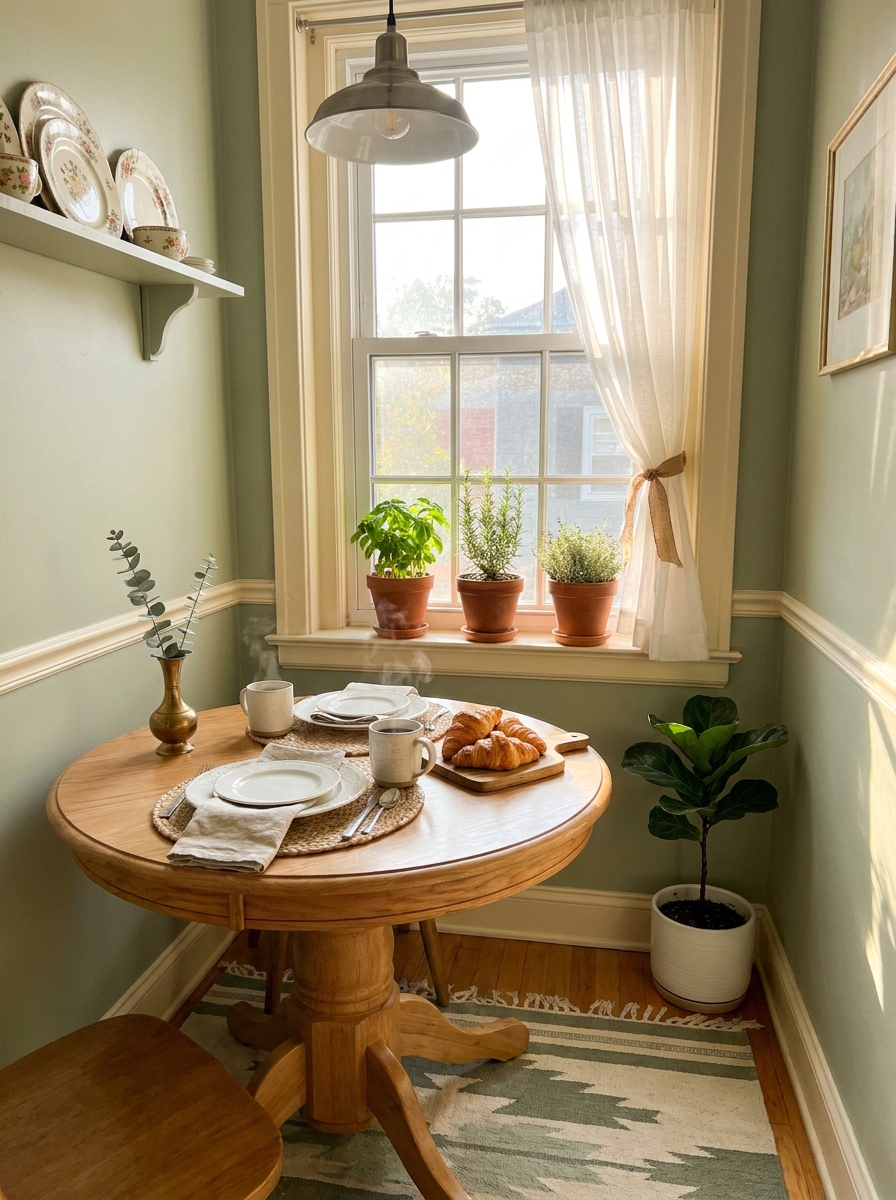
Pushing your dining table right up against a window is one of those moves that completely transforms a small space. You get all that gorgeous natural light flooding your meal times, which makes the whole area feel bigger and more alive. Plus, who doesn’t love eating breakfast with sunshine streaming in?
I learned this trick when I had a tiny apartment with exactly one good window. Moving the table there changed everything. The space felt less cramped because your eye goes straight to the outdoor view instead of focusing on how small the room is. And here’s the bonus—you can skip heavy window treatments because the table and chairs create their own visual interest.
This setup works especially well if you use a round or oval table that echoes the window’s curves. The natural light also means you can use darker furniture without the space feeling cave-like. It’s like the window becomes part of your decor strategy, not just a functional element.
30. Gallery Wall Above Makes It Feel Intentional
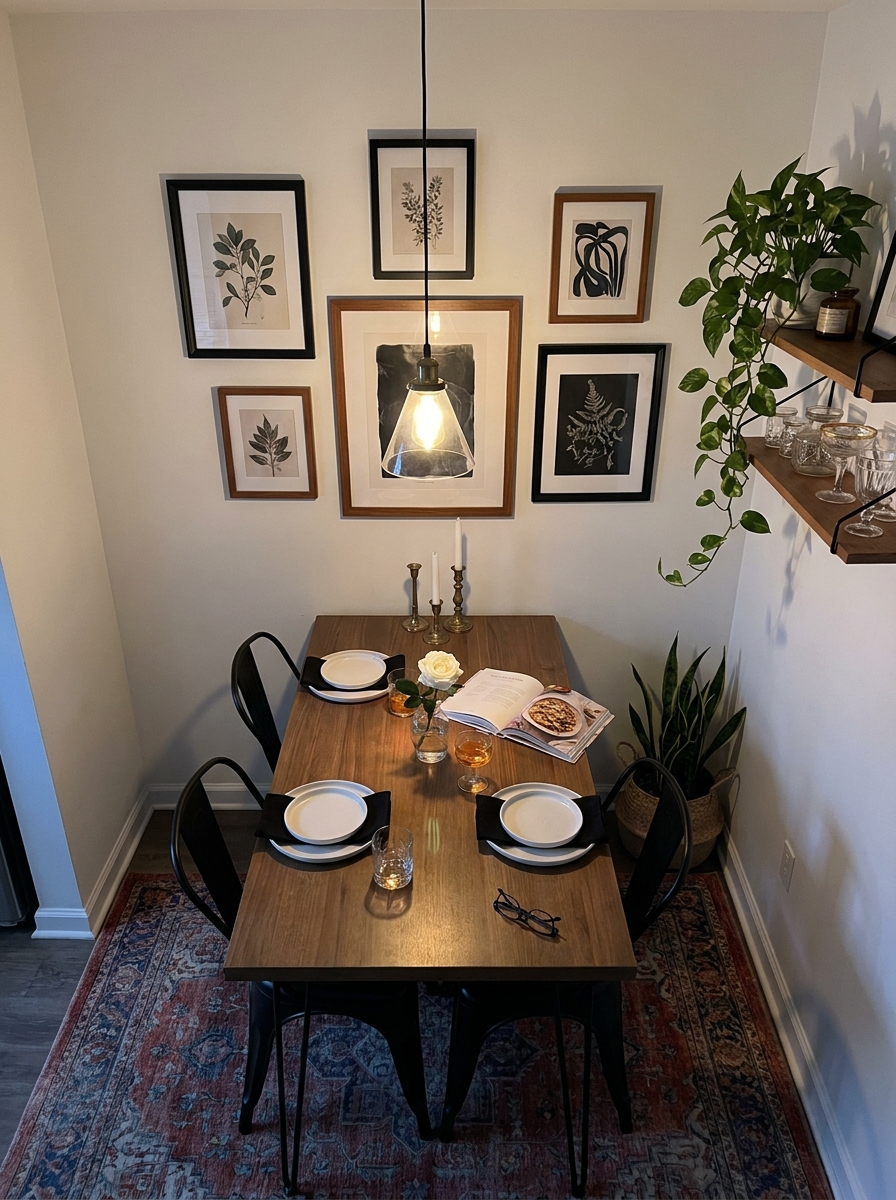
A carefully planned gallery wall above your dining table instantly transforms a cramped corner into an actual dining room. It signals to everyone (including you) that this space has a purpose. It’s not just a table shoved somewhere—it’s THE dining area.
I love this trick because it draws your eye upward and makes you forget about the limited floor space. The wall becomes this curated focal point that adds personality and visual height. And in a small space, using vertical real estate is everything. Your dining zone suddenly feels designed, not squeezed in.
The key is keeping the gallery wall proportional to your table size. You don’t need a massive installation—even four to six pieces arranged thoughtfully will do the job. Mix frame sizes and shapes but stick to a cohesive color palette so it doesn’t overwhelm. Black frames on white walls always work, but don’t be afraid to try warm wood frames for a softer look.
31. Low-Back Seating Keeps Sightlines Open
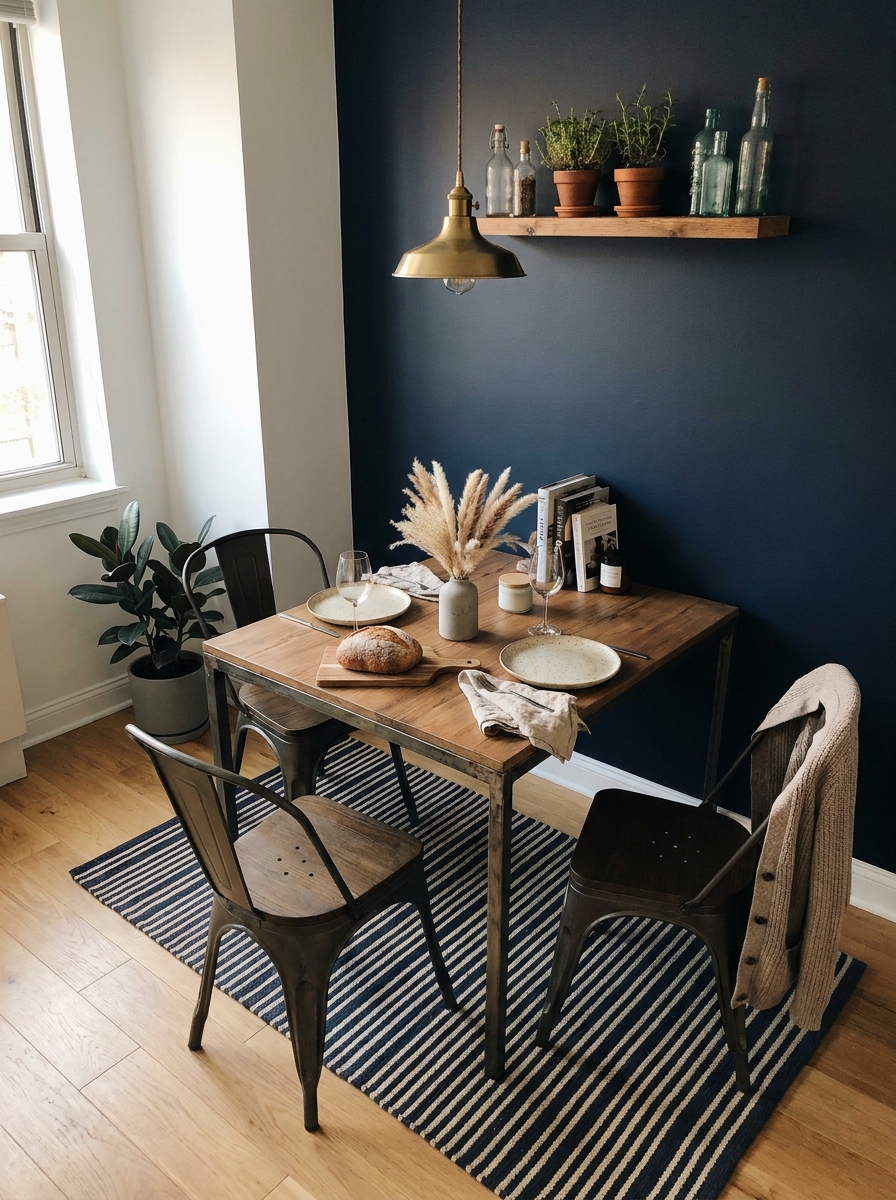
Switching to chairs with low backs or even backless stools completely changes how open your dining area feels. High-backed chairs create these visual barriers that make small spaces feel even more boxed in. But low-profile seating? It lets your eye travel right across the room.
I made this switch in my last apartment and couldn’t believe the difference. Suddenly I could see the whole space when I walked in, instead of just seeing a wall of chair backs. The room felt twice as big even though nothing else changed. It’s one of those optical tricks that actually works.
The other genius part is that low-back chairs still give you support where you need it—right at your lower back—without all the visual bulk. Look for mid-century modern styles or simple wooden chairs with spindle backs. They’re comfortable enough for long dinners but don’t overwhelm the space. And they photograph beautifully if you’re into that sort of thing.
32. Bold Wallpaper Makes Small Feel Intentional
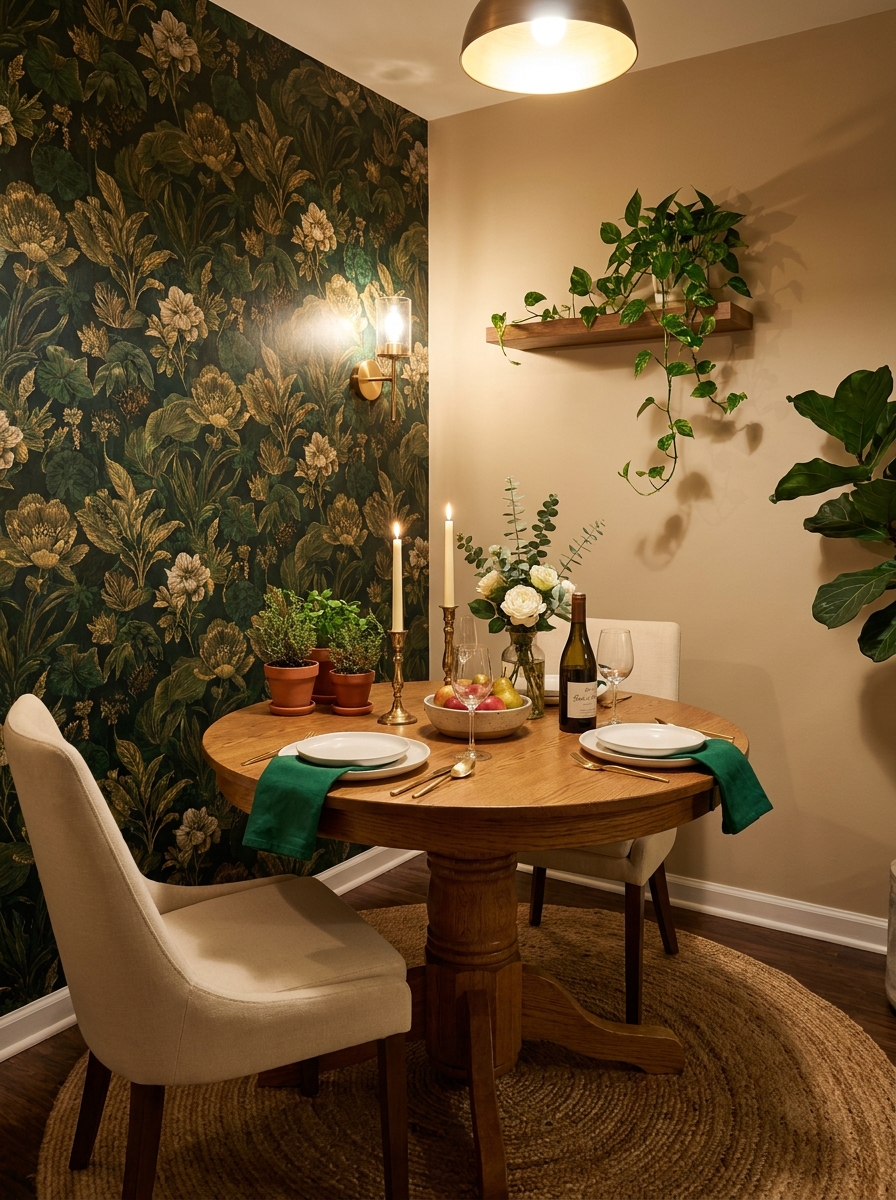
I know what you’re thinking—wallpaper in a small space? Won’t that close everything in? Actually, the opposite happens when you do it right. A bold wallpaper on one wall behind your dining table makes the space feel purposeful and designed, like a jewel box instead of a leftover corner.
The trick is treating your small dining area like a feature, not a flaw. When you commit to it with gorgeous wallpaper, suddenly it’s not a cramped space—it’s an intimate dining nook. It’s where you want to be. I’ve seen tiny dining corners transformed with everything from dramatic florals to geometric patterns, and they all work because they embrace the smallness.
Stick to one accent wall (usually the one your table backs up to) and keep the other walls neutral. This creates depth and draws focus without overwhelming. And honestly? Small spaces are easier to wallpaper because you need less of it, which means you can splurge on that pattern you really love without breaking the bank.
Quick Guide
Quick Space Planning Guide
Your Room Size → Best Table Shape → Seating Capacity
6×8 feet → Round 36″ or Square 30″ → 2-4 people
8×10 feet → Round 42″ or Rectangular 48×30″ → 4 people
9×11 feet → Round 48″ or Rectangular 60×36″ → 4-6 people
10×12 feet → Rectangular 72×36″ → 6 people
Minimum Clearances You Actually Need:
– 36″ between table edge and wall for chair pullout
– 42″ if it’s a main walkway
– 24″ per person around the table perimeter
– 12″ overhang from table edge to chair seat
Chair Width Matters: Standard dining chairs run 18-20″ wide, but armless or slim-profile chairs at 16-17″ wide can give you breathing room in tight quarters.
Your Small Dining Room Has Big Potential
So here’s what I want you to remember: a small dining room isn’t a limitation. It’s an opportunity to get really intentional about what you bring into your space. Every piece has to earn its spot, which means you end up with a room that’s more thoughtful and more you than if you had endless square footage to fill with whatever.
The best small dining rooms I’ve seen feel cozy instead of cramped because someone made smart choices about scale, light, and flow. They didn’t try to force a dining set meant for a mansion into an apartment. They embraced the intimacy of a smaller space and leaned into what makes it special.
Start with one or two ideas from this list that really speak to you. Maybe it’s finally getting that round table you’ve been eyeing, or just painting your walls a lighter shade. Small changes add up fast in a compact room. And remember, your dining room should make you happy every time you walk past it, not stressed about what it’s lacking. You’ve got this.
Frequently Asked Questions
What is the best table size for a small dining room?
For most small dining rooms, a 36 to 42-inch round table or a 48×30-inch rectangular table works perfectly. These sizes comfortably seat four people while leaving enough clearance around the edges for chairs to pull out. Measure your space first and make sure you have at least 36 inches between the table edge and any walls or furniture.
How do I make my small dining room look bigger?
Light colors are your best friend—white or pale walls reflect light and make boundaries feel less defined. Add a large mirror to visually double the space, choose furniture with slim profiles or legs you can see through, and keep window treatments light and minimal. A glass table top also creates the illusion of more space because you can see the floor beneath it.
Can I fit a dining table in a 10×10 room?
Absolutely! A 10×10 room can comfortably fit a 42 to 48-inch round table or a rectangular table up to 60 inches long. Just be mindful of leaving walkway space. Round tables tend to work better in square rooms because they don’t have corners that eat up precious circulation space.
What type of lighting works best in a small dining room?
A single pendant light or small chandelier hung 30 to 36 inches above your table creates a focal point and provides task lighting without overwhelming the space. Choose a fixture that’s about one-third the width of your table. Wall sconces can also add ambient lighting without taking up visual space the way floor lamps do.
Should I use a rug under a small dining table?
Yes, but size matters! Choose a rug that extends at least 24 inches beyond all sides of your table so chairs stay on the rug even when pulled out. In a very tight space, a round rug under a round table maximizes coverage while softening the room’s edges. Just make sure the rug doesn’t crowd the space or make the room feel even smaller.