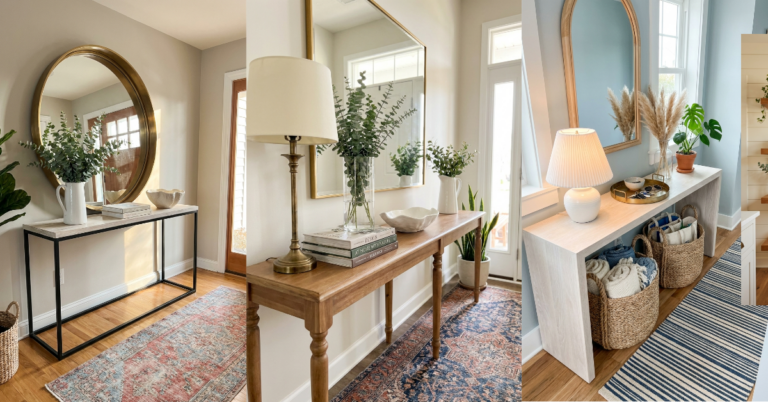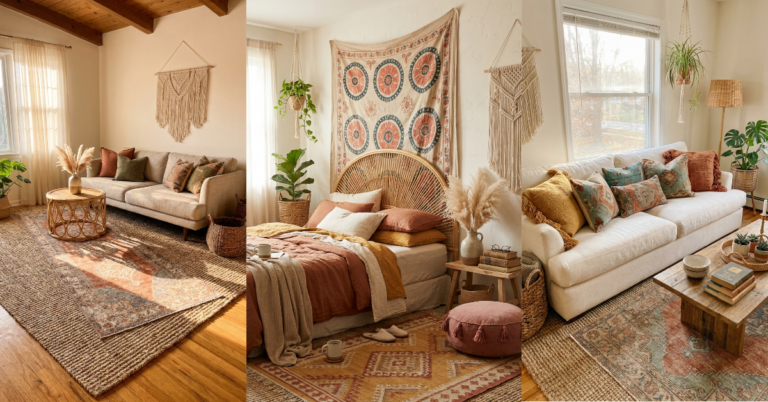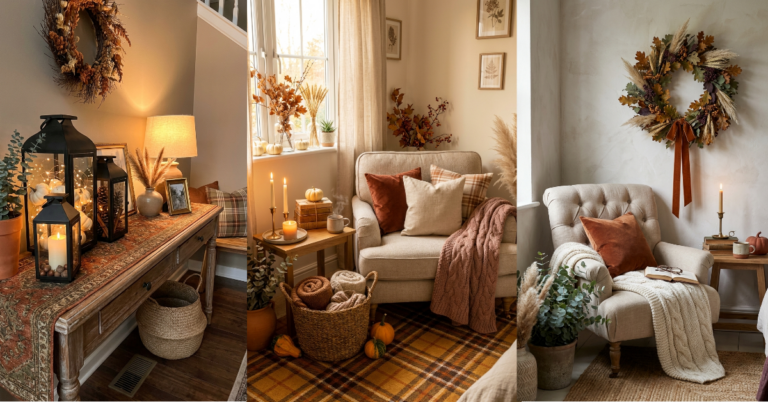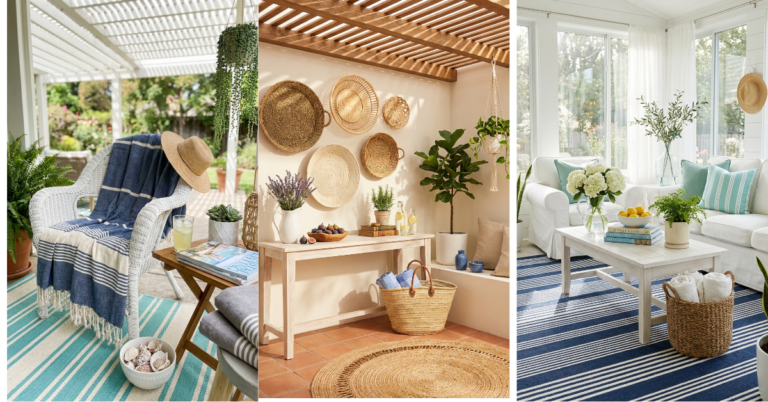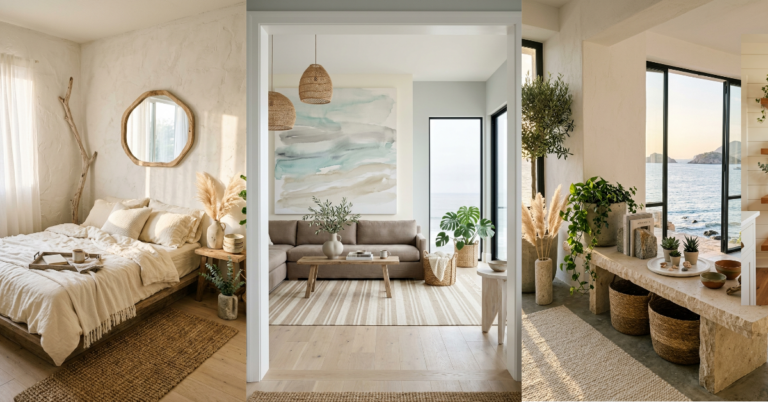
23 Cottagecore Decor Ideas to Transform Your Home
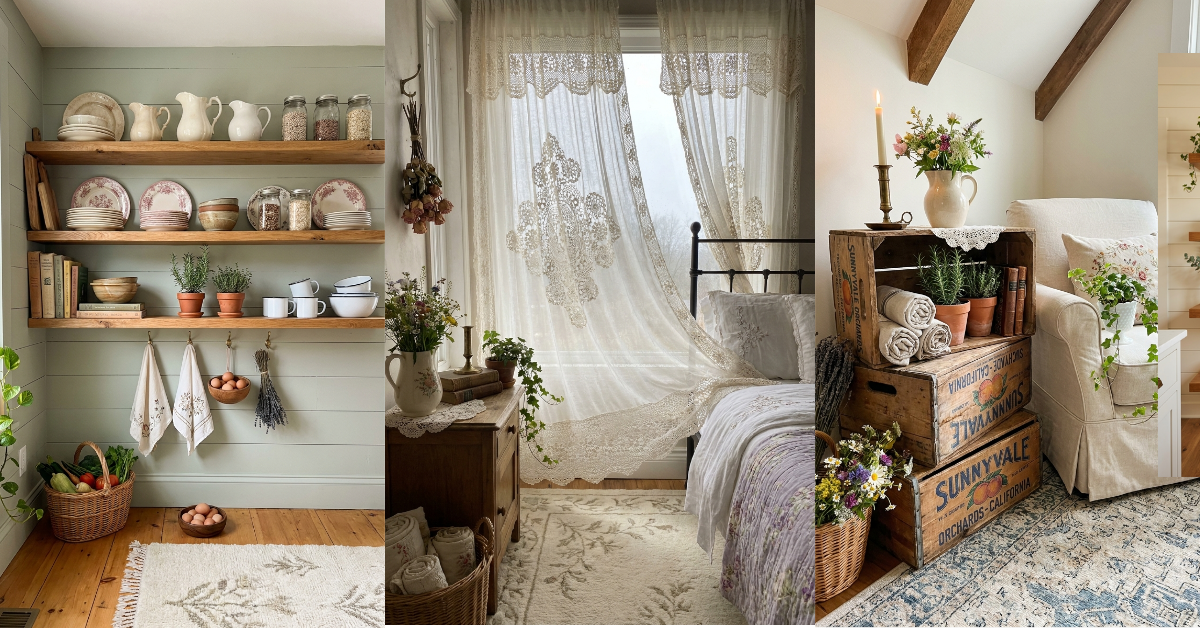
You know that feeling when you’re scrolling Pinterest at 11 PM and stumble across a sun-drenched cottage kitchen with fresh wildflowers in a chipped ceramic pitcher? That ache in your chest that whispers *I want to live there*? That’s cottagecore calling your name. It’s not about perfection or expensive antiques. It’s about creating a space that feels like a warm hug from your favorite storybook—layered linens, handmade touches, and flowers everywhere. The beauty of cottagecore is that it celebrates the imperfect, the vintage, the lovingly worn. You don’t need a countryside manor to make this work. A few thoughtful changes can transform your regular home into a cozy haven that feels like you’ve stepped back in time to simpler days. Ready to bring that romantic, pastoral magic into your real life? Here’s what actually works.
1. Vintage Floral Wallpaper in Soft Pastels
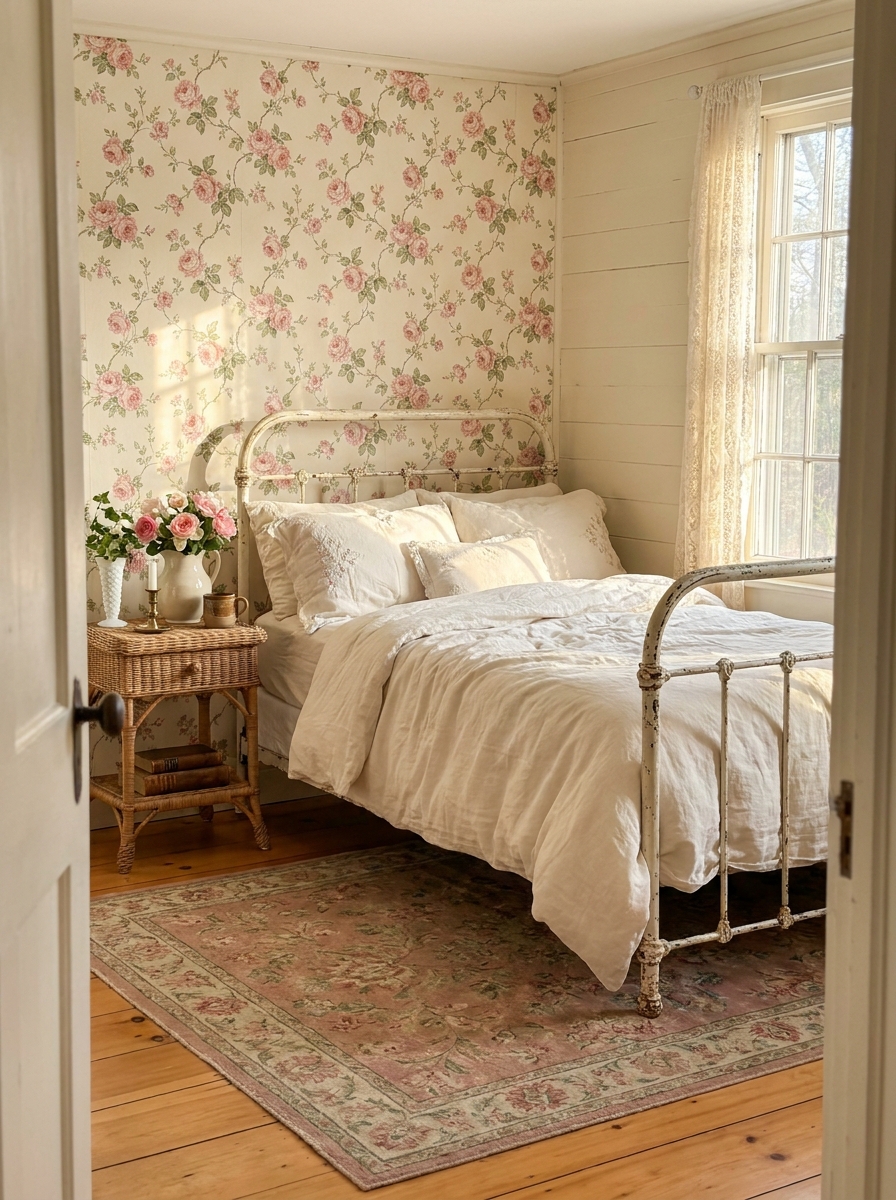
There’s something absolutely magical about walking into a room wrapped in delicate floral wallpaper. It instantly transports you to an English country estate, even if you’re in a suburban apartment. Look for patterns with roses, wildflowers, or trailing vines in colors like dusty pink, sage green, or butter cream. The trick is choosing designs that feel vintage without looking costumey—think faded and romantic rather than bold and bright.
You don’t have to commit to an entire room if that feels overwhelming. One accent wall behind your bed or in a breakfast nook can completely change the vibe. Peel-and-stick options have come so far and make this totally renter-friendly. I’ve seen people use vintage wallpaper just inside built-in shelves or on the back of a bookcase for a sweet surprise detail.
The pattern should feel like it’s been there forever, gently aged and loved. Pair it with simple white trim and natural wood furniture so the wallpaper becomes the star without competing for attention.
2. Embroidered Linen Tablecloths and Tea Towels
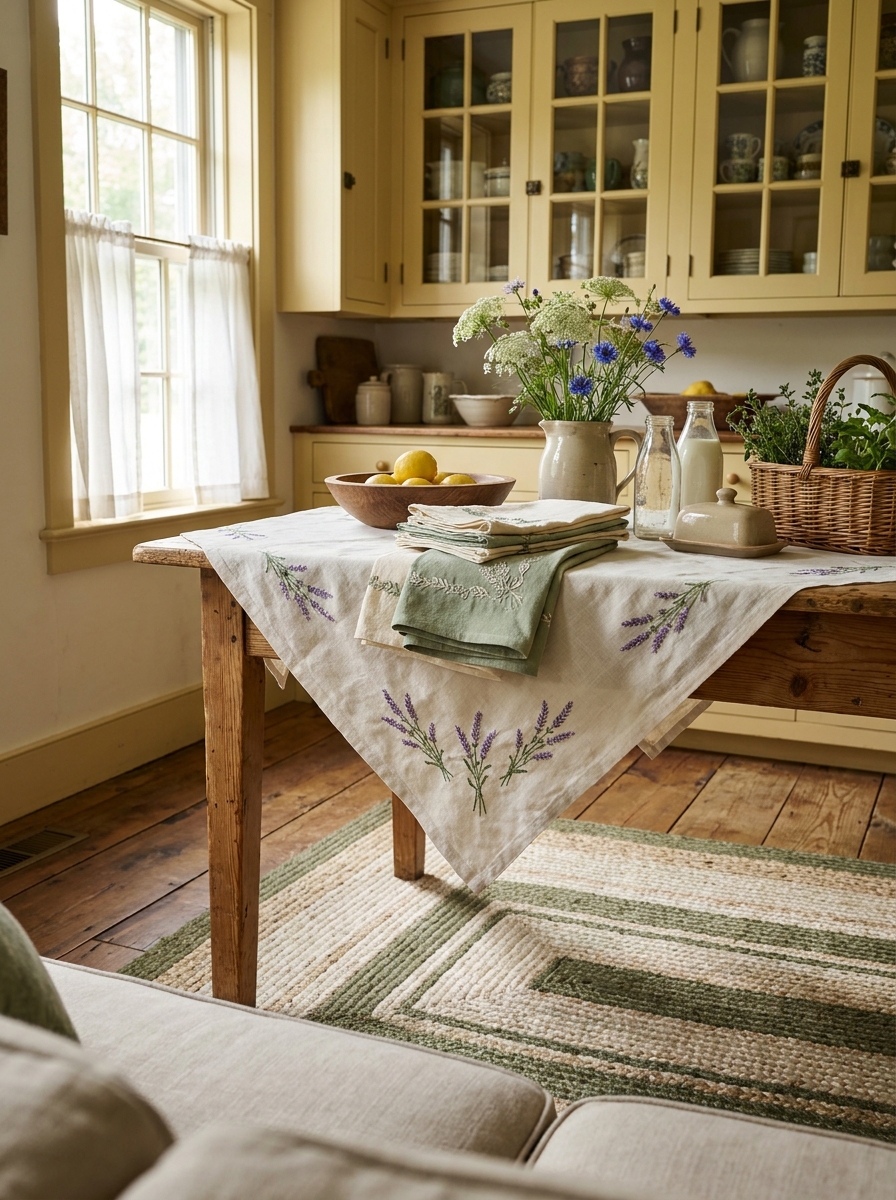
Grandma knew what she was doing with those embroidered linens. They add instant charm and that handmade warmth you just can’t fake with anything modern. Drape a cream linen tablecloth with delicate floral embroidery over your kitchen table or dining table—even if it’s just IKEA underneath. The fabric softens everything and makes even a simple breakfast feel special.
Scour estate sales, antique shops, and Etsy for vintage pieces with hand-stitched details. You’ll find them for way less than you’d expect, and each one has its own character. Some have tiny pulled threads or faded spots, which only adds to their story. Don’t stress about keeping them pristine—cottagecore is about living with beautiful things, not preserving them under glass.
Hang pretty tea towels on hooks near your sink or draped over the oven handle. Choose ones with embroidered berries, herbs, or simple cross-stitch borders. They’re functional and decorative at once. And honestly? Using something beautiful while you dry dishes makes the whole chore feel less tedious.
3. Fresh Wildflower Bouquets in Mismatched Vintage Vases
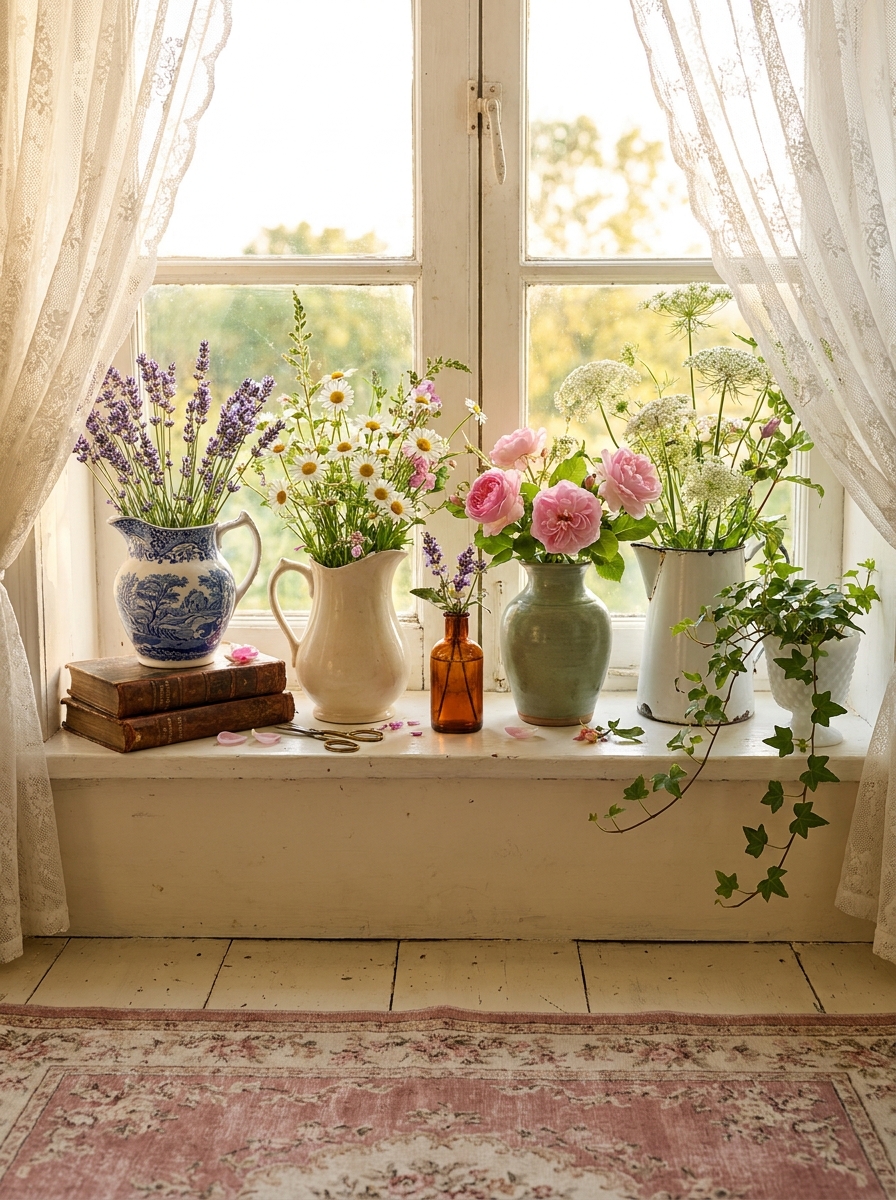
Forget perfectly arranged florist bouquets. Cottagecore is all about armfuls of wildflowers gathered from the garden or farmer’s market, stuffed generously into whatever pretty vessel you have. Think Queen Anne’s lace, daisies, lavender, roses with their leaves still attached, and anything that looks like it grew freely in a meadow. The more abundant and casual, the better.
Start collecting vintage vases, pitchers, and ceramic crocks from thrift stores. Mix heights, colors, and styles without overthinking it. A blue and white ginger jar next to a cream ironstone pitcher next to a small amber glass bottle—that collected-over-time look is exactly what you want. Group several together on a table or mantel for maximum impact.
Change them out weekly if you can. Fresh flowers don’t have to be expensive—grocery store bunches work perfectly, or just clip from your yard. Even wildflowers you’d normally call weeds look charming in a vintage container. The imperfection is the whole point. Drooping stems and petals that fall on the table? Totally cottagecore.
4. Open Wooden Shelving with Curated Dishware
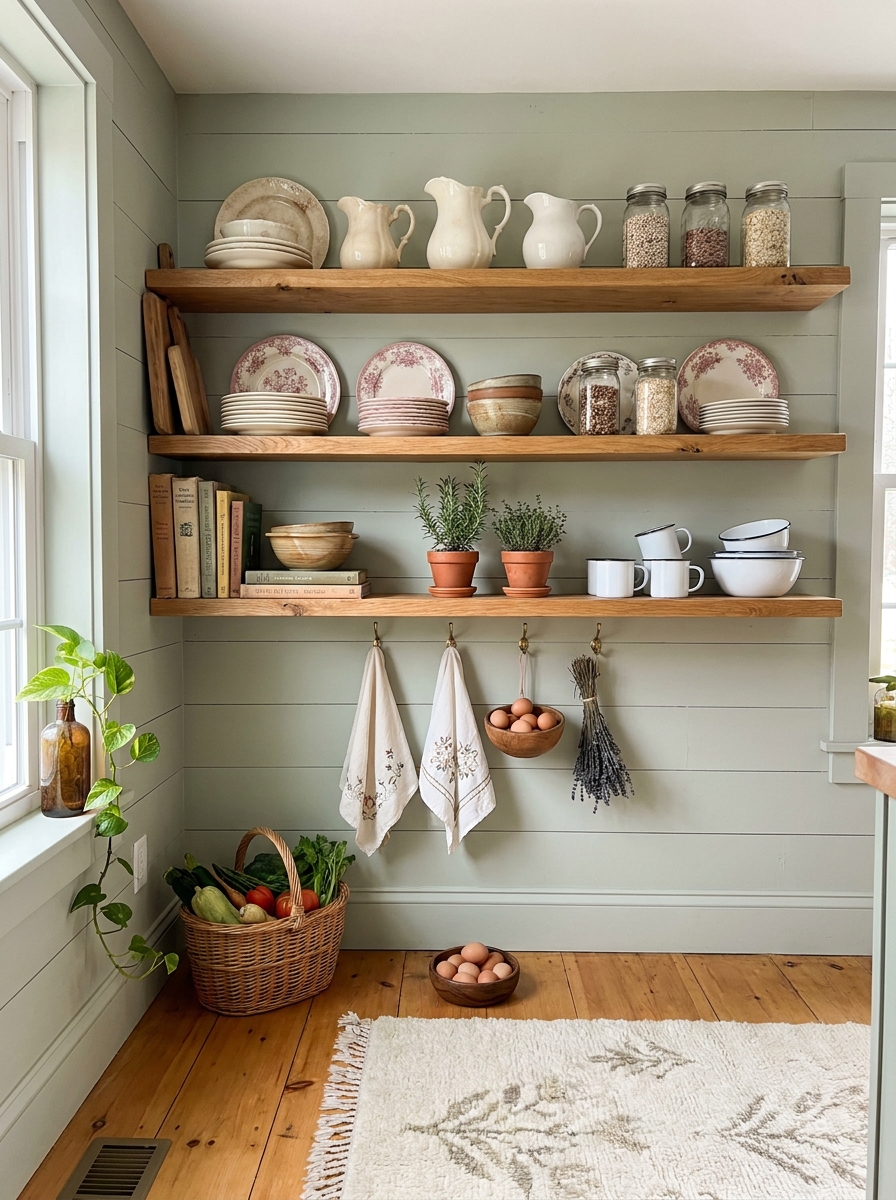
Replacing upper cabinets with open shelving is one of the fastest ways to get that charming cottage kitchen vibe. It forces you to keep only what’s beautiful and useful—exactly the cottagecore philosophy. Install simple wooden shelves in a natural or painted finish, then fill them with your prettiest dishes, bowls, and serving pieces where you can see and use them daily.
The key is thoughtful curation, not just shoving everything up there. Display vintage floral teacups, cream-colored ironstone, wooden cutting boards, glass jars filled with dry goods, and hand-thrown pottery. Mix in a few cookbooks with beautiful spines and small potted herbs. Everything should earn its place by being either functional or lovely—ideally both.
Don’t worry about matching sets. The mismatched, collected look is far more cottagecore than perfectly coordinated dishware. A stack of different patterned plates tells a story. Just stick to a cohesive color palette—creams, whites, soft blues, sage greens—so it feels intentional rather than chaotic. And yes, you’ll need to dust them occasionally. But the trade-off of seeing your beautiful things every day? Absolutely worth it.
5. Cozy Reading Nook with a Vintage Quilt and Overstuffed Cushions
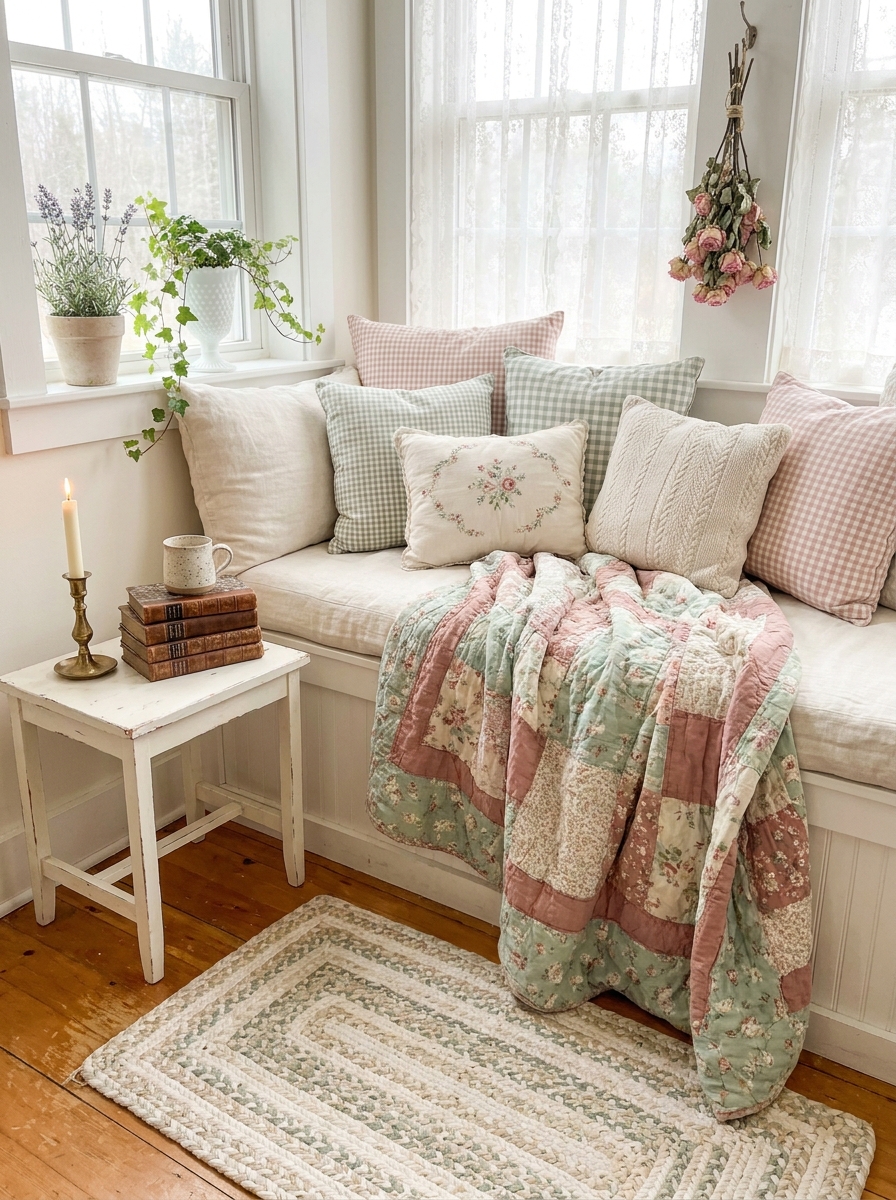
There’s something so inviting about a reading corner draped in vintage quilts and piled high with embroidered cushions. This is where cottagecore really shines—creating those little pockets of comfort that make you want to curl up with tea and a well-loved paperback.
I love hunting for old quilts at estate sales. They don’t need to be perfect! The ones with tiny moth holes or faded patches tell the best stories. Layer them over a cushy armchair or window seat, then add mismatched throw pillows in florals and gingham. The more textures, the better.
The magic is in the abundance. Don’t just put one cushion—pile on five or six in different fabrics. Toss a crocheted throw over the arm. Add a little side table with a vintage lamp and a stack of antique books. This isn’t minimalism. This is the kind of cozy that wraps around you like a hug.
6. Hand-Painted Ceramic Canisters for Kitchen Storage
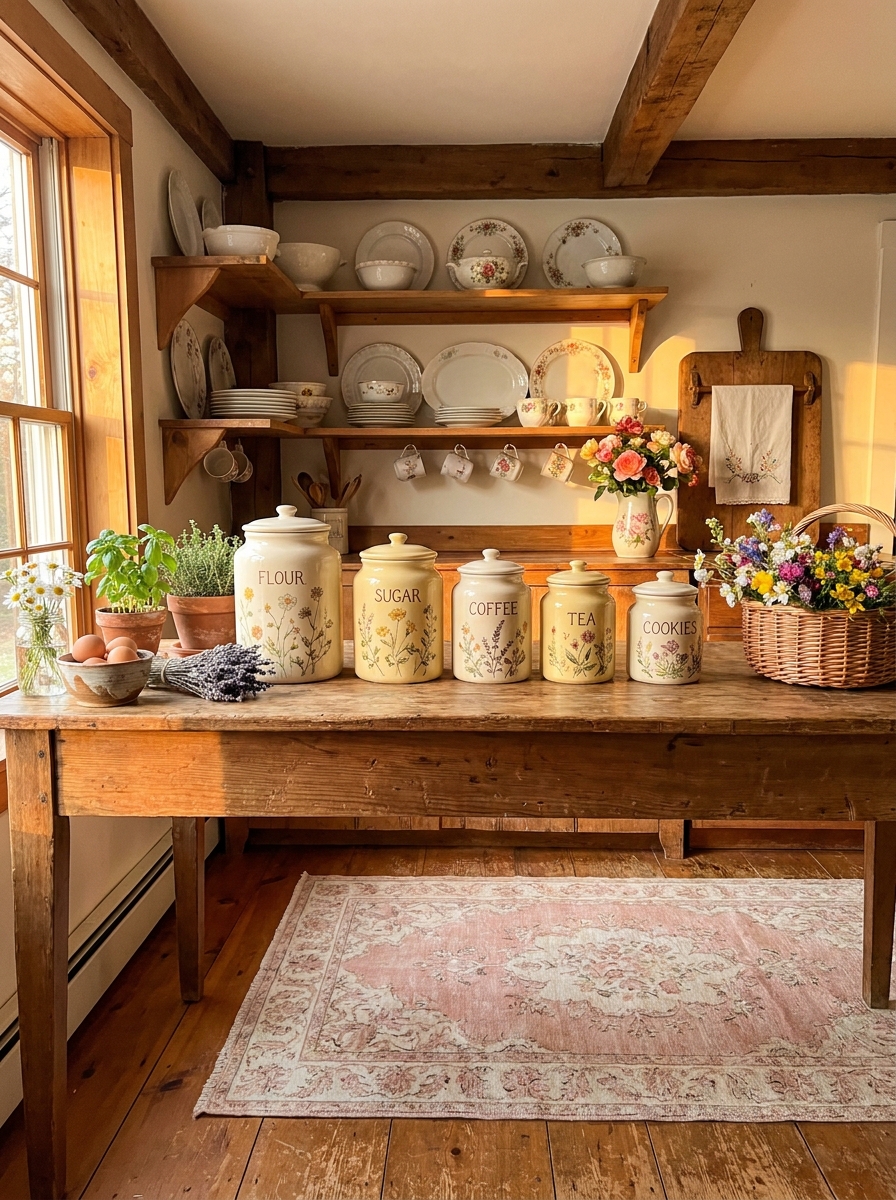
Forget those matching stainless steel containers. Cottagecore kitchens deserve hand-painted ceramic canisters that look like they’ve been collecting flour and sugar for generations.
I’m obsessed with the vintage ones painted with little flowers, fruits, or simple script labels. They make your countertop feel like an old country store. You can find these beauties at antique shops, or honestly, modern versions from small pottery studios have that same handmade charm.
What I love is that each canister is slightly different—different sizes, slightly varied patterns, maybe one has a chip in the glaze. That imperfection is the whole point! Line them up on your open shelving or keep them right on the counter where you can see them every day. Fill them with actual pantry staples or use them to hold wooden spoons and whisks. They’re pretty enough to display empty, too.
7. Delicate Lace Curtains That Dance in the Breeze
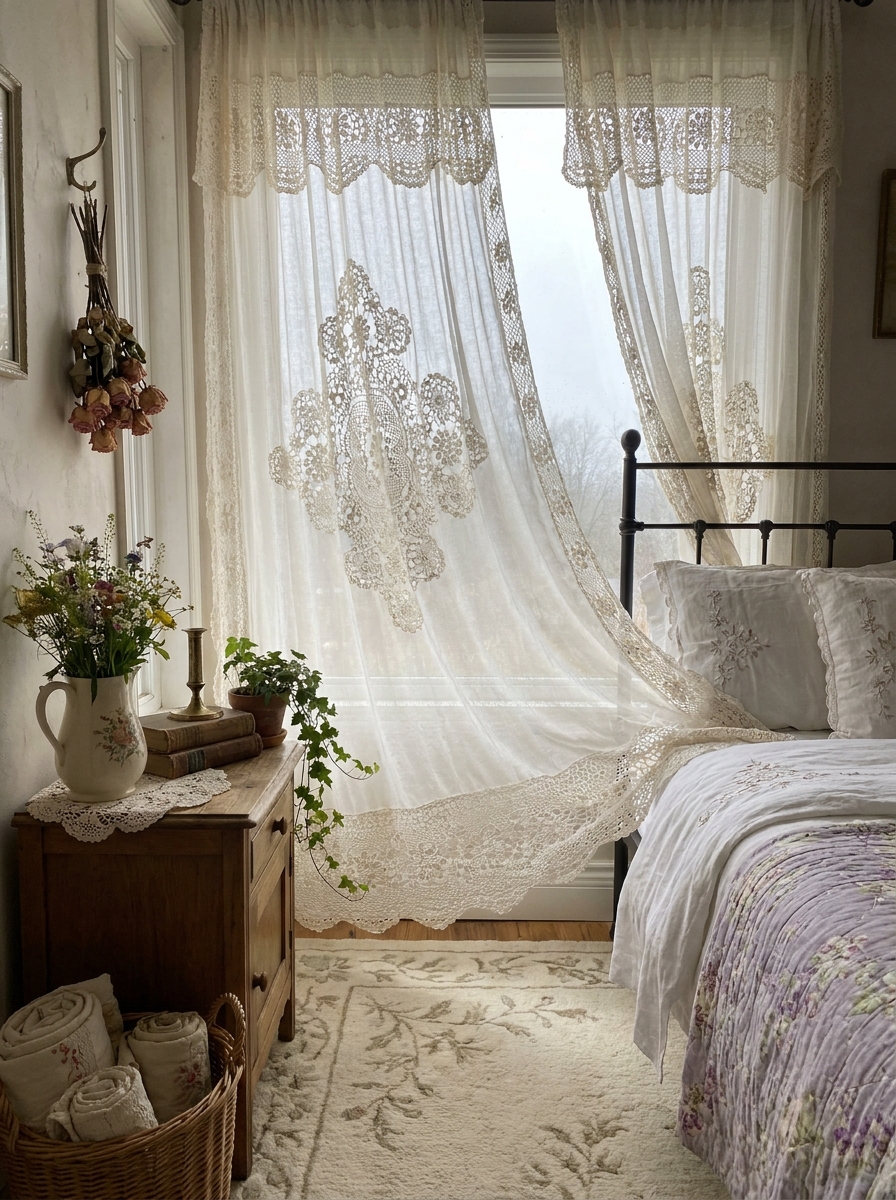
Nothing says cottagecore like sheer lace curtains billowing gently at an open window. They filter the sunlight into the softest, dreamiest glow and make everything look like a scene from a period drama.
I’m talking about real vintage lace if you can find it—the kind with intricate floral patterns and scalloped edges. But honestly, affordable lace panels from home stores work beautifully too. The key is keeping them simple and letting them move. Don’t pull them tight or starch them stiff.
Hang them loose and a little longer than you think you need. Let them puddle slightly on the floor or catch in the breeze. During the day, tie them back with a velvet ribbon or let them frame your window naturally. The way they catch afternoon light is pure magic. It transforms harsh sunlight into something gentle and romantic that makes your whole room feel softer.
8. Rustic Wooden Crates as Charming Storage Solutions
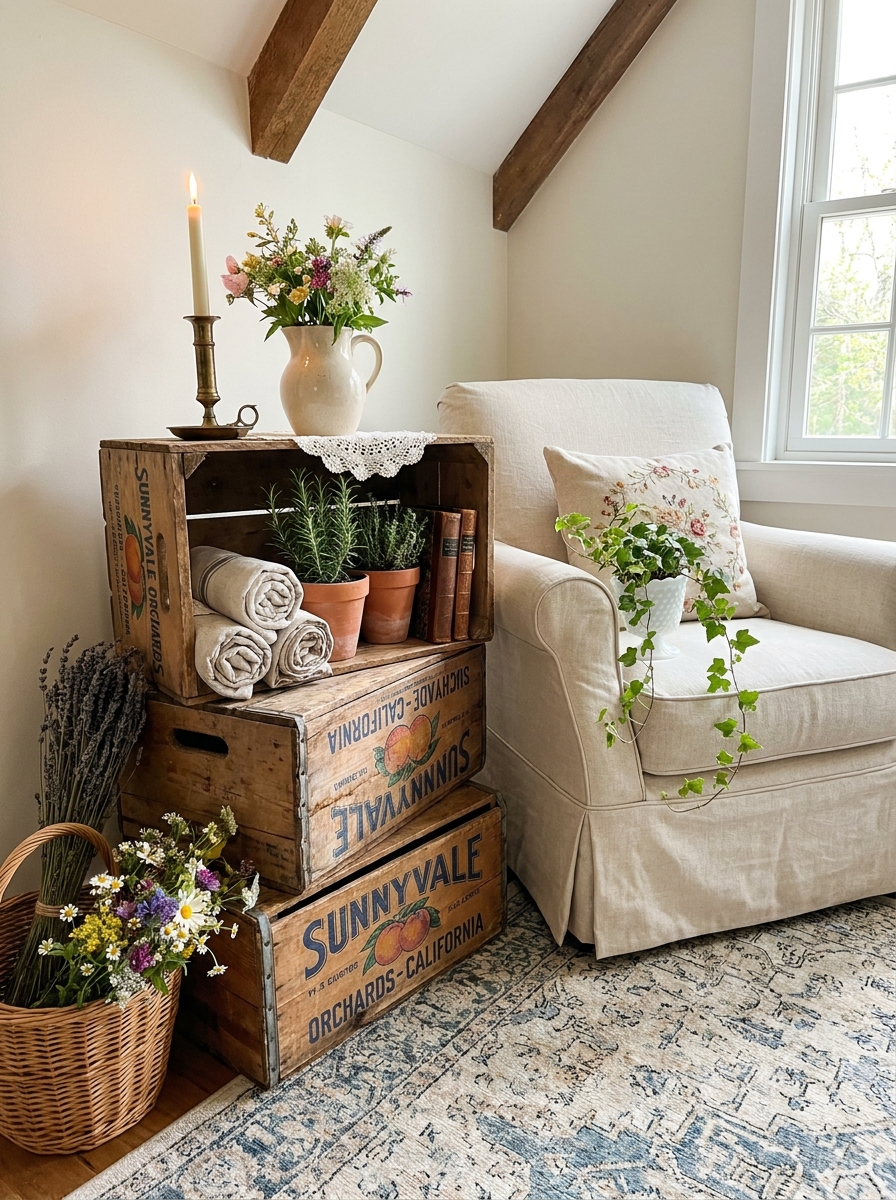
Old wooden crates are like cottagecore gold. They’re rustic, practical, and they instantly make your space feel like a charming farmhouse that’s been loved for decades.
I use them everywhere—stacked as a bedside table, lined up under a bench for shoe storage, or mounted on the wall as quirky shelving. The weathered wood and faded brand stamps give them so much character. You can find them at flea markets, antique stores, or even fruit stands sometimes.
The beauty is how versatile they are. Fill them with rolled vintage linens, fresh garden vegetables, potted herbs, or stacks of well-loved books. Leave the wood natural and distressed, or give them a light whitewash if you want a softer look. Either way, they add that collected-over-time farmhouse feeling without trying too hard. They’re proof that functional can absolutely be beautiful.
9. Antique Floral Teacups Displayed on a Plate Rack
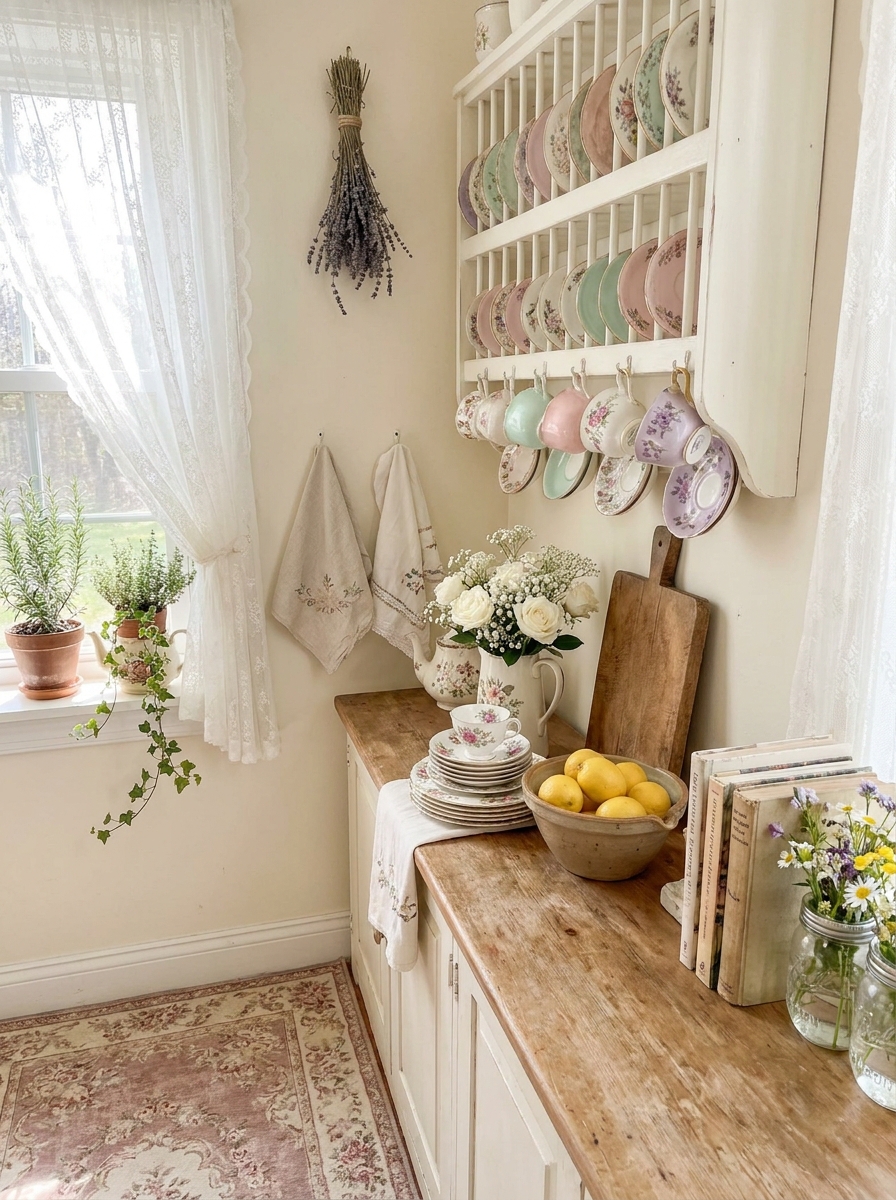
There’s something utterly magical about mismatched vintage teacups lined up like little treasures. I started collecting them from estate sales years ago, and now they’re one of my favorite things in my kitchen. Each one tells a story—delicate roses on bone china, forget-me-nots on scalloped edges, tiny violets circling the rim.
A wooden plate rack is the perfect way to show them off. Mount one above your counter or next to a window where morning light can make them glow. I love how they transform a plain wall into something special and personal. The best part? You can actually use them! Sunday tea feels like an occasion when you’re sipping from a cup that’s seventy years old.
Start with just a few cups and add to your collection slowly. Thrift stores and antique markets are goldmines. Look for different floral patterns but stick to a soft color palette so they feel cohesive together.
10. Wrought Iron Bed Frame Dressed in Layers of White Linens
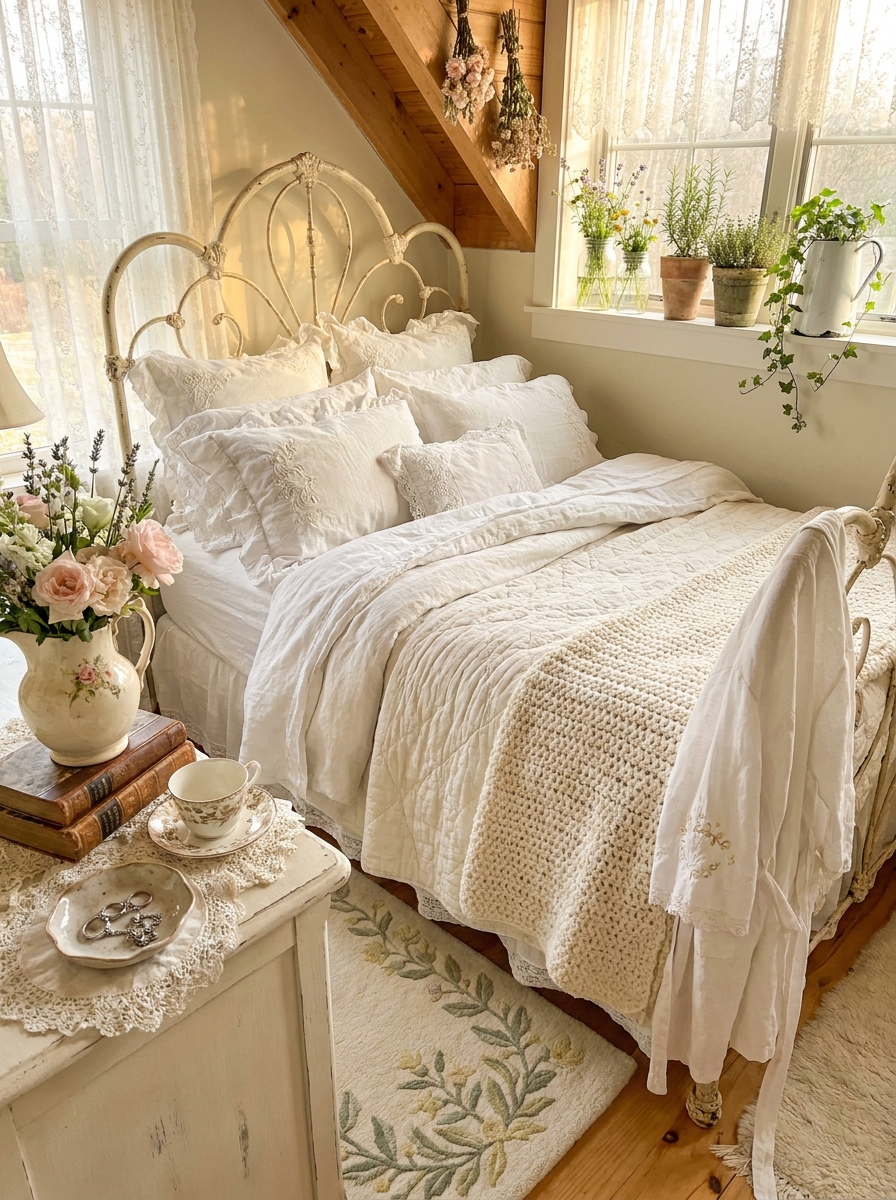
If cottagecore had a signature piece of furniture, it would absolutely be the wrought iron bed. There’s something so romantic about those curving metal details and that old-fashioned silhouette. I found mine at a flea market, slightly rusty and completely perfect.
The magic happens in the layering. Start with crisp white cotton sheets, add a vintage quilt or two, pile on the pillows with embroidered cases and lace trim, then drape a soft linen throw at the foot. I love mixing textures—smooth cotton, nubby linen, delicate eyelet lace. It should look like a cloud you can’t wait to sink into. The all-white palette feels fresh and dreamy, especially when sunlight filters through.
Don’t worry about making it look perfect. The beauty is in those rumpled, just-lived-in details. A book left open on the pillow, a teacup on the nightstand—that’s the real cottagecore magic.
11. Mason Jar Herb Garden on a Sunny Windowsill
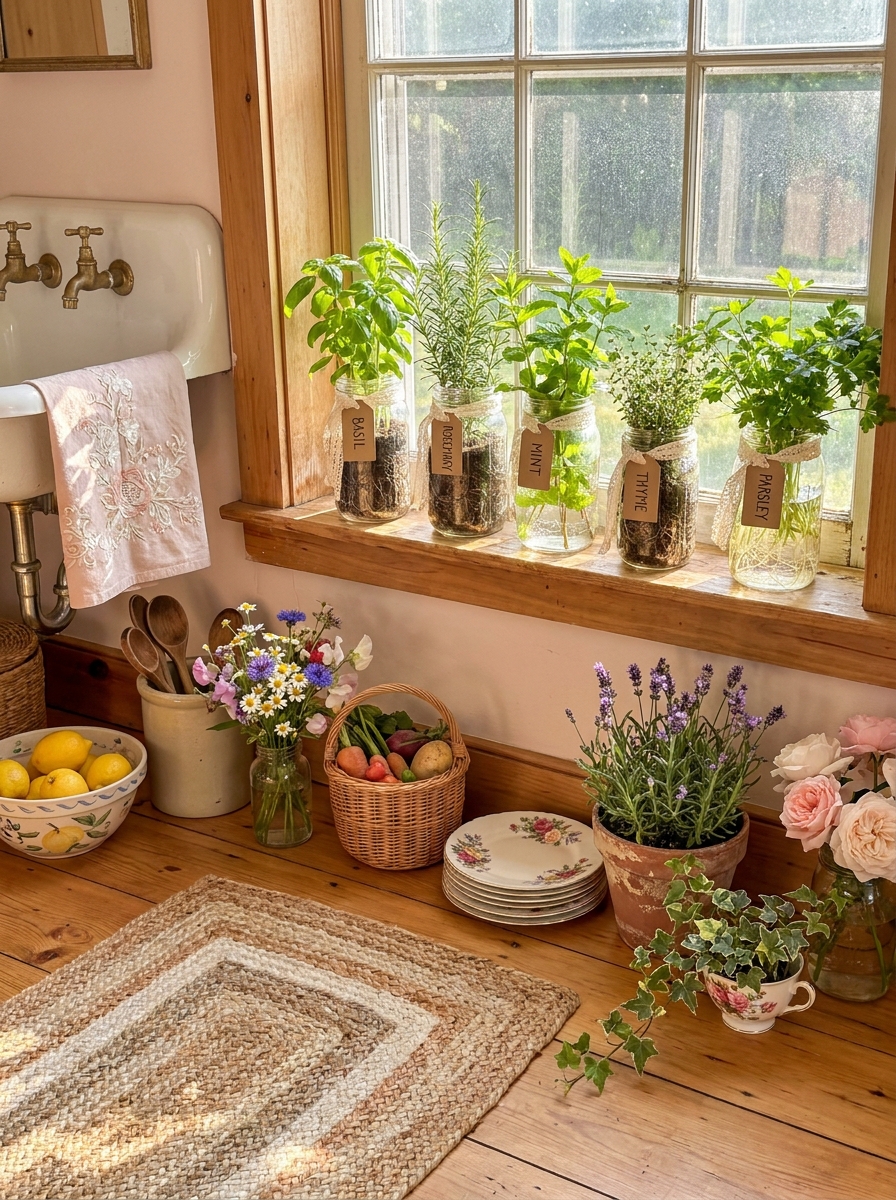
Growing herbs in mason jars is possibly the easiest way to bring cottagecore vibes into your kitchen. I keep mine lined up on the windowsill above my sink, and every time I’m cooking, I just snip what I need. Fresh basil in pasta, mint in my tea, rosemary with roasted potatoes—it’s all right there.
The jars themselves are so charming with their vintage look and that wavy glass. I tie twine or lace ribbon around the rims and add little hand-lettered tags. Some people paint the jars in soft pastels, but I love the clear glass so I can see the roots growing. It feels very connected to nature, watching something grow right in your own kitchen.
Start with easy herbs like basil, mint, and parsley. They’re forgiving and grow like crazy in a sunny spot. Change the water every few days and you’ll have fresh herbs for weeks.
12. Vintage Botanical Prints in Mismatched Antique Frames
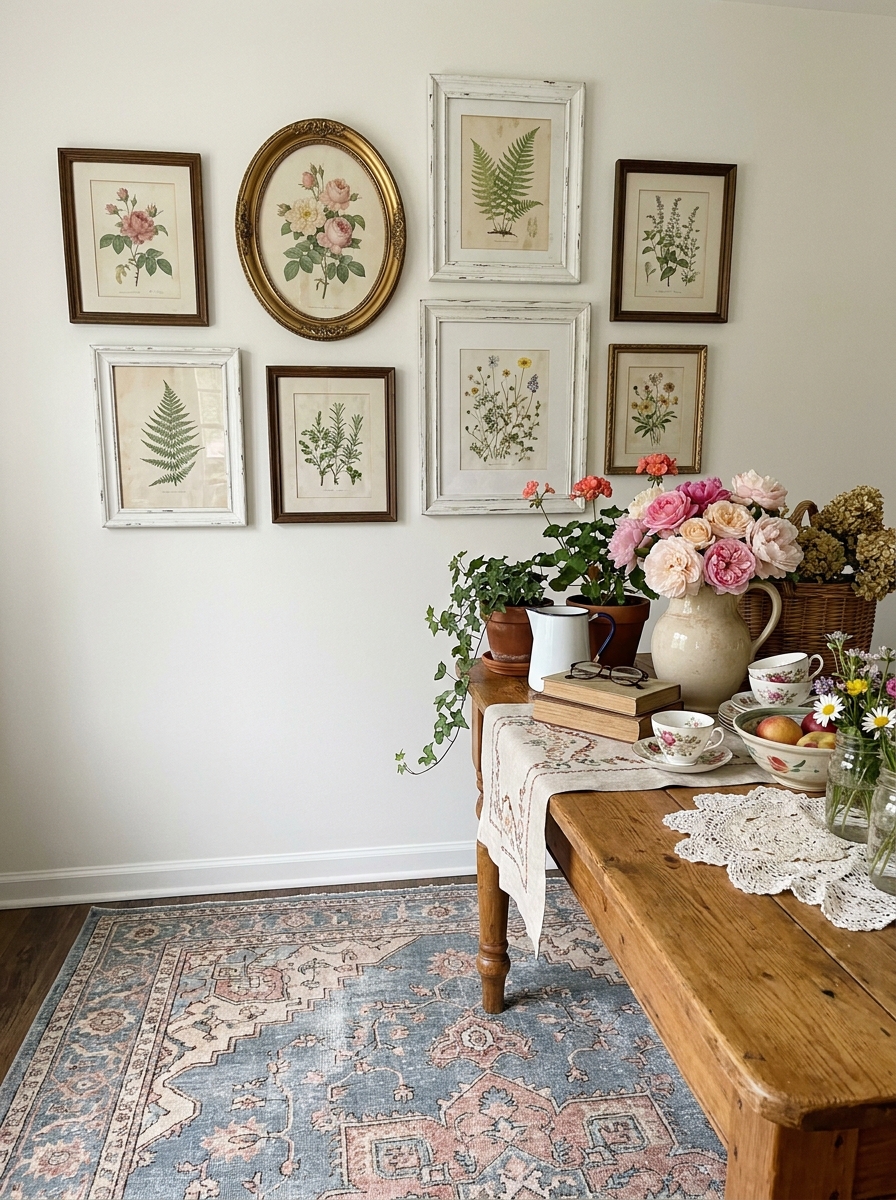
I’m obsessed with those old botanical illustrations—the ones that look like they came straight from a 19th-century gardening book. They bring such gentle, nature-inspired beauty to walls without feeling too formal or stuffy. I’ve been collecting them slowly, mostly from antique shops and online printable sources.
The trick is the frames. Don’t buy a matching set! Mix different styles—oval frames next to rectangular ones, ornate gold beside simple wood, various sizes clustered together. It should look like you’ve been collecting these treasures over decades. I love grouping them on one wall in the bedroom or dining room, creating a little gallery that feels personal and curated.
Hang them salon-style with different heights and spacing. Step back often while you’re arranging to see how the whole composition feels. The imperfection is what makes it charming—this isn’t a gallery, it’s your collection of things you love.
13. Distressed Wooden Ladder as a Blanket Display
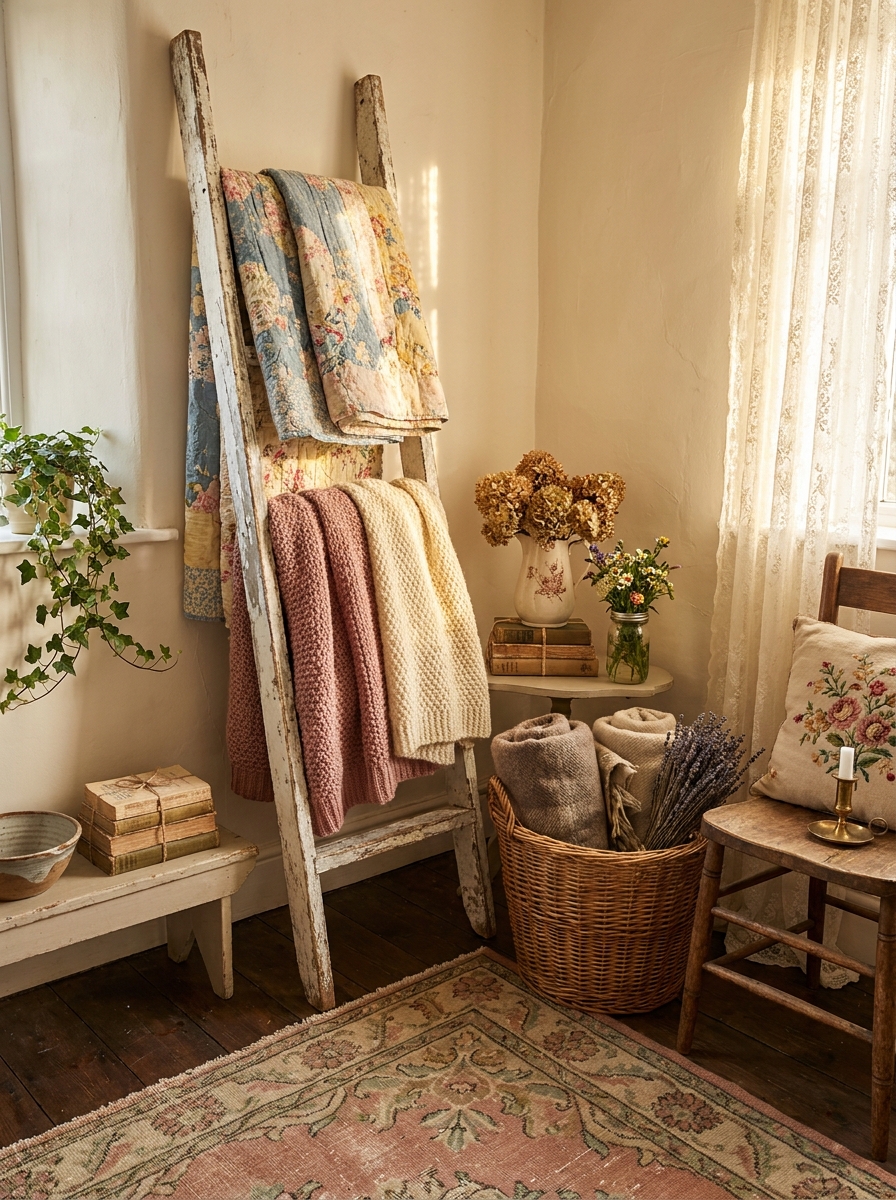
I found an old wooden ladder at an estate sale last summer, and honestly? Best twelve dollars I ever spent. Leaning it against the wall in my living room, I draped it with vintage quilts, chunky knit throws, and my grandmother’s crocheted afghan. It’s become this gorgeous focal point that’s equal parts art and function.
What I love most is how it changes with the seasons. Right now I’ve got lighter cotton throws for spring, but come fall, I’ll pile on the wool blankets and cozy textures. It beats keeping blankets stuffed in a closet where nobody sees them, right?
The beauty is in the imperfection. The peeling paint, the worn rungs, those little dings and scratches—they all add character. Sometimes I tuck sprigs of dried lavender between the blankets or drape a strand of fairy lights over one side. It makes the whole corner feel like a cozy embrace waiting to happen.
14. Butter Churn or Milk Can as a Whimsical Umbrella Stand
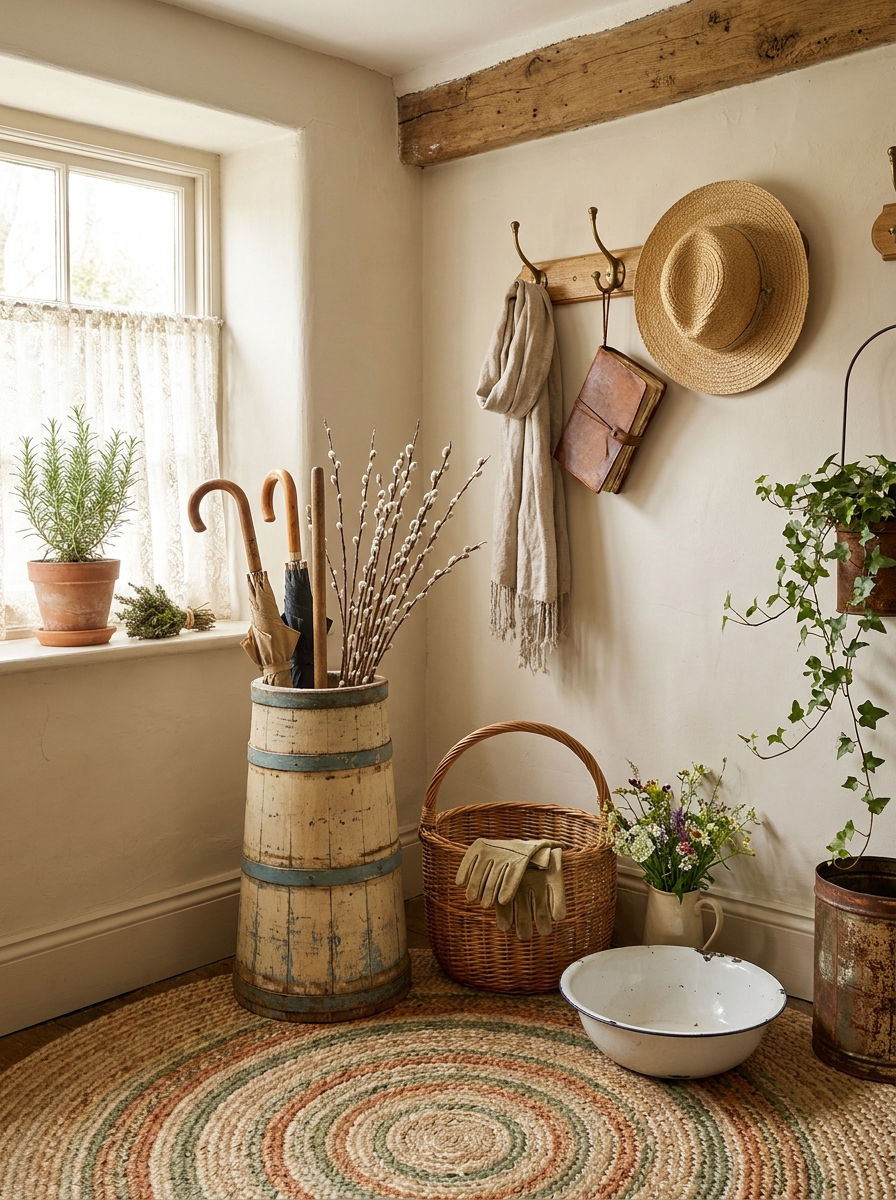
When I spotted an old butter churn at a farmhouse antiques shop, I didn’t exactly need another vintage piece. But then I pictured it by my front door, and suddenly I absolutely had to have it. Now it holds my collection of umbrellas and walking sticks, and every single guest asks about it.
These antique farm tools are pure cottagecore magic. Whether you find a wooden butter churn, a metal milk can, or even an old ceramic crock, they bring that authentic pastoral charm that you just can’t fake. I love how mine still has the original patina and a few dents—it tells a story of actual farm life, not just decoration.
The best part? It’s useful! I can toss umbrellas in there without thinking twice, and it looks intentional rather than cluttered. Sometimes I add a bunch of dried wheat or pussy willow branches for extra charm. It’s that perfect blend of practical and pretty that cottagecore is all about.
15. Handwritten Recipe Cards Displayed in a Vintage Frame
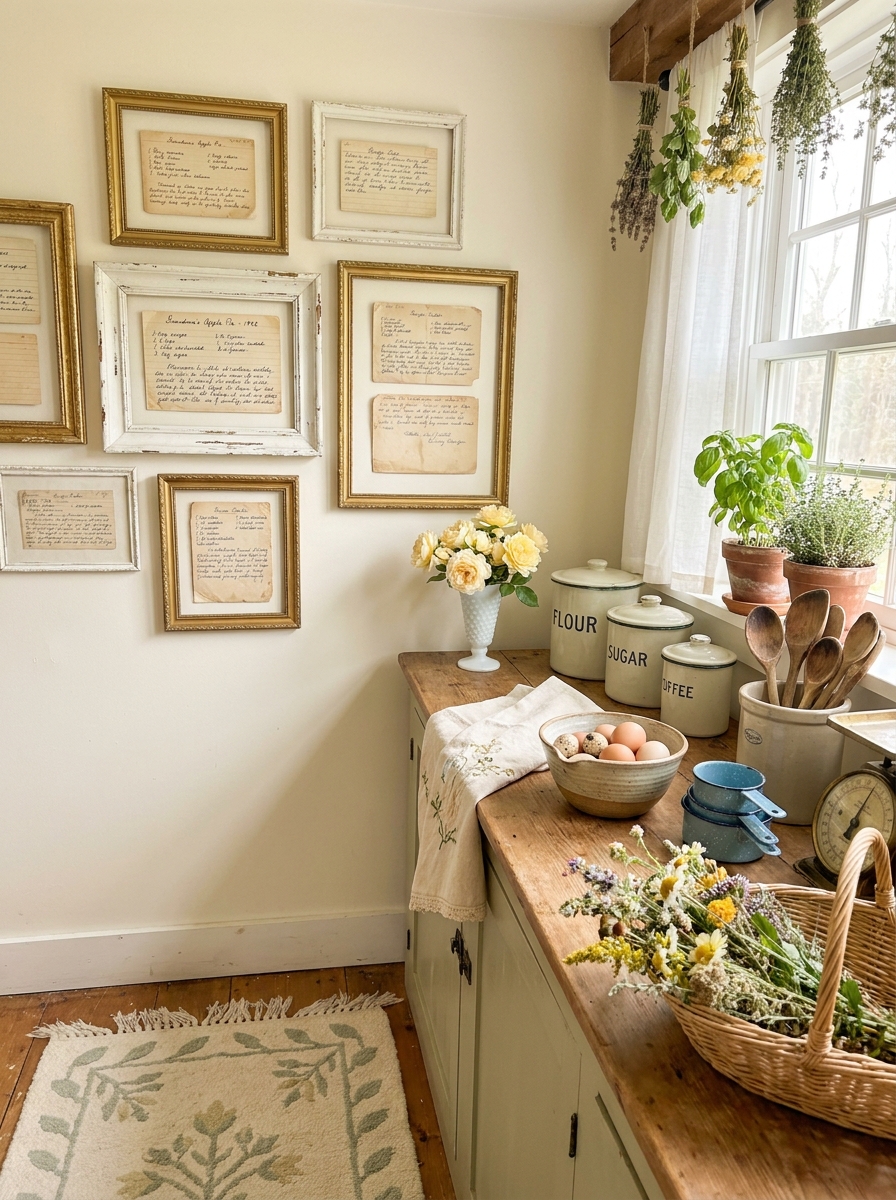
My great-aunt’s handwritten recipe for blackberry cobbler now hangs in my kitchen, and I tear up every time I look at it. There’s something incredibly special about seeing her loopy cursive, the little splatters of batter, the way she abbreviated “tsp” differently each time. It’s a piece of family history that deserves to be seen, not hidden in a drawer.
You can frame your own family recipes or hunt for vintage ones at estate sales and antique shops. I’ve collected several handwritten cards from the 1940s and 50s, and they’re fascinating—things like “Wartime Victory Cake” and “Depression-Era Apple Brown Betty.” The aged paper, the fountain pen ink, those old-fashioned measurements… pure nostalgia.
I rotate mine seasonally in mismatched vintage frames on my kitchen wall. Spring gets the strawberry jam recipe, fall brings out the pumpkin bread. It makes cooking feel like carrying on a tradition, connecting with women who stood in kitchens just like mine decades ago.
16. Vintage Aprons Hung on Brass Hooks as Kitchen Décor
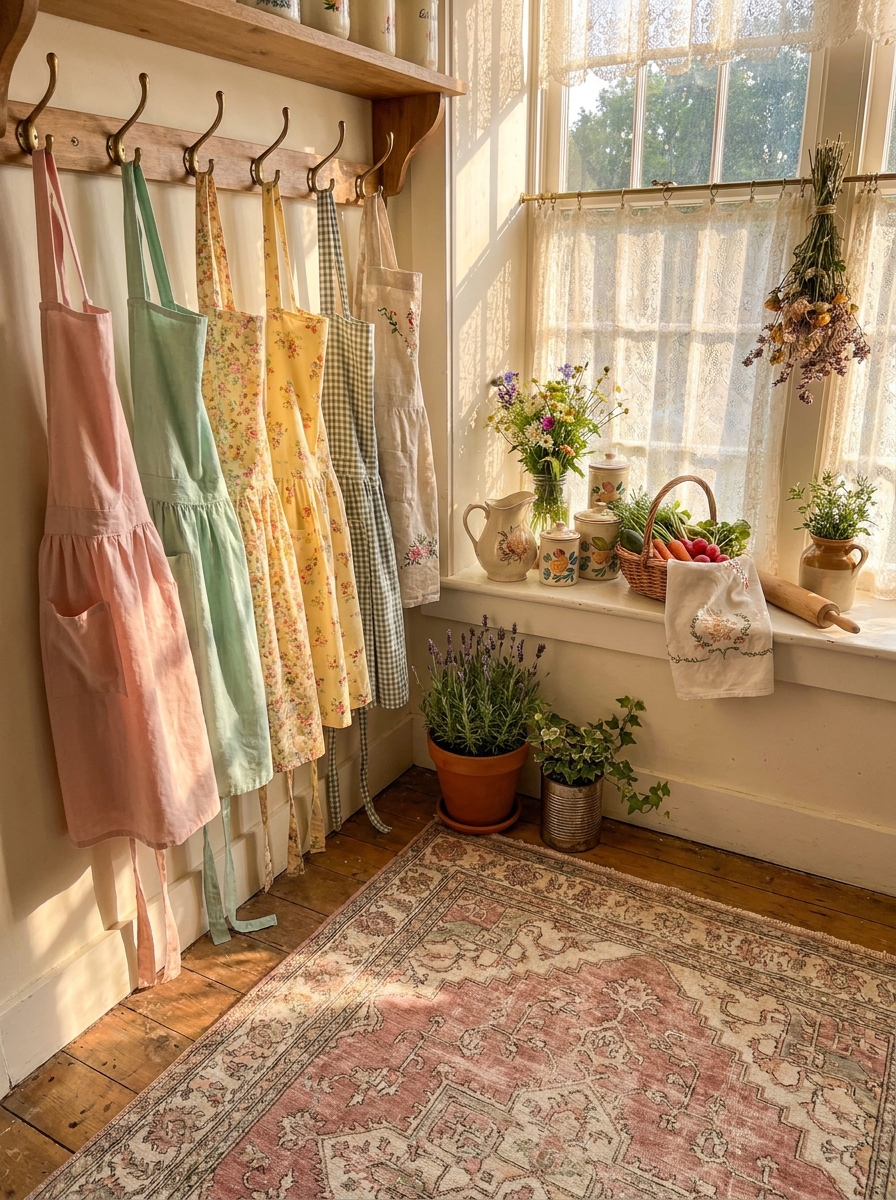
I started collecting vintage aprons without really meaning to—one from a flea market here, one from my mom’s attic there. But when I finally hung them on brass hooks by my kitchen window, everything clicked. They’re not just stored away; they’re displayed like the little works of art they are.
The variety is what makes it special. I’ve got a ruffled gingham one from the 1950s, a flour sack apron with hand-embroidered strawberries, and a sweet floral half-apron with rick-rack trim. Each one has different fabric, different details, different stories. And yes, I actually wear them when I bake! There’s something about tying on a vintage apron that makes me feel connected to all the women who wore them before me.
They bring instant cottagecore charm to any kitchen. The fabrics—those faded florals, the soft ginghams, the delicate embroidery—add color and pattern without overwhelming the space. Plus, they’re right there when I need them, no digging through drawers.
17. Wicker Basket Collection for Farmhouse Storage
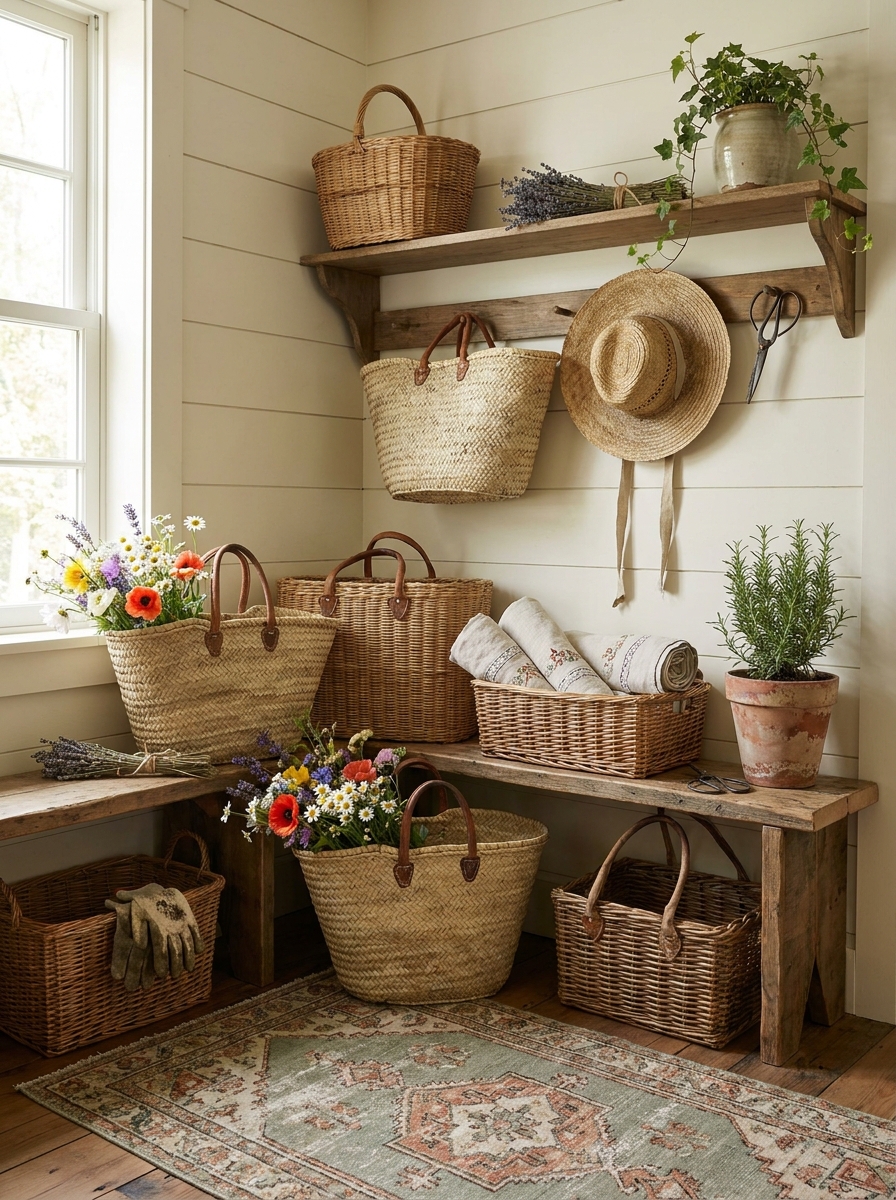
There’s something so satisfying about a collection of wicker baskets tucked into every corner. I started with one basket for my knitting projects, and now I have seven scattered throughout my cottage. They’re like functional art that happens to hide all your stuff!
The beauty of wicker is how it ages. New baskets are nice, but the ones I’ve found at estate sales with their sun-faded handles and slightly wonky weaving? Those are the keepers. I use them for everything from storing rolled kitchen towels to corralling my growing seed packet collection. Stack them under consoles, tuck them beside the fireplace filled with kindling, or line them up on shelving.
Mix different shapes and sizes for that collected-over-time look. A tall narrow basket for umbrellas near the door, a wide shallow one for fresh eggs on the kitchen counter, a lidded version for hiding bathroom essentials. The natural texture adds so much warmth to a room without any effort at all.
18. Floral Cross-Stitch Pillows on a Weathered Wooden Bench
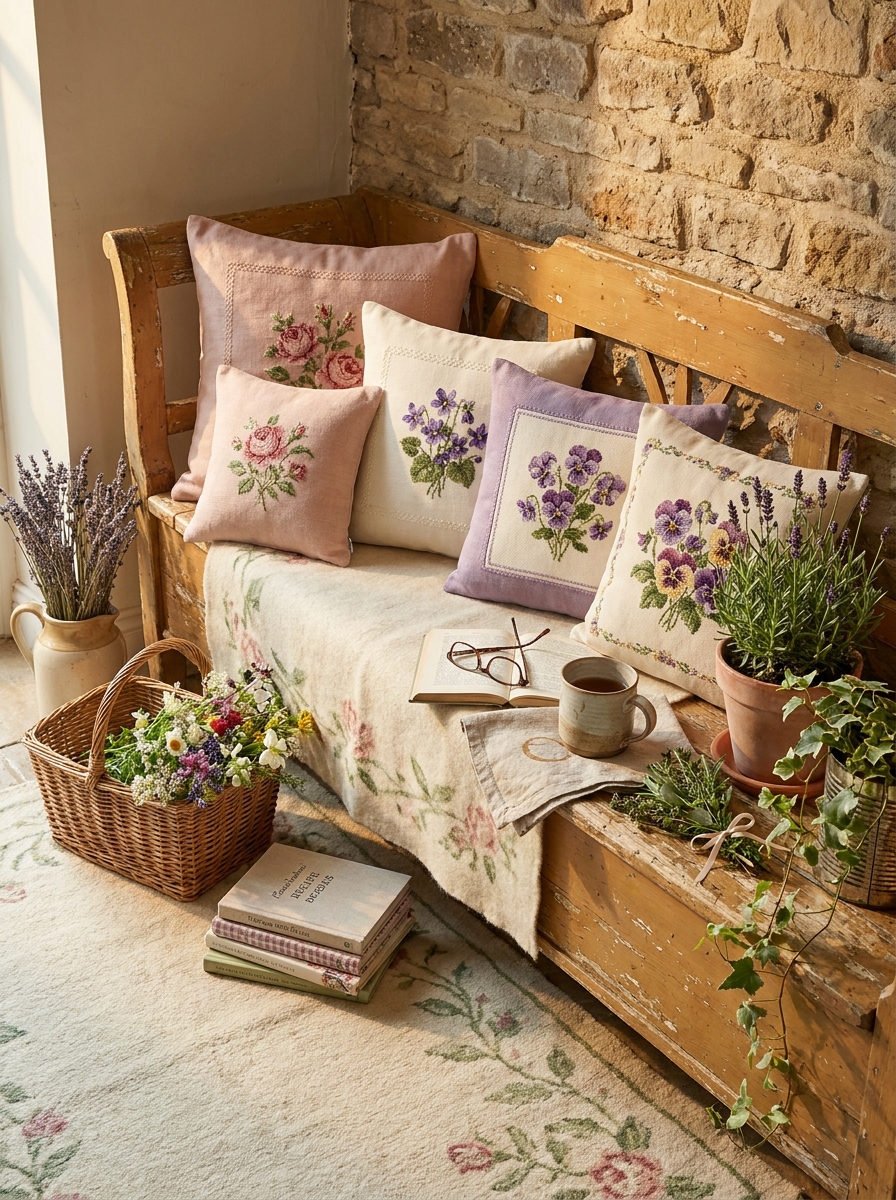
I’ll never forget finding a stack of half-finished cross-stitch projects at a church sale. Someone’s grandmother had started these beautiful floral designs decades ago, and I got to finish her vision. Now they’re pillows on my kitchen bench, and I think about her every time I sit down.
Handmade pillows bring so much heart to cottagecore spaces. Whether you stitch them yourself or hunt for vintage ones at flea markets, they add that personal touch that store-bought just can’t match. I love mixing cross-stitch roses with embroidered violets and needlepoint pansies. The slightly imperfect stitches and faded colors make them even more charming.
Pile them on wooden benches, window seats, or your favorite armchair. Let them get a little rumpled and lived-in. That’s the whole point! These aren’t precious museum pieces—they’re meant to cushion afternoon naps and support your back while you shell peas at the kitchen table.
19. Vintage Enamelware Collection for Rustic Kitchen Charm
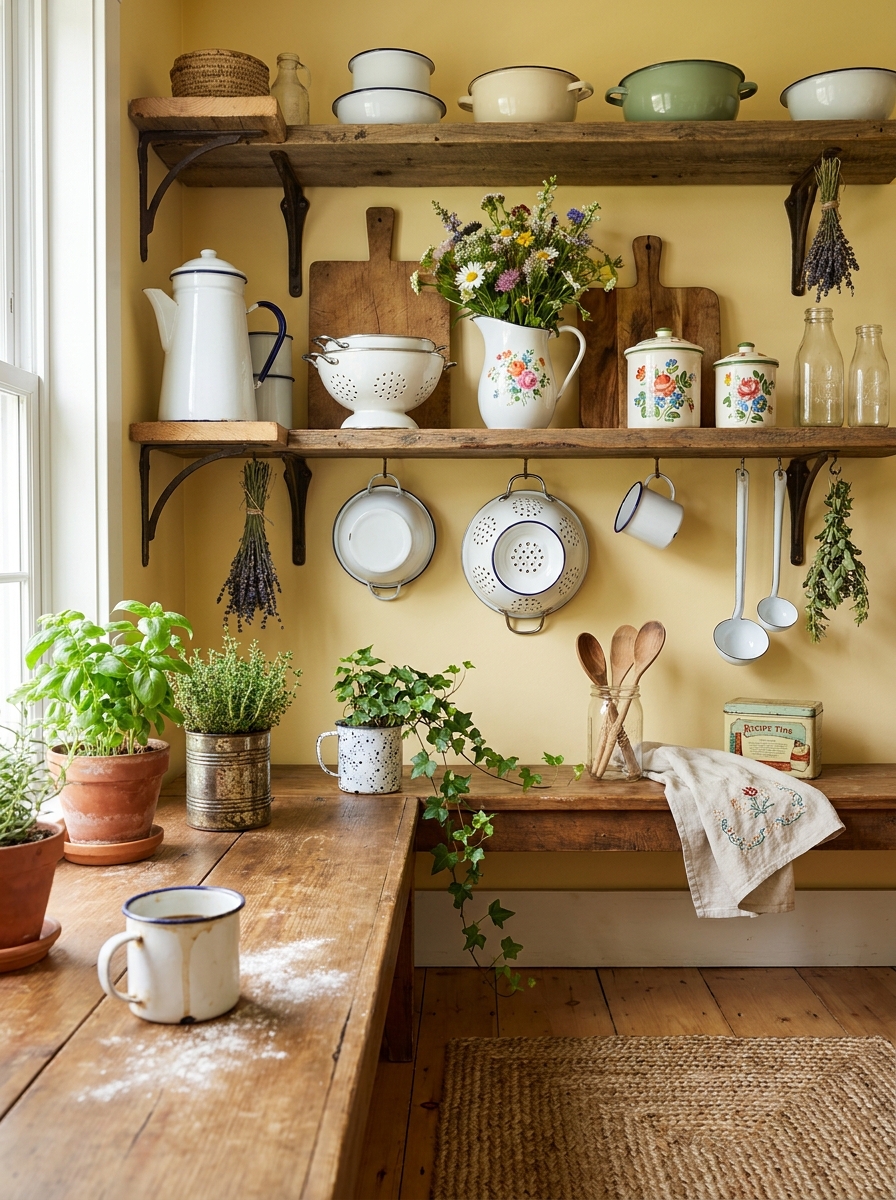
White enamelware with those signature navy or red rim details instantly transports me to a 1920s farmhouse kitchen. I’ve been collecting these pieces for years, and they’re both gorgeous and incredibly practical. My coffee tastes better from a chipped enamel mug. I’m convinced!
Start hunting for colanders, pitchers, ladles, and those wonderful speckled coffee pots at antique shops. Don’t shy away from pieces with chips or worn spots—that’s called character! I display mine on open shelving where the white enamel catches the light, mixed in with wooden cutting boards and ceramic crocks. Some I actually use daily, while others are purely decorative because they’re too precious.
The beauty is how enamelware works with literally everything in a cottagecore kitchen. It pairs perfectly with rustic wood, brightens up dark corners, and adds that authentic vintage touch that reproduction pieces just can’t match. Plus, there’s something deeply satisfying about using the same type of pitcher your great-grandmother might have used.
20. Pressed Flower Art in Vintage Gold Frames
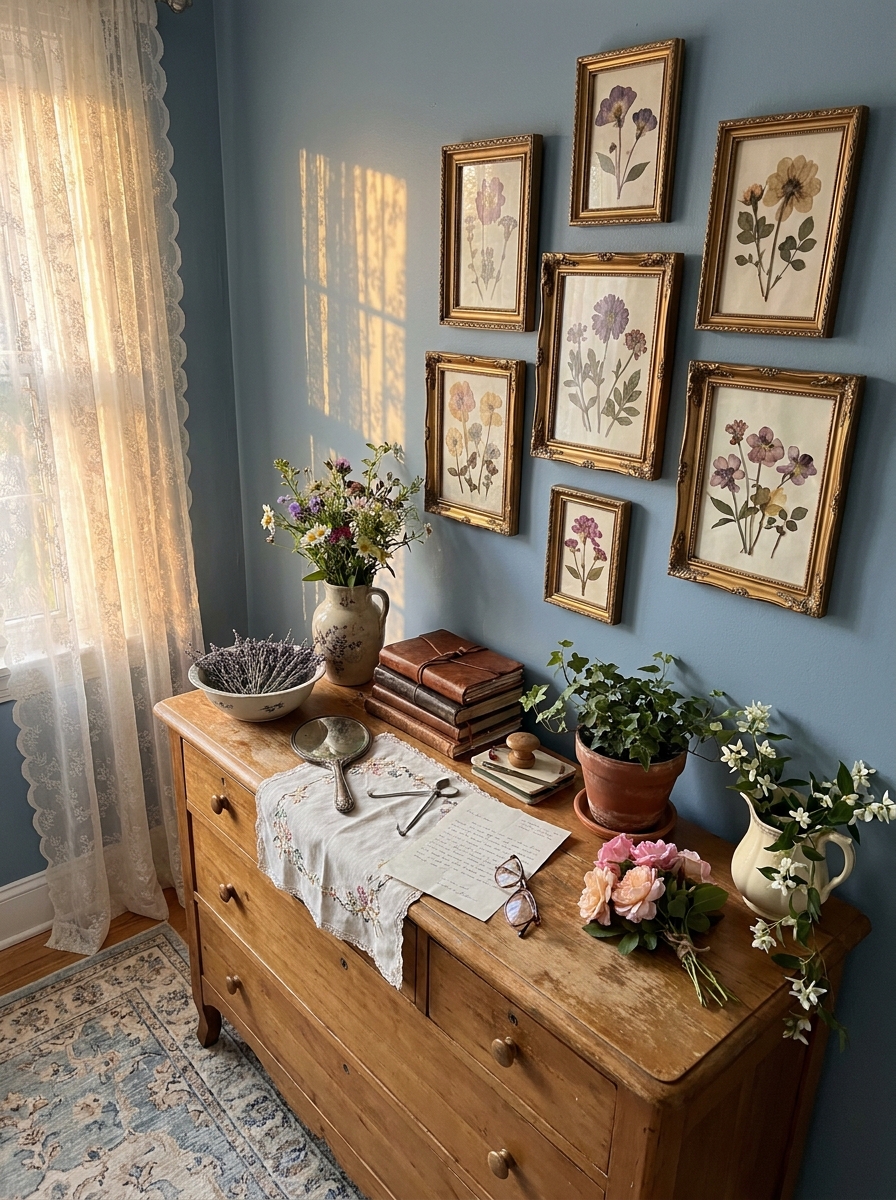
Remember pressing flowers as a kid? Turns out, it’s even more magical as an adult. Last summer I pressed every wildflower I could find, and now they’re little pieces of sunshine hanging on my walls all winter long. It’s like keeping July alive in January.
The process is so simple it feels almost too easy. Tuck flowers between book pages, wait a few weeks, then arrange them on watercolor paper or vintage book pages. Frame them in mismatched gold frames from thrift stores, and suddenly you have custom art that cost almost nothing. I love mixing pressed roses with Queen Anne’s lace, violets, and even leaves that turned beautiful colors.
Hang them gallery-wall style or scatter individual frames throughout your cottage. Each one tells a story—this pansy from the garden on my birthday, that fern from a woodland walk in September. They’re not just pretty; they’re memory keepers that happen to look absolutely enchanting catching afternoon light.
21. Antique Needlepoint Footstool for Added Cottage Charm
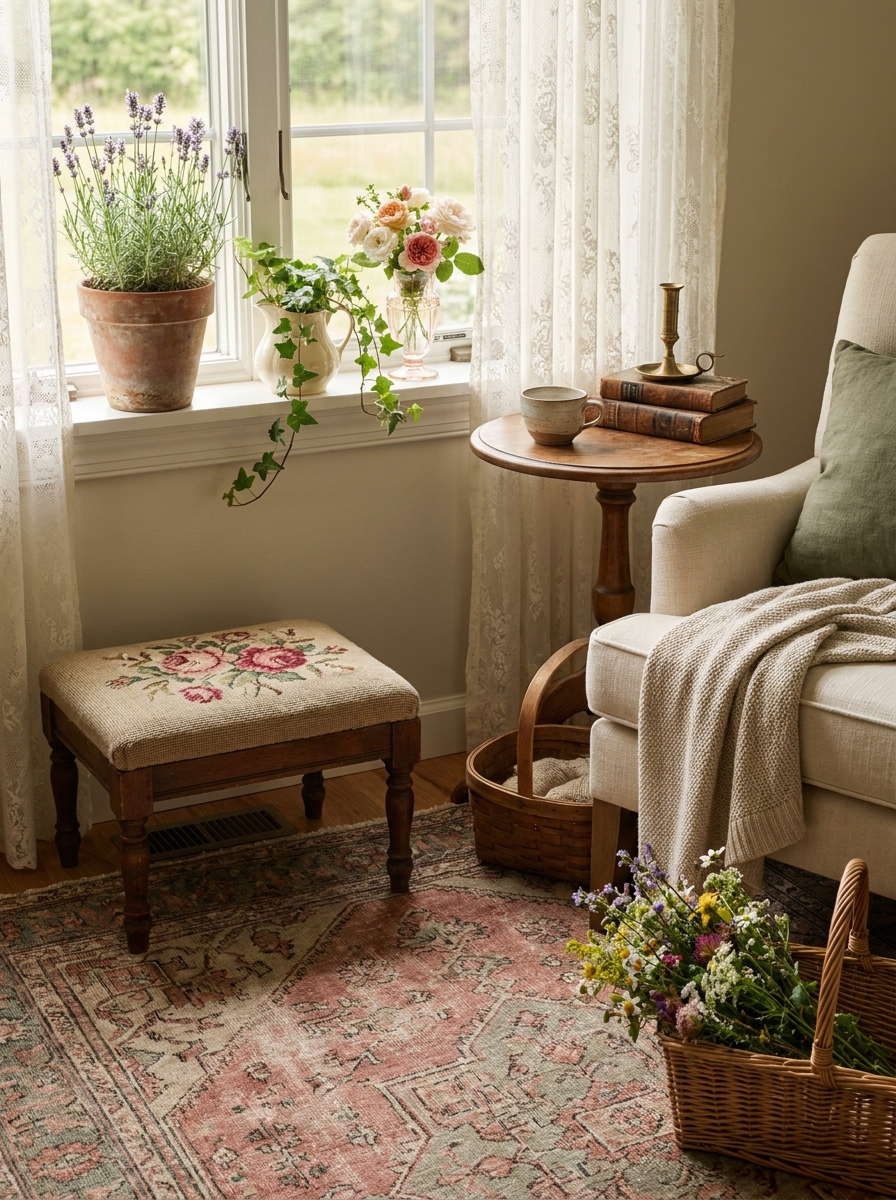
There’s something so precious about a needlepoint footstool! I found mine at an estate sale and literally squealed. The hand-stitched florals, the worn wooden legs, the perfect little size—it’s like a tiny piece of cottage history.
These sweet stools are the ultimate cottagecore accent. They work everywhere! Pop one beside your reading chair, tuck it under a vanity, or use it as extra seating when friends visit for tea. The tapestry designs are always gorgeous—roses, peonies, pastoral scenes—and they add instant vintage personality.
What I love most is how useful they are. Not just pretty to look at, but actually functional! Rest your tired feet after gardening, perch on it to tie your shoes, or let your cat claim it as their throne. The needlepoint fabric tells a story of someone’s patient handiwork from decades ago. Sometimes I wonder about the woman who stitched mine—what her cottage looked like, what flowers grew in her garden. That connection to the past? That’s cottagecore magic right there.
22. Vintage Pie Safe for Rustic Kitchen Storage
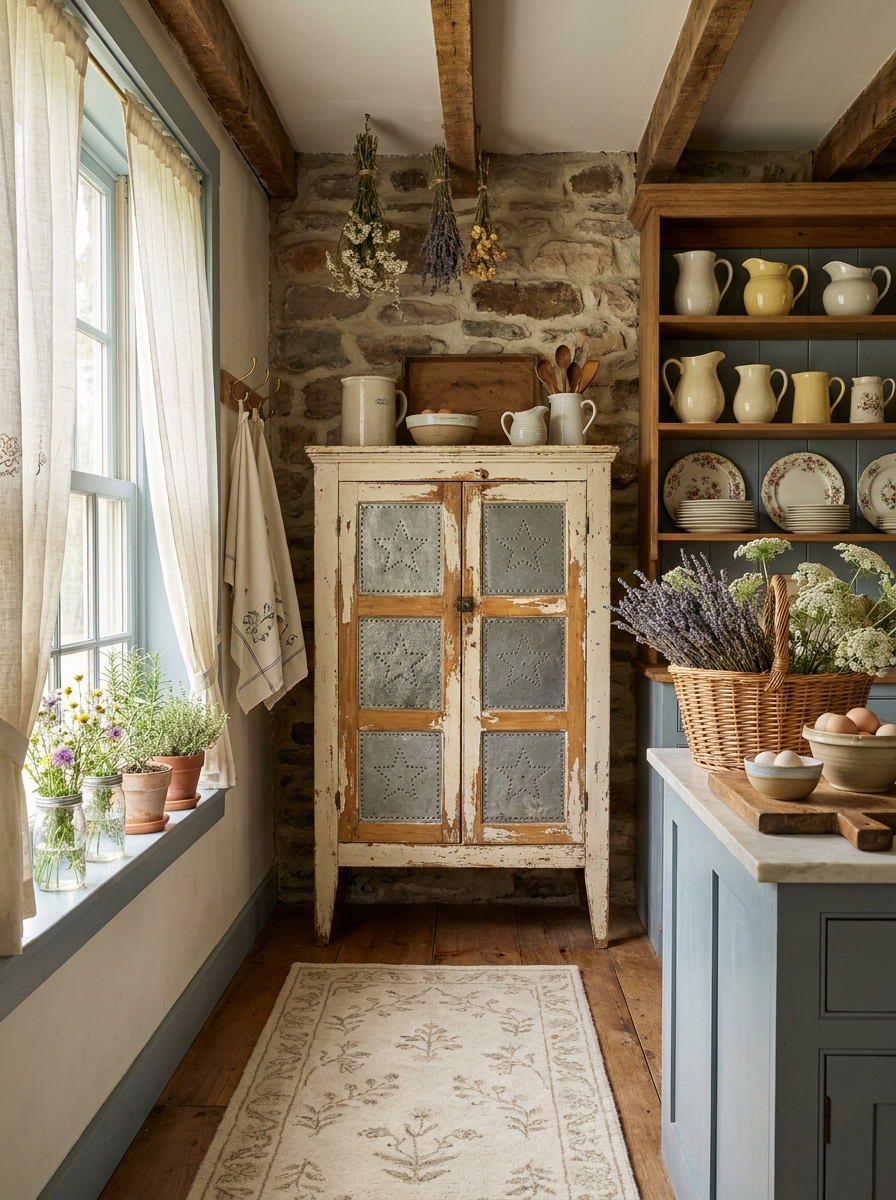
Okay, confession time—I didn’t even know what a pie safe was until I spotted one at a barn sale! These gorgeous wooden cabinets with punched tin panels were originally used to store baked goods while keeping bugs out. Now? They’re the most charming storage pieces you can add to a cottage kitchen.
The punched tin designs are so beautiful! Stars, hearts, wheat patterns—each one is different. I use mine to store linens, serving dishes, and my collection of vintage canning jars. It’s like functional folk art! The aged wood patina and rustic hardware make everything feel authentically old-timey.
What makes pie safes perfect for cottagecore is that handmade quality. Someone hammered those tin patterns by hand. Someone built that cabinet with care. When you open those doors, you’re using something that’s been holding precious things for generations. I keep my grandmother’s recipe box inside mine, and it feels like the perfect home for it. These pieces anchor a cottage kitchen like nothing else can.
23. Handmade Patchwork Quilt as Wall Art
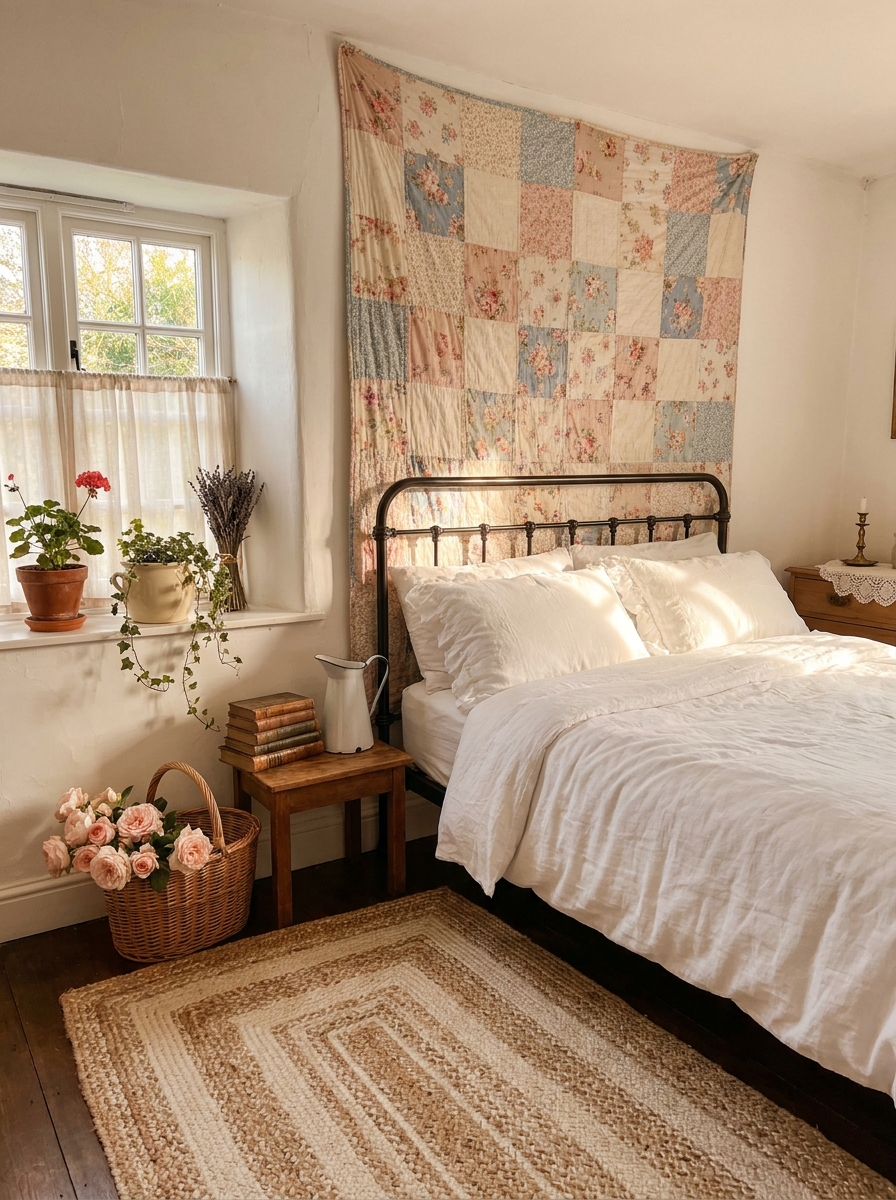
Who says quilts only belong on beds? I hung a vintage patchwork quilt on my bedroom wall and it completely transformed the space! It’s like having a cozy, textile masterpiece that tells a hundred stories at once.
These handmade quilts are incredible works of art. Each square was cut, pieced, and stitched by hand—usually by multiple generations working together. The faded florals, the mismatched patterns, the tiny stitches… it’s cottagecore poetry. Hanging one creates instant warmth and texture that wallpaper just can’t match.
I love thinking about the quilt’s history while I drift off to sleep. Was it made for a wedding? A new baby? Did farm women stitch it during long winter evenings? The imperfections make it even more beautiful—a crooked seam here, a faded patch there. It’s tangible proof that handmade things carry love. Plus, it’s the coziest wall treatment ever! On chilly mornings, that quilt makes the whole room feel like a warm hug. Pure cottage comfort.
Quick Guide
## Cottagecore on Any Budget
Under $50: Start with embroidered vintage linens from estate sales, fresh flowers in thrifted vases, and DIY dried flower bundles. Paint an existing piece of furniture in a soft cottage color.
$50-$200: Add peel-and-stick floral wallpaper to one accent wall, invest in quality linen curtains or tablecloth, replace hardware with vintage-style knobs, hunt for antique furniture pieces at flea markets.
$200-$500: Install open wooden shelving in your kitchen, commission a custom floral wallpaper installation, purchase a vintage iron bed frame or farmhouse table, invest in handmade pottery from local artisans.
Splurge-Worthy: Authentic antique furniture pieces, custom window seats with storage, professional kitchen renovation with farmhouse sink and open shelving, collection of rare vintage textiles and quilts.
Remember: Cottagecore is about the feeling, not the price tag. Some of the most charming cottage spaces are filled entirely with thrifted and handmade treasures.
Your Cottage Story Starts Now
Here’s the truth about cottagecore—it’s not really about nailing a specific aesthetic or buying all the right things. It’s about slowing down enough to notice beauty in simple moments. The morning light hitting your embroidered tablecloth. Fresh flowers you arranged yourself sitting on your windowsill. The way a vintage pitcher feels in your hand when you’re pouring cream into your tea. These twenty-three ideas aren’t a checklist to complete. They’re invitations to bring more softness, more handmade touches, more romance into your everyday life. Start with whatever speaks to you most. Maybe it’s just one bouquet of wildflowers this week. Maybe it’s finally hanging those vintage linens you’ve been saving. Your home doesn’t need to transform overnight. The best cottage spaces are layered slowly, collected lovingly, and lived in fully. So take your time. Hunt for treasures. Make things with your hands. Let your space tell your story. And don’t forget—a little bit of cottagecore magic goes a long way.
Frequently Asked Questions
How can I create a cottagecore bedroom on a budget?
Start with what you have and layer in vintage textiles from thrift stores—embroidered pillowcases, floral quilts, linen duvet covers. Add fresh or dried flowers in simple jars on your nightstand. Look for an inexpensive vintage-style mirror or frame at estate sales. Even just switching to warm-toned lighting and adding a small area rug can completely shift the vibe without spending much.
What colors are best for cottagecore decor?
Think soft, faded, and nature-inspired. Cream, butter yellow, dusty pink, sage green, lavender, warm oatmeal, and soft sky blue are all classic cottagecore colors. The key is choosing muted tones rather than bright saturated colors—imagine how fabric looks after years of sunlight and washing. You want colors that feel gentle and lived-in, not fresh off the shelf.
Where can I find affordable vintage cottagecore decor items?
Estate sales are absolute goldmines for embroidered linens, vintage dishes, and small furniture pieces. Thrift stores often have ceramic pitchers, wicker baskets, and floral items for under $10. Check Facebook Marketplace and Craigslist for larger furniture. Etsy has vintage sections, though prices run higher. Flea markets are perfect for haggling on imperfect pieces that add character.
Can cottagecore work in a modern apartment?
Absolutely! You don’t need exposed beams or a farmhouse sink to create cottagecore vibes. Focus on textiles, lighting, and decorative elements you can take with you—vintage rugs, embroidered curtains, floral wallpaper (peel-and-stick if you’re renting), open shelving with pretty dishware, and tons of plants and flowers. The feeling comes from the styling and details, not the architecture.
How do I style cottagecore decor without it looking too cluttered?
Stick to a cohesive color palette even when mixing patterns and vintage pieces. Group smaller items together in vignettes rather than scattering them everywhere. Leave some breathing room—not every surface needs to be filled. Choose pieces that are either functional or truly beautiful to you, and let go of the rest. Cottagecore is abundant but intentional, not chaotic.